The People and Places of Bruges

By Don Heimburger
Photos by the author

From the look of the crowds on the streets, it appears everyone has fallen in love with Bruges. And I visited in early April when there were fewer people visiting.

But that’s about the only negative thing you might be able to say about such a beautifully-preserved medieval city. It’s truly a must-see on any tour of Flanders, and you could easily spend several days visiting its wonders.

If Disney could have laid claim to Bruges, he would have: it’s that charming.

Bruges is easily walkable, but beware the cobblestone walks—make sure you have good walking shoes. Also, plenty of horse and buggies are for hire, or you can take a boat tour of the city or ride in a mini-bus.
UNESCO SITE
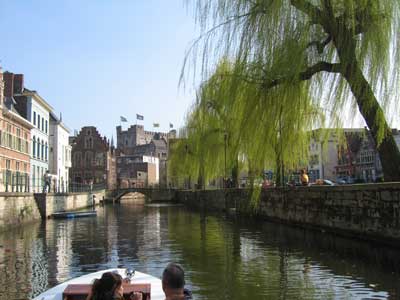
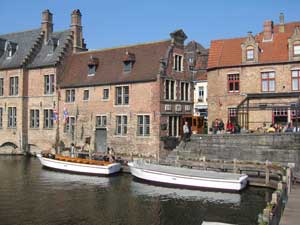
The whole of the city center is a historical landmark, designated by UNESCO as a World Heritage Site, and so it should be. It’s hard not to become enamored with Bruges, its twisting streets and alleyways, its network of canals, and its charm. It’s a complicated network of narrow passageways, brick buildings and waterways, but that’s what makes this city so fascinating. You’ll love it.

VISIT THE BEGUINAGE
In most cases, you’ll cross Minnewater Bridge to enter the Beguinage, founded in 1245. Now populated by nuns from the Order of Saint Benedict, you’ll see the beautiful courtyard garden, where yellow daffodils pop up in spring, the whitewashed house fronts that line the Beguinage, and the peaceful beauty of the area. A posted sign even asks visitors to be quiet and be beware of their surroundings.
THE BELFRY
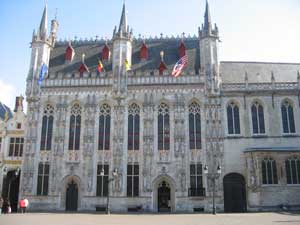
In case of war—or fire, or anything—the belfry was where it was first noticed. The marketplace is still dominated by this high tower, and it looks out onto the bustling plaza where life comes together in Bruges. You can climb to the top of the belfry (it will cost you 366 steps), and get a good view of the town as well as the two statues in the square, one of Jan Breydel and one of Pieter de Conick, both heroes who resisted the French in 1302.

The Stadsschouwburg is the royal theater building dating from 1869 and is said to be Europe’s best preserved city theater. Behind the Gothic revival architecture is a palatial auditorium and an elegant foyer.

The Little Bear of Bruges, located in a niche in the Burghers Lodge at Poortersloge, a 15th century private club building, is an important city symbol. I tried finding it, to no avail, but perhaps you’ll have better luck. It’s worth a photograph.

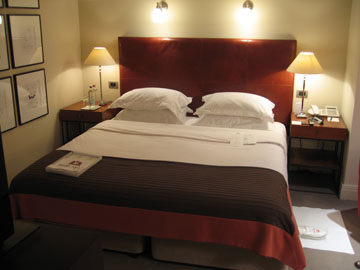
Kempinski Dukes’ Palace, at Prinsenhof 8, now an excellent five-star luxury hotel, was a former 15th century Dukes of Burgundy castle, and features 93 rooms, including 22 palatial suites, of which six are historically listed. Each room contains original features from 1429, but they have been completely modernized with elegant furnishings and marble bathrooms, and the hotel offers the latest technology such as flat screen television and high speed internet. Even just a look from the outside at this hotel is impressive; it’s located at the end of a short street, and is easy to miss.

LAST REMAINING BREWERY
Bruges’ last remaining city brewery is De Halve Maan (The Half Moon), established in 1546; their specialty beer is called Brugse Zot, which refers to the nickname of the townspeople, conferred upon them by Maximilian of Austria. You can take a 45-minute tour of the brewery and museum; cost is 5.50 euros.

Churches are abundant and worthy of a look. There’s the Beguinage Church, the Episcopal Palace, the English Convent, Basilica of the Holy Blood, Church of the Holy Magdalena, the Military Chapel, Church of our Lady of the Pottery, and the Welcome Church of Our Lady (see the art collection inside including Michelangelo’s famous Madonna and Child, and the 15th and 16 century mausoleums of Mary of Burgundy and Charles the Bold). Saint James’ Church benefited from the Dukes of Burgundy and the many foreign merchants, and their gifts have left their glittering marks on the interior of this church. A guidebook, which you can pick up at the local tourism office in town or at the Bruges railway station, will sort out these churches and other points of interest for you. www.brugge.be/tourism

The Frietmuseum is all about the Belgian potato fry, located in the Saaihalle. Here you’ll learn all about the history of potatoes, and fries, and the condiments which are served with them. Kids will especially enjoy the fun things this museum offers, and you can even taste fries in the cellar of this medieval 14th century building.

WHAT ABOUT CHOCOLATE?
Belgian chocolates, and their history, are served up in good measure at the Chocolate Museum, a four-story compilation of everything chocolate. The museum explains chocolate started with the Mayans and Aztec civilizations in pre-Colombian Central America, and after adding sugar, was imported to Europe around 1500 AD. Chocolate as we know it became popular around 1800, and as they say, the rest is history. The museum is a must-see in Bruges at Wijnzakstraat 2.

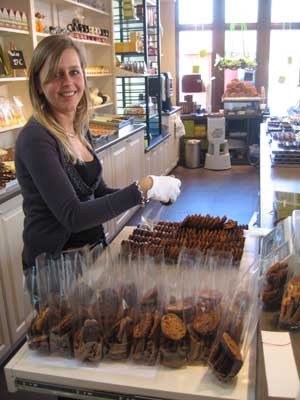
To taste more fine Belgian chocolate, you’ll want to check out The Chocolate Line at Simon Stevinplein 19. Master chocolatier Dominique Persoone, one of the owners, is a dynamic chef with advanced ideas on the making and blending of chocolates and other flavors. Chef Persoone blends chocolate with such tastes as cigars, fried onions and passion fruit. His shop is one of only three chocolate shops listed in the Michelin Guide, and the shop’s customers include such top-notch restaurants as Comme Chez Soi, Oud Sluis and Hof van Cleve. He even has a new book out where he travels through Mexico in search of the origins of cocoa, visiting Maya settlements and discovering the secret of the first chocolate drink and today’s Pozol. If you happen to get to meet Dominique, you will enjoy his demeanor and his chocolates.
www.thechocolateline.be

Bruges is also known for its many guild halls, which are scattered throughout the town. Bruges Town Hall, built between 1376 and 1420, is one of the oldest in the Low Countries. A ceremonial staircase leads from the entrance hall to the first floor, where visitors can view the Gothic Chamber. This former council chamber continues to play an important part in the life of the city. The wooden, polychrome ceiling is decorated with a profusion of late-medieval carvings. The murals illustrating Bruges’ past were added during the chamber’s restoration in the late 19th century.

Where to stay? There are dozens of hotels, youth hostels, apartments and bed and breakfasts to choose from. The Bruges Tourist Office can supply a booklet listing these.

Bruges is colorful, inviting and lively, and the food and beer there is some of the best in Europe. You couldn’t find a better combination of history, fun and food. For more information, go to www.visitflanders.us or www.brugge.be

Ghent: From Fallen Angels to Hard Candy to the Great Butcher’s Hall

By Don Heimburger
Photos by the author

From the year 1000 to about 1500, Ghent, Belgium, was said to be one of the most important cities in Europe. It was larger than London, and only Paris was larger in size.

The city was ruled by rich merchant families, from whence came its great wealth. Today, Ghent is still a town rich in history, color and great food and beer. It also helps visitors that as many as 120 new location signposts have been installed to guide tourists to the most important spots in town.

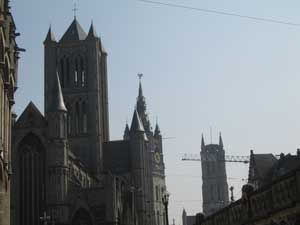
(left) The three towers of Ghent

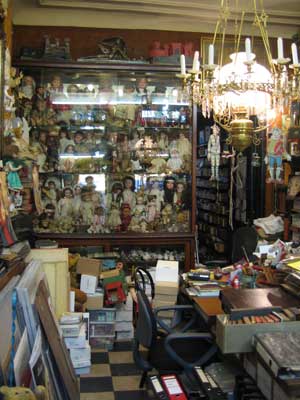
Walking near the city center, you’re bound to discover features of the city that will amuse or interest you. Stolling along a street not far from Ghent’s impressive Castle of the Counts, I run across a small shop sign that reads, “The Fallen Angels.” The shop is devoted to old things. I like old things.


I hesitate to go in, perhaps not wanting to become one of those things the proprietor’s shingle suggests, but the more I study the front window, the more I determine it’s not only safe to walk in, but intriguing. Intriguing because of all the things that owner Isabelle Steel has gathered over the last 30 years or so for her re-sale shop.

“I started collecting things when I was 16 years old,” she explains. “My father was a painter,” she says, in helping to decipher how she came to appreciate colorful images.

PACKED WITH IMAGERY
Her very small, quaint shop is packed with imagery in the old kitchen tins, the religious paintings, the thousands of postcards, the picture albums from as early as 1886, the old manufacturer catalogs, and the posters, dolls, toys and trains that pack the place.

Two floors of “fallen angels” material line the walls, the drawers, the flat surfaces of the shop. There is no more room for additional fallen angels. Every cabinet, every inch on the wall has been crammed with attention-getting merchandise.

A sign on the second floor, which is like a small mezzanine and a few steps up from the main floor, reads, “Not more than 3 persons on second floor.” If it could even hold that. Isabelle’s website reads, “For those who require a little bit of nostalgia, this is the place to visit. Here you will find old postcards, devotion cards, old dolls, bears, old toys, tin cookie jars, etc…”

A talkative, friendly person, Isabelle makes customers feel at home in her store, chatting up her goods and keeping an ear to customer conversation that would lead her to a big “fallen angels” find in the future. “A number of my buying customers have something to sell, as well,” she says.

Isabelle and her daughter Ganesha have shops next to each other. Isabelle’s shop has been open for 23 years, and her daughter’s re-sale shop about five years.

Both shops are located in de Jan Breydelstraat nr. 29-31, next to the Castle of the Counts and the Korenmarkt. The Design Museum of Ghent is also located on the same street. For more information, go to www.the-fallen-angels.com.

BELGIAN HARD CANDY ANYONE?
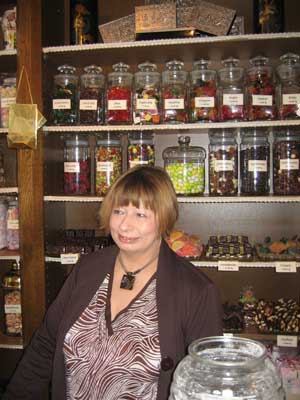
There’s more to Belgian confectionery than chocolate—delicious though it is. For traditional Flemish candy, visit Temmerman (Kraanlei 79)–about eight generations of family members have been making this hard candy. Most popular item is the “cuberdon,” or raspberry nose (red nose filled with sugar), but the tiny shop is stuffed with more than 600 other varieties of sweet stuff. Other goodies include wippers (butter caramel with vanilla sugar), mokken (biscuit with anise) and katrienspekken (hard candy treated with baked sugar).

Another speciality shop is Tierenteyn-Verlent (Groentenmarkt 3, www.tierenteyn-verlent.be), which sells natural mustard made to a centuries-old recipe, and therein lies a tale:  The first great evolution in making mustard took place in the region of Dijon where a farmer tried to crush the mustard seeds with a stone. This didn’t work because there was too much oil in the seeds that prevented the machine from working. He poured a bucket of water on the seeds and found out that mustard seeds had to be wet instead of dry to crush them.
 
This information was brought to Ghent by a soldier of Napoleon’s army who was discussing the mustard principle with an inhabitant of Ghent, Petrus Tierenteyn, who overheard this and decided to start making mustard himself. But instead of yellow seeds used in France, he used dark ones, like in most Germanic countries.
 
The shop was opened in 1790, and the first products they sold were herbs and groceries. In 1842 Petrus installed a steam-powered machine to give power to the mustard mill. From that time, the shop has been owned by the same family.
 

BUTCHER’S HALL
In Ghent’s medieval Groot Vleeshuis Butcher’s Hall (Groentenmarkt 7) next to the River Leie, large wooden beams on the interior of the roof show the strength of the building, and from these beams hang Ghent’s special Ganda hams…they look good enough to eat, and you can sample their ham and other specialties in this old hall. There is no fee to walk in, and the building is wheelchair accessible. The Butcher’s Hall is open Tuesday through Sunday from 10 a.m. to 6 p.m. The hall contains a restaurant called the Promotiecentrum voor Oost-Vlaamse Streekproducten where you can sample East Flemish dishes.

If you’re at Butcher’s Hall, you’re also at the heart of this city of 250,000, and during warm weather, many of the thousands of local university students gather around the Graslei and Korenlei, the old trading harbor, which is now filled with tour boats. In many scenes of Europe, this view along the river, showing many of the old trading houses of the free boatmen and the grain harvesters, is a classic. Another good viewing area of this scene is from St. Michael’s Bridge.

MORE TO SEE
Other top views of Ghent include the Castle of the Counts, an imposing fortress built in 1180. The Gravensteen (the Dutch name for the Castle of the Counts) was built by the counts of Flanders who had castles built in the principal cities of their rule. Because they had to maintain law and order, they moved continuously from city to city and thus had a castle in cities where they wanted to stay for a while. The castle in Ghent is the only one that survived the centuries more or less intact.

The Gravensteen was constructed by Fillips of Alsasse, who was the count of Flanders between 1157 and 1191. He took part in one of the crusades and died during the siege of Akko in the Holy Land. The opening in the form of a cross, above the main entrance gate, proves that he had taken part in a crusade when the castle was built. Next to the castle lies the Veerleplein (Veerle Square), the place where public executions took place.

Another attraction is St. Bavo’s Cathedral in the historic center, the oldest parish church. Astonishingly, it features 22 altars, and the rococo pulpit is a combination of beautiful marble and oak. At the Old Belfry, a dragon scans the horizon, and is perhaps one of the most impressive belfry towers in Flanders. Together with the St. Nicholas tower and the cathedral tower, it dominates the medieval center of the city. The architects were Jan van Aelst and Filips van Beergine. The tower was completed in 1338, when the bells were rung for King Edward II. At the top corners of the towers stone soldiers keep watch (they are copies and only one original is preserved elsewhere).

THE TOWN HALL
The Town Hall at Botermarkt 1 features a rather flamboyant style of Gothic architecture on one side, and a more reserved Renaissance style on the other side. Inside, the same form holds true, with many different styles from different years.

Other attractions in Ghent include the Castle of Gerald the Devil, a 13th century fortress which has been used as a knight’s house, an arsenal, a monastery, a school and a bishop’s seminary. In 1623 it was even a house for the mentally ill.

And if you have a bit more time, visit the House of Alijn, a former house of worship, the Carmelite Friary (which has been restored) and Church, and the Augustine Monastery, founded in 1296.

A new brewery just opened in Ghent as well, with European Traveler a guest on opening night, along with Ghent Mayor Daniel Termont. The Gruut Brewery at Grote Huidevettershoek 10, offers tastes of their delicious beer at the bar within the brewery confines. Mayor Termont is justifiably proud of finding space for the new establishment in his growing city.
www.gruut.be

Where to stay while in Ghent? I stayed at the very convenient Marriott Hotel at Korenlei 10, right in the heart of the historic center and next to the river. It’s next to all the attractions. The hotel features 138 rooms and 12 suites. The glass dome with the large bar-lounge Poppi serves as a cozy meeting place. The hotel’s restaurant is the Korenhuis.
www.marriottghent.com
info@marriottghent.com

Ghent is a city of surprises. Only Ghent residents may know about the “graffiti street,” but that’s another surprise in this city you won’t want to miss.

For more information, go to www.visitgent.be or www.visitflanders.us.

Mechelen: An Undiscovered Belgium Gem

By Don Heimburger
Photos by the author

Mechelen, Belgium, about 15 miles north of Brussels, is a city of about 79,000 that features more than 300 monuments, eight historic Catholic churches and four UNESCO world heritage sights. You can reach the city by a short train ride from the main railway station in Brussels.

Mechelen is worth visiting not only because of its sights, but its people flourish because of a built-in determination and a friendliness that transcends nationalities. Maybe its because the Mecheleners have been perfecting humanity since 500 BC, when the first traces of human habitation of the area were discovered.

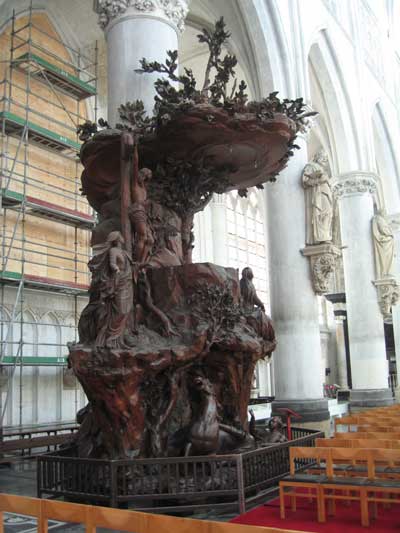
At one time, more than 100 firms in the city made furniture and word carvings, as evidenced by the many large and ornate church carvings seen here. Be sure to look for them as you discover this cobblestoned town, whose city center is only about a half mile across.

Some of the city’s sights include the early Gothic Brussels Gate, the last remnant of the medieval fortification constructed around the inner part of the city, built about 1300. At one time, all traffic entering and leaving had to pass through its limestone gates.

ST. RUMBOLD TOWER
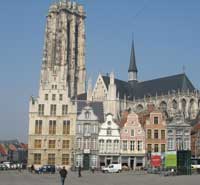
You can’t miss St. Rumbold Tower—it dominates the city skyline. If you have the time, conquer the 514 steps to the top of the tower to the skywalk for a great view of the area. Original plans for the tower were made when Mechelen was a rich and powerful commercial and political center, and thus the tower of St. Rumbold’s Cathedral was to become the highest tower in the Low Countries. Completed, it would have reached the dizzying height of 547 feet. Financial problems in the 16th century halted construction. The tower now reaches a height of 318 feet, still plenty tall.

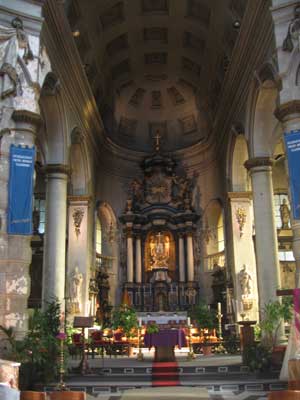
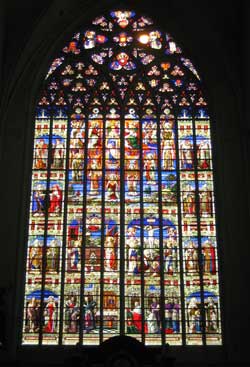
Inside the cathedral is a scale model of what the tower should have looked like had it been completed. Also inside the church are two of the largest stained glass windows in Europe. Jo Haazen and other guest carillonneurs present a carillon concert at the church every Monday evening from 8.30 p.m. to 9.30 p.m. These recitals are free.

A third highlight of the city is the Large Beguinage, where widows and unmarried women of class were invited to live together, submitting themselves to pledges of obedience and chastity. Parts of this community are still visible and are inter-woven into the city’s many old structures that line narrow streets in the center. Still in tact are the Beguines’ church, the infirmary, the house of the grand mistress and other structures.

(middle) One of the largest stained glass windows in Europe in Mechelen’s cathedral.

PALACE OF MARGARET OF AUSTRIA
Another important site is the Palace of Margaret of Austria of the Court of Savoy. This was the first renaissance building in the Low Countries and perhaps outside of Italy. The facade features Margaret’s coat of arms, and between 1616 to 1795 it was the seat of the Great Council. Its interior garden area is a fine place to rest your feet for a while.

Another spot worth visiting is St. John’s Church, which is open to the public. A very fine wood carving on the interior is one of Ruben’s masterpieces, The Adoration of the Magi. The church furniture, paintings and statues date largely from the 17th and 18th centuries.

For a respite from walking or touring the city, find Windels at Iron Leen 48 (not far from the main railway station), the oldest cigar store in Belgium (from 1875) that continues to make fine cigars, and offers them in beautiful hand-made wooden boxes. The store, now being run by the fifth generation of Windels, also carries a good selection of whiskeys.

The Jef Denyn Royal Carillon School, at Frederik de Merodestraat 63, is a state-subsidized educational institute that offers a six-year program to obtain a laureate’s diploma. Even the Vienna Boys Choir visited the school during the last few years. When you realize Belgium is one of the carillon capitals of the world, this school makes sense, and attracts students from as many as a dozen different countries. The heaviest carillon in Belgium—there are five different carillons in town–is in one of the local church towers.

The Jef Denyn Royal Carillon School in Mechelen

The De Wit Royal Manufacturers of Tapestry, operating since 1889, is the only workshop in Flanders to retain this age-old tradition. Offering a complete range of tapestry services, the firm offers individual tours on Saturdays at 10:30 a.m. and group tours on other days. The De Wit is housed in a beautiful old Abbey at Schoutetraat 7, and plays a key role in many old and expensive tapestry restorations throughout Europe.

TIME FOR SOME CUCKOO
Perhaps at lunch time you’ll want something unique and that is a local delicacy. Find a restaurant that serves the town’s famous Mechelse koekoek, or Mechelen cuckoo (chicken). This chicken, with black-gray feathers, is a feature on many local menus, and is often served with fresh vegetables or with a Mechelen beer sauce. You’ ll likely get a large side dish of round roasted potatoes to go with the chicken.

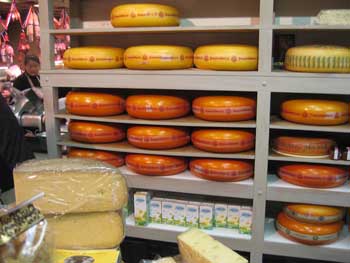
Delicious cheese lines the shelves in a Mechelen shop.

After lunch, stop in at one of the two local Gauthier chocolate shops (one is at Guldenstraat 2), and soak in the atmosphere. Store candies are hand-made, made from traditional Belgium customs, and follow a unique recipe, so you’ll likely leave with a bag full of something good to eat. The Gauthier family, with master chocolate maker Edouard Gauthier, has been making candy in town since 1964.

Round out your afternoon with a boat trip on the Inner Dyle River. A multilingual audio-guide tells you about the sights along the river banks. The departure is at the Jetty at Lamot/Haverwerf and costs €6 for adults.

MUCH MORE TO SEE
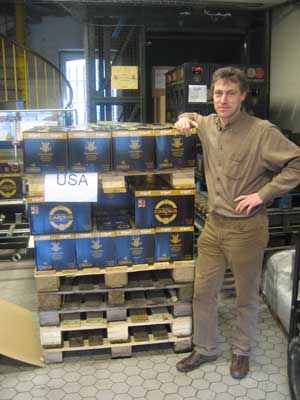
Many more Mechelen sights are available if you have the time, such as the Watchmaker’s Museum, the Jewish Museum of Deportation and Resistance, the Museum in City Hall (the old Rathaus), and the Het Anker Brewery Museum. At this small family brewery, best known for its local beers such as Gouden Carolus, you’ll get a feel for quality. The brewery also has its own restaurant and 22-room hotel.

Around the year 1500 more than 100 breweries operated in Mechelen, but like most things, the businesses and other important history of the city has faded over time. But this quaint Belgium town continues to re-count its traditions and rich past, and brings it forth today for all to enjoy.

For more information, go to www.tourismmechelen.be or www.visitflanders.us.

B is for ‘Brusselicious’

By Don Heimburger
Photos by the author and courtesy Visitbelgium.com

What’s a 13-letter word that starts with a “B” and combines the capital city of Belgium with the concept of excellent food?

“Brusselicious” is the 2012 theme for Brussels’ Gourmet Year, and a fitting description of this city of 1.1 million that boasts no less than 19 Michelin stars among its dozens of top restaurants.

In 2006 Brussels was the capital of Fashion and Design, followed soon after in 2009 as the capital of the Comic Strip. Now it becomes the city of Culinary Delights, but locals and in-the-know visitors to this cosmopolitan city, with German, French and Flemish influences, enjoy their Brusselicious lunches and dinners every day of the year.

FRENCH FINESSE, GERMAN PORTIONS
The old saying is that the Belgians cook their food with the finesse of the French, but serve it in generous German-sized portions. Some specialties of Belgian cuisine include moules frites (mussels and fries), Waterzoo (fish or chicken stew), Stoemp potato (potatoes and vegetables mixed together), and Salade Liégeoise.

So what’s cooking in Brussels in 2012?

There’s a fairly long list, but it all begins with Brussels’ traditional menus, which start with fresh meats and produce, and are then honed with a top chef’s creativity and skill. In Brussels this is just the way they do it. After all, they have a reputation developed over the years, that they refined plate after plate.

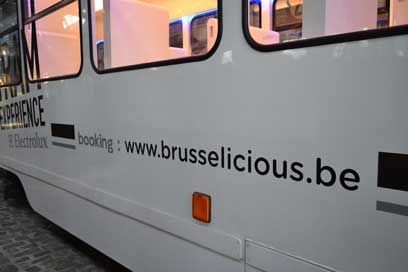
  • Brussels’ gastronomy will be on the move this year when a new designer tram will be introduced that will provide meals on board as guests roll around the city. Menus will be arranged by two-star chefs, and food will be served to 34 people on board the train during two-hour-long dinner parties. Departures start on Tuesdays and go through Sundays. This novel “meals on wheels” idea will appeal to the combination railfan and foodie.
  • As many as 35 giant artist’s reproductions will be introduced to the streets of Brussels during 2012 as well. Early in the year, artists were finalizing their creations in an old factory building called Carthago Delenda Est. Giant brussel sprouts, chocolate bars, mussels, pints of beer and giant cones of fries were masterfully being sawed, glued and screwed together to remind the city of its food heritage.
  • As many as eight themed dinners are being sponsored, from a Banquet des Miserables to mark 150 years of the finishing of Victor Hugo’s novel Les Miserables, to a Belgian Wine Growers Dinner, a Five Senses Dinner (sight, hearing, smell, taste, touch) and a Medieval Ommegang Banquet (Ommegang recreates a famous celebration of 1549 on the Grand Place in honor of Charles V and his son Philippe II).
  • The Bocuse D’Or Europe is the highly prestigious gastronomic competition held for 20 of the world’s top chefs this year in Brussels, who compete over a two-day period to claim top honors. The dozen best chefs then are entered into next year’s world finals in Lyon, France.
  • How about a Chocolate Week? With evening events, visits to chocolate workshops and a Chocolate’s Fair in town, what’s not to like?
  • A restaurant festival, publicized as the biggest gourmet event in Belgium, is coming to Brussels September 6-9. Imagine 100 restaurants and bars serving up their best dishes—with cooking on the spot—in a Brussels park.

TOP OF FOOD CHAIN
The 2012 culinary program doesn’t stop there, not for a city that loves to be at the top of the food chain. There’s a “Chipstands Festival” (you heard it correctly). So the city with some of the best frites (French fries) in the world will sponsor a competition and special events based on the fry. Would you like ketchup or mayo with that?

On a cooking platform 15 feet above the ground, Brussels’ star-studded top chefs will surprise and delight audiences with their “Dinner in the Sky” skills in the middle of the city. Also in August and September, the famed 650 tasty Belgian beers get their due during a weekend at the Grand’Place with tastings and more.

The city is also offering its own bottle of Brusselicious Beer, made by adding brown sugar to a bitter lambic. Lambic beer is produced by spontaneous fermentation: it is exposed to wild yeasts and bacteria that are said to be native to the Senne Valley, in which Brussels lies. It is this unusual process which gives the beer its distinctive flavor.

Other events are also planned, such as a Thai Food Festival, a Savoring Brussels Festival (dedicated to the flavors of fresh produce), and a Brussels Wine Weekend with open houses at some of the wine cellars and wine bars throughout the city.

Brussels’ ornate Town Hall

BUSINESS, BUT RELAXED
Brussels is, despite its European Parliament designation, a business center that appears to be relaxed at the same time. A tour of this multilingual city revolves around the Grand Place and its many gilded houses and the ornate town hall building (see it at night for a spectacular view).

Check out the Mont des Arts and its museums: the René Magritte Museum occupies the house in which the Belgian surrealist painter worked.  On the ground floor of the museum is the apartment where the painter lived and worked from 1930 to 1954;  exhibits of the artist are on two upper floors.

At the Belgian Comic Strip Center you can meet the comic strip character Tintin and his sidekicks, created by Belgian artist Georges Remi, who wrote under the pen name of Herge.

Walk to another part of the city and see the huge stone columns and a good view of the lower part of the city from the immense Palais de Justice, and visit the Atomium, with its gleaming spheres. It’s said to be “neither tower, nor pyramid, a little bit cubic, a little bit spherical, half-way between sculpture and architecture, a relic of the past with a determinedly futuristic look, museum and exhibition center; the Atomium is, at once, an object, a place, a space, a Utopia and the only symbol of its kind in the world which eludes any kind of classification.” The Atomium was the main pavilion and icon of the World’s Fair of Brussels in 1958.

If you’re in the market for shopping—or just window shopping—Brussels has it. Walk over to Avenue Louise and see its shopping arcade, or Boulevard de Waterloo, Rue de Namur or Avenue de la Toison d’Or for some upscale finds from classic to trendy.

Now back to Brusselicious food. One other very famous food delight is the Belgian waffle. I learned there are actually two types. One is the Belgian waffle, a light, fluffy waffle eaten with or without syrup and served at the more prestigious restaurants and hotels. Then there’s the thicker Liege waffle that is smaller, sweeter, heavier and more filling. You can find the heavier waffles served at stands everywhere in Brussels, usually with toppings such as whipped cream, strawberries, cherries, confectioner’s sugar, or chocolate spread.

If Belgium has a national cookie it is the Speculoos. Originally created for children to celebrate Saint Nicholas day on December 6, the treat is now widely popular and often found along with a cup of coffee in restaurants and bars as a side treat.

So add waffles and Speculoos to the large selection of foods that keep visitors going back to this vivacious gourmet city.

And to think, all this high cuisine started with the lowly Brussel sprout, from which the city gets its name. It just goes to show how inventive the Belgians are in the kitchen. They’ve taken the art of preparing and cooking food to new heights over the last few decades. Some would call that a Brusselicious endeavor. I’d say it was a call for dinner…in Brussels, of course.

For more information, go to www.visitbrussels.be or www.visitbelgium.com.

IF YOU GO…
Brussels has a number of interesting districts to visit.  The Brussels Card is valid for 72, 48 or 24 hours and allows you to visit 30 Brussels museums. It includes a public transport ticket and a full-color guidebook, as well as discounts at some tourist attractions and stores. Go to www.brusselscard.be.

The 2012 Michelin Guide shows the following Brussels restaurants have earned Michelin stars:

 2 STARS 
Sea Grill
Comme Chez Soi
Le Chalet de la Forêt (New addition)

1 STAR 
Alexandre
Jaloa (New addition)
La Truffe Noire
La Paix
Bruneau
San Daniele
Kamo
Senza Nome
Le Passage
Bon-Bon
Michel
Terborght
‘t Stoveke

Hotel Amigo Is a Friendly Place

By Don Heimburger
Photos by the author or as noted

“I am delighted to introduce the Hotel Amigo, which we restored to its rightful status as the best luxury hotel in Brussels,” said Rocco Forte when the hotel’s renovation was completed in 2002. Forte, owner of the Rocco Forte chain of 14 hotels (some currently under development), which are located in European capitals and in Marrakech, has assembled a group of upper-scale hotels that are designed to provide all the usual  higher class amenities and then some.  

Located at Rue de l’Amigo 1-3, only a block from the famous Grand Place, considered the center of Brussels and noted as likely the most beautiful square in Europe, the five-star Amigo is ideally situated near the key historical sites, shopping areas, restaurants and entertainment.

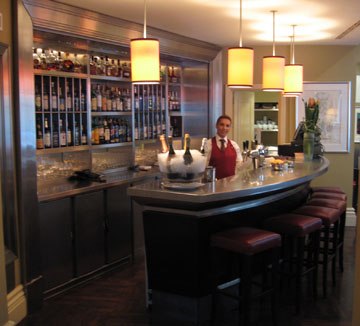
The doormen in their black top hats signal a welcome to the hotel; the lobby is small, but neat and classy with a dark-paneled reception counter and polite clerks. 

The air-conditioned room was bright, very clean, with a small suite adjoining the bedroom and bathroom. Comfort was key. There was a modern feel to the room which featured furniture and pictures from the Blaton collection and influences from Brussels’ history. The bright bathroom featured a red mosaic vanity top and excellent toiletries.

The room contained Brussels linens, red silk curtains with embroidered velvet details and Flemish chairs and desks. The bed was firm and comfortable. The room was quiet and provided a cozy getaway from busy shopping or touristy activities. I did not try the restaurant for dinner, or the bar, being there only one evening.

A BIT OF HISTORY

The hotel has a bit of history. The original structure on the lot was built before 1522 by a wealthy merchant family and later purchased by the city council and turned into a prison. In 1957 the Hotel Amigo was built by the Blaton family on the occasion of the Universal Exhibition of 1958. During the Rocco Forte renovation in 2000, it underwent a re-styling by Olga Polizzi, the hotel’s director of design. Canvases from artists such as Courtens, Dansaert and Wagemans, together with Flemish wall tapestries from the 18th century, give the hotel a pleasingly modern but still historic flavor.

The morning breakfast included all the necessary eggs, breads, meats and cheeses, juices, coffee, and fruits to satisfy many diverse tastes. The wait staff was pleasant and helpful.

Then hotel was won many awards, including being rated one of the top 100 hotels in the world by the Institutional Investor in 2007. Forbes Traveler rates it one of the top 400 hotels in the world.

European Traveler rates it extremely high as well. We liked virtually everything about it. 

The lowdown:

• Member of the Leading Hotels of the World
• 174 rooms, including 18 suites and the Blaton Suite (on the top floor with large terrace for excellent views of Brussels)
• In-room telephones, voice messaging, internet connection, cable TV, marble bathroom, minibar, safe, trouser press
• Ristorante Bocconi, with bar in the lobby
• Ballroom for up to 200 guests
• Fitness center
• Transfers from the airport (at a charge)
• 24-hour room service which “arrives on time” (the hotel guarantees this)
• In 2007, room rates for a classic room single were 590e; 720e for an executive room single
• General Manager: Ivan Artolli, since 2002 (fluent in French and English)
• Reservations: amigo@roccofortehotels.com