Menorca Artisans Keep Traditional Craftsmanship Alive

Story and photos by Alison Ramsey

In the west Mediterranean Sea, the Balearic Islands’ Menorca makes the most of its natural resources. And for being only about 30 miles long and 10 miles wide, it has a lot! This haven of coves and turquoise water licking untouched white sand beaches has been a Biosphere Reserve since 1993, and due to its wide diversity of habitats and landscape it is UNESCO-designated as the headquarters for the World Network of Island and Coastal Biosphere Reserves for matters pertaining to sustainable development. Local farming practices focus on sustainability and preserving the island’s natural heritage. Using environmental resources found within the island’s ecosystem, resident farmers and artisans make a living from the offerings provided by landscape and livestock.
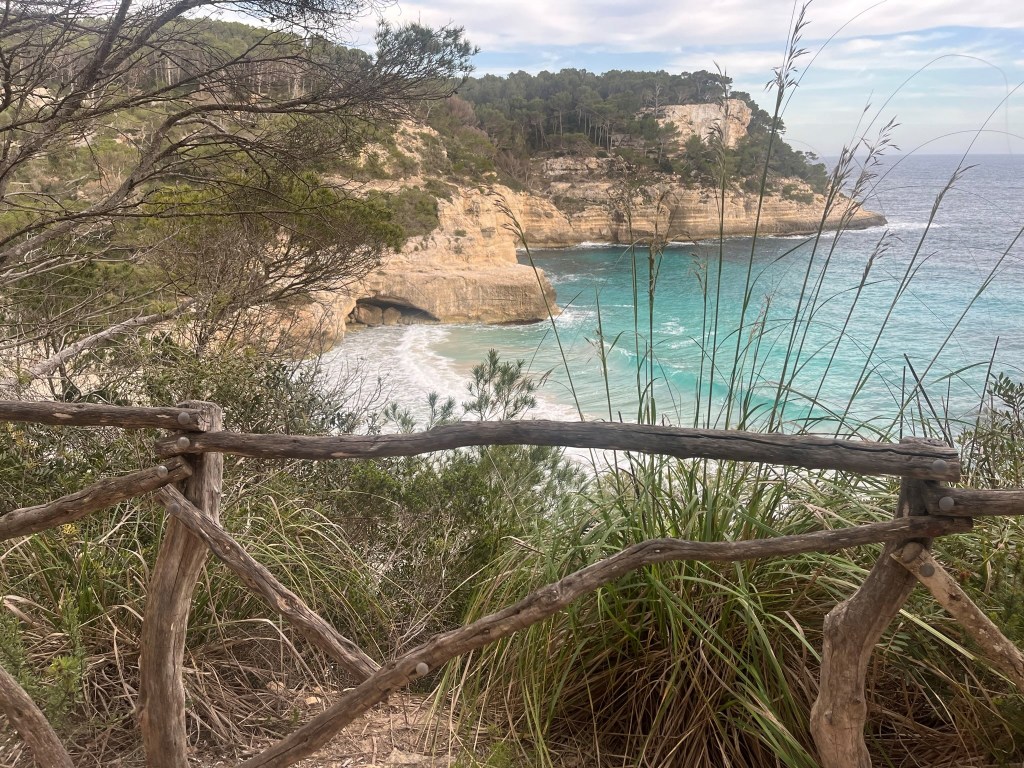
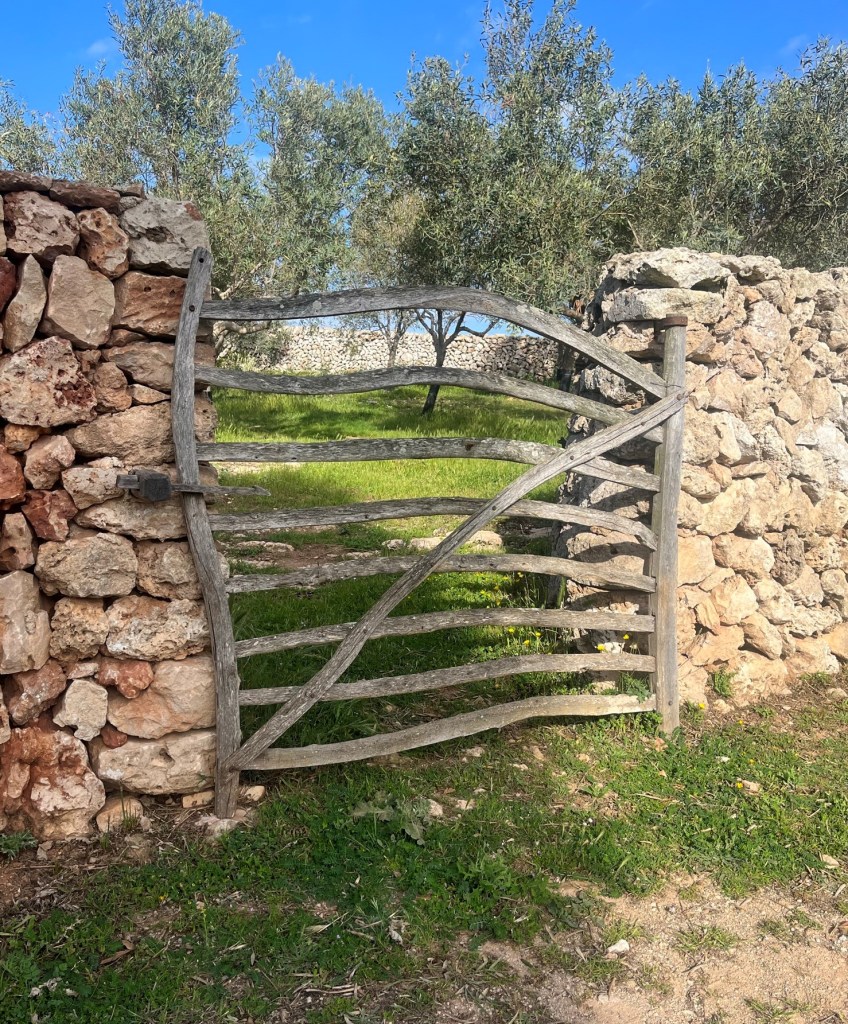
Across the island, wild olive tree wood is fashioned into fences to divide land and act as guard rails.

Menorca’s “mosaic landscape” of varying ecosystems consists of farmland, forests, and villages, with a bird’s-eye view revealing small plots of land divided by a network of dry-stone walls. Since ancient times, agrarians have gleaned rocks from the soil to build these mortar-less barriers that cover about 6,835 miles of the island (more than half the length of the Great Wall of China) and reduce erosion by blocking the wind from shifting soil to neighboring plots. Even the island’s prehistoric navetas (burial chambers) and talayots (shrines) were built by carefully selecting stones of varied size and shape, filling gaps with sand, and relying on gravity to secure them together.
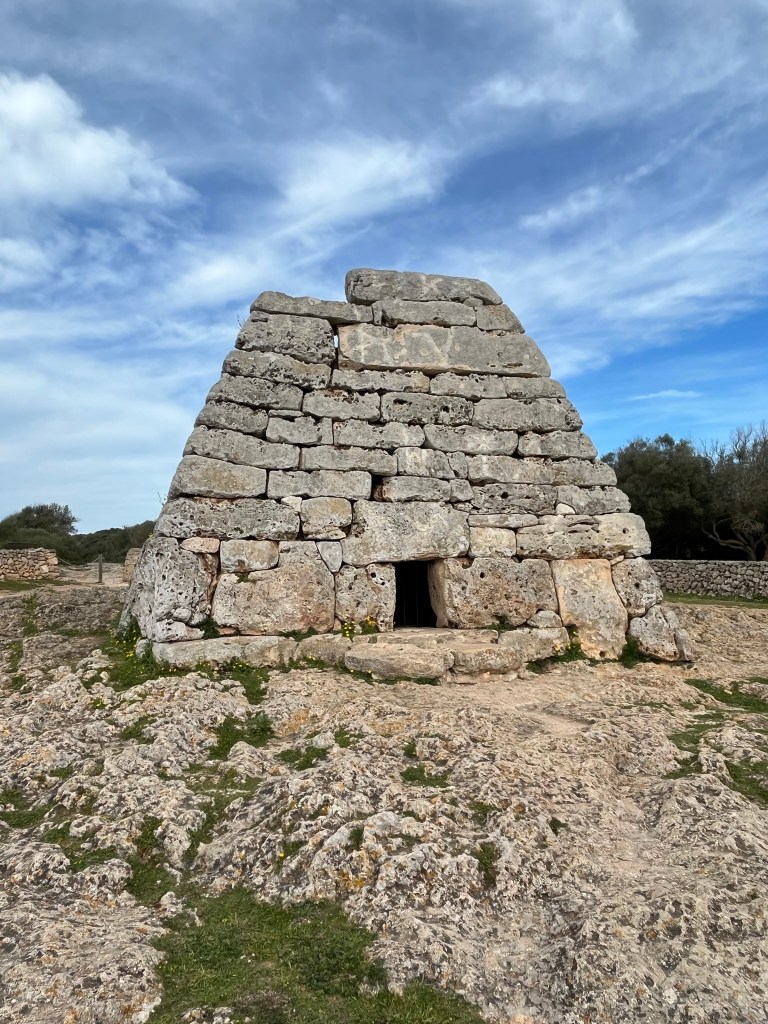
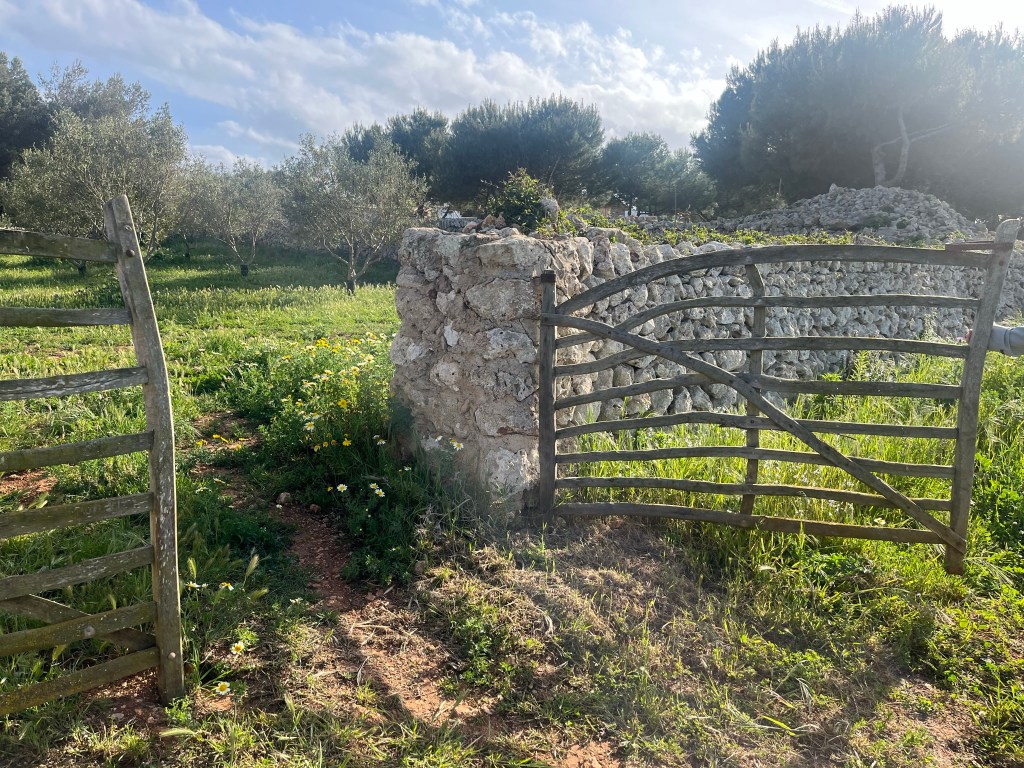
(left) Unique to the island, Menorca’s navetas are pre-Talaiotic burial monuments shaped like an inverted boat and built using only large stone blocks. (middle) The island’s naturally rocky soil is gleaned to build stone walls that separate land plots. Wild olive trees with olives not suitable for harvesting are formed into farm gates using their distinctive, curvy wood. (right) Prevalent on Menorca are cement-free stacked-stone walls and sturdy gates crafted from wild olive trees.

Vineyards on Menorca are typically surrounded by these stone walls, a drainage situation that adequately waters the vines without leaving them overly damp. Local beverages created from the natural flora offerings of the land include the Vi de la Terra Illa de Menorca indication of quality wine, aromatic Menorcan gin (the oldest in Spain) produced using wine-based alcohol distilled with native herbs and juniper berries in old copper stills, and herb liquor digestifs.

The olive tree is another landscape prevalence, including the Spanish arbequina variety, which is used to produce a popular extra virgin olive oil with a mild, creamy flavor and slow kick. Oral history says the famous condiment mayonnaise heralds from Menorca, where the invading French Duke of Richelieu first tried the local sauce (a simple mixture of olive oil, egg, and salt) and brought it back to the French court, naming the recipe “mahonnaise” after the town Mahón. The oldest written source of Menorcan recipes is Art de la Cuina, a book by Fra Francesc Roger detailing the island’s cultural gastronomy in more than 200 18th century recipes, including a recipe for mayo using native olive oil. Not only are olives used for oil production, the strong wood from wild olive trees whose olives aren’t large enough to harvest is crafted into rustic, swing farm gates in a distinctive curvy design seen all across the island.

The oldest written source of Menorcan recipes is Art de la Cuina, a book by Fra Francesc Roger detailing the island’s cultural gastronomy in more than 200 18th century recipes, including a recipe for mayo using native olive oil.

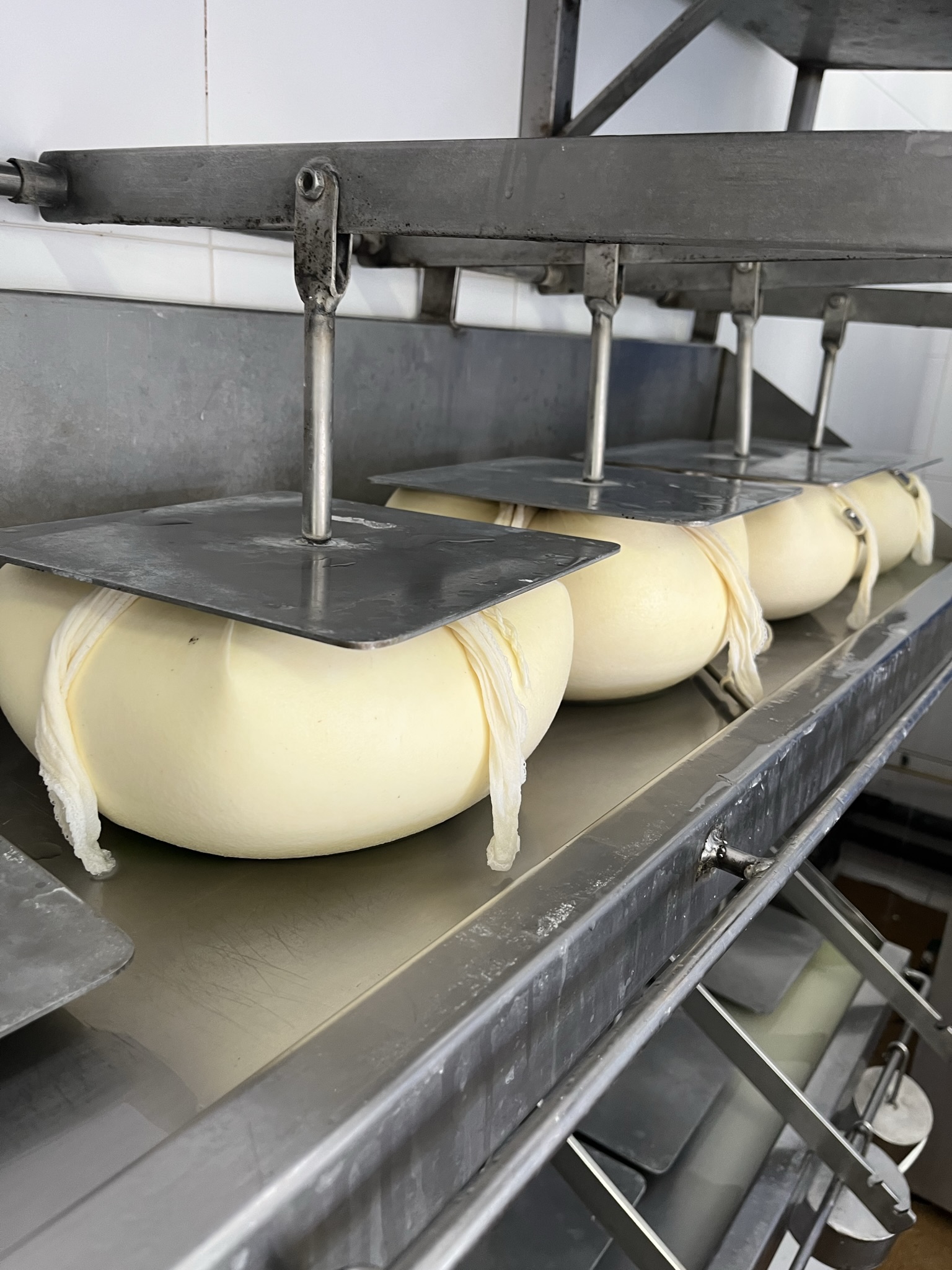
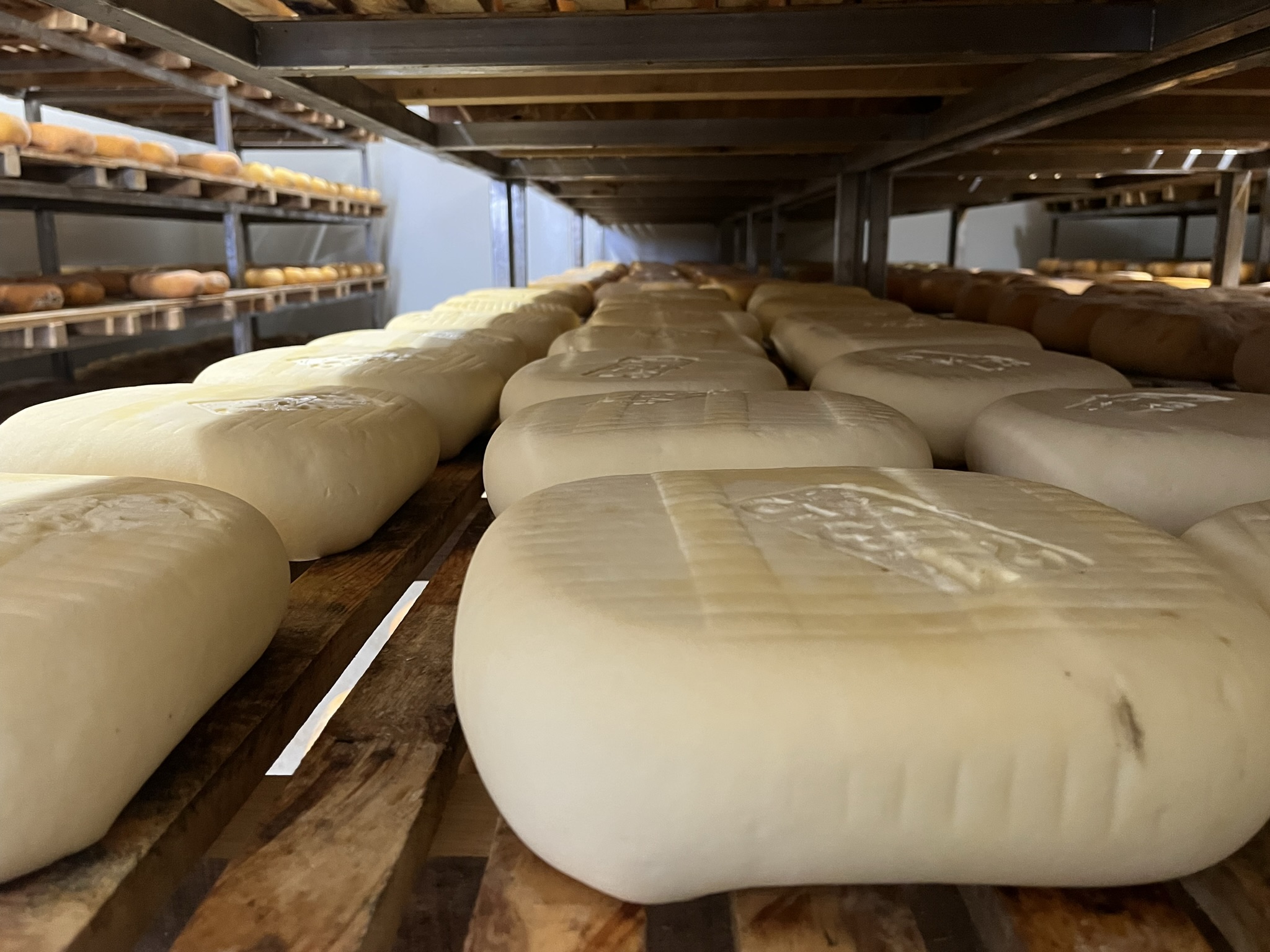
Using age-old methods, farmers use milk from Menorcan cows to produce rounded-edge square blocks of Mahón-Menorca Denomination of Origin cheese with a flavorful, oily dark rind (even Arabic documents from the year 1000 describe the tasty qualities of cow’s milk Menorcan cheese). Farms like Son Piris produce artisan cheese (made with raw milk and intended for immediate consumption) or the more industrialized and slightly sweeter pasteurized-milk cheeses. Martina Fedelich of Son Piris explained that it is difficult to imitate the Menorcan bacteria used in their cheese, as they are unique and isolated from other cheeses and even differ from those on neighboring island Mallorca. Easy to identify, Mahón-Menorca cheese’s unique shape comes from the cheesecloth used during the pressing process, and fabric lines from the cloth remain visible in the rind.

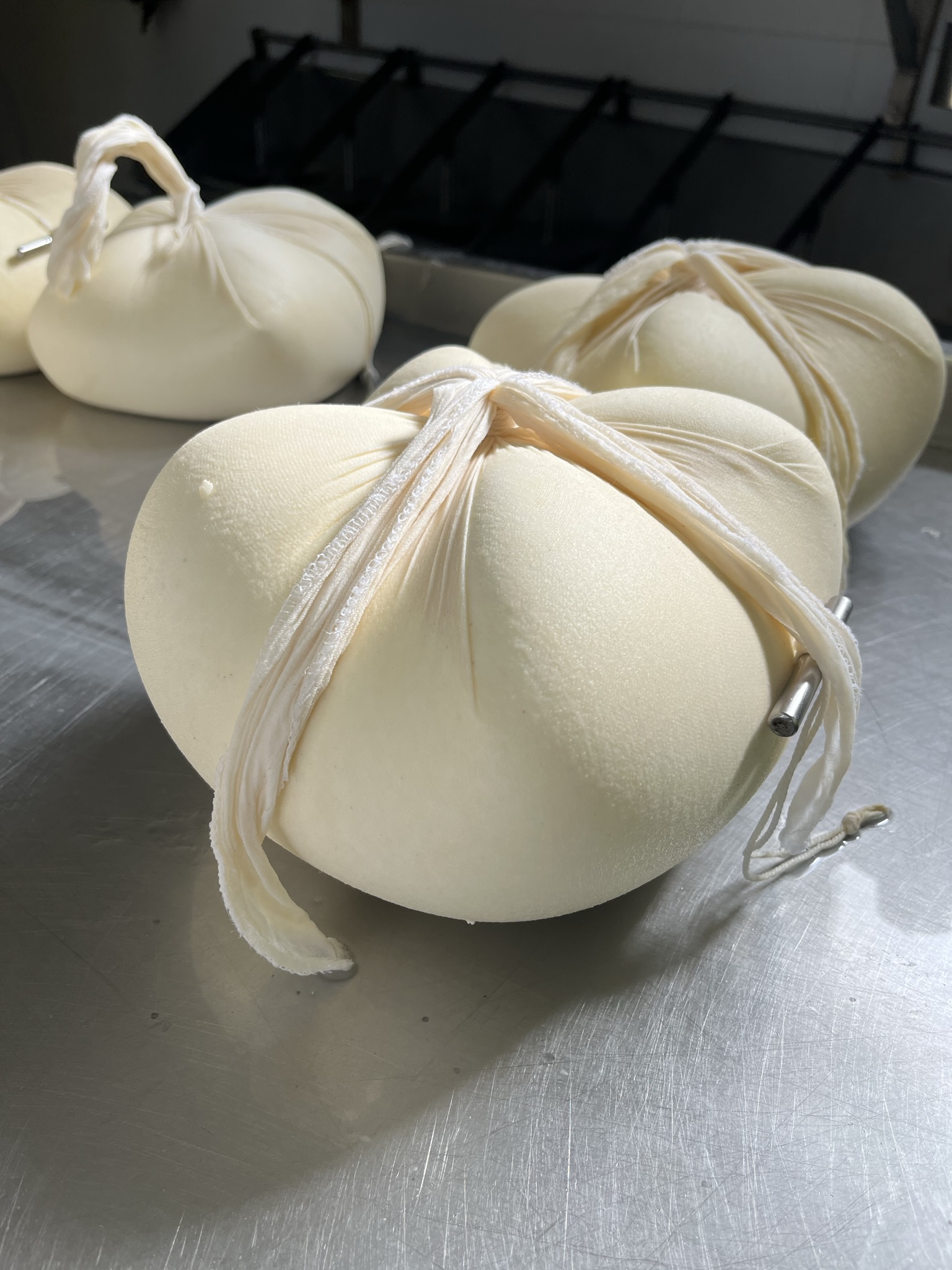
(clockwise from upper left) The unique shape of Mahón-Menorca cheese comes from the cheesecloth used during the pressing process, and fabric lines from the cloth remain visible in the rind; Son Piris cheeses are wrapped tightly in cheesecloth, which holds together the solid cheese curd while allowing for drainage of liquid whey; Wrapped cheeses are pressed to remove excess moisture; After their tightly wrapped cloths are removed, the cheese is set out to dry; Martina Fedelich of Son Piris serves the famous farm-to-table Mahón-Menorca Denomination of Origin cheese.  

Agriculture is a key trade on Menorca; however, the most important manufacturing business on the island is shoe design and production—an industry dating back to the 18th century. Footwear made in Menorca is known for its high quality and meticulous craftsmanship. The most famous sandal shape, with a cowhide leather upper and sole, was first created to protect farmers’ feet while working the rocky soil. Nowadays, these avarcas (also called abarcas or menorquinas) are sold with heels and straps of all styles and colors, but use recycled tires as a hardy sole. Popularity and production have been increasing especially over the past few years, and they are worn by Menorcans and visitors alike.
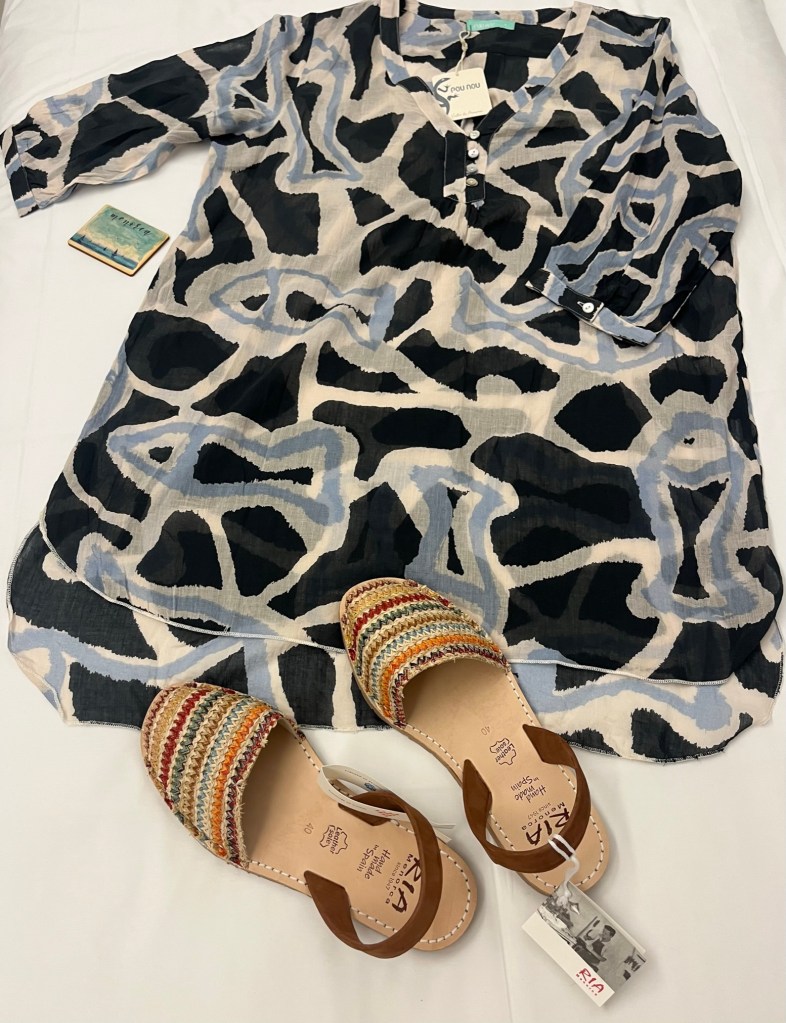
RIA brand avarcas fashioned from leather with a colorful woven upper are a stylish update to traditional peasant footwear. Pou Nou clothing motifs echo the sea life and landscape of the island, like this fish-print tunic in shades of blue.

Avarca company MIBO proudly carries the Avarca de Menorca hallmark—another island-specific denomination of origin—which guarantees that their footwear is crafted locally and made with high-quality materials. Founded in 1998 by Miguel Pascual and Bosco Moll, MIBO designs and manufactures these iconic Menorcan sandals using traditional methodology combined with modern technology. Moll said, “The process to make a pair of avarcas from Menorca has about 25 operations, which all need the hands of craftsmen to be able to make them. We also use technology that helps the craftsmen, but it always requires expert hands. … The future of our product and our brand passes through the qualified training of our craftsmen-workers since there are no schools or training cycles that help this task.”
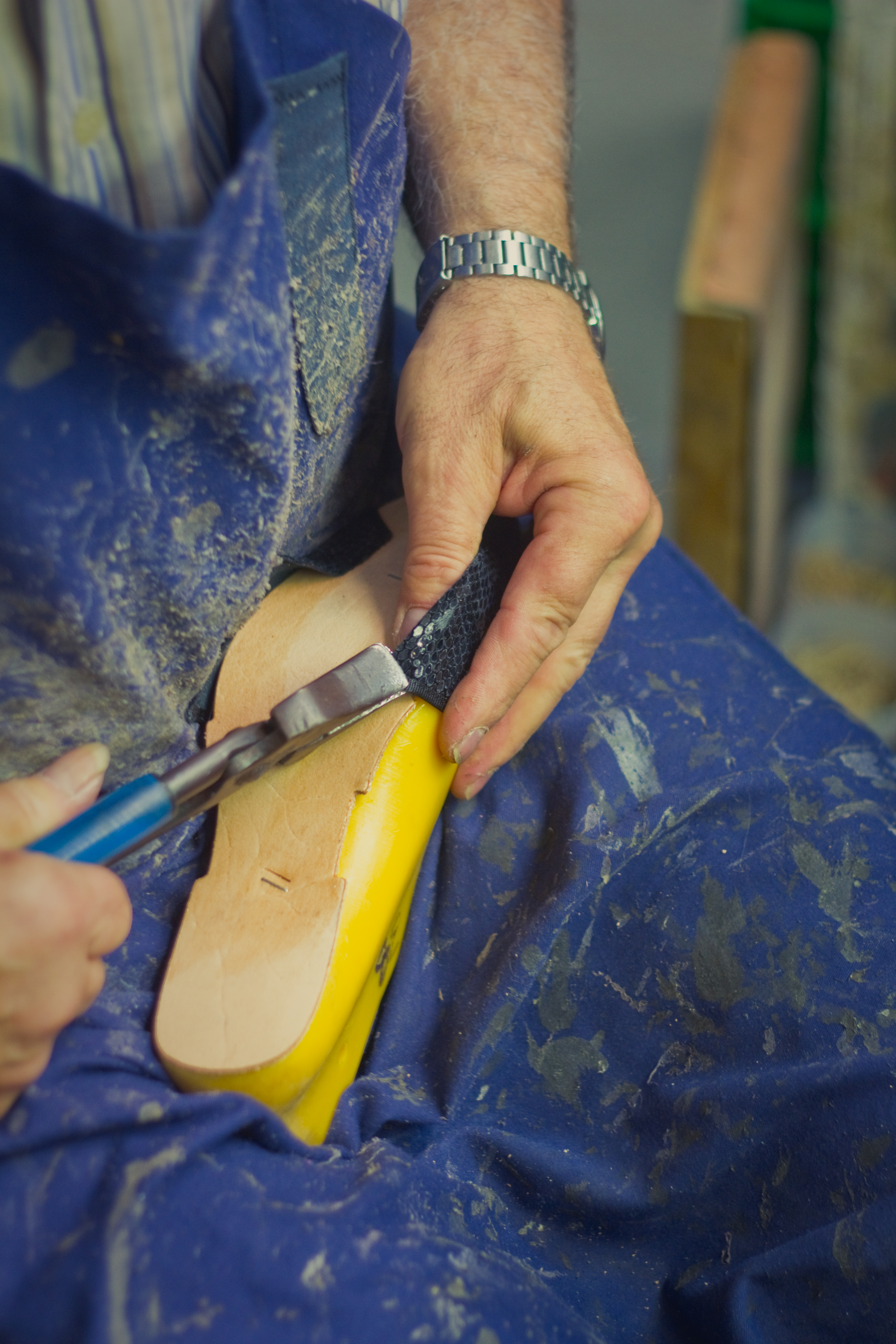
(left) A traditional style with modern updates, some MIBO avarcas feature trendy details like cut-outs, bows, and textured mosaic prints. (right) A MIBO artisan carefully guides a hallmark-stamped leather sole through machine stitching. Photos courtesy of MIBO.

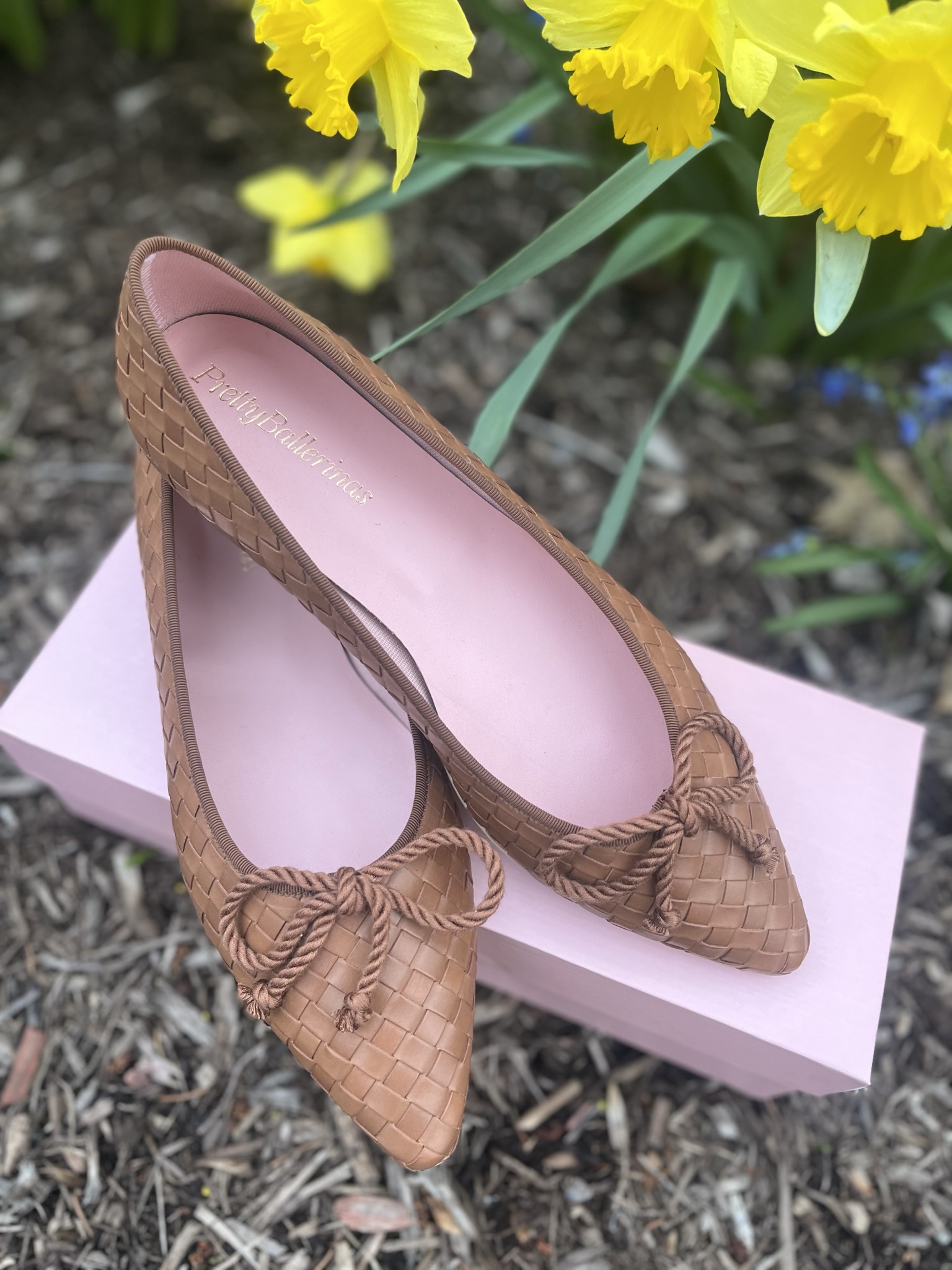
Another prestigious Menorcan shoe brand known internationally for its impeccable quality and innovative designs is Pretty Ballerinas, a unique line of leather flats produced by the Mascaró Group footwear company. These fashions have been famously worn by Kate Moss, Kate Middleton, the Queen of Spain, Elle Macpherson, Claudia Schiffer, and Angelina Jolie, among other celebrities. Fanny Cano, vivacious franchisee and owner of Pretty Ballerinas U.S. (the sole U.S. store, located in New York City), was born on Mallorca and has worked for the Mascaró brand since 1998. Fanny said:

“I love when through our very personal customer service we get to transmit to our customers the island’s vibes. They know they are wearing a unique piece crafted by hand on a small island in the Mediterranean. They feel the quality and the time invested in their pair of shoes. Explaining to the clients where and how the shoes are made—in a very artisanal and old-fashioned method—it really helps them to get tele-transported to the smell of the leather, the artisan hands sewing the shoes, mixed with the breeze of the sea and the taste of the food.”

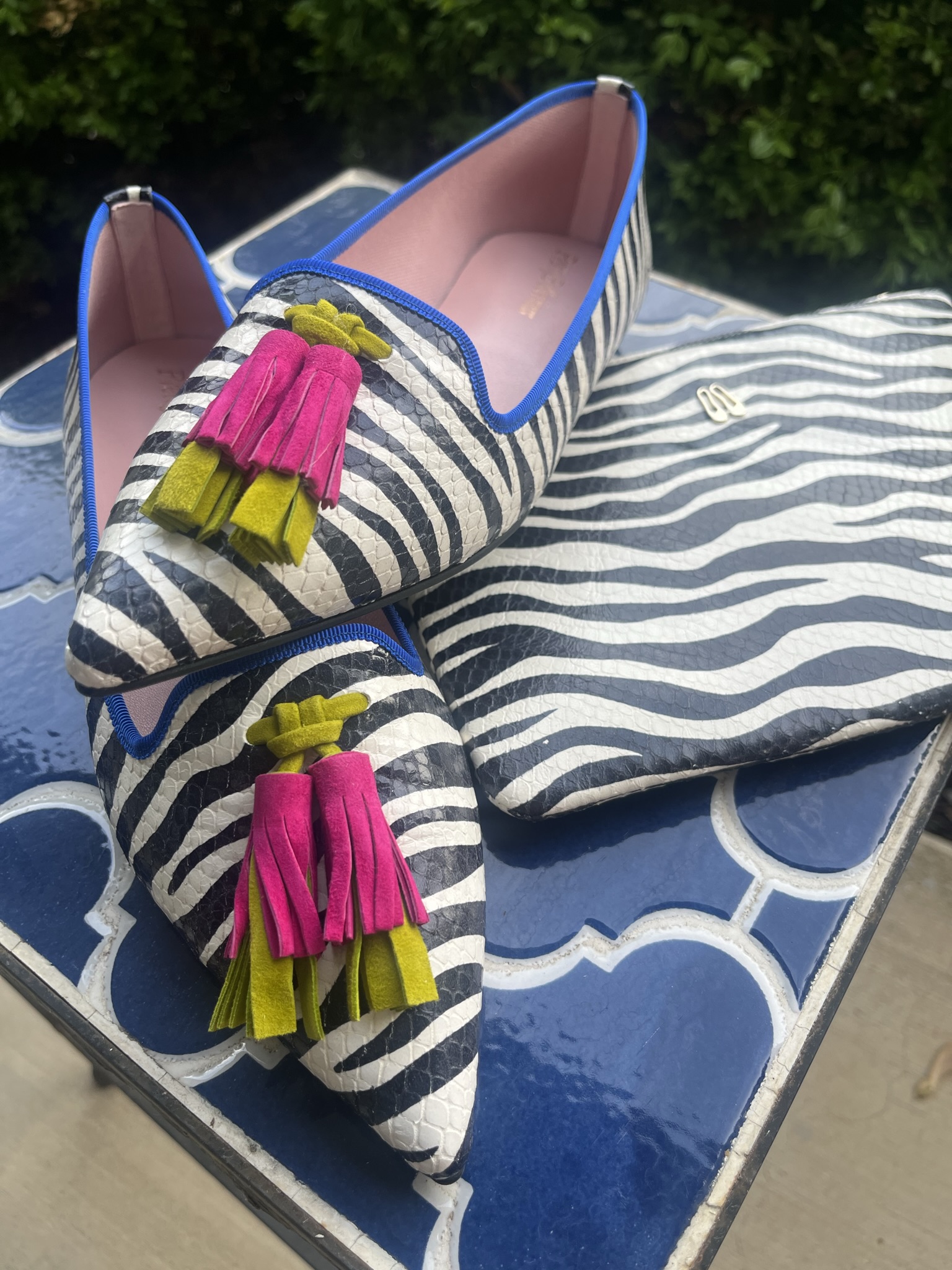
Fanny Cano, Pretty Ballerinas franchisee and owner of the New York City store, poses before the iconic pink boxes and glamorous storefront that identify this high-quality brand of Menorca-made women’s leather flats. Easily identifiable by a pink lining and stamped ballerina slipper icon on the underside, Pretty Ballerinas flats and matching handbags exhibit a unique style and luxurious leather silhouette. Top-left and bottom-right photos courtesy of Fanny Cano.

Woodworking, earthenware, basket weaving, traditional llaüt wooden boat carpentry, and other crafts using fabrics, stone, and paper are sold in island shops and markets during the summer months. The quality of local, professional artisans’ work is acknowledged by the Artesanía de Menorca (Craft of Menorca) hallmark, and the Centre Artesanal de Menorca (Artisan Centre of Menorca) at the Es Mercadal fairground exhibits and sells many of these handmade products.

A Menorca-born leader in local artistry is Pou Nou clothing company, whose designers work closely with area artists to produce contemporary designs and stylish garments that reflect the colors and shapes of Mediterranean life. Drawing inspiration from the sea, sky, and island itself, Pou Nou creates hand-printed T-shirts and breezy, comfortable fashions for all ages using natural fibers like linen and cotton.

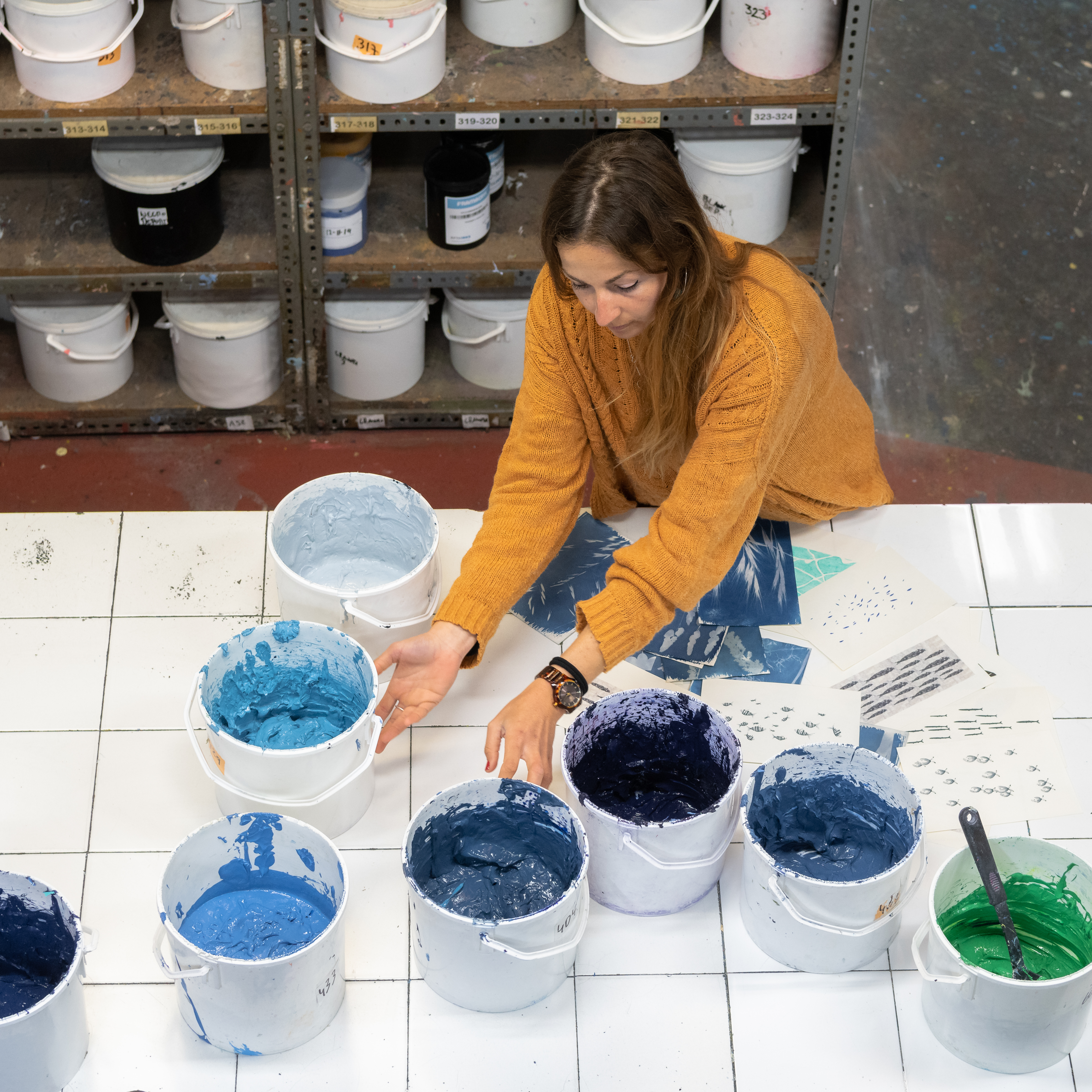
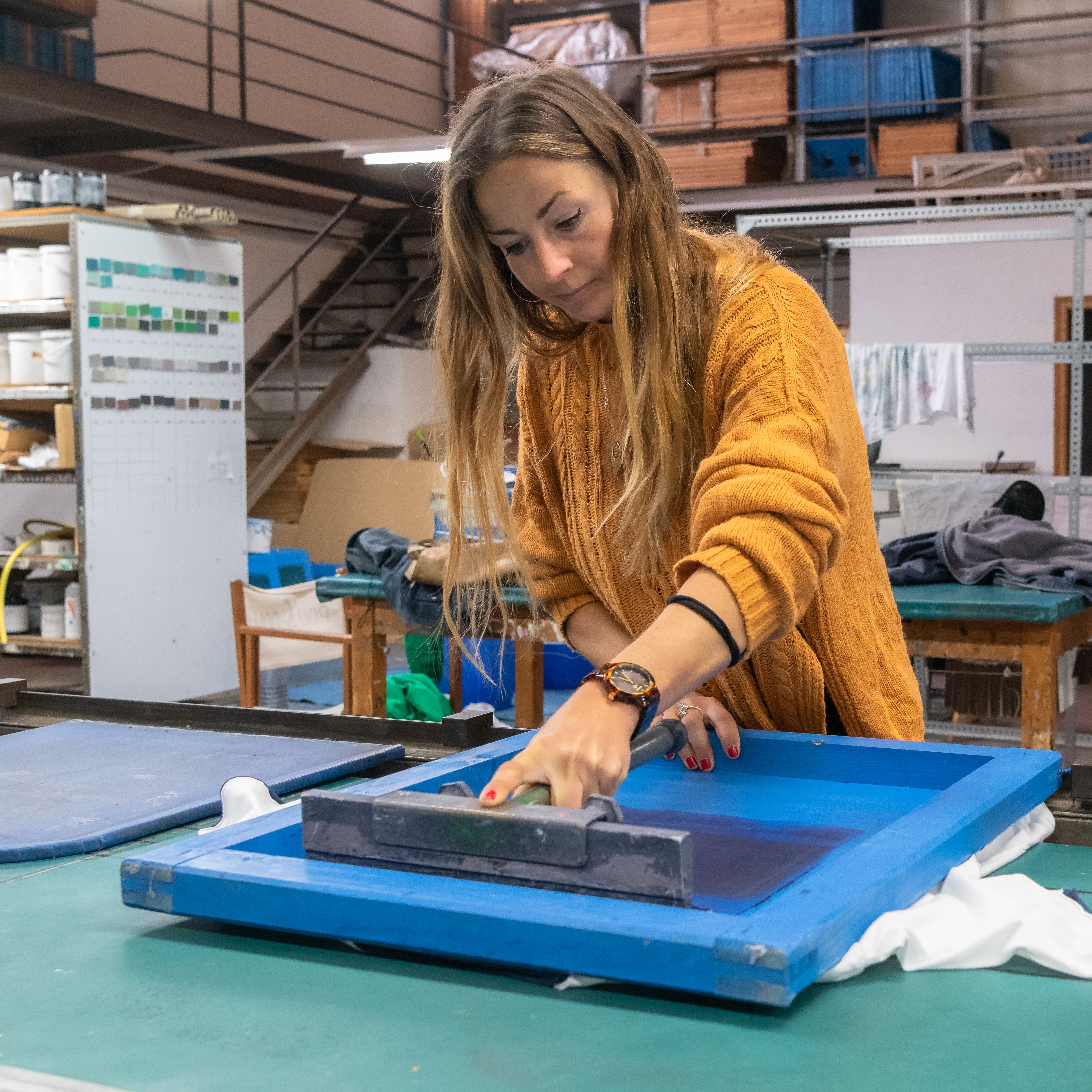
(clockwise from left) Pou Nou team members select nature-inspired artwork for clothing designs; Pou Nou colors and designs are inspired by Menorca’s flora and fauna, sea, and sky; Using a Mediterranean-inspired color palette, a Pou Nou team member tests a screen-print design.
Photos courtesy of Pou Nou.

Collaboration with local artists results in Pou Nou’s unique island-wear designs.

Owner Joan Carrés said, “I am proud of having been in the business for 36 years, following my original idea of combining good quality garments with original artwork from local artists.” Pou Nou’s easy-to-wear styles and unique artist collaborations feature screen-printed sea creatures, flowers, geckos, insects, boats, bikes, palm leaves, and nautical themes. With Pou Nou only available for purchase in Spain and other European countries, U.S. travelers looking for this island-wear can reach the Balearic Islands by flying directly from New York/Newark (EWR) to Palma de Mallorca (PMI) through United Airlines’ new, seasonal direct flight offerings. Menorca has been like a hidden treasure for many years, largely reached only from mainland Spain, but these new direct flights from the United States allow easier access to Menorca-made specialty items and scenic views of iconic landscape features. The island’s varied ecosystems and natural offerings provide ample resources for a thriving artisan business, with agriculture, footwear, fashion, and handcraft industries using materials and inspiration offered by the beautiful land and sea.
Menorcan Lobster Stew: A Seaside Specialty

By Alison Ramsey

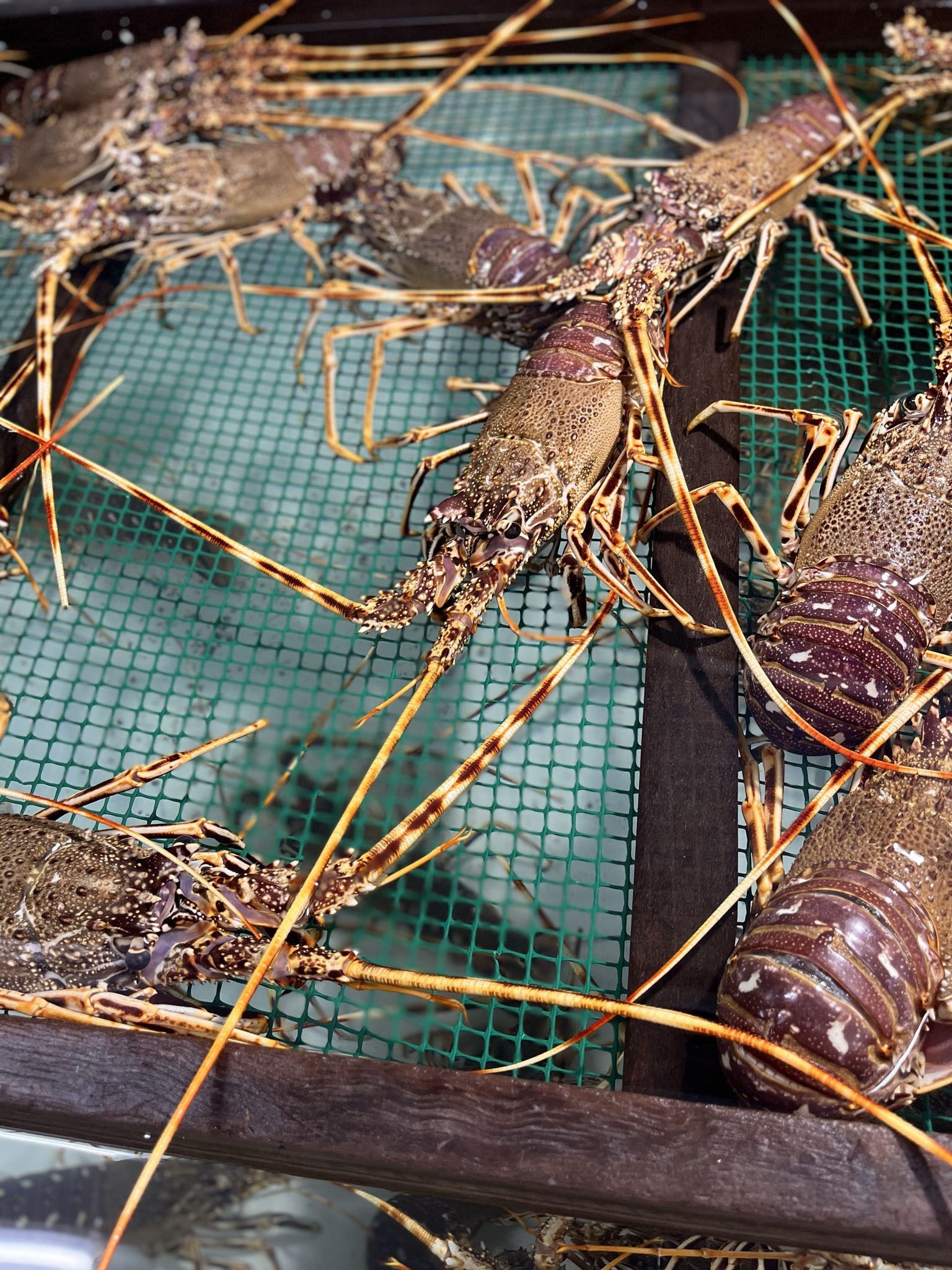
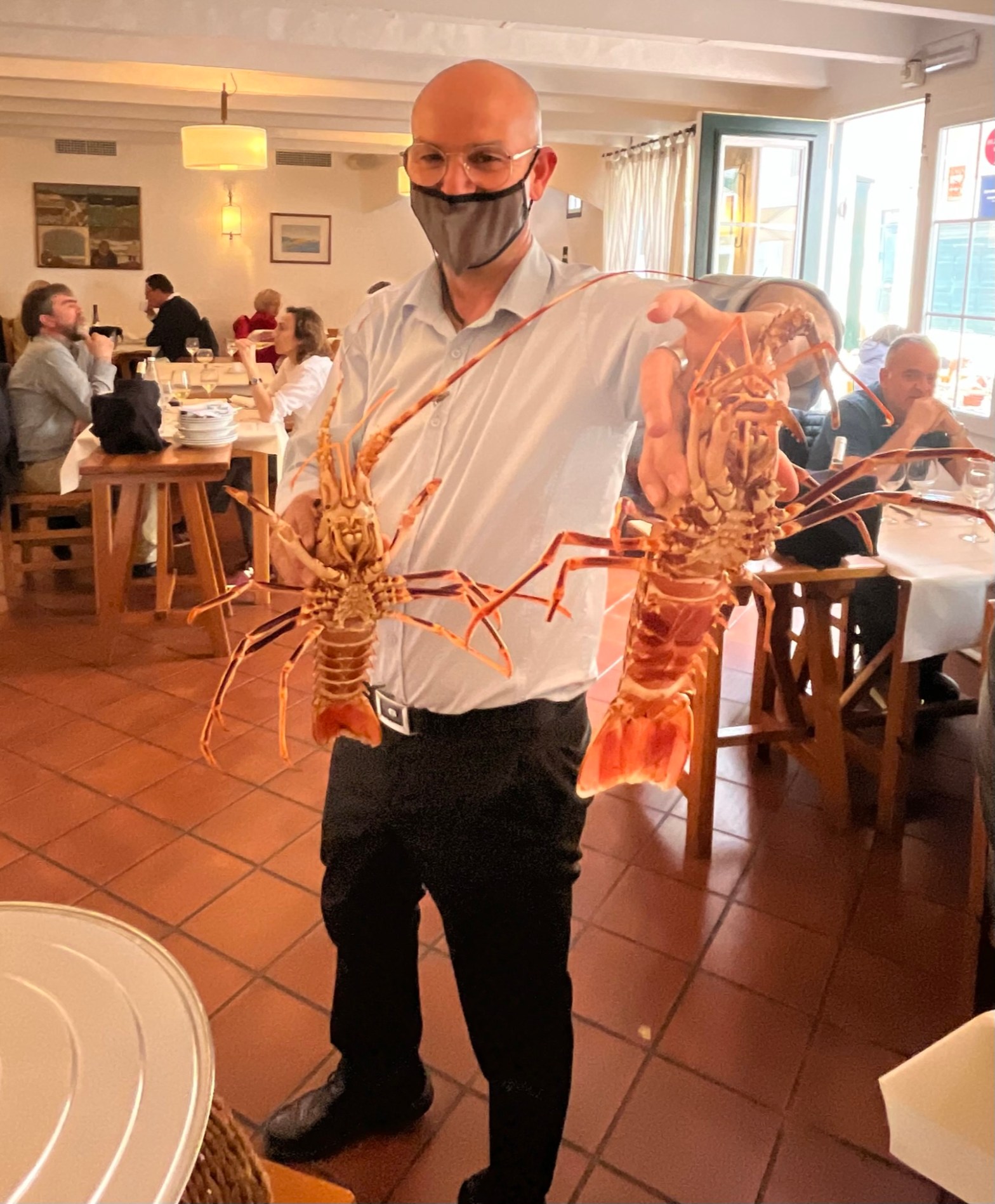
There is a first time for everything. First time visiting Menorca in the Balearic Islands of Spain; first time eating traditional lobster stew; first time holding a live lobster! The first two “firsts” were by choice, and the third was a complete surprise, as waiter Carlos at Es Cranc in Fornells Harbor gestured for me to hold out my hand and suddenly I was gripping a ridged pair of long antennae in my fist, with a huge lobster hanging at the bottom of them.

A lively, rambunctious lobster indicates that it is fresh.

This particular lobster did not end up in our soup bowls at lunch, but a similar one did, and it was key to the flavor of this traditional Menorcan dish. Invented by fishermen and later tweaked by chefs across the island, caldereta is the most renowned dish of Menorca’s seafood cuisine and can be made with lobster, eels, and varieties of fish. Surprisingly, the lobster that visitors relish in Menorca was once considered by islanders to be food for the poor due to its overabundance. Now it is a highly coveted gastronomical treat that restaurateurs take pride in preparing, especially during peak tourist season.

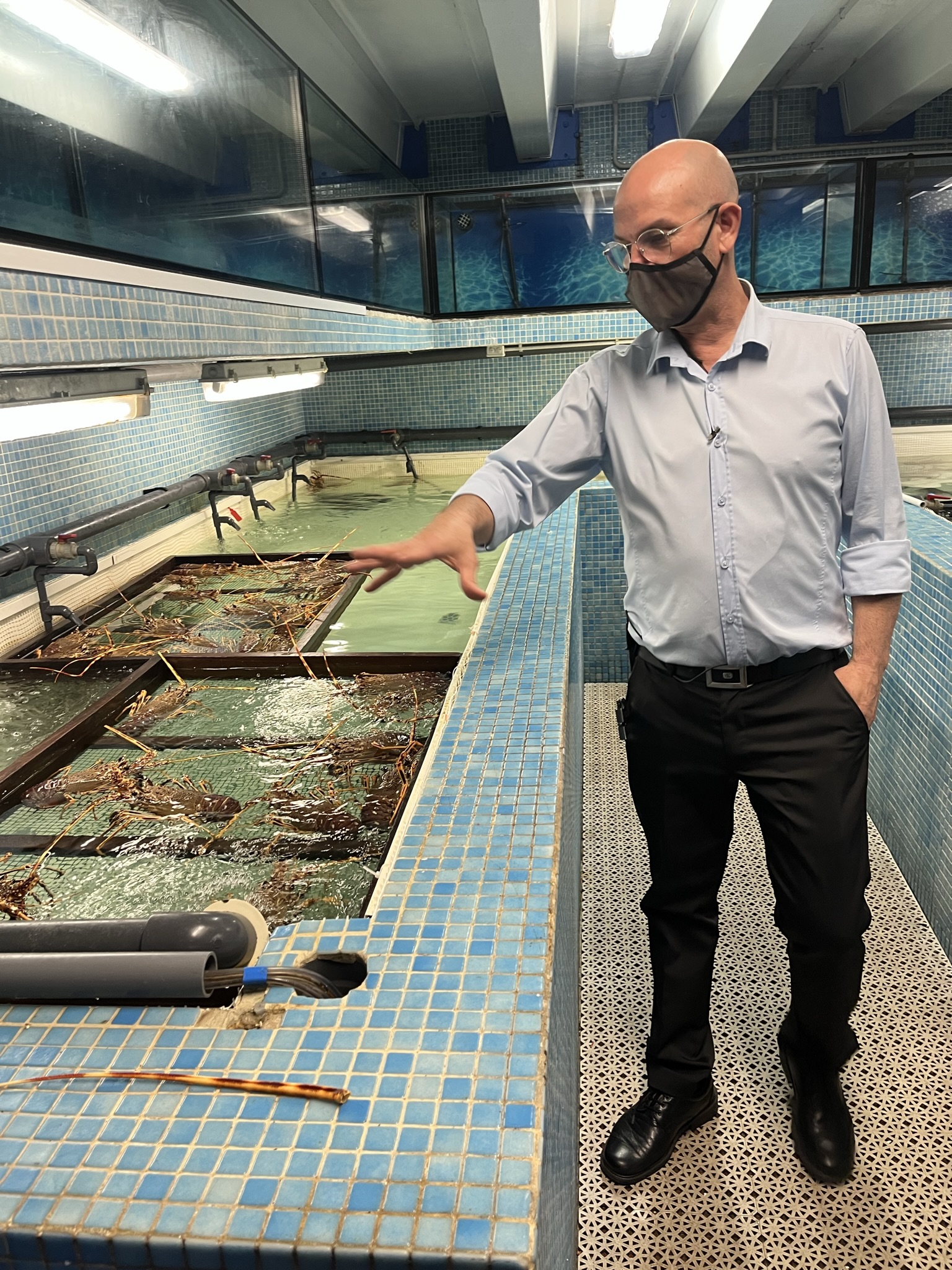
The tanks at Es Cranc can hold 3,600 lobsters—all from Menorca only. Elevated trays hold the lobsters that arrive that day, whereas lobsters from previous catches crawl along the bottoms of the tanks.       

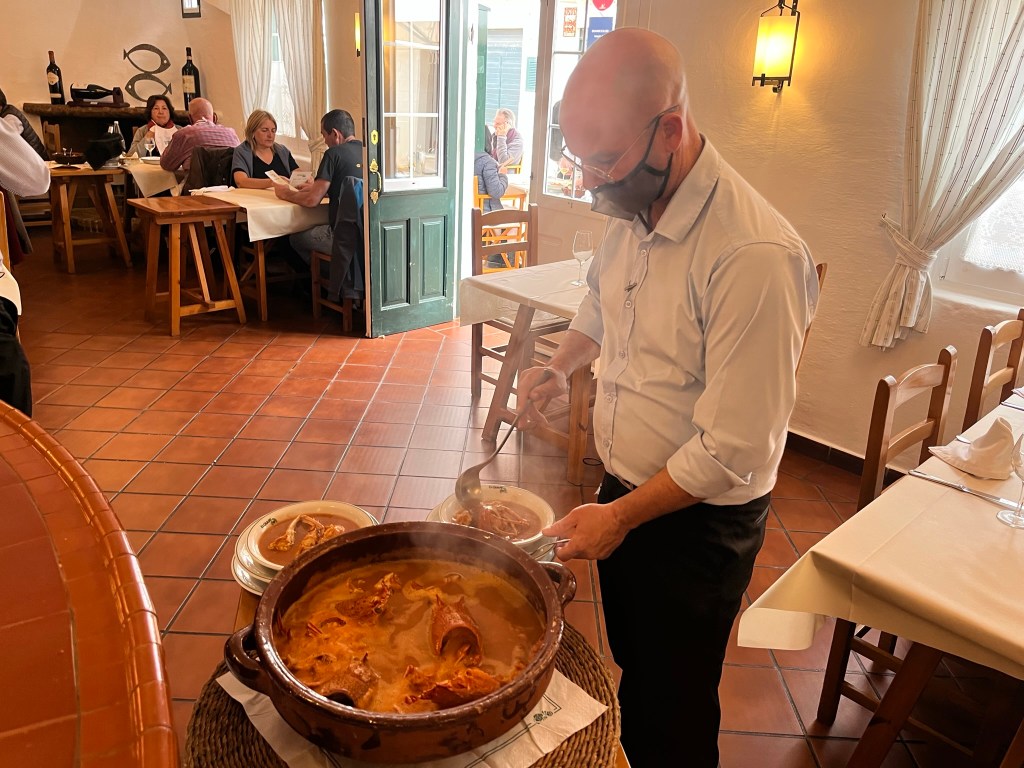
Caldereta de langosta (spiny lobster stew) is a simple recipe traditionally made by braising the locally caught spiny lobster over high heat with a savory sauce containing peppers, onions, tomatoes, garlic, and parsley. Typically served with homemade bread, you can soak the sauce into the slices, or you can simply spoon it up. The lobster stew served at Es Cranc contains several large, meaty portions of tender lobster in a hot, flavorful broth. Dainty eaters, don’t despair—Es Cranc provides bibs, lobster picks, and small bowls of cleansing water for messy hands.

The word “caldereta” refers to the earthenware cauldron in which the stew is prepared.

Whether it’s your first trip to Menorca or you’re a repeat visitor, plan for a meal at Es Cranc. You, too, might get to hold a wiggling crustacean!

A digestif of chilled “herbes” (herbal liqueur) brought the meal to a close. This sweet liqueur can be made with a variety of plants, the most popular being chamomile, as it is found in abundance across the island.  

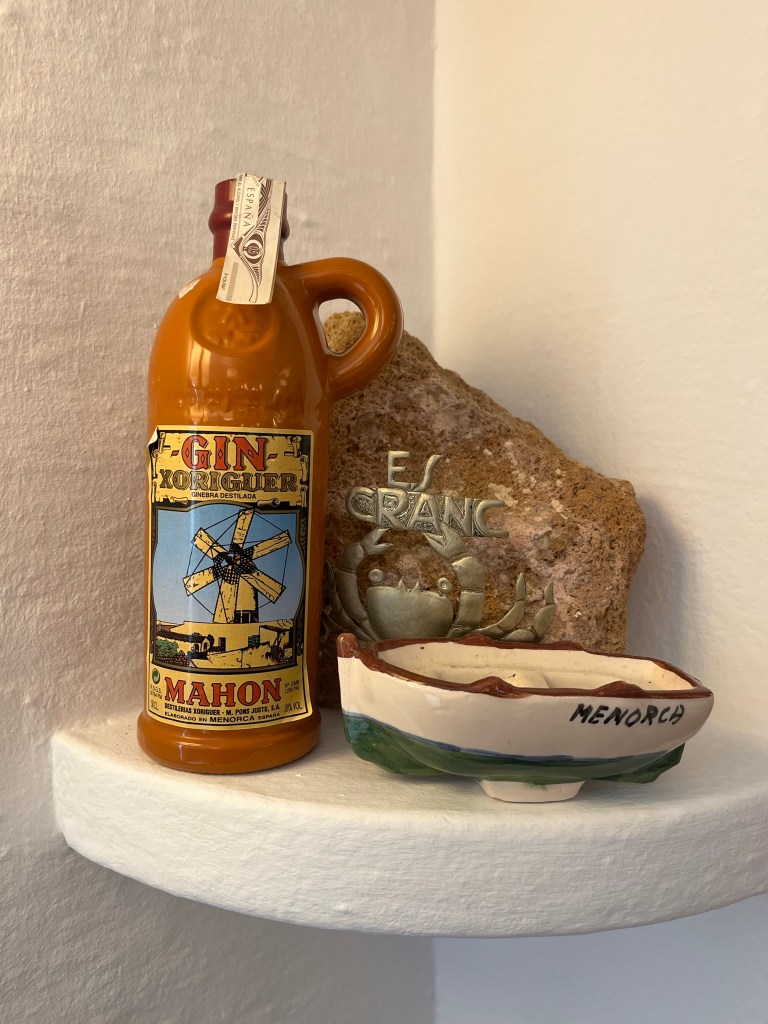
Gin Xoriguer is the most popular Menorcan gin, made from grapes and juniper berries. The distillery has used traditional methods to make this drink for almost a century, and the creator’s family windmill featured on the unique bottle has become a recognizable symbol of the island. Mixed with lemonade, this gin makes a delightfully refreshing drink called a pomada.

Lobster Stew Recipe

A traditional recipe for lobster stew, as printed in Menorcan Cuisine Yesterday and Today: Undiscovered Recipes.

Ingredients
2 kg lobster
2 onions
2 cloves of garlic
1/2 green pepper
250 g tomatoes
1 bunch of parsley
7 tbsp. of olive oil
1.5 litres of water
slices of bread for soup or toasted bread
salt

Preparation
Cut the live lobsters into two on a wooden chopping board, separating the head from the tails; reserve the juices in a separate bowl. Split open the body and remove the black intestines using your hands or one of its feelers or antennae. Remove the legs and other feelers. For female lobsters, place the eggs in the bowl, and do the same with the stomachs and livers. Finally, cut the heads in half down the middle, and cut the bodies into slices, making sure to save all the juices.

Finely chop the onion, garlic and green pepper. Place the oil in an earthenware pot and gently fry the vegetables over a low heat. When the onion is translucent, add the very finely diced tomatoes (or they can be grated or blended). Cook over a very low heat for around 10 minutes.

Place the lobsters in the pot and leave to cook a little. Then add the juices, water and chopped parsley, season with salt and cook over a high heat for 15 minutes. When it starts to boil, reduce the heat and cook for a further half an hour.

Meanwhile, grind the lobster eggs, stomachs and livers in a pestle and mortar with a little garlic and parsley, adding the rest of the liquids and a little water to moisten the mixture. When there are just a few minutes’ cooking time left, add the mixture to the pot.

Turn the stove off and leave the stew to rest for at least two hours. In fact, it will be much tastier if made the day before eating. To serve, pour the broth with the lobster pieces into soup bowls, with slices of toast.

Spotlight on Lucerne

Lucerne, Switzerland is a great city for pedestrians. A walk around Lucerne, a city of only 57,500 people, is invigorating and beautiful, with the majestic Alps at your doorstep.

Founded as a small fishing village on Lake Lucerne (Vierwaldstattersee) the city (at 1,430 feet), is the focal point of the region, and the most populous city in central Switzerland.

The city is called “the essence of Switzerland” and the “Festival City” with numerous events such as the World Band Festival, Mozart Festival and the Lucerne Festival. There are numerous bridges in the city, with the Chapel Bridge the most famous, built  circa 1300 as part of the city’s fortifications.

The Musegg Wall with its nine towers was built in 1400 after the Battle of Sempach and today it is considered the longest and best preserved rampart walls in Switzerland.

A ride on the many beautiful lake steamers is a must to enjoy the surrounding countryside. Boats leave right from a dock downtown across from the train station (Bahnhof). While in Lucerne, walk through or stay at the 101-year-old historic Palace Hotel and ask for a lakeside room. 

While you are in Lucerne, stop by the Swiss Transport Museum (www.verkehrshaus.ch) and look at all the restored trains, planes, and other forms of transportation. If you have a full day each, also see Mt. Rigi (www.rigi.ch) and Mt. Pilatus (www.pilatus.ch), two spectacular mountains each obtainable by hiking or cog railway. You can take boats, trains or drive to the base of each mountain.

For more information on Lucerne, go to www.luzern.ch.

New Premicon Queen Brings 5-Star Luxury to the Rivers

By Don Heimburger
Photos by the author or as noted

ON BOARD THE PREMICON QUEEN, MELK, AUSTRIA—What comes to mind when someone talks about the most beautiful waterways in Europe?

There is the Rhine, the Elbe, the Mosel, Main and others, of course, but the Danube seems to conjure up visions of romance, adventure and even intrigue.

The 1,771-mile-long Danube, originating in the Black Forest and flowing through 10 countries to the Black Sea, is Europe’s second longest river (Russia’s Volga is the longest). A third of the river flows through mountains, and the remainder through hills and plains.

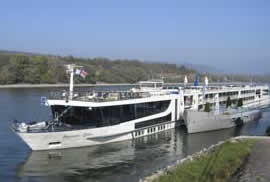
So here I am, a passenger on the Premicon Queen, a floating five-star hotel, which caters to travelers who appreciate the finer comforts of life and who can afford the time to enjoy them. It’s said to have more room per passenger than any other river cruise ship, at 484 square feet per passenger.

BUDAPEST IS ORIGINATING POINT
Operated by the popular Cologne-based KD Cruise Company, the five-day trip starts in Budapest and ends in Regensburg, Germany, a distance of 452 miles. And in those miles, as well as in the total miles of this majestic river, I think of all the cultures, towns, traditions and people this river binds together. This thought continues to hold wonder for me throughout the cruise, as we float from country to country and city to city.

Seeing these things all come together on the river—on a luxury ship—is a satisfying way to relax, with plenty of time to think, dream and melt your stress away.

Billed as the world’s most modern twin-propeller cruiser, the 800 KW Premicon Queen features two mini suites, 30 junior suites, 16 deluxe suites and four queen suites. The rooms face the water so travelers enjoy the river from the comfort of their own suite. The crew speaks both German and English.

Deluxe suites, with 237 square feet of space, feature an upscale interior, marble bathroom with shower and panorama doors which when opened, turn the suite into a loggia. Queen suites have a separate living and sleeping area, marble bathrooms with shower and tub and French balconies as well as a walk-on balcony with two seats. Even a butler is assigned to your cabin for any extra help you may need.

Rooms feature individual temperature control, television (with a channel showing a view from the front of the ship), telephone and wireless internet access. Bathrooms had both 110 and 220 volt outlets. Room service was also available.

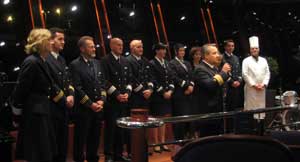
The Premicon crew

OCTOBER TRIP
A couple of days devoted to touring Budapest are in order if you’ve never been to this city of under two million people. A city tour by a Cityrama bus (www.cityrama.hu), with a German/English-speaking guide, is a must if you aren’t familiar with the city. Purchase of a Budapest Card is also a good idea if you want to scout out the city on your own. It offers free services or discounts to more than 100 attractions from museums, baths and restaurants as well as public transportation.

Be sure to see the Westminster-style Parliament building, the Chain Bridge (especially at night), Heroes Square, the Palace of Art, the Transport Museum (Europe’s oldest), maybe the zoo, and take the funicular to Castle Hill. For fun visit the Great Market Hall, Statue Park and perhaps enjoy a nice relaxing stroll through Margaret (Margitsziget) Park, located on an island and reachable by tram. While in Budapest, visit the famous Szechenyi Baths in the City Park and eat at the upscale Gundel Restaurant nearby.

The Premicon Queen has arrangements with Hilton to provide lodging at the point of departure as well as the end point on cruises so passengers can spend extra time visiting these cities before and after their cruise.

My October cruise avoided the large tour groups that typically crowd Europe’s rivers and land excursions, so there was not a crush of visitors to deal with. But some of the nicer, warmer weather was gone as well. It’s a tradeoff sometimes.

After a day and a half of visiting the sights of Budapest, it was time to find my ship. Approaching the dock area near Budapest’s Parliament Building where it was waiting, two eager young men greeted me and carried my luggage to my room—no back strain there. After a tour of the room by one of the crew, I’m off to explore this 442-foot by 37-foot wide boat. I’m surprised it’s just a bit over 5 feet deep, but later on the trip I note some areas of low water on the river and understand why this is necessary.

The captain, Stamen Dimitrov, who has been piloting ships for 19 years, will tell you the 106-passenger Premicon Queen can travel at nearly 14 miles an hour and has space for a crew of 60. Cruise Director Doris Moser, Hotel Manager Thomas Boge and Restaurant Manager Oliver Schulz, are on board to oversee virtually your every whim. When you figure the passenger count to the crew, you can see that it’s a win-win situation for the passengers, especially if you like attention.

SUNDECK GREAT GETAWAY
When the weather is warm, and there’s no precipitation, the 10,764-square feet of space on the top sundeck is the place to be. With comfortable lounge chairs, a tai chi area, shuffleboard, chessboard and putting green—as well as waiters ready to take your drink order—passengers have a number of distractions. In colder weather, you can use one of the large blankets supplied by the ship to stay warm.

When departing Budapest at 10 p.m., I wasn’t really sure we were leaving the dock since the ship’s motors were so quiet. After devouring the chocolates on my pillow placed there earlier in the evening by the maid, and after a comfortable night’s sleep in my room trimmed in rich dark wood paneling, I was ready for breakfast, served at the rear of the ship. With glass on all sides and rear of the restaurant, passengers are able to enjoy a wide-screen view of the river at the stern.

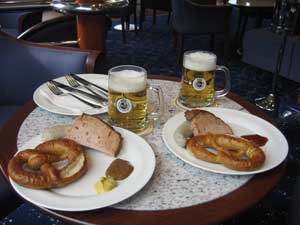
If you enjoy variety in your meals, the Premicon Queen will likely satisfy you. Breakfast consisted of a number of different juices, jams, breads, meats (ham, salami, veal liver pate, bacon, sausage), cereals, egg selections, as well as hot drinks, milk (3.5%, 1.5% or .03%), vita drinks such as green and yellow tea, and cheeses (Emmentaler, Tilsiter, Gouda, Edamer or Buttercheese, Brie and others).

In addition, oatmeal, fish, fresh fruits or dried fruits, danish pastries and more await you, and that’s just at breakfast. Did I mention the champagne? Early birds could start their day in the Steamship Salon with a limited breakfast menu until the ship’s main restaurant opened at 7:30 a.m.

One evening for dinner guests were offered appetizers of beef tartar with dark bread and pickles or queen’s salad, or warm potato quiche. That was followed by a pure carrot ginger bisque soup with sevilla orange segments, and a main course of seared plaice fillet on lemon pesto, pancetta and rice souffle, or oven-roasted tenderloin of veal with truffle essence and a baked potato. Dessert was either tiramisu, green tea sherbert, seasonal fruit salad or a selection of cheeses. Oh yes, there was also a vegetarian dish.

Executive Chef Rainer Buss was always busy in the kitchen with his crew preparing new entrees, and Oliver Schulz the restaurant manager was eager to please, inquiring about the food, making sure passengers were well attended to, and sending the wine steward over to help guests make a wine selection.

Wine selections were sometimes a bit hard to make just because of the wide selection. My notes indicate that at one evening meal, passengers could select from two types of Hungarian bottled wines and four types of open wines, two from Germany and two from Austria. Descriptions of the wines and their origins was printed in the menus.

LOCAL CUISINE FEATURED
As the Queen floated down the Rhine between Hungary, Austria and Germany, the meals were often especially chosen to coincide with foods from that area. As an example, near Passau the evening meal selection included beef roulade with gravy, red cabbage and potatoes. A Bavarian crème with blueberry compote, a most delicious combination, celebrated the end of the meal.

As you can guess, meals were served with elegance and flair, and the portions were plentiful. More than once I was glad the ship was as large as it was so I could take an after-dinner stroll. But then came the “midnight snack,” usually served around 10:30 p.m., in case you were still hungry. This usually featured finger sandwiches, fruits, desserts and other tempting treats too good—and presented too elegantly—to pass up. Coffee and tea time was also a daily ritual between 3:30 p.m. and 4:30 p.m. in the ship’s Theatron, as was a cocktail hour at 6:30 p.m. every evening. Dinner began at 7 p.m.

The ship’s library was small but had an interesting selection of books on history, travel and novels, as well as some board games. Guests can walk to the clubroom where fine cigars and premium whiskeys are available, or relax in the contemporary steamship lounge.

ADDITIONAL FEATURES, ENTERTAINMENT
With wellness a big item these days in Europe, you can go below deck to the wellness area which includes a glass-encased saunarium, shower temple, a large whirlpool and a variety of cardio exercise machines. On-board staff can assist passengers with advice, acupressure, massages and even Kneipp treatments. A color and face consultation for women was also offered by the salon attendee.

Of course, complete make-up, hair styling and well-being sessions were available with an appointment during the cruise. This section of the ship on the lower deck was attractively decorated and inviting.

After dinner, passengers were treated to the on-board Bulgarian orchestra Rococo, featuring Bulgarian singer Rumy Key, a popular radio and television star. The orchestra also performed at dinner in the restaurant one evening. Also, slide presentations were given by Cruise Director Moser in the lounge, detailing the history of towns the ship was about to visit. These were informative sessions where guests could glean a lot of valuable information shortly before the ship docked in port—I know I learned a lot of information that helped me plan my historical treks through the towns. City maps were also provided for passengers.

The Queen also offers a number of off-ship land tour packages at the various ports where time allowed. Thus at Vienna, where we docked at 8:30 a.m., passengers had until about 10:45 p.m. The ship offered a shuttle service to the city center (Albertinaplatz) for those who needed a ride only. Individual tours were also available designed especially for passengers, such as private tastings with famous winemakers and helicopter excursions. All tours were arranged in small groups with a personal travel guide and minivans.

In Bratislava, passengers were offered a tour of the traffic museum, and they were taken there by an old-timer red bus. Another tour offered—which looked like a lot of fun—was entitled “Cooking at the Flowers Restaurant,” a unique, high-class Mediterranean-style restaurant with a glass roof, located in the historic Erdody Palace building. At Melk, Austria, a three-hour tour about wine growing and the wine culture of the region was available. All land excursions were extra fare, but you can also go on your own.

HIGHLIGHTS ALONG THE RIVER
Along-the-river highlights of this cruise include the Basilica of Esztergom, largest Catholic cathedral in Hungary, the tallest building in Hungary and the 18th largest church in the world. In Bratislava, where we had about 11 hours to explore, we were directed to the Old Town which is adjacent to the Danube. St. Martin’s Cathedral where Maria Theresa was crowned in 1740, is a must-see, as is St. Michael’s Gate, the last remaining portion of the historic city wall; Main Square, the bustling center of the city, Old Town Hall, and Bratislava Castle, the city’s most prominent landmark.

In Vienna, where the ship docked for 16 hours, passengers could spend a whole day and a good part of the evening in town. Highlights of this city are the Opera House, Hofburg Palace area, Schonbrunn Palace, St. Stephen’s Cathedral, Albertina Museum, Belvedere Palace, Lipizzaner Museum, the Secession Museum, the outdoor market called Naschmarkt, Liechtenstein Museum, the Sacher Cafe located in the Sacher Hotel, Vienna’s colorful main square called Stephansplatz, the Kohlmarkt (Vienna’s elegant shopping street), and right outside the city by tram, Grinzing, where “new wine” is offered at numerous little taverns and cafes.

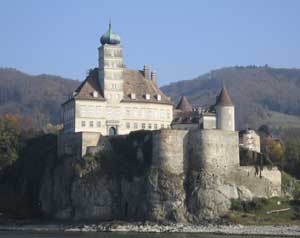
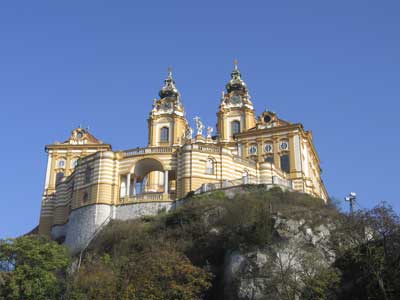
The Melk Abbey overlooks the Danube

Further down the Danube, Durnstein, a small village on top of “bird hill,” contains ruins of the Castle Durnstein. Here in 1192-1193 Richard the Lionheart was held prisoner after the Third Crusade. You can snap some fantastic photos of this intriguing small village from the ship’s sundeck on a clear day. In the Wachau area of Austria, Riesling and green Veltliner grape vineyards line the surrounding hills. The leaves of the vines, turning yellow from the fall season, presented an eye-catching picture.

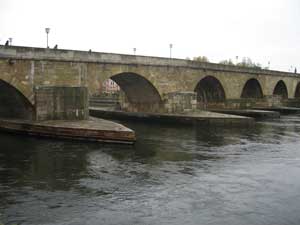
The ancient Stone Bridge crosses the Danube at Regensburg

At Melk, the ship docked for five hours, enough time to make the trek through the small town of Melk and up to the Benedictine abbey which sits majestically on a cliff at the river bend. An important spiritual and cultural center for more than 1,000 years, Melk’s baroque abbey was first the home to the Babenberg family and since 1089 has been a monastery. This enormous structure, built between 1702 and 1736, is now on the UNESCO World Cultural Heritage list. Individual and group tours of the abbey are available.

PASSAU NEXT STOP
Passau was the ship’s next stop, and it’s defined by water. Three rivers—the Danube, Inn and Ilz—converge there, making it very picturesque. The Old Town is squeezed between the river banks in a storybook setting. The huge St. Stephen’s Cathedral houses the largest church organ in the world, with 234 stops and 18,000 pipes. Had our ship arrived a bit earlier, a free organ concert would have been on our agenda. Time didn’t permit a visit, but on the opposite side of the Danube was the Vesta Niederhaus, a medieval fortress which at one time formed the outermost defensive wall of the city.

Our last city and stop on the cruise was Regensburg, Germany, originally founded as a military camp by the Romans. It’s an ideal town to explore by foot; 1,300 buildings are listed as being of historical interest, and a good view of the skyline is from the 12th century Stone Bridge which crosses the Danube by means of 15 arches; at one time it was the only fortified crossing of the Danube over its entire length. The streets curve and meander throughout the city center, and it takes some time to acquaint yourself with the old historic district, but it’s an interesting challenge to visit the merchant quarter, the Domnstadt area next to the ecclesiastical buildings, and the other parts of the Old Town. There’s also no problem finding a good hotel here if you wish to explore the city further: the Bayerwald, Furstenhof, Park-Cafe, Lindner Hotel Kaiserhof and Goldene Sonne are several that can make your stay a pleasant one.

With my Premicon Queen trip at an end, I said goodbye to the crew who had made my stay on board a memorable one. It was a river trip to far-off destinations where I had never before been. “Life is a long, wonderful journey,” says the Premicon’s Managing Director Klaus Hildebrand. “To travel is to live, to come to know the unknown,” he says.

That is what this cruise trip was all about for me, discovering people, places and the unknown. It was a fun adventure, and I’m a better educated traveler because of it.

IF YOU GO…
Cruising on a river ship is a relaxing way to visit cities and towns; virtually everything is done for you including meals and entertainment—and you don’t have to make your bed in the morning. It can get chilly on a ship, however, so always pack warm clothing. The evening meal is the time when passengers dress up, so a sport jacket and tie are in order for men, and more formal attire for women.

While there are usually no medical personnel on board, the ship is always in contact with the local authorities and can be at a dock within a few minutes. If you take medication, make sure you have enough of what you’ll need for the trip.

It’s not hard to find gifts along the way to take back home, so take an extra bag that can be folded into your main suitcase which you can then bring back with you.

Traveling with friends on a cruise makes sense. You’ll always have someone to dine with, and they can accompany you on the extra land tours.

Cruises are available for 2,3,5,6,7 and 10 nights on the Rhine, Danube and Main, as well as Christmas Journey and New Year’s Eve cruises.

For reservations contact www.premiconqueen.com, or in Germany call +49-221-2088-500 or e-mail: pearl@k-d.com.

Christmas Is a Time of Food and Fun

European Traveler has gathered Christmas holiday recipes from around Europe, and we present them here in a special tribute to the countries from which they come. You’ll find a variety of tasty foods in these selections, from desserts and breads to main dishes, to cookies and candies. As December progresses, we plan to add more, so stay tuned!

Please note that some of the recipes are in metric measurements and may need to be converted.

Bon Appetit!

AUSTRIA

VIENNESE VANILLA CRESCENTS (VANILLEKIPFERL)

Eva Draxler / Vienna Tourist Board

INGREDIENTS
1 1/2 sticks (6 ounces) unsalted butter
2/3 cup finely ground nuts (almonds or hazelnuts)
1/2 cup confectioner’s sugar
2 egg yolks
1 1/2 cups all purpose flour
dash of salt

PREPARATION
Knead all ingredients together quickly – keep them cool. Cool in refrigerator for several hours. When forming crescents, take out only the amount of dough you are working with. Form into large, sausage-like rolls with a diameter of about 2 inches. Cut thin slices and quickly roll each of them in the palms of your hands, thus forming small crescents. Place on greased cookie sheet. Bake at 325 degrees Fahrenheit for about 20 minutes. Let cool for no more than five minutes. While still warm, roll in vanilla sugar.

THE AZORES

HOTEL MARINA ATLANTICO
THE AZORES

Courtesy Monica Bensaude Fernandes/Bensaude Turismo

COD “COM TODOS” STYLE

INGREDIENTS
2 cod steaks
300 grs of cooked chickpeas
1 Portuguese cabbage
200 grs carrots chopped in thin circles
2 dls extra virgin olive oil
30 grs fresh coriander
1 salted pickled red pepper cut length wise
6 dry garlic cloves
200 grs crumbed corn bread
100 ml cream
Salt and white pepper
PREPARATION
Boil cod for 5 minutes. Remove skin and bones. Grate chickpeas in a tasse-vite. Add cream and season with salt and pepper. Blanch cabbage, drain and sauté in olive oil and garlic.
Sauté carrots in olive oil and garlic.
PLATE PRESENTATION
Using a rim, first layer chickpeas, and then carrots. On top, place cod, broken apart. Cover it with sautéed cabbage and lastly, the crumbed corn bread. Give it a little color by briefly placing in a very hot oven. Decorate with olive oil and fresh coriander.

DUCK BREAST WITH ORANGE AND DRIED FRUITS
INGREDIENTS
2 boneless duck breasts
300 grs red cabbage, julienned
4 oranges
300 grs potatoes, cut in extra fine rounds (chip style)
50 grs crushed walnuts
50 grs crushed pine nuts
50 grs S.Jorge cheese sliced thin
½ cup Brandy
Salt and white pepper
2 tablespoons balsamic vinegar
10 grs sugar
PREPARATION
Sauté duck in high heat for 5 minutes. Season with salt and pepper. Zest the orange. Set aside. Juice the oranges and add it to pan. Let it reduce and set aside the sauce. Bake potatoes in a fan format with the thinly sliced cheese on top. Sauté cabbage with a little olive oil. Add balsamic vinegar, sugar and dried fruit.
PLATE PRESENTATION
At the top, place the fanned potatoes. In the center, place red cabbage and beneath position the laminated duck. Cover with sauce and orange zest.

VEAL LOIN VERDELHO
INGREDIENTS
400 grs veal loin
300 grs potatoes
400 grs carrots
Verdelho wine from Pico Island
Onions
Leeks
Salt and pepper (local, if possible)
PREPARATION
Season veal with salt and pepper. Blush or sauté loin in high heat for 5 minutes. Remove veal, add onions and leeks and brown. Add red wine and let it reduce. Season and sift sauce. Grate carrots and sauté in a little olive oil. Bake potatoes, which have been previously stuffed with a bay leaf and bacon, in alternating cuts.
PLATE PRESENTATION
Place carrots at the center, potatoes in the back, veal in the front of plate, and cover with sauce.

GERMANY

MULLED WINE
(GLUHWEIN)
Victoria Keefe Larson/German National Tourist Office

Perfect for those dark and cold winter evenings.

INGREDIENTS:
2 bottles red wine
1 cup sugar
3 cups water
1 lemon, sliced
20 whole cloves
6 to 8 cinnamon sticks
1 orange, sliced for garnish

PREPARATION:
Mix water, lemon and spices and simmer for an hour. Strain. Heat but do not boil the red wine. Add wine to hot water mixture. Ladle into cups and serve with half a slice of orange.

HUNGARY

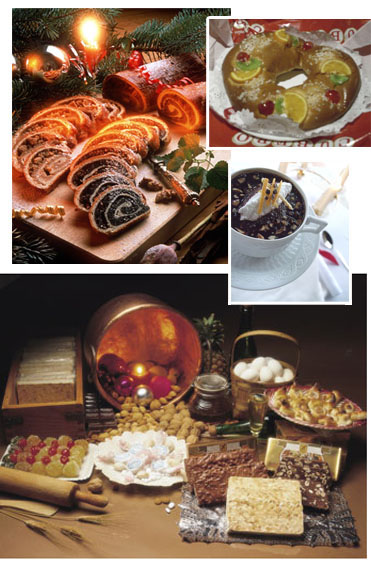
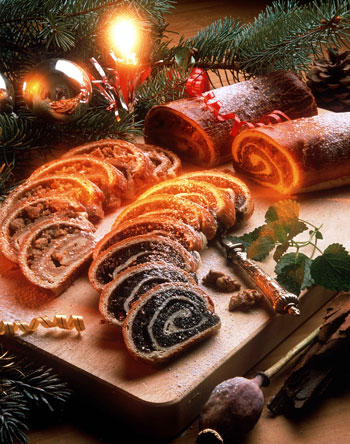
Dios es Makos beigli
Poppy seed and nut rolls (bagels)

From Culinary Hungary/courtesy Elvira Vida/Hungarian National Tourist Office

Makes 4 rolls; the filling ingredients are calculated for 2 rolls respectively.

INGREDIENTS
For the dough:
1 cup sugar
1/2 cup/120 ml milk
1 cake/15 g compressed yeast
1/2 cup/5O g confectioner’s sugar
3 1/4 cup/500 g flour
6 1/2 tbsp/100 g butter
6 1/2 tbsp/100 g lard
2 eggs
1 tsp grated lemon zest
pinch of salt

For the nut filling:
Scant 1/2 cup/100 ml milk
1OO g superfine sugar
1 envelope of vanilla sugar
1/2 tsp grated lemon zest
3 tbsp/30 g raisins
Pinch of cinnamon
3 cups/250 g ground nuts
3-4 tsp honey (or 1-2 apples or 2-3 tsp apricot jam)

For the poppy seed filling:
Scant 1/2 cup/lOO ml milk
1 1/4 cups/250 g confectioners sugar
1 sachet of vanilla sugar
1 2/3 cups/250 g ground poppy seeds
3 tbsp/30 g raisins
1 tsp grated lemon zest
4 tbsp honey

Other:
Butter or lard for the baking sheet
1 egg yolk for glazing

PREPARATION:
Dissolve the sugar in the lukewarm milk, then add the yeast. Mix the remaining dough ingredients wilh the yeast mixture and knead thoroughly. Cover the dough with a dish towel and leave to rise for about 30 minutes.

To make the nut filling, put the milk in a pan with the sugar and vanilla sugar and bring to a boil. Add the lemon zest, raisins, cinnamon, nuts, and honey (or peeled, grated apples or apricot jam).

For the poppy seed filling, mix the milk with the confectioners’ sugar and vanilla sugar. Bring to a boil and add the poppy seeds and raisins. Simmer for a few minutes, stirring constantly, then remove from the heat and stir in the lemon zest and honey.

Divide the dough into four and roll out each piece into a rectangle measuring about 12 x 14 inches/30 x 35 cm. Spread the dough with the nut or poppy seed filling and roll up lengthwise, ensuring that the rolls remain firm. Grease a baking sheet and carefully transfer the rolls onto the sheet and brush with egg yolk.

Bake in a preheated (medium) oven until golden brown. Only remove from the oven when completely cool. If kept covered and stored in a cool, dry place the bagel will stay fresh for a long time. Do not slice until just before serving, arranging the slices like roof tiles on a plate, and sprinkle with confectioners’ sugar.

PORTUGAL

REBANADAS CASA OS MOINHOS

INGREDIENTS

16 egg yolks
500 g sugar
1 kg Portuguese white bread
Cinnamon
Lemon

PREPARATION
Mix the eggs with 16 tablespoons sugar until it is a thick mix — make a thin syrup out of the rest of the sugar. Use one glass of water for this, then slice the bread, — after letting it sit for one day. Dip the slices into the syrup, drain, and dip in the egg yolk mix. Gently pan sear on a medium stove top, and sprinkle with cinnamon and lemon zest.

SPAIN

ROSCON DE REYES
(Holiday Bread)

This recipe is from The Foods and Wines of Spain by Penelope Casas
Courtesy Patricia Wood Winn/Tourist Office of Spain

No holiday is more eagerly awaited in Spain than El Dia de los Reyes Magos-the Day of the Three Kings (Epiphany) on January 6. On this date every year, so the legend goes, the Three Wise Men journey to Spain on camels, bearing gifts for all Spanish children. They use ladders to gain access to city apartments aud leave presents in the children’s shoes, which have been carefully laid out the night before, along with fodder for the hungry camels. Kids who have not been good during the year fear the worst: that the kings will fill their shoes with black coal instead of toys.

Rascon de Reyes is baked and eaten only at this time of year. It is a delicious sweetened bread, coated with sugar and candied fruits, and it always contains a surprise-either a coin or a small ceramic figurine, which is to bring luck for the year to the fortunate person who finds it in his piece of bread.

Makes 1 large bread ring

INGREDIENTS
1 package dry yeast
3/4 cup warm water
1 tablespoon orange flower water (often found in Italian food shops. If unavailable, substitute strong tea)
1/2 teaspoon grated lemon rind 6 cloves
1/4 pound butter
1 tablespoon lard or vegetable shortening
1/2 cup sugar
1/2 teaspoon salt
2 eggs
1 tablespoon brandy, preferably Spanish brandy, or Cognac
1/2 cup milk, scalded and cooled
5 cups unbleached, all-purpose flour
Candied fruit slices (orange, lemon, etc.)
1 egg, lightly beaten
1 1/2 tablespoons sugar, preferably coarse, for sprinkling

PREPARATION
Dissolve the yeast in 1/4 cup of the warm water. Simmer the remaining 1/2 cup of warm water with the orange flower water, lemon rind, and cloves for 10 minutes, covered. Cool. Discard the cloves. Cream the butter, lard, the sugar, and the salt. Beat in the 2 eggs, then add the brandy, milk, the water-and-lemon mixture, and the softened yeast. Gradually mix in the flour with a wooden spoon until a soft and slightly sticky dough is obtained. Knead on a floured working surface, adding more flour as needed, about 5 minutes, until smooth and elastic. Place the dough in a large oiled bowl, turn to coat with the oil, cover with a towel, and place in a warm spot, such as an unlit oven, to double in size, about 2 hours. Punch down and knead again 5 minutes. Insert a good luck coin – perhaps a silver dollar or half-dollar – or some other appropriate object, such as a cute miniature ceramic animal.

Shape the dough into a large ring, pinching the ends to seal. Place on a lightly greased cookie sheet. Decorate with the fruit slices, pushing them slightly into the dough. Let the ring rise in a warm spot about 1 hour, or until double in size. Brush with the egg, which has been mixed with a teaspoon of water, sprinkle with sugar, and bake in a 350° F oven 35-40 minutes, or until a deep golden brown.