
The Pera Palace Hotel, in business since the late 19th century, retains its Old World panache, captivating patrons with elite amenities and Belle Epoque charm
By Randy Mink
Just about every major European city has a historic luxury hotel that begs nostalgia-minded folks like me to come take a peek or maybe bed down for a night or two. I tend to make a beeline to such hostelries—those with a story to tell and grand trappings to go with it—even if it’s just for a brief walk through the lobby or to soak up the ambience over a drink in the bar.
In Istanbul, the Pera Palace Hotel started life in the 1890s when the Turkish city (then called Constantinople) needed a place suitable for hosting wealthy passengers arriving from Paris and other points in Western Europe on the Orient Express, the luxury train made famous by English author Agatha Christie. It’s said that she wrote some of Murder on the Orient Express while staying at the Pera Palace in the 1930s.
The hotel has endured through the reigns of three Ottoman sultans, the fall of the Ottoman Empire and the rise of the new Turkish Republic in the 1920s. Between World Wars I and II, it was at the center of international intrigue in the Pera neighborhood, then a hotbed of espionage and geopolitical machinations involving players from throughout the Continent. Pera, with its numerous military and diplomatic posts, was once called Little Europe.
The Pera Palace today retains its lofty position as a place to see and be seen. Trying not to gape, I entered the high-ceilinged lobby on the red carpet inscribed with the hotel’s name in gold letters, glancing up at the crystal chandeliers and plush red draperies on my way to the reception desk. Gleaming marble walls, floors and balustrades, along with brass urns brimming with palm fronds, set the tone as well.
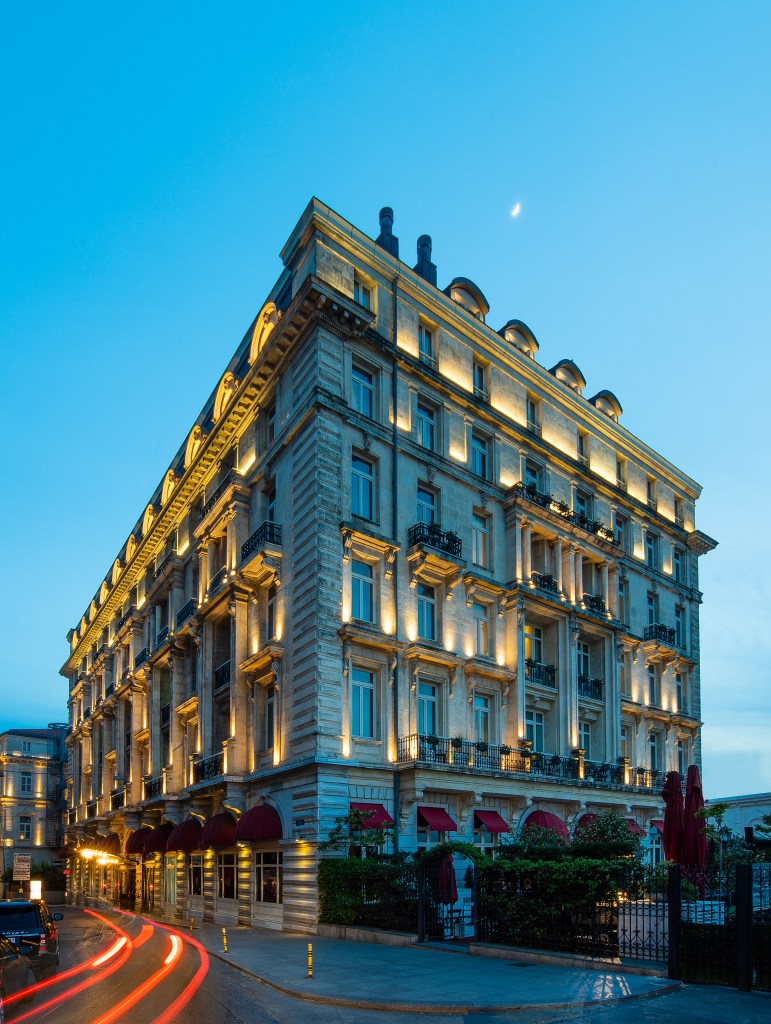
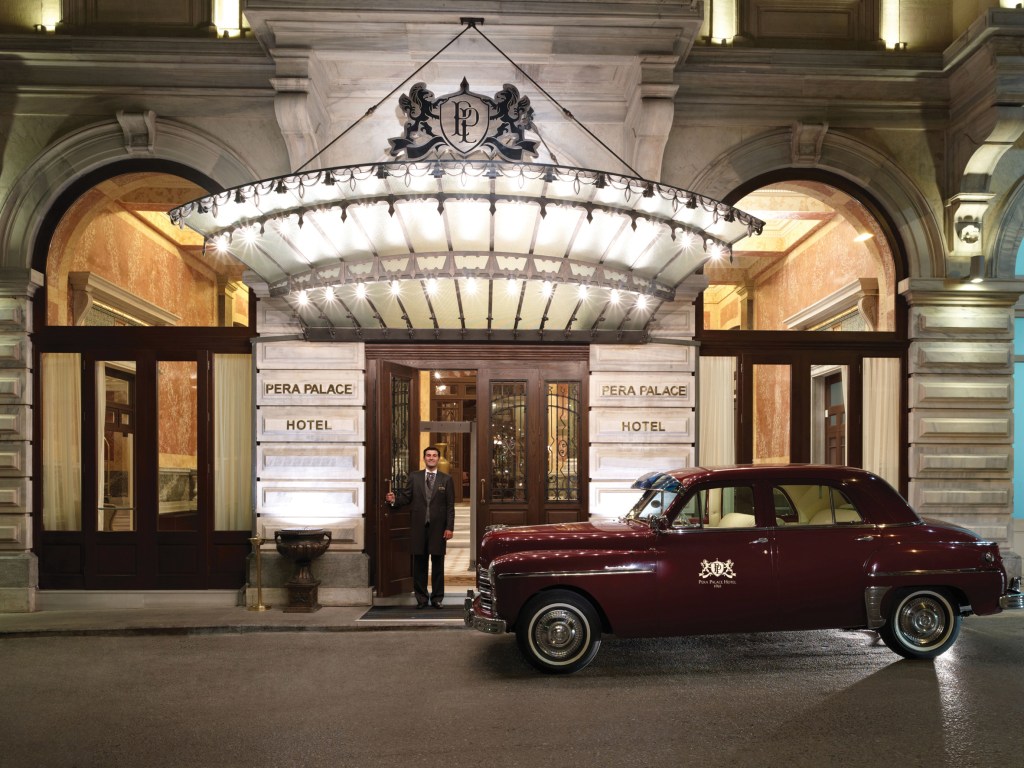
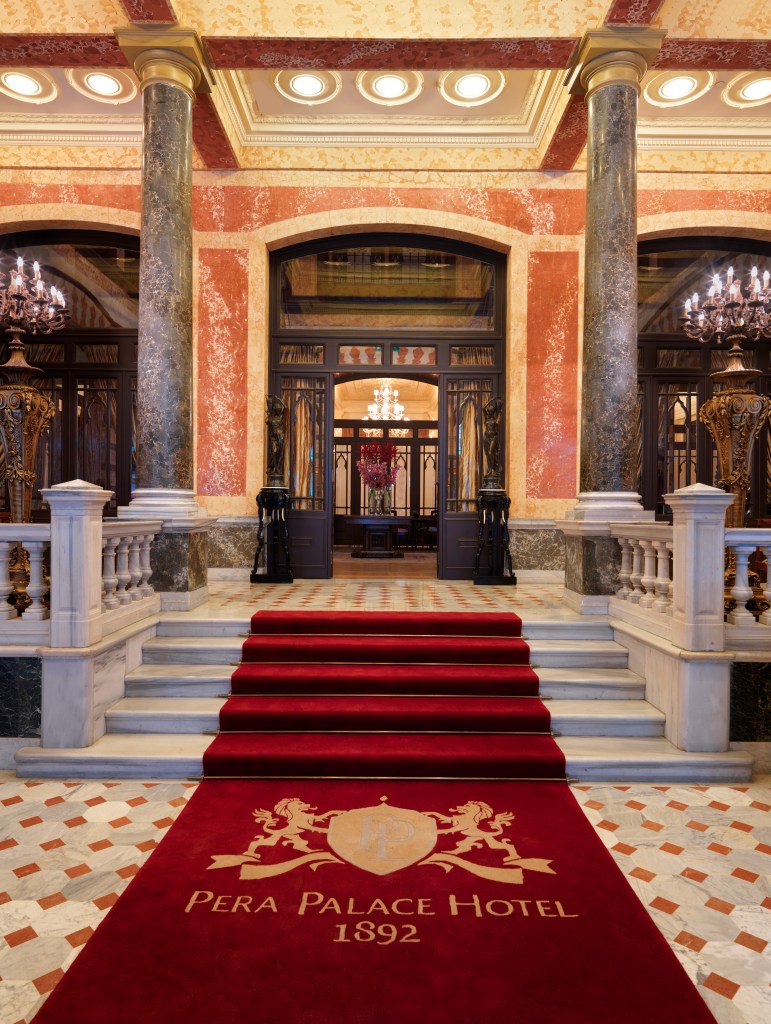
The Pera Palace Hotel is one of Istanbul’s elite addresses. (Photo credit: Pera Palace Hotel)
Famous Guests of the Pera Palace
Over the years, the same grandeur has greeted notables like England’s King Edward VIII and Queen Elizabeth II, Austro-Hungarian Emperor Franz Josef, Shah Reza Pahlavi of Iran, President Tito of Yugoslavia and Jacqueline Kennedy Onassis. Hollywood royalty has included Zsa Zsa Gabor, Greta Garbo and Alfred Hitchcock. As a reporter after World War I, Ernest Hemingway was a hotel resident.
In Turkish eyes, the most important figure to grace the Pera Palace was Mustafa Kemal Ataturk, revered as the father of modern Turkey. When in Istanbul between 1917 and 1926, the country’s first president resided in Suite 101, which is now a museum devoted to him. A stern-looking Ataturk mannequin—holding a cane and dressed in a green army uniform and black cape and hat—stands in the sitting room. Along with vintage photographs, newspaper clippings and a Time magazine cover bearing Ataturk’s image, personal possessions on display include the national hero’s eyeglasses, goggles, pajamas, shoes, white linen suit jacket and black silk prayer rug. The museum, free to hotel guests, is open to the public for a fee.
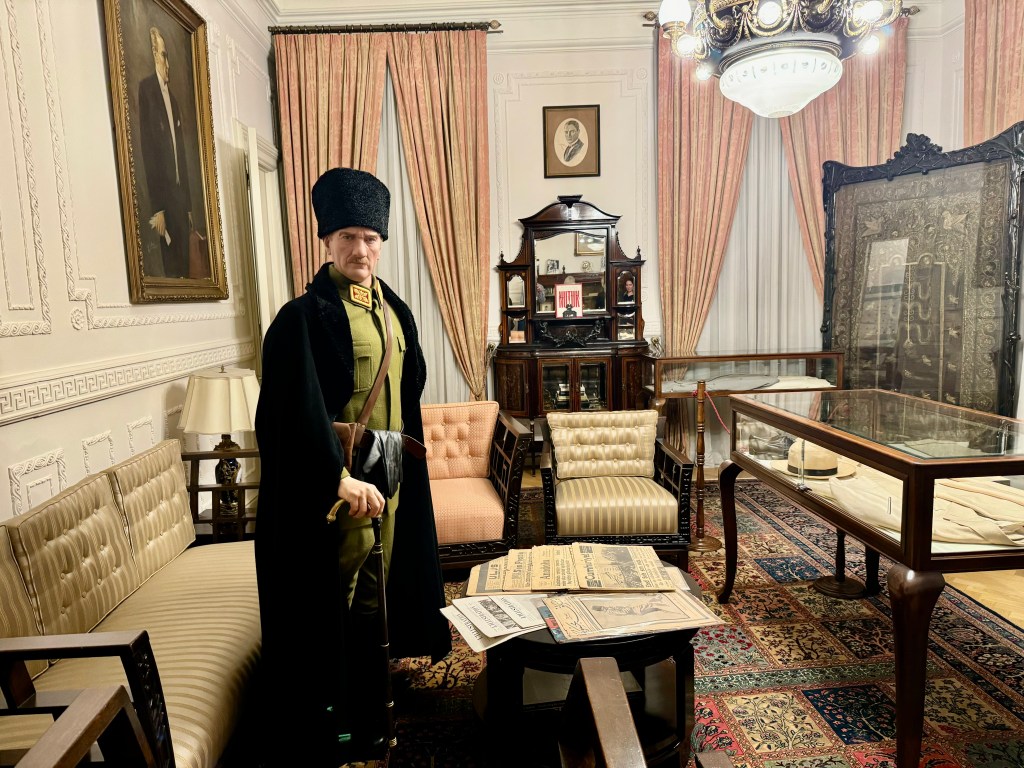
Suite 101 in Istanbul’s Pera Palace Hotel is a museum dedicated to the memory of Mustafa Kemal Ataturk, founder of the modern republic of Turkey. (Randy Mink Photo)
The guest room where Christie stayed, number 411, now carries her name, and the hotel restaurant is named Agatha. Framed black-and-white photographs of past guests, including Garbo, Hemingway, Zsa Zsa and Jackie O, adorn the restaurant’s back wall.
Dining at Istanbul’s Pera Palace Hotel
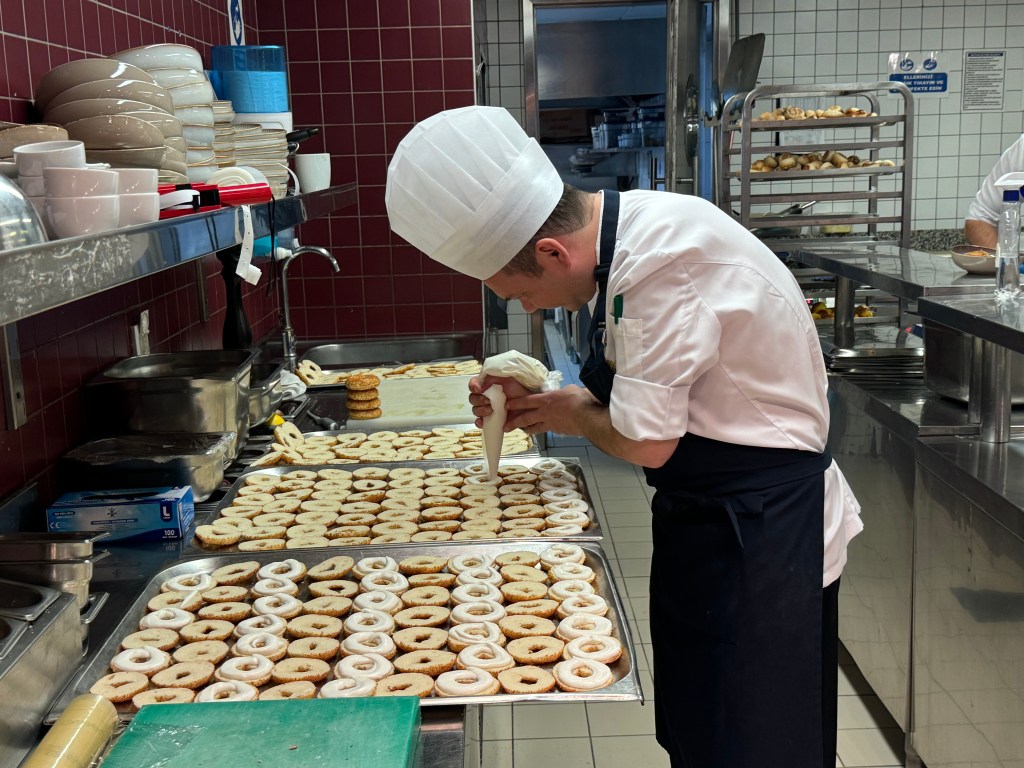
Agatha Restaurant’s bountiful buffet breakfast offers everything from salads and olives to cheeses, cold cuts and quail eggs. Pastries include mini donuts, mini croissants and simits, the sesame-seeded dough rings found throughout Turkey. For spreading on breads and rolls, I made good use of the honeycomb, tahini, grape molasses, jams and clotted cream. I had more than my share of the cheese balls covered in sesame seeds, black cumin, pistachios or poppy seeds. Among the hot dishes: cheese quiche, cheese soufflé, falafel, artichoke soup, pancakes and porridge.

The breakfast buffet at Agatha Restaurant offers many choices, including a wide variety of olives. (Randy Mink Photo)
More treats await at Patisserie de Pera, an intimate cafe reached from the hotel lobby or separate street entrance. Rose-colored walls and furnishings lend a soft touch, and red-accented Venetian glass chandeliers hang from the pink ceiling in each of the two salons. This is the place for a leisurely mid-morning coffee or tea break accompanied by a decadent fruit tart, slice of cheesecake or an assortment of chocolates or macarons.
The gift shop just outside the cafe (actually just a glass cabinet) provides a wide variety of Pera Palace mementoes. Items include socks, umbrellas, bathrobes and other things bearing the hotel logo. There are coasters, coffee mugs and souvenir plates. How about an Ataturk tea set or the paperback Murder on the Orient Express?

Patisserie de Pera is the place to linger over pastries and a cup of coffee or tea. (Randy Mink Photo)
Steps from the merchandise cabinet is an original sedan chair once used to carry Orient Express passengers from the train station to the Pera Palace.
A traditional afternoon tea with piano music is served under the six skylight domes of the Kubbeli Lounge. Featuring elements of Islamic architecture, the two-story-high room is decorated in dark reds and deep plums, as is the nearby Orient Bar, another plush spot to drink in visions of a bygone era. The equally stylish Library Room seating area, complete with bookcases and antique globes, extends from the lounge and bar.
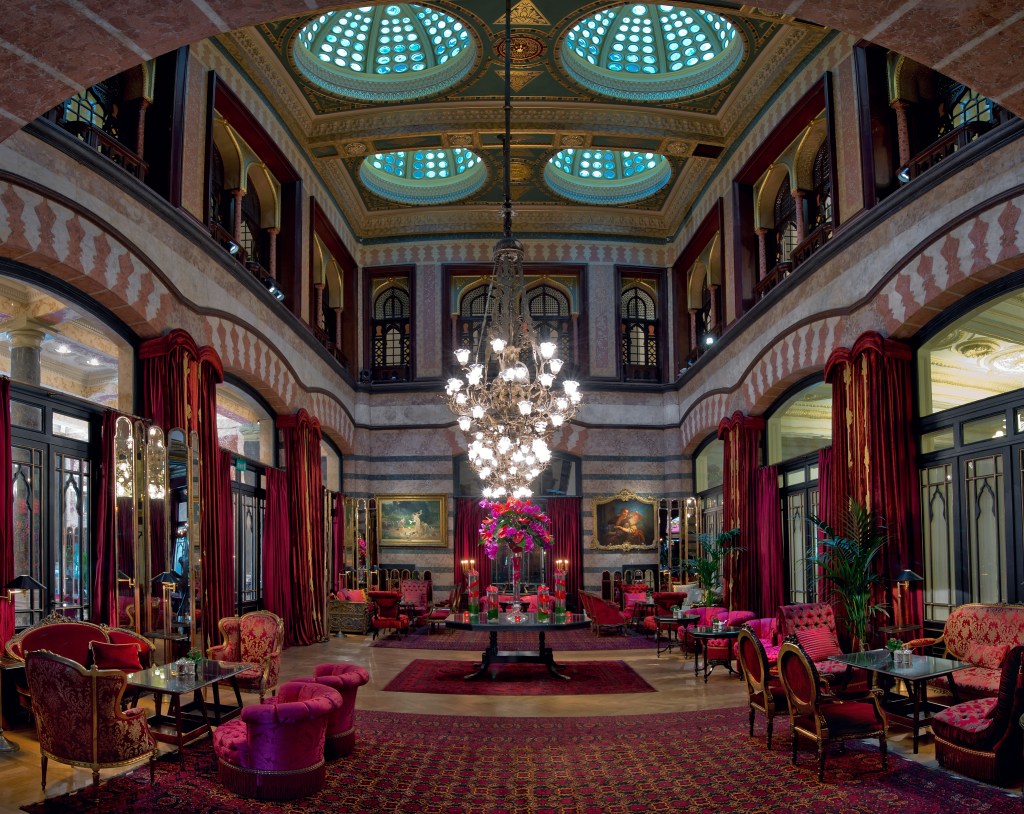

The hotel’s Kubbelli Lounge hosts a traditional afternoon tea. (Photo credit: Pera Palace Hotel)
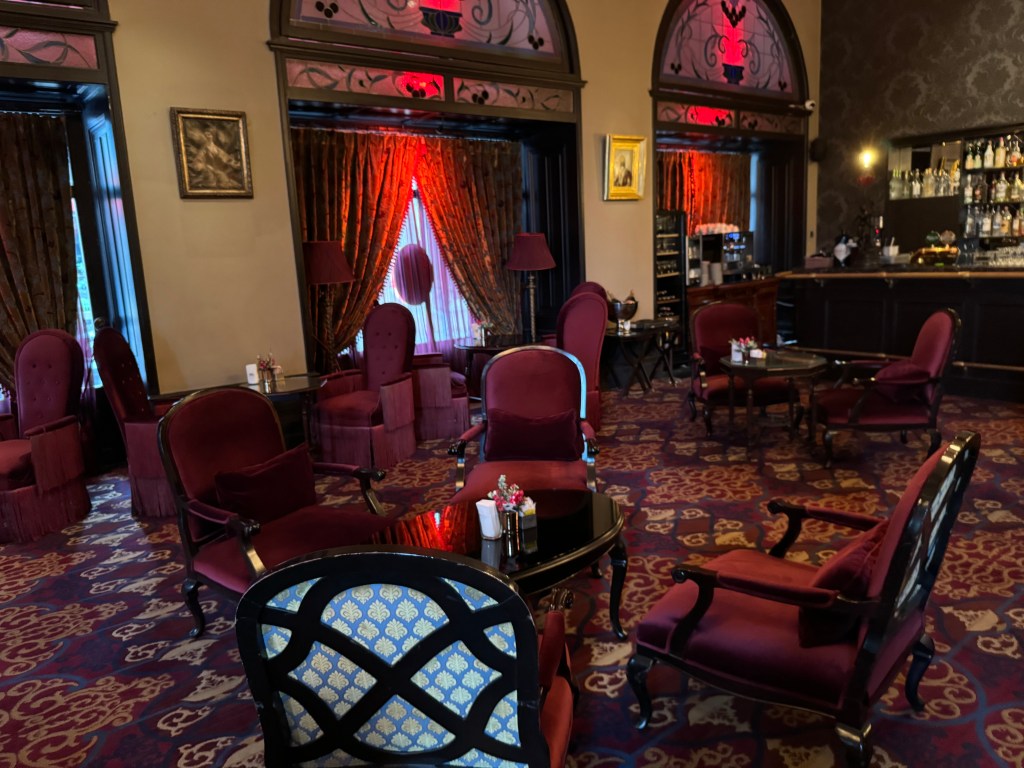

The Pera Palace’s Orient Bar provides an elegant setting for cocktails. (Randy Mink Photo)
Guest Rooms at the Pera Palace Hotel
More flashbacks to yesteryear are in store on a fun ride in the hotel’s original electric elevator, installed only three years after the Eiffel Tower’s elevator. The wood-and-cast-iron cage, operated by a staff member, is used only for arriving hotel guests. For normal use, a set of modern elevators services the six guest room floors.


The original elevator’s wood-and-cast-iron cage is well over a century old. (Photo credit: Pera Palace Hotel)
From tall windows in my room, number 506 in the Deluxe Golden Horn category, I had views of the Golden Horn, the waterway that separates modern Istanbul from the Old City on the other shore—and the primary inlet of the Bosphorus Strait. Amenities in the marble bath included thick white towels and robes. The pillow cases, hand towels and robes all bore the gold Pera Palace heraldic crest.


Deluxe King and Deluxe Twin rooms at the hotel feature pillowcases and plush robes that bear the Pera Palace’s heraldic crest.
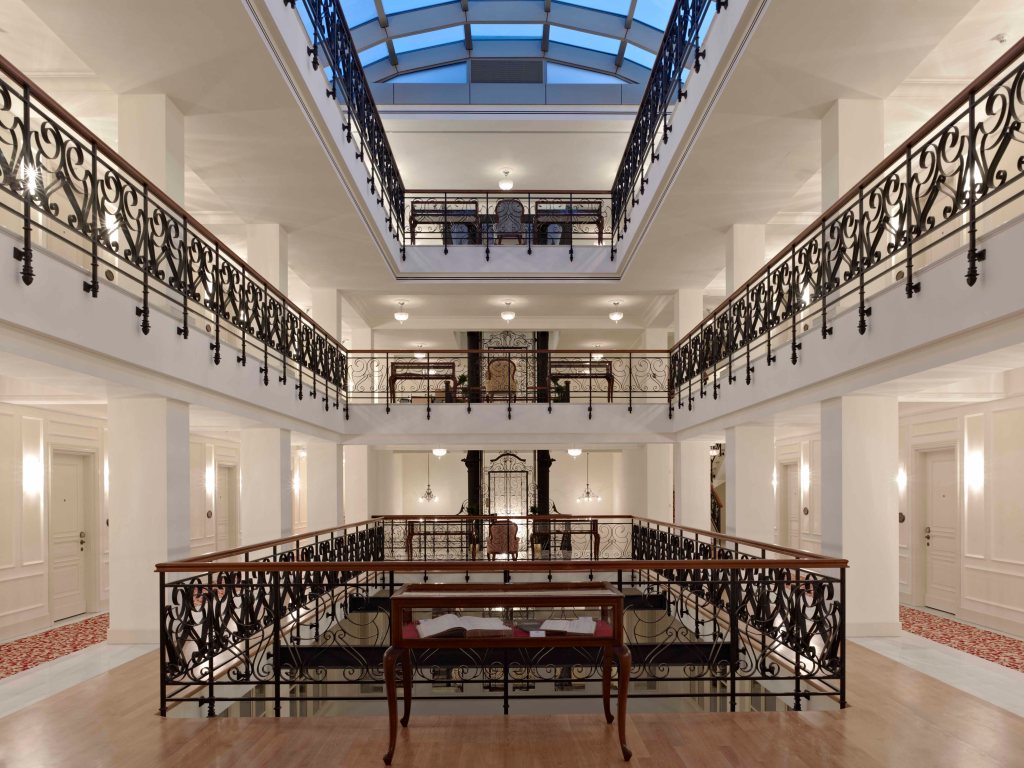
Guest rooms at the Pera Palace are spread across six floors. Each floor has display cases filled with artifacts that illustrate the hotel’s colorful history. (Photo credit: Pera Palace Hotel)
On the morning before checking out, I made a point of visiting all six floors to peruse the display cases exhibiting old photos, menus, ledgers, china and silverware from the hotel and Orient Express. On the fourth floor I found the Agatha Christie Room, wishing the door would be open so I could see inside. For me, it will always be a mystery.




 European Traveler