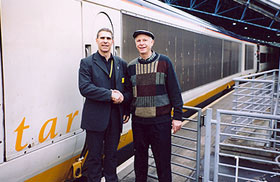
Don Heimburger and Eurostar Driver Detlef Hofmann shake hands prior to departure from Waterloo Station, London, when the train left from this station.
Nearly 22,000 travelers hop aboard a Eurostar train each day, and more than 75 million have traveled the Eurostar routes over the last decade.
That figure represents more rail passengers than all the airline passengers combined on both Eurostar routes out of London.
So what’s new with Eurostar for 2008?
NEW FOR 2008
For one, since November, 2007 Eurostar has moved to a new station, from Waterloo to St. Pancreas, reducing the rail journey between London and Paris by 20 minutes. (I loved Waterloo Station!) The travel time is now 2 hours and 15 minutes, and between London and Brussels it is only 1 hour and 51 minutes.
Also opened was Great Britian’s first high-speed line (called HS1) which carries the Eurostar exclusively. This allows travelers from London to Paris or Brussels to use the train for a one-day business or leisure trip. Every day the train runs 18 roundtrips between London and Paris and 10 between Brussels.
Eurostar trains feature 18 cars each, with car configurations changed depending on if the train is designated as a Business Premier train or a Leisure Select train. The train also runs to Lille, Eurodisney/Marne La Valle, Avignon (summer only), and Bourg St. Maurice (winter only).
TRAINS SEAT 766
Trains seat 766 persons, with special cars situated between cars 7 and 12, and standard class cars 1-5 and 14-18. There are always two bar cars, 6 and 13.
If you are a U.S. citizen, you will probably want to book your trip through Rail Europe, especially if you want to purchase a Eurail Pass that can include the Eurostar (and you can receive up to a 60% discount). Go to http://www.raileurope.com for the details.
In other European rail news, last summer the new French Railway TGV East train broke the world’s rail speed record, reaching a top speed on the trip of 357 miles per hour! A Rail Europe spokesman said, “This accomplishment is monumental for the SNCF and the rail community, and will have a positive impact on all who wish to travel east from Paris.”
The average speed, however, of the TGV East trains is 200 miles per hour. Each first class seat features its own electric power outlet, and broad seat cushions; first class passengers can book a taxi through the train conductor; and on-board messages are in French, German and English.
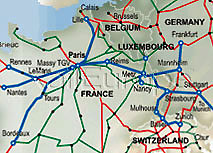
As an example of faster speeds on the TGV, here are new travel times posted by Rail Europe for travel between some stations:
By Don Heimburger Photos by the author and courtesy Visitbelgium.com
What’s a 13-letter word that starts with a “B” and combines the capital city of Belgium with the concept of excellent food?
“Brusselicious” is the 2012 theme for Brussels’ Gourmet Year, and a fitting description of this city of 1.1 million that boasts no less than 19 Michelin stars among its dozens of top restaurants.
In 2006 Brussels was the capital of Fashion and Design, followed soon after in 2009 as the capital of the Comic Strip. Now it becomes the city of Culinary Delights, but locals and in-the-know visitors to this cosmopolitan city, with German, French and Flemish influences, enjoy their Brusselicious lunches and dinners every day of the year.
FRENCH FINESSE, GERMAN PORTIONS The old saying is that the Belgians cook their food with the finesse of the French, but serve it in generous German-sized portions. Some specialties of Belgian cuisine include moules frites (mussels and fries), Waterzoo (fish or chicken stew), Stoemp potato (potatoes and vegetables mixed together), and Salade Liégeoise.
So what’s cooking in Brussels in 2012?
There’s a fairly long list, but it all begins with Brussels’ traditional menus, which start with fresh meats and produce, and are then honed with a top chef’s creativity and skill. In Brussels this is just the way they do it. After all, they have a reputation developed over the years, that they refined plate after plate.
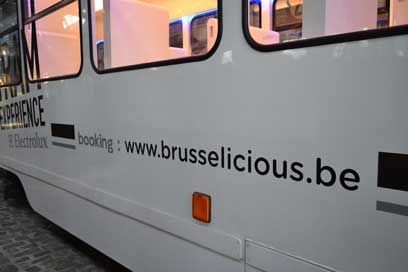
Brussels’ gastronomy will be on the move this year when a new designer tram will be introduced that will provide meals on board as guests roll around the city. Menus will be arranged by two-star chefs, and food will be served to 34 people on board the train during two-hour-long dinner parties. Departures start on Tuesdays and go through Sundays. This novel “meals on wheels” idea will appeal to the combination railfan and foodie.
As many as 35 giant artist’s reproductions will be introduced to the streets of Brussels during 2012 as well. Early in the year, artists were finalizing their creations in an old factory building called Carthago Delenda Est. Giant brussel sprouts, chocolate bars, mussels, pints of beer and giant cones of fries were masterfully being sawed, glued and screwed together to remind the city of its food heritage.
As many as eight themed dinners are being sponsored, from a Banquet des Miserables to mark 150 years of the finishing of Victor Hugo’s novel Les Miserables, to a Belgian Wine Growers Dinner, a Five Senses Dinner (sight, hearing, smell, taste, touch) and a Medieval Ommegang Banquet (Ommegang recreates a famous celebration of 1549 on the Grand Place in honor of Charles V and his son Philippe II).
The Bocuse D’Or Europe is the highly prestigious gastronomic competition held for 20 of the world’s top chefs this year in Brussels, who compete over a two-day period to claim top honors. The dozen best chefs then are entered into next year’s world finals in Lyon, France.
How about a Chocolate Week? With evening events, visits to chocolate workshops and a Chocolate’s Fair in town, what’s not to like?
A restaurant festival, publicized as the biggest gourmet event in Belgium, is coming to Brussels September 6-9. Imagine 100 restaurants and bars serving up their best dishes—with cooking on the spot—in a Brussels park.
TOP OF FOOD CHAIN The 2012 culinary program doesn’t stop there, not for a city that loves to be at the top of the food chain. There’s a “Chipstands Festival” (you heard it correctly). So the city with some of the best frites (French fries) in the world will sponsor a competition and special events based on the fry. Would you like ketchup or mayo with that?
On a cooking platform 15 feet above the ground, Brussels’ star-studded top chefs will surprise and delight audiences with their “Dinner in the Sky” skills in the middle of the city. Also in August and September, the famed 650 tasty Belgian beers get their due during a weekend at the Grand’Place with tastings and more.
The city is also offering its own bottle of Brusselicious Beer, made by adding brown sugar to a bitter lambic. Lambic beer is produced by spontaneous fermentation: it is exposed to wild yeasts and bacteria that are said to be native to the Senne Valley, in which Brussels lies. It is this unusual process which gives the beer its distinctive flavor.
Other events are also planned, such as a Thai Food Festival, a Savoring Brussels Festival (dedicated to the flavors of fresh produce), and a Brussels Wine Weekend with open houses at some of the wine cellars and wine bars throughout the city.
Brussels’ ornate Town Hall
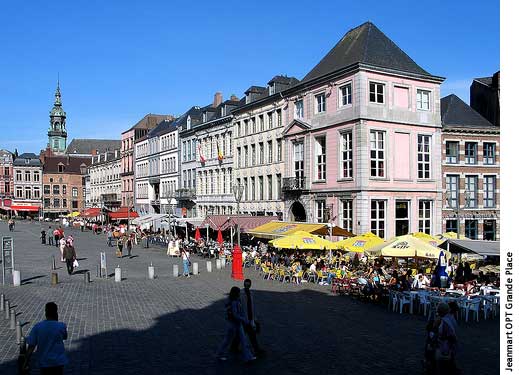
BUSINESS, BUT RELAXED Brussels is, despite its European Parliament designation, a business center that appears to be relaxed at the same time. A tour of this multilingual city revolves around the Grand Place and its many gilded houses and the ornate town hall building (see it at night for a spectacular view).
Check out the Mont des Arts and its museums: the René Magritte Museum occupies the house in which the Belgian surrealist painter worked. On the ground floor of the museum is the apartment where the painter lived and worked from 1930 to 1954; exhibits of the artist are on two upper floors.
At the Belgian Comic Strip Center you can meet the comic strip character Tintin and his sidekicks, created by Belgian artist Georges Remi, who wrote under the pen name of Herge.
Walk to another part of the city and see the huge stone columns and a good view of the lower part of the city from the immense Palais de Justice, and visit the Atomium, with its gleaming spheres. It’s said to be “neither tower, nor pyramid, a little bit cubic, a little bit spherical, half-way between sculpture and architecture, a relic of the past with a determinedly futuristic look, museum and exhibition center; the Atomium is, at once, an object, a place, a space, a Utopia and the only symbol of its kind in the world which eludes any kind of classification.” The Atomium was the main pavilion and icon of the World’s Fair of Brussels in 1958.
If you’re in the market for shopping—or just window shopping—Brussels has it. Walk over to Avenue Louise and see its shopping arcade, or Boulevard de Waterloo, Rue de Namur or Avenue de la Toison d’Or for some upscale finds from classic to trendy.
Now back to Brusselicious food. One other very famous food delight is the Belgian waffle. I learned there are actually two types. One is the Belgian waffle, a light, fluffy waffle eaten with or without syrup and served at the more prestigious restaurants and hotels. Then there’s the thicker Liege waffle that is smaller, sweeter, heavier and more filling. You can find the heavier waffles served at stands everywhere in Brussels, usually with toppings such as whipped cream, strawberries, cherries, confectioner’s sugar, or chocolate spread.
If Belgium has a national cookie it is the Speculoos. Originally created for children to celebrate Saint Nicholas day on December 6, the treat is now widely popular and often found along with a cup of coffee in restaurants and bars as a side treat.
So add waffles and Speculoos to the large selection of foods that keep visitors going back to this vivacious gourmet city.
And to think, all this high cuisine started with the lowly Brussel sprout, from which the city gets its name. It just goes to show how inventive the Belgians are in the kitchen. They’ve taken the art of preparing and cooking food to new heights over the last few decades. Some would call that a Brusselicious endeavor. I’d say it was a call for dinner…in Brussels, of course.
IF YOU GO… Brussels has a number of interesting districts to visit. The Brussels Card is valid for 72, 48 or 24 hours and allows you to visit 30 Brussels museums. It includes a public transport ticket and a full-color guidebook, as well as discounts at some tourist attractions and stores. Go to www.brusselscard.be.
The 2012 Michelin Guide shows the following Brussels restaurants have earned Michelin stars:
2 STARS Sea Grill Comme Chez Soi Le Chalet de la Forêt (New addition)
1 STAR Alexandre Jaloa (New addition) La Truffe Noire La Paix Bruneau San Daniele Kamo Senza Nome Le Passage Bon-Bon Michel Terborght ‘t Stoveke
By Don Heimburger Photos by the author or as noted
“I am delighted to introduce the Hotel Amigo, which we restored to its rightful status as the best luxury hotel in Brussels,” said Rocco Forte when the hotel’s renovation was completed in 2002. Forte, owner of the Rocco Forte chain of 14 hotels (some currently under development), which are located in European capitals and in Marrakech, has assembled a group of upper-scale hotels that are designed to provide all the usual higher class amenities and then some.
Located at Rue de l’Amigo 1-3, only a block from the famous Grand Place, considered the center of Brussels and noted as likely the most beautiful square in Europe, the five-star Amigo is ideally situated near the key historical sites, shopping areas, restaurants and entertainment.
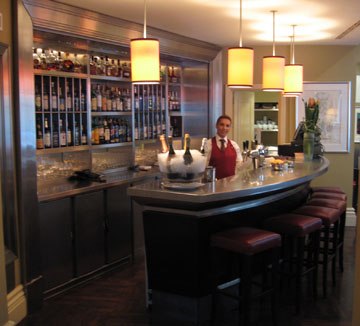
The doormen in their black top hats signal a welcome to the hotel; the lobby is small, but neat and classy with a dark-paneled reception counter and polite clerks.
The air-conditioned room was bright, very clean, with a small suite adjoining the bedroom and bathroom. Comfort was key. There was a modern feel to the room which featured furniture and pictures from the Blaton collection and influences from Brussels’ history. The bright bathroom featured a red mosaic vanity top and excellent toiletries.
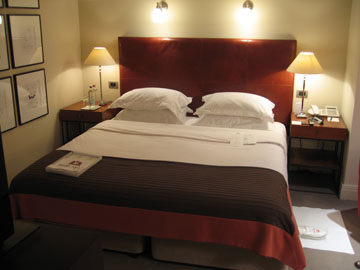
The room contained Brussels linens, red silk curtains with embroidered velvet details and Flemish chairs and desks. The bed was firm and comfortable. The room was quiet and provided a cozy getaway from busy shopping or touristy activities. I did not try the restaurant for dinner, or the bar, being there only one evening.
A BIT OF HISTORY
The hotel has a bit of history. The original structure on the lot was built before 1522 by a wealthy merchant family and later purchased by the city council and turned into a prison. In 1957 the Hotel Amigo was built by the Blaton family on the occasion of the Universal Exhibition of 1958. During the Rocco Forte renovation in 2000, it underwent a re-styling by Olga Polizzi, the hotel’s director of design. Canvases from artists such as Courtens, Dansaert and Wagemans, together with Flemish wall tapestries from the 18th century, give the hotel a pleasingly modern but still historic flavor.
The morning breakfast included all the necessary eggs, breads, meats and cheeses, juices, coffee, and fruits to satisfy many diverse tastes. The wait staff was pleasant and helpful.
Then hotel was won many awards, including being rated one of the top 100 hotels in the world by the Institutional Investor in 2007. Forbes Traveler rates it one of the top 400 hotels in the world.
European Traveler rates it extremely high as well. We liked virtually everything about it.
The lowdown:
• Member of the Leading Hotels of the World • 174 rooms, including 18 suites and the Blaton Suite (on the top floor with large terrace for excellent views of Brussels) • In-room telephones, voice messaging, internet connection, cable TV, marble bathroom, minibar, safe, trouser press • Ristorante Bocconi, with bar in the lobby • Ballroom for up to 200 guests • Fitness center • Transfers from the airport (at a charge) • 24-hour room service which “arrives on time” (the hotel guarantees this) • In 2007, room rates for a classic room single were 590e; 720e for an executive room single • General Manager: Ivan Artolli, since 2002 (fluent in French and English) • Reservations: amigo@roccofortehotels.com
A dozen days of unique European history, adult fun, fantastic food, and a good bit of pampering
Photo: Courtesy Viking River Cruises
By Don Heimburger Photos by the author
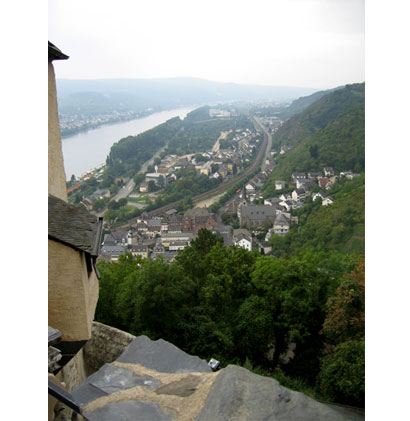
Gazing down on the wide and meandering Rhine River, from a spot at the outer courtyard of high Marksburg Castle that overlooks the 1,300-year-old German town of Braubach, the historic significance of where I am begins to sink in. And it hits me hard, in a good sort of way.
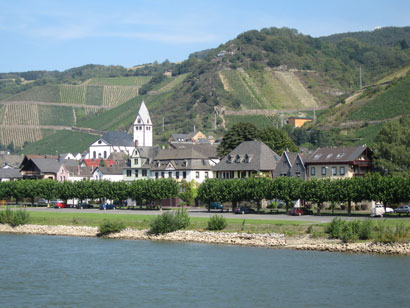
I’m in the midst of fortresses and castles, neatly-planted vineyards, small ancient villages, all in close proximity to the driving force behind this beautiful valley–Germany’s beautiful and romantic Rhine River.
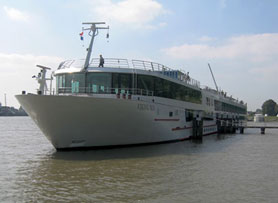
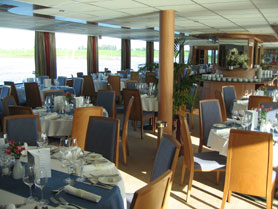
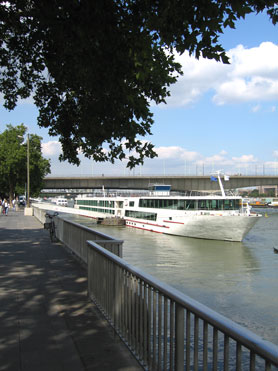
My adventure is a 12-day floating history tour on the sleek Viking Sun, one of many cruise ships that Viking operates on the Rhine, Main, Moselle and Danube rivers in Europe and elsewhere. This ship, a three-deck, 198-passenger liner with its own restaurant with panoramic views, large observation lounge, library and an internet cafe, cruises from Antwerp to Basel, Switzerland, a 677-mile journey back into time.
BRUSSELS AND BAGS
Many passengers arrive in Brussels, a 45-minute train ride away, before boarding the ship that caters to English-speaking travelers. With bags tucked away in the cabin (there are 89 deluxe and 10 standard cabins on the ship, all with outside river views), passengers settle into a sit-down dinner in the evening.
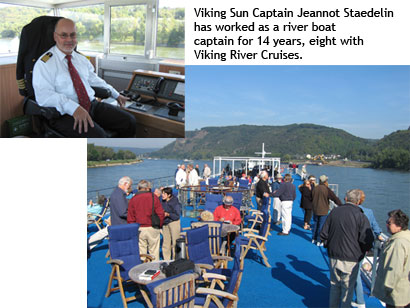
But the meals are only a small, but very inviting, reason for taking this cruise. The historic sights and beautiful scenery is dazzling, and it is laid out before me every day, all the time, from the comfort of a lounge chair, or a sundeck chair, or even the comfort of my on-board bedroom if I chose not to wander about the ship.
BRUGGE IS BEAUTIFUL
The first off-ship tour was by bus to Brugge, a beautifully preserved medieval town from 1128 that was famous for its wool and weaving. Much of the historic city center remains intact. The town boasts the Church of Our Lady with one of the world’s highest brick towers at 400 feet high. Walking through the historic section, with classic buildings and elegant houses of former wealthy textile merchants, I felt like time had stood still, and that I was a resident of this quiet village in its heyday.
At Rotterdam, passengers boarded buses for a trip to Delft to see the birthplace of the famous Dutch Master Jan Vermeer. Delft is known for its pottery called delftware, produced in this town for more than 500 years. A tour through this small but amazing factory, and a look at the numerous products it makes, gave me an insight into what makes this blue-and-white glazed earthenware, highly prized throughout the world.
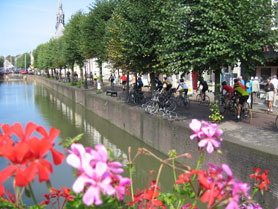
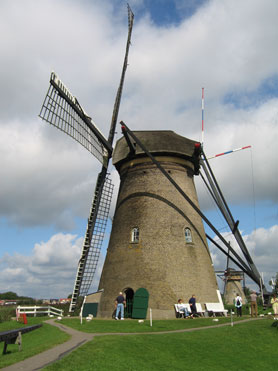
Holland is more water than land, it seems, and the Viking Sun floats through Rhine waterways and canals until it reaches Schoonhoven, a quaint 12,000-population riverside town, full of charm, canals of its own, and a large Town Gate (Ferry Gate) as you enter.
The town formed around a castle that was built here in 1220, and shipping, brewing, fishing and agriculture have been the main industry. Little shops, with plenty of jewelry stores loaded with tempting rings, necklaces and bracelets, line the main street, which is divided by–you guessed it—a canal. This was an inviting town to visit, and the local beer tasted good as well which I sampled under a cafe umbrella on the town square.
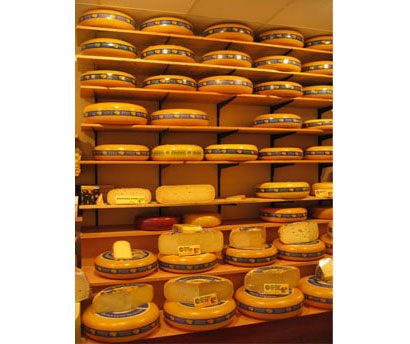
Next up on the land tours was Gouda, one of Holland’s most famous cheese-making towns. In the center of town and the market square, a beautiful Gothic Town Hall sits smack in the middle, drawing lots of attention to itself. Try the cheeses while you’re there!
AMSTERDAM AND ANNE FRANK The Viking Sun’s arrival on a Sunday in Amsterdam was greeted by a crowd of, I’d guess, 50,000 people near the dock. Well, at least I thought they were welcoming us, until I realized that they were attending an annual Music Festival that weekend which was held right at the main cruise ship dock in downtown Amsterdam.
Let me say a bit about Amsterdam. I had not been to this city of three-quarters of a million people before, but I had heard about the red light district and how multi-cultural the city was. Well, it’s true.
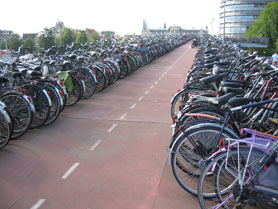
During the Dutch Golden Age, this 12th century fishing village was the most important port in the world, and likely because of its location, the city has attracted people from 177 different nationalities who now live there. With all the canals running through the city (it’s called the Venice of the North), trams, autos, cabs, trains and especially bikes, there is no shortage of means to get around town, and it’s densely populated. The “extra fare” entertainment districts (red light area) and the “liberal” coffeeshops that dot the city are interesting only by the fact that they exist. There is no redeeming social value to that segment of the city.
On a higher plane, what is worth seeing is Anne Frank’s home where she hid from the Nazis until she was betrayed and sent to her death in Bergen-Belsen. This is not a long walk (20-25 minutes) from the Central Train Station, but a cab, tram or a bicycle is also an alternative. There are 50 museums in Amsterdam that beckon you as well—more museums per square mile than any other European city.
After a busy day in this large city, relaxing in the evening on the boat was welcome. After breakfast the next morning, the ship had docked at Arnhem, the last Netherlands port before entering Germany.
THREE DELICIOUS MEALS A DAY At this point in the trip, passengers had already became spoiled with dinners such as Greek salad and warm bread; cream of cauliflower soup; pink grilled Duck breast with orange sauce; or napkin dumplings with creamy mushroom ragout and herbs; and cr̬eme brulee with chocolate ice cream. Of course, each dinner menu had several choices of appetizers, main dish and dessert. There was also a complimentary selection of international cheeses offered at each meal, as well as beers, wines and apertifs (at additional cost).
Wait staff on board the Viking Sun.; Sven Hansen, Viking Sun’s Maitre d’ (left) and Executive Chef Reiner Eggert.
A lighter buffet-style luncheon was offered in the lounge or a more complete sit-down meal at noon in the restaurant. I found that the lighter lunch was more than I would eat anyway, and usually opted for that. For breakfast a complete menu was available by 7 a.m. of hot and cold meats, cereals, eggs, waffles, fruits, breads and rolls, juices, coffee, and even champagne and made-to-order dishes like omelets and French Toast. Believe me, I never eat that much at breakfast, and there was a treasure trove of goodies each morning that the cooks had been working on the night before. For early birds, there were even fresh pastries and richly-flavored coffee from 6 to 7 a.m. Meals on board were always delicious, there was plenty of food, and it was displayed as a work of art. The servers were often funny and always accommodating (hello Cata and Michael–may I have another cup of coffee please?).
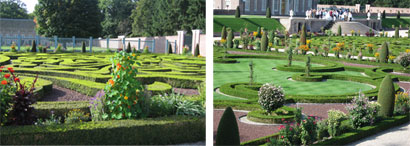
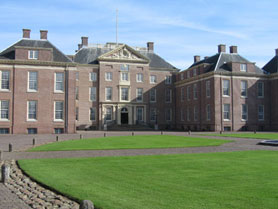
From the dock at Arnhem, we boarded buses (it took five busloads to hold all the ships’ passengers, plus local tour guides), and traveled to the magnificent Paleis Het Loo, and I emphasize the word magnificent. This large, sprawling complex was the summer residence of the Royal House of Orange from 1686 to 1975, and royal indeed it was–and still is. Walking through the house or the colorful formal gardens is a rare treat to the eye. The gardens, especially, combine classical planting symmetry with intricate landscaping. You can, and I did, spend a lot of time in the gardens. If you have time, grab a hot coffee and sweet pastry at the coffee shop and enjoy it outside in the palace courtyard. Then stroll down a long row of trees to the barns where a large collection of royal sleighs, carriages and coaches are on display. It’s worth the walk.
INTO THE DEUTSCHE DOMAIN
Around dinnertime, our ship got under way again and headed for Cologne, arriving there the next morning around breakfast. Many passengers were eager to enter the German Rhine because the Middle Rhine, where the many fortresses and castles are located, was something they had heard about, and it was a main draw of the trip.
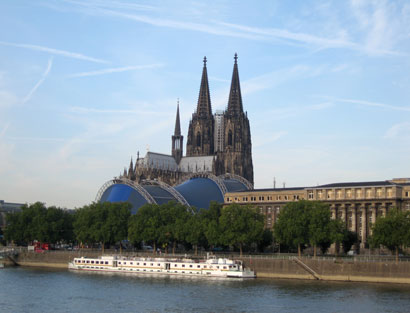
Cologne is noted for the tall, striking Gothic cathedral seen from anywhere in the old part of the city. Passengers crowded along the sundeck railings as we entered Cologne to admire the stately church spires and the city’s imposing skyline.
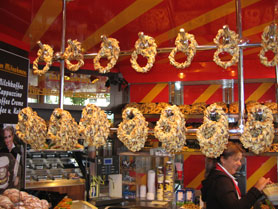
In Cologne we received a guided walking tour, after which there was just enough time to check out the shops selling Erzgebirge items such as smokers and nutcrackers, or visit the Roman Museum or visit the Brauhaus (included in the ship’s tour) to partake of one of the city’s delights: Kolsch beer, a very tasty beverage made in Cologne. Many passengers returned to the city for an evening walk after dinner on the boat. I could have easily spent more time here, but the rest of Germany beckoned, and I literally didn’t want to miss the boat.
Stained glass windows inside the Gothic cathedral in Cologne.
Next up was Koblenz, the spot where the Moselle and Rhine rivers come together; the exact spot is called the German Corner, punctuated by a massive statue of Wilhelm I on a horse. Our ship docked right down from the statue.
Koblenz was originally a Roman outpost, so when they said the town was 2,000 years old, I could believe it; it was founded in 9 B.C. Even the fortress across the Rhine at Kolenz, the Ehrenbreitstein, with its vast fortified construction and enormous parade ground, was built in the 11th century, and was re-built in 1816-1823. It was never attacked, but looking up at it from across the river, I could see why an army would have difficulty making any headway.
MOSELLE MOMENTS
To see the Moselle and its neat, green vineyards, we boarded buses and headed to Cochem, located about 30 miles west of Koblenz. In this little riverside town, dominated by the 1,000-year-old Reichsburg Castle built by the Palatinate Dukes, the atmosphere was that of fun, with local wine being sold in many shops. Half-timbered houses dot the cityscape, narrow cobblestone streets lead to taverns and quaint cafes, and everyone seemed to be in a party mood.
At Braubach, a treat was in store. The Marksburg Castle, one of the few along the Rhine that was never destroyed, sits high above the town, and passengers were taken by bus to the castle “parking lot” where we walked steep steps to continue to the castle gate. From there, a tour guide with a very large castle key gave a detailed tour in English. References to this remarkable fortress go back as early as the 13th century, and little has changed inside since then. You can see the Knight’s Hall and the castle chapel, dedicated to Saint Mark, from whom the castle gets its name.
From the garden area of the castle, I could look down on the Rhine and see the vast, commanding view of the entire countryside north, south and east. I could see why enemies would not be able to storm the castle as they could be easily watched from this fortress.
On the way to Rudesheim, we pass the cat-and-mouse castles (Katz Castle and Maus Castle–neither of which have anything to do with animals), and the Pfalzgrafenstein fortress that sits on a rock in the river. In high water, you can’t even see the rock: the castle appears as if it’s floating.
At this point the Viking Sun also passed the Lorelei, a 440-foot-high legendary rock that I could see on the left as the ship cruised south. The Lorelei gets its name from the German word ley or rock, and the Middle High German word lure, which means treacherous.
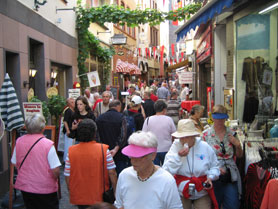
Docking at Rudesheim, a small village next to the Rhine, allowed passengers to walk the streets to visits shops and cafes, or to visit a colorful, narrow street called the Drosselgasse, featuring live German music and dancing, charming taverns and restaurants, and beckoning shops. An evening stroll down this street with twinkling lights, delicious smells and friendly laughter is a must.
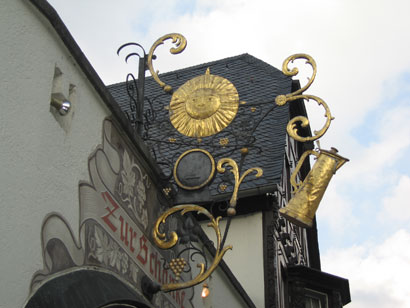
(left to right) The Kammerzell House is a famous restaurant in Strasbourg, France.; A store-front sign in Rudesheim, Germany.
At Mannheim, tour buses whisked passengers to romantic Heidelberg, noted as a university town which sits in a narrow gorge on the Neckar River. Built in the 17th century, the beautiful city is dominated by Heidelberg Castle which sits above the city, and which is being restored. A guided tour of this vast fortress was part of our tour package. Another dominate marker of the city is the handsome, turreted Old Bridge, built in 1788 on the banks of the Neckar. Not far from that is a very long street which winds its way for seemingly miles. It’s a good place to sit for a while and order some German food and bier (during warm weather), and watch people.
GRAND SPEYER
Speyer, an important center of Jewish culture, is best described as a grand city. Everything is large here–the buildings, the monuments, the city park and the Kirches (churches). The town’s Old Gate, a centerpiece of the city, still stands today, dating to 1176. The massive tower is 180 feet high. The Kaiserdom, founded in 1030 and consecrated in 1060, is Germany’s largest Romanesque building and is a UNESCO World Heritage site. Peeking in one of the churches further up the street, I listened to a men’s choir practice for an upcoming service. In the quiet of the church, with only a handful of others listening before the service, I was awestruck at the power of mens’ singing voices, and grateful for the chance to hear the soothing German songs in such a magnificant setting.
Docked in the Strasbourg suburb of Kehl, we boarded buses for a guided tour of this multicultural city. Strasbourg is where the Palais de L’Europe is located and where the European Parliament meets. It’s one of the richest medieval cities in Europe, and its Old Town is completely surrounded by the Ill River. Cozy cafes and restaurants abound here, such as the Kammerzell House, next to the Hirsch Chemist (www.maison-kammerzell.com).
My trip was nearing an end, but not without a bit of fanfare! At the captain’s farewell dinner on board, passengers and crew were in a celebratory mood, with a special menu of meat pate with cumberland sauce and Waldorf salad; cappuccino of forest mushrooms; honey glazed salmon or grilled beef tenderloin with truffle crust, vegetable basket and macaire potatoes; baked Alaska and pralines. Music and sparklers added a festival atmosphere during the dessert, followed by brief remarks from the crew.
On the last day before docking in Basel, our end point, the ship came into Breisach in the early morning, and after breakfast, the group took an excursion to the Black Forest. This densely-forested, mountainous region encompasses 7,500 square miles in southwestern Germany. It’s long and narrow (124 miles long, 37 miles wide), and tourism is the most important industry in the region. Pines and firs make up the foliage, and a number of birds and small creatures populate the forest. Cuckoo clocks, wood carvings and cherry schnapps are favorite souvenirs for visitors. I could have spent more time in the Black Forest area–the villages seemed so neat, tranquil and friendly, and the surrounding forests and mountains were unbelievably quiet and beautiful.
BASEL BECKONS
After 12 days, the cruise ship pulled quietly into Basel, which borders Switzerland and France, and is Switzerland’s third largest city. After our final breakfast–at which everyone lingered a bit longer–and farewells were made to friends that we met on board, we all departed for planes, trains or other transportation to take us home or to continue our journey.
It had been a dozen days of cruising one of the most famous rivers in Europe in total comfort and passing some of the most important historical towns and places in Europe. It had been educational, relaxing and fun, and I’d do it again in a heartbeat.
The trip was an up-close, personal encounter with European history, people and culture that would have been hard to duplicate on my own. And it was done in style, with a shipload of friends, and at a pace that was relaxing and enjoyable. Hopefully, my first river adventure down the Rhine won’t be my last!
HELPFUL HINTS:
To catch any of the numerous river cruises that Viking offers, call 877-668-4546 or visit vikingrivercruises.com. There is a wide range of itineraries, rivers, countries and prices to choose from. Viking cruises may also have add-on features that allow you to extend your vacation even longer. Viking can also book flights to your ship’s arrival and departure destinations.
All meals on board are included in the price. You won’t go hungry. Room service is not provided.
All off-ship tours are included in the price, except those that are announced as special tours once you board. Viking offers English-speaking tours (such as this one), as well as international tours that encompass other languages.
The three-deck Viking Sun (built in 2005/2006) holds 198 passengers and has a crew of 44. Rooms have a private bathroom/shower, phone, television, safe, hairdryer and individual climate controls. On-board voltage is 220V; razor outlet is 115V.
The ship’s Category A, B and C cabins at 155 square feet are larger than I thought they would be. Standard cabins are 120 square feet. The queen-size bed in my room was quite wide. There were drawers in the room to hold all of my belongings.
The ship’s promenade deck and its many panoramic windows allowed passengers good viewing in all kinds of weather.
The ship’s personnel will do your laundry (for a fee), sell you a limited amount of clothing should you need it, or if you forget something, provide internet service and phone service for a fee, and offer you a special drink package that saves money.
Shore excursion details were announced the evening before by the Cruise Manager in the lounge. His talks were detailed and informative, as well as funny, and passengers depended on him and his able assistants for answers to their many questions. He made the trip fun.
Special demonstrations and activities on board during the evenings–such as dancing troupes, silversmithing exhibits or games—were entertaining, and helped passengers mingle with others on board.
A galley tour, and a tour of the wheelhouse with the captain, were provided for those to wanted to participate.
A doctor was not on board, but the ship was always within a few minutes of the shore if a medical emergency arose, which it did not. All the crew are trained in life-saving techniques.
By all means, bring comfortable clothing and comfortable shoes. Ties and jackets are not required, but I found that many passengers dressed up for evening dinners. Tipping on board was also not required, but was encouraged, although it was not a hard sell. By the end of the trip, I wanted to offer some of the crew a tip for the excellent service I received.
Was 12 days on board a ship too long? Viking offers shorter trips, but I found that passengers took numerous shore excursions that made the time on board go quickly. The 12 days were nicely offset by the guided land tours.
I found a number of passengers had already been on a river cruise–a Viking cruise, in fact–and a number of them had been on at least two previous Viking river cruises. A number of passengers were vacationing with another couple or a group of friends.
The crew made the trip very pleasant; they were always accommodating. Returning from some land trips, the crew stood at the ship’s entrance with hot towels and glasses of fresh, chilled orange juice.
For those who get seasick easily, the Rhine is tame. I barely felt a wave all trip.

























 European Traveler