Visitors to the Castilla-La Mancha region can absorb Spanish traditions at this strategically located monastery-turned-hotel
By Randy Mink
For soaking up the heritage and romance of Spain almost by osmosis, nothing beats staying overnight in one of the country’s government-owned paradors. Many of the parador network’s 90-plus hostelries occupy former castles, palaces, fortresses and other types of historic buildings. They’re a big hit with North Americans seeking out Old World flavor.
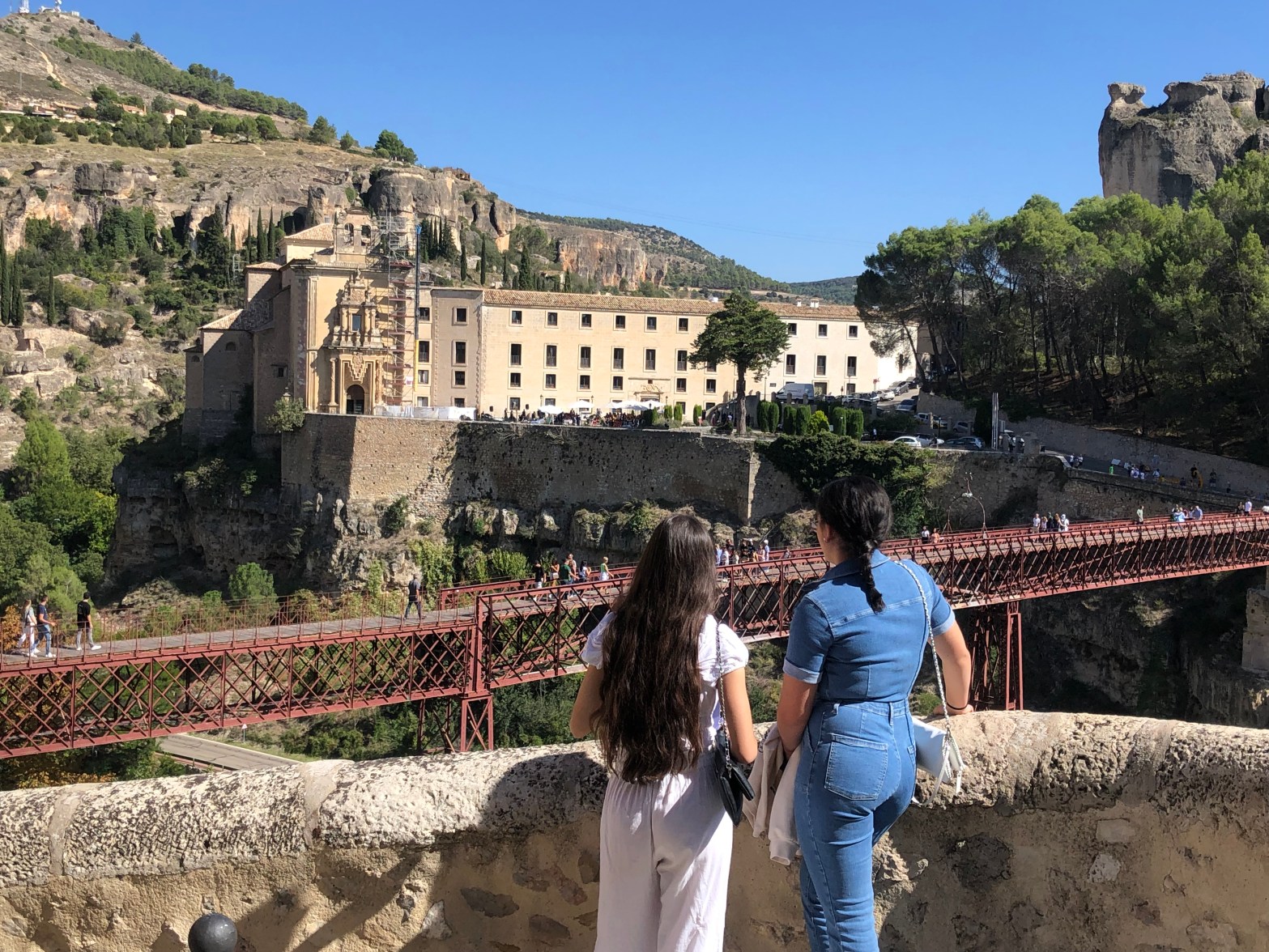
Both for its prime location and historical ambience, the 63-room Parador de Cuenca, once the monastery of San Pablo, makes an ideal home base in the enchanting city of Cuenca. Set on a rocky outcrop high above the Huécar River, the hotel affords postcard-perfect views of ancient buildings clinging to the cliffs across the gorge. And just steps from the entrance lies the city’s photogenic San Pablo Bridge, a gorge-spanning walkway that leads to the Ciudad Alta (Old City).
Parador de Cuenca overlooks the gorge-spanning San Pablo footbridge. (Randy Mink Photo)
A destination in itself, Parador de Cuenca was built in the 16th century by the Dominican order. The monastery, with a Gothic-style church, Renaissance cloister and Baroque facade, was converted into a university in the 1800s and later served as a hospital, secondary school and military headquarters.
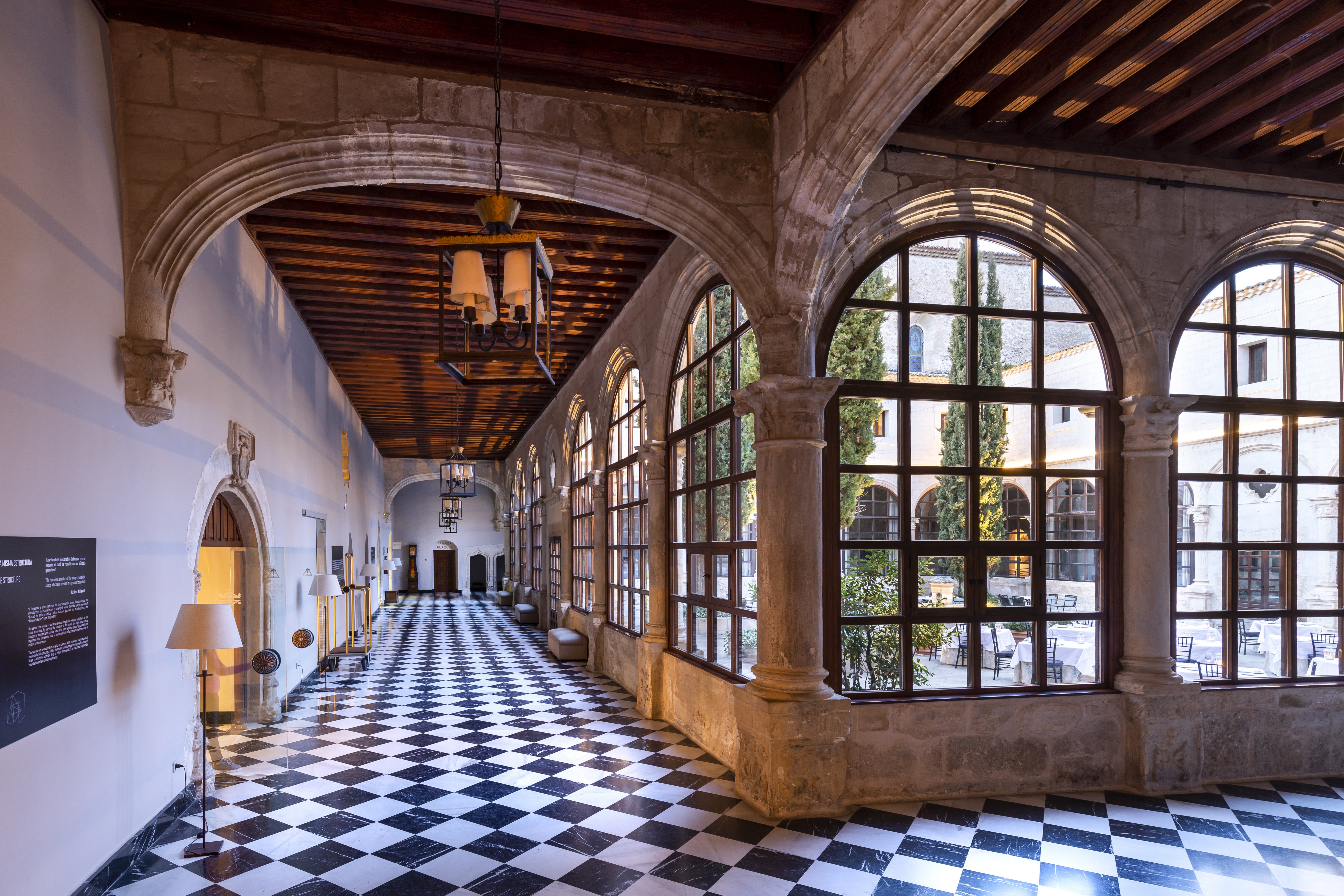
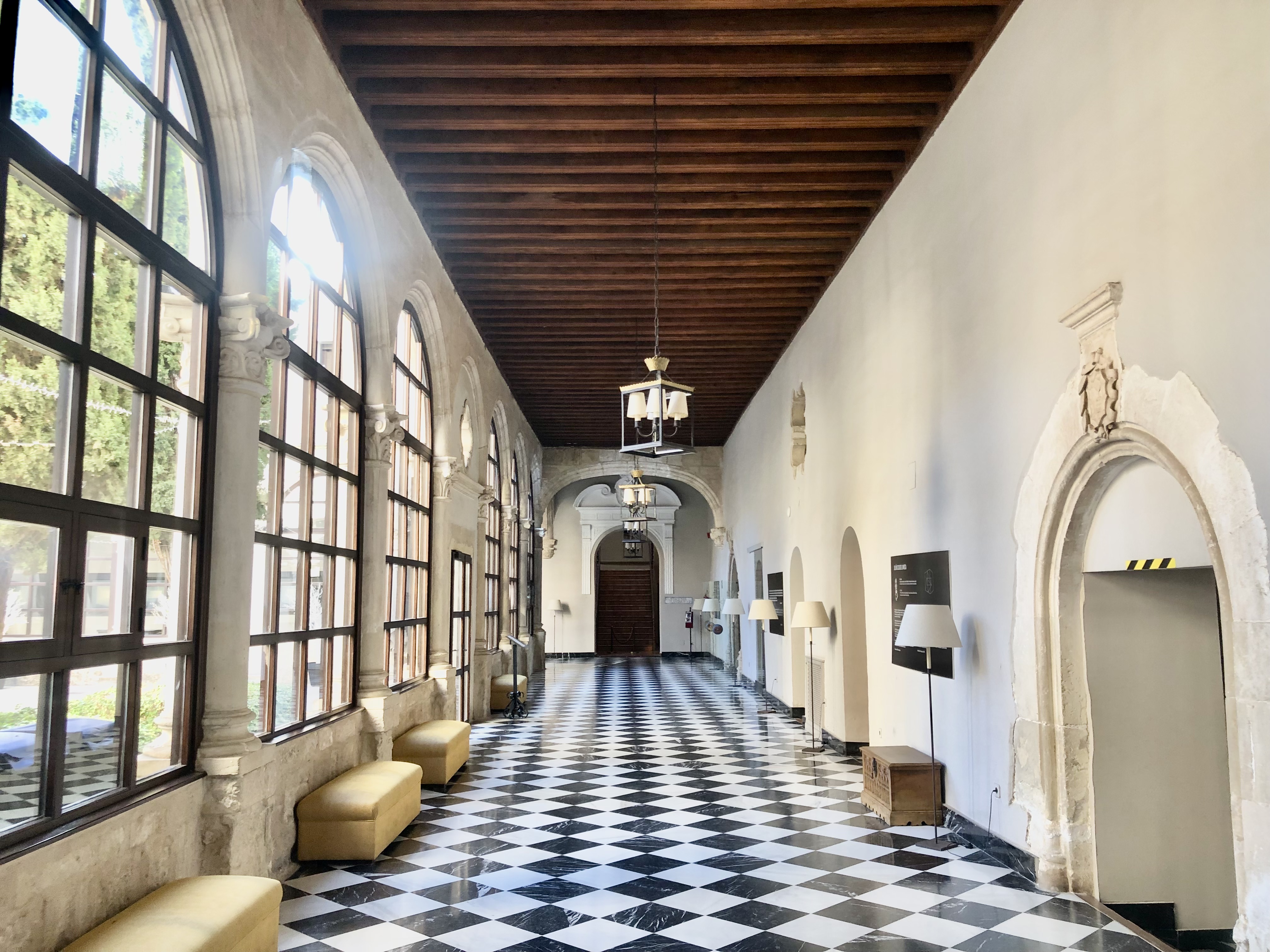
One of the hotel’s most striking features is the beautiful cloister that wraps around an open-air courtyard where you can enjoy a drink on a summer evening. The arcades, graced with semi-circular arches, beamed ceilings and black-and-white-tile floors, are accented here and there with antiques, including wooden chests and a grandfather clock. (On the Saturday of our visit, a wedding party had taken over the courtyard after a ceremony held under a tent in the plaza out front.)
The former monastery’s gracious cloister has been well preserved. (left, Paradores de Turismo de España; right, Randy Mink Photo)
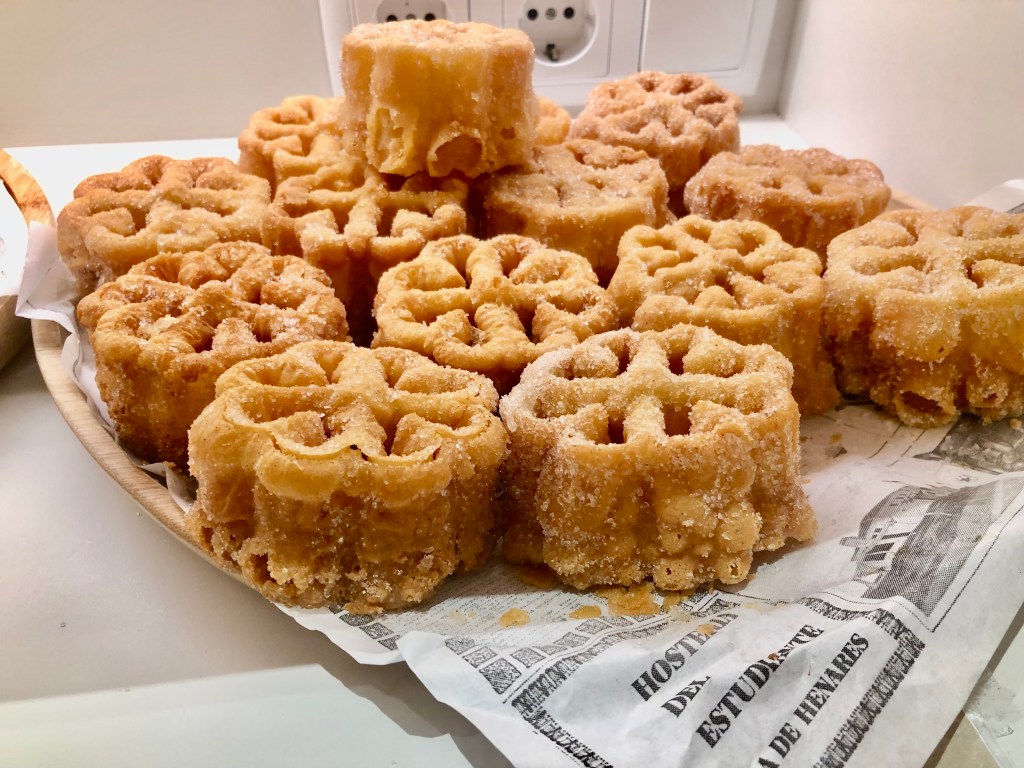
Also impressive is the coffered wooden ceiling of the parador’s restaurant. Once a chapel where monks prayed, the vaulted room is a heavenly place for breakfast. At the buffet we helped ourselves to fresh fruits, meats, cheeses, yogurt, artisan breads and all kinds of homemade pastries. A fan of baked goods, I filled up on mini brioches with chocolate chips, pretty pink-frosted strawberry chocolate donuts, shortbread cookies made by nuns from a local convent and Manchego flowers (or flores manchegas), a flaky, flower-shaped pastry of fried dough dusted with sugar and cinnamon.
Among the many pastries offered at the parador’s bountiful breakfast buffet are Manchego flowers, or flores manchegas. (Randy Mink Photo)
From the a la carte menu we could order piping-hot churros or eggs any style, but both days I went for migas, a humble dish that became a favorite of mine while traveling in Spain. A satisfying comfort food, migas combines fried crumbs from stale bread (soaked in water to get moist), olive oil, garlic, paprika (coloring it orange) and bits of chorizo. The crispy concoction is usually topped with a fried egg.
Paradors are known for purveying the best in Spanish gastronomy, and the restaurant’s dinner menu features many dishes with traditional recipes from central Spain’s Castilla-La Mancha region. Entrees include shoulder of suckling lamb, Manchego-style roasted lamb with rosemary sauce, and baked cod with Manchego ratatouille and saffron sauce.
The word “Manchego”—known to North Americans as the name of a prized, semi-hard sheep’s milk cheese—and its various forms refer broadly to the La Mancha region. A man from La Mancha would be a Manchegan (with a capital “M”) in English, or a manchego in Spanish.
To explain it further, Americans have only heard the adjective manchego in reference to the cheese, so often when they see the popular Spanish vegetable dish, pisto manchego, they assume it has to do with cheese, but it actually has no cheese at all; it just means it’s a Manchegan dish. The parador’s menu offers a selection of Manchego cheeses, or quesos manchegos.
Like the dining hall, the bar evokes the spirit of the old monastery. Just look up at the lovely religious ceiling frescoes framed by ornate plasterwork.
Summer guests can enjoy the parador’s swimming pool. Long ago, the parador’s dining room was the monastery’s chapel.(Randy Mink Photos)
Across the road are the tennis courts, outdoor swimming pool and party room. The main building has a fitness room.
The high-ceilinged guest rooms at Parador de Cuenca are tastefully appointed. My third-floor nest had a desk, TV, refrigerator and individual temperature controls. There were two floor lamps, two upholstered chairs and a coffee table. The red-tile floors and carved wooden doors lent a rustic look. Bathroom amenities included vanity and dental kits, make-up mirror and hairdryer. In both the bedroom and bathroom, windows let in fresh air and allowed me to hear crowing roosters at the farmstead across the river.
For information on the paradors of Spain, visit www.paradores.es.
Wedged between Germany and France, this northern Swiss city abounds with traditional restaurants offering classic fare and Old World flair
By Randy Mink
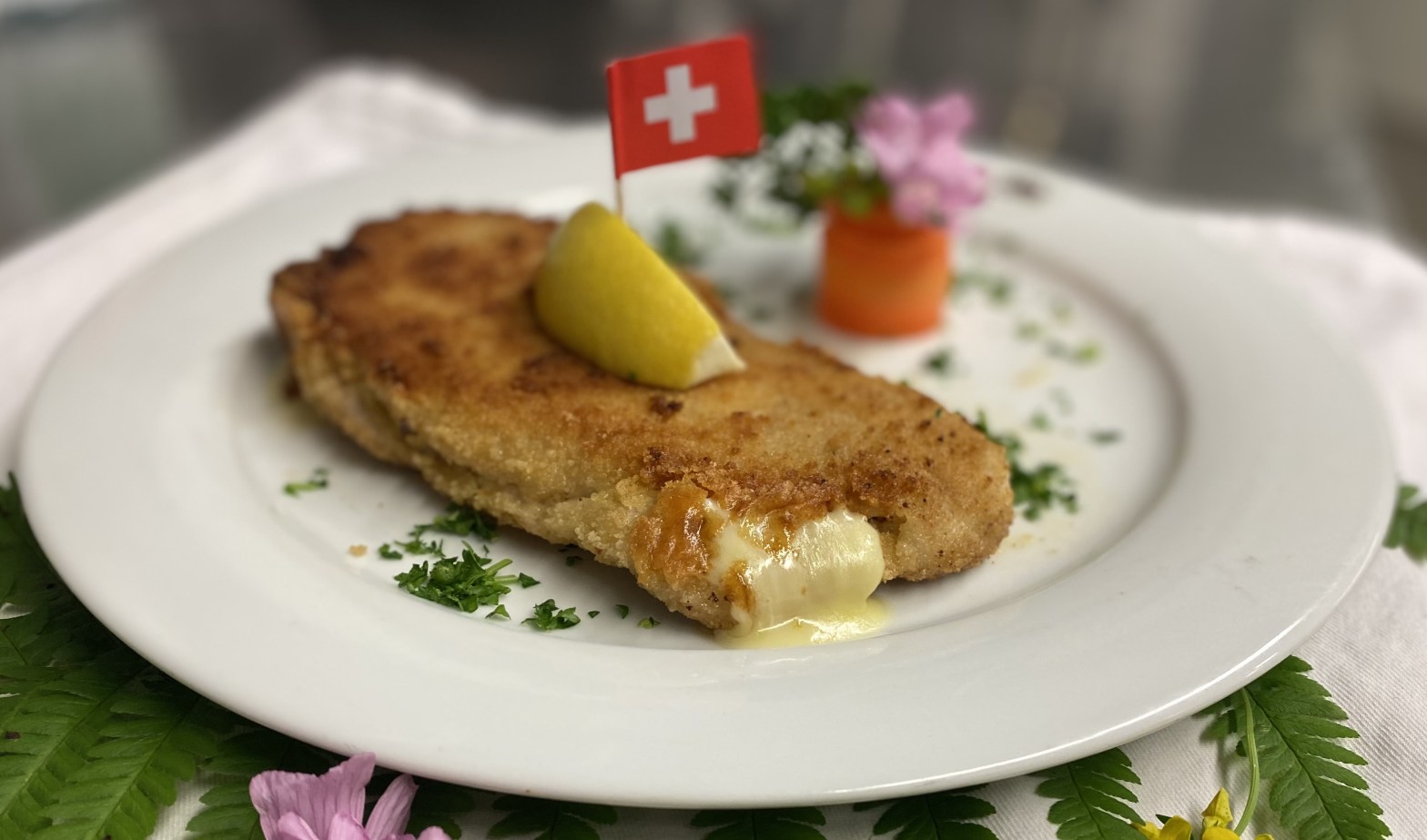
Served piping-hot and oozing with cheesy goodness, the veal cordon bleu at Zum Gifthüttli restaurant is something to savor, even drool over. Lunch in the wood-paneled dining room remains the warmest memory of my visit to Basel, the third-largest city in Switzerland.
After disembarking there from my week-long Rhine River cruise, I was most looking forward to exploring the medieval Old Town with its museums, churches, riverside promenades and specialty shops lining atmospheric alleyways paved with cobblestones. What turned out to be just as inviting, though, were the traditional, pub-style restaurants scattered about the historic core.
Cordon bleu is the house specialty at Zum Gifthüttli. We ordered the Classique, a juicy, golden-breaded schnitzel filled with ham and melted cheese, taking advantage of the Tagesteller (“daily plate”), a deal for 36.50 Swiss francs (about $43) that included french fries, pumpkin soup and dessert.
Gifthüttli, a traditional restaurant in Basel’s atmospheric Old Town, offers dining in the main-floor Bierstube, the upstairs Weinstube and at outdoor tables ideal for people-watching. (Randy Mink Photo)
Zum Gifthüttli’s menu lists cordon bleu variations, like the one with ham, cheese, asparagus, cherry tomatoes and Hollandaise sauce. Another consists of chorizo, mozzarella and herbs. The Florentiner has ham, cheese, spinach and a fried egg on top, while the Schweizer features two Swiss delicacies—Bündner air-dried ham and scrapings of raclette cheese. Opting for pork cordon bleu, instead of veal, can shave a bit off your bill, but any meal in Switzerland will cost much more than at home.
Guests at Gifthüttli can dine in the main-floor Bierstube, upstairs in the white-tablecloth Weinstube or, in warm weather, at outdoor tables offering the bonus of people-watching in Old Town’s pedestrian zone.
The white-tablecloth Weinstube at Gifthüttli offers a refined atmosphere. (Photo credit: Basel Tourism)
Fans of cordon bleu and antique charm also gravitate to Old Town eateries like Zum Braunen Mutz and Restaurant Löwenzorn. The latter offers tables in its historic rooms and in the idyllic courtyard garden, where blankets, furs and electric heaters keep patrons toasty in cooler weather. Löwenzorn favorites include the wienerschnitzel and traditional Swiss fondue.
Löwenzorn, a traditional restaurant in Basel’s Old Town, offers seating in historic rooms and in the courtyard garden. (Photo credit: Basel Tourism)
Restaurant Kunsthalle, a sophisticated but friendly Old World restaurant in the same building as the Kunsthalle Basel contemporary art museum, every winter opens its Fondue Stübli, a cozy fondue chalet next to the landmark Tinguely Fountain. Additional city-center spots for fondue (and other Swiss classics) are Walliserkanne and Safran Zunft.
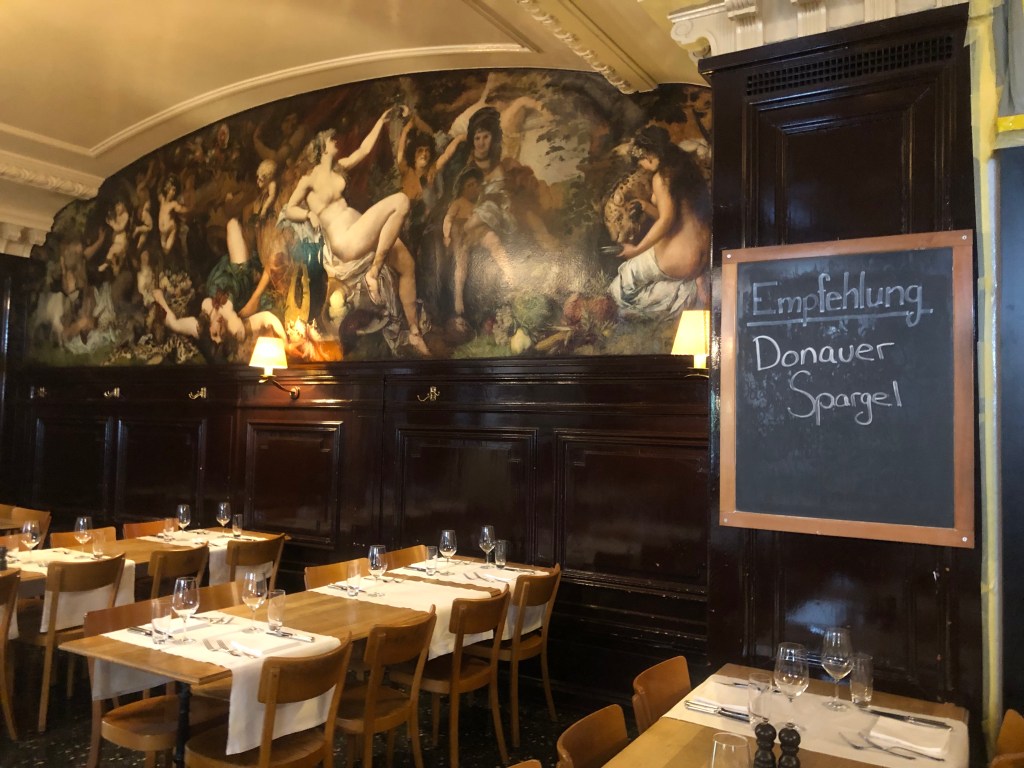
Patrons at Basel’s Restaurant Kunsthalle enjoy an Old World atmosphere in the vaulted Schluuch room. (Randy Mink Photo)
On our springtime visit to Restaurant Kunsthalle, we had a lunch of pasta amidst dark wood and classical cherub murals in the cozy, vaulted Schluuch room. The more formal “white” room overlooks the chestnut tree-shaded patio, one of Basel’s prime spots for alfresco dining. The Kunsthalle’s menu reveals typical Swiss fare, including Zürcher Geschnetzeltes (veal strips in a sauce of white wine, cream and mushrooms) with rösti, the ubiquitous Swiss version of hash browns offered at most restaurants that serve french fries.
No discussion of traditional dining spots is complete without a mention of Gasthof zum Goldenen Sternen, Basel’s oldest restaurant. Though it’s been at its current riverside location for only 50-some years, it date backs to 1412. In the 1970s the ancient building was dismantled and rebuilt stone by stone along with the original ceiling paintings and all the wood paneling. Highlighting the menu are highly regarded fish dishes—I had the lightly fried salmon filet with linguine. It also offers lamb shank, steaks and wienerschnitzel, among other entrees. The restaurant looks out on the Rhine River, and there’s outdoor seating under trees on the riverfront promenade.
Gasthof zum Goldenen Sternen, Basel’s oldest restaurant, enjoys a setting on the Rhine River. There is seating under trees on the riverfront promenade. (Photo credit: Basel Tourism)
The Goldenen Sternen (“Golden Star”) is located in the picturesque St. Alban quarter, a quiet neighborhood noted for its patrician townhouses, half-timbered buildings, narrow streets and a stream that powers the waterwheel at the Basel Paper Mill. Now a fascinating museum about the history of paper making and printing, the medieval mill, just steps from the Rhine and not far from Old Town, was one of many in St. Alban that made Basel a book publishing center for centuries.
Though skeptical about how interesting a paper museum could be, we found it eye-opening. Especially fun was watching demonstrations of how a pulpy goop is transformed into paper. We had a chance to make our own sheet as a souvenir. And we were surprised to learn that until the 19th century paper was made almost entirely from old rags and ropes that were sorted, cleaned, cut into strips and left to decay in a rag cellar’s rotting vats. There are even exhibits on the evolution of toilet paper, which was considered a luxury product when first introduced in the late 1800s.
Visitors learn about the history of paper and witness the paper-making process at the Basel Paper Mill, a museum housed in a medieval paper mill. (Randy Mink Photo)
Claiming nearly 40 museums, Basel has a museum for every interest, showcasing subjects ranging from cartoons and musical instruments to city history and Jewish culture. Most visited are its two leading art museums.
Kunstmuseum Basel, whose three-building complex holds the world’s oldest municipally owned public art collection, presents seven centuries of European art and boasts the world’s largest collection of paintings by the Holbein family. On the outskirts of Basel, Fondation Beyeler, comprising a main building designed by noted architect Renzo Piano, houses some 400 masterpieces of modern and contemporary art, including pieces by Picasso, Monet, Matisse and Cezanne.
Kunstmuseum Basel holds an impressive collection of paintings by Hans Holbein. (Photo credit: Basel Tourism)
The Basel Historical Museum, with exhibition halls under the vaulted ceilings of a former 13th century church, focuses on the intersection of the cultures of Switzerland, France and Germany. (From Basel, Germany and France are just a hike or bike ride away. Visible on the horizon are the Vosges Mountains of France and Germany’s Black Forest.)
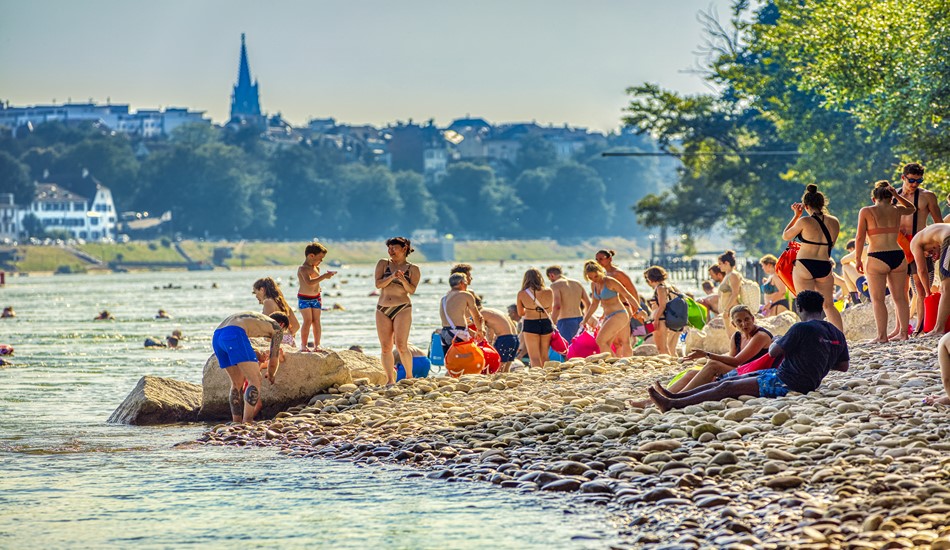
In the summer you’ll see people sunning on the riverbanks and swimming or floating in the river. Basel Tourism offices and retail stores sell something called a Wickelfisch, a brightly colored, fish-shaped waterproof bag for keeping your clothes dry as you whoosh down the river past city landmarks. It’s not to be used as a flotation device.
Frolicking in the Rhine River is a popular pastime with tourists and locals alike. (Photo credit: Basel Tourism)
Sightseeing cruises provide another way of experiencing the Rhine. Or you can take one of the small passenger ferries that shuttle back and forth between the larger southern part of the city (Grossbasel, or Greater Basel) to the northern side (Kleinbasel, or Little Basel) at four crossing points. Attached to a cable that spans the river, the non-motorized boats are guided deftly by expert ferry operators.
We took the five-minute ride from St. Alban to the opposite bank, then walked along the riverside path for 11 minutes before reaching the Museum Tinguely, a showplace for monumental mechanical sculptures created by world-renowned artist Jean Tinguely (1925-1991), who grew up and studied in Basel. Buttons allow visitors to activate some of the playful, mischievous and wacky creations, causing them to rattle, shake and whirl.
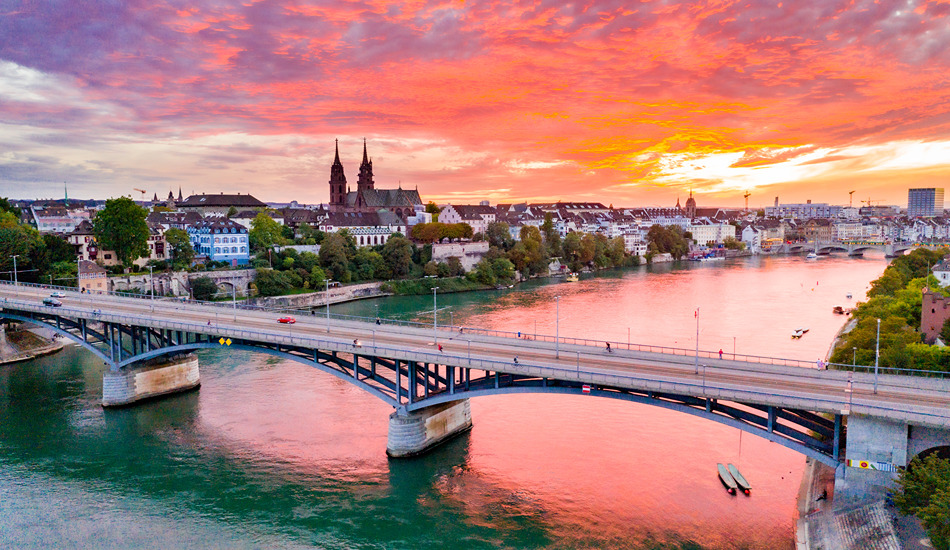
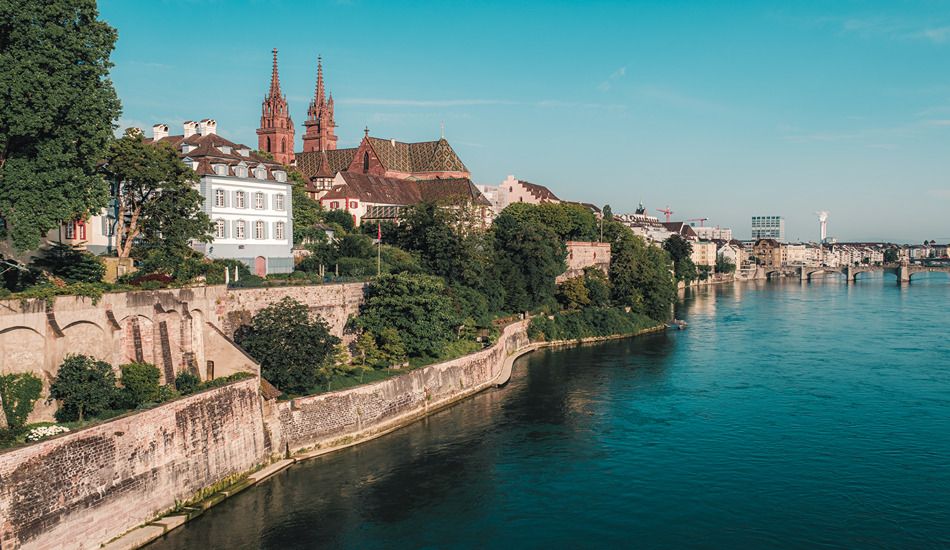
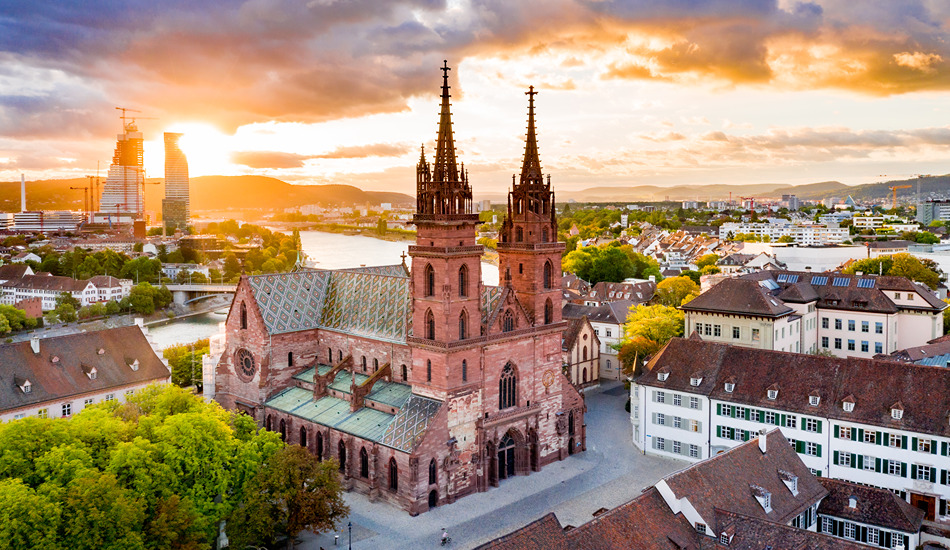
Sweeping views of the Rhine can be enjoyed from the tree-shaded terrace of Basel Cathedral. Sporting impressive twin towers, it is the city’s most prominent landmark. Built mainly in the 12th and 13th centuries, the Romanesque-Gothic church contains the tomb of the Dutch humanist Erasmus (1466-1536), who lived in Basel. Ambitious types can climb the towers’ narrow staircases (about 250 steps).
The twin spires of Basel Cathedral dominate the skyline of Basel, which lies on the Rhine River in northern Switzerland. (Photo credit: Basel Tourism)
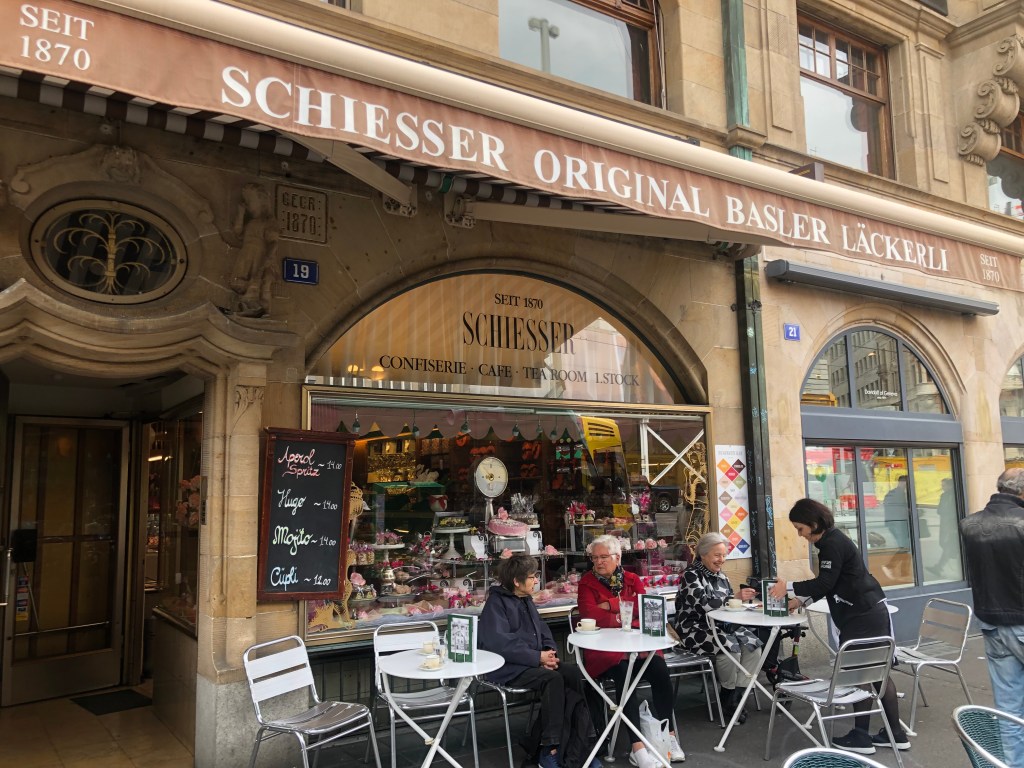
One of the best places to take a break from sightseeing is Confiserie Schiesser, a cafe/tea room/confectionery with an on-site chocolate factory and bakery. Founded in 1870 and now in its fifth generation of family ownership, Schiesser faces Old Town’s vivid red Rathaus (Town Hall) and market square. A tantalizing array of chocolates, cookies and pastries tempts the sweet tooth. Distinctive to Basel are the Basler Läckerli, a ginger cookie made with honey, spices, almonds, and candied orange and lemon peel.
Confiserie Schiesser, a cafe/tea room/confectionery founded in 1870, is famous for its chocolates, cookies and pastries. (Randy Mink Photo)
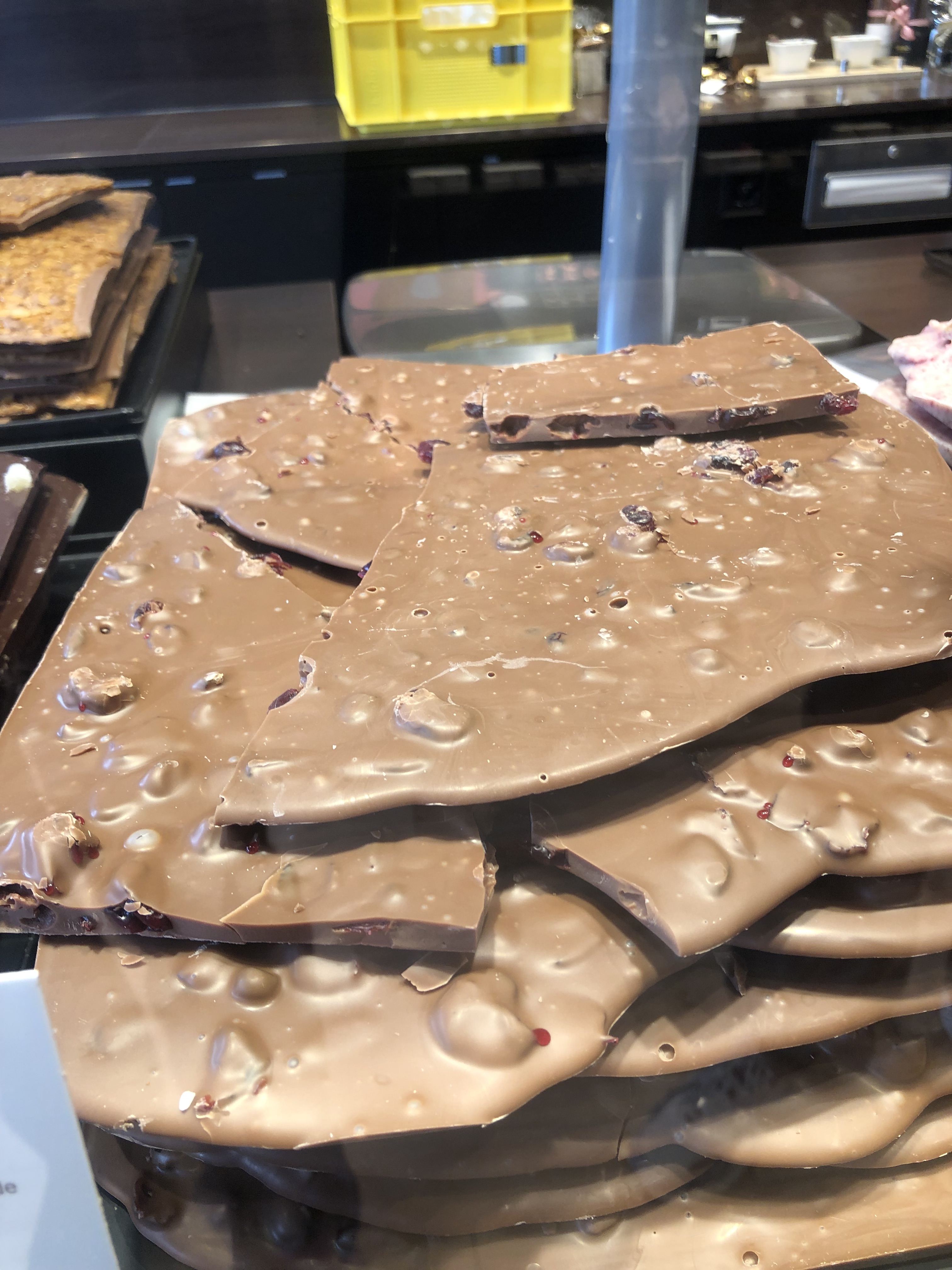
A few doors down from Confiserie Schiesser, high-end Läderach chocolatier sells slabs of melt-in-your-mouth chocolate called Frisch Schoggi. Sold by the gram, the uneven pieces are studded with everything from hazelnuts and almonds to cranberries and cornflakes.
Visitors in Basel’s Old Town can indulge their sweet tooth at Läderach, a high-end Swiss chocolatier. (Randy Mink Photo)
Indulging in Basel’s tasty treats is the epitome of Swiss bliss.
For more information, visit the Basel Tourism website, www.basel.com.
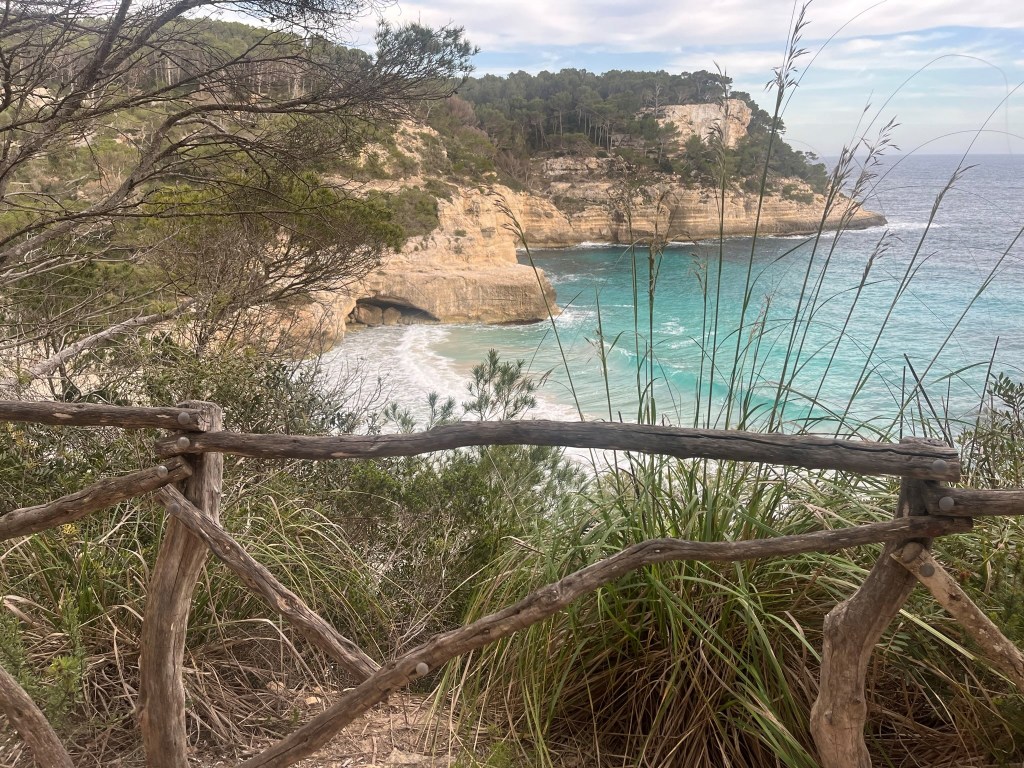
In the west Mediterranean Sea, the Balearic Islands’ Menorca makes the most of its natural resources. And for being only about 30 miles long and 10 miles wide, it has a lot! This haven of coves and turquoise water licking untouched white sand beaches has been a Biosphere Reserve since 1993, and due to its wide diversity of habitats and landscape it is UNESCO-designated as the headquarters for the World Network of Island and Coastal Biosphere Reserves for matters pertaining to sustainable development. Local farming practices focus on sustainability and preserving the island’s natural heritage. Using environmental resources found within the island’s ecosystem, resident farmers and artisans make a living from the offerings provided by landscape and livestock.
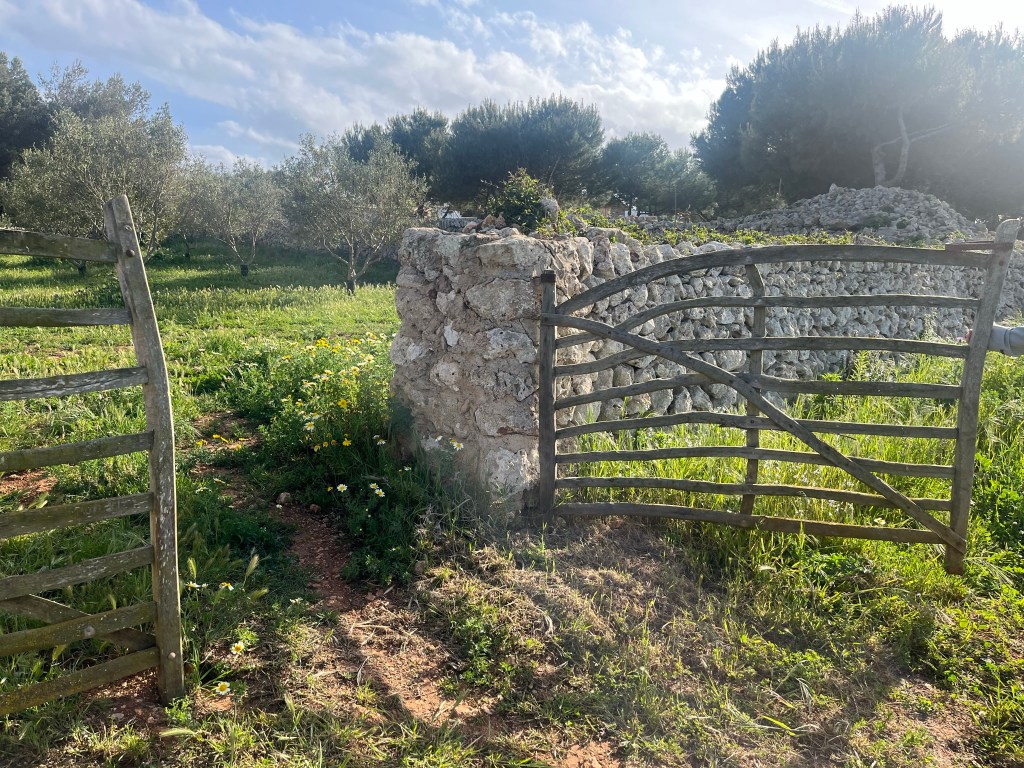
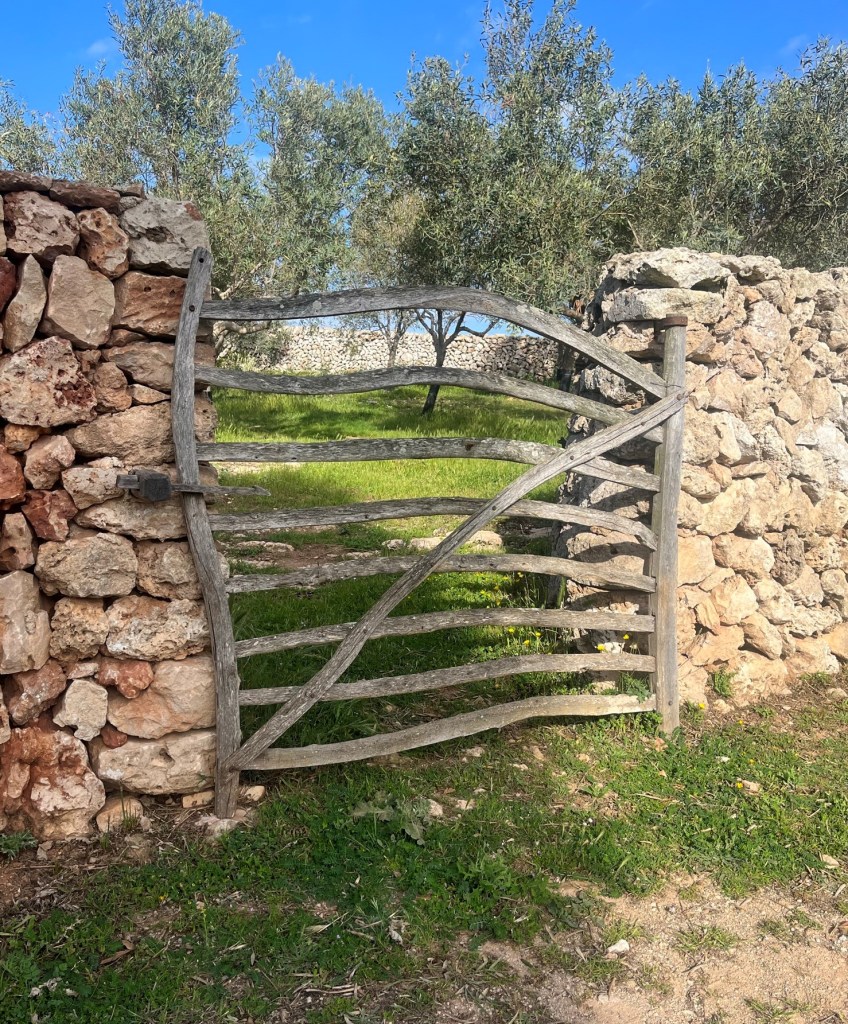
Across the island, wild olive tree wood is fashioned into fences to divide land and act as guard rails.
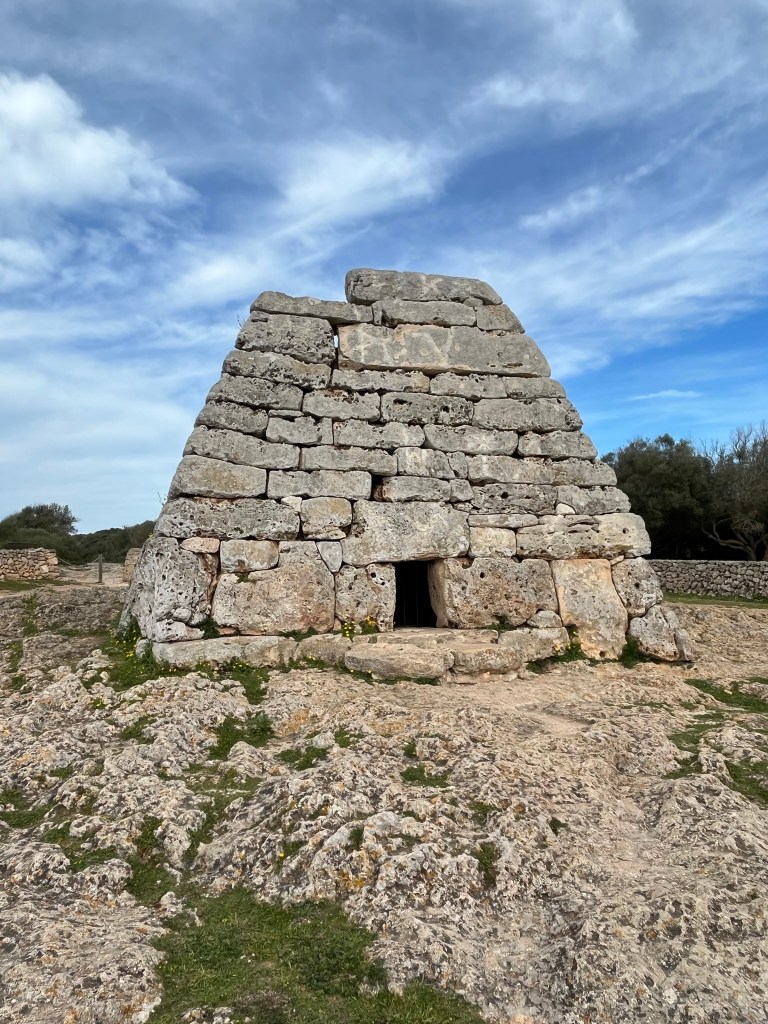
Menorca’s “mosaic landscape” of varying ecosystems consists of farmland, forests, and villages, with a bird’s-eye view revealing small plots of land divided by a network of dry-stone walls. Since ancient times, agrarians have gleaned rocks from the soil to build these mortar-less barriers that cover about 6,835 miles of the island (more than half the length of the Great Wall of China) and reduce erosion by blocking the wind from shifting soil to neighboring plots. Even the island’s prehistoric navetas (burial chambers) and talayots (shrines) were built by carefully selecting stones of varied size and shape, filling gaps with sand, and relying on gravity to secure them together.
(left) Unique to the island, Menorca’s navetas are pre-Talaiotic burial monuments shaped like an inverted boat and built using only large stone blocks. (middle) The island’s naturally rocky soil is gleaned to build stone walls that separate land plots. Wild olive trees with olives not suitable for harvesting are formed into farm gates using their distinctive, curvy wood. (right) Prevalent on Menorca are cement-free stacked-stone walls and sturdy gates crafted from wild olive trees.
Vineyards on Menorca are typically surrounded by these stone walls, a drainage situation that adequately waters the vines without leaving them overly damp. Local beverages created from the natural flora offerings of the land include the Vi de la Terra Illa de Menorca indication of quality wine, aromatic Menorcan gin (the oldest in Spain) produced using wine-based alcohol distilled with native herbs and juniper berries in old copper stills, and herb liquor digestifs.
The olive tree is another landscape prevalence, including the Spanish arbequina variety, which is used to produce a popular extra virgin olive oil with a mild, creamy flavor and slow kick. Oral history says the famous condiment mayonnaise heralds from Menorca, where the invading French Duke of Richelieu first tried the local sauce (a simple mixture of olive oil, egg, and salt) and brought it back to the French court, naming the recipe “mahonnaise” after the town Mahón. The oldest written source of Menorcan recipes is Art de la Cuina, a book by Fra Francesc Roger detailing the island’s cultural gastronomy in more than 200 18th century recipes, including a recipe for mayo using native olive oil. Not only are olives used for oil production, the strong wood from wild olive trees whose olives aren’t large enough to harvest is crafted into rustic, swing farm gates in a distinctive curvy design seen all across the island.
The oldest written source of Menorcan recipes is Art de la Cuina, a book by Fra Francesc Roger detailing the island’s cultural gastronomy in more than 200 18th century recipes, including a recipe for mayo using native olive oil.
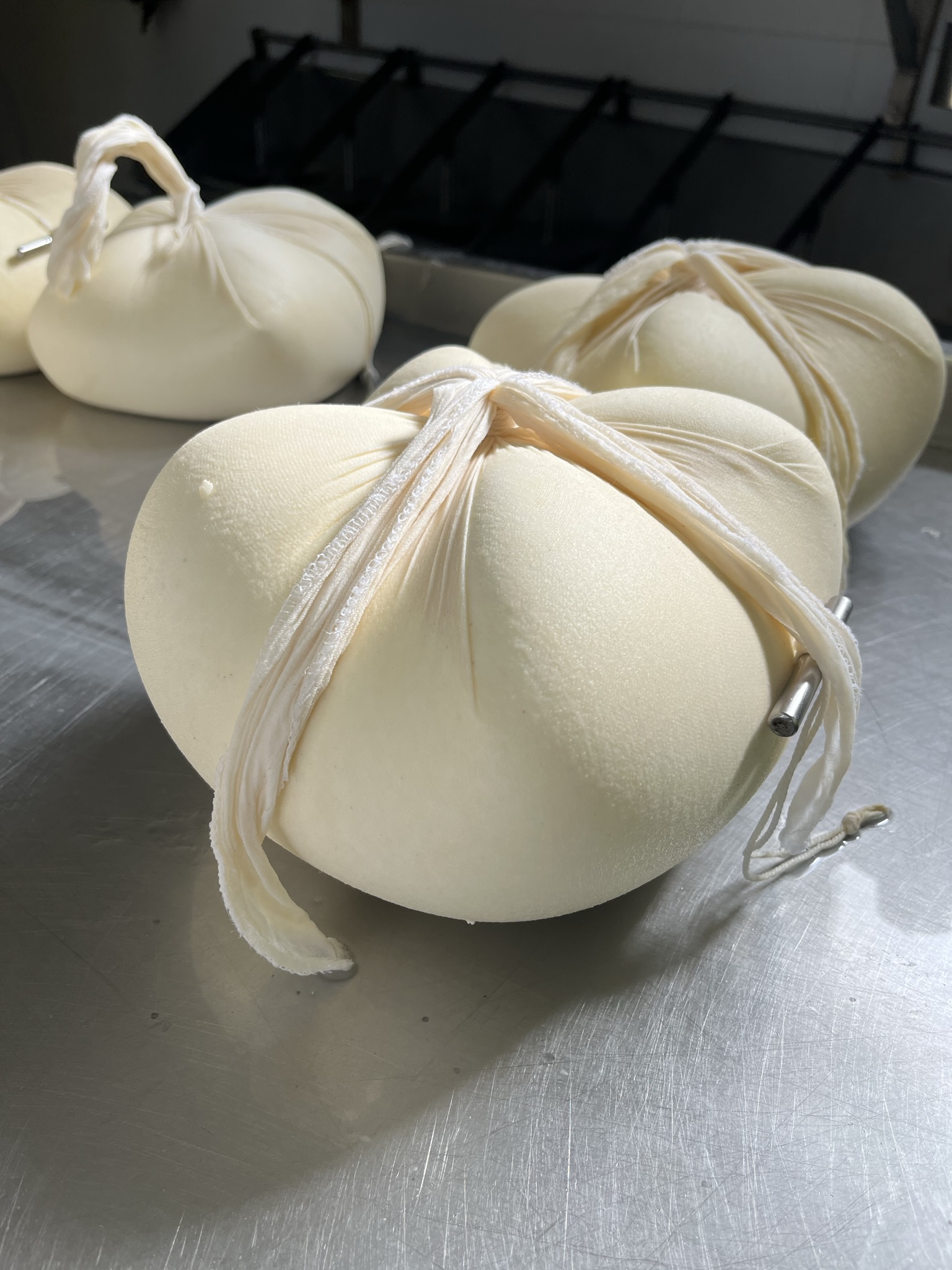
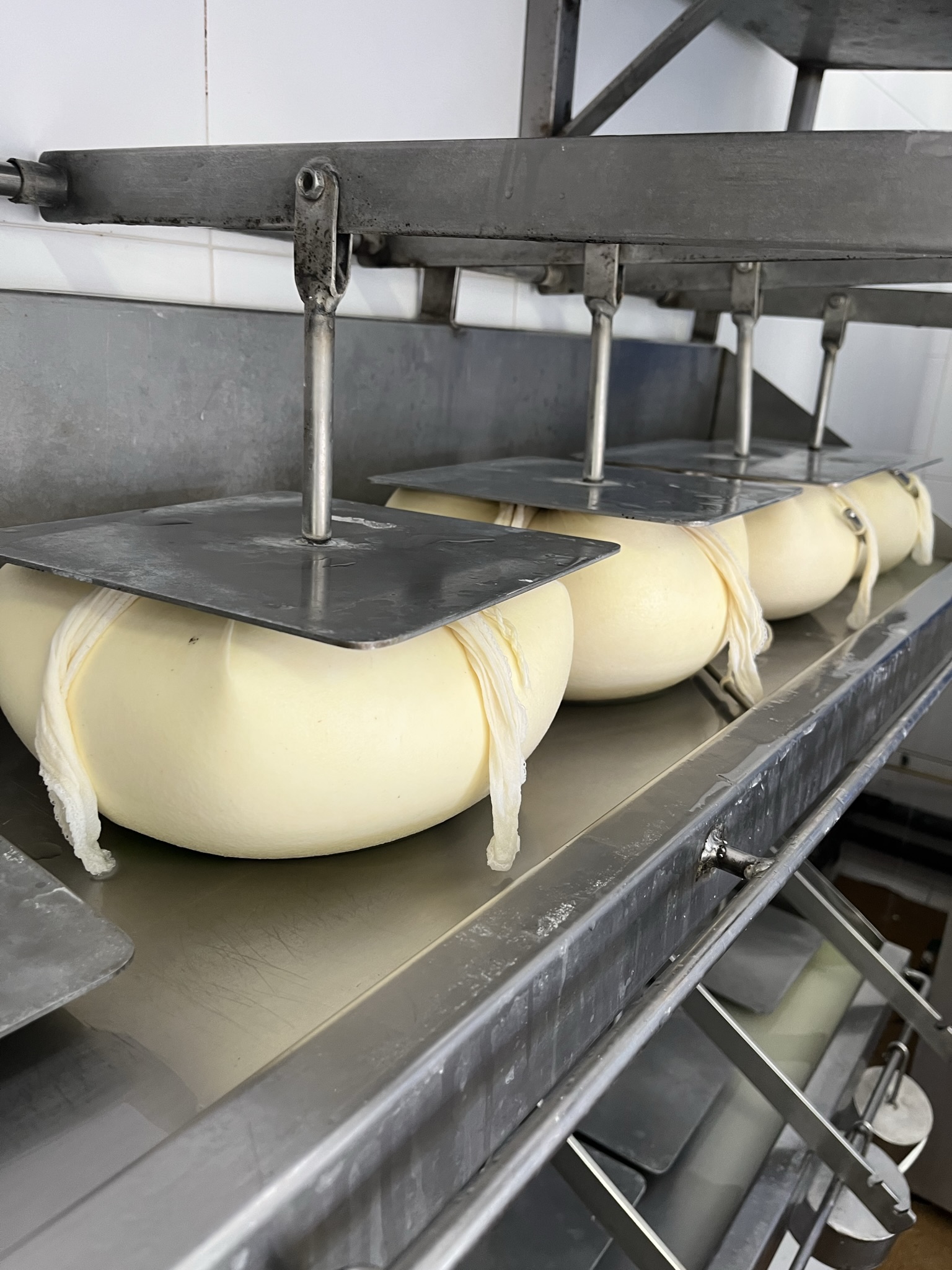
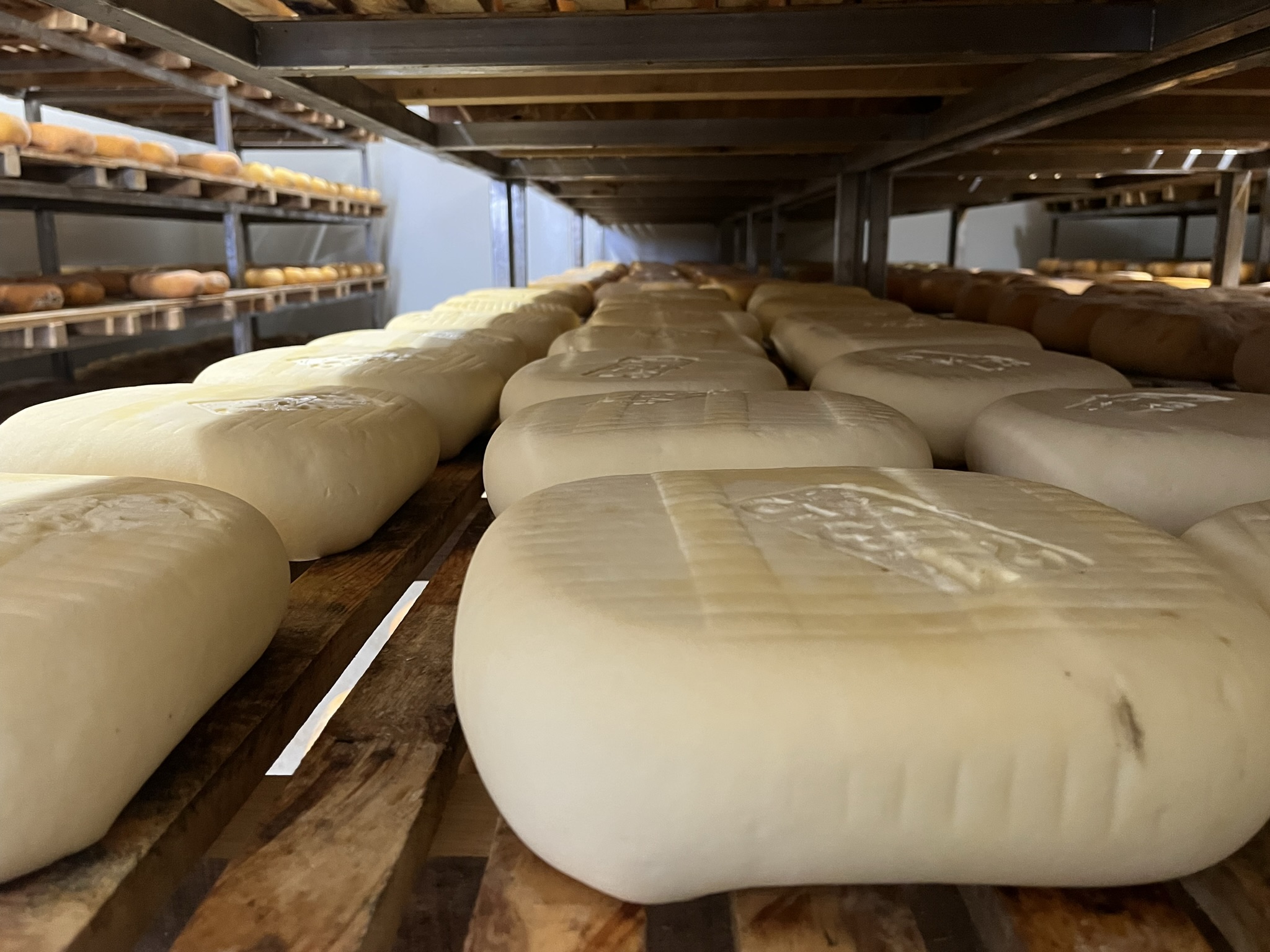
Using age-old methods, farmers use milk from Menorcan cows to produce rounded-edge square blocks of Mahón-Menorca Denomination of Origin cheese with a flavorful, oily dark rind (even Arabic documents from the year 1000 describe the tasty qualities of cow’s milk Menorcan cheese). Farms like Son Piris produce artisan cheese (made with raw milk and intended for immediate consumption) or the more industrialized and slightly sweeter pasteurized-milk cheeses. Martina Fedelich of Son Piris explained that it is difficult to imitate the Menorcan bacteria used in their cheese, as they are unique and isolated from other cheeses and even differ from those on neighboring island Mallorca. Easy to identify, Mahón-Menorca cheese’s unique shape comes from the cheesecloth used during the pressing process, and fabric lines from the cloth remain visible in the rind.
(clockwise from upper left) The unique shape of Mahón-Menorca cheese comes from the cheesecloth used during the pressing process, and fabric lines from the cloth remain visible in the rind; Son Piris cheeses are wrapped tightly in cheesecloth, which holds together the solid cheese curd while allowing for drainage of liquid whey; Wrapped cheeses are pressed to remove excess moisture; After their tightly wrapped cloths are removed, the cheese is set out to dry; Martina Fedelich of Son Piris serves the famous farm-to-table Mahón-Menorca Denomination of Origin cheese.
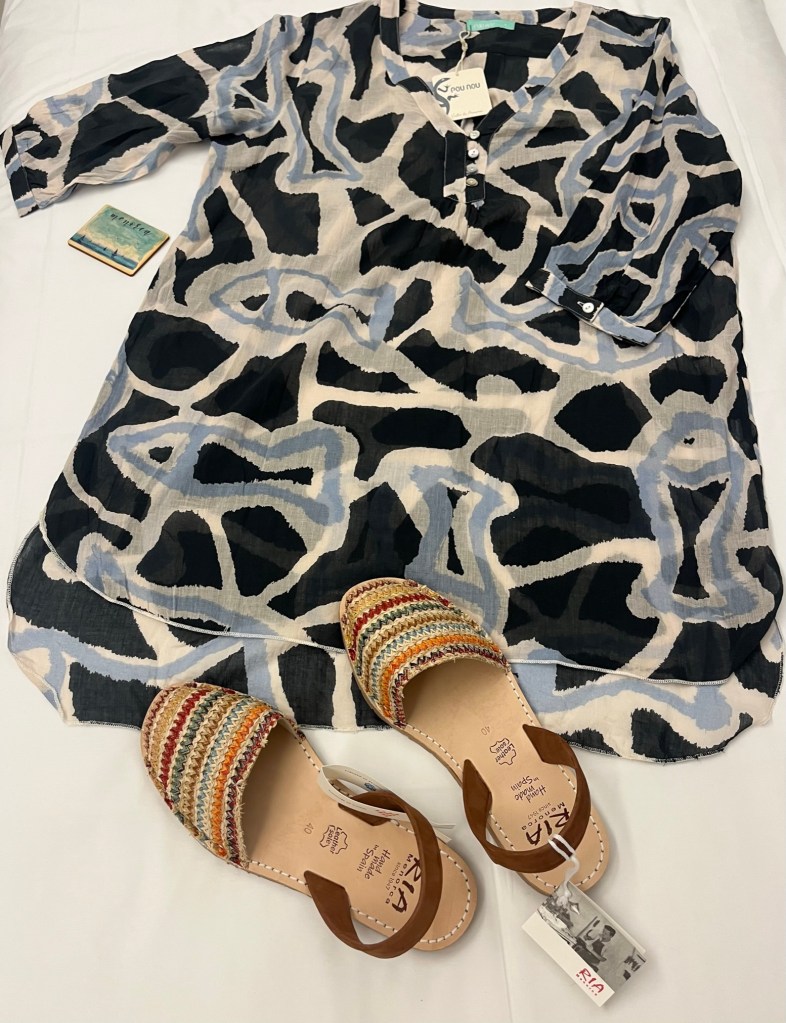
Agriculture is a key trade on Menorca; however, the most important manufacturing business on the island is shoe design and production—an industry dating back to the 18th century. Footwear made in Menorca is known for its high quality and meticulous craftsmanship. The most famous sandal shape, with a cowhide leather upper and sole, was first created to protect farmers’ feet while working the rocky soil. Nowadays, these avarcas (also called abarcas or menorquinas) are sold with heels and straps of all styles and colors, but use recycled tires as a hardy sole. Popularity and production have been increasing especially over the past few years, and they are worn by Menorcans and visitors alike.
RIA brand avarcas fashioned from leather with a colorful woven upper are a stylish update to traditional peasant footwear. Pou Nou clothing motifs echo the sea life and landscape of the island, like this fish-print tunic in shades of blue.
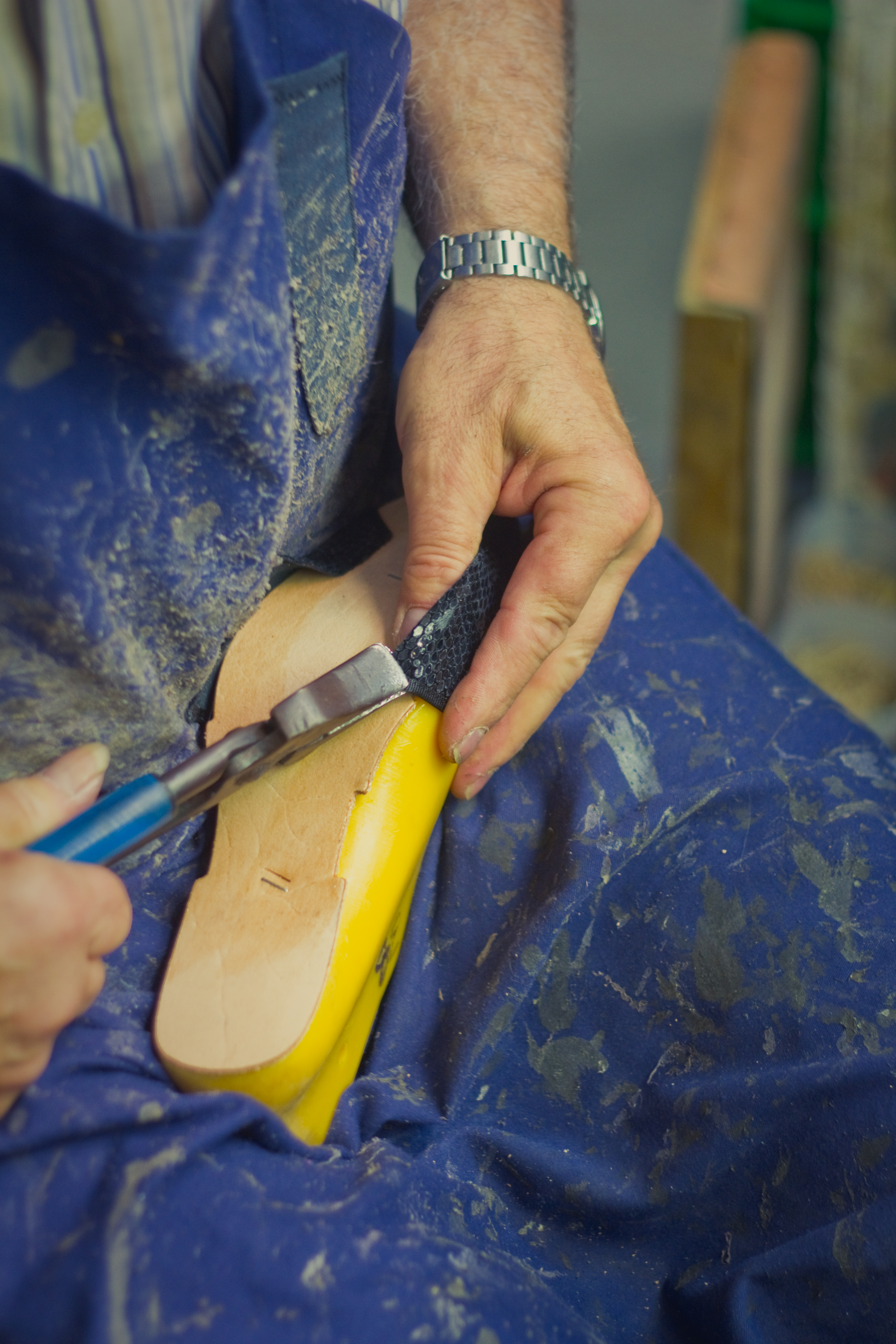
Avarca company MIBO proudly carries the Avarca de Menorca hallmark—another island-specific denomination of origin—which guarantees that their footwear is crafted locally and made with high-quality materials. Founded in 1998 by Miguel Pascual and Bosco Moll, MIBO designs and manufactures these iconic Menorcan sandals using traditional methodology combined with modern technology. Moll said, “The process to make a pair of avarcas from Menorca has about 25 operations, which all need the hands of craftsmen to be able to make them. We also use technology that helps the craftsmen, but it always requires expert hands. … The future of our product and our brand passes through the qualified training of our craftsmen-workers since there are no schools or training cycles that help this task.”
(left) A traditional style with modern updates, some MIBO avarcas feature trendy details like cut-outs, bows, and textured mosaic prints. (right) A MIBO artisan carefully guides a hallmark-stamped leather sole through machine stitching. Photos courtesy of MIBO.
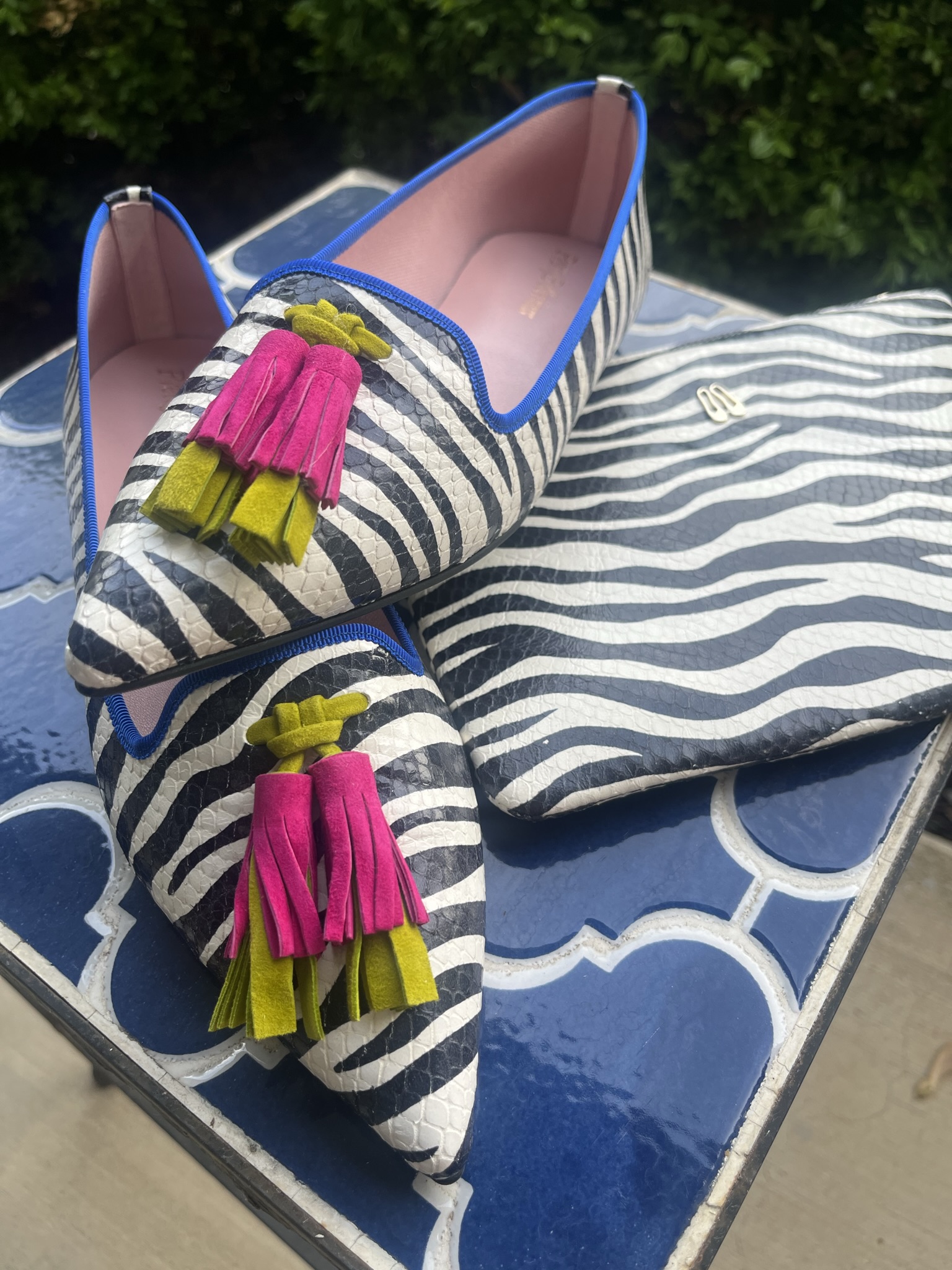
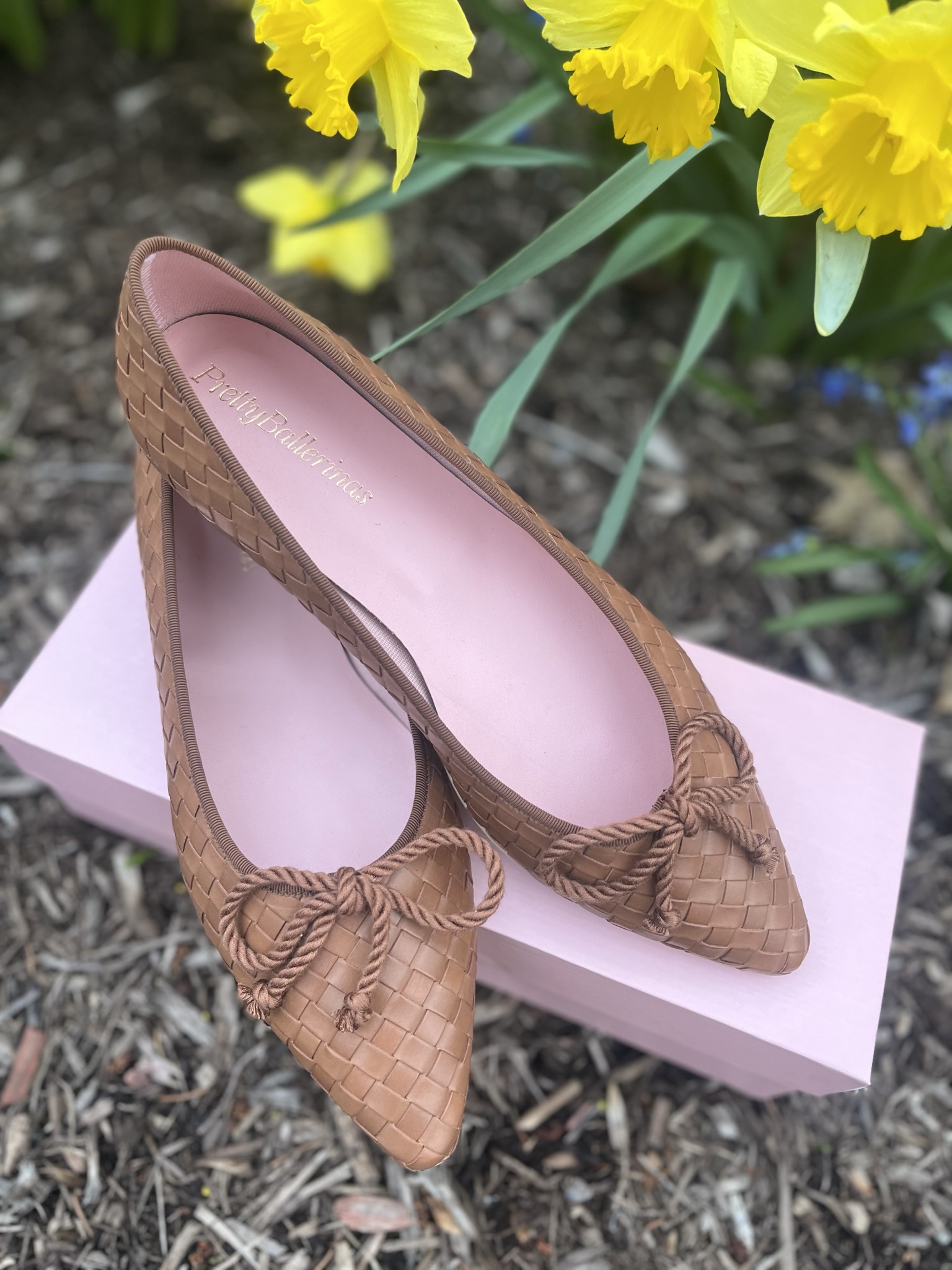
Another prestigious Menorcan shoe brand known internationally for its impeccable quality and innovative designs is Pretty Ballerinas, a unique line of leather flats produced by the Mascaró Group footwear company. These fashions have been famously worn by Kate Moss, Kate Middleton, the Queen of Spain, Elle Macpherson, Claudia Schiffer, and Angelina Jolie, among other celebrities. Fanny Cano, vivacious franchisee and owner of Pretty Ballerinas U.S. (the sole U.S. store, located in New York City), was born on Mallorca and has worked for the Mascaró brand since 1998. Fanny said:
“I love when through our very personal customer service we get to transmit to our customers the island’s vibes. They know they are wearing a unique piece crafted by hand on a small island in the Mediterranean. They feel the quality and the time invested in their pair of shoes. Explaining to the clients where and how the shoes are made—in a very artisanal and old-fashioned method—it really helps them to get tele-transported to the smell of the leather, the artisan hands sewing the shoes, mixed with the breeze of the sea and the taste of the food.”
Fanny Cano, Pretty Ballerinas franchisee and owner of the New York City store, poses before the iconic pink boxes and glamorous storefront that identify this high-quality brand of Menorca-made women’s leather flats. Easily identifiable by a pink lining and stamped ballerina slipper icon on the underside, Pretty Ballerinas flats and matching handbags exhibit a unique style and luxurious leather silhouette. Top-left and bottom-right photos courtesy of Fanny Cano.
Woodworking, earthenware, basket weaving, traditional llaüt wooden boat carpentry, and other crafts using fabrics, stone, and paper are sold in island shops and markets during the summer months. The quality of local, professional artisans’ work is acknowledged by the Artesanía de Menorca (Craft of Menorca) hallmark, and the Centre Artesanal de Menorca (Artisan Centre of Menorca) at the Es Mercadal fairground exhibits and sells many of these handmade products.
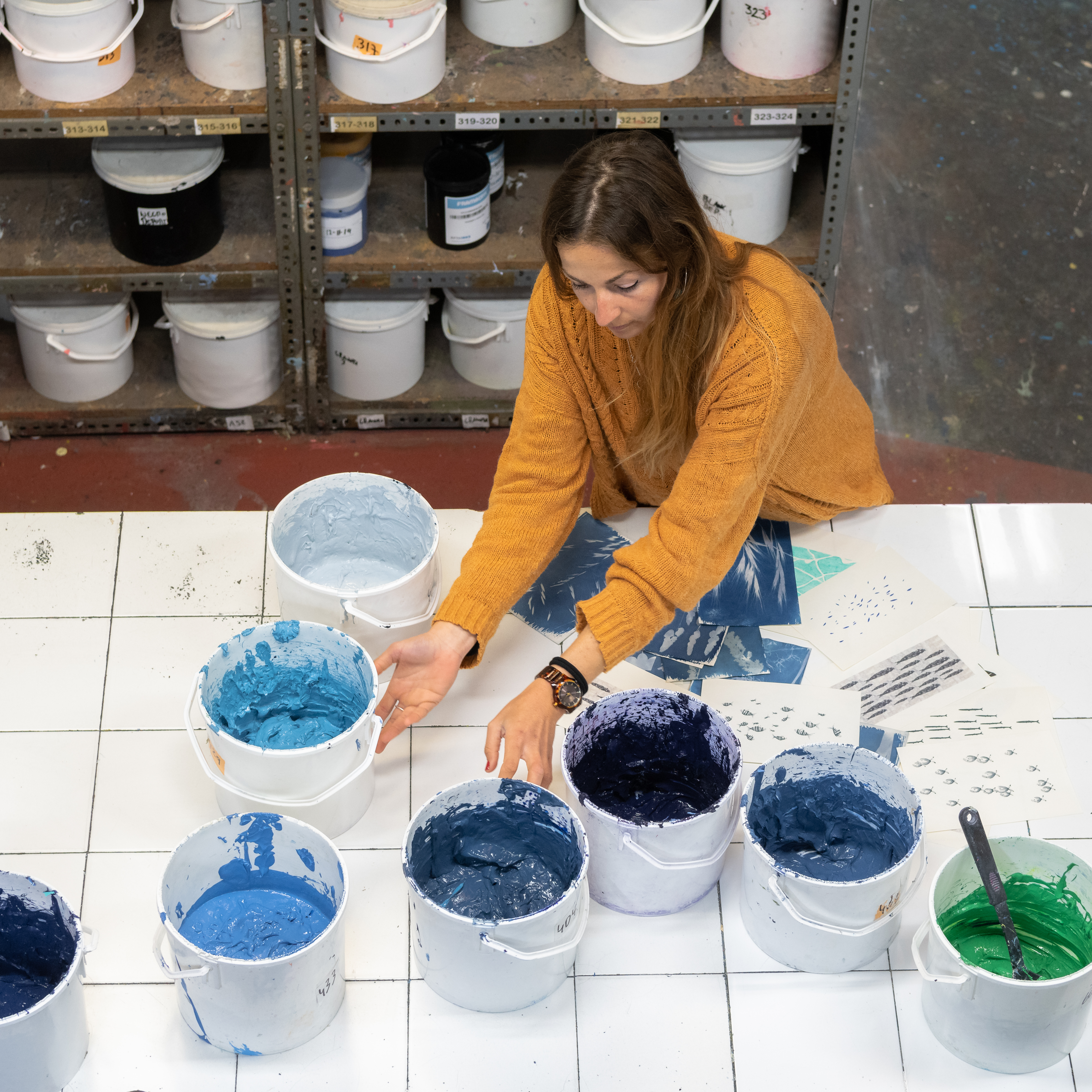
A Menorca-born leader in local artistry is Pou Nou clothing company, whose designers work closely with area artists to produce contemporary designs and stylish garments that reflect the colors and shapes of Mediterranean life. Drawing inspiration from the sea, sky, and island itself, Pou Nou creates hand-printed T-shirts and breezy, comfortable fashions for all ages using natural fibers like linen and cotton.
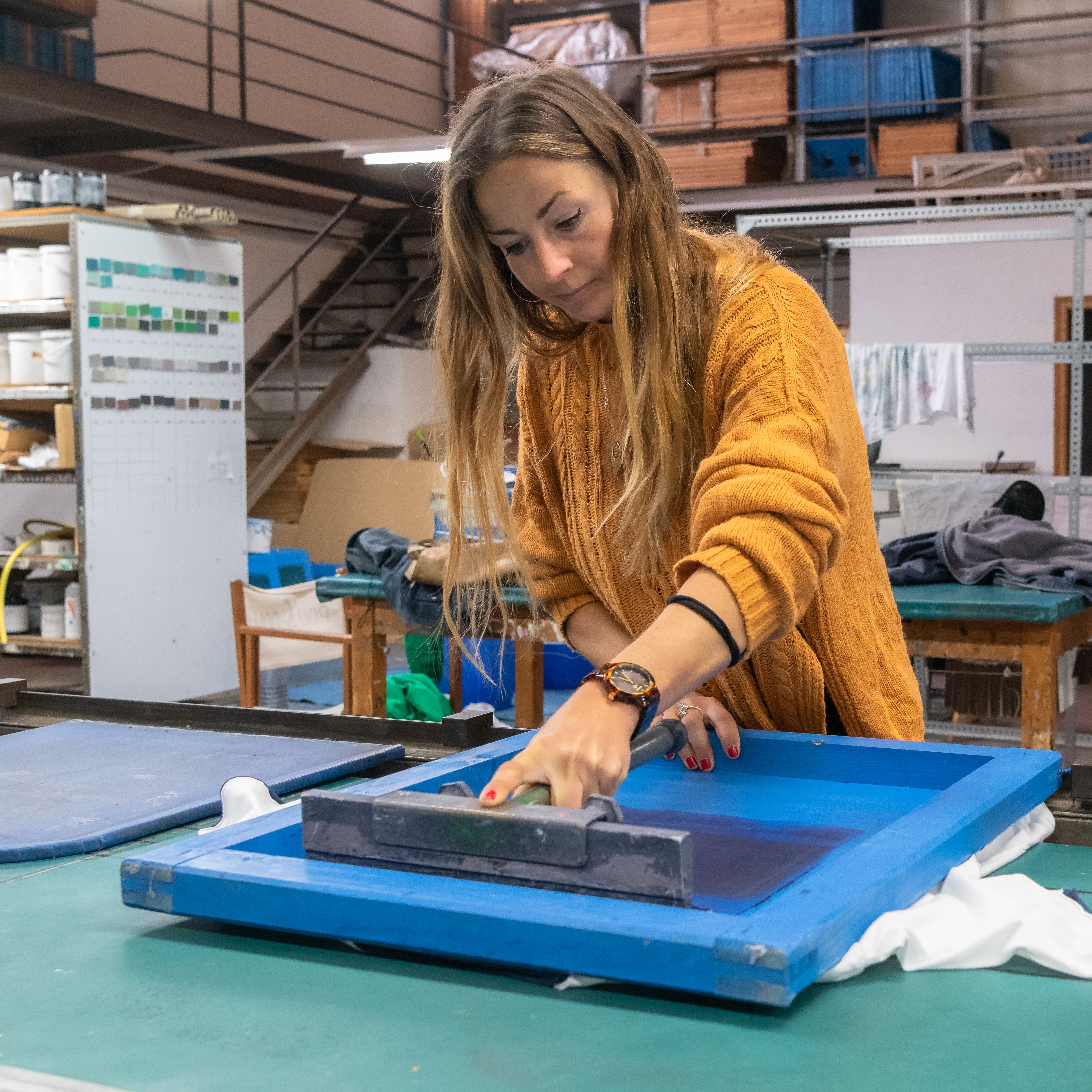
(clockwise from left) Pou Nou team members select nature-inspired artwork for clothing designs; Pou Nou colors and designs are inspired by Menorca’s flora and fauna, sea, and sky; Using a Mediterranean-inspired color palette, a Pou Nou team member tests a screen-print design. Photos courtesy of Pou Nou.
Collaboration with local artists results in Pou Nou’s unique island-wear designs.
Owner Joan Carrés said, “I am proud of having been in the business for 36 years, following my original idea of combining good quality garments with original artwork from local artists.” Pou Nou’s easy-to-wear styles and unique artist collaborations feature screen-printed sea creatures, flowers, geckos, insects, boats, bikes, palm leaves, and nautical themes. With Pou Nou only available for purchase in Spain and other European countries, U.S. travelers looking for this island-wear can reach the Balearic Islands by flying directly from New York/Newark (EWR) to Palma de Mallorca (PMI) through United Airlines’ new, seasonal direct flight offerings. Menorca has been like a hidden treasure for many years, largely reached only from mainland Spain, but these new direct flights from the United States allow easier access to Menorca-made specialty items and scenic views of iconic landscape features. The island’s varied ecosystems and natural offerings provide ample resources for a thriving artisan business, with agriculture, footwear, fashion, and handcraft industries using materials and inspiration offered by the beautiful land and sea.
Straying off the beaten path in Castile-León, a region ripe for discovery
Story and Photos by Randy Mink
Does your town have a distinct look or personality? Something that really sets it apart from others?
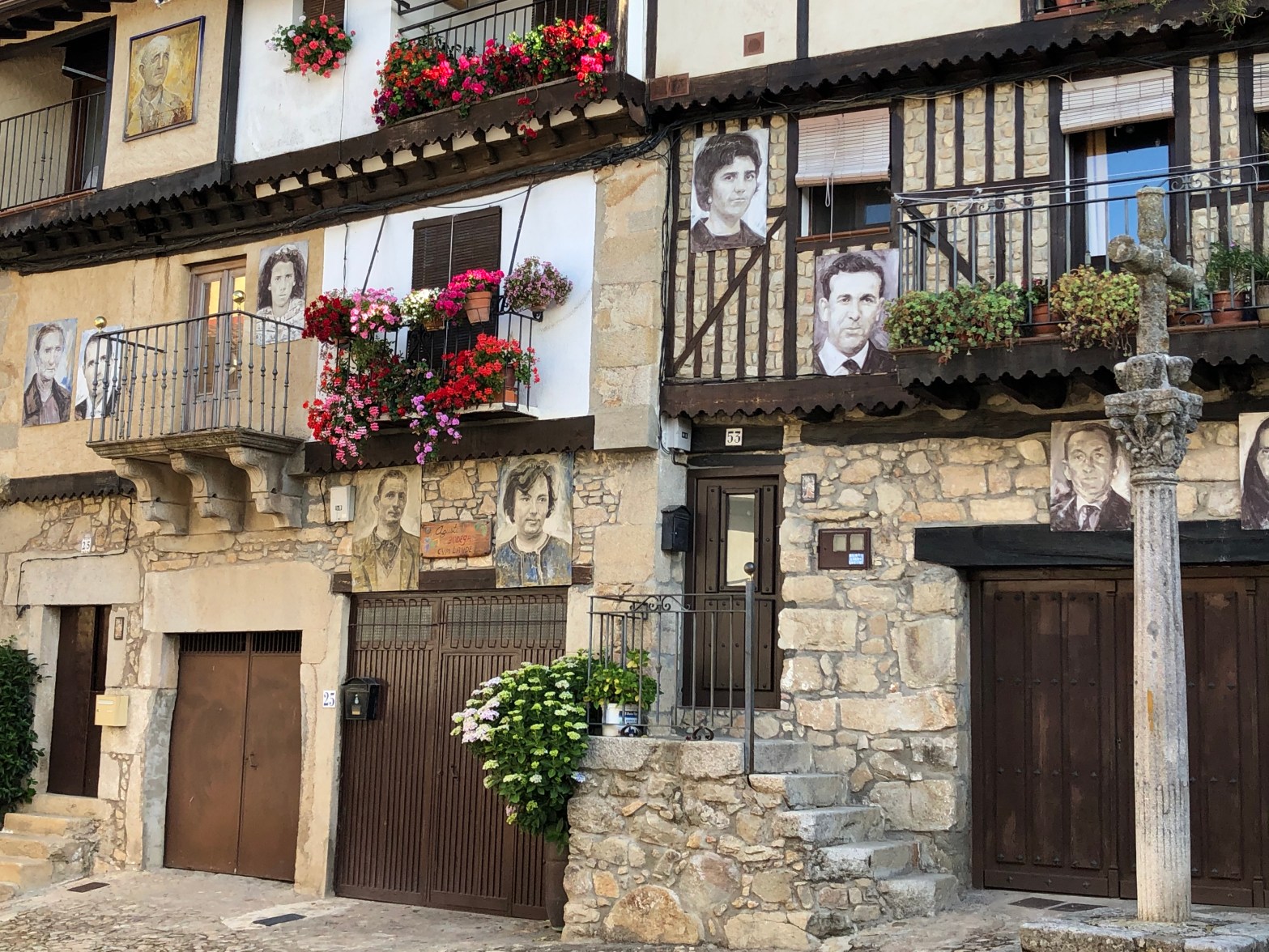
In western Spain, tiny Mogarraz (pop. 250) plasters its personality all over town, festooning houses with pictures of residents past and present. These portraits are large artworks that visitors can’t help noticing as they prowl the little plazas and narrow streets of this obscure town in the Sierra de Francia Mountains of southern Salamanca province.
Overlooked by most travel guidebooks, quirky Mogarraz was one of my favorite discoveries on a recent trip that included some under-the-radar places in Castile-León, one of Spain’s 17 autonomous regions. Our group concentrated on the region’s less-traveled western frontier, dropping in on remote rural areas, sampling three of its designated wine routes and venturing as far as the Portugal border.
This was my first trip overseas in three years, so I was more than revved up. Like a lot of Americans whose international travel plans were stifled by the pandemic, I had been itching to travel abroad. What a joy it was to be in Europe again! Each day was a revelation, a real adventure delving into art history, gastronomy, wine and everything that gets me psyched about Spain. Talk about pent-up wanderlust. The week-long trip provided a much-needed boost indeed.
Castile-León, situated west and north of Madrid, makes up about 20 percent of Spain’s total area but is only its sixth largest region in population (2½ million). Consisting of nine provinces, the vast chunk of real estate is slightly bigger than Portugal. Castile-León claims nine of Spain’s 34 wine routes and counts more than 400 wineries. It boasts three UNESCO World Heritage Sites—Salamanca (which our group visited), Segovia and Ávila.
The quaint medieval village of Mogarraz, on the Sierra de Francia Wine Route, would be a delightful destination if just for the enchanting cobblestone lanes that snake past its stone and half-timbered houses, many with flower-filled balconies. But portraits of the people who live in these ancient buildings add a strange twist.
The novel art project began in the 1960s, when poverty in the area drove many residents to seek jobs in South America, for which they needed a photo ID card. These IDs inspired the idea of decorating houses with photographs of the adults who lived in them. In 2012, local artist Florencio Maíllo took over the project and today he paints each of the 300-some portraits, from wizened grandmothers to young men in military caps.
Mogarraz, a tiny village in the Sierra de Francia Mountains of Salamanca province, is known for the portraits of residents that adorn its houses. These sketches of townspeople give the streets a personality all their own.
Mogarraz and other towns in this mountainous region base their economies on tourism and winemaking. The delicate, dark-skinned rufete grape is special to the Sierra de Francia area in southern Salamanca province, where vines have been tended in terraces for centuries.
Our nest for the night, Hotel Spa Villa de Mogarraz, was right in the heart of the fairy-tale town and just steps from Bodega Vinos La Zorra. Under a tent canopy on La Zorra’s streetside patio, bistro patrons savor wines and tapas at tables fashioned from colorfully painted oil drums. We noshed on croquetas (croquettes), those addictive deep-fried balls of mushy goodness, and patatas meneás, mashed sweet potatoes flavored with garlic and paprika and topped with a pork rind.
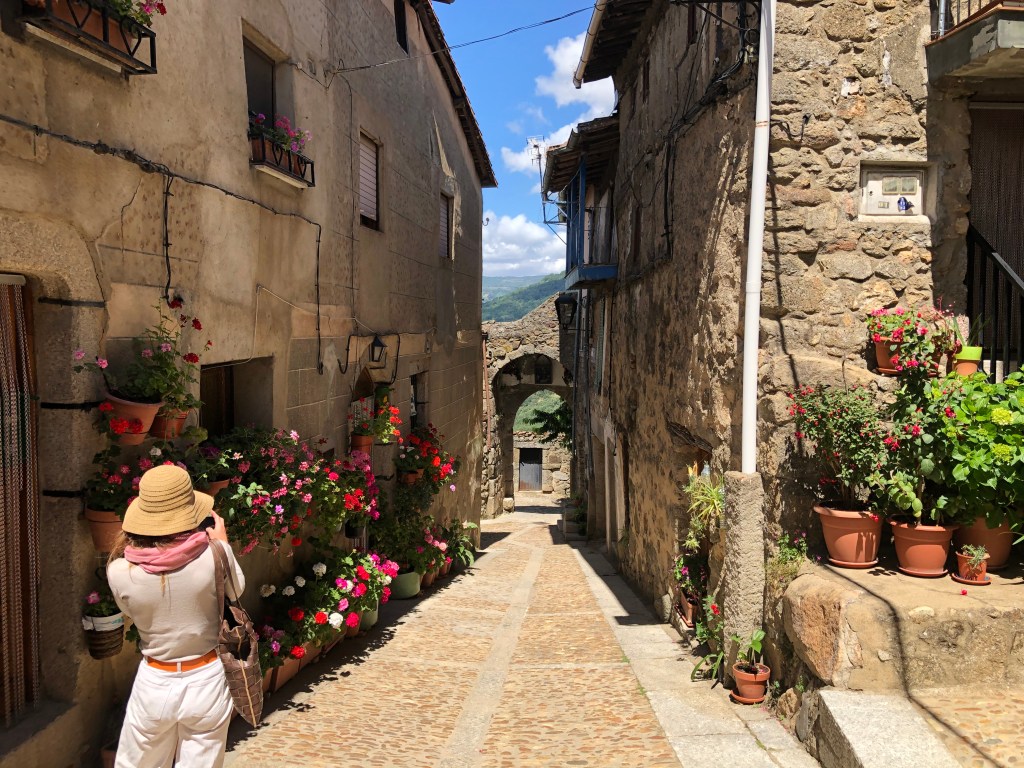
Our group also went back in time in Miranda del Castañar, another gem on the Sierra de Francia Wine Route. With a guide we wandered the cobbled streets and took in forested panoramas from the 12th century walls of the pretty hilltop village. The medieval castle is now a brewery.
The medieval streets of Miranda del Castañar invite tourists to explore.
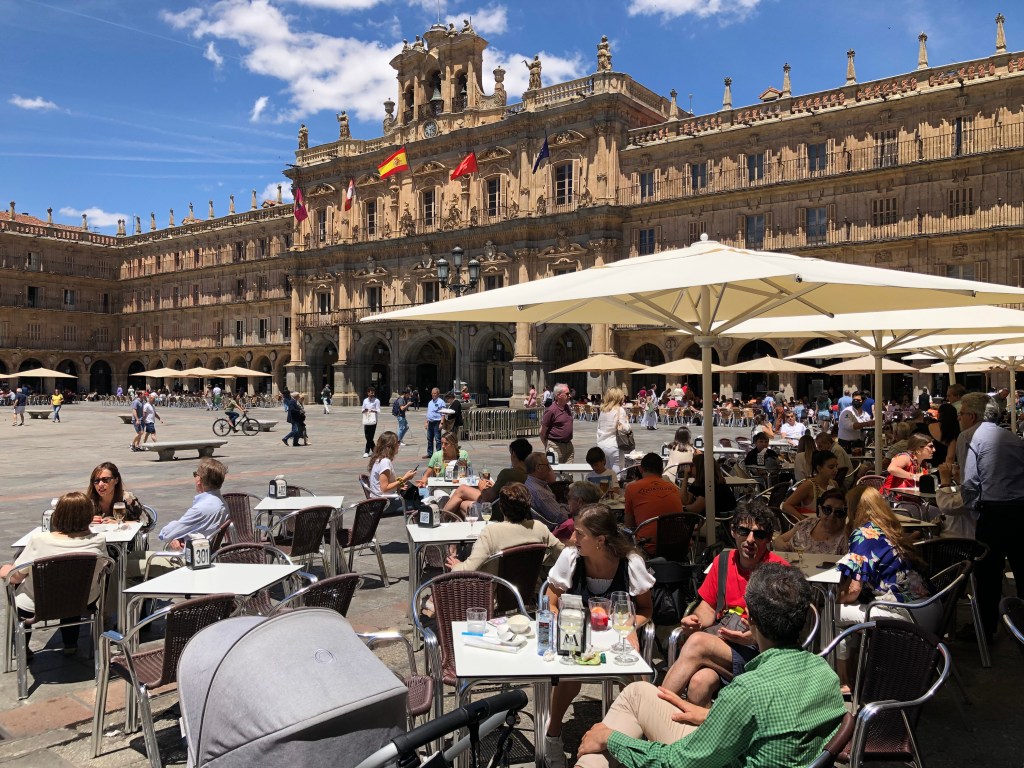
The city of Salamanca, unlike sleepy Mogarraz and Miranda del Castañar, is rather well known as a visitor destination, its historical core centering on the venerable buildings of Spain’s oldest university, founded in 1218. With a magnificent central plaza, lively pedestrian streets and youthful vibe, the manageable, medium-sized city of 150,000 residents offers just the right ingredients for a pleasant day or two of seeing the sights and soaking in the ambience. To me, it’s Spain in a nutshell.
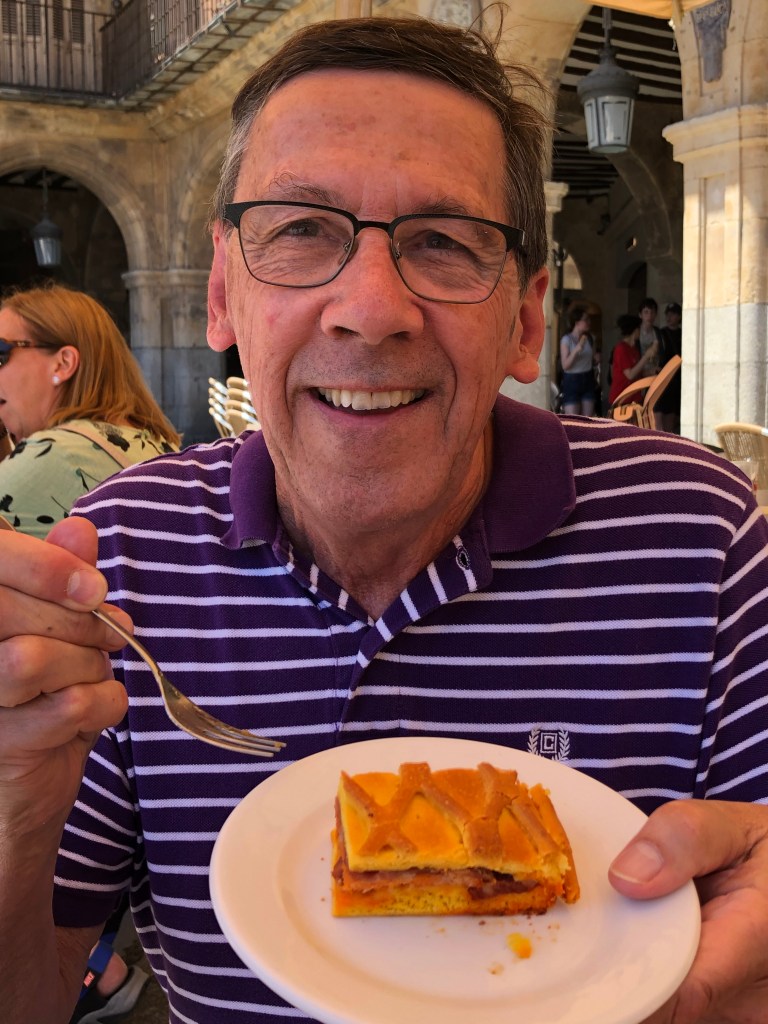
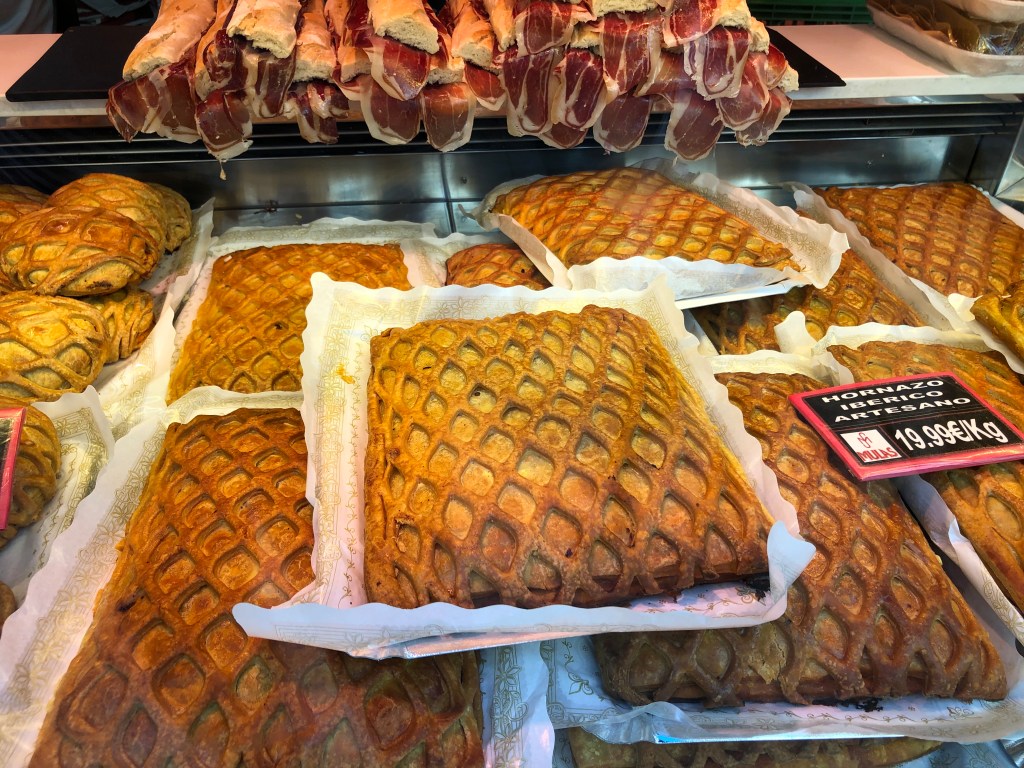
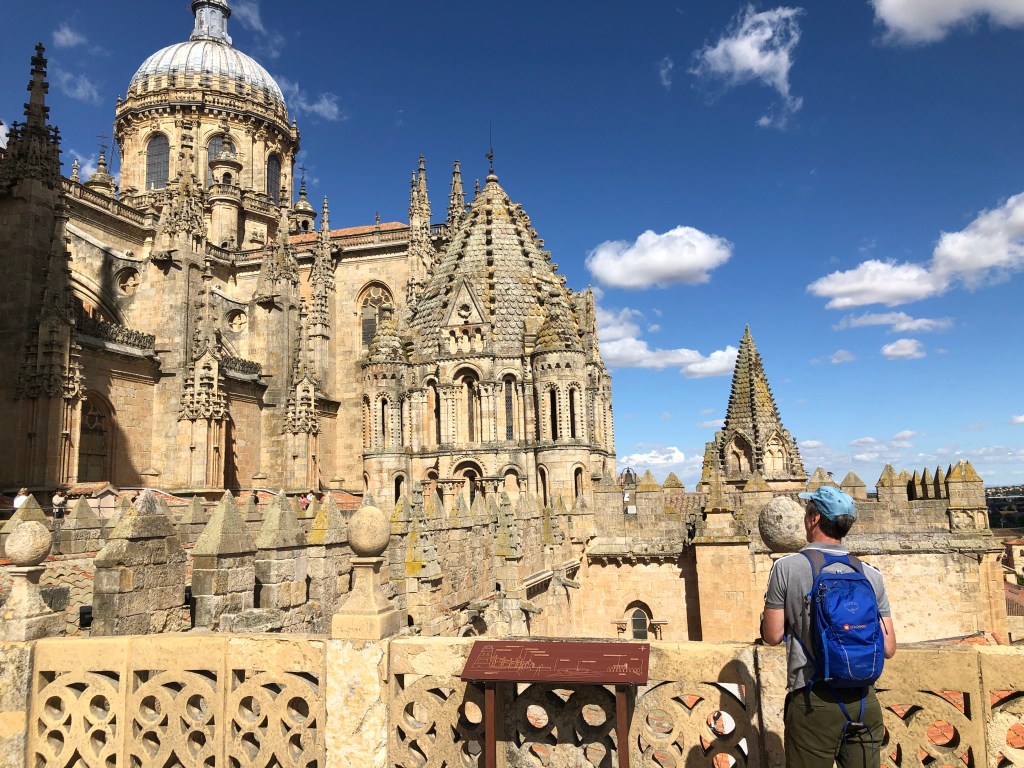
Clockwise from upper left: Relaxing and people-watching on Salamanca’s Plaza Major, one of Spain’s largest and most beautiful squares; The best views of Salamanca’s Old World skyline are from the banks of the River Tormes and its Roman bridge; The author enjoys a hornazo meat pie at a café on Salamanca’s Plaza Major; Hornazo, a meat pie with layers of pork chorizo, pork loin and ham wrapped in lattice-crusted yellow dough, is a specialty of Salamanca province; Exploring Salamanca’s Old and New Cathedrals.
In Salamanca’s Old Town, an open-air museum of radiant sandstone buildings, prime attractions lie within walking distance of each other. I recommend these five experiences:
Touring the Old and New Cathedrals. Built centuries apart, they are attached; you can’t visit the 13th century Romanesque church (Cathedral of Santa Maria) without going through the Cathedral of La Asunción de la Virgen, or New Cathedral, which isn’t new at all. It was built hundreds of years ago in the Gothic, Renaissance and Baroque styles.
Ascending the “Stairway to Heaven” on a 200-step climb up La Clerecía Church’s bell towers for bird’s-eye views of Old Town. The colossal Baroque building, now Pontificia University, began life in 1617 as a training school for Jesuit missionaries.
Walking across the River Tormes’ Roman-era bridge while admiring the classic Old World skyline
Touring the University of Salamanca, a popular place for American and other foreign students to study Spanish. Standing before the main building’s intricately sculpted sandstone façade, tourists try to find the “hidden” frog, said to be a symbol of good luck.
Relaxing over tapas at a café on postcard-perfect Plaza Mayor, one of the largest and most beautiful squares in Spain. Try hornazo, a meat pie with layers of pork chorizo, pork loin and ham wrapped in lattice-crusted yellow dough.
Zamora, a town of 60,000 north of Salamanca, is called the “Romanesque City.” Its 23 Romanesque churches, 10th century walls and Duero River bridge ruins provide a magical setting for communing with the past. The Cathedral of Zamora impresses with its Byzantine-style dome, richly carved choir and 15th century Flemish tapestries.
The Zamora Wine Route in Zamora and Salamanca provinces takes travelers through traditional rural landscapes of sheep pastures, hay fields, vineyards and unspoiled villages with stone houses and Romanesque churches. In Villanueva de Campeán, we did wine tastings in the barrel room and vineyards of Bodegas Viñas del Cenit, which makes Cenit Tradición, an unusual blend of red and white grapes (mostly tempranillo)—a light, refreshing wine with less alcohol. The vines have been mixed since the times of the Franciscan friars who tended them from their 15th century monastery, the ruins of which we saw in the distance. (Older locals remember when monks still inhabited the monastery.)
“They just wanted to make wine, with no worries whether it was red or white. It was just wine for them,” said Ana Belen Hernández, Cenit’s director of marketing. “Cenit Tradición is our commitment to carrying on the tradition and personality of the historic wines of this territory. It’s a wine with no recipe, a wine we think our ancestors would have made.”
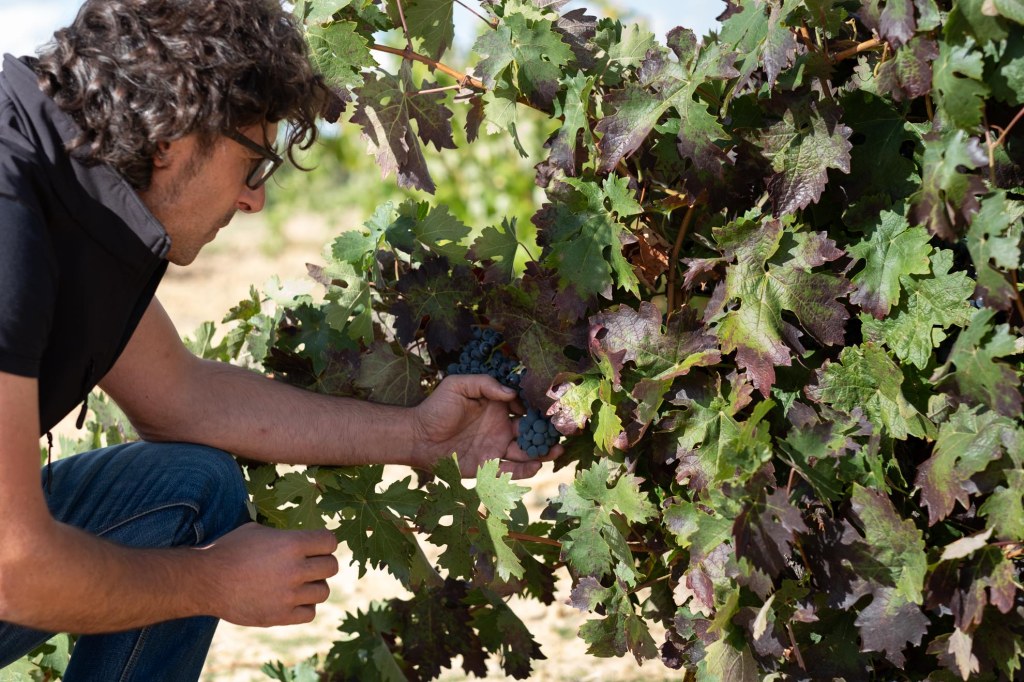
Growing grapes for wine is an age-old tradition in the Castile-León region of western Spain.
Cenit’s 90-year-old vineyards are threaded by the Via de la Plata, or Silver Route, one of the 11 pilgrimage routes to the tomb of St. James in the Cathedral of Santiago de Compostela in Galicia; visitors may encounter pilgrims making the trek.
In the nearby village of Casaseca de Campeán, our group enjoyed an atmospheric wine country lunch at Café de Quintano. Deep underground, we feasted amid the rustic trappings of a vaulted, 200-year-old cellar. The hard-working servers must have made 20 trips each from the upstairs kitchen to our cozy “cave.” Besides wines, the group menu featured platters of cheeses and paper-thin slices of cured ham, chickpea soup, tuna steak in garlic sauce and Iberian pork steak with deep-fried vegetables. At dinner the previous night we had two regional specialties—roast suckling leg of lamb and Zamoran-style rice, a zesty dish with pork and paprika.
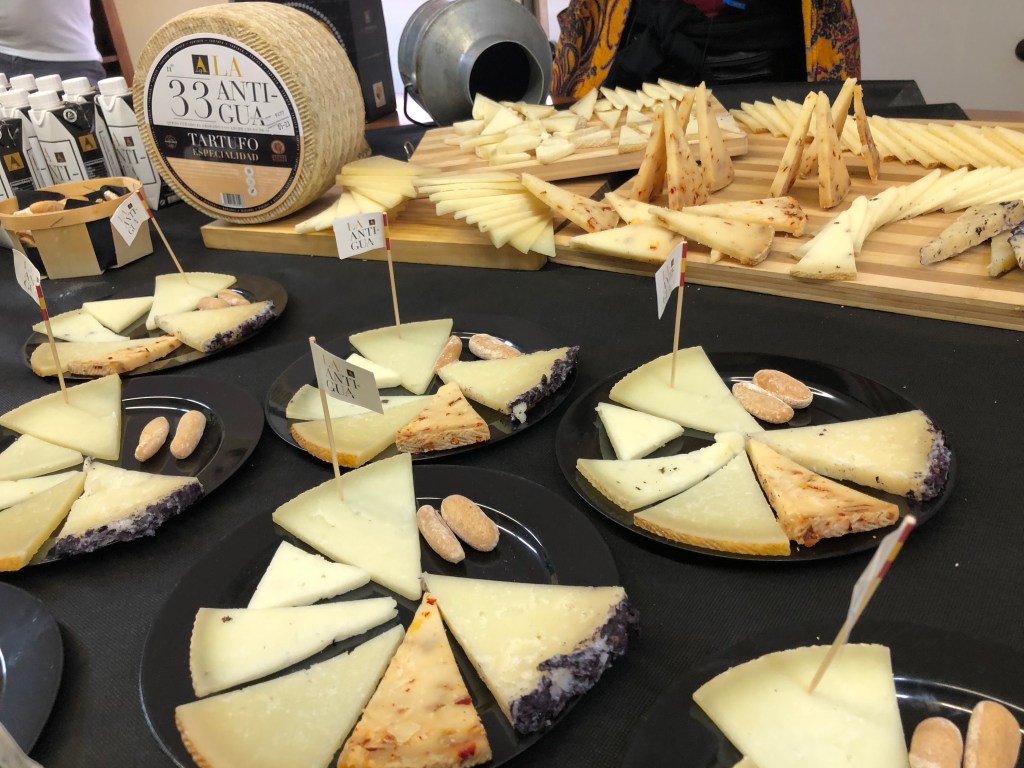
My best memory of the Zamora Wine Route was touring Quesería La Antigua, a high-tech dairy in Fuentesaúco. Donning a white plastic coat, hairnet and shoe covers, we followed guides who explained how sheep’s milk is turned into prize-winning cheeses. Afterward, we watched a video and sampled six varieties, including one with tempranillo grape skins in the rind, another flecked with paprika flakes. Under construction is a museum that will showcase La Antigua’s passion for making cheese.
Sampling the product is a highlight on tours of Quesaría La Antigua in Fuentesaúco, a dairy that makes sheep’s milk cheeses.
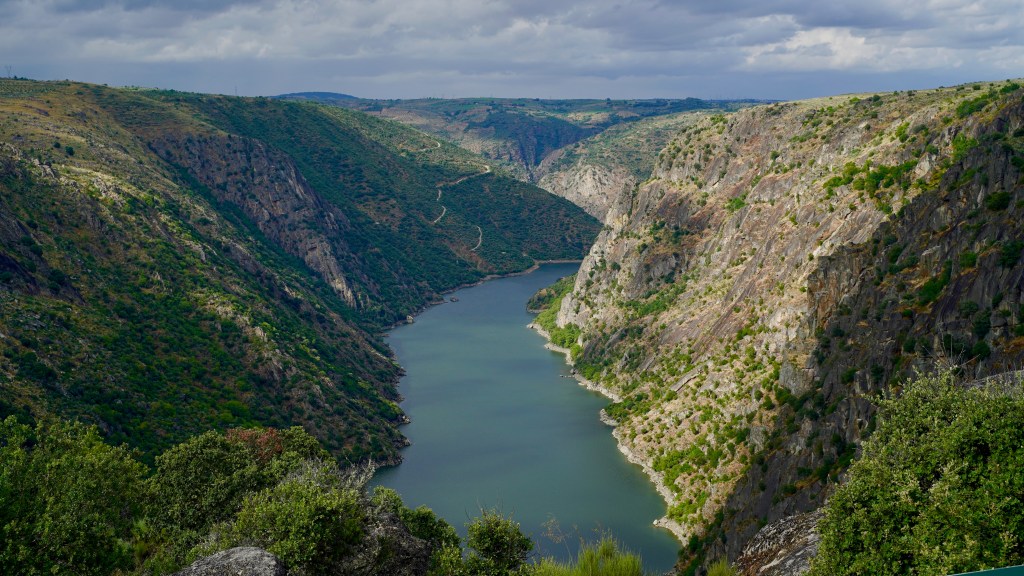
When our bus passed a shepherd tending his flock later that day, we got giddy and were granted a photo stop. We were en route to the far western stretches of Zamora and Salamanca provinces where the Douro River’s scenic canyonlands straddle the Spain-Portugal border. (“Douro” is the Portuguese spelling; it’s “Duero” in Spanish.) For Spaniards, this remote valley of granite cliffs and outcroppings is considered the “Wild West.”
Our introduction to the Arribes del Duero Wine Route, set against the backdrop of the valley’s Arribes del Duero nature park, involved vineyard and winery visits hosted by Bodega el Hato y el Garabato in tiny Formariz. Dinner and overnight were in the comfortable Posada Doña Urraca in Fermoselle, a quiet Spanish border town famous for its centuries-old network of wine caves (more than 1,000, so they say), a few of which have been opened for tourism. After our subterranean tour and wine tasting, we did more sampling at Bodega Frontio, a winery started by a young Danish entrepreneur who goes by the nicknames “Chus” and the “Crazy Dane.”
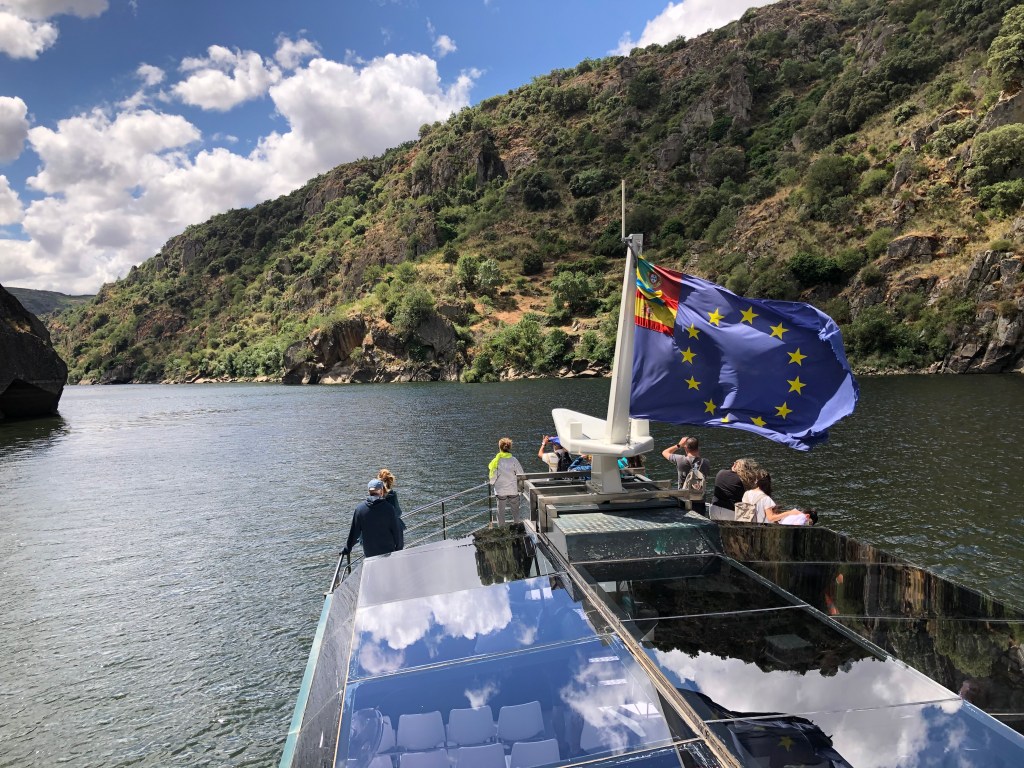
A brief foray into Portugal the next day took us to Miranda do Douro, where we boarded an excursion boat for an ecology cruise focusing on the geology, flora and fauna of the UNESCO Meseta Ibérica Biosphere Reserve. Our one-hour journey provided a chance to witness up-close the spectacular gorge topography we had viewed from a lookout point earlier that day.
Flying the flag of the European Union, this excursion boat offers a narrated environmental cruise spotlighting the geology, flora and fauna of the Douro River Valley, a land of scenic splendor on the Spain-Portugal border.
Exploring Fermoselle and other villages tucked away from the crowds, we often felt as if we had Castile-León to ourselves. On early morning strolls up and down the twisting, shadowy alleyways, sometimes the only sounds were chirping birds, crowing roosters and our own footsteps. It was good to be back in the Old Country, making new discoveries in corners of Spain off the beaten track.
Sweet juicy plums. Pungent goat cheeses. Briny black olives. Homemade pâtés studded with pistachios. Paper-thin slices of farmhouse cured ham. Multi-grain buns and rosemary-scented flatbreads. Chestnut honey and walnut tartes.
Are you hungry yet?
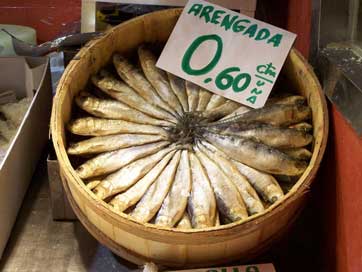
On my first trip to Europe many years ago, I became hooked on shopping for food at the colorful local markets. Not the sterile supermarkets or gargantuan hypermarkets of today, which, except for the package labels in different languages, could be anywhere in the developed world. The markets that captured my imagination—and still keep drawing me back—are the ones where fresh foods are sold by individual vendors hawking their wares from wooden stalls, customized vans, folding tables, or even blankets spread on the ground.
I go. I see. I buy. I eat.
TYPES OF MARKETS These food markets can be entirely outdoors, in the open air; or inside a cavernous covered market building; or in a combination of settings, with an indoor market surrounded by an open-air market that varies with the season. They can be permanent markets, operating year round at the same location, usually with the same vendors; or temporary events occurring only on specific days, once or twice a week, in a public square or country field, with local vendors as well as those who travel from one market to the next to sell their goods.
Some are truly farmers’ markets, where all the fruits, vegetables, meats and cheeses were grown, raised or processed by the people selling them. Others are outlets run by middlemen selling foods from a variety of suppliers, from small-time farmers to larger commercial companies. And some are a mixture of both.
London, Paris, Vienna, Madrid, Rome, and other major cities have many of these food markets located in neighborhoods throughout each metropolis. Smaller towns might have only one central market, whereas in a village there might be an open-air market only once a week, usually on Saturday. Check with the tourist office for the locations, dates and opening/closing times.
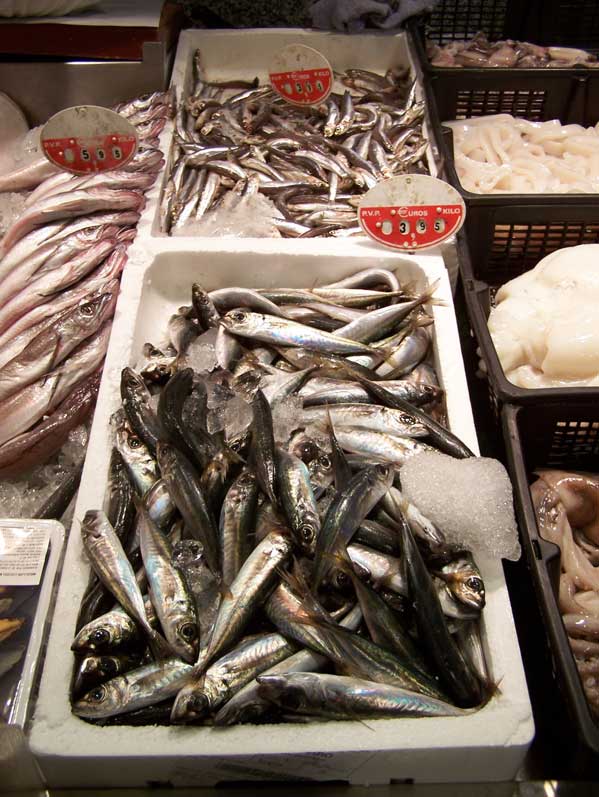
LOCAL SPECIALTIES, GLOBAL CHOICES At these markets you can see, smell and taste authentic local and regional specialties, some of them found nowhere else. In different regions of France, I’ve bought farmhouse cheeses made just down the road and jams preserved by the woman selling them. In Sicily and Greece, I’ve wandered through markets stocked with fish caught that morning in the nearby seas. At German markets I’ve left with my shopping bags filled with potatoes and apples grown in the surrounding fields, and with big loaves of rye bread still warm from the wood-fired oven in which they were baked.
A visit to a large metropolitan market can also be a lesson in globalization. In addition to local Catalan and regional Spanish food products, Barcelona’s big Boqueria covered market also sells hot sauces from the USA, moles from Mexico, and guavas from South America. At Munich’s central Viktualienmarkt, you’ll find not only Bavarian meats and cheeses but also chermimoyas from North Africa, hot chiles from Southeast Asia, and exotic tropical fruits from the Philippines.
Each season brings its own specialties to European markets: strawberries, cherries and asparagus in spring and early summer; raspberries and blueberries later in the summer; mushrooms, apples and pears in the autumn; and oranges, nuts, and root vegetables in winter. Of course markets have more fresh produce during harvest time from spring through early autumn. And on any day you’ll always find the best selection early in the morning, just after the market opens.
LOOK, DON’T TOUCH European markets are a great place to buy food for a picnic in your hotel room or in a park on a pretty day. Some even have a section with tables and chairs for public use, and German markets often include a beer garden on the premises, where you can bring your own food.
Tips: Always carry a shopping bag for your purchases. When you stop at a stand to buy fresh fruits or vegetables for your meal, don’t poke around in the produce and pick your own selection. At most markets, customers are expected to tell the vendor what they want, and the vendor chooses the best pieces, based on their ripeness and good condition, then weighs out the amount requested.
Don’t let your lack of the local language deter you from shopping in Europe’s food markets. Just point to the particular food you want and write the amount on a slip of paper: 100 grams (about one-fourth of a pound), 500 grams (close to a pound), 1 kilo (a bit over two pounds). Better yet, learn some basic numbers in that foreign language and let the product labels in the market teach you the names of the foods you want to eat. Soon you’ll be shopping like a European yourself.


























 European Traveler