Wedged between Germany and France, this northern Swiss city abounds with traditional restaurants offering classic fare and Old World flair
By Randy Mink
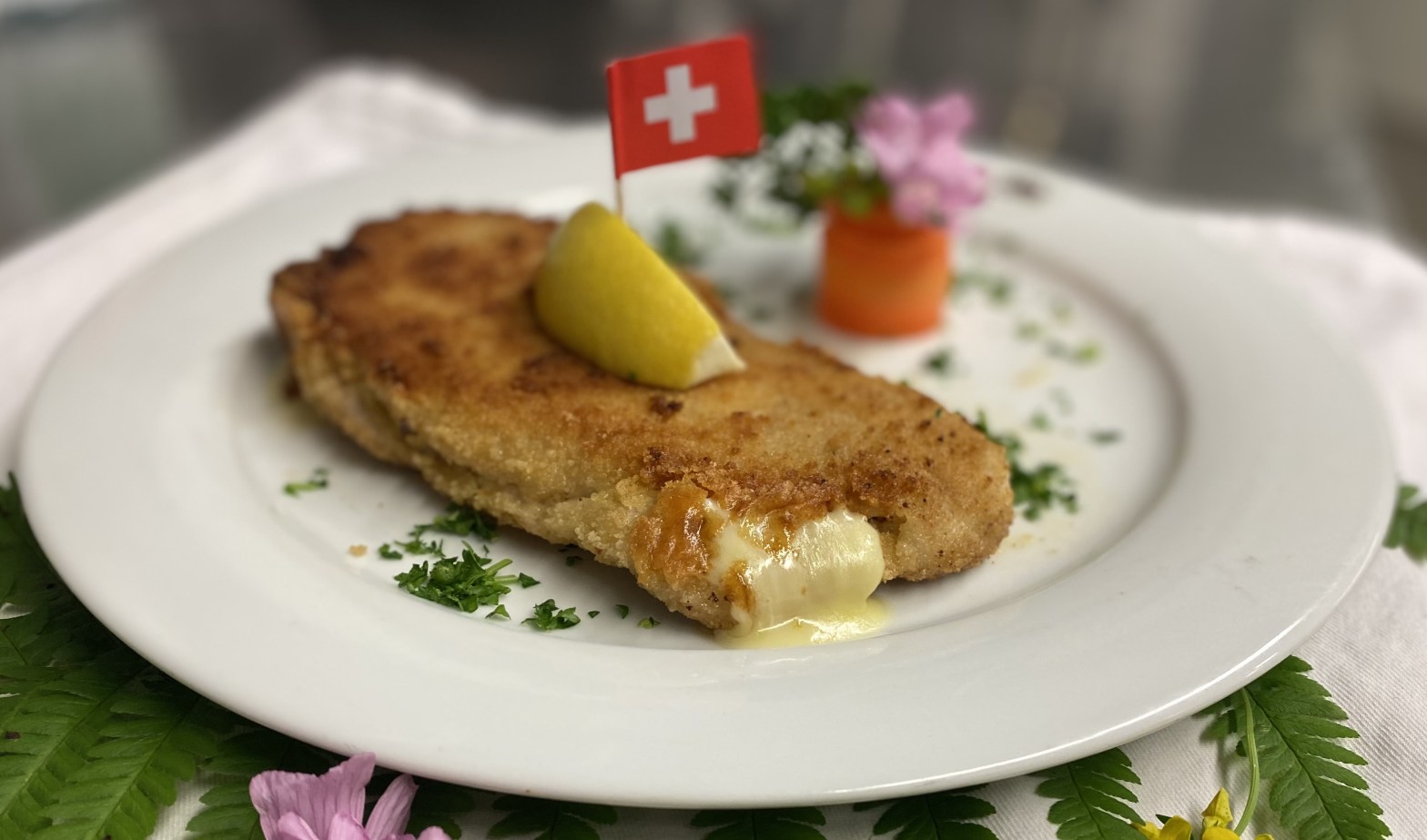
Served piping-hot and oozing with cheesy goodness, the veal cordon bleu at Zum Gifthüttli restaurant is something to savor, even drool over. Lunch in the wood-paneled dining room remains the warmest memory of my visit to Basel, the third-largest city in Switzerland.
After disembarking there from my week-long Rhine River cruise, I was most looking forward to exploring the medieval Old Town with its museums, churches, riverside promenades and specialty shops lining atmospheric alleyways paved with cobblestones. What turned out to be just as inviting, though, were the traditional, pub-style restaurants scattered about the historic core.
Cordon bleu is the house specialty at Zum Gifthüttli. We ordered the Classique, a juicy, golden-breaded schnitzel filled with ham and melted cheese, taking advantage of the Tagesteller (“daily plate”), a deal for 36.50 Swiss francs (about $43) that included french fries, pumpkin soup and dessert.
Gifthüttli, a traditional restaurant in Basel’s atmospheric Old Town, offers dining in the main-floor Bierstube, the upstairs Weinstube and at outdoor tables ideal for people-watching. (Randy Mink Photo)
Zum Gifthüttli’s menu lists cordon bleu variations, like the one with ham, cheese, asparagus, cherry tomatoes and Hollandaise sauce. Another consists of chorizo, mozzarella and herbs. The Florentiner has ham, cheese, spinach and a fried egg on top, while the Schweizer features two Swiss delicacies—Bündner air-dried ham and scrapings of raclette cheese. Opting for pork cordon bleu, instead of veal, can shave a bit off your bill, but any meal in Switzerland will cost much more than at home.
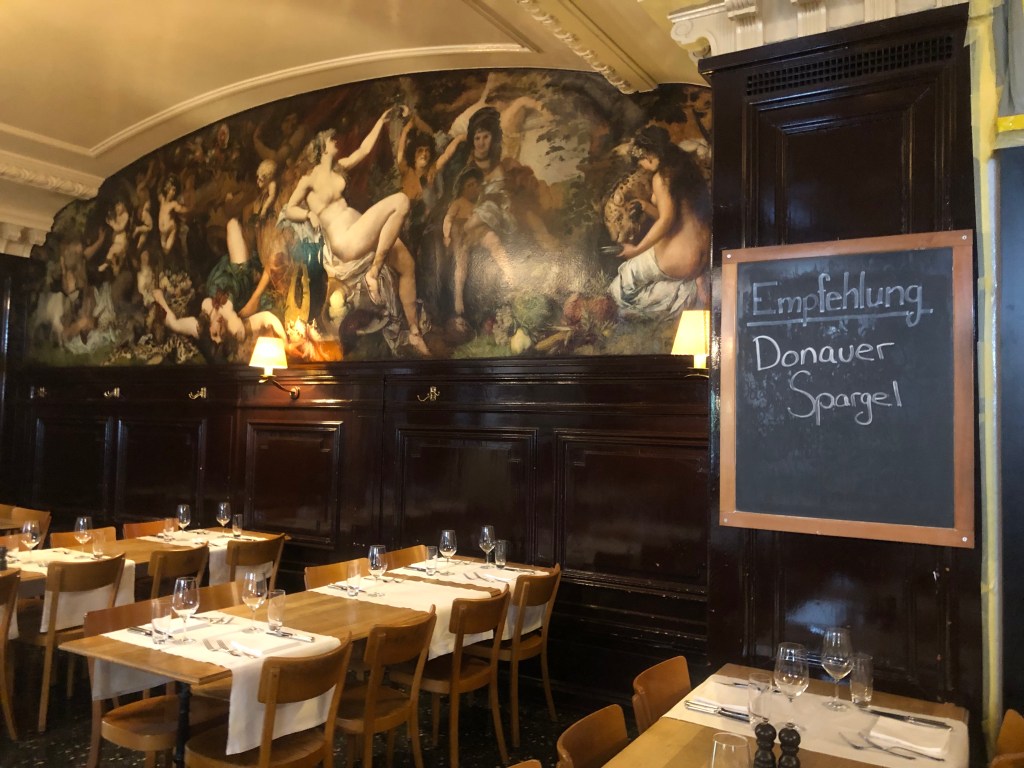
Guests at Gifthüttli can dine in the main-floor Bierstube, upstairs in the white-tablecloth Weinstube or, in warm weather, at outdoor tables offering the bonus of people-watching in Old Town’s pedestrian zone.
The white-tablecloth Weinstube at Gifthüttli offers a refined atmosphere. (Photo credit: Basel Tourism)
Fans of cordon bleu and antique charm also gravitate to Old Town eateries like Zum Braunen Mutz and Restaurant Löwenzorn. The latter offers tables in its historic rooms and in the idyllic courtyard garden, where blankets, furs and electric heaters keep patrons toasty in cooler weather. Löwenzorn favorites include the wienerschnitzel and traditional Swiss fondue.
Löwenzorn, a traditional restaurant in Basel’s Old Town, offers seating in historic rooms and in the courtyard garden. (Photo credit: Basel Tourism)
Restaurant Kunsthalle, a sophisticated but friendly Old World restaurant in the same building as the Kunsthalle Basel contemporary art museum, every winter opens its Fondue Stübli, a cozy fondue chalet next to the landmark Tinguely Fountain. Additional city-center spots for fondue (and other Swiss classics) are Walliserkanne and Safran Zunft.
Patrons at Basel’s Restaurant Kunsthalle enjoy an Old World atmosphere in the vaulted Schluuch room. (Randy Mink Photo)
On our springtime visit to Restaurant Kunsthalle, we had a lunch of pasta amidst dark wood and classical cherub murals in the cozy, vaulted Schluuch room. The more formal “white” room overlooks the chestnut tree-shaded patio, one of Basel’s prime spots for alfresco dining. The Kunsthalle’s menu reveals typical Swiss fare, including Zürcher Geschnetzeltes (veal strips in a sauce of white wine, cream and mushrooms) with rösti, the ubiquitous Swiss version of hash browns offered at most restaurants that serve french fries.
No discussion of traditional dining spots is complete without a mention of Gasthof zum Goldenen Sternen, Basel’s oldest restaurant. Though it’s been at its current riverside location for only 50-some years, it date backs to 1412. In the 1970s the ancient building was dismantled and rebuilt stone by stone along with the original ceiling paintings and all the wood paneling. Highlighting the menu are highly regarded fish dishes—I had the lightly fried salmon filet with linguine. It also offers lamb shank, steaks and wienerschnitzel, among other entrees. The restaurant looks out on the Rhine River, and there’s outdoor seating under trees on the riverfront promenade.
Gasthof zum Goldenen Sternen, Basel’s oldest restaurant, enjoys a setting on the Rhine River. There is seating under trees on the riverfront promenade. (Photo credit: Basel Tourism)
The Goldenen Sternen (“Golden Star”) is located in the picturesque St. Alban quarter, a quiet neighborhood noted for its patrician townhouses, half-timbered buildings, narrow streets and a stream that powers the waterwheel at the Basel Paper Mill. Now a fascinating museum about the history of paper making and printing, the medieval mill, just steps from the Rhine and not far from Old Town, was one of many in St. Alban that made Basel a book publishing center for centuries.
Though skeptical about how interesting a paper museum could be, we found it eye-opening. Especially fun was watching demonstrations of how a pulpy goop is transformed into paper. We had a chance to make our own sheet as a souvenir. And we were surprised to learn that until the 19th century paper was made almost entirely from old rags and ropes that were sorted, cleaned, cut into strips and left to decay in a rag cellar’s rotting vats. There are even exhibits on the evolution of toilet paper, which was considered a luxury product when first introduced in the late 1800s.
Visitors learn about the history of paper and witness the paper-making process at the Basel Paper Mill, a museum housed in a medieval paper mill. (Randy Mink Photo)
Claiming nearly 40 museums, Basel has a museum for every interest, showcasing subjects ranging from cartoons and musical instruments to city history and Jewish culture. Most visited are its two leading art museums.
Kunstmuseum Basel, whose three-building complex holds the world’s oldest municipally owned public art collection, presents seven centuries of European art and boasts the world’s largest collection of paintings by the Holbein family. On the outskirts of Basel, Fondation Beyeler, comprising a main building designed by noted architect Renzo Piano, houses some 400 masterpieces of modern and contemporary art, including pieces by Picasso, Monet, Matisse and Cezanne.
Kunstmuseum Basel holds an impressive collection of paintings by Hans Holbein. (Photo credit: Basel Tourism)
The Basel Historical Museum, with exhibition halls under the vaulted ceilings of a former 13th century church, focuses on the intersection of the cultures of Switzerland, France and Germany. (From Basel, Germany and France are just a hike or bike ride away. Visible on the horizon are the Vosges Mountains of France and Germany’s Black Forest.)
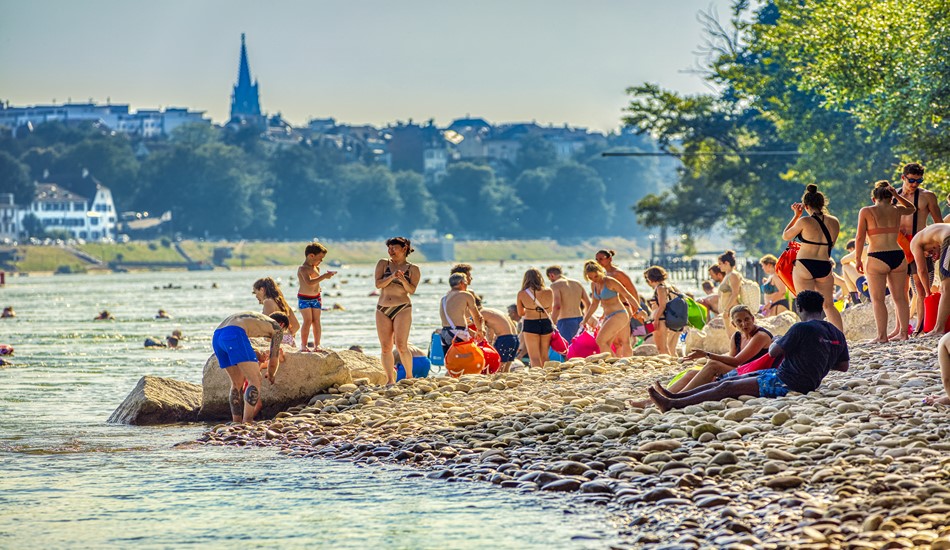
In the summer you’ll see people sunning on the riverbanks and swimming or floating in the river. Basel Tourism offices and retail stores sell something called a Wickelfisch, a brightly colored, fish-shaped waterproof bag for keeping your clothes dry as you whoosh down the river past city landmarks. It’s not to be used as a flotation device.
Frolicking in the Rhine River is a popular pastime with tourists and locals alike. (Photo credit: Basel Tourism)
Sightseeing cruises provide another way of experiencing the Rhine. Or you can take one of the small passenger ferries that shuttle back and forth between the larger southern part of the city (Grossbasel, or Greater Basel) to the northern side (Kleinbasel, or Little Basel) at four crossing points. Attached to a cable that spans the river, the non-motorized boats are guided deftly by expert ferry operators.
We took the five-minute ride from St. Alban to the opposite bank, then walked along the riverside path for 11 minutes before reaching the Museum Tinguely, a showplace for monumental mechanical sculptures created by world-renowned artist Jean Tinguely (1925-1991), who grew up and studied in Basel. Buttons allow visitors to activate some of the playful, mischievous and wacky creations, causing them to rattle, shake and whirl.
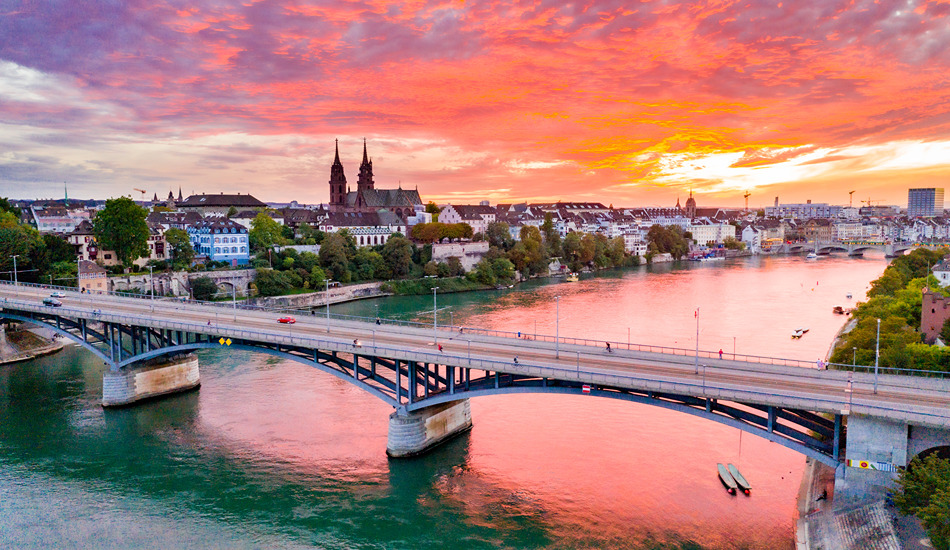
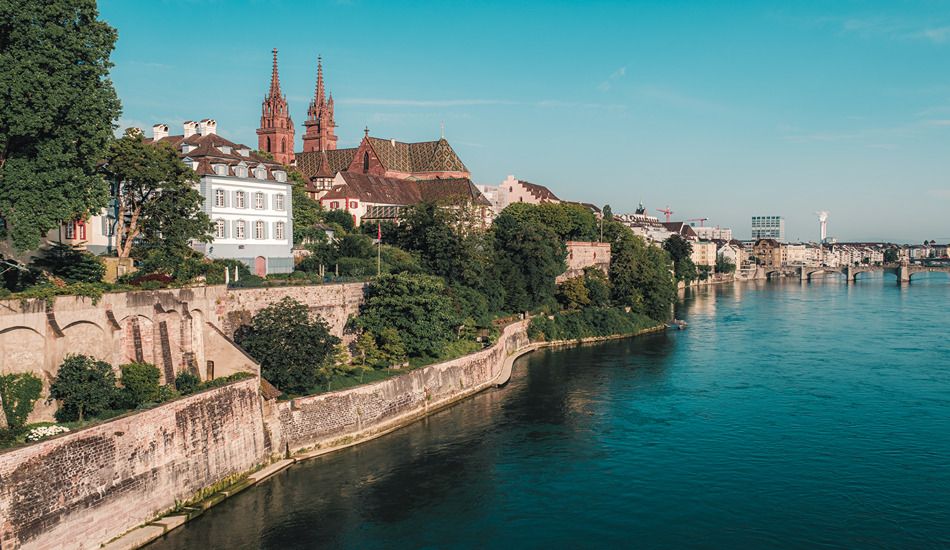
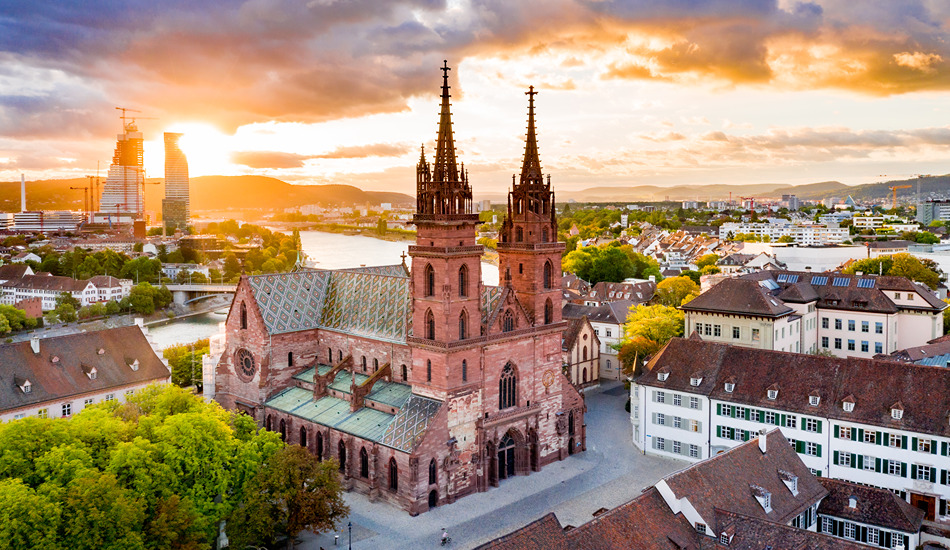
Sweeping views of the Rhine can be enjoyed from the tree-shaded terrace of Basel Cathedral. Sporting impressive twin towers, it is the city’s most prominent landmark. Built mainly in the 12th and 13th centuries, the Romanesque-Gothic church contains the tomb of the Dutch humanist Erasmus (1466-1536), who lived in Basel. Ambitious types can climb the towers’ narrow staircases (about 250 steps).
The twin spires of Basel Cathedral dominate the skyline of Basel, which lies on the Rhine River in northern Switzerland. (Photo credit: Basel Tourism)
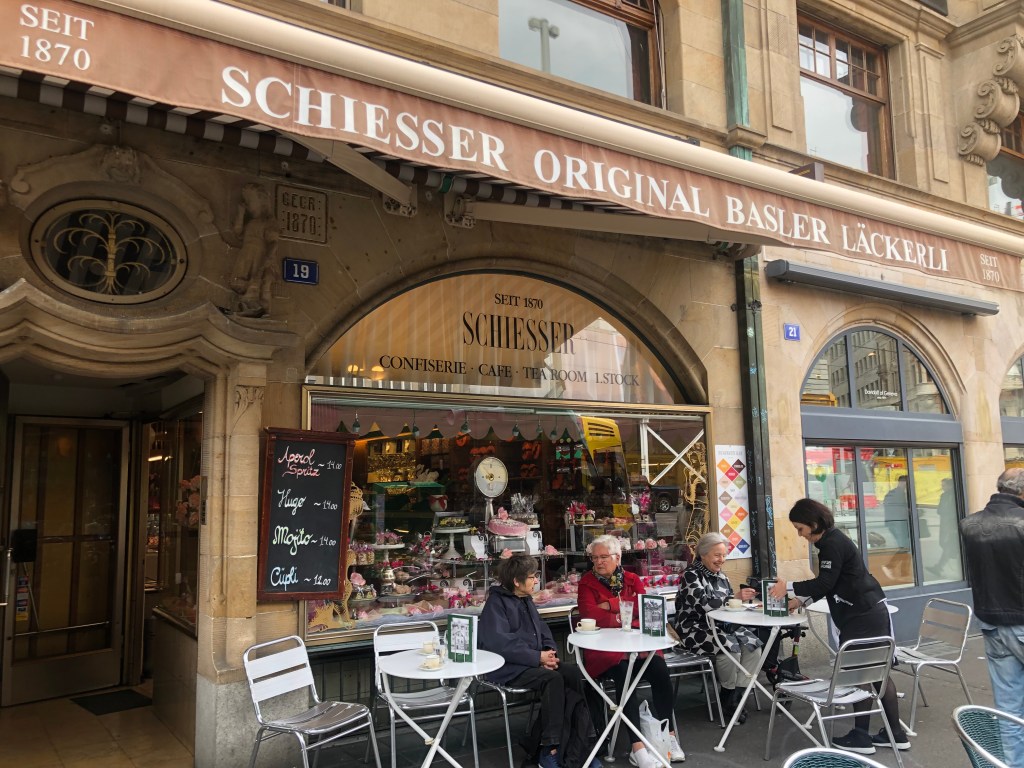
One of the best places to take a break from sightseeing is Confiserie Schiesser, a cafe/tea room/confectionery with an on-site chocolate factory and bakery. Founded in 1870 and now in its fifth generation of family ownership, Schiesser faces Old Town’s vivid red Rathaus (Town Hall) and market square. A tantalizing array of chocolates, cookies and pastries tempts the sweet tooth. Distinctive to Basel are the Basler Läckerli, a ginger cookie made with honey, spices, almonds, and candied orange and lemon peel.
Confiserie Schiesser, a cafe/tea room/confectionery founded in 1870, is famous for its chocolates, cookies and pastries. (Randy Mink Photo)
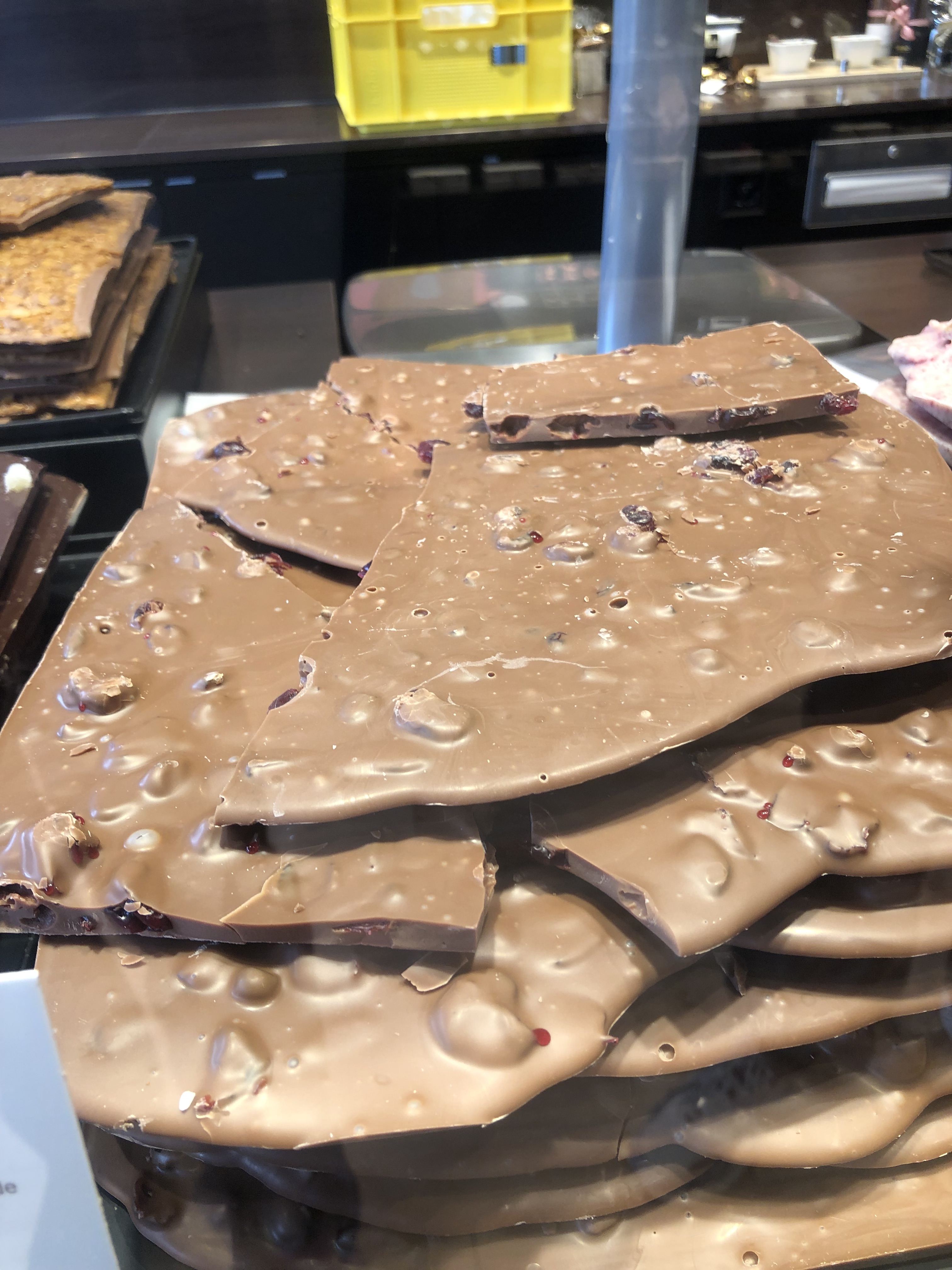
A few doors down from Confiserie Schiesser, high-end Läderach chocolatier sells slabs of melt-in-your-mouth chocolate called Frisch Schoggi. Sold by the gram, the uneven pieces are studded with everything from hazelnuts and almonds to cranberries and cornflakes.
Visitors in Basel’s Old Town can indulge their sweet tooth at Läderach, a high-end Swiss chocolatier. (Randy Mink Photo)
Indulging in Basel’s tasty treats is the epitome of Swiss bliss.
For more information, visit the Basel Tourism website, www.basel.com.
A dream river voyage on the Scenic Opal spotlights cozy towns in the heart of Europe
By Randy Mink
With its half-timbered houses, tangle of cobbled alleyways and picture-perfect castle perched on a crag high above the market square, the German village of Cochem struck me as something plucked from a medieval fairy tale.
Almost too good to be true, the Moselle River town of 5,500 was one of several stops on “Charming Castles & Vineyards of the Rhine & Moselle,” a seven-night cruise itinerary offered by Scenic, an Australia-based company with 12 luxury river ships in Europe. My brother and I were aboard the 163-passenger Scenic Opal, our floating hotel for the week.
Happily, in Cochem and some other ports of call, the historic town centers lay just steps from the ship’s gangway. I love being in the middle of everything within minutes of disembarking.
Clockwise: The Moselle River town of Cochem, Germany, as seen from hilltop Reichsburg Castle. (Photo credit: German National Tourist Board) Reichsburg Castle looms high above the Moselle River town of Cochem. (Larry Mink Photo) Cochem charms visitors with its ancient, half-timbered buildings. (Randy Mink Photo)
Because of my ancestry and the fact that my first trip to Europe was a summer German language program in Austria, I’ve always had an affinity for German-speaking countries. Until this cruise, however, I had never been to the Rhine or Moselle valleys.
It was the Moselle’s inclusion that steered me to the itinerary, as not all Rhine cruises venture to this narrower, slower-moving, more intimate tributary, which twists and turns more than 100 picturesque miles between the German cities of Trier and Koblenz. Many Rhine journeys spend time in the more industrial stretches to the north.
I also liked this particular circuit because it touched four countries. Besides shore excursions in Germany, Scenic offered tours in France and the Grand Duchy of Luxembourg. The cruise ended in Basel, Switzerland, where we stayed two nights in a hotel before flying home.
The Rhine travels nearly 800 miles from the Swiss Alps to Rotterdam on the North Sea, forming the border of southwestern Germany and eastern France. From the Vosges Mountains, the Moselle flows through northeastern France and Luxembourg to Germany, joining the Rhine at Koblenz, our first port after embarking the day before at Mainz, a city of 200,000 about 40 minutes from the Frankfurt airport.
Both waterways dish up a passing parade of vineyard-covered slopes, hilltop castles and idyllic towns with gabled houses, church steeples and leafy riverside promenades—an eye-popping feast for those of us who thronged the railings or drank it in from deck chairs. Steady streams of barges, sightseeing boats and pleasure craft also kept us engaged. One afternoon on the Moselle, the Scenic Opal went through three locks, the first one upon leaving Koblenz for the pretty Moselle Valley, my favorite part of the trip.
Koblenz: At the Confluence
In Koblenz I opted for a ship-arranged walking tour but easily could have wandered on my own. The colorful squares and alleys of Old Town, a largely pedestrianized shopping zone with plenty of cafes and bakeries, were a short walk from our berth at the beautifully landscaped Rhine Promenade. (My brother chose the e-biking excursion, exploring on one of the ship’s electrically assisted bicycles.)
The park-like river walk led to Deutsches Eck, or German Corner, the point where the mighty Rhine meets little sister Moselle. Lording over the tip of land is a monumental equestrian statue of Kaiser Wilhelm I (1797-1888), first emperor of the New German Empire. Destroyed in World War II and replaced in 1993 after the fall of the Berlin Wall, the statue now represents German unity. Nearby stand three concrete slabs from the infamous wall and text about life under Communism in East Germany. Overlooking the confluence is Ehrenbreitstein Fortress, a massive complex reached by cable car from the promenade.
Clockwise (Randy Mink Photos): An equestrian statue of Kaiser Wilhelm I, the first emperor of the New German Empire, overlooks the confluence of the Rhine and Moselle rivers in Koblenz, Germany. The meeting point is called Deutsches Eck, or German Corner. Scenic Opal passengers explore Koblenz, Germany, on a guided bike tour. Tempting bakeries and cafes are just a few blocks from cruise ships’ Rhine River berths.
Little Luxembourg
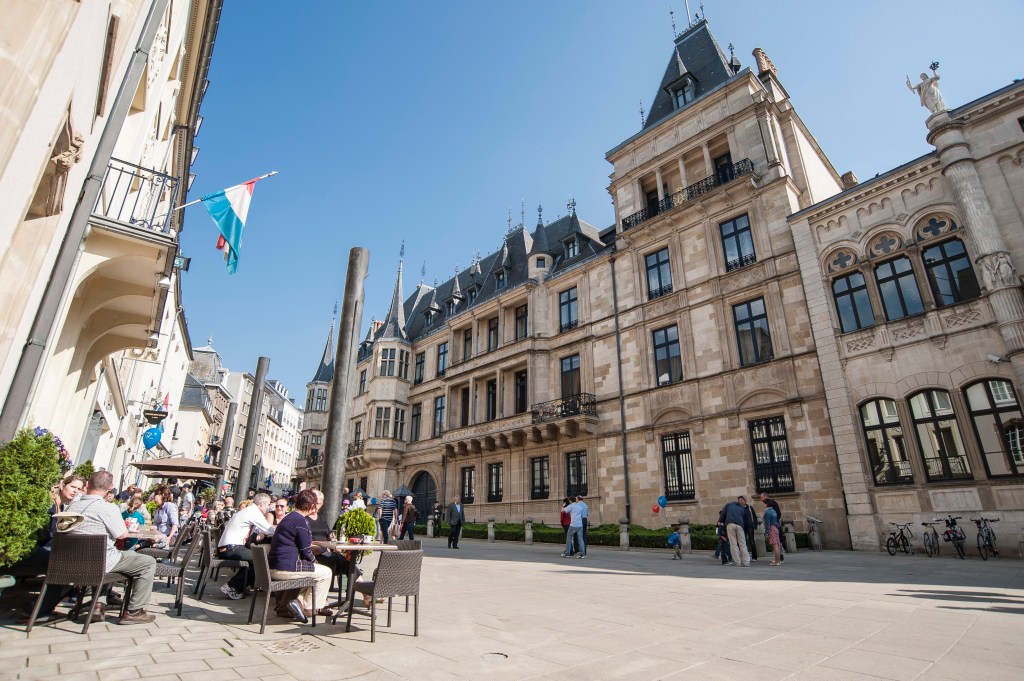
From our next stop, the Moselle Valley town of Bernkastel, we took a morning excursion to Luxembourg City, an hour-and-a-half away. Our guided ramble through the capital city’s oldest quarter, famed for the stone bastions and battlements rising above dramatic ravines, focused on the shop-filled pedestrian zone and included panoramic lookout points. After the tour my brother and I relaxed over hot chocolate at the Chocolate House, snaring an outdoor table across from the Grand Ducal Palace, where we earlier had snapped pictures of the soldiers on guard duty. Passengers who didn’t sign up for Luxembourg could choose to visit a Bernkastel winery and sample the valley’s renowned Rieslings.
1: The imposing Grand Ducal Palace captivates river cruise passengers on the Luxembourg City shore excursion. (Photo credit: LFT/Christian Millen) 2: Soldiers stand guard at the Grand Ducal Palace. (Randy Mink Photo) 3: Ancient fortifications charm visitors to Luxembourg City, a shore excursion option from the Moselle River town of Bernkastel, Germany. (Photo credit: LFT/Alfonso Sagueiro) 4: Stunning panoramas abound in Luxembourg City. (Randy Mink Photo)
Moselle Crowd-Pleasers: Bernkastel & Cochem
After lunch on the Scenic Opal, moored across the bridge from Bernkastel, we explored the storybook German town. Its riverfront facade didn’t look unusually quaint, but as we probed deeper into the web of little streets, the place just kept getting cuter and cuter. I wanted to photograph every square, crooked lane and antique building in my path, and slip into every wine tavern. Had we more time, I would have hiked up to Landshut Castle, frequented centuries ago by the territorial lords of Trier. Built in 1277 and in partial decay since 1692, it houses a restaurant and cafe.
Left: The fairy-tale town of Bernkastel is a popular stop on Moselle River cruises in Germany. (Photo credit: German National Tourist Board) Right: Landshut Castle, dating back to 1277, overlooks Bernkastel. (Randy Mink Photo)
In the evening, we all boarded buses for Trier, where Scenic had arranged a private classical concert staged amid the Gothic grandeur of the 13th century Liebfrauenkirche. Riding through Germany’s oldest city to reach the church, we grabbed glimpses of the famous Porta Nigra, the best-preserved Roman city gate north of the Alps.
Scenic Opal passengers attended a private classical concert at the 13th century Liebfrauenkirche in Trier, Germany. (Randy Mink Photo)
In Cochem, the hub of the Middle Moselle, our excursion featured a visit to Reichsburg Castle. From its lofty vantage point we enjoyed sweeping views of the river, the steep vineyard abutting the castle grounds and a skyline dominated by the onion-dome spire of St. Martin Church. Dating from the 11th century, Reichsburg was restored in the late 1800s by a wealthy Berliner who created an idealized version of a medieval stronghold. Although not architecturally faithful, it certainly gives Cochem a photogenic landmark, and three-fourths of the main tower is original. Mounted animal heads, suits of armor and period furniture set the mood inside. Afterwards, our walking tour of Cochem showcased its compact central square, Baroque town hall and ancient town gates.
Clockwise (Photo credits: German National Tourist Board): Cochem’s Reichsburg Castle has all the trappings of a rustic baronial estate. The Middle Ages come alive on tours of Reichsburg Castle. Reichsburg Castle and the onion-dome spire of St. Martin Church frame this view of the Moselle River town of Cochem, Germany.
On the Romantic Rhine
Next we traveled the 32 miles from Cochem back to Koblenz, where our ship overnighted in order to get in position for a morning journey to Rüdesheim that would spotlight the Upper Middle Rhine Valley, or Rhine Gorge, the river’s most castle-studded corridor. This would be our big day, the one we’d been waiting for.
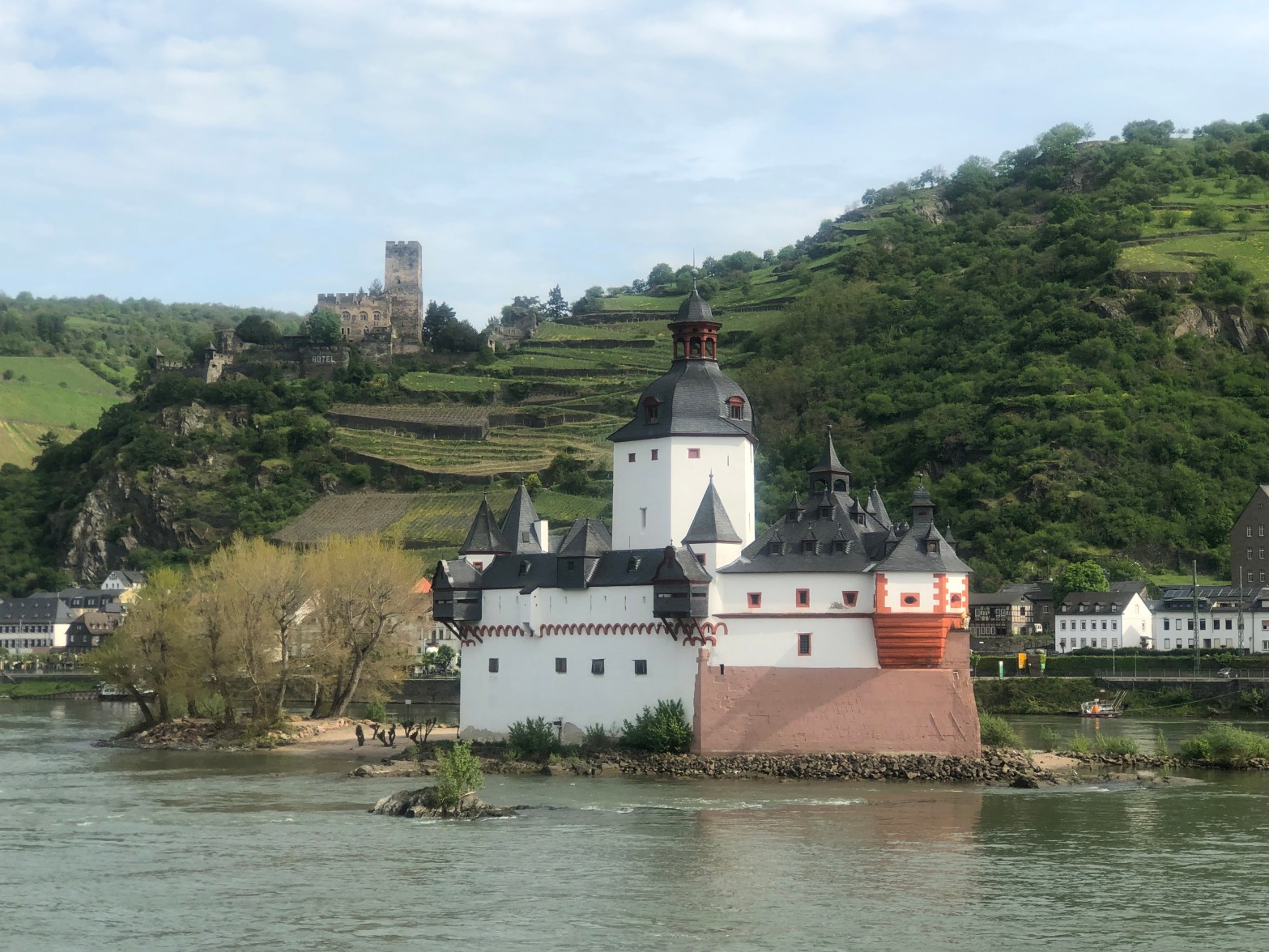
As we looked out from the breezy top deck, it was castle after castle, many of them, romantically, in various states of ruin. Some crowned distant summits, others rose straight from the shore. Vine-ribboned hillsides and timeless villages seemed to be waiting around every bend.
As we learned from the cruise director’s narration and from Tailormade (the Scenic smartphone app), some of the fortresses have been repurposed as museums, restaurants, hotels or private residences. Castle Stahlek in Bacharach, now a youth hostel, once served as a Nazi indoctrination center and military hospital during World War II. (The app’s commentary also came in handy for exploring ashore and helped us identify the towns and landmarks we passed while cruising.)
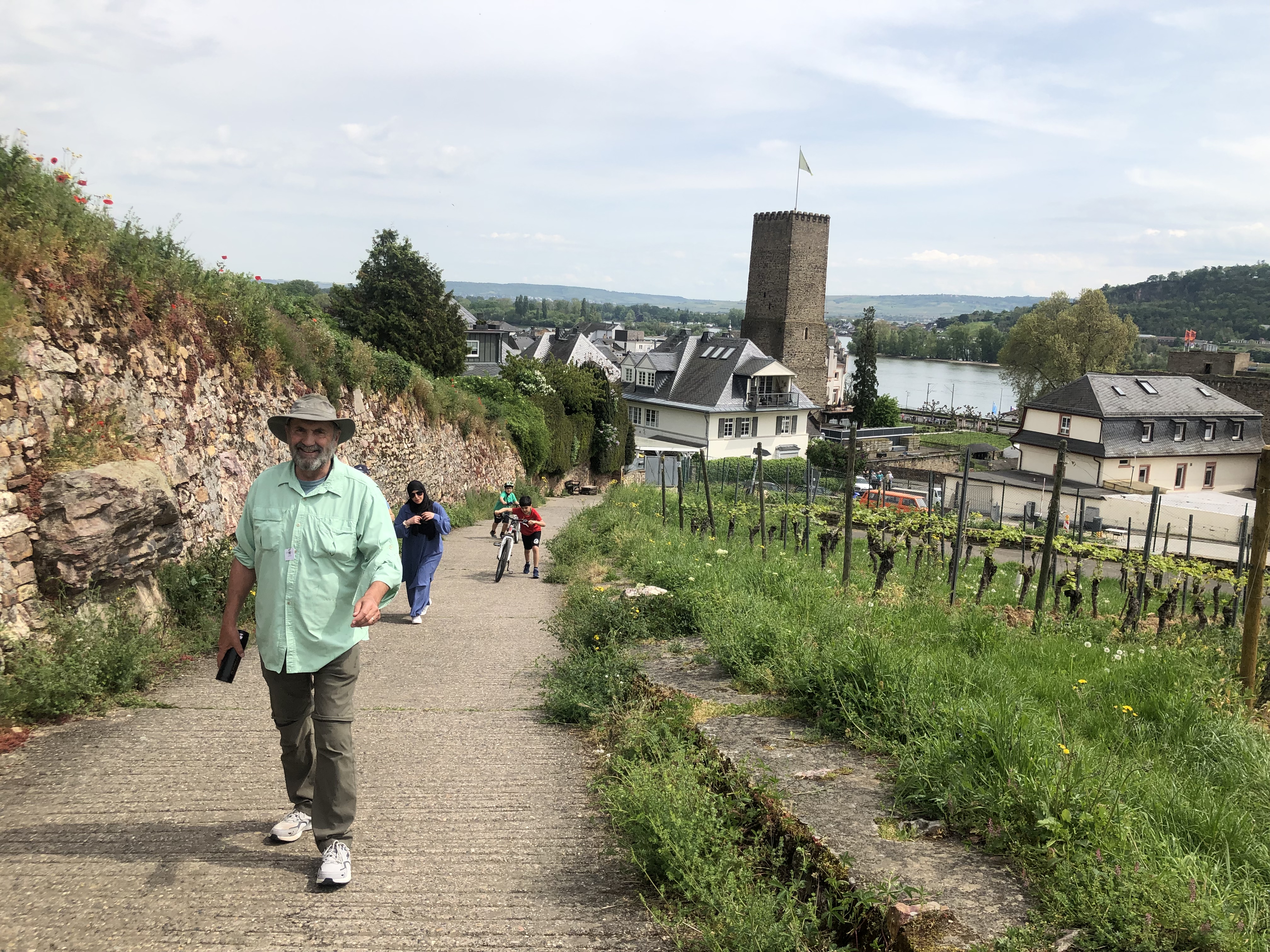
In Rüdesheim, a tourist-packed village crammed with wine taverns and souvenir shops, we hiked through vineyards to Niederwald Monument, a grandiose memorial that commemorates the 1871 founding of the German Empire after the end of the Franco-Prussian War. Our uphill trek was challenging, the cable car ride down a lot more fun.
Left: It’s an uphill trek for Scenic Opal passengers who choose to walk to the hilltop Niederwald Monument high above Rüdesheim. (Randy Mink Photo) Right: Shore excursions in the Rhine River town of Rüdesheim visit the Niederwald Monument, a grandiose memorial that celebrates the 1871 founding of the German Empire after the end of the Franco-Prussian War. (Photo credit: German Tourist Board)
Forays into France
Heading south on the Rhine, the Scenic Opal tied up at two more German towns. From Rastatt we were torn between a tour to the German spa town of Baden-Baden and one to Strasbourg, capital of France’s Alsace, a region that historically has flipped back and forth between German and French control. In Breisach, our last port of call before Basel, we had to weigh Colmar, Alsace’s most beautiful town, against Freiburg, a Black Forest gem renowned for its medieval Old Town.
Since we had seen plenty of Germany, we went all in for Alsace and enjoyed walking tours of Strasbourg and Colmar, both with cozy, traffic-free historic cores chockablock with pastel, flower-laden, Hansel-and-Gretel houses. It’s just that touch of fairy-tale fantasy we needed to put a happily-ever-after ending to our trip through the enchanting heart of Europe—the Europe of our dreams.
Left: The Cathedral of Notre-Dame, a towering landmark cast in red sandstone, dominates this view of Strasbourg’s historic core. (Randy Mink Photo) Right: Rheinstein Castle, near the German town of Trechtingshausen, is one of many medieval castles that captivates Rhine River cruise passengers. (Photo credit: German National Tourist Board)
Straying off the beaten path in Castile-León, a region ripe for discovery
Story and Photos by Randy Mink
Does your town have a distinct look or personality? Something that really sets it apart from others?
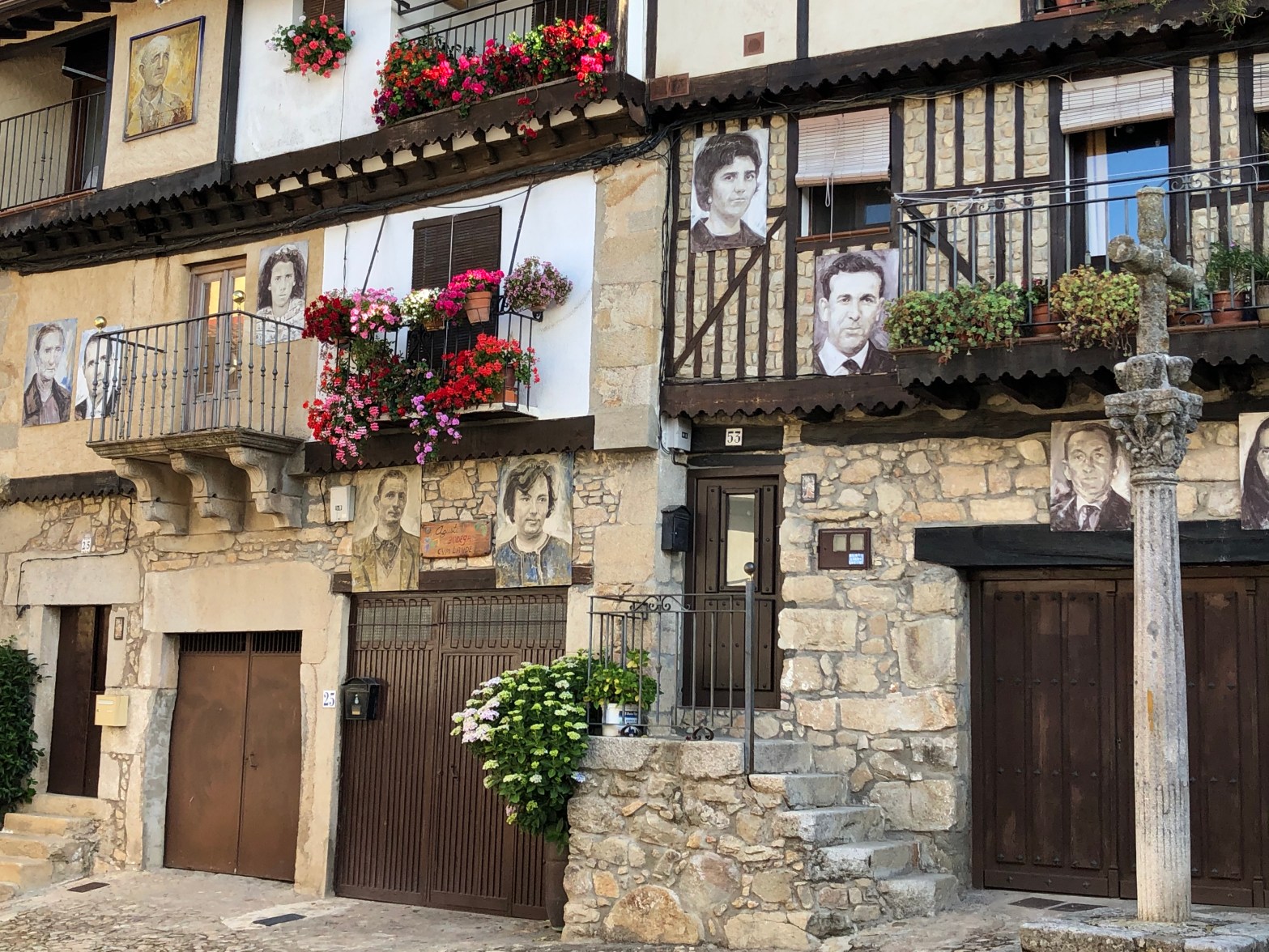
In western Spain, tiny Mogarraz (pop. 250) plasters its personality all over town, festooning houses with pictures of residents past and present. These portraits are large artworks that visitors can’t help noticing as they prowl the little plazas and narrow streets of this obscure town in the Sierra de Francia Mountains of southern Salamanca province.
Overlooked by most travel guidebooks, quirky Mogarraz was one of my favorite discoveries on a recent trip that included some under-the-radar places in Castile-León, one of Spain’s 17 autonomous regions. Our group concentrated on the region’s less-traveled western frontier, dropping in on remote rural areas, sampling three of its designated wine routes and venturing as far as the Portugal border.
This was my first trip overseas in three years, so I was more than revved up. Like a lot of Americans whose international travel plans were stifled by the pandemic, I had been itching to travel abroad. What a joy it was to be in Europe again! Each day was a revelation, a real adventure delving into art history, gastronomy, wine and everything that gets me psyched about Spain. Talk about pent-up wanderlust. The week-long trip provided a much-needed boost indeed.
Castile-León, situated west and north of Madrid, makes up about 20 percent of Spain’s total area but is only its sixth largest region in population (2½ million). Consisting of nine provinces, the vast chunk of real estate is slightly bigger than Portugal. Castile-León claims nine of Spain’s 34 wine routes and counts more than 400 wineries. It boasts three UNESCO World Heritage Sites—Salamanca (which our group visited), Segovia and Ávila.
The quaint medieval village of Mogarraz, on the Sierra de Francia Wine Route, would be a delightful destination if just for the enchanting cobblestone lanes that snake past its stone and half-timbered houses, many with flower-filled balconies. But portraits of the people who live in these ancient buildings add a strange twist.
The novel art project began in the 1960s, when poverty in the area drove many residents to seek jobs in South America, for which they needed a photo ID card. These IDs inspired the idea of decorating houses with photographs of the adults who lived in them. In 2012, local artist Florencio Maíllo took over the project and today he paints each of the 300-some portraits, from wizened grandmothers to young men in military caps.
Mogarraz, a tiny village in the Sierra de Francia Mountains of Salamanca province, is known for the portraits of residents that adorn its houses. These sketches of townspeople give the streets a personality all their own.
Mogarraz and other towns in this mountainous region base their economies on tourism and winemaking. The delicate, dark-skinned rufete grape is special to the Sierra de Francia area in southern Salamanca province, where vines have been tended in terraces for centuries.
Our nest for the night, Hotel Spa Villa de Mogarraz, was right in the heart of the fairy-tale town and just steps from Bodega Vinos La Zorra. Under a tent canopy on La Zorra’s streetside patio, bistro patrons savor wines and tapas at tables fashioned from colorfully painted oil drums. We noshed on croquetas (croquettes), those addictive deep-fried balls of mushy goodness, and patatas meneás, mashed sweet potatoes flavored with garlic and paprika and topped with a pork rind.
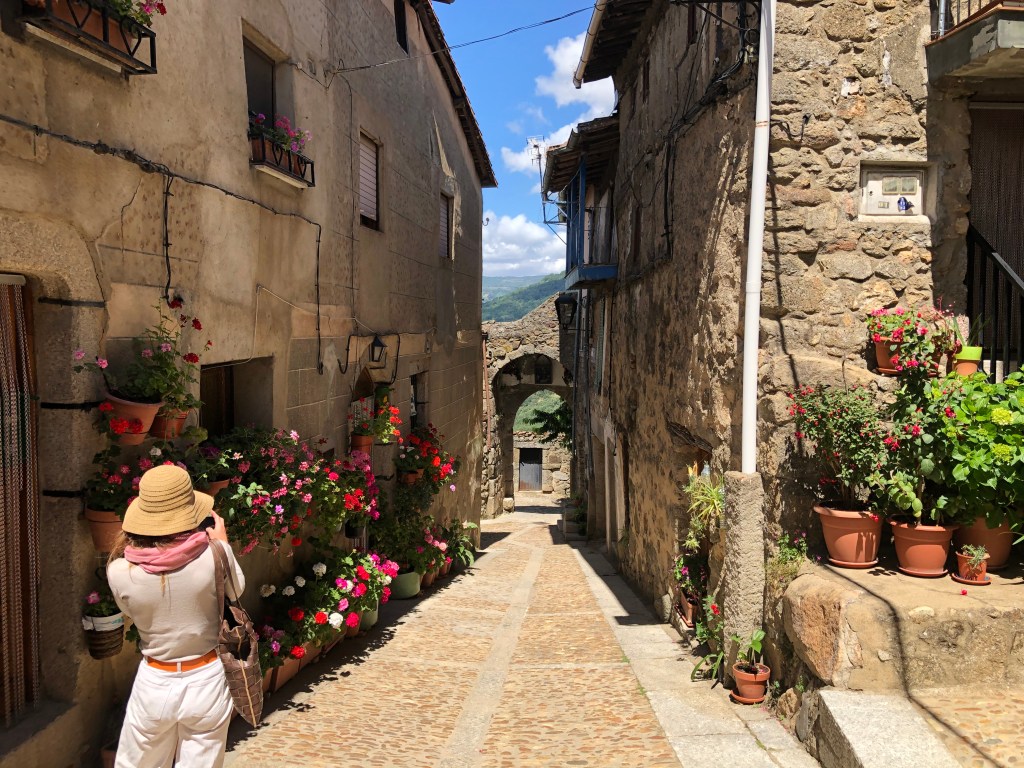
Our group also went back in time in Miranda del Castañar, another gem on the Sierra de Francia Wine Route. With a guide we wandered the cobbled streets and took in forested panoramas from the 12th century walls of the pretty hilltop village. The medieval castle is now a brewery.
The medieval streets of Miranda del Castañar invite tourists to explore.
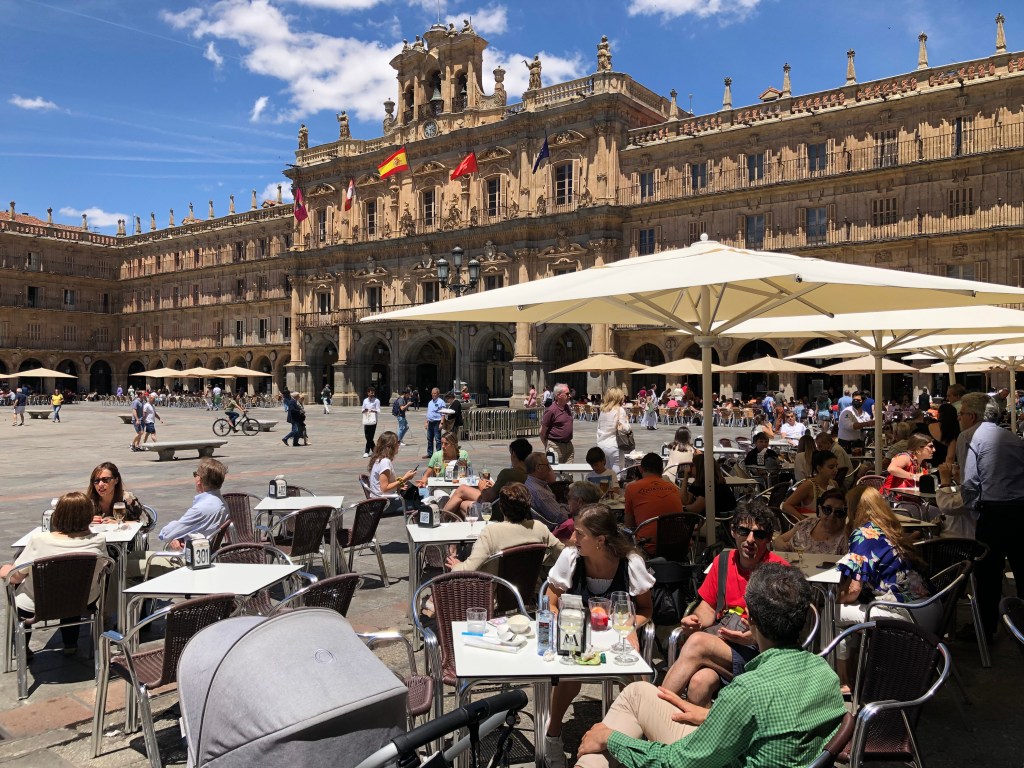
The city of Salamanca, unlike sleepy Mogarraz and Miranda del Castañar, is rather well known as a visitor destination, its historical core centering on the venerable buildings of Spain’s oldest university, founded in 1218. With a magnificent central plaza, lively pedestrian streets and youthful vibe, the manageable, medium-sized city of 150,000 residents offers just the right ingredients for a pleasant day or two of seeing the sights and soaking in the ambience. To me, it’s Spain in a nutshell.
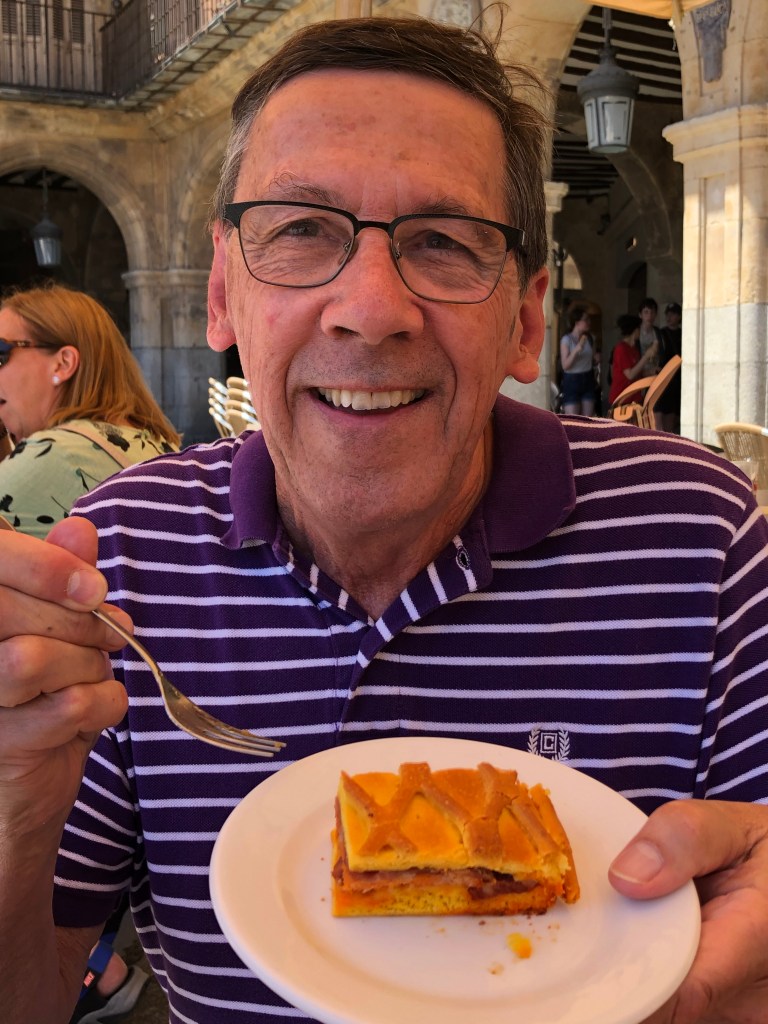
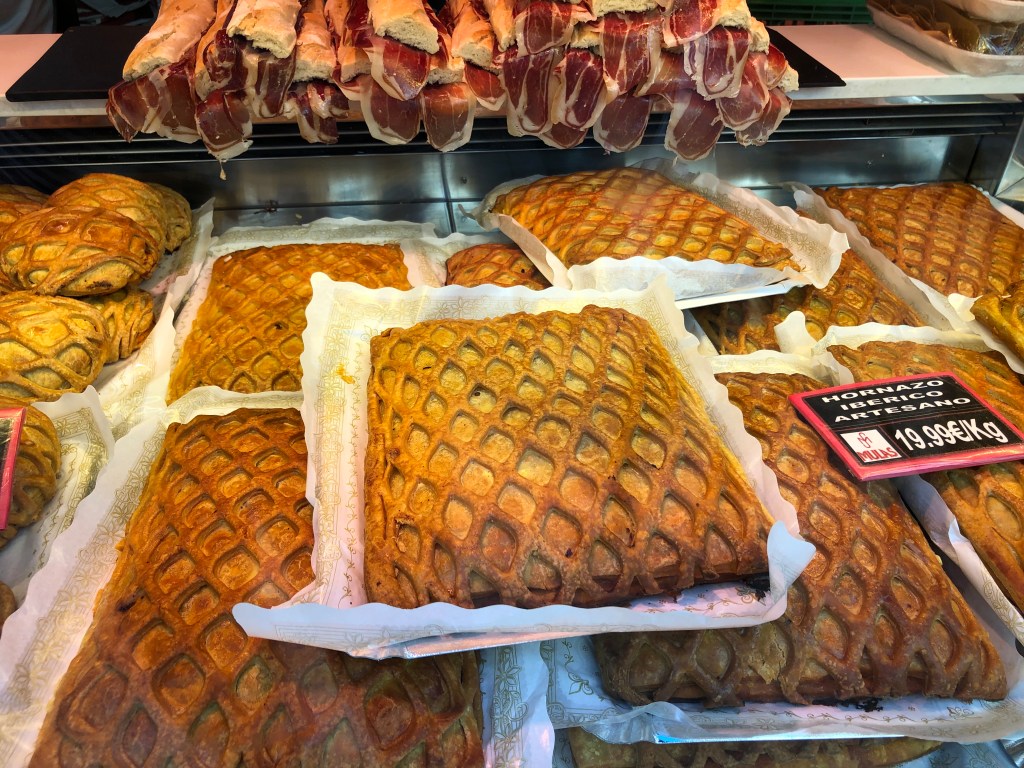
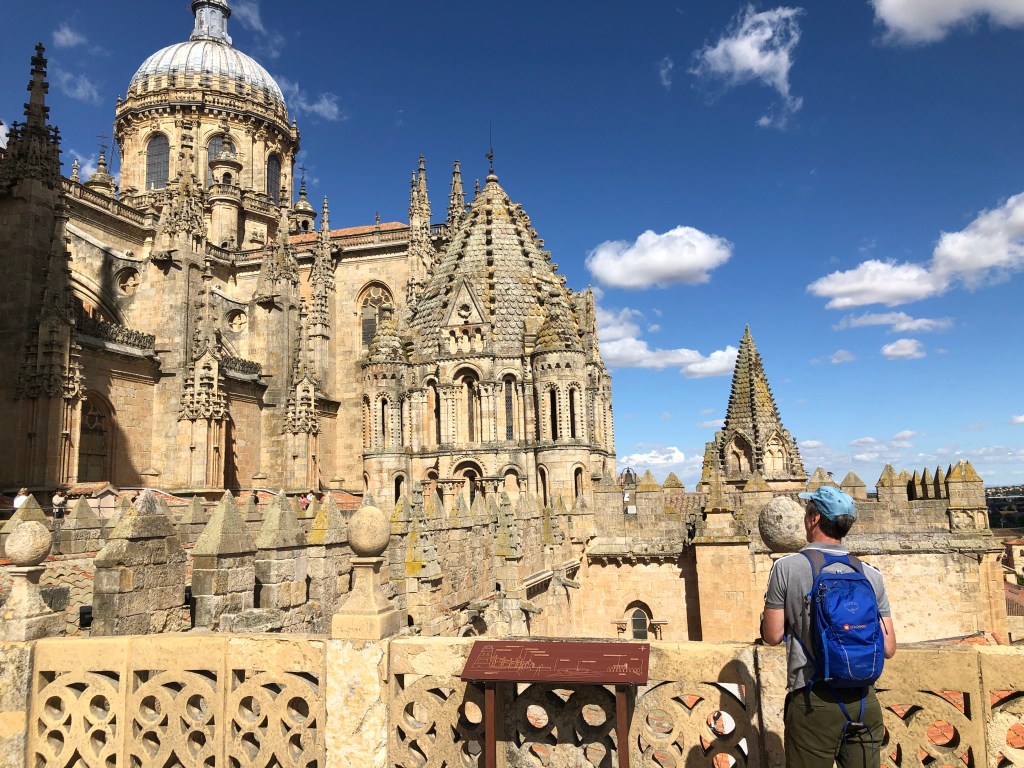
Clockwise from upper left: Relaxing and people-watching on Salamanca’s Plaza Major, one of Spain’s largest and most beautiful squares; The best views of Salamanca’s Old World skyline are from the banks of the River Tormes and its Roman bridge; The author enjoys a hornazo meat pie at a café on Salamanca’s Plaza Major; Hornazo, a meat pie with layers of pork chorizo, pork loin and ham wrapped in lattice-crusted yellow dough, is a specialty of Salamanca province; Exploring Salamanca’s Old and New Cathedrals.
In Salamanca’s Old Town, an open-air museum of radiant sandstone buildings, prime attractions lie within walking distance of each other. I recommend these five experiences:
Touring the Old and New Cathedrals. Built centuries apart, they are attached; you can’t visit the 13th century Romanesque church (Cathedral of Santa Maria) without going through the Cathedral of La Asunción de la Virgen, or New Cathedral, which isn’t new at all. It was built hundreds of years ago in the Gothic, Renaissance and Baroque styles.
Ascending the “Stairway to Heaven” on a 200-step climb up La Clerecía Church’s bell towers for bird’s-eye views of Old Town. The colossal Baroque building, now Pontificia University, began life in 1617 as a training school for Jesuit missionaries.
Walking across the River Tormes’ Roman-era bridge while admiring the classic Old World skyline
Touring the University of Salamanca, a popular place for American and other foreign students to study Spanish. Standing before the main building’s intricately sculpted sandstone façade, tourists try to find the “hidden” frog, said to be a symbol of good luck.
Relaxing over tapas at a café on postcard-perfect Plaza Mayor, one of the largest and most beautiful squares in Spain. Try hornazo, a meat pie with layers of pork chorizo, pork loin and ham wrapped in lattice-crusted yellow dough.
Zamora, a town of 60,000 north of Salamanca, is called the “Romanesque City.” Its 23 Romanesque churches, 10th century walls and Duero River bridge ruins provide a magical setting for communing with the past. The Cathedral of Zamora impresses with its Byzantine-style dome, richly carved choir and 15th century Flemish tapestries.
The Zamora Wine Route in Zamora and Salamanca provinces takes travelers through traditional rural landscapes of sheep pastures, hay fields, vineyards and unspoiled villages with stone houses and Romanesque churches. In Villanueva de Campeán, we did wine tastings in the barrel room and vineyards of Bodegas Viñas del Cenit, which makes Cenit Tradición, an unusual blend of red and white grapes (mostly tempranillo)—a light, refreshing wine with less alcohol. The vines have been mixed since the times of the Franciscan friars who tended them from their 15th century monastery, the ruins of which we saw in the distance. (Older locals remember when monks still inhabited the monastery.)
“They just wanted to make wine, with no worries whether it was red or white. It was just wine for them,” said Ana Belen Hernández, Cenit’s director of marketing. “Cenit Tradición is our commitment to carrying on the tradition and personality of the historic wines of this territory. It’s a wine with no recipe, a wine we think our ancestors would have made.”
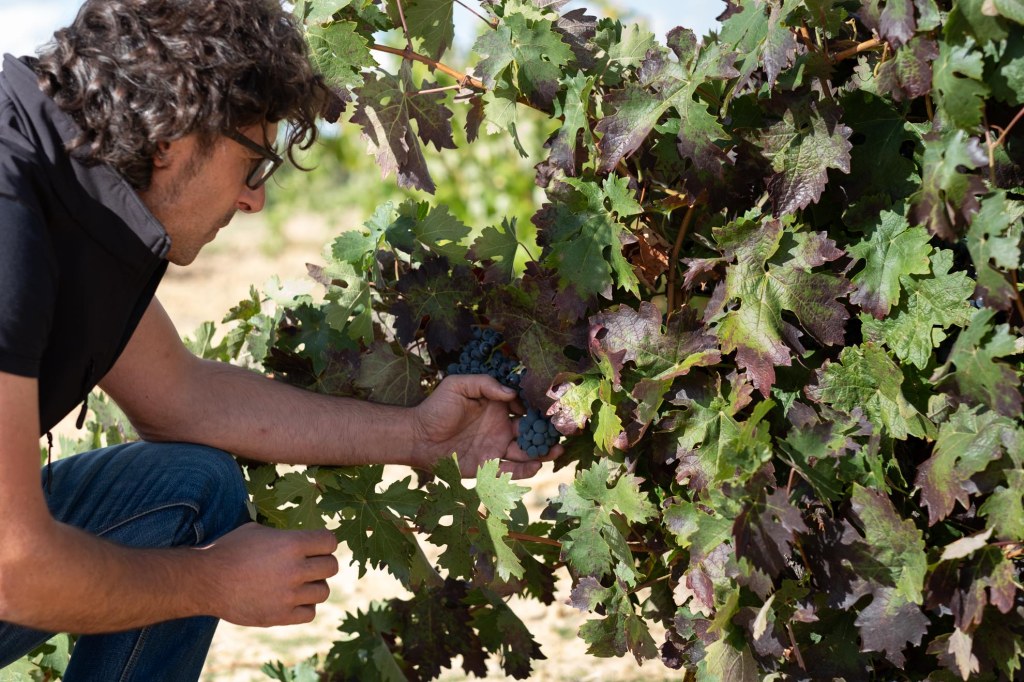
Growing grapes for wine is an age-old tradition in the Castile-León region of western Spain.
Cenit’s 90-year-old vineyards are threaded by the Via de la Plata, or Silver Route, one of the 11 pilgrimage routes to the tomb of St. James in the Cathedral of Santiago de Compostela in Galicia; visitors may encounter pilgrims making the trek.
In the nearby village of Casaseca de Campeán, our group enjoyed an atmospheric wine country lunch at Café de Quintano. Deep underground, we feasted amid the rustic trappings of a vaulted, 200-year-old cellar. The hard-working servers must have made 20 trips each from the upstairs kitchen to our cozy “cave.” Besides wines, the group menu featured platters of cheeses and paper-thin slices of cured ham, chickpea soup, tuna steak in garlic sauce and Iberian pork steak with deep-fried vegetables. At dinner the previous night we had two regional specialties—roast suckling leg of lamb and Zamoran-style rice, a zesty dish with pork and paprika.
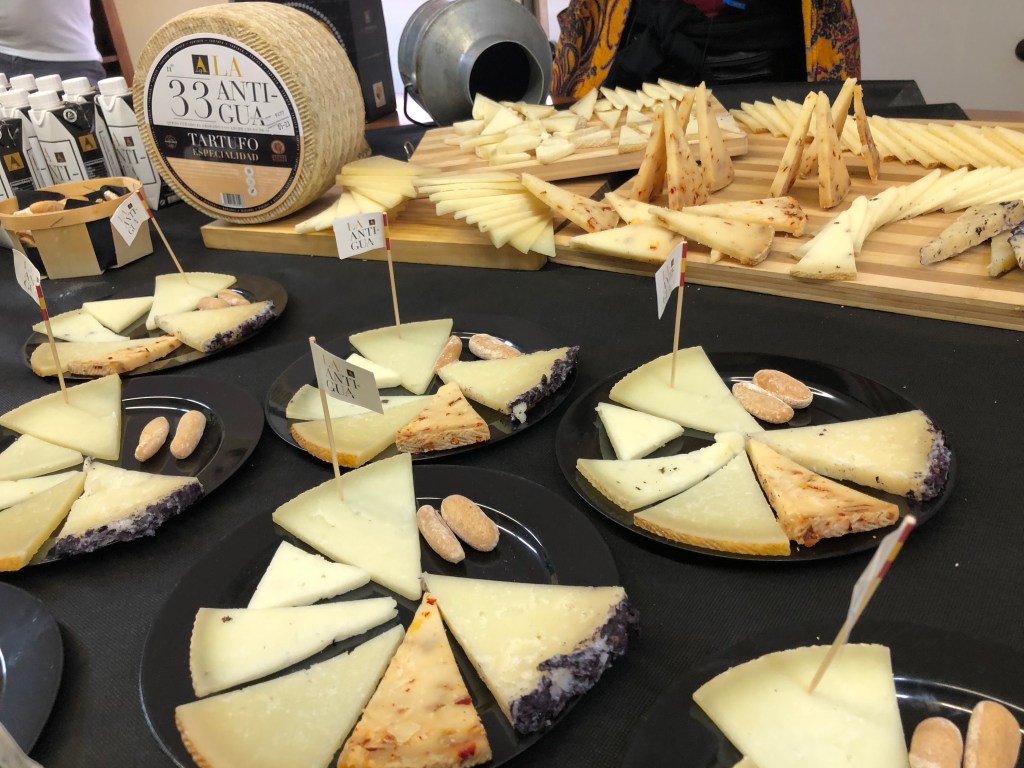
My best memory of the Zamora Wine Route was touring Quesería La Antigua, a high-tech dairy in Fuentesaúco. Donning a white plastic coat, hairnet and shoe covers, we followed guides who explained how sheep’s milk is turned into prize-winning cheeses. Afterward, we watched a video and sampled six varieties, including one with tempranillo grape skins in the rind, another flecked with paprika flakes. Under construction is a museum that will showcase La Antigua’s passion for making cheese.
Sampling the product is a highlight on tours of Quesaría La Antigua in Fuentesaúco, a dairy that makes sheep’s milk cheeses.
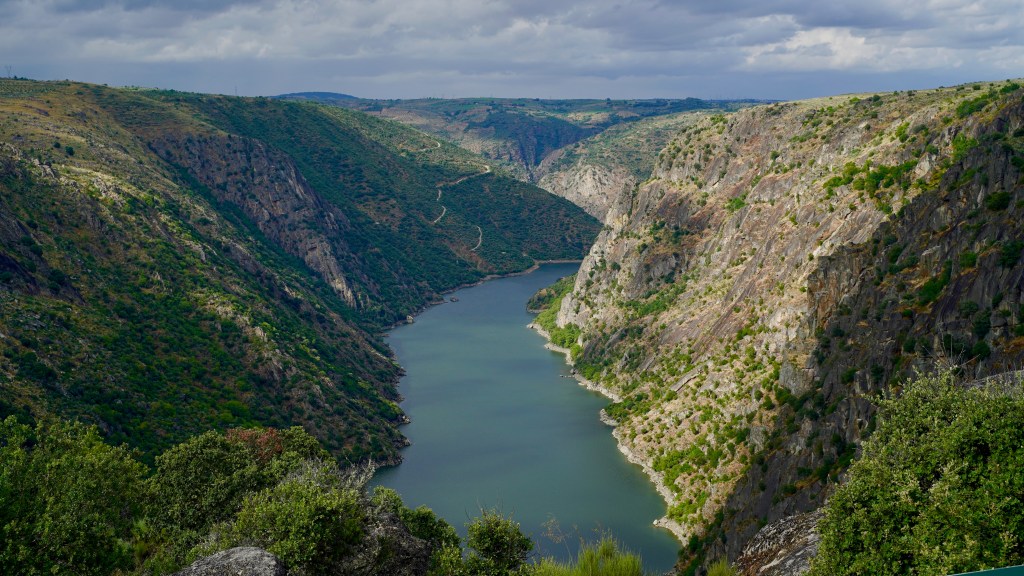
When our bus passed a shepherd tending his flock later that day, we got giddy and were granted a photo stop. We were en route to the far western stretches of Zamora and Salamanca provinces where the Douro River’s scenic canyonlands straddle the Spain-Portugal border. (“Douro” is the Portuguese spelling; it’s “Duero” in Spanish.) For Spaniards, this remote valley of granite cliffs and outcroppings is considered the “Wild West.”
Our introduction to the Arribes del Duero Wine Route, set against the backdrop of the valley’s Arribes del Duero nature park, involved vineyard and winery visits hosted by Bodega el Hato y el Garabato in tiny Formariz. Dinner and overnight were in the comfortable Posada Doña Urraca in Fermoselle, a quiet Spanish border town famous for its centuries-old network of wine caves (more than 1,000, so they say), a few of which have been opened for tourism. After our subterranean tour and wine tasting, we did more sampling at Bodega Frontio, a winery started by a young Danish entrepreneur who goes by the nicknames “Chus” and the “Crazy Dane.”
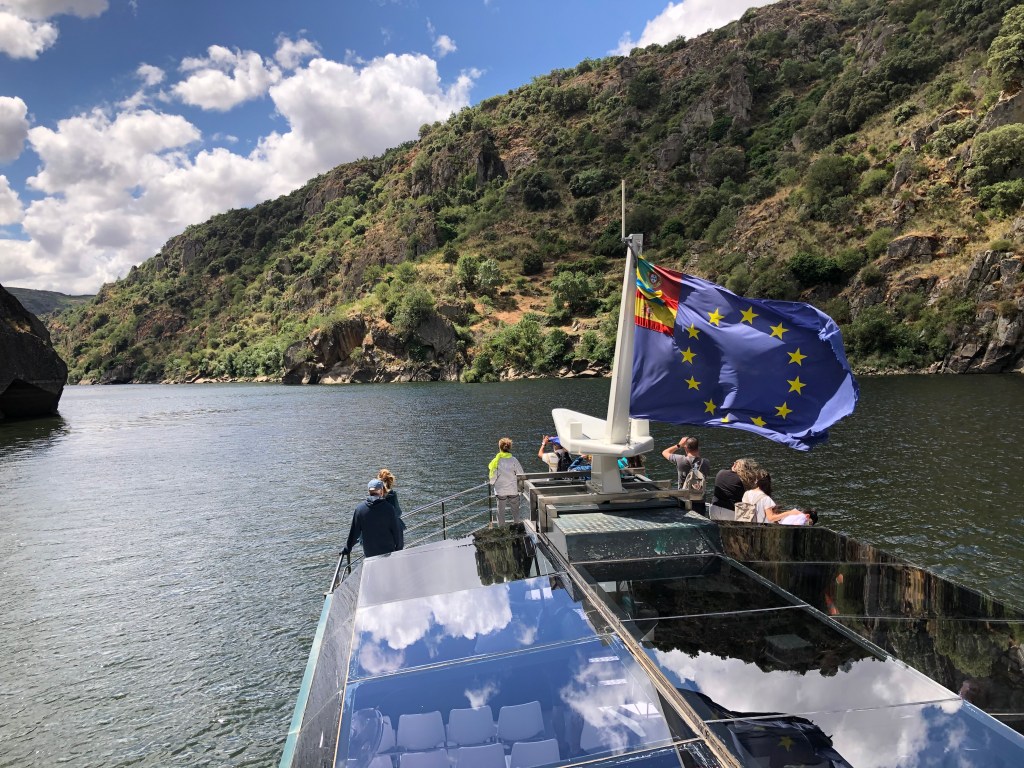
A brief foray into Portugal the next day took us to Miranda do Douro, where we boarded an excursion boat for an ecology cruise focusing on the geology, flora and fauna of the UNESCO Meseta Ibérica Biosphere Reserve. Our one-hour journey provided a chance to witness up-close the spectacular gorge topography we had viewed from a lookout point earlier that day.
Flying the flag of the European Union, this excursion boat offers a narrated environmental cruise spotlighting the geology, flora and fauna of the Douro River Valley, a land of scenic splendor on the Spain-Portugal border.
Exploring Fermoselle and other villages tucked away from the crowds, we often felt as if we had Castile-León to ourselves. On early morning strolls up and down the twisting, shadowy alleyways, sometimes the only sounds were chirping birds, crowing roosters and our own footsteps. It was good to be back in the Old Country, making new discoveries in corners of Spain off the beaten track.
Spreading a colorful 22″ x 30″ Deutsche Bahn (DB) railroad map out on the dining room table one evening, I savored the prospects of a European rail adventure.
I had seen many photos of the exciting and sleek European trains, and could actually name some of them, such as the Eurostar, the fast TGV’s and the ICE (InterCity Express) trains. I just had to ride some of the 160,000 miles of Europe’s railway lines to experience them for myself.
The DB rail map showed so many lines—there were electrified lines, lines for both long-distance and short-distance trains, private railways and high-speed lines under construction. There were even bus lines and rack railways.
As the first 15 minutes of map scanning lapsed into almost an hour because of all the rail possibilities, and places I wanted to go, I recognized that I’d have to scale back my plans for a 10-day trip, otherwise I’d never return home again. Besides, once I called up the DB rail schedules on the internet (www.bahn.de), I realized it would take as much as a full day of train riding to journey to some of the towns I wanted to see.
I knew I’d be able to secure good March airfares before the official traveling season began through American Airlines Vacations. I had found AA to offer quality air-hotel packages, so I booked one night in London (to recoup from the seven-hour trans-Atlantic flight), and an evening in Frankfort, Germany, the last city we’d visit.
My wife, Marilyn, would be an excellent travel companion as she could speak and understand enough German to allow us to eat (this is very important). We had planned a number of tight train connections during the trip, so her knowledge of German was a vital component in keeping to our schedule. She had a number of years of German in high school and college, as well as helped chaperone a tour group to Germany before. And the last time we went on a tour of Germany together, people from our bus followed us down the street so they could eat at the same establishments that we did, thinking they could ask Marilyn for help in translating the menu!
COMPLETELY ON OUR OWN
I had been to Europe several times before, as had Marilyn, but this would be a trip completely on our own without the help of a guide or any tourist service or agency. Thus it was with determination, and a bit of humility, that I set out to see just exactly how we could piece a 10-day European trip together using many original sources and no middlemen or travel agencies.
My idea was to travel on as many trains as possible, and on as many different trains as possible, see numerous points of popular interest and historic sites along the way, and also do some very specific sightseeing that we had in mind.
While American Airlines was the air carrier, Rail Europe (www.raileurope.com or call 888-382-7245) issued first class Eurail Flexipasses (cost $778 per person) which allowed us to travel 15 days during a two-month period in 17 countries, including Belgium, Denmark, Germany, France, Luxemburg, Spain, Switzerland, Portugal and Italy, among others. This was an absolute bargain because of the number of trains we could ride and the locations to which we could travel.
Other types of Rail Europe passes and terms are also available at different prices.
With the Eurailpass, you are afforded unlimited travel, as well as discounts for tourist railways, hotels and car rentals. You must purchase your ticket while in the U.S. prior to traveling to these places, however. Another requirement is that you have your ticket validated prior to boarding your first train (more on this later). Naturally, you’ll also need a passport, which you can obtain from designated post offices.
Our itinerary would take us to London, then Paris for two nights, then to Wernigerode in the Harz Mountains in former East Germany to ride the steam trains there, and then through Leipzig to Seiffen (the “toy village”) near the Czech Republic border, then to Frankfort. Between all these points were numerous towns we would travel through or at which we would change trains, and we were looking forward to making these connections part of our rail experience.
RAILFAN DREAM TRIP
What I had planned was a railfan’s dream trip throughout a portion of Europe that would not involve any transportation other than trains (both above ground or the underground species)—or the occasional DB bus. In Europe, you don’t need a taxi or a car in most cities if you’re willing to do some walking. The “ring” area of many European cities is best seen by walking anyway.
We left Chicago’s O’Hare International Airport on a cold, damp Thursday afternoon on a direct flight to London. After dinner, we had learned from previous flights to begin to relax and try to get some sleep. First-timers will find it hard to get much sleep because of all the excitement, but if you sleep even a few hours, it can pay off once you land.
On a seven-hour flight that begins at 5:20 p.m., you eat supper by 7 or 8 p.m., watch an in-flight movie, get some rest, and before you know it the flight attendants are serving breakfast prior to landing at Heathrow Airport.
We negotiated the famous London Tube from the airport okay, having purchased just a one-way tube ticket to a stop near the four-star Melia White House Hotel near Regent’s Park. After checking in at about 10 a.m. and finding that our room wasn’t ready, we were ushered to a comfortable sunken dining area of the hotel where hot coffee, fresh-squeezed orange juice and pastries were being served. This was very welcoming after a long flight and the cold, damp London winds that literally blew us into the hotel’s front door. When our room was ready about an hour and a half later, we found that the hotel clerk had upgraded us to a better room because we had to wait. I kinda like those British.
After sleeping off the effects of jet lag, we decided we still had time to walk to the British Museum, where a friend had said the Magna Carta was on display. While the Magna Carta is no longer in the museum, we did enjoy the museum’s food court. It’s a large, open space under a high sun roof that rivals most American shopping mall food courts. Later we were told the Magna Carta was moved to the British Library, but we did see plenty of ancient sculptures, rare books and paintings, nonetheless.
After a candlelight dinner of English fish and chips and Pilsner beer at the Green Man pub across the street from the hotel, we headed back to our room. By 7:30 p.m. we were asleep; that is, except for the unmistakable sound of Far Eastern religious chanting emanating from the next room, which mercifully stopped about 2 a.m.
We were up by 6:15 a.m. and carbed up on the hotel’s “Full English Breakfast” promised us. We noted we had only 10 British pounds left to spend, so we were glad the Eurostar beckoned.
EUROSTAR BECKONS
We had made reservations on the 10:39 a.m. Eurostar from London’s Waterloo Station, located not far from the Eye of London and the Royal Festival Hall. Just a couple of weeks before, I had spotted the Waterloo Station facade on a television travel program, and wanted to make sure I arrived in plenty of time to get a photo of it. It seems few people around the station actually know where the front of the station is because there are so many entrances to the structure, but finally a rail information clerk was able to tell me where it was.
After taking pictures (it has a marvelous front—nothing like that of most rail stations in the United States), and grabbing a quick mocha coffee, we headed for the Eurostar gate. I noticed seating in the station was at a premium, but a “Station News” bulletin in a rack mentioned that 40 additional station seats were to be added in early 2004.
The Eurostar departure gate is situated a long walk from the regular train platforms, and in this part of the station there’s another entire retail outlet section where I could have purchased coffee as well, plus numerous other items. But this section is really in need of more seating.
Seems like everyone north of the Thames was riding with us on the Eurostar to Paris that morning. We passed through security, but the attendant said I didn’t have to take off my shoes (which I usually do at airport security screenings because of the steel bars that support my Rockports). “Our X-ray machines aren’t that strong,” said a clerk.
After security came Passport Control, but our agent quickly waved us through and didn’t ask any questions such as, “Are you one of those insane railfans?”
My excitement mounted as the station clock ticked closer to departure time, and finally the doors were opened to the train platform. There were neatly-dressed, accommodating rail agents at nearly every passenger car door to help passengers. We found our seats in first class (there are 58 standard seats per car, for a total capacity of 560 passengers in standard class). In first class cars, there are up to 39 seats, for a total of 206 first class seats. Car #9 is reserved for 24 premium passengers.
I was able to get off the train for a few minutes before departure to photograph the front of the sleek train. After settling in my comfortable seat, I learned we’d be served champagne en route, followed by a complimentary three-course meal at our seats with a choice of wine. Premium passengers are served a four-course meal. I was already beginning to like this trip.
At 10:39 a.m. I noticed that we were moving, but had to tell Marilyn that we had begun our rail adventure—the departure from the station was so smooth she hadn’t even noticed. A Eurostar test train in 2003 hit a speed of 208 miles an hour. I must say, speeding from central London to Paris in 2-1/2 hours on this express train left me wondering why anyone would want to fly. Since 1994, the Eurostar has transformed cross-channel (they call it the Chunnel) travel, taking people to Avignon in Southern France for skiing, to Calais, to Disneyland Resort-Paris or to Lille. Of course, Paris itself never fails to charm and delight.
Last year, the Eurostar carried 1.7 million passengers in the fourth quarter alone, an increase of 15% from the year before. Eurostar says it savors a 66% share of the London to Paris rail/air route, and a new Channel Tunnel rail link in the United Kingdom cuts the journey by 40 minutes.
FEW BUMPS OR SQUEAKS
As the train left the outskirts of London, there was a noticeable difference in speed, but fewer bumps or squeaks than you’d encounter here in the U.S. on such a fast ride. The cars feature excellent lighting, they’re carpeted, seats are nearly 20″ across and windows are four feet long and 24″ high for good viewing. Each seat features footrests, and trays that unfold for food service. The cars have wide aisles and gray and red cloth interiors.
Our car purser (“chef de cabin”) was named Virginia Caron, a most pleasant and courteous young woman, who along with two other crew members, served us in their dark grey and charcoal Jacqueline de Baer-designed “non-uniform uniforms” which have a more relaxed, casual look to them.
Our train engineer (the English call them drivers), was Detlef Hofmann, the only German-born driver the Eurostar employs. David Hake, the train manager, reported that the train travels 186 miles or 300 kilometers an hour. He explained the line was built originally for TGV trains, and later used by the Eurostar. Watching out the window as we passed automobiles on the highway, I couldn’t help but wonder how fast the cars were going and how fast we were going. All I know is that we were passing cars faster than I’ve ever passed anything on land in my life, and I wasn’t all that used to it.
The scenery passed by so quickly that no sooner did I see it when another panorama appeared, and they all ran together. Crossing the English Channel, on the bottom side no less, might make some anxious, but it amounts to only 15 to 20 minutes of no scenery; anyway, by then first class passengers are well into their champagne, lunch and wine, and soon the enchanting rural French countryside appears. We never were able to see the tunnel entrance from the train, which is probably a good thing.
The Eurostar experience drew to a close as we headed into the Gard du Nord (North Station) in Paris. As the train drew near the station, I brushed up on a few more French phases just to make sure I had the language correct. One that I worked particularly hard on was, “Je ne parle pas francais.” The words mean, “I don’t speak any French.” If all else failed, at least I would have that excuse.
SERVED AT SEAT Not too far from Paris we were served a delicious breakfast at our seat, consisting of juice, coffee, rolls, a croissant with jelly, a chocolate pastry, several small pieces of cheese, ham and a prune fruit bowl.
The Thalys zipped through the countryside on a high-speed line with concrete ties and superelevated curves. There were more bumps than on the Eurostar, and when we passed another train, the air pressure between the two was noticeable.
In looking over my rail map, I saw we were to travel through Belgium, adding another country to our list of traveled lands. I really hadn’t noticed until then that Belgium was on the rail route to Cologne.
What I was already be-ginning to notice was that in Europe, modern, smooth-riding, comfortable passenger trains are taken for granted. You get on, sit in a comfortable seat, sometimes you’re served snacks, coffee or meals at your seat while the comfortable, clean trains zip you to your destination at great speed and on time. There’s little or no commotion about this feat, it’s just a fact of life.
I was getting a bit nervous that I might be enjoying this trip way too much already. It was easy to just sit back and relax, watch the scenery or read. My travel was in the hands of rail people who knew how to get me there on time and in style. I couldn’t help but think of the horror stories I’d heard about passenger train travel in the U.S., and I was glad I was in Europe.
Our train travel today would take about 9-1/2 hours, but I couldn’t think of anything else I’d rather be doing. We’d get to see the countryside, with several train changes that would allow us to stretch our feet.
IMPRESSIVE CATHEDRAL As we pulled into Cologne, from the train window we saw the tall, impressive two-spired cathedral in the city center near the station, something Marilyn had learned about in a high school German project, and recognized instantly. We had 41 minutes to wait at Cologne for our ICE train (InterCity Express) to Hannover. It was a chance to purchase a salami and/or turkey sandwich on fresh-baked bread in the station. Our train hadn’t appeared on the train schedule board yet, so I finally asked a DB agent who told us the platform was #2, and the departure time was 11:49 a.m, not 11:30. I guess you need to occasionally verify train information even in Germany. The ICE is an all-white train with what seem to be even roomier cars than on the Eurostar or the Thalys. Certainly there were wider aisles, large windows, light interiors and plastic and cloth seats and armrests. The ICE pulled out right on time, headed for Hannover.
The weather alternated between sunshine and rain; station stops along the way included Remscheid, Wuppertal, Hagen and Dortmund. I watched the overhead illuminated board from time to time to see the speed of the train—it reached 200 kilometers an hour at one point. I liked the ICE because it was roomy, and the large windows helped us enjoy the countryside.
TRICKY PART OF TRIP Probably the trickiest part of our entire journey was waiting for us at Hannover. As we left the ICE, we walked into the main train station area to find the typical train departure board, but our Regional Express (RE 3613) due to depart at 14:32 p.m. (2:32 p.m.) wasn’t listed on the departure board. Besides, Hannover station was a busy place, and everyone seemed to be in a hurry. As the minutes ticked away, and not having been able to determine which platform our train was to depart from, I scrambled up a platform stairway and asked a DB service agent for help. I knew time was getting very short, so I was anxious to find the right track quickly.
The DB agent, who spoke little or no English, looked at our schedule, grabbed Marilyn’s bags and motioned us to follow him as he hightailed it down one flight of stairs, and then shot up another flight of stairs to the tracks. As we ascended, I could hear the conductor’s whistle blow prior to departure, and my stomach knotted up when I realized that could be our train!
It was. The DB agent yelled to the conductor to wait as we literally jumped into the open car door, at which moment the train lurched forward and out of the station. Talk about a DB angel. We had one that day.
But now we were on the Regional Express, sitting in first class, out of breathe, but on board and on our way. This was the last train of the day, and it was still a two-hour trip to Wernigerode. The RE was a red two-car train with a distinctive whine, much like a gas-electric motorcar. It also could notch up the speed when the track allowed.
At Baddeckenstedt I spotted a small switch steam locomotive and an old coach on a siding near the station. I had no other information about it, but I did get a photo.
NEAR THE HARZ MOUNTAINS
Prior to our trip I had read about the intriguing Harz Mountains, and the railway map showed we were going to be traveling next to them. The lush forests in the Harz are home to many wild animals, and the entire region is dotted with towns and tiny old burgs of historical interest.
One of the significant towns near the Harz is the imperial town of Goslar. This medievel village boasts the Royal Chapel of St. Ulrich, the Imperial Palace and nearby 1,000-year-old Rammelsberg ore mine. Our train made only a quick stop here, but it is on a future agenda for us to visit.
The Harz is home to the Brocken Mountains, the highest point in northern Germany, and they began to loom in the distance, complete with layers of white clouds stacked above the peaks. A few miles from Wernigerode, the stately Schloss (castle) Wernigerode, built in the 13th Century, appeared dangling off the edge of a high cliff.
The town of Wernigerode itself is known for its many half-timbered buildings, but the real treat for railfans comes as you enter the station area. Off to one side I saw three—count ’em—three 2-10-2 steam locomotives all in shiny black paint with red trim sitting at the engine facilities.
These well-maintained steam locomotives pull passenger cars through the mountains and forests of the Harz.
STEAM IN 2004 I had to remind myself that this was 2004, and that these coal-powered locomotives ran nearly every day of the year here, and have been for 100 years! This was the Harzer Schmalspurbahnen (www.hsb-wr.de), and it features an extensive network of rails running 60 km between Nordhausen and Wernigerode, passing many of the Harz Mountains attractions. Other steam rail branches sprout in other directions into the mountains, and you’d need three solid days to see it all. It’s definitely a destination for dampflok (steam engine) railfans.
Because of our schedule, we had planned to ride the 9:10 a.m. train to the Brocken Mountain, arriving at the top at 12:04. We would return at 1:33 p.m. and arrive back at Wernigerode at 3:20 p.m, enough time to explore the town.
Upon arrival at the new and modern Ramada-Treff Hotel (www.ramada-treff.de), just a few short blocks from the Harz steam train station and the DB station, we learned the Brocken line was closed the day before because of 110 mph winds at the top! We made alternative train plans that evening pending the outcome of the morning’s weather report.
After a delicious German supper at the Ratskeller in the center of town, we awaited the next day’s adventure. Early in the morning we asked the hotel clerk to call the railroad for us to see what the weather was like on the mountain. Fortunately, the weather was clear, and there was no new snow or high winds, so we got to the station about 20 minutes prior to departure, enough time to check out the engine and cars. On the ready track was a 2-10-2 3-foot-gauge black-with-red-trim engine (very smart) with orange and white coaches; a snack car was also attached.
After having my picture taken in front of the locomotive (always a must), the train headed out (right on time) for the 1,125-meter ascent to the Brocken, the highest peak in northern Germany.
400 BRIDGES ON THE ROUTE The Harz railroad owns 25 steam engines, 17 of which are used to provide rail service between 41 stations all year round. The oldest locomotive dates to 1897. On the entire line there are three major routes, 400 bridges and the only tunnel in former East Germany.
About three quarters of the way up the mountain, snow began to appear on the right-of-way, and as the train chugged up the last few miles near the top, the landscape began to look like Antartica, with snow and ice caked on the mountains and trees.
At the top was a station, several restaurants and a viewing station, but we decided to take the next train down at 11:03 a.m. so we could change trains at Drei Annen Hohne for Eisfelder Talmuhle. That train left at 12:03, on the way down I think we were the only people on board besides the crew—we had our pick of seats.
The rest of the day we traveled by steam train through the forests and hills of the Harz; it’s a beautiful area with plenty of hunting, picnicking and hiking opportunities. We could have spent much longer investigating the various Harz rail lines, half of which we left unvisited.
The next day was another non-steam all-train day (and one bus), departing from the Wernigerode station at 8:32 a.m. One woman on the train, who spoke fairly good English, promised to send me details on the town of Heimburg, which the train passed from a few miles away.
LEIPZIG TRAIN STATION We again changed to the intercity train at Halle, then to another regional express at Leipzig. I like the Leipzig train station—it’s such a grand structure. I had been there about four years earlier and toured the station with a railfan friend. We caught the regional express here at 12:05 p.m. (after downing a delicious bratwurst from a station vendor). This train took us to Chemnitz, where we boarded a regional train for a 35 minute ride to Grunhainichen-Borstendorf, which was a very small unmanned station at the end of the line near forests and a fast-moving mountain stream.
We departed the train, walked through the tiny station and boarded a waiting DB bus, which took us to Seiffen. This 1 hour 11 minute ride took us through very hilly country, over curving roads where the tree trunks were nearly into the roadway, and where the woman bus “agent” asked us how long we’d be in Seiffen. We thought she wanted to know our length of stay so she would make sure we left the area afterwards! But she and the bus driver were very friendly, and even called our hotel on their cell phone as we arrived at the bus stop in Seiffen to have them pick us up. Otherwise it was a two-mile trek uphill in the snow with our luggage to the beautiful 64-room Hotel Wettiner Hohe.
Our four-year-old hotel overlooked beautiful forests and hills (always ask for a “zimmer mit blick” [room with a view]); we planned on staying here three nights. Seiffen, near the Czech Republic border, is a remote spot situated in “the land of the toys.” It’s here that about 100 families have produced handcrafted Christmas toys and decorations for the last 300 years. The small industry yields a town full of wonderful wooden toys and Christmas decoration surprises, marked by great German craftsmanship, and a toy museum.
Marilyn in Seiffen at a large outdoor pyramid and at a pyramid store.
FUN IN THE ERZGEBIRGE The region is dubbed the Erzgebirge, and small treasure-filled shops line the street. But it’s best if you speak some German here, because we found no one in town who could speak English, except Katja Frenzel, a reservation clerk at our hotel. It also helps to know the phrase “Guten Tag.” We toured the well-known octagonal Seiffen church after which many of the decorations are fashioned.
You may have heard of the German nutcracker, the smoking man, the flower child, the candleholder angel, the Christmas pyramid, the German music box, candle arch and others—all lovingly made here in the old-fashioned German way.
The first evening we were the only people staying at the hotel (March was their off season), and we woke up the next morning to our own buffet breakfast in the dining room. Talk about being pampered! We were served muesli, yogurt, breads, meats, cheeses, two types of juice and coffee. At the hotel that evening we met our friendly 19-year-old chef who also knew some English and who had traveled to England for two weeks.
After loading up with toys, including some wooden toy trains, we had to depart this unusual village and head for Frankfurt for our flight home. While at Seiffen, we had considered visiting the 3-foot-gauge steam train of the Fichtelbergbahn at Cranzahl, a 17-kilometer line to Oberwiesenthal, and the railway’s management graciously sent us tickets. But without a car, transportation in that part of Germany is only by bus and train, and the 40-mile trip would have taken about 3 hours. We decided to take a pass on this steam train and try to visit it on a future trip.
ON TO FRANKFORT AND HOME We caught the 9:46 a.m. bus from Seiffen and reversed the process to get back to Chemnitz, where we caught the 12:02 p.m. regional train to Nurnberg. This city has another German station I love! The grand train shed allows light to pour through onto the many tracks, and both the passenger and train activity is vibrant. Our InterCity train departed on time at 3:34 p.m, and we traveled the last two hours and five minutes by train, arriving at the main Frankfurt train station.
Our hotel was directly across the street, and we prepared for a quick “night on the town,” settling on the Ristorante Rustico near the downtown pedestrian plaza. We ordered a four-cheese pizza and a salmon/pasta/zucchini entree, and our favorite Pilsner beer. The atmosphere was quiet and warm inside the little cafe. Outside was chilly as we returned to the hotel, and we realized this year spring had not come early to Europe.
After breakfast we decided to get a few last shots of the trains at the station, and noticed that the station clock was an hour ahead of what we had on our watches. A thought struck us that perhaps Germany had “sprung” forward, and we had lost an hour. Sure enough, that was the case, and we scurried back to the hotel, checked out and boarded the S Bahn to the airport.
Our flight on American had been overbooked, and we toyed briefly with the idea of staying another night and getting free tickets on another future flight—return tickets to Europe perhaps? After 10 days away and a business to run back home, we decided we just couldn’t stay another day longer.
NEXT ADVENTURE MIGHT BE We landed safely on U.S. soil and were already dreaming about what our next European adventure might be. This trip was fun, exciting, and a lot less harried than we thought it would be. The people we met were friendly, even when we could only manage a few words in their language. The trains were excellent. On a scale of 1 to 10, we had to rate all of them a 10. They were punctual, clean and fast. Next time we’ll try to tour more of the small steam lines near Dresden. There are several of them worth investigating for a railfan. If you’re tired of trains in the U.S., try Europe. They have thousands of trains worth riding, and you’ll gain an appreciation of European history at the same time.
We’ll always remember this trip. It was a golden opportunity to meet people from other countries and see things we never thought existed or knew about. That’s what makes travel so exciting.
By Don Heimburger Photos by the author, Marilyn Heimburger and courtesy Pre-History Museum in Halle
Millions of visitors are expected to visit Wittenberg, Germany between now and 2017, when the 500th anniversary of the nailing of the 95 Theses by Martin Luther occurred.
The German state of Saxony-Anhalt is launching a giant campaign to publicize the anniversary and show off its Luther treasures to the world.
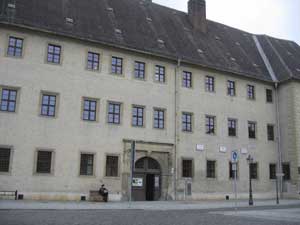
The kick-off event starts October 31 when the State Museum of Pre-History in Halle on the Saale River showcases numerous Luther archaeological artifacts that have recently been uncovered, mostly in Mansfeld, Luther’s childhood home, and Wittenberg at Luther House, where Luther taught.
Luther House in Wittenberg
Entitled “Finding Luther—Archaeologists on the Reformer’s Trail,” the 4,000-square foot exhibit will be shown in the newly-restored Pre-History Museum.
“Except for his writings, the bulk of the reformer’s possessions got lost,” says Dr. Michael Schefzik, curator of the Museum. “On the other hand, the archaeological excavations in 2003 yielded hundreds of objects which certainly had belonged to the Luther family.”
LUTHER’S LIFE COMES INTO FOCUS
Only in the last several years, after research by various archaeologists, was it feasible to draw a picture of the life of the Luther family, especially in Mansfeld where the Luther family moved to in 1484, shortly after Luther was born.
“Historical truth and legends (about Luther) are almost inseparably intermingled with each other,” says Dr. Schefzik. Now, more is known and will be explained in this new exhibit.
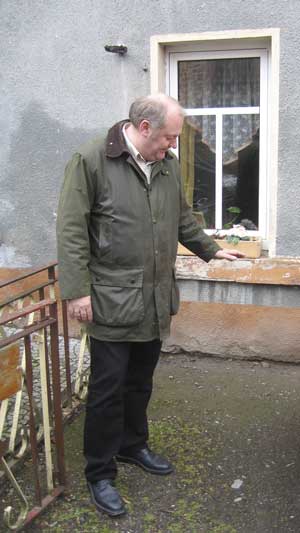
Dr. Schlenker indicates where first Luther artifacts were located in a parking area near Luther’s home
Some of the Luther exhibits visitors to the museum will find include:
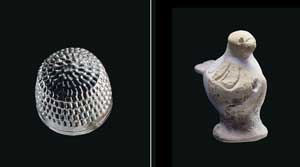
Luther’s childhood marbles? Archaeologists believe they found them—made of clay and probably heated over an open fire in the Lutherhaus in Mansfield.
Luther’s mother’s thimble (?) has been preserved and is beautifully made.
Heating stove tiles of several colors from Luther House in Wittenberg with pictures of Adam and Eve on them, as well as possibly Frederick the Wise, who befriended Luther.
Iron keys, padlocks, nails, large headdress pins, knives, belt buckles, chards of pottery, beads, garment accessories, jewelry, a beer tap, coins, fish and wild fowl bones and much more.
SURPRISES YET TO COME
In addition, the museum has a few exhibit surprises that only visitors there will get to see. Many more Luther objects, such as goblets and beakers, are on loan from other museums and estates that will be shown in the exhibit. Luther received the vessels from wealthy patrons and gave them to selected friends.
Don and Marilyn Heimburger with Wittenberg Mayor Eckhard Naumann
The new Luther finds have attracted National Geographic, which plans a comprehensive report on the news, as well as many German newspapers and other news agencies.
While in Wittenberg (Home of the Reformation), which you could make your home base for a few days as you tour the various surrounding Luther sights, you’ll want to see the Town and Castle churches, the Luther House, a UNESCO World Cultural heritage site, the Philipp Melanchthon house, the Market Square with the town hall built between 1523 and 1535, the Lucas Cranach houses (he owned several), and some of the town’s museums. The town, first documented in 1180, has a great many historical buildings.
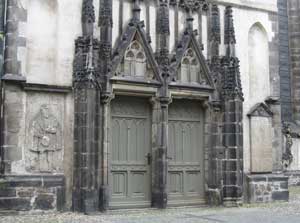
The Castle Church, with an 288-foot-high tower, was once the magnificent castle of the electors of Saxony, built between 1489 and 1525 for Frederick the Wise. It also became the university church, and it was here that Martin Luther nailed his 95 Theses to the door. Today a black bronze door (installed in 1858) has replaced the original one. The door commemorates October 31, 1517 when Luther nailed his theses “on the power of indulgences” to the door.
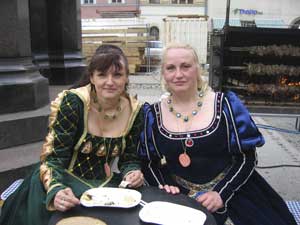
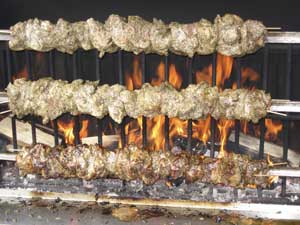
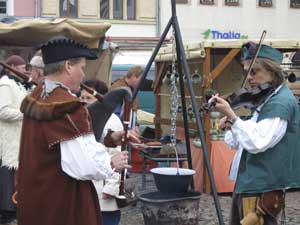
Medieval ladies add to Wittenberg’s FestivalMeat sizzles on an open fire at Wittenberg town festivalMusicians at Wittenberg festival
OLDEST CHURCH WORTH A VISIT
Wittenberg’s oldest church is the Town Church, the Town and Parish Church of St. Mary, set in the central square. The pulpit, at which Luther preached, can actually be found now at the Luther House. If you go, note the series of epitaphs by Lucas Cranach the Younger around the altar. They are from around 1560.
Other Wittenberg highlights include:
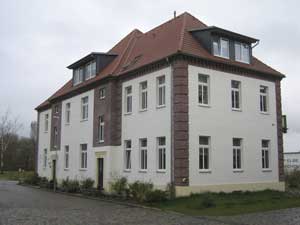
The multi-colored turreted high school designed by Friedensreich Hundertwasser
The Piesteritz residential housing complex on the west part of town, with some housing built as early as 1916, used to house factory workers
Museum of Town History, a collection of thousands of old historic Wittenberg documents and artifacts
For fun, visit the historical printing workshop in town and see how printing used to be done at the time Luther translated the Bible into German. You can even purchase a few humorous Luther quotes which have been printed at the shop.
WITTENBERG FESTIVALS
Hundertwasser School
Every year on the second weekend in June, thousands gather in the streets of this town for Luther’s Wedding, a town festival that includes medieval merrymaking with processions, strolling musicians and entertainers.
July and August brings the Wittenberg Summer of Culture which includes theater shows, courtyard concerts, a wine festival and “ErlebnisNacht” which features unexpected happenings at unexpected times in unexpected places in the old quarter.
A newer hotel, across the Elbe River, is the Bruckenkopf Hotel, owned by the Schult family. Renate and Gehard Schult have invested heavily in the renovation of this sprawling military complex once used by the Kaiser’s Army and Napolean’s Army. There are 24 rooms in the brick fortress portion of the complex. The staff is friendly, and there is no noise except an occasional duck splashing in the nearby pond. The complex also provides rooms and cabins for boaters and bikers, tenters and motorhomes (www.marina-camp-elbe.de).
If you like good German food, a number of restaurants downtown can accommodate you. Nearly all hotels offer good food in their restaurants, but a favorite of the locals is the Schwarzer Baer, which is connected to a hotel (naturally) and Luther used to come in there to eat and drink, and it’s said he even slept there.
Wittenberg is best reached from Berlin’s Tegel Airport, and frequent ICE, ICE night and IC and EC trains stops in Wittenberg. For more Wittenberg information, go to www.wittenberg.de (e-mail: info@wittenberg-information.de). For individual town tours, contact English-speaking guides Bettina Brett at bettina.brett@arcor.de or Astrid Muehlmann at astrid.muehlmann@web.de. Both are veteran guides and are well-known locally.
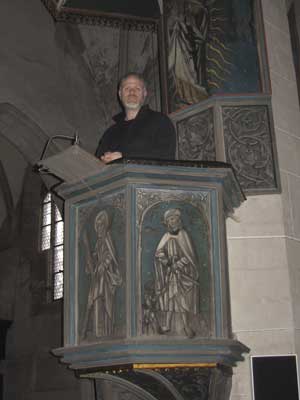
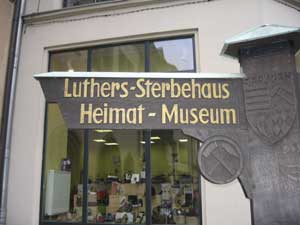
Reverend Scott Moore in the pulpit at Eisleben Church, where Luther was baptized.Luther Museum in Eisleben.
OTHER NEARBY CITIES
If you’re in Wittenberg, you really should take the time to visit some other nearby Luther sights and towns. They include the town of Eisleben, nestled in the hill country of the Mansfeld basin. It’s here that Luther was born (November 10, 1483) and baptized the next day in the Church of St. Peter and Paul. His home has been turned into a very interesting museum that documents his early childhood and youth and gives an insight into the spiritual environment in which Luther was raised.
On the hill overlooking Mansfeld, you can visit the Mansfeld Castle where Luther preached. In town is his parent’s large home, where they are now uncovering many Luther family artifacts.
In Torgau, the political center of the Reformation, you can visit the Hartenfels Palace Chapel, consecrated by Luther on October 5, 1544. It is regarded as the first church to be built as a Protestant church.
Luther studied theology and sciences in Erfurt between 1501-1505. In 1505 he requested acceptance into the Erfurt monastery, home to the Augustinian monks, an order known for its scholarship. In 1507 Luther was ordained as a priest


























 European Traveler