Ireland’s Friendly People and Pubs Beckon

And grand castles, happy sheep and catchy music aplenty

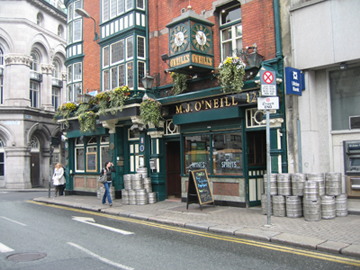
Pub in Temple Bar, Dublin

By Don Heimburger
Photos by the author

The Emerald Isle is inviting to first-time European visitors for several good reasons.

  1. Because you’re not traveling to continental Europe, the flight time is from 1-1 ½ hours less from the United States. It’s 3,614 miles between Chicago and Dublin, or 3,187 miles between New York and Dublin. From Chicago to Dusseldorf on the mainland it’s 4,217 miles.
  2. The time zone in Ireland is an hour closer to U.S. time zones.
  3. You needn’t speak a foreign language.

These are a few reasons you may want to place Ireland at the top of your “must visit” list, but there are many other incentives, as well. As many as 40 million Americans claim to have Irish blood―that’s 10 times more than the population of Ireland itself.

How do most visitors get there? You could take a cruise ship across the Atlantic, but most people are in a hurry and fly, and that means American, U.S. Airways, Delta, Continental or Aer Lingus (which sometimes has some really low fares, especially in early spring).

DUBLIN’S ATTRACTIONS
Since you’re probably flying into Dublin, where most visitors begin their adventure, you’ll want to spend at least a day there. In fact, I’d recommend two or three days, because there is a lot to discover. Think of St. Stephen’s Green as a center point for your activities. This lush, quiet Victorian garden is located in the main part of the city, yet it is a refuge from the hustle and bustle, and you can always come back to it for solace and relaxation. With ponds, picnicking, wildlife and a playground for kids, it makes an ideal meeting point as well. In the summer, lunch time concerts are given here.

Fanning out from the Green are the National Museum of Archaeology and the National Museum of Natural History. At the first museum, you’ll be transported back to 7,000 B.C. You’ll see examples of Celtic and Medieval art such as the famous Ardagh Chalice, the Tar Brooch and the Derrynaflan Hoard, another old historic chalice. Ireland’s foremost treasure, the Ardagh Chalice, is considered the jewel in the crown of all exhibits there. The beautifully proportioned chalice is the finest example of eighth century metalwork ever to have been found. Standing six inches high, it is made of silver, bronze and gold; the design and decoration indicates technical proficiency of the highest order.

Heading down Nassau Street, you come to Trinity College, the oldest university in Ireland and situated on 40 acres in the heart of the city. Besides strolling the sidewalks around here where you’ll feel like a college student again, you’ll want to see the Book of Kells, a 9th century Gospel manuscript created by Celtic monks. Its lavishly decorated pages in Latin of the four Gospels is a masterpiece of calligraphy and represents the ultimate in Insular illumination. It is definitely worth the trip to see, as is the Long Room of books (215 feet long), which contains more than 200,000 of Trinity’s most ancient volumes. Interestingly, in 1860 the roof of the building was raised higher to accommodate more books. The Long Room is an impressive site, with 14 marble busts commissioned by sculptor Peter Scheemakers lining both sides of the gallery.

TEMPLE BAR AWAITS YOU
On the other side of Trinity and bordered by the River Liffey, is the Temple Bar section of the city, where nightlife is abundant. Bar after bar is crowded into the narrow cobblestone streets here, and more than 50 contemporary art and cultural galleries and studios in this section of the city make up a part of what is called “Dublin’s Cultural Quarter.” On weekends, open markets are held in Meeting House Square nearby as well.

On Grafton Street, the main shopping area, you’ll find Molly Malone’s statue where you can have your picture taken to send back to friends and relatives. Molly was a legendary figure, celebrated in the song Cockles and Mussels, a Dublin anthem. Molly Malone is one of the more famous people from Dublin’s past, but whether she really existed is not known.

She’s certainly one of the strangest icons ever officially commemorated by a city government. The statue, erected in 1987, depicts a woman in 17th century dress that shows abundant cleavage. Molly allegedly sold fish by day and sold her body by night. Though she lived in the 1600’s, the song Cockles and Mussels about her does not appear in any historic record before the 1880’s. The familiar lyric goes:

In Dublin’s fair city
where the girls are so pretty
I first set my eyes on sweet Molly Malone
As she wheeled her wheelbarrow
Through streets broad and narrow
Crying, “Cockles and mussels, alive alive oh!”

CITY BREWS
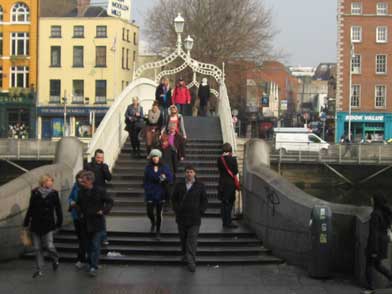
Ha’Penny Bridge is Dublin’s oldest pedestrian bridge. Erected in 1816, a toll of half a penny was levied on all users of the bridge until 1919. You’ll also want to see the Guinness Storehouse when visiting and take a tour, and then enjoy a fresh glass of Guinness in the Gravity Bar afterward. Cost is €13.50. The Storehouse is located in a section of town called the Liberties, which lay outside the city walls in earlier times.

In the Smithfield Village area, across the Liffey, is the Old 1780 Jameson Distillery, once considered one of the largest and finest distilleries in the world. You will discover the time-honored secret of how three simple ingredients―water, barley and yeast―combine to make whiskey. And you can end your tour with whiskey tasting in the Jameson Bar. The distillery tour is open seven days a week, and if you’re really into it, you can request a tutored whiskey tasting.

FAMOUS DUBLIN WRITERS
The Dublin Writer’s Museum, which opened in 1991 and is located in an 18th century mansion, offers visitors a fascinating view of famous Irish writers such as Oscar Wilde, James Joyce, Jonathan Swift and George Bernard Shaw. It’s a small but interesting museum that tells the background of these famous people.James Joyce, the author of Ulysses, has his own museum in Joyce Tower at No. 35 North Great George’s Street. The house was built in 1784 for Valentine Brown, the Earl of Kenmare, and is decorated with plasterwork by Michael Stapleton. Restored in the 1980s, the house opened as the James Joyce Center in 1996, and is run by members of Joyce’s sister’s family.

St. Patrick’s Cathedral on Patrick Street is an important Dublin landmark, with writer and satirist Jonathan Swift its Dean between 1713-1747. In 1742, the first performance of Handel’s Messiah was performed here by the combined choirs of St. Patrick’s and Christ Church, just a block away. (Christ Church is the oldest building in Dublin, dating from c. 1030. Inside are rare artifacts, examples of early gold and silverware, and historic manuscripts.)

CAD E’ AN SCE’AL? (WHAT’S GOING ON?)
Many other sights are waiting for the European traveler as well in this city of about 1.5 million. You’ll find the natives very friendly and accommodating. Getting around Old Town Dublin is easy: walking is your best bet.

Maps are available that detail the highlights of the city; the Dublin tourism office is located just past Grafton Street on Suffolk Street where you can pick up free information leaflets and get personal advice on things to do, places to visit and to eat. The tourist office staff speaks seven languages, including English, French, German, Irish, Italian, Polish and Spanish. There are also sightseeing tour buses that will take you around the city. For more information, go to visitdublin.com.
Also, the Dublin tram system, called LUAS, is a state-of-the-art light rail system operating on a Green and a Red line. If you stay close to the Old Town, however, the tram won’t be needed. The Green Line starts at St. Stephen’s Green, and a downtown Red Line stop is at Abbey Street.

The Dublin Pass is a cost-saving card will allows you access to more than 30 of Dublin’s top attractions and more. Go to dublinpass.ie for information.

For those who want a five-star hotel experience, the Shelbourne, a Renaissance hotel, is conveniently located on St. Stephen’s Green, and lives up to its reputation. It’s located just a few steps from Dublin’s sights and shops. Founded in 1824, the Irish constitution was drafted here; the hotel retains its original charm and is an oasis in the midst of the city’s clamor. The hotel features a total of 265 rooms, including seven for the physically challenged.

SOUTH COAST ATTRACTIONS
There are many areas of Ireland that appeal to visitors. But with Dublin as a starting point, let’s drop down the southeast coast to do more exploring.

If you’re driving, you’ll want to use N11, a major highway that runs along the coast to Wexford. Roads in Ireland are fairly narrow, so be aware of this: it can be a daunting experience. This is where a trained bus driver on a group tour comes in handy.

Glendalough, which translates into “the valley of the two lakes,” is about 90 minutes south of Dublin, and is a totally captivating spot. It contains ruins from a 6th century monastery, some of which remains today.

The short history of Glenalough is thus: St. Kevin was a descendent of one of the ruling families of Leinster. As a young boy he went to live at Glendalough, and founded a monastery there which continued to expand for 600 years, but was destroyed in 1398. In its prime, the land included churches, monastic cells and workshops, guesthouses, a health center, farm buildings and homes. Most of the buildings that survive date from the 10th through 12th centuries. The most famous is the pencil thin round tower which is 112 feet high with a base 52 feet in circumference. A cathedral, stone churches and decorated crosses also survive. Take your camera along, as Glenalough is excellent for snapping unique pictures, especially if it’s a bit foggy. A modern visitor’s center features an informative movie about the ruins and its history, and wandering paths in the surrounding valley offer more exploration.

POWERSCOURT HOUSE AND GARDENS
Situated in the picturesque mountains of Wicklow, Powerscourt is a large mansion once owned by powerful families such as the O’Tooles and the FitzGeralds, Earls of Kildare. In 1603, Powerscourt Castle and the surrounding lands were granted to Richard Wingfield, who was Marshal of Ireland (a royal officeholder). His descendants remained there for more than 350 years.

Later the castle was remodeled, creating a magnificent mansion around the shell of the former castle. Large formal gardens, a fish pond, cascading waterfalls, grottoes and terraces all form a striking approach to the mansion. The story is told that Daniel Robertson, a garden architect and a leading proponent of Italianate garden design, suffered from gout and directed his operations from a wheelbarrow, fortified by a bottle of good sherry. When the sherry was depleted, Robertson’s work ceased for the day!

Near the imposing castle is the five-star Ritz-Carlton, overlooking the wooded slopes of Sugar Loaf Mountain. Blending into the countryside, this 200-room, seven-story hotel is ritzy, with a warm Georgian-inspired interior. Afternoon tea, evening cocktails in the Sugar Loaf Lounge, the Gordon Ramsey signature restaurant and a complete Irish pub combine to make a stay here memorable. The hotel’s spa is also available to guests, which is on two floors and boasts a 65-foot long Swarovski crystal-lit swimming pool. There’s also a 36-hole championship golf course as part of the hotel complex.

DUNBRODY SHIP PROJECT
In 2011 the JFK Trust launched its replica of a 19th century three-masted sailing ship, the Dunbrody, that brought immigrants to America. This ship is on display in New Ross harbor; an audio-visual experience, guided tours and a convincing performance of costumed actors brings to life the long, difficult journeys made in the 19th century on this ship. A new visitor’s museum will be ready this year as well.

For a night’s rest in this area, check out the Dunbrody Country Hotel and Spa in Arthurstown. It’s a 1830s Georgian manor amid 300 acres of tranquil parklands, not far from Waterford. This four-star hotel, owned by hospitable Catherine and Kevin Dundon, offers 22 rooms. Master chef Kevin Dundon also has a cooking school here and designs one- and two-day cooking courses―there’s even a week-long master class. You’ll feel rejuvenated after a few days in this setting. www.dunbrodyhouse.com

Dunbrody Cookery School’s Edward Hayden

If you want to get up close and personal to the water and the Irish shoreline, here’s your chance. Hook Head Lighthouse in New Ross has been a guiding light for ships for more than 800 years. There’s a visitor’s center offering guided tours of the 13th century tower, a gift shop, cafe, art classes and picnic areas.

Glass blowers and artisans at the Waterford Crystal factory

At Waterford, a stop at the Waterford Crystal factory is a must. Since 1783, the company that George and William Penrose founded has been making stunning glass pieces with a distinctive, silvery white brilliance, which Waterford Crystal’s artists enhance with deeply-cut ornamentation. It’s said that in all of Ireland, no hands have been more patient, more meticulous, or more blessed with the elusive powers of art, than the hands of Waterford Crystal’s craftsmen. Drinkware, serving accessories and decorative crystal from the Waterford factory is still the customary gift for royalty and heads of state. It’s not inexpensive, but a factory tour will show you the secret of why this glass has been so highly prized for all these years.

LISMORE CASTLE GARDENS
Heading to Lismore, you can visit the beautiful Lismore Castle gardens and gallery. In the Burlington family for more than 400 years, this fairytale castle, originated in 1185, has seen many changes since. Because the Burlington family stills resides there (Lord and Lady Burlington), only the gardens and gallery are open for touring. The gardens are set on seven acres and provide spectacular views of the castle and the surrounding countryside. You might even see Lord or Lady Burlington on the grounds!

When you’re looking for a place to land for the night, you might try this hotel located next to the sea. The Cliff House has been described as a five-star cascading luxury hotel sewn into Ireland’s coastline, overlooking the small village of Ardmore. Thrown in for good measure is the House Restaurant (one Michelin star), serving both Irish and international cuisine This 39-bedroom jewel is tops for either a holiday (as the Irish call it), or it’s perfect as a hideaway to recoup. www.thecliffhousehotel.com

Kilkenny Castle

At Kilkenny Castle in Kilkenny, you can take a guided tour of this 12th century structure, originally built for William Marshall, the Earl of Pembroke. With many additions and changes over the centuries, this dark gray castle comprises many architectural styles, seen in the various ornate rooms. You’ll see the Drawing Room, Withdrawing Room (reserved for ladies after dinner), the Picture Galley Wing with a hammer-beam roof structure, the Library with silk damask curtains and the elegant Dining Room, among other rooms. Surprisingly, the Marquess of Ormonde sold the sprawling castle to the people of Kilkenny for the sum of €50 in 1967.

Afterward, stroll over to Kyteler’s Inn in downtown Kilkenny, and have lunch or supper in this fun, quaint restaurant, established in 1324. Look for the story of the original owner, Dame Alice le Kyteler, on the first floor.

FLYING BACK TO DUBLIN
On the way out of Ireland, reserve a room on the last evening at the four-star Barberstown Castle, a short 30-minute drive from the Dublin airport. Situated on 20 acres of flower gardens, this Irish country house has flourished for eight centuries, opening as a hotel in 1971. Its Victorian and Elizabethan extensions have been melded with the original castle battlement of 1288. Since then, Barbertown Castle has had 37 owners, one of them Eric Clapton. The 59-room hotel is now owned by Kenneth Healy, who lives on the property and who purchased it from Clapton (the names of all 37 owners are painted on the exterior doors of the rooms―Clapton’s room is #61).

We’ve just covered Dublin and the south coast of Ireland. There’s more―much more―to see on the the Emerald Isle, but that will have to wait until another time.

CEAD MILE FAILTE (A HUNDRED THOUSAND WELCOMES)
Ireland is welcoming and a friendly place, with old-world charm and more castles than you’d believe possible. The Guinness isn’t too bad, either.

For more information, go to www.discoverireland.com.

Turkey’s Wild and Rugged Black Sea Coast

Turkey’s Wild and Rugged Black Sea Coast

Photos courtesy the Turkish Tourist and Culture Office of New York

Encompassing much of the country’s northern boundary and isolated by the rugged Kackar mountains, the narrow coastal Black Sea region of Turkey is well off the beaten path of many international travelers but treasured by those who discover its unique charms.

In addition to fascinating reminders of Turkey’s extraordinary history, the region is renowned for its magnificent coastline, scenic seaside and hilltop towns, World Heritage sites, lakes, national parks and some of the wildest natural landscapes in the country that draw intrepid trekkers, climbers and mountaineers from all over.
 
It should not be surprising that the Black Sea’s history was shaped by the nations that ruled the seas. Ancient Greece, the Roman Empire, the Byzantine Empire, Genoese, the Venetians and, until the early 20th century and afterwards Ottoman Empire, all put their cultural imprint on the region. They left behind castles overlooking the sea, churches, monasteries and mosques and distinctive architecture – much still intact or lovingly restored.

Today, visiting Turkey’s Black Sea by cruise ship (a number of lines based in North America offer itineraries that include one or two Turkish Black Sea ports) is one option, but for a more in-depth experience, travelers are advised to fly to Samsun or Trabzon, two of the larger towns, from Istanbul or Ankara, and rent a car or four-wheel drive vehicle. Comfortable and friendly accommodations are plentiful except in some of the more remote mountain villages. 
 
Though the coastal areas are blessed with moderate temperatures year-round, weather in the mountainous interior can be colder, therefore spring time is the most popular season for exploring the mountains.
 
Traveling from west to east through the Black Sea region, you might begin in Bolu. From coastal beaches to its famous multi-colored forests of oak, alder, pine, hazelnut and many more varieties of trees, visitors can virtually travel through all four seasons of the year within the course of a short drive. Yedigoller or Seven Lakes National Park is the centerpiece, but explorers will also discover hot springs, hiking and walking opportunities and, in winter, one of Turkey’s best ski centers.
 
As early as the 6th century BC, the coastal town of Amasra went by the name of Sesamus, and today offers a number of historic attractions, including 14th century Genoese forts, a Roman bridge, Byzantine city walls and historic mosques. Nearby, along the sea, the fishing villages of Cide and Abana are popular excursions, particularly known for their seaside restaurants.

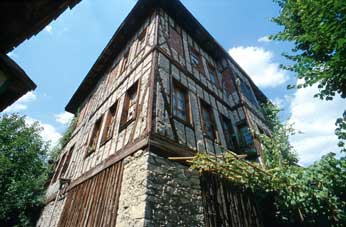
Just inland from Amasra is one of the region’s best known attractions: Safranbolu. Its beautifully preserved and restored buildings from the Ottoman Empire, including konaks, or mansions distinctively made of timber and stone, have earned the town a World Heritage Site designation. Other reasons to visit include the Koprulu Mehmet Pasa Mosque and the Kazdagi Mosque, Turkish baths, Shoemakers Street (the town once supplied the Turkish army with shoes) and the scenic Market Street.
 
Also inland is the town of Kastamonu, with its 12th century castle, ethnographic and archaeology museums, and famous handicrafts, including fabrics, tablecloths, woolens and fruit jams. The expansive pastures in the vicinity offer some of the best trail riding in Turkey, and nearby Ilgaz Mountain National Park is noted for its deer, foxes and bear as well as culinary traditions that include whole lamb cooked slowly in clay ovens.
 
Back on the Black Sea coast, the town of Samsun is where Mustafa Kemal Ataturk drew plans for what became the modern Turkish Republic; the hotel where he stayed became the Gazi Museum. Samsun also offers an Archaeological and Ethnologic Museum, with an impressive collection of antiquities, and not far away, at Bafra, are excavations dating back to the Hittite Iron Age civilization. The thermal springs of Havza, approximately 50 miles away, are another popular day trip.
 
Continuing eastward, Trabzon is the largest city in the region and a cruise port dating back to 7,000 B.C. It remains a major trading port, evolving from an early Greek colony to an important cultural center on the busy Black Sea. Under the Venetians, the town became an important feature of the famous Silk Route before the rule of Ottomans in 1461. Today visitors will find historic churches and mosques as well as other landmarks, including a villa belonging to Ataturk on the town’s periphery. Built by Maneul I in the 13th century, Ayasofia Church sits on top of a hill in the center of the city; the origins of the Church of Saint Eugenios, now the Yeni Cuma Mosque, are lost in time.
 
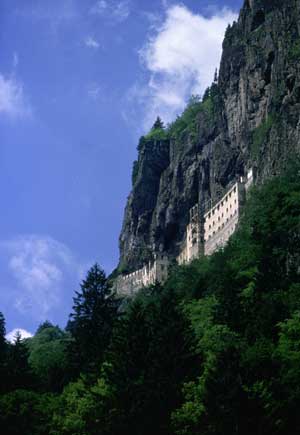
Just inland from Trabzon is the Sumela Monastery, a true treasure of the Black Sea region. Begun in the 4th century by the Greek monks, Barnabas and Sophronius, and built high into the cliffs of Mt. Mela, the monastery has been restored and rebuilt over the centuries.
 
Not far away, the alpine region of Zigana in the Kalkanli Mountains is renowned for its natural beauty and popular for day trips. The 3,200-feet high alpine lake at Uzungol is popular among campers, hikers and fishermen, who prize the lake’s trout. Even more rugged is the Yusufeli designated conservation area inland from the Georgian border. This remote area of lakes and historic Georgian and Armenian churches offers white water rafting as well as ecotours on the famous Coruh River.
 
Offering more cultural comforts is the nearby town of Artvin, which is famous throughout Turkey for its many festivals celebrating regional cultures and featuring music, food, costumes, dancing and other traditional celebrations. The most popular is the Bull Fighting Festival. Visitors will also find other picturesque rural villages in the area as well as the Karagol-Sahara National Park, which is noted for its forests and lakes.
 
Visitors to the region will also discover unique culinary traditions such as Black Sea cuisine, including the roots of the world-famous Turkish tea. Strongly influenced by geography and climate, mountains and sea, food featured in this region includes the black anchovy, or “hamsi,” corn served in endlessly interesting ways, pickled green beans, an abundance of other vegetables and Akcabat Kofte (meatballs). Sweet helva, made with corn, butter and local honey, is another local favorite, as are a great variety of Black Sea and river fish (including farm-raised trout), considered by many to be the tastiest in the world.
 
The Turkish tea industry is based in the town of Rize, where a moist, moderate climate provides perfect growing conditions. While green tea is exported all over the world, travelers should be prepared to enjoy the local favorite, the strong, smoky black variety that, traditionally served with sugar, is as much a social event as it is a beverage. But tea is not the only appeal of Rize and its surroundings. Not far away are the dramatic Kackar Mountains, with their waterfalls, highlands and peaks – magnets for hikers and climbers. Glacial lakes are adorned with yellow rhododendrons, found nowhere else in Turkey at these altitudes, and Mt. Kackar itself, one of the world’s ecological treasures, is home to bears, wolves, lynxes and mountain goats.
 
For more information on Turkey and its Black Sea region, contact the Turkish Culture and Tourist Offices in New York at (212) 687-2194; Washington, D.C. at (202) 612-6800; and Los Angeles at (323) 937-8066. Information is also available at www.tourismturkey.org.

Castles, Christmas Markets and Cruising

By Marilyn Heimburger
Photos by Don Heimburger

Taking a river cruise is always a good idea. A river cruise that includes both historic castles and colorful Christmas Markets along Germany’s Rhine River is the best idea ever. So on Thanksgiving Day I happily ignored Black Friday and escaped the pre-Christmas shopping frenzy of the USA to spend a week on the AmaKristina, cruising from Amsterdam to Basel, Switzerland. Romantic castles and Christmas Markets along the Rhine River ushered in the Christmas spirit for me this year.

The newest AMA ship, the AmaKristina

The AmaKristina is essentially a floating luxury hotel for 158 guests. Our roomy cabin had a queen-sized bed, private bathroom with shower and double sink, desk, large format Apple screen and keyboard for internet, TV, or movies. Built in 2017, the ship’s hallways and guest suites were filled with Gustav Klimt art prints, and seasonally decorated with lights, Christmas trees, wreaths, garlands, and gingerbread houses. We boarded in Amsterdam, unpacked, and had our first dinner on board. Open seating at each meal encourages mingling of guests.

AMSTERDAM ATTRACTIONS
Fortified with a sumptuous on-board breakfast buffet, including an omelet station and daily vitamin “shot,” we departed the ship for an informative canal cruise, a panoramic city bus tour of Amsterdam with an up-close look at a local working windmill, and free time for exploring. Although there were no Christmas markets in Amsterdam, there were plenty of opportunities for shopping near the central train station, and street entertainment in Dam Square: a saxophone player, giant bubble maker, dancing dinosaurs, and impromptu yoga. Just be sure to watch out for the numerous killer bicycles that demand the right-of-way.

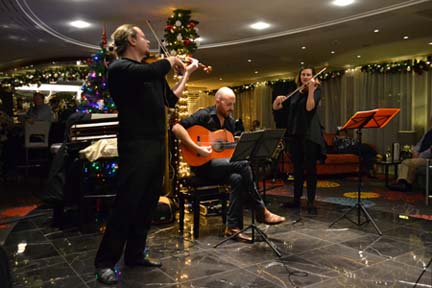
The AmaKristina set sail from Amsterdam in the afternoon, and I had time to explore the ship’s main lounge and bar, massage and hair salon, fitness room, gift shop, and even a heated pool and giant chess set on the sun deck. A cruise overview presented by our cruise director, plus Christmas tree decorating and an evening classical music performance by the three talented string players known as “La Strada” kept passengers entertained. The cruise ships cleverly bring nightly entertainment on and off the ship when stopped at the locks on the river.

Onboard entertainment by La Strada

COLORFUL COLOGNE
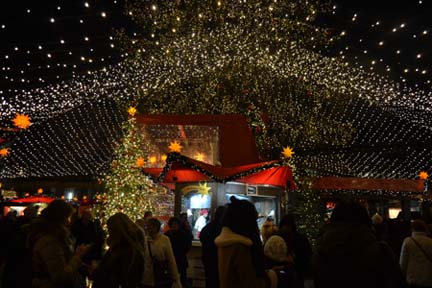
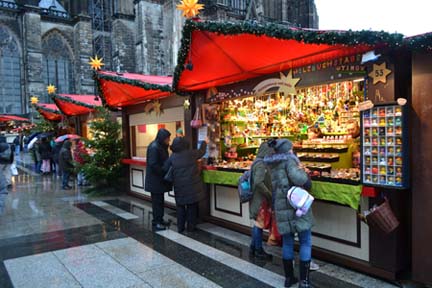
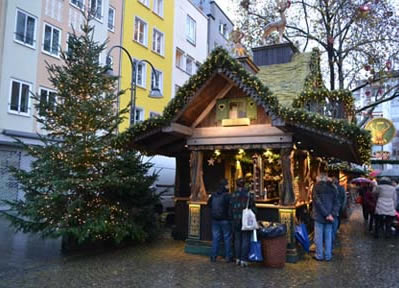
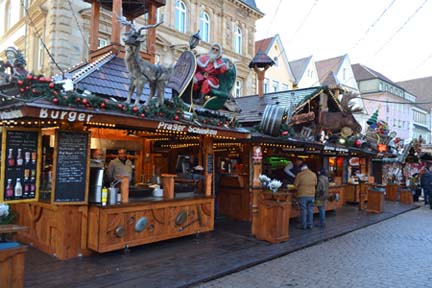
After cruising all morning, we docked in Cologne, Germany, where shuttle buses brought us to our first Christmas Market in Cathedral Square. Although the earliest Christmas Markets in Germany date from the late Middle Ages, the one in the shadow of Cologne’s impressive Cathedral is a relative newcomer, opening in 1995. Under a dazzling canopy of thousands of tiny lights, 150 vendor huts with bright red awnings and brilliant multi-faceted stars displayed handicrafts, comfort foods, gifts of all types, decorations, wooden toys and much more.

Canopy of Christmas lights in Cologne’s Cathedral Square

Cologne Cathedral Square market

HOME OF THE ELVES
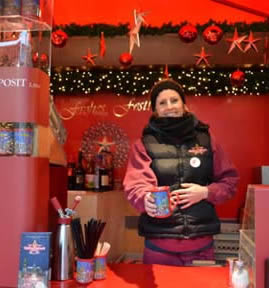
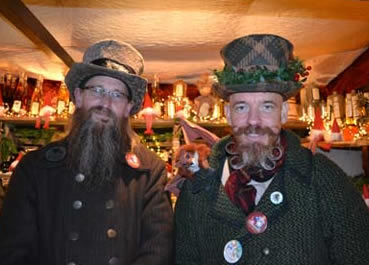
A few blocks away in the Altstadt and Heumarkt was an older and much larger Christmas Market called the “Heimat der Heinzel” or Home of the Elves. These were little creatures from a Cologne legend who used to do all the housework until they were annoyed by an inquisitive housewife, and disappeared. I loved this market. Aisles were arranged by theme, and the large wooden huts had Old World, wood-carved details, thick green garlands and costumed vendors. Little “Heinzelmännchen” rode in gondolas above an expansive ice rink. Each souvenir mug of Glühwein (the traditional hot mulled wine so popular at the Christmas Markets) had a different elf pictured on one side, and his particular work specialty described in verse on the other. Cologne boasted three additional smaller markets, but time was too short to visit all of them on this trip.

Home of the Elves’ Market in Cologne

CASTLE DAY ON THE RIVER
The morning cruise from Cologne to the next stop in Rüdesheim passed through the UNESCO World Heritage Rhine Gorge. What a treat to sit in the ship’s expansive lounge with panoramic windows, coffee in hand, gazing at vineyard- covered slopes, picturesque villages, historic castles, and the famous Lorelei Rock, with commentary by the cruise director. This romantic part of the trip alone is a highlight of any Rhine River cruise.

RÜDESHEIM’S CHRISTMAS MARKET OF THE NATIONS
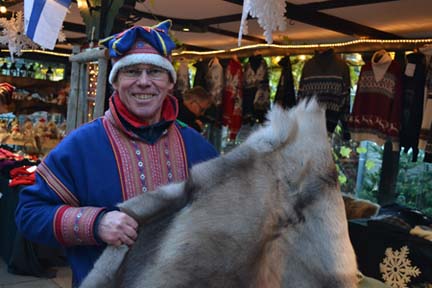
After a gourmet lunch of traditional German specialties, we docked in Rüdesheim, where the “Christmas Market of the Nations” wound up and down the narrow streets of this wine town of about 7,000 citizens. Vendors from France sold mushrooms, lavender and cheese, Tunesia vendors brought wares made of olive wood, smoked salmon came from Norway, furs came from Finland and even the United States was represented with a local vendor offering homemade cookies, Dr. Pepper, Fanta, marshmallows, and Hershey’s chocolate. Christmas choir music piped throughout the market added to the festive atmosphere as shoppers strolled past inviting vendor stalls and village shops. A new discovery at this market was hot mulled Glühbier from Belgium.

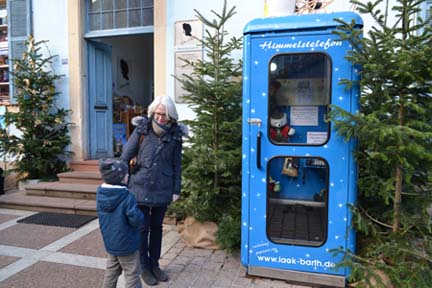
(clockwise) Hot lunch in Rüdesheim; Fur from Finland at Rüdesheim’s Christmas Market of the Nations; “Hallo” from the gnomes in Rüdesheim; Placing a phone call to the Christkind in Speyer

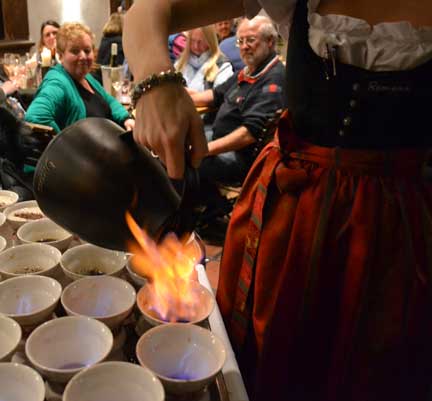
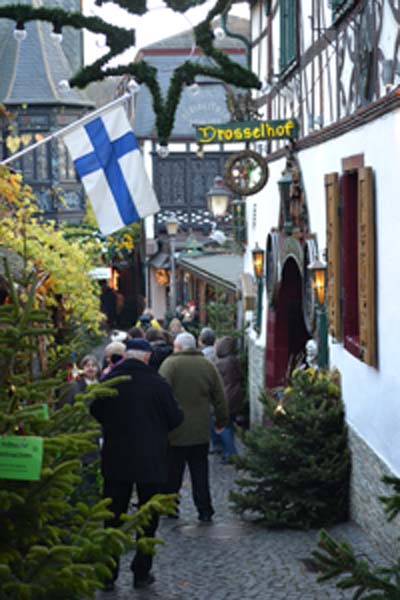
Throughout the ship’s seven-day cruise, each day’s program offered passengers quiet, regular and active excursions. Rüdesheim excursions offered by the AMAKristina included wine tasting, a hike, bike or gondola tour through the vineyards. A late night, fun option was experiencing Rüdesheimer coffee – coffee set on fire with Asbach brandy and sugar, topped with whipped cream and chocolate flakes – at Eiscafe Engel on Rüdesheim’s famous Drosselgasse.

Rüdesheimer coffee
Atmospheric narrow Rüdesheim street

THE IMPERIAL CITY OF SPEYER
By noon the next day we docked in Mannheim and could choose a bus excursion to Heidelberg or to Speyer. Having visited Heidelberg several times already, we chose to see the 2,000-year-old Imperial city of Speyer. Here the Christmas Market extended down Maximilianstrasse from the UNESCO World Heritage Speyer Cathedral, the largest Romanesque cathedral in the world. Though smaller than the Cologne Christmas Markets, Speyer’s market had all the requisite comfort foods: Glühwein, grilled sausages, roasted almonds, and even waffles, potato soup and dumplings. Vendors offered wood handicrafts, colorful candles, jewelry, scarves, kitchen gadgets and unique cookie cutters. Especially for children were an ice rink, kiddie car rides and a telephone booth with direct access to the Christkind in Heaven!

Back onboard the AmaKristina we had a tea time treat of traditional Spekulatius cookies and Stollen, while we set sail for our next stop: Strasbourg and Le Petite Alsace in France.

INVITING STRASBOURG AND LE PETITE ALSACE
As with each stop on our route, AmaWaterways provided an energetic and knowledgable guide for a walking tour of the area on the way to the Christmas Markets. This morning we learned about the Alsace region, which changed hands between France and Germany four times in 75 years. The name “Alsace” derives from a German phrase meaning “seated on the Ill.” While our guide led us along the Ill River, past the beautiful half-timbered houses lining both sides, she explained that this charming area was historically the least desirable place to live. It had been the site of fortifications and a prison, the home of executioners and the location of the tanning trade, with its smelly byproducts. Today it is a photographic highlight of any trip.

CHRISTMAS MARKETS WITH A FRENCH TWIST
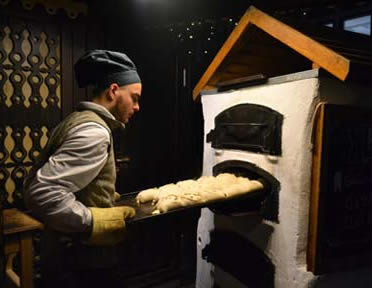
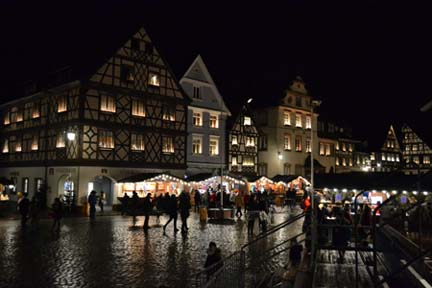
Christmas Markets first appeared in Strasbourg in 1570, making this German/French town the location of one of the oldest markets in Europe. Although much was similar to the Christmas Markets we saw in Germany, here the food vendors offered toasted baguettes topped with cheese as the warm comfort food, instead of the ubiquitous wursts in the German markets.

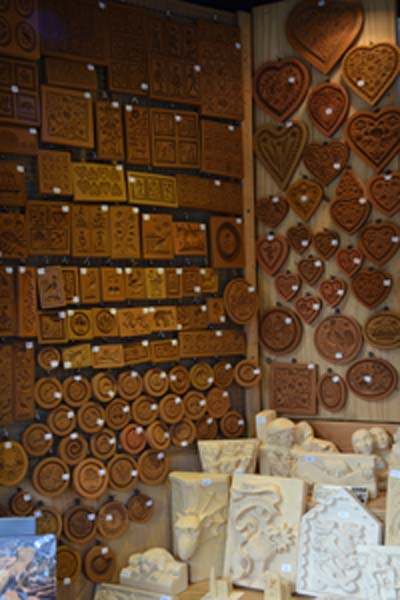
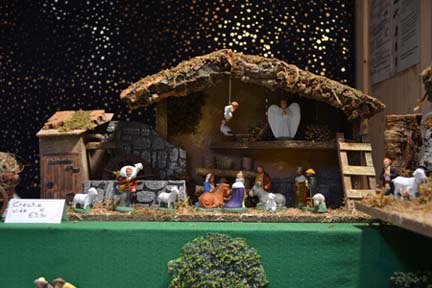
The traditional market was near the cathedral, with some vendor huts topped with storks, that famously nest in Strasbourg’s Parc de l’Orangerie. More than 300 vendor chalets filled the historic city center. Entertaining metal sculptures depicting different professions caught my eye, as did the detailed, intricately carved figures for nativity sets. A market area featuring Strasbourg’s service organizations surrounded a towering decorated Christmas tree and grassy area which was perfect for family photos. A small market in Gutenberg Square annually invites vendors from other countries: this year it welcomed Iceland.

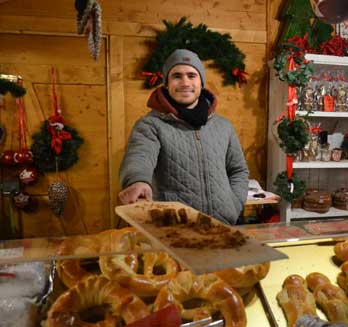
Try some gingerbread in Gengenbach

GENGENBACH’S GIGANTIC ADVENT CALENDAR
We were back on the German side of the Rhine River by late afternoon, and on a shuttle bus from the AmaKristina to the beautiful village of Gengenbach. A guided tour down Engelgasse led to the Christmas Market which stretched down the main street from the town hall square.

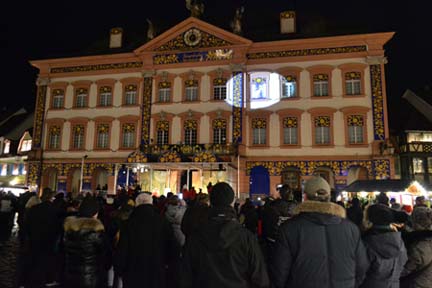
Gengenbach Town Hall Advent Calendar

Gengenbach boasts the world’s largest Advent calendar in its neo-classical town hall, where each night one of its 24 windows is opened to reveal a picture by a famous artist. This year’s calendar featured paintings by Andy Warhol. We arrived just in time for the first night’s opening ceremony: a narrated short skit performed by children from the town. After browsing through the market’s matching vendor huts, with hot Glühwein in a mug depicting the town hall Advent calendar, we returned to the ship to be delightfully entertained by a French cabaret singer and her accordion accompanist.

LAST FULL DAY ONBOARD
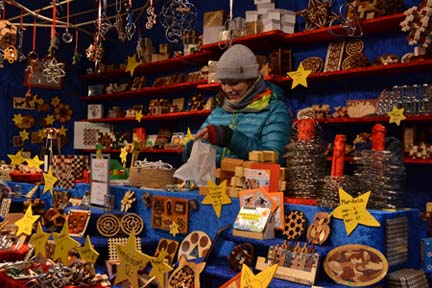
Shuttle busses from the AmaKristina were the order of the day with options to Riquewihr, France, or to Freiburg and Breisach, Germany. Deciding to aim for German-speaking vendors, we took the second option, and explored the market in the heart of Freiburg’s beautiful old quarter. Traditional craft products, including glass blowing and colorful wooden toys were offered beneath the green and white lights that trimmed the roofs of the more than 130 vendor huts.

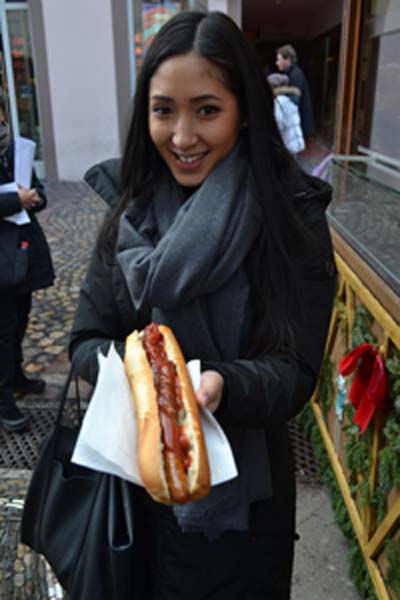
Time was too short to see all of the ceramics, candles, hand puppets, amber jewelry and Christmas decorations, but we enjoyed a quick wurst and Glühwein lunch before leaving for Breisach. Unfortunately this town’s tiny Christmas Market was not yet open for business, so after strolling down the pedestrian-only shopping zone, we walked back to the boat dock, to sail to Basel and enjoy the captain’s farewell dinner and our final evening on board.

Early the next morning, with our luggage packed with Christmas Market treasures, we left for home filled with Christmas spirit and with wonderful memories from this romantic river cruise of Christmas Markets and Castles on the Rhine.

TIPS AND FINAL NOTES
An AmaWaterways river cruise makes visiting so many sites along the Rhine extremely easy. You unpack only once in a roomy cabin. Meals are well-planned, complete and delicious, with perfect portions and special dietary options. Wine and beer are included with lunch and dinner. The fabulous coffee bar is open all the time. Special surprises delight passengers as well, such as serving a location’s specialty treats during afternoon tea time, recognizing St. Nicholas Tag by putting treats in passengers’ shoes left outside cabin doors, and providing hot towels and beverages upon re-boarding after cold excursions. The company will cheerfully arrange for your transfers to and from the cruise ship.

The cruise director is the key to having a wonderful time on any cruise, and this AmaWaterways trip had a great one. David Rosell was organized, energetic, accommodating and entertaining.

Most Christmas Markets are open from the beginning of Advent through Christmas, although some larger markets stay open longer, and some smaller ones have limited open hours. Bring euros – most small vendors don’t accept credit cards.

Pack warm layers of clothes, boots and umbrellas. The weather can be chilly and damp during November and December.

AmaWaterways provides a post-cruise option, if you want to extend your trip. This Christmas Market/Rhine River castle cruise offered an excursion to Lucerne and Zurich after disembarkation in Basel. For more AmaWaterways information and schedules, go to: www.amawaterways.com.

If you go: The Mövenpick Hotel Central in Amsterdam is a great place to stay before you board. This new, 4-star hotel is located within walking distance of the train station, the city center and the cruise ship loading docks. A sumptuous breakfast buffet is included with the room, and a knowledgable concierge team can help you plan your free time in Amsterdam before the cruise. For more information go to: www.movenpick.com/en/europe/netherlands/amsterdam.

Amsterdam Mövenpick Hotel Is Restful Haven in Busy City

By Don Heimburger
Photos by the author

Situated in the bustling heart of cosmopolitan Amsterdam, a city of some 800,000-plus residents, sits a friendly, welcoming beacon for travelers.

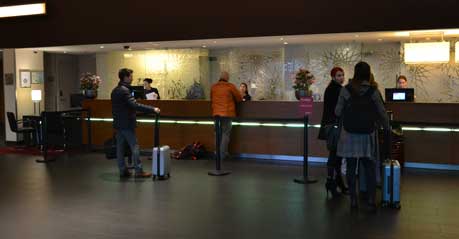
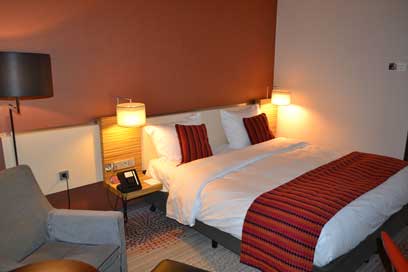
The Mövenpick Hotel Amsterdam in the City Center is a 20-floor, 408-room haven of rest and quiet, which has been devotedly serving its guests in the Swiss tradition since 2006. The hotel’s rooms include 20 junior suites and an Ambassador Suite, as well.

With spectacular views of the Eastern Docklands area of the city, and sitting on the banks of the River IJ, the Mövenpick offers Executive rooms on the 19th and 20th floors, which includes access to the Executive Lounge, complete with its own espresso machine.

The hotel, one of the taller structures in the city, is easily seen with its large, bold red letters announcing its presence within sight of the busy Amsterdam Centraal train station, and close to the many river cruise docks that attract thousands of visitors to the city every year.

Overlooking the bay called the IJ and North Sea Canal, the hotel plays guest to many of the river cruises that begin or terminate there. Amsterdam is the second largest Netherlands port after Rotterdam, and the third largest cruise port in Europe, with as many as 140 sea cruise ships and 1,500 river cruise ships docking annually.

Such river cruise lines as AMA Waterways, Viking, Avalon, Uniworld and Tauck use the nearby harbors for docking, thus the river cruise traffic is significant, especially in the summer when the river ship sailings are in full swing. Also, ocean cruise lines such as Holland America, Regent, Royal Caribbean and Carnival frequent the port.

CONVENIENCE FACTORS OF MÖVENPICK AMSTERDAM
Not surprisingly, many of the Mövenpick guests choose to stay at the hotel right before and after their cruises, both for the convenient location and the many amenities that are offered to guests. As an example, you might be offered some of the delicious Mövenpick chocolates in the spacious lobby when you arrive. Or you might want to use the business center where you can check on your plane flight status or print out your boarding pass.

Other hotel amenities include air conditioning, coffeemakers, daily maid service, iron and ironing boards in many rooms, hairdryers, mini-bars in some rooms, all rooms are non-smoking rooms, telephone, voicemail, refrigerator, safe, ATM on site, cable/satellite television and internet access (high-speed wireless for an additional fee, or is complimentary on the executive levels).

The hotel also offers babysitting/child care services, complimentary pickup and drop-off transportation to the central train station, the services of a concierge, crib/rollaway beds, a currency exchange, gift shop, laundry/dry cleaning service, paid onsite parking, room service, wheelchair access to common/public areas and a multi-lingual staff.
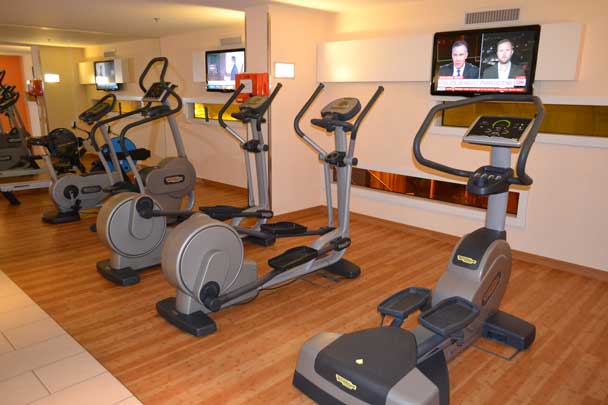
In addition, there is a lifestyle studio with cardio vascular equipment, a bio-sauna, Finnish sauna, a foot spa and a relaxation area, and massages are available.

Many business travelers also use the hotel because of its convenience next to the train station and the easy connections to busy Schiphol Airport, which is 11 miles away. The nearby Amsterdam train station with its 15 tracks serves more than 162,000 passengers each day. The hotel’s frequent shuttle service to and from the station allows guests to make easy transfers for local and international trains and also for quick train transfer to the airport.

EXECUTIVE LEVEL PRIVILEGES
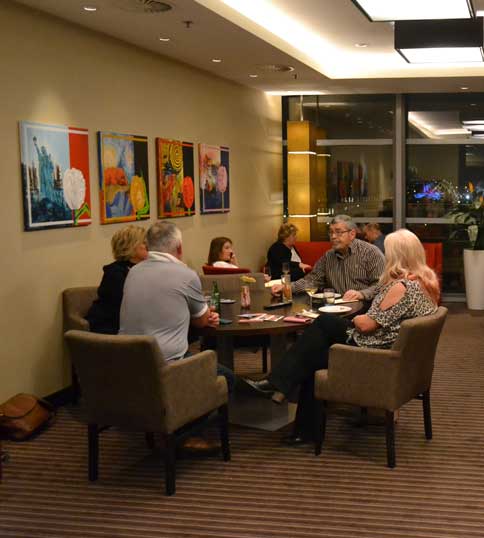
Guests staying on the Executive level of the hotel have access to a private lounge area on the second floor stocked with bottled soft drinks, juices and water, along with various snacks which are refilled during the day. At night between 5 and 7 p.m., the lounge features a happy hour complete with complimentary alcoholic beverages and snacks. The special second floor lounge looks out onto the harbor area of the canal, and features large windows, comfortable chairs and roomy tables.

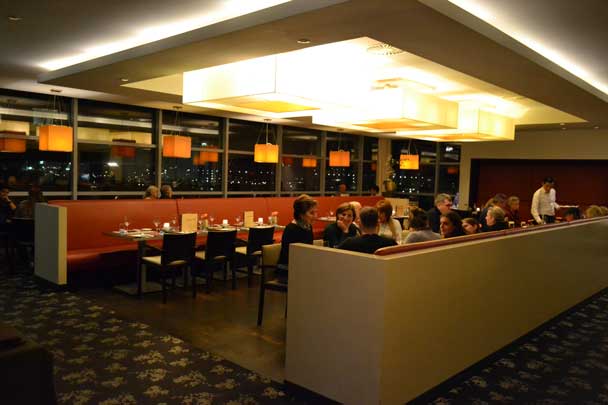
Hotel guests can enjoy meals all day in the Silk Road Restaurant which presents creative international cuisine for up to 220 guests at a time. The restaurant is located on the second floor with a view of the River IJ. Executive Chef Jamie Sharatt and his team prepare all dishes in an open kitchen with live cooking, including a selection of starters, main dishes, drinks and desserts.

From starters like home-made roasted tomato soup or fresh Caesar salad, to Linguine Alfredo and sliced veal (Zürich style), or various varieties of sumptuous steaks, to desserts such as Mövenpick ice cream creations, cheese cake or a cheese platter, the Silk Restaurant is worth a visit. The hotel also has a wide selection of Mövenpick wines to chose from when dining.

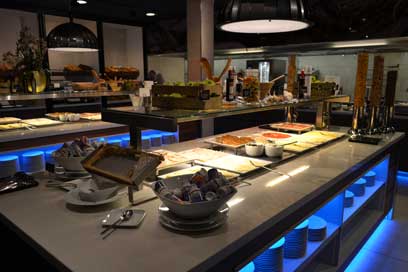
The large, multi-menu breakfast is a feast to behold. I am not sure I have ever seen such a wide variety of foods available at any first-class European hotel as here at the Mövenpick.

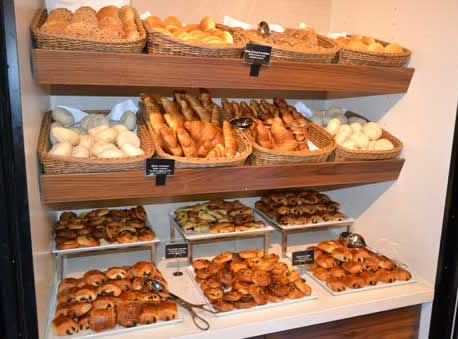
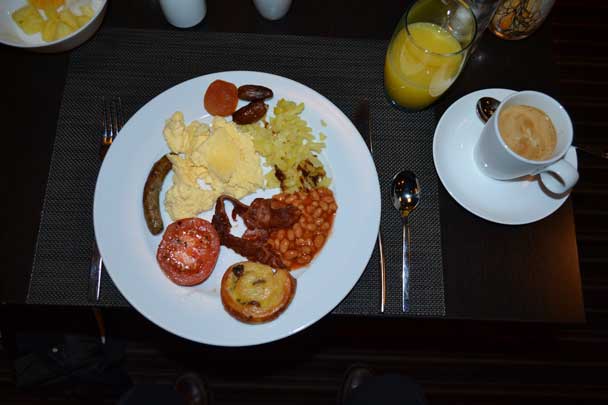
From any kind of egg creations, and several meat selections including fish and bacon, to about a dozen kinds of breads, rolls and croissants, to a wide variety of delicious fresh and dried fruits, yogurts and juices, the enticing breakfast buffet offers guests an overwhelming selection of foods. I enjoyed the freshly-baked, golden-toasted croissants with various jams and jellies, baked beans, grilled tomatoes, and cereals. Cold menu items include a choice of cut meats and cheese selections. Breakfast begins at 6:30 a.m. every day at the Mövenpick. Guests may special order breakfast omelets or eggs.

SILK BAR OFFERS ITS OWN CREATIONS
The smart Silk Bar is known for its extensive cocktail menu, and features a changing bar menu every day. It even offers its own original cocktail menu, and has a large whisky selection. Patrons can also enjoy a light lunch here, a quick snack, or a cup of Mövenpick coffee.

Helpful concierges are on duty in the lobby to assist Mövenpick guests locate points of interest in the city for sightseeing, modes of transportation, obtaining tickets for plays and museums, guided city tours and other questions that require a knowledgable answer. Looking for one of the city attractions—one of the smallest houses in the city—the hotel concierge quickly pulled out a city map and pointed out how to get there. I noticed later that he was the concierge supervisor, and his photo was on the cover of the printed, four-color map he handed me.

Because of all the city canals, one thing many visitors want to do is take a canal cruise. All you have to do is step out the front door of the hotel and you can embark on one of the many flat-bottomed canal boat tours offered in the city.

The hotel is also one of the most eco-friendly hotels in the city. The hotel uses heat and cold from the outside to help set room temperatures, and the hotel only uses fair trade linen.The hotel is Green-Globe Gold certified.

The Mövenpick, in keeping with the thousands of Amsterdam residents, supports guests who wish to do as the Dutch do, and ride their way through the city on two wheels. The hotel recommends Amsterbike which offers bike rentals, bike delivery, professional cycling tours, skip-the-line tours, as well as combination deals with boat tours, and walking tours in and around Amsterdam. The hotel offers a bike rental service on site.

Also, right next door to the hotel is the Muziekgebouw, a large concert and recital hall, and the most important stage in the Netherlands for contemporary music, offering more than 250 concerts annually.

For business travelers and business meetings, the hotel offers 12 state of the art “flexible” meeting rooms with such names as the Matterhorn, the Zurich, the Paris and the Dubai room.

In our opinion the outstanding Amsterdam Mövenpick in the city center rates a very high four stars, and is definitely passionate about serving its guests.

IF YOU GO….
The hotel is located at Piet Heinkade 111, 1019BR Amsterdam. Phone is +31 (0) 20 519 1200, or email the hotel at hotel.amsterdam@movenpick.com. The hotel’s general manager is Albert Rouwendal.

Prague’s Beer Taverns — A Czech Tradition

By Sharon Hudgins
Photos by the author

Many people consider Czech beer to be the best in the world. The Czechs think so, too: they’re the biggest consumers of beer on the planet, drinking an average of 161 liters (42.5 gallons) per person annually (about 30% more than their beer-loving neighbors next door in Germany).

Prague is famous for both its architecture and its beer.

The Czechs prefer to drink their beer on tap, in local taverns, fresh from the barrel, not from bottles or cans. “Cans are for sauerkraut,” they say. Another Czech saying emphasizes the importance of the taverns: “The brewmaster brews the beer, the innkeeper makes it great.”

Prague’s oldest tavern, U Fleku, was founded in 1499.

BEER TAVERNS IN PRAGUE
Prague, the capital of the Czech Republic, has long been known for its beer taverns, some of which date from the Middle Ages. They’ve always been the haunts of workers and students, as well as those writers, artists and revolutionaries who preferred the classless camaraderie of the humble taverns to the social and intellectual pretensions of the city’s more elegant coffeehouses.

Before the Velvet Revolution of 1989, some of the beer taverns in Communist-era Prague were known as places where tourists (and spies) from the West could rendezvous with people from the Soviet Union and Eastern Europe, who were allowed to travel to Czechoslovakia but could not go to Western Europe or the United States. Of course those same taverns also attracted agents of Czechoslovakia’s secret police, who spied on the “suspects” from East and West meeting over mugs of beer in the smoke-filled rooms. Back then, some of Prague’s public taverns seemed like settings for a John le Carré novel.

After 1989, in the new capitalistic Czech Republic, some of those beer taverns cleaned up their grungy interiors but kept their traditional ambience. Others went completely glitzy-modern. A few old, defunct brewery taverns were brought back to life, and new microbrew pubs opened, too.

(left to right) Sign for the St. Norbert brewery in the Strahov district of Prague;
Entrance to the St. Norbert brewery;
Interior of the St. Norbert brewery, with a display of the different beers on tap.

Today Prague, a metropolis of 1.2 million people, has hundreds of beer taverns, from well-known hangouts in the central part of the city to little neighborhood pubs patronized only by locals. Prague’s classic beer taverns are also good places to eat, offering traditional Czech dishes like grandmother used to make, at reasonable prices that won’t break your budget.

U FLEKŮ
Prague’s oldest, best known, and most touristy tavern is U Fleků (At Flek’s Place), which dates back to 1499. Today, U Fleků’s famous strong dark beer is still brewed on the premises, attracting hordes of beer-lovers from around the globe.

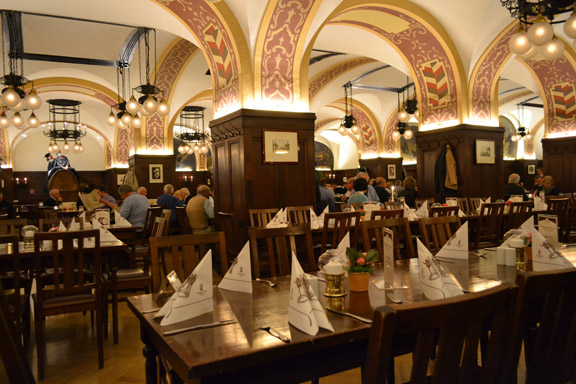
The building’s rather plain exterior is distinguished only by the large gilded ironwork clock, the tavern’s symbol, on the front. Inside you’ll find several “Old World” rooms with dark wood paneling, vaulted ceilings, stained-glass windows, and beams painted with barley and hops motifs. Part of the building surrounds two open-air courtyards used as beer gardens in warm weather.

The food is decent and moderately priced. The multilingual menu includes roast duck with sauerkraut and dumplings, beef with sour cream sauce and bread dumplings, goulash with bacon dumplings, smoked pork with sauerkraut and potato dumplings.

Pork with sauerkraut and dumplings or sliced braised beef with bread dumplings and sour cream sauce are specialties at U Dvou Kocek.

U Fleků seats a total of 1,200 people in its various dining areas, and it’s often packed in peak periods. In tourist season, go there in mid-morning or mid-afternoon if you want to find a seat. The tavern also features live music, an “Old Prague cabaret” in the evenings, and a brewery museum for serious students of the suds.

Drawing Pilsner Urquell beer from the tap at U Dvou Koček.

U MEDVÍDKŮ
U Medvídků (At the Little Bears) is an old historic tavern, recently renovated, where beer has been served since 1466. Today’s tavern retains the vaulted ceilings of the original structure in several rooms and features an open-air beer garden, too.

The wood-paneled restaurant has an extensive, multilingual menu of Central European dishes, including a game menu (in autumn) of venison, wild sheep, wild duck and pheasant accompanied by red cabbage, potatoes and dumplings. Many of the hot and cold appetizers are portioned large enough to make a light meal in themselves: try the “Medvědí tlapky,” the tavern’s own version of “devil’s toast” with a piquant meat mixture on top; or four slices of fried rye bread with house-made beer-cheese spread. The “Čertovo kolo” (“devil’s wheel”), is a delicious plate-size potato pancake topped with a spicy mixture of meat and vegetables.

The tavern serves Budvar (original Budweiser) beer on tap, as well as semi-dark Oldgott and very strong X-Beer from the new microbrewery upstairs, the smallest brewery in Prague, established in 2005. There’s also a cabaret section, a small museum, and a shop selling several kinds of beer and beer paraphernalia.

U RUDOLFINA
Many locals consider U Rudolfina, near the Rudofinum concert hall, to have the best Pilsner Urquell beer in Prague. They also consider it to be a “real” Czech beer tavern, which hasn’t made any concession to the rampant tourism that has overtaken central Prague during the past two decades. Most of the people drinking there are Czechs.

Czechs enjoying their beer at U Rudolfina.

Beyond the nondescript exterior, just inside the front door you’ll find a small, simple, wood-paneled room with a small bar. Downstairs is a larger area, just as plain in decor, and as smoky and noisy as the little room upstairs. Way in the back is a separate dining room set aside for non-smokers.

In addition to the excellent beer, U Rudofina serves some of the best beer-tavern food in town. Start with a basket of “topinky,” slices of dark rye bread fried on both sides, sprinkled with salt, and accompanied by whole cloves of garlic for you to rub on the bread, as much or as little as you like; or a plate of “beer cheese,” a mound of soft cheese with mustard and chopped onions on the side, which you mash together with your fork and spread on fresh bread. The main dishes emphasize meat—beef, pork, sausages, chicken—and are very well prepared, large portioned and reasonably priced.

Reservations are recommended because this is such a popular place—and well worth visiting for an authentic, no frills, Prague beer tavern experience.

Typical sign for a Prague beer tavern and restaurant. Many signs are in English to attract foreign customers.

RECOMMENDED PRAGUE BEER TAVERNS
U Fleků, Křemencová 11, Prague 1, www.ufleku.cz. Open daily 9 a.m. to 11 p.m.

U Medvídků, Na Perštýné 7, Prague 1, www.umedvidku.cz. Open 11:30 a.m. to 11 p.m.

U Rudolfina, Křížovnická 10, Prague 1. Open 11 a.m. to 11 p.m.

For current reviews and ratings of more than 60 Prague beer taverns, see www.praguepubs.co.uk.