One of my favorite things to do when planning a European trip by rail is to pull out my European rail route guide and investigate the towns and topography of the area through which I’ll be traveling.
Thus, when I recently organized a trip to Oberammergau, Germany from the Black Forest village of Villingen-Schwenningen, to visit the Passion Play theater and interview some of the play’s directors, I was delighted to see that I’d be changing trains at Pasing, a suburb of Munich, then heading south into the Alps. Pasing station is undergoing a major remodeling around the platform area, and it needs it. Hopefully by now the station is done and the passengers can more easily maneuver on the platform.
The schedule called for me to arrive Pasing at 11:20 a.m. on an Intercity Express from Ulm. Then a Regionalbahn train left at 11:39 a.m. for Murnau, which was slightly under an hour trip. At Murnau, I took the last leg of the trip to Oberammergau. End of story? Not quite, because the fun in travel is actually traveling, not going just from point A to point B.
WHAT THE FUN IS The fun is waiting for the train, watching the other passengers and seeing what pulls up at the station when its your train. The fun is checking out the cars and seating arrangements, finding the diner and having a meal, or watching the scenery go by. And that’s where my research came in. I knew that the fun part of this trip—any train trip in Europe–is watching the scenery, and I was in for some spectacular scenery.
Not far out of Pasing I could tell the tracks were heading southwest, and towards the Alps. Actually, on a very clear day, you can see the Alps from Munich itself, but I hadn’t been able to see them when I flew in until the very last moment before we touched down. Now, however, it was a beautiful clear day, but it wasn’t until about Murnau that I could see the landscape starting to suggest something big was going to happen.
At Murnau the track split, with one line going to Garmisch-Partenkirchen and then onto Innsbruck: that would have been an awesome route to follow. The other line made a large loop, ending up in Oberammergau. Had the line been straight, the schedule for that segment of the trip would have been much less than the allotted 40 minutes. After Murnau, and a quick on-board lunch that I had packed, the track started to conform to the undulating hills.
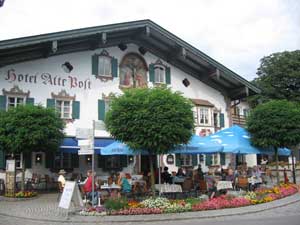
Oberammergau Mayor Arno Nunn is in charge of the world-famous Passion Play 2010.Sit back and relax with a cold beer under a tavern umbrella.
MOUNTAINS LOOM LARGER We rolled further south, and there finally the mountains appeared and were growing bigger at every turn in the tracks. Our regional train, with a loud squeak for a horn, signaled for road crossings and little dirt paths that wound up into the foothills. Colorful mountain flowers along the way were welcoming enticements to follow the increasingly curvy path to my destination.
Small, interesting German villages, rich green forests, rolling meadows and the looming Alps were all reasons to continue the journey and discover what Oberammergau had in store. A word of caution: don’t step off at “Unterammergau” when you want to get off at Oberammergau. The town names, when you aren’t German and the conductor speaks fast, can be very similar!
At Obergrammergau the track abruptly ends at the station–there’s one track in–and it’s the same track out of the station. From there, you can walk into the center of town, or get a bus or cab. This little city, where the world-famous Passion Play is held every 10 years, is usually very active and touristy. But you feel like you’re in a “real” German town when you’re finally relaxing with a cold beer at a small tavern under the shade of an umbrella, and the Alps rise majestically above you. That’s living, that’s Germany, and trains will take you there. Next time, try the “small rail routes.”
Photos courtesy Croatian National Tourist Office Home page photo by Mario Romulic & Drazen Stojcic
If you like to explore ancient history when you travel to Europe, the island of Korcula is your cup of tea.
The Croatian island of Korcula has been inhabited since prehistoric times, and traces of life from the past have been uncovered at many places on the island. The oldest finds were stone knives from the Neolithic age found on the islet of Badija near Korcula.
The richest discovery is the Neolithic site Vela spilja (Large Cave) at Vela Luka. Here, archaeologists have uncovered several layers of prehistoric life with fire sites, shards of ceramics and graves dating back 5,000 years before Christ.
Many Neolithic stone piles from this period—cult places and gravesites—have also been found over the entire island. The island was inhabited by the Greeks in the 6th century before Christ, first at Vela Luka.
Milan Babic
Later, on the other side of the island, in the area where Lumbarda is today, Greeks settled from the island of Vis (Issa), founding a separate settlement referred to in the inscription “PSEFIZMA” originating in the 3rd century before Christ, which was discovered at the end of the 19th century.
In the 1st century before Christ, the island, like the whole of Dalmatia, was conquered by the Romans, who called it Illyricum. In the 7th century A.D., the Slavs-Croats made their way to the Adriatic coast and formed their own state, which was first a principality and later became a kingdom, with the crowning of the first Croatian King Tomislav in 925. Korcula was also included within the borders of that state.
The Roman population fled from the Slavs to the islands of Brac, Hvar and Korcula, and after the situation settled, the majority returned to their original places of residence, while the rest assimilated with the settlers.
In 1,000 A.D., the Venetian Doge Petar II Orseolo took over the Dalmatian cities and islands, and thus Korcula also fell under Venetian rule. It was here on the nearby isle of Majsan that the Doge set up camp to lead the campaign against Korcula and Lastovo, which offered some resistance, but he quickly conquered both islands.
Following this, the rulers of Korcula changed frequently: the Venetians were replaced by the Zahumlje governors, then by the Austro-Hungarian kings, before the Venetians took over again, and from 1413 to 1420 the island was under the Dubrovnik Republic before again falling under Venetian rule in 1420, which lasted until 1797. When Napoleon brought down the Venetian Republic, Dalmatia was under Austrian rule for a short time before the French arrived.
From 1804 to 1805, Korcula was under French, then Russian rule, before the French again took control from 1897 to 1913. The English became rulers of the island to 1815, when the Vienna Congress set out the new borders of Europe.
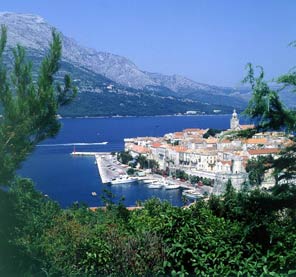
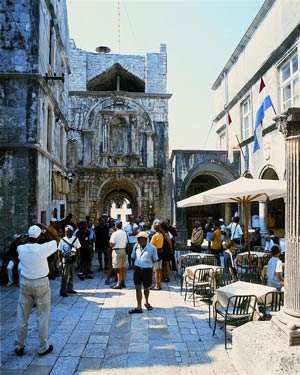
Today, Korcula is just a scenic three-hour drive or short ferry ride from Drubrovnik, and the island is known for producing some of Croatia’s finest wines and best olive oil. The southern coast offers many scenic drives with secluded beaches that are great for swimming. Korcula town’s ancient walled center has picturesque stone streets and round towers.
For more information about Korcula and other Croatian destinations, go to www.croatia.hr/en
By Don Heimburger Photos by the author, Marilyn Heimburger and courtesy Pre-History Museum in Halle
Millions of visitors are expected to visit Wittenberg, Germany between now and 2017, when the 500th anniversary of the nailing of the 95 Theses by Martin Luther occurred.
The German state of Saxony-Anhalt is launching a giant campaign to publicize the anniversary and show off its Luther treasures to the world.
The kick-off event starts October 31 when the State Museum of Pre-History in Halle on the Saale River showcases numerous Luther archaeological artifacts that have recently been uncovered, mostly in Mansfeld, Luther’s childhood home, and Wittenberg at Luther House, where Luther taught.
Luther House in Wittenberg
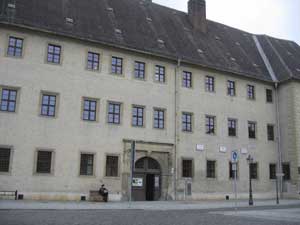
Entitled “Finding Luther—Archaeologists on the Reformer’s Trail,” the 4,000-square foot exhibit will be shown in the newly-restored Pre-History Museum.
“Except for his writings, the bulk of the reformer’s possessions got lost,” says Dr. Michael Schefzik, curator of the Museum. “On the other hand, the archaeological excavations in 2003 yielded hundreds of objects which certainly had belonged to the Luther family.”
LUTHER’S LIFE COMES INTO FOCUS
Only in the last several years, after research by various archaeologists, was it feasible to draw a picture of the life of the Luther family, especially in Mansfeld where the Luther family moved to in 1484, shortly after Luther was born.
“Historical truth and legends (about Luther) are almost inseparably intermingled with each other,” says Dr. Schefzik. Now, more is known and will be explained in this new exhibit.
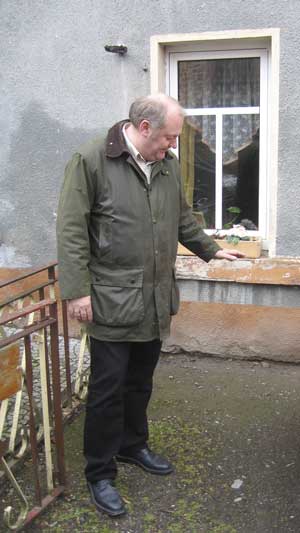
Dr. Schlenker indicates where first Luther artifacts were located in a parking area near Luther’s home
Some of the Luther exhibits visitors to the museum will find include:
Luther’s childhood marbles? Archaeologists believe they found them—made of clay and probably heated over an open fire in the Lutherhaus in Mansfield.
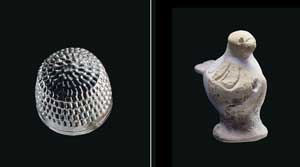
Luther’s mother’s thimble (?) has been preserved and is beautifully made.
Heating stove tiles of several colors from Luther House in Wittenberg with pictures of Adam and Eve on them, as well as possibly Frederick the Wise, who befriended Luther.
Iron keys, padlocks, nails, large headdress pins, knives, belt buckles, chards of pottery, beads, garment accessories, jewelry, a beer tap, coins, fish and wild fowl bones and much more.
SURPRISES YET TO COME
In addition, the museum has a few exhibit surprises that only visitors there will get to see. Many more Luther objects, such as goblets and beakers, are on loan from other museums and estates that will be shown in the exhibit. Luther received the vessels from wealthy patrons and gave them to selected friends.
Don and Marilyn Heimburger with Wittenberg Mayor Eckhard Naumann
The new Luther finds have attracted National Geographic, which plans a comprehensive report on the news, as well as many German newspapers and other news agencies.
While in Wittenberg (Home of the Reformation), which you could make your home base for a few days as you tour the various surrounding Luther sights, you’ll want to see the Town and Castle churches, the Luther House, a UNESCO World Cultural heritage site, the Philipp Melanchthon house, the Market Square with the town hall built between 1523 and 1535, the Lucas Cranach houses (he owned several), and some of the town’s museums. The town, first documented in 1180, has a great many historical buildings.
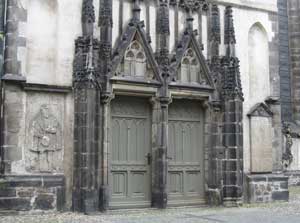
The Castle Church, with an 288-foot-high tower, was once the magnificent castle of the electors of Saxony, built between 1489 and 1525 for Frederick the Wise. It also became the university church, and it was here that Martin Luther nailed his 95 Theses to the door. Today a black bronze door (installed in 1858) has replaced the original one. The door commemorates October 31, 1517 when Luther nailed his theses “on the power of indulgences” to the door.
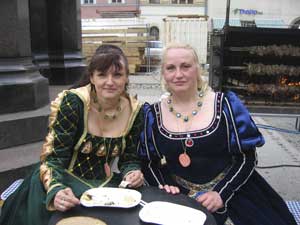
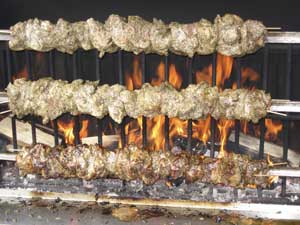
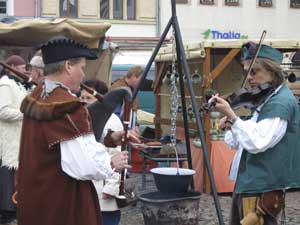
Medieval ladies add to Wittenberg’s FestivalMeat sizzles on an open fire at Wittenberg town festivalMusicians at Wittenberg festival
OLDEST CHURCH WORTH A VISIT
Wittenberg’s oldest church is the Town Church, the Town and Parish Church of St. Mary, set in the central square. The pulpit, at which Luther preached, can actually be found now at the Luther House. If you go, note the series of epitaphs by Lucas Cranach the Younger around the altar. They are from around 1560.
Other Wittenberg highlights include:
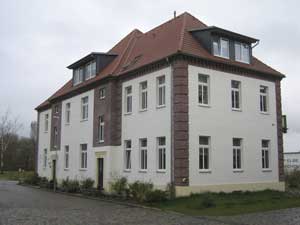
The multi-colored turreted high school designed by Friedensreich Hundertwasser
The Piesteritz residential housing complex on the west part of town, with some housing built as early as 1916, used to house factory workers
Museum of Town History, a collection of thousands of old historic Wittenberg documents and artifacts
For fun, visit the historical printing workshop in town and see how printing used to be done at the time Luther translated the Bible into German. You can even purchase a few humorous Luther quotes which have been printed at the shop.
WITTENBERG FESTIVALS
Hundertwasser School
Every year on the second weekend in June, thousands gather in the streets of this town for Luther’s Wedding, a town festival that includes medieval merrymaking with processions, strolling musicians and entertainers.
July and August brings the Wittenberg Summer of Culture which includes theater shows, courtyard concerts, a wine festival and “ErlebnisNacht” which features unexpected happenings at unexpected times in unexpected places in the old quarter.
A newer hotel, across the Elbe River, is the Bruckenkopf Hotel, owned by the Schult family. Renate and Gehard Schult have invested heavily in the renovation of this sprawling military complex once used by the Kaiser’s Army and Napolean’s Army. There are 24 rooms in the brick fortress portion of the complex. The staff is friendly, and there is no noise except an occasional duck splashing in the nearby pond. The complex also provides rooms and cabins for boaters and bikers, tenters and motorhomes (www.marina-camp-elbe.de).
If you like good German food, a number of restaurants downtown can accommodate you. Nearly all hotels offer good food in their restaurants, but a favorite of the locals is the Schwarzer Baer, which is connected to a hotel (naturally) and Luther used to come in there to eat and drink, and it’s said he even slept there.
Wittenberg is best reached from Berlin’s Tegel Airport, and frequent ICE, ICE night and IC and EC trains stops in Wittenberg. For more Wittenberg information, go to www.wittenberg.de (e-mail: info@wittenberg-information.de). For individual town tours, contact English-speaking guides Bettina Brett at bettina.brett@arcor.de or Astrid Muehlmann at astrid.muehlmann@web.de. Both are veteran guides and are well-known locally.
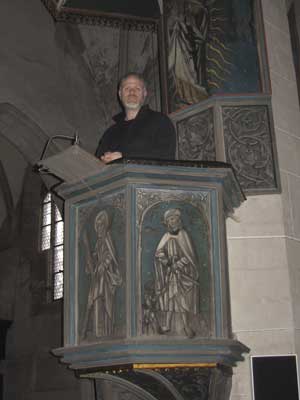
Reverend Scott Moore in the pulpit at Eisleben Church, where Luther was baptized.Luther Museum in Eisleben.
OTHER NEARBY CITIES
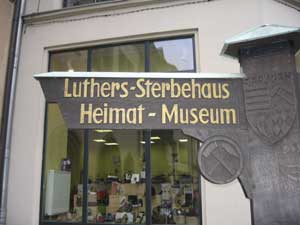
If you’re in Wittenberg, you really should take the time to visit some other nearby Luther sights and towns. They include the town of Eisleben, nestled in the hill country of the Mansfeld basin. It’s here that Luther was born (November 10, 1483) and baptized the next day in the Church of St. Peter and Paul. His home has been turned into a very interesting museum that documents his early childhood and youth and gives an insight into the spiritual environment in which Luther was raised.
On the hill overlooking Mansfeld, you can visit the Mansfeld Castle where Luther preached. In town is his parent’s large home, where they are now uncovering many Luther family artifacts.
In Torgau, the political center of the Reformation, you can visit the Hartenfels Palace Chapel, consecrated by Luther on October 5, 1544. It is regarded as the first church to be built as a Protestant church.
Luther studied theology and sciences in Erfurt between 1501-1505. In 1505 he requested acceptance into the Erfurt monastery, home to the Augustinian monks, an order known for its scholarship. In 1507 Luther was ordained as a priest
By Marilyn Heimburger Photos by the author and Don Heimburger
The UNESCO World Heritage city of Regensburg, Germany, 90 minutes north of Munich, is more than 2,000 years old, and many of its buildings serve as a testament to its long history.
There’s plenty of reminders of this town’s heritage: located on the Danube, many tour ships dock here and unload visitors for a peek into this German treasure.
Even Mozart liked the city: Regensburg’s hospitality was commended as early as 1790 by Mozart who enjoyed “a sumptuous meal along with divine music” and praised the good wine.
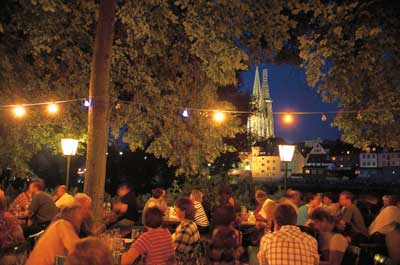
Numerous Roman buildings, such as the Porto Praetorius–an old Roman town gate–can still be seen today. It was preserved because the Bishop’s beer garden was located on the site. An underground museum at Neupfarrplatz displays the history of the Romans and the Jewish community there until 1519.
NEUPFARRPLATZ IN JEWISH QUARTER At the Neupfarrplatz, houses were built in the Jewish quarter over the old Roman fortress in the 8th century. These were destroyed in 1519 when the Jews were blamed for a downturn in the economy and were driven out.
In 1995 an excavation of the area was begun, and the ruins of the Jewish quarter were found, in addition to the Roman ruins.
Found in the excavation and on display in the underground museum were a second or third century statue of the Roman god Mercury; from the 15th century a statue of Aaron (Mose’s brother); and from 1520 an icon of the Virgin Mary. The museum is called Document Neupfarrplatz; if you walk down a flight of stairs, you can view a video showing the excavation finds. www.regensburg.de.
The city began as a Roman fortification (Castra Regina) in 179 AD by Roman Emperor Marcus Aurelius because it was the northernmost point on the Danube. When the Roman Empire fell, the Romans retreated. The fortress built there was not destroyed, and Bavarians then occupied it. It was the first capital of Bavaria; believe it or not, Munich is 1000 years younger!
Not much was damaged in the town during World War II as there wasn’t much industry in Regensburg, so there was nothing to bomb. Thus, the old buildings were preserved.
‘ITALY’S NORTHERNMOST CITY’ Rich merchants gained wealth from importing goods from far away lands. They built large homes with tall towers (a show of strength and wealth) after the style in Italy. Many of these are still standing in Regensburg; nearly 20 are still well preserved. The town is often called “Italy’s northernmost city” because of this.
One of the big Regensburg attractions is The Old Stone Bridge, built on 16 huge arches, which has been in continuous use for more than 800 years. Built between 1135 and 1146, the Stone Bridge enjoys the status of being a unique masterpiece of medieval engineering. It was for many centuries the only stone bridge spanning the Danube between Ulm and Vienna. It was not only a technological masterpiece of engineering, but of strategic importance in terms of transport and, as a result, of great commercial value.
Another town attraction is the Old Town Hall, where Roman Emperors used to summon princes, bishops and ambassadors to discuss the affairs of state. The Imperial Diet Chamber still contains the same furniture, including the benches that gave rise to the German expression “to put something on the long bench” (meaning to postpone it indefinitely).
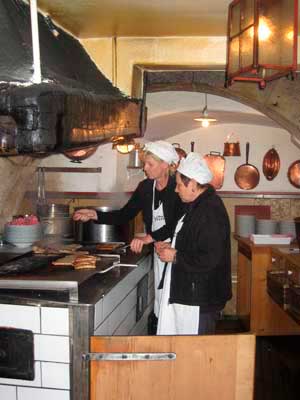
‘HISTORIC LUNCH’ For a quick and tasty lunch, sit down near the Danube and enjoy hot, juicy sausages with kraut and bread in the “Historische Wurstkuchl,” the world’s oldest sausage kitchen. You can actually see them frying the sausages on the grill through a door that leads into the small kitchen. http://www.wurstkuchl.de
Regensburg is a city of churches. Focal points of early Christianity, its ecclesiastical buildings are majestic and typify early Christian architecture. Most famous is St. Peter’s Cathedral, inspired by the French Gothic style and built in the 13th century.
At waterside, Schifffahrt Klinger offers boat trips to many different sights such as the Walhalla, the German Hall of Fame containing busts of famous German personalities.
Regensburg`s remarkable buildings and towers offer an unspoiled look into the past; the wars of the 19th and 20th centuries left this Danubian community virtually unscathed.
The Regensburg Tourism Office is located at the old Rathaus, Rathausplatz 3, D-93047 in Regensburg. Fax is +49 941-507-1919 or e-mail to tourismus@regensburg.de.
With trendy Croatia one of the top travel destinations these days, I learned quickly that everyone wanted to go with me when I visited this small southeastern European country, tucked between Bosnia, Hungary and Slovenia.
Who wouldn’t want to go to the country that invented the sophisticated cravat, the forerunner of the modern tailored necktie and bow tie, or was now producing a truckload of good white wines, or was bounded by the romantic Danube? Although this land still bears the scars of the Bosnian War which affected the region between 1992 and 1995, the country is gradually moving on.
The warmth of the Croatian people, the abundant agricultural possibilities of the land, and the natural beauty of the country’s rocky mountains and green woodlands are only now being discovered, and touted in national tourist publications.
Some eye-opening travel gems await those who venture into the awakening interior.
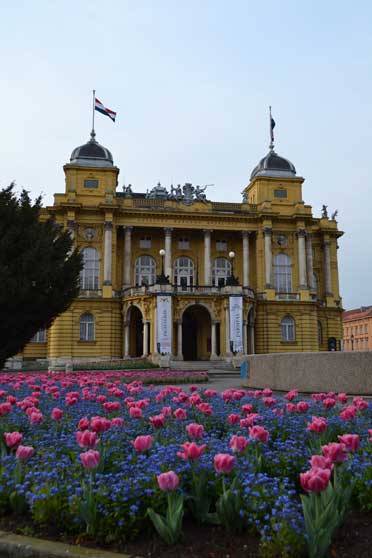
National Theater in Zagreb
CONTINENTAL CROATIA AND ZAGREB Croatia is shaped somewhat like a horseshoe, with one side extending 1,100 miles along the Dalmatian Coast, with seaside Dubrovnik at one end and Croatia’s third largest city, Rijeka, at the other. The entire country of 4.2 million people is only as large as West Virginia, or just 21,829 square miles.
While I wasn’t going to where most tourists journey—the coast and the Adriatic Sea— the interior of the country presented its own set of unique opportunities for exploration. I started my venture at the capital, leafy-green Zagreb, which sits on the historic and political threshold between Eastern and Western Europe.
Sitting on the Pannonian Plain as well as on the edge of the Dinaric Alps, this Hapsburg-inspired city has been inhabited for centuries by people coming from all over Europe, thus insuring a rich cultural heritage. It is the home of Croatia’s parliament, government and its president. It sits next to the lush, forested slopes of Mount Medvednica, often referred to by the name of its summit, Sljeme.
The city’s elegant facades, a horseshoe of green spaces—eight green squares created by Milan Lenuci in the 1880s— and a growing contemporary scene, are attracting the curious traveler; more may come soon as well, as Croatia and thus Zagreb are poised to join the European Union in 2013. Known as Vienna’s little sister, Zagreb is smallish—about one million residents—which makes it easy to walk around without a car, meet the populace, and indulge in the city’s cultural and historical attractions, and growing nightlife. I did a little of each.
Palace Hotel, Zagreb
FLIGHT TO ZAGREB My flight on Lufthansa from Frankfurt landed at Zagreb airport outside of town, where I hopped a cab to the Palace Hotel, located in an Art Nouveau palace in the center of the city. It was the first hotel in Zagreb, opened in 1907, across from a beautiful green park and where the likes of Orson Welles and actress Sophia Loren have stayed. I figured I was in good company.
Finished in elegant woods, the hotel’s lobby is inviting, and glass cases filled with historical artifacts give the visitor information about the history of this four-story gem. Zagreb was on the route of the famous King of Trains, the Orient Express, where Hercule Poirot solved his most famous case, where Alfred Hitchock’s The Lady Vanishes was staged, and on which James Bond rode from Istanbul to London in the movie From Russia With Love. Everyone loves a train with a good mystery, and Zagreb uses these connections to promote its mystique as a city. The train station is just a few blocks from the Palace Hotel, and an old black steam locomotive decorates the lawn on one side of the station.
Like all major cities, Zagreb is divided into areas, but the Upper Town (located on a hill) and the Lower Town, where streets are laid out in a simplistic and government-mandated style, are two that most visitors will learn quickly. You could cover the town’s main attractions in two days, but a third day will offer the best impression of the city.
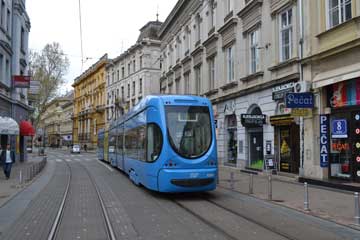
Zagreb’s main square, referred to as Jelacic plac, is a large, busy place with adjacent Ilica Street housing many shops. Croatians use the main square, just down from the hillside settlements of Kaptol and Gradec, to make connections with friends, to catch one of the many street trams pulsating here and there on tracks that run through the streets, or use the square’s large clock as their time-keeper. There are 37 clocks like this throughout the city, all maintained by the sixth generation watchmaker Lebarovic Dalibor, who has manufactured more than 200 public clocks in this country.
The main square, featuring a large statue of Croatian hero Ban Josip Jelacic, has been the commercial heart of the city since 1641. It is so large that fairs used to be held here; the buildings around the square date from the 19th century, and feature Biedermeier, Art Nouveau and post-modernism architectural styles.
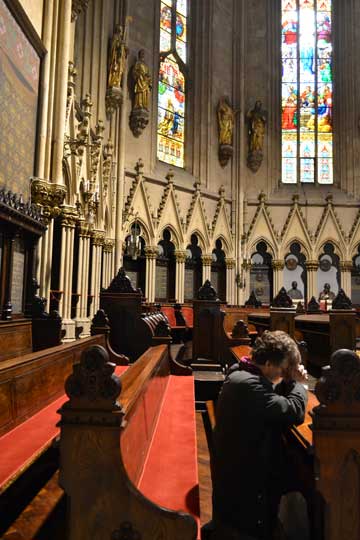
TWIN-SPIRED CATHEDRAL The city’s twin-spired landmark structure in the Kaptol neighborhood is the Cathedral of the Assumption of the Holy Virgin Mary, created by Hermann Bolle in the 19th century after an earthquake badly damaged the original church. In the 15th century it was the furthest outpost of Christianity. Beautiful marble side altars, statues and pulpit adorn the inside, as does the life-like tomb of Cardinal Alojzije Stepinac by Ivan Meštrović. You can’t miss it: it sits dead-center in front of the church near the choir.
While you’re there, notice the adjacent overpowering bishop’s palace with large turrets on the corners. The accompanying lawn features large colored Easter eggs during this season. Not far away, the fortified 13th century Lotrscak Tower in Upper Town, signals 12 o’clock by loud cannon fire and trailing white smoke, as it has every day since 1877. The bells of the stone tower used to summon residents back into the town gates at night before they closed. After watching this display of time-keeping, wander a few steps down the hill to the family-owned Pod grickim topom restaurant, where you’ll be treated to large portions of pork, beef and spaetzle while overlooking the city.
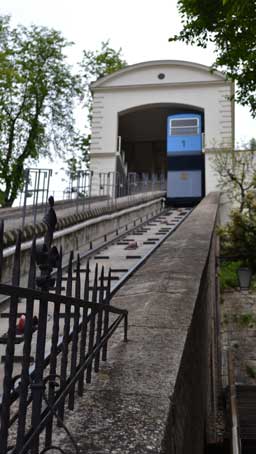
A funicular, the shortest in the world at 216 feet in length, takes you up to Upper Town in 55 seconds. Departing every 10 minutes, it accommodates 28 people each trip. Once powered by steam, the brilliant blue funicular pre-dates horse-drawn trams by a whole year.
At colorful St. Mark’s Church in St. Mark’s Square, you’re in the heart of Upper Town; the square used to be Gradec’s main market area. The 13th century Church of St. Mark’s is a Romanesque structure with Gothic arched ceilings and 15 Parler family statues that stand in the southern portal. The colorful roof is decorated with coats of arms of the triune Kingdom of Croatia, Dalmatia and Slavonia, as well as the city of Zagreb.
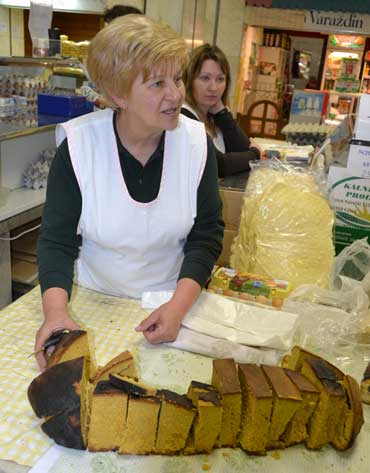
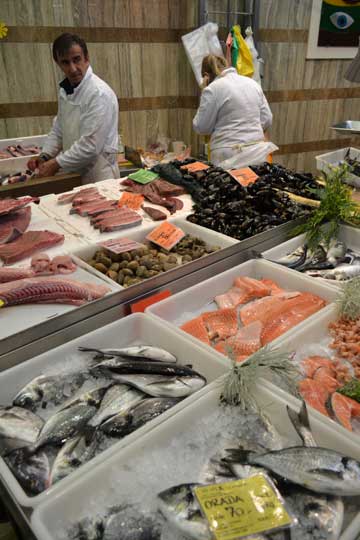
BUSTLING DOLAC MARKET The Dolac open-air market is a must-see, must-do free attraction. Close by the Cathedral, sun-ripened fruit, fresh fish including octopus trucked in from the coast overnight, colorful vegetables and hearty meats, nuts and fragrant spices are sold every day of the week. Known as the “belly of Zagreb,” the market dates from the early 1900s.
Croatia is a religious country, with about 77% of the residents Roman Catholic. The Upper Town is entered via the Kamenita vrata or the Stone Gate, which is the only city gate still remaining. It was built in the Middle Ages, and today acts as a Christian way station for anyone wanting to give thanks, or to make requests. The small chapel inside, dedicated to the Virgin Mary, patron saint of Zagreb, houses a painting of Mary miraculously saved from a fire in 1731. At all times of the day, this small chapel—complete with several wooden benches— attracts worshippers and the curious.
Stop by Zagreb’s oldest pharmacy on Kamenita ulica (Stone Street) where you’ll discover a two-story white building which has housed this business since 1355. And built along the former Medvescak Creek is Tkalca, Zagreb’s colorful downtown street where you’ll find a plethora of nightclubs, small boutiques, traditional shops and cafes. Stop by the Bulldog, an upscale downtown bar where the drinks flow until 3 a.m. from Wednesdays to Saturdays. The decor features aviation and nautical themes, with propeller-shaped ceiling fans, and there’s a mezzanine observation level. A bowl of shelled peanuts to accompany a cool drink doesn’t cost much, either.
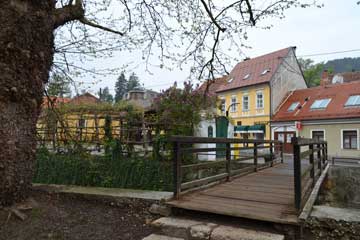
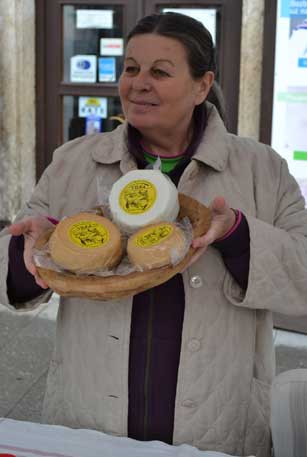
SAMOBOR If you’re heading into the countryside, Samobor is one of Croatia’s best-preserved villages. The light rain and mist which covered the surrounding hills and the Gradna River that flows through them, presented a magical Sunday morning welcome. Local villagers presented their farm-fresh cheeses and honey in the market square, and smiles and free samples were plentiful, as merchants waited until the packed-to-the-rooftop Catholic church let out.
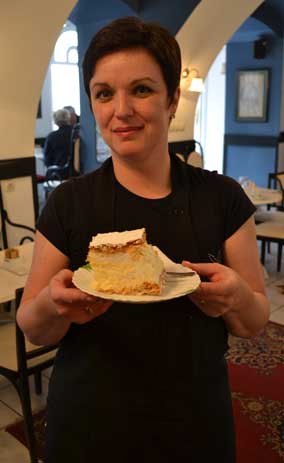
Many other locals were sitting in the Slasticarnica U Prolazu restaurant, having their Sunday coffee and Samoborska Kremsnita, a custard-colored 3 in.-high cream pastry square, a rich-flavored local tradition. Others were strolling down the path on the outskirts of town near the river, enjoying the budding of colorful flowers and trees, and soaking up the fresh fragrances of spring.
Samoborska Dremsnitz – a delicious dessert
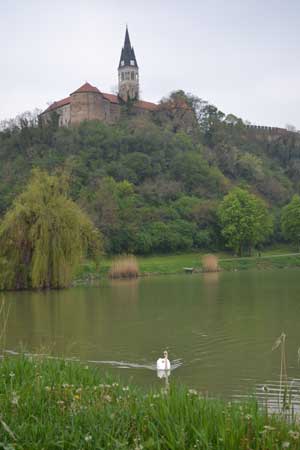
At the Town Museum, check out the intricately-woven folk costumes. Another option is a woodland stroll to the hillside park of Anindol that will take you to the ruins of Samobor’s 13th century castle, which you can see on the hill as you drive down the narrow road into town.
Samobor is also noted for Bermet, a local version of vermouth. This fortified wine, flavored with citrus fruits and aromatic herbs, goes well with crackers and the local Mustarda, a rich brown mustard with a fruity tang. Both the Bermet and Mustarda have been made for generations by the local Filipec family. A tour of their small facility and their shop, guarded by the family dog, will add extra interest to your visit.
Just west of Samobor are the Samobor Hills, a group of forested smooth-topped mountains which make great one-day hikes. The highest point is the 2,883-foot-high Samoborsko gorje, a two-hour walk from Soiceva kuca, a popular restaurant and recreation spot.
VARAZDIN If you have time to explore Croatia further, a trip to Varazdin near the Slovenian border is worthwhile. With its 18th century Baroque churches and the oldest rathaus in Europe, Varazdin is a jewel. First founded because of its Stari Grad, a well-preserved 16th century castle, the town today evokes “oohs” and “ahhs” as visitors discover the Baroque facades. On a clear, sunny day, the town is spectacular.
The city, in fact, was the capital of Croatia in 1756, but fire destroyed 50% of it 20 years later. This gave the city a chance to rebuild in Baroque style, and thus today Varazdin enjoys the benefits of tourism. The city first came to light in 1181 in a document sealed by King Bela III of Hungary. It was granted the right as a free royal city 33 years before Zagreb, the locals are fond of pointing out.
The Town Hall (Gradska Vijecnica) has been the seat of the city’s town council since 1513, making it one of the oldest buildings of its type in Europe. You can sit out in front of the hall on the main square to soak in the sun, or have a coffee, or watch the changing of the guard by soldiers in their tall, black-tasseled hats between May and September.
Zlatko Puntijar shows world’s smallest Croatian recipe book at Stari Puntijar Restaurant
The Cathedral of the Assumption with its magnificent interior became the seat of a diocese in 1997, and is noted as the first Baroque structure in town. Known for its acoustics, the cathedral is used during the Varazdin Baroque Evening Festival in September, where both domestic and foreign soloists and ensembles perform.
Take your camera with you to this picturesque town. The Varazdin countryside produces “Varazdin Sauerkraut” (sour cabbage), pumpkin seed oil, honey, goat and sheep cheeses, and fruit wines with a low alcohol content.
SLAVONIA BROD Stretching to the southeast of the country, Slavonski Brod, on the north bank of the Sara River, and bordering Bosnia, features the star-shaped Brodska Tvrdjava (Brod Fortress). With bastions and moats designed to protect against Ottoman soldiers, this huge embattlement could accommodate 4,000 soldiers. The local peasants built the fortress under a forced work program.
The town features the remains of a number of industries, including a large factory where Croatian steam locomotives were once manufactured. Past examples of the plant’s engines dot the factory entrance.
Memorial dedicated to Bosnian war victims
OSIJEK Moving further into the interior of Croatia and to the east, the city of Osijek is the largest town in Slavonia. Located on the Drava River, the town was founded by the Romans in the first century AD, and after a number of battles, Osijek became the administrative center of the rich agricultural region of Slavonia.
During the battle for independence, it came under siege for several months. A long promenade leads along the river to a large modern suspension bridge which connects Gornji Grad to Copacabana, the town beach.
Close by Osijek is Kopacki Rit Nature Park, a large tract of marshland with many varieties of birds. Located between the Drava and Danube rivers is part of a region called Baranja, with abundant fertile farming land.
For an excellent meal, stop at the cozy restaurant Kormoran, located in the park. Some foods are especially prepared in a large black caldron over an open wood fire, and served at your table. You won’t go away hungry.
CROATIA’S VINEYARDS If you enjoy wine, and touring vineyards, Croatia is “ripe” for the picking. Many of the wines I tasted—both reds and whites— were excellent. Croatia’s vineyards started around the 6th century B.C. in the coastal regions, and as far back as the 2nd century in the interior.
I especially liked the white wines such as Grasevina (pronounced: gra-she-vi-na), a wine cultivated in the countries along the Danube. Light and refreshing, it tastes different than Riesling, and can have slightly different flavors based on soil and sunlight. A bottle of Grasevina found its way home with me. Ice wines are also popular here, and are often awarded gold medals in competition. A 2009 Pinot Crni with 16.5% alcohol content also was a good wine, perfectly balanced.
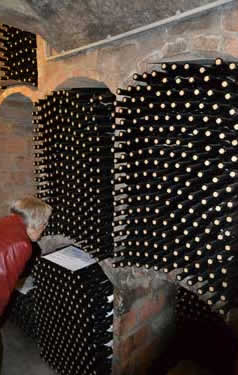
Many of the vineyards I visited offer richly decorated banquet halls, capable of serving complete multi-course meals for up to 100-150 people, along with a variety of wines from their cellars. Winery Kutjevo, with the oldest wine cellar in southeastern Europe (dating from 1232); Belje, the biggest; and Ilocki Podrumi at Principovac all offer a variety of excellent wines. You might find bottles from these vitners in the U.S., although not much is exported.
Croatia is making a solid effort to produce and distribute their many wine varieties, and Zagreb hosts an annual Wine Festival that’s a great wine-tasting opportunity and is packed with visitors.
I found continental Croatia refreshing because of its simplicity, its natural beauty, its tasty foods and wines and its unassuming people. I expect Croatia’s interior to be one of the “hot” travel destinations in the years ahead.
As they say in Croatia, “Zivjeli” — a toast to your good health!
For more information about travel to Croatia, go to: www.croatia.hr/en




















 European Traveler