Pinkel! The word is strange enough, but I recently learned how these six little letters can stir a whole region to party the day away in true Germanic style.
I thought I knew roughly what to expect in terms of German traditions and festivities. I was familiar, of course, with festivals like Oktoberfest and Weihnachtsmarkt, and with traditional victuals like cabbage and wurst. But little did I know I had yet to discover one of Bremen, Germany’s most unique traditions–one centered on green cabbage, a mysterious meat product called Pinkel, and plenty of alcoholic spirits.
It’s called “Kohlfahrt” (translation— “cabbage tour”) and recently I was told what this festival was all about.
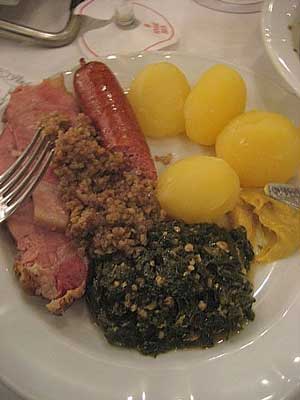
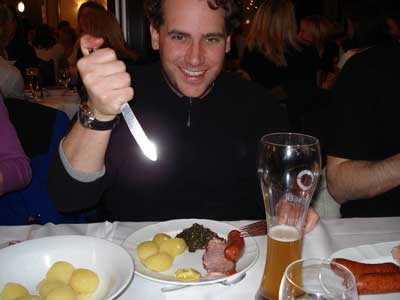
Kohlfart is a tradition practiced only in Northwest Germany, and is a beloved annual ritual in the Bremen area. The idea is that a group of friends or colleagues assemble on a Saturday afternoon in January or February, load up a “Bollerwagen” with an assortment of schnapps, whiskeys and beer, and amble through the countryside playing wacky party games and replenishing liquor at every opportunity. The event is organized months in advance by the group’s Kohlkoenig and Kohlkoenigin— the cabbage king and queen. After a couple hours of walking, when the participants’ bladders are full and their stomachs growling, the group descends on a pub or restaurant to enjoy the culmination of the day’s festivities–a meal of Kohl und Pinkel (the Kohl is green cabbage and Pinkel is something along the lines of bacon, oats, lard and spices packed together). And then they dance the night away—literally. I never knew the Germans loved to dance so much, especially to cheesy ’80’s cover bands. Although I will admit I hit the dance floor for several numbers (who can resist the Abba and AC/DC tribute?).
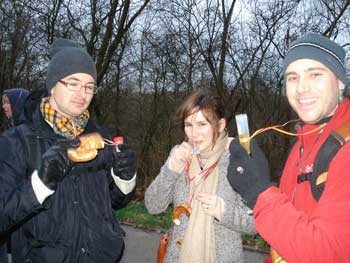
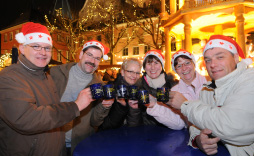
I didn’t know much about Kohlfahrt going into it, but once our group was assembled, and we were handed pretzels (sustenance is crucial) and plastic scientific sample vials to wear around our necks (it really is a cheap and logical way to hold liquor), I knew we were in for some surprises. It only got more interesting when our first two games tested who could maneuver a spoon down their shirt and pants the fastest, and who could throw a teabag the farthest using only their teeth.
Kohlfahrt was definitely worth experiencing for the sheer fun and folly of it all. But it’s a serious business here in Bremen, as evidenced by the multiple Kohlfahrt parties we passed on the road, some of which sported Bollerwagens decked out with flashing lights and loud speakers. The restaurant resembled more of a banquet hall, with about 100 long tables full of rosy-cheeked Kohlfahrters, swaying arm in arm and singing along to “Que Sera, Sera.” It’s experiences like these that remind me how different some things are here than in the States. Germans have no open container law to contend with and are perfectly free (and encouraged, in this case) to walk around toting shot-glass necklaces, singing songs, and pulling a wagon full of alcohol.
Although my observation is that even during the public inebriation and silliness of Kohlfahrt, Germans still manage to act fairly civilized. But civilized or not, it was obvious that everyone was having what seemed like the best Kohlfahrt ever. Until next year, that is…
By Don Heimburger Photos by Don and Marilyn Heimburger
Situated on a hill overlooking the small village of Melk, Austria, is the Melk Abbey, a Benedictine monastery with twin church towers that reach for the heavens.
The imposing Baroque abbey, high above the Danube, has two wings that project around the chapel, curving towards one another and connected by a balcony, framing the inset of the church. The builders succeeded in combining the natural surroundings with the structure.
Designed by Jacob Prandtauer and built between 1702 and 1736, the abbey monks provide pastoral care (the monastery oversees 23 parishes), and schooling (with 900 students). The theme of the abbey is “Ut In Omnibus Glorificetur Deus” (so that God is glorified in everything).
Visitors to the abbey can walk up steep steps to the entrance (walking through the small village of Melk) or drive up or take a taxi to the entrance. An abbey museum is located in the former Imperial Rooms and contains the exhibition “The Path from Yesterday to Today” which tells the story of the 900-year history. Beyond the museum, the must-see Marble Hall and library are two highlights of the structure.
In Marble Hall, Paul Troger’s beautiful frescoes (1731) adorn the ceiling; it is this room that was used as a guest room and dining hall for festive occasions, mostly for the imperial court. From the balcony, a grand view of the surrounding rivers, and town and fields is available.
Hundreds of inlaid bookshelves line the library room, which features similarly-bound books. A Paul Troger ceiling fresco is a counterpoint to the painting in the Marble Hall. On the upper floor of the library are two reading rooms, reached by a spiral staircase. The library contains 1,800 works, the oldest of which is a transcription of works by Venerable Bede from the early 9th century. Two-thirds of the manuscripts are from the reform period of the 15th century.
Gold, orange, ocher, gray and green combine to form a warm color accord in the church. In 1701 the church was completely rebuilt, and is now recognized as one of the most significant structures of the Baroque era. In its full light, its grandeur can take one’s breath away. The interior of the church has been shaped by the hand of Italian architect Antonio Beduzzi, with other artists actually doing the work.
Besides the abbey itself, there is also Abbey Park and the Baroque Garden Pavilion, and the abbey restaurant.
The whole Melk Abbey package is at least a two-hour visit, but to soak in everything, three hours seems more appropriate. Once there, you will undoubtedly want to stay longer.
The Melk Abbey is open all year. Admission is charged, with a reduction when other area attractions are combined. Guided tours are also available at the ticket office. The abbey is wheelchair accessible. For more information, go to www.stiftmelk.at or email kultur.tourismus@stiftmek.at
Lismore Castle is a unique destination ideal for family holidays, a special gathering of friends or even a romantic wedding. The layout of the castle means it can feel intimate with 8-12 guests yet spacious with up to 27 and there is room for many more in the Banqueting Hall for larger events. A dedicated staff is on hand to offer help on every aspect of your stay.
Originally built in 1185 by King John, Lismore Castle was owned in turn by Sir Walter Raleigh and Richard Boyle, First Earl of Cork, before passing to the Fourth Duke of Devonshire in 1753. The castle, located in the southern county of West Waterford, is designed in Gothic style and contains some of the finest examples of domestic Pugin furniture still in private hands. The gardens, laid out over eight acres within the 17th Century outer defensive walls, are believed to be the oldest in Ireland and retain much of their original Jacobean form. In recent years, the castle has been extensively restored and upgraded by successive Dukes but the historic charm remains intact. In addition, the West Wing has been renovated as a contemporary art gallery.
Continually cultivated gardens
FINE FOOD Fine food is the highlight of any guest’s stay; everything is made from scratch in the castle kitchens. Seasonal food is a must for Lismore Castle chefs, and the ever-expanding kitchen gardens offer a plentiful supply of home grown produce to provide accompaniments to locally sourced seafood, fish and meat.
Afternoon tea in the drawing room19th Century decor adorns the Dining Room
From hikes and hot air balloon rides in and over the nearby Knockmealdown Mountains to beachcombing and rock-pooling with botanists on White Bay Strand, to sea kayaking and surfing in Ardmore Bay, to cycle tours along the river and leisurely strolls along Lady Louisa’ Walk, Lismore and the surrounding area is paradise for lovers of the outdoors. Take part in the Sean Kelly Cycle Tour and pedal the hills and valleys where Ireland’s greatest cyclist’s bike once flashed over the cobbles or enjoy a day out at the Tramore Races Festival.
The Blackwater fishing season, an example of one of many festivals in the area, runs from February 1st to September 30th. Enjoy casual casting on a charming stretch of river beneath the castle walls or test your skills and on famed stretches nearby. The Kilkenny Arts Festival (renowned multi-arts festival) and Spraoi, a free urban festival in Waterford city are also within easy reach of Lismore.
Lismore Castle offers packages which include multi-night accommodation with breakfast, afternoon tea and dinner; private airport transfers and more.
Every year the magic of German Christmas Markets enchants millions of visitors. Crafts, culinary specialties like Gluhwein (mulled wine), baked apples and gingerbread biscuits (Lebkuchen) contribute to the traditional atmosphere.
Frankfurt (until Dec 22) Situated in the Roemerberg marketplace with St. Paul’s church as a backdrop, the Frankfurt Christmas Market is regarded as one of Germany’s most important. Organized events include the tower concert on the balcony of the Nikolai church, the Christmas Market of Frankfurt’s artists and the Frankfurt city peal of bells. Children can ride on multiple carousels, marvel at the gigantic Christmas tree and meet St. Nicholas on December 6. Guided tours of Frankfurt are also available. www.frankfurt.de
Mainz Christmas Market
Mainz (until Dec 23) The Mainz Christmas Market is set in the historic market square against the impressive backdrop of the 1,000-year-old cathedral of St. Martins. Highlights of the Christmas Market include the traditional fairy-tale performance in the city theater, the popular print shop of the Gutenberg museum and the 36-foot-high Christmas pyramid with its numerous figures and lights. Also, there is a wide choice of family programs at the Liebfrauenplatz. www.mainz.de
Wiesbaden (through Dec 23) “Twinkling Star Market” is the name of the Wiesbaden Christmas Market. Visitors enter the old castle square through four gates decorated with stars. Not to miss is the crèche with its life-sized wooden figures representing the Christmas story. www.wiesbaden.de/en
Wiesbaden Christmas Market
Aschaffenburg (through Dec 22) The Christmas Market is situated against the picturesque backdrop of the castle, with the Franconian Christmas crèche as its center. Also, during this festive season various other charming Christmas Markets can be found in the Aschaffenburg region. www.aschaffenburg.eu
Aschaffenburg Christmas Market
Bad Homburg (All advent weekends) One of the most beautiful Christmas markets in Germany is the romantic Christmas Market Bad Homburg at the Castle “Landgrafenschloss,” which is surrounded by an historical setting. Highlights include the traditional fairy-tale performances on the Kurtheater Bad Homburg. www.bad-homburg.de (German only)
Stuttgart Christmas Market
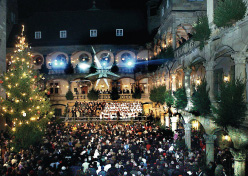
Stuttgart (through Dec 23) With its more than 280 decorated stands, is one of the oldest and largest Christmas markets in Europe. The Stuttgart Christmas Market is traditionally opened with a ceremonial concert in the inner courtyard of the Old Palace (Altes Schloss). Around the Altes Schloss, Schillerplatz, Kirchstrasse, Marktplatz and Hirschstrasse, small decorated wooden houses offer a range of Christmas items and gift ideas including Christmas tree decorations, crib figures, toys, woodcuts, puppets, lambskin shoes and candles. Culinary delights include hot chestnuts, German lebkuchen (gingerbread), roasted almonds, grilled sausages and mulled wine.www.stuttgart-tourist.de
Bremen Christmas Market
Bremen, on the River Weser close to the northern coast, puts a maritime twist on the classic Christmas market when the promenade along the river is transformed into Schlachte magic, a festive market offering historical, seasonal and maritime attractions. Another market with more than 160 beautifully decorated Christmas stalls are clustered in front of Bremen’s Church of Our Lady and the Roland Statue in the historical market square. www.bremen-tourism.de
Ruedesheim (through Dec 21) The Christmas market in Ruedesheim on the Rhine brings a festive feel to the romantic old town and its popular Drosselgasse Lane. More than 120 stands from 12 nations offer Christmas customs and traditions from around the world. Europe’s biggest Nativity scene can also be found in the market square. www.ruedesheim.de
Portugal is considered Europe’s oldest nation. Lisbon is the capital and the largest city in Portugal, and its history can be traced back to ancient days, first as a Greek trading post and later as a Roman municipium.
In the early Middle Ages, Lisbon was occupied by the Visigoths and later by the Moors. Alfonso I reconquered the city from the Moors in 1147, and during the next several hundred years Lisbon developed as the capital of the kingdom and as a trading center.
So that’s the quick history of Portugal and Lisbon, but what’s new? Well, there are a number of new hotels in Portugal that you may want to keep in mind when traveling there. Here’s a European Traveler rundown:
Photo credit: Antonio Sacchetti
LISBON REGION Lx Boutique Hotel – Lisbon The Lx Boutique Hotel is the newest inn in Lisbon, located in the Cais do Sodré district and minutes away from Chiado and Bairro Alto. The $7 million hotel has 45 rooms, each with a theme related to Lisbon, from the Tejo Persona (Fernando Pessoa lived in the building for some time, and it was the once the famed Hotel Bragança), Fado, Seven Hills and Bairro Alto. With its location near the historic districts of Lisbon, it is ideal for those who want to discover the city. www.lxboutiquehotel.pt
Hotel da Estrela – Lisbon The Hotel da Estrela, first hotel of the Lagrimas Group in Lisbon and a new hotel for the School of Hospitality and Tourism of Lisbon, is located in the Campo de Ourique, in the historic Palácio dos Condes de Paraty. The four-star project, designed by architect Miguel Cancio Martins, includes 19 rooms with three meeting rooms, a restaurant/bar, a garden and an event space. The training aspect is one of the points highlighted, and part of the staff will be final-year students. www.hoteldaestrela.com
Oitavos Hotel – Estoril Coast – Lisbon Region The Oitavos, a new luxury hotel, opened in the fall and is located just 20 minutes from Lisbon. The hotel features 142 guest rooms, a golf course built around sand dunes and saltwater swimming pools. This nature-inspired property is located on the family-owned Quinta da Marinha estate, within the Sintra-Cascais National Park. www.theoitavos.com/
CS Vintage Lisboa Hotel – Lisbon This five-star hotel includes 55 rooms, vintage restaurant, spa, indoor pool and latest web technology. It is located in the city center, just minutes away from Avenida da Liberdade. www.cshotelsandresorts.com/eng/cs-hotels/lisboa-cs-hotels
Altis Avenida –Lisbon The Altis Avenida is a charming new hotel in Restauradores Square, the historic heart of Lisbon’s city center and the main shopping district. All 72 rooms are equipped with the very latest technology and designed with 1940’s décor, maintaining the original combination of styles, fabrics and furniture. The hotel is a place where the past, present and future meet in a glamorous and sophisticated atmosphere. The bar and restaurant on the top floor provide a magnificent view over the city and is the ideal meeting place for those looking for the true feel of Lisbon. www.altishotels.com
Inspira Santa Marta – Lisbon This four-star, green-designed hotel is in the heart of downtown Lisbon. It provides prime comfort and hospitality, intertwined with the latest in wellness and sustainability. Feng Shui reflects the mood and is the main theme of the hotel. Located just off of Lisbon’s main Avenida da Liberdade, the hotel has a total of 89 stylish guest-rooms designed around Feng Shui themes such as earth, fire and water. The restaurant features Mediterranean cuisine and show cooking, all made with freshly prepared ingredients. www.inspirasantamartahotel.com
International Design Hotel – Lisbon This four-star hotel is located at Rua da Betesga in Lisbon. Urban, Tribal, Zen and pop are all design themes exhibited by the hotel’s unique rooms. The hotel is located on one of the oldest streets in Lisbon, Betesga, whose origins go back to the 15th century. www.internacionaldesignhotel.com/
Altis Belém Hotel – Belém – Lisbon A new boutique hotel in Belém by the Altis Group, known for the quality, sophistication and professionalism, is opening a new hotel in the Lisbon area. It is located near the Bom Sucesso docks, an important tourist area. This new, luxury boutique hotel features 42 high quality rooms and a restaurant serving Portuguese cuisine. Hotel Altis Belém also features a bar and terraced café, spa and meeting rooms. www.altishotels.com
PORTO & NORTH OF PORTUGAL REGION Six new hotels, restaurants and museums are among a few of the new offerings from the Grand Harbor, located around the World Heritage Center. Hotels include the five-star The Yeatman, the four-star Teatro, the Intercontinental Hotel, the hotel Star Inn Porto, the under-construction four-star Inspira Flores Hotel and the Carris Porto Ribeira.
Hoteles Rail – Porto Hoteles Rail, a Spanish hotel chain, has a new four-star hotel located in the heart of the historic center and close to the Douro River. It features 90 rooms, with a business-meets-modern concept. The investment created more than 300 jobs in the area, and the project is a part of a focus on the recovery and reuse of historical buildings in Porto.
Vidago Palace – Vidago Celebrating its centennial, the 70-room and suite Vidago Palace officially reclaims its place as one of Europe’s great historical resorts. Located within a 250-acre estate, an hour from Porto, Vidago Palace has been extensively renovated and restored over the last two years. Embracing its Belle Epoque heritage, Vidago Palace is a majestic Portuguese country house with all the services of a world-class luxury hotel. www.vidagopalace.com
A room at the Yeatman
The Yeatman – Porto The Yeatman opened its doors as the first five-star hotel in the Portuguese city Vila Nova de Gaia. All the rooms overlook the spectacular Ribeirinha Porto and are decorated in a classical style. The hotel is committed to protecting the environment and devotes half of the property to elegantly-crafted gardens, including an olive tree more than 1,300 years old, a butterfly garden and endangered plants attracting an array of bird species. The hotel is integrated into the landscape, mimicking the slopes of the Douro River. It offers a total of 82 rooms, as well as the master suite hotel that is separated from the rest of the building and can be accessed from the garden. www.the-yeatman-hotel.com
CENTRO DE PORTUGAL REGION Casa da Insua This five-star boutique hotel is a converted 18th century, baroque-style manor in Penalva do Castelo. Located southeast of Porto, it features an impressivea façade and gardens. It features 21 rooms, nine suites and three one-bedroom and two two-bedroom apartments. On-site facilities include a restaurant, museum, reading and game rooms, a chapel and a wine-tasting room. The hotel also has a selection of rooms and spaces available for meetings and other events. Prices include breakfast. www.casadainsua.pt
Casa das Penhas Douradas Located at the heart of Serra da Estrela National Park, this hotel features some additional new rooms totaling 18, a spa, restaurant, heated pool and bikes. The rooms are wood birch-paneled with large windows and verandas, offering a stunning view of the mountains. Each room has an LCD television, a DVD player, and an iPod player, providing a home-away-from-home atmosphere. Casa das Penhas Douradas is located minutes away from the airport. Prices include breakfast. www.casadaspenhasdouradas.pt
Vila Galé Coimbra The city of Coimbra has the new four-star Hotel Vila Galé Coimbra. This hotel is located in the Coimbra historical center, overlooking the Mondego River. www.vilagale.pt
ALGARVE REGION Martinhal Resort Martinhal Resort was officially inaugurated in what is being touted as Portugal’s first high-luxury family resort in the Algarve town of Sagres. Located on the rocky, southwestern point of Portugal, Sagres is where the first caravels were launched during the Age of Exploration. Today, the town boasts breathtaking views of the Atlantic, many of which can be seen from the Martinhal Resort’s houses, cottages and luxury villas. The theme at this five-star resort is “Barefoot Luxury,” and the staff aims to provide a relaxed experience. All rooms have private terraces with ocean views. The on-site restaurant, O Terraço, sits atop the pavilion and offers guests the option of enjoying a simple coffee or a full gourmet meal while overlooking the sea. Nature enthusiasts will enjoy the protected lagoon, which is part of the Costa Vincentina Natural Park. www.martinhal.com/
Real Marina Hotel & Spa Real Marina Hotel & Spa is a luxury resort overlooking the Ria Formosa, a protected natural reserve. Contemporary yet traditional, the hotel caters to both the leisure and business traveler with full use of facilities for each segment of the market. Accommodations include 132 double-rooms and 12 suites. Facilities include two restaurants, two bars, heated indoor and outdoor swimming pools (including a children’s pool). www.realhotelsgroup.com
Longevity Wellness Resort Monchique – Condo Hotel The Longevity Wellness Resort Monchique was inaugurated as being a green facility with a focus on wellness and relaxation. Properties here are a mix of vacation homes and rentals. The development is in the Algarve’s mountains located around the picturesque town of Monchique, with both mountain and coastal views. It has 195 one-bedroom apartments with amenities such as outdoor and indoor swimming pools, restaurant and bars, driving range and putting green, library, cinema and the Longevity Anti-Aging Spa. www.longevitywellnessresort.com/
MADEIRA REGION Hotel da Vila Located by the beach, this property offers 16 rooms of simple yet elegant design that mixes blue Portuguese tiles with ancient wood to create a chic and rural concept. www.hoteldavila.com/