Happy to See You in Belfast

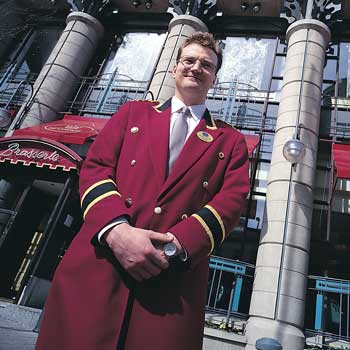
Bellhop at the Europa Hotel

By Carol Price Spurling
Photos by the author and courtesy Belfast Welcome Center

The first time I visited the Emerald Isle more than 20 years ago I steered clear of troubled Belfast. But I’m older and wiser now, and Belfast, too, has grown up, transformed from a self-absorbed, divided town into an extroverted and welcoming world-class city.

Belfast offers Victorian charm in every quarter and has retained the best of what Ireland is famous for: warm hospitality, atmospheric historic and cultural sites, and easy access to the lush unspoiled countryside. In Belfast, they’re glad to see you, not just your wallet, and what a difference that makes.

BELFAST HIGHLIGHTS
West Belfast’s Shankill and Falls neighborhoods saw most of the “Troubles” that erupted in the early 1970s. The Peace Walls that separate them are still standing, but visitors are welcomed on both sides and the practice of customers being searched before entering a store or office was retired years ago. For those interested in an insider’s view of Belfast’s political divide, Coiste Political Tours (www.coiste.ie/p_tours.htm) offers guided tours by Republican ex-political prisoners. Or, take a taxi tour to see wall murals and other relics from the bad old days (West Belfast Taxi Association, www.wbta.net).

The center of Belfast, Donegall Square, features Belfast City Hall (www.belfastcity.gov.uk), an embellished stone edifice built in 1888 as a monument to Belfast’s bright future.

All metro buses lead to the bustling square, also home to literary gem Linen Hall Library (www.linenhall.com). In this old linen warehouse, transformed into a library in 1788, visitors can access the cozy library’s unique archives such as the Northern Ireland Political Collection and the C.S. Lewis Collection. Enjoy the library’s tranquil wood-paneled ambiance and a view of City Hall by taking a tea break in the upstairs café.

A horse-drawn carriage strolls past the Ulster Transport Museum

On Fridays and Saturdays the oldest Victorian-era covered market in Ireland, St. George’s, fills up with local shoppers intent on finding a bargain or tracking down the best fresh food in the region (www.belfastcity.gov.uk/markets). The Saturday market is devoted to food. You won’t go away hungry, with 250 stands offering everything from oysters to Irish cheeses to seaweed tapenade to tapas to sausages in curry sauce. Look for locally made “Belfast in a box” chocolates that celebrate Belfast landmarks, accompanied by an illustrated booklet (www.citycentres.com).

Everyone knows where the Titanic met her end but did you know she was born in Belfast? The city’s proud shipbuilding heritage is still obvious with the huge yellow cranes in the Harland and Wolff shipyard –- nicknamed Samson and Goliath — towering over Queen’s Island and the Titanic Quarter on the city’s eastern edge.

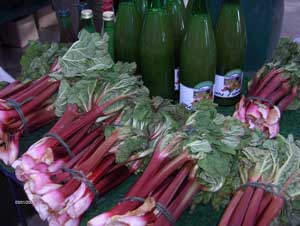
(left) Sampling seaweed at St. George’s Market


Belfast celebrates its past with the Titanic Made in Belfast Festival every March (www.belfastcity.gov.uk/titanicfestival), when free bus tours of Queen’s Island are offered by the city on Saturdays and Sundays.

My personal favorite from the tour: the inside of the design room at Harland and Wolff’s offices, where draftsmen labored under a cathedral-like arched ceiling to draw the ship’s plans.

Shores of the River Lagan

DO YOU NEED A CAR?
Although Ireland and Northern Ireland aren’t famous for their extensive rail networks, between trains, buses, and taxis you can get anywhere you need to go in the greater Belfast area and environs without having to rent a car –- or drive on the left. Coach tours and trains also run directly north to Portrush, with convenient connections to Giant’s Causeway, Dunluce Castle, and Bushmills Distillery. Along the northern and southern shores of Belfast Lough, rail service is frequent and affordable, so getting to top attractions just outside Belfast, like Carrickfergus Castle (www.ehsni.gov.uk/carrick.shtml) or the must-see Ulster Folk and Transport Museum (www.uftm.org.uk/) is easy peasy. Day return tickets are offered at 1/3 off the standard rate if you leave after the morning rush hour, and families can get special ticket deals too (www.translink.co.uk).

But to see some of Northern Ireland’s diverse natural beauty and historic architecture (Environment and Heritage Service, www.ehsni.gov.uk/other-index/places.htm), a car will be very helpful. Most recommended is to make a day of driving north along County Antrim’s Causeway Coastal Route, where the craggy cliffs and wild sea spray on one side is balanced by charming villages and green pastures dotted with tranquil sheep on the other. Giant’s Causeway — a stunning outcropping of columnar basalt — can be busy during the tourist season but has been kept remarkably uncommercialized. Visit in the early morning or late afternoon for the best light at this geological wonderland (www.causewaycoastandglens.com).

Another lovely drive is west through the Fermanagh Lakelands, home of Belleek pottery, and National Trust gem Castle Coole (www.fermanaghlakelands.com).

WHERE TO EAT AND DRINK
Celebrity chefs Paul and Jeanne Rankin have put Belfast on the culinary map with Cayenne Restaurant (www.rankingroup.co.uk) and Roscoff Brasserie. Up and down the Golden Mile on Dublin Road, foodies will be spoiled for choices of great pubs, cafés, bistros and restaurants.

Chef Michael Deane runs Northern Ireland’s only Michelin-starred eatery at Deane’s Restaurant (www.michaeldeane.co.uk); his newest venture is the contemporary bar and grill Deanes at Queens, located in the Queen’s University Common Rooms.

Coffee addicts never fear, Belfast baristas know what they’re doing. You can’t go wrong visiting any one of the seven Clement’s coffee shops, where coffee drinking is practically a spiritual pursuit, and the creamy hot chocolates are served in a large bowl.

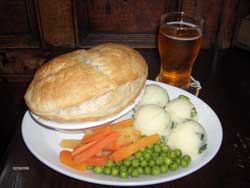
(left to right) Dining at one of Chef Michael Deane’s Belfast restaurants; Steak and Guinness pie is an Irish specialty

WHERE TO STAY
In downtown Belfast itself, a famous landmark is the 4-star Europa Hotel (www.hastingshotels.com) conveniently located just in front of Great Victoria Street rail station and the Europa Buscentre. Head concierge Martin Mulholland will make sure you get everything you need, even if you’re not as famous as some guests who’ve stayed there, like Bill Clinton, Julia Roberts and Elton John.

For a more secluded getaway try the 5-star Culloden Hotel in Holywood, overlooking Belfast Lough (www.hastingshotels.com), or The Old Inn in picture-perfect Crawfordsburn (www.theoldinn.com), both within easy reach of the city.

For less expansive budgets there are dozens of guestshouses, B&Bs, self-catering holiday apartments, hostels, and budget hotels both in Belfast and in neighboring communities. Some are chic, some charming; choose according to your mood.

The Premier Inn hotel (www.premierinn.com) boasts a great central location and is spanking new to boot. The Ash-Rowan Town House (tel. 9066 1758) offers a choice of nine gourmet breakfasts, with a side of historic significance: the Ash-Rowan was once the home of Titanic designer Thomas Andrews.

If you get out into the Fermanagh Lakelands and wish you could stay, check out Belle Isle Castle (www.belleisle-estate.com), outside Enniskillen near Lisbellaw. The old stables and coach house have been transformed into comfortable holiday rentals, with a variety of outdoor activities available, as well as day-long cooking classes taught by Irish chef Liz Moore. You can even rent the castle for a group stay, or a small wedding.

WHEN YOU GO
If you’re planning a trip to Belfast and Northern Ireland, be sure to visit the Belfast Welcome Centre website, www.gotobelfast.com. Like the office itself located at 47 Donegall Place in the city center, it is user-friendly, multi-lingual, and comprehensive. Be sure to pick up copies of their excellent themed city guides.

The Northern Ireland Tourist Board website is www.discovernorthernireland.com. Another free publication to pick up: Belfast In Your Pocket (www.inyourpocket.com). Published every couple of months, it always has the most up-to-date happenings, complete with maps of the city.

Magical Malta

This Mediterranean country, 58 miles south of Sicily, has everything but a high profile

By Susan MacCallum-Whitcomb

Samuel Taylor Coleridge… Lord Byron… Sir Walter Scott…they all found inspiration in Malta’s legendary landscapes. It was Winston Churchill, however, who summed the place up best when he dubbed it “the tiny rock of history and romance.” 

This three-island archipelago, covering only 122 square miles, certainly is tiny. Moreover, it reputedly has the world’s greatest concentration of historic sites. The romance quotient is remarkably high, too; though for centuries, most who came here couldn’t have cared less. 

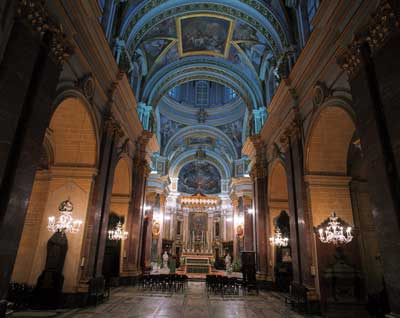
St. John’s Cathedral, Valletta
Courtesy of Malta Tourism Authority/www.visitmalta.com

Malta’s strategic location was a far bigger attraction. Positioned midway between North Africa and the European mainland, it lured empire-builders from the ancient Phoenicians and Romans through to the imperial Brits, who prized Malta so much that they stayed for more than 150 years before pulling out in 1964. In their absence, moviemakers -– including those responsible for Gladiator and Troy -– moved in, drawn by a wealth of heritage sites, a camera-ready coastline and a reliably sunny climate. 

Of course, the same attributes that make Malta an ideal filming locale make it an ideal vacation destination as well. As an added bonus, Malta, unlike her more popular neighbors, has an English-speaking population (it’s one of the legacies of Britain’s colonial rule), which means you can roam at will without ever having to worry about language barriers, if you speak English.

KNIGHT FEVER

The logical starting point is the capital, Valletta. The fact that this small harbor city rates as a UNESCO World Heritage site is thanks to the crusading Knights of St. John. After being forced out of the Holy Land by “heathen hordes,” members of the elite order were offered these islands as a new home base in return for one Maltese falcon per year. Happily, the token rent left enough in their coffers to fund a building spree that lasted from 1530 to 1798. 

The results are visible in the Grand Master’s Palace, the opulent Manoel Theatre, Fort St. Elmo (a star-shaped citadel that was still fending off naval attacks in the 1940s), and the over-the-top auberges the knights called home. Even more evocative is their crowning achievement, St. John’s Co-Cathedral: a baroque extravaganza filled with such an abundance of gilt work, frescos, mosaics and paintings (among them Caravaggio’s massive “Beheading of St. John”) that it’s hard to find a bare surface. 

Because of the density of sites within Valletta, it is not uncommon to see tourists  charging brusquely down Republic Street –- from the city gate right to the sea –- frenetically ticking off sites in their guide book. But relaxing also has tangible rewards here. For instance, centuries of foreign occupation have made Malta a culinary crossroad. So you can get a combined course in history and anthropology by merely sitting down to dine! 

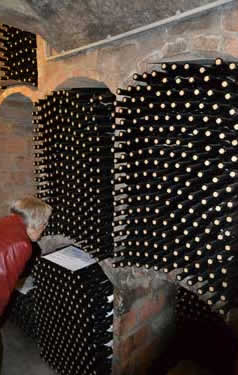
Interested in eating your way through the entire curriculum? Try breakfasting on Arab-inspired pastries at Caffe Cordina, Valletta’s landmark coffeehouse on Piazza Regina, then ciao-ing down at La Cave, a 16th-century wine cellar converted into an Italian-style lunch spot. Later, take a break for traditional English tea at Hotel Phoenicia’s Palm Court Lounge; and for dinner pull up a chair at Barracuda, a suburban seafood restaurant housed in a 17th- century mansion.

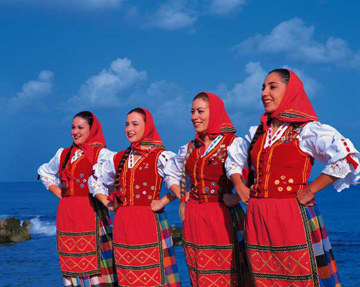
Traditional Maltese costumes
Courtesy of Malta Tourism Authority/www.visitmalta.com

THE FEMININE MYSTIQUE

While the Knights of St. John were Malta’s best known architects, they weren’t the first. That distinction goes to a Neolithic cult that spent more than a millennium building a mystery. Archeological evidence proves that they began work on a series of megalithic temples about 3800 B.C. It also shows that their efforts were dedicated to the Great Mother: a goddess rendered in clay as a voluptuous woman known simply as the “Fat Lady.” 

The rest remains an enigma because, inexplicably, the Fat Lady began to sing… By 2000 B.C. those who worshiped her had disappeared. As a result, we’ll likely never understand how a people who hadn’t discovered either metal tools or the wheel managed to construct sophisticated structures, complete with archways and corbelled ceilings, on such a colossal scale. Nonetheless, we may appreciate the fruits of their labors, each of which has its own claim to fame. 

On the country’s “big island” (itself named Malta), visitors marvel at the Tarxien Temples, the most richly-decorated of the megaliths; or the twin temples of Hagar Qim and Mnajdra, which are notable for their seaside location. The Hal-Saflieni Hypogeum, conversely, wins top marks for ingenuity: carved from solid rock with antler picks and stone axes, the site extends 36 feet below a suburban street near Valletta. The grand prize, though, goes to the Ggantija Temples on Gozo, a 30-minute ferry ride away. 

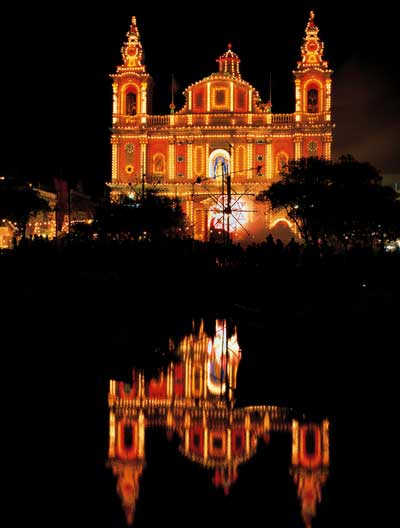
(left to right) Msida Church; Mdina Cathedral
Courtesy of Malta Tourism Authority/www.visitmalta.com

Predating Stonehenge and the Egyptian pyramids by 1,000 years, they qualify as the oldest freestanding structures on earth. Such antiquity is difficult to grasp (quite frankly, the centuries-old graffiti is sufficient to dazzle most people). Factor in the sheer size of the stones used in construction – some of which stand 20 feet high and weigh 50 tons – and it is almost possible to believe that the Ggantija Temples were, as their name implies, built by a giantess. 

MOTHER NATURE’S HANDIWORK

As if the mother lode of archeological sites wasn’t enough, Malta has a slew of natural attractions as well. The coastline is justifiably famous for geological oddities like the Azure Window, a towering stone arch encrusted with fossils. A lot of ink is also spent extolling Maltese beaches, particularly one on Rambla Bay where the mythological sorceress Calypso is said to have seduced Odysseus. But, truth be told, most are more like limestone shelves than sandy strands. So they seldom measure up to U.S standards.

The sunbather’s loss, however, is the diver’s gain because the rough terrain extends well beneath the waterline, creating seductive grottoes, dramatic drop-offs, and bizarre rock formations that beg to be explored. Conditions are optimal, too. The Mediterranean is clear here, with visibility up to 130 feet. Water temperatures rarely drop below 55° in winter, allowing for year-round diving. Plus there are dozens of outfitters happy to supply you with equipment or take you out on an organized dive. 

Non-divers can get a glimpse of what lies beneath by signing on for a glass-keeled boat cruise around St. Paul’s Bay, the spot where the apostle was shipwrecked in 60 A.D. Meanwhile, those content to be on the water rather than under it can rent whatever they need at local sports centers. Since all three Maltese islands have them (even Comino, which has no resident population!) getting hold of a kayak, windsurfer or sailing craft is never a problem. 

In this part of the world, though, the ultimate boating experience is also the oldest: namely crossing Valletta’s glorious Grand Harbour on a luzzu. These small, vividly-colored vessels have been plying local waters since the Phoenicians’ time and their prows are still painted with the god Osiris’ watchful eyes. Nowadays the luzzu serves as Malta’s unofficial national symbol. And nothing could be more appropriate in a tiny, waterbound land where myth and history remain inextricably bound.

WHERE TO STAY

Tourist zones around Sliema and St. Julian’s are crammed with upscale hotels. Hilton, Westin, Radisson: all the big names are represented. But for the optimal combination of amenities and location, it’s hard to beat Valletta’s Hotel Phoenicia. Although it is poised right at the city gates and has all the accoutrements of a grand hotel (think marble floors, plush upholstery and impeccable service), bargain hunters can snag double rooms there for as little as 90€ a night off season. Those who fantasize about lounging around a Mediterranean villa may prefer to book a vacation rental though Gozo Great Escapes. Heritage properties with private pools start at 595€ per week, so you can enjoy the high life without paying a high price. 

Designer Hotels of Paris

Photos courtesy Paris Convention and Visitors Bureau

Designer hotels: everything started in Paris a few years ago with the trend toward boutique hotels.

The term is used for small capacity hotels with three or four stars, which offer clients a personalized and attentive welcome and a particularly refined and cozy decor.

Following the success of this type of hotel, certain hotels decided to take the concept further by entrusting their decor to interior designers and architects and providing their guests with a contemporary atmosphere: designer furniture, use of new materials, the latest technologies and contemporary works of art.

Some hotel groups have made this design orientation their speciality. This is the case for the Murano Hotels and Resorts, which owns the Murano Urban Resort Hotel and the Kube
Rooms and Bars Hotel
 in Paris. The first, located between République and Bastille on the edge of the Marais, drew attention with its immaculate white design aesthetic, its bar lounge with colored seats, its lobby with a huge contemporary fireplace and its guest rooms which mix high-tech and state-of-the-art design. The second, located in the north of the capital, applies the same formula to the design of its guestrooms and offers an out-of-the-ordinary experience with its bar completely made of ice.

The Astotel group also offers 15 Parisian hotels where the designer touch captivates guests in search of a contemporary atmosphere. This is the case at Le 1223 Elysees, a hotel where beautiful materials (Swarovski crystal, marble, etc.) provide a contemporary feel, or at the Hotel Joyce, which combines the latest technology gadgets (iPod stations) with products answering to the needs of today’s travelers (a range of organic products), all in a contemporary decor that play on the codes of traditional hotel charm and character (outlines of bed heads and features of interior decor drawn on the bedroom walls).

The Relais de Paris group reinvents the classic Relais style with a contemporary, designer version. The BLC Design Hotel offers an immaculate white setting in the Charonne district. The 29 guest rooms all have a monochrome look, combining refined furniture with black and white photographs.

At the Standard Design Hotel, not far from the lively Bastille District, black and white begins in the reception areas. The young designers invited to decorate the hotel have created a contemporary, trendy place. The Color Design Hotel, between Bastille and the Gare de Lyon, lives up to its name and offers guests lively colors with special touches in the guest rooms and bathrooms. The vaulted breakfast room follows the same concept with a contrast provided by exposed stonework. Located in the picturesque Montmartre district, the Chat Noir Design Hotel plays the designer card while respecting the traditional Parisian style of this area. The decoration amusingly evokes the shadow plays that gave the Théâtre du Chat Noir its reputation, while offering refined white furniture complemented by warm orange and brick tones.

The wave of designer hotels can be found in all districts of Paris, each revealing a leading concept and specific style of decoration. Another example in the Latin Quarter is the Five Hotel. This hotel’s concept is the awakening of the five senses: smell with fragrances created just for the Five, touch with the use of sensual materials in the guestrooms and particularly the ultra-contemporary reinterpretation of Chinese lacquer, taste with a breakfast of the best Viennese pastries from the Monge bakery, sight with the fibre-optic lighting effects and luminous atmosphere of the bedrooms, and hearing appeased by the hotel’s silence.

In the same neighborhood, the Hotel Design de la Sorbonne has had a makeover and offers an upscale and elegant designer stay. Dark wallpaper, luxury fabrics and a contemporary photography exhibition on every level set the tone of the establishment.

The Hotel Le A, in the heart of the fashion district between the Champs-Élysées and the rue Saint Honore, mixes an ultra-designer look of the interior decor with a cozy feel in the reception areas designed to look like those of a private apartment, with a contemporary-style fireplace, comfortable couches, lounge with a library filled with art books, a bar under a 19th century glass roof and 25 sumptuous guestrooms where a refined sober style contrasts with bold contemporary drawings decorating the walls.

In a more understated style, design is also honored at the Hotel Arvor Saint-Georges, in the peaceful 9th arrondissement. The 30 guestrooms offer the tranquility of a contemporary and convivial private residence. In the 14th arrondissement, LeFabe Hotel stands out from the rest with its 17 guestrooms, each offering an original atmosphere. The names of the rooms (Mona Lisa, Orchidées, Together, etc.) are an indication of the designer decoration offered to guests. In the 16th arrondissement, Mon Hotel, a small establishment of 37 guestrooms a few steps from the Champs-Élysées, boasts luxury designer decor with the use of materials like leather, Alcantara fabric, and wood.

LE 123 ÉLYSÉES
123 rue du Faubourg-Saint-Honoré, Paris 8th
Tel +33( 0)1 53 89 01 23
www.astotel.com/hotel-le-123-elysees-paris.php
HOTEL LE A
4 rue d’Artois, Paris 8th
Tel +33 (0)1 42 56 99 99
www.paris-hotel-a.com
HOTEL ARVOR SAINT-GEORGES
8 rue Laferrière, Paris 9th
Tel +33 (0)1 48 78 60 92
www.arvor-hotel-paris.com
BLC DESIGN HOTEL
4 rue Richard-Lenoir, Paris 11th
Tel +33 (0)1 40 09 60 16
www.blcdesign-hotel-paris.com
CHAT NOIR DESIGN HOTEL
68 bd de Clichy, Paris 18th
Tel +33 (0)1 42 64 15 26
www.hotel-chatnoir-paris.com
COLOR DESIGN HOTEL
35 rue de Citeaux, Paris 12th
Tel +33 (0)1 43 07 77 28
www.colordesign-hotel-paris.com
HOTEL DESIGN DE LA SORBONNE
6 rue Victor-Cousin, Paris 5th
Tel +33 (0)1 43 54 58 08
www.hotelsorbonne.com
LE FABE HOTEL
113 bis rue de l’Ouest, Paris 14th
Tel +33 (0)1 40 44 09 63
www.lefabehotel.fr
FIVE HOTEL
3 rue Flatters, Paris 5th
Tel +33 (0)1 43 31 74 21
www.thefivehotel.com
HOTEL JOYCE
29 rue la Bruyère, Paris 9th
Tel +33 (0)1 55 07 00 01
www.astotel.com/hotel-joyce-paris.php
KUBE ROOMS AND BARS
1-5 passage Ruelle, Paris 18th
Tel +33 (0)1 42 05 20 00
www.muranoresort.com
MON HÔTEL
1 rue d’Argentine, Paris 16th
Tel +33 (0)1 45 02 76 76
www.monhotel.fr
MURANO URBAN RESORT
13 bd du Temple, Paris 3rd
Tel +33 (0)1 42 71 20 00
www.muranoresort.com
STANDARD DESIGN HOTEL
9 rue des Taillandiers, Paris 11th
Tel +33 (0)1 48 05 30 97
www.standard-hotel.com

Continental Croatia: Europe’s Next Hot Spot?

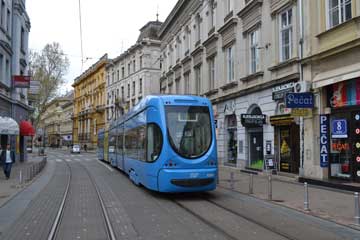
Tram on the streets of Zagreb

By Don Heimburger
Photos by the author

With trendy Croatia one of the top travel destinations these days, I learned quickly that everyone wanted to go with me when I visited this small southeastern European country, tucked between Bosnia, Hungary and Slovenia.

Who wouldn’t want to go to the country that invented the sophisticated cravat, the forerunner of the modern tailored necktie and bow tie, or was now producing a truckload of good white wines, or was bounded by the romantic Danube? Although this land still bears the scars of the Bosnian War which affected the region between 1992 and 1995, the country is gradually moving on.

The warmth of the Croatian people, the abundant agricultural possibilities of the land, and the natural beauty of the country’s rocky mountains and green woodlands are only now being discovered, and touted in national tourist publications.

Some eye-opening travel gems await those who venture into the awakening interior.

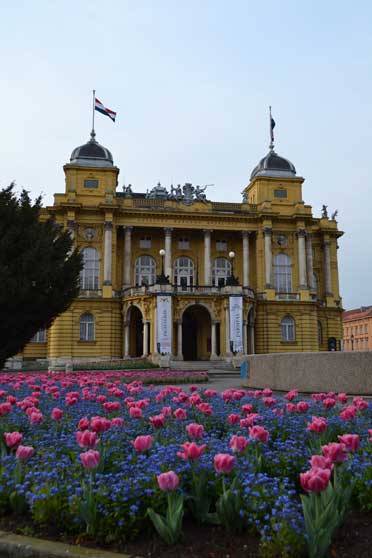
National Theater in Zagreb

CONTINENTAL CROATIA AND ZAGREB
Croatia is shaped somewhat like a horseshoe, with one side extending 1,100 miles along the Dalmatian Coast, with seaside Dubrovnik at one end and Croatia’s third largest city, Rijeka, at the other. The entire country of 4.2 million people is only as large as West Virginia, or just 21,829 square miles.

While I wasn’t going to where most tourists journey—the coast and the Adriatic Sea— the interior of the country presented its own set of unique opportunities for exploration. I started my venture at the capital, leafy-green Zagreb, which sits on the historic and political threshold between Eastern and Western Europe.

Sitting on the Pannonian Plain as well as on the edge of the Dinaric Alps, this Hapsburg-inspired city has been inhabited for centuries by people coming from all over Europe, thus insuring a rich cultural heritage. It is the home of Croatia’s parliament, government and its president. It sits next to the lush, forested slopes of Mount Medvednica, often referred to by the name of its summit, Sljeme.

The city’s elegant facades, a horseshoe of green spaces—eight green squares created by Milan Lenuci in the 1880s— and a growing contemporary scene, are attracting the curious traveler; more may come soon as well, as Croatia and thus Zagreb are poised to join the European Union in 2013. Known as Vienna’s little sister, Zagreb is smallish—about one million residents—which makes it easy to walk around without a car, meet the populace, and indulge in the city’s cultural and historical attractions, and growing nightlife. I did a little of each.

Palace Hotel, Zagreb

FLIGHT TO ZAGREB
My flight on Lufthansa from Frankfurt landed at Zagreb airport outside of town, where I hopped a cab to the Palace Hotel, located in an Art Nouveau palace in the center of the city. It was the first hotel in Zagreb, opened in 1907, across from a beautiful green park and where the likes of Orson Welles and actress Sophia Loren have stayed. I figured I was in good company.

Finished in elegant woods, the hotel’s lobby is inviting, and glass cases filled with historical artifacts give the visitor information about the history of this four-story gem.
Zagreb was on the route of the famous King of Trains, the Orient Express, where Hercule Poirot solved his most famous case, where Alfred Hitchock’s The Lady Vanishes was staged, and on which James Bond rode from Istanbul to London in the movie From Russia With Love. Everyone loves a train with a good mystery, and Zagreb uses these connections to promote its mystique as a city. The train station is just a few blocks from the Palace Hotel, and an old black steam locomotive decorates the lawn on one side of the station.

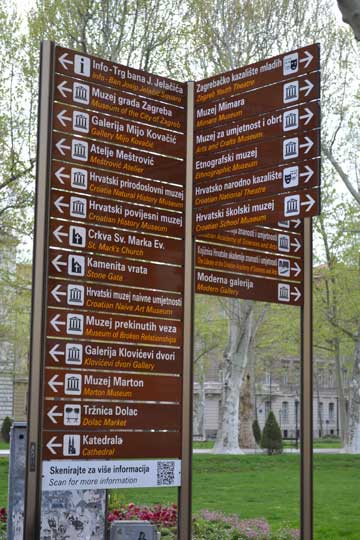
Like all major cities, Zagreb is divided into areas, but the Upper Town (located on a hill) and the Lower Town, where streets are laid out in a simplistic and government-mandated style, are two that most visitors will learn quickly. You could cover the town’s main attractions in two days, but a third day will offer the best impression of the city.
Zagreb’s main square, referred to as Jelacic plac, is a large, busy place with adjacent Ilica Street housing many shops. Croatians use the main square, just down from the hillside settlements of Kaptol and Gradec, to make connections with friends, to catch one of the many street trams pulsating here and there on tracks that run through the streets, or use the square’s large clock as their time-keeper. There are 37 clocks like this throughout the city, all maintained by the sixth generation watchmaker Lebarovic Dalibor, who has manufactured more than 200 public clocks in this country.

The main square, featuring a large statue of Croatian hero Ban Josip Jelacic, has been the commercial heart of the city since 1641. It is so large that fairs used to be held here; the buildings around the square date from the 19th century, and feature Biedermeier, Art Nouveau and post-modernism architectural styles.

TWIN-SPIRED CATHEDRAL
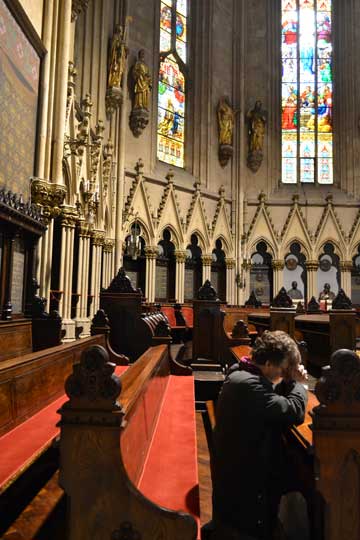
The city’s twin-spired landmark structure in the Kaptol neighborhood is the Cathedral of the Assumption of the Holy Virgin Mary, created by Hermann Bolle in the 19th century after an earthquake badly damaged the original church. In the 15th century it was the furthest outpost of Christianity. Beautiful marble side altars, statues and pulpit adorn the inside, as does the life-like tomb of Cardinal Alojzije Stepinac by Ivan Meštrović. You can’t miss it: it sits dead-center in front of the church near the choir.

While you’re there, notice the adjacent overpowering bishop’s palace with large turrets on the corners. The accompanying lawn features large colored Easter eggs during this season.
Not far away, the fortified 13th century Lotrscak Tower in Upper Town, signals 12 o’clock by loud cannon fire and trailing white smoke, as it has every day since 1877. The bells of the stone tower used to summon residents back into the town gates at night before they closed. After watching this display of time-keeping, wander a few steps down the hill to the family-owned Pod grickim topom restaurant, where you’ll be treated to large portions of pork, beef and spaetzle while overlooking the city.

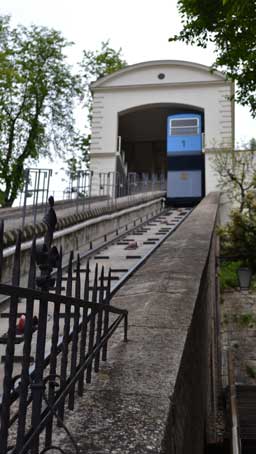
A funicular, the shortest in the world at 216 feet in length, takes you up to Upper Town in 55 seconds. Departing every 10 minutes, it accommodates 28 people each trip. Once powered by steam, the brilliant blue funicular pre-dates horse-drawn trams by a whole year.

At colorful St. Mark’s Church in St. Mark’s Square, you’re in the heart of Upper Town; the square used to be Gradec’s main market area. The 13th century Church of St. Mark’s is a Romanesque structure with Gothic arched ceilings and 15 Parler family statues that stand in the southern portal. The colorful roof is decorated with coats of arms of the triune Kingdom of Croatia, Dalmatia and Slavonia, as well as the city of Zagreb.

BUSTLING DOLAC MARKET
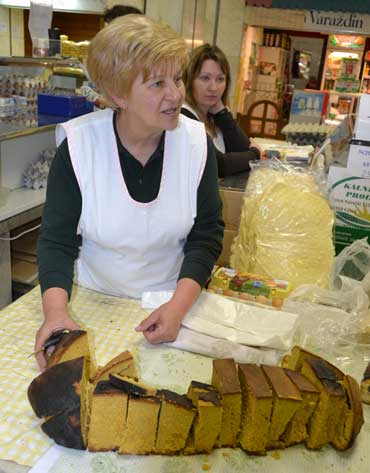
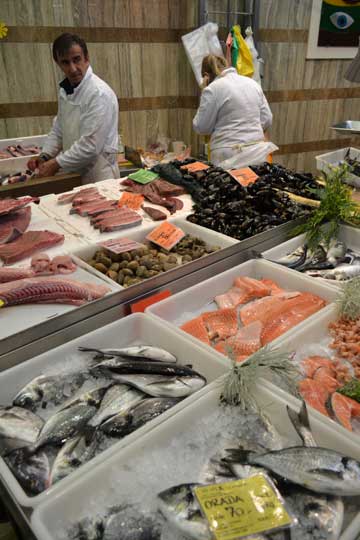
The Dolac open-air market is a must-see, must-do free attraction. Close by the Cathedral, sun-ripened fruit, fresh fish including octopus trucked in from the coast overnight, colorful vegetables and hearty meats, nuts and fragrant spices are sold every day of the week. Known as the “belly of Zagreb,” the market dates from the early 1900s.

Croatia is a religious country, with about 77% of the residents Roman Catholic. The Upper Town is entered via the Kamenita vrata or the Stone Gate, which is the only city gate still remaining. It was built in the Middle Ages, and today acts as a Christian way station for anyone wanting to give thanks, or to make requests. The small chapel inside, dedicated to the Virgin Mary, patron saint of Zagreb, houses a painting of Mary miraculously saved from a fire in 1731. At all times of the day, this small chapel—complete with several wooden benches— attracts worshippers and the curious.

Stop by Zagreb’s oldest pharmacy on Kamenita ulica (Stone Street) where you’ll discover a two-story white building which has housed this business since 1355. And built along the former Medvescak Creek is Tkalca, Zagreb’s colorful downtown street where you’ll find a plethora of nightclubs, small boutiques, traditional shops and cafes. Stop by the Bulldog, an upscale downtown bar where the drinks flow until 3 a.m. from Wednesdays to Saturdays. The decor features aviation and nautical themes, with propeller-shaped ceiling fans, and there’s a mezzanine observation level. A bowl of shelled peanuts to accompany a cool drink doesn’t cost much, either.

SAMOBOR
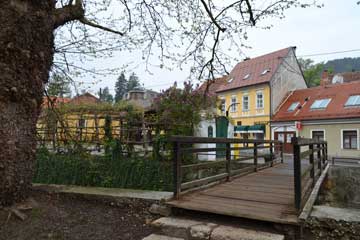
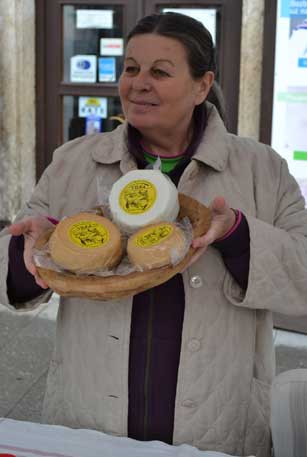
If you’re heading into the countryside, Samobor is one of Croatia’s best-preserved villages. The light rain and mist which covered the surrounding hills and the Gradna River that flows through them, presented a magical Sunday morning welcome. Local villagers presented their farm-fresh cheeses and honey in the market square, and smiles and free samples were plentiful, as merchants waited until the packed-to-the-rooftop Catholic church let out.

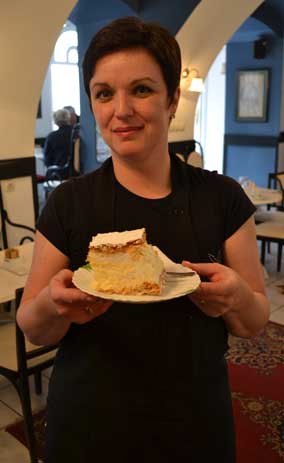
Many other locals were sitting in the Slasticarnica U Prolazu restaurant, having their Sunday coffee and Samoborska Kremsnita, a custard-colored 3 in.-high cream pastry square, a rich-flavored local tradition. Others were strolling down the path on the outskirts of town near the river, enjoying the budding of colorful flowers and trees, and soaking up the fresh fragrances of spring.

Samoborska Dremsnitz – a delicious dessert

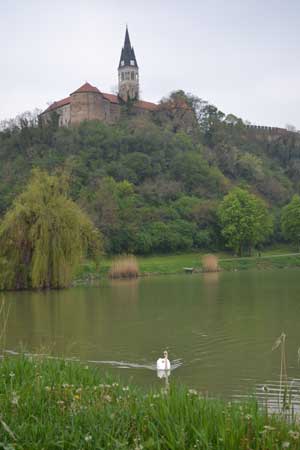
At the Town Museum, check out the intricately-woven folk costumes. Another option is a woodland stroll to the hillside park of Anindol that will take you to the ruins of Samobor’s 13th century castle, which you can see on the hill as you drive down the narrow road into town.

Samobor is also noted for Bermet, a local version of vermouth. This fortified wine, flavored with citrus fruits and aromatic herbs, goes well with crackers and the local Mustarda, a rich brown mustard with a fruity tang. Both the Bermet and Mustarda have been made for generations by the local Filipec family. A tour of their small facility and their shop, guarded by the family dog, will add extra interest to your visit.

Just west of Samobor are the Samobor Hills, a group of forested smooth-topped mountains which make great one-day hikes. The highest point is the 2,883-foot-high Samoborsko gorje, a two-hour walk from Soiceva kuca, a popular restaurant and recreation spot.

VARAZDIN
If you have time to explore Croatia further, a trip to Varazdin near the Slovenian border is worthwhile. With its 18th century Baroque churches and the oldest rathaus in Europe, Varazdin is a jewel. First founded because of its Stari Grad, a well-preserved 16th century castle, the town today evokes “oohs” and “ahhs” as visitors discover the Baroque facades. On a clear, sunny day, the town is spectacular.

The city, in fact, was the capital of Croatia in 1756, but fire destroyed 50% of it 20 years later. This gave the city a chance to rebuild in Baroque style, and thus today Varazdin enjoys the benefits of tourism. The city first came to light in 1181 in a document sealed by King Bela III of Hungary. It was granted the right as a free royal city 33 years before Zagreb, the locals are fond of pointing out.

The Town Hall (Gradska Vijecnica) has been the seat of the city’s town council since 1513, making it one of the oldest buildings of its type in Europe. You can sit out in front of the hall on the main square to soak in the sun, or have a coffee, or watch the changing of the guard by soldiers in their tall, black-tasseled hats between May and September.

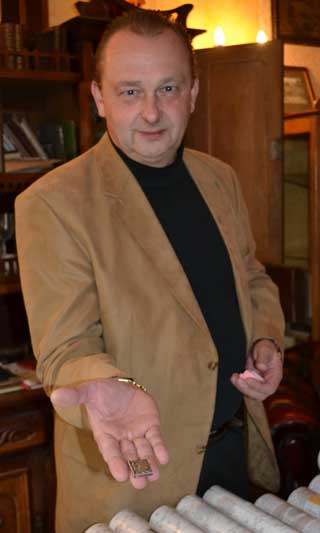
Zlatko Puntijar shows world’s smallest Croatian recipe book at Stari Puntijar Restaurant

The Cathedral of the Assumption with its magnificent interior became the seat of a diocese in 1997, and is noted as the first Baroque structure in town. Known for its acoustics, the cathedral is used during the Varazdin Baroque Evening Festival in September, where both domestic and foreign soloists and ensembles perform.

Take your camera with you to this picturesque town.
The Varazdin countryside produces “Varazdin Sauerkraut” (sour cabbage), pumpkin seed oil, honey, goat and sheep cheeses, and fruit wines with a low alcohol content.

SLAVONIA BROD
Stretching to the southeast of the country, Slavonski Brod, on the north bank of the Sara River, and bordering Bosnia, features the star-shaped Brodska Tvrdjava (Brod Fortress). With bastions and moats designed to protect against Ottoman soldiers, this huge embattlement could accommodate 4,000 soldiers. The local peasants built the fortress under a forced work program.

The town features the remains of a number of industries, including a large factory where Croatian steam locomotives were once manufactured. Past examples of the plant’s engines dot the factory entrance.

Memorial dedicated to Bosnian war victims

OSIJEK
Moving further into the interior of Croatia and to the east, the city of Osijek is the largest town in Slavonia. Located on the Drava River, the town was founded by the Romans in the first century AD, and after a number of battles, Osijek became the administrative center of the rich agricultural region of Slavonia.

During the battle for independence, it came under siege for several months. A long promenade leads along the river to a large modern suspension bridge which connects Gornji Grad to Copacabana, the town beach.

Close by Osijek is Kopacki Rit Nature Park, a large tract of marshland with many varieties of birds. Located between the Drava and Danube rivers is part of a region called Baranja, with abundant fertile farming land.

For an excellent meal, stop at the cozy restaurant Kormoran, located in the park. Some foods are especially prepared in a large black caldron over an open wood fire, and served at your table. You won’t go away hungry.

CROATIA’S VINEYARDS
If you enjoy wine, and touring vineyards, Croatia is “ripe” for the picking. Many of the wines I tasted—both reds and whites— were excellent. Croatia’s vineyards started around the 6th century B.C. in the coastal regions, and as far back as the 2nd century in the interior.

I especially liked the white wines such as Grasevina (pronounced: gra-she-vi-na), a wine cultivated in the countries along the Danube. Light and refreshing, it tastes different than Riesling, and can have slightly different flavors based on soil and sunlight. A bottle of Grasevina found its way home with me. Ice wines are also popular here, and are often awarded gold medals in competition. A 2009 Pinot Crni with 16.5% alcohol content also was a good wine, perfectly balanced.

Many of the vineyards I visited offer richly decorated banquet halls, capable of serving complete multi-course meals for up to 100-150 people, along with a variety of wines from their cellars. Winery Kutjevo, with the oldest wine cellar in southeastern Europe (dating from 1232); Belje, the biggest; and Ilocki Podrumi at Principovac all offer a variety of excellent wines. You might find bottles from these vitners in the U.S., although not much is exported.

Croatia is making a solid effort to produce and distribute their many wine varieties, and Zagreb hosts an annual Wine Festival that’s a great wine-tasting opportunity and is packed with visitors.

I found continental Croatia refreshing because of its simplicity, its natural beauty, its tasty foods and wines and its unassuming people. I expect Croatia’s interior to be one of the “hot” travel destinations in the years ahead.

As they say in Croatia, “Zivjeli” — a toast to your good health!

For more information about travel to Croatia, go to: www.croatia.hr/en

InterCity Hotels: In the Center of the Action

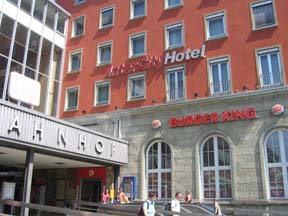
InterCity Hotel in downtown Munich

By Don Heimburger
Photos by the author

My business takes me to European cities several times a year, and I usually end up spending a lot of time in the “old town” or historic part of a city or town. It’s typically my favorite place to spend time, looking at the market squares, visiting hotels and restaurants, asking questions about town festivals and events, or visiting a museum or other local attraction.

When I’m done at the end of a day, I want to stay close to the center of town, because really I’m not done with my work. There’s always more to see and do in the evening, and that means generally after a late afternoon break, I’m back again, interviewing, taking pictures or attending some function. And again it’s usually near the center of town.

CENTER OF TOWN CLOSE TO TRAIN STATION
In Europe, the center of town means it’s in close proximity to the train station, because the railroads are and were instrumental in growing cities.

One company that likes to locate its hotels near the train stations is Steigenberger’s InterCity Hotel group, a chain of 31 facilities in Germany and one in Austria. Their own literature says, “If you are seeking a centrally located, functionally equipped and comfortable domicile, InterCityHotels are your perfect choice.”

In a recent business deal, the Egyptian tourism corporation Travco Group became a majority stockholder in the Steigenberger Hotel Group. “Particular focus will be given to international expansion of the brands Steigenberger Hotels and Resorts and InterCityHotel,” says Hamed El Chiaty, founder and owner of the Travco Group.

On a recent trip to Munich and Freiburg, I booked rooms at the InterCity Hotel in both cities. From the Munich train station, where I arrived from the airport, I only had a few steps before I saw the familiar InterCity sign at one end of the train station.

FEATURES OF HOTEL
The five-story hotel has 198 rooms and suites, floors for non-smoking, with all rooms sound-proofed and air-conditioned. The soundproofing was a good idea, as next to a train station, it can be fairly noisy at times. Rooms feature a bathroom with shower, toilet, hair dryer, cable television and a writing desk. There was a WiFi connection in the room. The hotel featured two elevators and a restaurant (Fleming’s Brasserie & Wine Bar), where the morning’s complimentary breakfast was served.

I was happy to have room air conditioning when I was there, as it hit 95 degrees in the afternoon in Munich, a rarity for this city so close to the Alps.

A convenient part of any InterCity booking is a complimentary card that allows guests to use local public transportation free of charge. So if you want to go to the Marienplatz, as an example, which I did several times, I just presented my card at the train station when needed, and I enjoyed free transportation. The city center is less than a mile away.

Intercity hotels are mid-range in price, clean and walkable to the inner city. In the morning, a buffet-style breakfast was served with scrambled and hard-boiled eggs, sausage (white Munchener sausages), several types of yogurt, two types of juice, hard rolls, whole grain breads, crossiants and pastries, bacon, large pretzels, a variety of soft and hard cheeses, six types of cereals and a variety of cold cut meats.

There was also dried fruits, fresh fruits such as watermelon, pineapple, and a bowl of mixed apples for guests. I was ready to start my day!

The lobby downstairs was sparse but featured comfortable chairs and couches for guests, as well as a few tables.

THE FREIBURG INTERCITY
Later on, I took the train to Freiburg near the Black Forest, where again a stay at the InterCity there kept me close to the train station and was only a few blocks from downtown. The hotel, in fact, is just a few steps from the entrance to the train station.

This multi-level hotel features 152 guestrooms, had non-smoking rooms, cable television, direct dial telephones, a modem/fax link, a writing desk and a mini-bar. There was no air conditioning, so with the hot weather, keeping the window open was a necessity; I was told the typical summer high temperature doesn’t require air, and it’s not available in most Freiburg hotels.

The room had a shower, toilet, hairdryer, and a restaurant and a bar downstairs. The hotel staff was pleasant and I noticed they was able to answer visitors questions about the train schedules and the city. Again the room was clean and had the basics. The hotel even had rooms for the disabled if needed.

In all, a stay at a InterCityHotel affords travelers a convenient location for a mid-range price, with breakfast included.

MORE HOTELS TO OPEN
More InterCity Hotels are scheduled to open with the merger of the Travco Group. Steigenberger’s Chief Executive Officer André Witschi says that the company will continue to invest in improving the quality of their hotels, and international expansion will help them to increase brand awareness for Steigenberger Hotels and Resorts and InterCityHotels.

In 2010 and 2011 InterCityHotels will open five new locations in Germany: at the Berlin-Brandenburg Airport and in Bonn, Darmstadt, Mannheim and Ingolstadt.

For more information, go to:
www.intercityhotel.com
www.muenchen.intercityhotel.de
www.freiburg.intercityhotel.de

Contact the hotels by e-mail: info@muenchen.intercityhotel.de
info@freiburg.intercityhotel.de

If you are arriving by train:
www.raileurope.com