Afloat on the Rhine and Moselle

A dream river voyage on the Scenic Opal spotlights cozy towns in the heart of Europe

By Randy Mink

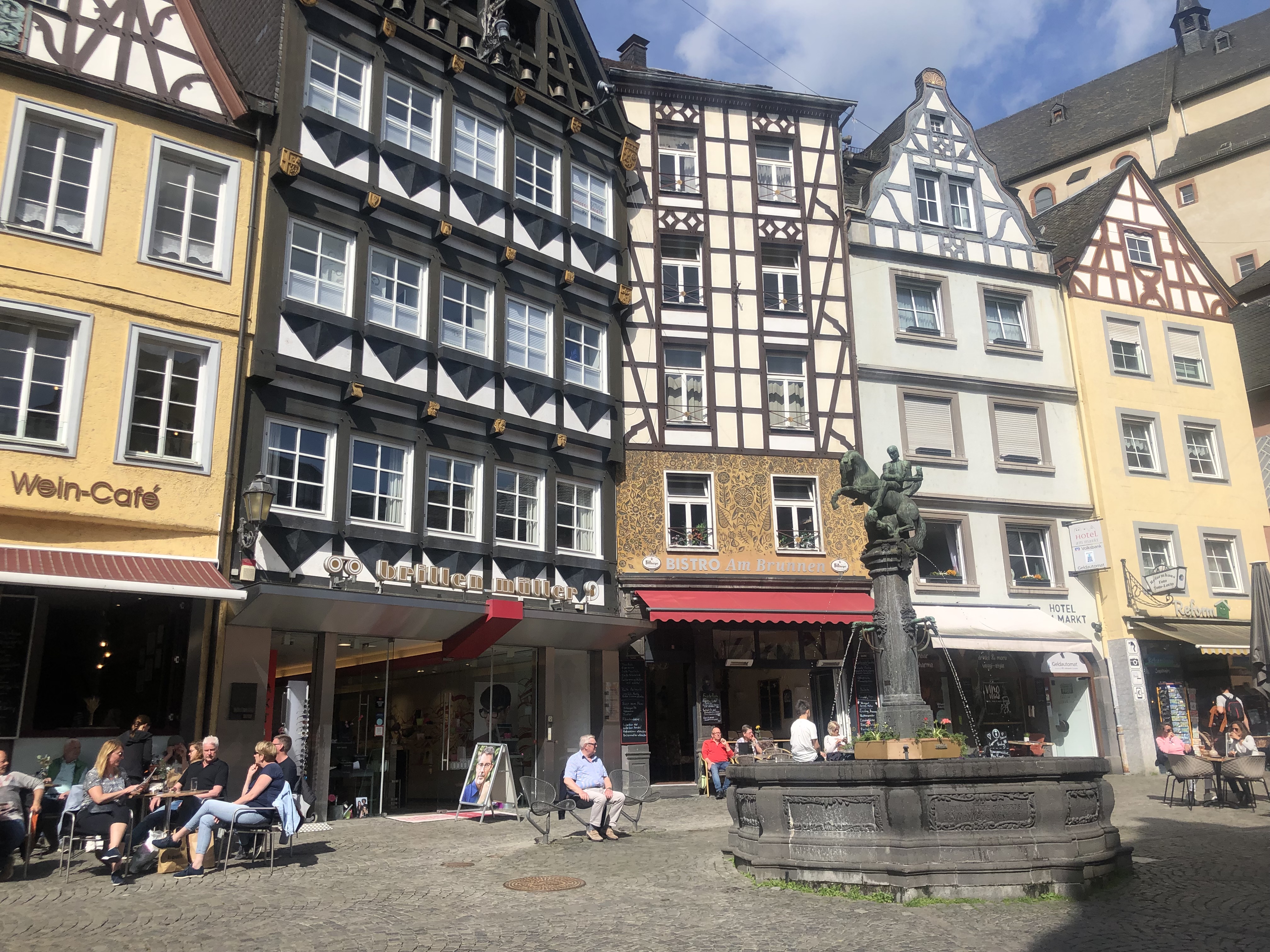
With its half-timbered houses, tangle of cobbled alleyways and picture-perfect castle perched on a crag high above the market square, the German village of Cochem struck me as something plucked from a medieval fairy tale.

Almost too good to be true, the Moselle River town of 5,500 was one of several stops on “Charming Castles & Vineyards of the Rhine & Moselle,” a seven-night cruise itinerary offered by Scenic, an Australia-based company with 12 luxury river ships in Europe. My brother and I were aboard the 163-passenger Scenic Opal, our floating hotel for the week.

Happily, in Cochem and some other ports of call, the historic town centers lay just steps from the ship’s gangway. I love being in the middle of everything within minutes of disembarking.

Clockwise: The Moselle River town of Cochem, Germany, as seen from hilltop Reichsburg Castle. (Photo credit: German National Tourist Board)
Reichsburg Castle looms high above the Moselle River town of Cochem.  (Larry Mink Photo)
Cochem charms visitors with its ancient, half-timbered buildings. (Randy Mink Photo)

Because of my ancestry and the fact that my first trip to Europe was a summer German language program in Austria, I’ve always had an affinity for German-speaking countries. Until this cruise, however, I had never been to the Rhine or Moselle valleys.

It was the Moselle’s inclusion that steered me to the itinerary, as not all Rhine cruises venture to this narrower, slower-moving, more intimate tributary, which twists and turns more than 100 picturesque miles between the German cities of Trier and Koblenz. Many Rhine journeys spend time in the more industrial stretches to the north.

I also liked this particular circuit because it touched four countries. Besides shore excursions in Germany, Scenic offered tours in France and the Grand Duchy of Luxembourg. The cruise ended in Basel, Switzerland, where we stayed two nights in a hotel before flying home.

The Rhine travels nearly 800 miles from the Swiss Alps to Rotterdam on the North Sea, forming the border of southwestern Germany and eastern France. From the Vosges Mountains, the Moselle flows through northeastern France and Luxembourg to Germany, joining the Rhine at Koblenz, our first port after embarking the day before at Mainz, a city of 200,000 about 40 minutes from the Frankfurt airport.

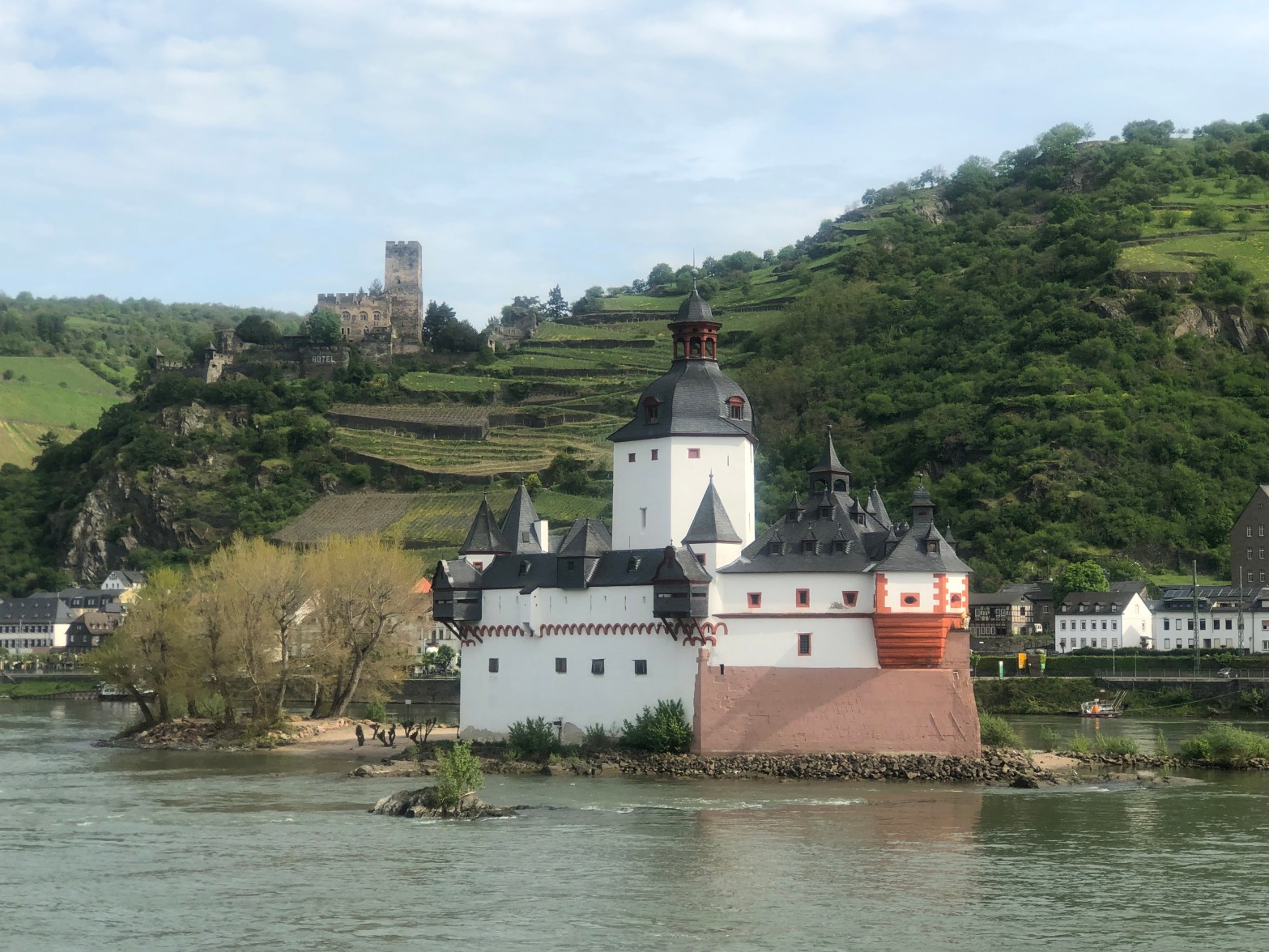
Both waterways dish up a passing parade of vineyard-covered slopes, hilltop castles and idyllic towns with gabled houses, church steeples and leafy riverside promenades—an eye-popping feast for those of us who thronged the railings or drank it in from deck chairs. Steady streams of barges, sightseeing boats and pleasure craft also kept us engaged. One afternoon on the Moselle, the Scenic Opal went through three locks, the first one upon leaving Koblenz for the pretty Moselle Valley, my favorite part of the trip.

Koblenz: At the Confluence

In Koblenz I opted for a ship-arranged walking tour but easily could have wandered on my own. The colorful squares and alleys of Old Town, a largely pedestrianized shopping zone with plenty of cafes and bakeries, were a short walk from our berth at the beautifully landscaped Rhine Promenade. (My brother chose the e-biking excursion, exploring on one of the ship’s electrically assisted bicycles.)

The park-like river walk led to Deutsches Eck, or German Corner, the point where the mighty Rhine meets little sister Moselle. Lording over the tip of land is a monumental equestrian statue of Kaiser Wilhelm I (1797-1888), first emperor of the New German Empire. Destroyed in World War II and replaced in 1993 after the fall of the Berlin Wall, the statue now represents German unity. Nearby stand three concrete slabs from the infamous wall and text about life under Communism in East Germany. Overlooking the confluence is Ehrenbreitstein Fortress, a massive complex reached by cable car from the promenade.

Clockwise (Randy Mink Photos): An equestrian statue of Kaiser Wilhelm I, the first emperor of the New German Empire, overlooks the confluence of the Rhine and Moselle rivers in Koblenz, Germany. The meeting point is called Deutsches Eck, or German Corner.
Scenic Opal passengers explore Koblenz, Germany, on a guided bike tour.
Tempting bakeries and cafes are just a few blocks from cruise ships’ Rhine River berths.

Little Luxembourg

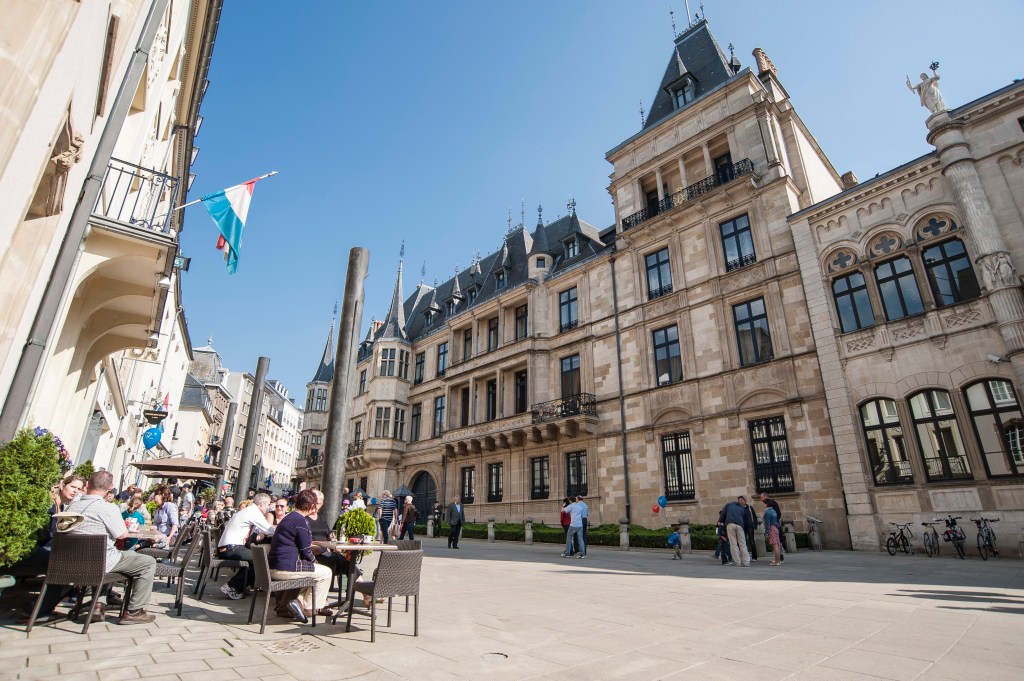
From our next stop, the Moselle Valley town of Bernkastel, we took a morning excursion to Luxembourg City, an hour-and-a-half away. Our guided ramble through the capital city’s oldest quarter, famed for the stone bastions and battlements rising above dramatic ravines, focused on the shop-filled pedestrian zone and included panoramic lookout points. After the tour my brother and I relaxed over hot chocolate at the Chocolate House, snaring an outdoor table across from the Grand Ducal Palace, where we earlier had snapped pictures of the soldiers on guard duty. Passengers who didn’t sign up for Luxembourg could choose to visit a Bernkastel winery and sample the valley’s renowned Rieslings.

1: The imposing Grand Ducal Palace captivates river cruise passengers on the Luxembourg City shore excursion. (Photo credit: LFT/Christian Millen)
2: Soldiers stand guard at the Grand Ducal Palace. (Randy Mink Photo)
3: Ancient fortifications charm visitors to Luxembourg City, a shore excursion option from the Moselle River town of Bernkastel, Germany. (Photo credit: LFT/Alfonso Sagueiro)
4: Stunning panoramas abound in Luxembourg City. (Randy Mink Photo)

Moselle Crowd-Pleasers: Bernkastel & Cochem

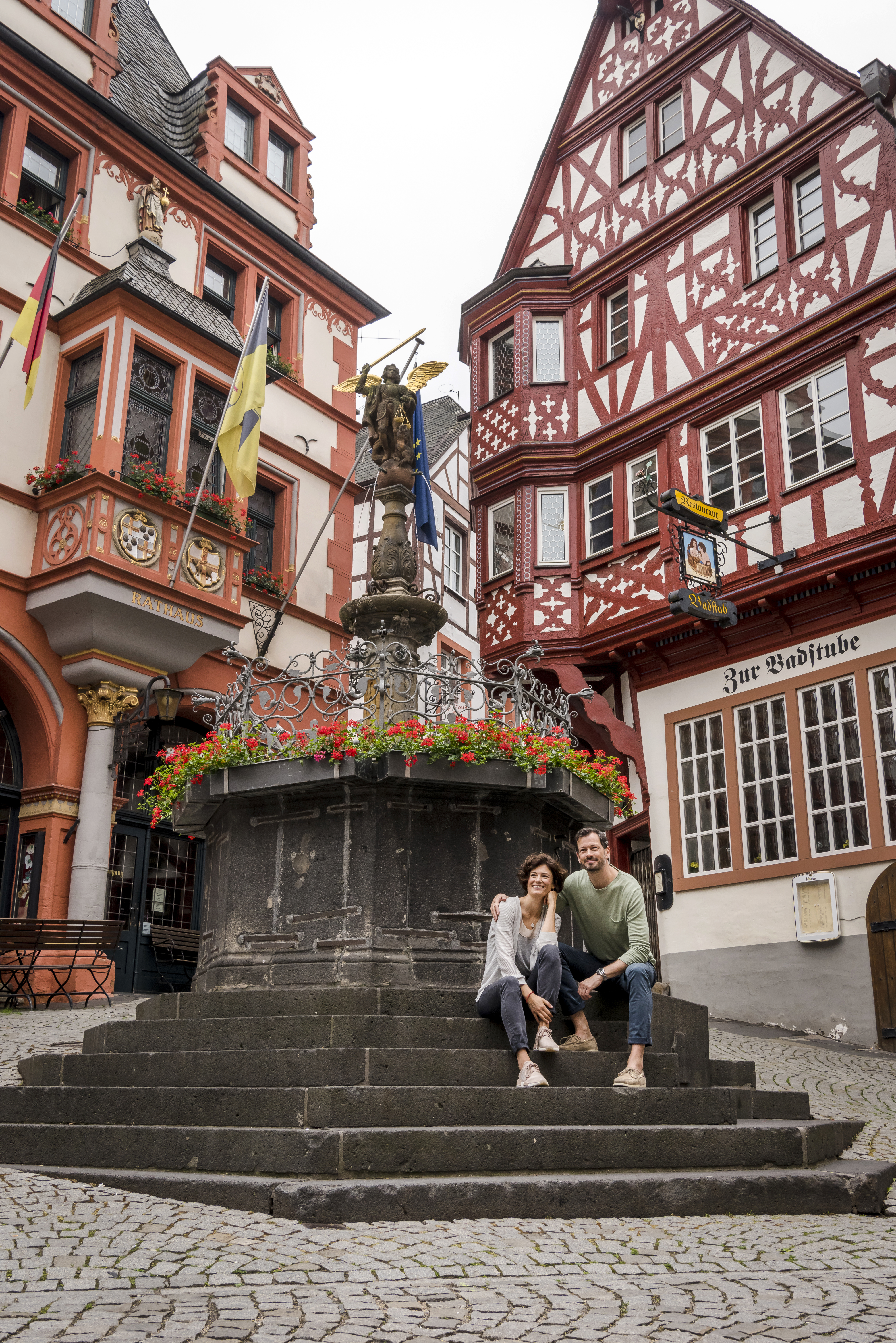
After lunch on the Scenic Opal, moored across the bridge from Bernkastel, we explored the storybook German town. Its riverfront facade didn’t look unusually quaint, but as we probed deeper into the web of little streets, the place just kept getting cuter and cuter. I wanted to photograph every square, crooked lane and antique building in my path, and slip into every wine tavern. Had we more time, I would have hiked up to Landshut Castle, frequented centuries ago by the territorial lords of Trier. Built in 1277 and in partial decay since 1692, it houses a restaurant and cafe.

Left: The fairy-tale town of Bernkastel is a popular stop on Moselle River cruises in Germany. (Photo credit: German National Tourist Board)
Right: Landshut Castle, dating back to 1277, overlooks Bernkastel.  (Randy Mink Photo)

In the evening, we all boarded buses for Trier, where Scenic had arranged a private classical concert staged amid the Gothic grandeur of the 13th century Liebfrauenkirche. Riding through Germany’s oldest city to reach the church, we grabbed glimpses of the famous Porta Nigra, the best-preserved Roman city gate north of the Alps.

Scenic Opal passengers attended a private classical concert at the 13th century Liebfrauenkirche in Trier, Germany. (Randy Mink Photo)

In Cochem, the hub of the Middle Moselle, our excursion featured a visit to Reichsburg Castle. From its lofty vantage point we enjoyed sweeping views of the river, the steep vineyard abutting the castle grounds and a skyline dominated by the onion-dome spire of St. Martin Church. Dating from the 11th century, Reichsburg was restored in the late 1800s by a wealthy Berliner who created an idealized version of a medieval stronghold. Although not architecturally faithful, it certainly gives Cochem a photogenic landmark, and three-fourths of the main tower is original. Mounted animal heads, suits of armor and period furniture set the mood inside. Afterwards, our walking tour of Cochem showcased its compact central square, Baroque town hall and ancient town gates.

Clockwise (Photo credits: German National Tourist Board): Cochem’s Reichsburg Castle has all the trappings of a rustic baronial estate.
The Middle Ages come alive on tours of Reichsburg Castle.
Reichsburg Castle and the onion-dome spire of St. Martin Church frame this view of the Moselle River town of Cochem, Germany.

On the Romantic Rhine

Next we traveled the 32 miles from Cochem back to Koblenz, where our ship overnighted in order to get in position for a morning journey to Rüdesheim that would spotlight the Upper Middle Rhine Valley, or Rhine Gorge, the river’s most castle-studded corridor. This would be our big day, the one we’d been waiting for.

As we looked out from the breezy top deck, it was castle after castle, many of them, romantically, in various states of ruin. Some crowned distant summits, others rose straight from the shore. Vine-ribboned hillsides and timeless villages seemed to be waiting around every bend.

As we learned from the cruise director’s narration and from Tailormade (the Scenic smartphone app), some of the fortresses have been repurposed as museums, restaurants, hotels or private residences. Castle Stahlek in Bacharach, now a youth hostel, once served as a Nazi indoctrination center and military hospital during World War II.  (The app’s commentary also came in handy for exploring ashore and helped us identify the towns and landmarks we passed while cruising.)

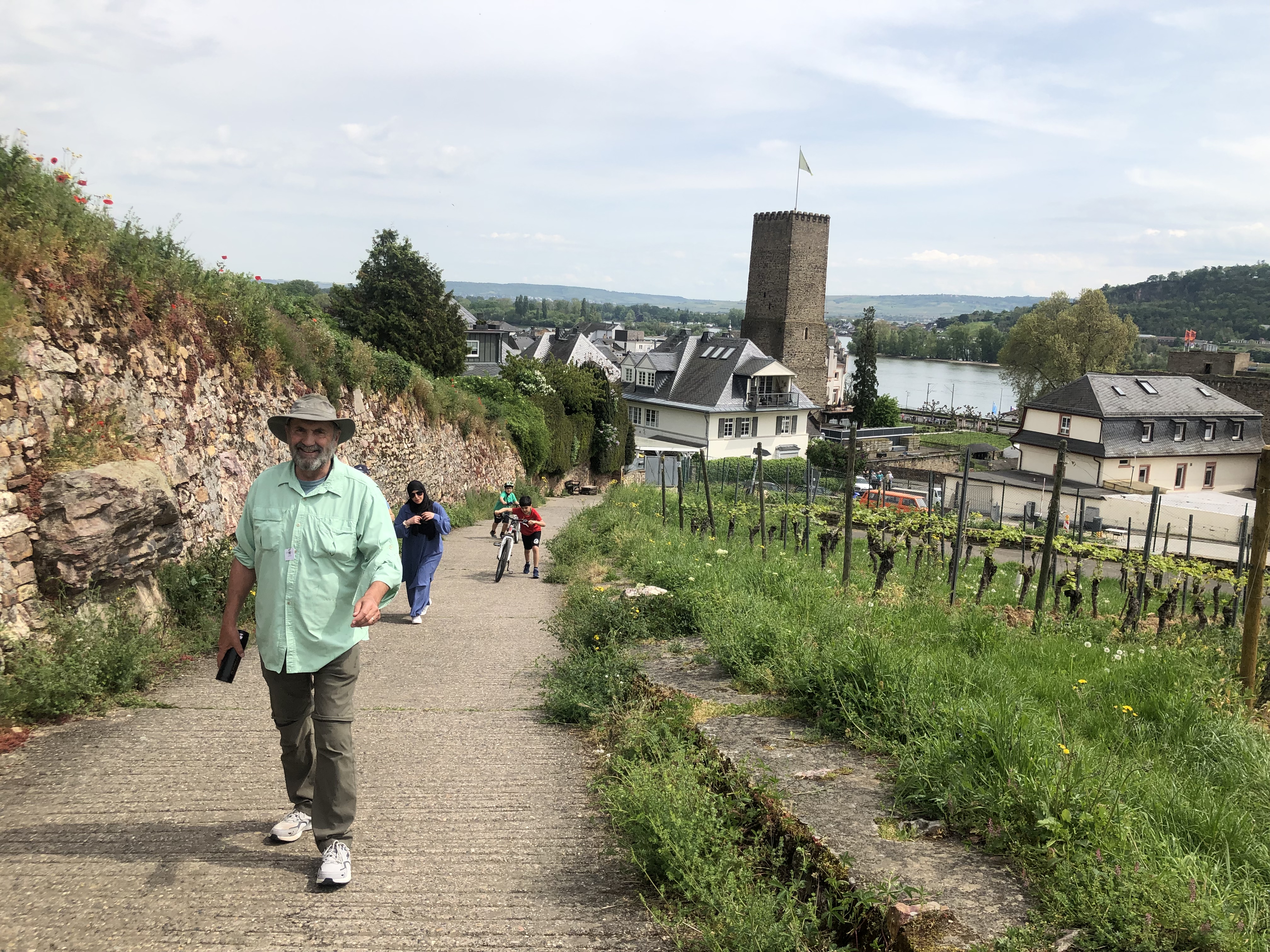
In Rüdesheim, a tourist-packed village crammed with wine taverns and souvenir shops, we hiked through vineyards to Niederwald Monument, a grandiose memorial that commemorates the 1871 founding of the German Empire after the end of the Franco-Prussian War. Our uphill trek was challenging, the cable car ride down a lot more fun.

Left: It’s an uphill trek for Scenic Opal passengers who choose to walk to the hilltop Niederwald Monument high above Rüdesheim. (Randy Mink Photo)
Right: Shore excursions in the Rhine River town of Rüdesheim visit the Niederwald Monument, a grandiose memorial that celebrates the 1871 founding of the German Empire after the end of the Franco-Prussian War. (Photo credit: German Tourist Board)

Forays into France

Heading south on the Rhine, the Scenic Opal tied up at two more German towns. From Rastatt we were torn between a tour to the German spa town of Baden-Baden and one to Strasbourg, capital of France’s Alsace, a region that historically has flipped back and forth between German and French control. In Breisach, our last port of call before Basel, we had to weigh Colmar, Alsace’s most beautiful town, against Freiburg, a Black Forest gem renowned for its medieval Old Town.

Since we had seen plenty of Germany, we went all in for Alsace and enjoyed walking tours of Strasbourg and Colmar, both with cozy, traffic-free historic cores chockablock with pastel, flower-laden, Hansel-and-Gretel houses. It’s just that touch of fairy-tale fantasy we needed to put a happily-ever-after ending to our trip through the enchanting heart of Europe—the Europe of our dreams.

Left: The Cathedral of Notre-Dame, a towering landmark cast in red sandstone, dominates this view of Strasbourg’s historic core. (Randy Mink Photo)
Right: Rheinstein Castle, near the German town of Trechtingshausen, is one of many medieval castles that captivates Rhine River cruise passengers. (Photo credit: German National Tourist Board)


To read about the Scenic Opal luxury river ship, including its accommodations and dining experiences, please visit https://europeantraveler.net/2023/10/19/cruising-through-the-heart-of-europe/

Cruising Through the Heart of Europe

In comfort and style aboard the Scenic Opal

By Randy Mink

I can’t think of a more relaxing way of seeing Europe than cruising in luxury along its great rivers. Unlike a multi-country bus tour or train journey, you unpack just once, as your ship is home sweet home for the week. And as these sleek white vessels often dock in the center of town, the tourist highlights lie just steps from the gangway.

My most recent magic-carpet ride to adventure was “Charming Castles & Vineyards of the Rhine and Moselle,” a seven-night trip filled with shore excursions in southwestern Germany, northeastern France and the Grand Duchy of Luxembourg. Delivering us to these enchanting places was the 163-passenger Scenic Opal, one of 12 ships in the Europe fleet of Scenic, an Australian-owned cruise line geared to English-speaking guests.

The 163-passenger Scenic Opal, shown here on the Moselle River in Bernkastel, Germany, is one of Scenic’s 12 luxury river ships in Europe. (Randy Mink Photo)

The Scenic Difference

At first glance, most river ships in Europe seem to offer a similar product, but Scenic stands out in two ways. First, guests have a little more elbow room, as the vessels offer a higher-than-usual passenger-to-space ratio. Whereas many ships of the same size take on 180 or more passengers, Scenic’s four-deck floating hotels carry 163 guests maximum. (Our sailing counted 129 passengers, including 53 Americans, 27 Canadians, 37 British, nine Australians and a smattering of other nationalities.) The Scenic Opal and sister ships Scenic Amber and Scenic Jasper were built in 2015/2016 and refurbished in 2019.

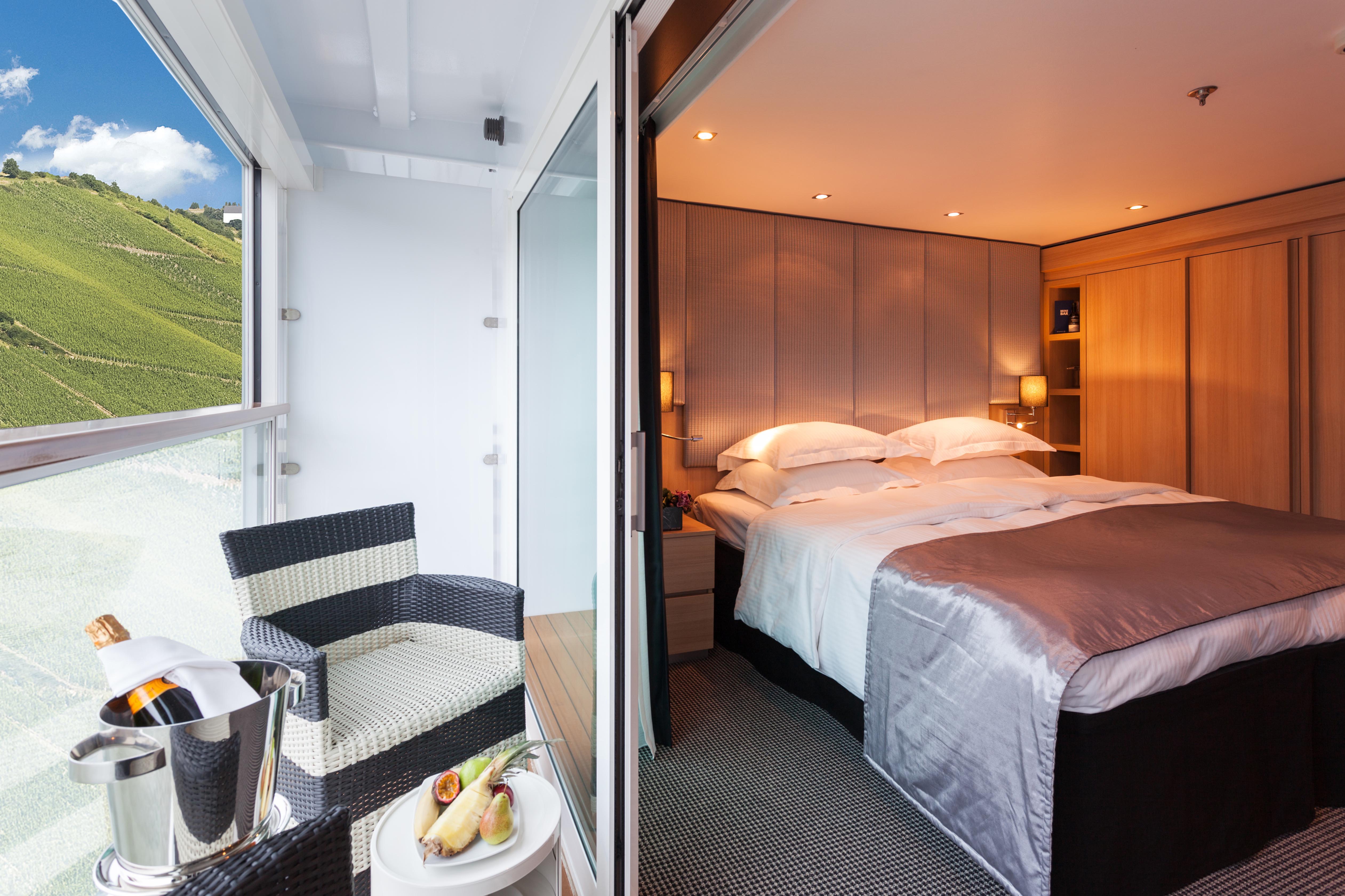
Floor-to-ceiling windows in both public areas and most staterooms, moreover, give the feeling of added space. All cabins on the Sapphire and Diamond (second and third) decks feature a full-length, enclosed balcony with two padded wicker chairs, a table and a wide horizontal window that glides up or down at the push of a button. A curtain and a glass door can be used to close off the bedroom from the peaceful nook, called a Scenic Sun Lounge. For this sense of extra space, Scenic ships are marketed as “Space-Ships” (not because they’re futuristic-looking). Smaller staterooms on the less-populated lower deck, the Jewel Deck, have a large picture window but no balcony.

The other chief takeaway about Scenic is the all-inclusive price. You never have to take out your wallet and won’t even be asked for a credit card at check-in. The cruise fare includes not only gratuities, airport and hotel transfers, laundry service once per cruise, shore excursions and multiple dining options but also unlimited complimentary beverages (soda, beer, wine, cocktails, spirits) all day, not just with meals. You don’t even need to worry about using your room’s mini-bar—just help yourself to free drinks and snacks when the mood strikes. Treats in my cabin included Pringles chips and a favorite of mine—Manner cocoa-flavored hazelnut-creme wafers from Vienna. The refrigerator, replenished daily, was stocked with everything from Coke, beer and juices to German wines and miniature bottles of rum, gin and whiskey.

Left: Most cabins on the Scenic Opal have an enclosed balcony, or Sun Lounge, with a window that glides up and down at the push of a button. (Photo credit: Gillies & Zaiser)
Right: The Junior Balcony Suite offers a little more space than standard staterooms on the Scenic Opal. (Photo credit: Gillies & Zaiser)

Food, Glorious Food

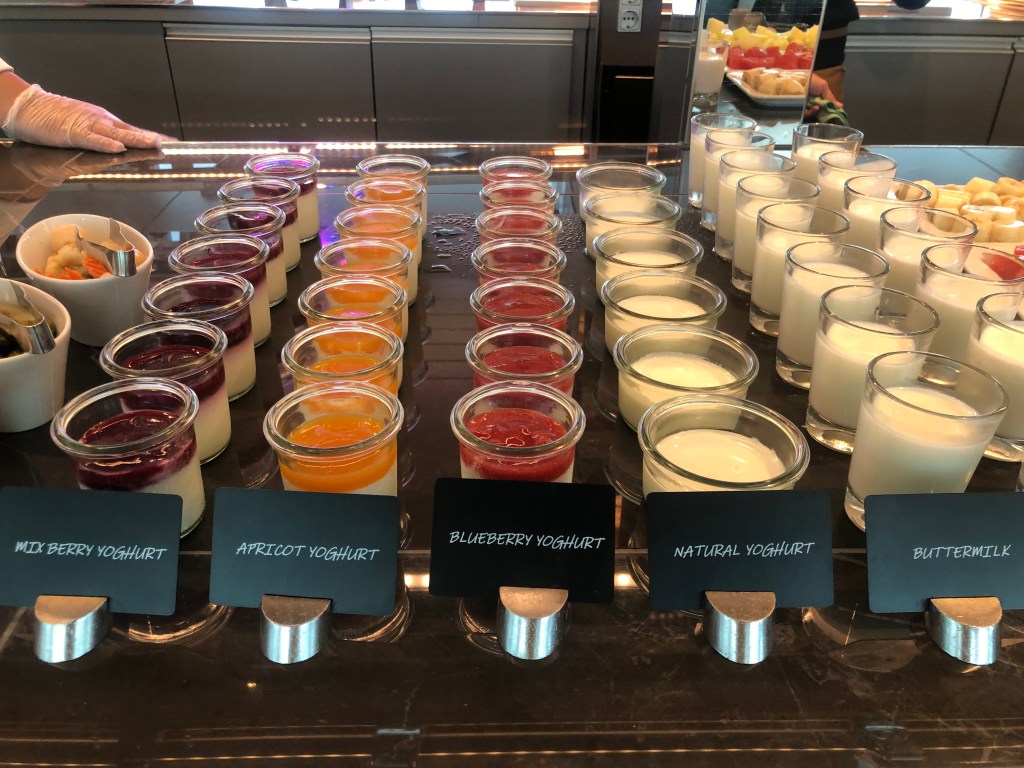
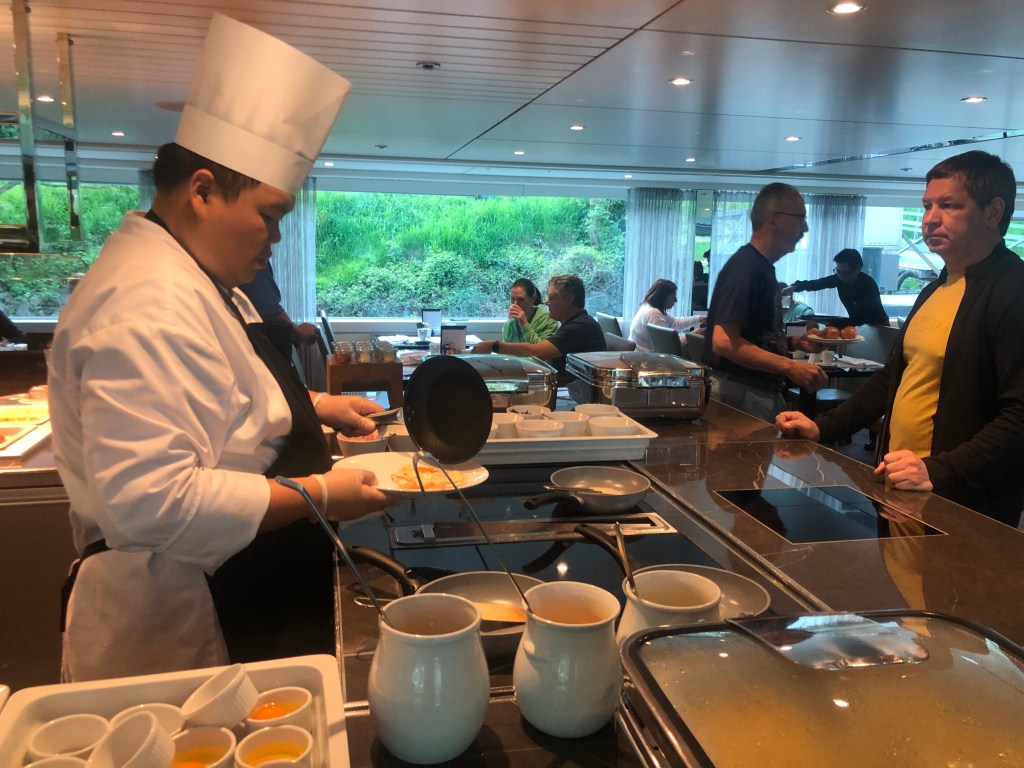
In the Crystal Dining Room, I always tried to get a window table so as to look out on the sloping vineyards and fairy-tale towns flanking the Rhine and Moselle rivers. The daily breakfast buffet featured a million different items—well, at least 100 anyway—and even offered chilled Champagne. There were bagels and artisan breads, yogurts and fruits of all kinds, and hot-off-the-griddle pancakes or waffles, not to mention made-to-order omelets. The Brits and Australians appreciated the baked beans, porridge, English bacon, and grilled tomatoes and mushrooms. One morning we had bread-and-butter pudding.

The breakfast buffet also offered cheeses, cold cuts and smoked fish (herring, rollmops, halibut, salmon). What’s more, we could order from a menu that featured lamb chops, French toast and perfectly done, oh-so-decadent eggs Benedict.

Lunch also was a smorgasbord. I really enjoyed the German buffet, a special meal that put an exclamation point on our morning transit through the castle-studded Rhine Gorge and got us in a jolly mood for the tourist-thronged wine town of Rüdesheim. The spread included three types of sausage—bratwurst, Käsekrainer (cheese-filled) and Weisswurst (white veal sausage)—and three mustards. There were sauerkraut, parsley potatoes and both bread and potato dumplings. Cheesy spaetzle, freshly tossed, was served hot from the pan. I didn’t have room for the fried chicken (Backhendl), pan-seared river trout in almond butter or even a morsel of the pork knuckle.

Recorded oom-pah band music lent a Munich beer hall vibe as I washed down traditional German foods with a tall glass of Erdinger Weissbier, a classic wheat brew. Dessert was Dampfnudel, a pillowy steamed dumpling filled with blueberries. Other lunch buffets usually featured at least one food representative of the region we were traveling through.

On King Charles III’s coronation day, the River Cafe, an area of the Opal Lounge that offers a daily lunch buffet, we had fish ’n’ chips while watching the ceremony on big-screen TVs. The lounge’s coffee and tea stations had scones with jam and clotted cream, another British touch.

The River Cafe, open during the day for sandwiches, salads, ice cream and pastries, is transformed each evening into Portobellos, a five-course Italian dining experience for which each guest receives a printed invitation once during the week. Table La Rive, a sophisticated chef’s table offered once a cruise to Diamond Deck and Junior Suite guests, stars innovative fare with wine matching in a small-group setting in the dining room.

Every night, the restaurant’s a la carte dinner menu gave us appetizer, main course and dessert choices. If we didn’t want one of the three entree selections, we could order a salmon steak, sirloin steak or chicken breast.

Rather eat in privacy on your balcony? An extensive room service menu is available from 6 a.m. to midnight.

On any cruise, I tend to overeat (don’t we all?), so every day I hit the walking track on the expansive Sun Deck, a breezy area with tables, chairs, loungers and a vitality pool. Happily for me, the track was lighted after dark. I recall one night making my rounds as floodlit Reichsburg Castle loomed beyond the storybook Moselle River town of Cochem, Germany, a magical moment indeed.

Left to right: The Scenic Opal’s daily breakfast buffet offers choices galore, including many varieties of yogurt. (Randy Mink Photo)
An omelet station is part of the Crystal Dining Room’s breakfast buffet. (Randy Mink Photo)
Alcoholic drinks in the Opal Lounge and dining room are included in the cruise fare. (Photo credit: Gillies & Zaiser)
The River Cafe is the place for a wide variety of tempting small bites throughout the day. (Photo credit: Gillies & Zaiser)

A Superlative Staff

Every evening we all gathered in the spacious lounge with cruise director Alex Thurein, who briefed us on the next day’s schedule. An affable German who was born in Wiesbaden and currently lives in Salzburg, Austria, he set the upbeat tone of the cruise. From Day 1 we knew we could go to Alex for travel advice or any problem. (On a personal note, I will be forever grateful to him for helping me contact credit card companies after a pickpocket incident during a shore excursion in Colmar, France.)

One morning Alex gave a brilliant presentation on “Germany and the Germans: A Brief Overview of 1,200 Years of Central European History.” Another day his topic was Europe’s rivers, canals and lock systems.

The Scenic Opal’s crew, 53 in all, represented 14 nationalities, from Thai and Indonesian to Serbian and Polish. Our captain was Hungarian. The women staffing the reception desk always had smiles and couldn’t wait to assist or answer a question.

Also smoothing the way was the stateroom’s TV, an encyclopedia of information and entertainment options. We could watch television shows (I mostly caught the live BBC newscasts), choose from a wide selection of movies and music, view the daily schedule and lounge presentations, and bone up on the ports of call. A keyboard even let us use the screen as a computer.

With high-tech gadgetry, an all-inclusive approach and plenty of space to unwind, Scenic has thought of everything to ensure a worry-free journey on the rivers of Europe.

1: Champagne is served at the first-night welcome reception onboard the Scenic Opal. (Photo credit: Gillies & Zaiser)
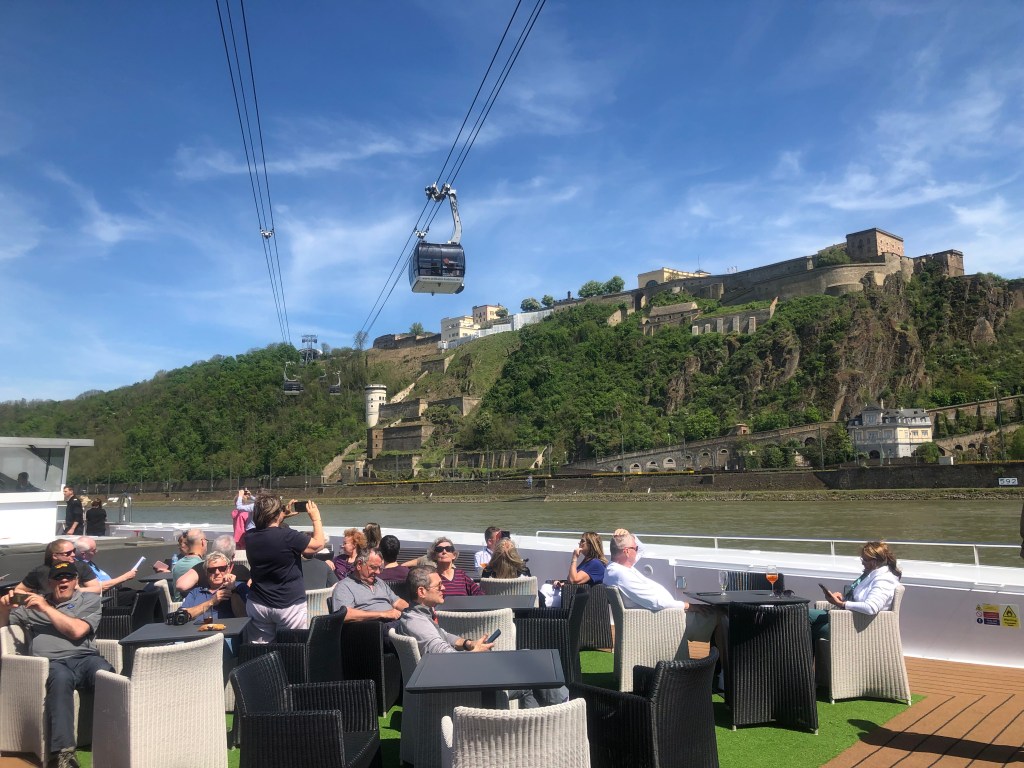
2: In the Rhine River city of Koblenz, passengers relax on the Sun Deck of the Scenic Opal as cable cars to Ehrenbreitstein Fortress pass overhead. (Randy Mink Photo)
3: The Scenic Opal’s reception desk is located just off the Opal Lounge. (Photo credit: Gillies & Zaiser)
4: A passing parade of hilltop castles enchants passengers on the Scenic Opal. (Photo credit: Scenic)

Menorca Artisans Keep Traditional Craftsmanship Alive

Story and photos by Alison Ramsey

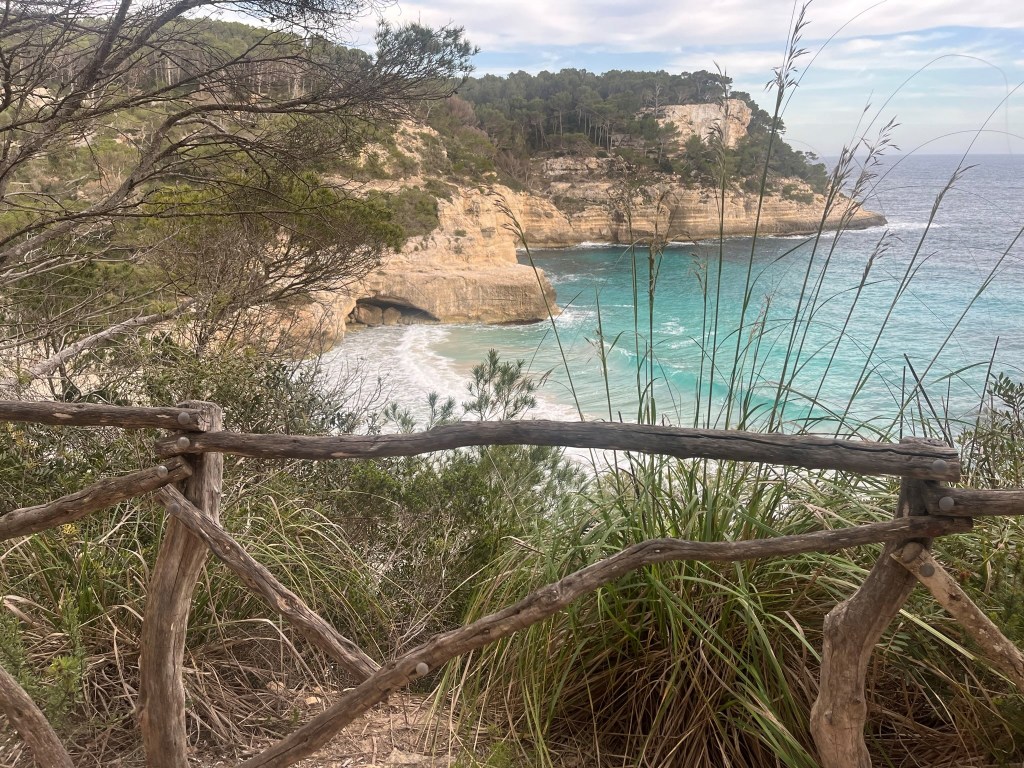
In the west Mediterranean Sea, the Balearic Islands’ Menorca makes the most of its natural resources. And for being only about 30 miles long and 10 miles wide, it has a lot! This haven of coves and turquoise water licking untouched white sand beaches has been a Biosphere Reserve since 1993, and due to its wide diversity of habitats and landscape it is UNESCO-designated as the headquarters for the World Network of Island and Coastal Biosphere Reserves for matters pertaining to sustainable development. Local farming practices focus on sustainability and preserving the island’s natural heritage. Using environmental resources found within the island’s ecosystem, resident farmers and artisans make a living from the offerings provided by landscape and livestock.

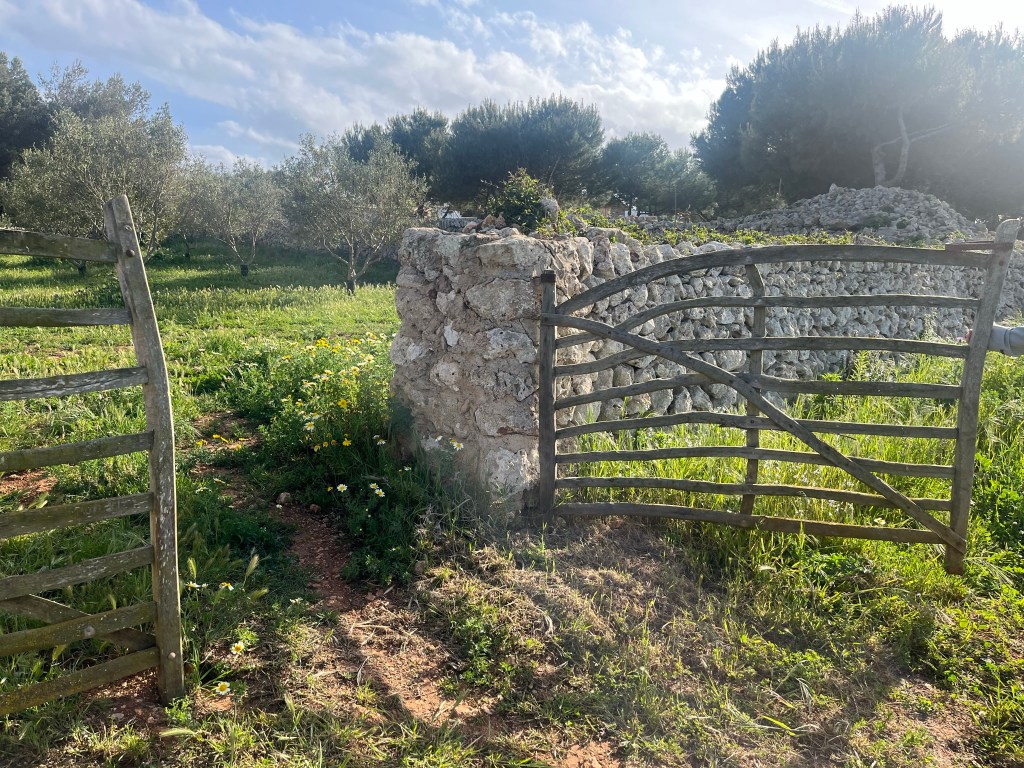
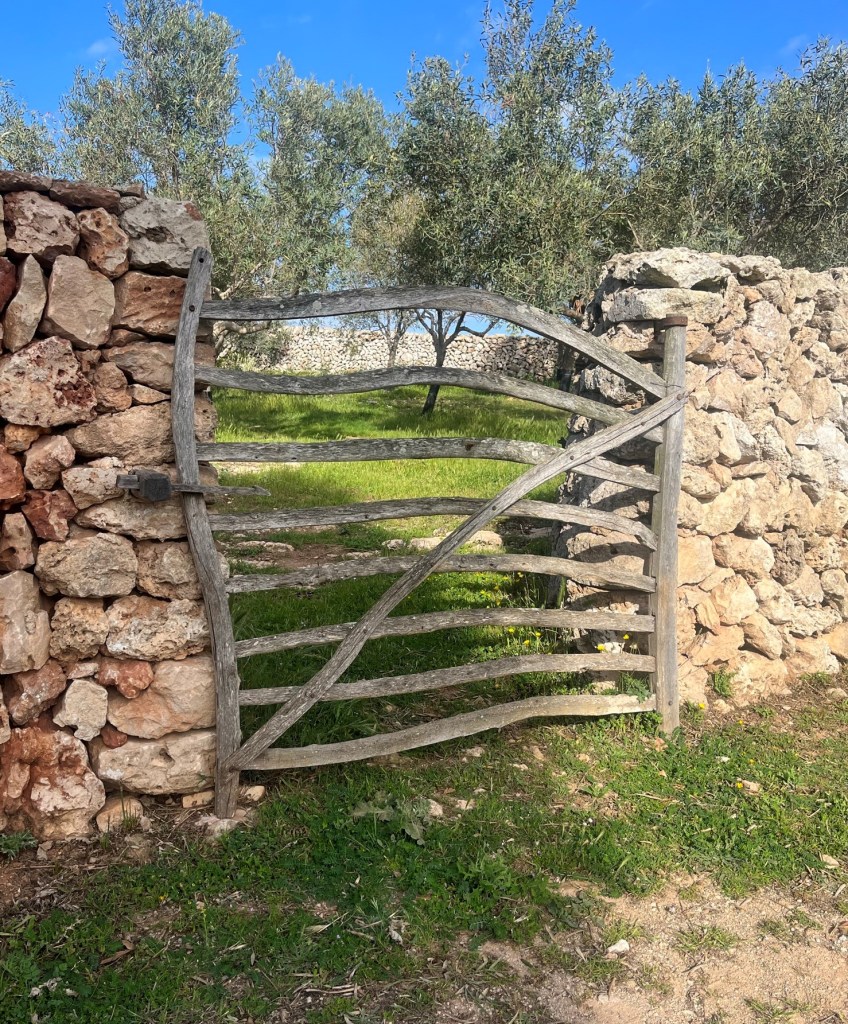
Across the island, wild olive tree wood is fashioned into fences to divide land and act as guard rails.

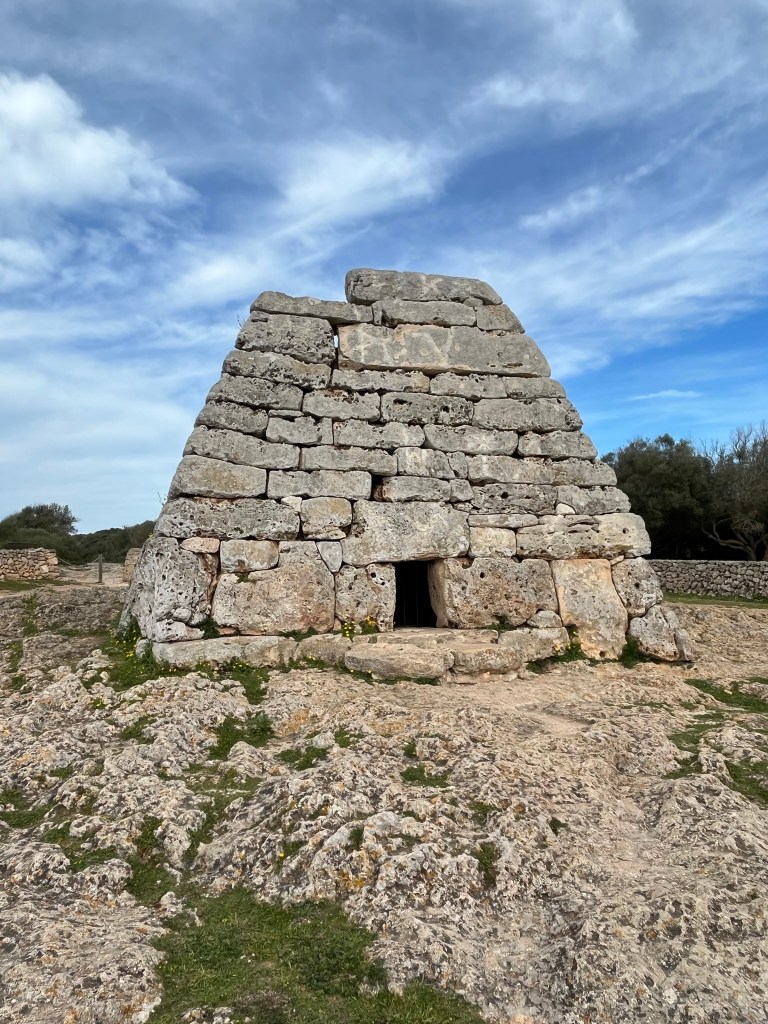
Menorca’s “mosaic landscape” of varying ecosystems consists of farmland, forests, and villages, with a bird’s-eye view revealing small plots of land divided by a network of dry-stone walls. Since ancient times, agrarians have gleaned rocks from the soil to build these mortar-less barriers that cover about 6,835 miles of the island (more than half the length of the Great Wall of China) and reduce erosion by blocking the wind from shifting soil to neighboring plots. Even the island’s prehistoric navetas (burial chambers) and talayots (shrines) were built by carefully selecting stones of varied size and shape, filling gaps with sand, and relying on gravity to secure them together.

(left) Unique to the island, Menorca’s navetas are pre-Talaiotic burial monuments shaped like an inverted boat and built using only large stone blocks. (middle) The island’s naturally rocky soil is gleaned to build stone walls that separate land plots. Wild olive trees with olives not suitable for harvesting are formed into farm gates using their distinctive, curvy wood. (right) Prevalent on Menorca are cement-free stacked-stone walls and sturdy gates crafted from wild olive trees.

Vineyards on Menorca are typically surrounded by these stone walls, a drainage situation that adequately waters the vines without leaving them overly damp. Local beverages created from the natural flora offerings of the land include the Vi de la Terra Illa de Menorca indication of quality wine, aromatic Menorcan gin (the oldest in Spain) produced using wine-based alcohol distilled with native herbs and juniper berries in old copper stills, and herb liquor digestifs.

The olive tree is another landscape prevalence, including the Spanish arbequina variety, which is used to produce a popular extra virgin olive oil with a mild, creamy flavor and slow kick. Oral history says the famous condiment mayonnaise heralds from Menorca, where the invading French Duke of Richelieu first tried the local sauce (a simple mixture of olive oil, egg, and salt) and brought it back to the French court, naming the recipe “mahonnaise” after the town Mahón. The oldest written source of Menorcan recipes is Art de la Cuina, a book by Fra Francesc Roger detailing the island’s cultural gastronomy in more than 200 18th century recipes, including a recipe for mayo using native olive oil. Not only are olives used for oil production, the strong wood from wild olive trees whose olives aren’t large enough to harvest is crafted into rustic, swing farm gates in a distinctive curvy design seen all across the island.

The oldest written source of Menorcan recipes is Art de la Cuina, a book by Fra Francesc Roger detailing the island’s cultural gastronomy in more than 200 18th century recipes, including a recipe for mayo using native olive oil.

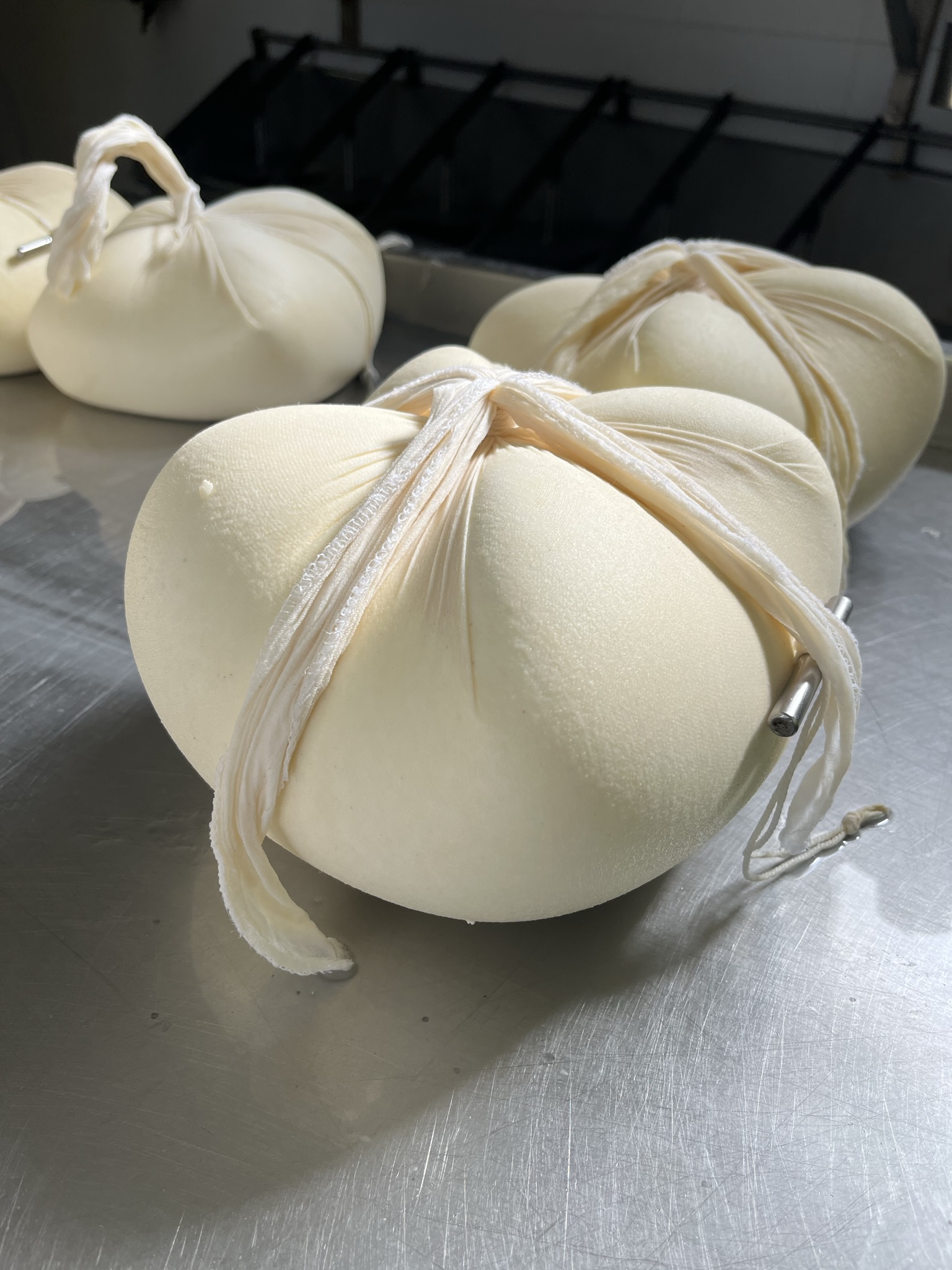
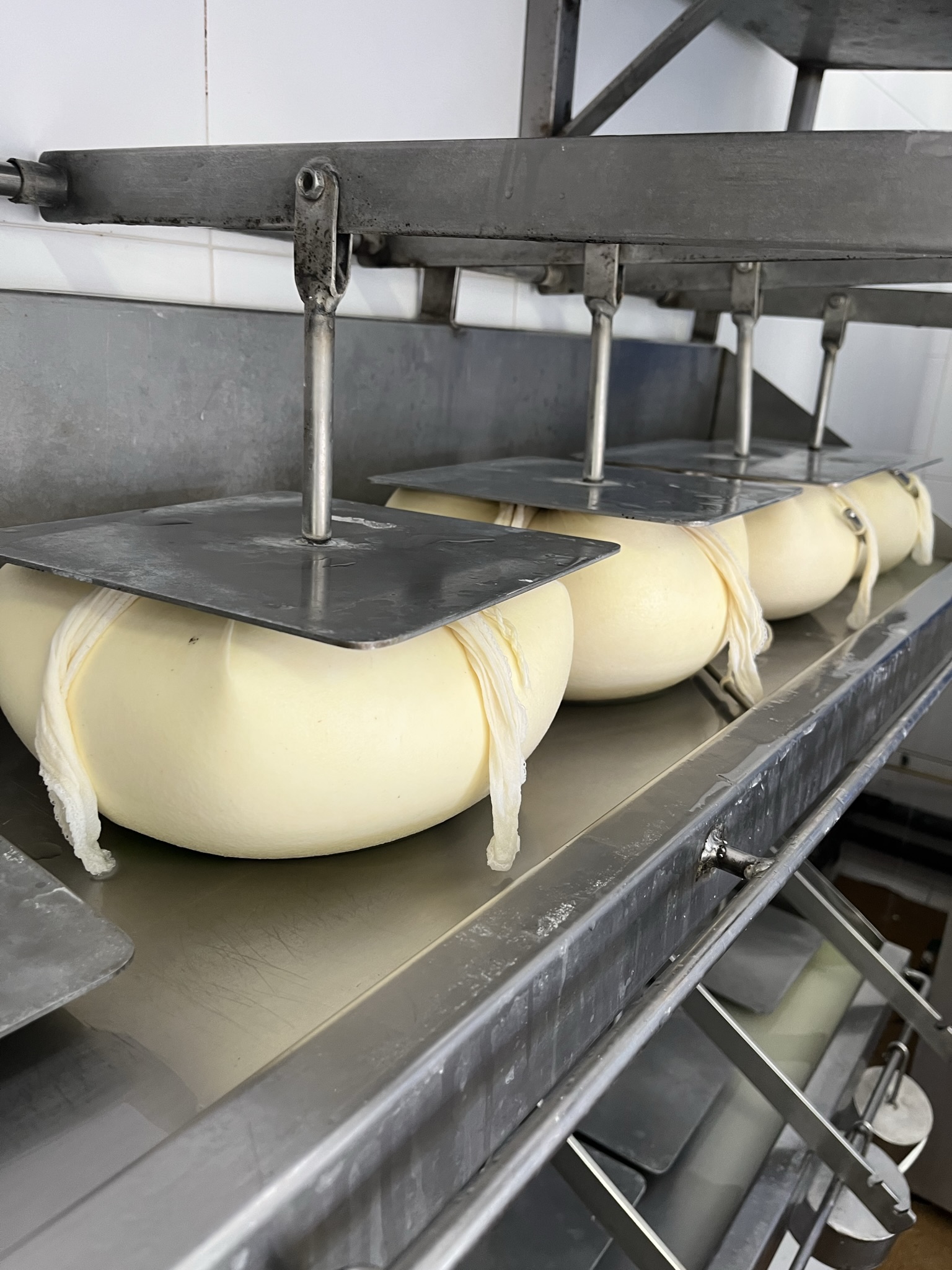
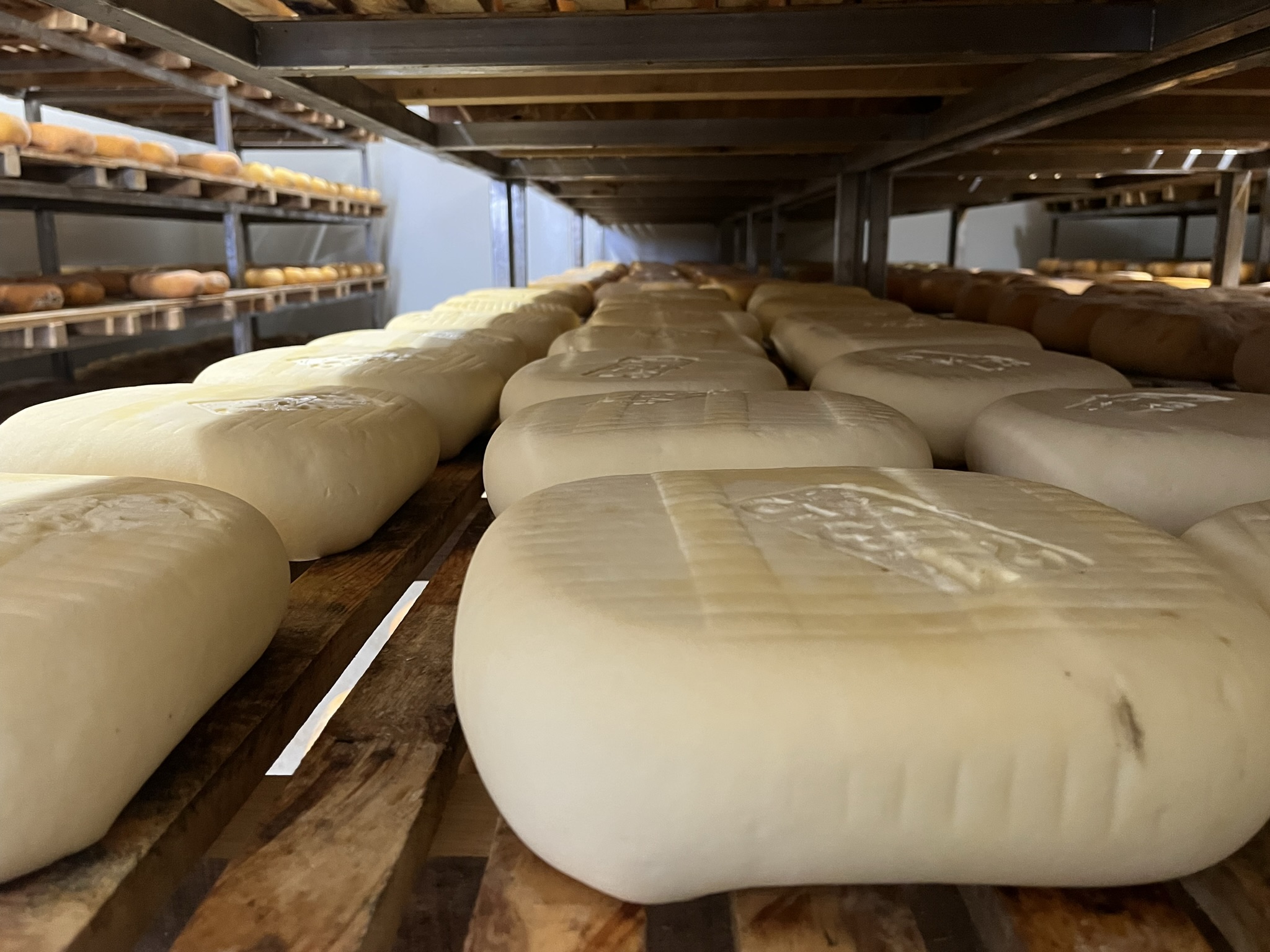
Using age-old methods, farmers use milk from Menorcan cows to produce rounded-edge square blocks of Mahón-Menorca Denomination of Origin cheese with a flavorful, oily dark rind (even Arabic documents from the year 1000 describe the tasty qualities of cow’s milk Menorcan cheese). Farms like Son Piris produce artisan cheese (made with raw milk and intended for immediate consumption) or the more industrialized and slightly sweeter pasteurized-milk cheeses. Martina Fedelich of Son Piris explained that it is difficult to imitate the Menorcan bacteria used in their cheese, as they are unique and isolated from other cheeses and even differ from those on neighboring island Mallorca. Easy to identify, Mahón-Menorca cheese’s unique shape comes from the cheesecloth used during the pressing process, and fabric lines from the cloth remain visible in the rind.

(clockwise from upper left) The unique shape of Mahón-Menorca cheese comes from the cheesecloth used during the pressing process, and fabric lines from the cloth remain visible in the rind; Son Piris cheeses are wrapped tightly in cheesecloth, which holds together the solid cheese curd while allowing for drainage of liquid whey; Wrapped cheeses are pressed to remove excess moisture; After their tightly wrapped cloths are removed, the cheese is set out to dry; Martina Fedelich of Son Piris serves the famous farm-to-table Mahón-Menorca Denomination of Origin cheese.  

Agriculture is a key trade on Menorca; however, the most important manufacturing business on the island is shoe design and production—an industry dating back to the 18th century. Footwear made in Menorca is known for its high quality and meticulous craftsmanship. The most famous sandal shape, with a cowhide leather upper and sole, was first created to protect farmers’ feet while working the rocky soil. Nowadays, these avarcas (also called abarcas or menorquinas) are sold with heels and straps of all styles and colors, but use recycled tires as a hardy sole. Popularity and production have been increasing especially over the past few years, and they are worn by Menorcans and visitors alike.
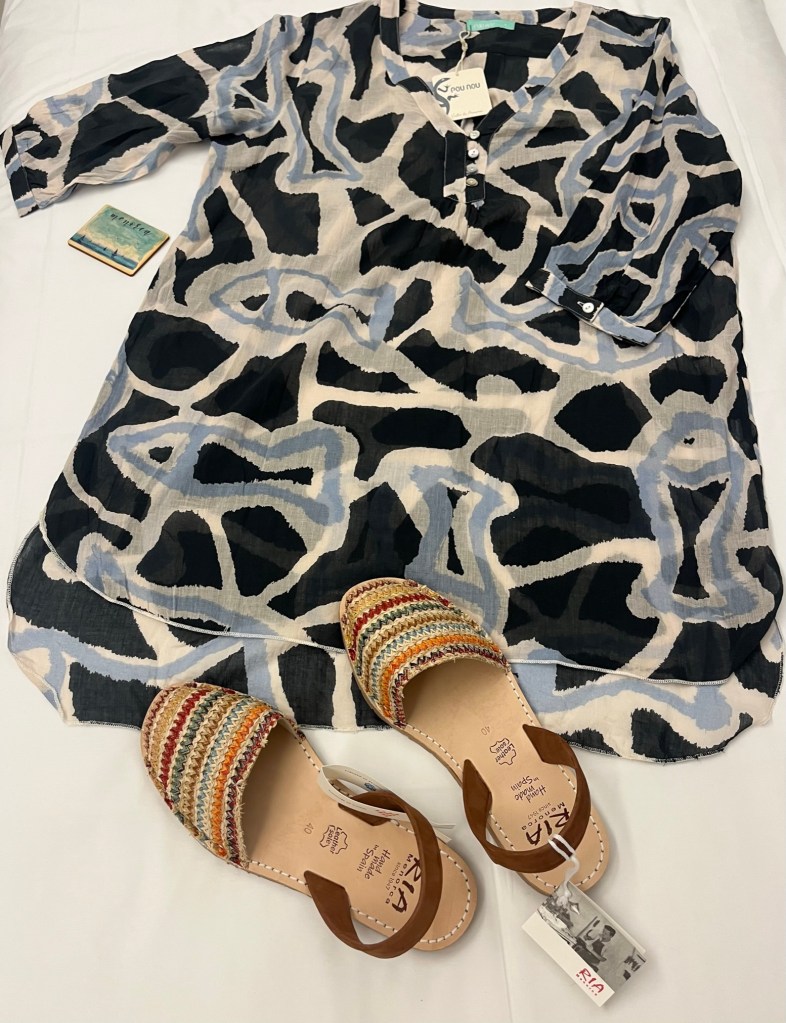
RIA brand avarcas fashioned from leather with a colorful woven upper are a stylish update to traditional peasant footwear. Pou Nou clothing motifs echo the sea life and landscape of the island, like this fish-print tunic in shades of blue.

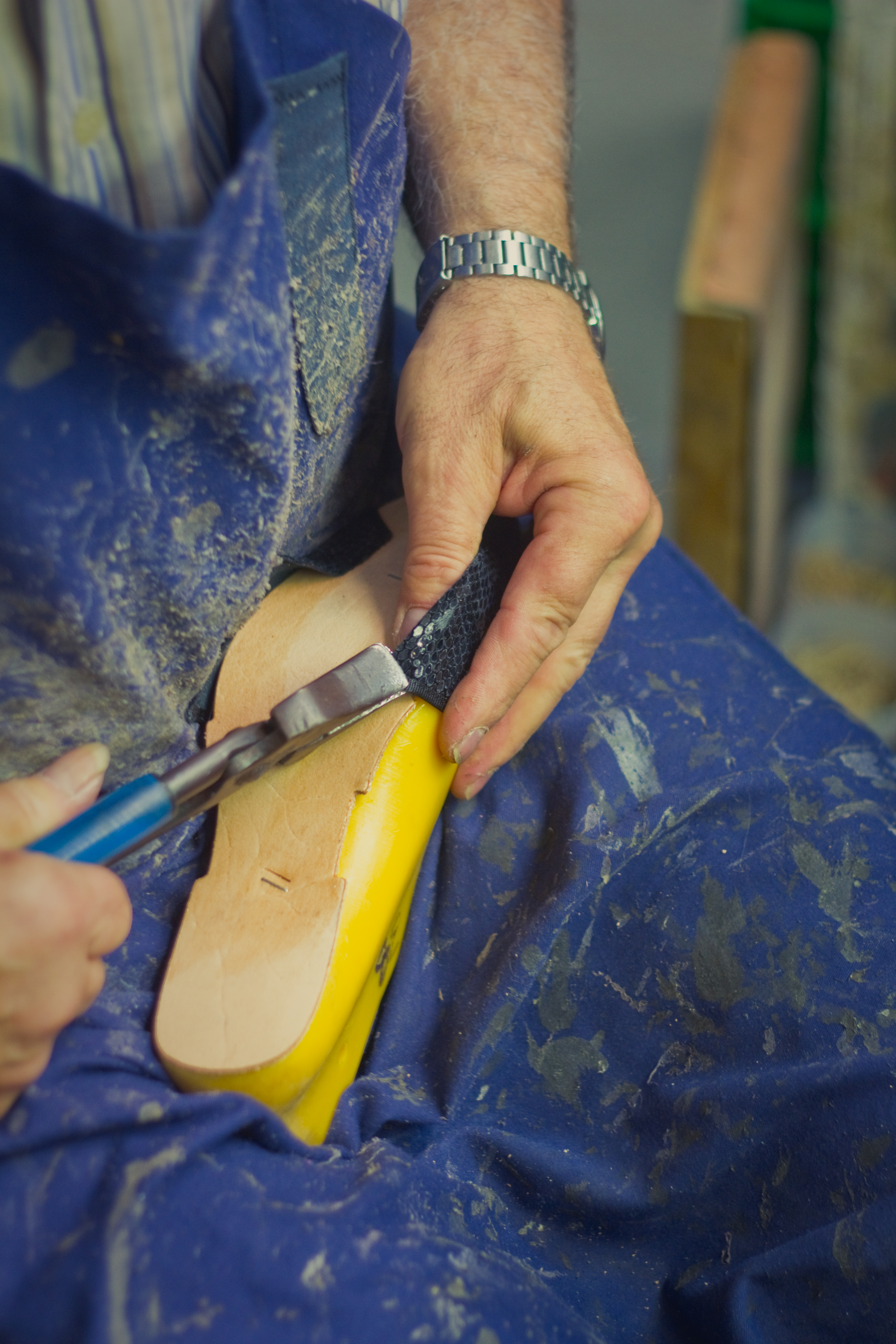
Avarca company MIBO proudly carries the Avarca de Menorca hallmark—another island-specific denomination of origin—which guarantees that their footwear is crafted locally and made with high-quality materials. Founded in 1998 by Miguel Pascual and Bosco Moll, MIBO designs and manufactures these iconic Menorcan sandals using traditional methodology combined with modern technology. Moll said, “The process to make a pair of avarcas from Menorca has about 25 operations, which all need the hands of craftsmen to be able to make them. We also use technology that helps the craftsmen, but it always requires expert hands. … The future of our product and our brand passes through the qualified training of our craftsmen-workers since there are no schools or training cycles that help this task.”
(left) A traditional style with modern updates, some MIBO avarcas feature trendy details like cut-outs, bows, and textured mosaic prints. (right) A MIBO artisan carefully guides a hallmark-stamped leather sole through machine stitching. Photos courtesy of MIBO.

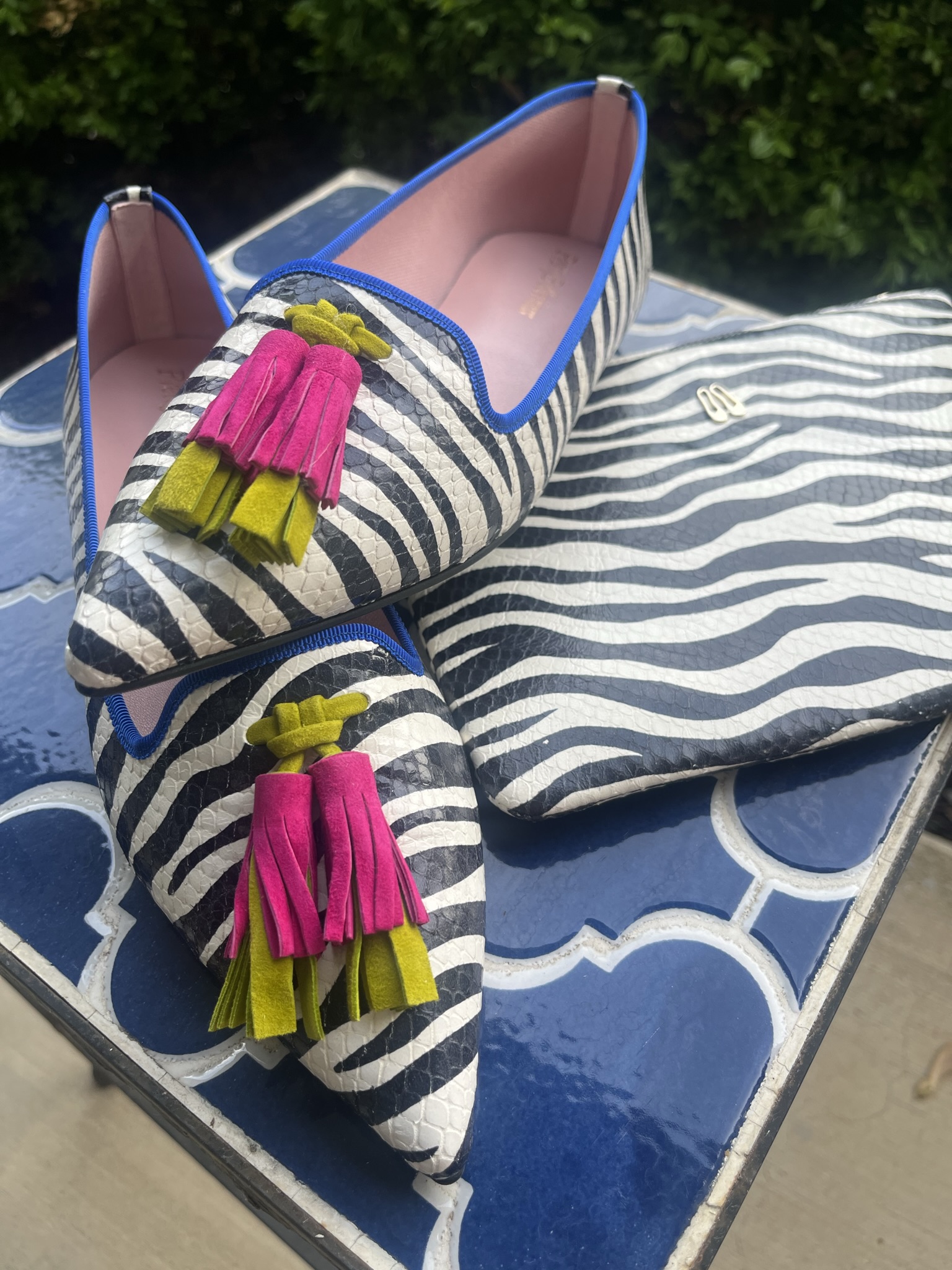
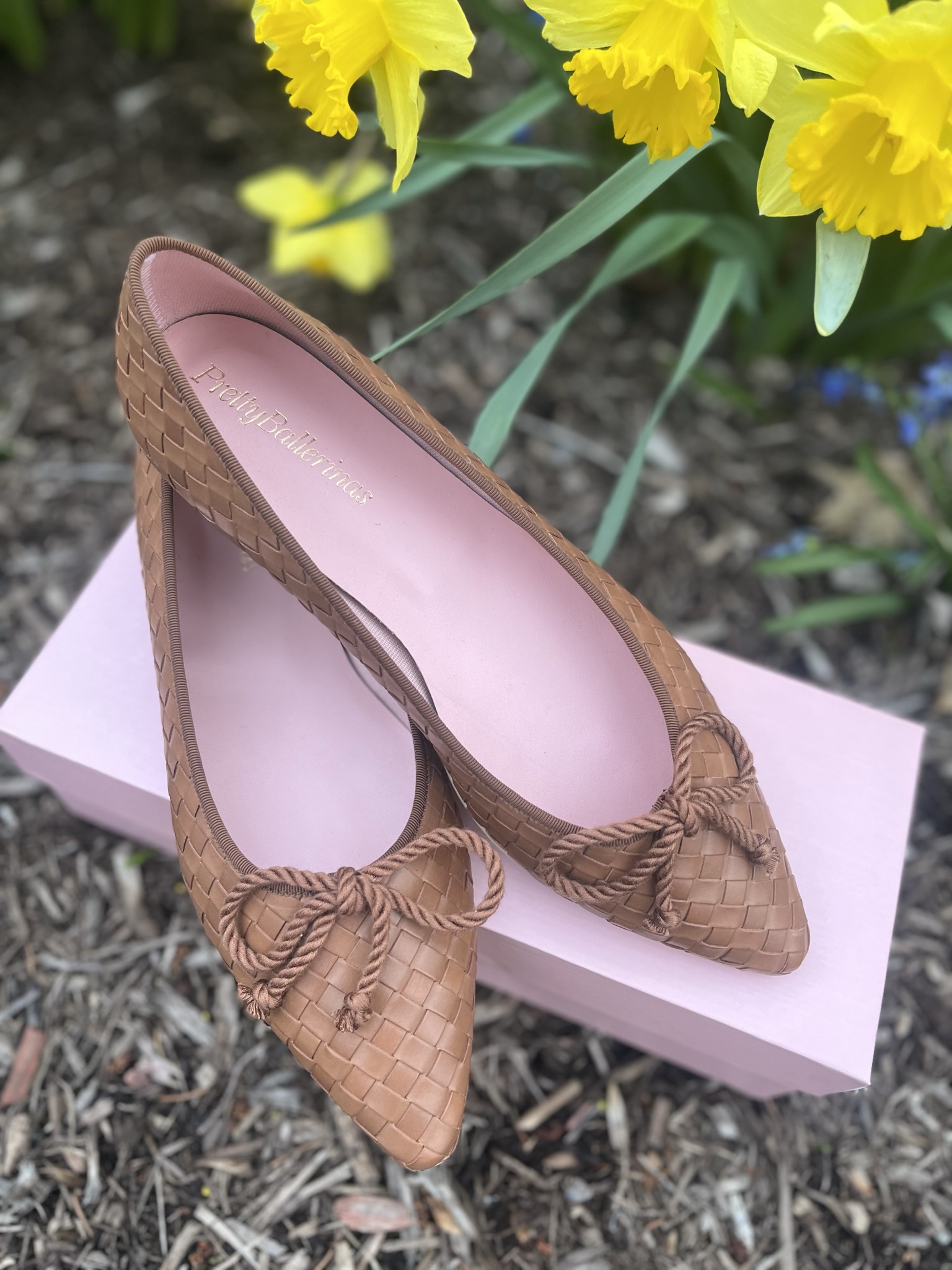
Another prestigious Menorcan shoe brand known internationally for its impeccable quality and innovative designs is Pretty Ballerinas, a unique line of leather flats produced by the Mascaró Group footwear company. These fashions have been famously worn by Kate Moss, Kate Middleton, the Queen of Spain, Elle Macpherson, Claudia Schiffer, and Angelina Jolie, among other celebrities. Fanny Cano, vivacious franchisee and owner of Pretty Ballerinas U.S. (the sole U.S. store, located in New York City), was born on Mallorca and has worked for the Mascaró brand since 1998. Fanny said:

“I love when through our very personal customer service we get to transmit to our customers the island’s vibes. They know they are wearing a unique piece crafted by hand on a small island in the Mediterranean. They feel the quality and the time invested in their pair of shoes. Explaining to the clients where and how the shoes are made—in a very artisanal and old-fashioned method—it really helps them to get tele-transported to the smell of the leather, the artisan hands sewing the shoes, mixed with the breeze of the sea and the taste of the food.”

Fanny Cano, Pretty Ballerinas franchisee and owner of the New York City store, poses before the iconic pink boxes and glamorous storefront that identify this high-quality brand of Menorca-made women’s leather flats. Easily identifiable by a pink lining and stamped ballerina slipper icon on the underside, Pretty Ballerinas flats and matching handbags exhibit a unique style and luxurious leather silhouette. Top-left and bottom-right photos courtesy of Fanny Cano.

Woodworking, earthenware, basket weaving, traditional llaüt wooden boat carpentry, and other crafts using fabrics, stone, and paper are sold in island shops and markets during the summer months. The quality of local, professional artisans’ work is acknowledged by the Artesanía de Menorca (Craft of Menorca) hallmark, and the Centre Artesanal de Menorca (Artisan Centre of Menorca) at the Es Mercadal fairground exhibits and sells many of these handmade products.

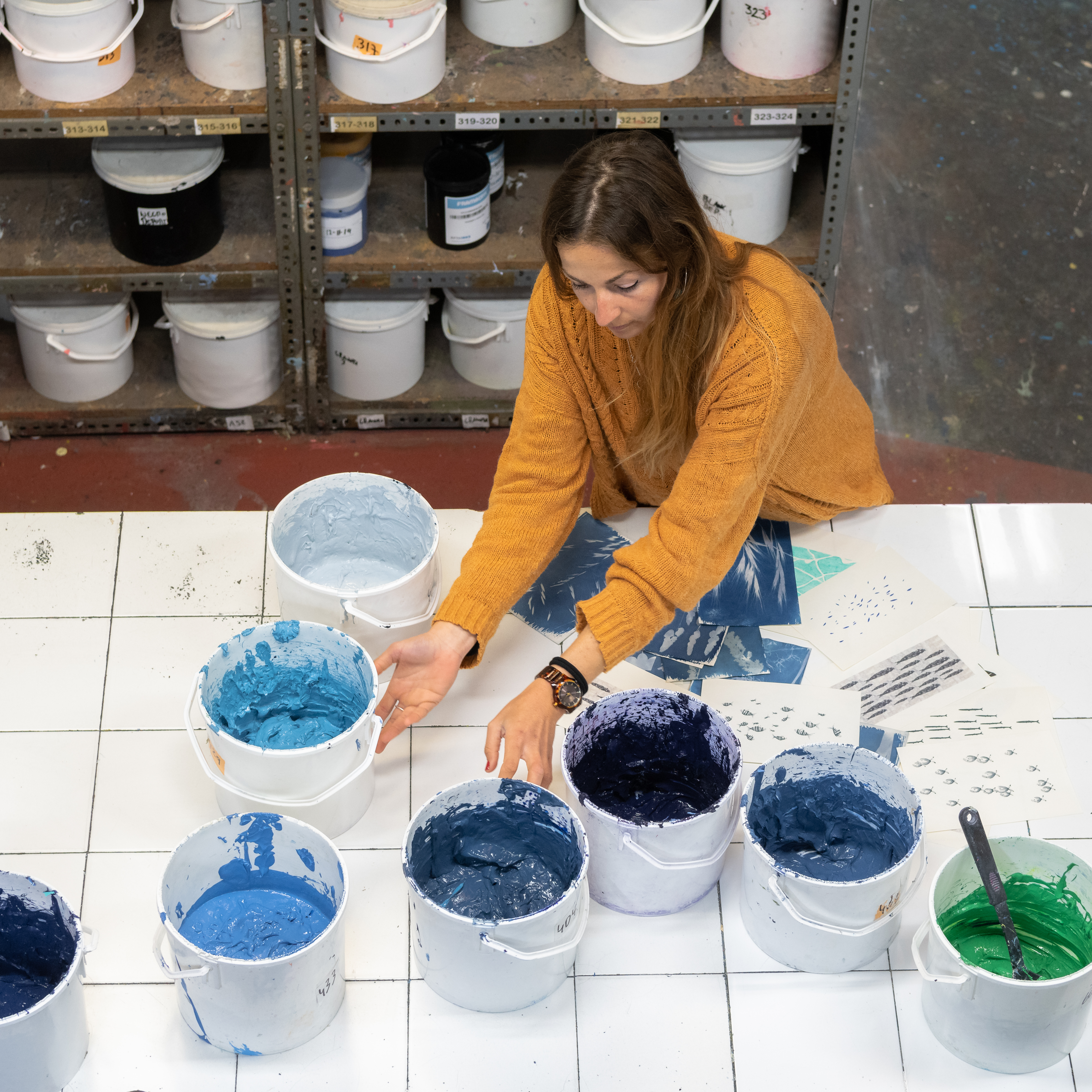
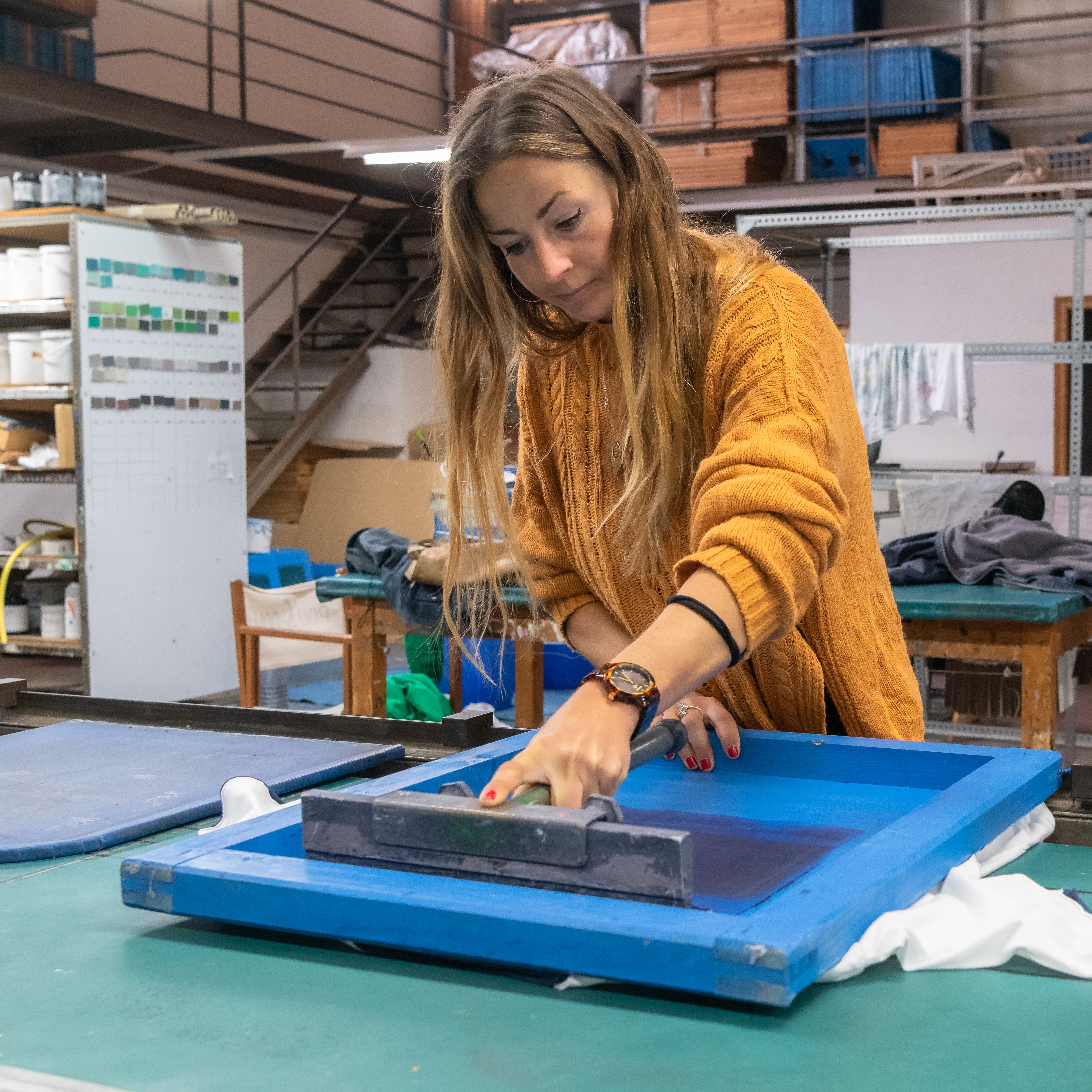
A Menorca-born leader in local artistry is Pou Nou clothing company, whose designers work closely with area artists to produce contemporary designs and stylish garments that reflect the colors and shapes of Mediterranean life. Drawing inspiration from the sea, sky, and island itself, Pou Nou creates hand-printed T-shirts and breezy, comfortable fashions for all ages using natural fibers like linen and cotton.

(clockwise from left) Pou Nou team members select nature-inspired artwork for clothing designs; Pou Nou colors and designs are inspired by Menorca’s flora and fauna, sea, and sky; Using a Mediterranean-inspired color palette, a Pou Nou team member tests a screen-print design.
Photos courtesy of Pou Nou.

Collaboration with local artists results in Pou Nou’s unique island-wear designs.

Owner Joan Carrés said, “I am proud of having been in the business for 36 years, following my original idea of combining good quality garments with original artwork from local artists.” Pou Nou’s easy-to-wear styles and unique artist collaborations feature screen-printed sea creatures, flowers, geckos, insects, boats, bikes, palm leaves, and nautical themes. With Pou Nou only available for purchase in Spain and other European countries, U.S. travelers looking for this island-wear can reach the Balearic Islands by flying directly from New York/Newark (EWR) to Palma de Mallorca (PMI) through United Airlines’ new, seasonal direct flight offerings. Menorca has been like a hidden treasure for many years, largely reached only from mainland Spain, but these new direct flights from the United States allow easier access to Menorca-made specialty items and scenic views of iconic landscape features. The island’s varied ecosystems and natural offerings provide ample resources for a thriving artisan business, with agriculture, footwear, fashion, and handcraft industries using materials and inspiration offered by the beautiful land and sea.

Live the French Way—Celebrate the Pleasure of Life

Story and photos by Alison Ramsey

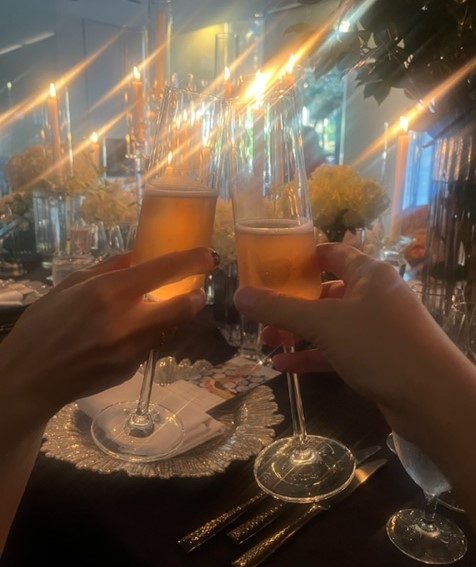
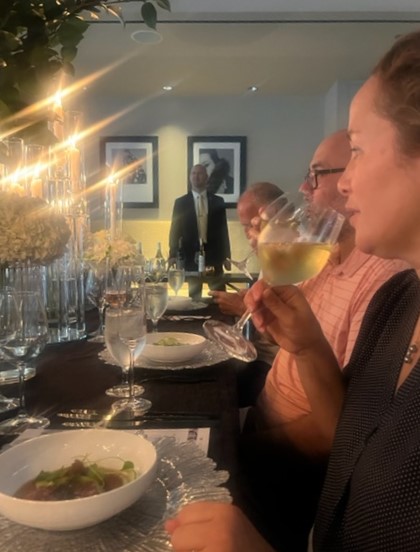
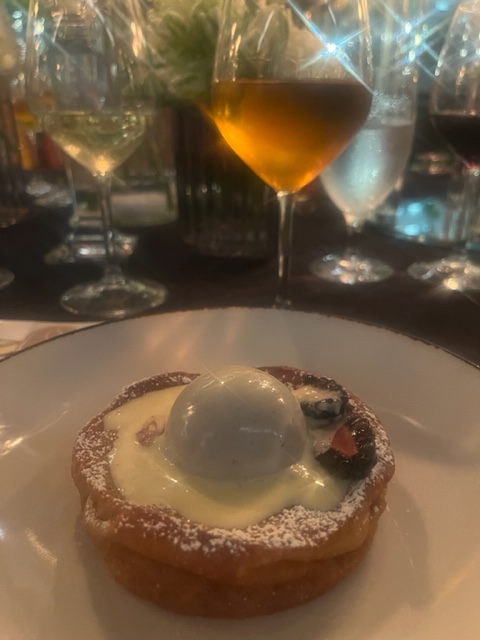
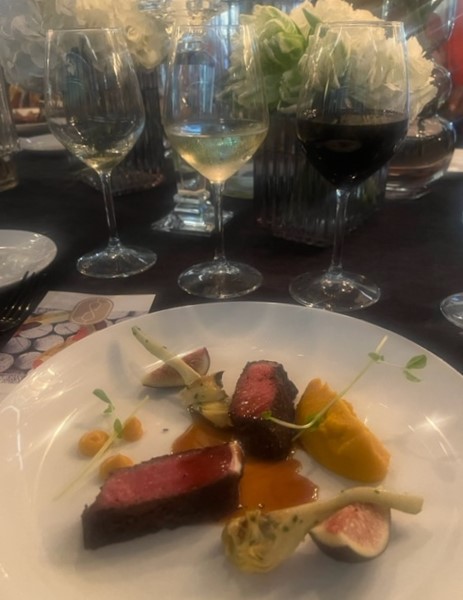
Dozens of blooming white flowers and shimmering candles in glass holders grace the center of a long dining table. Greeted with a glass of sparkling wine upon entry to the Cigale Room, Sofitel Chicago Wine Dinner guests seat themselves around the table and sip their bubbling beverages while reviewing the printed menu of culinary delights and drinks to come. The varied-height centerpieces create intimacy between clusters of conversing guests, allowing privacy within a group setting. Per French ideals, one simple joy of life is savoring food and wine that bring out the best in each other, and Sofitel Chicago is an expert in this pairing of dishes and drinks, offering fine dining experiences through its creatively curated Sofitel Wine Dinners. This series of seasonal dinners introduces guests to exquisitely prepared courses matched with wines and cocktails whose notes enhance flavors in the meal.

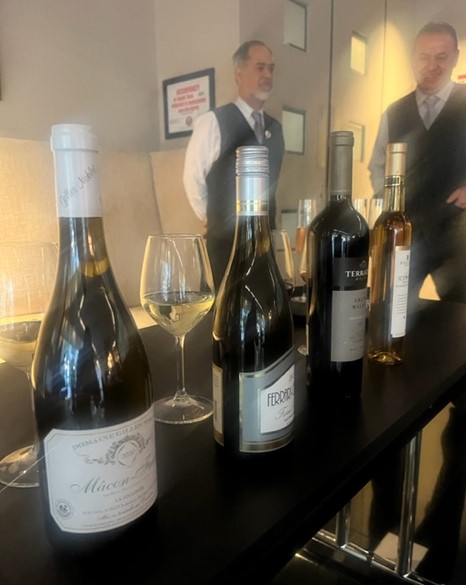
The September 2022 Sofitel Wine Days Dinner at Sofitel Chicago was prepared by Executive Chef Cliff Crawford, who crafts meals that embody Sofitel’s “Live the French Way” motto. He said, “I always strive to have a noticeable French influence in the menus. It can be ingredients used, such as cheeses or pâtes, or could be a modern take on French classics.” Per this ideal, the September dinner’s first course was a beautifully plated French-style tuna tartare alongside cucumber mousse and delicate cucumber curls, ponzu onion, and topped with a marquise-shaped scoop of paddlefish caviar. This flavorful delicacy was accompanied by a generous pour of golden Domaine Gilles Noblet Mâcon-Fuissé from vineyards in Mâconnais, Burgundy, France.

Sofitel Chicago began hosting these wine dinners in late 2021, and a gourmet dinner is scheduled for each of the remaining three months of 2022. The dining room’s exquisite décor changes based on the time of year, as does Chef Crawford’s menu planning. “It is really just about the season and the ingredients that are best at that time of year. It mostly revolves around produce. Wild mushrooms, for example, are one of my favorites. I love to have morels in the spring and black trumpets in the winter,” Crawford said.

The Fall Harvest Wine Dinner on October 7 will feature wines from France, Italy, and the USA, alongside seasonal spreads. The November 11 Winter Whiskey Dinner will serve an exclusive Maker’s Mark bourbon mixed into cocktails, in lieu of wine. The December 9 Art de Noel Dinner will feature holiday décor and include festive cocktails to compliment the meal.

Regarding guests at these luxurious dinner experiences, Chef Crawford said, “I would like to see them leave with plans to return. I feel we are a bit of a ‘hidden gem’ here in downtown Chicago; we are a great location, but not everyone has heard of us. I want them to feel like they have found something special.” To purchase tickets for upcoming dinners at Sofitel Chicago, please visit https://www.sofitel-chicago.com/dining/wine-dinner-series/. To round out the evening, a convenient and comfortable overnight stay in the posh rooms above can be booked at https://www.sofitel-chicago.com/.

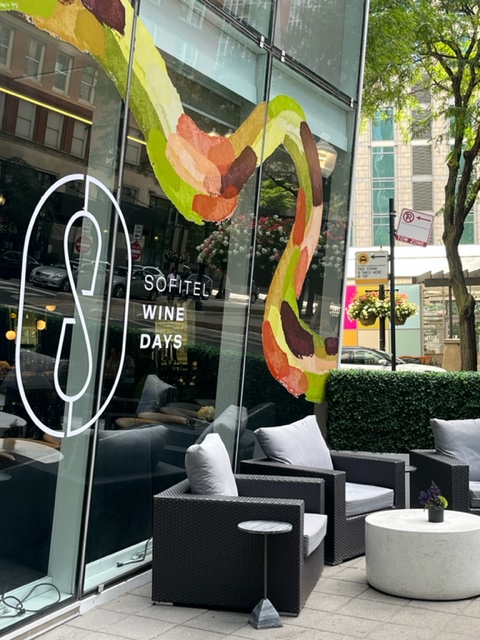
The 5-star Sofitel Chicago is part of a French luxury hotel chain that embodies “living the French way” by celebrating life through a sophisticated and unique approach to luxury accommodations and hospitality. Its stylish avant-garde exterior is a preview of the interior’s chic design and atmosphere. Le Bar, the glass-walled bar and lounge on the lobby level of the hotel, is a trendy place to unwind and socialize while indulging in savory appetizers, flatbreads, main dishes, and desserts, and sipping unique libations like the Banana Old Fashioned. A combination of Bacardi 8-year, Giffard Banane Liqueur, Angostura bitters, Angostura cocoa bitters, and Demerara syrup, with a dark cherry and an orange peel garnish, one patron described this drink as “a really interesting take on an old fashioned. Not too sweet, and very banana, which was fun!”

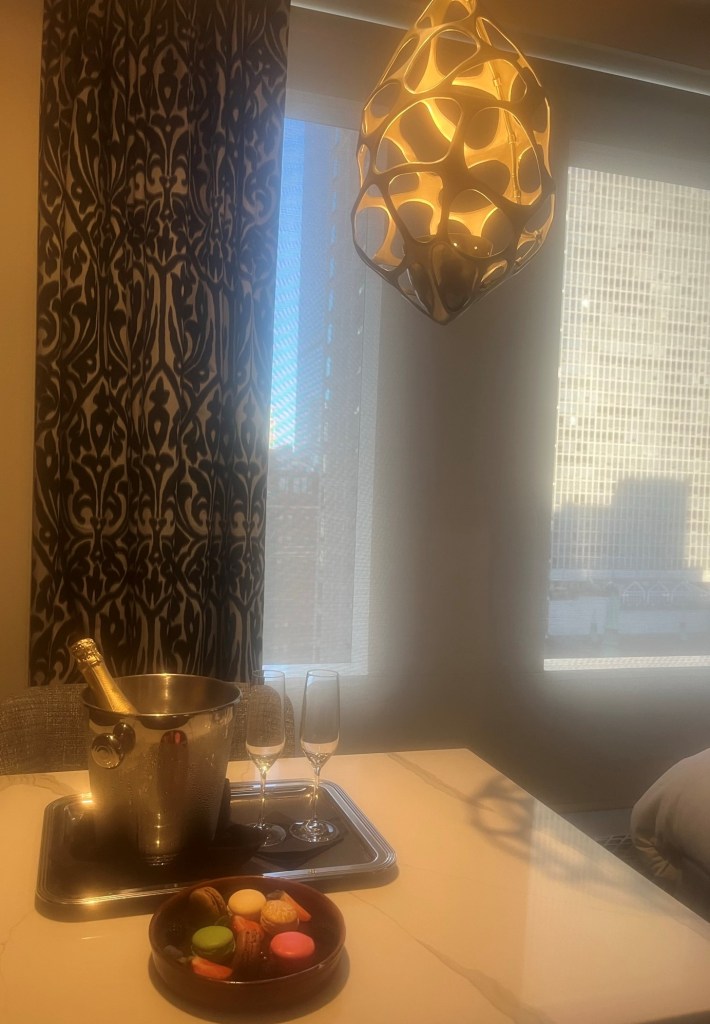
The higher floors of Sofitel Chicago offer a wide-windowed, stunning view of the bustling city below, while an easy flick of a switch lowers the blinds for privacy and comfort. In the European way, the fluffy bedding provides a warm nest in which to rest beneath a soft duvet with no need for a top sheet. Room bathrooms are supplied with bath and skin products by LANVIN Paris, a soft white robe, soaker tub, and rainfall shower. Luxurious and cozy, Sofitel Chicago provides home-away-from-home accommodations that pamper and allow for chic indulgence.

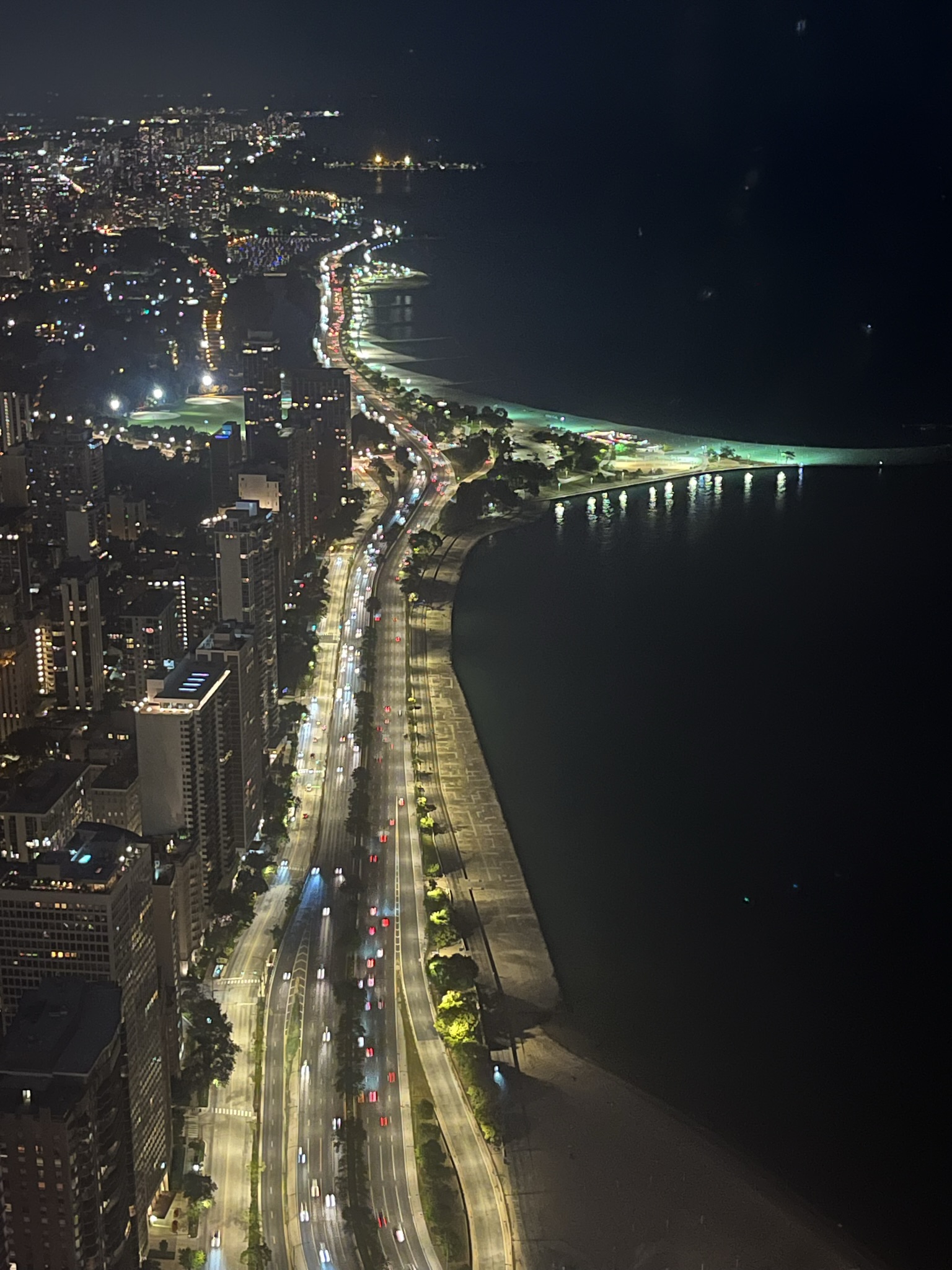
Further celebrate the art of living—l’art de vivre—and say oui to a nearby adventure that will bring the soirée to new heights. A mere five-minute walk from Sofitel Chicago, you can experience elevation to an even higher viewpoint of the city, at 360 CHICAGO, the top of the former John Hancock Center. The observation deck sits 94 floors high (1,030 feet above the Magnificent Mile) and is the home of Chicago’s highest thrill ride, TILT. To get to this height, you first stroll through an exhibition celebrating the history of Chicago and nine of its culture-rich neighborhoods. A quick 20-miles-per-hour elevator ride then lifts you to the glass-walled, 17,000-square-foot level that allows breathtaking 360-degree vistas of the city and lakefront. On a clear day, you can even see four states from this lookout deck!

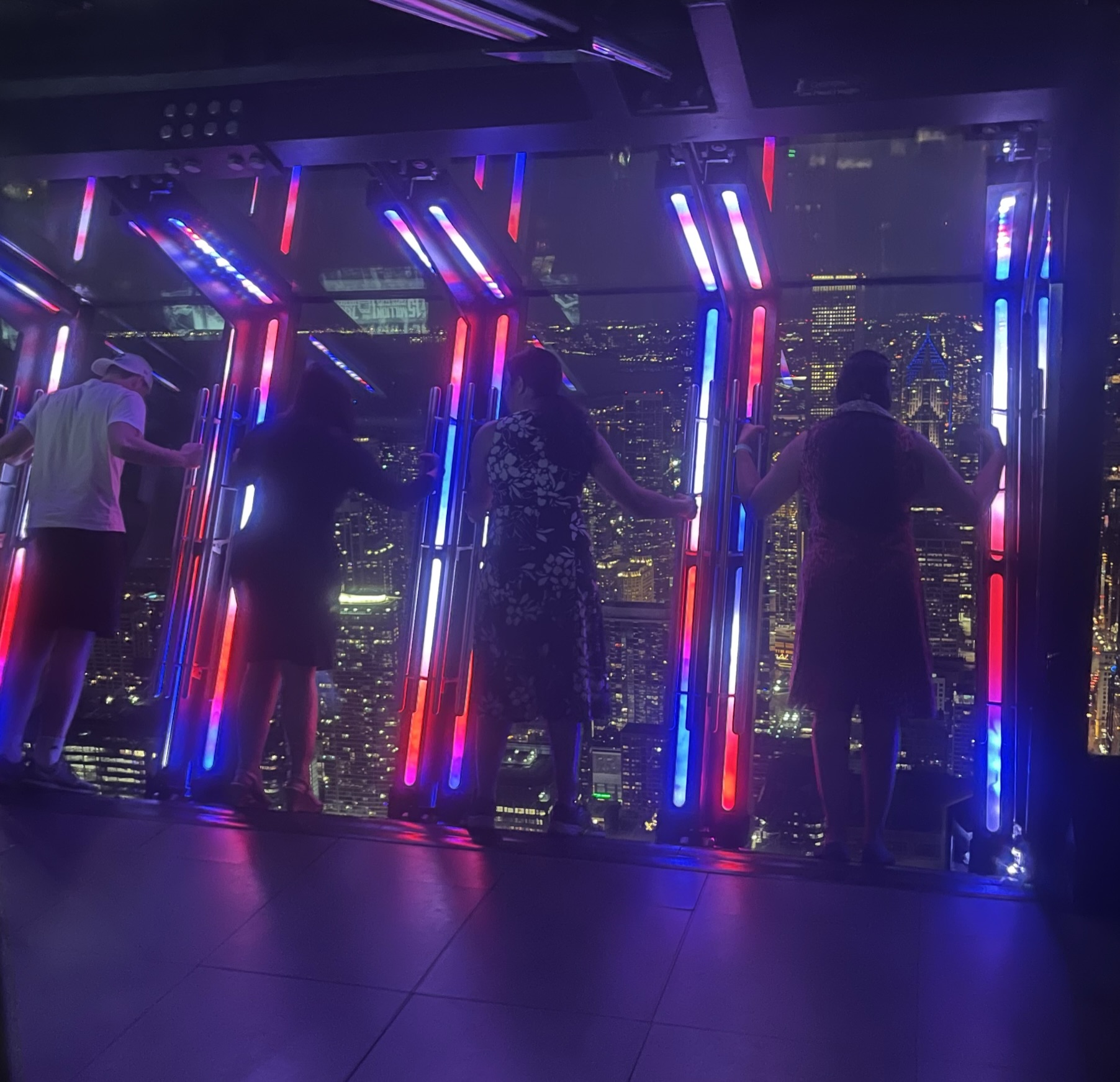
An add-on to the observation deck entry is a ticket to experience TILT, where guests 42 inches and taller can spend 2-3 minutes safely angling forward over the cityscape and peering downward through the glass window. While excited participants tightly grasp handles to their right and left sides, the glass wall is set into action in a series of motion profiles, allowing people to feel the sensation of leaning out into the sky and over the skyscrapers. Energizing music builds as the windows tilt farther and farther out at each interval, causing some people to close their eyes, some to giggle nervously, and others to shriek in terror. At night, colorful lights outline each panel separating participants. In “Extreme” mode (an experience that requires a prerequisite signing of a safety waiver), a window can even slide open for guests to enjoy further thrills and feel the city breeze. Trying out the basic mode, with its increasing angles and exhilarating music, Megan Pletzer from Madison, Wis., said, “You think it’s done, and then it just keeps going!”

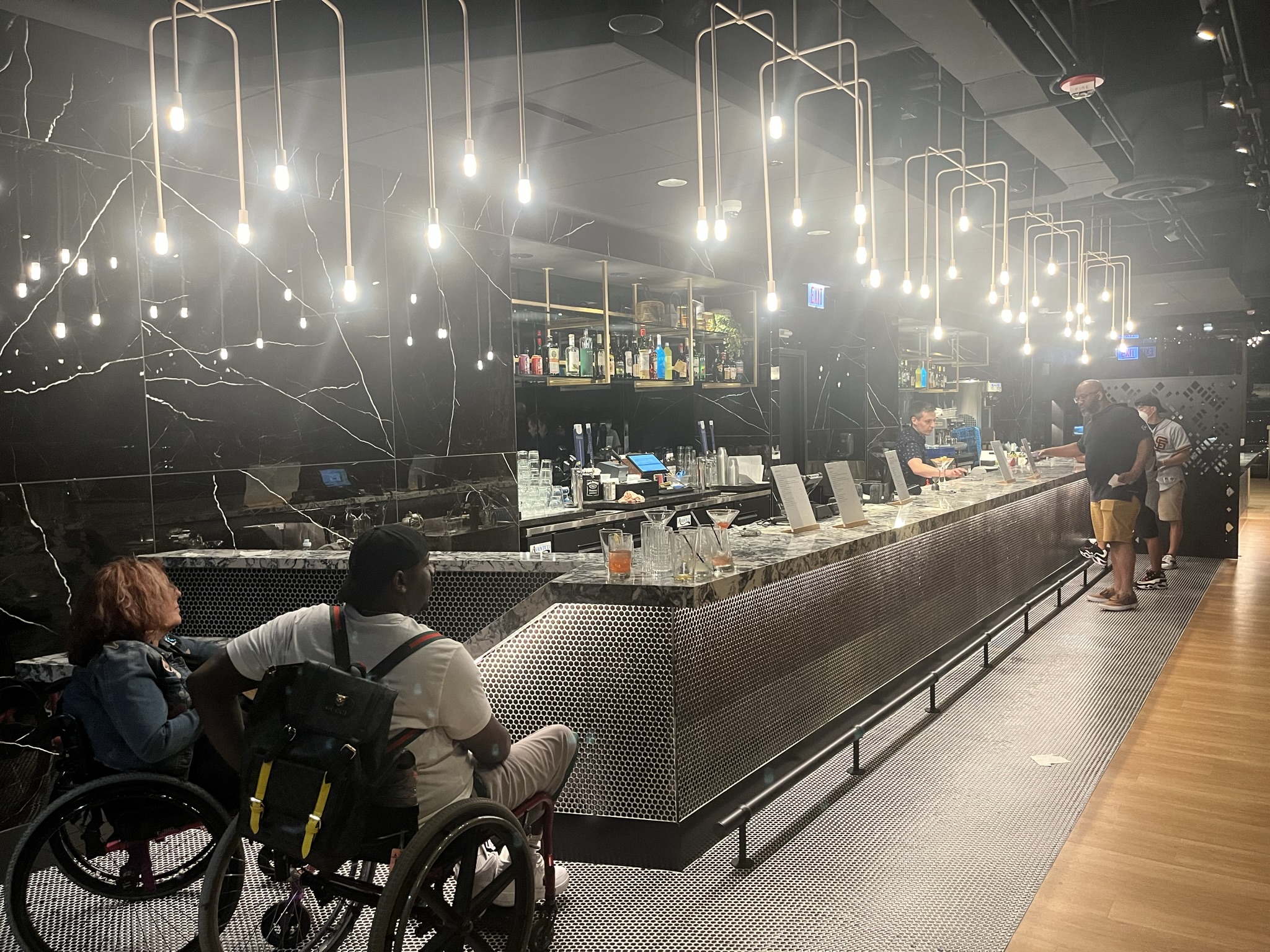
A general admission ticket to the observation deck includes entry to the brand new CloudBar, which officially opened on September 14, 2022. Owned and operated by Magnicity, a Paris-based company, 360 CHICAGO’s CloudBar is a novel, sky-high bar and lounge that magnifies the best of Chicago by featuring local food and beverage partnerships and décor by area artisans. Magnicity CEO, Alexia Vettier, said, “We want each Magnicity location to act as a true city ambassador for our guests—encouraging exploration of the vibrant neighborhoods within our cities and forging new adventures and experiences. We are thrilled to introduce our brand-new bar concept with CloudBar.”

Photos above courtesy of 360 CHICAGO.

The Gettys Group Chicago design team fashioned the area to give people the feeling of “floating in the air.” Numerous reflective surfaces (including the ceiling, drink rails, and back wall) echo the spectacular sights visible through the floor-to-ceiling windows. Modern European lounge furniture and stylish lighting coupled with customized, original graphics by Chicago-based muralist Lauren Asta emphasize the blended cultures found in the city.

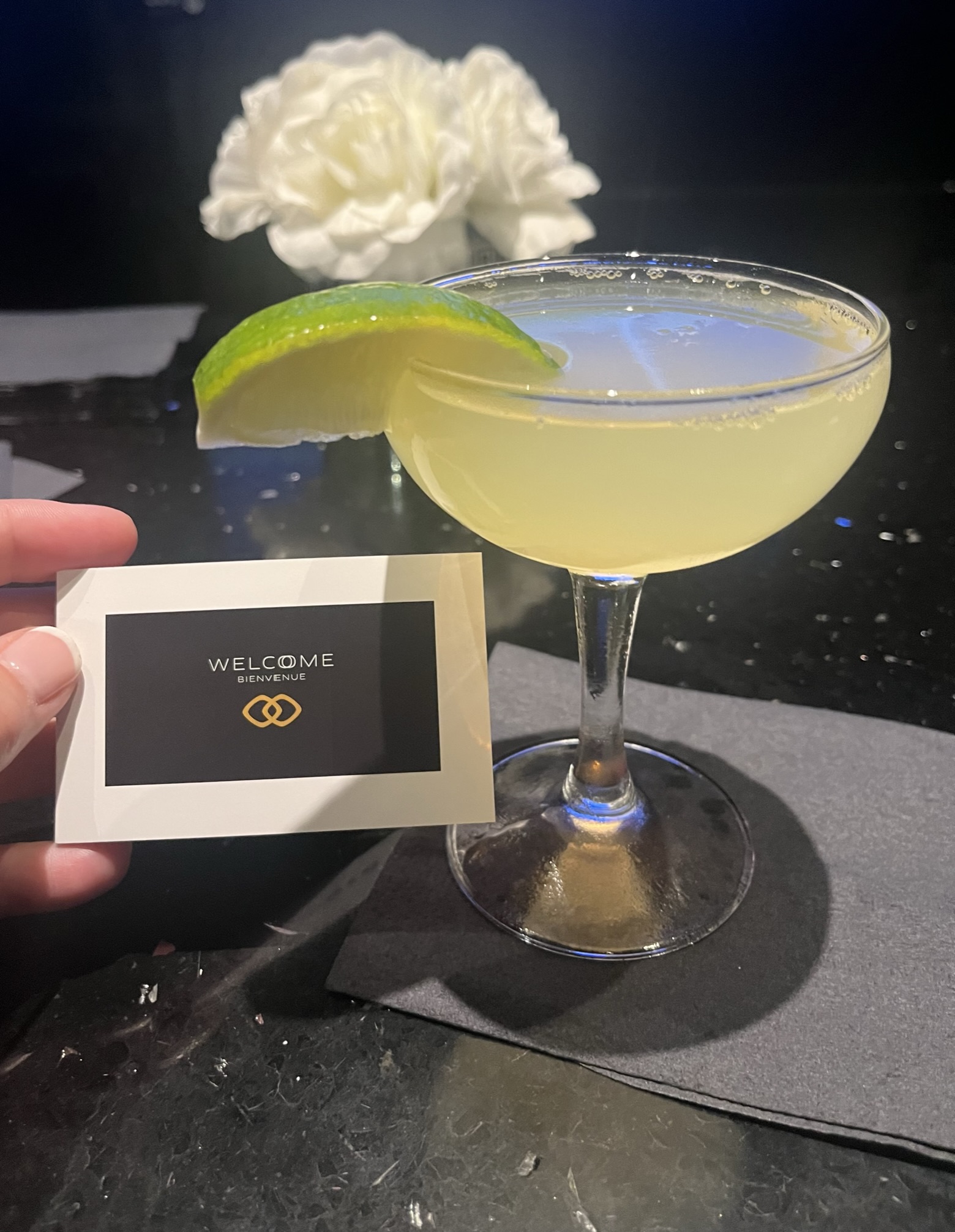
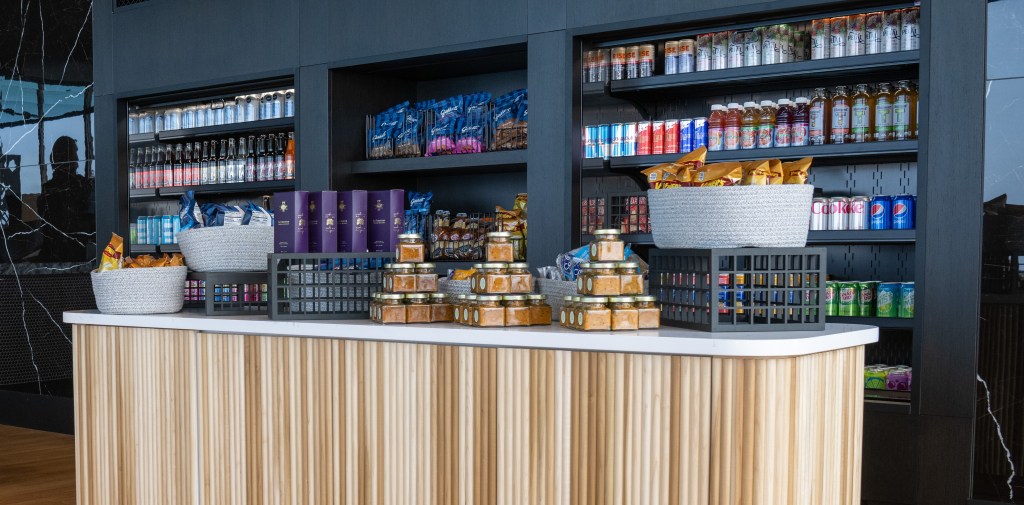
At this great height and surrounded by inspiring art and lights, you can also stimulate your sense of taste with snacks and sips from CloudBar’s offerings. The “Feeling Tilt-sy” cocktail carries on the “TILT” theme, served in a unique glass that leans to one side. Another colorful drink emits a haze of white mist from its lime-accessorized martini glass. Exclusively available at CloudBar is the Magnicity Pilsner, created by Moody Tongue brewery in partnership with 360 CHICAGO. Other true Chicago brands and products can be found at this exciting altitude, including wares from Garrett Popcorn, Vosges Haut-Chocolate, Carol’s Cookies, Kit Kat Lounge & Supper Club, and Kikwetu Coffee Company.

Photos above courtesy of 360 CHICAGO. Pictured at center above is artist Lauren Asta.

This space in the clouds is also available to be rented for private events, weddings, and parties. For information on event reservations, please visit 360chicagoevents.com. Relax at cloud level with besties and beverages, elevate your mood, and let the spectacular city views fill you with joie de vivre, the joy of living.

A Swiss-Italian Rail Connection

by Don Heimburger
Photos by the author

I expect other countries feel it’s just not fair…Switzerland has all the luck: snow-covered mountains, hundreds of deep blue lakes, small, quaint mountain towns with intriguing steepled churches, chalet-type houses decorated with cow bells and colorful hanging baskets of flowers, tempting chocolates and cheeses, and of course a variety of delicious wines and beers.

Another important Swiss fact: over the years, the Swiss have poured billions of dollars into their train and transportation systems. Today, there are 3,100 miles of track including 620 miles of mountain railway lines operated by 43 companies. A total of 98% of the Swiss people have access to public transportation within less than about half a mile of their home.

“The Swiss transportation system is concise and precise — there is no guessing when or where the next train or bus will show up. It’s well thought out, and usually with great accommodation to everyone. And it works — efficiently.” Don Heimburger

So should you take a vacation–or even a business trip–to Switzerland, you will likely find a virtually seamless ribbon of buses, trains, trams, gondolas or ships to get you where you’re going. Even at the very tops of mountains, the Swiss have built funiculars or gondolas to scale the heights, and have then built restaurants and/or hotels at the top so you can enjoy the views longer while you’re sipping a glass of wine.

RAILFANS APPRECIATE SWISS RAILS

The average American railfan would appreciate to be treated this royally, riding the Swiss Railway system trains to nearly any worthwhile destination, then jump on a boat or whatever to take you the rest of the distance. In fact, often there is an alternative transportation system, as we’ll see.

Before you go, however, you’ll want to obtain the correct tickets in the United States for traveling by train abroad, and that means either the Eurail Pass or the Swiss Pass.

The Eurail pass is available through www.raileurope.com or call 888-382-7245 in the US or 800-361-7245 in Canada. If you’re traveling to Switzerland and planning to spend several days or longer there, and plan to visit several bigger cities, you’ll probably want to obtain a Swiss Pass from Eurail. It gives you free admission to more than 400 museums and exhibits in Switzerland and gives double the discount (50%) on rail and cable car rides to places like the Schilthorn, Jungfrau, Pilatus and Rigi. With the Swiss Pass, you receive access to rail, city transport systems, buses, lake steamers and mountaintop excursion rides.

While many people in Switzerland and northern Italy speak English, it would be a good idea to know a few words and phrases in German, one of the four official languages of Switzerland. Two publishers have easy-to-use books and audio CD’s that I recommend. Bilingual Books, 1719 West Nickerson St., Seattle, WA 98119 publishes a 132-page 8 1/2 x 11″ softbound book titled German in 10 Minutes a Day that helps you learn the language faster, and there’s a 60-minute CD German language lab and 64-page phrase book from Penton Overseas, 1958 Kellogg Ave., Carlsbad, CA 92008 that is great. In tandem, these tools were beneficial.

On a spring tour of Switzerland and northern Italy, there are numerous places to see and things to do by rail and by not-too-stenuous walking.

BERN, SWISS CAPITAL

Bern, the capital of Switzerland, with a population of only 130,000, was founded in 1911 for strategic reasons, the old historic part surrounded by the River Aare. The city, noted for its red-tiled roofs (appreciated more when overlooking the city from the Rosengarten {Rose Gardens} high on an adjunct hill), and perhaps even more while dining at the lovely Restaurant Rosengarten, became a university town in 1834 and then in 1848, the Federal capital. Bern is Europe’s most flower-decorated city and features one of the the longest covered shopping promenades (nearly four miles) in Europe. Another interesting thing to note about Bern is one-third of its area consists of public parks and woods.

In the Old Town of Bern, Switzerland, this famous old clock tower chimes on a regular basis.

Bern museums: a good part of your free time in the city might be devoted to visiting the many museums, such as the Zentrum Paul Klee which features Paul Klee’s designs (4,000 works alone), but other exhibitions, music, theatre and dance as well. The Museum of Fine Arts, the Historical Museum of Bern with its unique Albert Einstein exhibit (until October 15–Einstein was an employee of the Swiss Patent Office in Bern in 1905), the Natural History Museum and the Museum of Communications which held an exhibit of the 100 Years of Yellow Postbuses in Switzerland in 2006, are also very worthwhile.

Other Bern attractions include the colorful trams that run throughout the city, the Munster Cathedral, the beautiful Zygloggeturm Clock Tower, the Bear Pits and free guided tours of Parliament. Multilingual city guides are recommended at the local tourism office at Laupenstrasse 20 (berninfo.com). The bahnhof is conveniently located at the Bahnhof Platz, and within easy walking distance of the Old Town. More Bern info is at www.berninfo.com.

The main market square in spring is filled with fruit and vegetable stands and concessionaires offering numerous handmade and commercial products, as well as food, pastries and drinks. If your hotel is near the center of the Bundes Platz where this market takes place, be aware that the surrounding noise can be disturbing as it bounces off the buildings.

(left to right) Passenger trains on the Brienz steam route.; Brienz steam loads water.

Eating tips: try Schwellenmatteli Restaurant at Dalmaziquai 11 near the Aare River falls, adjunct to the Kirchenfeld Bridge. The restaurant features great rigitoni and delicious red wine. A quick Apfelstrudel presented with style at Schmiedstube (address: am Schmiedenplatz 5) near the Kornhaus will perk you up on a hot afternoon.

From Bern, hop a Swiss train on the Loetschberg Line to Bologna to discover what northern Italy has to offer. Trains run like clockwork in Switzerland (excuse the pun), and you hardly need to check a train schedule ahead of time–something is always coming to take you where you want to go, usually no more than an hour between trains.

BRIENZ BAHN

For a completely different aspect of travel, the Brienz Rothorn Bahn in the small town of Brienz, Switzerland on Lake Lucerne is a choice spot. In 1892 the Brienz Bahn (railway) was opened to ascend the top of 7,710-foot-high Brienzer Rothorn.

From mid-May to the end of October, this oil-fired steam train travels 4.72 miles to the top where visitors can enjoy refreshments and meals or an overnight stay at Hotel Rothorn Kulm.

A 360 degree view is possible from the top, as you watch steamers ascend. The line owns and operates three generations of steam locomotives as well as several diesels. The first steamers are from 1891-1892, while the second set were constructed in 1933-1936, and the last set in 1991-1996.

Large glass windows offer wide views of the ascent and descent, and the 70-member staff is friendly; you can even purchase stock in the company!

It looks like a toy, but it’s just far away.

LOETSCHBERG LINE

The Loetschberg line train usually pulls out exactly on time from Bern, and firtst class car windows are big — 4 x 3 1/2 feet. A stop comes at Spiez on the Thunersee, and the line breaks there to head towards Brig and the Simplon Pass, then into Italy at Domodossola and onto Milano, where a change of trains is required.

As you travel by train, you’ll notice the concrete ties, the banked curves, the mile-after-mile of concrete infrastructure, and the steel girder overhead wire system. America could never afford this outpouring of funds.

The train travels fast through this land, and the Swiss Alps loom large off the left side of the train. If you check out the passenger car toilets, you’ll see hand dryers instead of towels. You’ll also notice how the lst class seats are wide, high and have two positions. At Brig you’ll notice the Glacier Express yard facilities that service trains going to Zermatt. At Brig an announcement will tell you a customs search is coming, so have your passports ready.

At Domodossola, Swiss and Italian flags alternately wave in the breeze on the station platform. At Stresa, with enchanting Lake Maggiore in the background, you spot island villas that appear Hollywood-like in size and stateliness, and you wonder who lives in these red-tiled-roof mansions.

The Milano station is a favorite. It’s busy, bustling and big. The large signboard in the terminal area next to the tracks is where passengers await arrival track information, and it’s a fun place to sit on your luggage and watch the world go by. Little shops lining the station walls sell Italian lattes or cappuccinos if you need an adrenalin boost.

The green and white Italian Eurostar is a high quality, high speed train that connects main cities in Italy. A seat reservation is required, and the trains are roomy and comfortable with large windows so you can view the many vineyards and monasteries. In Italy, it’s helpful to know that binario means track and biglietto means ticket.

WELL PRESERVED BOLOGNA

Bologna, judged the most beautiful Italian city as a whole, was a seat of great learning. After Venice, it has the best preserved historic center in Europe. The central part of the city consists of a complex of streets, towers, buildings and monasteries all linked by arcades (nearly 20 miles of them).

Walking through the city center, you will find a number of the city’s ring towers still standing (but perhaps leaning), ancient aqueducts still intact, centuries-old red brick floors, historic bridges and statues. The clay, selenite and sandstone are local materials from which many structures were built.

You’ll also note that streets fan out from the center of the city, the easiest route to the surrounding farmlands where citizens returned after selling their produce in the city market.

Bologna’s main piazza attraction — since 1200 — is the Piazza Maggiore, which features a Neptune Fountain built during the years of the Counter-Reformation, the work of a Palermitan architect and a Flemish sculptor. The inside of the St. Petronic Basilica in Maggiore Square, commissioned in 1390, is the church of the local patron saint, and exceptionally large. It was hoped it would be built bigger than St. Peter’s in Rome, but that idea was blocked.

The local university (Archiginnasio) has taken up space in many of the central buildings around the piazza. During the 9th through 12th centuries, Bologna and Paris were the first cities to offer examples of intellectual pursuits; in fact, by the mid-12th century, Bologna was seen as a law center throughout Europe.

If you enjoy modern hotels, the UNA Hotel at Via Pietramellara 41 in Bologna is a thoroughly new hotel representing the latest in style and design. It is comfortable and features many amenities, and it’s located directly across from the train station.

Retracing your steps northbound on the Italian Eurostar to Milano, if you want to leave in the morning, you can take the 8:52 a.m. train. The Eurostar features low lighting and individual seat lamps like on airplanes. The seats, wider than on a plane, are covered in light and dark gray fabric, and offer more legroom than on a plane. You’ll change trains again in Milano and head for Lugano.

Our beautiful wooden boat on Lake Lugano

LUGANO BY THE LAKE
Back in Switzerland, Lugano is a picturesque village surrounded by tree-covered mountains and Lake Lugano (The Lake That Steals Your Heart). Lugano is situated in Ticino, the southernmost corner of Switzerland where the climate is exceptionally mild, and where palm trees and cactus thrive.

The Lugano waterfront is one long tree-lined promenade, with plenty of hotels set back from the shore, and mountains that rise precipitously from the lake. It’s a relaxing spot to recover from train-riding in Switzerland, and a couple of days here will set your mind straight for weeks to come. Its beautiful serenity, combined with quiet tradition, contrasts with the hustle-bustle of everyday life in America.

For a scenic boat tour, contact Societa’ Navigazione Del Lago Di Lugano that can take you to a number of locations on the lake, from cogwheel railways to funiculars to the Swiss Customs Museum (has been open since 1949 and offers attractive exhibits in a former customs officers barracks).

Lugano is blessed with many museums, both large and small, to keep you occupied including the Cantonal Art Museum, Municipal Fine Art Museum, the Modern Art Museum and the Galleria Gottardo (owned by the Bank of Gottardo). The Gottardo exhibit highlights the archaeological findings from Poggio Civitate (near Siena, Italy) which was controlled by Etruscan aristocrats, who wore zany pointed, broad-brimmed hats. Other museums include the Villa Saroli, the Cantonal Natural History Museum and the Wilhelm Schmid Museum. Many more museums are also in surrounding towns.

The Swiss Miniatur in Lugano is a permanent “little village” that opened in 1959 that “synthesizes, symbolizes and summarizes Switzerland “– in 1:25 scale. The exhibit consists of 120 models of houses, castles and cathedrals, mountains, lakes and towns, and 11,480 feet of scale track that can accommodate 18 trains, funiculars, rack railways and cable cars! A modeler would have to put this display on his agenda; kids and spouses would enjoy it as well.

To cap off a day of exploration in Lugano, take the funicular up to the top of 3,000-foot-high Monte San Salvatore (the last downhill train leaves at 11 p.m. in the summer) for a mediterranean supper at Le Ristorante Vetta. Overlooking Lugano, this outpost high above the city can be a memorable experience. While you’re there, look for the Daphne Odorosa, a rare plant with delicate pink flowers, found only on the mountain’s slopes.

Good local guides can be tricky to find, but Romeo Bozzini, Ra Cara 16, CH-6926 Montagnola, Switzerland (Fax 41 91 994 36 40) should not only give you excellent history details of the Lugano area, he is saavy about local foods, customs and people. He has a good sense of humor, as well.

One of the experiences you’ll want to try in Lugano is eating at a grotto. Grotto means cave, but today dining at a grotto means dining outside with twinkly white lights strung in the trees. Grotto Figini, located up the side of a steep slope in Gentilino, will fill your plate with delicious local Ticino foods such as hot minestrone, risotto with fresh mushrooms and onions, sliced local meats, small round cheeses and good, dry red wines (the area is home to elegant Merlots) poured from an earthenware pitcher known as a boccalino.

More Lugano information can be obtained from www.ticino.ch.

(left to right) Eating next to the water on Lake Lugano; A quiet restaurant reached by boat on Lake Lugano serves these specials.

CENTOVALLI RAILWAY
From Lugano station, you can catch an SBB train to a fascinating, unspoiled region that begins at Locarno, Switzerland and ends in Domodossola, Italy. The Centovalli Railway is a 32-mile electric line that passes through numerous valleys as it snakes its way over high trestles and through tunnels (there are 83 bridges and viaducts on the line), over streams, past chesnut forests, vineyards and villages clinging to the sides of mountains. After Camedo the train crosses into Italy, and border guards may board the train at that point.

The countryside offers a lot to be explored, and you’d want to plan in advance if you want to stay overnight at any of the charming towns located on line. There are monuments, churches, paintings, embroidery, old streets, stucco work, old frescos, engraved glass, grottos, 500-year-old stoned roof houses and more to see tucked back into the hills and villages here. Go to www.lagomaggioreexpress.com and www.centovalli.ch for more information on these trains and the area.

This remote, beautiful region is accessible via numerous modern two-car wide-window Centovalli trains that leave from a tunnel station at Locarno. Soon the train encounters steep grades, as much as 6%, as it heads for Santa Maria Maggiore, the highest point on the line at 2,624 feet and approximately two-thirds of the way to Domodossola.

Three trainsets were built in 1959 and one in 1993, with scattered vestiges of older equipment on various sidings and yards. In all, the railway is very modern, well-kept, and it employs 95 people. It’s a railfan’s delight because of its scenery and because it’s a bit hard to “discover” unless you know it runs there.

There are special Lago Maggiore Express packages with both rail and boat transportation available, with featured locations such as the Borromeo Islands, Cannero castles and the resorts of Stresa and Ascona.

A tiny but richly-adorned church near Lugano
View from the top of Mt. Salvatore at Lugano

WILLIAM TELL EXPRESS
Leaving Lugano, you can board the popular northbound William Tell Express that combines rail and ship travel over the famous Gotthard Pass, the watershed between the Mediterranean and the North Sea. Be sure to ask for the small all-color 6 x 8″ William Tell Express guidebook when you make your reservations with Rail Europe back home. It gives a map and pictures of what you’ll be seeing on the route.

You’ll board a first-class Panoramic Car, which means you’ll be riding high with huge six-feet-wide windows (with sunshades) for excellent views. The seats are comfy and large, with two-abreast seating on one side of the car and one seat on the other side with wide aisles. Be forwarned, however, to board the train quickly when it arrives at the station. To maintain its schedule, it waits for no one!

Besides the mountains and waterfalls en route, you’ll see granite quarries, vineyards, small villages, churches and meadowlands. The Gotthard route sees 270 trains on peak days, with 50 international expresses and 100 merchandise freights on average. The Gotthard Tunnel itself is nine miles long, and it opened in 1881.

At Gurtnellen the first of three loop tunnels appears. At Wassen, look out the window at the quaint little church below you — you will pass it three times! Then at Wattinger spiral tunnel you are at the same height as the church, and at the Leggistein tunnel, you are lower than the church. Don’t miss this three spiral tunnel show — it’s worth noting.

Morning view from our room in the magnificent Palace Hotel, Lucerne

At Fluelen, the train station is a few steps from the paddle steamer boat ramp, and your luggage can be off-loaded to the boat using the Swiss railway’s Fast Baggage service which takes care of your luggage so you don’t have to load and unload it yourself.Check in your luggage at the station from which you depart.

On a clear day, the view from Fluelen towards Lake Lucerne as you await the Vier Waldstattersee steam paddle boat is as good as it gets: snow-covered Alps loom in the distance, contrasted by lush green hillsides filled with sheep, cows and farms.

A lake cruise between Fluelen and Lucerne is something one should experience at least once in a lifetime: it’s relaxing and dignified. Definitely a stress reliever.

The Lake Lucerne Navigation Company is Switzerland’s largest steam and motor ship operator with five paddle steamers and 15 motorized ships, transporting 2.3 million passengers each year. Since 1835 the ships have been plying the beautiful blue waters of Lake Lucerne, and recently the firm took over its food services on board the boats. The firm even owns its own shipyards.

In 2006 the steamboat Schiller, considered to be the most well designed steamer in the country, celebrated its 100th birthday. A portion of the ship is considered a national monument!

Watch for the Burgenstock Bahnen as you pass or stop at Burgenstock. It’s a funicular that takes visitors to the Burgenstock Resort high on the top of Hammetschwand.

LUCERNE ON THE RIVER REUSS
Lucerne, located on the shores of Lake Lucerne and only 36 miles from Zurich, is a captivating medieval city steeped in history and surrounded by the Swiss Alps. As they say, you can arrive as a stranger and leave as a friend. Lucerne has a population of only 60,000 people, and the boat dock and Bahnhof are located across from one another to make transfers very easy.

The Old Town, straddling narrow waters of the River Reuss, is a particularly beckoning section, with quaint shops and restaurants that draw you up the cobblestone streets. Be sure to visit the Kapellbrucke (Chapel Bridge), the oldest wooden bridge in Europe built in the early 14th century. But there are many other treasures to investigate as well.

The late-Renaissance style Altes Rathaus was built between 1599 and 1606, and the Hofkirche, with an 80-rank organ and one of Switzerland’s finest, was built in 750.

The Swiss Transport Museum, at Lidostrasse 5, is the most comprehensive of its kind in Europe, and a railfan could easily spend the entire day there. A very extensive HO gauge Marklin train layout shows in miniature the Gotthard Tunnel track arrangements. There is a large selection of prototype locomotives and cars contained in 26,000 square feet of space, including 3,200 feet of track on which the cars and locos sit.

Swiss Transport Museum’s “Crocodile”

Special exhibits include the Limmat, a replica of the first Swiss steam locomotive; the Rigi No.7, the first European rack railway engine: the C 5/6 (the largest Swiss locomotive); and the legendary Be 6/8 Crocodile. There are numerous electric locos, SBB’s Red and Blue Arrows, and the Landi-Loco which was the most powerful Swiss locomotive. There’s even a cutaway view of an 0-6-0 to show how a steam locomotive operates.

An overhead walkway traverses the entire railway exhibit, making it easier to find the main attractions. There are also glassed-in exhibits of scale models to view. and special smaller exhibits such as one showing how the Langweis railway viaduct was constructed.

Other historical attractions of Lucerne include the Spreuerbrucke, an all-wood covered bridge dating from 1408, the Weinmarket, now a popular fountain square where passion plays were once conducted in the 15th to 17th centuries, and the Lion Monument (Lowendenkmal) called by Mark Twain “the most mournful and moving piece of stone in the world.”

You’ll want time to visit the local chocolate shops, and perhaps purchase a watch or Swiss Army knife in one of the stores. You’ll not have a problem locating this merchandise in town! Also take time to sit at an outside café for coffee and pastry (kuchen). It’s something Americans just don’t do enough.

For model railroad fans, stop in at Modellbahn Boutique at Frankenstrasse 5, next to the railway station.

A visit to the city landmark Palace Hotel (Haldenstrasse10), which celebrated its 100th birthday in 2006, is like visiting, well, a palace. The original owner of the hotel also built the Burgenstock funicular, as well as the Stanserhorn and San Salvatore funiculars, and the tramway system in Genoa, Italy. Franz-Josef Bucher wanted to build the most beautiful hotel in Switzerland, and spent 3.3 million francs to accomplish his dream in 1906. The current hotel has retained its old world charm but is respectful of what the 21st century traveler wants: attention to detail, more room — the hotel has reduced its rooms from 168 to 136 — and a good bit of pampering.

Two close-by Lucerne attractions that are easy to get to and worth your time are Mt. Pilatus and Mt. Rigi.

MT. PILATUS
Mt. Pilatus (Mountain of Dragons), near Lucerne, is home to the world’s steepest cogwheel railway. At a maximum gradient of 48% over its nearly three miles of 31.5″ trackage, the line ends at 7,000-foot-high Pilatus Kulm, where two hotels, seven restaurants and hiking trails await the traveler. Opened in 1889 using steam, the line was electrified in 1937. Two of the former Pilatus steam locomotives are now in museums: #9 is at the Museum of Transport in Lucerne and #10 is at the Deutsches Museum in Munich.

Today, bright red 40-person cars travel the route from May to November at 6-8 miles an hour ascending in 30 minutes to the top through several climate zones. On the way up or down, you’re likely to witness trains passing at one of the unique “passing turnouts” on the line.

You can spend an entire day on Pilatus and its surroundings. Once on top, you can hike down, or take an aerial cable and panorama gondola down the back side. If you stop off part way down (at 4,640 feet), your kids can enjoy Switzerland’s largest rope park where they can swing and sway on all manner of ropes and bridges. The Pilatus Railway is adding more fun-related activities to the mountain rail experience, and last year 268,000 visitors rode to the top.

For a refreshing toboggan run, stop at Frakigaudi (www.rodelbahn.ch), the longest toboggan run in Switzerland at 4,428 feet. It’s located at Frakmuntegg, a cable car station stop between the top of Pilatus and the town of Kriens.

MT. RIGI
Mt. Rigi (Queen of the Mountains), also located on Lake Lucerne but in the opposite direction from Mt. Pilatus, is 6,000 feet high, and the Vitznau-Rigi Railway ascends to the top. As the oldest cogwheel railway in Europe (1871), the line has enjoyed 135 years of service. In 2005, it carried 562,320 passengers to the top. The line was electrified in 1937, but today steam still operates on the line on special occasions.

The Rigi operates two steam engines built in 1923 and 1925, two 1873 carriages and a 1899 carriage, and the oldest self-propelled cogwheel train in the world from 1911. Much of this older equipment is reserved for special occasions.

Trains leave frequently for the mountaintop from the Vitznau station. As the line angles up the side of the Rigi slope, Lake Lucerne quickly falls away in the distance as the train continuously gains height. At the top, you can hike on the marked paths, take advantage of the restaurants and hotels, or just watch the clouds drift by.

Luzia Weber is a hostess on the luxurious Belle Epoque, an 1873 salon car.

From the top on a clear day, you can see 13 lakes and Germany and France. A total of 400 Swiss inhabit the mountain, but I bet there are more cows on the Rigi hillsides than that. To vary your route back to Lucerne, you can catch a cable car at Rigi Kaltbad that descends to Weggis where you can board a boat for Lucerne.

HOMEWARD BOUND
Leaving Lucerne, you can take SBB trains that go directly to the Zurich airport located 7 miles north of downtown Zurich. That way you can skip having to change trains at the main train station in Zurich.

This Swiss-Italian journey would appeal to both railfans and their spouses. There are enough train adventures to more than satisfy the fan, and enough of life’s other historical attractions, dining and shopping experiences to please everyone. If you go, enjoy the trip, and be prepared to become a bit emotional when it’s time to leave. If you do, it means you had a great time!