Magical Malta

This Mediterranean country, 58 miles south of Sicily, has everything but a high profile

By Susan MacCallum-Whitcomb

Samuel Taylor Coleridge… Lord Byron… Sir Walter Scott…they all found inspiration in Malta’s legendary landscapes. It was Winston Churchill, however, who summed the place up best when he dubbed it “the tiny rock of history and romance.” 

This three-island archipelago, covering only 122 square miles, certainly is tiny. Moreover, it reputedly has the world’s greatest concentration of historic sites. The romance quotient is remarkably high, too; though for centuries, most who came here couldn’t have cared less. 

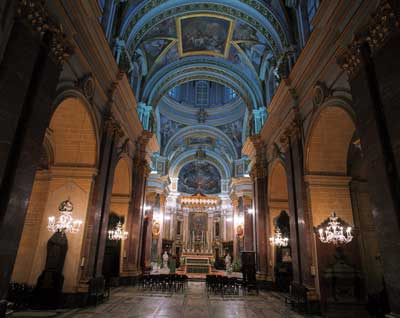
St. John’s Cathedral, Valletta
Courtesy of Malta Tourism Authority/www.visitmalta.com

Malta’s strategic location was a far bigger attraction. Positioned midway between North Africa and the European mainland, it lured empire-builders from the ancient Phoenicians and Romans through to the imperial Brits, who prized Malta so much that they stayed for more than 150 years before pulling out in 1964. In their absence, moviemakers -– including those responsible for Gladiator and Troy -– moved in, drawn by a wealth of heritage sites, a camera-ready coastline and a reliably sunny climate. 

Of course, the same attributes that make Malta an ideal filming locale make it an ideal vacation destination as well. As an added bonus, Malta, unlike her more popular neighbors, has an English-speaking population (it’s one of the legacies of Britain’s colonial rule), which means you can roam at will without ever having to worry about language barriers, if you speak English.

KNIGHT FEVER

The logical starting point is the capital, Valletta. The fact that this small harbor city rates as a UNESCO World Heritage site is thanks to the crusading Knights of St. John. After being forced out of the Holy Land by “heathen hordes,” members of the elite order were offered these islands as a new home base in return for one Maltese falcon per year. Happily, the token rent left enough in their coffers to fund a building spree that lasted from 1530 to 1798. 

The results are visible in the Grand Master’s Palace, the opulent Manoel Theatre, Fort St. Elmo (a star-shaped citadel that was still fending off naval attacks in the 1940s), and the over-the-top auberges the knights called home. Even more evocative is their crowning achievement, St. John’s Co-Cathedral: a baroque extravaganza filled with such an abundance of gilt work, frescos, mosaics and paintings (among them Caravaggio’s massive “Beheading of St. John”) that it’s hard to find a bare surface. 

Because of the density of sites within Valletta, it is not uncommon to see tourists  charging brusquely down Republic Street –- from the city gate right to the sea –- frenetically ticking off sites in their guide book. But relaxing also has tangible rewards here. For instance, centuries of foreign occupation have made Malta a culinary crossroad. So you can get a combined course in history and anthropology by merely sitting down to dine! 

Interested in eating your way through the entire curriculum? Try breakfasting on Arab-inspired pastries at Caffe Cordina, Valletta’s landmark coffeehouse on Piazza Regina, then ciao-ing down at La Cave, a 16th-century wine cellar converted into an Italian-style lunch spot. Later, take a break for traditional English tea at Hotel Phoenicia’s Palm Court Lounge; and for dinner pull up a chair at Barracuda, a suburban seafood restaurant housed in a 17th- century mansion.
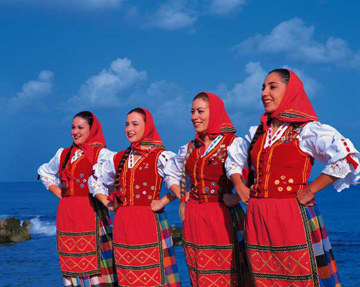
Traditional Maltese costumes
Courtesy of Malta Tourism Authority/www.visitmalta.com

THE FEMININE MYSTIQUE

While the Knights of St. John were Malta’s best known architects, they weren’t the first. That distinction goes to a Neolithic cult that spent more than a millennium building a mystery. Archeological evidence proves that they began work on a series of megalithic temples about 3800 B.C. It also shows that their efforts were dedicated to the Great Mother: a goddess rendered in clay as a voluptuous woman known simply as the “Fat Lady.” 

The rest remains an enigma because, inexplicably, the Fat Lady began to sing… By 2000 B.C. those who worshiped her had disappeared. As a result, we’ll likely never understand how a people who hadn’t discovered either metal tools or the wheel managed to construct sophisticated structures, complete with archways and corbelled ceilings, on such a colossal scale. Nonetheless, we may appreciate the fruits of their labors, each of which has its own claim to fame. 

On the country’s “big island” (itself named Malta), visitors marvel at the Tarxien Temples, the most richly-decorated of the megaliths; or the twin temples of Hagar Qim and Mnajdra, which are notable for their seaside location. The Hal-Saflieni Hypogeum, conversely, wins top marks for ingenuity: carved from solid rock with antler picks and stone axes, the site extends 36 feet below a suburban street near Valletta. The grand prize, though, goes to the Ggantija Temples on Gozo, a 30-minute ferry ride away. 
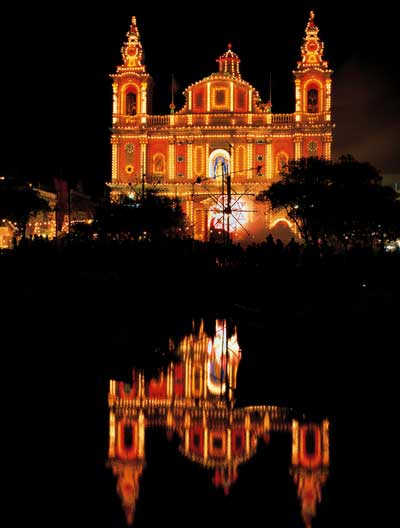
(left to right) Msida Church; Mdina Cathedral
Courtesy of Malta Tourism Authority/www.visitmalta.com

Predating Stonehenge and the Egyptian pyramids by 1,000 years, they qualify as the oldest freestanding structures on earth. Such antiquity is difficult to grasp (quite frankly, the centuries-old graffiti is sufficient to dazzle most people). Factor in the sheer size of the stones used in construction – some of which stand 20 feet high and weigh 50 tons – and it is almost possible to believe that the Ggantija Temples were, as their name implies, built by a giantess. 

MOTHER NATURE’S HANDIWORK

As if the mother lode of archeological sites wasn’t enough, Malta has a slew of natural attractions as well. The coastline is justifiably famous for geological oddities like the Azure Window, a towering stone arch encrusted with fossils. A lot of ink is also spent extolling Maltese beaches, particularly one on Rambla Bay where the mythological sorceress Calypso is said to have seduced Odysseus. But, truth be told, most are more like limestone shelves than sandy strands. So they seldom measure up to U.S standards.

The sunbather’s loss, however, is the diver’s gain because the rough terrain extends well beneath the waterline, creating seductive grottoes, dramatic drop-offs, and bizarre rock formations that beg to be explored. Conditions are optimal, too. The Mediterranean is clear here, with visibility up to 130 feet. Water temperatures rarely drop below 55° in winter, allowing for year-round diving. Plus there are dozens of outfitters happy to supply you with equipment or take you out on an organized dive. 

Non-divers can get a glimpse of what lies beneath by signing on for a glass-keeled boat cruise around St. Paul’s Bay, the spot where the apostle was shipwrecked in 60 A.D. Meanwhile, those content to be on the water rather than under it can rent whatever they need at local sports centers. Since all three Maltese islands have them (even Comino, which has no resident population!) getting hold of a kayak, windsurfer or sailing craft is never a problem. 

In this part of the world, though, the ultimate boating experience is also the oldest: namely crossing Valletta’s glorious Grand Harbour on a luzzu. These small, vividly-colored vessels have been plying local waters since the Phoenicians’ time and their prows are still painted with the god Osiris’ watchful eyes. Nowadays the luzzu serves as Malta’s unofficial national symbol. And nothing could be more appropriate in a tiny, waterbound land where myth and history remain inextricably bound.

WHERE TO STAY

Tourist zones around Sliema and St. Julian’s are crammed with upscale hotels. Hilton, Westin, Radisson: all the big names are represented. But for the optimal combination of amenities and location, it’s hard to beat Valletta’s Hotel Phoenicia. Although it is poised right at the city gates and has all the accoutrements of a grand hotel (think marble floors, plush upholstery and impeccable service), bargain hunters can snag double rooms there for as little as 90€ a night off season. Those who fantasize about lounging around a Mediterranean villa may prefer to book a vacation rental though Gozo Great Escapes. Heritage properties with private pools start at 595€ per week, so you can enjoy the high life without paying a high price. 
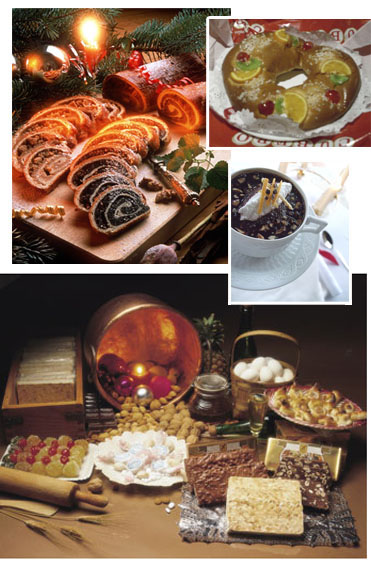
Christmas Is a Time of Food and Fun

European Traveler has gathered Christmas holiday recipes from around Europe, and we present them here in a special tribute to the countries from which they come. You’ll find a variety of tasty foods in these selections, from desserts and breads to main dishes, to cookies and candies. As December progresses, we plan to add more, so stay tuned!

Please note that some of the recipes are in metric measurements and may need to be converted.

Bon Appetit!

AUSTRIA

VIENNESE VANILLA CRESCENTS (VANILLEKIPFERL)

Eva Draxler / Vienna Tourist Board

INGREDIENTS
1 1/2 sticks (6 ounces) unsalted butter
2/3 cup finely ground nuts (almonds or hazelnuts)
1/2 cup confectioner’s sugar
2 egg yolks
1 1/2 cups all purpose flour
dash of salt

PREPARATION
Knead all ingredients together quickly – keep them cool. Cool in refrigerator for several hours. When forming crescents, take out only the amount of dough you are working with. Form into large, sausage-like rolls with a diameter of about 2 inches. Cut thin slices and quickly roll each of them in the palms of your hands, thus forming small crescents. Place on greased cookie sheet. Bake at 325 degrees Fahrenheit for about 20 minutes. Let cool for no more than five minutes. While still warm, roll in vanilla sugar.

THE AZORES

HOTEL MARINA ATLANTICO
THE AZORES

Courtesy Monica Bensaude Fernandes/Bensaude Turismo

COD “COM TODOS” STYLE

INGREDIENTS
2 cod steaks
300 grs of cooked chickpeas
1 Portuguese cabbage
200 grs carrots chopped in thin circles
2 dls extra virgin olive oil
30 grs fresh coriander
1 salted pickled red pepper cut length wise
6 dry garlic cloves
200 grs crumbed corn bread
100 ml cream
Salt and white pepper
PREPARATION
Boil cod for 5 minutes. Remove skin and bones. Grate chickpeas in a tasse-vite. Add cream and season with salt and pepper. Blanch cabbage, drain and sauté in olive oil and garlic.
Sauté carrots in olive oil and garlic.
PLATE PRESENTATION
Using a rim, first layer chickpeas, and then carrots. On top, place cod, broken apart. Cover it with sautéed cabbage and lastly, the crumbed corn bread. Give it a little color by briefly placing in a very hot oven. Decorate with olive oil and fresh coriander.

DUCK BREAST WITH ORANGE AND DRIED FRUITS
INGREDIENTS
2 boneless duck breasts
300 grs red cabbage, julienned
4 oranges
300 grs potatoes, cut in extra fine rounds (chip style)
50 grs crushed walnuts
50 grs crushed pine nuts
50 grs S.Jorge cheese sliced thin
½ cup Brandy
Salt and white pepper
2 tablespoons balsamic vinegar
10 grs sugar
PREPARATION
Sauté duck in high heat for 5 minutes. Season with salt and pepper. Zest the orange. Set aside. Juice the oranges and add it to pan. Let it reduce and set aside the sauce. Bake potatoes in a fan format with the thinly sliced cheese on top. Sauté cabbage with a little olive oil. Add balsamic vinegar, sugar and dried fruit.
PLATE PRESENTATION
At the top, place the fanned potatoes. In the center, place red cabbage and beneath position the laminated duck. Cover with sauce and orange zest.

VEAL LOIN VERDELHO
INGREDIENTS
400 grs veal loin
300 grs potatoes
400 grs carrots
Verdelho wine from Pico Island
Onions
Leeks
Salt and pepper (local, if possible)
PREPARATION
Season veal with salt and pepper. Blush or sauté loin in high heat for 5 minutes. Remove veal, add onions and leeks and brown. Add red wine and let it reduce. Season and sift sauce. Grate carrots and sauté in a little olive oil. Bake potatoes, which have been previously stuffed with a bay leaf and bacon, in alternating cuts.
PLATE PRESENTATION
Place carrots at the center, potatoes in the back, veal in the front of plate, and cover with sauce.

GERMANY

MULLED WINE
(GLUHWEIN)
Victoria Keefe Larson/German National Tourist Office

Perfect for those dark and cold winter evenings.

INGREDIENTS:
2 bottles red wine
1 cup sugar
3 cups water
1 lemon, sliced
20 whole cloves
6 to 8 cinnamon sticks
1 orange, sliced for garnish

PREPARATION:
Mix water, lemon and spices and simmer for an hour. Strain. Heat but do not boil the red wine. Add wine to hot water mixture. Ladle into cups and serve with half a slice of orange.

HUNGARY

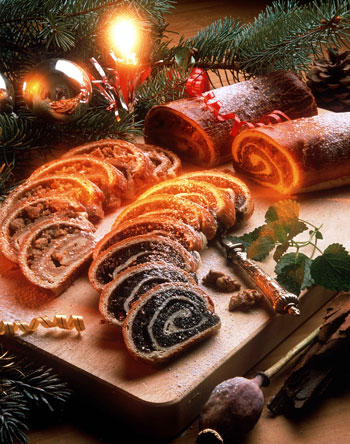
Dios es Makos beigli
Poppy seed and nut rolls (bagels)

From Culinary Hungary/courtesy Elvira Vida/Hungarian National Tourist Office

Makes 4 rolls; the filling ingredients are calculated for 2 rolls respectively.

INGREDIENTS
For the dough:
1 cup sugar
1/2 cup/120 ml milk
1 cake/15 g compressed yeast
1/2 cup/5O g confectioner’s sugar
3 1/4 cup/500 g flour
6 1/2 tbsp/100 g butter
6 1/2 tbsp/100 g lard
2 eggs
1 tsp grated lemon zest
pinch of salt

For the nut filling:
Scant 1/2 cup/100 ml milk
1OO g superfine sugar
1 envelope of vanilla sugar
1/2 tsp grated lemon zest
3 tbsp/30 g raisins
Pinch of cinnamon
3 cups/250 g ground nuts
3-4 tsp honey (or 1-2 apples or 2-3 tsp apricot jam)

For the poppy seed filling:
Scant 1/2 cup/lOO ml milk
1 1/4 cups/250 g confectioners sugar
1 sachet of vanilla sugar
1 2/3 cups/250 g ground poppy seeds
3 tbsp/30 g raisins
1 tsp grated lemon zest
4 tbsp honey

Other:
Butter or lard for the baking sheet
1 egg yolk for glazing

PREPARATION:
Dissolve the sugar in the lukewarm milk, then add the yeast. Mix the remaining dough ingredients wilh the yeast mixture and knead thoroughly. Cover the dough with a dish towel and leave to rise for about 30 minutes.

To make the nut filling, put the milk in a pan with the sugar and vanilla sugar and bring to a boil. Add the lemon zest, raisins, cinnamon, nuts, and honey (or peeled, grated apples or apricot jam).

For the poppy seed filling, mix the milk with the confectioners’ sugar and vanilla sugar. Bring to a boil and add the poppy seeds and raisins. Simmer for a few minutes, stirring constantly, then remove from the heat and stir in the lemon zest and honey.

Divide the dough into four and roll out each piece into a rectangle measuring about 12 x 14 inches/30 x 35 cm. Spread the dough with the nut or poppy seed filling and roll up lengthwise, ensuring that the rolls remain firm. Grease a baking sheet and carefully transfer the rolls onto the sheet and brush with egg yolk.

Bake in a preheated (medium) oven until golden brown. Only remove from the oven when completely cool. If kept covered and stored in a cool, dry place the bagel will stay fresh for a long time. Do not slice until just before serving, arranging the slices like roof tiles on a plate, and sprinkle with confectioners’ sugar.

PORTUGAL

REBANADAS CASA OS MOINHOS

INGREDIENTS

16 egg yolks
500 g sugar
1 kg Portuguese white bread
Cinnamon
Lemon

PREPARATION
Mix the eggs with 16 tablespoons sugar until it is a thick mix — make a thin syrup out of the rest of the sugar. Use one glass of water for this, then slice the bread, — after letting it sit for one day. Dip the slices into the syrup, drain, and dip in the egg yolk mix. Gently pan sear on a medium stove top, and sprinkle with cinnamon and lemon zest.

SPAIN

ROSCON DE REYES
(Holiday Bread)

This recipe is from The Foods and Wines of Spain by Penelope Casas
Courtesy Patricia Wood Winn/Tourist Office of Spain

No holiday is more eagerly awaited in Spain than El Dia de los Reyes Magos-the Day of the Three Kings (Epiphany) on January 6. On this date every year, so the legend goes, the Three Wise Men journey to Spain on camels, bearing gifts for all Spanish children. They use ladders to gain access to city apartments aud leave presents in the children’s shoes, which have been carefully laid out the night before, along with fodder for the hungry camels. Kids who have not been good during the year fear the worst: that the kings will fill their shoes with black coal instead of toys.

Rascon de Reyes is baked and eaten only at this time of year. It is a delicious sweetened bread, coated with sugar and candied fruits, and it always contains a surprise-either a coin or a small ceramic figurine, which is to bring luck for the year to the fortunate person who finds it in his piece of bread.

Makes 1 large bread ring

INGREDIENTS
1 package dry yeast
3/4 cup warm water
1 tablespoon orange flower water (often found in Italian food shops. If unavailable, substitute strong tea)
1/2 teaspoon grated lemon rind 6 cloves
1/4 pound butter
1 tablespoon lard or vegetable shortening
1/2 cup sugar
1/2 teaspoon salt
2 eggs
1 tablespoon brandy, preferably Spanish brandy, or Cognac
1/2 cup milk, scalded and cooled
5 cups unbleached, all-purpose flour
Candied fruit slices (orange, lemon, etc.)
1 egg, lightly beaten
1 1/2 tablespoons sugar, preferably coarse, for sprinkling

PREPARATION
Dissolve the yeast in 1/4 cup of the warm water. Simmer the remaining 1/2 cup of warm water with the orange flower water, lemon rind, and cloves for 10 minutes, covered. Cool. Discard the cloves. Cream the butter, lard, the sugar, and the salt. Beat in the 2 eggs, then add the brandy, milk, the water-and-lemon mixture, and the softened yeast. Gradually mix in the flour with a wooden spoon until a soft and slightly sticky dough is obtained. Knead on a floured working surface, adding more flour as needed, about 5 minutes, until smooth and elastic. Place the dough in a large oiled bowl, turn to coat with the oil, cover with a towel, and place in a warm spot, such as an unlit oven, to double in size, about 2 hours. Punch down and knead again 5 minutes. Insert a good luck coin – perhaps a silver dollar or half-dollar – or some other appropriate object, such as a cute miniature ceramic animal.

Shape the dough into a large ring, pinching the ends to seal. Place on a lightly greased cookie sheet. Decorate with the fruit slices, pushing them slightly into the dough. Let the ring rise in a warm spot about 1 hour, or until double in size. Brush with the egg, which has been mixed with a teaspoon of water, sprinkle with sugar, and bake in a 350° F oven 35-40 minutes, or until a deep golden brown.

The Maritime Museum in Malta

When in Malta, a visit to the Malta Maritime Museum is worthwhile.

The museum is located at the Vittoriosa waterfront. During the presence of the Knights of Malta on the island, the site was used as the arsenal where the Order’s galley fleet was maintained.

During the time of the British presence in Malta, the site was developed as the naval bakery, built between 1842 and 1845 by British architect and engineer William Scamp. The naval bakery supplied the Royal Navy’s Mediterranean fleet stationed in Malta with its daily requirements of bread and biscuits. The “Bakery,” as it was and still is affectionately known, remained part of the Royal Naval establishment up to the closure of the British base in March of 1979.

The museum illustrates Malta’s maritime history from prehistory to the present day; the ancient shipping section includes Roman lead anchors and amphoras. The section dedicated to the Order of St. John includes an important collection of authentic period models, some originally pertaining to the Congre-gazione delle Galere, and to the Order’s nautical school.

The French interlude (1798-1800) is represented by two large French republican guns, a prisoner-of-war wooden model of the French second-rater Bucentaur, documents, edged period weapons, and a host of water colors, engravings and lithographs.

The British period (1800-1979) is particularly well represented. The hall is divided into various sections illustrating the role of the Royal Navy in Malta.

Maltese traditional boat models, such as the Latin-rigged Gozo boat, the Ferilla and the Kajjik, tools and paintings constitute the basis of a small hall dedicated to boat building in Malta.

For more information, visit www.heritagemalta.org/museums/maritime/maritimecoll.html