Magical Malta

This Mediterranean country, 58 miles south of Sicily, has everything but a high profile

By Susan MacCallum-Whitcomb

Samuel Taylor Coleridge… Lord Byron… Sir Walter Scott…they all found inspiration in Malta’s legendary landscapes. It was Winston Churchill, however, who summed the place up best when he dubbed it “the tiny rock of history and romance.” 

This three-island archipelago, covering only 122 square miles, certainly is tiny. Moreover, it reputedly has the world’s greatest concentration of historic sites. The romance quotient is remarkably high, too; though for centuries, most who came here couldn’t have cared less. 

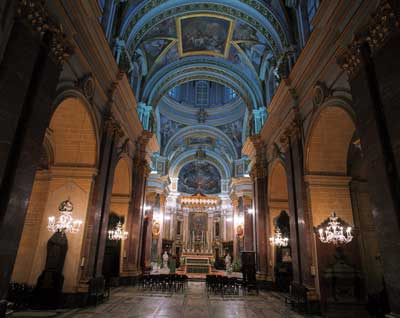
St. John’s Cathedral, Valletta
Courtesy of Malta Tourism Authority/www.visitmalta.com

Malta’s strategic location was a far bigger attraction. Positioned midway between North Africa and the European mainland, it lured empire-builders from the ancient Phoenicians and Romans through to the imperial Brits, who prized Malta so much that they stayed for more than 150 years before pulling out in 1964. In their absence, moviemakers -– including those responsible for Gladiator and Troy -– moved in, drawn by a wealth of heritage sites, a camera-ready coastline and a reliably sunny climate. 

Of course, the same attributes that make Malta an ideal filming locale make it an ideal vacation destination as well. As an added bonus, Malta, unlike her more popular neighbors, has an English-speaking population (it’s one of the legacies of Britain’s colonial rule), which means you can roam at will without ever having to worry about language barriers, if you speak English.

KNIGHT FEVER

The logical starting point is the capital, Valletta. The fact that this small harbor city rates as a UNESCO World Heritage site is thanks to the crusading Knights of St. John. After being forced out of the Holy Land by “heathen hordes,” members of the elite order were offered these islands as a new home base in return for one Maltese falcon per year. Happily, the token rent left enough in their coffers to fund a building spree that lasted from 1530 to 1798. 

The results are visible in the Grand Master’s Palace, the opulent Manoel Theatre, Fort St. Elmo (a star-shaped citadel that was still fending off naval attacks in the 1940s), and the over-the-top auberges the knights called home. Even more evocative is their crowning achievement, St. John’s Co-Cathedral: a baroque extravaganza filled with such an abundance of gilt work, frescos, mosaics and paintings (among them Caravaggio’s massive “Beheading of St. John”) that it’s hard to find a bare surface. 

Because of the density of sites within Valletta, it is not uncommon to see tourists  charging brusquely down Republic Street –- from the city gate right to the sea –- frenetically ticking off sites in their guide book. But relaxing also has tangible rewards here. For instance, centuries of foreign occupation have made Malta a culinary crossroad. So you can get a combined course in history and anthropology by merely sitting down to dine! 

Interested in eating your way through the entire curriculum? Try breakfasting on Arab-inspired pastries at Caffe Cordina, Valletta’s landmark coffeehouse on Piazza Regina, then ciao-ing down at La Cave, a 16th-century wine cellar converted into an Italian-style lunch spot. Later, take a break for traditional English tea at Hotel Phoenicia’s Palm Court Lounge; and for dinner pull up a chair at Barracuda, a suburban seafood restaurant housed in a 17th- century mansion.
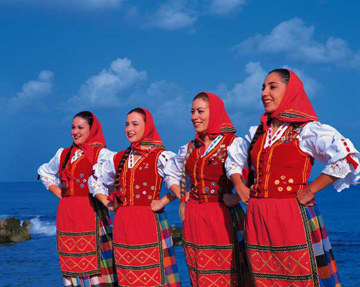
Traditional Maltese costumes
Courtesy of Malta Tourism Authority/www.visitmalta.com

THE FEMININE MYSTIQUE

While the Knights of St. John were Malta’s best known architects, they weren’t the first. That distinction goes to a Neolithic cult that spent more than a millennium building a mystery. Archeological evidence proves that they began work on a series of megalithic temples about 3800 B.C. It also shows that their efforts were dedicated to the Great Mother: a goddess rendered in clay as a voluptuous woman known simply as the “Fat Lady.” 

The rest remains an enigma because, inexplicably, the Fat Lady began to sing… By 2000 B.C. those who worshiped her had disappeared. As a result, we’ll likely never understand how a people who hadn’t discovered either metal tools or the wheel managed to construct sophisticated structures, complete with archways and corbelled ceilings, on such a colossal scale. Nonetheless, we may appreciate the fruits of their labors, each of which has its own claim to fame. 

On the country’s “big island” (itself named Malta), visitors marvel at the Tarxien Temples, the most richly-decorated of the megaliths; or the twin temples of Hagar Qim and Mnajdra, which are notable for their seaside location. The Hal-Saflieni Hypogeum, conversely, wins top marks for ingenuity: carved from solid rock with antler picks and stone axes, the site extends 36 feet below a suburban street near Valletta. The grand prize, though, goes to the Ggantija Temples on Gozo, a 30-minute ferry ride away. 
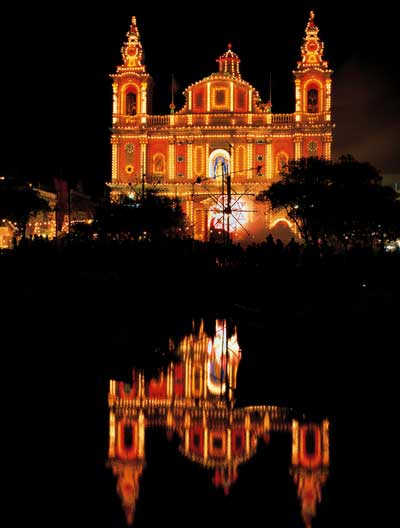
(left to right) Msida Church; Mdina Cathedral
Courtesy of Malta Tourism Authority/www.visitmalta.com

Predating Stonehenge and the Egyptian pyramids by 1,000 years, they qualify as the oldest freestanding structures on earth. Such antiquity is difficult to grasp (quite frankly, the centuries-old graffiti is sufficient to dazzle most people). Factor in the sheer size of the stones used in construction – some of which stand 20 feet high and weigh 50 tons – and it is almost possible to believe that the Ggantija Temples were, as their name implies, built by a giantess. 

MOTHER NATURE’S HANDIWORK

As if the mother lode of archeological sites wasn’t enough, Malta has a slew of natural attractions as well. The coastline is justifiably famous for geological oddities like the Azure Window, a towering stone arch encrusted with fossils. A lot of ink is also spent extolling Maltese beaches, particularly one on Rambla Bay where the mythological sorceress Calypso is said to have seduced Odysseus. But, truth be told, most are more like limestone shelves than sandy strands. So they seldom measure up to U.S standards.

The sunbather’s loss, however, is the diver’s gain because the rough terrain extends well beneath the waterline, creating seductive grottoes, dramatic drop-offs, and bizarre rock formations that beg to be explored. Conditions are optimal, too. The Mediterranean is clear here, with visibility up to 130 feet. Water temperatures rarely drop below 55° in winter, allowing for year-round diving. Plus there are dozens of outfitters happy to supply you with equipment or take you out on an organized dive. 

Non-divers can get a glimpse of what lies beneath by signing on for a glass-keeled boat cruise around St. Paul’s Bay, the spot where the apostle was shipwrecked in 60 A.D. Meanwhile, those content to be on the water rather than under it can rent whatever they need at local sports centers. Since all three Maltese islands have them (even Comino, which has no resident population!) getting hold of a kayak, windsurfer or sailing craft is never a problem. 

In this part of the world, though, the ultimate boating experience is also the oldest: namely crossing Valletta’s glorious Grand Harbour on a luzzu. These small, vividly-colored vessels have been plying local waters since the Phoenicians’ time and their prows are still painted with the god Osiris’ watchful eyes. Nowadays the luzzu serves as Malta’s unofficial national symbol. And nothing could be more appropriate in a tiny, waterbound land where myth and history remain inextricably bound.

WHERE TO STAY

Tourist zones around Sliema and St. Julian’s are crammed with upscale hotels. Hilton, Westin, Radisson: all the big names are represented. But for the optimal combination of amenities and location, it’s hard to beat Valletta’s Hotel Phoenicia. Although it is poised right at the city gates and has all the accoutrements of a grand hotel (think marble floors, plush upholstery and impeccable service), bargain hunters can snag double rooms there for as little as 90€ a night off season. Those who fantasize about lounging around a Mediterranean villa may prefer to book a vacation rental though Gozo Great Escapes. Heritage properties with private pools start at 595€ per week, so you can enjoy the high life without paying a high price. 
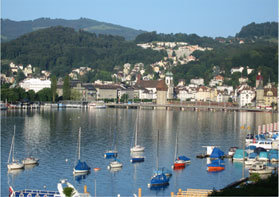
Spotlight on Lucerne

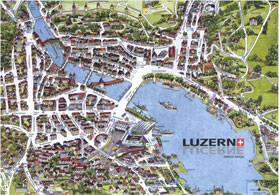
Lucerne, Switzerland is a great city for pedestrians. A walk around Lucerne, a city of only 57,500 people, is invigorating and beautiful, with the majestic Alps at your doorstep.

Founded as a small fishing village on Lake Lucerne (Vierwaldstattersee) the city (at 1,430 feet), is the focal point of the region, and the most populous city in central Switzerland.

The city is called “the essence of Switzerland” and the “Festival City” with numerous events such as the World Band Festival, Mozart Festival and the Lucerne Festival. There are numerous bridges in the city, with the Chapel Bridge the most famous, built  circa 1300 as part of the city’s fortifications.

The Musegg Wall with its nine towers was built in 1400 after the Battle of Sempach and today it is considered the longest and best preserved rampart walls in Switzerland.

A ride on the many beautiful lake steamers is a must to enjoy the surrounding countryside. Boats leave right from a dock downtown across from the train station (Bahnhof). While in Lucerne, walk through or stay at the 101-year-old historic Palace Hotel and ask for a lakeside room. 

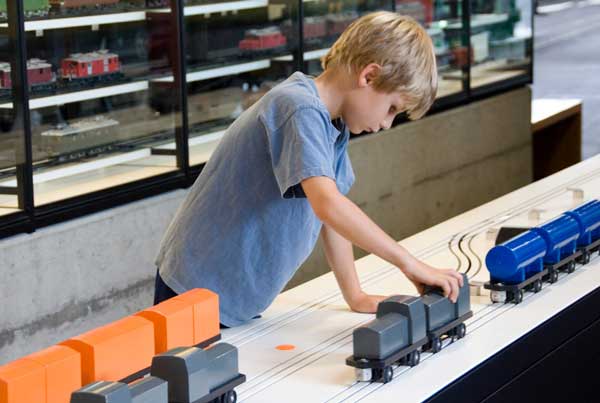
While you are in Lucerne, stop by the Swiss Transport Museum (www.verkehrshaus.ch) and look at all the restored trains, planes, and other forms of transportation. If you have a full day each, also see Mt. Rigi (www.rigi.ch) and Mt. Pilatus (www.pilatus.ch), two spectacular mountains each obtainable by hiking or cog railway. You can take boats, trains or drive to the base of each mountain.

For more information on Lucerne, go to www.luzern.ch.

Spotlight on Bamberg

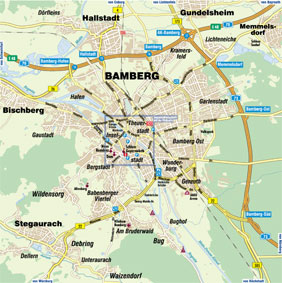
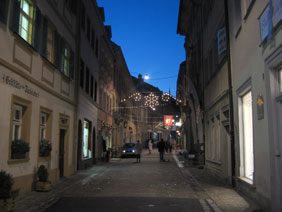
Bamberg, Germany, is a 1,000-year-old city of Episcopal and Imperial power, set on seven hills and located in the heart of Franconia in northern Bavaria.

The city’s Old Town illustrates the development of a Middle Age city, and it escaped World War II almost unscathed. Set on the Regnitz River, more than 2,000 buildings are listed as UNESCO sites and form one of the largest Old Towns in Europe.

Things to see while there include the late Romanesque-early Gothic Imperial Cathedral, the Old Town Hall built right in the middle of the Regnitz River, the Baroque Palace Bottinger House and the Renaissance buildings of the Old Court.

There are also 15 museums in town, displaying a large variety of collections that document the wide cultural diversity of the city;
at the Diocesan Museum, you can see the Blue Coat of Stars of Emperor Henry II. There are also numerous events and festivals–and, of course, there is that German favorite– beer. The town has 10 breweries which produce more than 50 differents beers, among them the famous “smoked beer.” There is also the Bamberg Brewery Trail, awarded special recognition in 2004.

What else can you do in Bamberg? You could spend a whole day just walking the beautiful cobblestoned streets, taking in the various sights, and checking out the many restaurants, taverns and shops. The town is magical in the evenings.

There are also concerts by the Bamberg Symphony Orchestra, the magic festival called Bamberg Zaubert, an Antiques Week (runs between July and August), an Old Town fair called Sandkerwa–the biggest fair in town in August, the Calderon Festival which features outdoor theater, and the famous Nativity Trail during Advent which features 34 different Nativity scenes around town. These scenes are located in squares, churches, museums and other locations. Between May and October, you can take in an organ concert in the Imperial Cathedral every Saturday at noon; admission is free.

For train-goers, Bamberg can be reached by InterCity and InterCity Express trains, as well as others. The town of 70,000 inhabitants is 37 miles from the Nuremberg airport. Don Heimburger

For more information, go to www.Bamberg.info.

The Museum Shops of Paris

Photos courtesy the Paris Convention and Visitor’s Bureau


Museum shops. Parisian museums present the opportunity to combine culture with shopping. After a visit, you can pick up the hottest new design object to take home; find a special work on architecture, science, or cinema; or choose the latest trendy image or object as a souvenir.

THEMATIC AND SPECIFIC SHOPS
Museum shops offer works and objects of a high quality representative of those found in the exhibitions themselves. They often present the opportunity to find rare or very specialized objects, recordings, or books.

Close to the Jardin des Plantes, the bookshop of the Institut du Monde Arabe, designed by Jean Nouvel, has many precious items. Once through the entrance of this magnificent institution encased in moucharabiehs, the shop offers insight into Arab culture with high-quality exhibition catalogs and books on photography, architecture and craftsmanship.

Cinematique Francaise
Cinémathèque Française

In the Bercy district, the bookshop of the Cinémathèque Française is housed in a building designed by the architect Frank O. Gerhy. This bookshop for cinema buffs is situated on the mezzanine of the Cinèmathèque and is the main reference for cinema in Paris. Books about the history of cinema, experimental cinema and film music, as well as posters, and photos are for sale.

The bookshop at the Jeu de Paume, at the Place Concorde, is a landmark bookshop for all areas of photography, the visual arts and cinema, and has built a collection of more than 10,000 titles. The bookshop also operates a high-quality mail-order service for visitors abroad.

The huge bookshop Harmonia Mundi is located between the concert hall and the Musee de la Cita de la Musique, at the entrance to the Parc de la Villette, in north Paris. Lovers of classic, jazz and world music can choose from among the 9,000 CD and DVD references and benefit from the advice of professionals.

Linked to the Cité de l’Architecture et du Patrimoine, just across from the Eiffel Tower, the Moniteur Bookshop is entirely devoted to the subject of architecture and stocks works on architecture, town planning and heritage.

NATIONAL MUSEUMS
The national museums in Paris also have their prestigious shops. The Musée du Louvre shops, in several locations at the Carrousel, sell elegant objects like reproductions of jewelery and sculpture from the museum’s collections, as well as a selection of monographs by artists, essays and art books.

The Musée d’Orsay, a former train station built for the World Fair of 1900, has a delightful shop inspired by the collections of the museum selling posters, table and home decor objects, and exhibition catalogs.

Finally, the Flammarion bookshop at Beaubourg, in the Centre Pompidou, offers exhibition catalogs, postcards and multimedia products as well as a large selection of publications on art and design.

Musee d’Orsay

CONTEMPORARY SHOPS
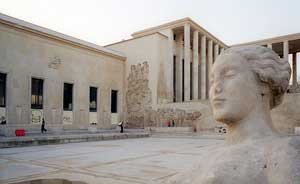
Some museums boast highly-contemporary shops designed like a second exhibition area to extend the length of a visit and offer a sales area with a striking decor. The ultra-trendy Palais de Tokyo, powerhouse of the contemporary artistic avant-garde, close to the Eiffel Tower, asked the graffiti artist André, the creator of the character of Monsieur A., to design its Blackblock gift shop. The design of the shop was inspired by a gas station in the suburbs of Stockholm. Encircled by refrigerated glass windows with integrated pink lights, the shop displays rare objects and limited editions. The space is also regularly used for special events.

In another vein, Le Laboratoire has opened near the Louvre; it is an experimental venue at the crossroads of science and contemporary creation with a bookshop called Laboshop. A veritable bubble in white, the shop invites visitors to discover a variety of prototypes that have been devised and created by participants at the venue, and which it is possible to test or buy. Among the most astonishing, “the Whiff” is a process which enables you to eat by inhalation, while “the Bel-Air” is a filter that enables plants to filter the air. These unique objects are signed by Designer Mathieu Lehanneur, and scientist and founder of this unique place, David Edwards.

The mezzanine of the Centre Pompidou, a dynamic Parisian cultural institution, houses the Printemps du Design, a shop with a grey concrete floor and minimalist windows. It offers 3,000 types of objects around five themes: living, savoring, charming, communicating, getting around and playing. Eggcups, seats, cameras, jewelery, sweets and spinning tops catch the eye. Striking for its selection and display of objects, it offers design classics as well as the latest in contemporary creations.

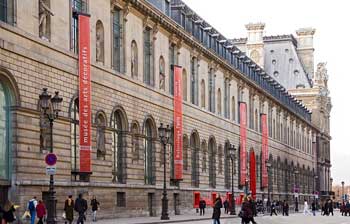
The 107 Rivoli is the sales area of the Musée des Arts Décoratifs, close to the Tuileries Gardens in the center of the capital. Specializing in specific areas of the decorative arts, fashion and design, the shop offers a rare selection of books, accessories, stationary, tableware and toys. For more up-to-date shopping, celebrities and designers are invited to suggest a selection of special objects for the duration of an exhibition or an event.

The new Galerie de l’Opéra is a gem of a shop situated within the prestigious Palais Garnier. A place to discover talents and trends in Europe, it specializes in the operatic and choreographic arts and is divided into four areas: multimedia library, art for children, memory, and performance, and is linked to the artistic program of the famous institution. Educational games, designer objects, books, technological or even signature and showcase objects already make this a cult address for the latest in museum shopping.

Shop of l'Opera
Galerie de l’Opéra

Palais de Tokyo

The prestigious Pinacothèque de Paris, situated opposite the Madeleine church, rounds off this tour of contemporary museum shops. Its shop showcases French and European designers who are not well-known to the general public, like the La Tonkinoise jewelery brand, for example. There is also a great selection of items for children: memory games, card games, wooden toys; and for adults, superb decorative objects and even luxury stationary.

For the curious and contemporary art buffs, there is the Merle Moqueur, situated in the north wing of the Halle Curial at the Centquatre, the city of Paris art establishment in northeast Paris. The shop features an epoxy floor, suspended acoustic cassettes and ramps with fluorescent lighting. Reference works for children and adults are offered in the different sections: general, youth and arts.

Also centered on contemporary creations, the bookshop of the Maison Rouge in Paris, Bookstorming, has wall decoration by the artist Jean-Michel Alberola. Books on art, monographic works, and critical essays, as well as many original works are on sale. Numerous events and encounters with artists and authors, like book signings, talks and video displays are featured regularly.

The bookshop of the Musée du Quai-Branly, situated on the Seine quayside near the Eiffel Tower, is devoted to art from outside Europe. This unique place offers a variety of ethnic objects while advocating the values of fair trade, for example with A-Typik and its Colombian jewelery, whose profits go to the reconstruction of schools in Colombia.

UNUSUAL SHOPS
Reflecting the museums in which they are housed, this type of shop offers unusual and miscellaneous articles.

At the Musée de la Poste, the shop Correspondances offers a fine choice of objects linked to the role and history of the Post Office: original postcards, objects and ideas for gifts.

Below Sacré-Coeur in Montmartre, the Halle Saint-Pierre is an exhibition area showing unusual and popular primitive art. The bookshop of the Halle Saint-Pierre is as surprising as the museum. Built of iron and glass, it houses books on art and literature, often illustrated and covering all types of contemporary creation.

Not far from the Halle Saint-Pierre, in north Paris, the shop of the Musée de l’Érotisme caters to shopping with an aphrodisiac edge. On sale are books of modern art and erotic photographs, and old films and comic strips on the same theme.

There is also the bookshop of the Hôtel de Sully, located in a 17th-century mansion. This exceptional establishment presents national heritage treasures and heritage publications.

The shop of the Monnaie de Paris delights fans of coins, medals and jewelery.

The bookshop of the Musée de la Chasse et de la Nature, situated near City Hall, offers atypical shopping opportunities with very specialized literary and artistic publications on the subjects of nature and hunting.

For honing technical and scientific knowledge, the shop of the Musée des Arts et Métiers offers fine objects and books linked to the current exhibitions. Badges, fans, model aircraft, and literary works provide a close-up view of the fascinating world of technology.

Finally, in the Hôtel de Saint-Aigan, in the heart of the Marais, the bookshop of the Musée d’Art et d’Histoire du Judaïsme offers a selection of varied objects and books on religion, philosophy, history and ethnography, continually updated according to what’s at the museum.

Musee des Arts Decoratifs
Hotel de Sully

Switzerland’s Transport Museum

Kaitlyn and Kellen get “sized up” by this big Swiss Air DC-3.

Photos by Amy Luetgert

Wow! Cool! That’s what visitors, and especially children, say after a few minutes in this 21,500-sq-foot museum in Lucerne, located right on Lake Lucerne.

With as many as 850,000 visitors a year, the museum is Switzerland’s most popular attraction of its type.

From space capsules to trains (big ones, as well as miniature ones that run through the grounds), to airplanes and helicopters and automobiles, from the latest media technologies and interactive hands-on exhibits to a cycle park, the Swiss Transport Museum displays more than 3,000 objects, plenty to keep two kids busy for a while.

Kaitlyn Luetgert, 9, and her brother Kellen, 6, from the Chicagoland area, spent an afternoon at the Museum with their parents, and their mother Amy Luetgert filed this photo report of their experiences.

The Luetgert kids “sign on” as airline pilots and flight attendants.
Kellen says, “I could spend a whole day here!”
“No problem, let’s walk under this steam engine,” urges Kellen.
With a facade like this, anything is possible inside the Museum.

For more info, go to Swiss Transport Museum