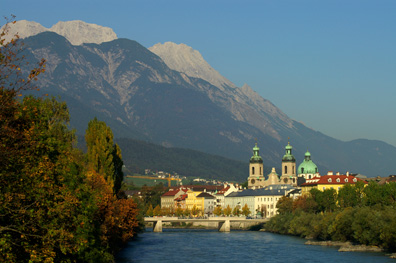
Innsbruck’s beautiful medieval Old Town, set against the backdrop of majestic peaks, is everything you picture a quintessential Alpine town to be. Yet its quaint appearance can be deceiving: a one-day tour will reveal a rich and varied side of Tirol’s capital underneath layers of ancient history and cherished tradition.
MORNING Before you do anything else, purchase a 24-hour Innsbruck Card either at your hotel or at the Innsbruck Information Office in the Old Town. This grants you access to all museums, public transportation, one roundtrip on any of Innsbruck’s lifts and cable cars and guided tours. Armed with the card, you are now set to start your day with a tour of the historic city center. You’ll love the colorful medieval buildings, vaulted walkways and stuccoed facades.
Golden Roof
Innsbruck’s landmark, the Golden Roof, is famously covered with exactly 2,657 gilded tiles and overlooks the main square. In the 15th century, the Habsburg family ruled their empire from Innsbruck’s Hofburg Imperial Palace.
See the Imperial Apartments and exhibitions at the palace, then stop at the adjacent Hofkirche Court Church, where one of the most important cultural monuments in Tyrol is on display: 28 larger-than-life bronze figures surround the 16th century tomb of Emperor Maximilian I, representing his heroes of antiquity and his ancestors. The quaint alleys of the Old Town also house many small boutique stores offering handcrafted Tyrolean products that make for excellent souvenirs.
AFTERNOON For lunch with a view, head past the Hofburg Imperial Palace to the Nordkettenbahnen Cable Cars. The funicular stations were designed by star-architect Zaha Hadid, and their sleek modern design contrasts beautifully with the surrounding landscape and historic architecture of the city.
Only 20 minutes later you’ll find yourself at 6,500 feet, near the top of the Nordkette Mountain range. Head to the restaurant at the Alpenlounge Seegrube and enjoy the breathtaking views over Innsbruck and the Austrian Alps. If you want to continue your mountain experience, head to the Innsbruck Alpine Zoo. Europe’s highest zoo features more than 2,000 animals including bears, wolves, eagles and many other species native to the region. To get there, simply take the Nordkettenbahnen back down the mountain and get off at the Alpenzoo Station. Otherwise, head straight back to the city in the early afternoon. It’s time to explore Innsbruck’s excellent shopping street, the Maria-Theresien-Strasse. Within view of the Golden Roof, the grand boulevard is located in a pedestrian area and—among many smaller shops and boutiques—houses two shopping centers: the ultra-modern Kaufhaus Tyrol designed by David Chipperfield and the Rathaus Galerien with boutique stores featuring well-known luxury brands. Don’t miss the Swarovski Flagship Store in the Old Town.
Maria Theresien
Another option for outdoor enthusiasts is to spend the afternoon taking part in Innsbruck’s fabulous summer hiking program. Visitors to Innsbruck and its 25 holiday villages can use the hiker’s bus with their Guest Card and explore the region with a free mountain guide. Even the equipment rental is free of charge with your Guest Card. Simply make a reservation through your hotel the day before.
EVENING You don’t really know a destination until you have sampled its food. Tyrol is famous for its hearty fare, such as Tiroler Gröstl (meat, potatoes, and onions topped with a fried egg) and a large variety of sweet and savory dumplings. The famous Café Sacher, a traditional Viennese coffee house and restaurant, as well as the Ottoburg, the Weisses Rössl or the Goldener Adler in the Old Town all feature excellent authentic cuisine. After dinner, head to the newly-opened Adlers hotel, housed in one of the city’s tallest buildings and enjoy a cocktail on the rooftop terrace, ending the day with a stunning view of Innsbruck by night.
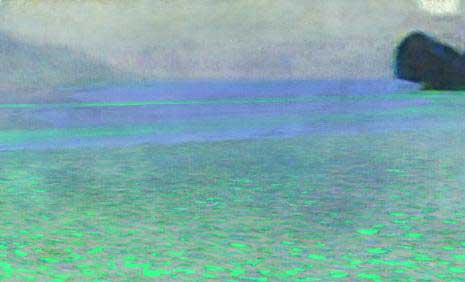
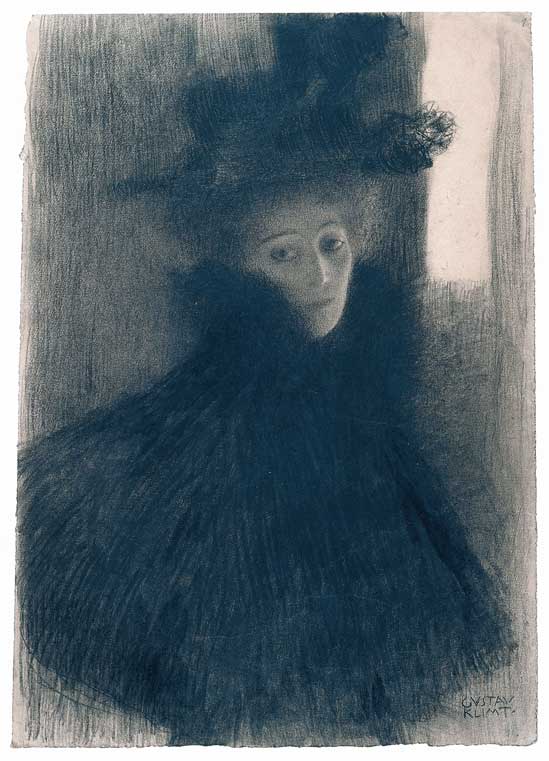
The year 2012 marks the 150th anniversary of the birth of Gustav Klimt (1862-1918). Vienna’s Kunsthistorisches Museum, Leopold Museum and Albertina are all staging major exhibitions dedicated to the work of this great turn-of-the-century modernist pioneer.
The Leopold Museum will be staging an exhibition titled “Gustave Klimt: A (time) Journey,” from February 24 to June 11 which will focus on the museum’s collection of hundreds of postcards, photographs and letters written by Gustav Klimt for over two decades to his partner in life Emilie Flöge. Among them there are art cards designed by the Wiener Werkstätte, tube mail, and telegrams as well as the correspondence that Klimt conducted with his friends and family in Vienna while enjoying his seasonal summer retreat at the Salzkammergut, at the Attersee and in Gastein or during his journeys that led him all across Europe to Italy, Paris, Brussels and London.
From March 16 until October 6, the Albertina Museum will celebrate Klimt’s 150th birthday with the exhibition “Klimt – Drawings” that will present the majority of the museum’s 170 drawings, as well as other items on loan. As a center for research on Gustav Klimt’s drawings, the museum will present pieces from all phases of the artist’s work. The focus will be on the unique drawing talent of Gustav Klimt, whose way of thinking and working is revealed in numerous figure studies and the precisely told allegories.
The Kunsthistorisches Museum in Vienna will hold a special exhibition from February 14-May 6 focusing on the 13 major paintings completed by Klimt for the grand staircase of the museum and the sketches they were based on. In 1890 Klimt, together with his brother Ernst and Franz Matsch, were entrusted with creating spandrel paintings and other narrow pieces to fill the spaces between the columns lining the grand staircase of the Kunsthistorisches Museum.
While Ernst Klimt and Franz Matsch kept to a more conservative style, the first signs of Art Nouveau symbolism can be clearly seen in Gustav Klimt’s pictures. These key paintings set the stylistic tone for Klimt’s world-famous work from about 1900 onwards.
For the millions of RMS Titanic lovers around the world, April 15 is a very significant date. On that day it will be exactly 100 years since the tragic sinking of the ship that changed so many lives and sparked one of the most captivating stories in human history.
On March 31 the world’s largest Titanic visitor attraction, Titanic Belfast, will officially open its doors, thrusting the ship’s physical and spiritual home firmly into the global spotlight.
The striking $152 million piece of modern architecture stands majestically at the head of the very slipways where the Titanic first glided into the waters of Belfast Lough.
Inside, nine walk-and-ride-through exhibition galleries equipped with the latest 3D, CGI and video technology uncover the true Belfast story of the Titanic, from its conception and construction in the Harland & Wolff Shipyard to its famous maiden voyage and subsequent place in history.
A host of experiences are offered—a thrilling ride through the shipyard with the Titanic under construction, or an exploration of the sumptuous luxury and superb craftsmanship of its interiors.
You can be drawn deep into the stories of the passengers, crew and the heroes of the day or re-live the drama of its tragic end and visit its resting place in the North Atlantic in a unique Ocean Exploration Center with live links to contemporary undersea exploration.
Berlin, Germany’s capital, is the home to numerous impressive museums. With a section of Berlin dedicated to museums, Museum Island, as well as with museums around the rest of the city, it is easy to see the importance museums have on the cultural landscape of Berlin. The list of museums keeps growing as new ones continue to open and others re-open after renovations.
TSHOBAN FOUNDATION – MUSEUM FOR ARCHITECTURAL DRAWINGS Open since 2013 at the former Pfefferberg Brewery complex, the private Museum for Architectural Drawings houses the renowned Tchoban Foundation’s collection, as well as temporary exhibits from leading international cultural institutions. Conceived by Berlin- and Moscow-based architect Sergei Tchoban, the museum presents three changing exhibitions annually. The architecturally striking building extends from a fire-wall, seemingly latching onto a row of typical Berlin houses. Evoking the image of a set of oversized piled blocks, the four story building’s silhouette is defined by a regression and progression of a colored concrete and glass facade. Open daily, admission is approximately $5.
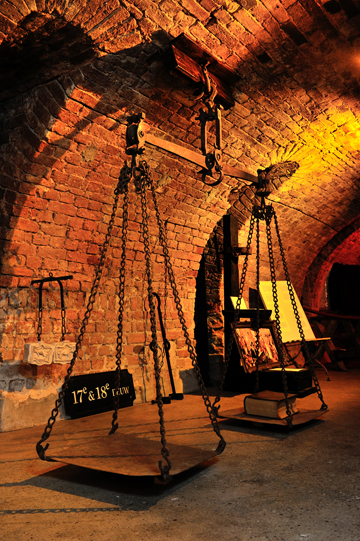
MAGICUM – BERLIN MAGIC MUSEUM Witchcraft and magical powers, mythical knowledge, secrets, the supernatural and ancient wisdom can be explored in the cellars of a historic former blacksmith building close to Berlin’s Hackesche Market. Open since summer 2014, Berlin’s Magic Museum features some 450 exhibits displayed over 6,500 square feet. Included are ritualistic objects and magic devices ranging from a Dutch witches scale and torture instruments to African totem masks, crystal balls and a historic Samurai sword. Curated to be more entertaining rather than strictly academic, the spellbinding exhibition encourages intuitive exploration. Open daily, admission is approximately $8.
Magicum Museum
KUNSTHAUS DAHLEM TO OPEN SUMMER 2015 Following extensive renovations, the Kunsthaus Dahlem will open in the summer of 2015 as an exhibition venue for Postwar German Modernism from East and West Germany (1945-61). The opening exhibition will focus primarily on sculptural works, complemented by paintings, graphics and photography. The historic building was constructed between 1939 and 1942 as a studio for infamous sculptor Arno Breker, who, alongside Josef Thorak, was one of the popular sculptors of the Third Reich, producing ornamental sculptures for Albert Speer’s monumental constructions. In addition to a café and a museum shop, there will also be a permanent exhibition on the building’s eventful past. Free admission.
BERLIN SPY MUSEUM Espionage has been the subject of many movies and books set in Berlin. Now the city is finally getting a museum that focuses on the mysteries of agents, double agents, betrayals, heroes and their stories, as well as the tools they used. The Berlin Spy Museum will feature approximately 21,500 square feet of exhibition space. One of the more well-known pieces on display will be the famous German coding machine “Enigma” from World War II, which was used for enciphering and deciphering secret messages. The exhibition will unveil the mysteries of intelligence services and espionage in the East and the West with a focus on Berlin during WWII and the Cold War. The interactive exhibits cater to all age groups, including children. www.deutsches-spionagemuseum.de/
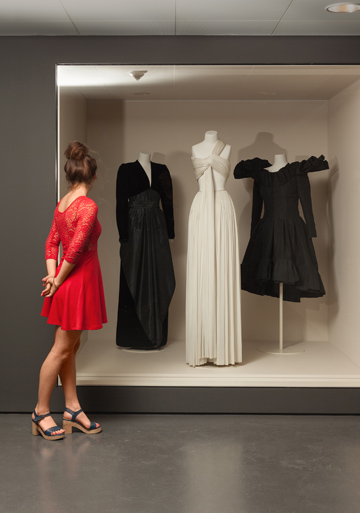
MUSEUM OF DECORATIVE ARTS OPEN AGAIN AT KULTURFORUM After three years of renovations, Germany’s oldest museum of decorative arts, the Kunstgewerbemuseum Berlin, reopened in November 2014 with a new gallery dedicated to the history of fashion. Located at Berlin’s Kulturforum museum complex, the new permanent exhibition of dresses, hats, bags, gloves and accessories from the 18th to the 21st century is based on an international collection acquired by the museum in 2009. Since its re-opening, the Kunstgewerbemuseum has been providing an overview of the key achievements in European design, from the Middle Ages to the present day. In addition to the Fashion Gallery, the museum features new departments of Design and Jugendstil/Art Deco.
Museum of Decorative Arts
BERLINISCHE GALLERY REOPENS MAY 2015 After a year-long modernization, the Berlinische Gallery is scheduled to reopen on May 28, 2015. The gallery’s permanent exhibition focuses exclusively on art in Berlin from 1880-1980, ranging from late 19th century paintings, to Expressionism and the East European avant-garde, to post-war modern architecture and the “wild” works of the 1970s. Reflecting the interdisciplinary nature of the collection, the exhibition will illustrate a diversity of artistic styles and credos, but also tensions, polarization and fresh departures, which remain hallmarks of Berlin as an artistic hub. Two other temporary exhibitions are opening on May 25, 2015: Radically Modern, which focuses on building styles in the 1960s and an exhibition on contemporary German painter Bernhard Martin. A retrospective on Max Beckmann and Berlin will open November 20, 2015 and is poised to be a major highlight of Berlin’s cultural winter for 2015/2016.
Described as the ‘Thuringian Rome,’ it is steeped in history
By Don Heimburger Photos by the author Home page photo by Barbara Neumann, courtesy Erfurt Tourism and Marketing
The reformer Martin Luther once said that Erfurt, Germany “is situated in the best location. It is the perfect place for a city.”
Little did he know 500 years later that Erfurt, the capital of Thuringia, with a population of 200,000 and right in the center of “modern” Germany, would attract large crowds of visitors, many just to see the city in which Luther became an ordained priest.
Erfurt is the capital city of the German state of Thuringia and the main city nearest to the geographical center of modern Germany, located 60 miles southwest of Leipzig. With the Luther Decade ending in 2017, Erfurt has put on its best face to show what is has to offer, and visitors won’t be disappointed.
Erfurt was all spit and polish for the 2015 German Travel Mart in April 2015, when thousands of journalists worldwide, buyers (travel agents and meeting planners) and German suppliers (hotels, Germany’s cities and regions, and commercial attractions) all met in Erfurt (and next-door Weimar) for a three-day-long conference to put Germany on display.
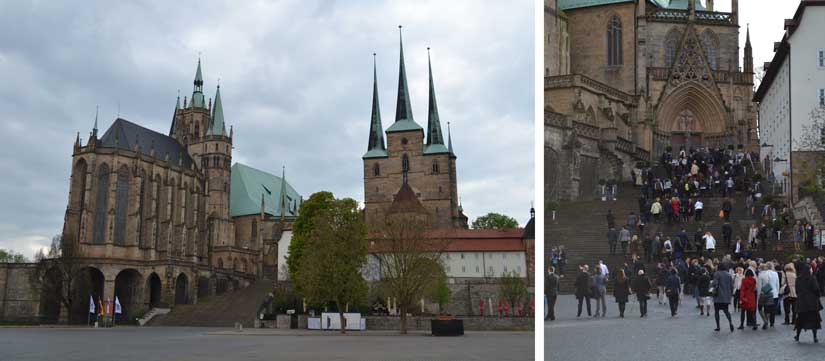
ONE OF LARGEST DOMPLATZ The town’s domplatz is said to be one of Europe’s largest, and it sits next to the impressive central church in Erfurt, St. Mary’s Cathedral, the oldest ecclesiastic building in the city, founded in the 8th century.
Initially the Romanesque-turned-Gothic cathedral served as the bishop’s seat, and up to the 19th century was the seat of the collegiate chapter of St. Mary. Martin Luther himself was ordained in the church in 1507.
The Mariendom (St. Mary’s) and St. Severi form an imposing backdrop for the annual Cathedral Steps Festival held in Erfurt.
The largest free-swinging bell in the world, the “Gloriosa,” with a diameter of 8 feet, hangs in the church today, but because of its age is only rung occasionally. Inside the cathedral there is an elaborate Gothic chancel with a series of 13 colored stained-glass windows which are 42 feet high and are among the greatest works of medieval stained-glass art. The cathedral contains a number of art treasures from various centuries. Guided tours of the church can be arranged in advance.
A flight of 70 steps that lead to the cathedral date back to the 14th century, and today many concerts and events are held on the steps.
Next to St. Mary’s on the hill is St. Severi Church, and together with St. Mary’s the two churches dominate the heart of this medieval city.
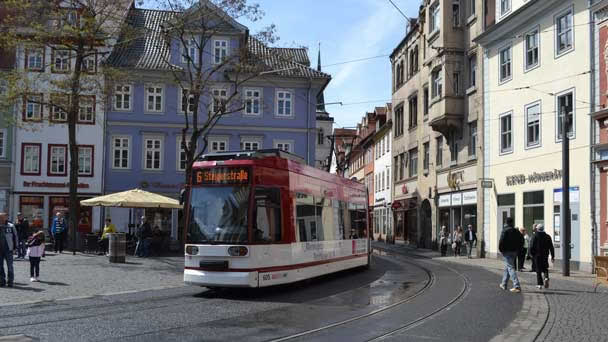
Nicknamed the “Rome of the North” for its profusion of some 30 spires and steeples, Erfurt is unquestionably one of Germany’s most beautiful cities. The old heart of the city with its half-timbered buildings looks like something out of the movies from years ago.
“Erfordia turrita” or “Erfurt, city of towers” is how Luther once praised Erfurt with its 25 parish churches, 15 religious foundations and 10 chapels. This impressive list of ecclesiastical buildings, in conjunction with the magnificent architectural motif of the cathedral and the Church of St. Severus (now the city’s emblem), inspired historians such as Ernst Stida (1585–1632) to refer to the city as the “The Thuringian Rome.”
Most of the churches are still intact and blend in with the beautifully restored half-timbered houses of the Andreas quarter and with the brightly-colored façades of Renaissance buildings. The medieval part of the city is one of the largest and best preserved historical city centers in Germany.
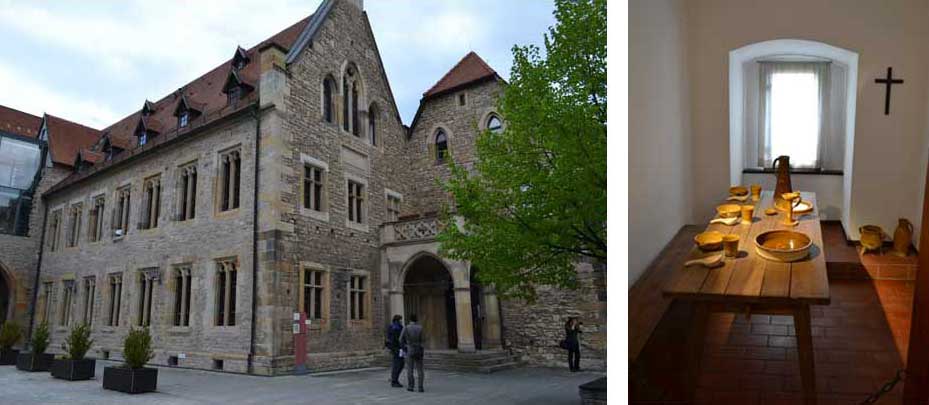
The Augustinian Monastery, built in 1277, is of Gothic design; stained glass windows date from the beginning of the 14th century. The monastery is considered one of the most famous places related to the Reformation.
LUTHER’S MONASTERY In 1505, Luther became a monk and took up residency at the beautiful and peaceful Augustinian Monastery in Erfurt, built in 1277. Recently renovated, the gothic monastery has functioned as an Evangelical/Lutheran church and school since 1525. Visit the chapter house and enjoy the same wonderful acoustics that Luther did in his day, or see the reconstruction of Luther’s cell. The Augustinerkloster possesses valuable stained glass windows dating to the beginning of the 14th century. Martin Luther lived here as a monk from 1505 to 1511. You can also spend the night in one of the 51 comfortable guest rooms at the monastery. Today the abbey serves as an ecumenical conference center and a memorial to Luther.
The Luther Stone stands to the east of Stotternheim near Erfurt. On July 2, 1505 Martin Luther, then a law student at Erfurt University, was returning to Erfurt after visiting his parents in Mansfeld. He was making the journey on foot, and as he approached Stotternheim he witnessed a severe thunderstorm that put him in fear of his life. He is said to have cried out, “Help, St. Anne, I will become a monk.” The site where the memorial stone now stands is sometimes described as the birthplace of the Reformation.
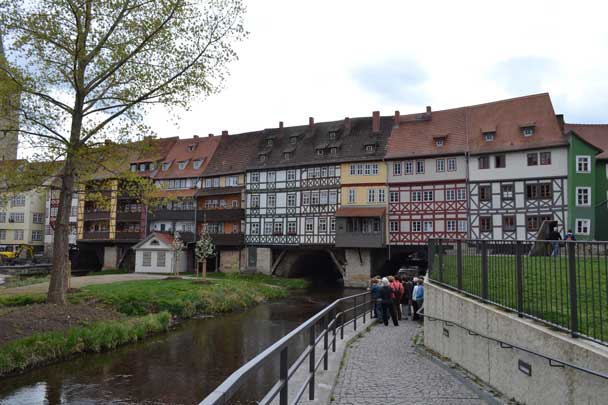
Merchant’s Bridge, a landmark in Erfurt, is the longest bridge in Europe covered by houses that are still inhabited today. In early times, traders sold their wares from this unique bridge.
The Krämerbrücke/Merchants’ Bridge is Erfurt’s most interesting example of secular architecture. This arched stone bridge was constructed in 1325 over the river Gera where the original ford was located along the “via regia” trading route. The Krämerbrücke is the only bridge north of the Alps to be built over entirely with houses that are still used as residences. In medieval times there were two churches built at each end of the bridge, one of which, the Ägidienkirche, is still in existence.
In 1695, the first foundation stone was laid for one of the few remaining 17th century city fortifications to be found in Germany. Today the Petersberg Citadel is an impressive example of European fortification construction dating from the 17th to the 19th centuries. Parts of the fortification were open to the public in 1964, but after 1990 it was extensively renovated, and today the greater part of the casemates, esplanades and bastions inside the fortification area are open to visitors. The completion of the citadel and the Petersberg are Erfurt’s largest undertaking.
(left to right) The Erfurt Rathaus is located at the Fischmarkt; origins of the building go back to the 11th century.; Erfurt city guide Matthias Gose points out aspects of the town on a scale model cast in metal.; Erfurt architecture
Haus zum Breiten Herd, historic Renaissance guild house, Fischmarkt square, Erfurt. In earlier times, rich merchants of the the city decorated the fronts of their homes with delicate carvings.
The neo-Gothic town hall at the Fischmarkt was built between 1870 and 1874. Inside the stairwells and the Festsaal (main function hall) there are numerous wall paintings depicting legends and scenes from the life of Luther, as well as pictures illustrating the history of Thuringia and Erfurt.
Erfurt city guide Matthias Gose points out aspects of the town on a scale model cast in metal
The Old Synagogue is one of very few preserved medieval synagogues in Europe. Thanks to the extensive preservation of the original structure, it has a special place in the history of art and architecture and is among the most impressive and highly rated architectural monuments in Erfurt and Thuringia. The synagogue was constructed during the Middle Ages on the “via regia,” at the heart of the historical old quarter very close to the Merchants Bridge and the town hall.
Many parts of the structure still remain today, including all four thick outer walls, the Romanesque gemel window, the Gothic rose window and the entrance to the synagogue room. After extensive restoration, the building was reopened in 2009. On display in the exhibition rooms is a collection of medieval treasures discovered during archaeological excavations. This includes 3,140 silver coins, 14 silver ingots, approximately 6,000 works of goldsmithery from the 13th and 14th centuries, and an intricate wedding ring of the period, of which only two others are known to exist in the world.
One of the buildings that reflects the history of Erfurt in a special and unique manner is the Kaisersaal in the Futterstrasse, which, after radical reconstruction, was reopened in 1994. It was built out of three patrician houses at the beginning of the 18th century to serve as the university’s ballroom. It is the oldest center for cultural events and meetings in Germany.
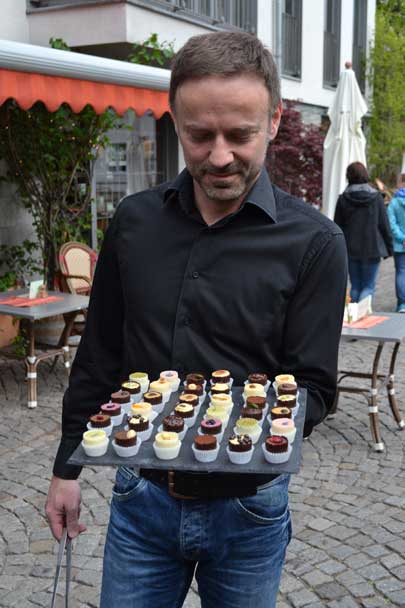
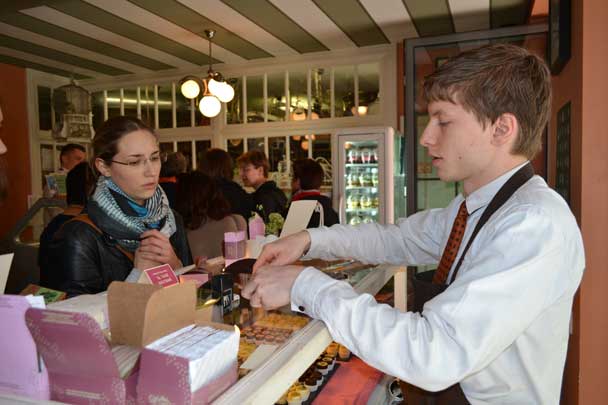
The Goldhelm Schokolade shop in Erfurt provides a selection of fresh chocolates every day
The Anger Museum with its variety of wood and stone sculptures is situated in the middle of the old part of the city. It was built between 1706 and 1712 as a packing and weighing station, both for Philipp Wilhelm Reichsgraf von Boineburg, the governor of the city, and for Archbishop Lothar Franz von Schönborn. It is one of the most important early 18th century buildings.
The Erfurt city museum, in the magnificent Haus zum Stockfisch building, was founded in 1886 to house the artworks that Erfurt inherited from one of its most famous sons, the Romantic painter Friedrich Nerly. The museum’s four floors present the city’s culture, economic development, politics and religion.
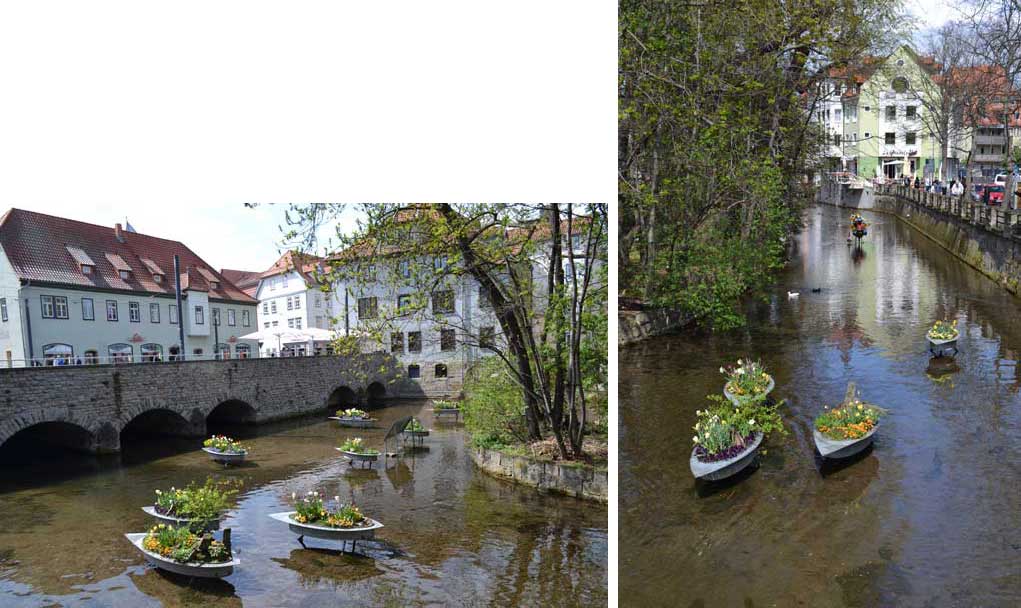
Flowers decorate the Gera River channels in Erfurt.
Erfurt’s last water mill to still be in use is located on the banks of the Gera River near the town hall. Besides the water-driven grinding mill, there are also exhibition rooms displaying historical machines. The museum also contains an illustrated history of Erfurt’s water mills in particular and of the history of hydraulic power in general.
Erfurt, said to be Germany’s largest single heritage site, is a popular destination for tourists, thanks to its medieval ambiance and storied history.







 European Traveler