Dining in Madrid Is More Than Just Dinner

Story and photos by Alison Ramsey

Madrid, the colorful capital of Spain, has a vibrant culinary scene with myriad eatery options to bring visitors closer to the city’s authentic culture, traditions, and characters. To make the most of a visit, vary mealtime experiences by trying unique gastronomy options and formats.

Progressive Dinner Offers Premium Food Experience

Elysian Tales, the passion project of charismatic Marwa Preston, brings guests on a multi-stop fully customized progressive dinner throughout the city, with short walking trips between venues.
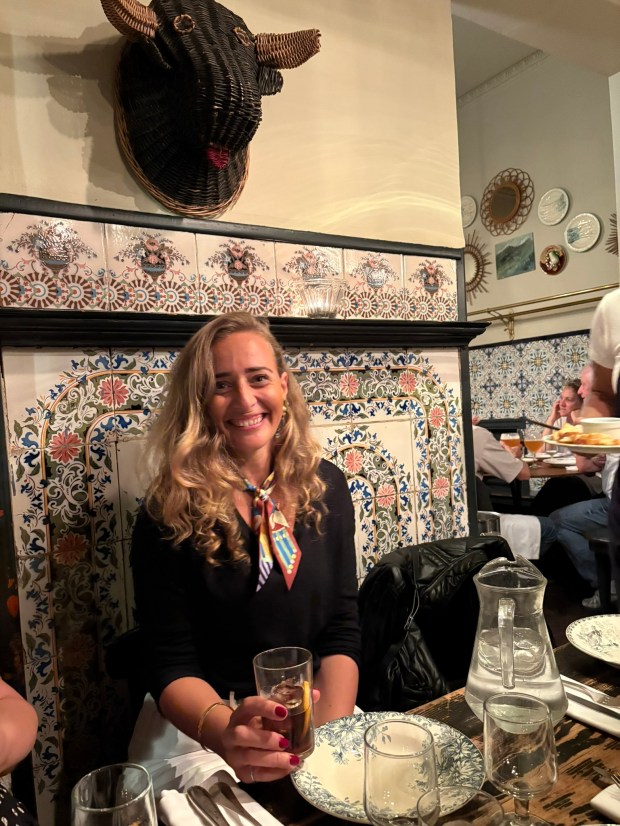
Woman at dinner table
Marwa Preston, backed by a Spanish-tiled wall at La Carmencita, sits with iced red
vermouth, served in its traditional small glass.

Michelin-Starred Fine Dining

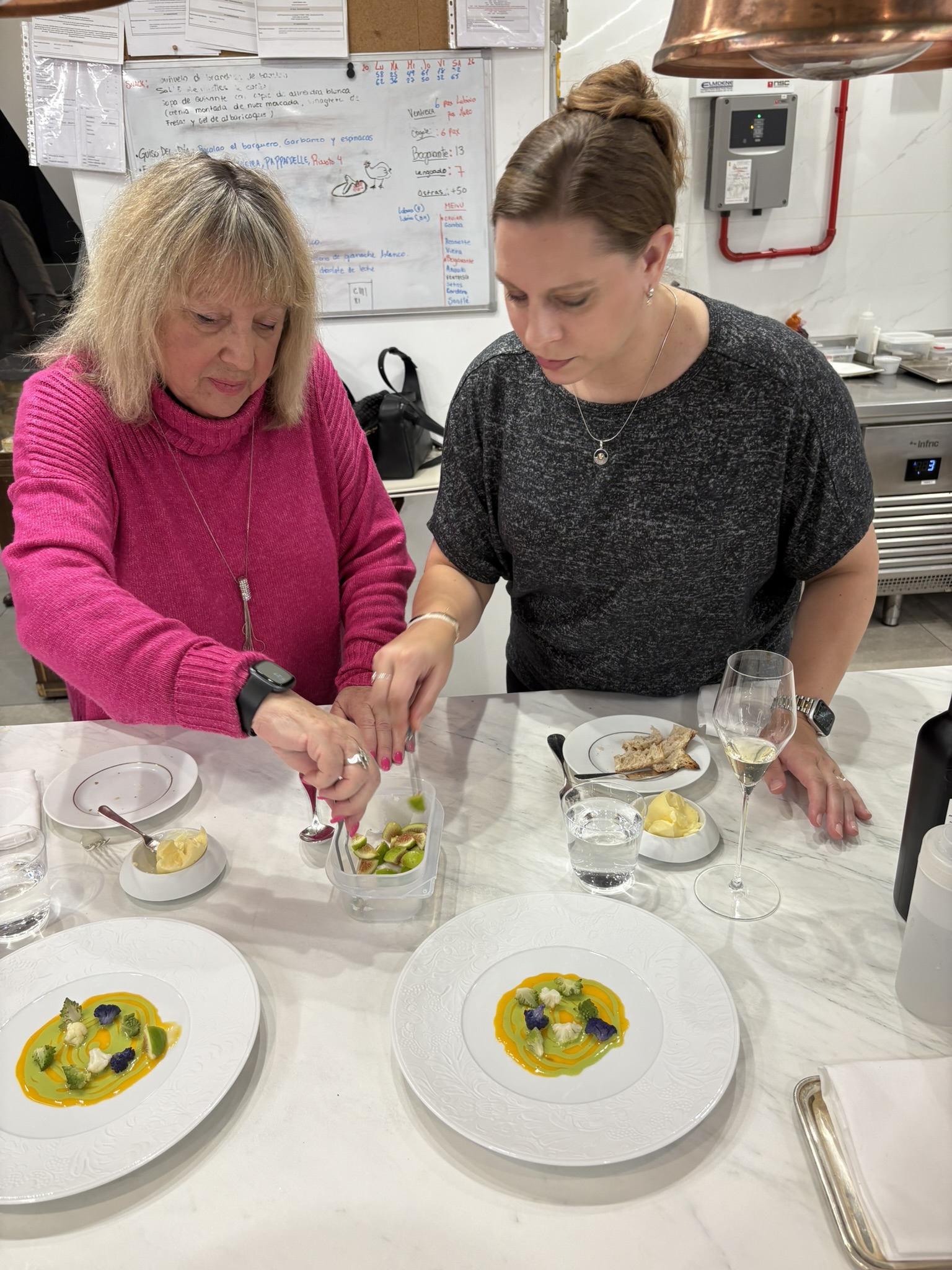
One example program begins at the elegant, Michelin-starred Saddle restaurant, whose red velvet armchairs, full-ceiling skylights, and modern gold accents imbue sophistication and style. Join the chefs in the kitchen, where they teach participants to artfully scrape a creamy oval-shaped “butter quenelle” from a mountain of French butter to go with homemade sourdough bread and sparkling Corpinnat wine from Catalonia.

Friendly kitchen staff walk guests through plating a colorful vegetable course, using silver tweezers to decorate swirls of flavor with purple cauliflower, figs, carrots, strawberries, and edible flowers, and garnishing with fresh horseradish and sea salt. The quality of ingredients and combinations of interesting tastes here are beyond comparison, and the feeling of making it yourself alongside professional chefs in a gourmet kitchen is unmatched.   

  • Man displays bottle of wine
  • Two women plate vegetables
  • Chef and woman prepare food dishes

Homestyle Comfort Food

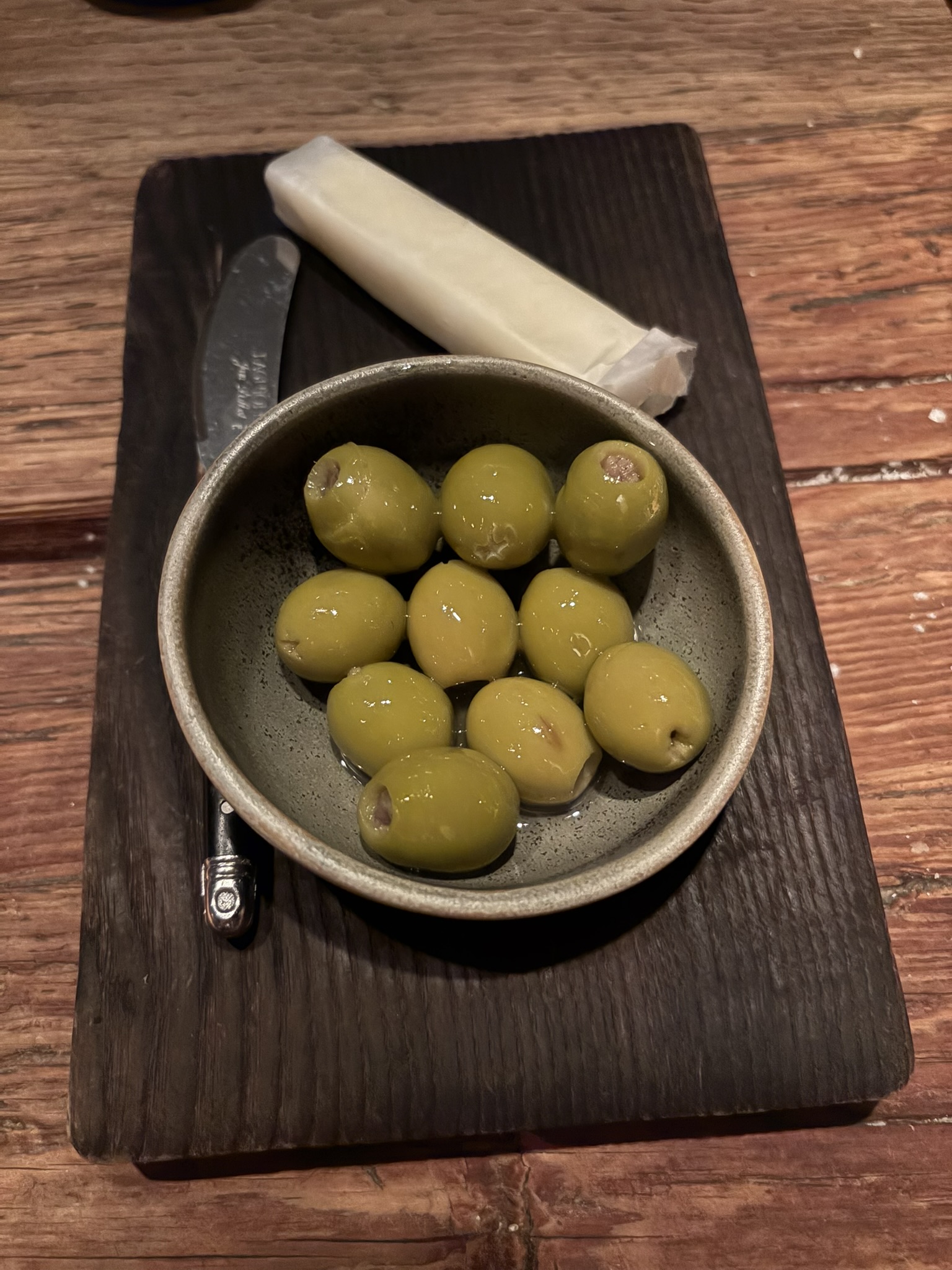
A leisurely walk past the stately Supreme Court of Spain and Church of Santa Bárbara leads to friendly Chuecha neighborhood bistro La Carmencita Tavern. The second oldest tavern in Madrid and a famous locale for writers to frequent, this lively venue is full of locals sipping red vermouth (white wine infused with caramelized sugar and botanicals), nibbling in-house marinated olives, and sampling savory cheeses with honey farmed from the outskirts of Madrid. Preston described their Spanish version of “Russian salad” as tuna, potatoes, green peas, and vegetables, and “everyone from Spain will tell you their mom’s recipe is the best.”

A grandma’s-home-cooking recipe of beef pate on bread, and Mediterranean anchovies comprise bar food typical in this “Soho of Madrid” area. At this homey site where three generations of Carmens lived, the elaborately decorated Spanish tiles on the walls are all original, and the dining room used to be the house’s bedroom.
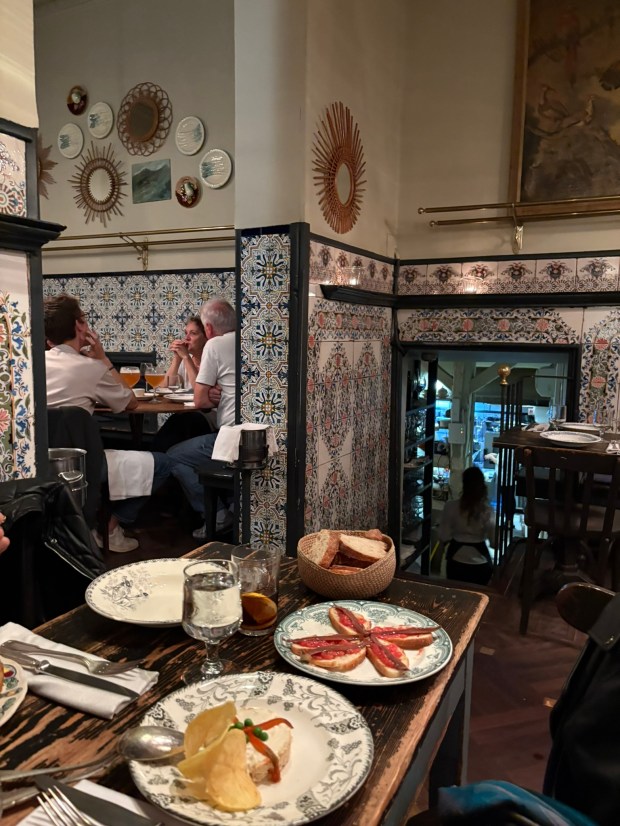
Dining room and appetizer plates
Red vermouth and traditional tapas make up a cozy homestyle meal at La Carmencita
Tavern.

Romantic Date-Night Atmosphere

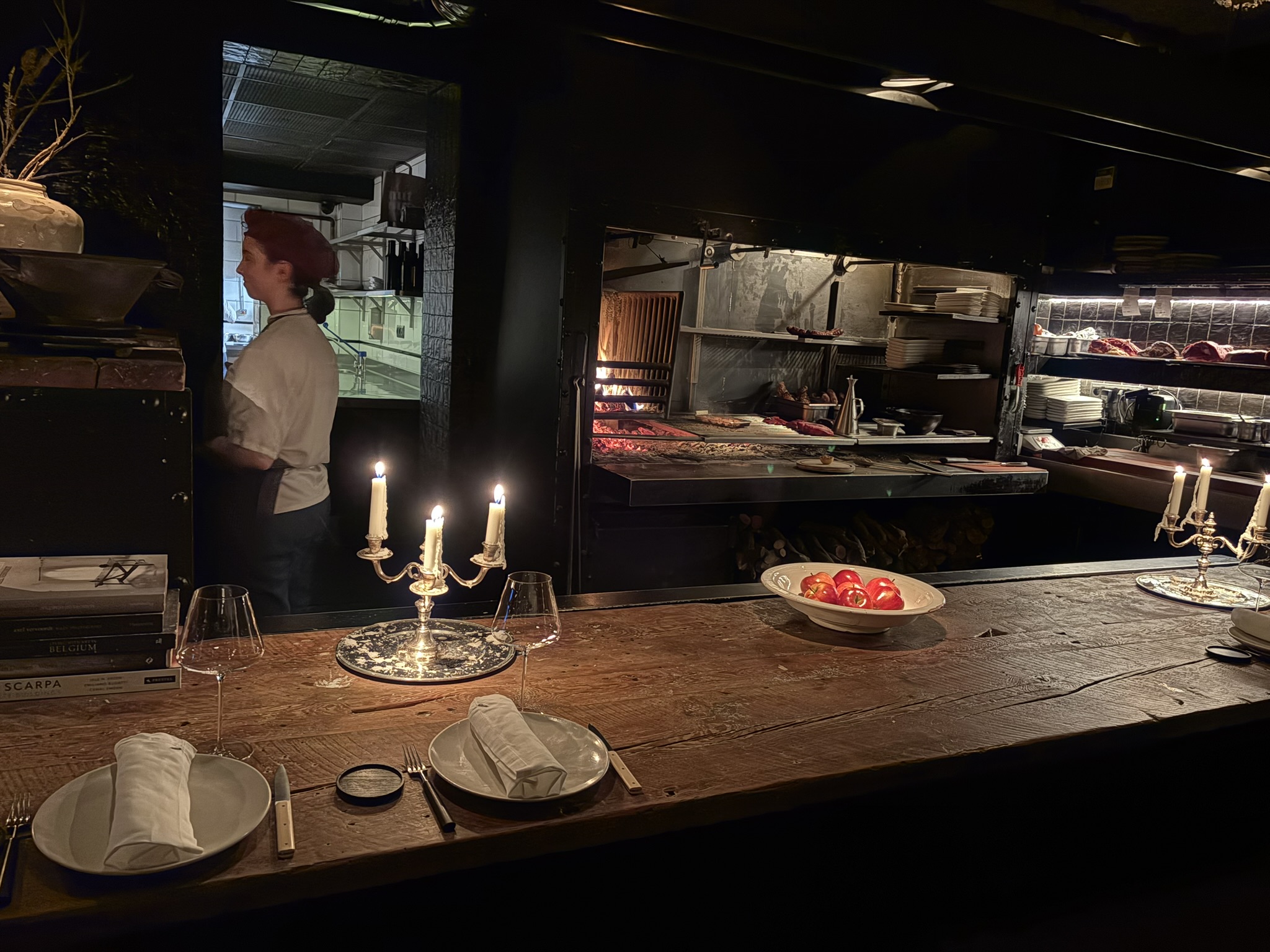
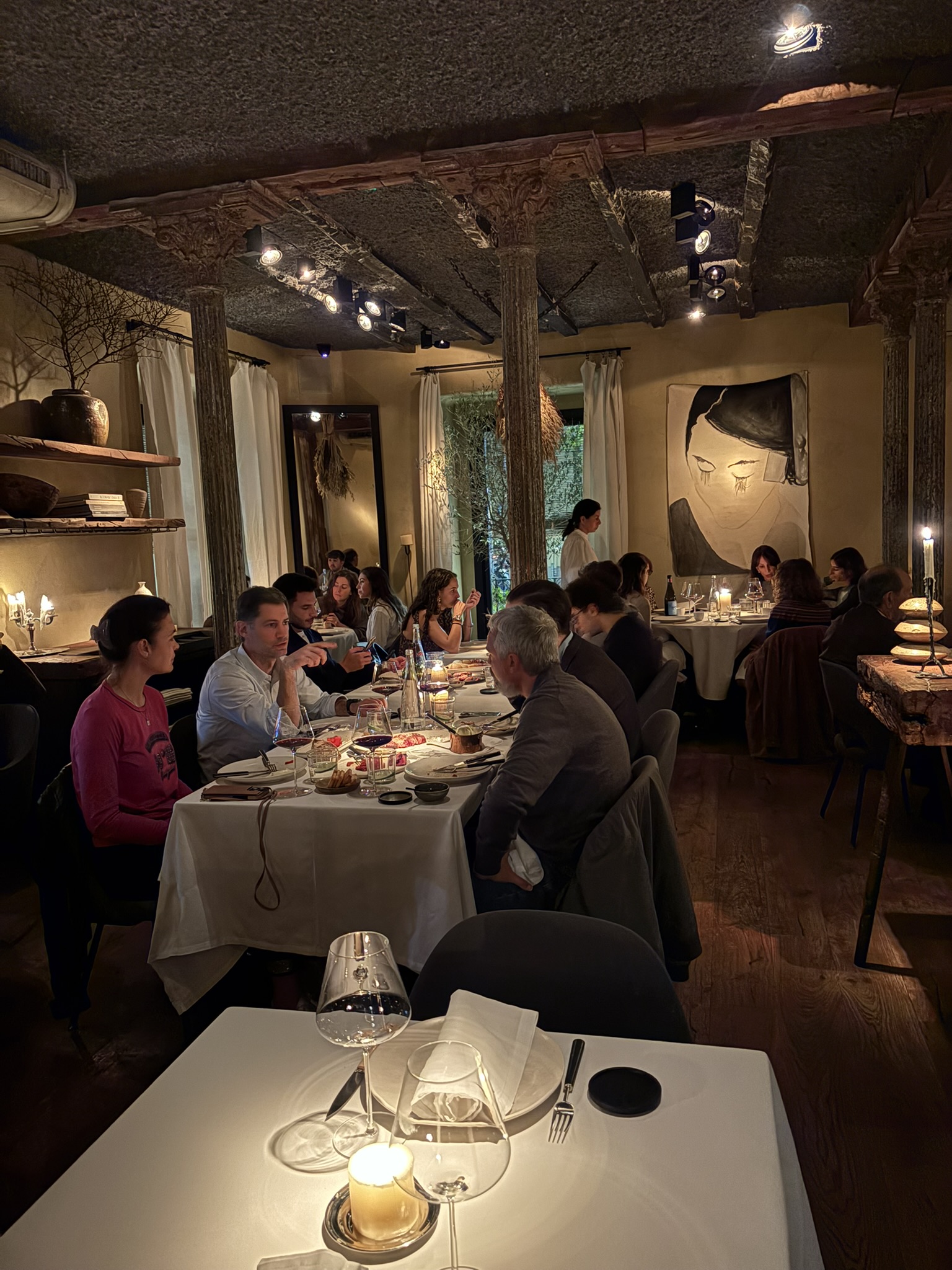
Moody candlelight, rough-hewn wooden tables, open-flame ovens, dramatic wall art, and a vast collection of high-level wines make Charrúa Madrid a romantic stop on the journey. Fresh rosemary is burned 30 minutes before dinner service, and the pleasant aroma stimulates senses and heightens the dining experience.

Begin with hot beef consommé rich with vitamins and minerals, creamy cauliflower puree (“90% cauliflower and 10% butter,” said Preston) with freshly shaved truffles, and seasoned tomatoes. Roasted red pepper is served alongside tender, free-roaming grass-fed Retinta beef sirloin to bring out the meat’s flavor, with the acidity of the pepper cutting through the meat’s fattiness.
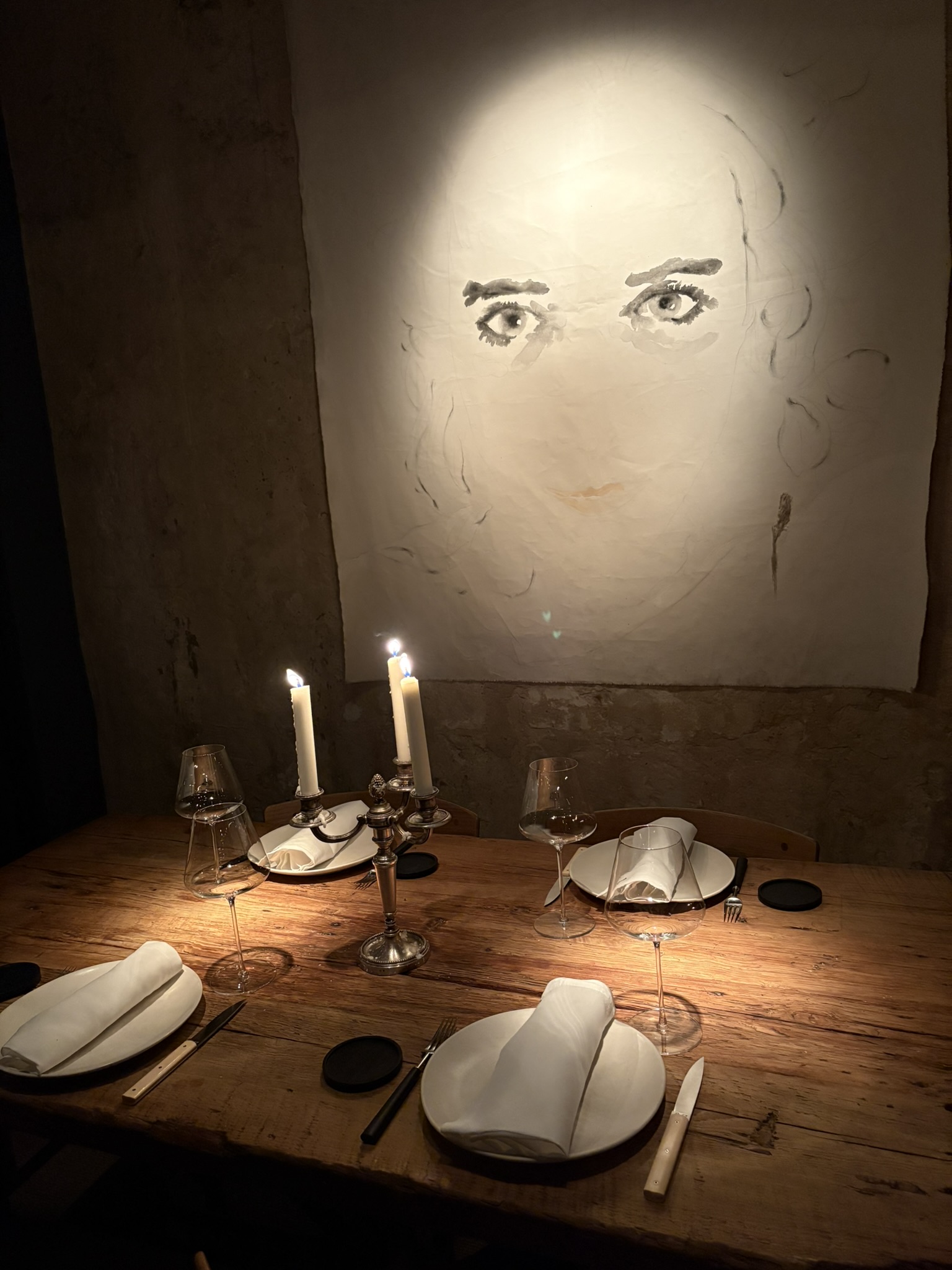
  • Set dinner table with painting behind it
  • Bowl of olives
  • Open oven and candles
  • People sitting at dining tables

Dessert is torrija, a Spanish version of French toast that involves homemade brioche soaked in milk infused with cinnamon, orange rind, and lemon peel, and nested with yogurt ice cream. Preston explained that this is a typical Easter dish in Spain, although that time of year the bread is often soaked in wine instead of milk.  

Despite the rich flavors in these courses, the food sits lightly in the stomach and is not fried, like many of the ham croquetas (deep-fried fritters) and bombas (fried mashed potato balls) served in touristy locations. With a short walk in between restaurants on this dining tour, guests don’t leave feeling stuffed and uncomfortable.

Funky Cocktail Bar

Wrap up the evening at Bar Manero Marqués de Cubas, a venue with a Vegas-style disco bar, DJ, private karaoke screen, and room dedicated to Julio Iglesias in the back. Pick your garnish of choice (cinnamon, ginger, pepper, sugar cubes, dried lime) and describe your favorite flavors, scents, or even your favorite vinyl record, and the host will create a drink they sense will match your taste.
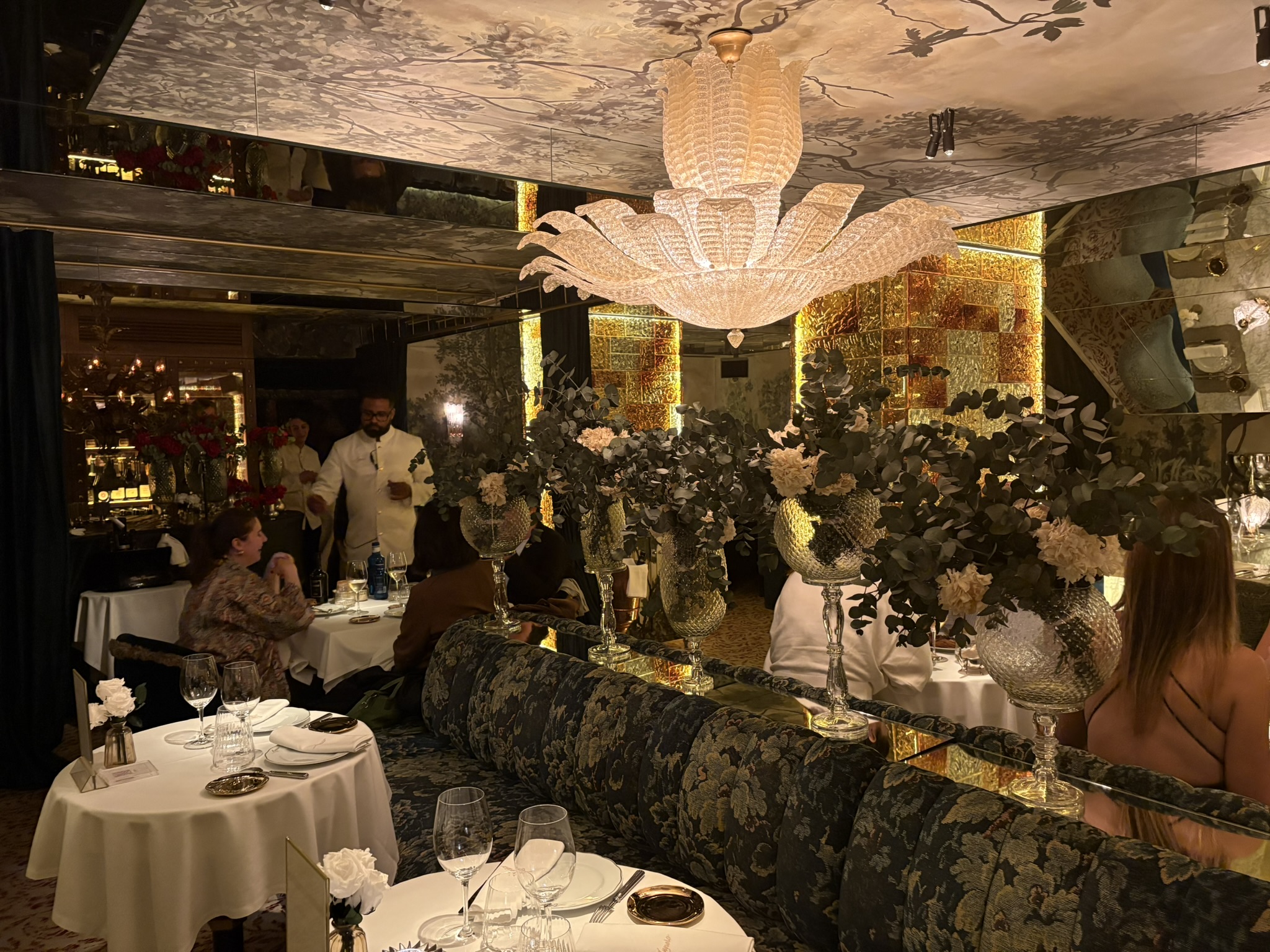
  • Dining room with chandelier
  • Tray of garnishes
  • dimly lit lounge room with overhead light

The front restaurant area has a crocheted ceiling, handmade mosaic floors, Murano-glass–covered towers, many mirrors, and walls are hand-painted with Madrid panoramas. It is truly a unique scene and novel way to end an evening of gastronomic exploration. 

This curated culinary experience by Elysian Tales allows visitors to experience the food selections and scenes at several different types of eateries even if they only spend a few days in Madrid.

Other Distinctive Dining Options in Madrid

Local Castilian and Madrid Cuisine

Dine at traditional Madrid establishment Posada de la Villa for a taste of Castilian and Madrid cuisine, including roast suckling lamb cooked in a wood-fired oven (absolutely delicious, with tender meat falling off the bone), Bellota Iberian ham, Manchego cheese, homemade croquetas, tuna and tomato salad, Dehesa Valquejigoso wine, and “Posadero’s Dessert” trio of pastry, fried milk, and cheesecake. Dark wood and brick wall interiors, Iberian ham hanging from the rafters, excellent flavors, quality service, and an active scene of locals, people on business lunches, and foodies make this historic stop one to remember.

Traditional Madrid dining at Posada de la Villa includes local wines and roast suckling lamb cooked in a wood-fired oven.

Wine Masterclass and Tasting

Explore Madrid’s wine culture and cuisine by taking a masterclass at Vinology. At this wine bar and restaurant, sommelier and founder, Pilar Oltra, guides guests through an exploration of Madrid’s four wine-producing regions—Arganda del Rey, Navalcarnero, San Martín de Valdeiglesias, and El Molar—made up of almost 22 acres of vineyards and 45 wineries.

Learn about grape varieties, terroir (the unique combination of climate, soil, terrain, and tradition that shape the character of a wine), and sample five wines alongside five creative tapas, including homemade foie mi-cuit (semi-cooked duck) with quince, cecina (smoked beef) with toasted almonds and extra virgin olive oil, and anchovy with Iberian jowl.
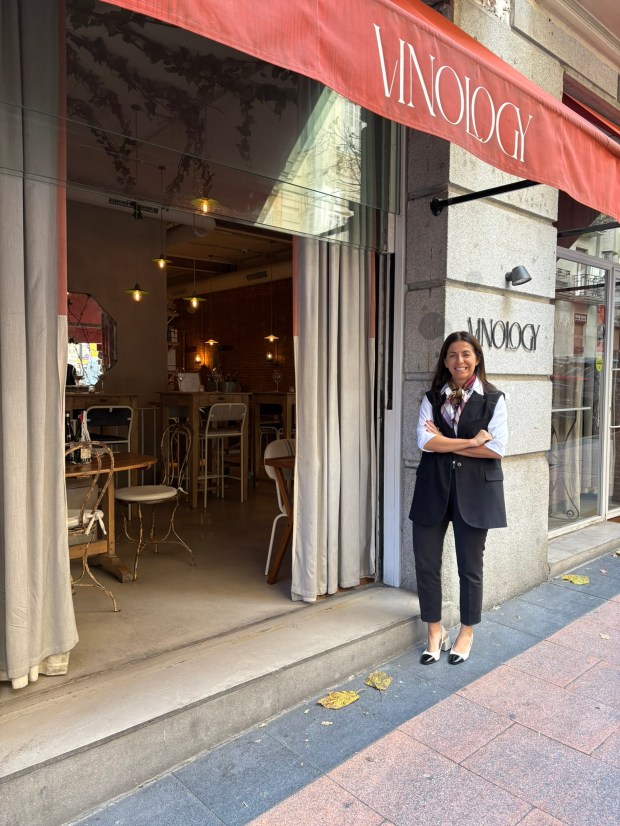
  • Woman standing outside of wine bar
  • Bowl of food and an edible flower
  • Woman stands in front of projector

Dinner and Flamenco Show

The oldest, most prestigious, and most famous flamenco tablao (wooden stage) in the world is Corral de la Morería. Paired with its Michelin-starred haute cuisine designed by head chef, David García, this cultural dinner-and-show is a memorable way to involve all the senses in one evening experience.

Savor scallop carpaccio with tomato tartar, dates, and coconut ajoblanco (cold soup); poultry egg yolk over ropa vieja (shredded beef); sea bass and gilda (skewer of olive, anchovy, and pepper); and fruit sorbet or caramelized French toast made with fresh milk and served with banana ice cream.  

Plate of food

For six decades, flamenco icons have graced the Corral de la Morería stage to showcase their art, and the venue is frequented by celebrities and visitors from across the globe (e.g., Frank Sinatra, Dua Lipa, Gloria Estefan). Here, the singers, dancers, and guitar players use feet, eyes, tongues, wrists, fingers, and flowing costumes to tell a dramatic story in sound and movement, with no translation needed, and present a new show every 7-10 days.
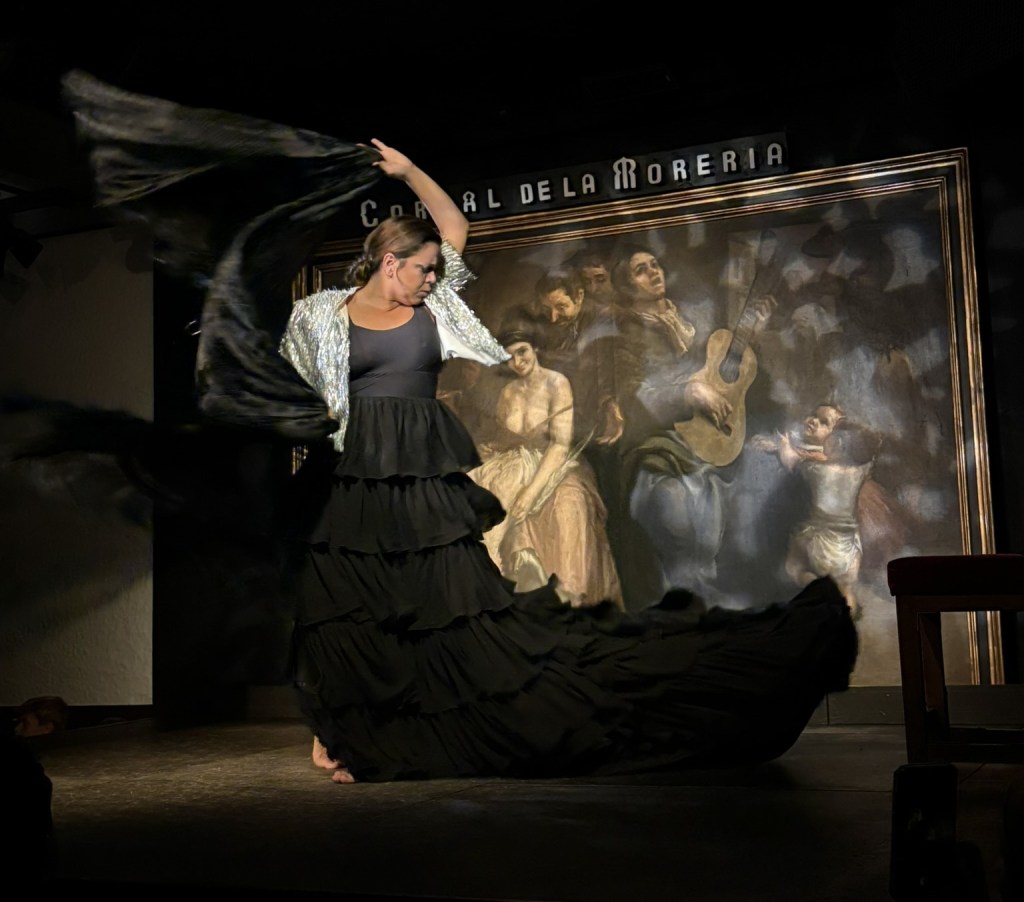
Flamenco dancer waving cape
A dramatic and sound-rich story is expressed on the Corral de la Moreria tablao.

“It’s the only dance in the world where the music follows the dancers,” said Armando del Rey, an owner of the family-run business his father, Manuel, began in 1956. Manuel hired Armando’s mother, Blanca, a very well-known choreographer and dancer in Spain, and Manuel and Blanca soon fell in love. Now, Manuel and his brother, Juanma, work with artistic director Blanca in the restaurant sector as well. Corral de la Morería is the only restaurant in the world with a Michelin star that has a dinner and tablao, and it is listed in The New York Times bestseller “1,000 Places to See Before You Die.”

Jazz Entertainment Club

For dinner and drinks in a flashy club atmosphere, make a reservation at the bustling two-story Pabblo. Here guests are treated to Mediterranean cooking from a wood-fired oven and charcoal grill, classic and innovative cocktails, Picasso-inspired décor, and live band music with lounge singers, dancers, and aerial silk artists.

Lounge singer performs with band
A live band, sultry singers, and glittering dancers present a high-energy show at
Pabblo’s dinner seating.

Between hummus, tuna tartar, fish and lamb courses, and a fun make-your-own ice cream sundae dessert platter, you’ll hear smooth saxophone jams, watch sequined showgirls shimmy and strut, and see a graceful gymnast draped around aerial ribbons and descending through the open ceiling from the upper level. Entertainment while eating is an exceptional way to end an evening out on the town.   

Four Seasons’ Restaurants and Rooftop

The first Four Seasons hotel in Spain is found within an enormous and beautiful property block composed of seven historic buildings with a national-heritage–protected external façade. Within this complex, shop at Canalejas Gallery, the new luxury shopping arcade in central Madrid housing 40 boutiques and prestigious brands such as Dior, Cartier, Louis Vuitton, Rolex, Armani, Tom Ford, and Tumi.

After browsing or buying, easily head to Four Seasons’ El Patio lobby bar (featuring the original marble columns and concierge desk from when the room used to be the operations area of the Spanish Credit Bank), the Isa Asian cuisine restaurant and cocktail bar, or Dani Brasserie for signature Mediterranean and Andalusian dishes and drinks on the top level.

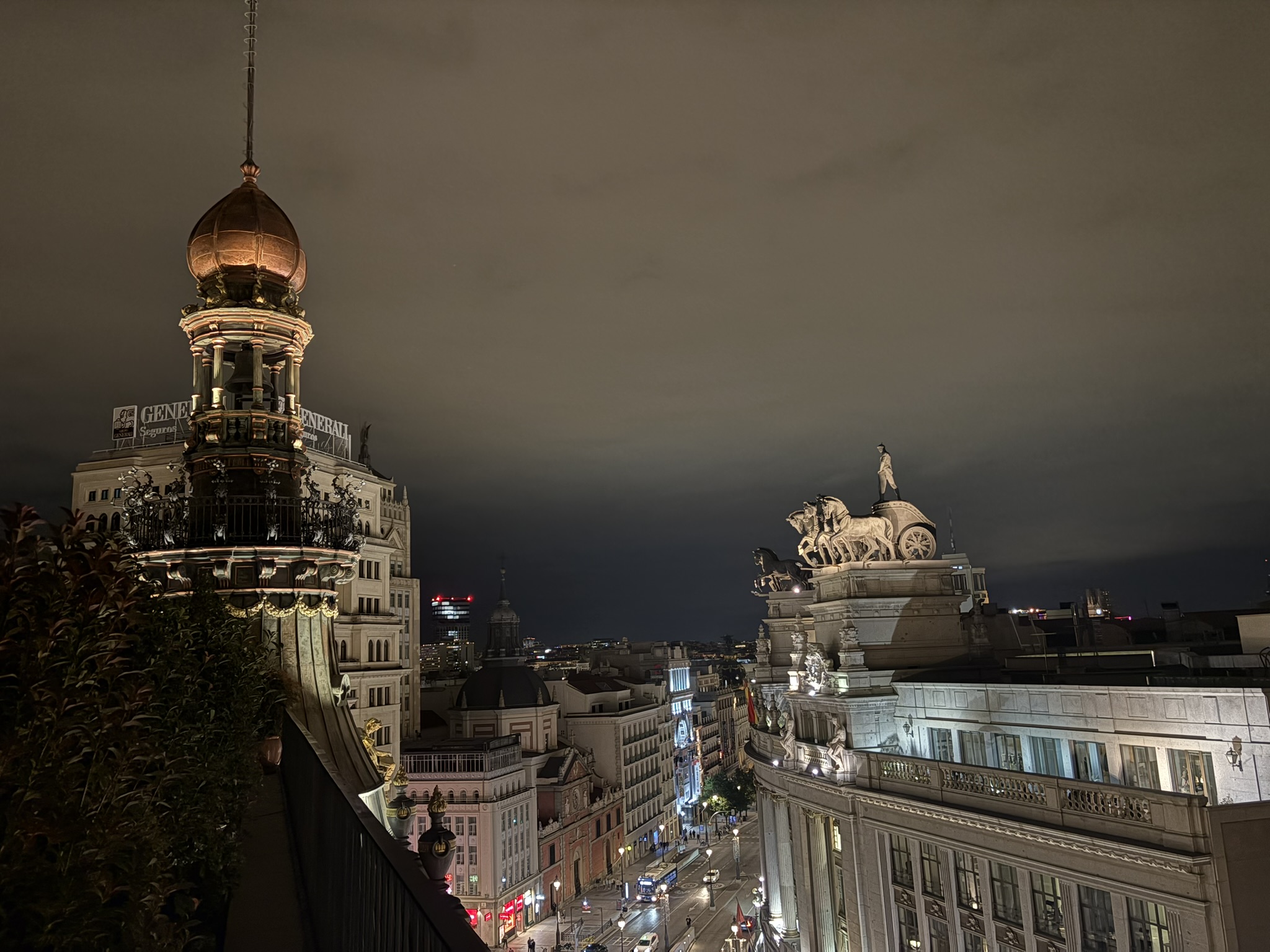
  • rooftop patio with chairs and umbrellas
  • Rooftop view of city

At Dani Brasserie, don’t miss chef Dani García’s famous and savory “Red Tuna Descargamento,” served in a delicate rose shape, with yellow bell peppers, lime, and olive oil. From the rooftop patio outside the dining room, admire Madrid’s city lights, cool night air, and stunning panoramic views.

WHEN YOU GO…

Stay at the centrally located Hotel Villa Real for easy access to the Prado Museum, Retiro Park, Thyssen-Bornemisza National Museum, Royal Palace of Madrid, and Gran Via high-end shopping street.

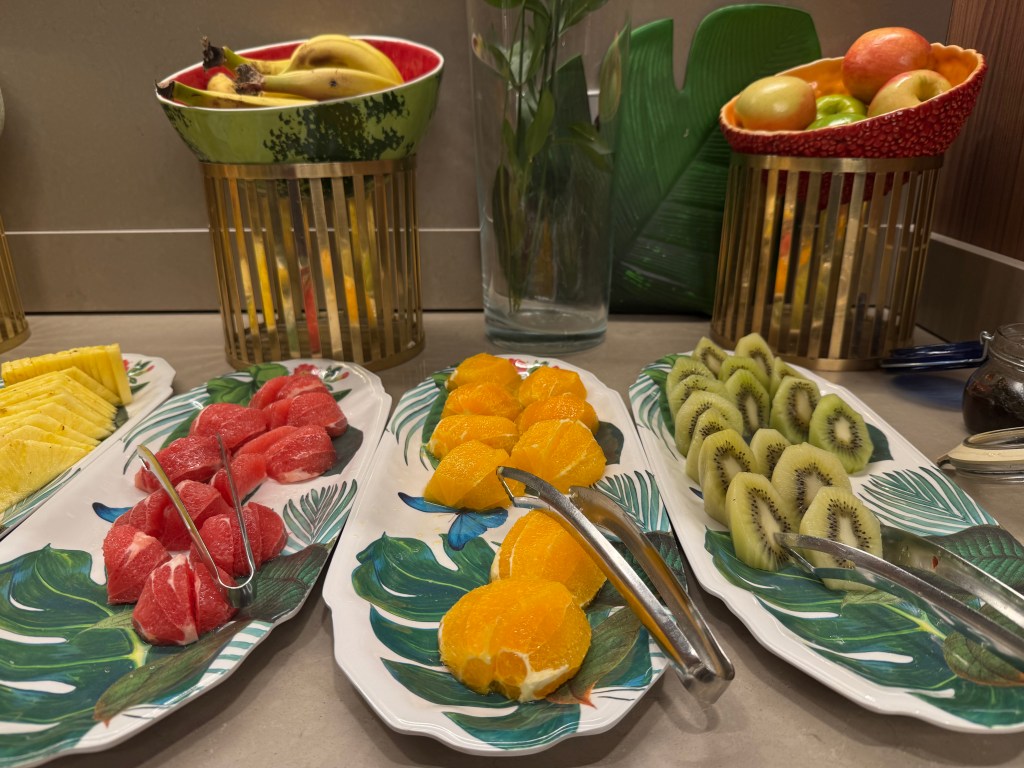
The vast breakfast buffet and attentive waitstaff will ensure you start your mornings fueled with fresh coffee and juice, plenty of meats and cheeses, fresh and dried fruits, pastries, cereals, and eggs-to-order. On your way to breakfast, explore the art and archeology collection in the hotel’s museum, which holds restored Roman mosaics and sculptures, and a private collection of painted Apulian vases.

Breakfast at Hotel Villa Real is varied, colorful, and fresh.

The East 47 bar and restaurant off the front lobby serves drinks, tapas, crisp salads, and Mediterranean-inspired dishes—with terrace seating out front in Plaza de las Cortes during warmer summer months.

For more information about Madrid, go to Visit Madrid.


🔍 Search the site to discover more European Traveler feature stories. 🌍

FOLLOW US:

Staying in the Thick of Things in Cordoba, Spain

The NH Collection Amistad Cordoba, a splendid hotel within easy walking distance of historical landmarks, ensures delightful dining and pleasant dreams

By Randy Mink

Ensconced in the picturesque Jewish Quarter, the four-star NH Collection Amistad Cordoba made the perfect base camp for my explorations of Cordoba’s sprawling old town, the highlight of my recent travels in the south of Spain.

As soon as I passed through the lobby and walked out the door, there I was—in the quiet Plaza Maimonides, ready to prowl the cobbled lanes threading the city’s historic center, a maze of whitewashed buildings dating as far back as the Middle Ages. The Bullfighting Museum, housed in two old palaces, holds court across the way. A short stroll leads to the Mezquita, or Mosque-Cathedral, the greatest legacy of the city’s Muslim past.

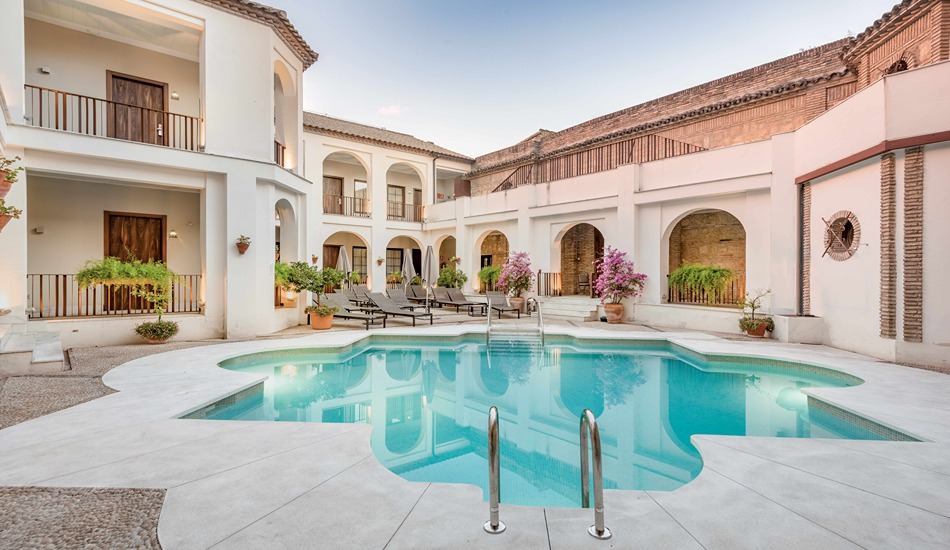
Occupying a pair of 17th and 18th century mansions, the 108-room NH Collection Amistad Cordoba has two outdoor courtyards, one of them with an Arab star-shaped swimming pool. Islamic ornamental and architectural touches grace other public areas as well. (At the time of writing, the larger courtyard was closed for renovation.)

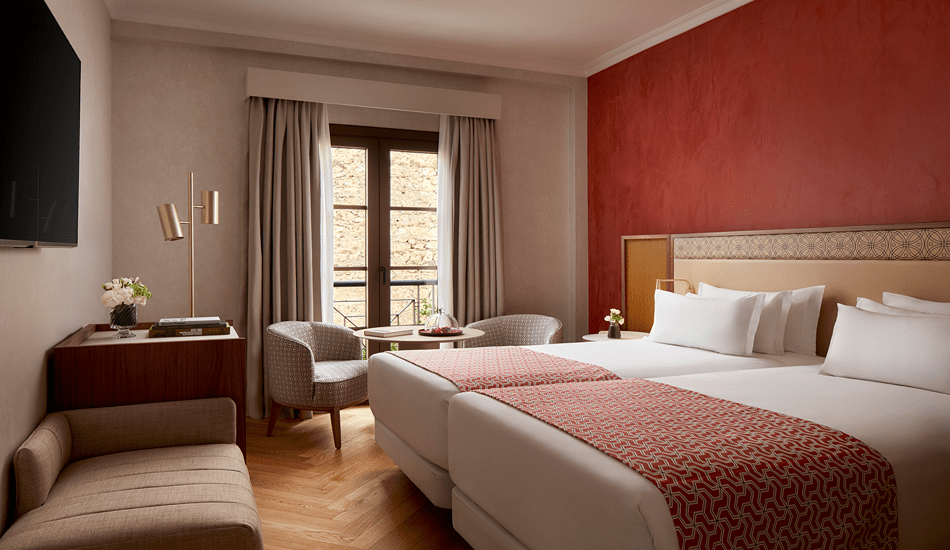
The property offers a variety of guest room categories, including rooms with private patio. My French balcony looked out on remains of a wall that separated the Jewish Quarter from the rest of the city. Other rooms overlook the courtyards or Plaza Maimonides.

My third-floor nest had all the amenities you’d expect from an upscale hotel—refrigerated mini-bar, coffee machine, magnifying make-up mirror, robe and slippers, and turndown service with chocolate. I especially liked the walk-in rainfall shower.

Savoring Regional Specialties in the Hotel Restaurant
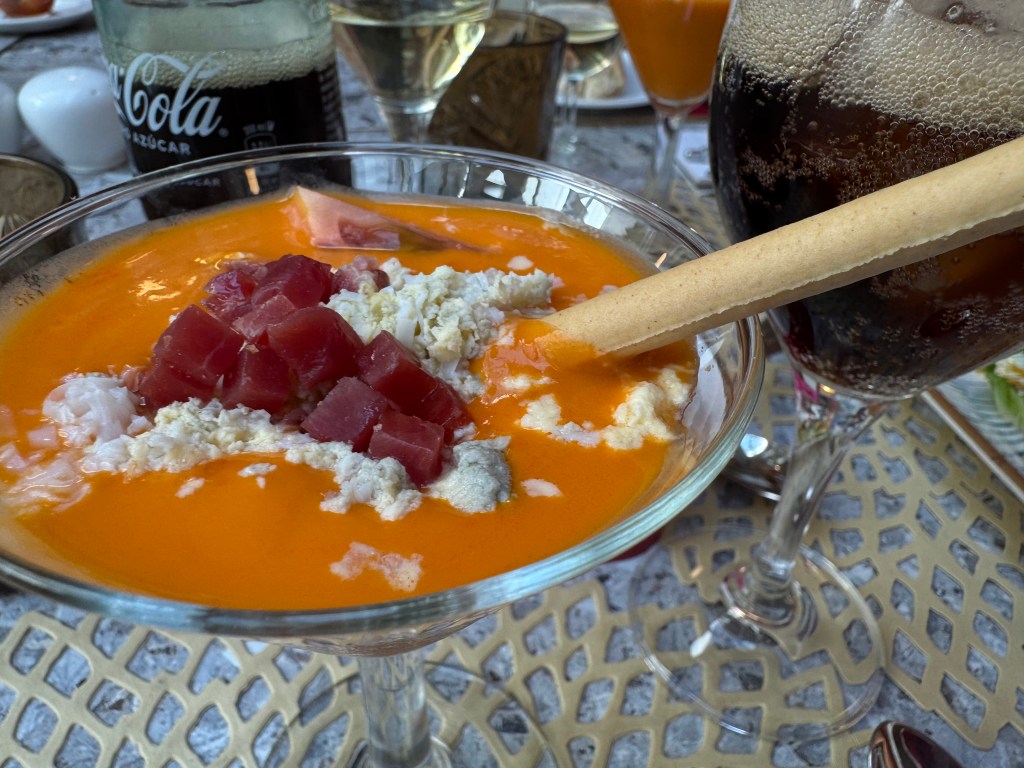
At one lunch in the restaurant, our group feasted on the five-course Cordoba tasting menu, which featured typical local specialties. We all loved the salmorejo, a cold tomato soup thickened with bread and topped with bits of hard-boiled egg and ham. After a salad and creamy oxtail croquettes, the main course was flamenquín, a fried roll of sliced pork and ham with cheese and red peppers. We finished with pastel cordobés, a sweet, squash-filled pastry. The price was 37 euros per person, two drinks included.

Photos by Randy Mink. The restaurant’s menu features typical local specialties, including salmorejo, a cold tomato soup thickened with bread and topped with bits of hard-boiled egg and ham.

The NH Collection’s cultural/gastronomic package in Cordoba is part of the brand’s Spain Designed for Feeling program of special experiences. (www.spaindesignedforfeeling.com/categoria/lifestyle). The plan includes both the tasting menu and a guided four-hour tour visiting the Mezquita, Jewish Quarter and Viana Palace.

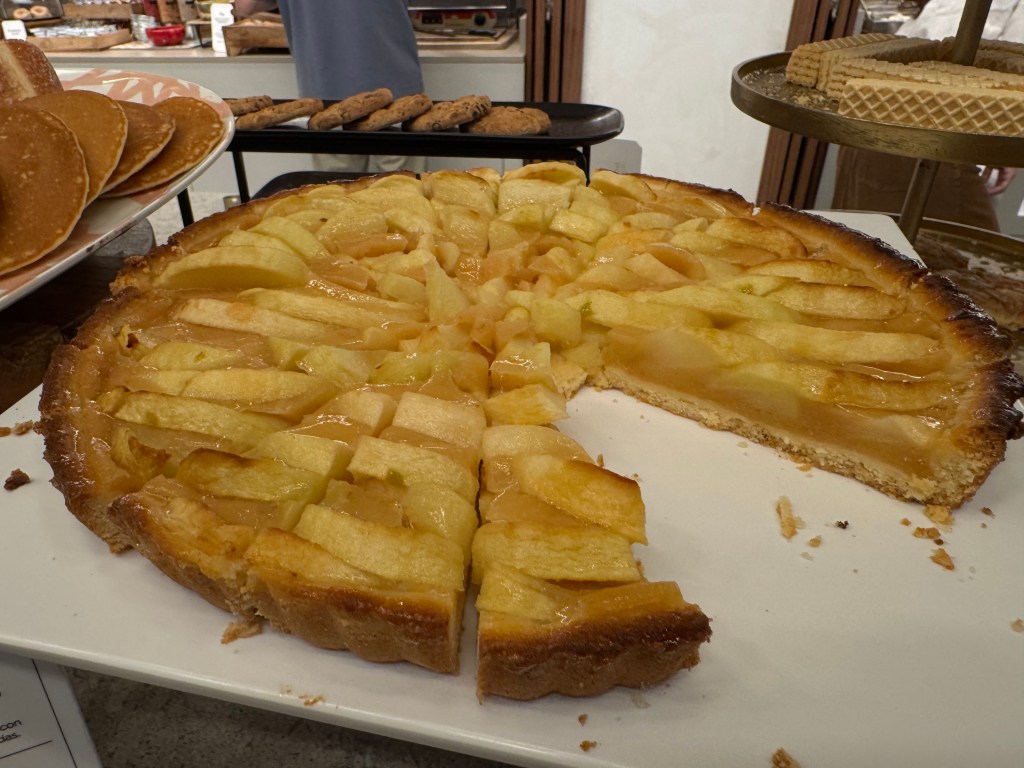
The hotel’s lavish breakfast buffet offered salmorejo (a morning treat for one group member who couldn’t get enough of it) along with a bounty of meats, cheeses, fruits, vegetables, juices and baked goods. As a sweet tooth, I went for the chocolate tart wedges and sugar-dusted squares of
pastel cordobés.

A concierge in the lobby assists travelers with making the most of their Cordoba stay, and the front desk gives out a detailed list of museums and other attractions with opening hours and admission prices.

NH Collection Hotels & Resorts is the high-end brand of Minor Hotels, which has lodgings across six continents. I had not been aware of the chain, but after stays in Cordoba and at Madrid’s NH Collection Palacio de Tepa days before, I am now a big fan.

Photos of courtyard, guest room (Superior category), and lobby, courtesy of NH Collection Hotels & Resorts.

For more information on NH Collection Hotels & Resorts, log on to www.nhcollection.com.


🔍 Search the site to discover more European Traveler feature stories. 🌍

FOLLOW US:

Saxony’s Sweets and Treats Take the Cake

Story and photos by Alison Ramsey

There’s something irresistible about German bakeries—the fresh brötchen and Berliners, croissants, and the bold espresso you can order alongside—something that makes it feel okay to stop at various locales throughout the day, even beyond just a morning coffee and pastry. It seems that a thick slice of cake and a mug of strong, steaming coffee any time of day makes a whole lot of sense when you’re in a region with such a rich baking history. Dresden, the capital of Saxony in Germany, and nearby Meissen and Leipzig have much to offer snack lovers when it comes to pastries and cakes. So pour a fresh cup, heat up a bun, and read all about the role Saxony played in the rise of gluten-filled goodness.  

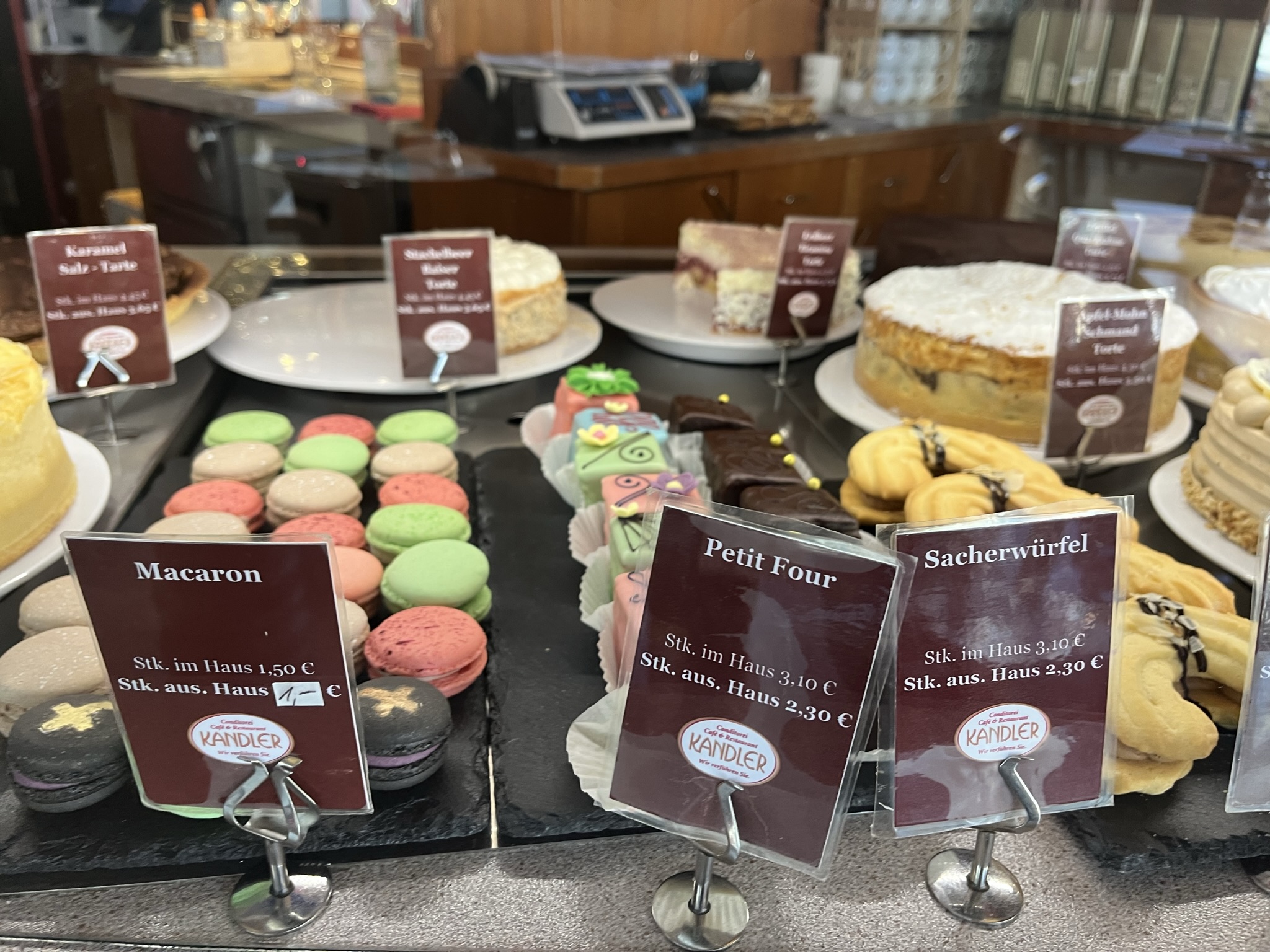
The five locations of Kandler Konditerei in Leipzig are always stocked with sweet temptations.

Russisch Brot
During the late 19th century, Dresden-based master baker Wilhelm Hanke adopted the 1845 St. Petersburg, Russia, recipe for Russisch Brot (Russian bread), which are crunchy glazed cookies made from sugar, egg whites, water, and flavoring, and formed into the shapes of alphabet letters. These are sold under the Dr. Quendt label and remain a popular Christmas treat or a delicious snack to help teach reading. The letters “M” and “W” are too fragile to be stable, so Dr. Hartmut Quendt ensured bags contain mirrored 1’s that snackers can use to create their own “M” and “W” shapes. It’s clear permission to play with your food!

Stollen
Dresden is also the birthplace of the authentic stollen Christmas cake—the Dresdner Christstollen. When stollen was first baked in the 1400’s, under the supervision of the church council, the bread was not allowed to contain butter or milk during Advent, so it was a dry and bland pastry consisting of flour, yeast, oil, and water. Ernst of Saxony and his brother Albrecht appealed to the Pope and asked that the dairy ban be lifted, so they could replace the oil with butter, as butter was cheaper than oil at the time. The appeal was denied, but finally, five popes later, Pope Innocent VIII sent Dresden the famous 1491 “Butter Letter,” in which he granted permission for dairy ingredients to be used in the stollen—although the Dresden bakers must, in return, pay a fine to be used toward the building of churches.

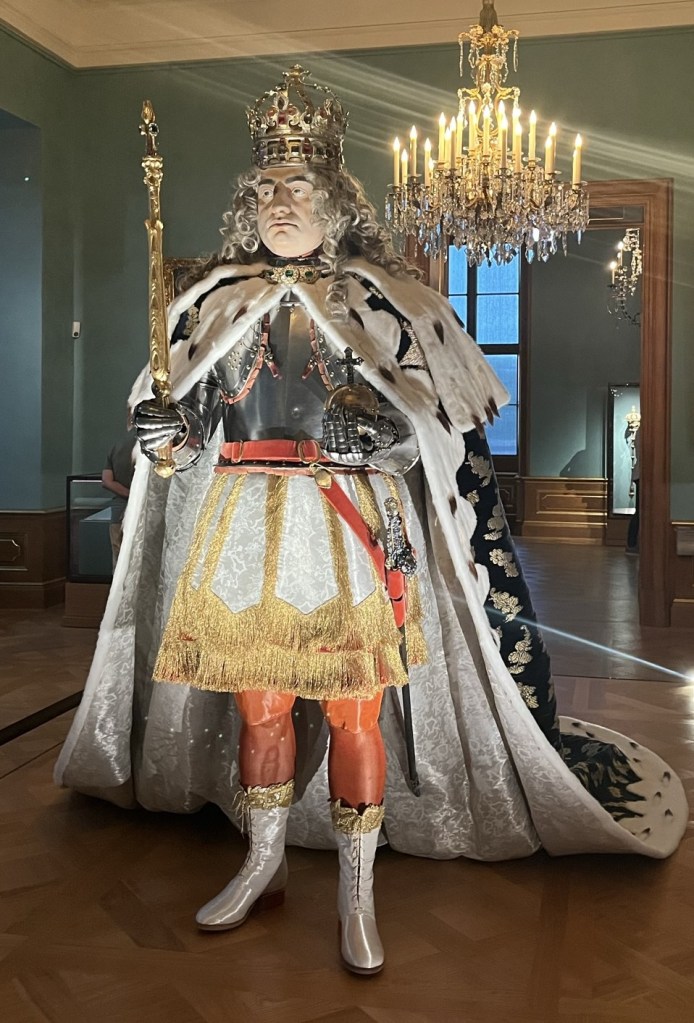
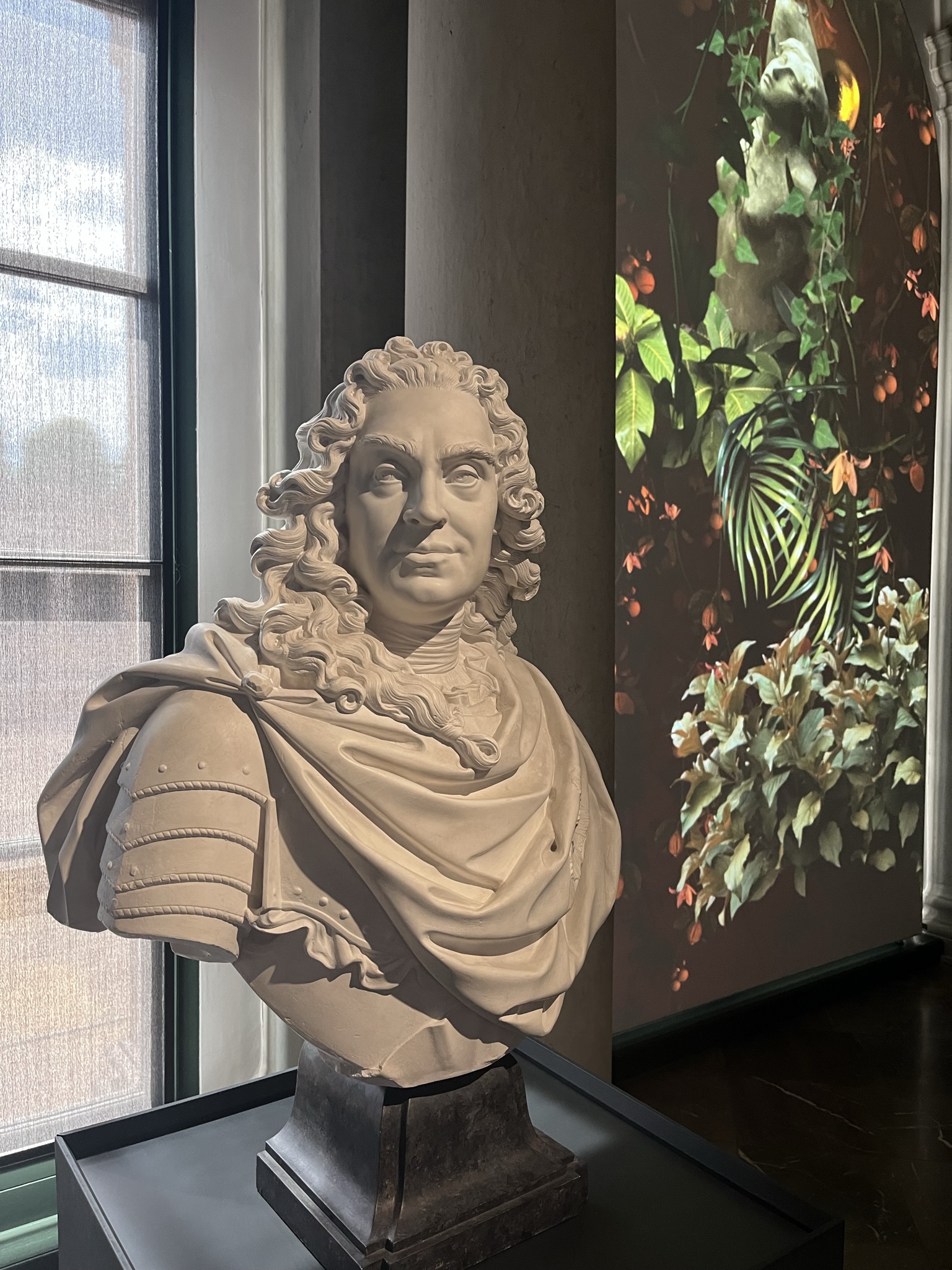
In 1730, Augustus the Strong, a stollen lover, commissioned a group of 100 Dresden bakers to bake an almost 4,000-pound loaf, which was brought to the king’s table using eight horses. A giant oven was built especially for this occasion, and an oversized knife was designed specifically for the event. This is the basis for the annual Dresdner Stollenfest (or “Striezelmarkt”), which takes place in Dresden the Saturday before the second Sunday in Advent. The festival is a highlight of the pre-Christmas season and celebrates the stollen baking tradition, featuring a colorful parade and the sale of varieties of stollen.

A huge stollen is still made annually and divided into smaller pieces on a specially shaped stollen cutting board—using a 26-pound replica of the original baroque knife from the Residenzschloss (Royal Palace) Court Silver Collection of Augustus the Strong—with cake portions sold to raise money for charity. The Stollenfest knife design features a swooping stainless-steel blade and Augustus the Strong’s coat of arms and rose tendril.

Left: A Dresden bakery displays its stollen seal. Right: This life-sized figure of Augustus the Strong is displayed in the Dresden Residenzschloss.

Stollen has its own protected name and registered trademark, and the recipe needs to follow certain guidelines to earn the golden, oval “stollen seal.” The cake only passes the test for high quality and validity if it contains no margarine and no artificial flavors or preservatives. The Dresdner Stollen Association requires that each cake contain butter, rum-soaked raisins, candied orange peels and lemon peels, and sweet and bitter almonds to receive the seal. Outside of these requirements, the approximately 110 Dresden bakeries that produce this sweet each use their own secret spice mixture, passed down through generations, which results in varied and distinctive flavors from bakery to bakery. Each stollen is labeled with a 6-digit seal number, to identify and track the bakery of origin. Also identifiable by the European Union-protected geographical indication, true Dresdner Christstollen is marked with a blue and yellow Geschϋtzte Geografische Angabe (“protected geographical indication”) sticker. Dresdner Christstollen can only be produced within Dresden itself or within specific boundaries surrounding the capital. This cake is best enjoyed by removing slices from the middle and pushing together the ends, eating the cake from the center outward. It is seen as traditional Dresden “finger food,” with no need to use a fork.

Eierschecke
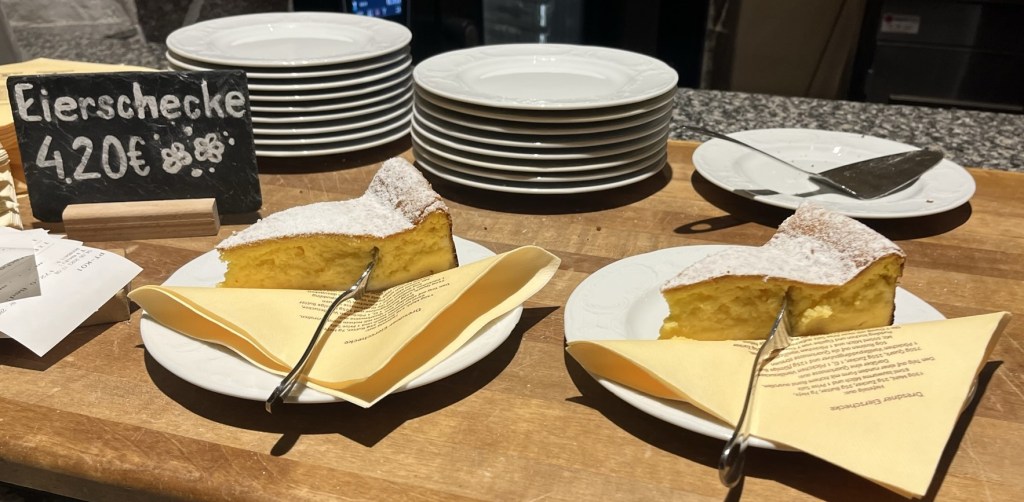
For something slightly sweeter, the Dresdner Eierschecke is a popular pastry choice. It’s a 3-layer confection consisting of a cake base topped with a custard-like quark cheesecake center, and a layer of sweet vanilla egg white on top, dusted with powdered sugar. Only found in Saxony and neighboring regions, this treat is often served with coffee or tea, and makes its way into celebratory menus for birthdays, weddings, and holidays. Some bakeries add chocolate, dried fruit, and sliced nuts, but the original recipe is simply the three-layered stack of varied texture.

Eierschecke and other traditional Saxon specialties are served at the Pulverturm.

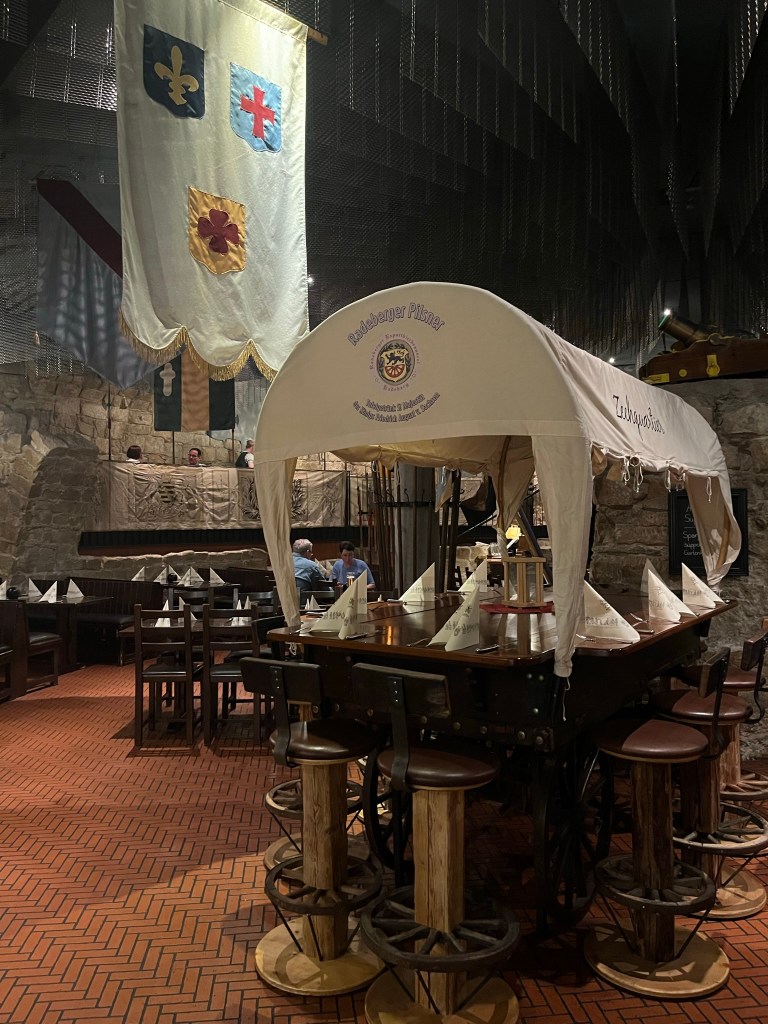
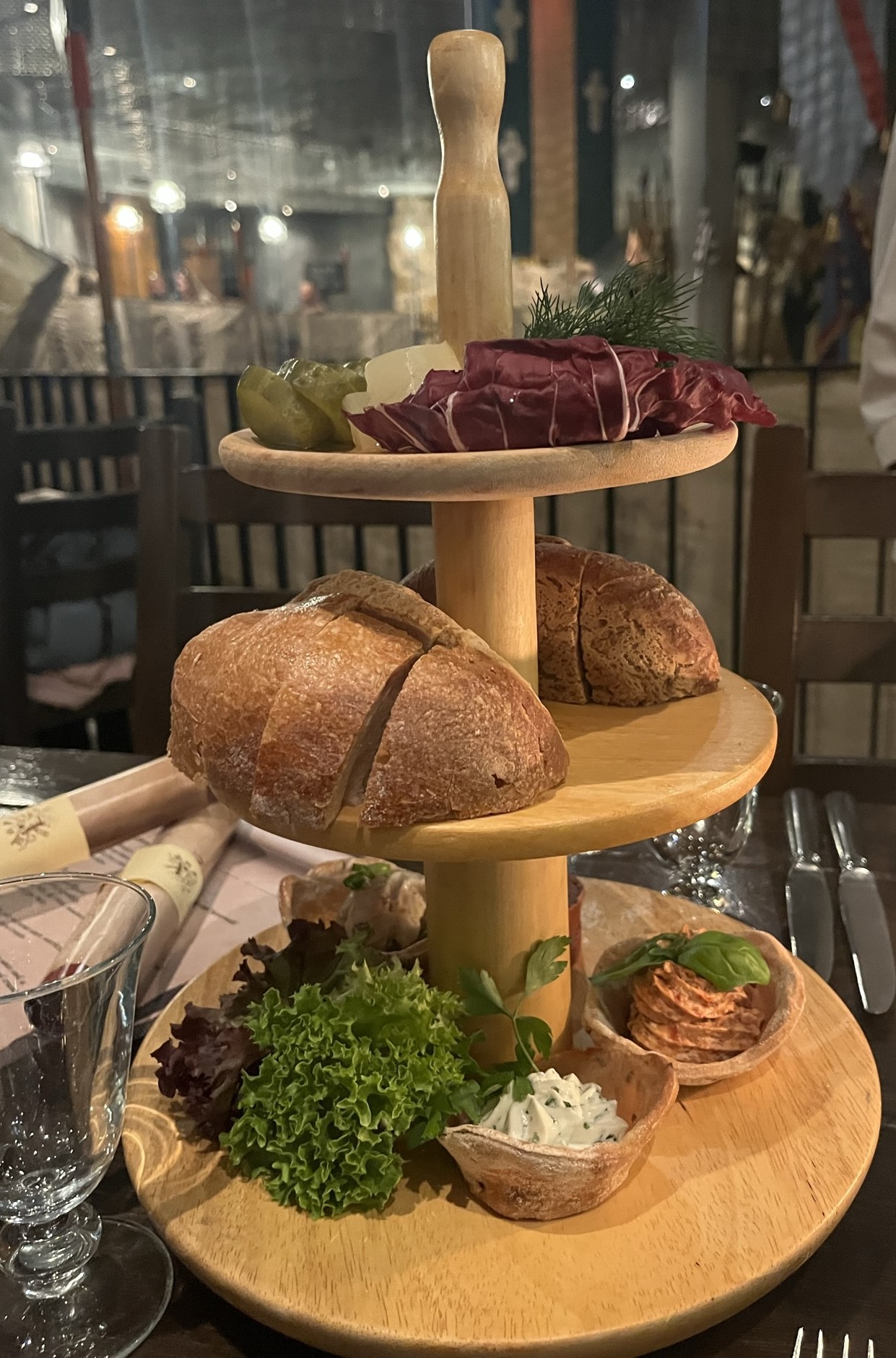
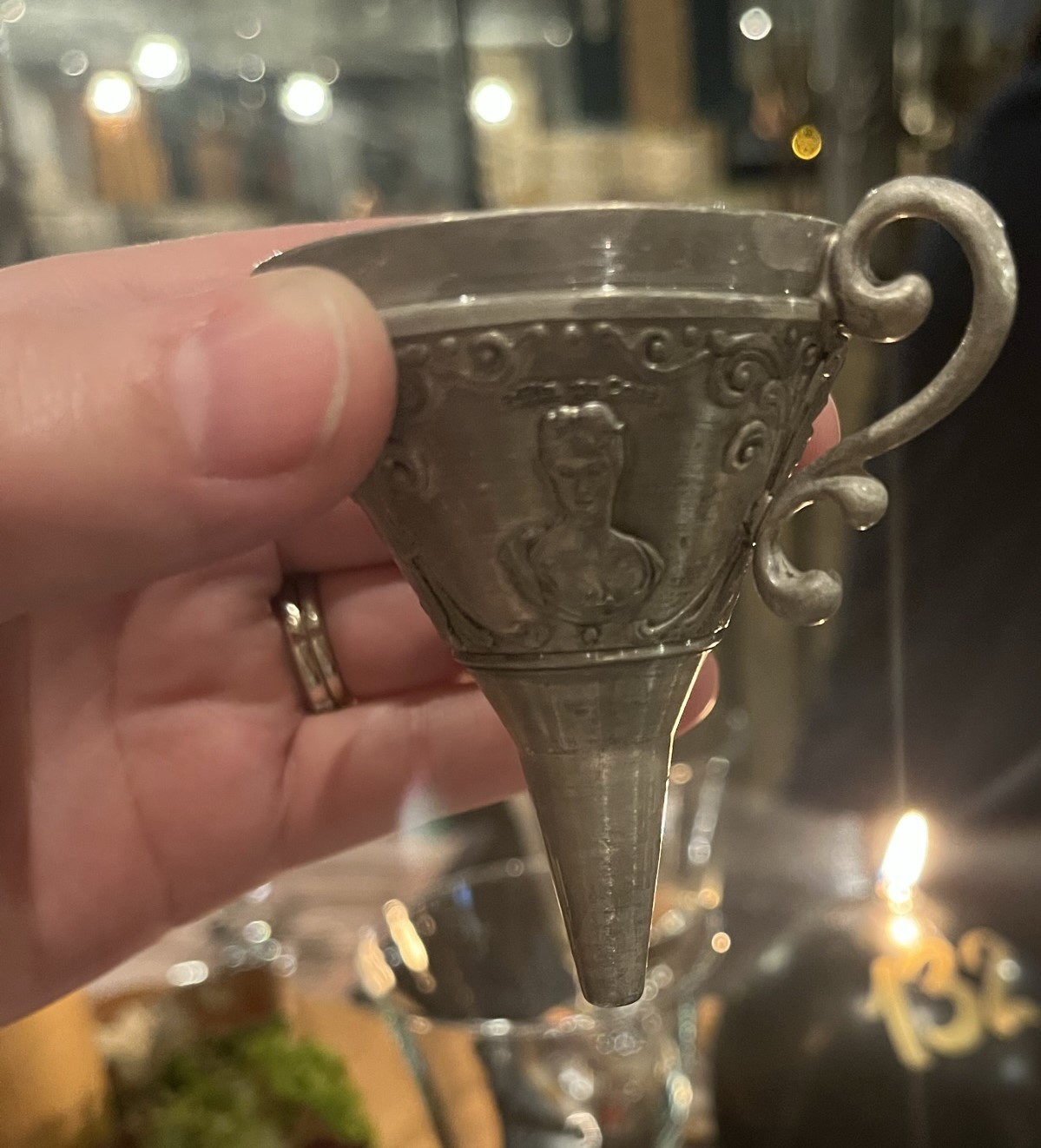
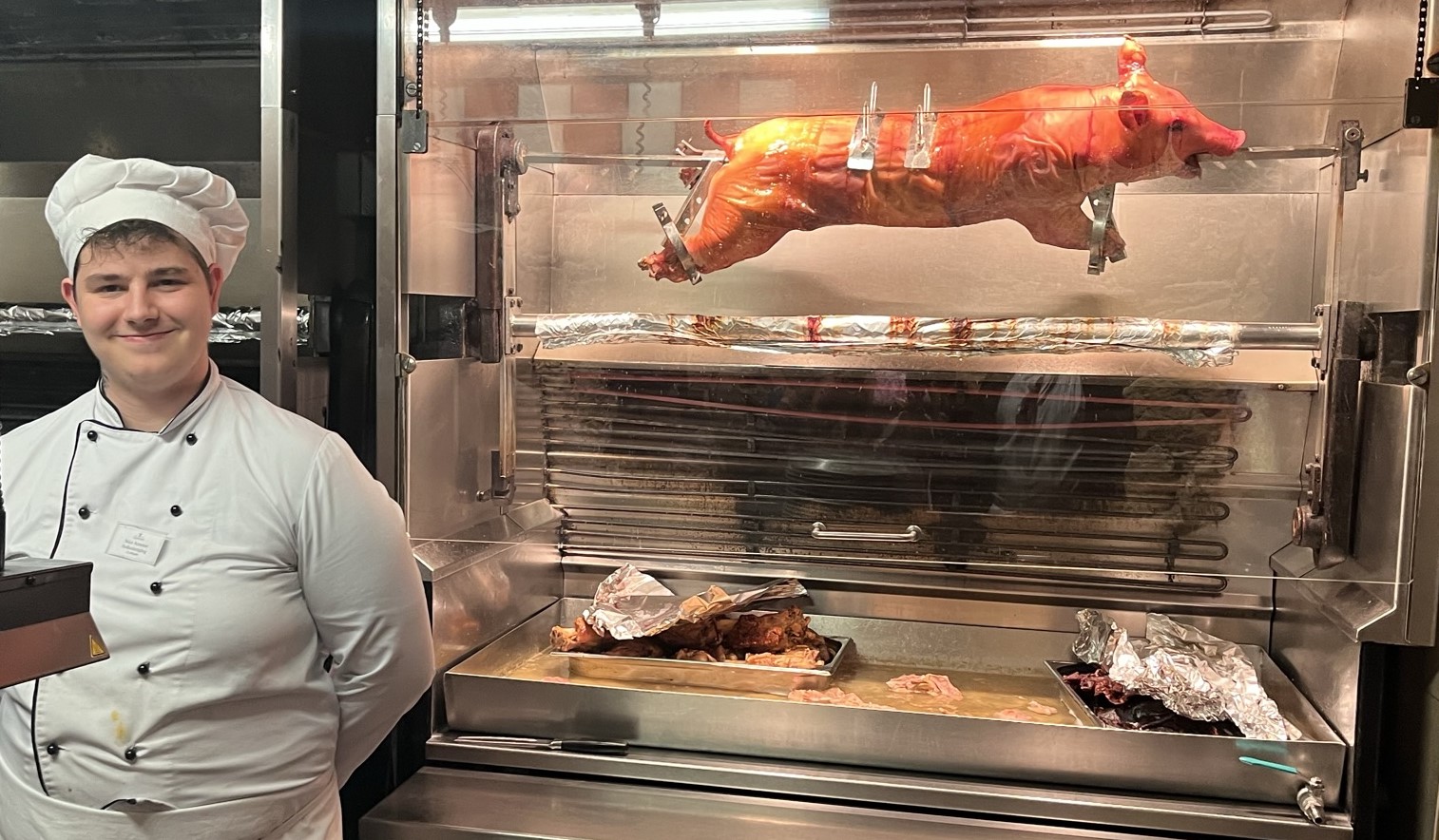
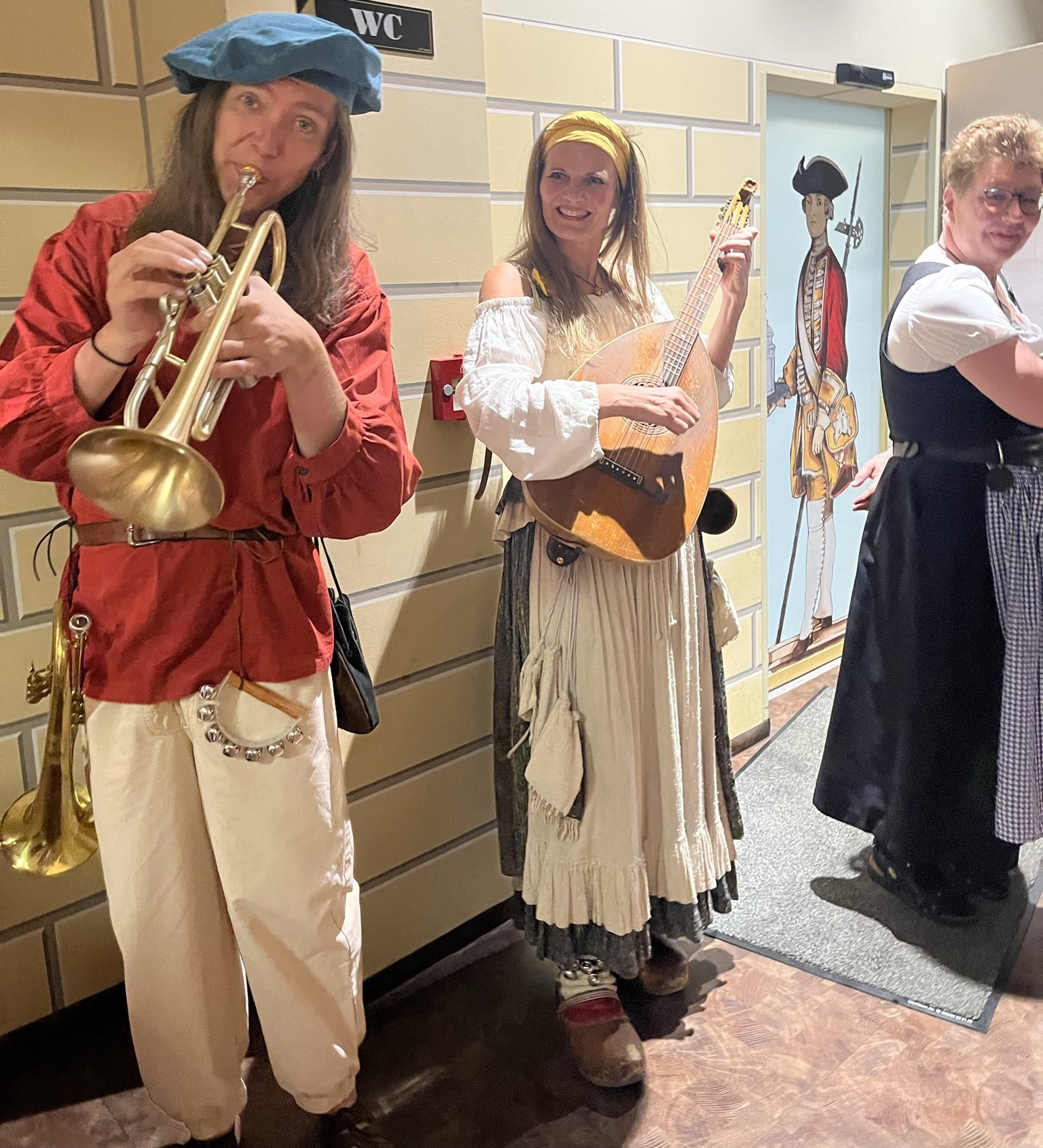
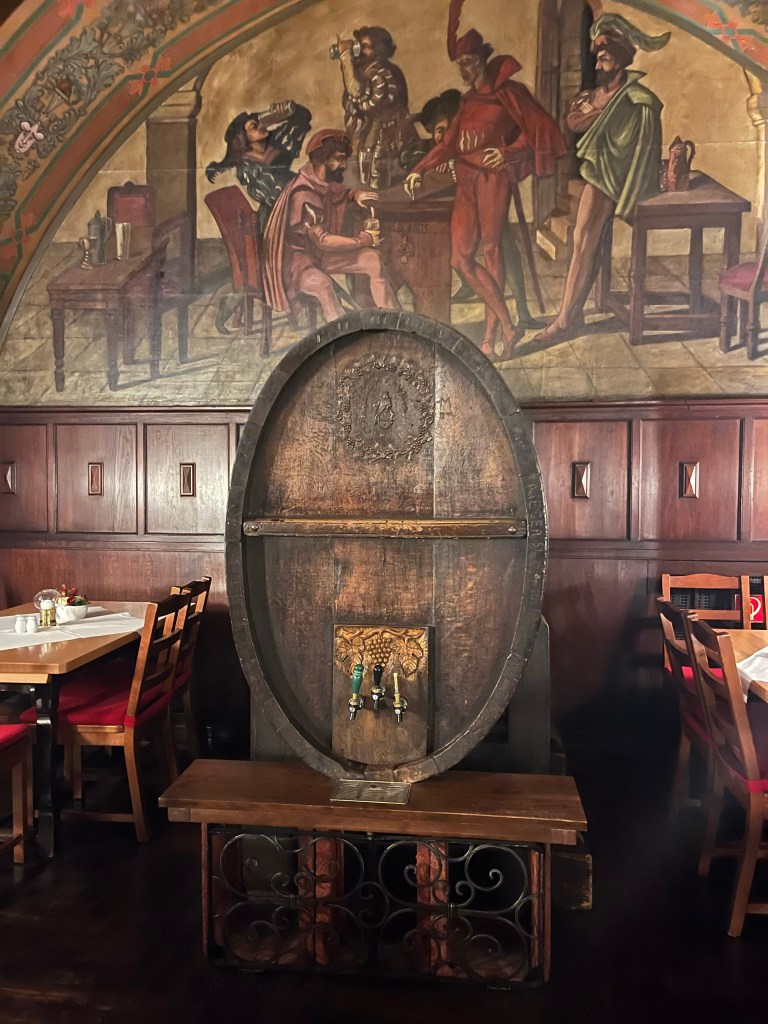
Eierschecke is on the dessert menu at the Pulverturm restaurant next to the Frauenkirche. A historic vaulted powder tower containing portions of the original walls, Pulverturm delights guests with Saxon specialties, homecooked suckling pig, and rousing tableside performances by lively, costumed, character musicians. Be sure to try your hand at funnel-drinking here—a practice that stems from Augustus the Strong’s love of Saxon wines but his court’s dislike for washing numerous wine glasses. The court created a special funnel fit to Augustus’ mouth measurements, so servants could pour the wine directly through the funnel into his open mouth. At the Pulverturm, a variation on this method involves drinking herbed liquor from tiny funnels. Named “Cosel’s Tears,” the drink’s herbs were said to grow from the tears of Augustus’ former mistress, the Countess of Cosel, whom he banished to Stolpen Castle for more than 40 years because of her interfering interest in politics. After a satisfying Saxon meal, have a sugar-dusted slice of Eierschecke and cup of espresso to complete the full Pulverturm experience.

Pulverturm restaurant in Dresden is a full-service, medieval-themed entertainment and dining experience.

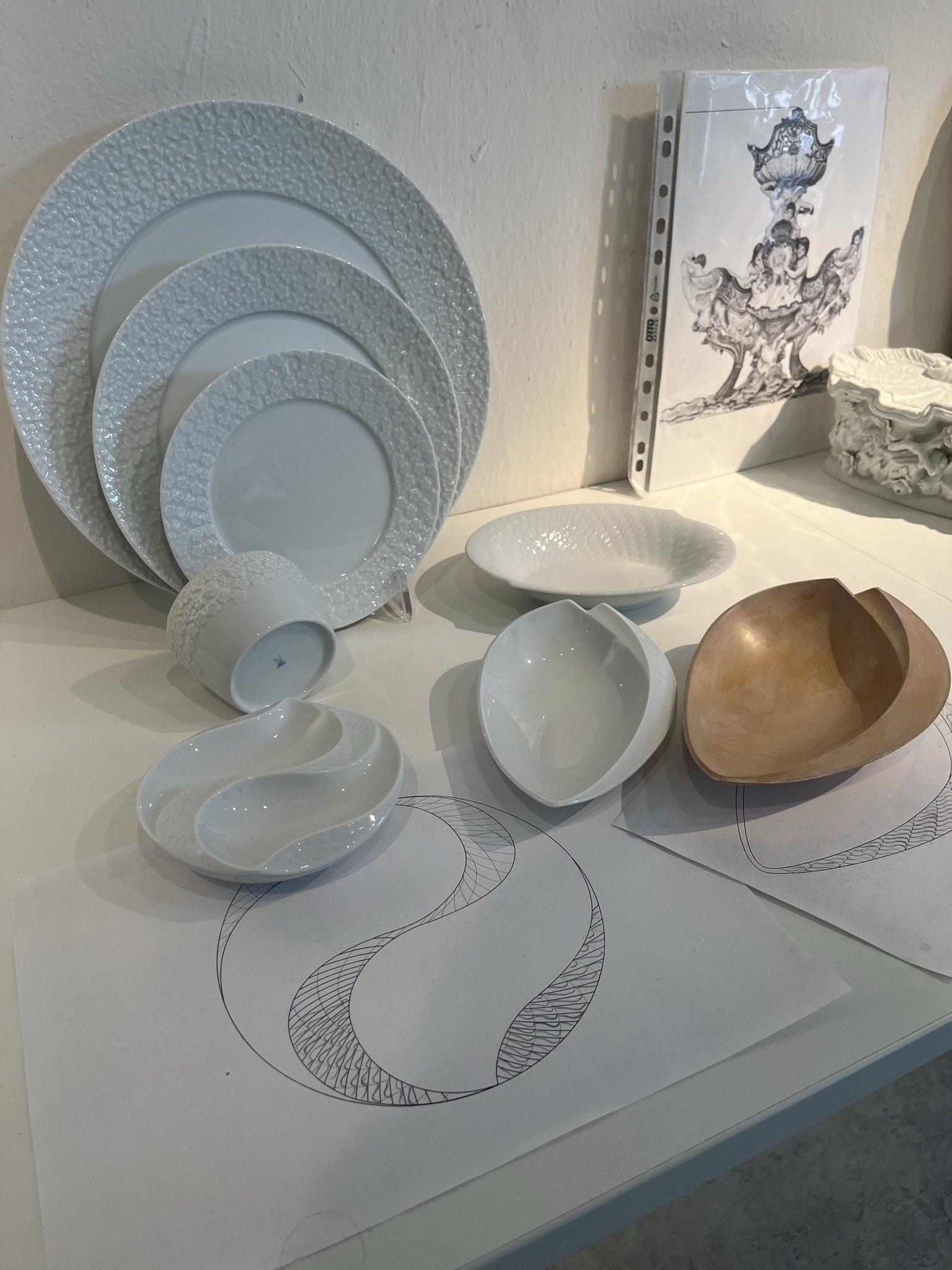
To make your own Eierschecke, try the recipe provided by Meissen porcelain manufactory underglaze painter Marlies Moser in the cookbook Cooking With Meissen. A 30-minute drive from Dresden, the Meissen manufactory creates fine porcelain vessels on which to serve tempting treats. At this company that labels its pieces with the forgery-proof “Crossed Swords” trademark, Moser worked for 40 years in production, painting underglaze onto unfired, porous porcelain—a skill that requires much training, a high level of precision, and years of experience—because the paint immediately penetrates and spreads, making later touchups impossible. The work of an underglaze painter is especially important for iconic Meissen designs like the 1731-created “Blue Onion,” whose luminous, metal oxide cobalt blue color only releases upon final firing. Moser now works in the demonstration workshop at the House of Meissen, and contributed her “Leutewitz Eierschecke” recipe for the company cookbook. Imagine a piece of this cake presented on a beautiful artisan-decorated Meissen porcelain dish!

The Meissen company cookbook features 24 recipes from appetizers to desserts. Saxon potato soup, Saxon meatballs, beef sauerbraten, quark dumplings with plum compote, and an inverted apple tart are among the list, and each submission includes a biography of the Meissen employee who contributed it. This beautiful, full-color hardbound book shows the food plated on fine porcelain tableware and includes sections about dining etiquette and the history of the craft.

Meissner Fummel
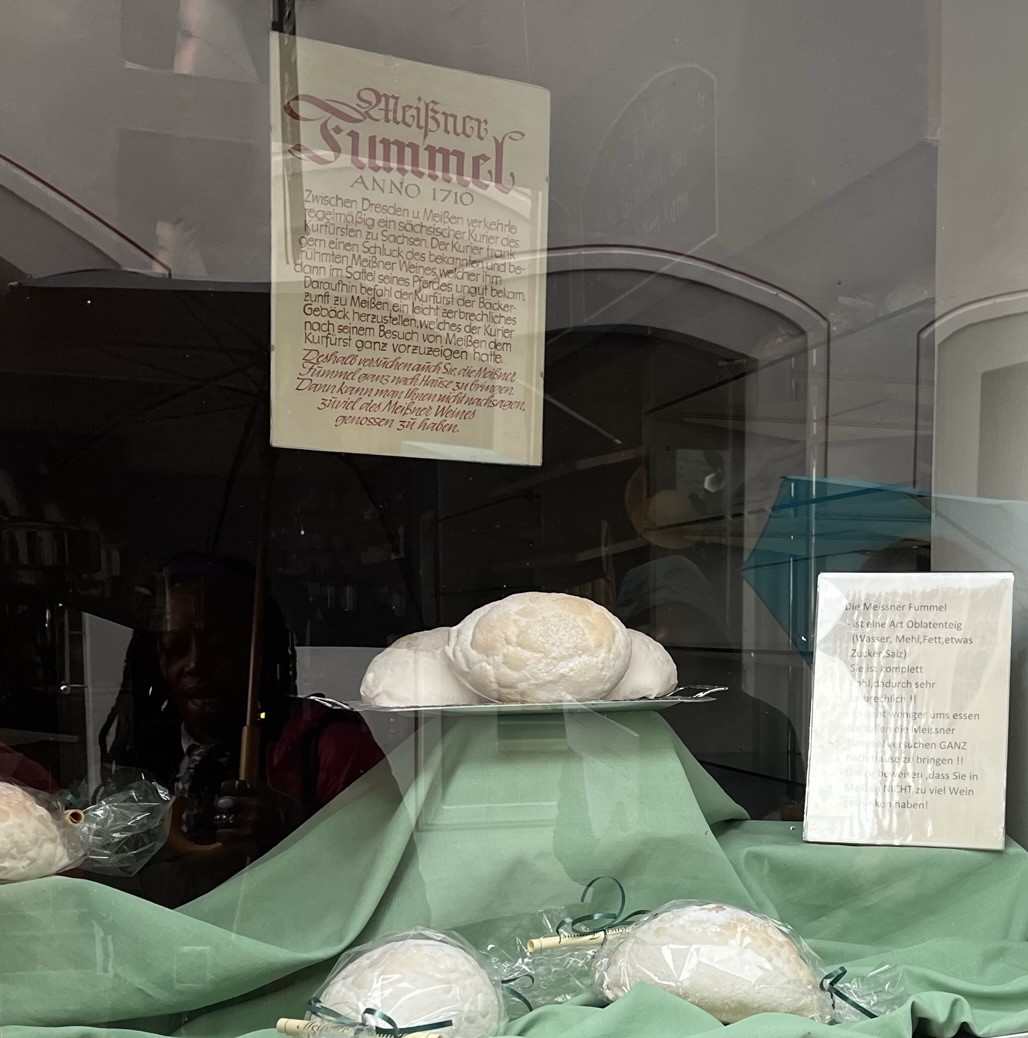
Eighteenth century legend tells that Augustus the Strong, who first commissioned the now-famous Meissen porcelain, used to send couriers back and forth between Meissen and Dresden with factory status updates. The town of Meissen is known for its excellent wine production (try the romantic, antique-filled Vincenz Richter wine restaurant!) and the couriers would often arrive back at the Dresden court intoxicated. Augustus’ solution was to instruct Meissen bakers to invent a pastry so fragile that it could remain intact only if delivered by a sober courier. The result was the hollow, brittle, extremely delicate Meissner Fummel cake, which had to be safely delivered to the Saxon Elector along with the progress reports about the porcelain. Made only with simple ingredients, Fummel is essentially a shell of flaky bread sprinkled with powdered sugar. Zieger Konditerei in Meissen produces this balloon-like baked good, which has been a protected geographical indication since 2000 and can only be manufactured in Meissen. The Fummel is often given to newly married couples in Meissen as a symbol of love’s fragility, and small gifts or cards are sometimes tucked into the center.

Left: A bust of Augustus the Strong appears in the interactive Zwinger Xperience, a multi-media immersion into the story of the baroque Zwinger building and festival area commissioned by Augustus. Right: This street window in Meissen displays loaves of Fummel along with a poster telling the humorous German story of why the bread recipe was initially invented.

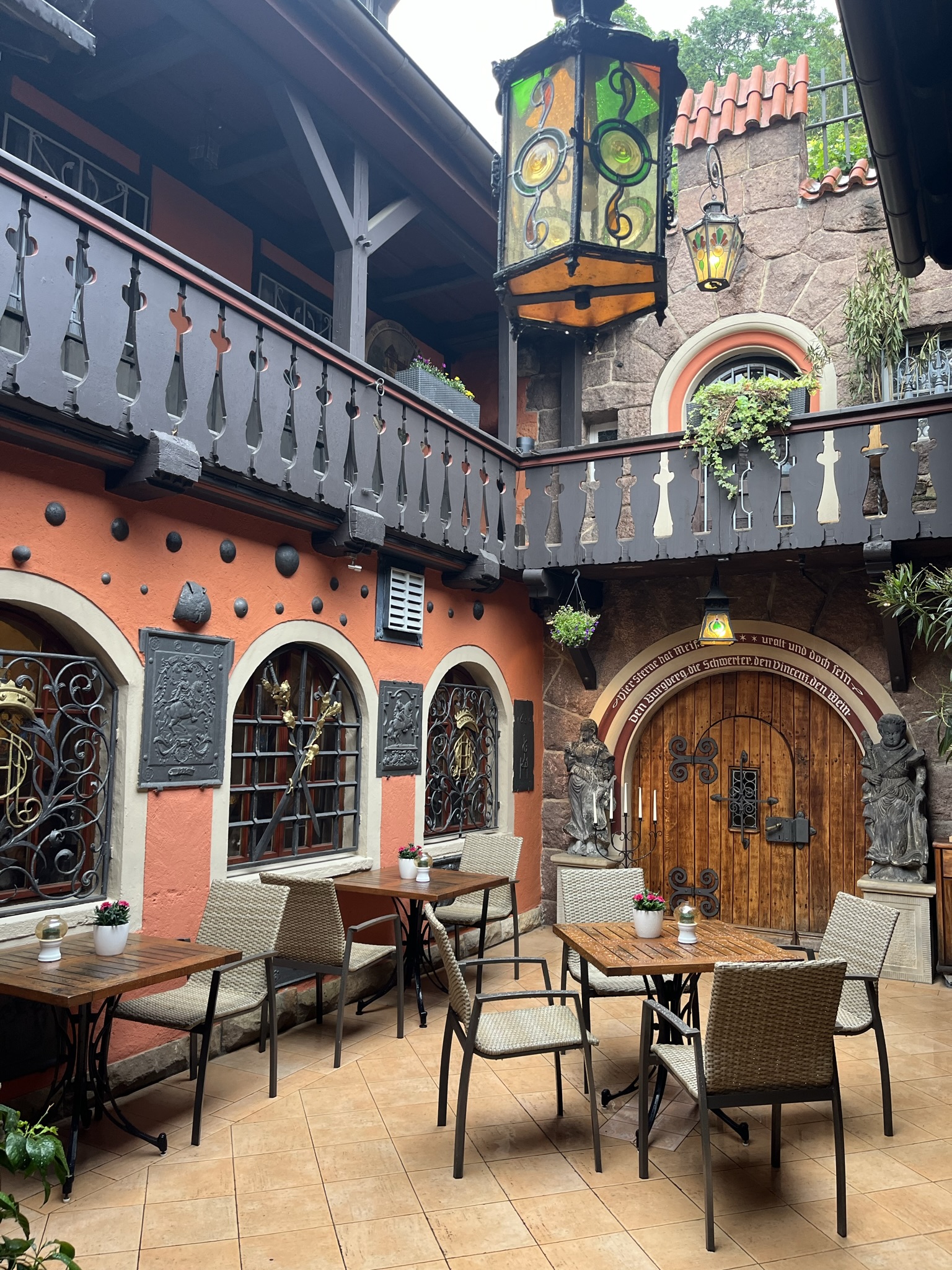
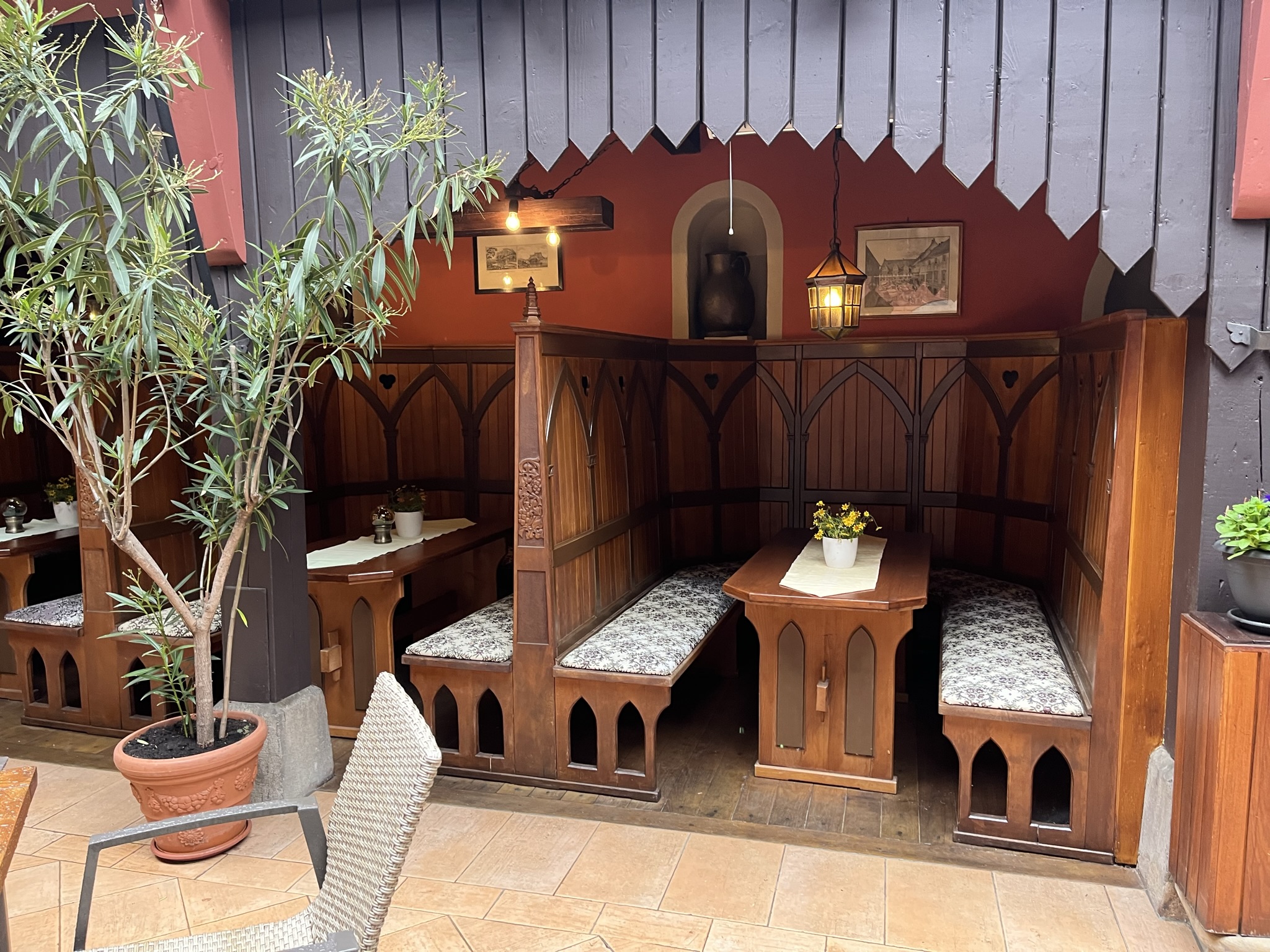
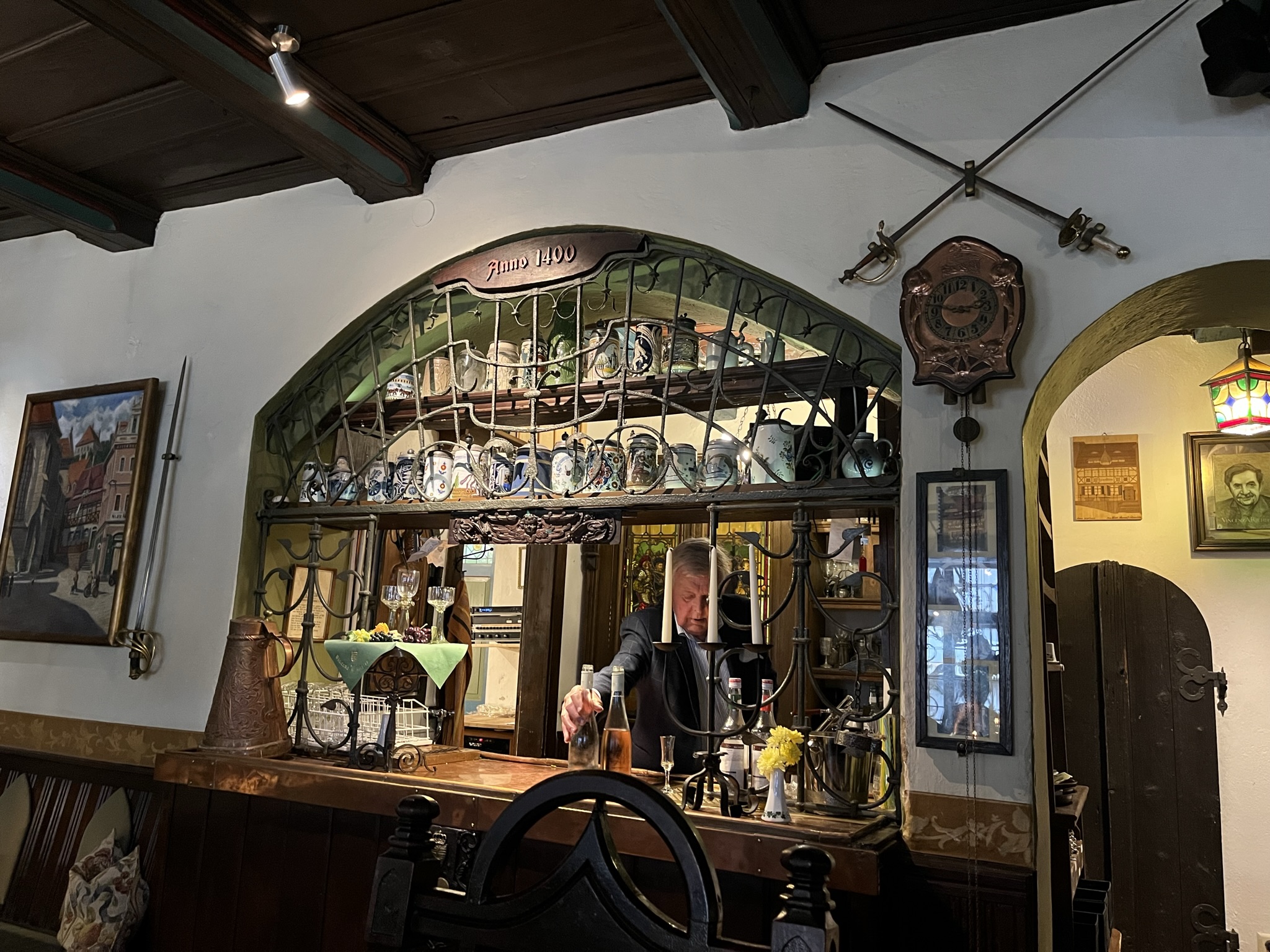
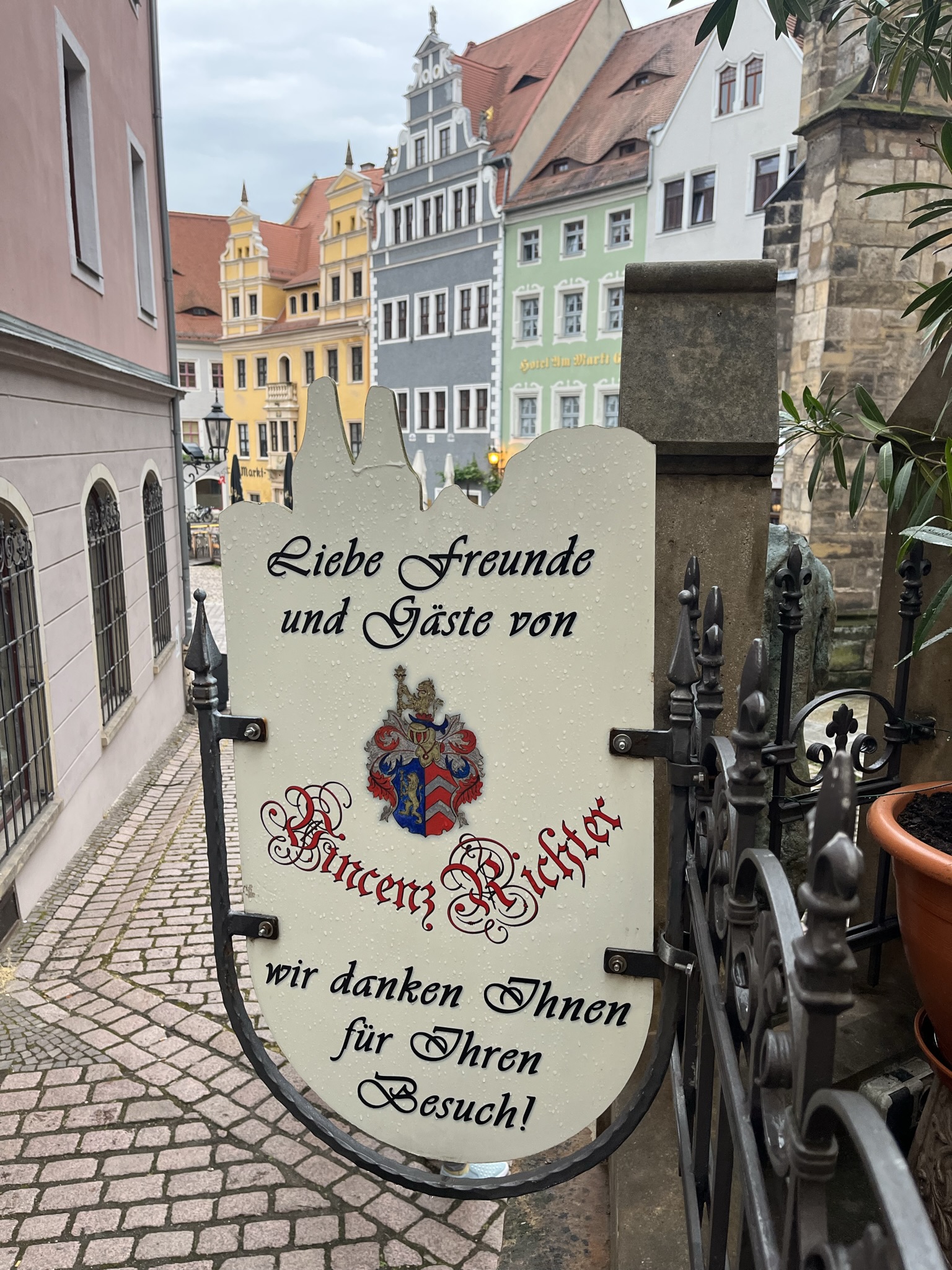
You’ll be sure to fumble that Fummel after a few glasses of wine here! Vincenz Richter wine restaurant in Meissen celebrates its 150th anniversary this year. The 500-year-old building that houses hundreds of antiques and historical items is known as one of Germany’s most romantic places. The family winery produces its delicious wine varietals on the steep slopes of Meissen’s Elbe River valley.

Leipziger Lerche
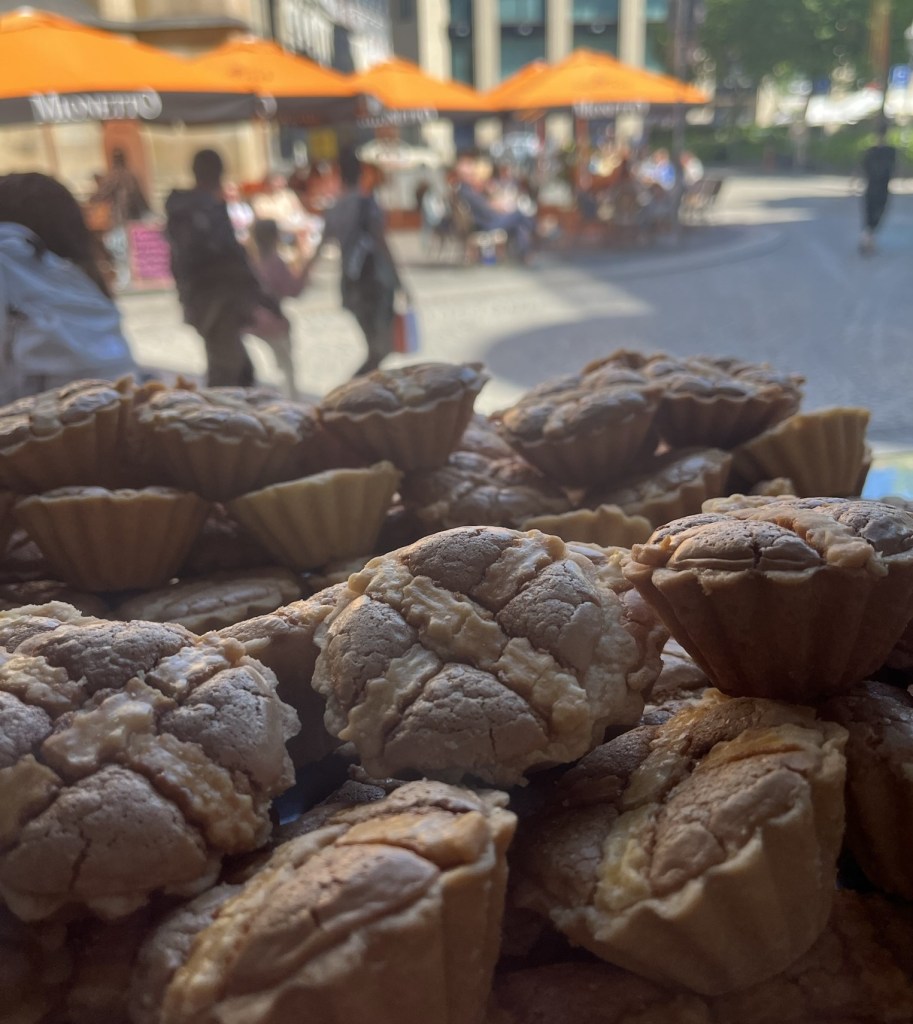
The Leipziger Lerche (“Leipzig Lark”) dessert was born as part of the animal protection movement in the 19th century. Songbird larks used to be hunted and baked with herbs and eggs into a pastry crust and then served as a hearty delicacy. This culinary luxury was enjoyed in Leipzig and beyond, and many bird carcasses were bound in twine and shipped from Saxony to various countries around the continent for others to cook. The bird-baking business boomed, and the bird population declined. In 1876, after overhunting and a severe storm had killed off many of these birds, King Albert of Saxony banned lark trapping. To combat the suffering of this Leipzig business, some clever confectionaries in Leipzig then created a marzipan-stuffed shortcrust tart as a substitute for the traditional meat quiche. Now served in a small, fluted muffin cup, like a miniature pie, this baked good features two strips of dough crossed over the top to represent the trussing used to tie up stuffed larks. Beneath the ground almond and egg white mixture of the tartlet, there is often a cherry or dollop of jam to symbolize the heart of the lark. Kandler Konditerei in Leipzig is a popular source for “Kandler Lerche” pastries of this style, baked fresh daily and as naturally and preservative-free as possible, with numerous packaged options sold for a sweet, Saxony-specific souvenir.

Save a songbird and let Kandler Konditerei tempt you with a Leipziger Lerche.

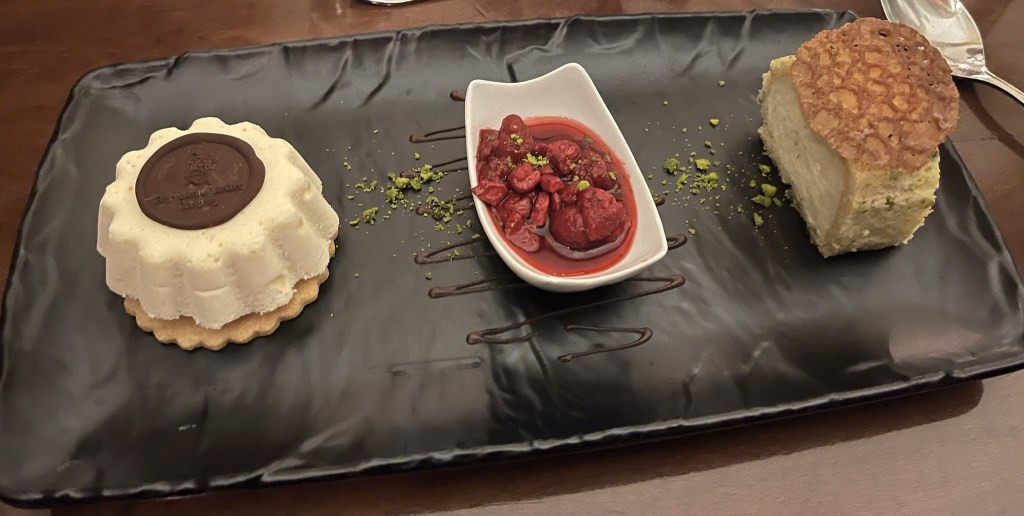
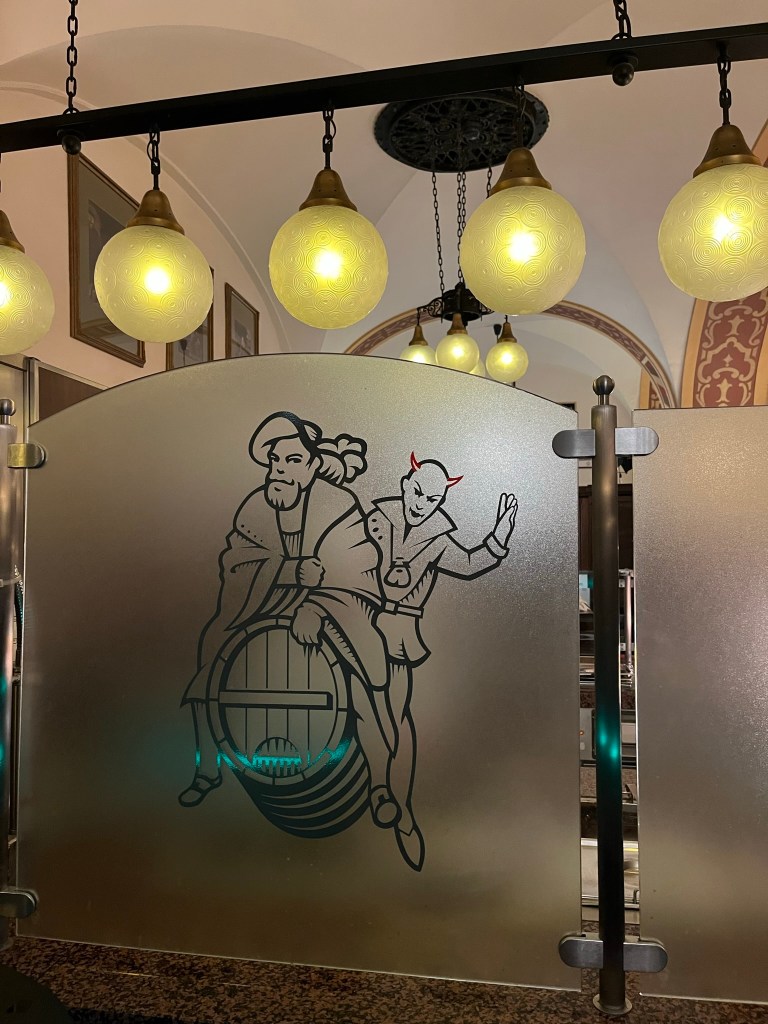
For a tasty variation of Leipziger Lerche, try the ice cream version served at Auerbachs Keller in Leipzig. This bundt-cake-shaped mound of ice cream is seated on a petaled crust and topped with a dark chocolate medallion stamped with “Auerbachs Keller Leipzig” and an image of Dr. Faust riding astride a wine barrel. Goethe and Martin Luther were regular guests of Auerbachs Keller, and it’s a treat to dine in the historic basement rooms of the Mädler Passage where they sat and to eat traditional Saxonian cuisine, including this new take on a famous regional dessert.

Auerbachs Keller Leipzig serves a special iced Leipziger Lerche with curd-cheese-lime-mousse and raspberry sauce.

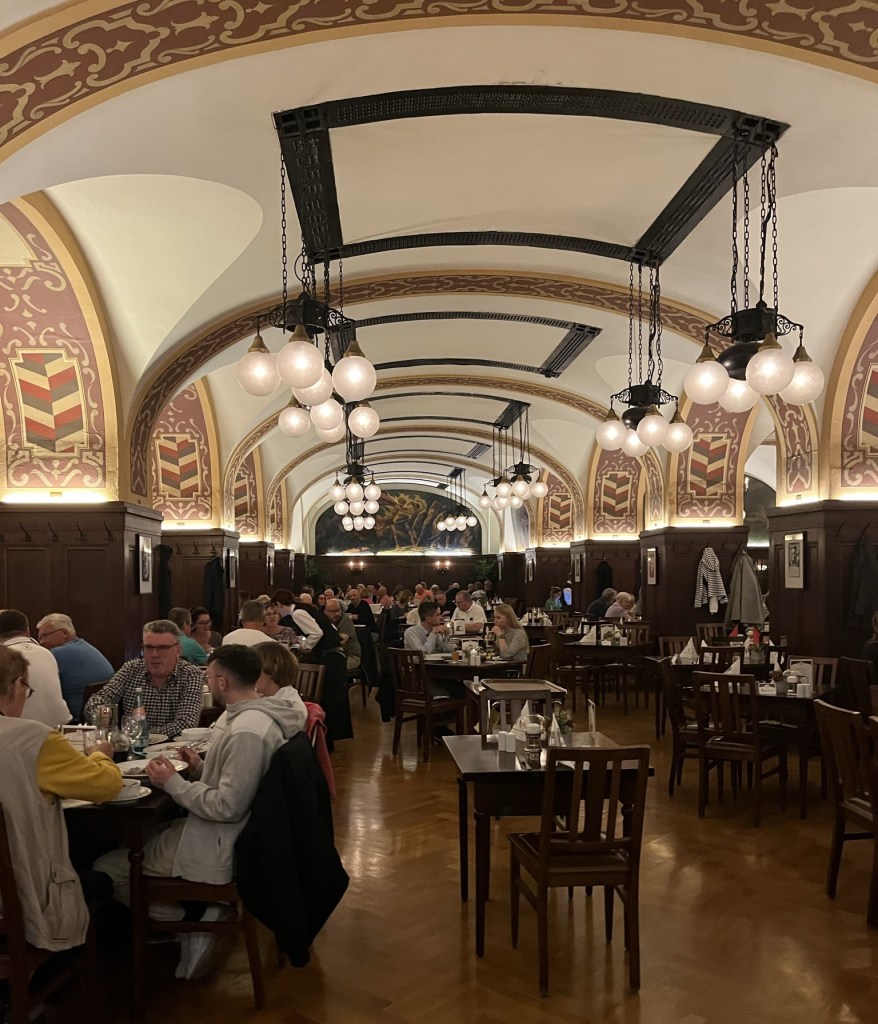
Auerbachs Keller in the Mädler Passage is the most famous and second oldest restaurant in Leipzig, and was one of the most popular places for wine in the 16th century.

Visiting Saxony?
Take an audio guided tour through the Meissen Manufactory and visit the Meissen Porcelain Foundation Museum. Enjoy coffee and delicacies at the Café & Restaurant Meissen, where your snacks are served on fine porcelain and you can sample the specially created Meissen cake featuring the crossed swords trademark. Register for a porcelain casting class or creative workshop and make your own Meissen masterpiece—available for adults and kids alike—or personalize a Meissen coffee mug and have your unique creation safely shipped directly to your home. Sign up your kids for an etiquette class to learn the art of fine dining or join a themed specialty meal (brunch with organ recital, Advent dinner, Christmas dinner, or Ladies Crime Night dinner). The one-hour “Women at Meissen” social history class highlights the significant role women have played in the manufactory’s workforce since the 18th century. The “Tea, Coffee, and Chocolate” event is offered once a month and teaches participants about the three “pleasure drinks” that were popular luxury goods during the Baroque period and how Meissen porcelain played a role in providing many varieties of elegant drinkware.

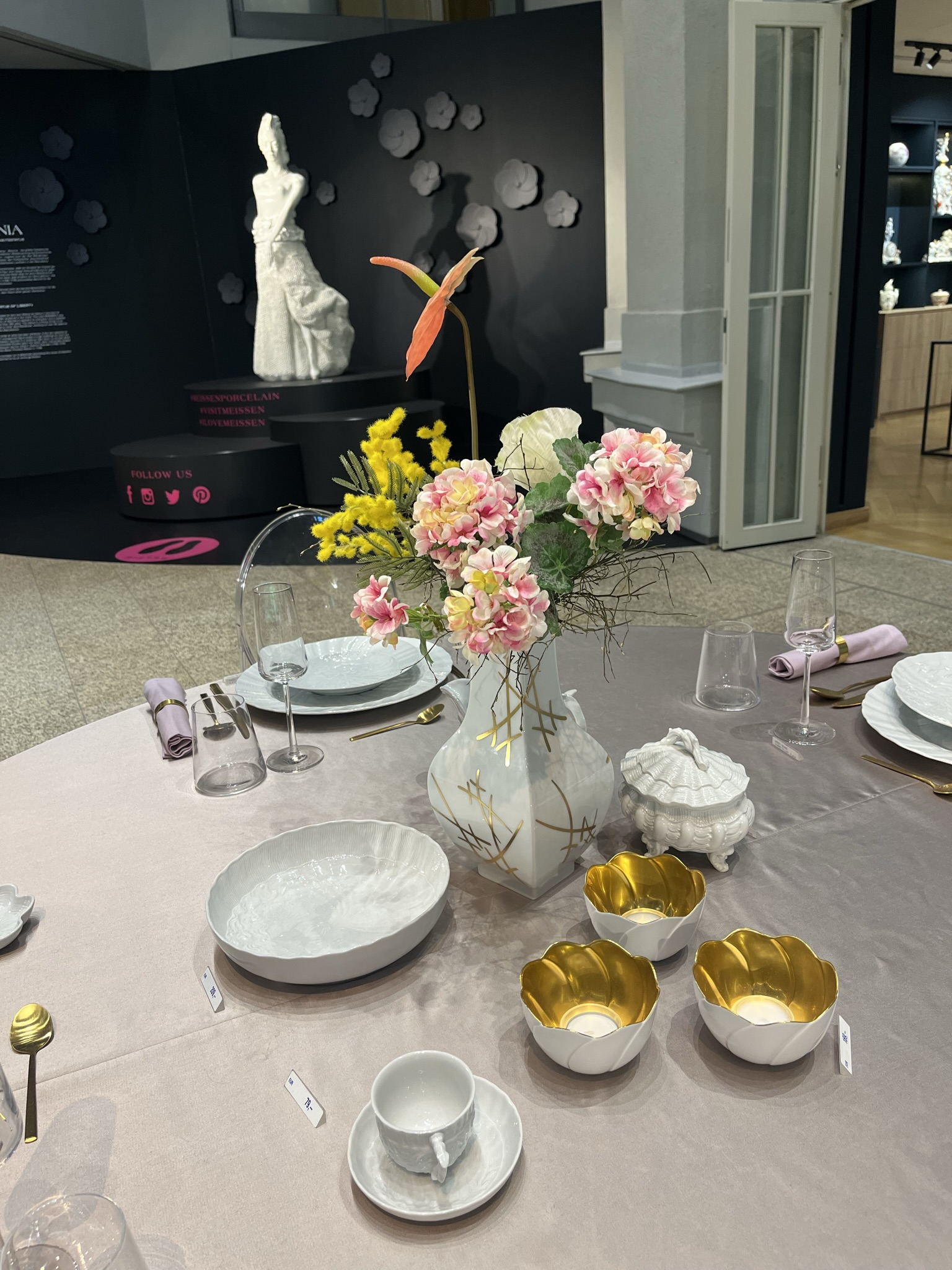
Meissen porcelain tableware makes every cake look better. Sweets and special place settings are a suggested Saxony souvenir.

Chill Out With Cool Summer Soups

Photos courtesy World Soups

By Sharon Hudgins

Now that global warming seems to be raising temperatures in Europe, you can beat the heat on your next summer trip by eating cold soup. That’s right. If the thought of eating a chilled soup leaves you cold, think again. Chilled soups have been popular in Europe for centuries, from Scandinavia in the north to Spain in the south. Why not try them yourself?

Some of these soups are made with fruits and berries, often combined with milk products. Others are based on vegetables and meat stocks, sometimes spiked with wine. They can be cooked or uncooked, thick or thin, smooth or chunky, sweet or savory, plain or garnished.

Most cold soups are eaten at the start of a meal, but in elaborate dinners they are sometimes served as palate cleansers between courses. In various parts of Europe, chilled soups are also eaten for breakfast, for snacks, as a main dish of a light meal and even for dessert. Some cold soups are considered solely summer fare, whereas others are served year round.

The next time you travel in Europe, look for these classic chilled soups, some of which are regional or national specialties.

SCANDINAVIA
The Scandinavians have a large repertoire of colorful cold soups made from fruits and berries (fresh or dried, bottled or frozen). The bounty of summer’s harvest turns up in many Scandinavian soup bowls: apples, cherries, apricots, plums, peaches and pears; blueberries, cranberries, raspberries, lingonberries, strawberries, blackberries, gooseberries, currants and raisins; and even other ingredients such as rhubarb and rosehips. Often these are combined with buttermilk, soured milk, yoghurt or sour cream, with a little lemon juice, sugar and cinnamon added, too.

Uncooked cold soups of this type are made simply by mixing the fruits and berries with the liquid and other flavorings, which are mashed together or puréed in a blender or food processor (much like a fruit smoothie). Cooked cold soups start with heating the ingredients together, then thickening them with flour, potato starch, cornstarch, arrowroot, sago, tapioca, semolina, ground rice or beaten eggs, before the soup is chilled for serving. Often these cold soups are garnished with a dollop of whipped cream or with heavy cream poured over the top.

The Danes make a cold buttermilk soup, which can be cooked or uncooked, seasoned with sugar and lemon juice and thickened with eggs or ground rice. Sometimes this pale-colored soup is poured over crumbled oatcakes in a bowl, topped with whipped cream and served at the end of a meal.

Surely the most famous Danish cold soup is rødgrød—literally “red groats”—a kind of thin pudding made from red fruits and berries (cherries, red raspberries, strawberries, red currants) cooked together, lightly thickened, then served cold, garnished with milk or cream. Occasionally blueberries, blackberries and black currants are added, which give the mixture a deeper, darker color. Considered a “national dish” of Denmark, this chilled pudding-soup is actually very popular throughout the Nordic countries, where you’ll find it on the table for breakfast, served as a soup before the meat course of the day’s main meal, or eaten as a summer dessert.

GERMANY & AUSTRIA
Rote Grütze is the German version of this same dish. It’s considered a specialty from the northern part of Germany, particularly the region of Schleswig-Holstein (near Denmark), where it’s known as Rodgrütt. You’ll now find Rote Grütze served throughout Germany, especially in the summer, from hotel breakfast buffets to the dessert menus of fancy restaurants, from beer halls to local festivals—the ruby-red mélange is topped with vanilla sauce, whipped cream or vanilla ice cream.

In the German language, cold soups in general are called Kaltschalen (“cold bowls”). Germans and Austrians both enjoy a variety of cold fruit-and-berry soups, at the beginning or end of a meal, as much as their northern neighbors do. Germans also make a chilled beer soup with currants and grated pumpernickel bread, seasoned with lemon, sugar, cinnamon and cloves, and garnished with pumpernickel croutons or little airy egg-white dumplings; cold spiced red or white wine soup, adorned with crunchy almond macaroons; a refreshing buttermilk soup embellished with stewed fruit or whipped cream; and a pale-green sorrel soup containing dill, sour cream, diced cucumbers and chopped hard-boiled eggs, served with an ice cube in each bowl.

The Austrians have their own versions of cold wine soups, such as lemon soup with sugar, egg yolks and white wine, sprinkled with a dusting of ground cloves, and a rich beef consommé (clarified meat stock) spiked with dry white wine, with a thin slice of orange and some finely chopped parsley floating on top. Austrian cold tomato soup combines white wine with a purée of tomatoes and onions cooked in beef stock, spiced with garlic and paprika, and with finely chopped cucumbers stirred into the soup just before serving.

The Austrians also like lightly gelled cold consommés enhanced with chilled green grapes, diced ham and minced herbs (parsley, chives, chervil, tarragon). And the unusual Austrian Kalte Paradeissuppe (Cold Paradise Soup) consists of chilled cantaloupe, cucumber and melon balls in a shallow soup plate surrounded by a cold purée of tomatoes and sour cream with strips of cooked ham, decorated with chopped parsley and mint—a combination worthy of being labeled “Baroque.”

POLAND, UKRAINE & BELARUS
Cold soups are as prevalent in Eastern Europe as in the central and northern parts of the continent. Poland in particular has a rich heritage of chilled soups based on a variety of fruits, berries and vegetables mixed with meat stocks, dairy products and pickled or fermented foods that give a slightly sour taste to some of these soups.

Sweet soups include pear and buttermilk with cloves and lemon rind, as well as soups made of strawberries, gooseberries, blueberries, apples and plums, sometimes partnered with rhubarb, scented with cinnamon or vanilla and garnished with fried bread croutons or little puff-pastry pellets. The Poles also make Zupa Nic (Nothing Soup), a sweet, ice-cold, custardy concoction, with frothy egg-white dumplings, much like the French dessert, Oeufs à la Neige (Snow Eggs).

Polish cold savory soups are often based on cooked or raw vegetables mixed with a sour liquid. In addition to several cold versions of barszcz (borshch) made with red beets and garnished with sour cream, the Poles make beet and buttermilk soup poured over hard-boiled egg slices; buttermilk and pickle brine soup; cold cucumber soup with soured milk, dill pickles, and hard-boiled egg quarters; and a creamy green cold soup of soured milk and buttermilk with sorrel, dill pickles, green onions, parsley, chives, dill weed, garlic and hard-boiled eggs.

Borshch, served hot or cold, is the national dish of Ukraine, where you’ll find as many versions as cooks who prepare it. Usually based on beets, which give it a bright red color, borshch can also contain potatoes, onions, carrots, cabbage, peppers, cucumbers, radishes, dill, garlic, meat stock, buttermilk or sour cream, pickle brine or sauerkraut juice, hard-boiled eggs, chopped beef or ham and even crayfish or shrimp. You name it, and the Ukrainians are likely to throw it into the soup pot. And in the summer they’ll often serve it chilled.
Sweetened fruit soups are popular in Ukraine and Belarus, too. On hot summer days, a light meal in these countries might consist of a bowl of cold fruit soup or chilled borshch, accompanied by a fresh vegetable salad or a fruit compote.
HUNGARY & ROMANIA
Hungarians love cold fruit soups. You’ll find chilled cherry soup on many Hungarian restaurant menus—a pretty pink soup made with tart Morello cherries, flavored with red or white wine, sugar, cinnamon and lemon, with a dash of sour cream or a dollop of whipped cream as a final flourish. Cold raspberry and strawberry soups are also popular, as is the simple but elegant fruit soup composed of puréed peaches and peach seeds, sugar, sparkling wine and Hungarian Riesling wine. Hungarian chilled vegetable soups include beet soups similar to Slavic borshch and a creamy yellow squash soup seasoned with dill.

Romanian fruit and berry soups range from apple, apricot, cherry and plum, to gooseberry and red currant. Some are sweet and creamy, garnished with puffs of sweet meringue and sliced nuts. Others are slightly sour, from lemon juice or soured milk products, and some even contain chopped or slivered smoked meats. The Romanians also make a cold vegetable soup containing cucumbers, carrots, onions, celeriac, veal stock, sour cream and dill.

FRANCE
Surely the most famous “French” cold soup is Vichyssoise—the classic potato and leek cream soup—which was actually created in New York by a French chef, Louis Diat, in the early 20th century. But the French can claim plenty of cold soups on their home soil, from seafood bisques to Crème Cyrano Froid, a cold chicken soup thickened with eggs and seasoned with mustard, tarragon and cayenne pepper, along with pieces of finely diced chicken or ham, all lightened by whipped cream folded into the mixture.

Other cold and creamy French soups include such flavors as broccoli, asparagus, cucumber with tarragon or mint, tomato with garlic and dill, carrot with cayenne, pumpkin with ginger and nutmeg, and green pea with diced chicken or turkey. These are often served in a bowl placed on a bed of crushed ice to keep the soup chilled while you eat.

In summer the French have a penchant for chilled consommés with pieces of cooked meats or vegetables suspended in the slightly gelatinous stock. They also make a lovely cold sorrel soup seasoned with garlic and lemon juice, mixed with heavy cream, chopped hard-boiled eggs, and thin slices of cucumber, then poured over diced black bread for serving.

SPAIN
Gazpacho is the king of cold soups in Spain. A regional specialty from Andalucía, in southern Spain, gazpacho can now be found on tourist menus all over the country, especially in the summer. The most common kind of gazpacho is a reddish-colored purée of tomatoes, cucumbers, onions, bell peppers, white bread, garlic, olive oil and wine vinegar. Served at the beginning of a meal, this type of gazpacho is often garnished with fried croutons and diced raw onions, cucumbers and peppers.

Before tomatoes and peppers arrived in Spain from the Western hemisphere 500 years ago, Andalucían gazpacho was simple peasant fare, made with the cheapest ingredients—only bread, water, salt, garlic, olive oil and vinegar or lemon juice—mashed together in a wooden bowl and eaten as the midday meal by farm workers in the fields. Today you’ll find many kinds of gazpachos in Spain: red, white, green and yellow, thick or thin, containing a wide range of ingredients from fruits and nuts to eggs, fish, meat and milk.

Salmorejo is a version of red, tomato-based gazpacho from Córdoba, where chopped hard-boiled eggs, canned tuna and strips of Spanish serrano ham are added to the cold mélange. Córdoban cooks also concoct a chilled white gazpacho made with almonds and sometimes pine nuts. Granada and Málaga both claim ajo blanco, a smooth white garlic and almond gazpacho garnished with green grapes. And Spanish gazpachuelo frio is another chilled white soup, prepared from thick homemade mayonnaise whisked with plenty of ice water before chopped red tomatoes and black olives are stirred in.

SOUTHERN & SOUTHEASTERN EUROPE
Given the torrid summers in southern Europe, it’s surprising that Italy, Greece and parts of the Balkans don’t have a tradition of many chilled soups in their regional or national cuisines. The Italians do have a minestrone freddo alla milanese, a rice and vegetable soup from Milan, garnished with basil leaves and grated cheese. But even that soup is eaten only at room temperature, not chilled.

Greeks cool off with tzatziki soupa, cold cucumber and yoghurt soup blended with lemon juice, olive oil, garlic and fresh mint. And around Thessaloniki, Greeks eat a sweet cherry soup made with dry white wine, heavy cream, cherry liqueur and cinnamon—much like the fruit soups favored in many northern European countries.

Tarator is a classic Bulgarian cold cucumber-and-yoghurt soup, very similar to the version eaten in Greece. But Bulgarian tarator is enriched with a paste of pounded walnuts, garlic, salt and olive oil swirled into it, often with chopped walnuts or dill sprinkled over the top. Bulgarians make other chilled soups from yoghurt combined with zucchini, sorrel, mushrooms and fresh herbs (especially dill). Cold tomato soups can sometimes be found in the Balkans, too. And on Christmas Eve the Bulgarians even serve a cold soup made of sauerkraut and sauerkraut juice, chopped leeks, onions and paprika, accompanied by a bowl of grilled hot peppers!

Magnificent Marzipan

By Sharon Hudgins
Photos by the author

I’ve been in love marzipan ever since I first tasted it as a child. Back then, marzipan candy was a rare and expensive treat, often difficult to find in the United States. But when I later moved to Europe, I discovered a whole world of marzipan, enough to nourish my lifelong love affair with this seductive sweet.

I’ll admit it: I’ve never met a marzipan I didn’t like.

Marzipan is nothing more than a smooth paste of finely ground blanched sweet almonds mixed with sugar. Other ingredients are sometimes added, too, such as water, egg whites, sugar syrup, honey, almond extract, a small amount of bitter almonds, rosewater, orange blossom water and food colorings. But that description doesn’t do justice to the tantalizing taste of this tempting treat, nor to the many ways in which marzipan is used today by professional confectioners and home cooks.

On the grocery shelf, the difference between “almond paste” and “marzipan” is mainly the ratio of sugar to almonds, with marzipan containing more sugar. That ratio varies, depending on the individual producers and the various countries where this confection is made, some of which have laws regulating the proportion of each ingredient. The finest German marzipans contain two parts (or more) of ground almonds to one part of sugar. Others contain 50% almonds and 50% sugar. Danish Odense marzipan, the European brand marketed widely in the United States, has only 28% almonds. (Odense “Pure Almond Paste” contains 45% almonds.)

MARZIPAN MIGRATION
Culinary historians think that marzipan originally came to Europe from the Middle East, where almond trees and sugar cane have been grown since ancient times, and where there’s a long history of making sweets from almond paste. Even though the early Greeks and Phoenicians planted almond trees around the Mediterranean region, it was the Arabs who expanded the almond orchards, introduced sugar cane cultivation, and began producing marzipan in the areas of southern Europe they conquered and colonized between the 8th and 11th centuries. After Arab power waned in those parts of the Mediterranean, during the 11th to 15th centuries, the secrets of marzipan-making were preserved by nuns in Catholic convents, who produced these sinful sweets for sale to support themselves. That’s why former Arab-ruled lands such as Spain, Sicily, and Malta still have strong marzipan traditions today.

Historians surmise that marzipan spread to northern Europe from Venice and the eastern Mediterranean during the time of the Christian Crusades, from the 11th through 13th centuries. Certainly by the Middle Ages marzipan was known in France, England, and Germany, although in many places it was considered a costly medicine, sold only in pharmacies. It soon became a favored confection of the upper classes, whose cooks molded marzipan into elaborate and fantastic shapes for use as showy centerpieces or edible finales to medieval feasts.

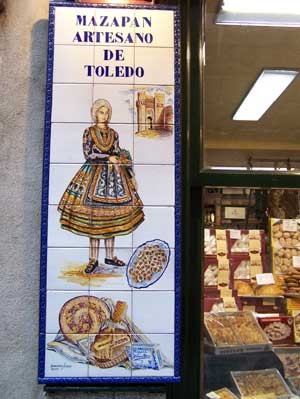
Sign for the Mazapan Artesano

MARZIPAN MANUFACTURE
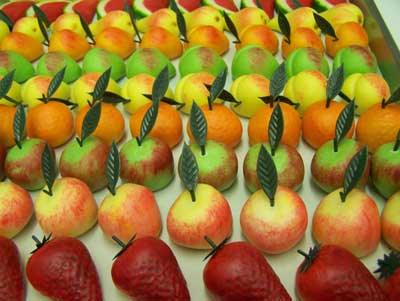
A traditional confection in Europe for several centuries, marzipan is made today by both artisan confectioners and big industrial plants. Centers of marzipan manufacture include Toledo, Spain; Palermo, Sicily; Budapest, Hungary; and Lübeck, Germany. Each has its own style of marzipan, with more or less sugar, baked or unbaked, and modeled into more shapes than you can imagine. At marzipan stores in Europe, I’ve seen this sweetened, colored almond paste formed into fruits, vegetables and flowers, from miniature to life-size; animals from penguins, polar bears and “good luck” pigs (for the New Year) to walruses, lions, hedgehogs and squirrels; Easter eggs and Easter rabbits; Santas and angels; fish and shellfish; lifelike sandwiches, cheeses and sausages; even modern marzipan cell phones and McDonald’s-like cardboard packets full of french fries.

Marzipan has other uses, too. Europeans fill chocolates with marzipan; wrap it around nuts, candied fruits and other sweet fillings; bake it inside cookies; and stuff dates, prunes, peaches and apples with it. They roll marzipan into thin sheets as a covering for fancy cakes and use it as ingredient in tortes and tartes, pies and pastries, sorbets and ice creams, even sweet dumplings, ravioli and roast pork. I once ate at a restaurant in Lübeck that featured “marzipan lasagna” for dessert, made with layers of white marzipan “pasta” and a red and green fondant filling.

MARZIPAN MUSEUMS
Several cities in Europe have marzipan museums, most of them attached to a confection company’s coffee shop, candy shop or factory store. The Niederegger Marzipan Salon, on the second floor of the Konditorei-Café Niederegger in Lübeck, Germany, has a display about the history of marzipan. But the actual shop on the ground floor is even more interesting, where you can buy more than 300 types of the company’s products, including whimsical edibles made out of marzipan and Niederegger’s irresistible Cuandolé marzipan liqueur.

Leu’s Marzipan-Land in Lübeck features a “Marzipan-Show” on Tuesdays, Wednesdays, and Thursdays. You’ll see all the stages in the manufacture of marzipan, as well as an unusual exhibition of large marzipan sculptures, before pigging out in the shop where you’ll be tempted to buy more marzipan than you should ever eat in one sitting.

Hungary boasts three marzipan museums, all owned by the Szabo confectionery company. My favorite is the Szabo Marzipan Museum in Szentendre, a pleasant (but now overly touristy) little artists’ village not far from Budapest. This small museum is chock full of displays of colored marzipan shaped into Disney characters, a Cinderella coach, a massive wedding cake, a cactus garden and even a detailed replica of the Hungarian parliament building. On the ground floor there’s a traditional confectionery kitchen where you can watch marzipan being made and a shop where you can buy goodies to go. Next door the Szabo café-and-pastry shop offers a wide variety of luscious Hungarian cakes, tortes, ice cream concoctions, marzipan candies, coffees and teas.

The smaller Szabo Marzipan Museum in Budapest features large marzipan sculptures of the Matthias Church, the Fishermen’s Bastion, and the Chain Bridge across the Danube (all local landmarks), a Chinese pagoda, several Harry Potter characters and other curiosities, some made from more than 100 pounds of marzipan. And there’s another Szabo Marzipan Museum in Pécs, also connected with one of their coffee-and-pastry shops.

In Sonseca, Spain, just south of historic Toledo, you can visit the interesting Delaviuda Marzipan Museum at the Delaviuda candy factory, which shows how Spain’s distinctive (and delicious) marzipan is made. And finally, Tallinn, the capital of Estonia, also has a couple of small marzipan museums in the Old Town. I just haven’t managed to eat my way that far north yet.

ADDRESSES AND WEBSITES:
Konditorei-Café Niederegger, Breit Strasse 89, Lübeck, Germany
www.niederegger.de/en/cafe_niederegger/marzipansalon/
marzipansalon.php

Leu’s Marzipan-Land, Drechlerstrasse 6, Lübeck, Germany
www.marzipanland.de/eng.html

Szabo Marzipan Museum, Hilton Budapest, Hungary
Szabo Marzipan Museum, Dumtsa Jeno St. 14, Szentendre, Hungary
Szabo Marzipan Museum, Apaca St. 1, Pécs, Hungary
www.szabomarcipan.hu/angol.html

Delaviuda Marzipan Museum, Calle Santa Maria 4, Sonseca, Spain www.delaviuda.com