Monastic and Modern: Central Spain’s Parador de Cuenca

Visitors to the Castilla-La Mancha region can absorb Spanish traditions at this strategically located monastery-turned-hotel

By Randy Mink

For soaking up the heritage and romance of Spain almost by osmosis, nothing beats staying overnight in one of the country’s government-owned paradors. Many of the parador network’s 90-plus hostelries occupy former castles, palaces, fortresses and other types of historic buildings. They’re a big hit with North Americans seeking out Old World flavor.

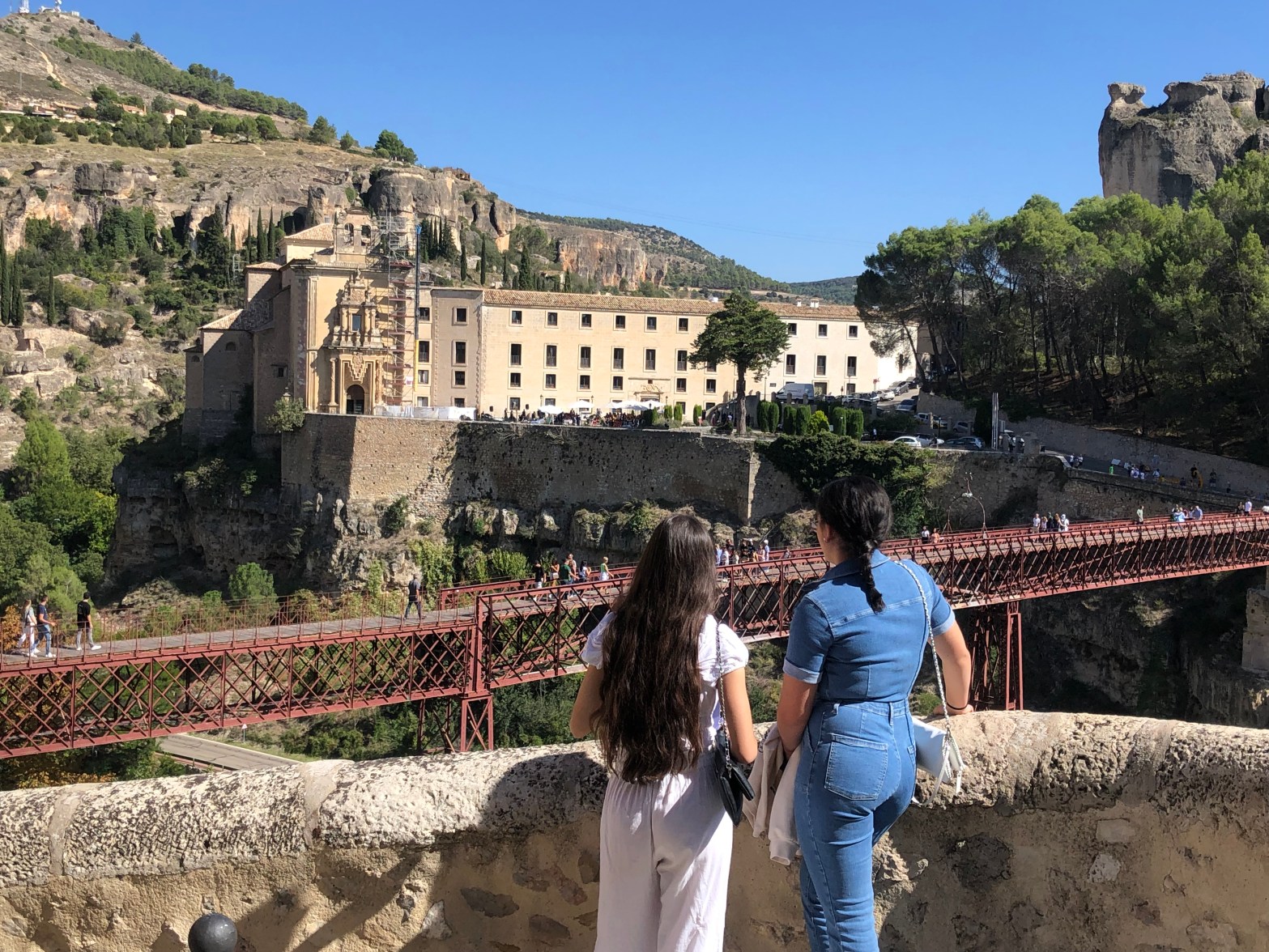
Both for its prime location and historical ambience, the 63-room Parador de Cuenca, once the monastery of San Pablo, makes an ideal home base in the enchanting city of Cuenca. Set on a rocky outcrop high above the Huécar River, the hotel affords postcard-perfect views of ancient buildings clinging to the cliffs across the gorge. And just steps from the entrance lies the city’s photogenic San Pablo Bridge, a gorge-spanning walkway that leads to the Ciudad Alta (Old City).

Parador de Cuenca overlooks the gorge-spanning San Pablo footbridge. (Randy Mink Photo)

A destination in itself, Parador de Cuenca was built in the 16th century by the Dominican order. The monastery, with a Gothic-style church, Renaissance cloister and Baroque facade, was converted into a university in the 1800s and later served as a hospital, secondary school and military headquarters.

One of the hotel’s most striking features is the beautiful cloister that wraps around an open-air courtyard where you can enjoy a drink on a summer evening. The arcades, graced with semi-circular arches, beamed ceilings and black-and-white-tile floors, are accented here and there with antiques, including wooden chests and a grandfather clock. (On the Saturday of our visit, a wedding party had taken over the courtyard after a ceremony held under a tent in the plaza out front.)
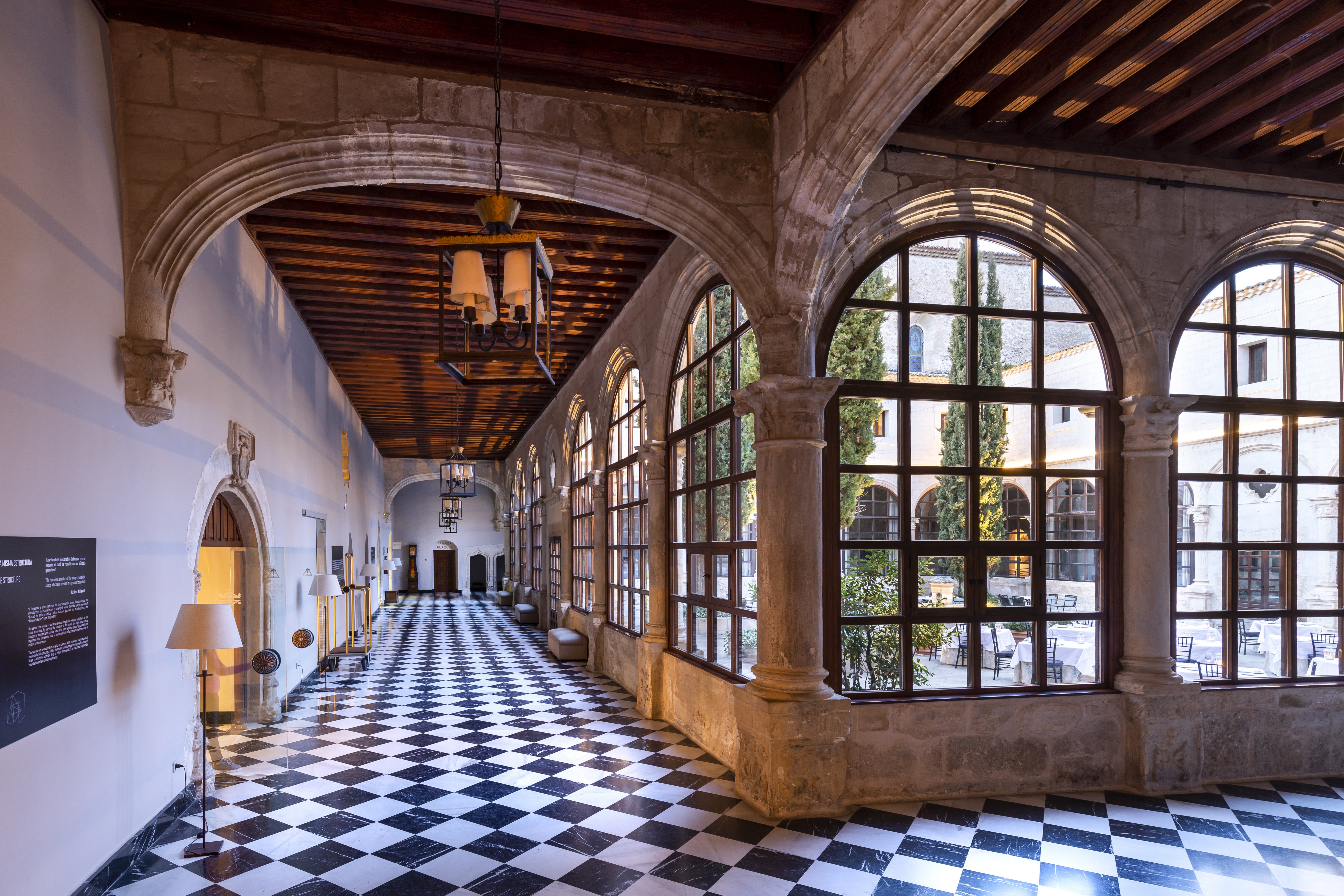
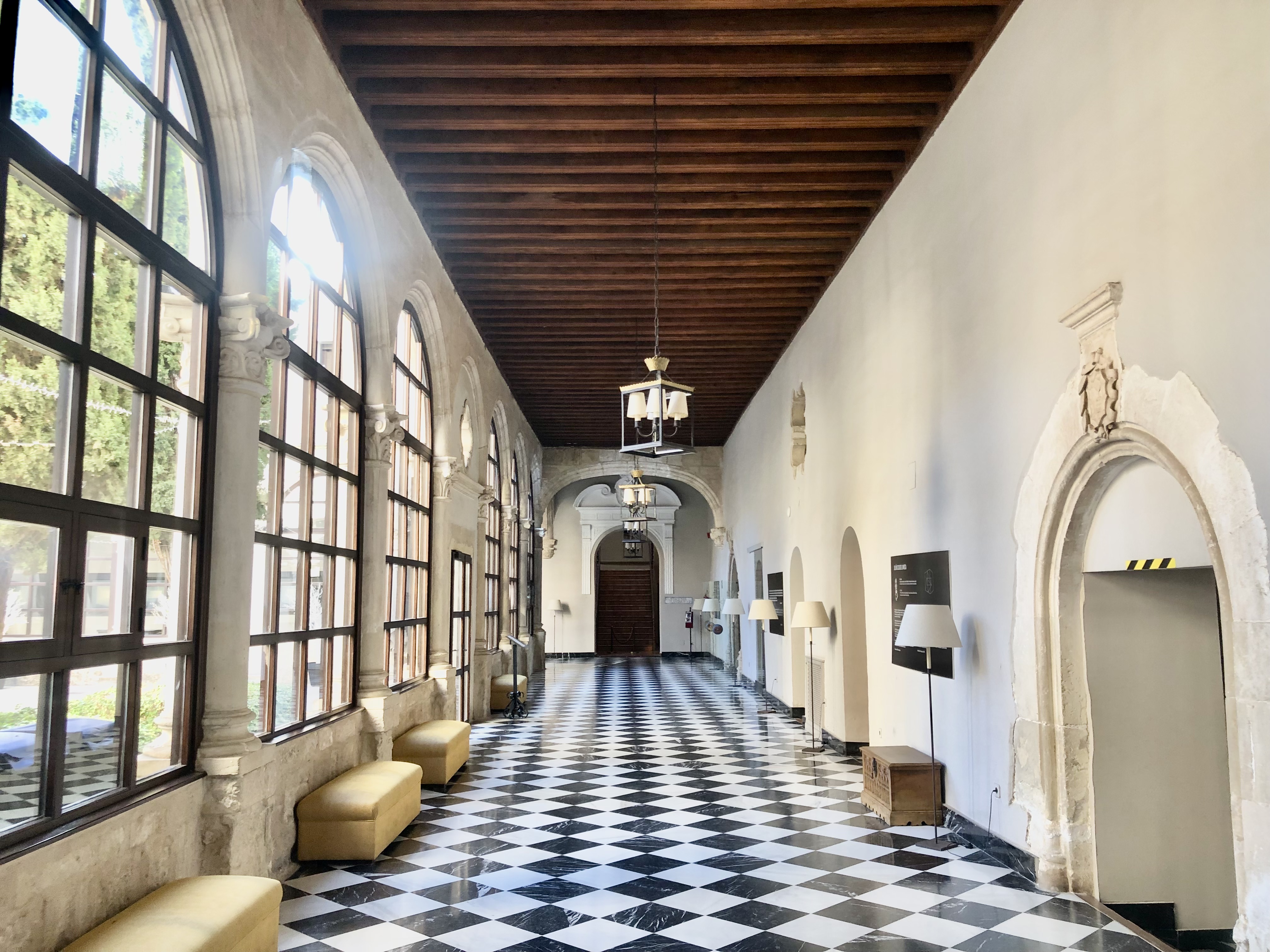
The former monastery’s gracious cloister has been well preserved. (left, Paradores de Turismo de España; right, Randy Mink Photo)

Also impressive is the coffered wooden ceiling of the parador’s restaurant. Once a chapel where monks prayed, the vaulted room is a heavenly place for breakfast. At the buffet we helped ourselves to fresh fruits, meats, cheeses, yogurt, artisan breads and all kinds of homemade pastries. A fan of baked goods, I filled up on mini brioches with chocolate chips, pretty pink-frosted strawberry chocolate donuts, shortbread cookies made by nuns from a local convent and Manchego flowers (or flores manchegas), a flaky, flower-shaped pastry of fried dough dusted with sugar and cinnamon.
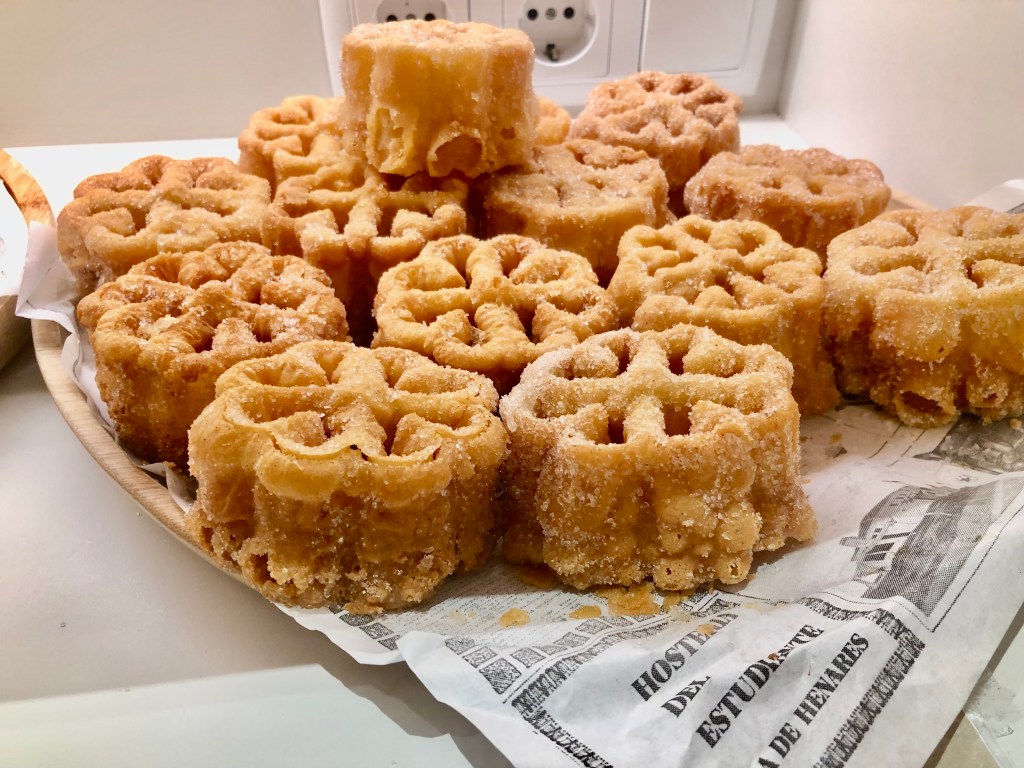
Among the many pastries offered at the parador’s bountiful breakfast buffet are Manchego flowers, or flores manchegas. (Randy Mink Photo)


From the a la carte menu we could order piping-hot churros or eggs any style, but both days I went for migas, a humble dish that became a favorite of mine while traveling in Spain. A satisfying comfort food, migas combines fried crumbs from stale bread (soaked in water to get moist), olive oil, garlic, paprika (coloring it orange) and bits of chorizo. The crispy concoction is usually topped with a fried egg.

Paradors are known for purveying the best in Spanish gastronomy, and the restaurant’s dinner menu features many dishes with traditional recipes from central Spain’s Castilla-La Mancha region. Entrees include shoulder of suckling lamb, Manchego-style roasted lamb with rosemary sauce, and baked cod with Manchego ratatouille and saffron sauce.

The word “Manchego”—known to North Americans as the name of a prized, semi-hard sheep’s milk cheese—and its various forms refer broadly to the La Mancha region. A man from La Mancha would be a Manchegan (with a capital “M”) in English, or a manchego in Spanish.

To explain it further, Americans have only heard the adjective manchego in reference to the cheese, so often when they see the popular Spanish vegetable dish, pisto manchego, they assume it has to do with cheese, but it actually has no cheese at all; it just means it’s a Manchegan dish. The parador’s menu offers a selection of Manchego cheeses, or quesos manchegos.

Like the dining hall, the bar evokes the spirit of the old monastery. Just look up at the lovely religious ceiling frescoes framed by ornate plasterwork.

Summer guests can enjoy the parador’s swimming pool. Long ago, the parador’s dining room was the monastery’s chapel.(Randy Mink Photos)


Across the road are the tennis courts, outdoor swimming pool and party room. The main building has a fitness room.

The high-ceilinged guest rooms at Parador de Cuenca are tastefully appointed. My third-floor nest had a desk, TV, refrigerator and individual temperature controls. There were two floor lamps, two upholstered chairs and a coffee table. The red-tile floors and carved wooden doors lent a rustic look. Bathroom amenities included vanity and dental kits, make-up mirror and hairdryer. In both the bedroom and bathroom, windows let in fresh air and allowed me to hear crowing roosters at the farmstead across the river.

For information on the paradors of Spain, visit www.paradores.es.
Biting Into Basel

Wedged between Germany and France, this northern Swiss city abounds with traditional restaurants offering classic fare and Old World flair

By Randy Mink

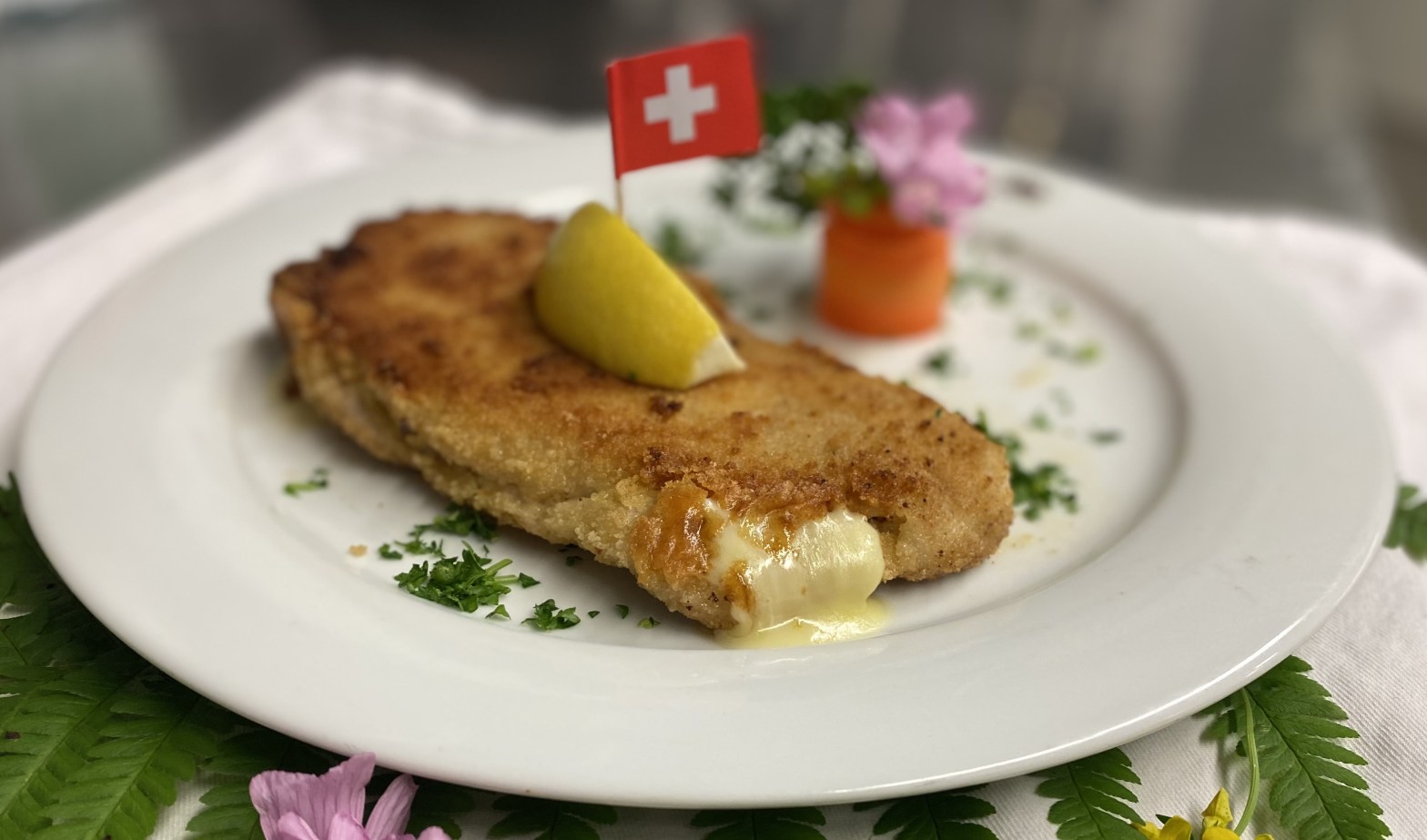
Served piping-hot and oozing with cheesy goodness, the veal cordon bleu at Zum Gifthüttli restaurant is something to savor, even drool over. Lunch in the wood-paneled dining room remains the warmest memory of my visit to Basel, the third-largest city in Switzerland.

After disembarking there from my week-long Rhine River cruise, I was most looking forward to exploring the medieval Old Town with its museums, churches, riverside promenades and specialty shops lining atmospheric alleyways paved with cobblestones. What turned out to be just as inviting, though, were the traditional, pub-style restaurants scattered about the historic core.

Cordon bleu is the house specialty at Zum Gifthüttli. We ordered the Classique, a juicy, golden-breaded schnitzel filled with ham and melted cheese, taking advantage of the Tagesteller (“daily plate”), a deal for 36.50 Swiss francs (about $43) that included french fries, pumpkin soup and dessert.

Gifthüttli, a traditional restaurant in Basel’s atmospheric Old Town, offers dining in the main-floor Bierstube, the upstairs Weinstube and at outdoor tables ideal for people-watching. (Randy Mink Photo)

Zum Gifthüttli’s menu lists cordon bleu variations, like the one with ham, cheese, asparagus, cherry tomatoes and Hollandaise sauce. Another consists of chorizo, mozzarella and herbs. The Florentiner has ham, cheese, spinach and a fried egg on top, while the Schweizer features two Swiss delicacies—Bündner air-dried ham and scrapings of raclette cheese. Opting for pork cordon bleu, instead of veal, can shave a bit off your bill, but any meal in Switzerland will cost much more than at home.

Guests at Gifthüttli can dine in the main-floor Bierstube, upstairs in the white-tablecloth Weinstube or, in warm weather, at outdoor tables offering the bonus of people-watching in Old Town’s pedestrian zone.

The white-tablecloth Weinstube at Gifthüttli offers a refined atmosphere. (Photo credit: Basel Tourism)


Fans of cordon bleu and antique charm also gravitate to Old Town eateries like Zum Braunen Mutz and Restaurant Löwenzorn. The latter offers tables in its historic rooms and in the idyllic courtyard garden, where blankets, furs and electric heaters keep patrons toasty in cooler weather. Löwenzorn favorites include the wienerschnitzel and traditional Swiss fondue.

Löwenzorn, a traditional restaurant in Basel’s Old Town, offers seating in historic rooms and in the courtyard garden. (Photo credit: Basel Tourism)


Restaurant Kunsthalle, a sophisticated but friendly Old World restaurant in the same building as the Kunsthalle Basel contemporary art museum, every winter opens its Fondue Stübli, a cozy fondue chalet next to the landmark Tinguely Fountain. Additional city-center spots for fondue (and other Swiss classics) are Walliserkanne and Safran Zunft.

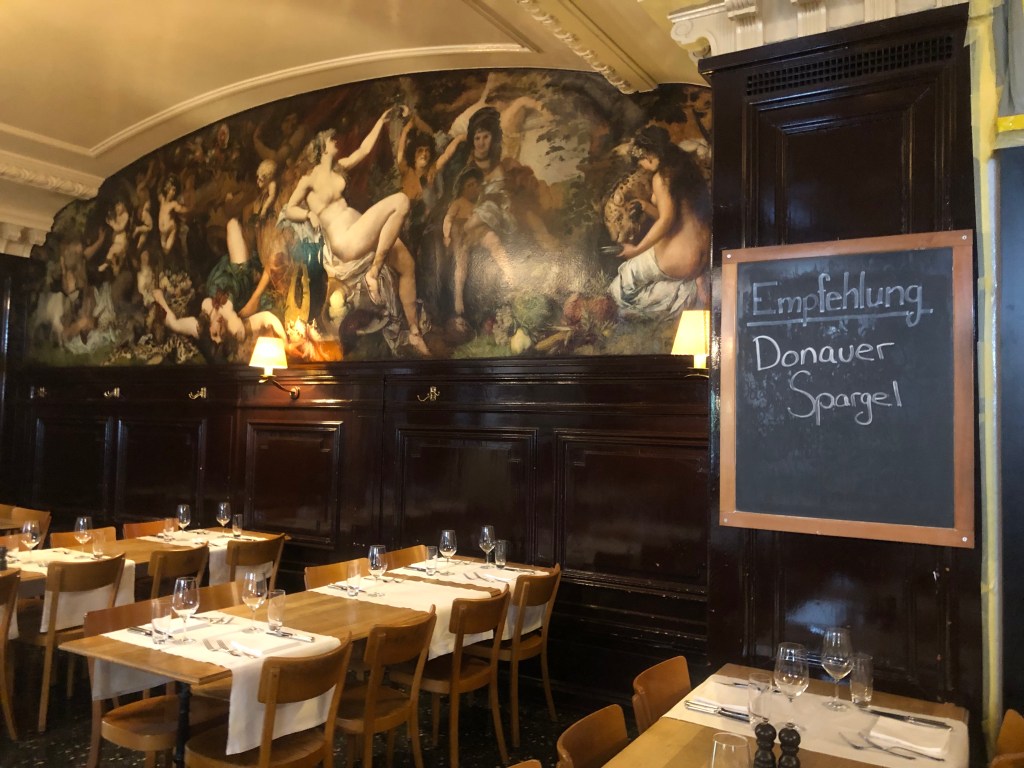
Patrons at Basel’s Restaurant Kunsthalle enjoy an Old World atmosphere in the vaulted Schluuch room. (Randy Mink Photo)


On our springtime visit to Restaurant Kunsthalle, we had a lunch of pasta amidst dark wood and classical cherub murals in the cozy, vaulted Schluuch room. The more formal “white” room overlooks the chestnut tree-shaded patio, one of Basel’s prime spots for alfresco dining. The Kunsthalle’s menu reveals typical Swiss fare, including Zürcher Geschnetzeltes (veal strips in a sauce of white wine, cream and mushrooms) with rösti, the ubiquitous Swiss version of hash browns offered at most restaurants that serve french fries.

No discussion of traditional dining spots is complete without a mention of Gasthof zum Goldenen Sternen, Basel’s oldest restaurant. Though it’s been at its current riverside location for only 50-some years, it date backs to 1412. In the 1970s the ancient building was dismantled and rebuilt stone by stone along with the original ceiling paintings and all the wood paneling. Highlighting the menu are highly regarded fish dishes—I had the lightly fried salmon filet with linguine. It also offers lamb shank, steaks and wienerschnitzel, among other entrees. The restaurant looks out on the Rhine River, and there’s outdoor seating under trees on the riverfront promenade.

Gasthof zum Goldenen Sternen, Basel’s oldest restaurant, enjoys a setting on the Rhine River. There is seating under trees on the riverfront promenade. (Photo credit: Basel Tourism)


The Goldenen Sternen (“Golden Star”) is located in the picturesque St. Alban quarter, a quiet neighborhood noted for its patrician townhouses, half-timbered buildings, narrow streets and a stream that powers the waterwheel at the Basel Paper Mill. Now a fascinating museum about the history of paper making and printing, the medieval mill, just steps from the Rhine and not far from Old Town, was one of many in St. Alban that made Basel a book publishing center for centuries.

Though skeptical about how interesting a paper museum could be, we found it eye-opening. Especially fun was watching demonstrations of how a pulpy goop is transformed into paper. We had a chance to make our own sheet as a souvenir. And we were surprised to learn that until the 19th century paper was made almost entirely from old rags and ropes that were sorted, cleaned, cut into strips and left to decay in a rag cellar’s rotting vats. There are even exhibits on the evolution of toilet paper, which was considered a luxury product when first introduced in the late 1800s.

Visitors learn about the history of paper and witness the paper-making process at the Basel Paper Mill, a museum housed in a medieval paper mill. (Randy Mink Photo)


Claiming nearly 40 museums, Basel has a museum for every interest, showcasing subjects ranging from cartoons and musical instruments to city history and Jewish culture. Most visited are its two leading art museums.

Kunstmuseum Basel, whose three-building complex holds the world’s oldest municipally owned public art collection, presents seven centuries of European art and boasts the world’s largest collection of paintings by the Holbein family. On the outskirts of Basel, Fondation Beyeler, comprising a main building designed by noted architect Renzo Piano, houses some 400 masterpieces of modern and contemporary art, including pieces by Picasso, Monet, Matisse and Cezanne.

Kunstmuseum Basel holds an impressive collection of paintings by Hans Holbein. (Photo credit: Basel Tourism)


The Basel Historical Museum, with exhibition halls under the vaulted ceilings of a former 13th century church, focuses on the intersection of the cultures of Switzerland, France and Germany. (From Basel, Germany and France are just a hike or bike ride away. Visible on the horizon are the Vosges Mountains of France and Germany’s Black Forest.)

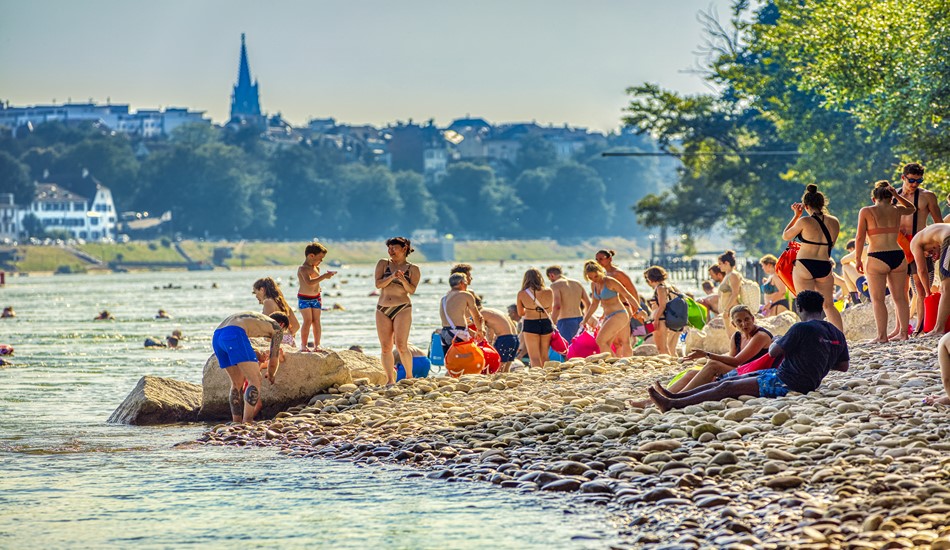
In the summer you’ll see people sunning on the riverbanks and swimming or floating in the river. Basel Tourism offices and retail stores sell something called a Wickelfisch, a brightly colored, fish-shaped waterproof bag for keeping your clothes dry as you whoosh down the river past city landmarks. It’s not to be used as a flotation device.

Frolicking in the Rhine River is a popular pastime with tourists and locals alike. (Photo credit: Basel Tourism)


Sightseeing cruises provide another way of experiencing the Rhine. Or you can take one of the small passenger ferries that shuttle back and forth between the larger southern part of the city (Grossbasel, or Greater Basel) to the northern side (Kleinbasel, or Little Basel) at four crossing points. Attached to a cable that spans the river, the non-motorized boats are guided deftly by expert ferry operators.

We took the five-minute ride from St. Alban to the opposite bank, then walked along the riverside path for 11 minutes before reaching the Museum Tinguely, a showplace for monumental mechanical sculptures created by world-renowned artist Jean Tinguely (1925-1991), who grew up and studied in Basel. Buttons allow visitors to activate some of the playful, mischievous and wacky creations, causing them to rattle, shake and whirl.

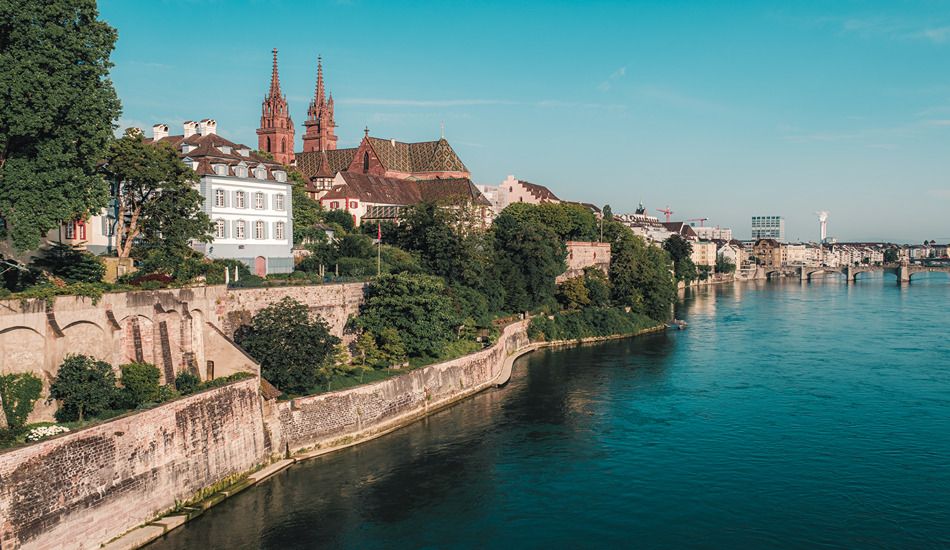
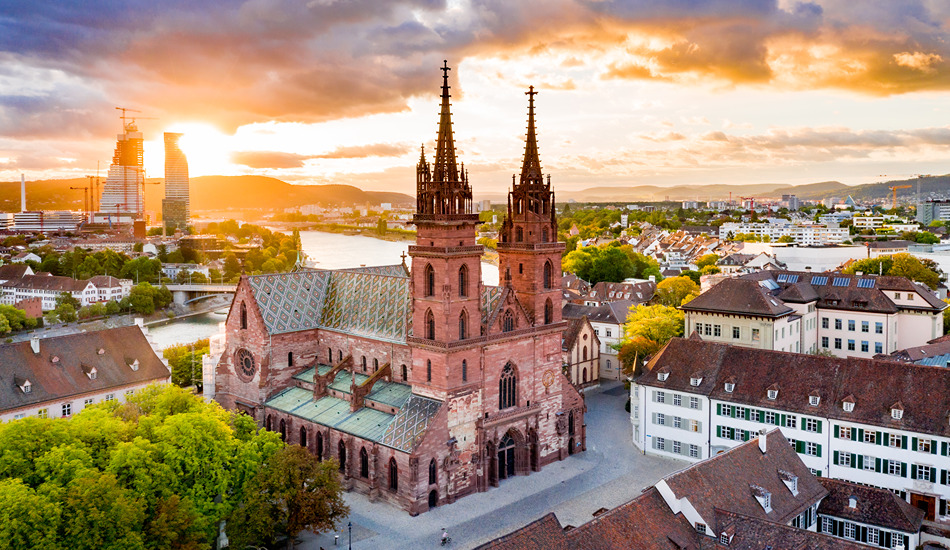
Sweeping views of the Rhine can be enjoyed from the tree-shaded terrace of Basel Cathedral. Sporting impressive twin towers, it is the city’s most prominent landmark. Built mainly in the 12th and 13th centuries, the Romanesque-Gothic church contains the tomb of the Dutch humanist Erasmus (1466-1536), who lived in Basel. Ambitious types can climb the towers’ narrow staircases (about 250 steps).

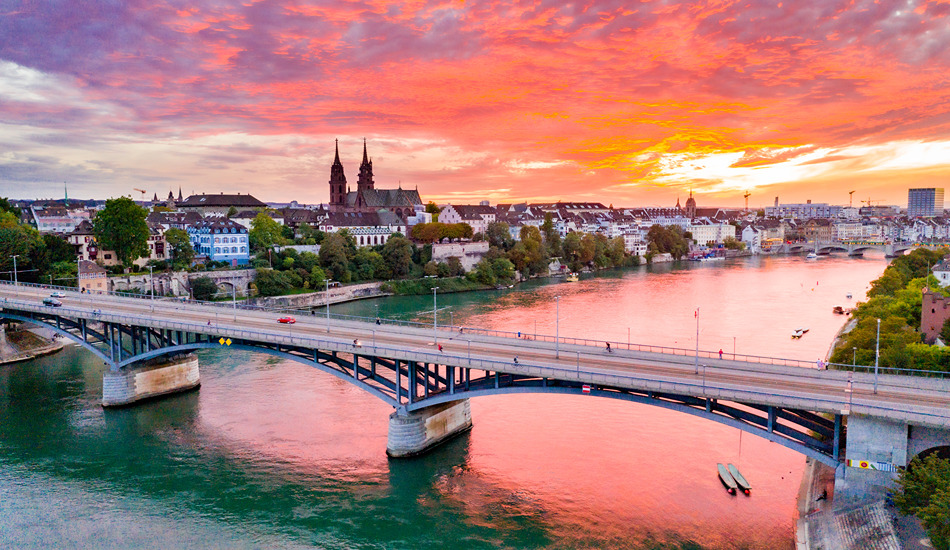
The twin spires of Basel Cathedral dominate the skyline of Basel, which lies on the Rhine River in northern Switzerland. (Photo credit: Basel Tourism)

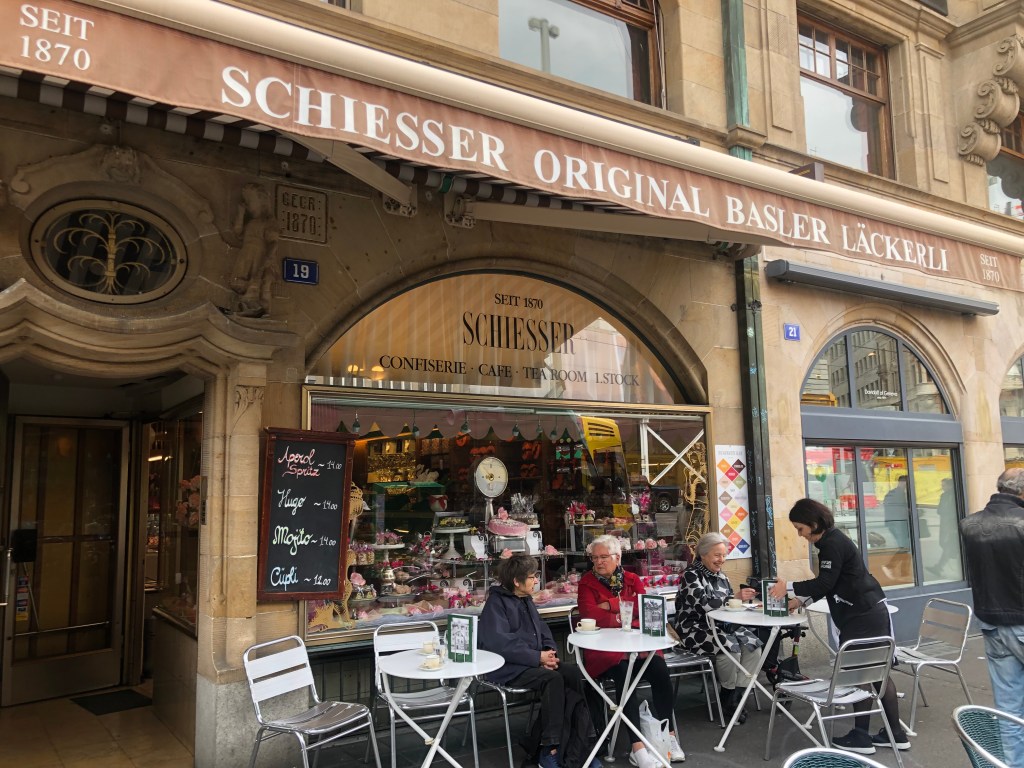
One of the best places to take a break from sightseeing is Confiserie Schiesser, a cafe/tea room/confectionery with an on-site chocolate factory and bakery. Founded in 1870 and now in its fifth generation of family ownership, Schiesser faces Old Town’s vivid red Rathaus (Town Hall) and market square. A tantalizing array of chocolates, cookies and pastries tempts the sweet tooth. Distinctive to Basel are the Basler Läckerli, a ginger cookie made with honey, spices, almonds, and candied orange and lemon peel.

Confiserie Schiesser, a cafe/tea room/confectionery founded in 1870, is famous for its chocolates, cookies and pastries. (Randy Mink Photo)


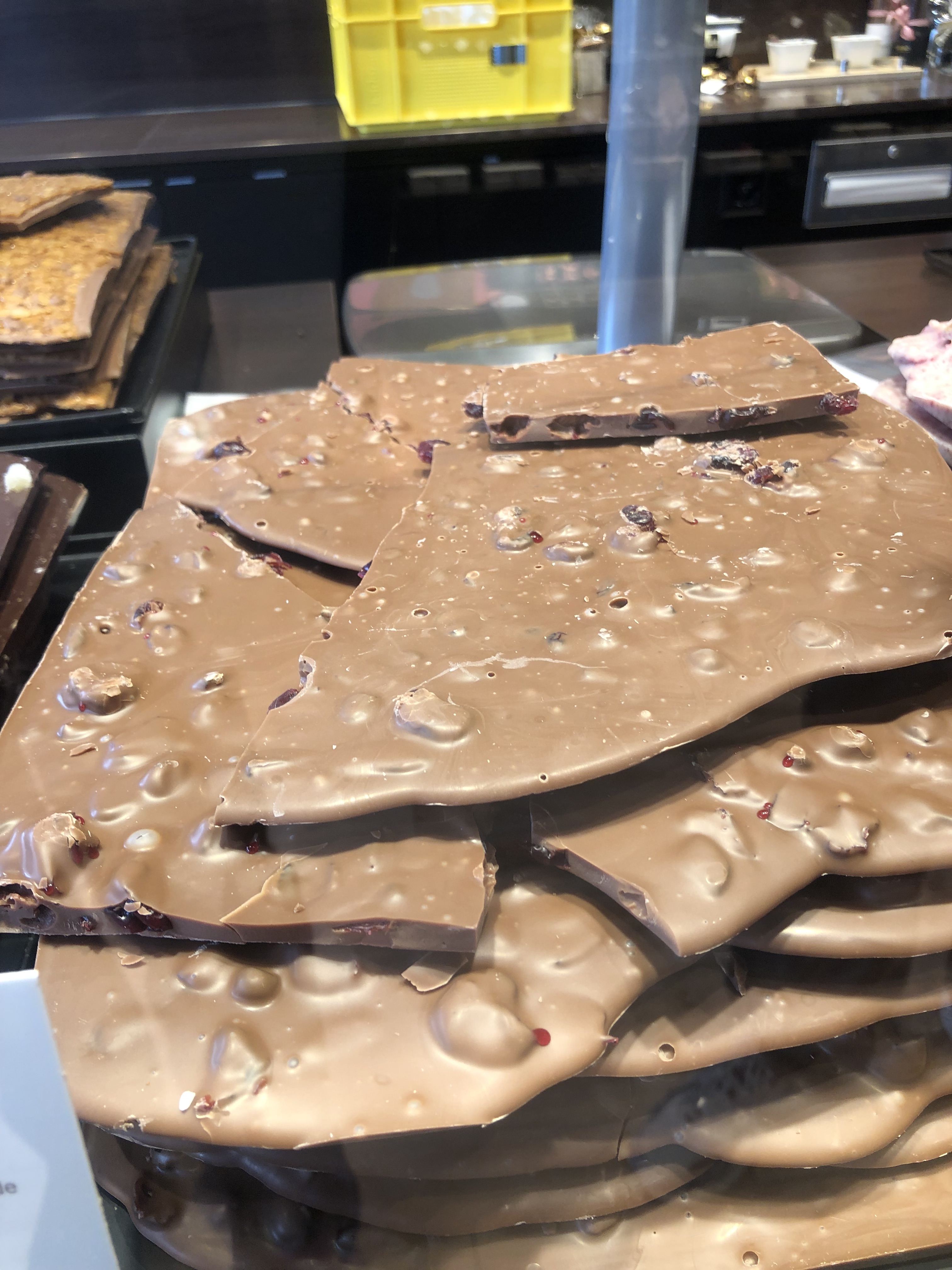
A few doors down from Confiserie Schiesser, high-end Läderach chocolatier sells slabs of melt-in-your-mouth chocolate called Frisch Schoggi. Sold by the gram, the uneven pieces are studded with everything from hazelnuts and almonds to cranberries and cornflakes.

Visitors in Basel’s Old Town can indulge their sweet tooth at Läderach, a high-end Swiss chocolatier. (Randy Mink Photo)


Indulging in Basel’s tasty treats is the epitome of Swiss bliss.

For more information, visit the Basel Tourism website, www.basel.com.

Stretching Your Dollar in Italy

Dine at the local bar

By Kristi Nelson Cohen

Rising exchange rates don’t have to put you in the red when traveling in Italy. With record high Euro exchange rates, travelers can stretch their dollar when dining by trying some new dining options.

Eating is a pure pleasure for Italians and visiting guests. Italians take their meals very seriously and a full 3-5 course dinner in a fancy ristaurante can eat into a travel budget quickly. In order to stretch a budget, try these simple tips.

Breakfast is often included in a hotel’s room package. If it is not, follow the locals to a neighborhood bar for your morning coffee and pastry. A bar in Italy is not a place to consume alcohol and dance the night away. They are fancy little candy box establishments, found on nearly every corner. Italian bars are the place where patrons socialize over their morning coffee (sometimes several times each morning), return for a light lunch, and arrive again in the evening for an apertivo or cocktail before dinner.

Bars in busier cities, especially those in tourist areas, traditionally charge one price to stand at the counter (al banco) or a higher price to sit at one of their café-style tables (al tavolo). If you want to sit and enjoy the view, then the price is usually worth it. A coffee that might cost 1.50 Euro at the counter could cost twice as much to sit at a table. During the late morning/afternoon and evening hours, service at a table traditionally includes some salty snacks like potato chips or nuts, even olives, with your beverage.

If you choose to stand at the counter, patrons traditionally pay the cashier, and then present their receipt to the barista who will complete the coffee order.

Most bars have a tasty selection of pizza and panini.

ITALIAN COFFEE
Italians consume a variety of coffee drinks throughout the day. Most will start the day with a cappuccino which is a shot of espresso served in a large cup with steamed milk and topped with frothy milk foam. Most Italians will not drink cappuccino after mid morning but switch to other coffee drinks. Of course, they’re happy to accommodate tourist requests for cappuccino at any time of the day.

Later in the morning, and throughout the day and into the evening, Italians consume what they call caffe which is espresso, or a small cup of very strong coffee topped with a delicious caramel colored foam called crema. This coffee is rich and strong, and usually sweetened with sugar. Espresso is the basis for most Italian coffee drinks.

If you want a weaker version of coffee that resembles what Americans drink, order a caffe Americano which is a shot of espresso with steamed hot water in a larger cup. This is also called caffe lungo.

If you want to be more adventurous, order a caffe corretto which is espresso corrected with a shot of liquor like grappa, cognac or flavored liquor. Nothing warms your heart faster or settles a full stomach.

EATING AT BARS
Besides serving fantastic coffee throughout the day, an Italian bar usually offers a selection of sandwiches called pannini. These can make an affordable option for lunch or dinner. Some bars also offer a limited selection of pre-made one dish meals, like pasta or vegetables. These establishments are referred to as tavolo caldo. A simple one-course meal with a mineral water aqua minerale or a house wine (vino della casa) is an exceptional value for the traveler.

APERTIVO AND ANTIPASTO FOR DINNER
Italians traditionally dine relatively late (8-9 p.m.) for dinner. After a long day of touring, visitors might opt for a lighter, less expensive option for dinner. Many of the local bars offer light snacks to entice cocktail business. Some wine bars also offer a variety of little sandwiches, potato croquettes and grilled vegetables either complementary or for a very reasonable price.

In Venice in particular, this selection of snacks is referred to as Cichetti. Combined with a spritz (cocktail made from Campari and Prosecco) or a great glass of local wine, these light snacks can make for a satisfying dinner.

Each region of Italy offers regional food fares, typical for that area. The Cichetti in Venice may include such items as marinated sardines, Bacala which is a salt fish cod spread for bread or polenta and deep friend calamari. Antipasto offerings in Tuscany may be a selection of salamis, cheeses and olives.

In Rome, the antipasto might be crusty bread with tomato, herb and olive oil topping called Buschetta or a sampling of small slices of freshly-made pizza.

Whatever, the region, the food is delicious, fresh and attractively prepared. Even the simple selections from a bar will satisfy your hunger and your quest for a delicious yet affordable meal.

Fine Dining in Liechtenstein

By Sharon Hudgins
Photos by the author

Liechtenstein is a small country with a big appetite for good food.

Wedged in between Austria and Switzerland, this country of only 62 square miles is bisected south to north by the Rhine River, with majestic mountains rising steeply on both sides of the lush Rhine Valley. Corn, cabbages, beets, onions and asparagus grow on the fertile Rhine plain. Wild game such as deer, boar, pheasant and grouse roam the forests and meadows on the mountainsides, and silvery trout swim in the cold Alpine streams.

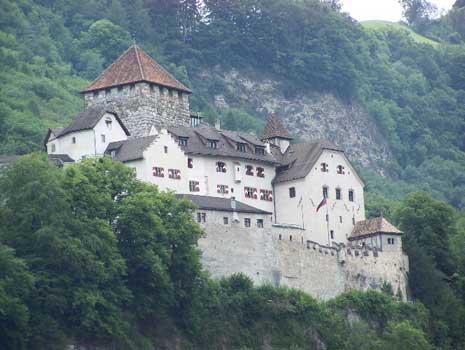
Perched high on one of the mountains, the medieval castle of the princely family of Liechtenstein towers over Vaduz, the capital city (population 5,500). Liechtenstein is officially a principality, where the Prince still rules as a hereditary monarch in conjunction with a democratically elected parliament. The Prince also owns the Hofkellerei (Princely Wine Cellars) in Vaduz, where you can taste his excellent wines. Afterward, walk along an educational wine trail in his local vineyard, where detailed signs describe the 50 different grape varieties growing there. More than 100 other vintners throughout the country also produce red and white wines of their own.

ALPINE FUSION FOOD
The cooking of Liechtenstein is a creative combination of German, Austrian, Swiss, Italian and French culinary influences, producing a kind of local “Alpine fusion” cuisine. Soups are especially popular, from hearty meat-and-vegetable stews (split pea and sausage, smoked pork and sauerkraut) to elegant foamy white-wine soups served in stemmed glasses. Asparagus is a favorite vegetable, and the primary meats are beef, pork, and mountain trout.

Dumplings and potatoes are the main starches of traditional Liechtensteiner cooking, which includes shredded potato pancakes like Swiss Rösti and a variety of dumplings made from wheat flour, cornmeal or potatoes. Cheese is an important ingredient in the cuisine, from rich Alpine hard and semi-soft cheeses to Sauerkas, a kind of lightly aged fresh cheese made from soured milk. Desserts are as rich as you’d expect in a country situated between Austria and Switzerland. And wine has an important place on the table, befitting a country that prides itself in its small, but high quality, wine industry.

There’s a big difference between farmhouse fare in an Alpine climate and the fine cooking of Liechtenstein’s shrines of haute cuisine, several of which have garnered Michelin stars and high Gault Millau ratings. In the rustic restaurants you’ll find the stick-to-your ribs dishes like breaded pork cutlets, fried chicken, roast pork and Käsknöpfle, a large portion of little egg dumplings (like German-Schwabian Spätzle) tossed with a copious amount of cheese and garnished with plenty of crisply fried onions. Known as Liechtenstein’s “national dish,” Käsknöpfle is usually served with a separate portion of applesauce or a green salad, to counter the richness of the cheese.

FINE DINING
Only 36,000 people live in this wealthy little enclave in the heart of Europe, where banking and financial services produce a GDP per capita that puts Liechtenstein in the top tier of the world’s richest countries. Such wealth supports a number of fine restaurants, rated among the best places to dine in Europe. These high-end restaurants tend to focus on lighter fare, artistically arranged on fancy plates—the kind of cuisine that combines respect for the country’s culinary traditions, an emphasis on local, seasonal ingredients and the imaginative use of modern kitchen techniques.

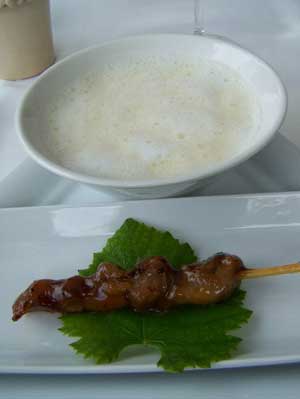
Highly acclaimed by many restaurant guides, chef Rolf Berger’s Restaurant Torkel serves haute cuisine in a beautiful setting. Located in a historic medieval building that was once a wine press, on the grounds of the royal vineyards in Vaduz, Restaurant Torkel is known not only for the quality of its cooking and its delightful ambience, but also for its excellent wine cellar. Choices on a recent daily menu in the summer included a delicious white wine soup with small yakitori dumplings on a skewer, Swiss prime beef filet in Port wine sauce, grilled sea bass in foamy smoked trout sauce, fresh berry parfait garnished with more berries and a good selection of cheeses. In nice weather, the perfect place to dine is on the pleasant stone-paved terrace overlooking the lush vineyards and the dramatic mountains beyond.

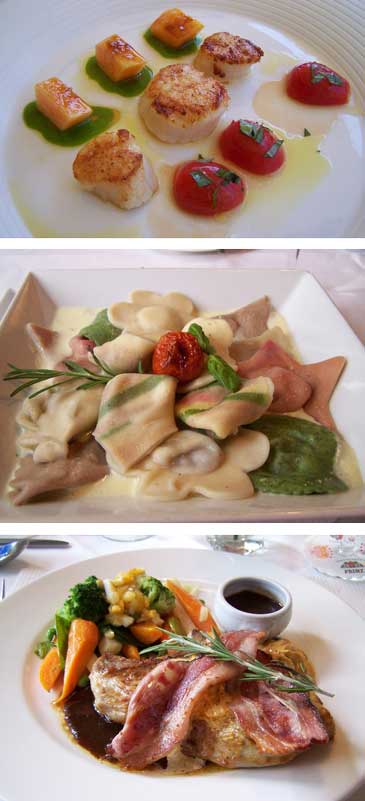
Another outstanding restaurant in Vaduz, the Marée at the Park Hotel Sonnenhof has won one Michelin star, two Gault Millau toques, and numerous other accolades. This is the place for fine dining in luxurious surroundings, from the elegantly furnished dining rooms to the large covered terrace facing the mountains and surrounded by gardens. The menu changes seasonally, four times a year, and features both traditional and modern dishes, all prepared with a light touch and plated artistically. Selections at a recent summer lunch included an appetizer of roasted scallops with melon, tomatoes, and fresh basil, followed by a main dish of crispy glazed breast of pork with fresh chanterelle mushrooms and cherries. Notable desserts were the colorful artist’s palette of house-made sorbets, and the basil sorbet with fresh strawberries and elderberry foam.

TRADITIONAL INNS
For very good food at reasonable prices, the Landgasthof Mühle is the place to go. Located on the site of an old mill on the edge of Vaduz, this lovely little inn offers an interesting menu that matches the quality of the restaurant’s décor. Try the creamy Vaduz wine soup or the excellent house-made terrine with a large salad, followed by multicolored ravioli with foamy herb sauce, and elderberry sabayon garnished with fresh berries for dessert. Highly recommended for the quality of the food, large portions and friendly staff.

Long a favorite of locals and tourists alike, the Wirtschaft zum Löwen in Schellenberg is a traditional old inn located in a wood-shingled farmhouse with red geraniums blooming in the window boxes. Dine in one of the cozy, wood-paneled dining rooms or on the pleasant terrace with a spectacular view across the border to Austria. House specialties include the head cheese with onion rings and mustard sauce, and classic Käsknöpfle, those cheese-drenched dumplings with applesauce and green salad. Large portions of good traditional food served in a nice setting.

MOUNTAIN HIGHS
Located in the Vögeli Alpenhotel in Malbun, a ski resort 5,000 feet above sea level, the Restaurant Alpenhotel is a cozy, rustic, pine-paneled restaurant—just the place where you want to retreat after a long day of hiking in the Alps or skiing down the mountainsides. The food is good here, and the portions are huge, apparently to satisfy those hungry hikers and skiers. The extensive menu seems to have something for every taste, including hearty meat dishes, a variety of big Rösti potato pancakes with garnishes, several pastas and cheese fondue. Warm up with garlic cream soup or creamy pumpkin soup with Styrian pumpkin seed oil, then chow down on the house-made game bratwurst with onion sauce, or deer Schnitzel with mushroom sauce. Be sure to save room for the traditional desserts (crêpes with chocolate sauce and whipped cream, battered-and-fried apple slices with vanilla sauce) or a big slice of the excellent cakes.

The Hotel-Restaurant Galina in Malbun is run by another member of the Vögeli family who owns the nearby Alpenhof hotel and restaurant there. At the Galina, the talented Norman Vögeli wears several hats: the hotel’s manager and falcon master (he stages an interesting falcon show several times a week), as well as the restaurant’s chef and pastry-maker (he supplies the delicious creamy cakes, fresh daily, for the Alpenhof Restaurant down the road). The food is very good here, including several large salads garnished with meats and cheeses, hearty soups, vegetarian main dishes, pizzas, cheese fondue and chef Vögeli’s tempting cakes for dessert.

And finally, down the mountain road from Malbun, stop off at the Cafe-Konditorei Gulfina in Triesenberg, for its luscious cakes and pastries, open-face sandwiches, and good variety of breads, all made fresh daily. Sip a cup of hot coffee and indulge in a slice of rich Engadiner Nusstorte—a regional pastry specialty, filled with caramel and walnuts—while sitting outside on the terrace that hangs precipitously over the mountainside, with a spectacular view of the valley below.

● Hofkellerei Liechtenstein, Vaduz, www.hofkellerei.li
● Restaurant Torkel, Vaduz, www.torkel.li
● Restaurant Marée, Park Hotel Sonnenhof, Vaduz, www.sonnenhof.li
● Landgasthof Mühle, Vaduz, www.muehle.li
● Wirtschaft zum Löwen, Schellenberg, www.loewen.li
● Restaurant Alpenhotel, Vögeli Alpenhotel, Malbun, www.alpenhotel.li
● Falknerei Galina Hotel-Restaurant, Malbun, www.galina.li
● Cafe-Konditorei Guflina, Triesenberg, www.guflina.li

Chowing Down in Catalonia

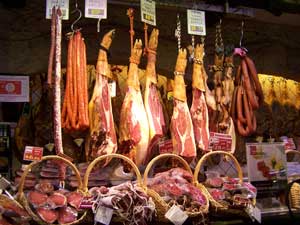
Spanish hams and sausages at Barcelona’s La Boqueria food market

By Sharon Hudgins
Photos by the author

Catalonia has long been one of my favorite gastronomic regions in Spain, years before star chefs such as Ferran Adrià, Santi Santamaria and Carme Ruscalleda catapulted it to fame on the international stage.

During two recent trips there, I ate at my favorite old restaurants, dined at new ones, and visited wineries and food producers throughout the area. And I was pleased to confirm that Catalonia is in no danger of losing its reputation for fine food, from traditional to modern, from home cooking to haute cuisine.

Tempting sweets at La Colmena pastry shop in Barcelona.

BEGIN IN BARCELONA
Barcelona, the capital of Catalunya (as it’s called in the Catalan language), is a prime destination for connoisseurs of good food. You could easily spend a couple of weeks eating your way around the city and still barely scratch the surface of its culinary possibilities.

Foodies flock to the colorful Mercat de Sant Josep (also known as La Boqueria), Barcelona’s best known big covered market, with its tantalizing displays of edibles from freshly caught Mediterranean fish to aged mountain cheeses, from exotic tropical fruits to pigs’ private parts. Grazers stroll from one tapas bar to another along the busy boulevards and the casual waterfront, drinking a glass of wine or beer and nibbling on tasty tidbits at each stop. Anyone’s sweet tooth will soon be satisfied at the city’s elegant pastry and confection shops, including Caelum which features pastries made in the many monasteries and convents around Spain. And don’t miss a visit to the Chocolate Museum, followed by a cup of thick hot chocolate at the bar in the museum’s shop.

But Barcelona is just the beginning of a memorable culinary experience in Catalonia. To understand the roots of Catalan cuisine, you need to spend time in the countryside, slowly savoring the sights, sounds and smells of a land that produces some of the best wines and food products in Spain.

Turbot with eggplant slices at El Rincon de Diego restaurant in Cambrils.

WINE COUNTRY
Catalonia is famous for its wines, including sparkling white and rosé cavas. Drive south from Barcelona into the picturesque Penedès wine country, the largest of Catalonia’s wine districts and one of the oldest wine-making regions in Europe. Although best known for its cava wines, processed in the same manner as French Champagnes, Penedès also produces many other fine wines, especially whites.

To learn about the history of wine-making in Catalonia, start at the Wine Museum in Vilafranca del Penedès. Then visit two of the largest producers of cava, Cordoníu and Freixenet, both located in Sant Sadurní d’Anoia. After seeing how those big commercial wineries operate, you’ll learn even more on a personal guided tour around one of the smaller, family-run wineries, such as J. Miquel Jané in Font Rubí, which provides very informative vineyard tours, cellar tours, and wine tastings, in English, and Pagès Entrena in Sant Jaume Sesoliveres, which also offers wine seminars and other activities such as horseback riding and bicycle excursions.

The rugged district of Priorat is known for its outstanding wines, particularly reds. Visit the new Wine Museum in Falset, the capital of this wine region, then drive to the little town of Gratallops, on a hill high above the Siurana River, to taste some of the excellent wines produced at the Buil & Giné winery there.

Not far inland from the popular coastal cities of Cambrils and Tarragona, the sparsely populated, mountainous Priorat region is a place of medieval villages, old monasteries and dramatic landscapes. Although off the beaten tourist path, it’s well known for its high-quality olive oils as well as its wines. Take the winding road up to the little village of Siurana, perched on a cliff with vertiginous views over the olive orchards and distant valleys below. Then enjoy a good meal accompanied by local wines at the little Restaurant els Tallers, in the small (six-room) Hotel la Siuranella.

Finally, finish up your tour of this part of the Catalan wine country by heading north a few miles into the Conca de Barberà wine district to see the Wine Museum in L’Espluga de Francolí. Housed in a landmark Modernist-style building constructed in 1913, it features three floors of exhibits on the history of grape growing and wine making in this area.

MÓN SANT BENET
For a completely different culinary experience, spend a weekend at Món Sant Benet, a complex of old and new buildings set amid the quiet countryside of Bages, a rural region just northwest of Barcelona, near the town of Manresa. Check into the ultramodern Hotel Món and enjoy a stroll through the nearby gardens before dining at either the Restaurant Món or Restaurant L’Angle (one Michelin star) within the hotel. Another restaurant, La Fonda, offers moderately priced lunches and snacks in the Factory building nearby on the complex’s grounds. The Factory also has an interesting shop selling local wines, food products and handicrafts.

Make a reservation to take a one-hour tour of the Alicia Foundation, a unique scientific and gastronomic research center established by Ferran Adrià at Món Sant Benet. You’ll visit the cutting-edge research laboratories and participate in an instructive workshop that focuses on the relationship between all of our senses and the foods we eat.

A highlight of the Món Sant Benet experience is a tour of the 10th century monastery there. The impressive multi-media tour cleverly uses video projections, 3-D holographic images and surround sound to tell the dramatic story of the monastery’s history. A separate, equally fascinating multi-media tour through the adjacent villa of the Modernist artist Ramon Casas gives an intimate glimpse into the daily life of the family who lived in the opulent villa during their summer holidays in the early 1900s. The combined tours through the monastery and villa take a total of two hours, leaving you plenty of time to relax in the soothing atmosphere of Món Sant Benet.

Wherever you choose to travel in Catalonia, from bustling Barcelona to tranquil Món Sant Benet, from the sunny seacoast to the high mountains of the Priorat, you’re never far from a fine meal with excellent wines. As the Catalans say when you begin to eat, “Bon profit!” (may you eat and drink well!).

Bread basket at El Rincon de Diego restaurant in Cambrils.
Handpainted Spanish ceramic coffee service at the Ramon Casas villa at Mon Sant Benet.

Where to eat:


Wineries to visit:


Wine Museums: