Happy to See You in Belfast

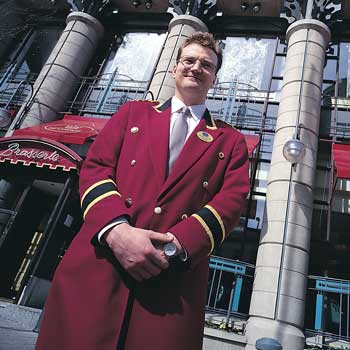
Bellhop at the Europa Hotel

By Carol Price Spurling
Photos by the author and courtesy Belfast Welcome Center

The first time I visited the Emerald Isle more than 20 years ago I steered clear of troubled Belfast. But I’m older and wiser now, and Belfast, too, has grown up, transformed from a self-absorbed, divided town into an extroverted and welcoming world-class city.

Belfast offers Victorian charm in every quarter and has retained the best of what Ireland is famous for: warm hospitality, atmospheric historic and cultural sites, and easy access to the lush unspoiled countryside. In Belfast, they’re glad to see you, not just your wallet, and what a difference that makes.

BELFAST HIGHLIGHTS
West Belfast’s Shankill and Falls neighborhoods saw most of the “Troubles” that erupted in the early 1970s. The Peace Walls that separate them are still standing, but visitors are welcomed on both sides and the practice of customers being searched before entering a store or office was retired years ago. For those interested in an insider’s view of Belfast’s political divide, Coiste Political Tours (www.coiste.ie/p_tours.htm) offers guided tours by Republican ex-political prisoners. Or, take a taxi tour to see wall murals and other relics from the bad old days (West Belfast Taxi Association, www.wbta.net).

The center of Belfast, Donegall Square, features Belfast City Hall (www.belfastcity.gov.uk), an embellished stone edifice built in 1888 as a monument to Belfast’s bright future.

All metro buses lead to the bustling square, also home to literary gem Linen Hall Library (www.linenhall.com). In this old linen warehouse, transformed into a library in 1788, visitors can access the cozy library’s unique archives such as the Northern Ireland Political Collection and the C.S. Lewis Collection. Enjoy the library’s tranquil wood-paneled ambiance and a view of City Hall by taking a tea break in the upstairs café.

A horse-drawn carriage strolls past the Ulster Transport Museum

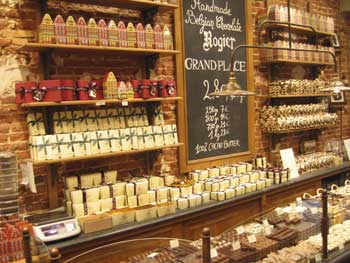
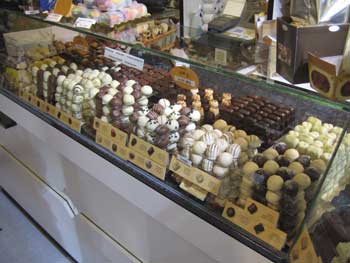
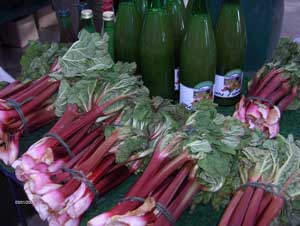
On Fridays and Saturdays the oldest Victorian-era covered market in Ireland, St. George’s, fills up with local shoppers intent on finding a bargain or tracking down the best fresh food in the region (www.belfastcity.gov.uk/markets). The Saturday market is devoted to food. You won’t go away hungry, with 250 stands offering everything from oysters to Irish cheeses to seaweed tapenade to tapas to sausages in curry sauce. Look for locally made “Belfast in a box” chocolates that celebrate Belfast landmarks, accompanied by an illustrated booklet (www.citycentres.com).

Everyone knows where the Titanic met her end but did you know she was born in Belfast? The city’s proud shipbuilding heritage is still obvious with the huge yellow cranes in the Harland and Wolff shipyard –- nicknamed Samson and Goliath — towering over Queen’s Island and the Titanic Quarter on the city’s eastern edge.

(left) Sampling seaweed at St. George’s Market


Belfast celebrates its past with the Titanic Made in Belfast Festival every March (www.belfastcity.gov.uk/titanicfestival), when free bus tours of Queen’s Island are offered by the city on Saturdays and Sundays.

My personal favorite from the tour: the inside of the design room at Harland and Wolff’s offices, where draftsmen labored under a cathedral-like arched ceiling to draw the ship’s plans.

Shores of the River Lagan

DO YOU NEED A CAR?
Although Ireland and Northern Ireland aren’t famous for their extensive rail networks, between trains, buses, and taxis you can get anywhere you need to go in the greater Belfast area and environs without having to rent a car –- or drive on the left. Coach tours and trains also run directly north to Portrush, with convenient connections to Giant’s Causeway, Dunluce Castle, and Bushmills Distillery. Along the northern and southern shores of Belfast Lough, rail service is frequent and affordable, so getting to top attractions just outside Belfast, like Carrickfergus Castle (www.ehsni.gov.uk/carrick.shtml) or the must-see Ulster Folk and Transport Museum (www.uftm.org.uk/) is easy peasy. Day return tickets are offered at 1/3 off the standard rate if you leave after the morning rush hour, and families can get special ticket deals too (www.translink.co.uk).

But to see some of Northern Ireland’s diverse natural beauty and historic architecture (Environment and Heritage Service, www.ehsni.gov.uk/other-index/places.htm), a car will be very helpful. Most recommended is to make a day of driving north along County Antrim’s Causeway Coastal Route, where the craggy cliffs and wild sea spray on one side is balanced by charming villages and green pastures dotted with tranquil sheep on the other. Giant’s Causeway — a stunning outcropping of columnar basalt — can be busy during the tourist season but has been kept remarkably uncommercialized. Visit in the early morning or late afternoon for the best light at this geological wonderland (www.causewaycoastandglens.com).

Another lovely drive is west through the Fermanagh Lakelands, home of Belleek pottery, and National Trust gem Castle Coole (www.fermanaghlakelands.com).

WHERE TO EAT AND DRINK
Celebrity chefs Paul and Jeanne Rankin have put Belfast on the culinary map with Cayenne Restaurant (www.rankingroup.co.uk) and Roscoff Brasserie. Up and down the Golden Mile on Dublin Road, foodies will be spoiled for choices of great pubs, cafés, bistros and restaurants.

Chef Michael Deane runs Northern Ireland’s only Michelin-starred eatery at Deane’s Restaurant (www.michaeldeane.co.uk); his newest venture is the contemporary bar and grill Deanes at Queens, located in the Queen’s University Common Rooms.

Coffee addicts never fear, Belfast baristas know what they’re doing. You can’t go wrong visiting any one of the seven Clement’s coffee shops, where coffee drinking is practically a spiritual pursuit, and the creamy hot chocolates are served in a large bowl.

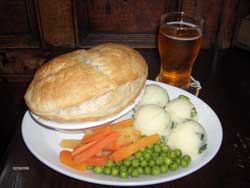
(left to right) Dining at one of Chef Michael Deane’s Belfast restaurants; Steak and Guinness pie is an Irish specialty

WHERE TO STAY
In downtown Belfast itself, a famous landmark is the 4-star Europa Hotel (www.hastingshotels.com) conveniently located just in front of Great Victoria Street rail station and the Europa Buscentre. Head concierge Martin Mulholland will make sure you get everything you need, even if you’re not as famous as some guests who’ve stayed there, like Bill Clinton, Julia Roberts and Elton John.

For a more secluded getaway try the 5-star Culloden Hotel in Holywood, overlooking Belfast Lough (www.hastingshotels.com), or The Old Inn in picture-perfect Crawfordsburn (www.theoldinn.com), both within easy reach of the city.

For less expansive budgets there are dozens of guestshouses, B&Bs, self-catering holiday apartments, hostels, and budget hotels both in Belfast and in neighboring communities. Some are chic, some charming; choose according to your mood.

The Premier Inn hotel (www.premierinn.com) boasts a great central location and is spanking new to boot. The Ash-Rowan Town House (tel. 9066 1758) offers a choice of nine gourmet breakfasts, with a side of historic significance: the Ash-Rowan was once the home of Titanic designer Thomas Andrews.

If you get out into the Fermanagh Lakelands and wish you could stay, check out Belle Isle Castle (www.belleisle-estate.com), outside Enniskillen near Lisbellaw. The old stables and coach house have been transformed into comfortable holiday rentals, with a variety of outdoor activities available, as well as day-long cooking classes taught by Irish chef Liz Moore. You can even rent the castle for a group stay, or a small wedding.

WHEN YOU GO
If you’re planning a trip to Belfast and Northern Ireland, be sure to visit the Belfast Welcome Centre website, www.gotobelfast.com. Like the office itself located at 47 Donegall Place in the city center, it is user-friendly, multi-lingual, and comprehensive. Be sure to pick up copies of their excellent themed city guides.

The Northern Ireland Tourist Board website is www.discovernorthernireland.com. Another free publication to pick up: Belfast In Your Pocket (www.inyourpocket.com). Published every couple of months, it always has the most up-to-date happenings, complete with maps of the city.

Venice: Queen of the Adriatic

by Kristi Nelson Cohen
Photos by author

One thousand five hundred years of recorded history, and the magic of Venice, Italy continues to captivate our hearts and please our artistic eye.

Venice was built on the water, and this love-hate relationship has challenged the city from her beginnings. She reaps the rewards of the sea (salt, fish, trade and now tourism) but suffer from this same sea lapping at her front steps, eroding the foundations of this architectural marvel. Venice is a beauty, simply fascinating and mysterious, she is the “Queen of the Adriatic!”

Venice was founded in 421, a result of residents of the Veneto (now, northern Italy) who were fleeing the wrath of the Goths. These Goths systematically looted and destroyed cities en route to Rome. The refuges set up villages in a marshy lagoon, on tiny uninhabited islands, where they were safe from invasion. This settlement became known as Venice.

BYZANTIUM LINKS

Due to its location on the sea, trade links with Byzantium were created, exporting salt, and importing exotic spices and fabrics from the Orient. Ships were able to dock right at the city’s front steps, and Venice began to grow in importance and wealth.

Although known as a trade center, Venetian merchants wanted to capitalize on the tourist traffic of Christian pilgrims traveling from Europe to Jerusalem. In 828 two brave merchants traveled to Alexandria, Egypt where they stole the body of Saint Mark, the evangelist. A massive cathedral dedicated to Saint Mark would be built, placing Venice on the map for Christians.

The first cathedral completed in 832, was built of wood, and, sadly, burned in 976. A second cathedral was built, and then torn down to make room for a third, massive, brick, marble and stone structure.

Construction on Saint Mark’s Basilica began in 1063 and was consecrated in 1094. This is the very cathedral whose intricate glass and gold mosaics, hand-carved stone pillars and impressive domes welcome visitors today.

Saint Mark’s Cathedral frames the western end of the Piazza San Marco. The Correr Museum (partially housed in the newest wing of the square called The Ala Napoleonica -built by Napoleon in the 18th century) stands on the eastern end of the square. Once completed, this building framed in the piazza.

DRAWING ROOM
After building his new wing, Napoleon Bonaparte said “Now, this is the most beautiful drawing room in all of Europe!” The Piazza is open to the sea on one portion of the Southside, adjacent to the Doge Palace, where two massive marble columns stand at the original entrance to the city.

These two columns were erected in 1172 but originally stood at Constantinople. Atop one column is a carved statue of a winged lion (the symbol for Saint Mark) and atop the other, is Saint Theodore with an alligator (Venice’s earlier Patron Saint.)

Today visitors to this magical city built on the water, arrive via the Ponte della Liberta, a two and a half mile long bridge from the mainland. The original bridge, built in 1846, accommodated train travelers only, but an auto bridge adjacent was completed in 1933.

When arriving in Venice by train, passengers disembark at the Santa Lucia Train Station, built in the mid 19th century and remodeled in the 1950’s. Don’t make the mistake of getting off the train at the Venice mainland station, as it is an expensive cab ride to Venezia.

BREATHTAKING VIEW
The train station’s front steps open up to a breathtaking view of the Grand Canal. The San Simeon Piccolo church (1718-1738) with its green copper dome, sits directly across the canal from the station. It is here, a visitor realizes, just how unique this city is, as you watch all the boats busily traversing the waterways.

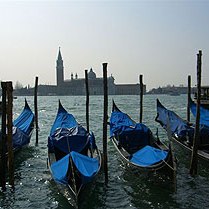
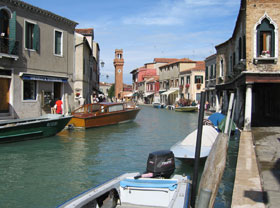
There are Vaparettos (water buses) carrying visitors, locals and commuters around the city. There are trash boats, UPS boats, grocery delivery boats, personal boats and, yes, the famous graceful and elegant black gondolas with gondoliers sporting their time-honored black-and white-striped shirt and wide-brimmed straw hat.

All commerce and travel around Venice depends on these waterways. Venice is built of 117 tiny islands, connected by more than 400 walking bridges and more than 150 canals. There’s only one small area of Venice that is even connected by the Ponte della Liberta for auto traffic, parking and drop-off.

A visitor to Venice can explore the tiny streets boarder the small canals, without the distraction of noisy scooters and fast driving Italian automobiles. The city consists of a labyrinth of tiny streets and canals, and exploring these areas away from the primary tourist stops is calmingly quiet, romantic and simply enchanting.

THREE MILES WIDE
It’s safe to walk in Venice, and getting around is easier than you might think. Yes, you can get lost, but watch the street signs pointing to landmarks like the train station (Ferrovia), Saint Mark’s Cathedral or the Rialto Bridge, or even the Grand Canal, which will help you find your bearings. The entire city is less than three miles wide, and getting away from the most popular tourist sights will lead a visitor to explore this city’s numerous historic cathedrals, museums, parks and palaces.

The Vaparetto (water bus) is an excellent way to see the city. An all-day ticket (12 Euros) allows you on and off passage for a 24-hour period. Multiple day (3 and 7) or single excursion tickets are also available. There are Vaparetto stops all around the island and down the Grand Canal.

The Vaparetto routes also take passengers to the lagoon islands of Murano (known for Venetian glass) and Burano (known for its colorful houses and lace making). From the train station, take Line #1 or #82 for a leisurely two mile ride down the Grand Canal, as it snakes its way through the middle of Venice.

Lining the Grand Canal are impressive palaces, that offer a glimpse into life as it was from the Renaissance time to Casanova’s day. Remember, access to these palaces was primarily by water, so the highly-decorated front entrance was always along a canal, rather than the sidewalk in the rear.

PINEWOOD PILES
How could these early residents build such impressive structures on a swampy lagoon island? Pinewood piles were driven 25 feet into the solid clay ground before building work began. These pilings were closely packed, free from oxygen which inhibits decay.

Above the pilings came brick and then stone creating damp-proof foundations. Mortar on the exterior of buildings is a special Venetian style, which is porous enough for moisture to evaporate. (Keep in mind, the canal tides rise each day and canal boat traffic causes waves to lap onto these foundations.) Of course, there is decay, but it all adds to the beauty, history, the weathered Bettina.

Everything in Venice is worth a picture! A camera is a must to record your memories, but most importantly take, the time to stop at one of the many outdoor cafes, where you can sit in the sun, sip an espresso, listen to the water and immerse yourself in this historic time capsule. It’s a memory you will never forget! ET

Kristi Nelson Cohen is the owner and operator of Bella Italia Trips, leading guided tours to Italy. She has visited Venice numerous times.

WHERE TO STAY IN VENICE
Hotel Gardena 3 STARS
www.hotelgardenavenice.it

Phone: 39-041-220 5000
This hotel is conveniently located near Piazzale Roma (auto taxi and bus service for the airport). The hotel is only a 5 minute walk from the train station on a small and relatively quiet canal. This is a small hotel (14 rooms) with an exemplary staff.

Hotel Principe: 4 star
www.hotelprincipevenice.it
Phone: 39-0410220 4000
This hotel is conveniently located adjacent to the train station (to the left northeast) and this former palace hotel borders the Grand Canal. This is a larger hotel with numerous amenities and a full-service restaurant and piano bar.

Both of these hotels have easy access to Vaparetto or private water taxi service. To purchase multiple day Vaparetto tickets or the Venice Card, (combination Vaparetto and Museum admission) log onto www.venicecard.com.

To see a complete time table of rail schedules in and out of Venice: Venzia Santa Lucia, log onto www.raileurope.com.

For travel tips, packaged trips to Venice and photos, log onto www.bellaitaliatrips.com.

Spain Is Hot

Let’s go, amigos!

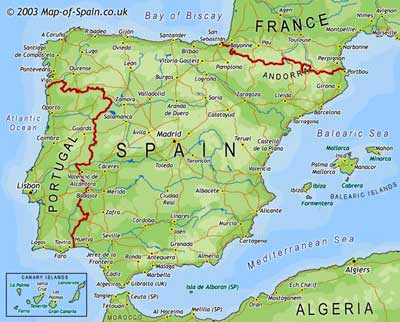
Map of Spain by Tourizm Maps © 2006

By Barbara Gibbs Ostmann
Photos by the author

Costa Blanca … Costa Daurada … the mere words conjure up images of warmth, sand and sunshine, just the antidote to chilly North American winter weather. Now is the time to head to the Mediterranean coast of Spain, where the weather is already warm. Going in the spring or fall offers great weather along with fewer tourists and lower, shoulder-season prices.

Spain is hot, hot, hot right now — from cuisine to fashion. Let’s go, amigos!

MAGICAL MADRID

Most flights from the United States fly into Madrid, and then connect to coastal cities such as Valencia or Barcelona. (Fly Iberian Airlines to get yourself into the Spanish state of mind.) Allow a few days for a Madrid sojourn before heading to the coast. The capital city is beautiful, packed with museums, great restaurants and many things to see and do.

The Gran Hotel Canarias Madrid makes a great home base. It is right in the center of town, across from the recently expanded Prado Museum and next to the Thyssen Museum.

Dining is a great pastime in Madrid, and Plaza Mayor is a good place to start. The area around the plaza is loaded with restaurants, such as Casa Botin, famous for its Castilian specialties and its listing in the Guinness Book of Records as the oldest restaurant in the world (circa 1725). Plaza Santa Ana, a short walk from the hotel and many museums, is home to lively tapas bars and wine bars. Near the Royal Palace, try the Café de Oriente. At the Thyssen Museum, dine in the terrace garden of the museum restaurant. For a simple and fun meal, check out the Museo del Jamon (Ham Museum), a chain of deli-cafes where you can see hanging hams, have a glass of sherry and a plate of sliced ham.

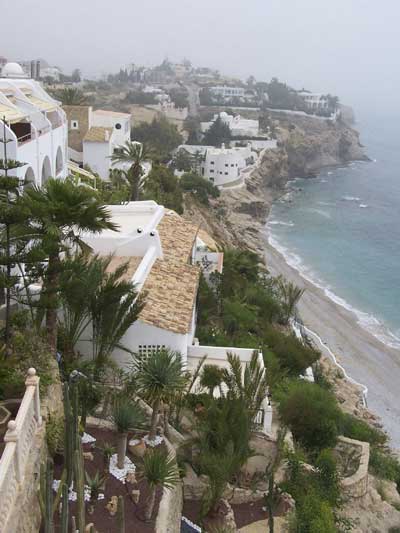
Hotel El Montiboli is perched on the Costa Blanca on the Mediterranean coast.
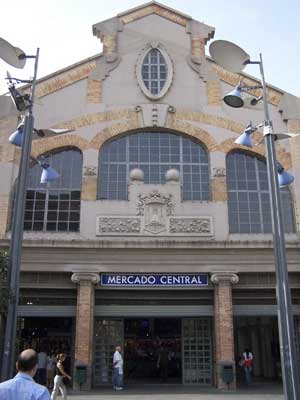
The central market of Alicante is in the heart of the city.

THE COSTA BLANCA

Tearing yourself away from Madrid, hop a plane or train and head to Alicante to begin your coastal voyage, then work your way northward along the coast to Barcelona, with as many stops along the way as your schedule will allow (or start in Barcelona and head south). Travel by rental car, plane or train, according to your preference and budget.

Alicante is on the Costa Blanca, or White Coast, and its beaches are spectacular. But there’s much more to do than lie on the sand and soak up the rays. Whether you take a guided city tour or wander on your own, don’t miss the imposing Santa Barbara Castle, which towers 500 feet above the city center, with panoramic views of the city below and the Mediterranean Sea. Early risers will enjoy the traditional covered market, the Mercado Centrale, bustling with vendors. Enjoy dinner at La Taberna del Gourmet or Nou Manolin.

A good base for exploring this area is the Hotel Hospes Amerigo, a beautifully renovated convent in the heart of Alicante. While the exterior is historic, the interior is ultra modern and comfortable.

Nearby towns include Elche and Villajoyosa, each worth a visit. In Elche, a majestic date palm grove with 600,000 trees, planted by the Phoenicians and later cultivated by the Moors, will take your breath away. Palm fronds from these trees are used for Palm Sunday celebrations throughout Spain. The grove itself is a UNESCO World Heritage Site. Take time to visit the Basilica of Santa Maria, the Huerto del Cura Botanic Gardens and the Archaeological Museum. Enjoy lunch (paella, anyone?) at Els Capellans Restaurant in the peaceful and beautiful surroundings of Hotel Huerto del Cura.

The picturesque fishing port of Villajoyosa is a major center of Spain’s chocolate production. A must stop is the Valor Chocolate Factory and the Chocolate Museum. You’ll want to stock up on Valor chocolate for gifts for the folks back home. For a scenic lunch stop, try the luxurious Hotel El Montiboli, perched on a cliff overlooking the Mediterranean. The dining room is wrapped in windows, with a view as divine as the food.

Elaborate chocolate sculpture at the Valor Chocolate Museum.
The likeness of the Lady of Elche is found all over town, from floral representations to fountains to sculptures.

VIVACIOUS VALENCIA

Next stop: Valencia, one of the most exciting cities in Europe, with its cosmopolitan mixture of old and new, tradition and trendiness, sophistication and casualness. The Hotel Astoria Palace, in the heart of the Old Quarter, is a great place to call home in Valencia.

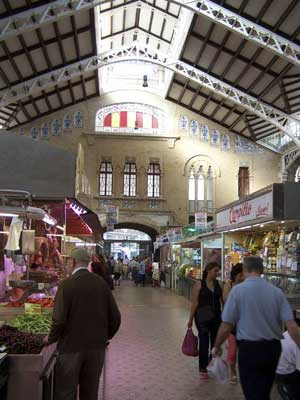
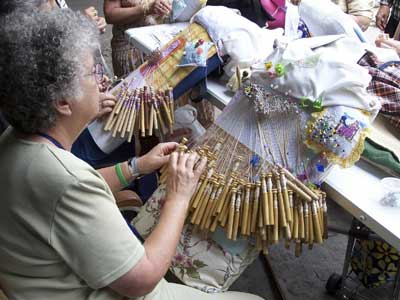
Begin your visit with a walking tour of the historic Old Quarter, with the Central Market, fascinating La Lonja Silk Exchange, unique Lace Market, Plaza Redonda and the beautiful St. Mary’s cathedral with its legendary Holy Chalice, believed to be the chalice used by Jesus Christ at the Last Supper.

For a complete change of pace, head to the ultra-modern City of Arts and Sciences, a museum where the building and grounds are as spectacular as what is inside. Other good choices include the Fine Arts Museum, Valencian Institute of Modern Art or the National Ceramics Museum.

Be sure to visit the bustling, revitalized port area, home of the 32nd America’s Cup competition in 2007, and future home of the 33rd America’s Cup in 2009. There will be a pre-regatta in July 2008.

If you like being next to the water, you might opt to stay at the new and beautiful Hotel Las Arenas, with its lush gardens and stunning pavilions overlooking the sea. Indulge in its luxurious spa, or dine in the elegant Restaurante Sorolla.

(left to right) The central market at Valencia is always bustling.; The National Ceramics Museum in Valencia has a remarkable exterior.; The ultra-modern City of Arts and Sciences is a must-see in Valencia.


For food to fuel your sightseeing, consider a stop for fideua, a paella made with noodles instead of rice, at Restaurante Submarino in the Oceanografico, or sample tapas at one of the many restaurants in the Old Quarter.

Be sure to try horchata, the artisanal beverage for which Valencia is known. A great place to get the real thing is in the suburb of Alboraya, where the chufa (tiger nut), the key ingredient in horchata, grows. The Horchateria Daniel serves a delicious horchata with the traditional accompaniment of freshly baked pastries.

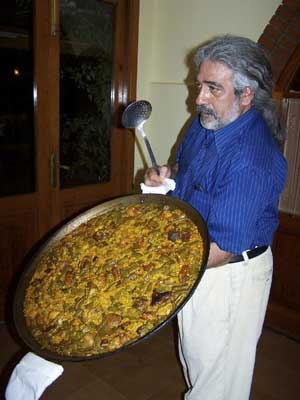
For a charming outing and an authentic heartland paella, head out of town to the Albufhera, where you can take a boat ride through the shallow freshwater lagoon, a natural park known for many species of birds and fish, and visit a barraca, a traditional fisherman’s hut near the rice paddies and orange groves. La Matandeta is a rural farmhouse restaurant where the paella is cooked over firewood in a huge pan.

Paella is cooked in a huge pan over a wood fire at La Matandeta restaurant in the Albufhera area.
Local women make lace in the time-honored fashion in the center of the round plaza that houses Valencia’s Lace Market.

FROM HISTORIC CASTLE TO MODERN SPA

For a historic stop on your route north, make a slight detour to the medieval town of Tortosa and spend the night in the charming Castillo de la Zuda Parador, a 10th-century castle. Be sure to get there in time to wander the streets of this picturesque village and explore the castle itself. For dinner, sample regional specialties in the parador’s restaurant.

(clockwise) The convent garden is an oasis of peace within the bustling city of Tarragona.; Exquisite Roman mosaics are preserved in museums in Tarragona.; The Le Meridien Ra Beach Hotel and Spa in El Vendrell must be seen and experienced to be believed.

After a long day at sea, fishermen still have work to do, mending their nets. These are at the port of Tarragona.


Heading on to the Costa Daurada (Golden Coast), stop in the town of El Vendrell and spend a night –- or two or three -– at the ultra-modern and ultra-luxe Le Meridien Ra Beach Hotel and Spa. Splurge for spa treatments, such as the chocolate massage. Enjoy the beach, or play in one of the pools. Be sure to dine at least once in the hotel’s La Vinya del Penedes restaurant.

ROMAN ECHOES IN TARRAGONA

The next stop on your northward route is Tarragona, an ancient Roman city with layer upon layer of ruins, designated a World Heritage Site by UNESCO. Be sure to take a guided tour of the old town so you can understand the many layers of history upon which Tarragona is built. Each spring the town celebrates its heritage with Tarraco Viva, a Roman festival and games.

Visit Tarragona’s port and see the fishing boats arrive in the late afternoon. Watch the fisherman as they auction their fish and mend their nets. For a traditional mariner’s menu, dine in the seaside Restaurante La Puda and sample Tarragona’s famous Romesco sauce. Or, savor authentic tapas at Restaurante La Nau, tucked away on Calle La Nau in the old town.

BEAUTIFUL BARCELONA

The final stop (or the first, if you travel in the opposite direction), is Barcelona, the jewel of Catalonia. It would take another entire article to do justice to the wonders of Barcelona and its environs. Check with the local tourist office for maps and current events, then head out to see the sites. The celebrated architectural marvels of Antoni Gaudi are a must, and you’ll see them in many places throughout the city. Be sure to climb the steep towers of the iconic Sagrada Familia, or temple of the Sacred Family, for an up close and personal look at this architectural wonder.

While wandering along La Rambla through the heart of the city, duck into La Boqueria market, the largest in all of Spain. After whetting your appetite in the market, you might want to sign up for a cooking class at the Hofmann Escuela de Hosteleria (Hofmann Hospitality School) to learn how to cook Catalan specialties.

The Hotel Catalonia Berna is a great location for the hub of your explorations, within walking distance of many sites and close to the subway for longer trips.

A side trip to the Black Madonna Shrine of Montserrat, perched impossibly upon the steep mountains outside of Barcelona, is a must.

For more information about Spain, contact the Tourist Office of Spain in New York (212-265-8822); Miami (305-358-1992); Chicago (312-642-1992) or Los Angeles (323-658-7188) or go to www.spain.info.

World Renowned Venetian Glass

Discovering the colorful island of Murano, Italy

By Kristi Nelson Cohen
Photos by the author

The renaissance European aristocracy favored it, explorers Lewis and Clark used the beads for trading with the Native Americans and Victorians proudly displayed it. Venetian glass has captured our eye for centuries, and today artisans continue a time-honored tradition to produce some of the world’s most beautiful glass.

The marshy lagoon offers artisans the components necessary for glass making: silica, sand and soda ash. Glass making started in Venice over a thousand years ago, but with the fear of fire from the glowing hot furnaces, and air polluting smoke from these same furnaces, Venetians decreed that all glass making take place on a nearby island. Glass makers moved their furnaces and factories in 1291 to the island of Murano, just two miles north of Venice across the lagoon.

Once these glass artisans moved to Murano, this tiny town prospered and grew to nearly 30,000 residents in the 13th century. This community is similar to Venice, as it is comprised of several small islands, connected by canals and bridges, but on a much smaller scale. Today, Murano is home to only a few thousand permanent residents.

GET AWAY FROM CROWDS

Frankly, it is sometimes a relief to get away from the crowds and busy sidewalks in Venice and take the time to enjoy a slower pace in Murano. There are many glass factories still operating in Murano and most have complimentary demonstrations and tours available. Of course, they also have elegant showrooms with one-of-a-kind glass sculptures, chandeliers, goblets and even glass beads. Prices at the glass factories can seem steep, but each piece is authenticated, insured and shipping is available.

During a demonstration, most factories will show you how an artisan takes a molten glob of glass, orange with heat, and blows through a tube and spins the tube, creating a one-of-a-kind creation. Minerals and precious metals are added to the glass to create colors, just as they would have been 500 years ago. The color blends, and mineral recipes are a highly regarded secrets.

VISIT IS A ‘MUST’

A visit to a glass factory is a must, but when it comes to buying glass, there are also many smaller shops lining Murano’s main canal near the Vaparetto (water bus) stop. Compare prices, as you may find even better bargains in one of the many shops in Venice. The smaller shops don’t usually offer shipping, but they are happy to pack purchases in bubble wrap and tissue to pack in your luggage.

To learn about the history of glass making, visit the Museo Vetrario in the restored Palazzo Giustinian. This museum has exhibits of rare 500-year-old glass and glass/enamel pieces, as well as contemporary sculptures and examples of the entire glass making process. They are open 10 a.m. – 4 p.m. daily (closed Wednesday).

Following a morning glass factory tour, enjoy a leisurely lunch at one of the many eateries located along Murano’s main canal. Al Vetrai Da Adino, located at address number 29, is a personal favorite. Owner Adino and his wife Christina cook up some local favorites including the freshest fish, pastas and vegetables.

Start your meal with a typical Venetian “spritz” which is a refreshing aperitif made with Campari and sparking Prosecco. (If you enter the island via the Vaparetto, simply walk across the first bridge, then continue north about 200 feet and you’ll see the restaurant on your right. A large rooster logo adorns the front window.) Adino doesn’t speak much English, but his hospitality and great food will win you over. Be sure to tell them “Kristi sent me!” and you might be treated to an after-meal glass of Fragolino, a homemade wine that’s simply delicious! For advance lunch reservations,
call 041-739-293.

TAKE THE VAPARETTO

How to reach Murano: Take the public water bus or Vaparetto – #41/42– which takes about 30 minutes (from the train station, or Piazzale Roma ) or take boat # 52 from San Zaccaria which is near Saint Mark’s Square.

In 2007, Vaparetto tickets were available for one trip at 3 Euro, or 12 Euro for a 24 hour multi-trip ticket. The glass factories also have representatives in San Marco Square who sometimes provide a free or discounted fare water taxi in exchange for taking a specific factory tour. Some hotels can also arrange for a boat to pick you up at the hotel and take you directly to one of the factories.

Once in Murano, you may want to continue on to the island of Torcello (whose cathedral was founded in 639) or Burano (distinct for its multi-colored homes and famous for the lace-making crafts). Take Vaparetto #13 from the dock located adjacent Murano’s lighthouse. (This requires walking across the canal and around Murano in order to get to the other Vaparetto stop).

Frankly, after a busy morning and a big lunch in Murano, one might prefer a lazy boat ride back to Venice, a good cup of coffee and or perhaps an afternoon nap. It’s all a part of the Venetian experience.

Kristi’s favorite glass factory offering a one-of-a-kind demonstration and truly unique, contemporary glass art is called Schiavon. Their factory also produces stemware, chandeliers and traditional Murano glass, although the unique pieces by Mr. Massimiliano Schiavon are worth a visit. This glass factory has been in the Schiavon family for three generations.

Vetreria Artistica Di Schiavon
No. 7 – just a few shops north of the Vaparetto stop on the first canal.
Phone: 011-39-041 739 396
http://www.massimilianoschiavon.com
E-mail: info@massimilianoschiavon.com

Kristi Nelson Cohen is the owner of Bella Italia Trips, a small U.S. company offering guided trips to Italy. To reach Kristi or for more information, log onto www.bellaitaliatrips.com.

Spotlight on Bamberg

Bamberg, Germany, is a 1,000-year-old city of Episcopal and Imperial power, set on seven hills and located in the heart of Franconia in northern Bavaria.

The city’s Old Town illustrates the development of a Middle Age city, and it escaped World War II almost unscathed. Set on the Regnitz River, more than 2,000 buildings are listed as UNESCO sites and form one of the largest Old Towns in Europe.

Things to see while there include the late Romanesque-early Gothic Imperial Cathedral, the Old Town Hall built right in the middle of the Regnitz River, the Baroque Palace Bottinger House and the Renaissance buildings of the Old Court.

There are also 15 museums in town, displaying a large variety of collections that document the wide cultural diversity of the city;
at the Diocesan Museum, you can see the Blue Coat of Stars of Emperor Henry II. There are also numerous events and festivals–and, of course, there is that German favorite– beer. The town has 10 breweries which produce more than 50 differents beers, among them the famous “smoked beer.” There is also the Bamberg Brewery Trail, awarded special recognition in 2004.

What else can you do in Bamberg? You could spend a whole day just walking the beautiful cobblestoned streets, taking in the various sights, and checking out the many restaurants, taverns and shops. The town is magical in the evenings.

There are also concerts by the Bamberg Symphony Orchestra, the magic festival called Bamberg Zaubert, an Antiques Week (runs between July and August), an Old Town fair called Sandkerwa–the biggest fair in town in August, the Calderon Festival which features outdoor theater, and the famous Nativity Trail during Advent which features 34 different Nativity scenes around town. These scenes are located in squares, churches, museums and other locations. Between May and October, you can take in an organ concert in the Imperial Cathedral every Saturday at noon; admission is free.

For train-goers, Bamberg can be reached by InterCity and InterCity Express trains, as well as others. The town of 70,000 inhabitants is 37 miles from the Nuremberg airport. Don Heimburger

For more information, go to www.Bamberg.info.