World Renowned Venetian Glass

Discovering the colorful island of Murano, Italy

By Kristi Nelson Cohen
Photos by the author

The renaissance European aristocracy favored it, explorers Lewis and Clark used the beads for trading with the Native Americans and Victorians proudly displayed it. Venetian glass has captured our eye for centuries, and today artisans continue a time-honored tradition to produce some of the world’s most beautiful glass.

The marshy lagoon offers artisans the components necessary for glass making: silica, sand and soda ash. Glass making started in Venice over a thousand years ago, but with the fear of fire from the glowing hot furnaces, and air polluting smoke from these same furnaces, Venetians decreed that all glass making take place on a nearby island. Glass makers moved their furnaces and factories in 1291 to the island of Murano, just two miles north of Venice across the lagoon.

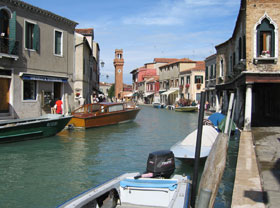
Once these glass artisans moved to Murano, this tiny town prospered and grew to nearly 30,000 residents in the 13th century. This community is similar to Venice, as it is comprised of several small islands, connected by canals and bridges, but on a much smaller scale. Today, Murano is home to only a few thousand permanent residents.

GET AWAY FROM CROWDS

Frankly, it is sometimes a relief to get away from the crowds and busy sidewalks in Venice and take the time to enjoy a slower pace in Murano. There are many glass factories still operating in Murano and most have complimentary demonstrations and tours available. Of course, they also have elegant showrooms with one-of-a-kind glass sculptures, chandeliers, goblets and even glass beads. Prices at the glass factories can seem steep, but each piece is authenticated, insured and shipping is available.

During a demonstration, most factories will show you how an artisan takes a molten glob of glass, orange with heat, and blows through a tube and spins the tube, creating a one-of-a-kind creation. Minerals and precious metals are added to the glass to create colors, just as they would have been 500 years ago. The color blends, and mineral recipes are a highly regarded secrets.

VISIT IS A ‘MUST’

A visit to a glass factory is a must, but when it comes to buying glass, there are also many smaller shops lining Murano’s main canal near the Vaparetto (water bus) stop. Compare prices, as you may find even better bargains in one of the many shops in Venice. The smaller shops don’t usually offer shipping, but they are happy to pack purchases in bubble wrap and tissue to pack in your luggage.

To learn about the history of glass making, visit the Museo Vetrario in the restored Palazzo Giustinian. This museum has exhibits of rare 500-year-old glass and glass/enamel pieces, as well as contemporary sculptures and examples of the entire glass making process. They are open 10 a.m. – 4 p.m. daily (closed Wednesday).

Following a morning glass factory tour, enjoy a leisurely lunch at one of the many eateries located along Murano’s main canal. Al Vetrai Da Adino, located at address number 29, is a personal favorite. Owner Adino and his wife Christina cook up some local favorites including the freshest fish, pastas and vegetables.

Start your meal with a typical Venetian “spritz” which is a refreshing aperitif made with Campari and sparking Prosecco. (If you enter the island via the Vaparetto, simply walk across the first bridge, then continue north about 200 feet and you’ll see the restaurant on your right. A large rooster logo adorns the front window.) Adino doesn’t speak much English, but his hospitality and great food will win you over. Be sure to tell them “Kristi sent me!” and you might be treated to an after-meal glass of Fragolino, a homemade wine that’s simply delicious! For advance lunch reservations,
call 041-739-293.

TAKE THE VAPARETTO

How to reach Murano: Take the public water bus or Vaparetto – #41/42– which takes about 30 minutes (from the train station, or Piazzale Roma ) or take boat # 52 from San Zaccaria which is near Saint Mark’s Square.

In 2007, Vaparetto tickets were available for one trip at 3 Euro, or 12 Euro for a 24 hour multi-trip ticket. The glass factories also have representatives in San Marco Square who sometimes provide a free or discounted fare water taxi in exchange for taking a specific factory tour. Some hotels can also arrange for a boat to pick you up at the hotel and take you directly to one of the factories.

Once in Murano, you may want to continue on to the island of Torcello (whose cathedral was founded in 639) or Burano (distinct for its multi-colored homes and famous for the lace-making crafts). Take Vaparetto #13 from the dock located adjacent Murano’s lighthouse. (This requires walking across the canal and around Murano in order to get to the other Vaparetto stop).

Frankly, after a busy morning and a big lunch in Murano, one might prefer a lazy boat ride back to Venice, a good cup of coffee and or perhaps an afternoon nap. It’s all a part of the Venetian experience.

Kristi’s favorite glass factory offering a one-of-a-kind demonstration and truly unique, contemporary glass art is called Schiavon. Their factory also produces stemware, chandeliers and traditional Murano glass, although the unique pieces by Mr. Massimiliano Schiavon are worth a visit. This glass factory has been in the Schiavon family for three generations.

Vetreria Artistica Di Schiavon
No. 7 – just a few shops north of the Vaparetto stop on the first canal.
Phone: 011-39-041 739 396
http://www.massimilianoschiavon.com
E-mail: info@massimilianoschiavon.com

Kristi Nelson Cohen is the owner of Bella Italia Trips, a small U.S. company offering guided trips to Italy. To reach Kristi or for more information, log onto www.bellaitaliatrips.com.

The Museum Shops of Paris

Photos courtesy the Paris Convention and Visitor’s Bureau


Museum shops. Parisian museums present the opportunity to combine culture with shopping. After a visit, you can pick up the hottest new design object to take home; find a special work on architecture, science, or cinema; or choose the latest trendy image or object as a souvenir.

THEMATIC AND SPECIFIC SHOPS
Museum shops offer works and objects of a high quality representative of those found in the exhibitions themselves. They often present the opportunity to find rare or very specialized objects, recordings, or books.

Close to the Jardin des Plantes, the bookshop of the Institut du Monde Arabe, designed by Jean Nouvel, has many precious items. Once through the entrance of this magnificent institution encased in moucharabiehs, the shop offers insight into Arab culture with high-quality exhibition catalogs and books on photography, architecture and craftsmanship.

Cinematique Francaise
Cinémathèque Française

In the Bercy district, the bookshop of the Cinémathèque Française is housed in a building designed by the architect Frank O. Gerhy. This bookshop for cinema buffs is situated on the mezzanine of the Cinèmathèque and is the main reference for cinema in Paris. Books about the history of cinema, experimental cinema and film music, as well as posters, and photos are for sale.

The bookshop at the Jeu de Paume, at the Place Concorde, is a landmark bookshop for all areas of photography, the visual arts and cinema, and has built a collection of more than 10,000 titles. The bookshop also operates a high-quality mail-order service for visitors abroad.

The huge bookshop Harmonia Mundi is located between the concert hall and the Musee de la Cita de la Musique, at the entrance to the Parc de la Villette, in north Paris. Lovers of classic, jazz and world music can choose from among the 9,000 CD and DVD references and benefit from the advice of professionals.

Linked to the Cité de l’Architecture et du Patrimoine, just across from the Eiffel Tower, the Moniteur Bookshop is entirely devoted to the subject of architecture and stocks works on architecture, town planning and heritage.

NATIONAL MUSEUMS
The national museums in Paris also have their prestigious shops. The Musée du Louvre shops, in several locations at the Carrousel, sell elegant objects like reproductions of jewelery and sculpture from the museum’s collections, as well as a selection of monographs by artists, essays and art books.

The Musée d’Orsay, a former train station built for the World Fair of 1900, has a delightful shop inspired by the collections of the museum selling posters, table and home decor objects, and exhibition catalogs.

Finally, the Flammarion bookshop at Beaubourg, in the Centre Pompidou, offers exhibition catalogs, postcards and multimedia products as well as a large selection of publications on art and design.

Musee d’Orsay

CONTEMPORARY SHOPS
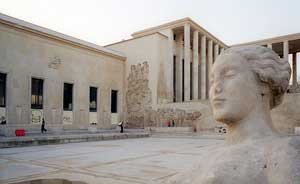
Some museums boast highly-contemporary shops designed like a second exhibition area to extend the length of a visit and offer a sales area with a striking decor. The ultra-trendy Palais de Tokyo, powerhouse of the contemporary artistic avant-garde, close to the Eiffel Tower, asked the graffiti artist André, the creator of the character of Monsieur A., to design its Blackblock gift shop. The design of the shop was inspired by a gas station in the suburbs of Stockholm. Encircled by refrigerated glass windows with integrated pink lights, the shop displays rare objects and limited editions. The space is also regularly used for special events.

In another vein, Le Laboratoire has opened near the Louvre; it is an experimental venue at the crossroads of science and contemporary creation with a bookshop called Laboshop. A veritable bubble in white, the shop invites visitors to discover a variety of prototypes that have been devised and created by participants at the venue, and which it is possible to test or buy. Among the most astonishing, “the Whiff” is a process which enables you to eat by inhalation, while “the Bel-Air” is a filter that enables plants to filter the air. These unique objects are signed by Designer Mathieu Lehanneur, and scientist and founder of this unique place, David Edwards.

The mezzanine of the Centre Pompidou, a dynamic Parisian cultural institution, houses the Printemps du Design, a shop with a grey concrete floor and minimalist windows. It offers 3,000 types of objects around five themes: living, savoring, charming, communicating, getting around and playing. Eggcups, seats, cameras, jewelery, sweets and spinning tops catch the eye. Striking for its selection and display of objects, it offers design classics as well as the latest in contemporary creations.

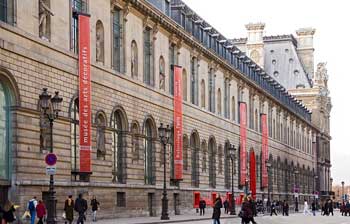
The 107 Rivoli is the sales area of the Musée des Arts Décoratifs, close to the Tuileries Gardens in the center of the capital. Specializing in specific areas of the decorative arts, fashion and design, the shop offers a rare selection of books, accessories, stationary, tableware and toys. For more up-to-date shopping, celebrities and designers are invited to suggest a selection of special objects for the duration of an exhibition or an event.

The new Galerie de l’Opéra is a gem of a shop situated within the prestigious Palais Garnier. A place to discover talents and trends in Europe, it specializes in the operatic and choreographic arts and is divided into four areas: multimedia library, art for children, memory, and performance, and is linked to the artistic program of the famous institution. Educational games, designer objects, books, technological or even signature and showcase objects already make this a cult address for the latest in museum shopping.

Shop of l'Opera
Galerie de l’Opéra

Palais de Tokyo

The prestigious Pinacothèque de Paris, situated opposite the Madeleine church, rounds off this tour of contemporary museum shops. Its shop showcases French and European designers who are not well-known to the general public, like the La Tonkinoise jewelery brand, for example. There is also a great selection of items for children: memory games, card games, wooden toys; and for adults, superb decorative objects and even luxury stationary.

For the curious and contemporary art buffs, there is the Merle Moqueur, situated in the north wing of the Halle Curial at the Centquatre, the city of Paris art establishment in northeast Paris. The shop features an epoxy floor, suspended acoustic cassettes and ramps with fluorescent lighting. Reference works for children and adults are offered in the different sections: general, youth and arts.

Also centered on contemporary creations, the bookshop of the Maison Rouge in Paris, Bookstorming, has wall decoration by the artist Jean-Michel Alberola. Books on art, monographic works, and critical essays, as well as many original works are on sale. Numerous events and encounters with artists and authors, like book signings, talks and video displays are featured regularly.

The bookshop of the Musée du Quai-Branly, situated on the Seine quayside near the Eiffel Tower, is devoted to art from outside Europe. This unique place offers a variety of ethnic objects while advocating the values of fair trade, for example with A-Typik and its Colombian jewelery, whose profits go to the reconstruction of schools in Colombia.

UNUSUAL SHOPS
Reflecting the museums in which they are housed, this type of shop offers unusual and miscellaneous articles.

At the Musée de la Poste, the shop Correspondances offers a fine choice of objects linked to the role and history of the Post Office: original postcards, objects and ideas for gifts.

Below Sacré-Coeur in Montmartre, the Halle Saint-Pierre is an exhibition area showing unusual and popular primitive art. The bookshop of the Halle Saint-Pierre is as surprising as the museum. Built of iron and glass, it houses books on art and literature, often illustrated and covering all types of contemporary creation.

Not far from the Halle Saint-Pierre, in north Paris, the shop of the Musée de l’Érotisme caters to shopping with an aphrodisiac edge. On sale are books of modern art and erotic photographs, and old films and comic strips on the same theme.

There is also the bookshop of the Hôtel de Sully, located in a 17th-century mansion. This exceptional establishment presents national heritage treasures and heritage publications.

The shop of the Monnaie de Paris delights fans of coins, medals and jewelery.

The bookshop of the Musée de la Chasse et de la Nature, situated near City Hall, offers atypical shopping opportunities with very specialized literary and artistic publications on the subjects of nature and hunting.

For honing technical and scientific knowledge, the shop of the Musée des Arts et Métiers offers fine objects and books linked to the current exhibitions. Badges, fans, model aircraft, and literary works provide a close-up view of the fascinating world of technology.

Finally, in the Hôtel de Saint-Aigan, in the heart of the Marais, the bookshop of the Musée d’Art et d’Histoire du Judaïsme offers a selection of varied objects and books on religion, philosophy, history and ethnography, continually updated according to what’s at the museum.

Musee des Arts Decoratifs
Hotel de Sully

Germany’s Black Forest: Home of the Famous Wooden Cuckoo Clock

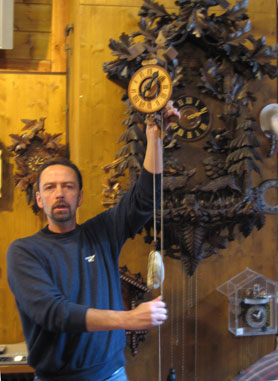
Jack, the cuckoo clock demonstrator in the Black Forest, explains the history and manufacturing process at the Familia Drubba’s Hofgut Sternen in Breitnau, Germany.

By Marilyn Heimburger
Photos by the author

One of my early childhood memories is watching my aunt change the time on her cuckoo clock so I could hear the cuckoo sound over and over again.

My grandfather, who emigrated from Germany at the age of 22, bought the clock during his only visit back to his homeland, after World War II. Since my fascination with the clock has continued into adulthood, I was happy to learn more about them during a trip to Familia Drubba’s Hofgut Sternen. Breitnau, in Germany’s Black Forest, which was a stopover destination included in a Rhine River Viking Cruise I took recently.

GREETED BY CUCKOO AND MUSIC

If you pull into the Hofgut Sternen parking lot at the top of the hour, you’ll be greeted by the cuckoo, music, and dancing characters of one of the largest cuckoo clocks in Germany. The two-story-high clock is built into the side of the shop.

Inside the building, Jack, the cuckoo clock demonstrator, briefly explains the history and manufacturing process of Germany’s most popular souvenir. A primitive form of the cuckoo clock dates back to the mid-1600’s and used stones as weights (the original “rock around the clock,” according to Jack.) It had no minute hand, only one hand to tell the hour. Shield clocks, with a flat face board painted with colorful flowers and scenes, were made around 1720, with the first cuckoo appearing in one around 1760. The station house clock, with a peaked roof and hand-carved leaves and animals, appeared around 1860.

The cuckoo sound was chosen for the clock because it was an easy sound to imitate. Two different sized bellows send puffs of air into two wooden pipes, to produce the two-pitched cuckoo sound.

At least two pinecone-shaped weights hang on chains beneath the clock: one to operate the cuckoo and one for the cog-driven timing mechanism. If the clock has a third weight, it has been fitted with a music box, which plays after the call of the cuckoo. The clocks are “wound” by pulling the chains to raise the weights to their highest position. Clocks with large pinecone weights are wound once a week; clocks with small pinecones are wound every day. While my aunt had to still the oak leaf pendulum every night to stop the clock and quiet the cuckoo, many clocks now have a switch that turns off the cuckoo and music, but allows the clock to keep running.

The Linden Tree wood is used in the clocks because it is easy to carve and features very little grain.

CLOCKS FROM LINDEN TREE WOOD

Most cuckoo clocks are made of wood from the Linden tree, because it is easy to carve and has hardly any grain. Since the wood is so moist, it has to dry for two years before it can be used. To make the frame board for the front of the station house clock, a stencil is placed against the flat board, and the basic outline is lightly spray-painted. This design is cut using a scroll saw or jig saw. Nothing else is done by machine. The rest of the frame board is hand-carved, a process that can take six to eight weeks for a large clock. Vines, oak leaves, birds, rabbits and stags are the traditional decorations on station house clocks.

Character clocks add humor to timekeeping. One clock at Hofgut Sternen features a man shoveling a dumpling into his mouth with each sounding of the hour. The “mother-in-law clock” has a woman bopping a lazy son-in-law on his head at the top of the hour, to encourage him to get to work.

An interesting observation: during all of the years I’ve looked at cuckoo clocks, I had never noticed that the Roman numeral used for the number four on the clock face is IIII, and not IV. Two theories sem to be most popular explaniations for this. In ancient Roman times, “IV” was an abbreviation for the Roman god, Jupiter. IIII was therefore used out of respect so that Roman public sundials or clocks didn’t have “1 2 3 GOD 5” on them. Later clock markers continued to use this alternative Roman numeral system on their timepieces. The other theory is simply one of symmetry on the clock face. The number eight, or “VIII” on the clock dial, is the heaviest number, consisting of four characters. Using IV (only two characters) for the number 4 on the opposite side of the clock face, would ruin the symmetry. Therefore the four-character “IIII” is preferred.

I am now the proud owner of my aunt’s cuckoo clock. The carved oak leaf decorations show evience of being dropped and re-glued by my uncle. But the cuckoo still works, and now enchants my grandchildren just as it did for me.

In the Black Forest, these men and women, in typical colorful garb from the region, are tour guides who know the towns, mountains and legends of this famous area.

IF YOU WANT MORE INFORMATION…

These retailers sell German-made cuckoo clocks on the web. We have listed them as a convenience to European Traveler readers, but we have no specific recommendations who to buy them from: www.clockway.comwww.german-cuckoos.comwww.BlackForestGifts.com and www.designedintime.com.

Christmas Markets in Luther Country

Erfurt Christmas Market

In Germany’s Luther Country, Advent means Christmas markets. The crisp winter air is filled with the smell of ginger and nutmeg, signaling the arrival of Stollen, a special Christmas cake, and Glühwein, mulled wine. Cobbled streets and squares, lined with half-timbered medieval houses, provide the backdrop for dozens of wooden stalls, selling wooden toys and Christmas decorations, handcrafted gifts and seasonal foods, such as Zimtsterne (cinnamon stars) and Lebkuchen (soft, spiced cookies).

Brass bands play and choirs sing carols, often written by Martin Luther himself. In fact, many Christmas traditions were supposedly instigated by the Protestant reformer 500 years ago. Legend insists one dark and starry night, Luther was touched by the beauty of the pine trees. On returning home, he cut down a tree, took it into his house and decorated it with candles. As well as the Christmas tree, Luther is credited with the idea of Christkind, the Christ child bringing presents. (Kris Kringle is still familiar in many U.S. homes). Concerned that Saint Nicholas, who delvered his gifts on December 6, was too popular, Luther came up with an alternative to “Santa Claus”: a golden angel, with wings and a crown.

Here are just some of Luther Country’s most authentic Christmas markets.

(clockwise) Christmas Stollen; Lebkuchen; Zimtsterne

ERFURT
November 27 – December 22
Although Erfurt’s 162nd Christmas Market spreads throughout the old town, the focus is on the Domplatz, the vast Cathedral Square. The 200 market booths sell everything from Thuringian bratwurst (Germany’s favorite grilled sausage) and Christmas cookies to handmade toys or traditional, handmade Christmas decorations. Children love the giant Ferris wheel,

the 90-foot-tall Christmas tree covered in candles, and the 40-foot-high wooden pyramid. Most of all, they love the nativity scene, set in a fairytale forest, complete with near life-sized, hand-carved figures. Gardeners should not miss the floral Christmas exhibition in the underground vaults of the cathedral.

Lutherstadt Wittenburg Christmas Market

LUTHERSTADT WITTENBERG
November 28 – December 23
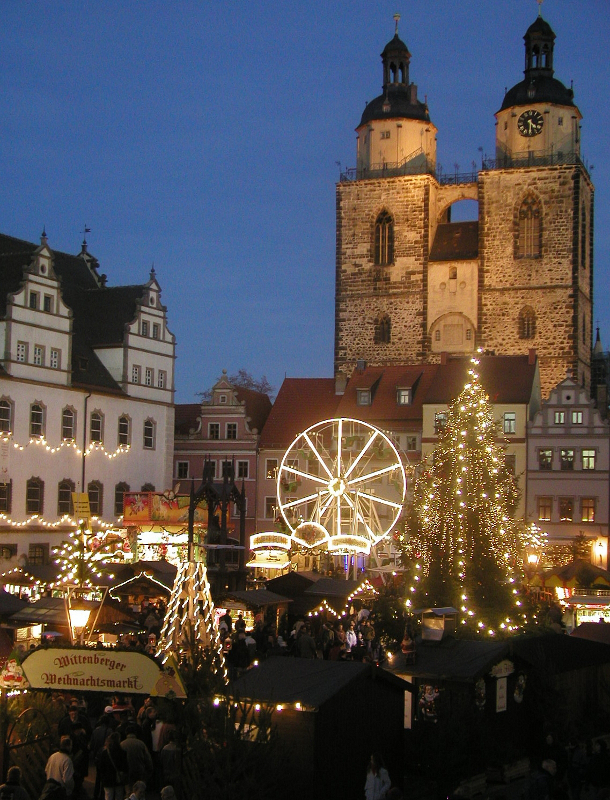
In the market square, a statue of Luther looks out across the Christmas market, with its stalls decorated with pine boughs, lights and Christmas ornaments. In the air is the scent of mulled wine and roasted almonds. Across the square is the Marienskirche (St. Mary’s Church), where Luther preached. Special are the town’s Adventshöfe, medieval courtyards, where local artists and craftsmen sell their wares. In the Cranach Courtyard, named for Luther’s great friend and painter Lucas Cranach, the weekend of December 8 and 9 features weavers and knitters, wood carvers and basket makers.

QUEDLINBURG
November 30 – December 23
With more than 1,300 half-timbered houses, Quedlinburg is one of Europe’s most romantic cities. And during the Christmas Market, strolling along the cobbled streets is like walking through history. One unique event is the “Advent in den Höfen” (December 1-2, 8-9, 15-16), when some 20 private courtyards open to sell special Christmas gifts, often handmade. Another highlight is the world’s largest Advent calendar! At 4:30 p.m. every afternoon for 24 days, children look out for the star that marks the house where the next scene in the Advent calendar will appear. When the door opens, fairytale characters appear and dance, sing or play for spectators.

WERNIGERODE
November 30 – December 22
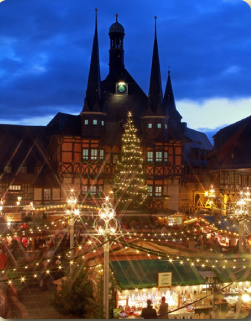
Dominated by its 12th-century castle, Wernigerode’s annual Christmas market has a fairy story backdrop: a 15th-century town hall, half-timbered houses and a 35-foot-tall Christmas tree. The stalls serve traditional food and drink, hand-made toys and ornaments for the home; evenings are filled with concerts of seasonal music. From December 15 to January 8, 2013, the Castle hosts its own special Winter Market. Children meet a fairy at 3 p.m. and receive presents from St. Nikolaus (Santa Claus) at 4 p.m. They also love to ride the Christmas train in a historic carriage, pulled by a steam engine through the snow-covered countryside.

Wernigerode Christmas Market

LAUSCHA
December 1-2 and 8-9
Each Christmas, this small town in a steep, wooded valley in the Thuringian Forest, plays a vital role in every American home. This is where the first glass Christmas tree ornaments were created in 1847. In 1880, F. W. Woolworth, the five-and-dime store pioneer, brought a batch of these glass balls to his store in Pennsylvania, and the rest is history. The tradition continues in Germany’s glassblowing capital, where you can watch artisans creating works of art at Lauscha’s Museum of Glass Art. At Lauscha’s annual Christmas “Kugelmarkt,” or glass bauble market, you can buy these handmade decorations in all shapes and colors.

Mead honey wine

WARTBURG CASTLE, EISENACH
December 1-2, 8-9, 15-16
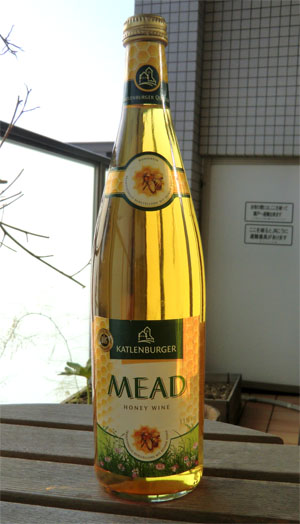
Wartburg Castle is where Martin Luther, the Protestant reformer, changed history when he translated the New Testament into German. And this UNESCO World Heritage Site just outside Eisenach is still a massively impressive fortress. At Christmas, however, a historic Christmas Market transforms the castle, with artists and street performers, craftsmen and knights. Meet candle makers and barrel makers, rope makers and lantern makers, minstrels and puppeteers. With cheerful booths and medieval decorations, this is a like a trip back in time. And the medieval food is delicious, from roast apples and honey to mead.

Meissen Porcelain Celebrates 300 Years

Photos courtesy Germany Tourism

Founded in 1710, Meissen Porcelain is one of the world’s most successful luxury brands. It stands for the timeless connection between past and present, classic design and hand-made quality. This year Germany is celebrating the 300th anniversary of Meissen Porcelain with more than 40 special events and exhibitions.

Some of this year’s highlights included these exhibitions: Triumph of the Blue Swords at the Japanisches Palais in Dresden, focusing on the first 100 years of Meissen, showing masterpieces that are not usually displayed in public; All Nations are Welcome in the nearby town and modern factory of Meissen (January 23 – December 31); Philosopher’s Stone, a collection in the original workshop in Castle Albrechtsburg also in Meissen (May 8 – October 31); and The Fascination of Fragility with 500 pieces from Dresden’s state collection in the Ephraim Palace in Berlin.

Porcelain in Meissen and Dresden is not only available to the public during this jubilee year. The Saxon nobelman Augustus the Strong’s permanent collection is housed in Dresden’s Zwinger Museum in the rooms beautifully restored by the New York designer Peter Marino. The modern production center, its connected museum in Meissen and the original factory in the Albrechtsburg, are only 45 minutes outside of Dresden and accessible by fast train to visitors throughout the year. You can dine on Meissen porcelain, participate in workshops, watch the production and, of course, buy the products.

Porcelain manufacturing and collection is a major attraction throughout Germany, with special routes, museums and production centers. Two porcelain routes link places of interest with the manufacturing of porcelain: Along the 340-mile-long route in the north-east of Bavaria visitors can discover famous factories, the European Industrial Museum of Porcelain, the Rosenthal Museum and the European Museum of Technical Ceramics.
www.porzellanstrasse.de

A second themed route in Thuringia features factories where porcelain is made and decorated and where visitors can visit factory outlets, demonstration workshops and several museums.
www.thueringerporzellanstrasse.de

Another highly acclaimed porcelain factory is based in Munich in the beautiful Nymphenburg Palace. For 260 years the Nymphenburg production center produced dinner services and figurines for the Bavarian kings. At the adjacent museum more than 1,000 pieces of Nymphenburg porcelain from different periods are exhibited. www.nymphenburg.com/us/nymphenburg