Spain’s Enchanting City of Flowery Patios

Medieval charm and floral beauty captivate visitors to Cordoba

Story and photos by Randy Mink

As you’re exploring the cobbled streets of this sun-kissed city in Southern Spain’s Andalusia region, it’s a smart move to escape the heat by stepping into a leafy courtyard festooned with flowers, draped in greenery and surrounded by thick, whitewashed walls. Harking back to Cordoba’s deep Arabic roots, these cool oases cast a magical spell.

Tucked into the largest urban historic center in Spain, the city’s trademark patios have always been a chief tourist draw. Architectural gems as well as horticultural havens, they mirror the tradition of cultivating flowers and plants introduced by the Moors when the Iberian Peninsula was ruled from Cordoba by Muslim emirs and caliphs. A respected seat of learning and artistic expression during its heyday in the 10th and early 11th centuries, Cordoba reigned as medieval Europe’s cultural capital, a city second in importance only to Constantinople. Christians, under King Ferdinand III of Castile, conquered Cordoba in 1236, ending five centuries of Muslim rule.

  • man looking at flowers
  • people looking at flowers

For two weeks every May, Cordoba celebrates its blooming courtyards during the Patio Festival (Festival de los Patios), an event held annually since 1921. About 50 private homes, competing for awards as the loveliest, open up their inner sanctums to the public—for free.

On my trip to Cordoba this past October, I was still able to view some private patios. In the San Basilio neighborhood, our group booked a tour (offered nearly year-round) that got us into the patios of five houses dating from the 16th to 18th centuries, a time when several poor families shared a communal courtyard. The common kitchen in some patios has been preserved and is on display. But the stars of the show are pots brimming with geraniums, impatiens, petunias, marigolds and other flower varieties, along with vines, shrubbery, rose bushes, and cascades of jasmine and raspberry-red bougainvillea. Orange, lemon, olive and fig trees also set the stage in these lush mini paradises, one of which is occupied by artisan shops specializing in handcrafted leather, ceramics, silver jewelry and perfumes.

FLORA: Blending Art and Nature

My October visit coincided with a relatively new cultural event that nods to Cordoba’s floral and botanical heritage. Called FLORA, the week-long, free-admission festival features five installations in public courtyards within walking distance of each other in the historic center.  Using plants and other natural materials, five international artists vie for monetary prizes. We saw creations by competitors from Mexico, Brazil, the United States and Spain.
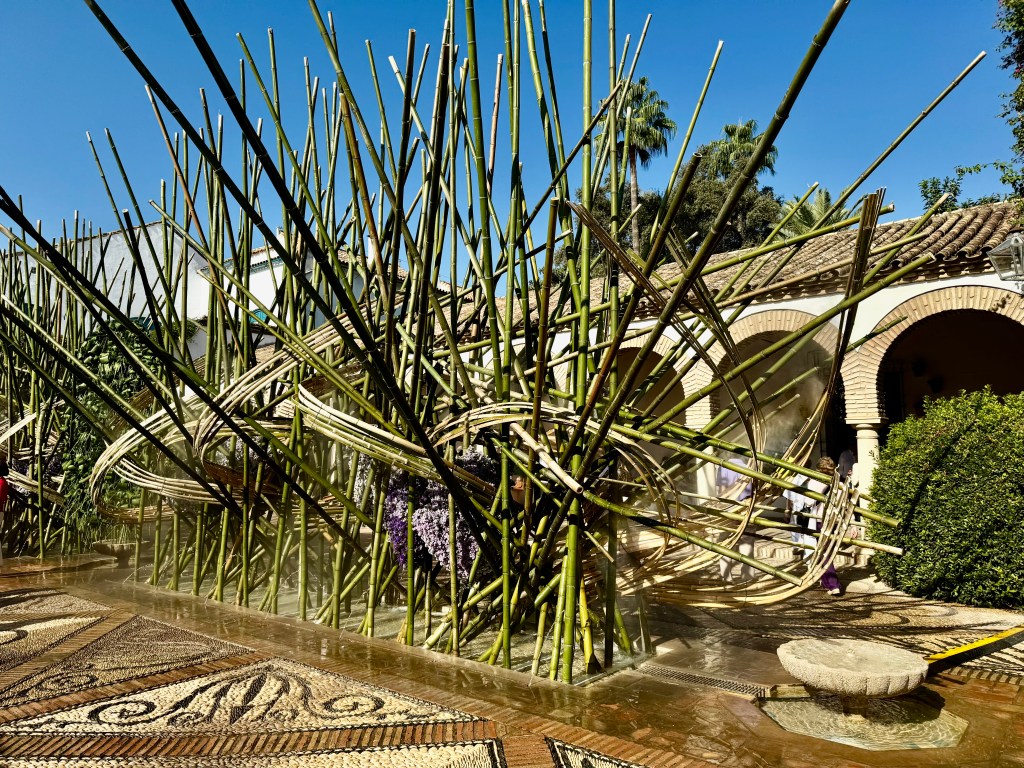
Bamboo canes and fountains in an art installation
Bamboo canes and fountains dominate the winning entry in FLORA 2025, an annual competition between international artists using plants and other natural materials to create large installations in existing patios in Cordoba. 

FLORA 2025’s first-place winner was Wagner Kreusch, a Brazilian who fashioned a monumental structure out of green bamboo canes, fountains, a misting feature, and purple and white aspidistra flowers. Titled Rio Flotante, or “Floating River,” his entry wowed onlookers at Palacio de Viana, the estate of the aristocratic marquises of Viana until 1980. Now a major tourist attraction, the 16th century palace has 12 plant-filled patios, each with a story to tell, and rooms displaying collections of furniture, weapons, porcelain, tapestries and paintings.

Cordoba’s Historic Heart

Threads of Christian and Jewish history, intertwined with vestiges of Roman, Visigoth and Moorish rule, emerge from every corner of Cordoba’s UNESCO-recognized historic quarter, a tourist-friendly maze of narrow lanes snaking between white buildings adorned with iron-grillwork windows, doors and balconies.
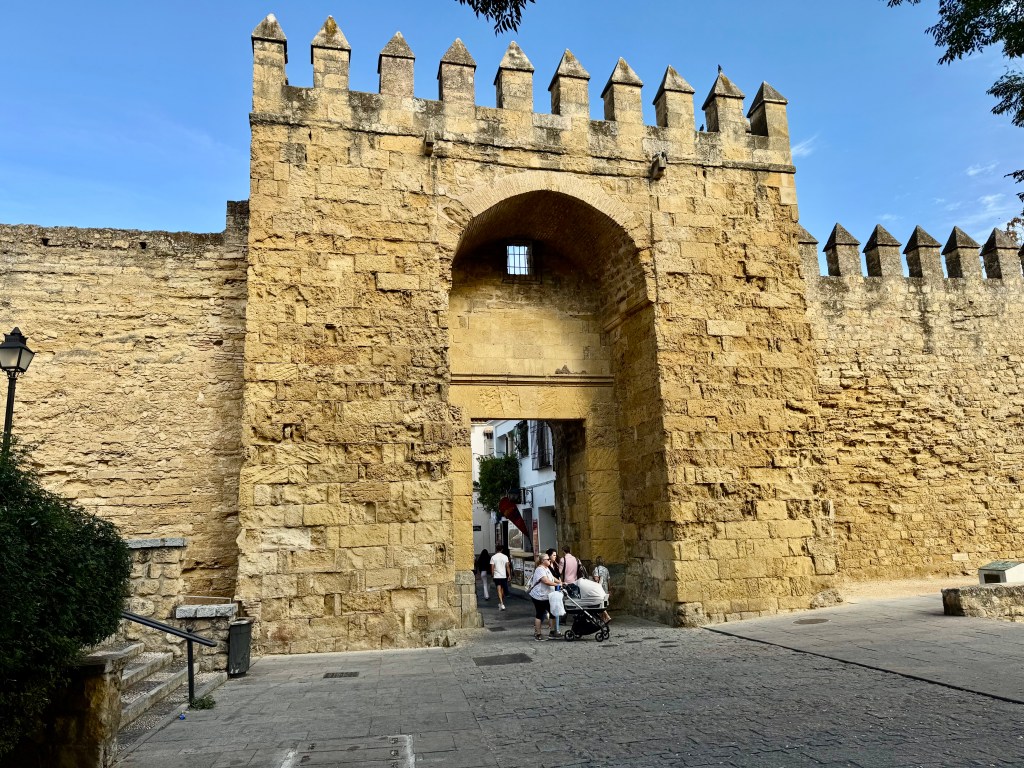
city gate and ancient walls
This surviving city gate provides entry through the ancient walls of Cordoba’s historic center.

Practically all the city’s top sights lie within this easily walkable district, but it’s also fun just to wander and get lost in the labyrinth, where flower-decked patios, orange trees, and festive taverns and outdoor cafes typify the gracious lifestyle of Andalusia, the region that conjures up our most romantic visions of Spain. Within the old city walls, you’ll also find plenty of souvenir shops. A highlight for our group was a rousing flamenco show with dinner at El Jaleo, an intimate room where dancers electrified us with some thunderous stomping.
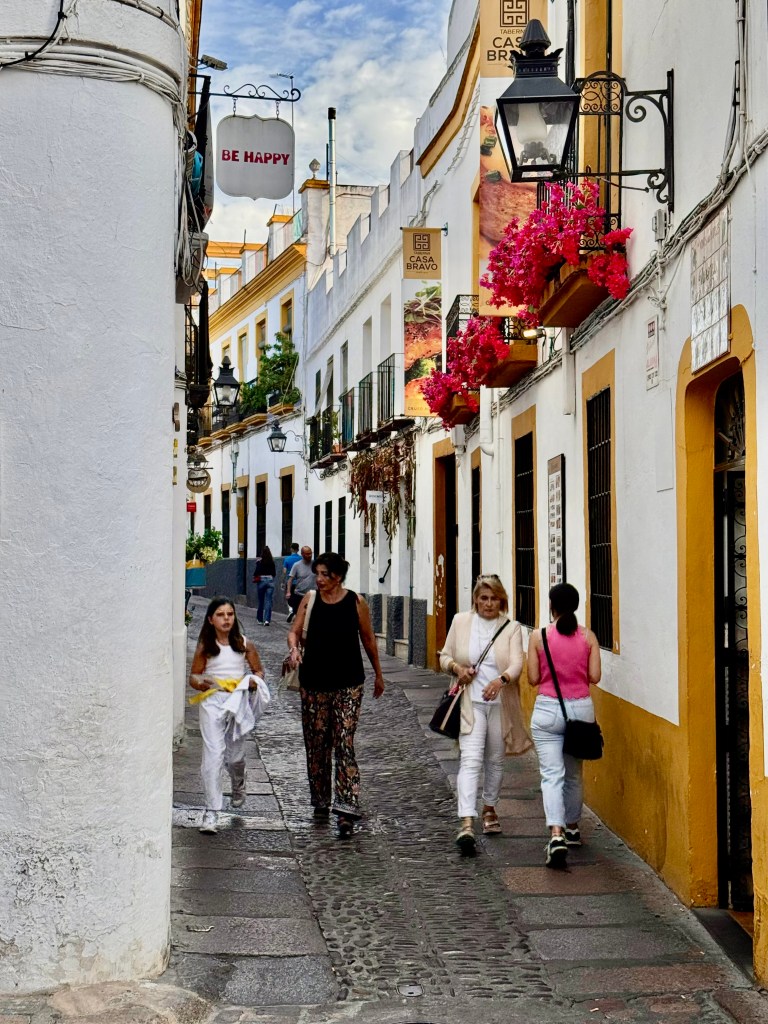
people walking down narrow street of shops
The intimate lanes of Cordoba’s historic center provide ideal settings for shopping, relaxing at cafes and just getting lost in medieval times.
Jewish Quarter

The medieval Jewish Quarter, or Juderia, is the historic core’s most atmospheric neighborhood, and its pleasures lay right outside the door of our hotel, the NH Collection Amistad Cordoba. Featuring flower-decked alleyways and patios, along with reminders of Jewish culture that flourished in Cordoba long ago, the quarter is home to the Synagogue, built in 1315. No longer used for worship, it’s the only Jewish temple in Andalusia to survive the Inquisition in 1492, when Jews were expelled from Spain or forced to convert to Christianity. Inside the small building you see Hebrew inscriptions, Arabic decoration and even a Cross (it was used as a church in the 19th century). For many years the Jews lived in harmony with the Muslims and some held prestigious positions in the government, professions and arts. Toledo claims Spain’s other two remaining medieval synagogues.
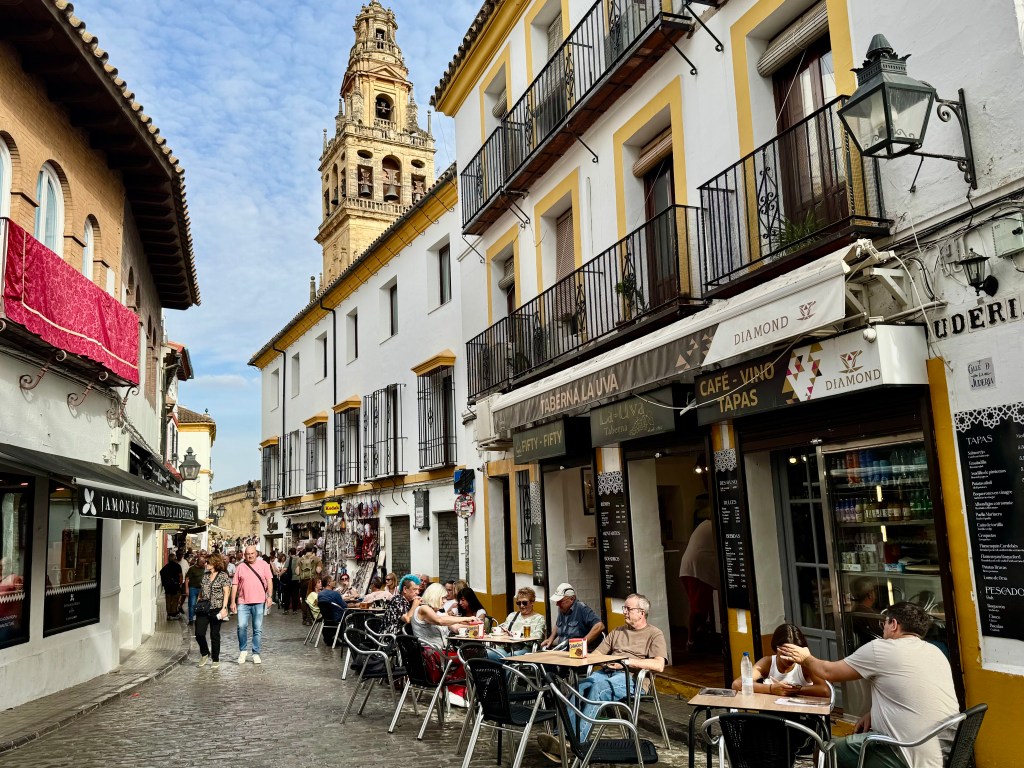
town street with people sitting at cafe tables
Cordoba’s atmospheric Jewish Quarter offers souvenir shops, cafes and a cozy medieval feel.

Nearby, in a beautifully restored 14th century house, Casa de Sefarad is a museum that tells the story of the Sephardic Jews in Iberia and other Mediterranean lands (a group differentiated from the Ashkenazi Jews of Central and Eastern Europe).

At the Bullfighting Museum (Museo Taurino), right across the plaza from my hotel, I learned about some of Cordoba’s greatest matadors. Though much of the exhibit text was in Spanish only, the two short audio-visual presentations provided an option in English. With a wrap-around screen, one film puts you right in the middle of the ring with a ferocious bull.

Cordoba’s Crown Jewel: The Mezquita

First-time Cordoba visitors make a beeline to the Mezquita, a former mosque that has been a church since the 13th century. Rather than destroy the mosque, the Christians decided to modify it. In fact, the church—complete with an elaborate main altar, a giant nave, an organ, religious artwork, tombs of important citizens and intricately carved Cuban mahogany choir stalls—appears to have been plopped smack into the middle of the mosque. The cavernous Mezquita (Spanish for “Mosque”) was once the second largest mosque in the world after the Great Mosque in Mecca.

  • Arches inside a church
  • bell tower and trees
  • altar items at a church

The Mezquita’s most dazzling sight is the endless forest of marble, granite and onyx columns topped with red-and-white-striped, horseshoe-shaped double arches, Islamic style; many of the pillars were recycled from Roman and Visigothic times. Fashioned over the centuries from a jumble of architectural styles, the dimly lit Mosque-Cathedral, as it’s known, is vast, mysterious and hard to wrap your head around. The columned arcades seem to march on forever, melting into infinity. There is no other building like it.  

I wanted to climb the Mezquita’s bell tower (built around 1600 over remains of the mosque’s minaret), but tickets for the day were sold out. So, I crossed the Guadalquivir River via the 2,000-year-old Roman Bridge, a wide pedestrian walkway, and took in panoramic views from the rooftop terrace of the Calahorra Tower, a crenellated 1369 structure that houses a museum of Andalusian culture.
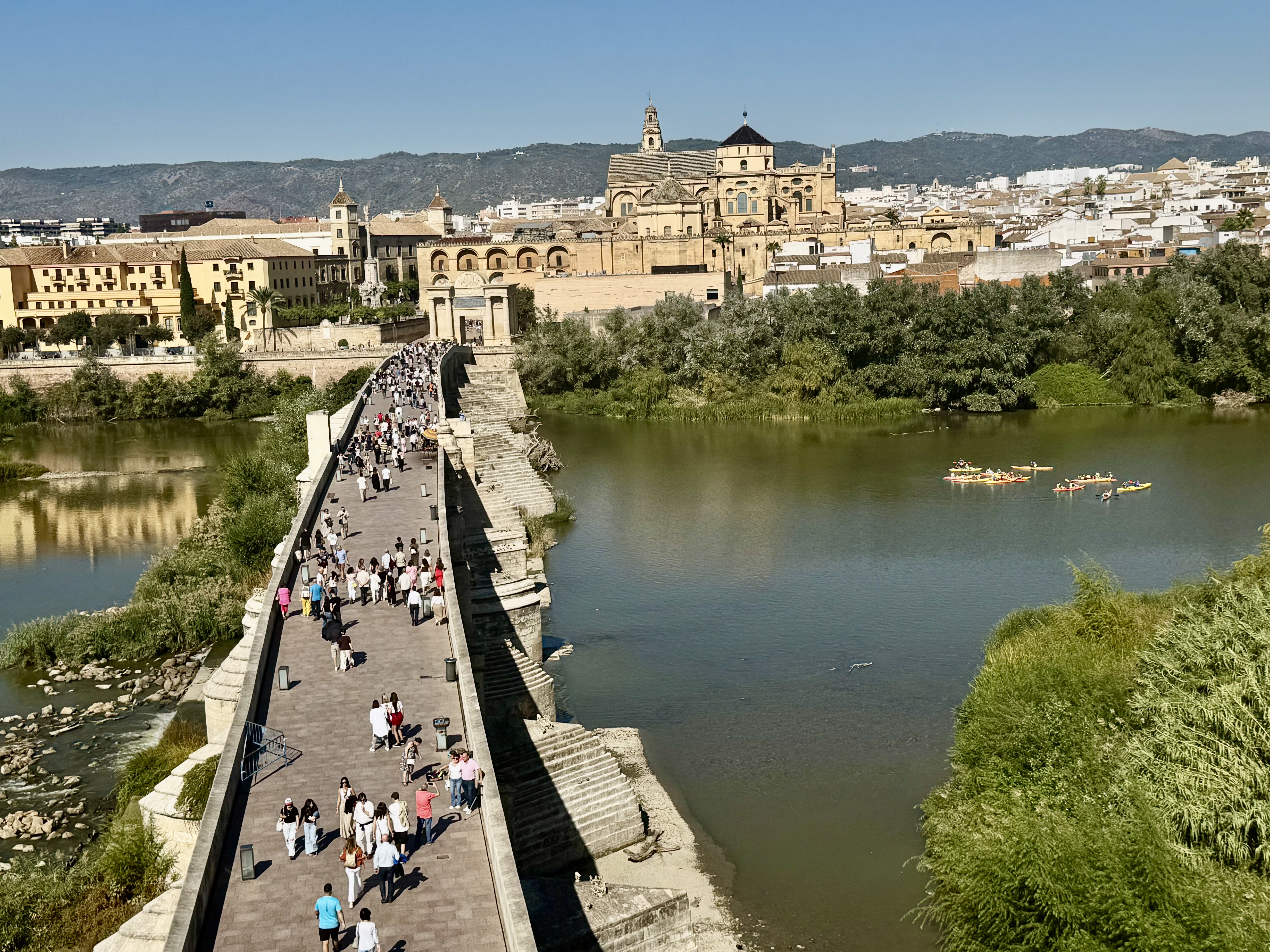
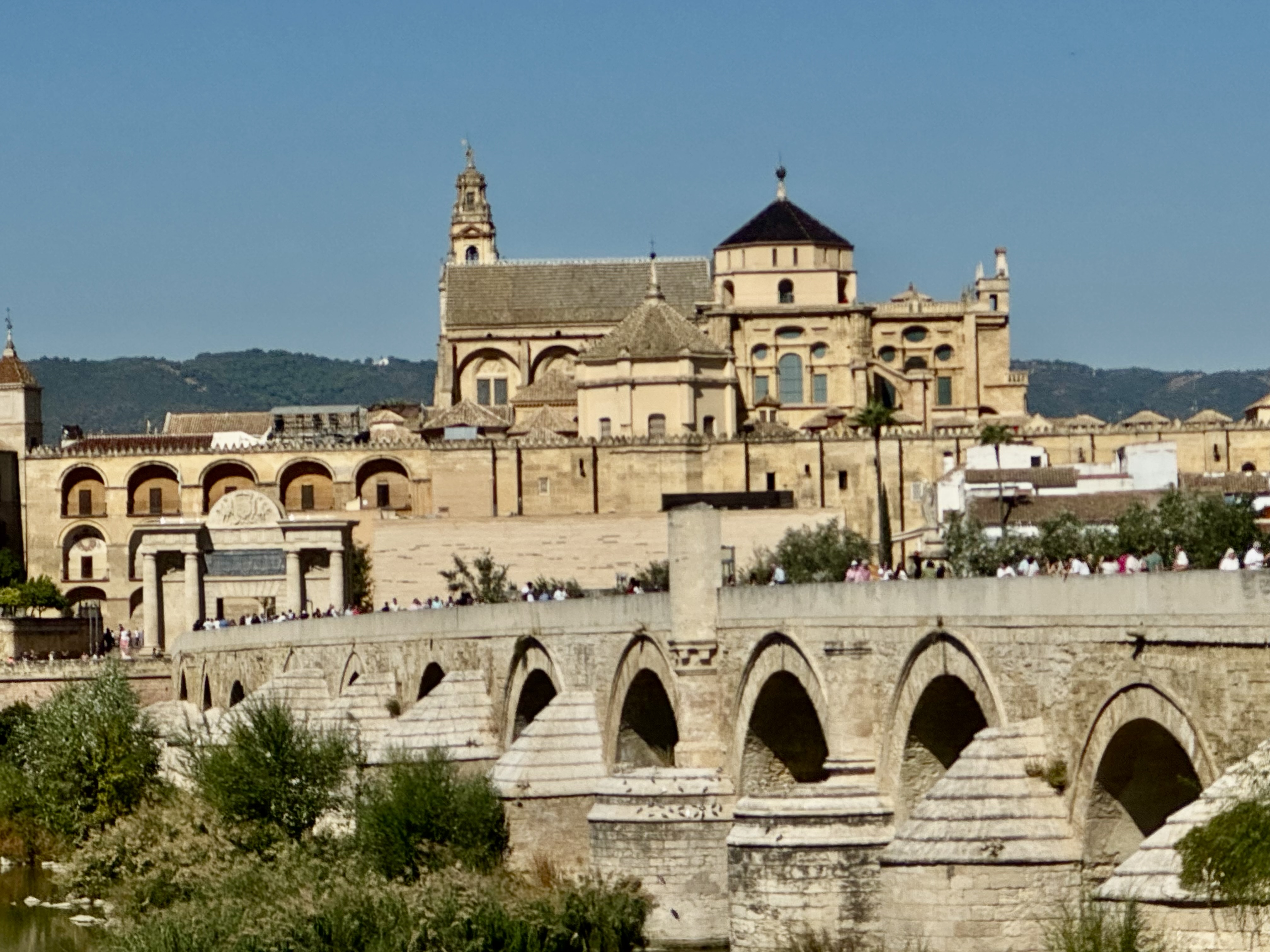
  • overhead view of pedestrian walkway over river
  • pedestrian bridge

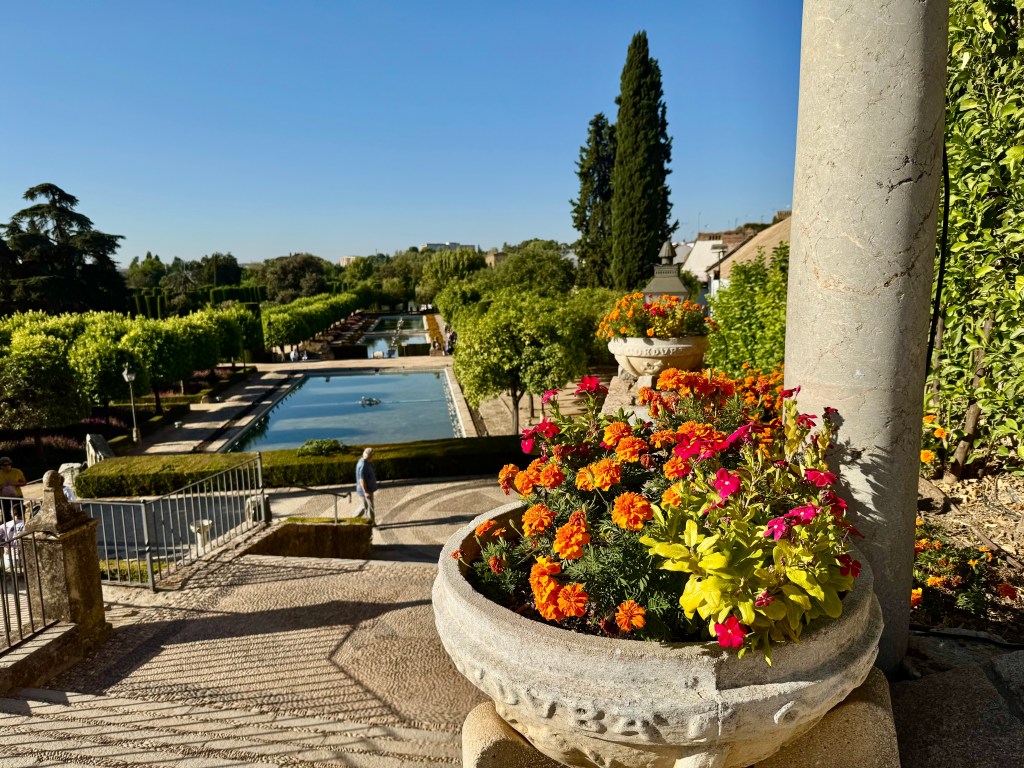
The bridge and Mezquita are a short walk from Alcazar de los Reyes Cristianos, residence of the Christian monarchs. The palace-fortress currently is closed for renovations, but I enjoyed walking through its terraced gardens, admiring the plantings and statuary. One sculpture depicts Christopher Columbus being received by King Ferdinand and Queen Isabella, sponsors of his 1492 voyage to the New World.
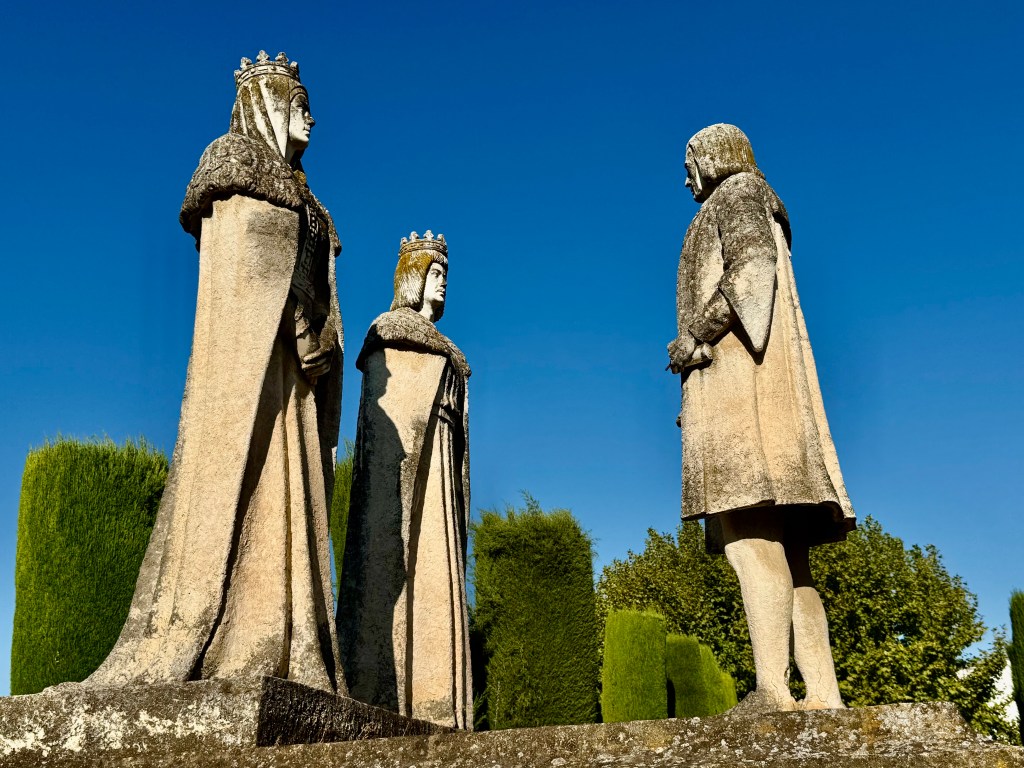
three tall statues in a garden
The Alcazar Gardens in Cordoba feature a sculpture of Christopher Columbus being received by King Ferdinand and Queen Isabella.
flower pot with garden and trees
The terraced gardens of the Alcazar palace/fortress are a must-see in Cordoba.

When it comes to destinations in Andalusia, Cordoba often gets short shrift, as Seville and Granada tend to get the most attention. But Cordoba should be on every traveler’s radar. Indeed, this overlooked city merits a day or two for a good looking over.

For more information log on to www.spain.info/en/destination/cordoba/

🔍 Search the site to discover more European Traveler feature stories. 🌍

FOLLOW US:

Hitting the Heights in Cuenca

A medieval gem awaits travelers in the Castilla-La Mancha region of central Spain

Story and Photos by Randy Mink  

With ancient buildings stacked on a steep promontory at the meeting of two deep river gorges, Cuenca projects a dramatic profile, one different from any other city in Spain. Because it’s not on the traditional tour circuit, this somewhat isolated medieval gem, about two hours southeast of Madrid, is off the radar of most North American travelers, a fact that just adds to its beguiling appeal.

In Cuenca it’s all about the heights. Think vertical. Looking up or gazing down, you’ll find yourself constantly taking in the views. Traipsing around narrow meandering streets and passageways, you’ll encounter one vantage point after another that provides a fresh new slant on cliff-clinging houses high above the gorges. There’s a new vista at every turn.

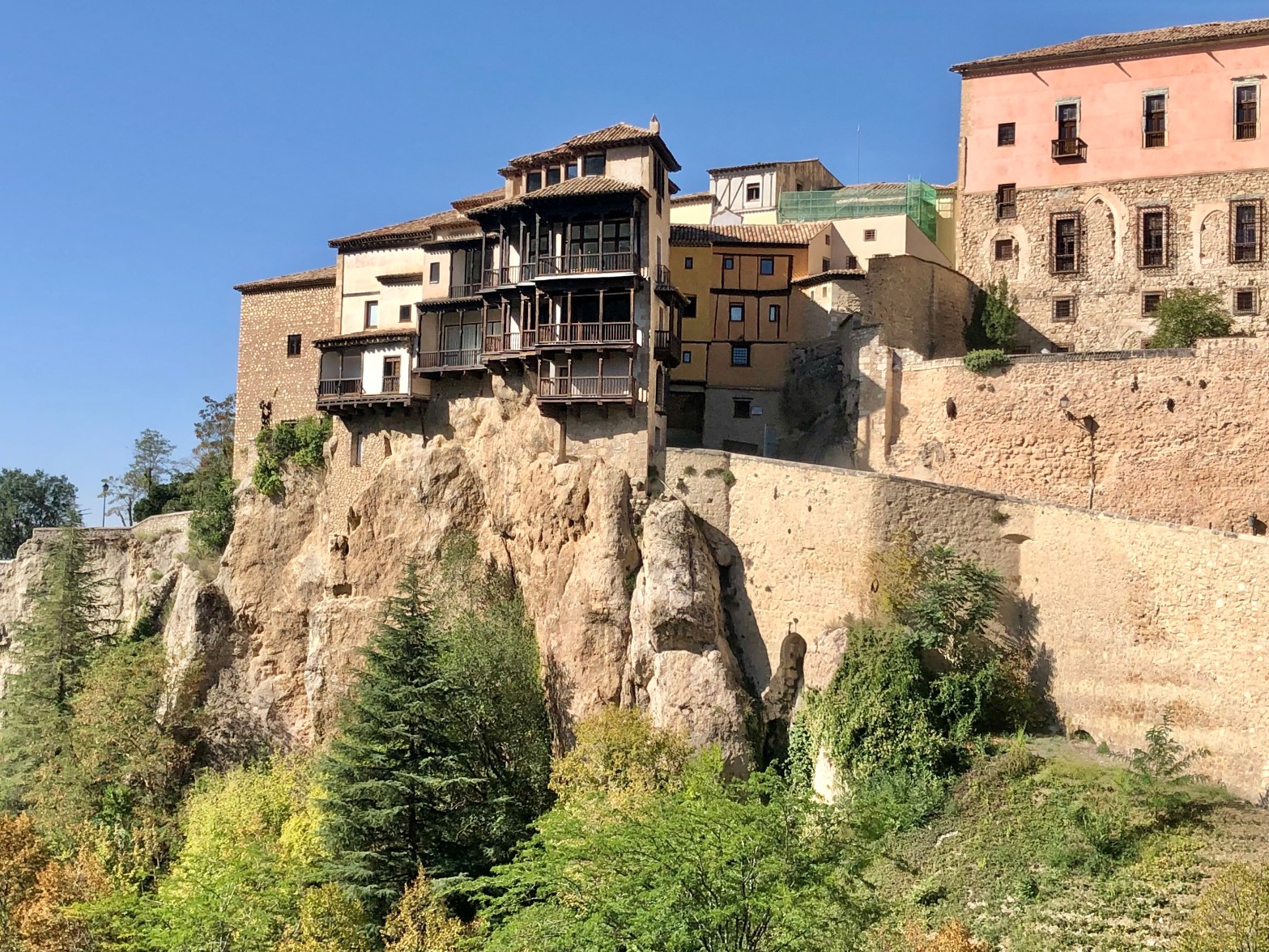
Those afraid of heights get nervous crossing San Pablo footbridge, a wooden plank walkway that spans the Huécar River 200 feet below. But it’s a major attraction in itself, an Instagrammable spot for sure. If you’re staying at Parador de Cuenca, as our group was, the bridge is the most direct way of getting to the core of the enchanting Ciudad Alta, or Old City. We crossed it several times a day, often wondering how many people it could hold at one time.

San Pablo footbridge and the Hanging Houses (left) dominate this view of Cuenca’s Old City.

From the bridge you have the best view of Cuenca’s most emblematic attraction—the Hanging Houses, or Casas Colgadas. The wooden balconies of this trio of 14th century dwellings jut out over a sheer cliff. Appearing to defy gravity, the buildings seem about to topple off their perch and into the abyss. You can actually stand on one of the cantilevered balconies if you visit the Museum of Spanish Abstract Art or gourmet restaurant Casas Colgadas Jesus Segura, both tenants of the Hanging Houses. Some art lovers prefer the Antonio Perez Foundation, a museum of modern art housed within a former Carmelite convent, another cliff-hugger.

The Antonio Perez Foundation is a modern art museum housed in a former convent.

In medieval times, why did many builders push to the precipice? The answer: real estate was scarce atop the escarpment and every square foot counted. Because land was at a premium, some houses were built eight to 12 stories high. Constructed of wood and adobe, these “skyscrapers,” many of them painted in bright colors today, were among the tallest buildings in Europe until the introduction of reinforced concrete in the 20th century. At its economic peak in the 15th century, the crowded old quarter had a population of 17,000. Now the number is 2,000.

Cuenca does not have a long checklist of must-see sights, which suits me just fine. I’m happy just wandering and getting lost in the medieval lanes, soaking up all the history that crosses my path—and taking picture after picture. The refreshing lack of tourists in Cuenca makes it even more delightful.

The narrow alleyways of Cuenca’s historic core invite discovery.

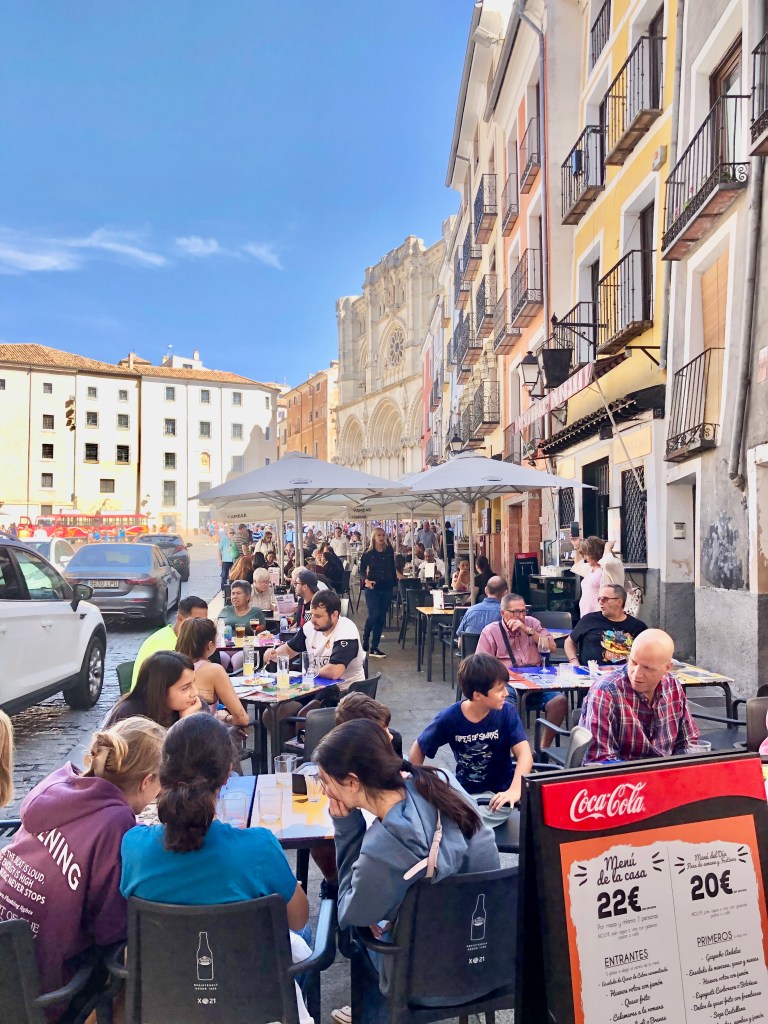
The heart of this UNESCO World Heritage city is the Plaza Mayor, which spreads in a linear fashion from the Cathedral of Cuenca, passing through the arch of the town hall. Outdoor cafes lend a lively air, and the red tram departs from the square for a tour of the Old City, an ideal option for those who want to avoid tackling the steep inclines on foot.

The Plaza Mayor, with its outdoor cafes, is the focal point for tourists in Cuenca’s historic core.

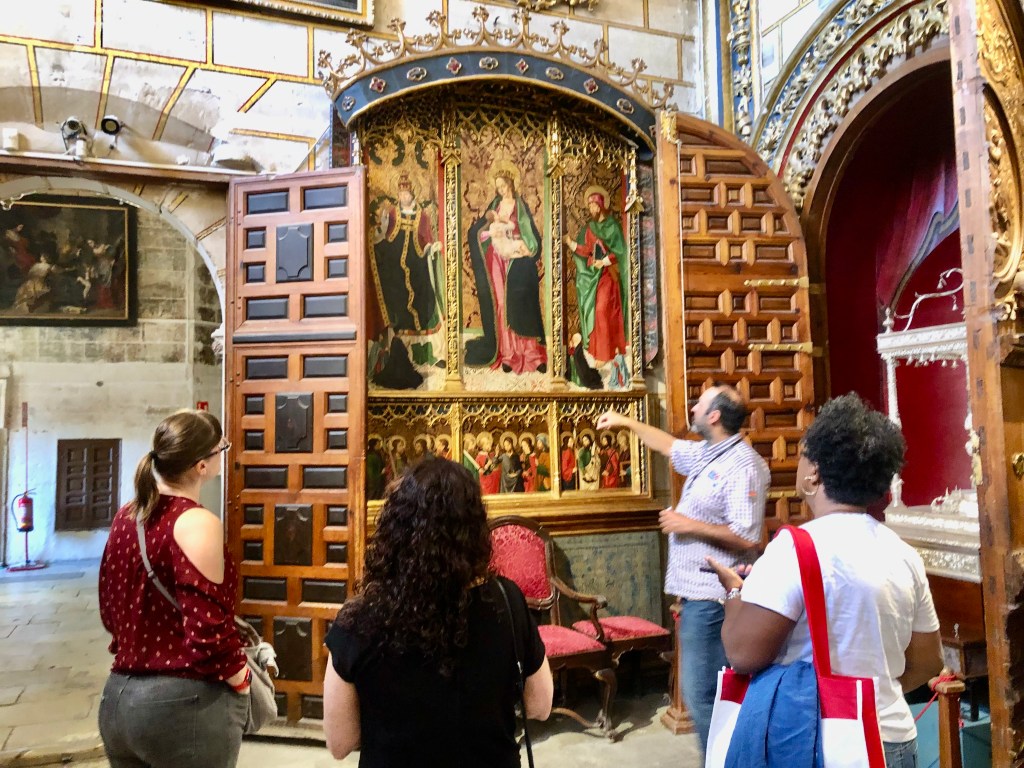
The Cathedral in Cuenca is a treasure house of art and architecture.

Sightseeing trams take tourists up and down the hilly lanes of Cuenca’s Old City.

While Spain has better known churches, the Cathedral of Nuestra Senora de Gracia is truly impressive and worth a look inside. Largely built between 1156 and 1256, it was the first Gothic church on the Iberian peninsula. Statuary, paintings, expanses of marble and lavishly adorned chapels reflected the city’s wealth in medieval days. The two pipe organs date from the 18th century. Our group heard their melodious sounds while seated in the ornately carved wooden choir stalls during an evening concert.

Rock climbers scale the cliffs just down the road from Parador de Cuenca, a monastery-turned-hotel.

If you haven’t had enough in the way of heights after taking in the panoramas from all angles and crossing the footbridge a number of times, consider a zipline ride or go rock climbing. On a short walk from Parador de Cuenca, I came upon harnessed men and women scaling vertical walls and people of all ages whooshing across the valley on a sturdy cable. And on two mornings I saw hot air balloons high in the sky. I wasn’t adventurous enough to pursue those options but wished I’d had time to hike the path that zigzags up to the giant mountaintop statue of Christ, Cerro del Socorro. The two-mile trail is marked by 14 Stations of the Cross. The statue is illuminated at night, as is the entire rock face of medieval Cuenca, a romantic vision that lingers long after your visit to this fascinating city off the beaten path.

Menorca Artisans Keep Traditional Craftsmanship Alive

Story and photos by Alison Ramsey

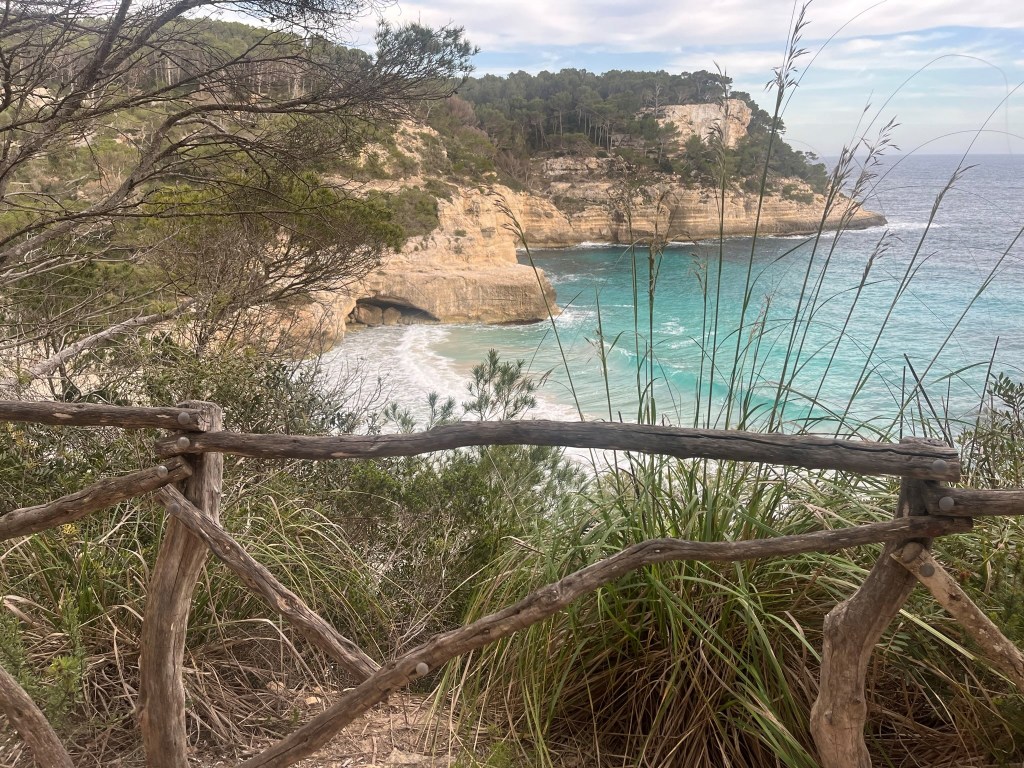
In the west Mediterranean Sea, the Balearic Islands’ Menorca makes the most of its natural resources. And for being only about 30 miles long and 10 miles wide, it has a lot! This haven of coves and turquoise water licking untouched white sand beaches has been a Biosphere Reserve since 1993, and due to its wide diversity of habitats and landscape it is UNESCO-designated as the headquarters for the World Network of Island and Coastal Biosphere Reserves for matters pertaining to sustainable development. Local farming practices focus on sustainability and preserving the island’s natural heritage. Using environmental resources found within the island’s ecosystem, resident farmers and artisans make a living from the offerings provided by landscape and livestock.

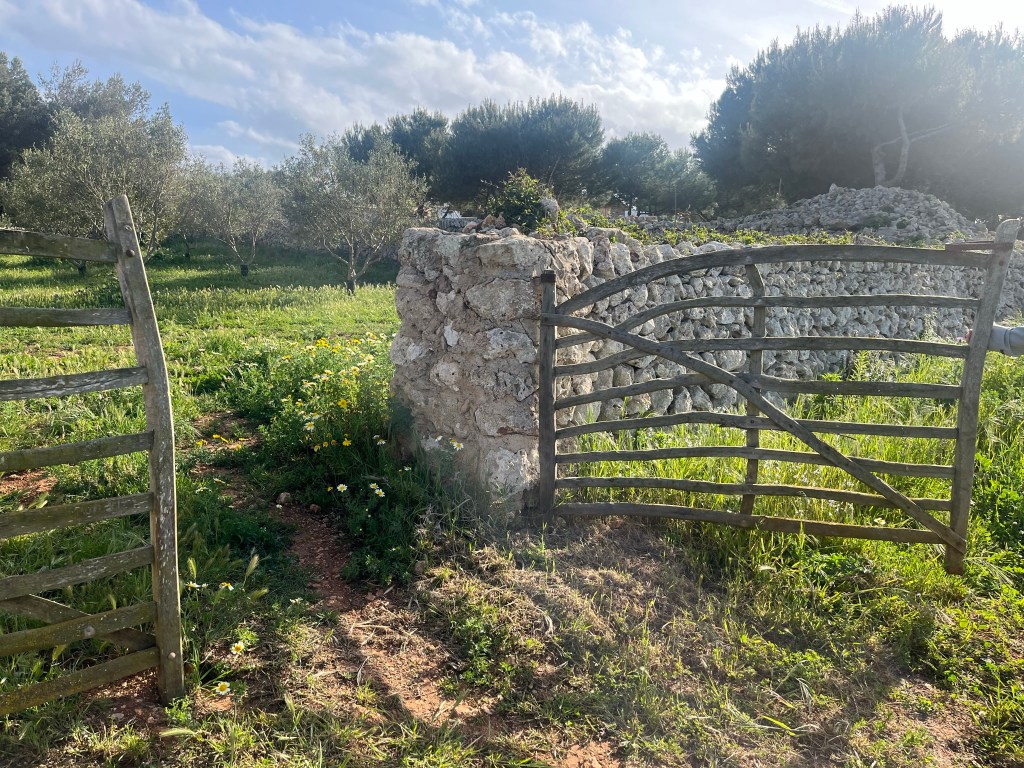
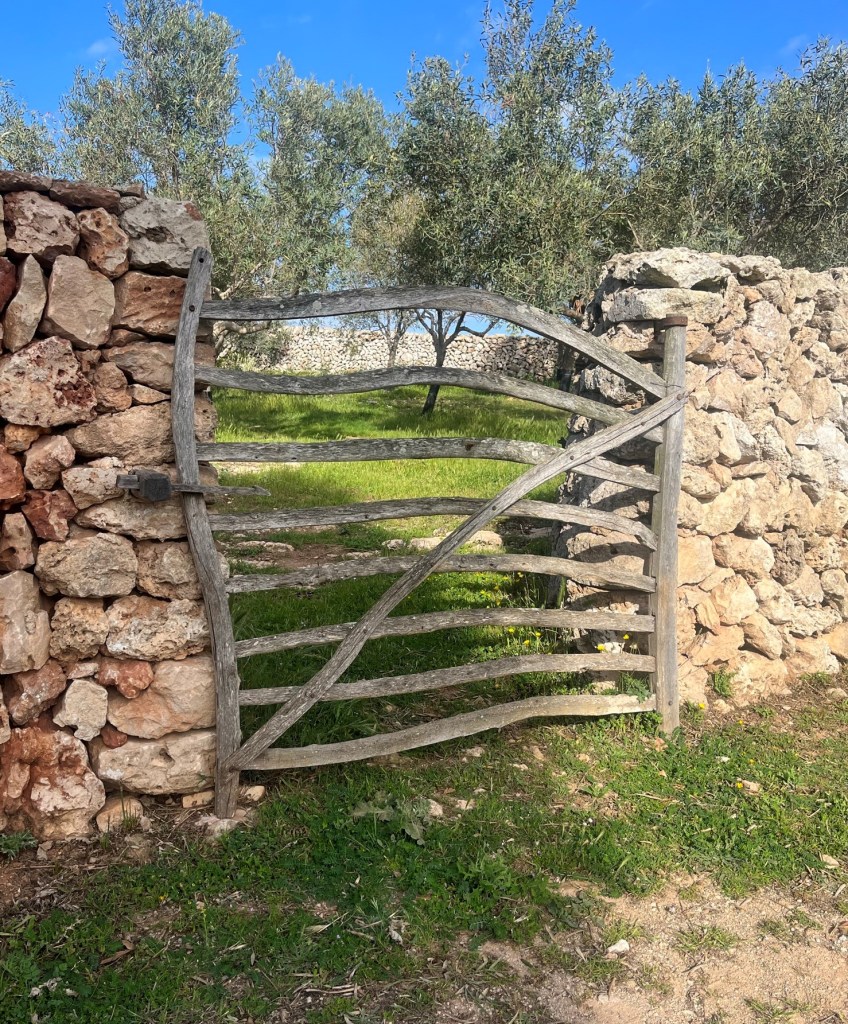
Across the island, wild olive tree wood is fashioned into fences to divide land and act as guard rails.

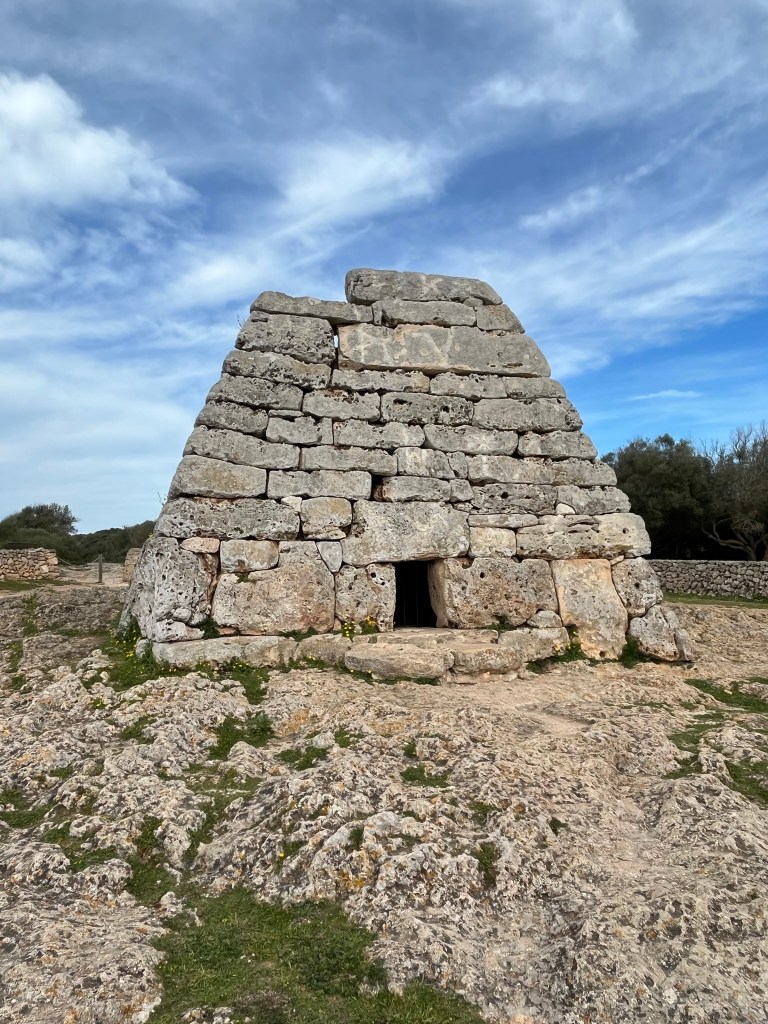
Menorca’s “mosaic landscape” of varying ecosystems consists of farmland, forests, and villages, with a bird’s-eye view revealing small plots of land divided by a network of dry-stone walls. Since ancient times, agrarians have gleaned rocks from the soil to build these mortar-less barriers that cover about 6,835 miles of the island (more than half the length of the Great Wall of China) and reduce erosion by blocking the wind from shifting soil to neighboring plots. Even the island’s prehistoric navetas (burial chambers) and talayots (shrines) were built by carefully selecting stones of varied size and shape, filling gaps with sand, and relying on gravity to secure them together.

(left) Unique to the island, Menorca’s navetas are pre-Talaiotic burial monuments shaped like an inverted boat and built using only large stone blocks. (middle) The island’s naturally rocky soil is gleaned to build stone walls that separate land plots. Wild olive trees with olives not suitable for harvesting are formed into farm gates using their distinctive, curvy wood. (right) Prevalent on Menorca are cement-free stacked-stone walls and sturdy gates crafted from wild olive trees.

Vineyards on Menorca are typically surrounded by these stone walls, a drainage situation that adequately waters the vines without leaving them overly damp. Local beverages created from the natural flora offerings of the land include the Vi de la Terra Illa de Menorca indication of quality wine, aromatic Menorcan gin (the oldest in Spain) produced using wine-based alcohol distilled with native herbs and juniper berries in old copper stills, and herb liquor digestifs.

The olive tree is another landscape prevalence, including the Spanish arbequina variety, which is used to produce a popular extra virgin olive oil with a mild, creamy flavor and slow kick. Oral history says the famous condiment mayonnaise heralds from Menorca, where the invading French Duke of Richelieu first tried the local sauce (a simple mixture of olive oil, egg, and salt) and brought it back to the French court, naming the recipe “mahonnaise” after the town Mahón. The oldest written source of Menorcan recipes is Art de la Cuina, a book by Fra Francesc Roger detailing the island’s cultural gastronomy in more than 200 18th century recipes, including a recipe for mayo using native olive oil. Not only are olives used for oil production, the strong wood from wild olive trees whose olives aren’t large enough to harvest is crafted into rustic, swing farm gates in a distinctive curvy design seen all across the island.

The oldest written source of Menorcan recipes is Art de la Cuina, a book by Fra Francesc Roger detailing the island’s cultural gastronomy in more than 200 18th century recipes, including a recipe for mayo using native olive oil.

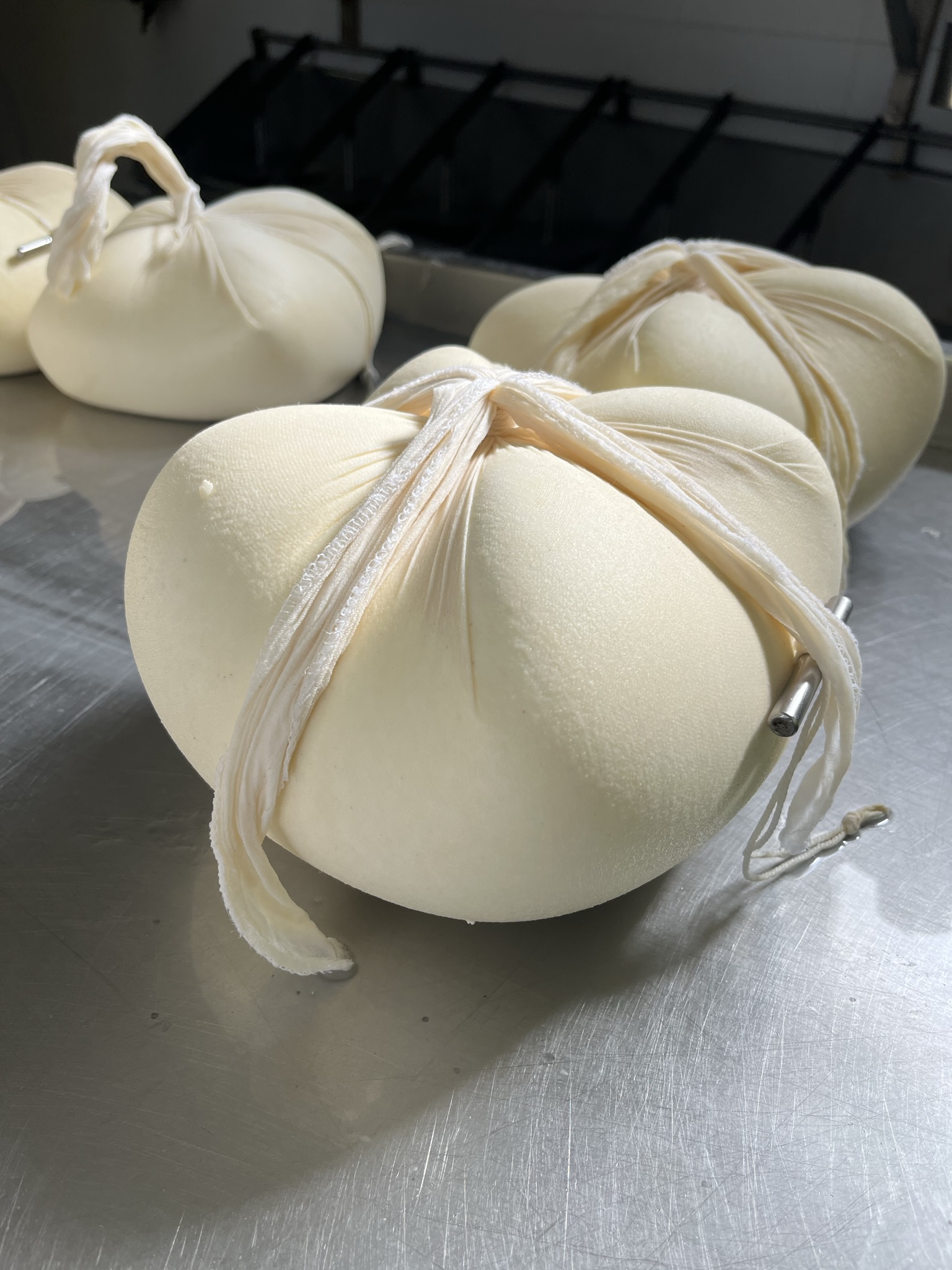
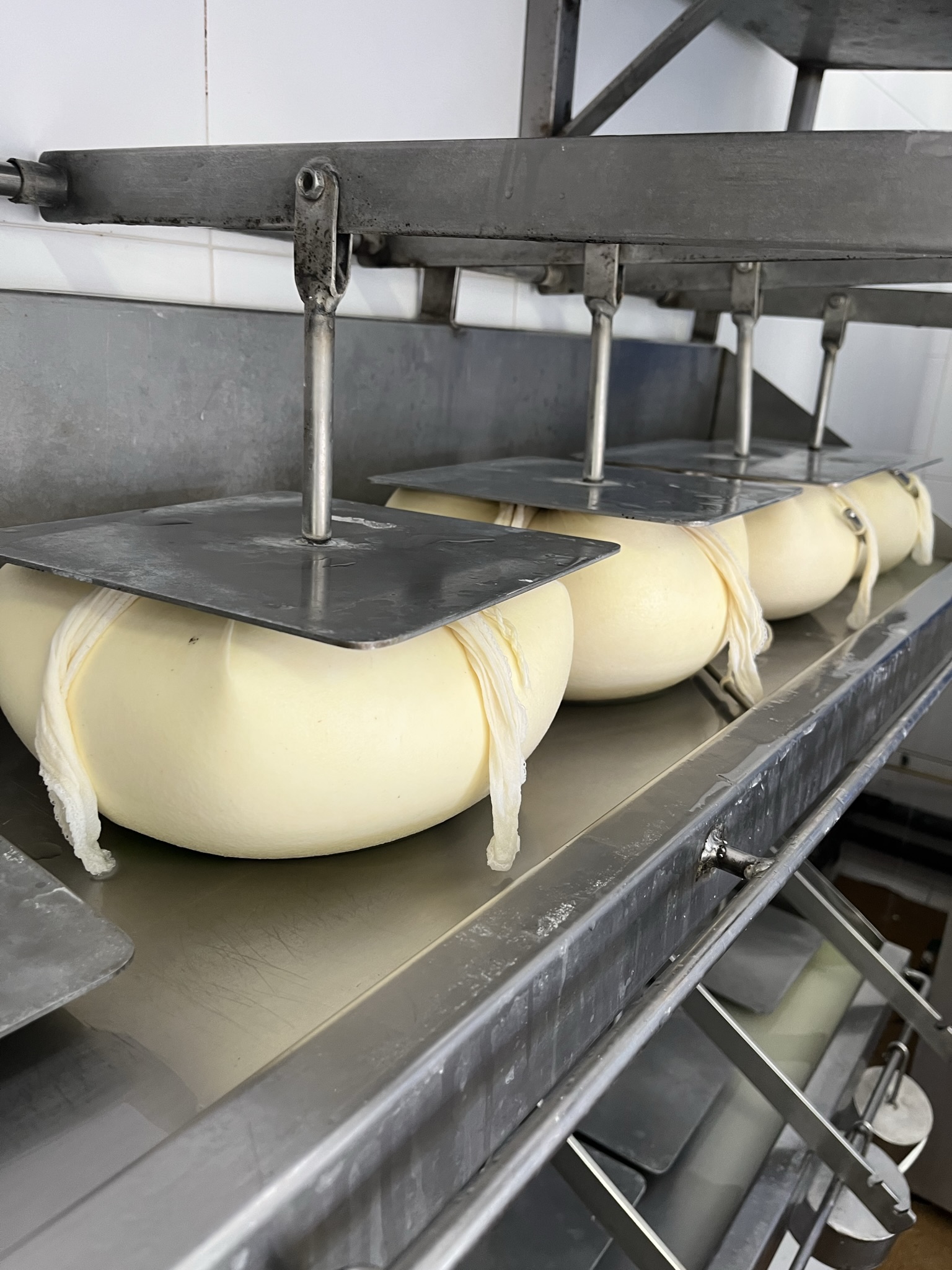
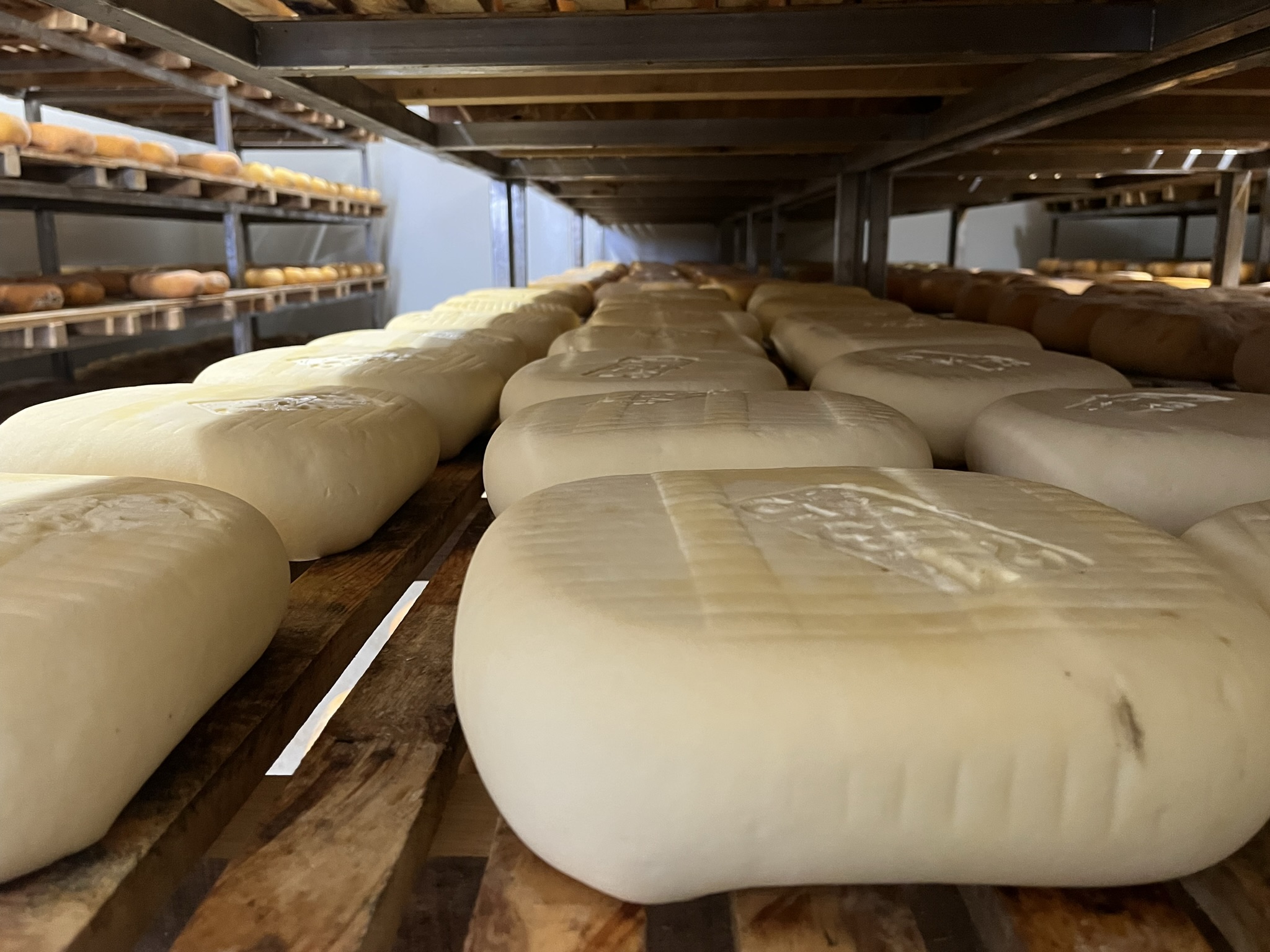
Using age-old methods, farmers use milk from Menorcan cows to produce rounded-edge square blocks of Mahón-Menorca Denomination of Origin cheese with a flavorful, oily dark rind (even Arabic documents from the year 1000 describe the tasty qualities of cow’s milk Menorcan cheese). Farms like Son Piris produce artisan cheese (made with raw milk and intended for immediate consumption) or the more industrialized and slightly sweeter pasteurized-milk cheeses. Martina Fedelich of Son Piris explained that it is difficult to imitate the Menorcan bacteria used in their cheese, as they are unique and isolated from other cheeses and even differ from those on neighboring island Mallorca. Easy to identify, Mahón-Menorca cheese’s unique shape comes from the cheesecloth used during the pressing process, and fabric lines from the cloth remain visible in the rind.

(clockwise from upper left) The unique shape of Mahón-Menorca cheese comes from the cheesecloth used during the pressing process, and fabric lines from the cloth remain visible in the rind; Son Piris cheeses are wrapped tightly in cheesecloth, which holds together the solid cheese curd while allowing for drainage of liquid whey; Wrapped cheeses are pressed to remove excess moisture; After their tightly wrapped cloths are removed, the cheese is set out to dry; Martina Fedelich of Son Piris serves the famous farm-to-table Mahón-Menorca Denomination of Origin cheese.  

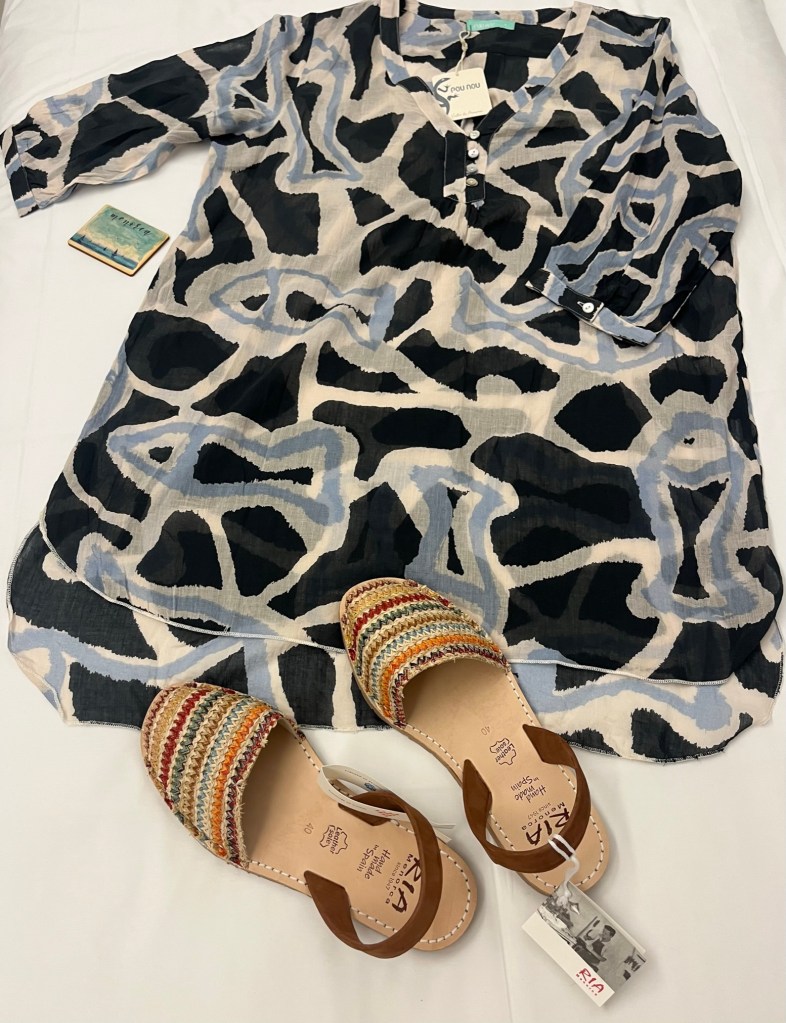
Agriculture is a key trade on Menorca; however, the most important manufacturing business on the island is shoe design and production—an industry dating back to the 18th century. Footwear made in Menorca is known for its high quality and meticulous craftsmanship. The most famous sandal shape, with a cowhide leather upper and sole, was first created to protect farmers’ feet while working the rocky soil. Nowadays, these avarcas (also called abarcas or menorquinas) are sold with heels and straps of all styles and colors, but use recycled tires as a hardy sole. Popularity and production have been increasing especially over the past few years, and they are worn by Menorcans and visitors alike.

RIA brand avarcas fashioned from leather with a colorful woven upper are a stylish update to traditional peasant footwear. Pou Nou clothing motifs echo the sea life and landscape of the island, like this fish-print tunic in shades of blue.

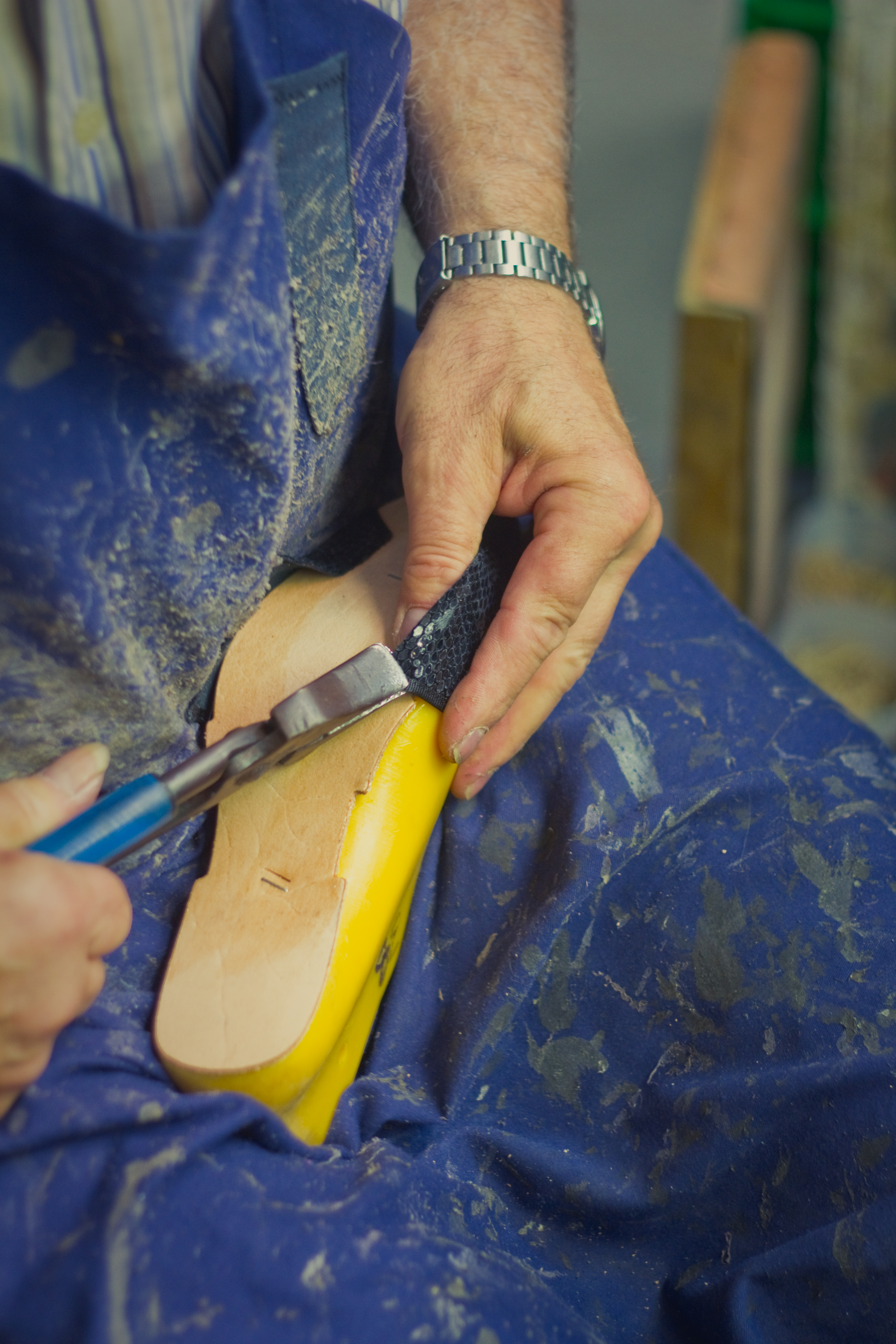
Avarca company MIBO proudly carries the Avarca de Menorca hallmark—another island-specific denomination of origin—which guarantees that their footwear is crafted locally and made with high-quality materials. Founded in 1998 by Miguel Pascual and Bosco Moll, MIBO designs and manufactures these iconic Menorcan sandals using traditional methodology combined with modern technology. Moll said, “The process to make a pair of avarcas from Menorca has about 25 operations, which all need the hands of craftsmen to be able to make them. We also use technology that helps the craftsmen, but it always requires expert hands. … The future of our product and our brand passes through the qualified training of our craftsmen-workers since there are no schools or training cycles that help this task.”

(left) A traditional style with modern updates, some MIBO avarcas feature trendy details like cut-outs, bows, and textured mosaic prints. (right) A MIBO artisan carefully guides a hallmark-stamped leather sole through machine stitching. Photos courtesy of MIBO.

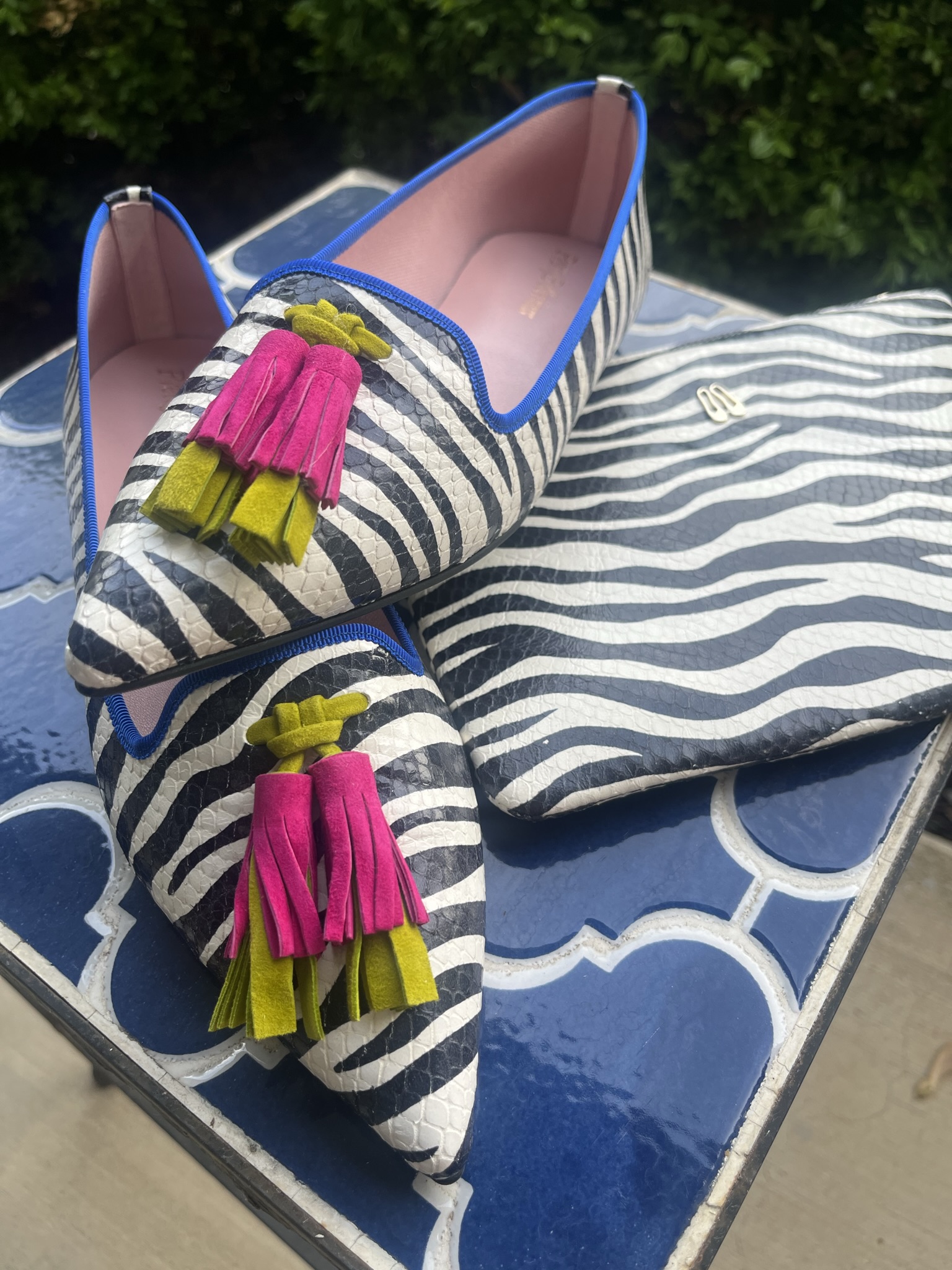
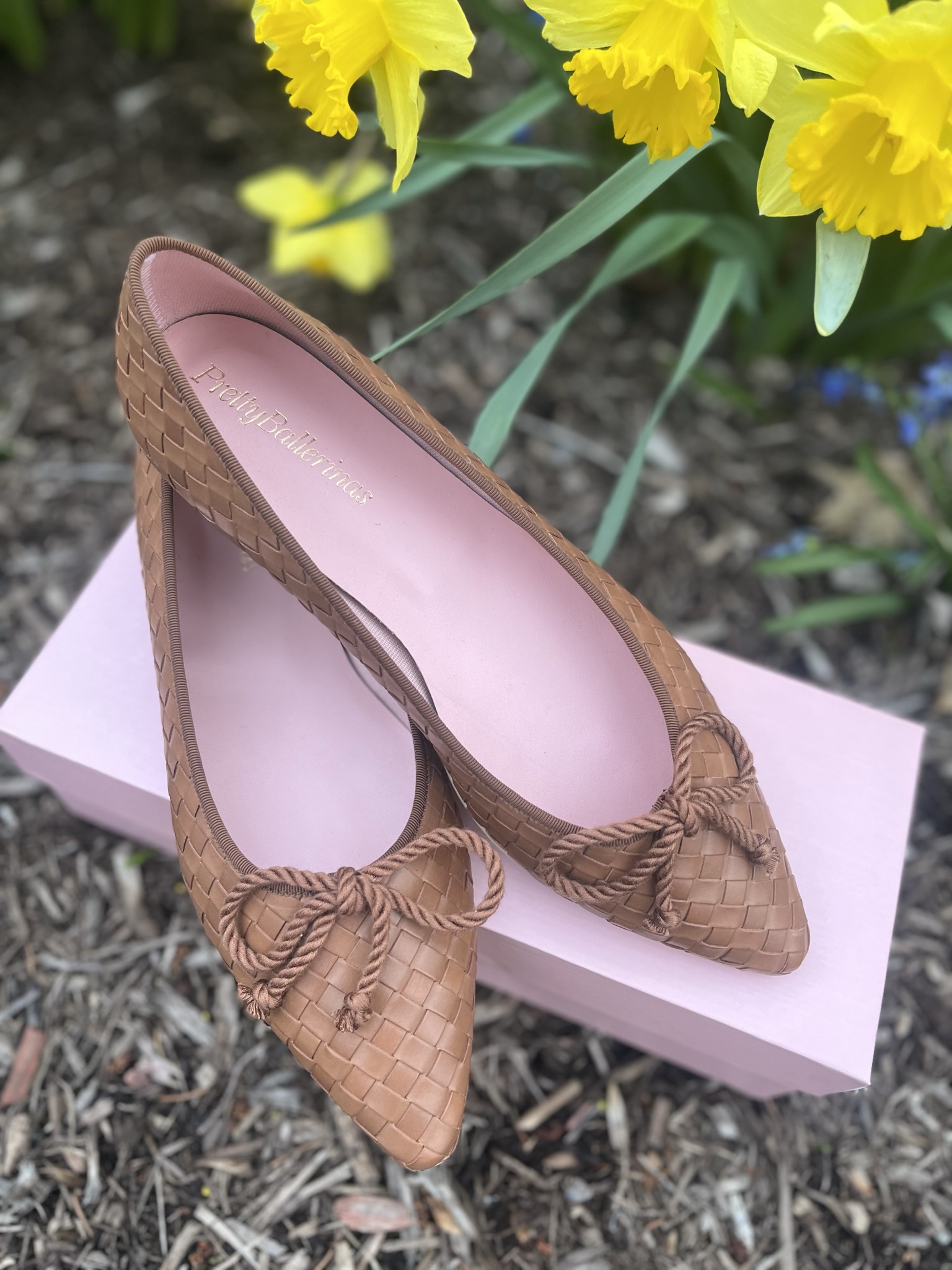
Another prestigious Menorcan shoe brand known internationally for its impeccable quality and innovative designs is Pretty Ballerinas, a unique line of leather flats produced by the Mascaró Group footwear company. These fashions have been famously worn by Kate Moss, Kate Middleton, the Queen of Spain, Elle Macpherson, Claudia Schiffer, and Angelina Jolie, among other celebrities. Fanny Cano, vivacious franchisee and owner of Pretty Ballerinas U.S. (the sole U.S. store, located in New York City), was born on Mallorca and has worked for the Mascaró brand since 1998. Fanny said:

“I love when through our very personal customer service we get to transmit to our customers the island’s vibes. They know they are wearing a unique piece crafted by hand on a small island in the Mediterranean. They feel the quality and the time invested in their pair of shoes. Explaining to the clients where and how the shoes are made—in a very artisanal and old-fashioned method—it really helps them to get tele-transported to the smell of the leather, the artisan hands sewing the shoes, mixed with the breeze of the sea and the taste of the food.”

Fanny Cano, Pretty Ballerinas franchisee and owner of the New York City store, poses before the iconic pink boxes and glamorous storefront that identify this high-quality brand of Menorca-made women’s leather flats. Easily identifiable by a pink lining and stamped ballerina slipper icon on the underside, Pretty Ballerinas flats and matching handbags exhibit a unique style and luxurious leather silhouette. Top-left and bottom-right photos courtesy of Fanny Cano.

Woodworking, earthenware, basket weaving, traditional llaüt wooden boat carpentry, and other crafts using fabrics, stone, and paper are sold in island shops and markets during the summer months. The quality of local, professional artisans’ work is acknowledged by the Artesanía de Menorca (Craft of Menorca) hallmark, and the Centre Artesanal de Menorca (Artisan Centre of Menorca) at the Es Mercadal fairground exhibits and sells many of these handmade products.

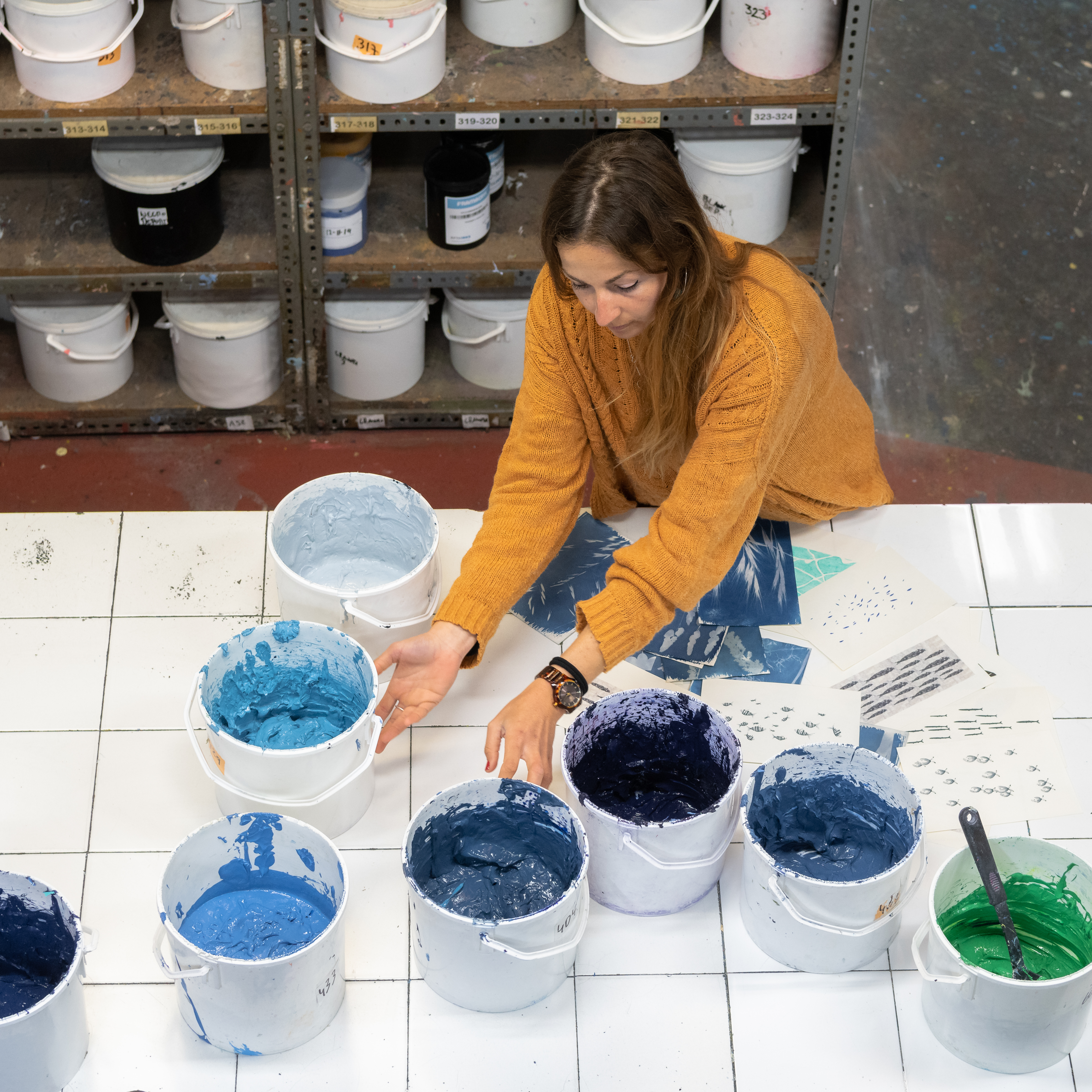
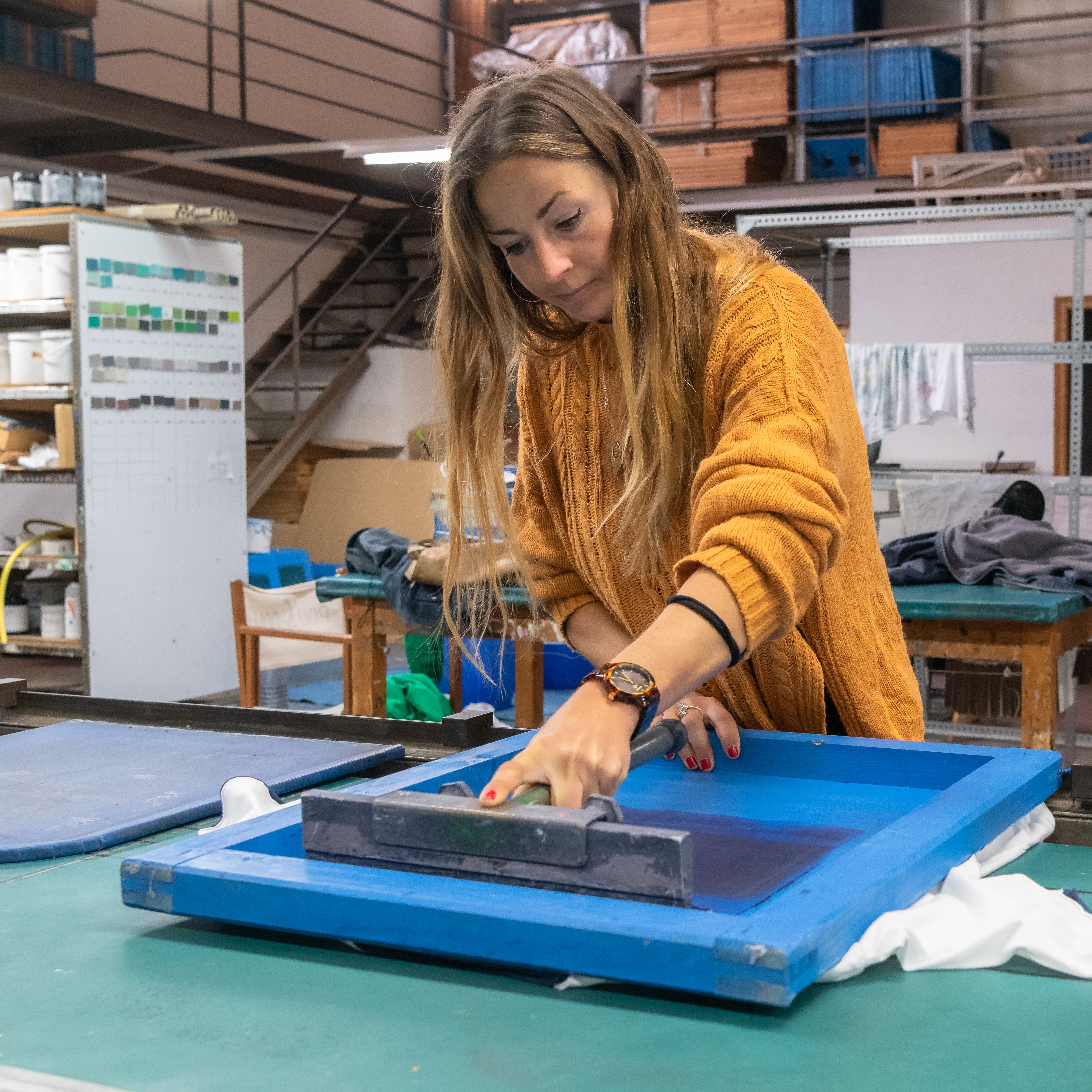
A Menorca-born leader in local artistry is Pou Nou clothing company, whose designers work closely with area artists to produce contemporary designs and stylish garments that reflect the colors and shapes of Mediterranean life. Drawing inspiration from the sea, sky, and island itself, Pou Nou creates hand-printed T-shirts and breezy, comfortable fashions for all ages using natural fibers like linen and cotton.

(clockwise from left) Pou Nou team members select nature-inspired artwork for clothing designs; Pou Nou colors and designs are inspired by Menorca’s flora and fauna, sea, and sky; Using a Mediterranean-inspired color palette, a Pou Nou team member tests a screen-print design.
Photos courtesy of Pou Nou.

Collaboration with local artists results in Pou Nou’s unique island-wear designs.

Owner Joan Carrés said, “I am proud of having been in the business for 36 years, following my original idea of combining good quality garments with original artwork from local artists.” Pou Nou’s easy-to-wear styles and unique artist collaborations feature screen-printed sea creatures, flowers, geckos, insects, boats, bikes, palm leaves, and nautical themes. With Pou Nou only available for purchase in Spain and other European countries, U.S. travelers looking for this island-wear can reach the Balearic Islands by flying directly from New York/Newark (EWR) to Palma de Mallorca (PMI) through United Airlines’ new, seasonal direct flight offerings. Menorca has been like a hidden treasure for many years, largely reached only from mainland Spain, but these new direct flights from the United States allow easier access to Menorca-made specialty items and scenic views of iconic landscape features. The island’s varied ecosystems and natural offerings provide ample resources for a thriving artisan business, with agriculture, footwear, fashion, and handcraft industries using materials and inspiration offered by the beautiful land and sea.