By Marilyn Heimburger Photos by the author and Don Heimburger
The UNESCO World Heritage city of Regensburg, Germany, 90 minutes north of Munich, is more than 2,000 years old, and many of its buildings serve as a testament to its long history.
There’s plenty of reminders of this town’s heritage: located on the Danube, many tour ships dock here and unload visitors for a peek into this German treasure.
Even Mozart liked the city: Regensburg’s hospitality was commended as early as 1790 by Mozart who enjoyed “a sumptuous meal along with divine music” and praised the good wine.
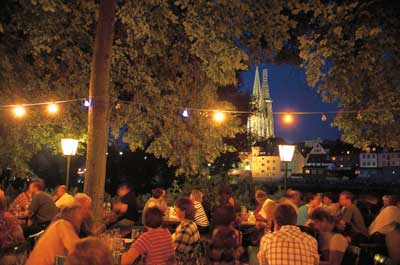
Numerous Roman buildings, such as the Porto Praetorius–an old Roman town gate–can still be seen today. It was preserved because the Bishop’s beer garden was located on the site. An underground museum at Neupfarrplatz displays the history of the Romans and the Jewish community there until 1519.
NEUPFARRPLATZ IN JEWISH QUARTER At the Neupfarrplatz, houses were built in the Jewish quarter over the old Roman fortress in the 8th century. These were destroyed in 1519 when the Jews were blamed for a downturn in the economy and were driven out.
In 1995 an excavation of the area was begun, and the ruins of the Jewish quarter were found, in addition to the Roman ruins.
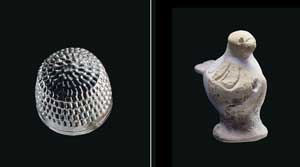
Found in the excavation and on display in the underground museum were a second or third century statue of the Roman god Mercury; from the 15th century a statue of Aaron (Mose’s brother); and from 1520 an icon of the Virgin Mary. The museum is called Document Neupfarrplatz; if you walk down a flight of stairs, you can view a video showing the excavation finds. www.regensburg.de.
The city began as a Roman fortification (Castra Regina) in 179 AD by Roman Emperor Marcus Aurelius because it was the northernmost point on the Danube. When the Roman Empire fell, the Romans retreated. The fortress built there was not destroyed, and Bavarians then occupied it. It was the first capital of Bavaria; believe it or not, Munich is 1000 years younger!
Not much was damaged in the town during World War II as there wasn’t much industry in Regensburg, so there was nothing to bomb. Thus, the old buildings were preserved.
‘ITALY’S NORTHERNMOST CITY’ Rich merchants gained wealth from importing goods from far away lands. They built large homes with tall towers (a show of strength and wealth) after the style in Italy. Many of these are still standing in Regensburg; nearly 20 are still well preserved. The town is often called “Italy’s northernmost city” because of this.
One of the big Regensburg attractions is The Old Stone Bridge, built on 16 huge arches, which has been in continuous use for more than 800 years. Built between 1135 and 1146, the Stone Bridge enjoys the status of being a unique masterpiece of medieval engineering. It was for many centuries the only stone bridge spanning the Danube between Ulm and Vienna. It was not only a technological masterpiece of engineering, but of strategic importance in terms of transport and, as a result, of great commercial value.
Another town attraction is the Old Town Hall, where Roman Emperors used to summon princes, bishops and ambassadors to discuss the affairs of state. The Imperial Diet Chamber still contains the same furniture, including the benches that gave rise to the German expression “to put something on the long bench” (meaning to postpone it indefinitely).
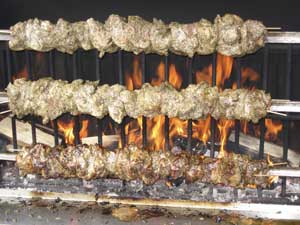
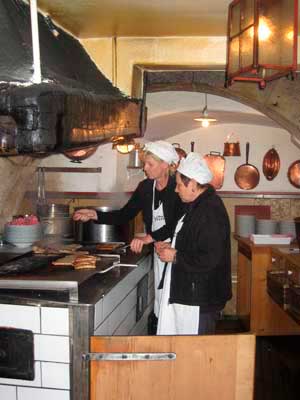
‘HISTORIC LUNCH’ For a quick and tasty lunch, sit down near the Danube and enjoy hot, juicy sausages with kraut and bread in the “Historische Wurstkuchl,” the world’s oldest sausage kitchen. You can actually see them frying the sausages on the grill through a door that leads into the small kitchen. http://www.wurstkuchl.de
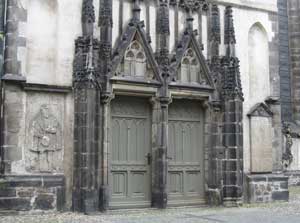
Regensburg is a city of churches. Focal points of early Christianity, its ecclesiastical buildings are majestic and typify early Christian architecture. Most famous is St. Peter’s Cathedral, inspired by the French Gothic style and built in the 13th century.
At waterside, Schifffahrt Klinger offers boat trips to many different sights such as the Walhalla, the German Hall of Fame containing busts of famous German personalities.
Regensburg`s remarkable buildings and towers offer an unspoiled look into the past; the wars of the 19th and 20th centuries left this Danubian community virtually unscathed.
The Regensburg Tourism Office is located at the old Rathaus, Rathausplatz 3, D-93047 in Regensburg. Fax is +49 941-507-1919 or e-mail to tourismus@regensburg.de.
ET: How many times have you taken your kids along with you on a foreign trip, and where?
The kids have been traveling with us since before they could walk (they are 10 and eight now), so on many, many trips to places like the British Isles, France, Italy, Greece, Peru, Costa Rica, Alaska, Florida, Mexico and the Caribbean.
ET: At what age do you feel it’s worthwhile for children to be taken on an overseas trip to Europe? Please explain your reasoning.
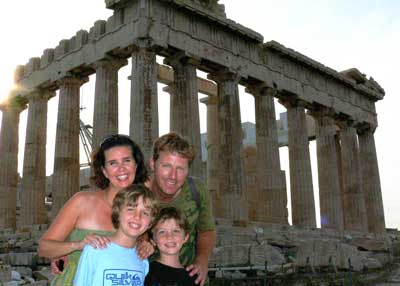
I think each age has its own benefits and drawbacks. When they are babies they are easy to travel with (before they can walk) and babies seem to open up a whole new door with the locals…you will meet other parents and talk about universal issues and be introduced to a whole different world than a typical traveler…people love babies! The drawback is babies come with a lot of gear and long overseas flights can be tough with a crier. Toddlers are fun to travel with because you see things entirely differently. They are fascinated by everything and leave nothing unexplored. What we might see as a famous monument a toddler might see as a cool worm inching its way across a stone surface. It gives perspective to things and adds a playfulness you might not get with older kids. However, toddlers can be unpredictable, and you still have to deal with added gear and schedules. My favorite is school-age kids. They still see things differently: our boys spent a good 20 minutes watching an ant carrying a toothpick across the Parthenon last summer, but they are more able to comprehend the historical and cultural significance of destinations. They are learning about the places in school and they bring that with them as well. Plus, they don’t have as much stuff, and are able to carry their own bags and they actually want to spend time with their parents still. The drawback is that they are in school, so homework has to become a part of their trip as well. Pre-teens and teens, depending on what stage they are in, can still be excited by exotic destinations, especially if you put an adventurous spin on it (i.e., zip lining through the Amazon, hiking the Inca Trail), but they are harder to impress and a mopey teenager can put a damper on the vacation for everyone. But, don’t let this stop you, as they will appreciate it later, and it gives them a global view on life that many kids their age don’t have.
ET: Language differences may or may not be a big barrier to children on a trip to Europe when accompanied by their parents, especially when the children are younger. At what age do you recommend children study the language before they travel overseas, and how might they best learn a language, say, when they’re going over for only a week or two? I always encourage travelers of every age to learn at least a few words in the country they are visiting. Saying “s’il vous plaît” in Paris will get you a much warmer reception than instantly assuming everyone knows English. And its fun for kids to practice the language with local kids. It is by no means necessary. There are very few places on earth that you can’t find at least one person who speaks English. However, if you plan on getting far off the beaten path, I would suggest a phrase book. There are lots of smart phone applications available as well now. We usually download one of those and practice a few key phrases in the weeks before the trip and while we are on long plane or train rides.
ET: Are there some things that are vitally important to take with you when you take younger kids along, that you may not find in Europe?
For the most part, you can find anything in Europe that you will need supply-wise. If there is a specialty item that is unique to your child, you may want to bring that…for example, a certain diaper rash cream for kids with sensitive skin, or a formula that your child needs. Also, any prescription medications. But don’t be afraid to try local things as well. Europe has lots of independent companies producing natural kids’ items that you can’t find in the States.
ET: What about the added expense by taking kids with you to Europe? Does it cost a lot extra to travel around, lodge and feed them?
Airline tickets are the main extra expense. Big hotels will be able to accommodate most small families in a regular room without additional expense. Booking a condo/apartment helps save on lodging costs and gives extra room for the while family to spread out. Plus, the kitchen can help save money on eating out. We usually do breakfast and sometimes lunch or dinner in the condo, but we like to eat out as well to get a feel for the local cuisine.
ET: Food. What do you suggest about finding “kid foods”– good, nutritious food at reasonable prices when overseas?
Go where the locals go. You don’t need to spend a lot to taste the local cuisine. The kids love street stalls. too. Just make sure to ask for guidance from locals to avoid getting sick. Crepe stands in Paris, panini cafes in Italy, pasty shops in England…all these foods let you get a taste of real local foods at a fraction of the cost of a sit-down restaurant.
ET: Can you recommend some special “kid-friendly” hotels in Europe, or cities or attractions that seem to especially cater to kids?
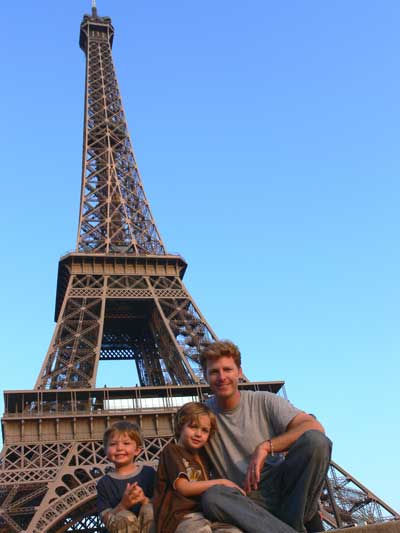
It’s not always the cities you would think that are exciting for kids. There doesn’t have to be an amusement park to interest kids. Our kids were fascinated by Venice, a city many people would not think of taking kids to. They loved taking the boats up and down the canals and wandering the tiny streets. Big cities are fun for kids, too. Paris and London are on the top of our kids’ destinations list. They love riding the tube and double decker buses and visiting big time attractions like the Eiffel Tower. Really anything can be interesting to kids if you prep them for it. Learn about a destination before you go. The kids learned about gladiators and Rome before we went to Italy, and it really came to life in Roman ruins all over Europe. They had a blast pretending to be gladiators in colosseums from Wales to Rome. Walks Inside Rome had a great tour with history on a kid’s level and a visit to Gladiator School…the kids learned from “real gladiators” how to fight with swords and defend against wild animals. Very fun! Many attractions have kid versions of audio tours, scavenger hunts, or something to engage kids. Just ask. If they don’t, you can always make your own. When the kids were younger (ages 5 and 7) we visited the Louvre. I was worried about keeping them interested, so I printed out pictures of some of the more famous exhibits and sent them on an art treasure hunt. They had a blast, and even enlisted the security guards to help them, and we enjoyed extra time at the museum.
As far as hotels go, apartment rentals are always great with kids. The apartments are often in local neighborhoods, so you get a better feel for local life. We rented apartments from Frenchy Rentals in Paris, a villa in Tuscany from Italy Perfect and apartments in Rome from Parker Villas. When we are staying in a hotel, we try to stay in family-owned, smaller hotels. These are usually located in the more culturally rich or historically significant parts of town. A lot of it is also about location. We don’t want to have to take a 20 minute taxi everytime we want to go into the old part of town. We like to be where the action is.
ET: Teenage tensions can be a problem. How do you handle this on a long European trip?
Lots of luck. Just kidding. Teenagers are a different breed, and since I don’t have any yet, I can’t give too much advice here. What I have noticed with my niece and nephews is that when they are out of their element (like you are in a foreign culture), some of that attitude fades away. I went on a trip to New York with my 15-year-old niece last year, and we had a blast. I asked for her input on everything we did, and I think that helped a lot. Let the kids (of all ages) help plan what you are doing. That helps them feel invested in the trip ahead of time and keeps them engaged while you are on the road.
ET: What foreign trips/areas might you not want to take your kids on and why?
I don’t think there are any areas I would say don’t take kids accept for areas I would not go myself because of dangers or violence. I guess there are some third world countries for which I would want to edit the itinerary. It would be very hard for the kids to comprehend such abject poverty. I might also stay away from long trips in which passengers are contained and there are no breaks. Kids who are cooped up and bored for long periods of time can get irritating fast.
Many people ask if I am scared to travel because of coverage they see on television. Fortunately, I have never felt any hostility from locals stemming from my being an American. In fact, quite the opposite. I have always been welcomed with open arms. When we traveled through the Middle East I was not sure what to expect, but everyone was very warm and welcoming. What you see in the news is not always how it is in real life. I would be cautious, of course, as things can happen when you travel, just as they could at home. Be aware of what is going on around you, ask the locals for perspective and trust your instincts.
ET: What do you suggest on a European trip if the parents want to occasionally go out alone in the evening and the kids need to go to bed. Who watches the kids?
Many hotels offer babysitting service. I have never used them as I would not feel comfortable leaving my kids with a stranger. However, I hear stories from other people who did this, and it turned out just fine. I would say that for me, the point of a family vacation is to spend time with your kids. At some point, they won’t want to hang around with us anymore, so I try to cash in on all the time I can with them now. Schedules are a bit more flexible when we travel. So, the kids stay up later which is just fine as the town squares in the evening are packed with families strolling and kids playing. It’s a time where we really get to know the locals, and the kids love it!
ET: What do you think is the most important thing to remember when going to Europe with your kids?
Take time to absorb it all. Often times when we travel (and I am just as guilty of it as anyone else), we pack in as much as we can. There’s so many wonderful things to see and do in Europe. And we end up moving so fast that we don’t take time to just sit and soak it all in. Sitting in the town square, watching life go by, is a great tradition in southern European countries, and it’s a great time to reflect and just spend time with your kids…time bonding and re-connecting with one another, which is really what it’s all about anyway.
Travel With Kids takes viewers on an educational journey through each destination visited, presenting history and culture in an innovative way, as well as showing the kid-friendly things to do and see. Whether planning a trip, or just wanting to learn more about a destination, Travel With Kids will entertain the whole family. For more information on Travel With Kids, or to purchase a DVD visit www.TravelWithKids.tv
Photos courtesy Paris Convention and Visitors Bureau
Designer hotels: everything started in Paris a few years ago with the trend toward boutique hotels.
The term is used for small capacity hotels with three or four stars, which offer clients a personalized and attentive welcome and a particularly refined and cozy decor.
Following the success of this type of hotel, certain hotels decided to take the concept further by entrusting their decor to interior designers and architects and providing their guests with a contemporary atmosphere: designer furniture, use of new materials, the latest technologies and contemporary works of art.
Some hotel groups have made this design orientation their speciality. This is the case for the Murano Hotels and Resorts, which owns the Murano Urban Resort Hotel and the Kube Rooms and Bars Hotel in Paris. The first, located between République and Bastille on the edge of the Marais, drew attention with its immaculate white design aesthetic, its bar lounge with colored seats, its lobby with a huge contemporary fireplace and its guest rooms which mix high-tech and state-of-the-art design. The second, located in the north of the capital, applies the same formula to the design of its guestrooms and offers an out-of-the-ordinary experience with its bar completely made of ice.
The Astotel group also offers 15 Parisian hotels where the designer touch captivates guests in search of a contemporary atmosphere. This is the case at Le 1223 Elysees, a hotel where beautiful materials (Swarovski crystal, marble, etc.) provide a contemporary feel, or at the Hotel Joyce, which combines the latest technology gadgets (iPod stations) with products answering to the needs of today’s travelers (a range of organic products), all in a contemporary decor that play on the codes of traditional hotel charm and character (outlines of bed heads and features of interior decor drawn on the bedroom walls).
The Relais de Paris group reinvents the classic Relais style with a contemporary, designer version. The BLC Design Hotel offers an immaculate white setting in the Charonne district. The 29 guest rooms all have a monochrome look, combining refined furniture with black and white photographs.
At the Standard Design Hotel, not far from the lively Bastille District, black and white begins in the reception areas. The young designers invited to decorate the hotel have created a contemporary, trendy place. The Color Design Hotel, between Bastille and the Gare de Lyon, lives up to its name and offers guests lively colors with special touches in the guest rooms and bathrooms. The vaulted breakfast room follows the same concept with a contrast provided by exposed stonework. Located in the picturesque Montmartre district, the Chat Noir Design Hotel plays the designer card while respecting the traditional Parisian style of this area. The decoration amusingly evokes the shadow plays that gave the Théâtre du Chat Noir its reputation, while offering refined white furniture complemented by warm orange and brick tones.
The wave of designer hotels can be found in all districts of Paris, each revealing a leading concept and specific style of decoration. Another example in the Latin Quarter is the Five Hotel. This hotel’s concept is the awakening of the five senses: smell with fragrances created just for the Five, touch with the use of sensual materials in the guestrooms and particularly the ultra-contemporary reinterpretation of Chinese lacquer, taste with a breakfast of the best Viennese pastries from the Monge bakery, sight with the fibre-optic lighting effects and luminous atmosphere of the bedrooms, and hearing appeased by the hotel’s silence.
In the same neighborhood, the Hotel Design de la Sorbonne has had a makeover and offers an upscale and elegant designer stay. Dark wallpaper, luxury fabrics and a contemporary photography exhibition on every level set the tone of the establishment.
The Hotel Le A, in the heart of the fashion district between the Champs-Élysées and the rue Saint Honore, mixes an ultra-designer look of the interior decor with a cozy feel in the reception areas designed to look like those of a private apartment, with a contemporary-style fireplace, comfortable couches, lounge with a library filled with art books, a bar under a 19th century glass roof and 25 sumptuous guestrooms where a refined sober style contrasts with bold contemporary drawings decorating the walls.
In a more understated style, design is also honored at the Hotel Arvor Saint-Georges, in the peaceful 9th arrondissement. The 30 guestrooms offer the tranquility of a contemporary and convivial private residence. In the 14th arrondissement, LeFabe Hotel stands out from the rest with its 17 guestrooms, each offering an original atmosphere. The names of the rooms (Mona Lisa, Orchidées, Together, etc.) are an indication of the designer decoration offered to guests. In the 16th arrondissement, Mon Hotel, a small establishment of 37 guestrooms a few steps from the Champs-Élysées, boasts luxury designer decor with the use of materials like leather, Alcantara fabric, and wood.
Consists of 44 square miles of hiking trails complete with breathtaking views of the Alps
Photos courtesy Lucerne Tourism
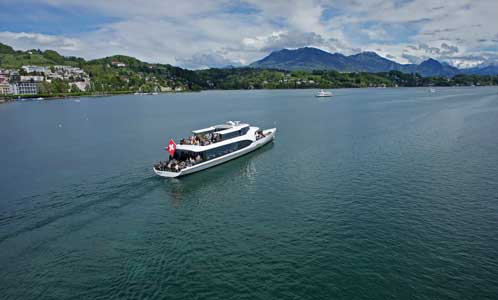
A walking trip around Lake Lucerne in central Switzerland provides impressive views of the Alps, as well as the surrounding hills and the lake.
Trekkers can pass through alpine meadows, steep cliffs and placid mountain lakes. While there, hikers can also enjoy the magnificent flora and fauna. Mountain inns are an invitation to fortify yourself, while mountain rails ensure that the strenuous uphill and downhill sections become excessive.
(LUCERNE) NIEDERRICKENBACH VILLAGE – EMMETTEN 5:30 (HOURS) TO (SEELISBERG) Leave Lucerne by train and enter Niederrickenbach by cable car. In the village, there are shops selling alpine herb trees gathered by women from the monastery. The tour continues further along the sycamore woods on a well-known game observation trail along the edges of the hills of Schwalmis and Oberbauen to Niderbauen. EF Valley ride using the cable car to Emmeten, then by post bus to Seelisberg.
SEELISBERG TO FLÜELEN 5:05 The Road of Switzerland, opened in 1991 in commemoration of the 700th anniversary of the Swiss Federation. It winds around the deep Urnersee — sometimes high above it, then again directly on its shores, at times along steps hewn into the cliff side, then again on broad, comfortable tracks, past numerous inns and swimming locations, and with frequent, splendid views of the lake and the surrounding hills.
FLÜELEN TO BRUNNEN 5:55 Between Flüelen and Sisikon the trek passes over a path on the shores, such as at the Riviera, past Tellskapelle and Tellsplatte. The climb from Sisikon onwards is rough, but there is an exciting adventure pool in Morschach for recuperating.
BRUNNEN/URMIBERG – RIGI KALTBAD 4:10 Hikers can travel by cable car to Urmiberg. The Rigi is a trekker’s paradise. The path from Urmiberg via Scheidegg to Kaltbad is also a trek that can only be described using superlatives. Unmatched views, which can cover up to four lakes at a time, are guaranteed. The panoramic view of the hills stretches from Säntis to the Bernese Alps.
RIGI KALTBAD – RIGI KULM – KÜSSNACHT 4:30 Rigi Kaltbad is nicknamed the Queen of the Mountains, and at its highest point extends more than 5,900 feet. It is no wonder then that, on a fine day, thousands of people eager to enjoy the sun make an excursion to this mountain. An unforgettable experience! Descent to Seebodenalp and Küssnacht. EF Seebodenalp – Küssnacht by cable car.
KÜSSNACHT – LUCERNE 5:30 The round trip around Lake Lucerne ends with a splendid finishing stretch across the Dietschiberg. The view of the sea is magnificent, and it is enjoyed by the golfers playing here above Lucerne. After a short descent, the path leads back to the heart of Lucerne, along the lakeside promenade. Brittany Petrillo
With trendy Croatia one of the top travel destinations these days, I learned quickly that everyone wanted to go with me when I visited this small southeastern European country, tucked between Bosnia, Hungary and Slovenia.
Who wouldn’t want to go to the country that invented the sophisticated cravat, the forerunner of the modern tailored necktie and bow tie, or was now producing a truckload of good white wines, or was bounded by the romantic Danube? Although this land still bears the scars of the Bosnian War which affected the region between 1992 and 1995, the country is gradually moving on.
The warmth of the Croatian people, the abundant agricultural possibilities of the land, and the natural beauty of the country’s rocky mountains and green woodlands are only now being discovered, and touted in national tourist publications.
Some eye-opening travel gems await those who venture into the awakening interior.
National Theater in Zagreb
CONTINENTAL CROATIA AND ZAGREB Croatia is shaped somewhat like a horseshoe, with one side extending 1,100 miles along the Dalmatian Coast, with seaside Dubrovnik at one end and Croatia’s third largest city, Rijeka, at the other. The entire country of 4.2 million people is only as large as West Virginia, or just 21,829 square miles.
While I wasn’t going to where most tourists journey—the coast and the Adriatic Sea— the interior of the country presented its own set of unique opportunities for exploration. I started my venture at the capital, leafy-green Zagreb, which sits on the historic and political threshold between Eastern and Western Europe.
Sitting on the Pannonian Plain as well as on the edge of the Dinaric Alps, this Hapsburg-inspired city has been inhabited for centuries by people coming from all over Europe, thus insuring a rich cultural heritage. It is the home of Croatia’s parliament, government and its president. It sits next to the lush, forested slopes of Mount Medvednica, often referred to by the name of its summit, Sljeme.
The city’s elegant facades, a horseshoe of green spaces—eight green squares created by Milan Lenuci in the 1880s— and a growing contemporary scene, are attracting the curious traveler; more may come soon as well, as Croatia and thus Zagreb are poised to join the European Union in 2013. Known as Vienna’s little sister, Zagreb is smallish—about one million residents—which makes it easy to walk around without a car, meet the populace, and indulge in the city’s cultural and historical attractions, and growing nightlife. I did a little of each.
Palace Hotel, Zagreb
FLIGHT TO ZAGREB My flight on Lufthansa from Frankfurt landed at Zagreb airport outside of town, where I hopped a cab to the Palace Hotel, located in an Art Nouveau palace in the center of the city. It was the first hotel in Zagreb, opened in 1907, across from a beautiful green park and where the likes of Orson Welles and actress Sophia Loren have stayed. I figured I was in good company.
Finished in elegant woods, the hotel’s lobby is inviting, and glass cases filled with historical artifacts give the visitor information about the history of this four-story gem. Zagreb was on the route of the famous King of Trains, the Orient Express, where Hercule Poirot solved his most famous case, where Alfred Hitchock’s The Lady Vanishes was staged, and on which James Bond rode from Istanbul to London in the movie From Russia With Love. Everyone loves a train with a good mystery, and Zagreb uses these connections to promote its mystique as a city. The train station is just a few blocks from the Palace Hotel, and an old black steam locomotive decorates the lawn on one side of the station.
Like all major cities, Zagreb is divided into areas, but the Upper Town (located on a hill) and the Lower Town, where streets are laid out in a simplistic and government-mandated style, are two that most visitors will learn quickly. You could cover the town’s main attractions in two days, but a third day will offer the best impression of the city.
Zagreb’s main square, referred to as Jelacic plac, is a large, busy place with adjacent Ilica Street housing many shops. Croatians use the main square, just down from the hillside settlements of Kaptol and Gradec, to make connections with friends, to catch one of the many street trams pulsating here and there on tracks that run through the streets, or use the square’s large clock as their time-keeper. There are 37 clocks like this throughout the city, all maintained by the sixth generation watchmaker Lebarovic Dalibor, who has manufactured more than 200 public clocks in this country.
The main square, featuring a large statue of Croatian hero Ban Josip Jelacic, has been the commercial heart of the city since 1641. It is so large that fairs used to be held here; the buildings around the square date from the 19th century, and feature Biedermeier, Art Nouveau and post-modernism architectural styles.
TWIN-SPIRED CATHEDRAL The city’s twin-spired landmark structure in the Kaptol neighborhood is the Cathedral of the Assumption of the Holy Virgin Mary, created by Hermann Bolle in the 19th century after an earthquake badly damaged the original church. In the 15th century it was the furthest outpost of Christianity. Beautiful marble side altars, statues and pulpit adorn the inside, as does the life-like tomb of Cardinal Alojzije Stepinac by Ivan Meštrović. You can’t miss it: it sits dead-center in front of the church near the choir.
While you’re there, notice the adjacent overpowering bishop’s palace with large turrets on the corners. The accompanying lawn features large colored Easter eggs during this season. Not far away, the fortified 13th century Lotrscak Tower in Upper Town, signals 12 o’clock by loud cannon fire and trailing white smoke, as it has every day since 1877. The bells of the stone tower used to summon residents back into the town gates at night before they closed. After watching this display of time-keeping, wander a few steps down the hill to the family-owned Pod grickim topom restaurant, where you’ll be treated to large portions of pork, beef and spaetzle while overlooking the city.
A funicular, the shortest in the world at 216 feet in length, takes you up to Upper Town in 55 seconds. Departing every 10 minutes, it accommodates 28 people each trip. Once powered by steam, the brilliant blue funicular pre-dates horse-drawn trams by a whole year.
At colorful St. Mark’s Church in St. Mark’s Square, you’re in the heart of Upper Town; the square used to be Gradec’s main market area. The 13th century Church of St. Mark’s is a Romanesque structure with Gothic arched ceilings and 15 Parler family statues that stand in the southern portal. The colorful roof is decorated with coats of arms of the triune Kingdom of Croatia, Dalmatia and Slavonia, as well as the city of Zagreb.
BUSTLING DOLAC MARKET The Dolac open-air market is a must-see, must-do free attraction. Close by the Cathedral, sun-ripened fruit, fresh fish including octopus trucked in from the coast overnight, colorful vegetables and hearty meats, nuts and fragrant spices are sold every day of the week. Known as the “belly of Zagreb,” the market dates from the early 1900s.
Croatia is a religious country, with about 77% of the residents Roman Catholic. The Upper Town is entered via the Kamenita vrata or the Stone Gate, which is the only city gate still remaining. It was built in the Middle Ages, and today acts as a Christian way station for anyone wanting to give thanks, or to make requests. The small chapel inside, dedicated to the Virgin Mary, patron saint of Zagreb, houses a painting of Mary miraculously saved from a fire in 1731. At all times of the day, this small chapel—complete with several wooden benches— attracts worshippers and the curious.
Stop by Zagreb’s oldest pharmacy on Kamenita ulica (Stone Street) where you’ll discover a two-story white building which has housed this business since 1355. And built along the former Medvescak Creek is Tkalca, Zagreb’s colorful downtown street where you’ll find a plethora of nightclubs, small boutiques, traditional shops and cafes. Stop by the Bulldog, an upscale downtown bar where the drinks flow until 3 a.m. from Wednesdays to Saturdays. The decor features aviation and nautical themes, with propeller-shaped ceiling fans, and there’s a mezzanine observation level. A bowl of shelled peanuts to accompany a cool drink doesn’t cost much, either.
SAMOBOR If you’re heading into the countryside, Samobor is one of Croatia’s best-preserved villages. The light rain and mist which covered the surrounding hills and the Gradna River that flows through them, presented a magical Sunday morning welcome. Local villagers presented their farm-fresh cheeses and honey in the market square, and smiles and free samples were plentiful, as merchants waited until the packed-to-the-rooftop Catholic church let out.
Many other locals were sitting in the Slasticarnica U Prolazu restaurant, having their Sunday coffee and Samoborska Kremsnita, a custard-colored 3 in.-high cream pastry square, a rich-flavored local tradition. Others were strolling down the path on the outskirts of town near the river, enjoying the budding of colorful flowers and trees, and soaking up the fresh fragrances of spring.
Samoborska Dremsnitz – a delicious dessert
At the Town Museum, check out the intricately-woven folk costumes. Another option is a woodland stroll to the hillside park of Anindol that will take you to the ruins of Samobor’s 13th century castle, which you can see on the hill as you drive down the narrow road into town.
Samobor is also noted for Bermet, a local version of vermouth. This fortified wine, flavored with citrus fruits and aromatic herbs, goes well with crackers and the local Mustarda, a rich brown mustard with a fruity tang. Both the Bermet and Mustarda have been made for generations by the local Filipec family. A tour of their small facility and their shop, guarded by the family dog, will add extra interest to your visit.
Just west of Samobor are the Samobor Hills, a group of forested smooth-topped mountains which make great one-day hikes. The highest point is the 2,883-foot-high Samoborsko gorje, a two-hour walk from Soiceva kuca, a popular restaurant and recreation spot.
VARAZDIN If you have time to explore Croatia further, a trip to Varazdin near the Slovenian border is worthwhile. With its 18th century Baroque churches and the oldest rathaus in Europe, Varazdin is a jewel. First founded because of its Stari Grad, a well-preserved 16th century castle, the town today evokes “oohs” and “ahhs” as visitors discover the Baroque facades. On a clear, sunny day, the town is spectacular.
The city, in fact, was the capital of Croatia in 1756, but fire destroyed 50% of it 20 years later. This gave the city a chance to rebuild in Baroque style, and thus today Varazdin enjoys the benefits of tourism. The city first came to light in 1181 in a document sealed by King Bela III of Hungary. It was granted the right as a free royal city 33 years before Zagreb, the locals are fond of pointing out.
The Town Hall (Gradska Vijecnica) has been the seat of the city’s town council since 1513, making it one of the oldest buildings of its type in Europe. You can sit out in front of the hall on the main square to soak in the sun, or have a coffee, or watch the changing of the guard by soldiers in their tall, black-tasseled hats between May and September.
Zlatko Puntijar shows world’s smallest Croatian recipe book at Stari Puntijar Restaurant
The Cathedral of the Assumption with its magnificent interior became the seat of a diocese in 1997, and is noted as the first Baroque structure in town. Known for its acoustics, the cathedral is used during the Varazdin Baroque Evening Festival in September, where both domestic and foreign soloists and ensembles perform.
Take your camera with you to this picturesque town. The Varazdin countryside produces “Varazdin Sauerkraut” (sour cabbage), pumpkin seed oil, honey, goat and sheep cheeses, and fruit wines with a low alcohol content.
SLAVONIA BROD Stretching to the southeast of the country, Slavonski Brod, on the north bank of the Sara River, and bordering Bosnia, features the star-shaped Brodska Tvrdjava (Brod Fortress). With bastions and moats designed to protect against Ottoman soldiers, this huge embattlement could accommodate 4,000 soldiers. The local peasants built the fortress under a forced work program.
The town features the remains of a number of industries, including a large factory where Croatian steam locomotives were once manufactured. Past examples of the plant’s engines dot the factory entrance.
Memorial dedicated to Bosnian war victims
OSIJEK Moving further into the interior of Croatia and to the east, the city of Osijek is the largest town in Slavonia. Located on the Drava River, the town was founded by the Romans in the first century AD, and after a number of battles, Osijek became the administrative center of the rich agricultural region of Slavonia.
During the battle for independence, it came under siege for several months. A long promenade leads along the river to a large modern suspension bridge which connects Gornji Grad to Copacabana, the town beach.
Close by Osijek is Kopacki Rit Nature Park, a large tract of marshland with many varieties of birds. Located between the Drava and Danube rivers is part of a region called Baranja, with abundant fertile farming land.
For an excellent meal, stop at the cozy restaurant Kormoran, located in the park. Some foods are especially prepared in a large black caldron over an open wood fire, and served at your table. You won’t go away hungry.
CROATIA’S VINEYARDS If you enjoy wine, and touring vineyards, Croatia is “ripe” for the picking. Many of the wines I tasted—both reds and whites— were excellent. Croatia’s vineyards started around the 6th century B.C. in the coastal regions, and as far back as the 2nd century in the interior.
I especially liked the white wines such as Grasevina (pronounced: gra-she-vi-na), a wine cultivated in the countries along the Danube. Light and refreshing, it tastes different than Riesling, and can have slightly different flavors based on soil and sunlight. A bottle of Grasevina found its way home with me. Ice wines are also popular here, and are often awarded gold medals in competition. A 2009 Pinot Crni with 16.5% alcohol content also was a good wine, perfectly balanced.
Many of the vineyards I visited offer richly decorated banquet halls, capable of serving complete multi-course meals for up to 100-150 people, along with a variety of wines from their cellars. Winery Kutjevo, with the oldest wine cellar in southeastern Europe (dating from 1232); Belje, the biggest; and Ilocki Podrumi at Principovac all offer a variety of excellent wines. You might find bottles from these vitners in the U.S., although not much is exported.
Croatia is making a solid effort to produce and distribute their many wine varieties, and Zagreb hosts an annual Wine Festival that’s a great wine-tasting opportunity and is packed with visitors.
I found continental Croatia refreshing because of its simplicity, its natural beauty, its tasty foods and wines and its unassuming people. I expect Croatia’s interior to be one of the “hot” travel destinations in the years ahead.
As they say in Croatia, “Zivjeli” — a toast to your good health!
For more information about travel to Croatia, go to: www.croatia.hr/en