Amsterdam Mövenpick Hotel Is Restful Haven in Busy City

By Don Heimburger
Photos by the author

Situated in the bustling heart of cosmopolitan Amsterdam, a city of some 800,000-plus residents, sits a friendly, welcoming beacon for travelers.

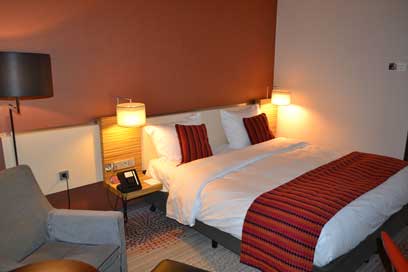
The Mövenpick Hotel Amsterdam in the City Center is a 20-floor, 408-room haven of rest and quiet, which has been devotedly serving its guests in the Swiss tradition since 2006. The hotel’s rooms include 20 junior suites and an Ambassador Suite, as well.

With spectacular views of the Eastern Docklands area of the city, and sitting on the banks of the River IJ, the Mövenpick offers Executive rooms on the 19th and 20th floors, which includes access to the Executive Lounge, complete with its own espresso machine.

The hotel, one of the taller structures in the city, is easily seen with its large, bold red letters announcing its presence within sight of the busy Amsterdam Centraal train station, and close to the many river cruise docks that attract thousands of visitors to the city every year.

Overlooking the bay called the IJ and North Sea Canal, the hotel plays guest to many of the river cruises that begin or terminate there. Amsterdam is the second largest Netherlands port after Rotterdam, and the third largest cruise port in Europe, with as many as 140 sea cruise ships and 1,500 river cruise ships docking annually.

Such river cruise lines as AMA Waterways, Viking, Avalon, Uniworld and Tauck use the nearby harbors for docking, thus the river cruise traffic is significant, especially in the summer when the river ship sailings are in full swing. Also, ocean cruise lines such as Holland America, Regent, Royal Caribbean and Carnival frequent the port.

CONVENIENCE FACTORS OF MÖVENPICK AMSTERDAM
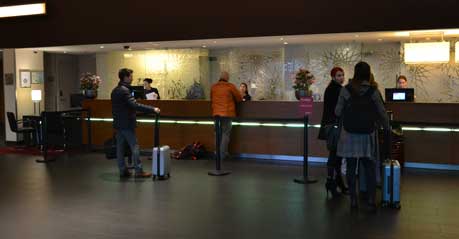
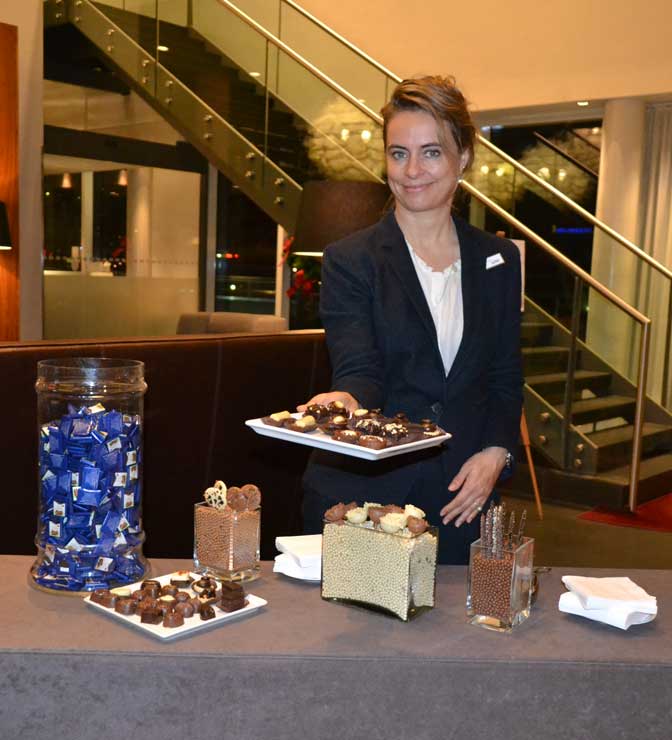
Not surprisingly, many of the Mövenpick guests choose to stay at the hotel right before and after their cruises, both for the convenient location and the many amenities that are offered to guests. As an example, you might be offered some of the delicious Mövenpick chocolates in the spacious lobby when you arrive. Or you might want to use the business center where you can check on your plane flight status or print out your boarding pass.

Other hotel amenities include air conditioning, coffeemakers, daily maid service, iron and ironing boards in many rooms, hairdryers, mini-bars in some rooms, all rooms are non-smoking rooms, telephone, voicemail, refrigerator, safe, ATM on site, cable/satellite television and internet access (high-speed wireless for an additional fee, or is complimentary on the executive levels).

The hotel also offers babysitting/child care services, complimentary pickup and drop-off transportation to the central train station, the services of a concierge, crib/rollaway beds, a currency exchange, gift shop, laundry/dry cleaning service, paid onsite parking, room service, wheelchair access to common/public areas and a multi-lingual staff.
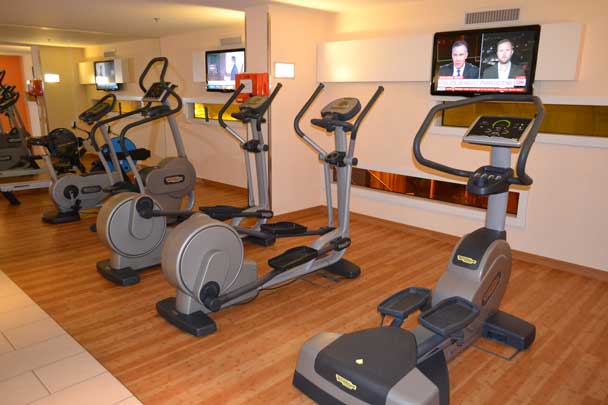
In addition, there is a lifestyle studio with cardio vascular equipment, a bio-sauna, Finnish sauna, a foot spa and a relaxation area, and massages are available.

Many business travelers also use the hotel because of its convenience next to the train station and the easy connections to busy Schiphol Airport, which is 11 miles away. The nearby Amsterdam train station with its 15 tracks serves more than 162,000 passengers each day. The hotel’s frequent shuttle service to and from the station allows guests to make easy transfers for local and international trains and also for quick train transfer to the airport.

EXECUTIVE LEVEL PRIVILEGES
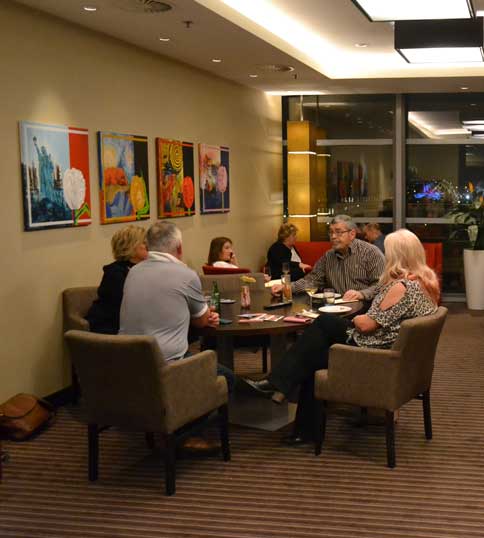
Guests staying on the Executive level of the hotel have access to a private lounge area on the second floor stocked with bottled soft drinks, juices and water, along with various snacks which are refilled during the day. At night between 5 and 7 p.m., the lounge features a happy hour complete with complimentary alcoholic beverages and snacks. The special second floor lounge looks out onto the harbor area of the canal, and features large windows, comfortable chairs and roomy tables.

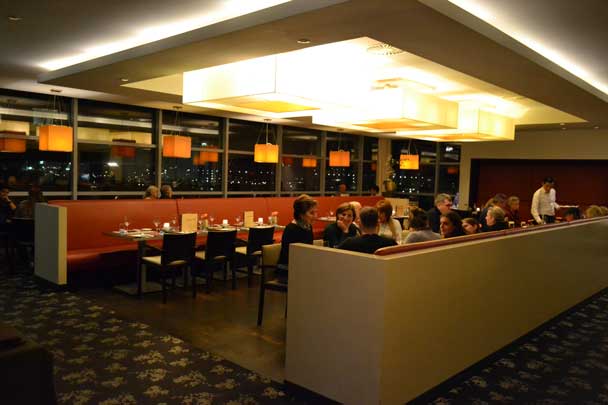
Hotel guests can enjoy meals all day in the Silk Road Restaurant which presents creative international cuisine for up to 220 guests at a time. The restaurant is located on the second floor with a view of the River IJ. Executive Chef Jamie Sharatt and his team prepare all dishes in an open kitchen with live cooking, including a selection of starters, main dishes, drinks and desserts.

From starters like home-made roasted tomato soup or fresh Caesar salad, to Linguine Alfredo and sliced veal (Zürich style), or various varieties of sumptuous steaks, to desserts such as Mövenpick ice cream creations, cheese cake or a cheese platter, the Silk Restaurant is worth a visit. The hotel also has a wide selection of Mövenpick wines to chose from when dining.

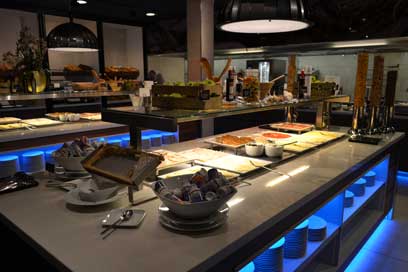
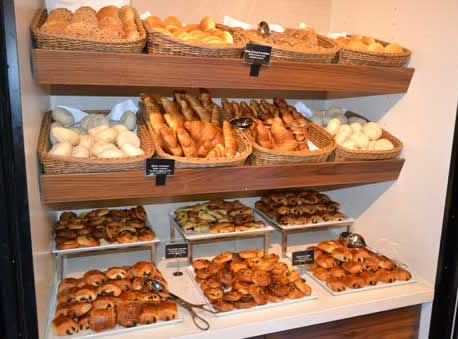
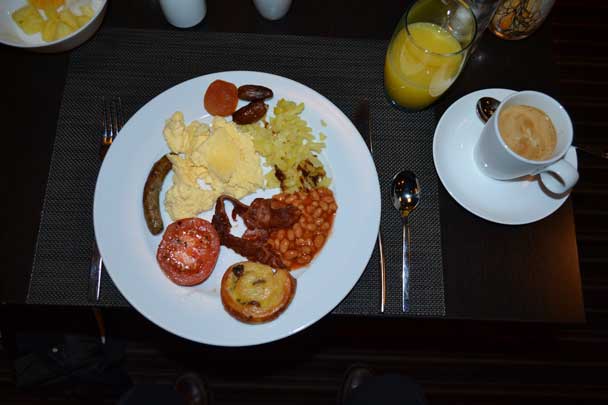
The large, multi-menu breakfast is a feast to behold. I am not sure I have ever seen such a wide variety of foods available at any first-class European hotel as here at the Mövenpick.

From any kind of egg creations, and several meat selections including fish and bacon, to about a dozen kinds of breads, rolls and croissants, to a wide variety of delicious fresh and dried fruits, yogurts and juices, the enticing breakfast buffet offers guests an overwhelming selection of foods. I enjoyed the freshly-baked, golden-toasted croissants with various jams and jellies, baked beans, grilled tomatoes, and cereals. Cold menu items include a choice of cut meats and cheese selections. Breakfast begins at 6:30 a.m. every day at the Mövenpick. Guests may special order breakfast omelets or eggs.

SILK BAR OFFERS ITS OWN CREATIONS
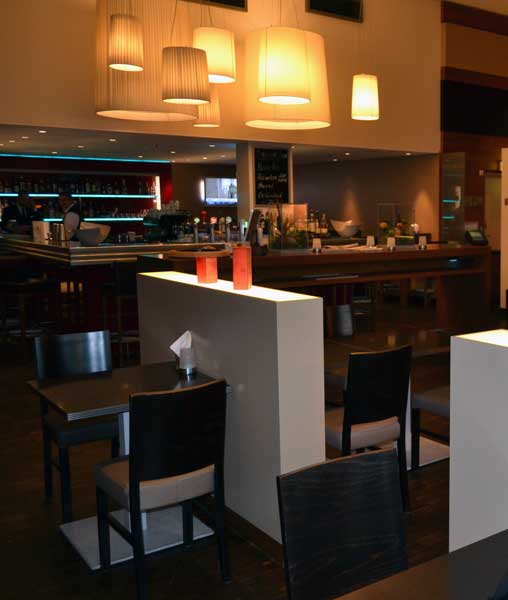
The smart Silk Bar is known for its extensive cocktail menu, and features a changing bar menu every day. It even offers its own original cocktail menu, and has a large whisky selection. Patrons can also enjoy a light lunch here, a quick snack, or a cup of Mövenpick coffee.

Helpful concierges are on duty in the lobby to assist Mövenpick guests locate points of interest in the city for sightseeing, modes of transportation, obtaining tickets for plays and museums, guided city tours and other questions that require a knowledgable answer. Looking for one of the city attractions—one of the smallest houses in the city—the hotel concierge quickly pulled out a city map and pointed out how to get there. I noticed later that he was the concierge supervisor, and his photo was on the cover of the printed, four-color map he handed me.

Because of all the city canals, one thing many visitors want to do is take a canal cruise. All you have to do is step out the front door of the hotel and you can embark on one of the many flat-bottomed canal boat tours offered in the city.

The hotel is also one of the most eco-friendly hotels in the city. The hotel uses heat and cold from the outside to help set room temperatures, and the hotel only uses fair trade linen.The hotel is Green-Globe Gold certified.

The Mövenpick, in keeping with the thousands of Amsterdam residents, supports guests who wish to do as the Dutch do, and ride their way through the city on two wheels. The hotel recommends Amsterbike which offers bike rentals, bike delivery, professional cycling tours, skip-the-line tours, as well as combination deals with boat tours, and walking tours in and around Amsterdam. The hotel offers a bike rental service on site.

Also, right next door to the hotel is the Muziekgebouw, a large concert and recital hall, and the most important stage in the Netherlands for contemporary music, offering more than 250 concerts annually.

For business travelers and business meetings, the hotel offers 12 state of the art “flexible” meeting rooms with such names as the Matterhorn, the Zurich, the Paris and the Dubai room.

In our opinion the outstanding Amsterdam Mövenpick in the city center rates a very high four stars, and is definitely passionate about serving its guests.

IF YOU GO….
The hotel is located at Piet Heinkade 111, 1019BR Amsterdam. Phone is +31 (0) 20 519 1200, or email the hotel at hotel.amsterdam@movenpick.com. The hotel’s general manager is Albert Rouwendal.
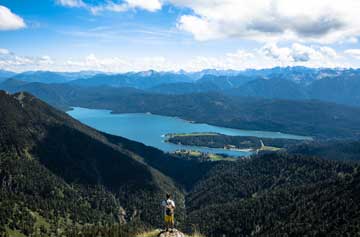
Four Great Road Trip Destinations in Europe

If you’re looking for a unique kind of European travel experience, consider a road trip. With the freedom of making your own way around the world comes an opportunity to discover things you would have otherwise missed – and you may be surprised at where the world’s best routes lie. Here are just four European destinations where the road trips are some of the best.

Photo by Raul Taciu

IRELAND
It’s perhaps the most unexpected country of all for a road trip, but Ireland actually boasts some of the best, biggest and most beautiful routes in the entire world. Take the Wild Atlantic Way, listed as the best road in the world by The Planet D. It’s also the longest coastal route in the world, too – running for over 1,550 miles along Ireland’s west coast, it’ll definitely make for an adventure.

Photo by Claire Bissell

That isn’t the only road Ireland has to offer, though. From the Burren Loop, surrounding the UNESCO World Heritage Site that is Burren National Park itself, to the scenic Comeragh Mountains, Ireland has some of the most beautiful routes in the world hidden beyond its shores.

ITALY
There’s no denying Italy has some of, if not the most wonderous and beautiful routes, perfect for a road trip. Consider driving by the Amalfi Coast near Naples, a scenic coastline with beautiful views across the turquoise waters from the jutting cliffs above. As an added bonus, towns like Salerno and Amalfi can be visited during your journey.

(left to right) Photo by Chris Holgersson; Photo by Ciprian Boiciuc

And Tuscany simply beckons for a relaxed road trip, with its rolling hills and sprawling countryside to discover. It’s a good opportunity to escape from the outside world as it’s quiet and draped in history and heritage – don’t be surprised if you go hours without seeing another soul. That’s the appeal.

GERMANY
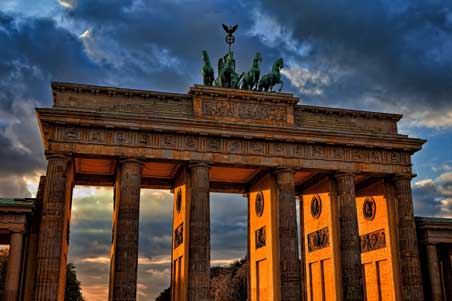
Since Germany is one of Europe’s biggest countries, it’s no surprise it boasts some of the longest roads in the continent. The Huffington Post lists Germany’s Romantic Road as the “ultimate European road trip,” with the sheer variety it offers – from wine tasting to majestic castles in the countryside. “1 Cover” highlights Fussen as a must-see, lying at the end of the Romantic Road, so be sure to pull up and explore this picturesque town.

(left to right) Photo by Ricardo Gomez Angel; Photo by Joseph Argus

Many of Germany’s routes have names that are equally as fascinating and intriguing as the Romantic Road. From the 625-mile-long Castle Road to the Fairytale Road, you have a number of choices when it comes to finding the right route for you – it all comes down to what you’re willing to discover along the way.

ICELAND
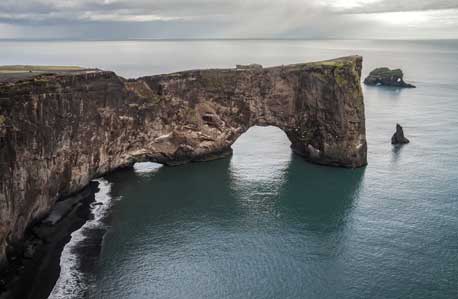
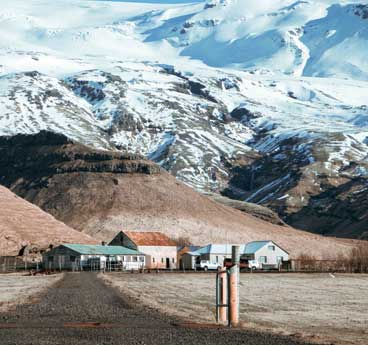
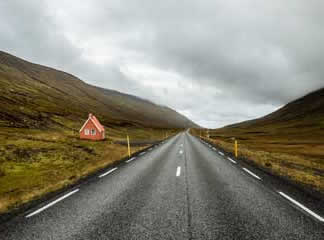
It’s safe to say Iceland isn’t a country many tourists are dying to visit – it’s yet to become one of the top hotspots for travelers. It’s a shame, as its offerings, including the incredible Ring Road, are some of the best if you’re looking for a very unique travel experience.

The Ring Road is the route to consider if you’re wanting a road trip like no other. The natural sights offered here are simply incredible – from volcanoes to waterfalls, from icebergs to northern lights, you’ll be overcome by just how beautiful Iceland truly is.

(left to right) Photo by Ivars Krutainis; Photo by Lorenzo Castagnone

Manchester, UK: City of Change

By Don Heimburger
Photos by the author

Manchester Corn Exchange

Manchester, in the United Kingdom, was the first industrialized city in the world, born of cotton. It was here that the Industrial Revolution took hold, and Manchester was the most productive center for cotton processing in the world. Later it was the world’s largest marketplace for cotton. During the Victorian era it was dubbed “Cottonopolis.”

Times have changed. Now this metropolitan area of nearly half a million people, one of the largest urban areas in the United Kingdom outside of London and Edinburgh, is associated with its interesting architecture, culture, music scene, and scientific and engineering endeavors. And its sports teams such as the Manchester United Football Club, the world’s most famous soccer team, is a constant reminder that Manchester is a highly diversified city, and is looking to the future.

Over the years, the city has reinvented itself from a technological standpoint, but remaining are many of the old historic buildings that attract thousands of tourists each year.

An example is the iconic four-star Midland Hotel on Peter Street, overlooking St. Peter’s Square. This impressive building, built in 1903 by the Midland Railway to serve Manchester Central railway station, stands right in the heart of Manchester city center. Over the course of its 100-year-old history, the hotel has played host to kings, queens, presidents, prime ministers and rock stars, including Winston Churchill, Princess Margaret, the Duchess of York, and the actress Sarah Bernhardt and Jeremy Brett (who played Sherlock Holmes), as well as the Sultan of Zanzibar, who arrived with an entourage of 60 people.

It’s in this 312-room hotel that Charles Rolls met Henry Royce in 1904 to form Rolls Royce. The French Restaurant in the hotel is one of the most important restaurants in the city, and also where a number of films have been shot.

MUSEUM OF SCIENCE AND INDUSTRY
Manchester’s Museum of Science and Industry, located at the site of the oldest surviving railway station in the world, is a family-friendly museum with lots to offer. The museum features everything from the first steam-powered mill and to the microcomputer, with lots of hands-on exhibits. There’s a large collection of vintage vehicles and historic working machinery, especially since the Industrial Revolution started in Manchester. You can even take a train ride behind a replica steam locomotive.

The John Rylands Library is less a library in the usual sense and more of a masterpiece of Victorian Gothic architecture: it looks more like a castle or cathedral. Rylands, who died in 1888, was one of Manchester’s most successful industrialists and had a large fortune. This world class collection includes the oldest known piece of the New Testament, the St. John Fragment. Other treasures here include illuminated medieval manuscripts and a 1476 William Caxton edition of Chaucer’s Canterbury Tales.

MANCHESTER ART GALLERY
The Manchester Art Gallery on Mosley Street has one of the country’s finest art collections in spectacular Victorian and contemporary surroundings. The gallery’s recent $53 million transformation has enabled the collection to be presented to visitors in new ways. Highlights include outstanding pre-Raphaelite paintings, craft and design, and early 20th century British art. Exhibits are always changing, but I saw a display of French and British Impressionist and post-Impressionist paintings, along with some splendid Victorian paintings.

The Gothic-style Manchester Cathedral, in the center of the city and built between 1441-1882, is a medieval church occupied by the Bishop of Manchester. Its official name is the Cathedral and Collegiate Church of St. Mary, St. Denys and St. George in Manchester. It was extensively refaced, restored and extended in the Victorian period, and then again following severe bomb damage in the 20th century; it contains many precious artifacts.

MANCHESTER TOWN HALL
A guided tour of Manchester Town Hall is an activity worth doing while here. The hall was designed in Victorian Gothic style by Alfred Waterhouse and opened in 1877. Among its treasures are the Ford Maddox Brown murals which are a monument to the ideas of Victorian Manchester, portraying the science, invention, education, trade and textile industry. Among the impressive rooms is the Sculpture Hall, containing statues of notable Manchester figures from the past, and the Great Hall, featuring a glazed skylight inscribed with the names of every mayor, lord mayor and chair of the town council since 1838. Be sure you see the mosaic pattern of bees on the floor outside the Great Hall. The bee symbolizes Manchester’s industry and is featured on the city’s coat of arms.

After dark, try out one of Manchester’s “real ale” pubs, or check out Matt & Phred’s Jazz Club, a nightclub where you can hear great jazz from some of the best performers, including Wynton Marsalis. Other clubs include Band on the Wall and Night and Day.

For food, try the Damson, a neighborhood restaurant in Heaton Moor, the relaxed San Carlo Cicchetti’s with delicious small dishes, and the French brasserie called Aubaine, on the top floor of Selfridges, which also offers a great view of Manchester.

Selfridges Department Store, Manchester

The Romans were known to inhabit the area around Manchester as early as 79 A.D., and the 19th century cotton trade brought great change to this city. Now with new glass buildings and a new development in the northern downtown core where the Industrial Revolution first took root, Manchester keeps re-inventing itself. Visitors will enjoy the mixing of old and new into a masterful blend.

For more information, go to www.visitmanchester.com and www.qhotels.co.uk.

Prague’s Beer Taverns — A Czech Tradition

By Sharon Hudgins
Photos by the author

Many people consider Czech beer to be the best in the world. The Czechs think so, too: they’re the biggest consumers of beer on the planet, drinking an average of 161 liters (42.5 gallons) per person annually (about 30% more than their beer-loving neighbors next door in Germany).

Prague is famous for both its architecture and its beer.

The Czechs prefer to drink their beer on tap, in local taverns, fresh from the barrel, not from bottles or cans. “Cans are for sauerkraut,” they say. Another Czech saying emphasizes the importance of the taverns: “The brewmaster brews the beer, the innkeeper makes it great.”

Prague’s oldest tavern, U Fleku, was founded in 1499.

BEER TAVERNS IN PRAGUE
Prague, the capital of the Czech Republic, has long been known for its beer taverns, some of which date from the Middle Ages. They’ve always been the haunts of workers and students, as well as those writers, artists and revolutionaries who preferred the classless camaraderie of the humble taverns to the social and intellectual pretensions of the city’s more elegant coffeehouses.

Before the Velvet Revolution of 1989, some of the beer taverns in Communist-era Prague were known as places where tourists (and spies) from the West could rendezvous with people from the Soviet Union and Eastern Europe, who were allowed to travel to Czechoslovakia but could not go to Western Europe or the United States. Of course those same taverns also attracted agents of Czechoslovakia’s secret police, who spied on the “suspects” from East and West meeting over mugs of beer in the smoke-filled rooms. Back then, some of Prague’s public taverns seemed like settings for a John le Carré novel.

After 1989, in the new capitalistic Czech Republic, some of those beer taverns cleaned up their grungy interiors but kept their traditional ambience. Others went completely glitzy-modern. A few old, defunct brewery taverns were brought back to life, and new microbrew pubs opened, too.

(left to right) Sign for the St. Norbert brewery in the Strahov district of Prague;
Entrance to the St. Norbert brewery;
Interior of the St. Norbert brewery, with a display of the different beers on tap.

Today Prague, a metropolis of 1.2 million people, has hundreds of beer taverns, from well-known hangouts in the central part of the city to little neighborhood pubs patronized only by locals. Prague’s classic beer taverns are also good places to eat, offering traditional Czech dishes like grandmother used to make, at reasonable prices that won’t break your budget.

U FLEKŮ
Prague’s oldest, best known, and most touristy tavern is U Fleků (At Flek’s Place), which dates back to 1499. Today, U Fleků’s famous strong dark beer is still brewed on the premises, attracting hordes of beer-lovers from around the globe.

The building’s rather plain exterior is distinguished only by the large gilded ironwork clock, the tavern’s symbol, on the front. Inside you’ll find several “Old World” rooms with dark wood paneling, vaulted ceilings, stained-glass windows, and beams painted with barley and hops motifs. Part of the building surrounds two open-air courtyards used as beer gardens in warm weather.

The food is decent and moderately priced. The multilingual menu includes roast duck with sauerkraut and dumplings, beef with sour cream sauce and bread dumplings, goulash with bacon dumplings, smoked pork with sauerkraut and potato dumplings.

Pork with sauerkraut and dumplings or sliced braised beef with bread dumplings and sour cream sauce are specialties at U Dvou Kocek.

U Fleků seats a total of 1,200 people in its various dining areas, and it’s often packed in peak periods. In tourist season, go there in mid-morning or mid-afternoon if you want to find a seat. The tavern also features live music, an “Old Prague cabaret” in the evenings, and a brewery museum for serious students of the suds.

Drawing Pilsner Urquell beer from the tap at U Dvou Koček.

U MEDVÍDKŮ
U Medvídků (At the Little Bears) is an old historic tavern, recently renovated, where beer has been served since 1466. Today’s tavern retains the vaulted ceilings of the original structure in several rooms and features an open-air beer garden, too.

The wood-paneled restaurant has an extensive, multilingual menu of Central European dishes, including a game menu (in autumn) of venison, wild sheep, wild duck and pheasant accompanied by red cabbage, potatoes and dumplings. Many of the hot and cold appetizers are portioned large enough to make a light meal in themselves: try the “Medvědí tlapky,” the tavern’s own version of “devil’s toast” with a piquant meat mixture on top; or four slices of fried rye bread with house-made beer-cheese spread. The “Čertovo kolo” (“devil’s wheel”), is a delicious plate-size potato pancake topped with a spicy mixture of meat and vegetables.

The tavern serves Budvar (original Budweiser) beer on tap, as well as semi-dark Oldgott and very strong X-Beer from the new microbrewery upstairs, the smallest brewery in Prague, established in 2005. There’s also a cabaret section, a small museum, and a shop selling several kinds of beer and beer paraphernalia.

U RUDOLFINA
Many locals consider U Rudolfina, near the Rudofinum concert hall, to have the best Pilsner Urquell beer in Prague. They also consider it to be a “real” Czech beer tavern, which hasn’t made any concession to the rampant tourism that has overtaken central Prague during the past two decades. Most of the people drinking there are Czechs.

Czechs enjoying their beer at U Rudolfina.

Beyond the nondescript exterior, just inside the front door you’ll find a small, simple, wood-paneled room with a small bar. Downstairs is a larger area, just as plain in decor, and as smoky and noisy as the little room upstairs. Way in the back is a separate dining room set aside for non-smokers.

In addition to the excellent beer, U Rudofina serves some of the best beer-tavern food in town. Start with a basket of “topinky,” slices of dark rye bread fried on both sides, sprinkled with salt, and accompanied by whole cloves of garlic for you to rub on the bread, as much or as little as you like; or a plate of “beer cheese,” a mound of soft cheese with mustard and chopped onions on the side, which you mash together with your fork and spread on fresh bread. The main dishes emphasize meat—beef, pork, sausages, chicken—and are very well prepared, large portioned and reasonably priced.

Reservations are recommended because this is such a popular place—and well worth visiting for an authentic, no frills, Prague beer tavern experience.

Typical sign for a Prague beer tavern and restaurant. Many signs are in English to attract foreign customers.

RECOMMENDED PRAGUE BEER TAVERNS
U Fleků, Křemencová 11, Prague 1, www.ufleku.cz. Open daily 9 a.m. to 11 p.m.

U Medvídků, Na Perštýné 7, Prague 1, www.umedvidku.cz. Open 11:30 a.m. to 11 p.m.

U Rudolfina, Křížovnická 10, Prague 1. Open 11 a.m. to 11 p.m.

For current reviews and ratings of more than 60 Prague beer taverns, see www.praguepubs.co.uk.

Traveling in Northern Ireland

My heart is warm with the friends I make,

And better friends I’ll not be knowing;

Yet there isn’t a train I wouldn’t take,

No matter where it’s going.

Edna St. Vincent Millay, “Travel”

Northern Ireland is one place you don’t want to miss as you travel around Europe. The country’s capital, Belfast, is a charming city known for being the location where the famous Titanic was built.

It’s also home to political murals that reflect the “The Troubles”—the conflict that has defined the country’s contemporary history. A little further outside of the city you can see picturesque views of the countryside as well as beautiful cliffs overlooking the sea.

Here are some top experiences you should have on your bucket list when visiting Northern Ireland.

LEARN ABOUT SHIPBUILDING IN THE TITANIC BELFAST MUSEUM
Made popular by the 1997 epic film, the widespread history of the Titanic makes this attraction one of the most popular in the city. The self-guided museum takes guests through a series of galleries where you can learn about the RMS Titanic, which was originally built in Belfast by shipbuilders Harland & Wolff. The museum goes well beyond the ship’s building however, and touches on its launch, its maiden voyage, the tragic sinking and its aftermath. However, it’s important to note that as this is one of the most popular attractions in the city, Independent Travel Cats advises getting your ticket in advance to avoid waiting in line.

STROLL AROUND THE BELFAST PEACE WALLS
The conflict known as “The Troubles” was a trying time in the city of Belfast. The violence between the unionists and nationalists resulted in 3,500 deaths and 50,000 injuries. During the 1970s, a Peace Line was created which separated the conflicting sides from each other. However, human spirit and kindness also prevailed. Save the Children’s Northern Ireland 1971 report details how children and mothers from both sides of the Peace Line would interact with each other in a friendly and relaxed way, with no sign of animosity. These small interactions weren’t enough to stop the growing conflict, however, and the Peace Walls was erected. This was to prevent violence from erupting between the two sides.

Now, decades later, the walls are painted with colourful murals on either side. Each side depicts the sentiments of the community, and gives a snapshot of the culture and history that runs through the town. One way of exploring these murals is through strolling around and taking your time with each piece. However, if you want a more guided experience, another option would be to take a Black Cab tour. Jump in a black cab and drive around the different murals and points of interest along the Peace Wall. While you’re traveling around, a local guide will tell stories about their own personal experiences of “The Troubles.” Hearing stories from a local’s perspective is always a good way to immerse yourself in a city’s history.

MARVEL AT THE GIANT’S CAUSEWAY
Giant’s Causeway is a UNESCO World Heritage Site located on the north coast. The site holds about 40,000 natural columns jutting out to the sea. The columns were formed due to a volcanic eruption that happened many centuries ago.

Legend has it that the giants of Ireland and Scotland were challenged to a fight, and for the duel to take place, the giants created a causeway over the ocean leading to Scotland. Interestingly, you can find the same types of columns at Fingal’s Cave in Scotland which supposedly comes from the same flow of lava or were made by the same giants, whichever you choose to believe. Remember that visiting the Giant’s Causeway is free, although you do have to pay more if you want to explore the Visitor’s Center. To access the Causeway for free, follow the archway to the side of the Visitor’s Center.

DRIVE THROUGH THE DARK HEDGES
Similar to Wales, Northern Ireland is composed of beautiful sprawling countryside. The Dark Hedges is a quiet road near the rural town of Ballymoney in County Antrim where beech trees line each side, creating an eerily imposing tunnel-like entrance. Planted almost 300 years ago, they were made famous when they appeared in the hit TV series Game of Thrones. The hedges originated in the 18th century when the Stuart family planted the trees to impress visitors as they approached their mansion, the Gracehill House. The hedges are just a 50-minute drive from Belfast, so it’s a perfect stopover before going further to explore the north coast.