Airport check-in is hectic and rushed. We juggle handbags, wallets, snacks, laptops, babies, cellphones, boarding passes, IDs, passports—and all while trying to pour out the rest of our water bottles before security demands it. I did A LOT of research before purchasing the attractive accessory that majorly simplified my check-in process—the Victorinox Travel Organizer with RFID Protection. The $55 price tag might seem like a lot, but Victorinox is a brand I stand by because they focus on quality, sturdy construction, and smart technology. A brand leader in Switzerland and the rest of the world, Victorinox puts its energy into several categories of products, although it all began with the legendary and esteemed Swiss Army knife. Besides cutlery, this Swiss company produces watches, fragrances, and travel gear.
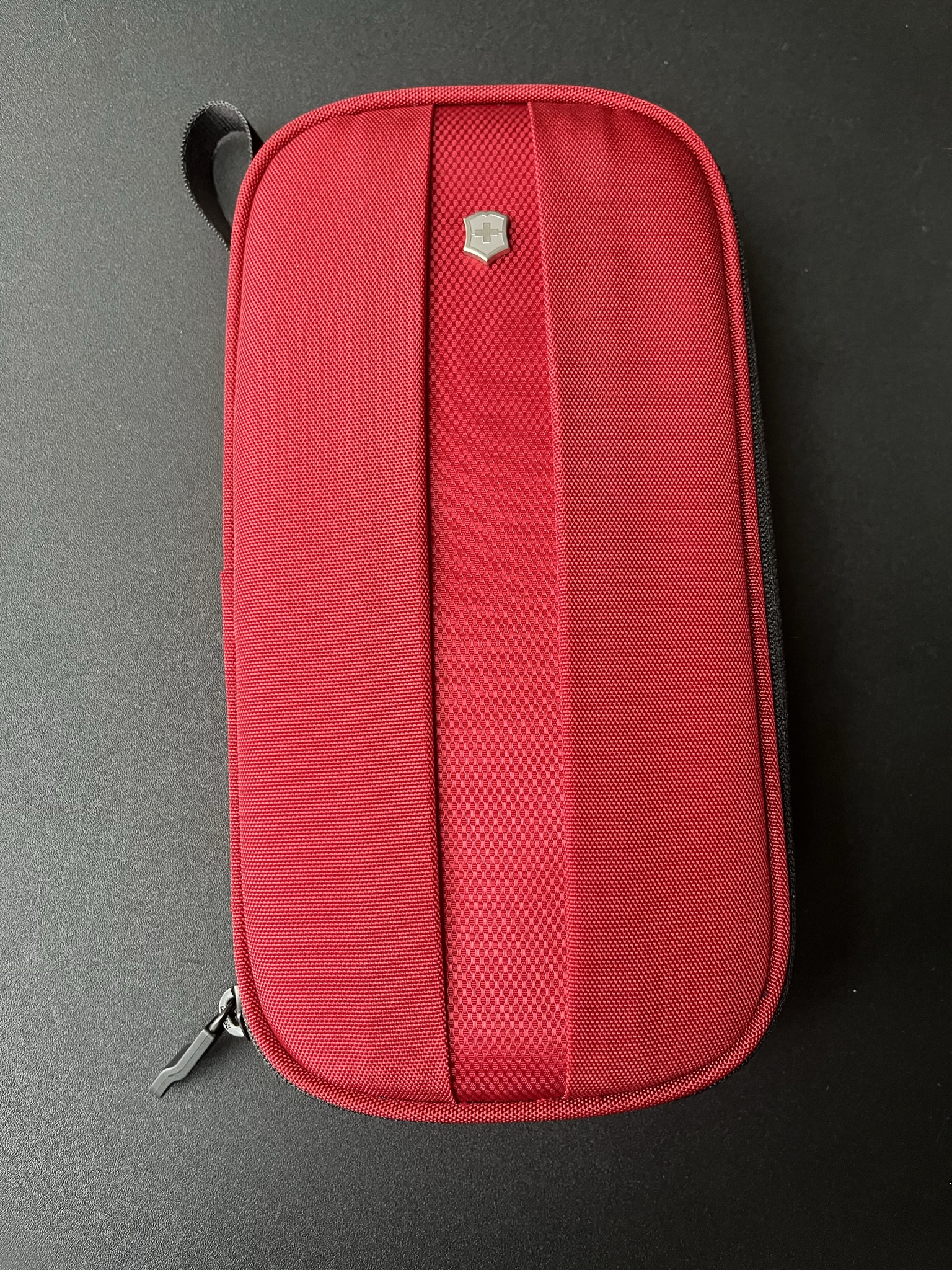
In terms of travel gear, the Victorinox Travel Organizer specifically meets my needs due to its large capacity to hold multiple passports and boarding passes (so I can keep track of my kids’ passports and papers as well as my own). Although it comes in either black or red, I chose the eye-catching bright red color so it would show up in my dark-lined bag and would be easy to spot if I misplaced it. The zipper is sturdy and secure, zipping around 3 sides of the wallet to completely contain the contents.
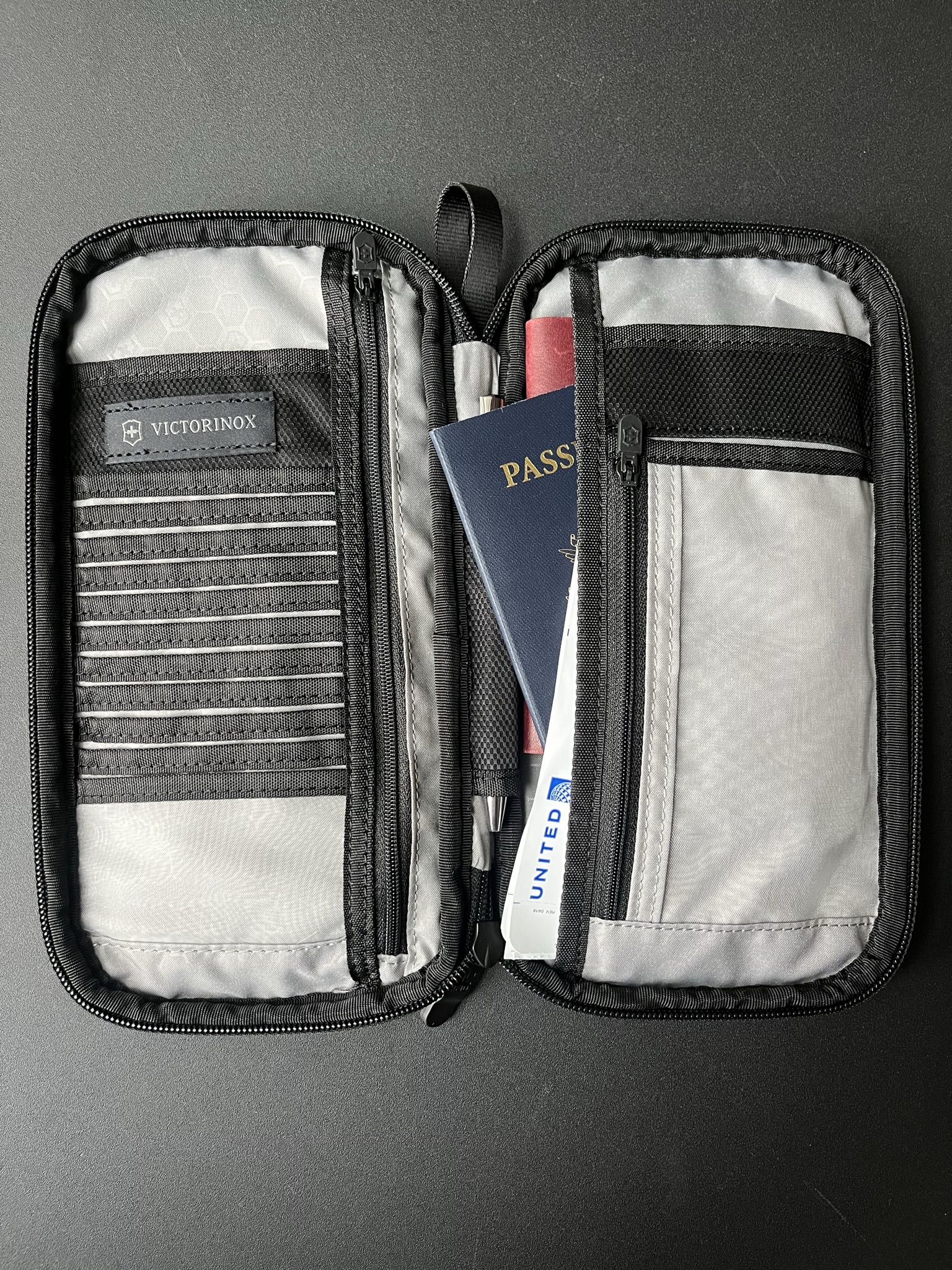
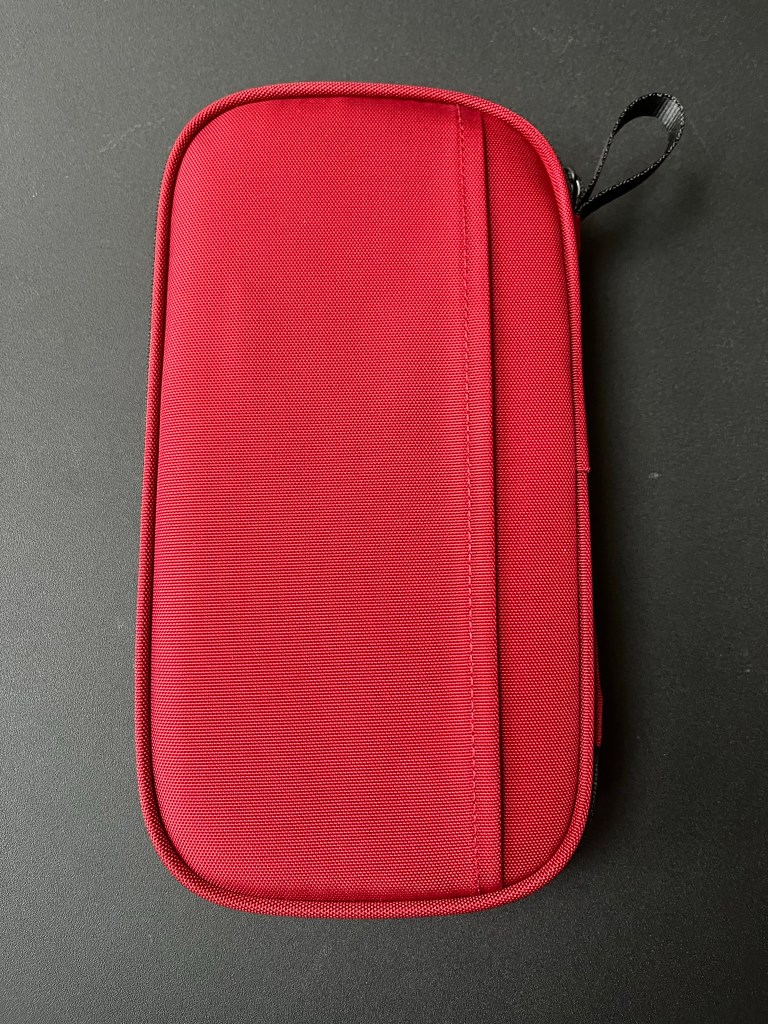
The interior offers 12 credit card slots, with one covered in a see-through mesh to keep an ID or business card visible. Its long, zippered pocket is perfect for cash or documents that need safe keeping. The interior “spine” of the organizer reveals a canvas tube for storing a pen. The right side of the wallet consists of 4 tall pockets and dividers that help you separate your boarding passes and passports, and can even hold reading glasses, earbuds, and your cell phone. The zippered mesh pocket on this side is perfect to hold coins, jewelry, more open-faced IDs, or small items that need containment. The outer, backside of the organizer even has a wide, extra pocket for storing customs papers and tickets that you want to keep easily accessible without unzipping the whole wallet. A strong canvas loop at the top corner allows you to keep a firm grip on your valuables by sliding a finger through for extra security.
Back side
Speaking of security, this wallet safeguards your private data by blocking radio-frequency identification (RFID), preventing others from scanning your credit cards and ID cards and wirelessly obtaining your personal information. I felt very confident storing my travel documents and accessories in this handsome wallet as I traveled internationally through multiple airports and customs desks.
Great news for U.S. travelers with Spanish islands on their “Places to Go” lists – this summer, United Airlines is launching direct flights from New York/Newark (EWR) to Palma de Mallorca (PMI) and Tenerife Sur (TFS).
Royal Palace of La Almudaina in Palma, Mallorca
These seasonal flight offerings (June through September) are your opportunity to visit the Balearic Islands or Canary Islands without first stopping on the Spanish mainland. This new expansion makes United Airlines the U.S. carrier serving the largest number of destinations in Spain.
Flights to/from the Balearic Islands:
• New York/Newark – Palma de Mallorca
Flight UA236 EWR 20:55 – PMI 11:00 three flights weekly, on Tuesdays, Thursdays and Sundays
• Palma de Mallorca – New York/Newark
Flight UA237 PMI 12:55 – EWR 16:10 three flights weekly, on Wednesdays, Fridays, and Mondays
Flights to/from the Canary Islands:
• New York/Newark – Tenerife South
Flight UA248 EWR 21:50 – TFS 09:55 three flights weekly, on Mondays, Thursdays, and Saturdays
• Tenerife South – New York/Newark
Flight UA249 TFS 12:00 – EWR 14:55 three flights weekly, on Tuesdays, Fridays, and Sundays
Stay tuned for fresh travel stories about Mallorca and Menorca – coming soon!
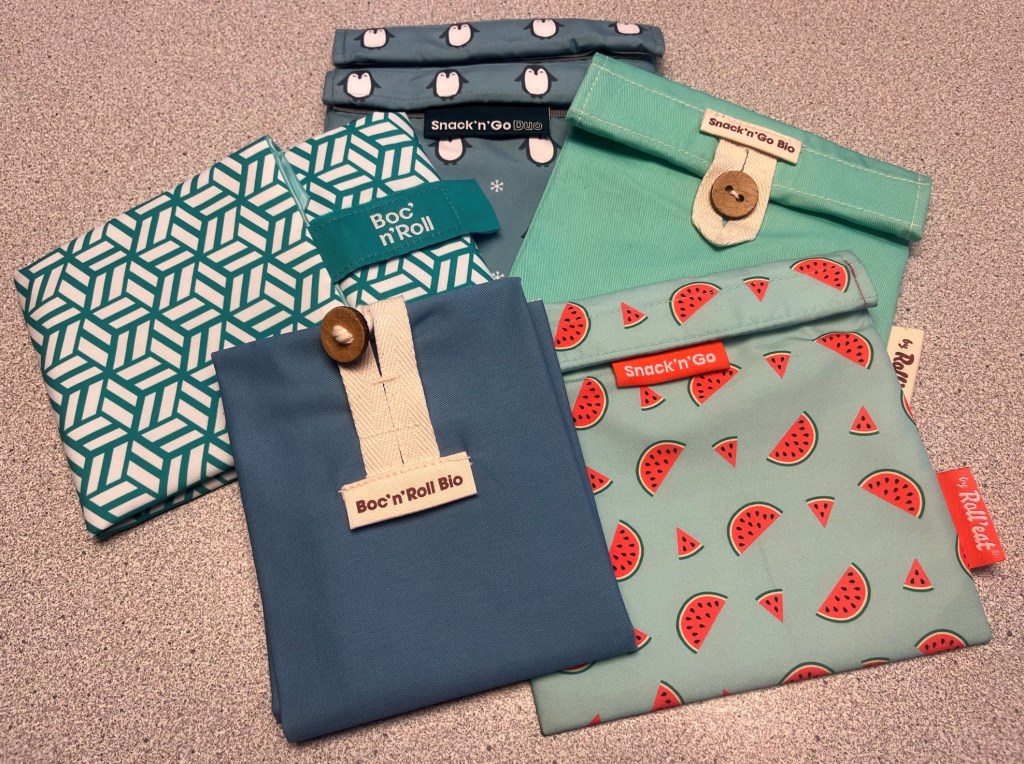
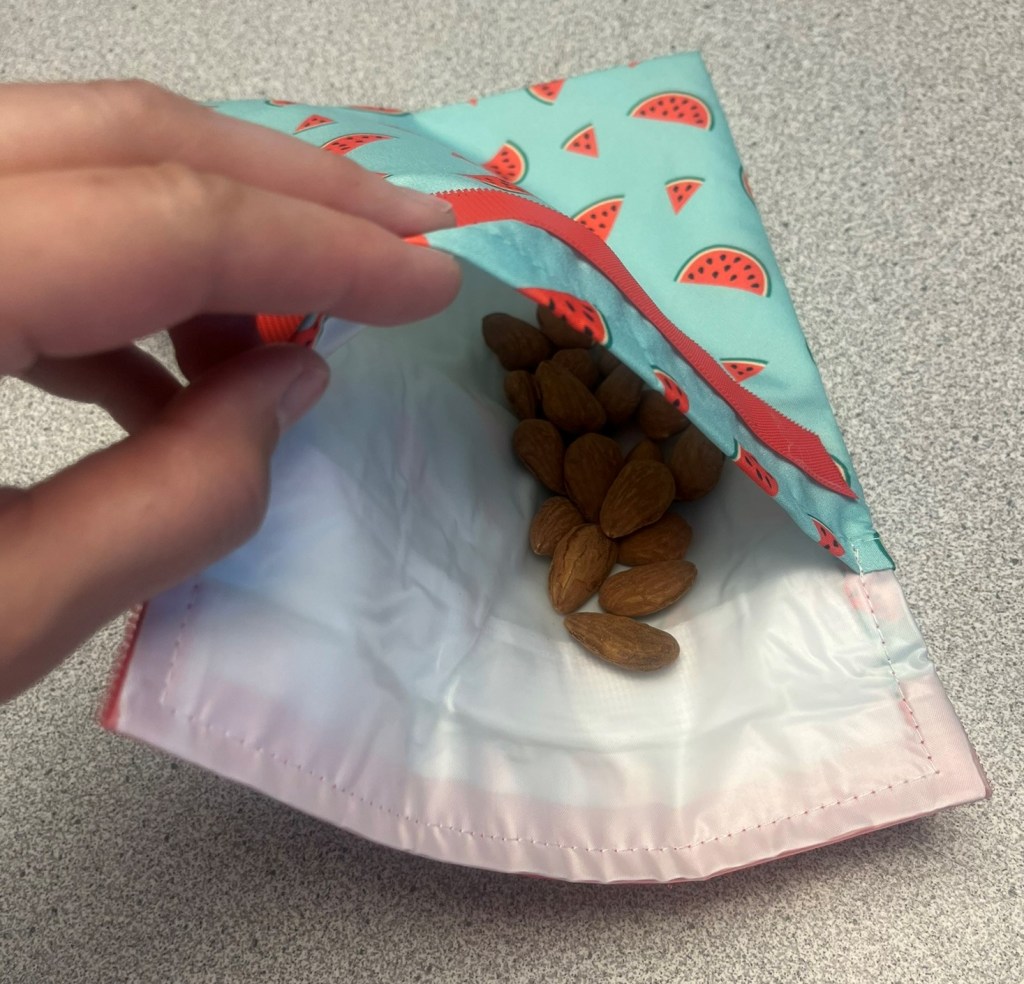
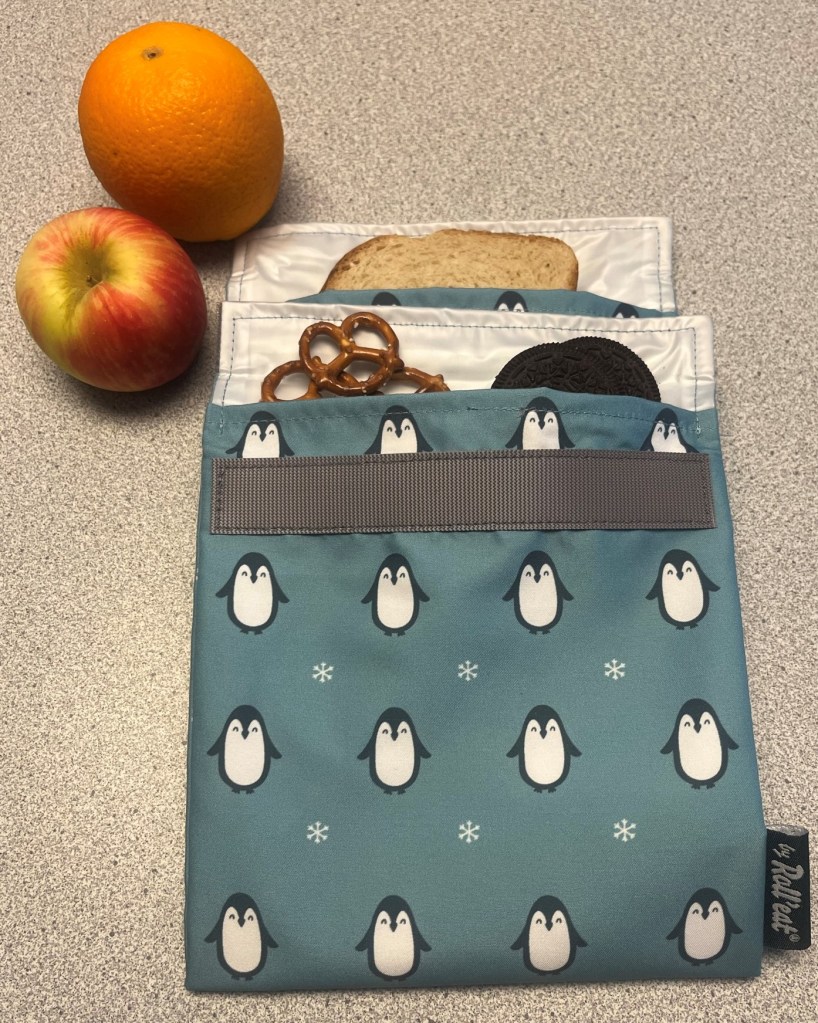
How many plastic sandwich and snack bags do you use in a week? If you pack a lunch and snacks for work or school, probably too many to count! You can help reduce pollution and protect our planet by switching to reusable food wrappers by Roll’eat. These sandwich and snack bags come in a wide variety of fun colors and prints – from animals to fruits to bold solids and flashy patterns, you can pack some personality into your purse or lunch bag!
On a recent work trip full of long tours, the hotel’s abundant continental breakfasts were too tempting to ignore. Many colleagues sustained themselves throughout the long days by wrapping mixed nuts or an extra pastry into a tissue-thin napkin in the morning and stuffing it into a pocket or bag. As you know, this rudimentary wrapping often results in a crushed croissant or a pocket of loose, linty legumes. Roll’eat Snack’n’Go and Boc’n’Roll reusable bags are the perfect solution to this problem, protecting your snacks from spilling or squashing, and they provide zero waste!
The eco-friendly Snack’n’Go is a 7”x7” soft pouch with a durable upper closure and a leak- and stain-resistant inner layer that ensures your snacks remain fresh. The double-layered fabric can be wiped on the outside and inside with a damp cloth or washed in the washing machine, and the bags can fold down to a small size for easy packability. They are lead-free, BPA-free, and hassle-free for life on the go. There is even a Snack’n’Go Duo that features 2 pockets, so you can slip a saucy sub sandwich into one and some crunchy munchies into another, keeping your food items separated.
Roll’eat bags also give you the option to pack healthy food from home instead of relying on junk food from vending machines or supporting the production of pre-packaged, high-calorie snacks. You can snack on fresh, natural foods that support better health, while using a snack holder made of materials that don’t cause harm to your health or to nature.
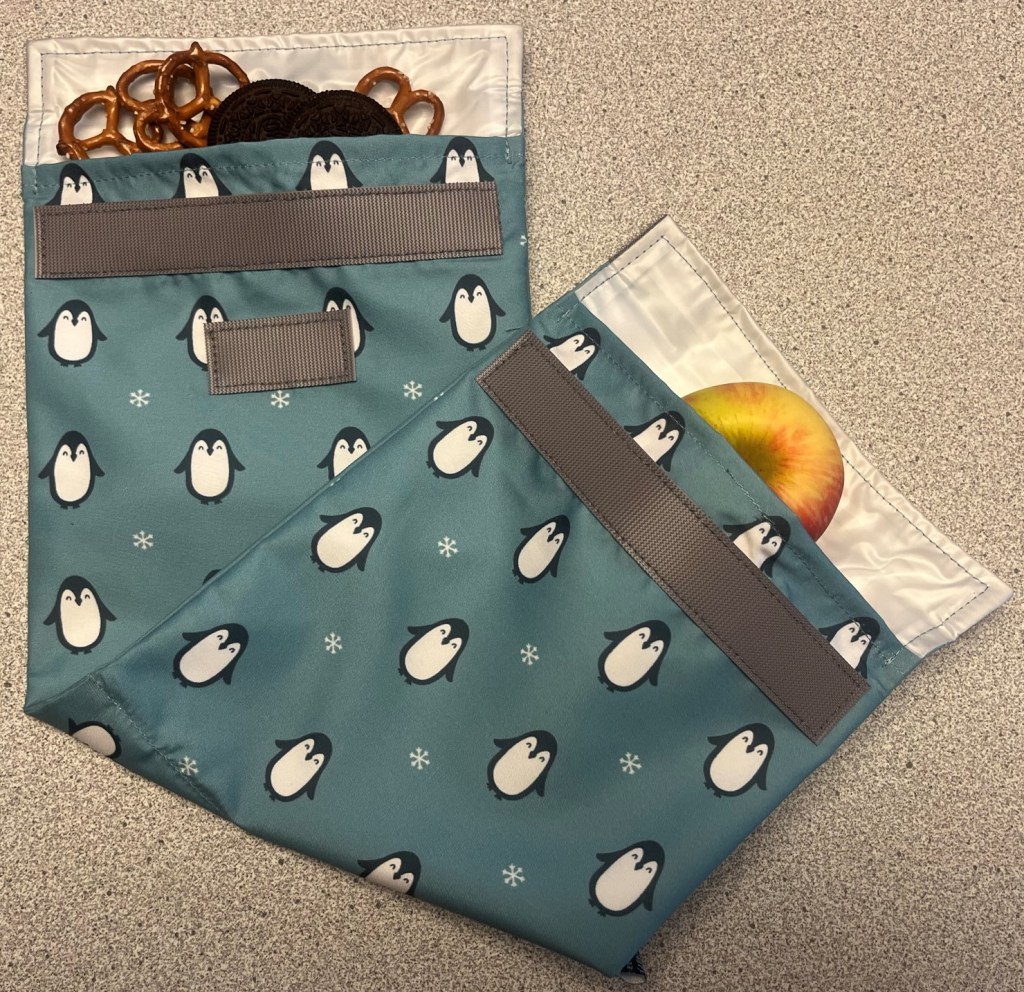
The Boc’n’Roll sandwich holder opens flat to turn into an ~18”x13” placemat, protecting your food from dirty surfaces, and it can fold compactly, depending on the food you’re enclosing. I am one who loves wrapping gifts, and each use of the Boc’n’Roll is like preparing a colorful present to open later! You place your sandwich in the center and fold up each side over it until easily securing it with a button or strip of fabric fastener, depending on the model. The fabric is beautiful and tough, but please don’t use sharp utensils around it or try to cut a sandwich in half on top, to avoid puncturing it.
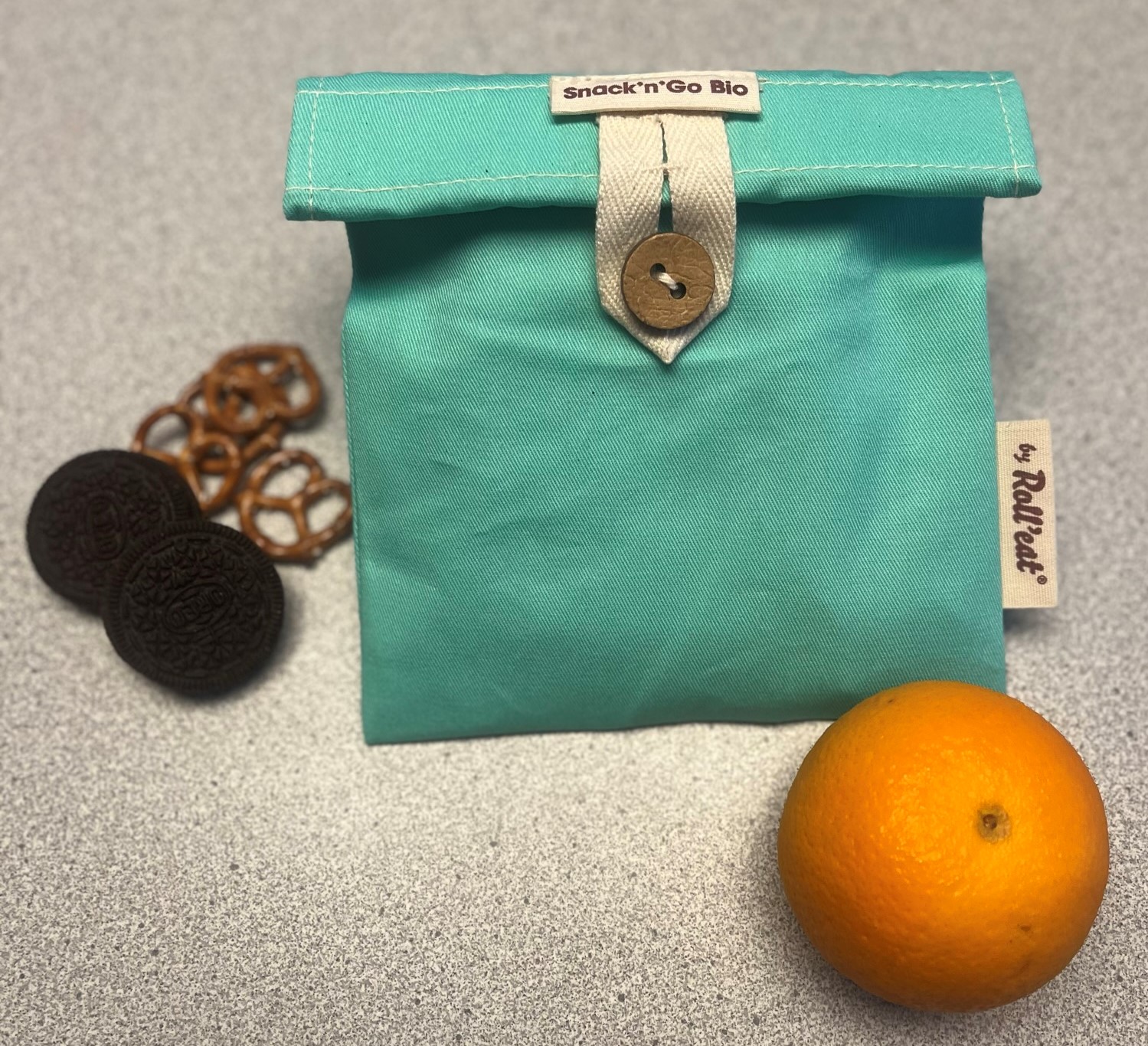
The Bio line by Roll’eat is 100% biodegradable and sustainable. The fabric of these is an organic cotton canvas in solid colors, with a natural wooden button enclosure. These compostable materials are manufactured using fewer fossil sources and will eventually decompose faster while using less energy than other materials – another chance to be kind to Mother Earth and reduce negative effects.
Reduce harmful waste, promote environmental awareness, choose a responsible lifestyle, pack healthy foods – Roll’eat bags help you do all of that while adding style to your snack life! Please visit RolleatUSA.com to shop the collection and learn more about the Roll’eat mission and impact.
A Curious Traveler’s Guide to Paris will help readers enjoy both the modern and the historic sides of today’s Paris — directing you to the best eating, sightseeing, and shopping in the city without breaking the bank. The Paris-based author is a former travel editor for Rough Guides and a contributor to Time Out Paris, and she has her finger on the pulse of the city. This compact 5-½ x 8-¼” paperback is organized with neighborhood-by-neighborhood highlights, offering a good balance between the mainstream and the more off-beat sights of the city. Aimed at the budget -conscious traveler, A Curious Traveler’s Guide is an unpretentious insider’s guide.
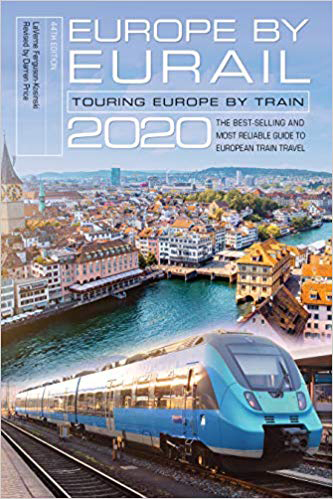
This is the latest edition of a reliable guide that has been the train traveler’s one-stop source for visiting Europe’s cities and countries by rail for more than 40 years. Europe by Eurail is a comprehensive guide providing the latest information on fares, schedules, and pass options, as well as detailed information on more than one hundred specific rail excursions.
The 565-page, 6 x 9” softbound has all the details travelers need to visit historic cities, romantic villages, and scenic hamlets on more than 90 rail trips starting from twenty-eight base cities located in 20 countries. Sample rail-tour itineraries combine several base cities and day excursions into 15-day rail-tour packages, complete with hotel recommendations and sightseeing options.
Packed with practical information, step-by-step directions, advice on where to go and what to see and do, and complemented by the inclusion of twenty maps, Europe by Eurail takes the puzzle out of European rail travel.
Renee & Matthew Hahnel, two professional travel photographers originally from Australia, embarked on the adventure of a lifetime—a seven-month road trip to every national park in the U.S. Over the course of this epic journey, they traveled through 39 states, two U.S. territories, drove more than 25,000 miles, took 26 flights, and hiked hundreds of miles across dramatic landscapes. This 8½ x 11″ 320-page hardbound book tells their story with beautiful four-color photography that will give you all the inspiration you need to plan your next national park road trip. The book also features suggested road trip itineraries and a map featuring all of the national parks, and practical information such as lists of the top national parks for scenery, lodging options, where to avoid crowds, and which of the national parks are the most underrated.
Germany has the largest population of any nation in Western Europe, and is the ancestral home of the single largest ethnic group in America. To do justice to this major nation, Frommer’s used the talents and research abilities of six experienced journalists, most of them living full time in Germany. The resulting book is up-to-date and contains dozens of spectacular photos, full-color maps throughout including a helpful pull-out map, as well as compelling and fun-to-read discussions of Germany’s history, art history and current culture. In addition, there are sample itineraries so you can make the most of your time in country; tips on how to avoid the crowds and save money, whether you’re a luxury lover or a backpacker; advice on historic sights, nature areas, museums and other attractions, with star ratings to help you quickly decide what to see and what to skip. The book also contains dozens of no-holds-barred reviews of hotels, restaurants, nightlife venues and shops, from authors who have visited them all.
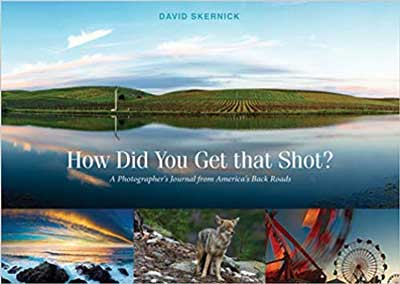
HOW DID YOU GET THAT SHOT?
By David Skernick, published by Schiffer Publishing Co., 4880 Lower Valley Rd., Rte 372, Atglen, PA 19310. (610-593-1777) Price: $29.99
This excellent 192-page 10-1/4″ x 7-1/4” hardbound book is the work of photographer David Skernick, who captures the most out of ordinary scenes. Paging through this remarkable archives, you do wonder “How did you get that shot?” Each photograph—all of them in color— tells of the location, camera setting, the type of lens used, any special “gadgets” like filters, plug-ins, sometimes he’ll give the time of day the photo was taken, perhaps a funny story along the way, and any other pertinent information the author feels necessary to understand and further enjoy the photo.
For example, at North Beach, Point Reyes National Seashore, Skernick captures a large field of vivid, purple ice plant flowers. He tells readers about the sand and waves there, and the 35mm wide-angle lens he used to shoot the photo, including lots of foreground in the composition. Surprisingly he used very little of the ocean view in the stunning image. “The main story is the ice plants,” he writes.
Great photography, and an excellent book.
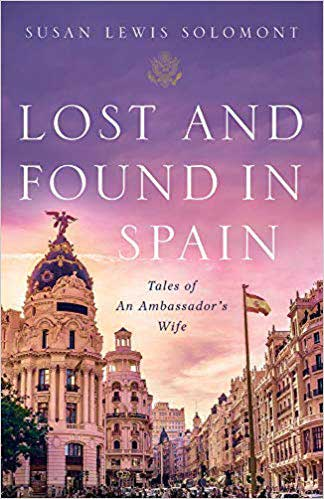
LOST AND FOUND IN SPAIN
By Susan Lewis Solomont, published by Disruption Books, New York, www./disruptionbooks.com. Price: $16.99.
This softcover 230-page read is a first-hand account of everyday life in the American embassy in Spain. The author’s husband, Alan Solomont, America’s ambassador to Spain from December 2009 to August 2013, also served as National Finance Chairman of the Democratic National Committee in 1997. Obligingly, when her husband was appointed by President Barack Obama to be the Ambassador to Spain and Andorra, Susan Solomont left her career in which she provided philanthropic counsel to private foundations. She also gave up friends and family, and a life she was very satisfied with, to accompany her husband for 3-1/2 years overseas.
Part memoir and part travelogue, Solomont recounts a time of self-discovery as she navigates a new life in a foreign country. She learns the rules of a diplomatic household; goes on a culinary wanderlust with some of Spain’s greatest chefs; finds her place in the Madrid Jewish community; and discovers her own voice as she creates new meaning in her role as a spouse, a community member, and a twenty-first century woman.
“When I imagined what life might be like as a diplomatic spouse, one of the most attractive elements was the travel involved,” she writes. “I knew what I wanted to see, where I wanted to eat, and where I wanted to stay.” The work involved in the job not withstanding, she says all this—and more—did happen, and for that she is ever grateful.
She confirms in the book that bullfighting and hunting, both quintessentially Spanish pastimes, were not for her, although she did admire the matadors’ costumes. She also appreciated the social orientation around Spanish foods. In the U.S. she writes, people often dine alone or snack at their desk, whereas in Spain people sit together, sharing food and wine, and they seldom use their cellphones.
She also remarks how lonely at the top it was, with the State Department being hierarchical and formal in its protocol. Her husband needed someone to offer honest feedback, and “that person was me,” he writes. Many other stories of her encounters and wide experiences are recounted in this eight chapter book. It’s well written and interesting, and actually would be helpful to read prior to traveling to Spain. “In these pages, Susan Solomont has shared an exhilarating story of the challenges and the special joys of representing America abroad, which will inspire, educate and delight. This powerful portrait of perseverance and courage is a great gift as we navigate new changes and challenges in our life’s journey,” said Speaker of the House Nancy Pelosi.
“Lost and Found in Spain is a candid, personal, and often humorous account of full immersion in a magical, historic culture, and a crash course in public diplomacy, told from the perspective of a woman whose journey is marked by grace and goodwill,” added former Secretary of State John Kerry.
They are both correct in their descriptions of the book.
ROUGH GUIDES
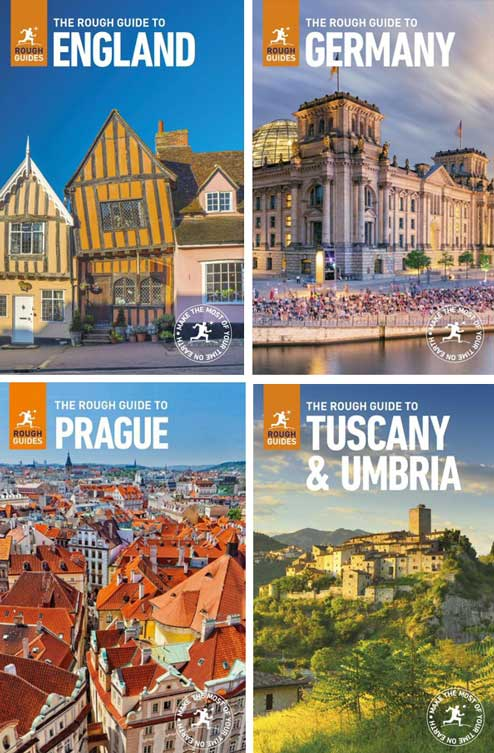
Tuscany & Umbria • Germany • Prague • England Distributed by Penguin Group, www.roughguides.com. Prices: vary from $12.99 to $19.99.
These handy guidebooks are published for about every European country. They’re crammed full of facts, tips, detailed maps and suggestions on what attractions to see, how to get there (either the country or city), where to stay, where to eat, general pricing, what’s hip and what’s not, neighborhoods, culture, nightlife, essential telephone numbers, distances between points, historical facts and “practicalities.” The guides typically begin with a color map of the city or country, give the reader basics on getting there, costs, money, accommodations, eating, drinking, public hours of stores, restaurants, a listing of festivals, consulates and police information, and then launch into detailed information specific locations, towns and areas.
The country books are divided into an Introduction, with suggested touring itineraries; followed by a “Where to Go,” “When to Go”, author’s picks, and spots not to miss.
Another section features accommodations, offering a list of better quality hotels, as well as some tips. The Prague guide reads, “Given that Prague can be pretty busy all year round, it’s not a bad idea to book ahead in any case….breakfast is usually included in the price, unless otherwise stated.”
Each book is easy to read, conveniently divided in various logical chapters, and includes enough photos and smaller colored maps to make reading enjoyable. The book offers language aids and legends to help the reader even more. There is an enormous amount of information in each book; these guidebooks make for enjoyable reading, besides being helpful for travelers.. A good price, too, for what you get.
PILGRIMAGE
Quarto Publishing, The Old Brewery, 6 Blundell St., London N7 9BH UK. www.quartoknows.com. Price: $40.00.
Whether you’re truly making a pilgrimage, exploring the world, or simply hiking, Pilgrimage will lead you along deeply historical routes like the ‘Jakobsweg’ in Germany, between Cologne and Trier. You’ll find great walks in Britain and France, like St. Cuthbert’s Way, which winds around the Scottish Borders to the holy island of Lindisfarne, and the World Heritage Site of Mont-St-Michel built on the tiny island off the coast of Normandy. The author has previously published a book about one of Europe’s most famous pilgrimages, the ‘camino’ through France and Spain to Santiago de Compostela.
The most notable addition to the rejuvenated era of pilgrimage is the Via Francigena, now a very well established path through Switzerland and Italy. The Italian section begins on the bleak summit of the Great St. Bernard Pass where a hospice still caters to the needs of passing pilgrims before heading down to Rome through some of Italy’s most beguiling countryside, interspersed with medieval hilltop towns and villages.
Astounding photographs combine with an absorbing text that describes the history and key features of each route, as well as brief details of the distances and the number of days it takes to walk, and a list of websites to help plan your journey.
THE SPIRIT OF THE MOUNTAINS
Firefly Books, PO Box 1338 Buffalo NY 14205. www.fireflybooks.com. Price: $40.00.
An organization of mountaineers called the International Mountain Summit stages a photography contest each year, and this beautiful photo book is a compilation of entries from 2011 to 2016. More than 160 stunning images taken by professional as well as amateur photographers display mountains around the world in their many forms and seasons. The photographs in the hardbound book are divided into four sections: Europe – (Italy, Germany, France, Scotland, Norway, Canary Islands, Iceland, Austria and more); Asia – (Armenia, Iran, Caucasus, Russia, United Arab Emirates, Nepal-India, Philippines, Indonesia and more); Africa/Oceania/Antarctica – (includes Ethiopia and New Zealand and more); and the Americas -(Greenland, Canada, United States, Guyana, Peru, Bolivia, Argentina, Venezuela, Chile and more). Famous and unknown peaks alike are shown in their stunning grandeur.
THE ALPS
W.W. Norton Publishing, New York, www.wwnorton.com. Price: $16.95.
Author Stephen O’Shea takes an extended automobile trip across the Alps, a 500-mile excursion into Germany, France, Italy, Switzerland, Liechtenstein, Austria and Slovenia. An exhaustive trip for most, O’Shea’s rumbling through the many towns and villages, and hairpin curves of the up-and-down roads he encounters, brings him into contact with a number “characters.” Between the people he meets, the food particular to each country, as well as the differences in languages, O’Shea finds plenty to write a book about, and he often does in it a humble, amusing way.
As his automobile adventure continues, O’Shea offers the reader his particular insights into the culture, historical background, festivals and people of the Alps regions. In St. Gallen, Switzerland, a senior librarian recounts to him that Irish pilgrims in the Middle Ages scribbled notes in the margins of the library’s books. One read: “Tonight is a stormy night so we don’t have to be afraid of the Vikings.” In another instance on a train trip returning down from the Eiger, O’Shea sits next to a man who is a “full-on druid lover. The rest of the trip down to Grindelwald becomes a disquisition on runes, standing stones, mysterious powers, oracles, and the like,” he explains, wishing perhaps he had sat somewhere else.
One thing the reader learns fairly quickly is that O’Shea is not a lover of heights, or tight mountain curves, or really anything that has to do with tall landscapes that he must negotiate in a stick shift car. He manages to bring quite a bit of humor into the books’ passages because of this appreciable fear.
In all, this is a very entertaining, educational road trip that might inspire others to duplicate some or all of O’Shea’s Alps road trip. And if not that, it manages to be an excellent, multi-faceted read for those who just rather sit back and let someone else explain the history, geog
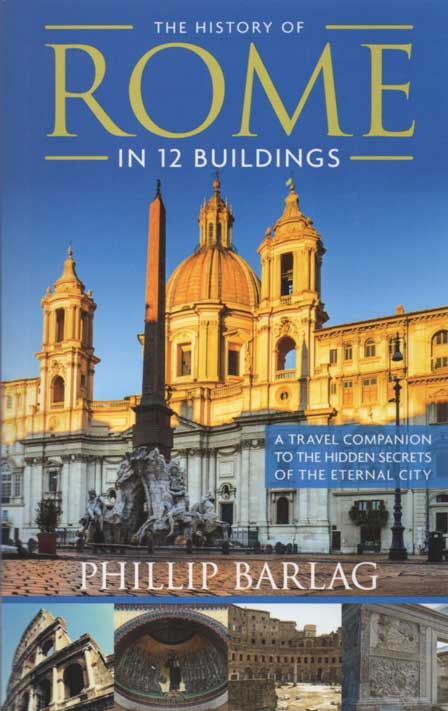
Author Phillip Barlag was so amazed by Rome’s antiquities after his first visit there that he became determined to find out more – and this book is the result of his curiosity and research. The History of Rome in 12 Buildings: A Travel Companion to the Hidden Secrets of The Eternal City is a compelling, concise, and fun book that takes you behind the scenes of some of Rome’s most iconic sites to reveal the hidden stories of the people who forged the Roman Empire. The author’s fascination with Rome and its history shines through in his stories about the Pantheon, the Baths of Caracalla, the Aurelian Walls, the Scala Santa, among other famous Roman sites. Immerse yourself in the world of the Romans, with all the intrigue, romance and drama that still charms us today. Although this is not a traditional guide book, each chapter is followed by notes on how to get to the particular site, and good spots to eat in the neighborhood.
JOURNEY: AN ILLUSTRATED HISTORY OF TRAVEL
DK Publishing, 345 Hudson St., New York, NY 10014. www.dk.com.
This 10 x 12 in. hardbound is a colorful account of human movement, travel, exploration, and scientific discovery—from the first trade networks in ancient Sumer to the epic Voyager missions. Human journeys arise from many different impulses, beginning with migration and the search for food, to pilgrimages, trade, scientific curiosity, or simply the quest for adventure. Journey traces each through lively accounts, alongside the biographies of conquerors, explorers, and travelers; stories of technological innovation; literary journals; and works of art. Themed photo essays and feature panels capture the romance of travel with descriptive accounts, archive images, historic maps, and artifacts. Illustrations showcase objects and documents associated with the rise of travel, such as postcards and passports, as well as the myriad modes of transportation through the ages. Produced in association with the Smithsonian Institution.
EYEWITNESS TRAVEL: ARIZONA & THE GRAND CANYON
DK Publishing, 345 Hudson St., New York, NY 10014. www.dk.com.
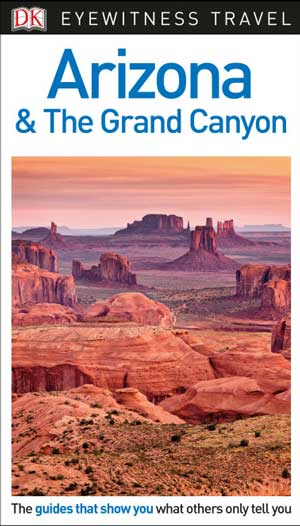
The fully updated Eyewitness Guide to Arizona and the Grand Canyon opens with a brief overview of the state and its history, including tips and a brief visit, and discussion of the state’s unique architecture and landscape. The guide divides the state into three zones: the Four Corners, the Grand Canyon and Northern Arizona and Southern Arizona. Each color-coded section presents an illustrated overview of the important towns and attractions, with brief descriptions of important sites, suggested itineraries, color maps, and “Traveler’s Checklists,” which give phone numbers and opening and closing hours of many of the museums and other attractions.
As with all the guides in the Eyewitness series, high-quality color photos and illustrations abound, and all the listings in the “Traveler’s Needs” section in the back of the book include the pertinent information about hotels, places to eat and transportation.
ATLAS OF UNTAMED PLACES
By Chris Fitch, The Quarto Group, The Old Brewery, 6 Blundell Street, London, N7 9BH, United Kingdom.Price: $29.95
This 208-page, 7 x 10⁻¹/2” hardbound book is, indeed, a tome describing almost unimaginable locations on this earth that could be named “Fearsome Landscapes, Feral Environments and Inhospitable Wildernesses.”
The Bering Strait, on the edge of the Arctic Circle, is one of those places described here. Two islands—Big Diomede—owned by the Russians, and Little Diomede—owned by the USA— are separated by 53 miles of ocean, as well as the International Date Line. Winter temperatures can go below zero which can cause a frozen bridge between the pair of islands. Big Diomede is a barren, steep-cliffed island, while the few inhabitants of the little island of Little Diomede exist devoid of many luxuries.
The Mount Mabu rainforest in South Africa, in southern Malawi, features a series of mysterious mountains which hardly anyone has ever heard about, or even visited. It is, still today, essentially an untouched landscape by any standard. Known as the Butterfly Forest because of its hundreds of colorful species, the area is still a “lost world.”
Modo Island off the south coast of the mainland of South Korea is another quirky place where fast-swirling currents and unpredictable whirlpools stretch between Modo and Jindo islands. Every once in a while, however, this 1.8-mile stretch between islands produces a “Moses Miracle” where the restless seawater produces instead a dry passageway. That’s when large crowds gather to take advantage of the miracle sea road and walk on it. Understandably, the Earth’s influences on the tides are the origin of this occasional odd “miracle.”
The book covers 45 different “untamed places” all across the globe, divided into Extreme Environments, Untouched Lands, Human Activity, Weird Worlds, Isolated Realms and Nature’s Wilderness.
From remote jungles with exotic animals, to innumerable hot sand dunes, to diverse floral kingdoms, the Atlas of Untamed Places is an excellent read. The book also features 45 eye-catching maps that accompany each of the fascinating 45 stories. Fitch has the reader spellbound after just a few of his well-written, captivating stories.
The Blue Guide series remains the leading travel guide series in English for art, architecture and history for travelers who want to go beyond the hotels, restaurants and tourist sites. Since Sicily is at the crossroads of the Mediterranean, the culture and history of the island goes back thousands of years. The book starts with a historical sketch of the importance of Sicily in ancient times, then moves into the same deep kind of information for each region of the island.
Ellen Grady offers a comprehensive tour of Sicily―from what to see and where to eat to detailed analyses of individual museum pieces. The softcover book is illustrated with full-color and black-and-white illustrations throughout.
This interesting softbound book is part guide to flying, part reference guide to airlines and airplanes.
The first part of this guide is great for the traveler, as it discusses every aspect of your flight, including dozens of tips and lots of information on Booking, Airport Procedures, the Aircraft And Boarding, Takeoff, Cruise, Technical, Landing, And Arrival, among other topics. This section includes tips on saving money and flying more comfortably, and explains what is going on at every stage of a flight.
The second half contains a “Flying Dictionary” full of fascinating facts and explanations about aviation, with details and definitions of aircraft parts, pilot’s and other technical lingo, interesting anecdotes about flights and flying, and much more.
EYEWITNESS TRAVEL GUIDES
DK Publishing, 345 Hudson St., New York, NY 10014. www.dk.com.
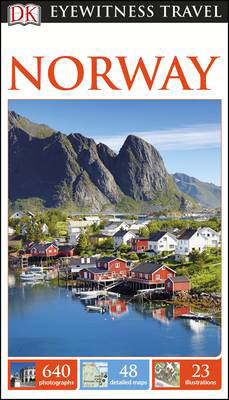
Eyewitness Guides are known for their gorgeous color photographs and maps. For this review we looked at a regional guide to France covering Dordogne, Bordeaux and the Southwest Coast, as well as the country guide to Norway. Both are brilliantly illustrated 8-3/4” x 5” books that are a great size for packing. The books are ingeniously organized with color-coded sections for each area, making it easy to look up the neighborhood or section of the country you need.
The 296-page Norway guide opens with the informative section “Introducing Norway,” that contains information on discovering the country, a brief overview of Norway and its history, as well as coloful maps. The book then guides the traveler through the most important city, Oslo, by area. Outside of Oslo the book is organized by geographical region, with brief descriptions of the important sites of each. Listings are generously illustrated with color photography and the pertinent contact information, web sites, phone numbers and hours. The final part of the book contains the practical information about where to stay, restaurants and transportation.
The fully updated Eyewitness Guide to Dordogne, Bordeaux and the Southwest Coast includes unique cutaways, floor plans, and reconstructions of major architectural sights, plus a pull-out regional map clearly marked with attractions from the guidebook and an easy-to-use street index. It is organized in the same practical way that the country guides are, only in this case by region, with the useful dining, hotel and transportation information in the back.
TRAVELS IN TRANSYLVANIA
By Lucy Abel Smith, published by Blue Guides Limited and distributed by W.W. Norton Co., 500 Fifth Ave., New York, NY 10010. Price: $14.95.
This is a very detailed 256-page 5 x 8” softbound guide, outlining very specific historical facts and specific regions of the Greater Tarnava Valley. Transylvania became well known when Bram Stoker introduced his famous novel Dracula, as well as later film adaptations of the novel that dealt with vampires, principally with the 15th century Walachian Prince Vlad Tepes.
It’s unlikely many have traveled to this part of Romania, but it is heavily wooded and surrounded by the Carpathian mountain chain and consists of about 345,000 square miles. Its main cities include Bistrita, Brasov, Cluj Napoca, Medias, Miercurea Ciuc, and Alba lulia.
Transylvania is home to some of Europe’s best-preserved medieval towns, most notably Brasov, featuring Old Saxon architecture and citadel ruins; Sibiu with its cobblestone streets and pastel-colored houses; and Sighisoara, adorned with a hilltop citadel, secret passageways and a 14th century clock tower.
Transylvania’s multi-ethnic heritage (including German and Hungarian ) is delightfully apparent in the region’s folk costumes, architecture, cuisine, music and festivals. Colorful centuries-old traditions are alive and well in the small villages of Transylvania. People here still make a living at such time-honored occupations as shepherds, weavers, blacksmiths and carpenters. The Apuseni Mountain range, in the western Carpathians, is a landscape of exquisite beauty and mystery. Here, you’ll find ancient legends of mountain spirits and rare species of wildlife, along with 4,000 caves, many of which can be explored. Scarisoara Glacier, a national monument, shelters the second largest underground glacier on the continent.
Author Smith presents an extremely rich history of this region, and a detailed guide that goes way beyond what “popular” tourist guide books offer. It contains few photos and illustrations, none in color, and while not divided into compact sections that tell about any specific area’s history, food, cultures or attractions, it is loaded with good, solid information about places, special things to see and places to discover. You won’t be able to locate a restaurant or hotel using this tome, but you will be fully informed on the region’s rich history and why it’s important.
I’d use this guide along with Lonely Plant or National Geographic’s Romania guidebooks.
EYEWITNESS POCKET TRAVEL GUIDES
DK, division of Penquin Random House, 375 Hudson St., New York, NY 10014, www.dk.com.
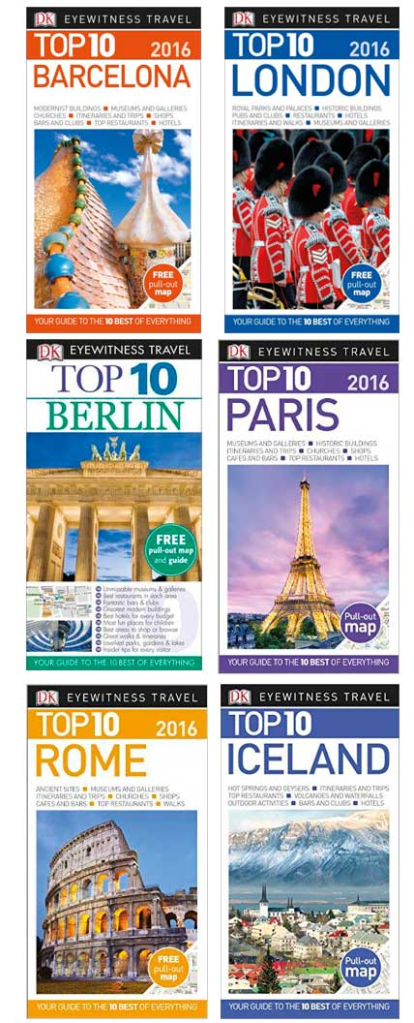
DK Eyewitness Travel has released six new travel books, books that are updated annually (except the Iceland travel guide). They are Barcelona, London, Berlin, Paris, Rome and Iceland. These 4” x 7-1/2” coated-cover books are handy to keep in a pocket, purse or small bag while you’re traveling, and they are noted for their apt descriptions, excellent colorful maps and detailed but brief reviews of city highlights and attractions, restaurants, museums and galleries, hotels, shops, bars and clubs.
Of the six books, most are 192 pages, but the Barcelona one is 160 pages and Iceland’s is 144 pages. The books begin with dividing the country or city they are focusing on into sections to easier understand and explain the city or country’s history and what there is to see in each section. As an example, the Berlin book is divided into several central areas: the outlying areas around Grunewald and Dahlem, the Southeast, Potsdam and Sanssouci. These areas are then color-coded on the maps and show the reader on what pages to find more specific information about each city section.
Each book first describes the top 10 highlights of each country or city. In Berlin, the highlights include the Reichstag, the Unter den Linden and the Potsdamer Platz, among others. In the London guide, it’s the British Museum, the National Gallery and Buckingham Palace, among others. Then the books proceed to list the top 10 “of everything”; in the London booklet, that includes Moments in London History, Famous Residents, Literary London, Royal London and Royal Parks and Gardens, among others.
Next comes the Area by Area section, and in the Rome book that includes areas around the Piazza Navona, around the Pantheon, Camp de’ Fiori to the Capitoline, Ancient Rome and The Esquiline and Lateran, among others.
Last, comes the Streetsmart section of the book that talks about transportation (getting to and around by road, rail, bus and tram, metro), practical information such as passports and visa requirements, customs and immigration, travel insurance, personal security and disabled information. Also in this section it explains the currency and banking procedures, internet and telephone, newspapers and radio, postal service and opening hours of most stores.
In the rear of each book is a coated pull-out map with highlights noted on it such as top sights, train stations, tram routes, and tourist information offices.
These books are noted for their appropriate descriptions. In the Iceland guidebook, for instance, under Places to Eat, the book describes the Hotel Glymur as a “smart retreat with an accomplished menu—carpaccio beef, pan-seared trout and homemade ice cream. The cafe serves tasty snacks.” And in the Barcelona guidebook under Churches and Chapels, for the Esglesia de Santa Maria del Mar it reads, “The elegant church of Santa Maria del Mar (1329-83) is one of the finest examples of Catalan Gothic, a style characterized by simplicity. A spectacular stained-glass rose window illuminates the lofty interior.”
Under highlights of the Musee du Louvre in the Paris guidebook, it reads, “Arguably the most famous painting in the world, Leonardo’s portrait of the woman with the enigmatic smile has been beautifully restored. Visit early or late in the day.”
Visitor tips abound in these booklets as well. Again for the Musee du Louvre, it reads, “The foyer is under the pyramid. Visitors who have tickets are given priority access at the pyramid. Alternatively buy tickets at the Carrousel du Louvre entrance or Porte des Lions.”
For those who want to visit fashionable hangouts in Paris, the book offers 10 suggestions, as well as 10 good places to eat, with addresses and notes as to what days the establishments are closed. In the London book it offers 10 good pubs, including the George Inn (“this is the only galleried coaching inn left in London”) and the French House (“this was once a meeting place for the French Resistance during WWII.”)
With tons of valuable information, addresses and suggestions as to where to go and what to see, plus detailed maps and beautiful photographs, these accurate guidebooks are rich in content and a veritable goldmine if you want to save time and energy when visiting any of these popular world destinations.
If you’ve ever dreamed crossing the Australian Outback, exploring India’s hill stations, watching wildlife in South Africa, or just generally discovering the world by train, this lively guide is the perfect place to start. It takes an in-depth look at 40 of the world’s best train journeys on six continents, from from nostalgic steam lines to state-of-the-art high-speed locomotives.
The book is divided into sections that include “Crossing Continents,” “State of the Art,” Border Busters,” “Cultural Experiences” and “Scenic Spectaculars,” and the trips are grouped according to these categories. Every journey includes a sidebar giving useful and amusing insider tips — what to pack, the best photo-ops, maximizing the best the trip has to offer, and more. All journeys are planned as complete vacations and offer suggestions for memorable side trips. So if you are a serious travel planning a spectacular rail trip, or just dreaming of rails across Featuring stunning color photographs throughout, Great Train Journeys is as fun to read as it is practical, and is a great addition for any rail buff’s library.
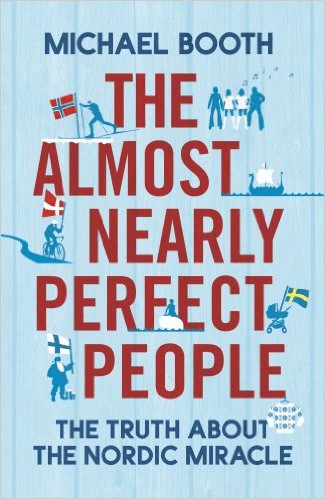
THE ALMOST NEARLY PERFECT PEOPLE
By Michael Booth published by Picador, 175 Fifth Ave., New York, NY 10010. www.picadorusa.com
Journalist Michael Booth lived in Scandinavia for more than 10 years, and during that time, he grew frustrated with the rosy view of this part of the world offered up by the Western media. He finally decided to leave his adopted home of Denmark and embark on a visit to all five of the Nordic countries to discover more about the people, the secrets of their success, and, most intriguing of all, what they think of one another. The resulting book is this witty, detailed picture of each Scandinavian country, examining the quirks and exposing the lesser-known flaws to determine if there really is a model Scandinavian way of life.
He went looking for the answer to many questions, including, why are the Danes so happy, despite paying such high taxes? Do the Finns really have the best education system? Are the Icelanders as feral as they sometimes appear? How are the Norwegians spending their fantastic oil wealth? And why do all of them hate the Swedes? In The Almost Nearly Perfect People, Michael Booth explains who the Scandinavians are, how they differ and why, and what their quirks and foibles are, and he explores why these societies have become so successful and models for the world. Along the way a more nuanced, often darker picture emerges of a region plagued by taboos, characterized by suffocating parochialism, and populated by extremists of various shades. They may very well be almost nearly perfect, but it isn’t easy being Scandinavian.
“One theory about my fellow Scandinavians’ reticence to holler about their virtues is that there’d be a stampede if they advertised. It’s the only plausible explanation not covered in Michael Booth’s comprehensive and occasionally downright hilarious explanation of the Nordic miracle, as imagined by everyone living outside of this social democratic hotspot.” says The Guardian in a review.
This witty and informative travelogue about Scandinavia will be entertaining if you are contemplating a trip or if you are just curious about the well-known societal success stories that the Scandinavian countries represent.
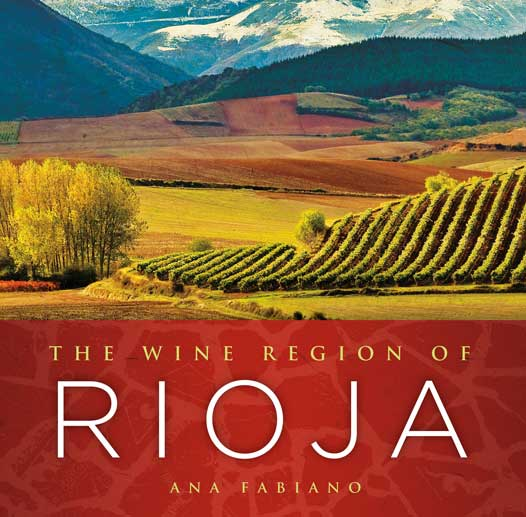
THE WINE REGION OF RIOJA
By Ana Fabiano. Sterling Publishing, 387 Park Ave, New York, NY 10016. Price: $35.00
I had just attended a wine tasting of the Rioja region when I discovered this fabulous book written by Rioja wine expert Ana Fabiano, who is trade director for Vibrant Rioja and a Brand Ambassador for the DOCa Rioja.
I think the first thing that came to my mind when paging through the volume was how clear-cut the design was, how simple yet elegant. The colors of the pages, as well as the illustrations, are striking, yet simple and easy to digest and understand.Yet the region of Rioja itself is complex, varied and made up of three sub-regions that differ; as Fabiano says, “Rioja is like a mixed salad with the best of everything in it.” Indeed the climate, soil, the gardens and orchards, people, history and culture vary from sub-region to sub-region within Rioja.
Between history, geography, the cultures, people and language of the region, she weaves her story about the all-important wines of the Rioja, the mountains and the monasteries. But wine is the main discourse she enjoys, describing the 30 x 70 square mile piece of Spain that produces a variety of wines on about 23,500 acres of land. Each vine grower averages about 1.3 acres of vineyard.
A number of growers and their families are highlighted in the 260-page 9” x 9” hardbound book, such as Victor Cruz Manso de Zuniga, who led the region through a devastating phylloxera infestation and directed the Rioja Enological Station from 1893 to 1921.
Additionally Fabiano explains the Bordeaux process of wine-making, the tapas phenomena in Logrono, describes the Rioja Baja territory, interviews winemaker Alvaro Palacios, talks to the important subject of Tempranillo wines of Rioja, as well as their white wine stepsisters, then proceeds to explain wine categories and regulation of the vineyards.
Interesting and complete without being overbearing, the text and style of writing is suited to the advanced as well as the beginning wine student. The author suggests when visiting the region to visit wineries in one sub-region at a time, since some may be upwards of 45 minutes away from another one.
Divided into eight chapters, one listing the grand old bodegas of Rioja and a chapter listing the newer wineries, the book closes with pairing of Rioja wines with various foods. “Rioja wines are voluptuous; they are round and full and rich. They are not Audrey Hepburn; they are more Marilyn Monroe,” the author says.
This book is like a delicious glass of Rioja wine—robust flavor with a pleasing aftertaste.
EATING ROME: LIVING THE GOOD LIFE IN THE ETERNAL CITY
By Elizabeth Minchilli, published by St. Martin’s Press, 175 Fifth Avenue, New York, NY 10010 www.stmartins.com. Price: $22.99.
Eating Rome is an adaptation of Elizabeth Minchilli’s food blog “Elizabeth Minchilli in Rome” in which she discusses adapting to Roman culture after living in America for most of her childhood. A large part of this adaptation centers around food.
This 8-1/2” by 7 3/4” 242-page book has numerous full page color photos of the foods of Rome. The author explains what to eat and where to go in Rome for meals, as well as how to buy food in the markets. She also describes the customs in Rome. For example the author mentions, “There are only two socially accepted things to eat while walking: gelato and pizza bianca.” More tips include how to order coffee at an Italian coffee bar properly, as well as how to navigate an open-air market.
At the end of every chapter the author includes her favorite restaurants or markets where one can find the dishes she introduces in the chapter. She also includes several detailed recipes, such as fettuccine alfredo, artichoke lasagna and minestrone, so everyone can learn to cook like a Roman.
This book is great for any traveler who wants to know where and what to eat in Rome, as well has how to create Roman food at home. Danielle Pruger
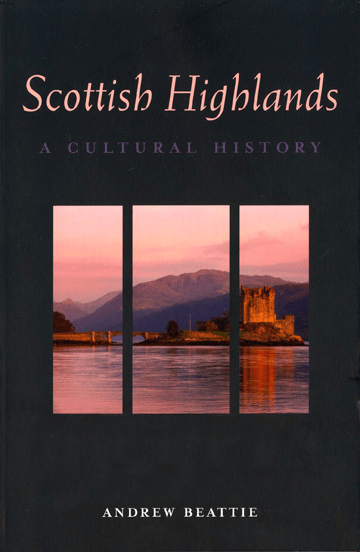
SCOTTISH HIGHLANDS: A CULTURAL HISTORY
By Andrew Beattie, published by Interlink Book, 46 Crosby Street, Northampton, MA 01060 www.interlinkbooks.com Price: $15.00.
This 8″ x 12″ 292-page overview of the Scottish Highlands provides the reader with in-depth knowledge of this area’s past and present. The book is divided into four sections: Landscape, History, Imagination and Visitors.
In the Landscape section Beattie focuses on the western and northern coasts. He then discusses the Scottish Highlands scenic diversity, from the rolling landscapes to the mountains, describing in vivid detail the various flora, fauna, such as red deer, red squirrels and golden eagles, and aquatic life that can be found throughout the Highlands.
In the History section the author recounts two different narratives that make up the Scottish Highland’s history: the Highlands and the Highlanders. This detailed explanation of this region’s history includes stories about royalty and rebellion, such as the continuous conflict between the influential clans of the Highlands and the defeat of Prince Charles Edward Stuart at the Battle of Culloden, which ended the Jacobite Rising of 1745, as well as the reign of clans in Scotland.
The Imagination section of the book illustrates the fantastical stories about the Scottish Highlands. These tales told of mountains that were inhabited by mythical creatures and dangerous beasts, as well as the story of the famous Loch Ness Monster. Beattie writes, “It was monsters, rather than the scenery, that interested most travelers in the Highlands, and the presence of all manner of spirits and demons was, of course, reflective of mountains being a divine curse.” However, during the late 18th century writers such as Sir Walter Scott and John Keats influenced travelers to visit the Highlands through their descriptions of the Highlands landscape and culture.
In the last section, Visitors, Beattie describes the history of travel to the Scottish Highlands. The Highlands received their first visitors and settlers after the Ice Age. The Highlands did not see many travelers until the 18th and 19th centuries when poets, novelists and travel writers started to write about this area. Queen Victoria, who visited the Highlands for the first time in 1842, had the biggest impact on traveling to the Highlands by making it fashionable. Beattie includes many passages from Queen Victoria’s journal about the Highlands, including her reaction to her first visit and her thoughts on her home in Balmoral.
Beattie discusses the Scottish Highlands’ long and turbulent past while also offering the reader an introduction to the Scottish Highlands’ highlights. The amount of detail in this book gives one an appreciation for the Highlands’ history while also creating a desire to visit Scotland to see the landscape Beattie describes so vividly. Danielle Pruger
TASCHEN’S PARIS: HOTELS, RESTAURANTS AND SHOPS
By Angelika Taschen, published by Taschen www.taschen.com. Price: $39.99
This 9 1/2” by 12” 384-page guide to Paris is divided into three easy-to-navigate tabs: hotels, restaurants and shops. This book is not your typical guide to Paris; instead of giving the reader the typical tourist attractions, Taschen has handpicked only the places that portray Paris’ “character and atmosphere” including five-star hotels, restaurants and shops based on the city’s rich and illustrious history.
This book includes three translations: English, German and French, making it accessible to many audiences. It also allows the reader to brush up on their French, if only for just a few a key phrases.
Each section of the book starts with a beautifully drawn artistic map of Paris which includes the destinations listed. The book includes a plethora of large photos taken by Vincent Knapp, including the interior and exterior of the buildings, as well as the view of Paris from various windows and terraces. The pictures of the macaroons and chocolates are incredibly enticing.
The first section, “Hotels,” provides the visitor with the following: address, phone, fax, website, email and the closest metro station. The book also includes hotel rates, number of rooms available, restaurants located in the hotel and the hotel’s history. The author, Angelika Taschen, then delves into which hotel is best for various types of stays — vacation, honeymoon or business.
Most important, Taschen includes what makes each hotel unique, illustrating that Paris has something to offer almost everyone. For example, the hotel Trocadéro Dokhan’s has a champagne bar which serves a different champagne every night; all of the rooms located in Hôtel Eldorado are decorated differently; and Hôtel Regina was opened in 1900 for the World’s Fair.
The “Restaurants” portion of the book boasts Paris’ rich history with cuisine, outlining the best places to eat for breakfast, coffee, lunch, dinner and dessert. Each restaurant is listed with the following information: address, phone, email, metro stop, hours, X-factor and prices. The X-factor of each restaurant provides unique information such as Cafe Marley’s terrace which overlooks the Louvre pyramid, what dish each restaurant is known for, and the likelihood of running into an A-list celebrity. The book lists numerous types of cuisine from traditional to contemporary French, Moroccan and American dishes.
My favorite section of the book was the “Shops” section. The Shops are divided into areas of the city where each shop is located, including the famous Champs-Élysées. The book includes a multitude of shops from couture clothing; to food such as chocolates, cheeses and breads; to ceramics; to perfumes and cosmetics. After reading this section you might want to consider bringing an extra suitcase for all your purchases.
Due to the vast amount of information in this book, it will not be your “pocket guide” to Paris, so be sure to write down all the destinations you want to visit beforehand. However, there is a handy pull-out map located at the back of the book to assist you with your planning. Danielle Pruger
CHANCE ENCOUNTERS: TRAVEL TALES FROM AROUND THE WORLD
Some say travel never goes quite like we expect: planes are late, maps are misread and unexpected detours are made; or we ask for directions and we end up discovering fascinating people and new friendships. It’s all part of travel, and it’s why you should never underestimate what might come out of a trip.
In this 5” x 8” 280-page softcover book, I discovered people who had truly “found” something by traveling. Perhaps it was the kindness of a stranger, perhaps the chance to meet an interesting person, perhaps…?
In 23 short travel stories from award-winning travel journalists, editor and author Janna Graber has gathered the perfect combination of adventure, emotion and wanderlust, and wrapped it up in a tidy book.
What we learn from this volume is that the twisting roads of travel can lead to adventures we never imagined – and lessons we never expected to learn. Those we meet while traveling can change our journey, our experiences or even our lives.
In Kimberley Lovato’s story entitled Beginnings, she meets a woman on crutches with ALS in a cramped Paris elevator, and learns her mother has brought her to Paris as a treat. The daughter says, “I’ve always dreamed of coming here, and I wanted to see it before I couldn’t.” Lovato looks back at that moment on her own daughter and the fervent wishes she had for her welfare in life and her wish, as well, to see the Eiffel Tower and Paris. Later, as Lovato looks out the window from her hotel room, she imagines a mother placing her daughter’s feet on a star, and fulfilling her daughter’s wish, but realizes the young woman she just met is encountering a much more difficult road than her own daughter did.
In Saints and Sea Monsters, Rick Zullo finds himself visiting Sicily because “to have seen Italy without having seen Sicily is to not have seen Italy at all, for in Sicily lies the key to everything,” he says.
An old woman in a bakery unexpectedly spills out her life story to Zullo, explaining that when she was only five years old her entire family was killed when Allied bombs fell on Messina in 1943. Nuns then cared for her, and as she got older, a young boy kept following her through town; she hid in the church of St. Anthony for protection, and if she received it, she vowed that one day she would marry a man whose name was Anthony. When she was 18, she happened again to meet that same boy whose name was Anthony—now a man—and they were married a year later.
All true, the fascinating tales in this book, which you might want to take in your carry-on during your next big travel adventure.
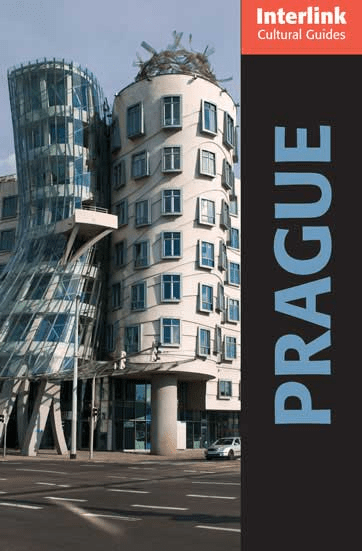
In some cases it’s better to read a travel guidebook when you return from a European city, rather than before you go. Certainly reading the book before you go gives you information about why to go and what to look for. But I’ve been to Prague, and now I’m reading this book, and it’s a much better read, in my view, than had I read it before I went.
I understand so much more now about the city’s history, and understand it better, having first seen the city and its people.
The Interlink cultural guide series doesn’t publish practical guidebooks in the usual sense. These are cultural guidebooks, and as such, they offer an in-depth review of the city’s history, people, politics and music.
The 5-1/4” x 8” book is divided into geography, an urban map, landmarks and buildings, rulers and the ruled, Prague in literature, the visual and performing arts, leisure and pleasure, religious significance of the city, trade and trade fairs, a chapter called “Murder, Madness and Persecution” and a chapter that talks about castles, spa towns and the countryside and areas close by.
You can learn a number of facts about Prague and the Czech culture reading this 256-softbound book: consumption of beer is higher in the Czech Republic than in any other country in the world, it says, and Mozart spent some time in Prague between 1787 and 1791, and Prague repaid him by falling in love with his music.
Another interesting fact was that Hapsburg Emperor Rudolf II (1576-1611) collected as many as 3,000 paintings and crammed them into the Prague Castle; it’s said the emperor was the greatest art patron in the world at the time.
I found this book an excellent read, and there’s a place for it on your travel book library shelf.
SLOW TRAIN TO SWITZERLAND
By Diccon Bewes, Nicholas Brealey Publishing, 20 Park Plaza, Boston, MA 02116. www.nicholasbrealey.com
In the summer of 1863, seven people — members of the Junior United Alpine Club — left London on a train that would take them on a thrilling adventure across the Alps. For them it was an exciting novelty; for us it was the birth of mass tourism, and it all started with the Swiss. A century and a half later travel writer Diccon Bewes set off on the same three-week trip. His quest: follow the itinerary, stay in the same places, and discover how much has changed since Thomas Cook arranged that first trip. His inspiration was Miss Jemima, a member of the club who kept a diary of that original journey— a diary that survived as a unique record of a historic tour.
Slow Train to Switzerland is the fascinating account of two kinds of trips from London to Lucerne. It’s a revealing look at the early days of tourism, when going abroad meant 18 hour days and wearing the same clothes for weeks. It’s also the story of how a nostalgic tour surprised an expat author, revealing a Switzerland very different from the present – and a stunning and unexpected personal connection with the past. That first trip represented the end of travel that was only for a privileged few and the beginnings of mass tourism. It also helped transform a poor Switzerland into one of the wealthiest countries on earth. And now it gives us a second chance to experience travel the way it used to be: slow.
101 PLACES IN ITALY: A PRIVATE GRAND TOUR
By Francis Russell, published by Wilmington Square Books, www.bitterlemonpress.com. Price: $24.95.
The author, who has been travelling in Italy for more than 50 years, offers personal and well-informed descriptions of his favorite towns, villages and especially, artworks for the visitor to Italy. Unlike most guidebooks, this is an idiosyncractic selection of essays that nevertheless includes the most important sites and cities. It is a little like having your own personal, and most knowledgeable, tour guide.
If you are a first time visitor, this small and well-organized guide is a book that will be helpful and educational; if you are already well acquainted with Italy and its art treasures, it is an enjoyable experience to read the descriptions of an expert who is not shy about offering opinions about some of the Western world’s great art treasures and sites.
THE DORDOGNE
Woods Productions, 518-383-3703, Facebook.com/WoodsProductions LLC. Available through Amazon.com.
In the United States, New Mexico is called The Land of Enchantment. But in Europe, that designation goes to the Dordogne region of France.
It’s said that in the 21st century, this region of France has managed to keep intact the things that are important in life: golden sunsets splashing across quaint ochre-colored buildings, the song of a gentle breeze whispering through poplar trees, dabbling your feet in crystal clear waters, family and close friends to enjoy good times with, and a combination of excellent foods and wines to complement the life style of the region.
Originally called Perigord, the Romans named this vast 3,500-square-mile area Aquitaine in the first century B.C. Nestled between the northern Pyrenees, the Massif Central’s mountains and the Atlantic Ocean on the West, this region, the third largest in France with a population of less than half a million, waits to be discovered.
Within its borders, the Dordogne teams with as many as 140 wine growers and wine establishments and 13 different appellations, large tracts of forests, dramatic limestone cliffs, 250 prehistoric caves, some with dramatic artistic treasures inscribed on the walls, picturesque medieval towns, a luxuriant countryside and as many as 1,000 marvelously-crafted chateaus. Most of the region’s chateaus are old and well-maintained.
The four regions of the Dordogne—the Green Perigord (forests), the Black Perigord (caves and truffles), the White Perigord (limestone cliffs) and the Purple Perigord (grapes) are each unique and different enough that you might want to investigate several of them while there.
This 56-minute DVD introduces its audience to this laid-back region of France, explaining in detail its history and its attractions. The DVD offers detailed histories of some of the Dordogne’s best visitor spots through narrated pieces by Loic Leymeregie. For those who don’t know much about the area, this video tour provides an entertaining background study. Brad Spear, an award-winning broadcaster, is the narrator.
If you’re planning to travel to the Dordogne or just want to learn more about it, this DVD will be extremely helpful.
TWO COOKBOOKS
Agate Publishing,Inc., 1328 Greenleaft St., Evanston, IL 60202. agatepublishing.com
Charcutería: the Soul of Spain, by Jeffery Weiss, is the latest in the line of cookbooks about Spain that delve into the culinary history and traditions of that country. In this handsome, well illustrated and informative book, Weiss tackles the broad category of charcutería, all those cured meats (and several other cured products) that give Spanish cuisine its distinctive taste.
An international award-winning figure skater who changed careers to become a chef, Weiss expanded an earlier interest in Spanish cured meats while he was on a culinary scholarship to Spain, a country where ice-skating rinks are as rare as frozen seal blubber. Traveling to different parts of the country, he learned the Spanish arts of butchering pigs, curing hams, making sausages and preparing terrines. Writing in a breezy, personal, but authoritative style, he explains the different Spanish methods of preserving meats and other products, not only the pork for which Spain is famous, but also beef, lamb, fish and even eggs.
Even if you aren’t into slaughtering and butchering your own meat, you’ll learn the different methods for curing meats at home and using them in a variety of traditional and modern Spanish dishes, from tapas to terrines, from simple soups to hearty stews, and even desserts whose names mimic those of the cured meat products that show up earlier in a meal. There are also sections on how to make classic Spanish sauces and how to preserve ingredients such as olives, peppers, onions, garlic, eggplants and watermelons, those sweet-sour pickled foods that partner so well with Spain’s rich and often fatty charcutería. And for a finale, Weiss shows you how to make preserved sweets from tomatoes, quinces and angel-hair squash. This book is a welcome addition to the library of anyone interested in authentic Spanish cuisine. Price: $39.95.
The Sardinian Cookbook: The Cooking and Culture of a Mediterranean Island, by Viktorija Todorovska. Italian cookbooks are perpetually popular in the United States, often topping the list of foreign cuisines about which cookbooks are published here. But even if pasta cookbooks seem a dime a dozen these days, there’s always room for a culinary book that focuses on an Italian topic less well known to readers abroad.
The Sardinian Cookbook: The Cooking and Culture of a Mediterranean Island seeks to fill this gap. The author, Viktorija Todorovska, is a Chicago-based food and wine writer, travel guide, and cooking-school teacher who as also written a cookbook about the foods of Puglia, another region of Italy. Her own travels to Sardinia, the second-largest island in the Mediterranean, started her love affair with the complex cuisine of this ancient island, which has been influenced by successive waves of conquerors and colonizers, including Phoenicians, Carthaginians, Romans, Byzantines, Arabs, Genoese, Ligurians and Spaniards.
Her new cookbook is a tribute to the traditional cuisine of this island, from the seacoast of more than 1,000 miles to the rugged mountains of the interior. The book begins with a summary of the historical, geographical and cultural factors that have shaped Sardinian cooking, followed by descriptions of important Sardinian food products, including wines and liqueurs. The remaining pages consist of more than 150 easy-to-make recipes, organized in the sequence of a Sardinian meal, starting with antipasti (the appetizer course before the pasta comes) and ending with dolci, those delicious sweets that are more often eaten as a special treat than as a dessert after a meal. Useful headnotes at the beginning of each recipe help place the dishes in their cultural and geographical context.
If you’ve never been to Sardinia before—or if you’re planning to travel there on vacation—The Sardinian Cookbook is a good introduction to the noteworthy cuisine of this Italian island. Price: $22.95. Sharon Hudgins
Provence is known as a producer of some of the finest food and wine France has to offer, with a cuisine that emphasizes healthful ingredients like olive oil, garlic, fresh vegetables, and bountiful Mediterranean seafood. Including 40 traditional Provencal recipes, all of which emphasize the incredibly popular and healthy Mediterranean diet, Provence Food and Wine also provides detailed information on regional wines, including the region’s famous rosé.
This handsome softcover cookbook begins with an introduction to the region of Provence, where France, the Italian Alps and the Mediterranean meet to create an area with its own unique food, wine and cultural traditions. The book then discusses the various wines of the region and the traditions that go into producing them, especially the rose, which is a specialty of the area. The third and final section focuses on the cuisine, organized by subregion, and accompanied by complete recipes for signature Provencal dishes. Another section at the end of the book contains helpful information on traveling in Provence.
THE LONDON MAPGUIDE
Distributed by The Penguin Group, 375 Hudson St., New York, NY. 212-366-2000. Price: $12.00.
Michael Middleditch has revised and updated his hugely popular London Mapguide, first published in 1983 and now in its seventh edition. Streets and sights are mapped and named, and there is a comprehensive street index so any location can be looked up. In addition, famous landmarks, places of entertainment, etc., are indicated on the maps. The new edition is expanded to 72 pages of full color maps to include Stratford and the areas of East London around the Olympic venues, making this is the perfect book for every tourist.
Every important London landmark, as well as restaurants, museums, galleries, theaters and markets are listed in easy-to-find sections according to geography. The London Mapguide also includes complete bus and tube routes. The 5-1/2 x 8
MY FAVORITE BURGUNDIES
By Clive Coates, Master of Wine. Published by the University of California Press, 2120 Berkeley Way, Berkeley, CA 94704. Price: $60.00.
Author Clive Coates, a Master of Wine, has spent 40 years in France’s Burgundy region and offers his insights and knowledge into that region’s extraordinary wine selections through this 500-page tome.
Coates, who is able to taste the wines of the region on a regular basis, has access to the growers and their produce, and masterfully offers his opinions on hundreds of selections.
The book is divided into vineyard profiles, domaine profiles, vintage assessments including Chablis, three-year-on tastings, ten-year-on tastings, other tastings, and then Observations, which comprise some brief pages at the end of the volume.
Recognized by the French government and many others for his devotion to the wine industry and his knowledge and skill in writing about wines, for more than 10 years the author published his own wine magazine, which also won numerous awards.
The author’s books are considered classics in their field, and this new work complements his two previous works entitled Cote d’Or and The Wines of Burgundy (1,000 pages, published in 1997). This book is primarily for and will appeal to the advanced wine connoisseur, and to those who enjoy reading about and tasting the fruit of the vine produced in this region of France. Detailed maps of Burgundy and the various vineyards help illustrate the text, but there are no photographs in the book.
Historical profiles of the domains is quite interesting and detailed, and enlivens the text. The tasting notes are extensive and shows the passion the author has for the region’s wines.
From one of Coates’ Tasting Notes from the Domaine Lamarche on the vintages of La Grande Rue he says, “The color is fully mature if not a bit aged. Soft, ripe nose. Subtle, gentle and very classy. Medium-full body…”
And thus Coates, who believes in the subjective and temperamental aspects of wine tasting, and the idea that wines are to be consumed more than judged, continues his journey through the vineyards of France, offering his sage wisdom and distinguishing palate as our guide.
WALKING IN FRANCE
Exploring France’s Great Towns and Finest Landscapes on Foot. Interlink Publishing, 46 Crosby St., Northampton, MA 01060. www.interlinkbooks.com
This unique guide features a variety of day walks as well as long-distance hikes along river valleys, through vineyards, over mountain passes and along the coastline through the many diverse regions of France, including the Dordogne, the Pyrenees and Brittany’s coast. Practical information on local transportation, hours and planning is also included. Detailed maps and gorgeous color photos will add to the anticipation as you plan your walking trip.
France is a country with an endless array of natural and man-made marvels, including Celtic settlements, Roman occupation, monasteries, the breathtaking Tarn and Verdon gorges and of course, the beauty and treasures of its cities. Less well-known is that it is a country of walking clubs, with more than 37,000 miles of long-distant paths thing include everything from ancient pilgrimage routes to mule paths. The authors provide vivid description of the walks, as well as important details about where to stay, eat, directions, how to read the trails and plan your route, and what to expect on the walks.
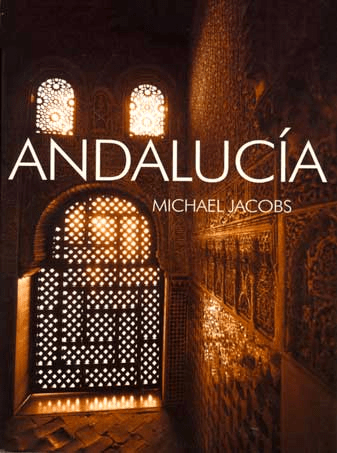
In this 6 x 8″ softbound guide, Michael Jacobs casts a fresh eye on all the traditional delights of Andalucía while doing full justice to the lesser-known aspects of the region. He explores its extraordinarily varied landscape, its food and drink, its musical and literary heritage, and the Spanish Civil War. Andalucía’s Moorish remains, its outstanding prehistoric and classical heritage, and its exuberant Renaissance and Baroque monuments make it one of the richest regions in Europe for visitors. Nearly a hundred Andalucían villages and towns are described in the gazetteer, some of which—Seville, Granada, Córdoba, and Cádiz—are as lovely and as haunting as anywhere in the world.
Including details notes for the major monuments, hundreds of color photos and maps, itineraries, language guide and practical information on where to stay and eat, Andalucia makes excellent pre-trip reading as well as an take along guide.
THREE RICK STEVES BOOKS
Avalon Travel books, distributed by Publishers Group West, Berkeley, California. travelmatters.com
Rick Steves’ German Phase Book & Dictionary, Rick Steves’ Snapshot of Scotland, and Rick Steves’ Postcards from Europe.
Here are three books from well-known travel writer and tour leader Rick Steves, who knows a thing or two about traveling to Europe. In fact, I’d venture to say Rick Steves name is familiar to 60% of the American public.
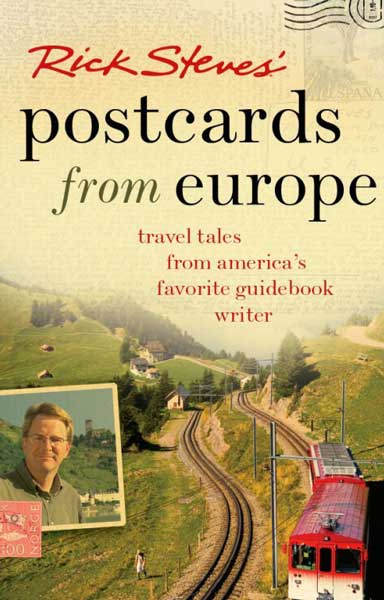
In Postcards From Europe, Rick explains a number of basic ideas about traveling in Europe, and this book comes from Steves’ going over the pond numerous times to record his conversations/encounters with Europeans. You can see that he has taken extensive notes through the years and has a keen sense of how to travel and meet people.
After about 40 years of traveling, you’d expect a travel writer to have a fairly complete backlog of stories and adventures to talk about: this 266-page 5 ½” x 8 1/2” softcover book covers numerous adventures in Amsterdam; on the Rhine; in Rothenburg and Munich, Germany; Venice, Florence, Rome and the Cinque Terre; Gimmelwald in the Swiss Alps (a favorite town of Rick’s); and Paris.
One example of Rick’s adventures is at the hotel run by Herr and Frau Engel in Bacharach, Germany. “Kurt Engel still looks like a ships’ cook,” he writes. “During his merchant marine days he met and married Fatima in the Philippines. This hotel and restaurant on the Rhine is exactly what they dreamed of. For 10 years Kurt has whittled on this old building to meet the ever-increasing demands of the modern tourists. And for 10 years Fatima has apologized for what Kurt has yet to whittle,” says Rick.
This book, also featuring a number of pages of color photos from Rick’s trips, is stimulating and funny. Price: $21.95.
Since 1973, Rick Steves has spent about 100 days each year exploring Europe, including Scotland. In his 230-page 4 ½” x 8” Snapshot of Scotland book, Rick provides a handy resource to this country which is about a third the size of Britain’s square mileage, but has less than a 1/10th of its population.
His tells readers all about Edinburgh, St. Andrews, Glasglow, the Southern Highland, Isle of Skye, Inverness and the Northern Highlands, and the other areas of the country as well.
Following the area-by-area chapters, Rick talks about what he calls the “practicalities,” such as currency, phones, making hotel reservations, food, lodging, transportation, helpful hints and something called “Resources from Rick Steves” which includes how to obtain more information via his television broadcasts, his public television show, his website and other sources he sponsors.
Activities in Edinburgh, says, Rick, can include “a 45-minute hike up the 822-foot remains of an extinct volcano (surrounded by a fine park overlooking Edinburgh) that starts from the Palace of Holyroodhouse.” At the top you’ll be rewarded with commanding views of the town and surroundings.
In the west end of Glasgow, Rick recommends Oran Mor, a converted 1862 church overlooking a busy intersection: he says it is one of the city’s most popular hangouts.
Since Rick also likes to find good but inexpensive lodging, he offers tips on hotels and B&Bs, and includes a “Sleep Code” which designates higher- and lower-priced rooms for hotels he lists. All in all, a very handy, well-thought-out guide with hundreds of tips from a pro. Price: $12.99.
When I was in college, I took French, but I should have taken German, since I’m in the Germanic lands more often than other countries. Rick’s German Phrase Book and Dictionary would have come in pretty handy for me the first time I went to Germany.
The small-sized, 4 x 6” 266-page book offers language basics such as what to say when meeting someone, how to ask how much something is, and common German expressions such as ach so (I see) bitte (please), and stimmt (correct). Rick’s book gives you basics, as well, on numbers, times, days, holidays, key phrases about money and time, trains, driving, sleeping, sightseeing and shopping (and much more in this same vein), as well as words used when traveling, eating, sightseeing, shopping, making a phone call, when you need help, services such as laundry, getting a haircut, and health.
He calls the German language a “kind of Lego language” where long words are usually a series of shorter words put together.
“This book will give you the linguistic four-wheel drive to navigate through German, Austrian and Swiss culture, from ordering a meal at a locals-only Tirolean restaurant to discussing social issues, and travel dreams,” explains Rick. He says he added a healthy dose of humor to make the learning a bit more fun, too.
Rick also throws in the dialect information necessary to travel from region to region: in Bavaria, for example, they say GrussGott, which means “May God greet you.”
I plan to throw this booklet into my carry-on the next time I’m planning a trip to the Germanic lands so I can study it on the plane. Viel Glueck! Price: $7.95.
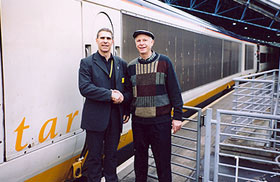
Don Heimburger and Eurostar Driver Detlef Hofmann shake hands prior to departure from Waterloo Station, London, when the train left from this station.
Nearly 22,000 travelers hop aboard a Eurostar train each day, and more than 75 million have traveled the Eurostar routes over the last decade.
That figure represents more rail passengers than all the airline passengers combined on both Eurostar routes out of London.
So what’s new with Eurostar for 2008?
NEW FOR 2008
For one, since November, 2007 Eurostar has moved to a new station, from Waterloo to St. Pancreas, reducing the rail journey between London and Paris by 20 minutes. (I loved Waterloo Station!) The travel time is now 2 hours and 15 minutes, and between London and Brussels it is only 1 hour and 51 minutes.
Also opened was Great Britian’s first high-speed line (called HS1) which carries the Eurostar exclusively. This allows travelers from London to Paris or Brussels to use the train for a one-day business or leisure trip. Every day the train runs 18 roundtrips between London and Paris and 10 between Brussels.
Eurostar trains feature 18 cars each, with car configurations changed depending on if the train is designated as a Business Premier train or a Leisure Select train. The train also runs to Lille, Eurodisney/Marne La Valle, Avignon (summer only), and Bourg St. Maurice (winter only).
TRAINS SEAT 766
Trains seat 766 persons, with special cars situated between cars 7 and 12, and standard class cars 1-5 and 14-18. There are always two bar cars, 6 and 13.
If you are a U.S. citizen, you will probably want to book your trip through Rail Europe, especially if you want to purchase a Eurail Pass that can include the Eurostar (and you can receive up to a 60% discount). Go to http://www.raileurope.com for the details.
In other European rail news, last summer the new French Railway TGV East train broke the world’s rail speed record, reaching a top speed on the trip of 357 miles per hour! A Rail Europe spokesman said, “This accomplishment is monumental for the SNCF and the rail community, and will have a positive impact on all who wish to travel east from Paris.”
The average speed, however, of the TGV East trains is 200 miles per hour. Each first class seat features its own electric power outlet, and broad seat cushions; first class passengers can book a taxi through the train conductor; and on-board messages are in French, German and English.
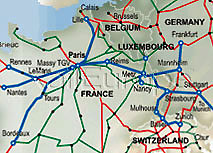
As an example of faster speeds on the TGV, here are new travel times posted by Rail Europe for travel between some stations:






























 European Traveler