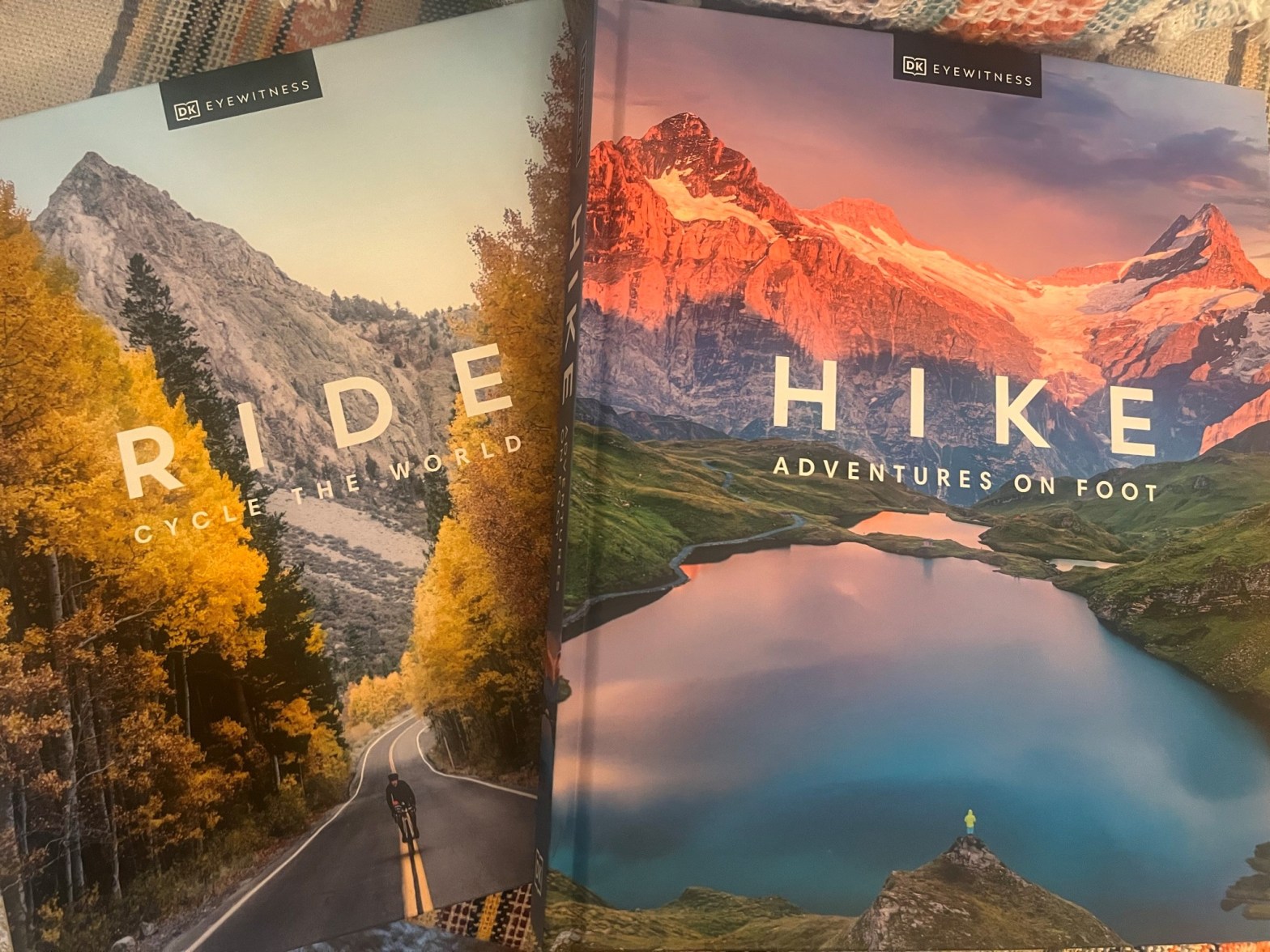
Two New Books Encourage Adventurous Hiking and Biking

HIKE: Adventures on Foot
One hundred and twenty-five opportunities to move your body across the world in an exhilarating, sustainable way! This published compilation of walking trails is the work of outdoor enthusiasts who have selected each featured route for its spectacular scenery, interesting history, or unique challenges. Each trail suggestion includes practical information to help you plan your trip, including the distance, total ascent, elevation, duration, as well as sightseeing tips. Hiking newbies and veterans alike can benefit from the book’s preparation tips, trail etiquette guidelines, and essential gear checklist.

One scenic hiking trail suggestion, Dove Lake-Cradle Mountain (Ronny Creek, Tasmania, Australia), is a one-day circuit traversing boardwalks over moorland, passing through lush rainforest, and ascending large boulders on Cradle Mountain. Readers are advised to look for ambling wombats and gray-furred Bennett’s wallabies near Ronny Creek and to pause for photo opportunities of dramatic vistas from the summit of Cradle Mountain. The return trip passes numerous sparkling lakes and offers a chance to see quill-covered echidnas in their home near Dove Lake.

A fascinating book for active hikers and armchair travelers alike, “HIKE” binds maps, history, geography, and interesting photography together into an inspiring and informational volume.
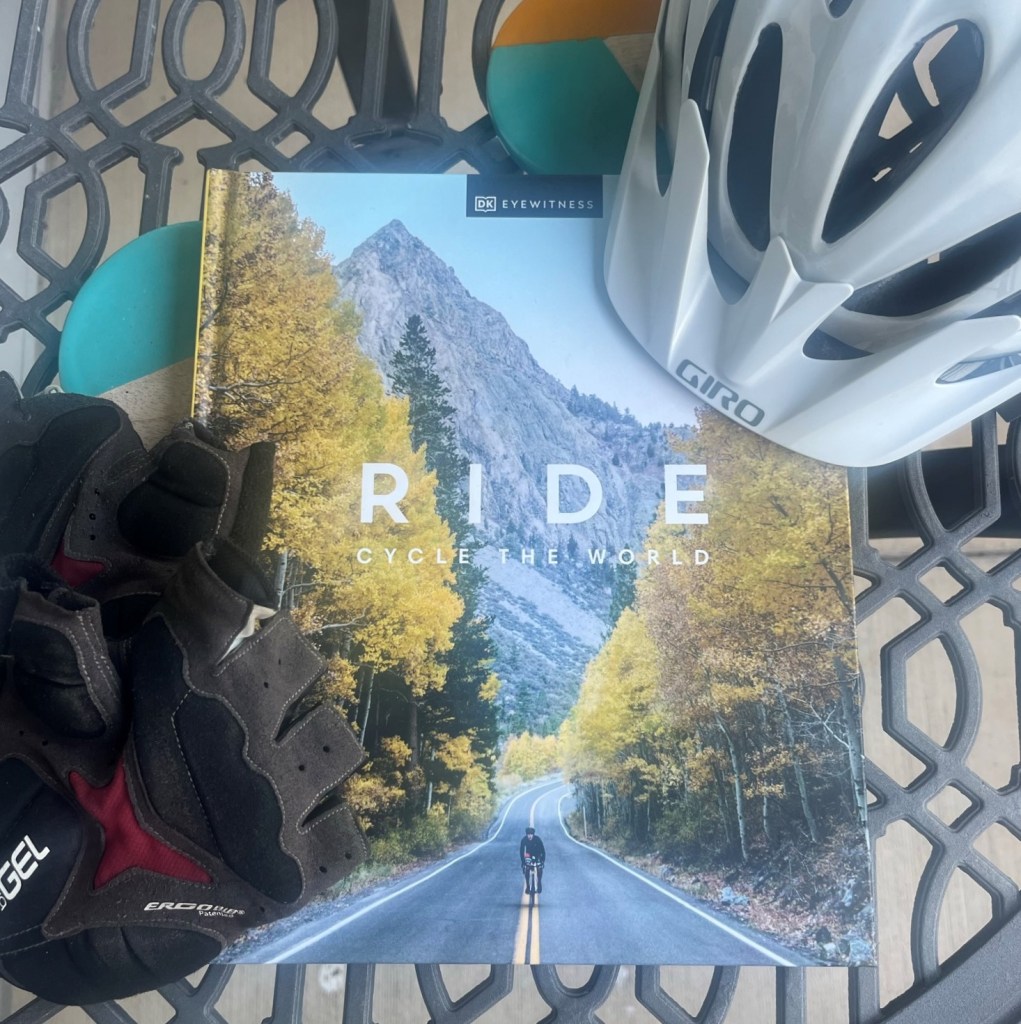

RIDE: Cycle the World
Explore the world by bike, cruising along the 100 cycleways presented in this compilation of trails recommended by avid cyclists. Along with colorful photos and area maps, this DK Eyewitness gem contains detailed route information, including road surface, elevation, total ascent, scenic outlooks, distance, and pit stops. Get inspired to go “bikepacking” in North America, Central and South America, Europe, Africa and the Middle East, Asia, and Australasia—wherever your travels take you.

Beginners, or those looking to upgrade their ride, are provided helpful guidance on which type of bike to choose for their adventures; road, mountain, gravel and touring, recumbent, and electric are the options explained and diagrammed in the opening pages of the book. Select a vehicle suitable for your experience level, desired terrain, comfort goals, and mobility needs, and prepare for your trip by reading up on bicycle maintenance, essential gear, and safety precautions.
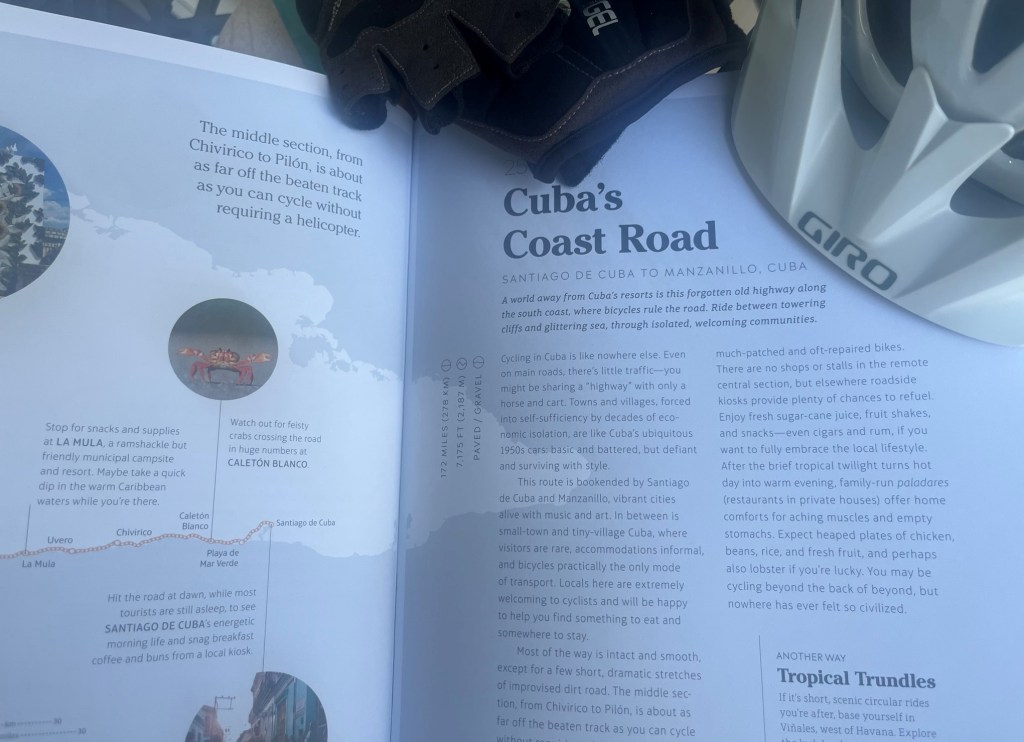
Included in the book is a trail along the Helgeland Coast in Norway, which features a grouping of more than 6,500 islands rising from the sea. Best as a summertime route, with beautiful light but always a chance of showers, this Helgeland cycling opportunity traverses 126 miles in a “reasonably relaxed” ride on paved and gravel roads. “Syklist Velkommen” signs abound along the route, welcoming cyclists to stop for food, safe bike parking, and laundry facilities. Riders can expect photo-worthy vistas of mountain peaks, sandy beaches, and quaint and colorful wooden cabins, fishing huts, and houses. Along this route, stop at an old wharf along the trail to tour and sample sweets at Heidi’s Chocolate Factory in Dønna, eat a tasty meal cooked by famous chef Jon Aga at the Vega Havhotell, and visit the Vega World Heritage Centre to learn about eider ducks and how they helped earn the island UNESCO status.

Stock up on supplies and water, and prepare to feel the wind against your face as you explore spectacular sights via bicycle.  

For more DK Eyewitness titles, and further information about “HIKE” and “RIDE,” please visit https://www.dk.com/us/.   
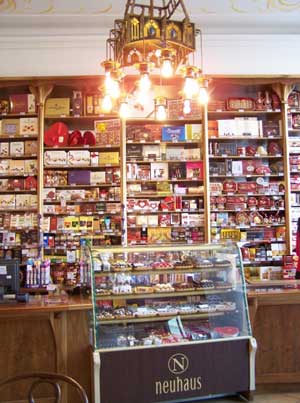
Chocolate Cravings

By Sharon Hudgins
Photos by the author

Crave chocolate? Do you salivate when someone utters those sweet syllables? Whether you call it chocolate (Spanish, Portuguese), xocolata (Catalan), chocolat (French), chocola (Dutch), Schokolade (German), Schoggi (Swiss-German), cioccolato (Italian), choklad (Swedish), sjokolade (Norwegian), czekolada (Polish), suklaa (Finnish) or okolaad (Estonian), it’s all the same: delicious!

As a woman at a Swiss chocolate factory told me, “You don’t need to know any other languages to talk about chocolate. Chocolate speaks for itself!”

FROM BEAN TO BAR
The Olmecs, Mayans, and Aztecs were enjoying chocolate as a drink for centuries before Christopher Columbus bumped into the Western Hemishphere on his way to the spice-producing lands of the East. Both Columbus and Hernán Cortés are credited with bringing cacao beans (from which chocolate is made) back to Spain in the early 1500s, where the Spanish eventually figured out that the bitter beverage of Central America tasted a lot better with sugar, vanilla and spices such as cinnamon and cloves added to the brew.

Sweet, foamy, dark and thick, hot chocolate soon became a favorite drink of the Spanish nobility, and Spain monopolized the market for cacao beans for nearly a century. In the 1600s, the popularity of chocolate—still consumed only as a beverage—began to spread to other parts of Europe, including France, England, Austria and the Netherlands. By the early 1700s, chocolate-drinking establishments in London were already competing with the popular coffeehouses there.

It was the Europeans who turned a ceremonial drink of the Aztec aristocracy into the affordable chocolate products that we enjoy today: chocolate powder, chocolate candy, chocolate syrup, chocolate spread.

In 1828 a Dutchman named Coenraad van Houten developed a process for removing the natural fat (cocoa butter) from the cacao beans and turning the remaining solids into powder. By the mid-1800s, European chocolatiers had figured out how to combine sugar and cocoa butter with a paste of ground cacao beans to make bars of “eating chocolate.”

The British were also pioneers in the development of chocolate technology, but the Swiss were the leaders in the field. Cailler, the first brand of Swiss chocolates, was established in 1819. In 1875, Daniel Peter in Switzerland invented milk chocolate, soon to be marketed by Nestlé. Four years later, Rodolphe Lindt created the world’s first “melting chocolate” for use in pastry- and candy-making. And in 1913, Jules Séchaud introduced a process for manufacturing filled chocolates. By that time, the Swiss were already the largest producers of chocolate in the world.

SWEET TOOTH
Today, the Swiss, Belgians, and Germans lead the world in chocolate consumption, happily eating 24 to 26 pounds of chocolate per person every year. The British, Austrians, and Norwegians are close behind, consuming 18 to 22 pounds each. And what tourist traveling in Europe can resist those triangular Toblerone and purple-packaged Milka bars, square Ritter Sports, round Mozart Kugeln, gold-wrapped Ferrero Rochers, fancy French and Belgian handmade bon-bons, chocolate Santas at Christmas, chocolate bunnies and cream-filled eggs at Easter time?

When I told a Swiss hotelier that I was surprised to learn that the Swiss eat an average of 12 kilograms (over 26 pounds) of chocolate per person annually, she looked surprised, too. “So little?” she asked incredulously. “I eat 200 grams of chocolate every day. Let’s see, that’s…”—she stopped to calculate in her head—”3 pounds each week, which is about 150 pounds a year. And I’m such a happy person!”

CHOCOLATE TOURS
Several countries in Europe have fascinating museums that focus on the history and process of making chocolate, from bean to bar. And many chocolate producers—from major multinational companies to small independent artisans—offer tours of their facilities, with a chocolate tasting included. The Swiss even have a Chocolate Train that takes you on a round trip from Montreux to visit the Cailler-Nestlé chocolate factory in Broc, as well as a cheese factory in Gruyères.

For more information on European chocolate museums and factory tours, check out the following sweet links:

Multi-country
www.chocolatetourism.com

Switzerland
www.alprose.ch
www.chocolatfrey.ch
www.schoggi-land.ch
www.cailler.ch
www.raileurope.com (search “Swiss Chocolate Train”)
www.goldenpass.ch (search “Swiss Chocolate Train”)

Germany
www.schokoladenmuseum.de

Belgium
www.mucc.be
www.choco-story.be

France
www.planetemuseeduchocolat.com
www.museeduchocolat.fr

Italy
www.museodelcioccolato.com
www.eurochocolate.com

Spain
www.pastisseria.com/en/PortadaMuseu

England
www.cadburyworld.co.uk