The Best of Outdoor and Camping Near Prague

In a city where the average daily temperature ranges from 30 °F to 66 °F across the entire year, camping and other outdoor activities are popular. From May to September, the temps are typically in the mid 60s to low 70s, so it is perfect weather for water sports. The only time it gets really cold is November to March, when it is in the 30s. 

Whether you want to camp in a tent in the woods or do some glamping in a fancy cabin, Prague has all of that and more. Many of the campgrounds are along the Vltava River—the longest river in the Czech Republic—so you can fish, swim, and do some boating. Leave your bags with a Prague suitcase storage facility first for safekeeping while you have a great time outdoors. 
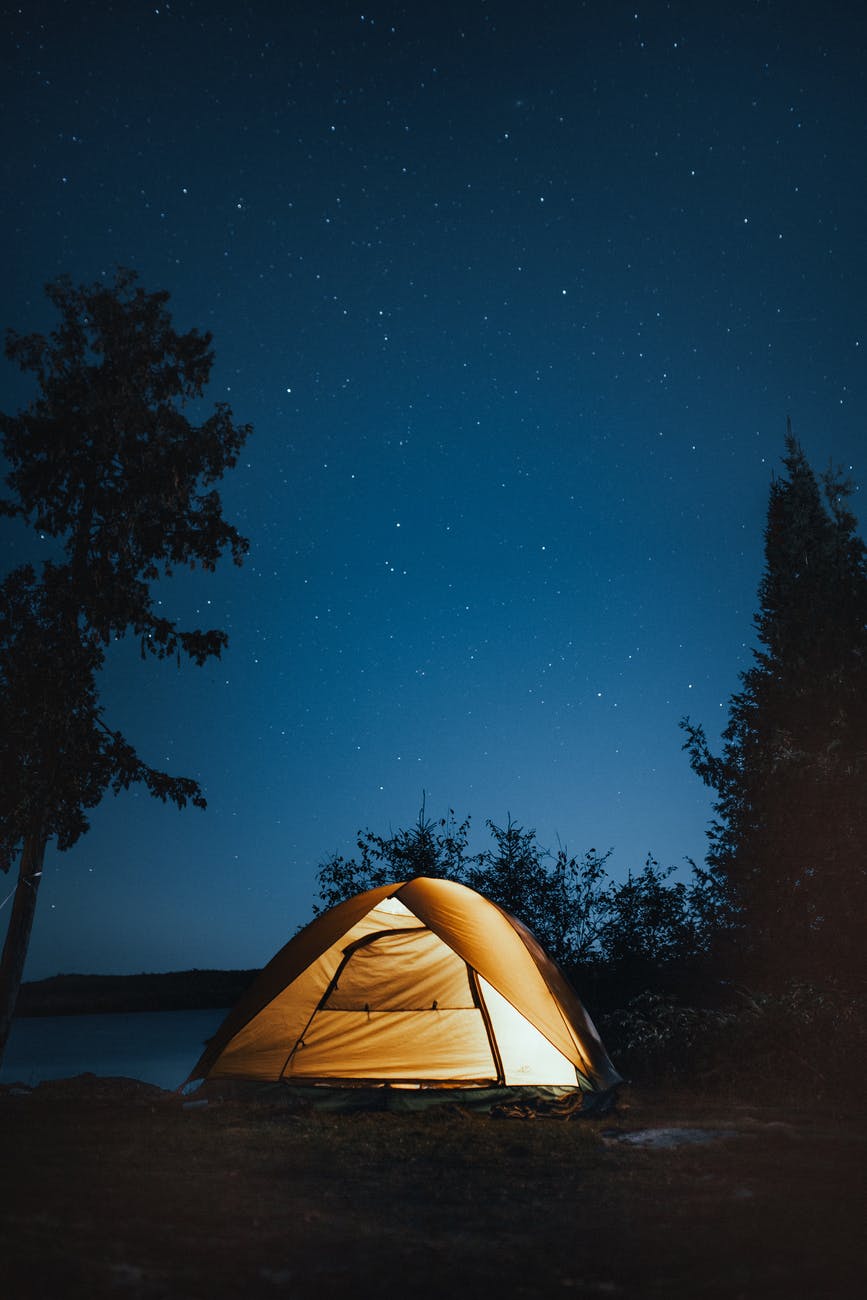
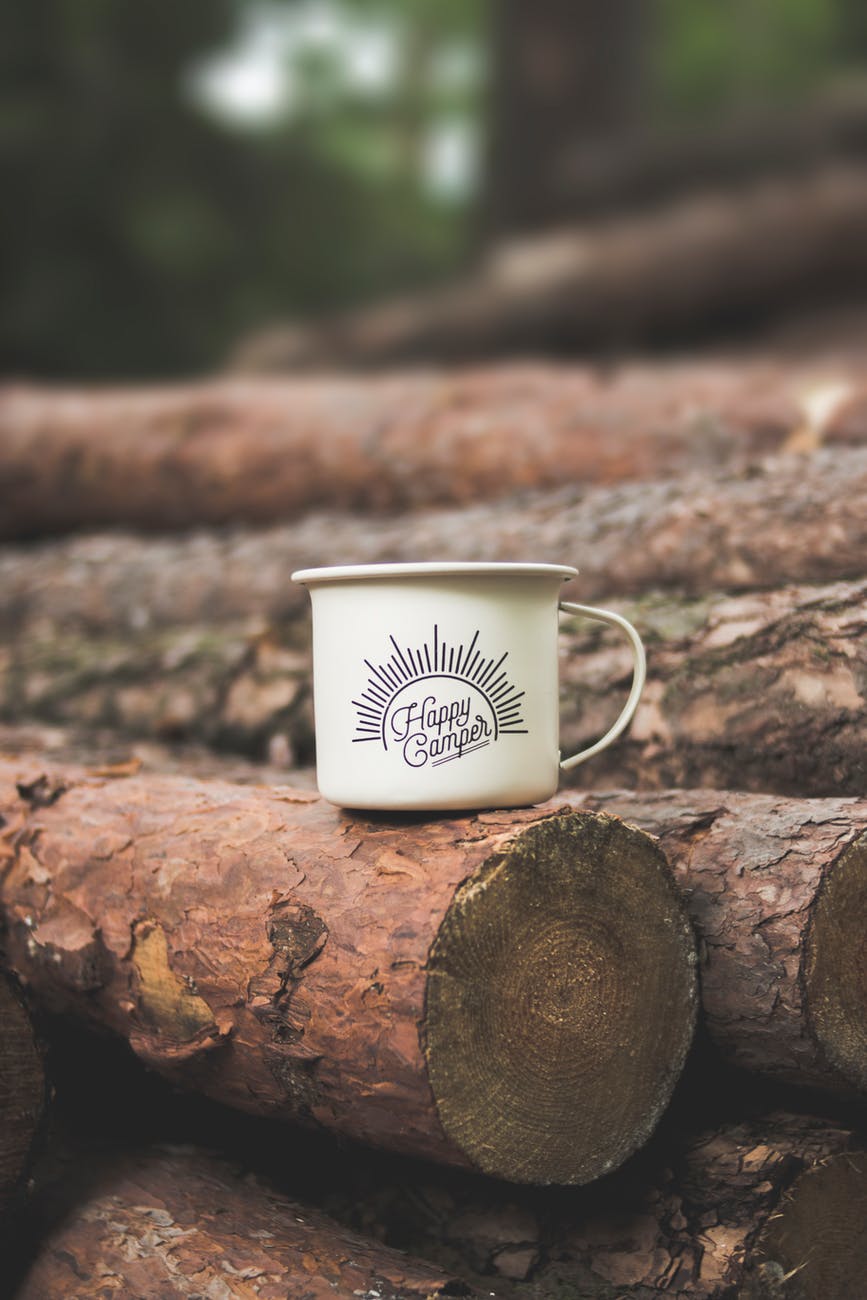
Photo by Josh Hild on Pexels.com

The most popular camp in the city, Oase Praha boasts 167 sites and seven cabins. The basic sites have 328 square feet without any hookups; standards include 328 square feet with electricity. The comfort sites have 328 to 492 square feet, water, and electricity. The premium sites have 558 square feet, water, and electricity.

The cabins (luxury mobile homes) have room for up to six people, with three bedrooms, a kitchen with appliances, satellite TV, a bathroom, and a shower. Onsite you can find a restaurant, playgrounds, indoor and outdoor pools, a dog park, a horse trail and horses, and pedal go-karts, and much more. Showers, dishwashers, and washing machines are also onsite.

Centrally located in Prague, its name says it all. River Camping Prague is right on the Vltava River, so you can enjoy lots of water fun. A neighboring water sport facility rents out kayaks, rafts, and canoes. The restaurant has delicious Czech cuisine, and you can order rolls to be delivered for breakfast in the morning. Pets are welcome.

Rent a bike to get to the zoo or botanical gardens just a few minutes away. The snack shop is fully stocked, many sites have fire pits or grills, and you can get wood from the reception area. Electric hookups are also available, and you can shower or wash clothes at the wash facility.

Near the river as well as the zoo, botanical garden, and Troja Palace, Autocamp Petrokova is the perfect place for those who want to be near the major attractions. They boast large sites for tents, caravans, or motor homes, with hookups for electricity and water. Pets are welcome. 

You’ll be right near a tram stop, and a bus stop where the bus can take you to the train station so you can get around to the palaces, museums, and Charles Bridge. The park provides showers, washing machines, and a kitchen for cooking. There is a private road that runs along the Vltava River where you can walk, bike, or skate. 

Whether you want to pitch a tent, park your RV, or rent a bungalow, Matyas Camp has all that and more. Fall asleep to sounds of the river just feet from your site, with a view of the hills in the background. The campground boasts clean facilities, home cooking in the restaurant, and a fun-for-all-ages pool.

Electricity and water are available, and pets are welcome. Washing machines and showers are available nearby, and you can also rent a boat or bike for your enjoyment. The kids will love the playground, swings and hammocks, fishing pier, sandbox, and table tennis while you enjoy an adult beverage at the bar

Photo by Dominika Roseclay on Pexels.com

In the middle of the Vltava River on the island of Císařská louka, under the stars across from the Vyšehrad Castle, you’ll find Caravan Park Prague. Whether you want to park a trailer or pitch a tent, there is plenty of open space to enjoy. Electricity and water are available for use as well. 

You have a variety of choices at Triocamp. Bungalows offer room for six with beds, AC, bathroom, and a kitchen. Cabins boast room for four with beds, a small fridge, heat, and dining set with 24-hour restrooms and showers. They also have a hotel with beds for up to three people, and private restrooms with showers. 

For a really unique way to camp, try the safari tents. Up to six people will enjoy two bedrooms, a kitchen, seating area, and a deck with furniture. They also have large sites for tents and RVs with electricity, restrooms with showers, and a kitchen. In addition, they have a pool, play areas, and a bistro featuring live music nights. 

Just 15 minutes from the zoo, botanical garden, and Troja Castle, Camp Dana has lots of space to park your RV, van, or pitch a tent. You will have electricity and water, as well as the use of hot showers and toilets 24 hours a day. Cook in the outdoor kitchen and shop at the camp market while the kids play on the equipment.

Enjoy the terrace and garden or watch television in the lounge area. The hotel has rooms for 2-4 people, with a seating area, shared bathrooms, and an onsite laundry. The Stromovka Park is also nearby, where they have ponds, playgrounds, and a restaurant. 

Just a few minutes from downtown Prague, Camp Džbán is right on the edge of a nature reserve with hiking, swimming, and the national forest. The campsite boasts 320 spots for RVs or tents with electricity, picnic tables, and lots of green space to enjoy. The chalets have beds for four, kitchens, and outdoor seating. 

There is a playground, tennis/badminton/volleyball courts, and a golf driving range right at the campground. No need to go anywhere else unless you really want to. The café serves meals and a wide range of drinks and beer. Showers, toilets, and washing machines are also available. 

Camping Drusus has room for 70 RVs or tents as well as eight cabins, and a guesthouse that accommodates visitors year-round. Campsites have electricity and plenty of space as well as access to showers, restrooms, kitchen facilities, and laundry. Several rooms at the guesthouse hold up to four people, and some have private baths. You can dine at the onsite restaurant, GUSTA, with its own mini-brewery for home-brewed beer.

Be sure to check with these campgrounds to see if you need reservations in advance. Also, verify the rules about pets, because some do not allow them. And don’t miss your chance to go into the city and visit the attractions like the Řepora Museum, Koněpruské Caves, and Karlštejn Castle.

Photo by Todd Trapani on Pexels.com

Cova d’en Xoroi: Club in a Cave

By Alison Ramsey

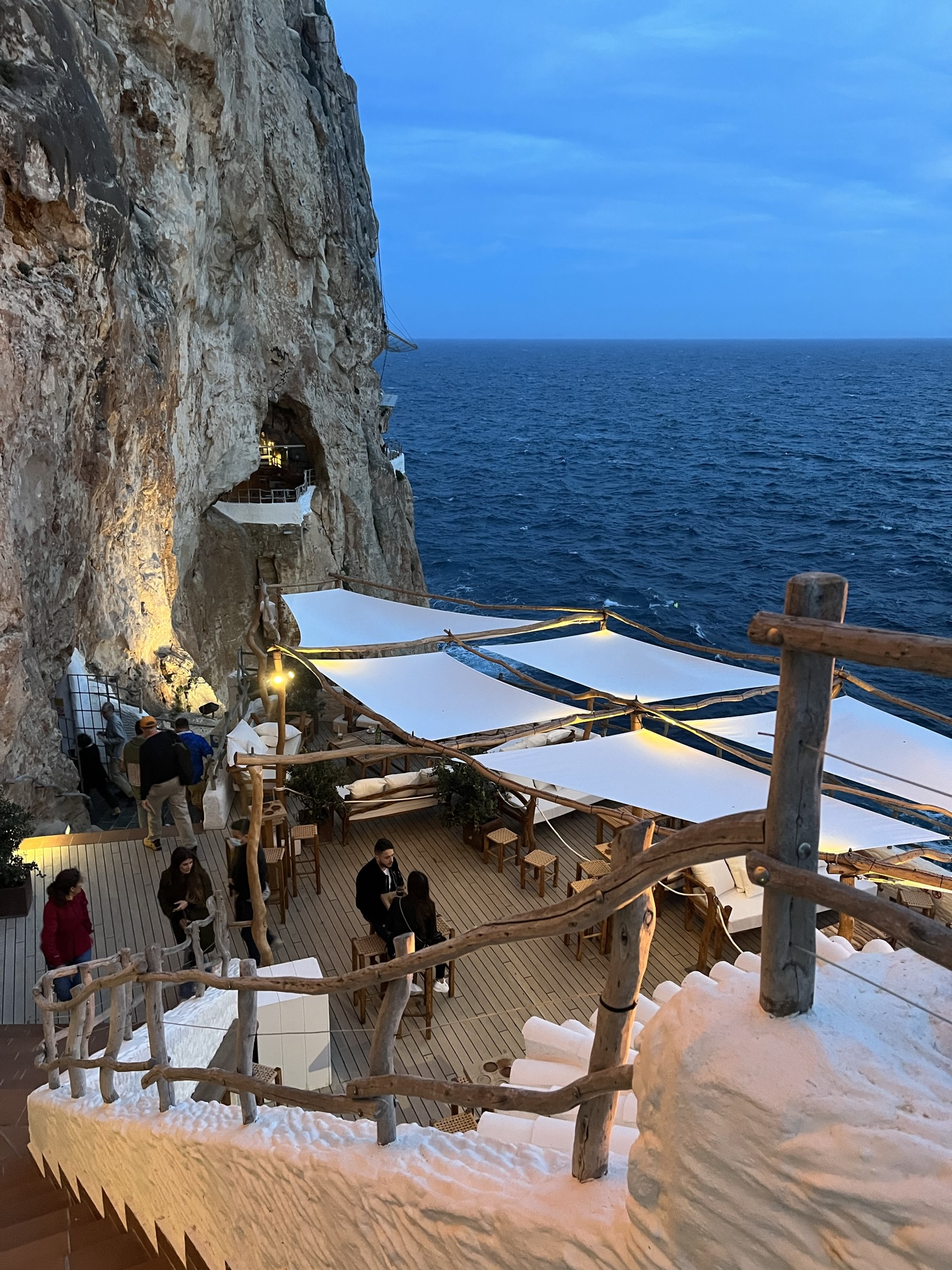
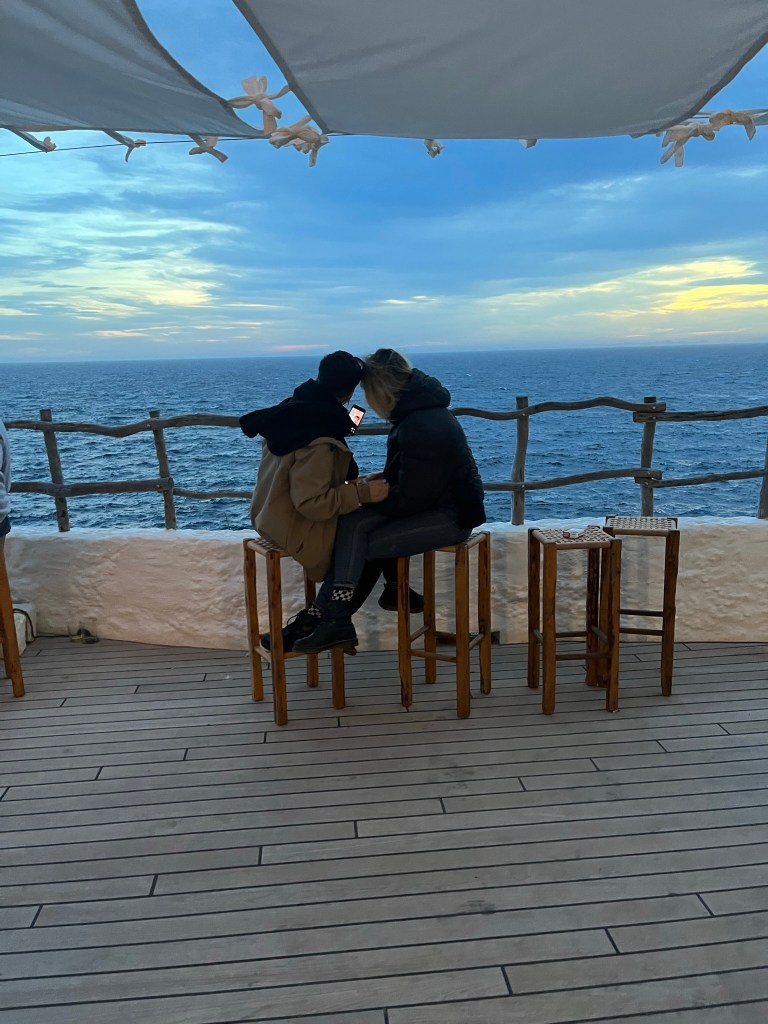
Best place to enjoy a lemonade + gin pomada? Cova d’en Xoroi—a daytime bar and afterhours club in a south coast cliffside cave that overlooks the beautiful Balearic Sea. Here on the outdoor patios you can watch the sun sink into the horizon and sip a drink in its glow. At 1 AM, a DJ starts spinning and the cavern becomes a dance club.

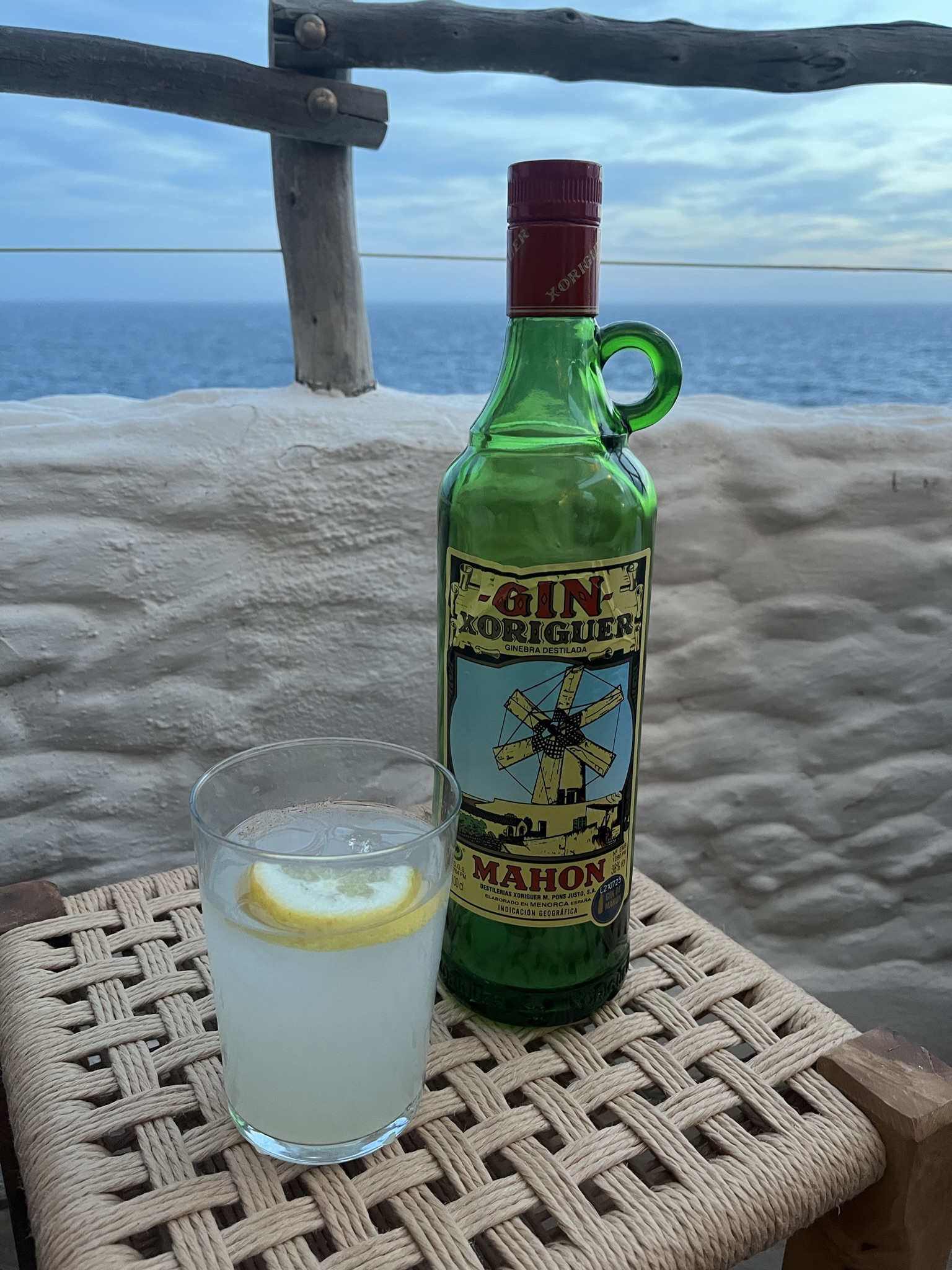
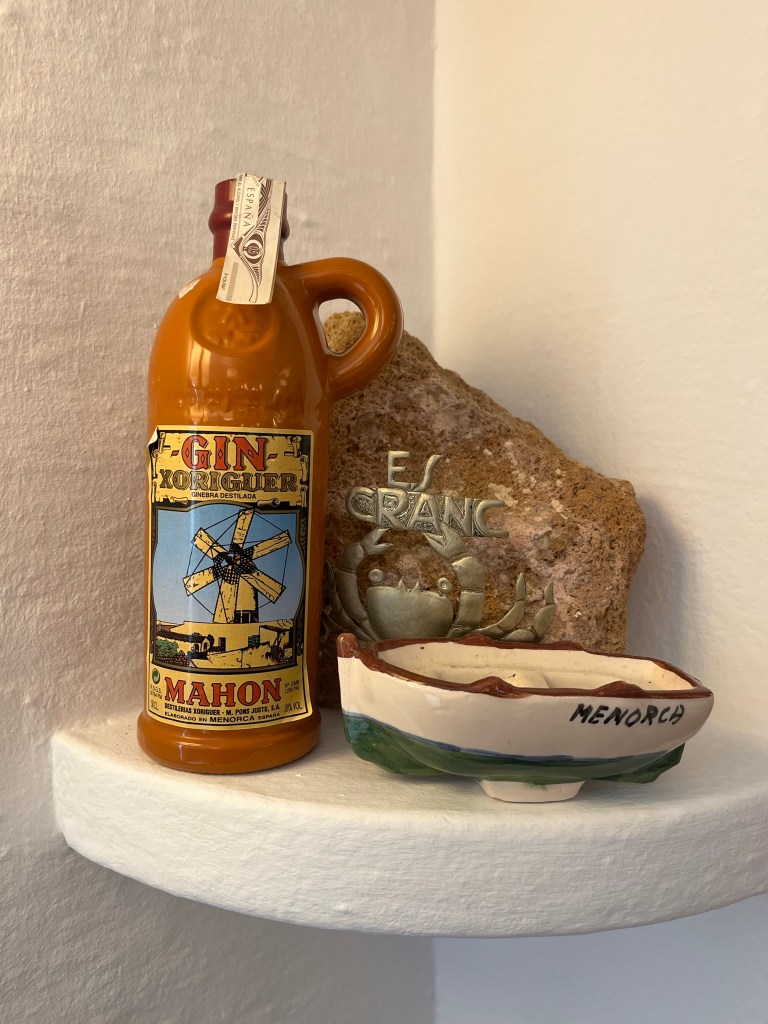
The recipe for Gin Xoriguer dates back to the early 1700s, and the distillery’s copper stills are more than 250 years old. The refreshing “pomada” cocktail consists of two parts lemonade and one part gin.

The Cova d’en Xoroi legend tells of a man named Xoroi who arrived by sea (perhaps a shipwreck survivor) and took refuge in the cave. During this time, a beautiful young woman from the country disappeared and was missing for years. One wintry day, a rare snowfall revealed footprints leading to the cave. Armed men stormed the cave and discovered Xoroi, the missing woman who had fallen in love with him, and their three children. Xoroi felt cornered and he and his eldest son jumped off the cliff into the sea, never to be seen again. The woman and her other children were taken back to Alaior, where they began a long lineage.

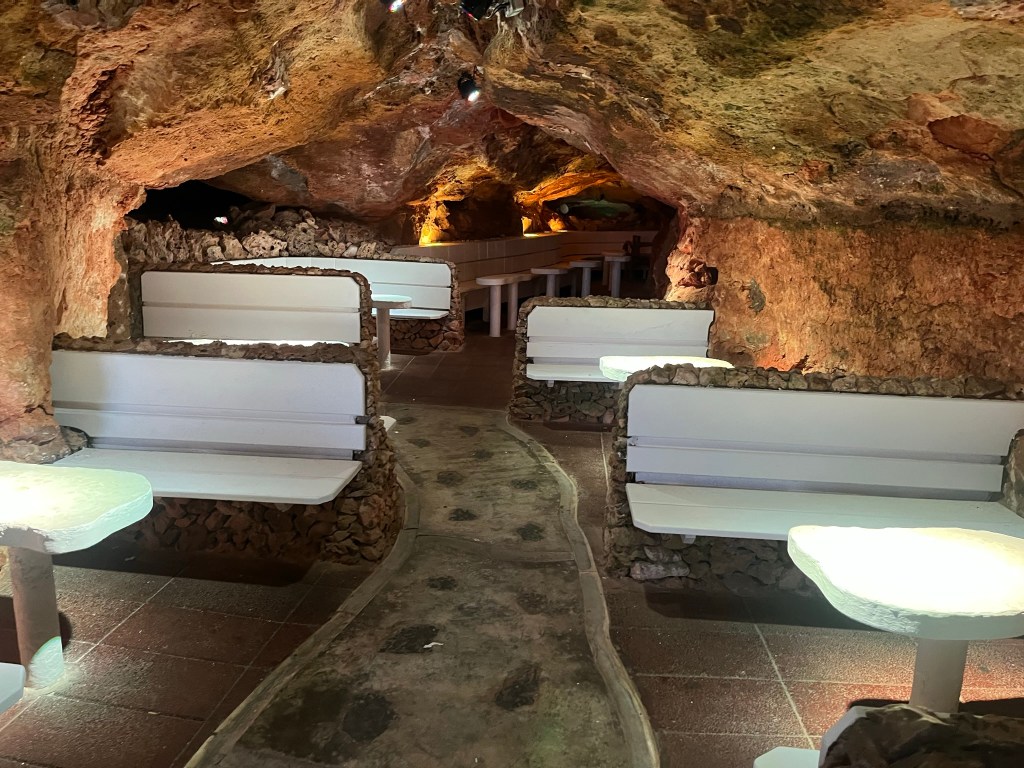
The cave’s interior has ample seating and booths with a sea view.

Nightlife at Cova d’en Xoroi features a variety of musical artists and themes, depending on the night. The live music schedule is posted online, and tickets can often be bought in advance.

Tickets are required for entry to the cave bar, with visiting hours segmented into a day session where children are welcome, an ambient sunset session suggested for adults, and an adults-only afterhours disco session. VIP seating is available for reservation, and the dress code restricts tank tops, beachwear, and sportswear, so dress to impress!

Souvenir Spotlight

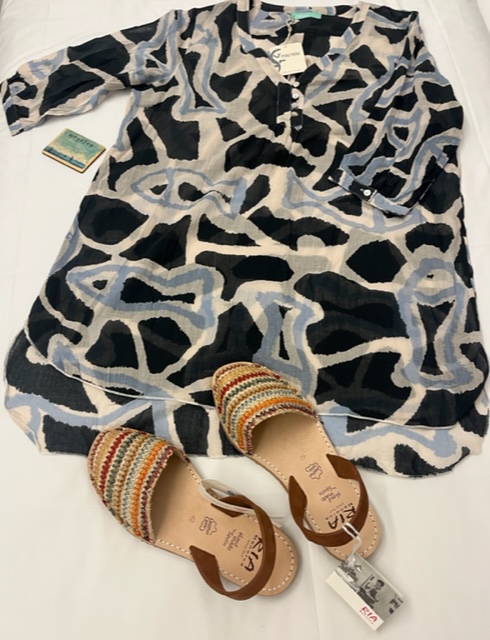
In addition to the incredible photos you will undoubtedly take home with you from the cave bar, stop for souvenirs in the fantastic gift shop up by the entryway. There you can browse a mix of locally made products, including handcrafted avarcas sandals by RIA Menorca and breezy Pou Nou island wear.

My gift shop souvenirs included colorful, woven RIA avarcas with a leather backstrap, and a lightweight Pou Nou tunic with shell buttons and a fish motif.

“Our company is based in Menorca, in the heart of the Mediterranean, and our designs are inspired by the island’s amazing elements—crystal-clear waters, magical beaches, and wild olive trees shimmering as the tramontana wind caresses them.”

Joan Carrés, Pou Nou founder

Menorcan Lobster Stew: A Seaside Specialty

By Alison Ramsey

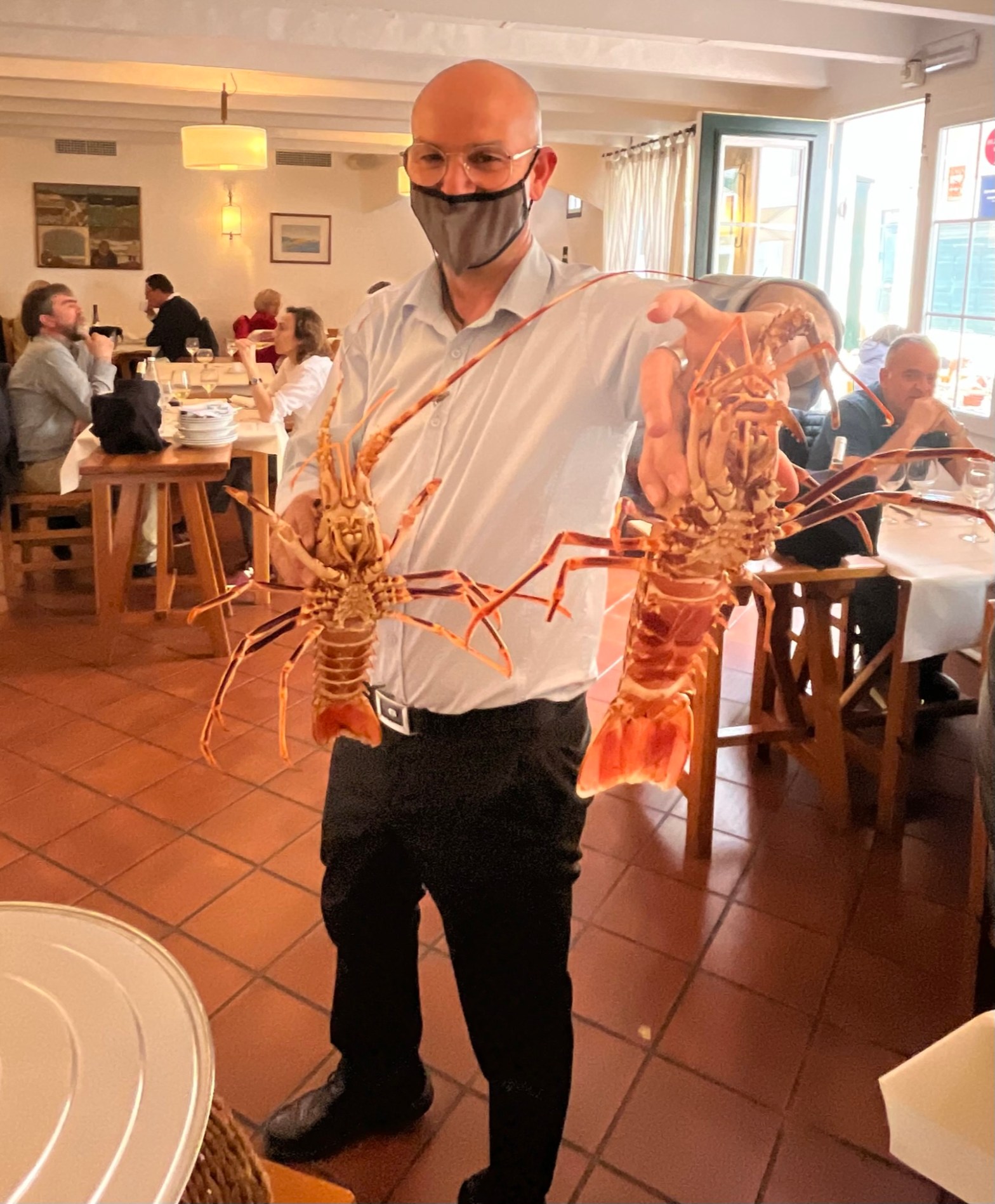
There is a first time for everything. First time visiting Menorca in the Balearic Islands of Spain; first time eating traditional lobster stew; first time holding a live lobster! The first two “firsts” were by choice, and the third was a complete surprise, as waiter Carlos at Es Cranc in Fornells Harbor gestured for me to hold out my hand and suddenly I was gripping a ridged pair of long antennae in my fist, with a huge lobster hanging at the bottom of them.

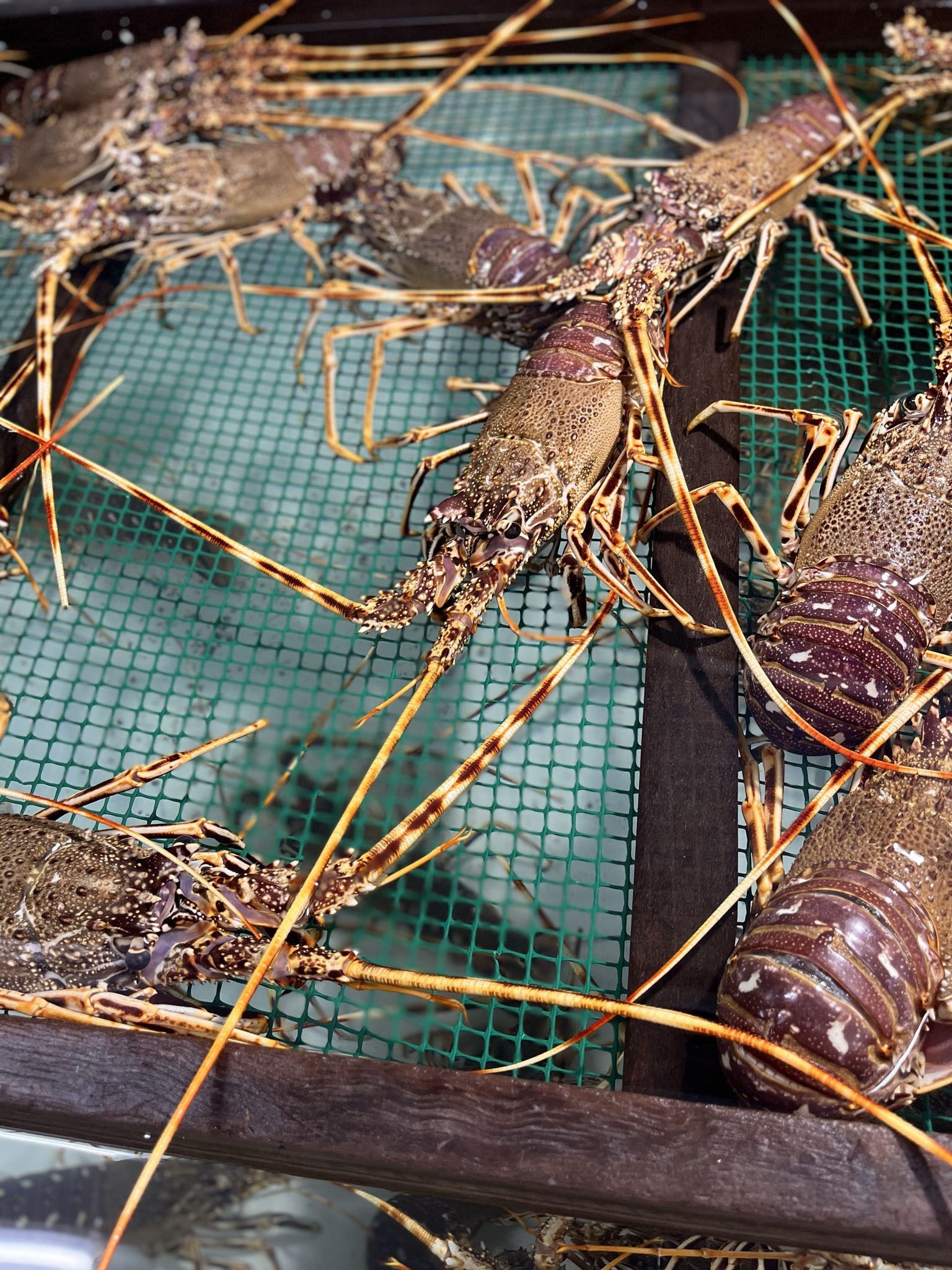
A lively, rambunctious lobster indicates that it is fresh.

This particular lobster did not end up in our soup bowls at lunch, but a similar one did, and it was key to the flavor of this traditional Menorcan dish. Invented by fishermen and later tweaked by chefs across the island, caldereta is the most renowned dish of Menorca’s seafood cuisine and can be made with lobster, eels, and varieties of fish. Surprisingly, the lobster that visitors relish in Menorca was once considered by islanders to be food for the poor due to its overabundance. Now it is a highly coveted gastronomical treat that restaurateurs take pride in preparing, especially during peak tourist season.

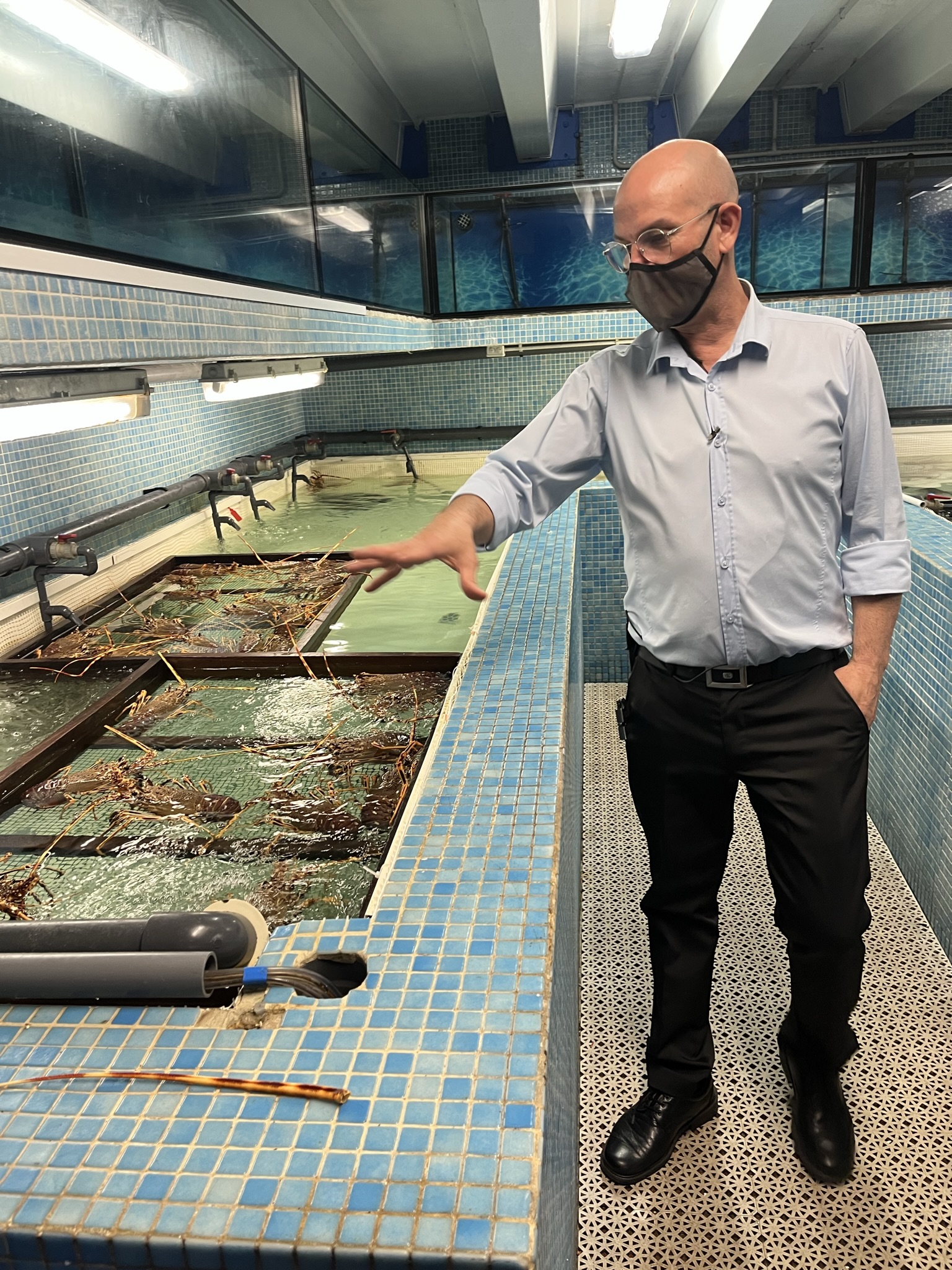
The tanks at Es Cranc can hold 3,600 lobsters—all from Menorca only. Elevated trays hold the lobsters that arrive that day, whereas lobsters from previous catches crawl along the bottoms of the tanks.       

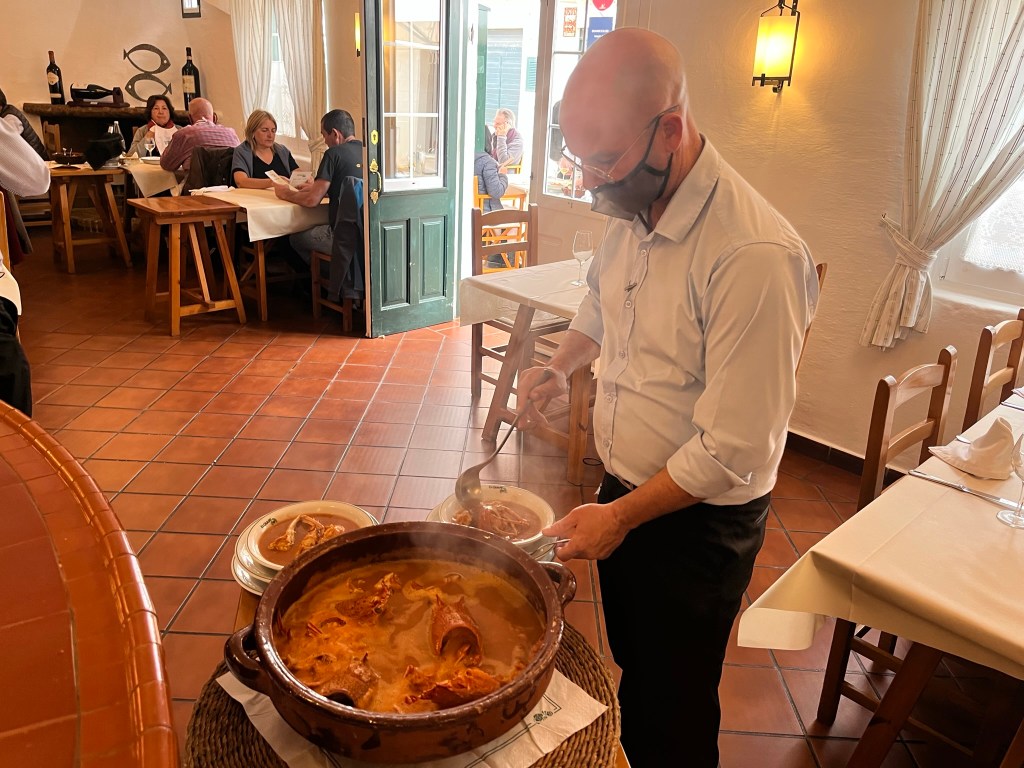
Caldereta de langosta (spiny lobster stew) is a simple recipe traditionally made by braising the locally caught spiny lobster over high heat with a savory sauce containing peppers, onions, tomatoes, garlic, and parsley. Typically served with homemade bread, you can soak the sauce into the slices, or you can simply spoon it up. The lobster stew served at Es Cranc contains several large, meaty portions of tender lobster in a hot, flavorful broth. Dainty eaters, don’t despair—Es Cranc provides bibs, lobster picks, and small bowls of cleansing water for messy hands.

The word “caldereta” refers to the earthenware cauldron in which the stew is prepared.

Whether it’s your first trip to Menorca or you’re a repeat visitor, plan for a meal at Es Cranc. You, too, might get to hold a wiggling crustacean!

A digestif of chilled “herbes” (herbal liqueur) brought the meal to a close. This sweet liqueur can be made with a variety of plants, the most popular being chamomile, as it is found in abundance across the island.  

Gin Xoriguer is the most popular Menorcan gin, made from grapes and juniper berries. The distillery has used traditional methods to make this drink for almost a century, and the creator’s family windmill featured on the unique bottle has become a recognizable symbol of the island. Mixed with lemonade, this gin makes a delightfully refreshing drink called a pomada.

Lobster Stew Recipe

A traditional recipe for lobster stew, as printed in Menorcan Cuisine Yesterday and Today: Undiscovered Recipes.

Ingredients
2 kg lobster
2 onions
2 cloves of garlic
1/2 green pepper
250 g tomatoes
1 bunch of parsley
7 tbsp. of olive oil
1.5 litres of water
slices of bread for soup or toasted bread
salt

Preparation
Cut the live lobsters into two on a wooden chopping board, separating the head from the tails; reserve the juices in a separate bowl. Split open the body and remove the black intestines using your hands or one of its feelers or antennae. Remove the legs and other feelers. For female lobsters, place the eggs in the bowl, and do the same with the stomachs and livers. Finally, cut the heads in half down the middle, and cut the bodies into slices, making sure to save all the juices.

Finely chop the onion, garlic and green pepper. Place the oil in an earthenware pot and gently fry the vegetables over a low heat. When the onion is translucent, add the very finely diced tomatoes (or they can be grated or blended). Cook over a very low heat for around 10 minutes.

Place the lobsters in the pot and leave to cook a little. Then add the juices, water and chopped parsley, season with salt and cook over a high heat for 15 minutes. When it starts to boil, reduce the heat and cook for a further half an hour.

Meanwhile, grind the lobster eggs, stomachs and livers in a pestle and mortar with a little garlic and parsley, adding the rest of the liquids and a little water to moisten the mixture. When there are just a few minutes’ cooking time left, add the mixture to the pot.

Turn the stove off and leave the stew to rest for at least two hours. In fact, it will be much tastier if made the day before eating. To serve, pour the broth with the lobster pieces into soup bowls, with slices of toast.

United Offers Direct Flights from US to Spanish Islands

By Alison Ramsey

Great news for U.S. travelers with Spanish islands on their “Places to Go” lists – this summer, United Airlines is launching direct flights from New York/Newark (EWR) to Palma de Mallorca (PMI) and Tenerife Sur (TFS). 

Royal Palace of La Almudaina in Palma, Mallorca

These seasonal flight offerings (June through September) are your opportunity to visit the Balearic Islands or Canary Islands without first stopping on the Spanish mainland. This new expansion makes United Airlines the U.S. carrier serving the largest number of destinations in Spain.

Flights to/from the Balearic Islands:

• New York/Newark – Palma de Mallorca

Flight UA236 EWR 20:55 – PMI 11:00 three flights weekly, on Tuesdays, Thursdays and Sundays

• Palma de Mallorca – New York/Newark

Flight UA237 PMI 12:55 – EWR 16:10 three flights weekly, on Wednesdays, Fridays, and Mondays

Flights to/from the Canary Islands:

• New York/Newark – Tenerife South

Flight UA248 EWR 21:50 – TFS 09:55 three flights weekly, on Mondays, Thursdays, and Saturdays

• Tenerife South – New York/Newark

Flight UA249 TFS 12:00 – EWR 14:55 three flights weekly, on Tuesdays, Fridays, and Sundays

Stay tuned for fresh travel stories about Mallorca and Menorca – coming soon!

Eurostar on a Roll

By Don Heimburger

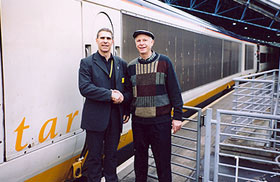
Don Heimburger and Eurostar Driver Detlef Hofmann shake hands prior to departure from Waterloo Station, London, when the train left from this station.

Nearly 22,000 travelers hop aboard a Eurostar train each day, and more than 75 million have traveled the Eurostar routes over the last decade.

That figure represents more rail passengers than all the airline passengers combined on both Eurostar routes out of London.

So what’s new with Eurostar for 2008?

NEW FOR 2008

For one, since November, 2007 Eurostar has moved to a new station, from Waterloo to St. Pancreas, reducing the rail journey between London and Paris by 20 minutes. (I loved Waterloo Station!)
The travel time is now 2 hours and 15 minutes, and between London and Brussels it is only 1 hour and 51 minutes.

Also opened was Great Britian’s first high-speed line (called HS1) which carries the Eurostar exclusively. This allows travelers from London to Paris or Brussels to use the train for a one-day business or leisure trip. Every day the train runs 18 roundtrips between London and Paris and 10 between Brussels.

Eurostar trains feature 18 cars each, with car configurations changed depending on if the train is designated as a Business Premier train or a Leisure Select train. The train also runs to Lille, Eurodisney/Marne La Valle, Avignon (summer only), and Bourg St. Maurice (winter only).

TRAINS SEAT 766

Trains seat 766 persons, with special cars situated between cars 7 and 12, and standard class cars 1-5 and 14-18. There are always two bar cars, 6 and 13.

If you are a U.S. citizen, you will probably want to book your trip through Rail Europe, especially if you want to purchase a Eurail Pass that can include the Eurostar (and you can receive up to a 60% discount). Go to http://www.raileurope.com for the details.

In other European rail news, last summer the new French Railway TGV East train broke the world’s rail speed record, reaching a top speed on the trip of 357 miles per hour! A Rail Europe spokesman said, “This accomplishment is monumental for the SNCF and the rail community, and will have a positive impact on all who wish to travel east from Paris.”

The average speed, however, of the TGV East trains is 200 miles per hour. Each first class seat features its own electric power outlet, and broad seat cushions; first class passengers can book a taxi through the train conductor; and on-board messages are in French, German and English.

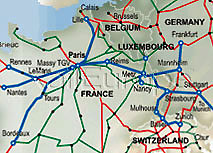
As an example of faster speeds on the TGV, here are new travel times posted by Rail Europe for travel between some stations:

  • France-Geneva:
    Paris-Bellegarde: 3 hours 10 minutes;
    Paris-Geneva: 3 hours 45 minutes
  • France-Switzerland:
    Paris-Lausanne: 4 hours;
    Paris-Zurich: 6 hours 10 minutes
  • Brussels-France:
    Brussels-Lyon: 3 hours 40 minutes;
    Brussels-Avignon: 5 hours