This holiday season, Royal Parks in London are celebrating with special events in places including Richmond Park, Greenwich Park, Kensington Gardens and Hyde Park.
Visitors to the parks can partake in the festivities by choosing their own real Christmas tree, wander through four of the Royal Parks following the Diana Princess of Wales Memorial Walk, visit the deer enclosure in Greenwich Park, or take a timeless winter horse carriage ride.
While in London, take in the Winter Wonderland Hyde Park, where you can hear live music, go ice skating and visit the Angels Christmas and Yuletide Markets.
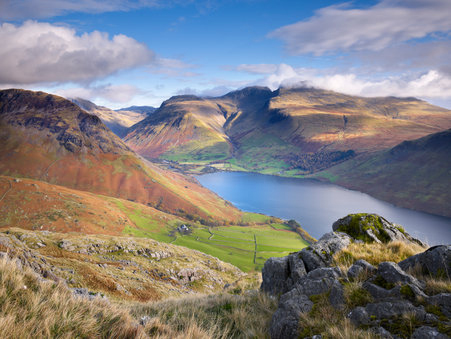
Photos courtesy Visit Great Britain and Lake District National Parks
Sprawling 885 square miles across Cumbria in North West England, the Lake District National Park is England’s largest National Park. With 16 sparkling lakes, England’s five tallest mountains, six national nature reserves and over 400 towns and villages, it’s no wonder the Lake District is a popular attraction.
Natural beauty isn’t the only thing going on in the Lake District. Activities range from child-friendly adventure parks to high-adrenaline assault courses. Don’t miss Lake Windermere—the largest of the lakes—where you can try everything from open water swimming to sailing, canoeing, kayaking and windsurfing.
The arts and culture scene started by the likes of William Wordsworth and Beatrix Potter is still thriving today, with a year-round calendar of literary, arts and heritage events and countless museums, galleries and performance venues to visit. With so much to see and do, your only problem will be deciding what to do first.
All that exploring is bound to work up an appetite. And you’re in luck, because the Lake District is one of Britain’s food and drink hotspots. Whether you fancy a refreshing brew at a traditional tearoom, a pint of real ale at a pub with a roaring fire or a elaborate meal at a Michelin-starred restaurant, you’ll find something to suit every taste in the Lake District.
Top five things to see and do: 1. Take the kids to meet Peter Rabbit and friends at the World of Beatrix Potter. 2. Watch one of the productions at the Theater by the Lake in Keswick. 3. Explore the nearby cosmopolitan city of Carlisle and the historic town of Kendal. 4. Visit one of Cumbria’s 24 microbreweries—you’ll find many of these at the back of local pubs. 5. Tour the poet William Wordsworth’s house, Dove Cottage, surrounded by the countryside that inspired him.
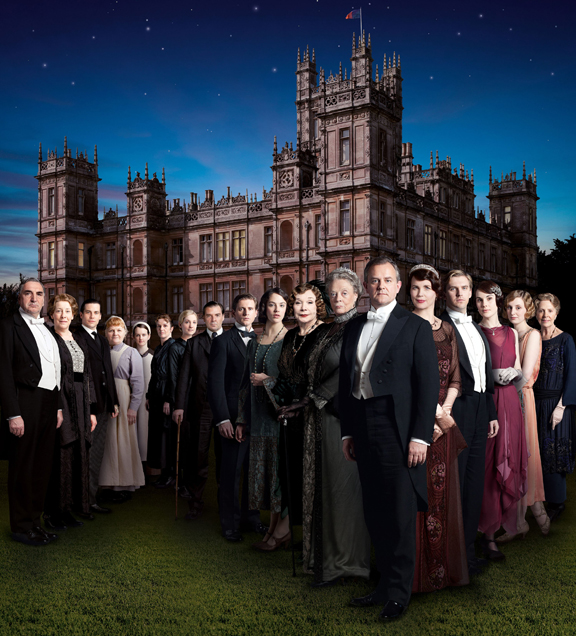
The third season of the television series Downton Abbey premieres on January 6. Finally, fans of the series will find out whether the will-they-won’t-they relationship between Lady Mary and Matthew will end in happiness, not to mention the fate of Mr. Bates. You’ll also meet Lady Grantham’s mother, played by legendary actress Shirley MacLaine.
Watching the show makes you wish you were having afternoon tea in the beautiful garden of a magnificent stately home. Thousands of fans are visiting the real Downton Abbey, Highclere Castle, as well as the other stunning locations from the series.
Cast of Downton Abbey
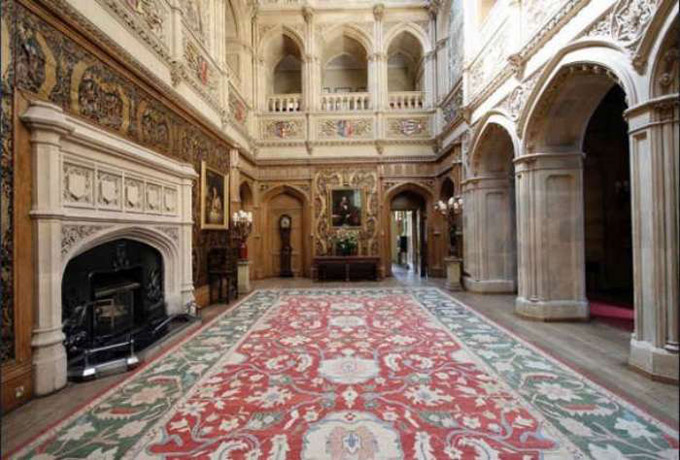
HIGHCLERE CASTLE Highclere Castle in Berkshire (southeast England) is the real castle that plays the role of Downton Abbey, fictional home to the Earl of Grantham, his glamorous wife, daughters and a host of servants. The Victorian castle is set amidst 1,000 acres of parkland that is as beautiful as it looks on screen. The actual residents are the Earl and Countess of Carnarvon, whose family have lived on the site since 1679. Downton Abbey author, Julian Fellowes, is a longstanding friend of the family and had Highclere in mind as the home of the Granthams while writing the series.
Make a trip this spring when the castle is open to visitors and truly step into Downton life: sip tea at the cafe, stroll the garden pensively just like Lady Mary, Edith or Sybil and admire the sumptuous rooms, many of which are used during filming. Highclere is located about 1 1/2 hours away from London by train.
For diehard fans who want to sleep in the same room as their Downton heroes (albeit without them there), book a room at The Carnarvon Arms, a grade-II former coachhouse nearby Highclere Castle. As it’s only a short distance from Highclere, during filming, The Carnarvon is occupied by the Downton cast, and has recently undergone restoration by British celebrity chef Marco Pierre White to become a luxury country inn hideaway. What could be better than guaranteed delicious pub grub, a traditional British inn experience and the possibility that you may catch a glimpse of Dan Stevens (Matthew) or Jim Carter (Carson) at the bar?
THE COTSWOLDS The Cotswolds, in southwest England, have been designated as an area of outstanding natural beauty, and are quintessential England at its loveliest. The area is north of Highclere and can be reached in less than two hours from London. In series two, it was the site of scandal when Lady Sybil eloped with the family chauffeur, Branson. The pair went to Swinbrook in the Oxfordshire Cotswolds, a pretty village where time seems to have stood still, and filmed at the Swan Inn. This beautiful boutique inn makes for an idyllic base from which to explore the area.
Cotswolds Village
Also in the Cotswolds is the picturesque village of Bampton, where many of the exterior scenes in of Downton Village and Crawley House are filmed. Bampton library and church were used for exterior shots of Downton Cottage Hospital. Stop off at the shingle-roofed Bampton Coffee House for an English cream tea or lunch at the Vineyard at Stockcross, an elegant hotel with a great restaurant and an impressive wine cellar. Maggie Smith, Downton’s resident Dame, is rumored to have stayed here during filming.
LINCOLN CASTLE Did he or didn’t he? Season three sees character John Bates locked up in York prison for the murder of his former wife. On closer inspection, it is actually Lincoln Castle, situated a couple of hours south of York, is used as the prison. In addition to its Downton fame, Lincoln Castle is also home to the Lincoln Magna Carta, which dates to 1215, as well as the Charter of the Forest, a 1217 document that made sure England’s forests weren’t taken over by the aristocracy. History buffs will be pleased to learn that Lincoln Castle is the only place in the world where you can witness the two documents together.
Following the official announcement that England’s royal newlyweds will move to Kensington Palace in June, the five-star boutique Milestone Hotel in London, which overlooks the royal palace and gardens, will celebrate the arrival of the new couple with the Live Like Royalty package and the specially designed “William and Catherine cocktail.”
Guests can also enjoy a taste of royal life with the hotel’s “Live Like Royalty” package, staying in suitably named rooms such as The English Rose, The Kensington Palace Studio, The Regency Suite, The Princess Suite or The Buckingham Suite—with entrance to Buckingham Palace included. Also, in July, guests visiting Buckingham Palace under the Milestone’s Live Like Royalty package will be able to view the Duke’s and Duchess’s wedding cake and the Duchess of Cambridge’s wedding dress, which will go on display for the summer.
Created by Head Bartender Markus Rottensteiner, renowned for inventive cocktails, the William and Catherine Cocktail combines the flavors of Williams Pear, Williams Pear Schnapps and champagne.
The Milestone’s package includes two nights’ accommodation in a bedroom or suite overlooking the palace, full English breakfast, champagne afternoon tea, and two tickets to either the Queen’s Gallery or the State Rooms at Buckingham Palace.
The Milestone Hotel is known for its sumptuous interiors and has just unveiled its recently refurbished master suite, the Tudor Suite. Comprising one bedroom and one sitting room, the regal Tudor Suite offers luxurious stays with features such as a gold four-poster bed, custom made ivory silk curtains and furniture and art sourced from Christies and the finest auction houses around the world.
Consists of 870 miles of trails from soaring cliffs to golden sands
Photos courtesy Visit Britain
The Wales Coast Path creates a complete path along the whole Welsh coastline, and together with the Offa’s Dyke Path, the total route extends to more than 1,000 miles. The Coast Path winds its way through towns and villages, across cliff tops and sandy beaches, sometimes darting inland before emerging at a sheltered cove or tiny hamlet that you would forever miss when traveling by car, bus or train.
The Wales Coast Path has been developed by the Welsh Government in partnership with the Countryside Council for Wales, 16 local authorities and two national parks. In addition to funding from the Welsh Government and the coastal local authorities of approximately $3.15 million per year, the European Regional Development Fund has allocated $6.29 million over four years in support of the project.
Improvements to the quality and alignment of the route will continue during 2012 and 2013 to ensure that the path follows the Welsh coastline as close as it is safe and practical. Over time, the Wales Coast Path is expected to lead to the creation of circular coastal routes as links to inland towns and villages are improved.
Wales is a country blessed with a beautiful coast and stunning scenery. The Wales Coast Path will ensure improved access to the coastline and encourage people to live a healthier and more active lifestyle.
SHAPE OF THE NATION
In the northeast, on the border between Wales and England, the path sets off near Offa’s Dyke, near the coastal town of Prestatyn on the shores of the Irish Sea. This historic dyke is named after the 8th century King Offa, who ordered the dyke be built to separate his kingdom of Mercia from rival kingdoms in what is now Wales. This 177-mile path, forming one of Wales’ three national trails, runs along the Anglo-Wales borderlands. With the development of the coastal path, this will enable visitors to walk around the whole of Wales.
This historical journey continues as the path winds through nearby Conwy with its impressive 13th century castle built by Edward I. The coastal path passes a number of other medieval castles along its way such as Caernarfon, Beaumaris, Criccieth and Harlech in the north, Aberystwyth in mid Wales, and Cardiff and Caldicot in the south. It passes by ancient churches such as St. Hywyn’s in Aberdaron on the Lleyn Peninsula, where since medieval times, pilgrims have come on their way to Bardsey Island, the legendary Isle of 20,000 saints.
All along the coastal path there is breathtaking scenery; places such as Anglesey in the north and Pembrokeshire in the south are especially beautiful. In western Wales, a half mile section of the path recently opened joins the Ceredigion Coast Path with the Pembrokeshire Coast Path National Trail creating a 250-mile unbroken path. Last year, National Geographic voted Pembrokeshire “one of the best coastal destinations in the world, a wonderful part of Wales that must be seen and explored.” There are a variety of beaches along the way, ranging from expansive stretches of sand to tiny sheltered coves.
The wildlife that can be seen while exploring Wales’ coastal path is rich and diverse. Exploration of the coastline along the path reveals bays, headlands, towering cliffs and inlets, all provide stunning views of nesting seabirds, guillemots, razorbills, puffins and shearwaters. Out to sea off the Ceredigion Coast in Cardigan Bay, bottlenose dolphins and porpoises can be seen playing in the surf, and its sheltered inlets and coves harbor Atlantic grey seals basking on the beach or bobbing up and down in the sea.
Wales is famous for its seaside resorts. Among others, the path passes through Tenby in the Southwest, a town steeped in history, renowned as being one of Britain’s finest holiday resorts, and in the north, Llandudno, Wales’ largest resort, a town that has kept its Victorian and Edwardian splendor and boasts two great beaches.
Situated along the coastal path are some of Wales’ finest inns such as the Ty Coch Inn nestled in the tiny fishing village of Porthdinllaen on the north coast of the Lleyn Peninsula, with views across the Irish Sea and with a sandy beach on its doorstep, boasting a fine selection of food and ales.
The number of walkers along the coast is increasing continually, but the path is also suitable for cyclists and horseriding on large stretches and also invites the disabled along its length.











 European Traveler