Celebrate the Season at Festive German Christmas Markets

Frankfurt Christmas Market

Photos courtesy German Christmas Market

Every year the magic of German Christmas Markets enchants millions of visitors. Crafts, culinary specialties like Gluhwein (mulled wine), baked apples and gingerbread biscuits (Lebkuchen) contribute to the traditional atmosphere.

Frankfurt (until Dec 22)
Situated in the Roemerberg marketplace with St. Paul’s church as a backdrop, the Frankfurt Christmas Market is regarded as one of Germany’s most important. Organized events include the tower concert on the balcony of the Nikolai church, the Christmas Market of Frankfurt’s artists and the Frankfurt city peal of bells. Children can ride on multiple carousels, marvel at the gigantic Christmas tree and meet St. Nicholas on December 6. Guided tours of Frankfurt are also available. www.frankfurt.de

Mainz Christmas Market

Mainz (until Dec 23)
The Mainz Christmas Market is set in the historic market square against the impressive backdrop of the 1,000-year-old cathedral of St. Martins. Highlights of the Christmas Market include the traditional fairy-tale performance in the city theater, the popular print shop of the Gutenberg museum and the 36-foot-high Christmas pyramid with its numerous figures and lights. Also, there is a wide choice of family programs at the Liebfrauenplatz. www.mainz.de

Wiesbaden (through Dec 23)
“Twinkling Star Market” is the name of the Wiesbaden Christmas Market. Visitors enter the old castle square through four gates decorated with stars. Not to miss is the crèche with its life-sized wooden figures representing the Christmas story. www.wiesbaden.de/en

Wiesbaden Christmas Market

Aschaffenburg (through Dec 22)
The Christmas Market is situated against the picturesque backdrop of the castle, with the Franconian Christmas crèche as its center. Also, during this festive season various other charming Christmas Markets can be found in the Aschaffenburg region. www.aschaffenburg.eu

Aschaffenburg Christmas Market

Bad Homburg (All advent weekends)
One of the most beautiful Christmas markets in Germany is the romantic Christmas Market Bad Homburg at the Castle “Landgrafenschloss,” which is surrounded by an historical setting. Highlights include the traditional fairy-tale performances on the Kurtheater Bad Homburg. www.bad-homburg.de (German only)

Stuttgart Christmas Market

Stuttgart (through Dec 23)
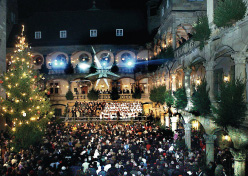
With its more than 280 decorated stands, is one of the oldest and largest Christmas markets in Europe. The Stuttgart Christmas Market is traditionally opened with a ceremonial concert in the inner courtyard of the Old Palace (Altes Schloss). Around the Altes Schloss, Schillerplatz, Kirchstrasse, Marktplatz and Hirschstrasse, small decorated wooden houses offer a range of Christmas items and gift ideas including Christmas tree decorations, crib figures, toys, woodcuts, puppets, lambskin shoes and candles. Culinary delights include hot chestnuts, German lebkuchen (gingerbread), roasted almonds, grilled sausages and mulled wine.www.stuttgart-tourist.de

Bremen Christmas Market

Bremen, on the River Weser close to the northern coast, puts a maritime twist on the classic Christmas market when the promenade along the river is transformed into Schlachte magic, a festive market offering historical, seasonal and maritime attractions. Another market with more than 160 beautifully decorated Christmas stalls are clustered in front of Bremen’s Church of Our Lady and the Roland Statue in the historical market square. www.bremen-tourism.de

Ruedesheim (through Dec 21)
The Christmas market in Ruedesheim on the Rhine brings a festive feel to the romantic old town and its popular Drosselgasse Lane. More than 120 stands from 12 nations offer Christmas customs and traditions from around the world. Europe’s biggest Nativity scene can also be found in the market square. www.ruedesheim.de

For more info: www.germany-christmas-market.org

Magical Hum of Istria in Croatia

Hum of Istria

Photos courtesy Croatian National Tourism Board

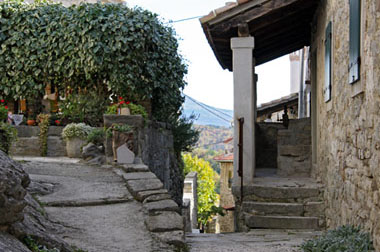
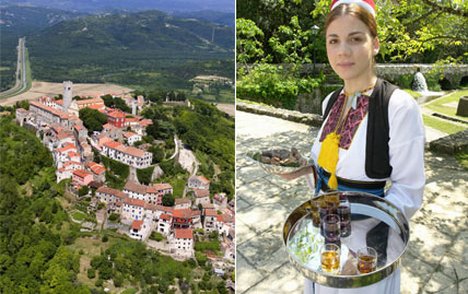
Hum, the smallest town in the world, is one of the rare preserved examples of urban development located exclusively within early medieval walls. It was mentioned for the first time in 1102. Town walls protected the town from frequent intrusions of the Venetians and the Turks. For almost a thousand years, nothing has been built outside the walls of Hum. Frescoes with biblical themes, unique artwork created by an unknown author in the 12th century, are a unique feature of the town.

Apart from being famous as the smallest town in the world, it has also been recently promoted as the Town of Biska. Biska is mistletoe brandy whose original recipe comes from Hum. Every year at the end of October Hum is the host of a brandy exhibit where a competition for the best brandy in Istria is organized.

The traditional custom of electing the county prefect for a year has been preserved to this day. Many tourists come to see the election proceedings and join in the culminating festival celebration.

Today Hum has about 20 inhabitants. You can tour the town in about five minutes, but after that be sure to stop at Humska Konoba (Hum Tavern) to taste some of the typical Istrian specialties.

For more info, go to www.istra.hr

Vienna Celebrates the 150th Birthday of Gustav Klimt

Photos courtesy Albertina Museum, Vienna

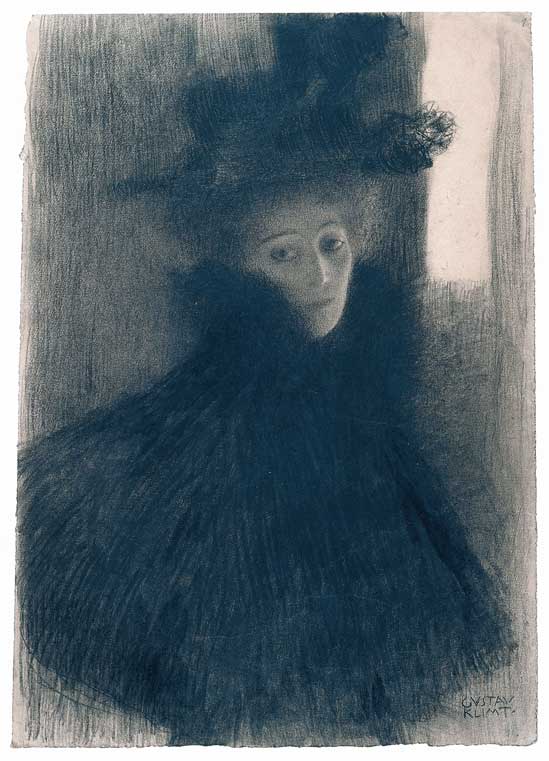
The year 2012 marks the 150th anniversary of the birth of Gustav Klimt (1862-1918). Vienna’s Kunsthistorisches MuseumLeopold Museum and Albertina are all staging major exhibitions dedicated to the work of this great turn-of-the-century modernist pioneer.

The Leopold Museum will be staging an exhibition titled “Gustave Klimt: A (time) Journey,” from February 24 to June 11 which will focus on the museum’s collection of hundreds of postcards, photographs and letters written by Gustav Klimt for over two decades to his partner in life Emilie Flöge. Among them there are art cards designed by the Wiener Werkstätte, tube mail, and telegrams as well as the correspondence that Klimt conducted with his friends and family in Vienna while enjoying his seasonal summer retreat at the Salzkammergut, at the Attersee and in Gastein or during his journeys that led him all across Europe to Italy, Paris, Brussels and London.

From March 16 until October 6, the Albertina Museum will celebrate Klimt’s 150th birthday with the exhibition “Klimt – Drawings” that will present the majority of the museum’s 170 drawings, as well as other items on loan. As a center for research on Gustav Klimt’s drawings, the museum will present pieces from all phases of the artist’s work. The focus will be on the unique drawing talent of Gustav Klimt, whose way of thinking and working is revealed in numerous figure studies and the precisely told allegories.

The Kunsthistorisches Museum in Vienna will hold a special exhibition from February 14-May 6 focusing on the 13 major paintings completed by Klimt for the grand staircase of the museum and the sketches they were based on. In 1890 Klimt, together with his brother Ernst and Franz Matsch, were entrusted with creating spandrel paintings and other narrow pieces to fill the spaces between the columns lining the grand staircase of the Kunsthistorisches Museum.

While Ernst Klimt and Franz Matsch kept to a more conservative style, the first signs of Art Nouveau symbolism can be clearly seen in Gustav Klimt’s pictures. These key paintings set the stylistic tone for Klimt’s world-famous work from about 1900 onwards.

200 Years of German Beer Gardens

Munich, Germany

Photos courtesy Munich Tourist Office

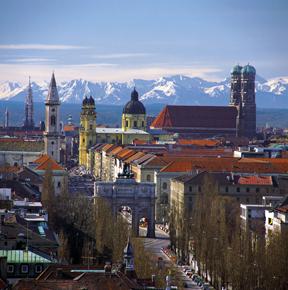
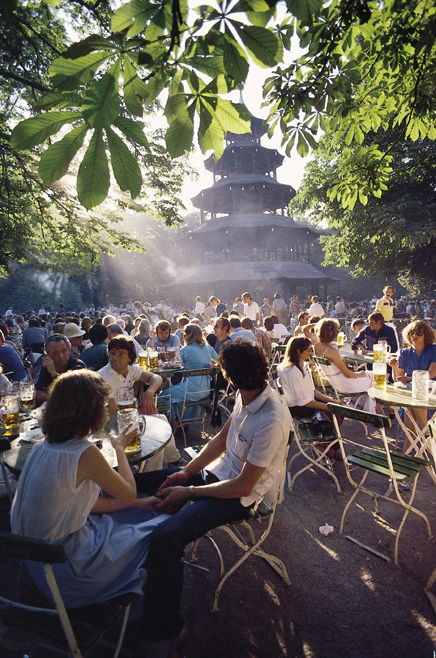
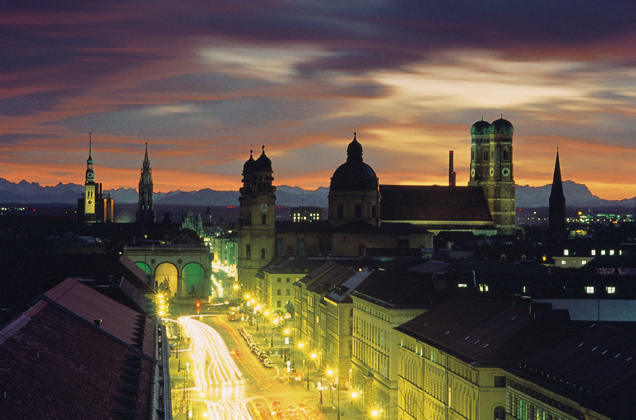
In 2012, Munich and Upper Bavaria are celebrating an old Bavarian tradition. The 200th anniversary of the edict which permitted beer brewers to sell retail quantities of their own beer in their beer cellars from June until September and to serve beer and bread to their guests will be celebrated this year. The city and the breweries of Munich will offer numerous events in local beer gardens.

MUNICH – THE WORLD CITY OF BEER
Big city, high-tech atmosphere mixed with rural charm, art treasures and traditional customs create a very special “Munich mix” which has helped the capital of Bavaria to achieve world renown. But what adds the final touch to the city’s popularity is the drink associated with Munich throughout the world: beer.

BEER GARDEN ETIQUETTE
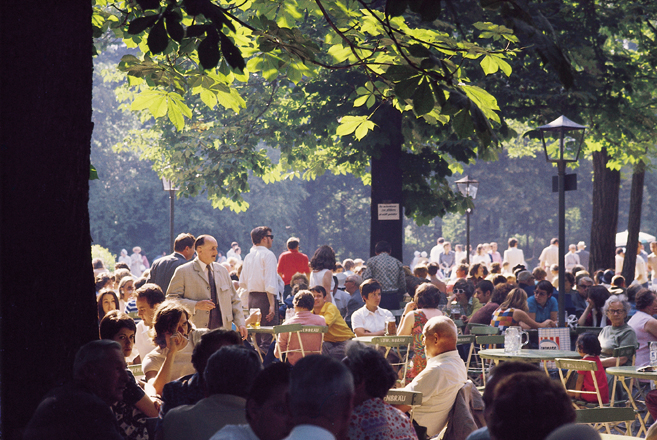
Bavarian beer gardens fulfill an important social function, as they have always been considered to be a popular meeting point for a wide spectrum of the populace. Visitors should not hesitate to take a seat and start up a conversation with their neighbors at the table. Munich’s beer gardens and the beer gardens in Upper Bavaria are the epitome of Bavarian Gemütlichkeit – the uniquely Bavarian atmosphere of good living, warmth and comfort. And it’s been that way for 200 years.

BRING YOUR OWN FOOD
Bring your own food! A special element of visiting a traditional beer garden in Munich is the fact that guests can bring their own food with them. A perfect Brotzeit, as a beer garden picnic is known, might contain the following: Obazda (a delicious and very Bavarian soft cheese dip), Emmental cheese, radishes, freshly-baked pretzels, butter and salt and pepper. A table cloth is also important (preferably a cotton red and white check), as are wooden boards to eat from, a sharp knife, cutlery and napkins.

But those who come unprepared don’t have to miss out on a Bavarian Brotzeit. Most beer gardens offer a range of typical treats, such as Wurstsalat (finely sliced sausage, dressed with vinaigrette and onions), Leberkäse (Bavarian meat loaf) or Steckerlfisch (barbecued whole fish, normally mackerel).

In a Bavarian beer garden, self-service is the rule, unless it is clear that tables have been readied for service. Typical beer garden drinks, such as beer or Radler (a mix of beer and lemonade or lemon soda), are generally only served in one liter steins. Alcohol-free drinks, such as Spezi (a mixture of cola and orange soda) or Apfelschorle (a mixture of apple juice and mineral water), are normally served in half-liters.

The most important rule when toasting with others at your table is to do it as often as possible, so creating a sense of community and giving you the chance to make contact with your new friends. But don’t forget to look your drinking partners in the eye as you touch steins.

The reason horse chestnut trees can be found in every “real” Bavarian beer garden is a matter of history. According to a decree from the 16th century, brewing beer was banned in the summer months, due to the increased danger of fire. Therefore, beer that was brewed in spring for summer was made with a higher alcohol content to help preserve it. In order to keep the beer cool, beer cellars were constructed close to the breweries, but because Munich has a high groundwater level, deep cellars were out of the question, meaning that those that could be built had to be protected from the sun. And that is why trees which provide a lot of shade, such as horse chestnut trees, were planted above them.

BIER UND OKTOBERFEST MUSEUM, BEER TOURS & MORE
Munich is the capital of beer – with six breweries, the Hofbräuhaus and the Oktoberfest. Interested in the story of beer? How German beer effected the monasteries and the purity law? Why is the quality of Munich’s beer so unique? Did you know that Oktoberfest was established as the national festival for the wedding of King Ludwig I with Princess Therese of Saxe-Hildburghausen? Visit the Bier und Oktoberfest Museum for the answer to these questions and a lot more.

For more info, go to www.muenchen.de

Belfast Launches Titanic Museum

Titanic: Built in Belfast, Celebrated in Belfast

Photos courtesy Tourism Ireland

For the millions of RMS Titanic lovers around the world, April 15 is a very significant date. On that day it will be exactly 100 years since the tragic sinking of the ship that changed so many lives and sparked one of the most captivating stories in human history.

On March 31 the world’s largest Titanic visitor attraction, Titanic Belfast, will officially open its doors, thrusting the ship’s physical and spiritual home firmly into the global spotlight.

The striking $152 million piece of modern architecture stands majestically at the head of the very slipways where the Titanic first glided into the waters of Belfast Lough.

Inside, nine walk-and-ride-through exhibition galleries equipped with the latest 3D, CGI and video technology uncover the true Belfast story of the Titanic, from its conception and construction in the Harland & Wolff Shipyard to its famous maiden voyage and subsequent place in history.

A host of experiences are offered—a thrilling ride through the shipyard with the Titanic under construction, or an exploration of the sumptuous luxury and superb craftsmanship of its interiors.

You can be drawn deep into the stories of the passengers, crew and the heroes of the day or re-live the drama of its tragic end and visit its resting place in the North Atlantic in a unique Ocean Exploration Center with live links to contemporary undersea exploration.

For more info, go to Discover Ireland.