Saxony’s Sweets and Treats Take the Cake

Story and photos by Alison Ramsey

There’s something irresistible about German bakeries—the fresh brötchen and Berliners, croissants, and the bold espresso you can order alongside—something that makes it feel okay to stop at various locales throughout the day, even beyond just a morning coffee and pastry. It seems that a thick slice of cake and a mug of strong, steaming coffee any time of day makes a whole lot of sense when you’re in a region with such a rich baking history. Dresden, the capital of Saxony in Germany, and nearby Meissen and Leipzig have much to offer snack lovers when it comes to pastries and cakes. So pour a fresh cup, heat up a bun, and read all about the role Saxony played in the rise of gluten-filled goodness.  
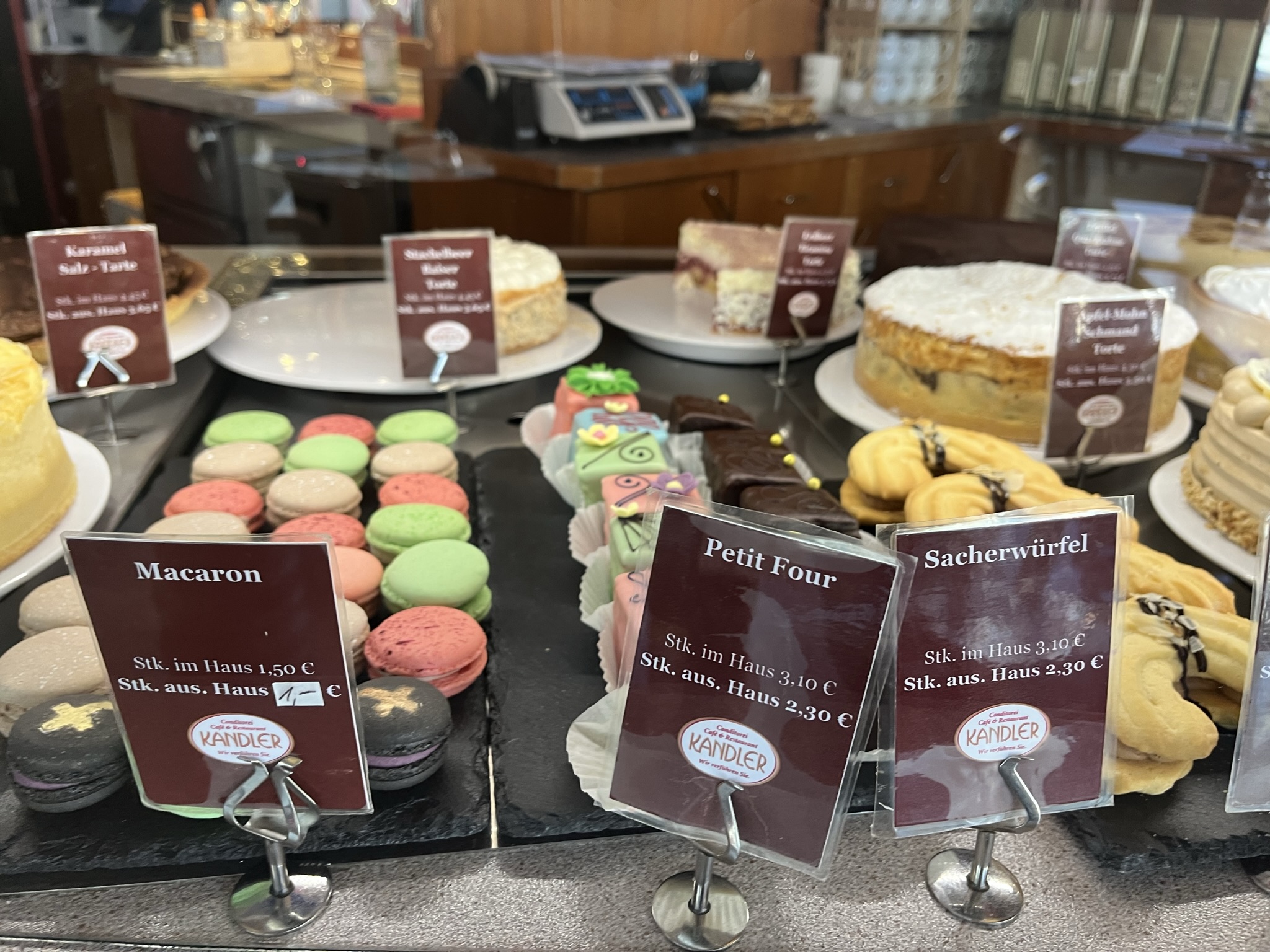
The five locations of Kandler Konditerei in Leipzig are always stocked with sweet temptations.

Russisch Brot
During the late 19th century, Dresden-based master baker Wilhelm Hanke adopted the 1845 St. Petersburg, Russia, recipe for Russisch Brot (Russian bread), which are crunchy glazed cookies made from sugar, egg whites, water, and flavoring, and formed into the shapes of alphabet letters. These are sold under the Dr. Quendt label and remain a popular Christmas treat or a delicious snack to help teach reading. The letters “M” and “W” are too fragile to be stable, so Dr. Hartmut Quendt ensured bags contain mirrored 1’s that snackers can use to create their own “M” and “W” shapes. It’s clear permission to play with your food!

Stollen
Dresden is also the birthplace of the authentic stollen Christmas cake—the Dresdner Christstollen. When stollen was first baked in the 1400’s, under the supervision of the church council, the bread was not allowed to contain butter or milk during Advent, so it was a dry and bland pastry consisting of flour, yeast, oil, and water. Ernst of Saxony and his brother Albrecht appealed to the Pope and asked that the dairy ban be lifted, so they could replace the oil with butter, as butter was cheaper than oil at the time. The appeal was denied, but finally, five popes later, Pope Innocent VIII sent Dresden the famous 1491 “Butter Letter,” in which he granted permission for dairy ingredients to be used in the stollen—although the Dresden bakers must, in return, pay a fine to be used toward the building of churches.

In 1730, Augustus the Strong, a stollen lover, commissioned a group of 100 Dresden bakers to bake an almost 4,000-pound loaf, which was brought to the king’s table using eight horses. A giant oven was built especially for this occasion, and an oversized knife was designed specifically for the event. This is the basis for the annual Dresdner Stollenfest (or “Striezelmarkt”), which takes place in Dresden the Saturday before the second Sunday in Advent. The festival is a highlight of the pre-Christmas season and celebrates the stollen baking tradition, featuring a colorful parade and the sale of varieties of stollen.

A huge stollen is still made annually and divided into smaller pieces on a specially shaped stollen cutting board—using a 26-pound replica of the original baroque knife from the Residenzschloss (Royal Palace) Court Silver Collection of Augustus the Strong—with cake portions sold to raise money for charity. The Stollenfest knife design features a swooping stainless-steel blade and Augustus the Strong’s coat of arms and rose tendril.

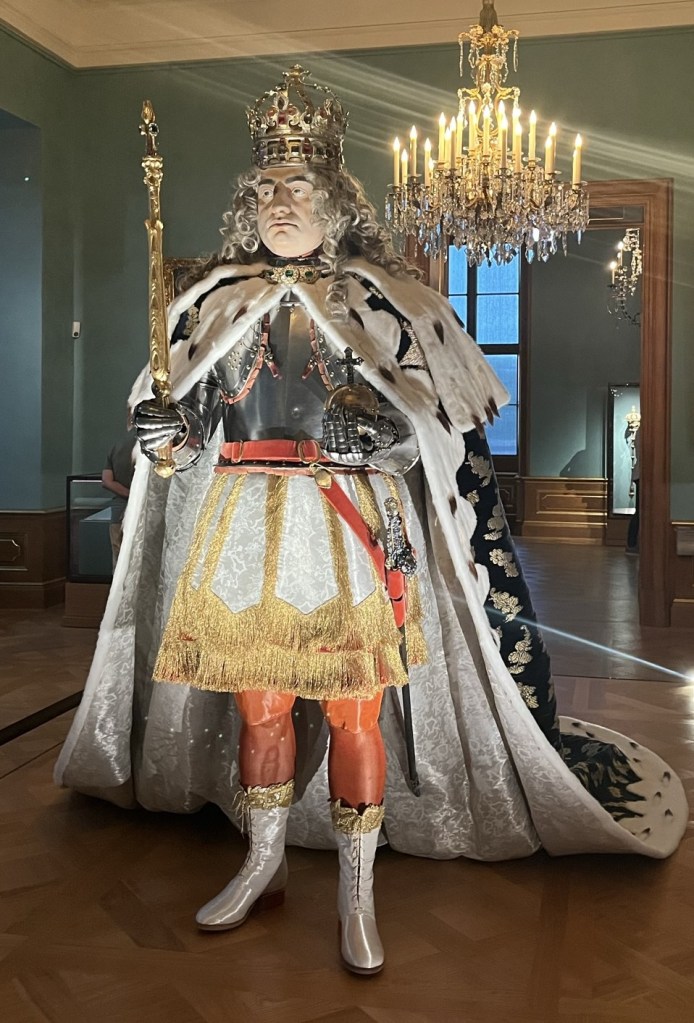
Left: A Dresden bakery displays its stollen seal. Right: This life-sized figure of Augustus the Strong is displayed in the Dresden Residenzschloss.

Stollen has its own protected name and registered trademark, and the recipe needs to follow certain guidelines to earn the golden, oval “stollen seal.” The cake only passes the test for high quality and validity if it contains no margarine and no artificial flavors or preservatives. The Dresdner Stollen Association requires that each cake contain butter, rum-soaked raisins, candied orange peels and lemon peels, and sweet and bitter almonds to receive the seal. Outside of these requirements, the approximately 110 Dresden bakeries that produce this sweet each use their own secret spice mixture, passed down through generations, which results in varied and distinctive flavors from bakery to bakery. Each stollen is labeled with a 6-digit seal number, to identify and track the bakery of origin. Also identifiable by the European Union-protected geographical indication, true Dresdner Christstollen is marked with a blue and yellow Geschϋtzte Geografische Angabe (“protected geographical indication”) sticker. Dresdner Christstollen can only be produced within Dresden itself or within specific boundaries surrounding the capital. This cake is best enjoyed by removing slices from the middle and pushing together the ends, eating the cake from the center outward. It is seen as traditional Dresden “finger food,” with no need to use a fork.

Eierschecke
For something slightly sweeter, the Dresdner Eierschecke is a popular pastry choice. It’s a 3-layer confection consisting of a cake base topped with a custard-like quark cheesecake center, and a layer of sweet vanilla egg white on top, dusted with powdered sugar. Only found in Saxony and neighboring regions, this treat is often served with coffee or tea, and makes its way into celebratory menus for birthdays, weddings, and holidays. Some bakeries add chocolate, dried fruit, and sliced nuts, but the original recipe is simply the three-layered stack of varied texture.
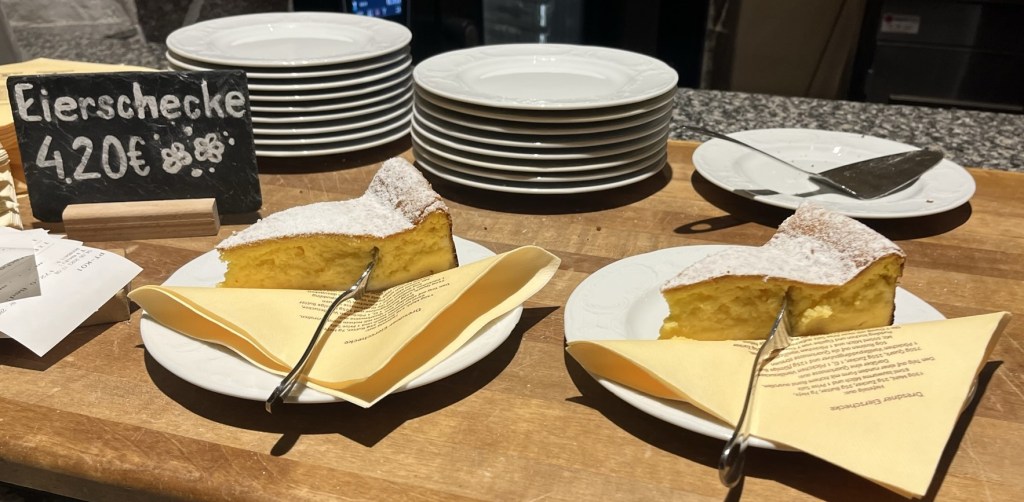
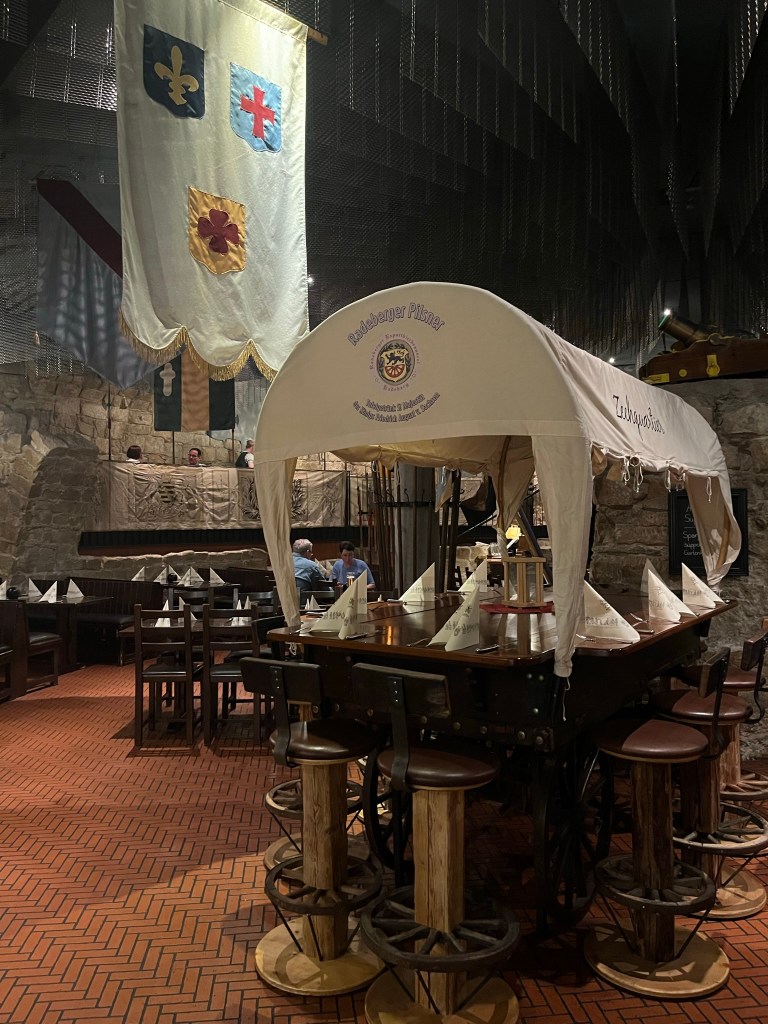
Eierschecke and other traditional Saxon specialties are served at the Pulverturm.

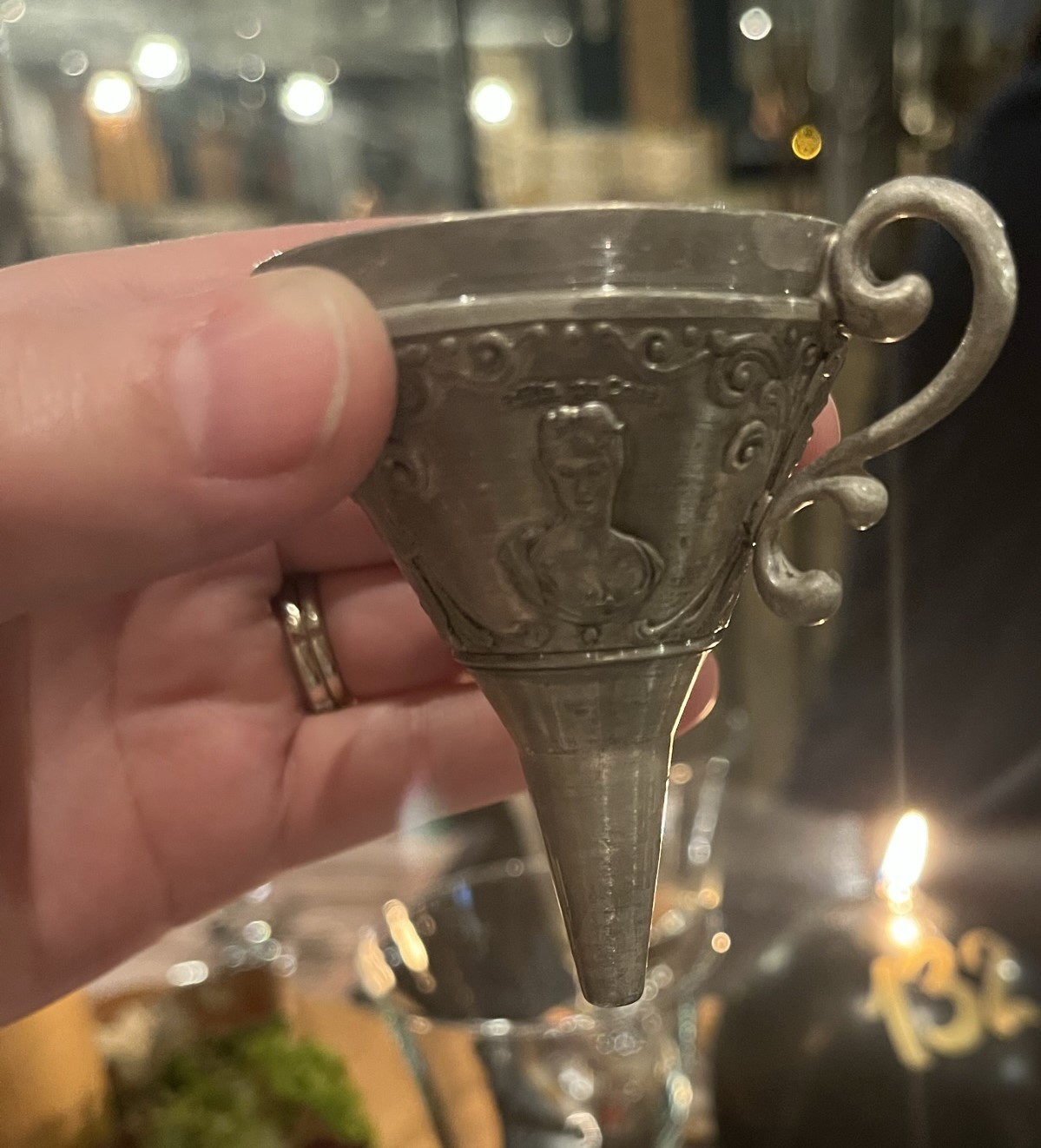
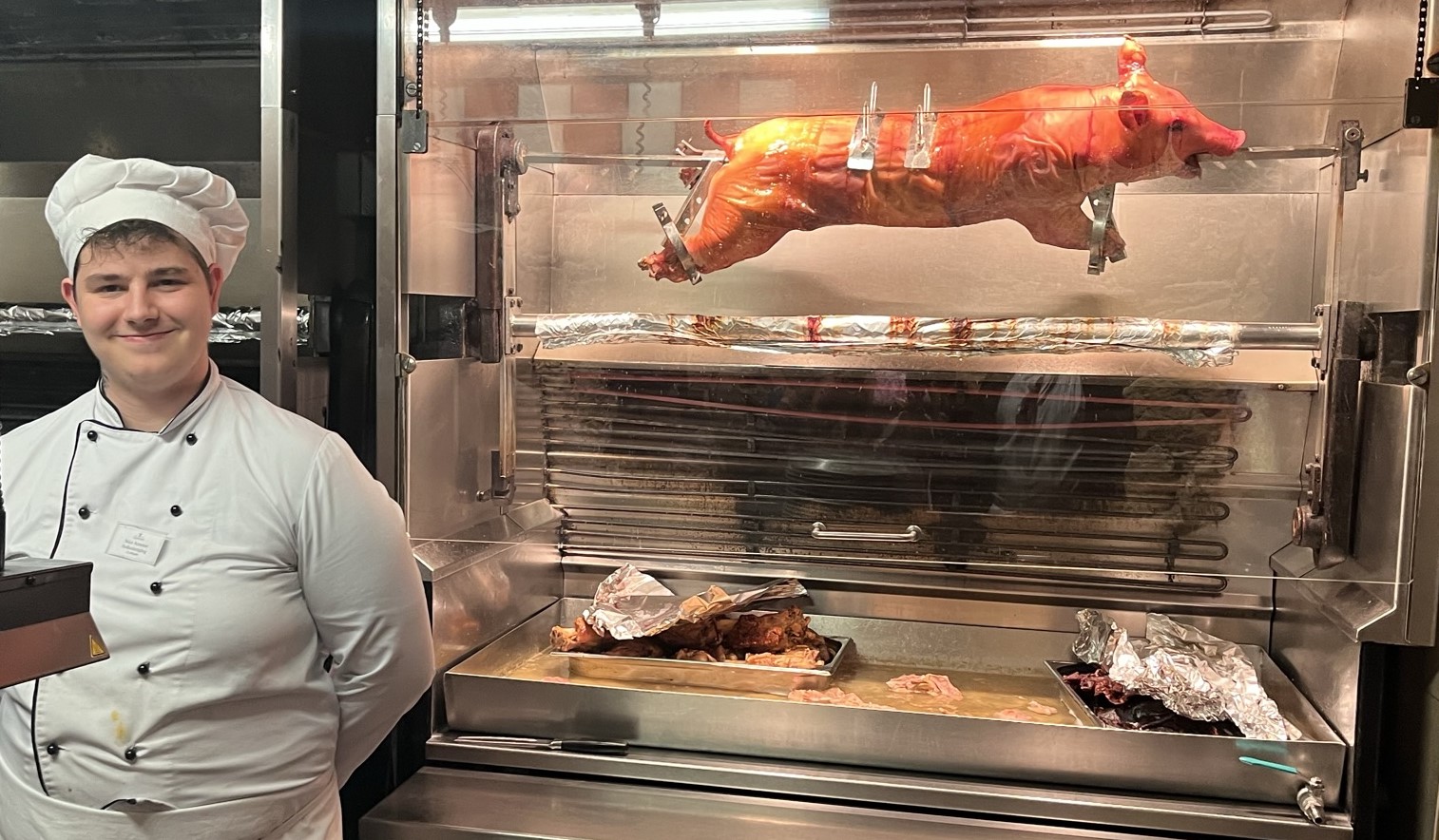
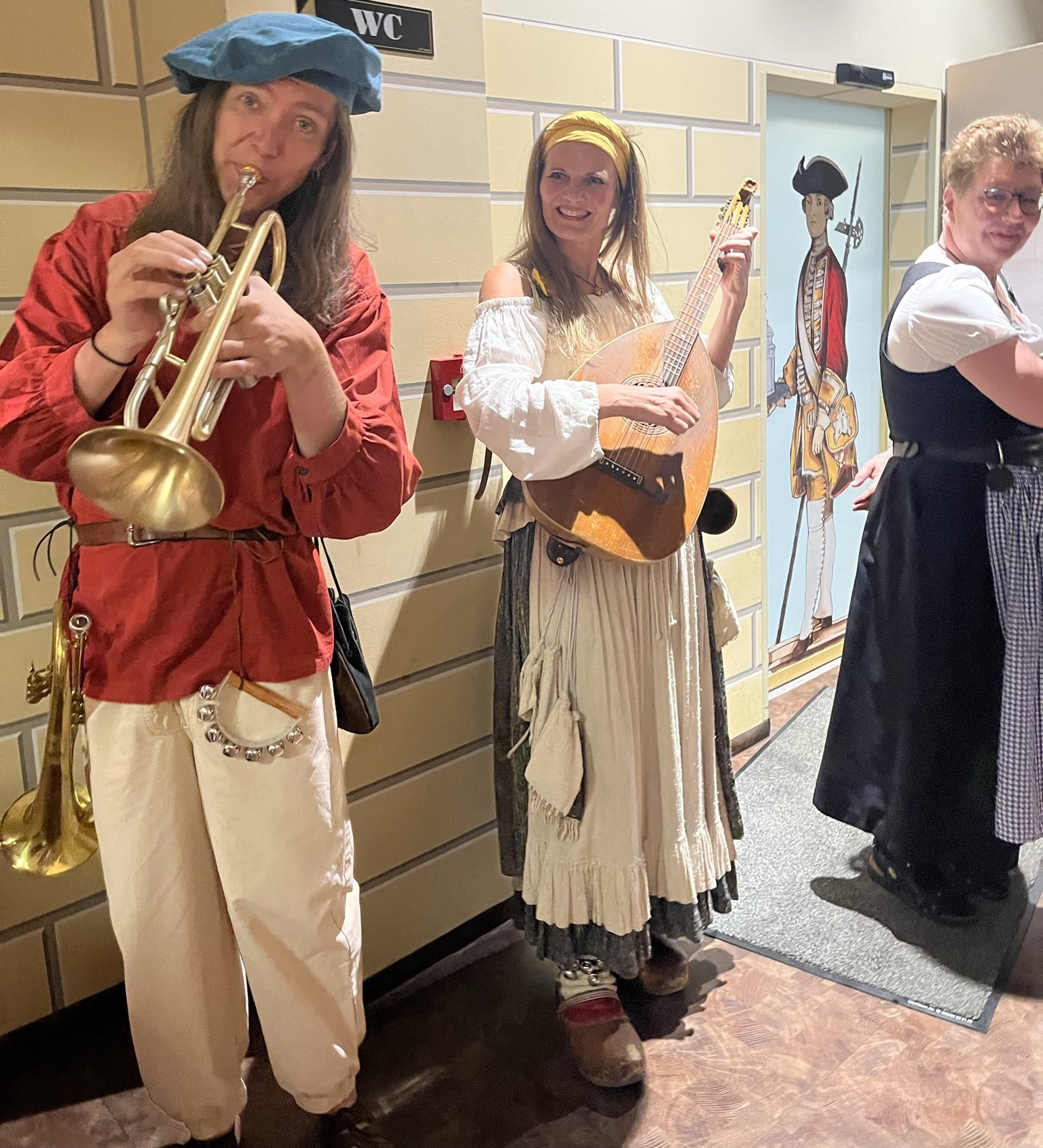
Eierschecke is on the dessert menu at the Pulverturm restaurant next to the Frauenkirche. A historic vaulted powder tower containing portions of the original walls, Pulverturm delights guests with Saxon specialties, homecooked suckling pig, and rousing tableside performances by lively, costumed, character musicians. Be sure to try your hand at funnel-drinking here—a practice that stems from Augustus the Strong’s love of Saxon wines but his court’s dislike for washing numerous wine glasses. The court created a special funnel fit to Augustus’ mouth measurements, so servants could pour the wine directly through the funnel into his open mouth. At the Pulverturm, a variation on this method involves drinking herbed liquor from tiny funnels. Named “Cosel’s Tears,” the drink’s herbs were said to grow from the tears of Augustus’ former mistress, the Countess of Cosel, whom he banished to Stolpen Castle for more than 40 years because of her interfering interest in politics. After a satisfying Saxon meal, have a sugar-dusted slice of Eierschecke and cup of espresso to complete the full Pulverturm experience.
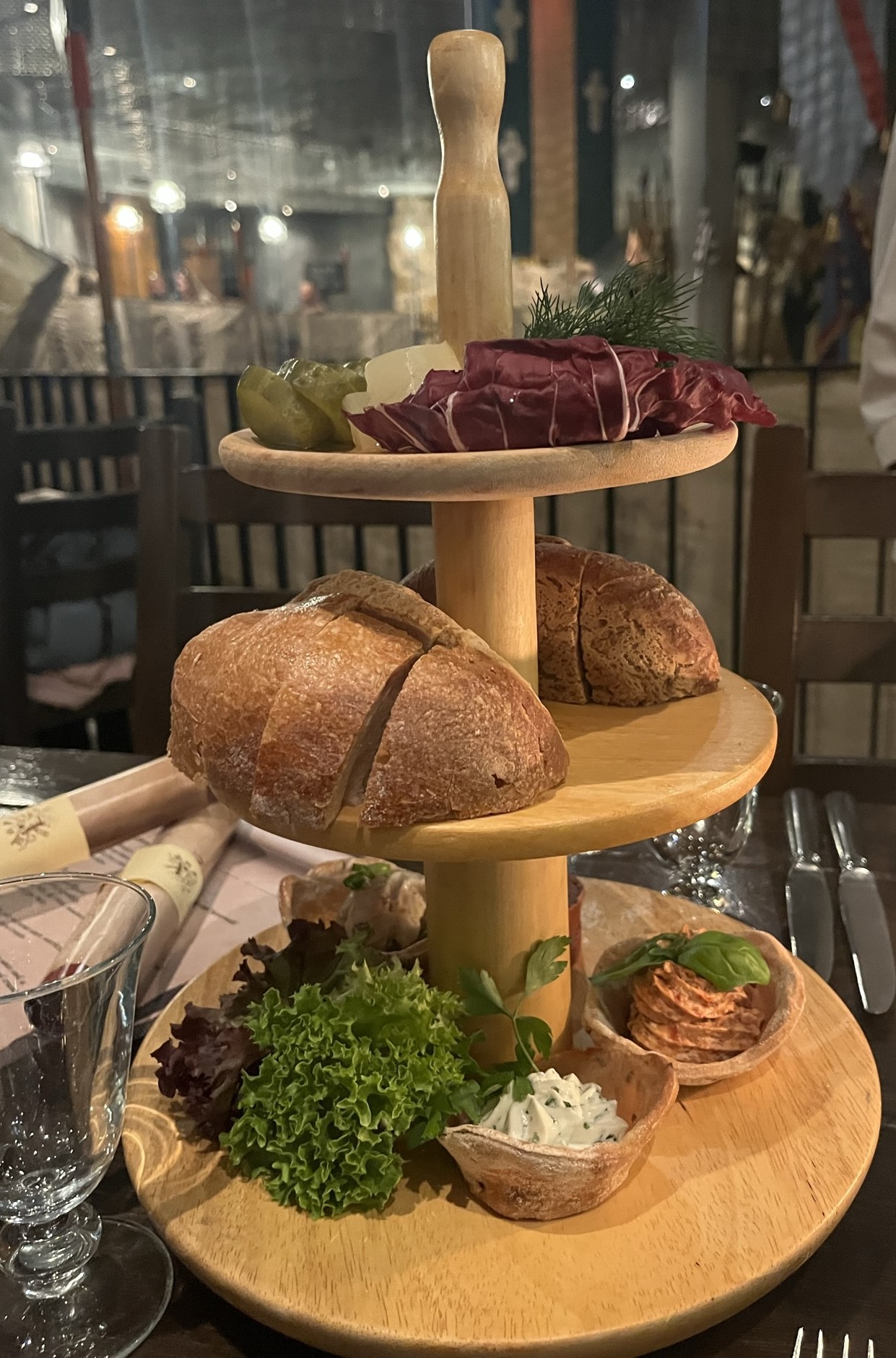
Pulverturm restaurant in Dresden is a full-service, medieval-themed entertainment and dining experience.

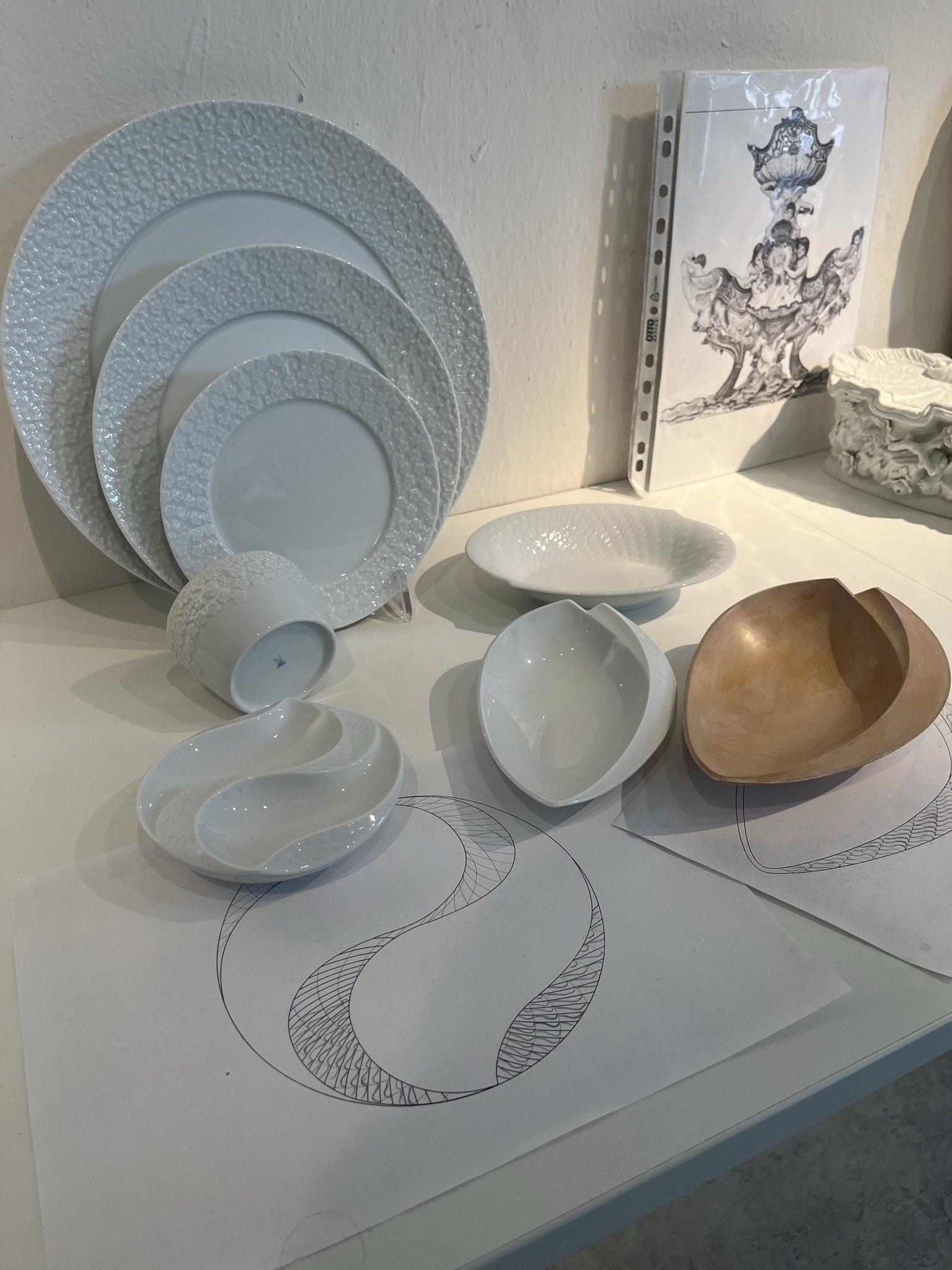
To make your own Eierschecke, try the recipe provided by Meissen porcelain manufactory underglaze painter Marlies Moser in the cookbook Cooking With Meissen. A 30-minute drive from Dresden, the Meissen manufactory creates fine porcelain vessels on which to serve tempting treats. At this company that labels its pieces with the forgery-proof “Crossed Swords” trademark, Moser worked for 40 years in production, painting underglaze onto unfired, porous porcelain—a skill that requires much training, a high level of precision, and years of experience—because the paint immediately penetrates and spreads, making later touchups impossible. The work of an underglaze painter is especially important for iconic Meissen designs like the 1731-created “Blue Onion,” whose luminous, metal oxide cobalt blue color only releases upon final firing. Moser now works in the demonstration workshop at the House of Meissen, and contributed her “Leutewitz Eierschecke” recipe for the company cookbook. Imagine a piece of this cake presented on a beautiful artisan-decorated Meissen porcelain dish!

The Meissen company cookbook features 24 recipes from appetizers to desserts. Saxon potato soup, Saxon meatballs, beef sauerbraten, quark dumplings with plum compote, and an inverted apple tart are among the list, and each submission includes a biography of the Meissen employee who contributed it. This beautiful, full-color hardbound book shows the food plated on fine porcelain tableware and includes sections about dining etiquette and the history of the craft.

Meissner Fummel
Eighteenth century legend tells that Augustus the Strong, who first commissioned the now-famous Meissen porcelain, used to send couriers back and forth between Meissen and Dresden with factory status updates. The town of Meissen is known for its excellent wine production (try the romantic, antique-filled Vincenz Richter wine restaurant!) and the couriers would often arrive back at the Dresden court intoxicated. Augustus’ solution was to instruct Meissen bakers to invent a pastry so fragile that it could remain intact only if delivered by a sober courier. The result was the hollow, brittle, extremely delicate Meissner Fummel cake, which had to be safely delivered to the Saxon Elector along with the progress reports about the porcelain. Made only with simple ingredients, Fummel is essentially a shell of flaky bread sprinkled with powdered sugar. Zieger Konditerei in Meissen produces this balloon-like baked good, which has been a protected geographical indication since 2000 and can only be manufactured in Meissen. The Fummel is often given to newly married couples in Meissen as a symbol of love’s fragility, and small gifts or cards are sometimes tucked into the center.
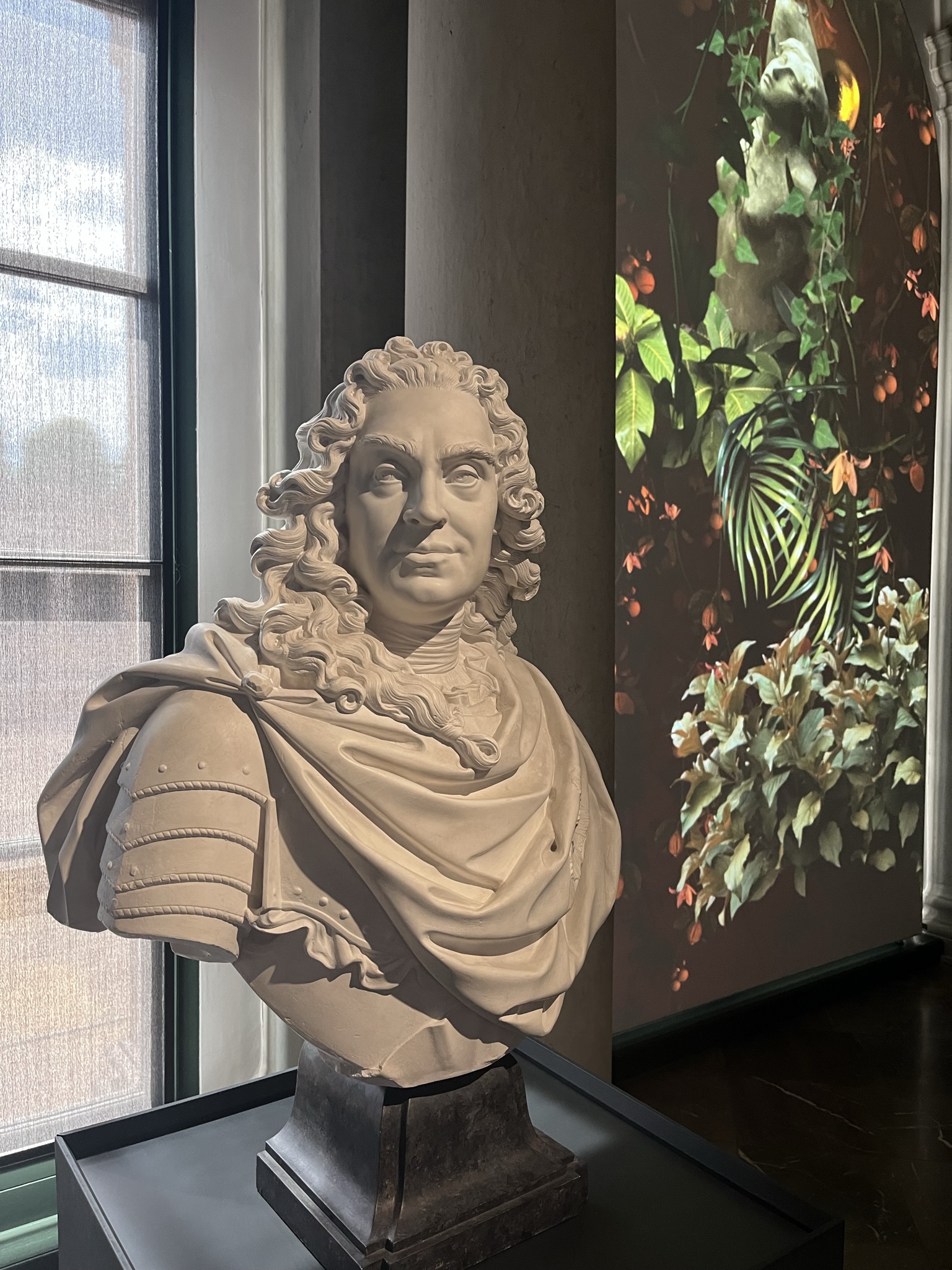
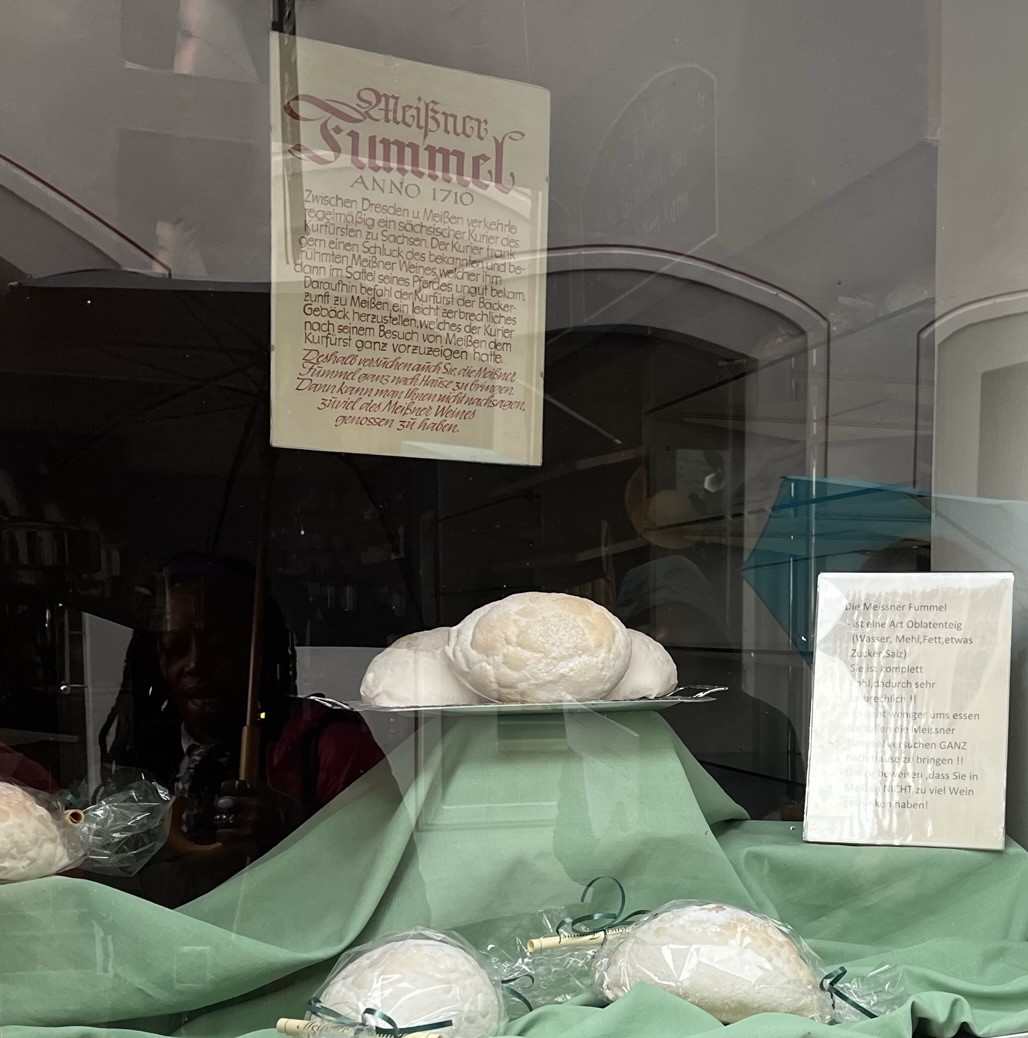
Left: A bust of Augustus the Strong appears in the interactive Zwinger Xperience, a multi-media immersion into the story of the baroque Zwinger building and festival area commissioned by Augustus. Right: This street window in Meissen displays loaves of Fummel along with a poster telling the humorous German story of why the bread recipe was initially invented.

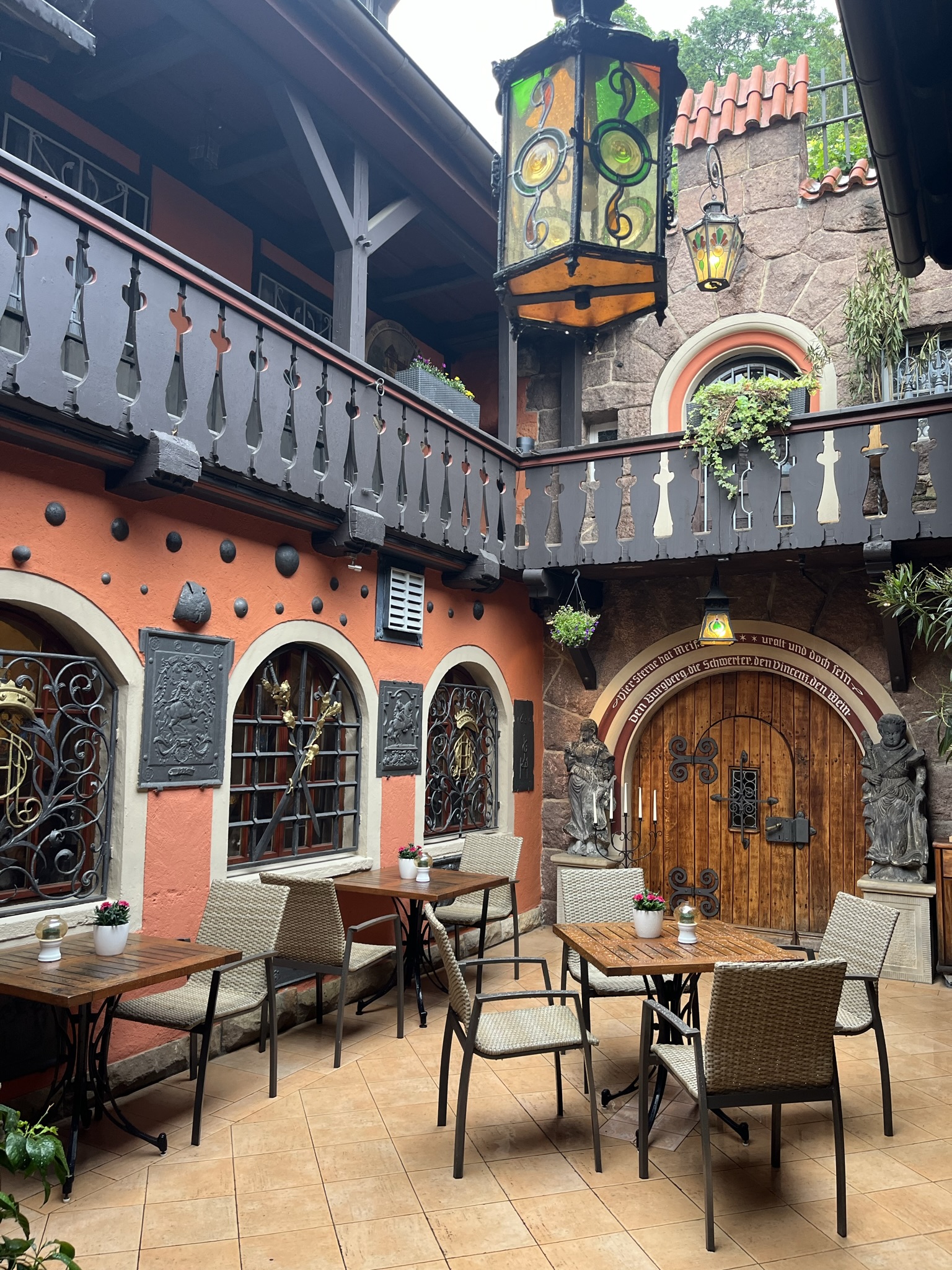
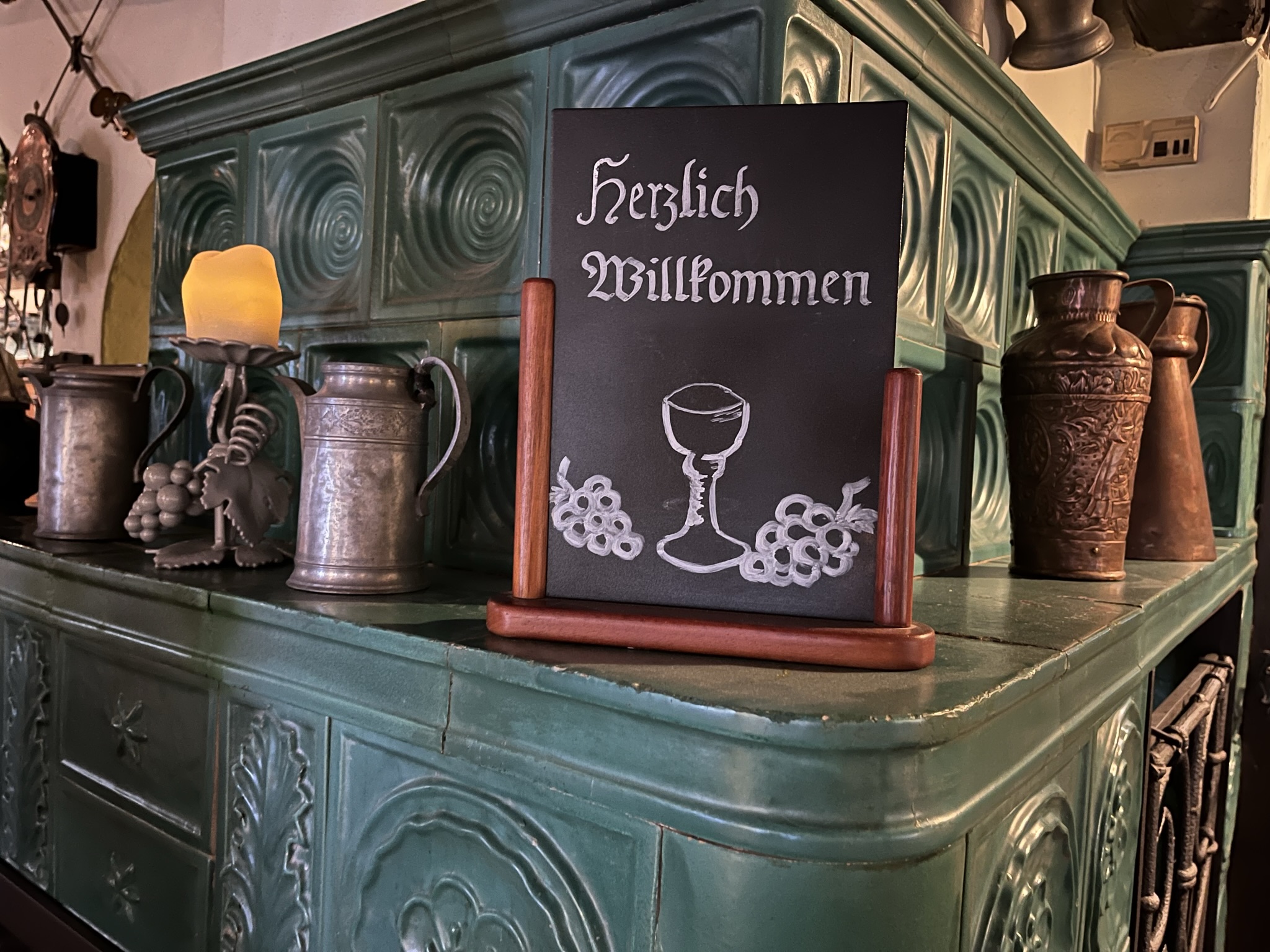
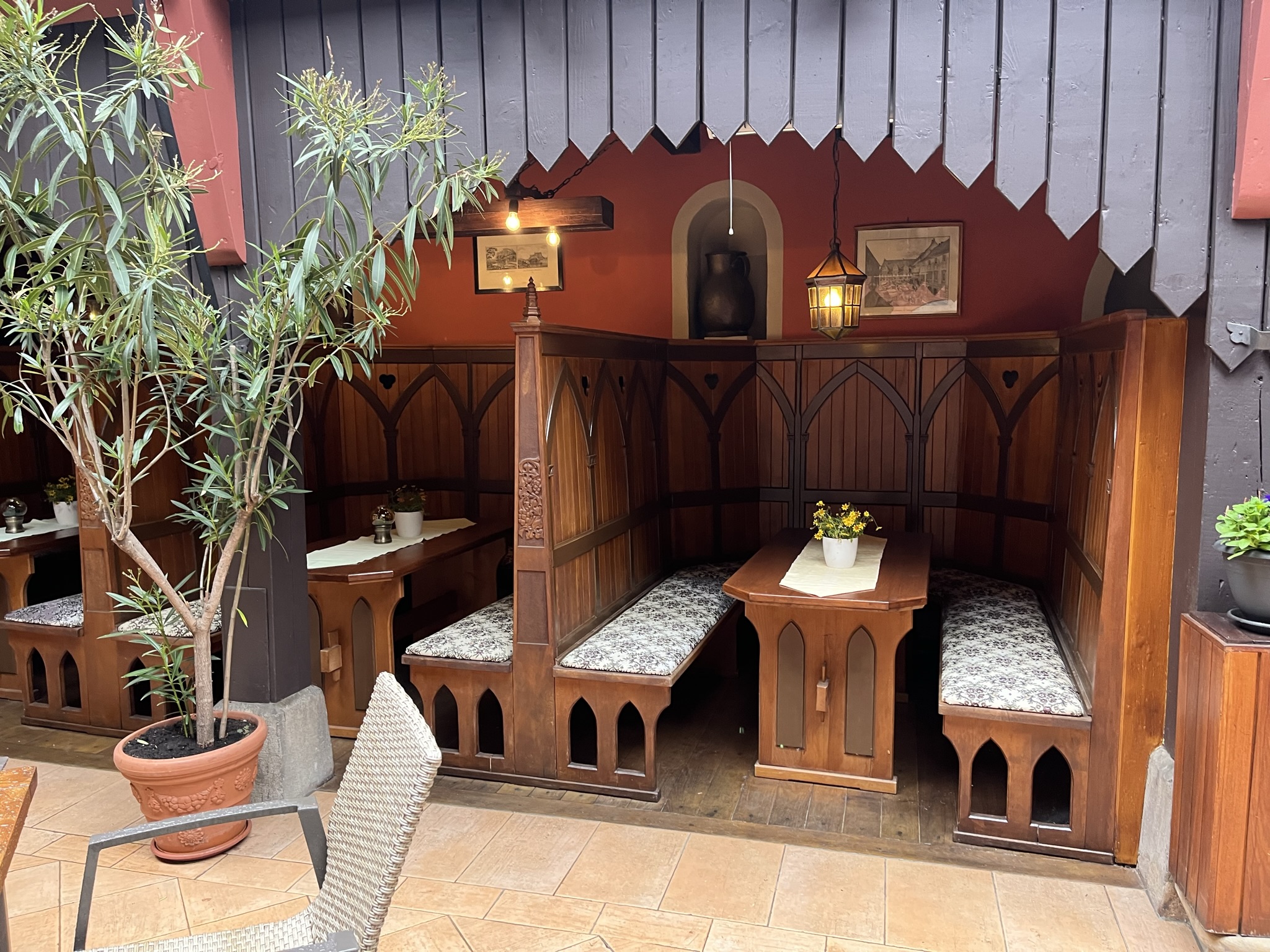
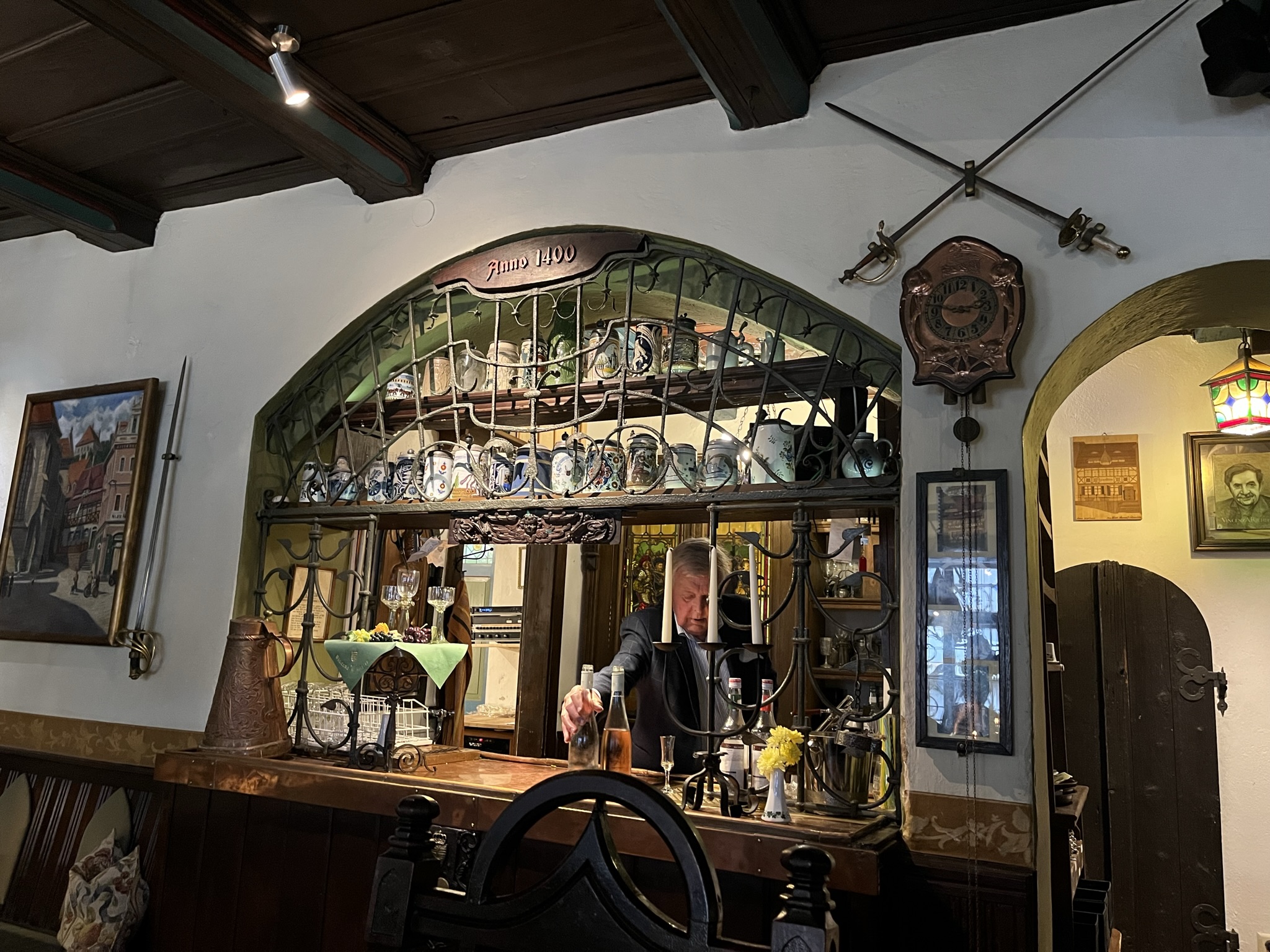
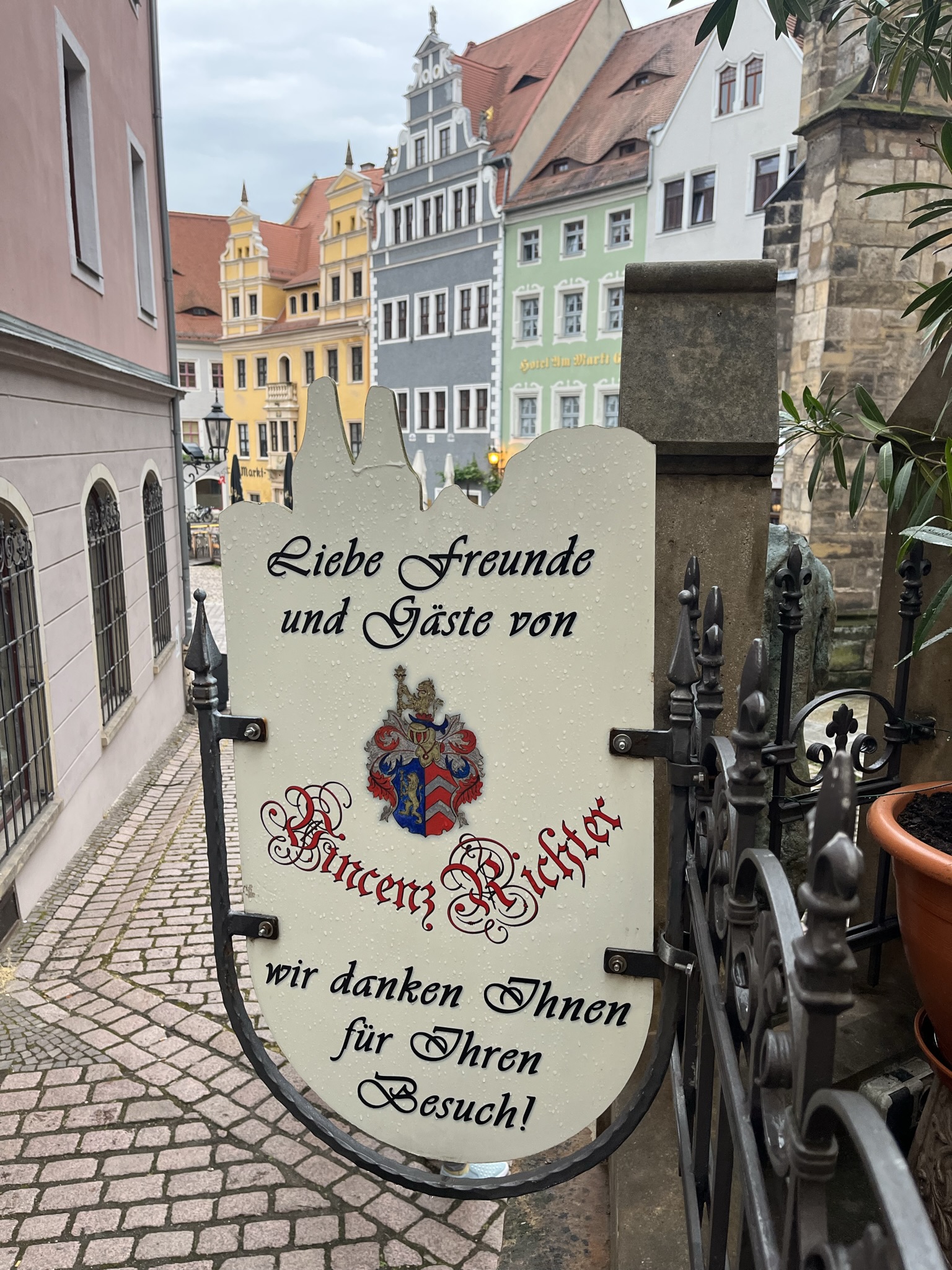
You’ll be sure to fumble that Fummel after a few glasses of wine here! Vincenz Richter wine restaurant in Meissen celebrates its 150th anniversary this year. The 500-year-old building that houses hundreds of antiques and historical items is known as one of Germany’s most romantic places. The family winery produces its delicious wine varietals on the steep slopes of Meissen’s Elbe River valley.

Leipziger Lerche
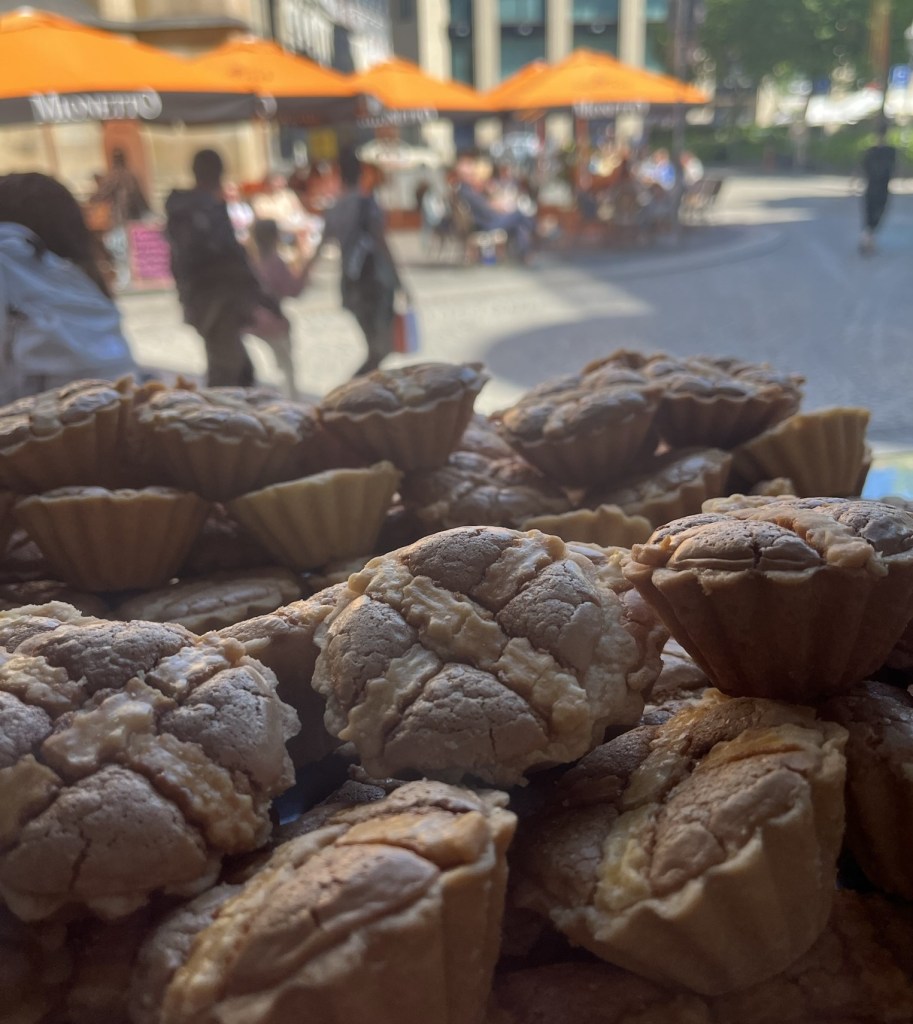
The Leipziger Lerche (“Leipzig Lark”) dessert was born as part of the animal protection movement in the 19th century. Songbird larks used to be hunted and baked with herbs and eggs into a pastry crust and then served as a hearty delicacy. This culinary luxury was enjoyed in Leipzig and beyond, and many bird carcasses were bound in twine and shipped from Saxony to various countries around the continent for others to cook. The bird-baking business boomed, and the bird population declined. In 1876, after overhunting and a severe storm had killed off many of these birds, King Albert of Saxony banned lark trapping. To combat the suffering of this Leipzig business, some clever confectionaries in Leipzig then created a marzipan-stuffed shortcrust tart as a substitute for the traditional meat quiche. Now served in a small, fluted muffin cup, like a miniature pie, this baked good features two strips of dough crossed over the top to represent the trussing used to tie up stuffed larks. Beneath the ground almond and egg white mixture of the tartlet, there is often a cherry or dollop of jam to symbolize the heart of the lark. Kandler Konditerei in Leipzig is a popular source for “Kandler Lerche” pastries of this style, baked fresh daily and as naturally and preservative-free as possible, with numerous packaged options sold for a sweet, Saxony-specific souvenir.

Save a songbird and let Kandler Konditerei tempt you with a Leipziger Lerche.

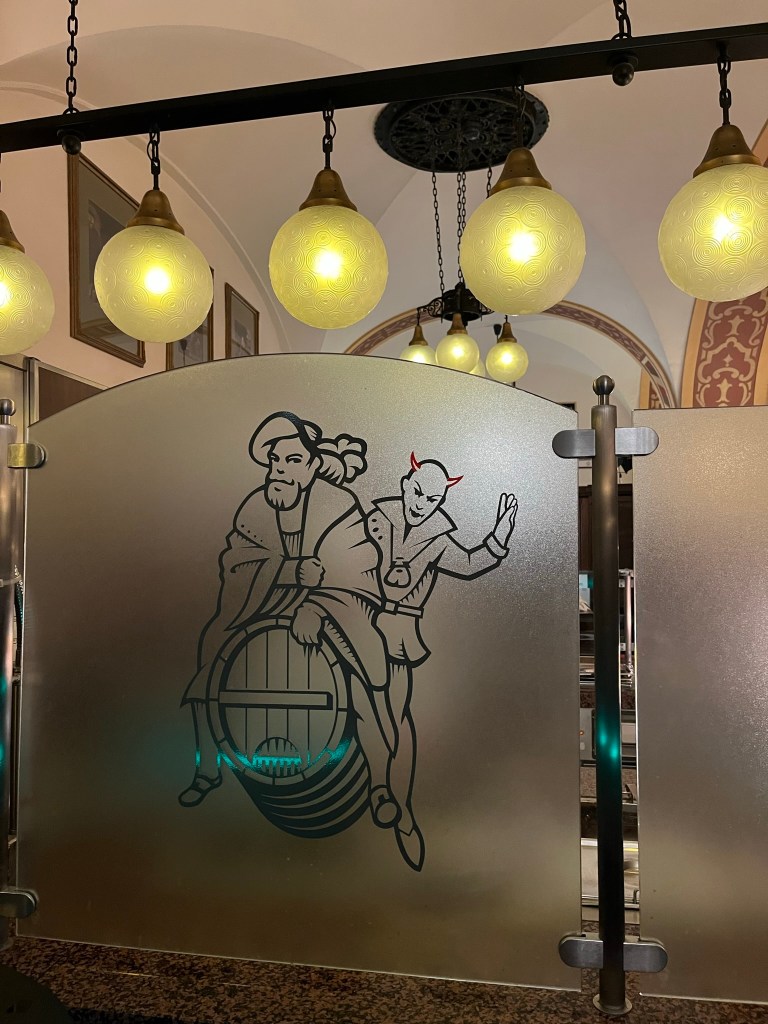
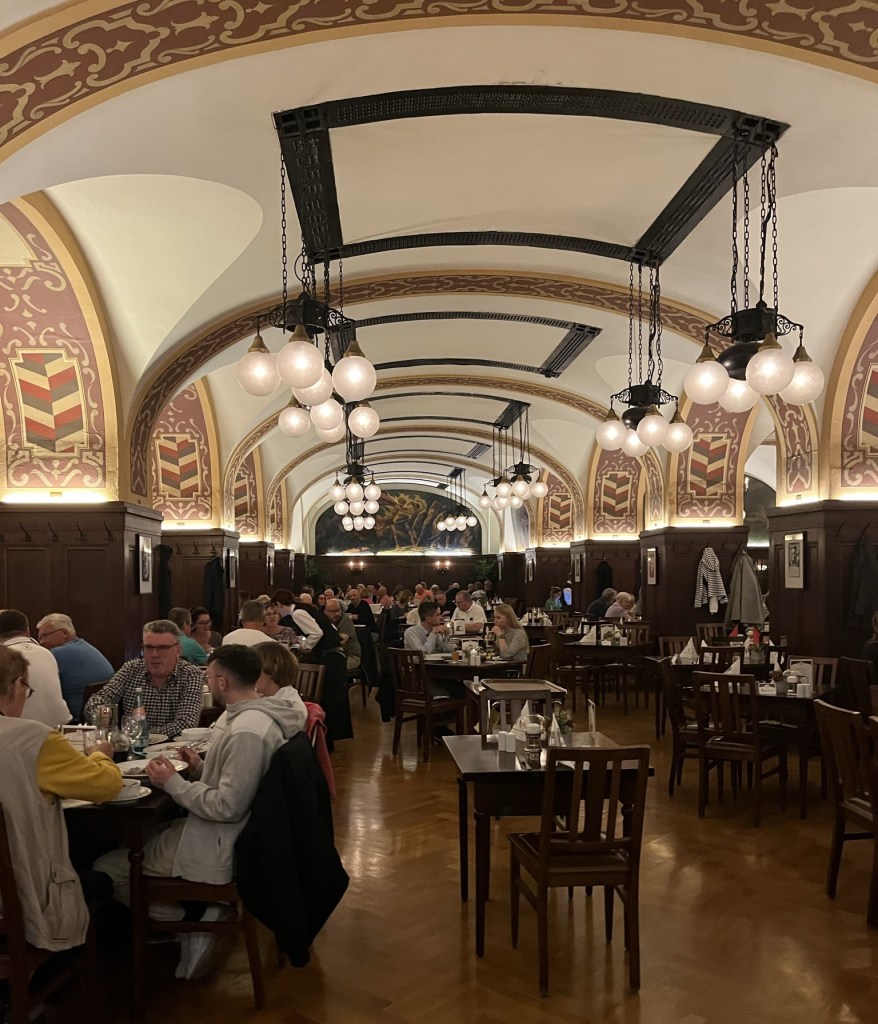
For a tasty variation of Leipziger Lerche, try the ice cream version served at Auerbachs Keller in Leipzig. This bundt-cake-shaped mound of ice cream is seated on a petaled crust and topped with a dark chocolate medallion stamped with “Auerbachs Keller Leipzig” and an image of Dr. Faust riding astride a wine barrel. Goethe and Martin Luther were regular guests of Auerbachs Keller, and it’s a treat to dine in the historic basement rooms of the Mädler Passage where they sat and to eat traditional Saxonian cuisine, including this new take on a famous regional dessert.
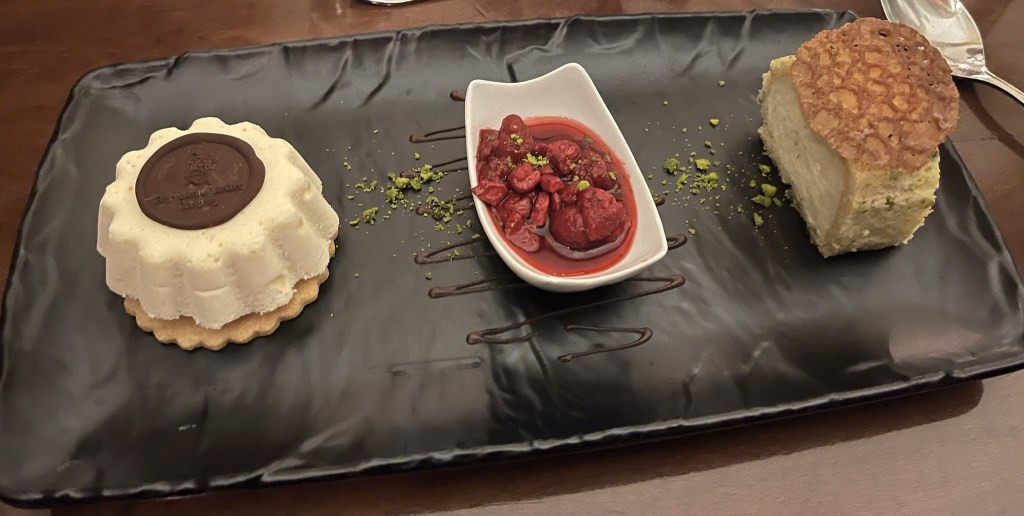
Auerbachs Keller Leipzig serves a special iced Leipziger Lerche with curd-cheese-lime-mousse and raspberry sauce.
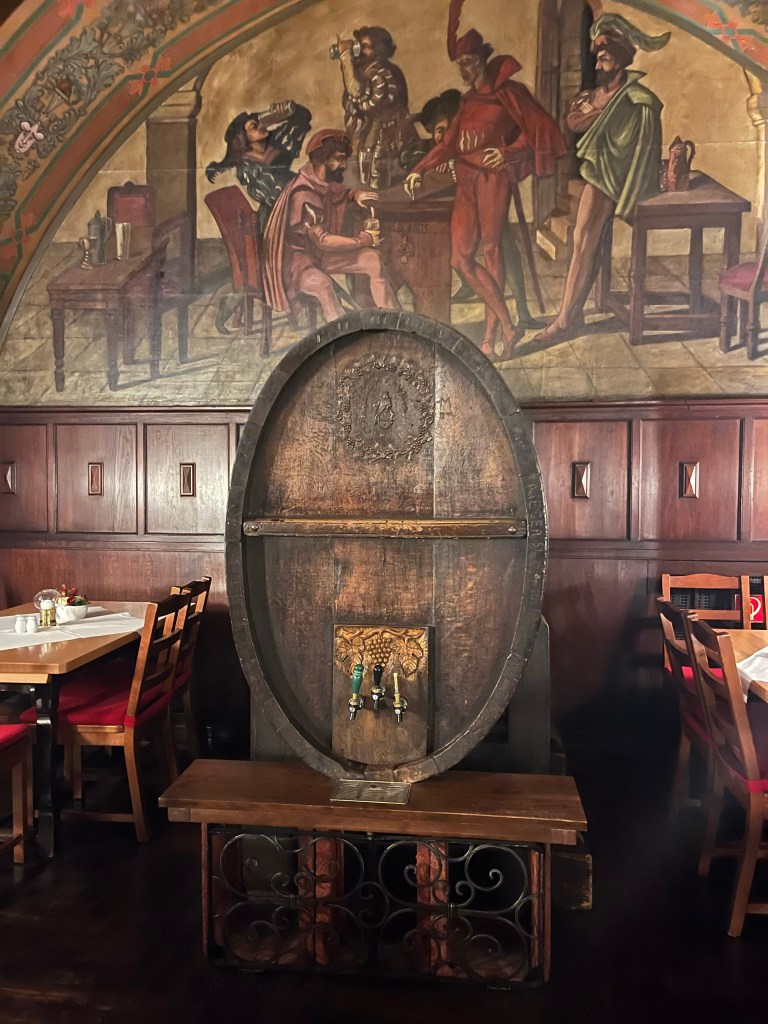
Auerbachs Keller in the Mädler Passage is the most famous and second oldest restaurant in Leipzig, and was one of the most popular places for wine in the 16th century.

Visiting Saxony?
Take an audio guided tour through the Meissen Manufactory and visit the Meissen Porcelain Foundation Museum. Enjoy coffee and delicacies at the Café & Restaurant Meissen, where your snacks are served on fine porcelain and you can sample the specially created Meissen cake featuring the crossed swords trademark. Register for a porcelain casting class or creative workshop and make your own Meissen masterpiece—available for adults and kids alike—or personalize a Meissen coffee mug and have your unique creation safely shipped directly to your home. Sign up your kids for an etiquette class to learn the art of fine dining or join a themed specialty meal (brunch with organ recital, Advent dinner, Christmas dinner, or Ladies Crime Night dinner). The one-hour “Women at Meissen” social history class highlights the significant role women have played in the manufactory’s workforce since the 18th century. The “Tea, Coffee, and Chocolate” event is offered once a month and teaches participants about the three “pleasure drinks” that were popular luxury goods during the Baroque period and how Meissen porcelain played a role in providing many varieties of elegant drinkware.

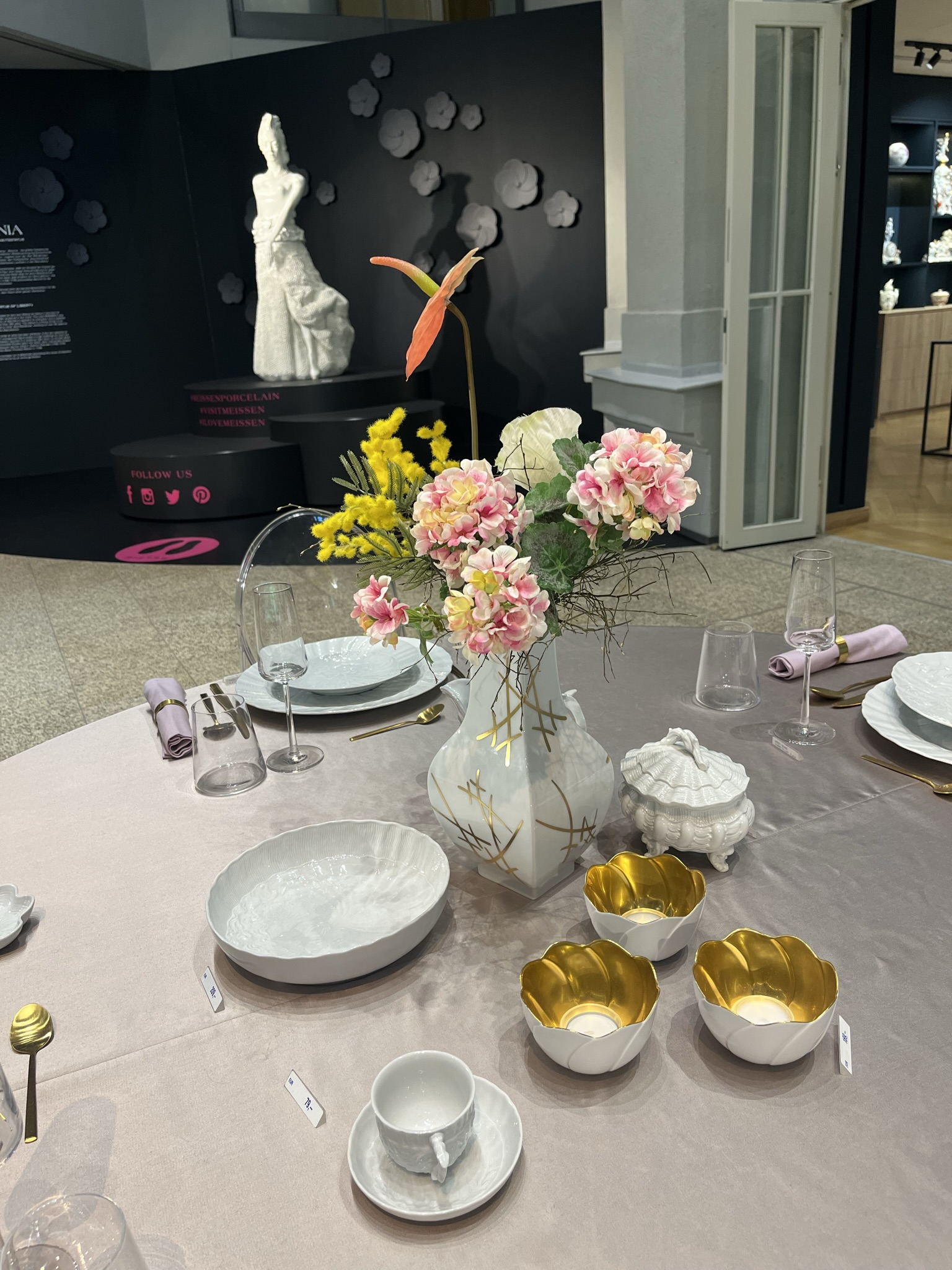
Meissen porcelain tableware makes every cake look better. Sweets and special place settings are a suggested Saxony souvenir.
Munich Day Trips: Castles and Palaces of Bavaria

Story and photos by Megan Kudla

The biggest cities in Europe are oftentimes the most convenient to fly into and to build travel itineraries around. There’s a host of information to find when researching your trip, including hotels, sites, and tours. Munich, Germany, is one of these key places that tourists look to book for a few days when taking a European journey. And it’s a great city for history and art buffs, as some of the main sites include royal residences. 

There are plenty of palaces to visit by walking or taking a short train ride from Munich’s Marienplatz (the main square); however, a trip to the countryside to see castles built into the Bavarian Alps can also be a perfect way to break up your time spent in the big city and to learn about the history of the larger area. We’ll start with the palaces most easily reached from the Munich city center, and then move to those that are probably best to drive to.


By Foot or Train

Residenz München

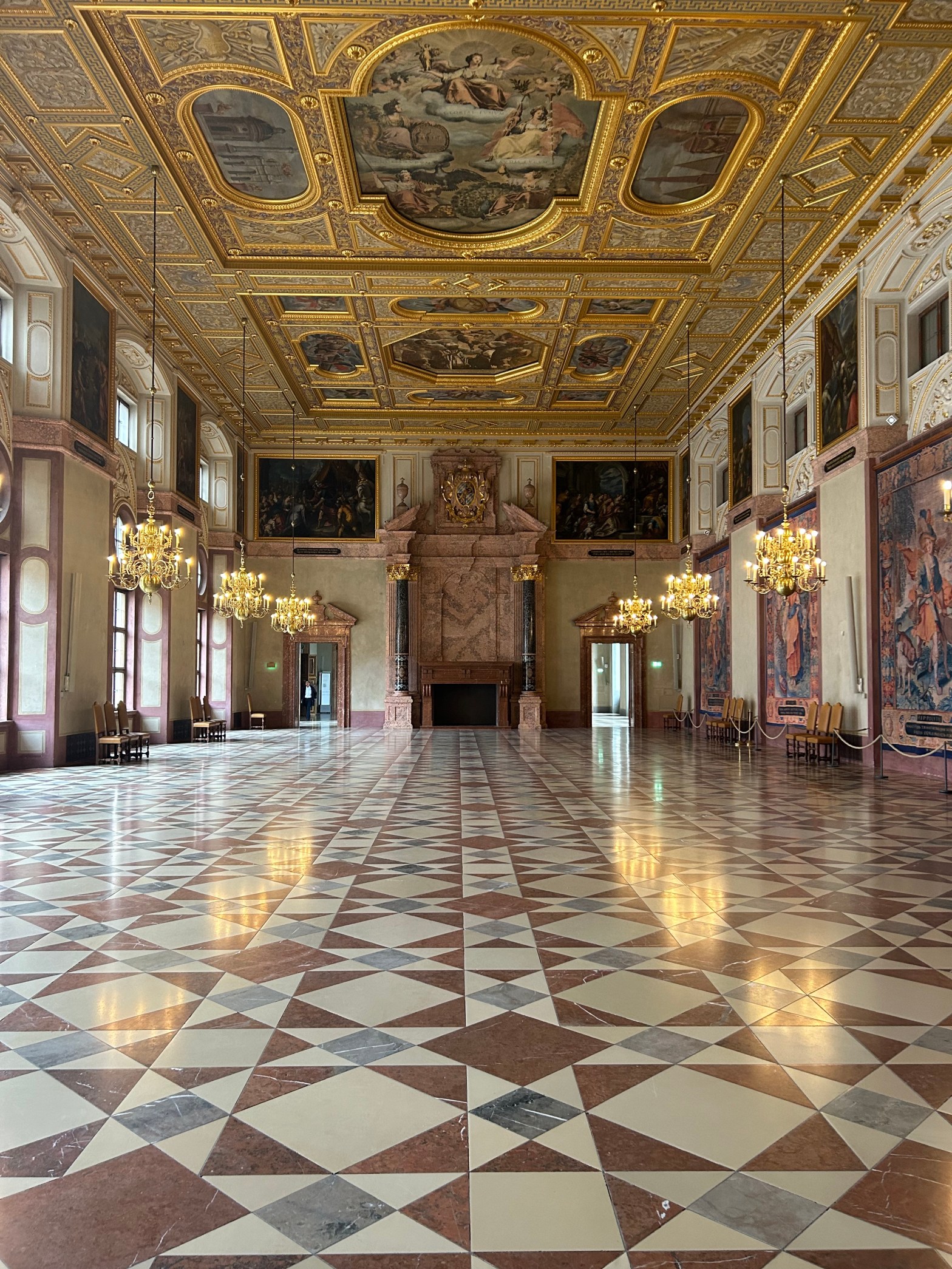
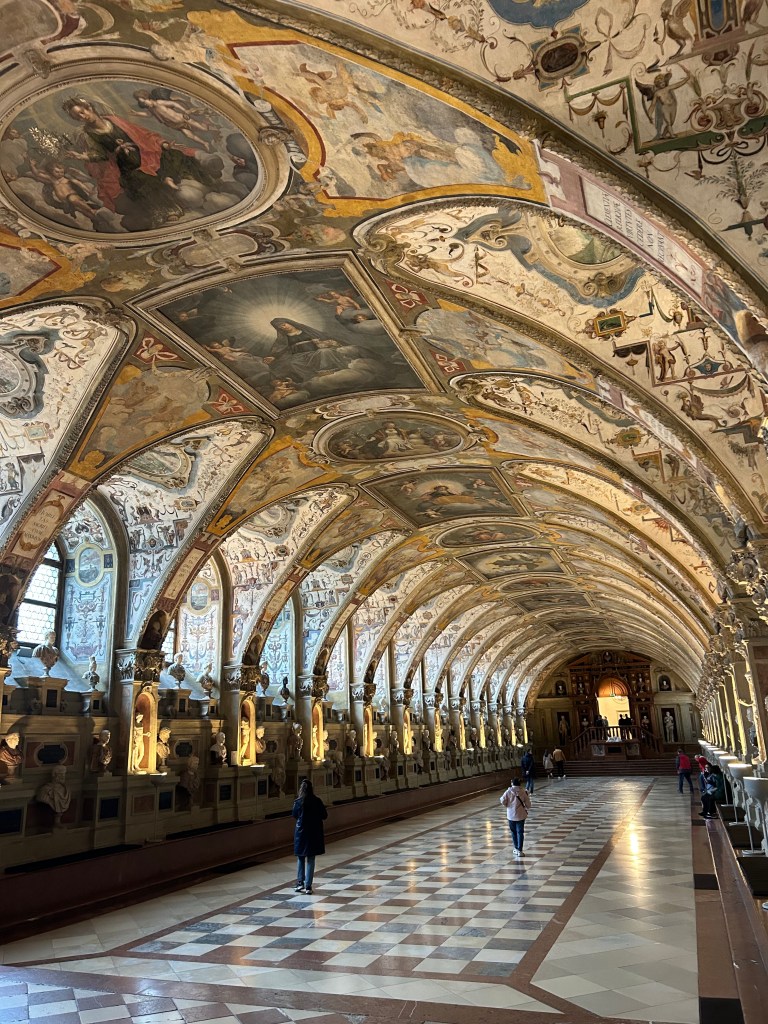
From 1508 to 1918, the Residenz München was the official home of the Wittelsbach family dynasty: the dukes, electors, and kings of Bavaria. Located in Old Town and just a 5-minute walk from Marienplatz, you’ll find that it’s one of the most easily accessible sites if you’re staying in the historic center of Munich. 

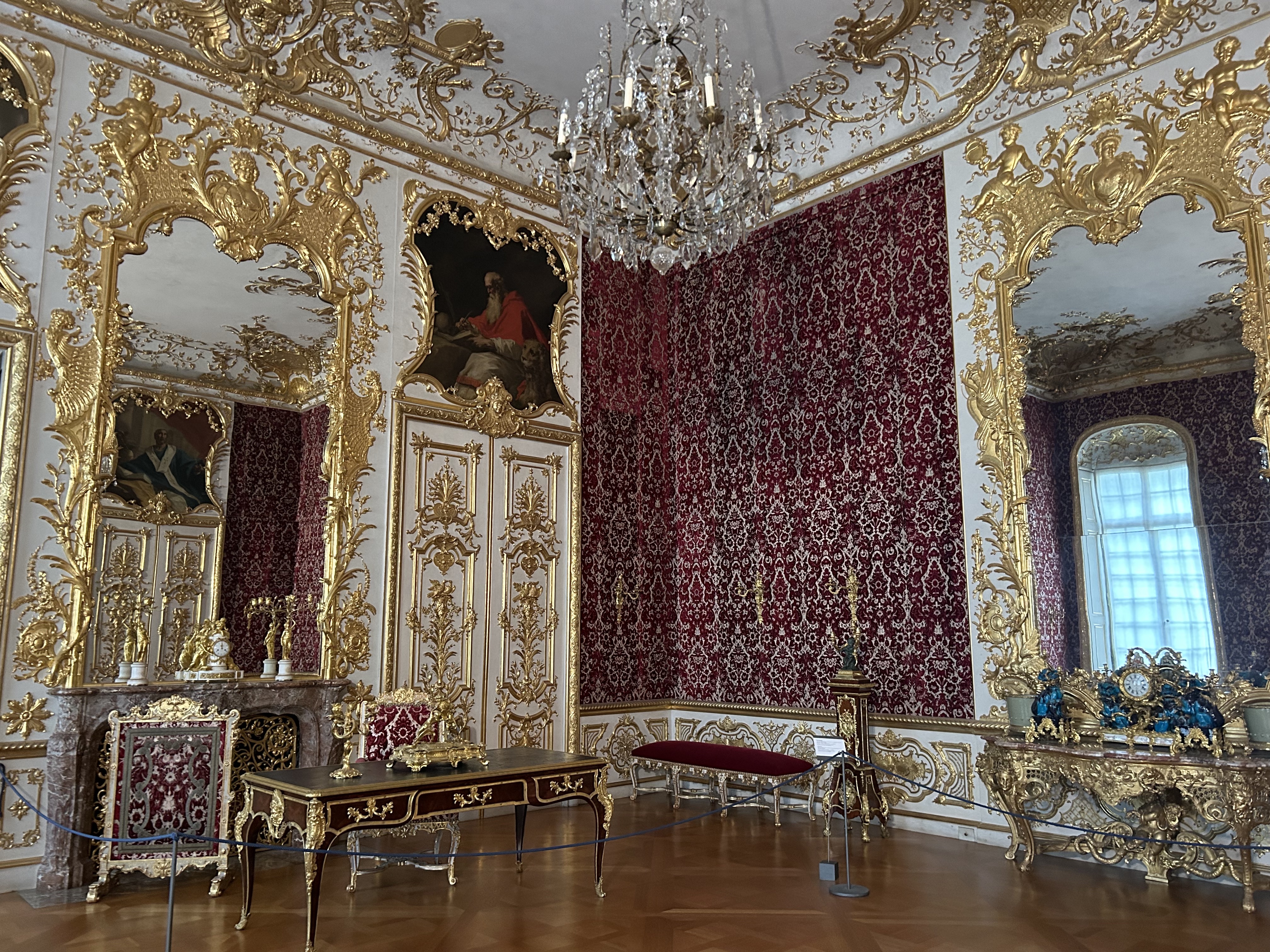
The palace hosts a dizzying maze of rooms upon rooms—antechambers, galleries, places of worship—of elegant design in the Baroque, Rococo, and Neoclassical styles, according to the tastes of the late rulers. Much was destroyed in the 1945 bombings during World War II, but it has been reconstructed to what you see today. Although some of the furnishings were saved, many were remade to authentically resemble what it would have been. 

Your journey to see the tapestries, furniture, and grand art is self-paced. You can get a singular ticket to tour the royal rooms, or you can purchase a combination ticket that includes entrance into the royal treasury exhibition and the Cuvilliés Theatre. 


Schloss Nymphenburg

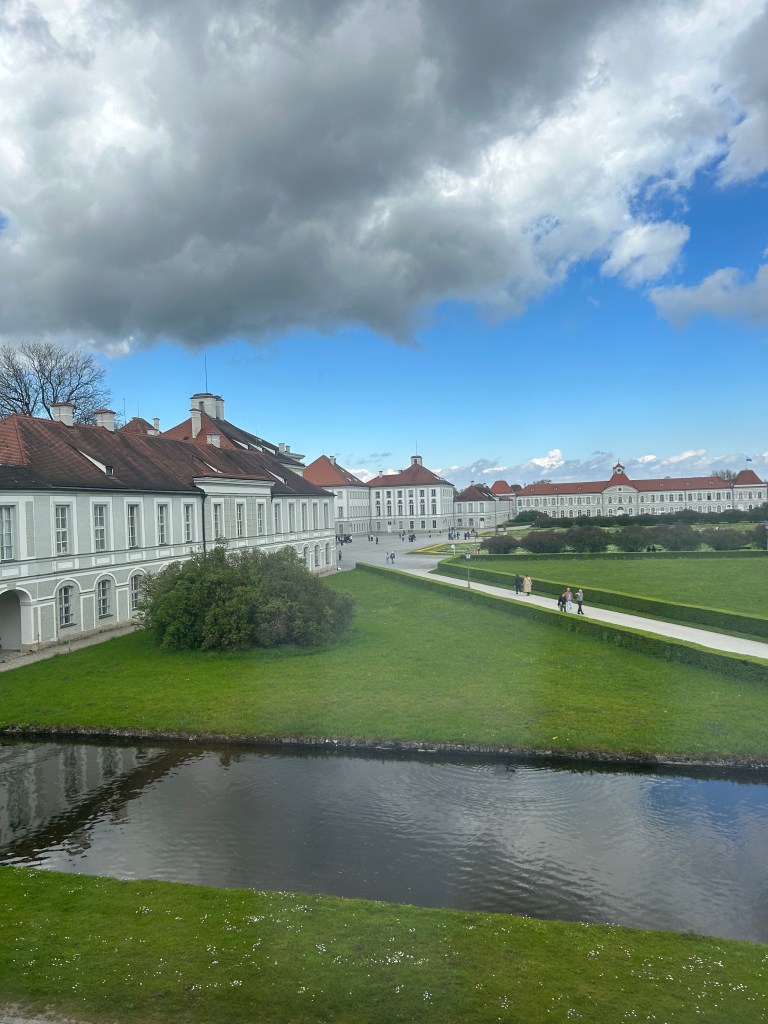
One of the most popular sites to visit in Munich, the Schloss Nymphenburg, began its construction in 1664 as the Bavarian electors’ summer residence. The grounds are expansive, so a trip here could take up as much as a half to a whole day, depending on how much time you wish to spend wandering the acres of residence and park. It’s fewer than 30 minutes away from the Marienplatz by public transit. 

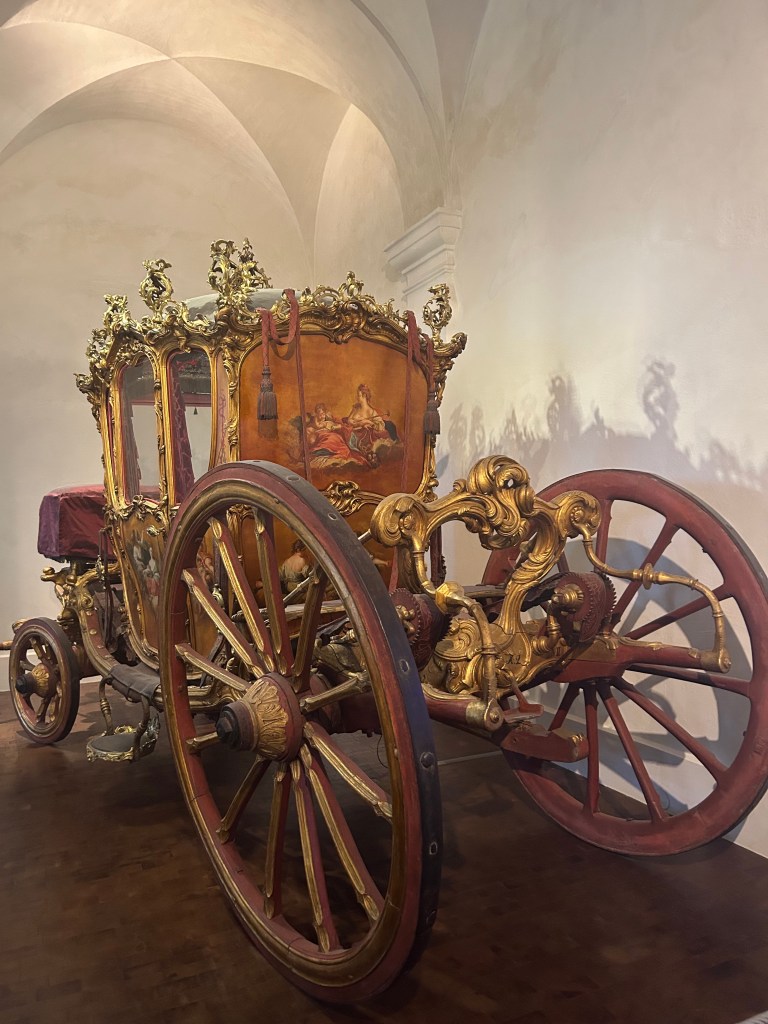
Like the Residenz München, you can purchase separate tickets to each museum and site, or you can purchase a combination ticket. The combination ticket will get you entrance into the palace rooms, the Marstallmuseum (where you can see the original royal carriages and sleighs of the past), the Museum of Nymphenburg Porcelain (where you learn about how the secret of Chinese porcelain came to Germany), and the park palaces.

The park palaces are worth noting. They are spread out across the grounds but, if you’re up for it, can add up to quite a nice day walking around and exploring. Each park palace had a different function and design, so the buildings you enter will give you even more of a look into the extravagant life of the royal family. 


By Car

Ready to get out into the Bavarian countryside? A popular day trip, and one that’s easy to find group tours of, is the ride to Neuschwanstein Castle near Füssen and the Linderhof Palace in Ettal. Group tours can be as large as 40 people in a big bus. You can also get smaller tours that are capped at 20 people, which, of course, will cost a bit extra, but will give you a more intimate relationship with the tour guide and the fellow travelers. Or, you can opt to map it out yourself. Just ensure you grab tickets ahead of time, as there are timed entries for these popular German castles.

Schloss Neuschwanstein

Around a 2-hour drive from the Munich city center, Schloss Neuschwanstein is often known as the “Sleeping Beauty” or “Cinderella” castle, as this is the famous structure that inspired Walt Disney’s depictions of the iconic Disney World and Disneyland main castles. Although the Schloss Neuschwanstein is medieval-looking, it wasn’t actually built during that era. King Ludwig II of Bavaria was simply inspired in 1869 to build his lofty castle in the medieval style. It actually has a state-of-the-art kitchen with the newest technology, including a stove and roasting oven with a plate warmer.

The story goes that castle construction did not go as quickly and smoothly as the young king had hoped—plus, it got rather cold living there in the winter—so he focused his attention on the creation of the Linderhof Palace for his winter residence. Therefore, the Neuschwanstein Castle tour only takes you through the two upper levels; the palace is largely unfinished. What you do get to see is still mind-blowing, with wall murals depicting medieval scenes, ceilings that seem to tower over you forever, and artistic odes to his favorite composer, Richard Wagner.

The location is right across the way from his father’s castle—Prince Maximilian II’s Schloss Hohenschwangau, where Ludwig grew up and which he cherished dearly. You can also visit the Hohenschwangau Castle, but note that it involves some steep steps to reach.

Schloss Linderhof

When Ludwig put his fairytale Neuschwanstein Castle on pause, construction of the Schloss Linderhof—just a one-hour drive away from Neuschwanstein—went into full swing. This palace was the only one that was completed during his lifetime. He was largely inspired by Versailles and King Louis XIV of France, otherwise known as the Sun King, and you will see obvious nods to the French king as soon as you walk into the palace. As Ludwig II’s winter home, you can almost imagine snow falling and Ludwig riding through the land on his royal sled at nightfall…

As with the Neuschwanstein Castle, you cannot take pictures on the inside. And it can take a lot to describe the grandeur of the rooms in this palace. The rooms feel smaller and give off a cozier feel, but there’s nothing quaint about the rococo decor. You will find yourself surrounded by objects of great worth and artistic merit, as well as walls and ceilings that are gilded in gold. There is even a “magic table” that could rise and lower from the king’s quarters down into a room where servants, staying unseen, filled His Majesty’s table with meals.

No less thought went into the Linderhof gardens and park, and especially not the fountain that graces the front of the palace. Every 30 minutes, you’ll get the chance to see water rush up into the air, reaching above 70 feet high. It’s quite an impressive sight.

Ready to Explore!

To ensure you don’t feel rushed, give these four German palaces and castles at least a full 3 days to explore. There are many other sites in Munich to pair with a day visiting the Residenz München, too, because Marienplatz offers markets, churches, biergartens, the nearby Englischer Garten, and more. You’ll find that although Munich is a modern city, it also grants you the opportunity to take a step backward in time to learn about Bavaria’s past.

Magic, Yoga, and Positive Energy Await You in Southern Spain

By Abbey Algiers

You know that feeling when you have an amazing vacation, and you want to tell absolutely EVERYONE you know about it… and then you do, and you see that they “get” you had a good time but don’t quite “get” HOW AMAZING the experience was? And no amount of Instagramming can truly relay what you experienced because not even you understand exactly what happened.

My experience at the Suryalila Retreat Centre in southern Spain felt like that. 

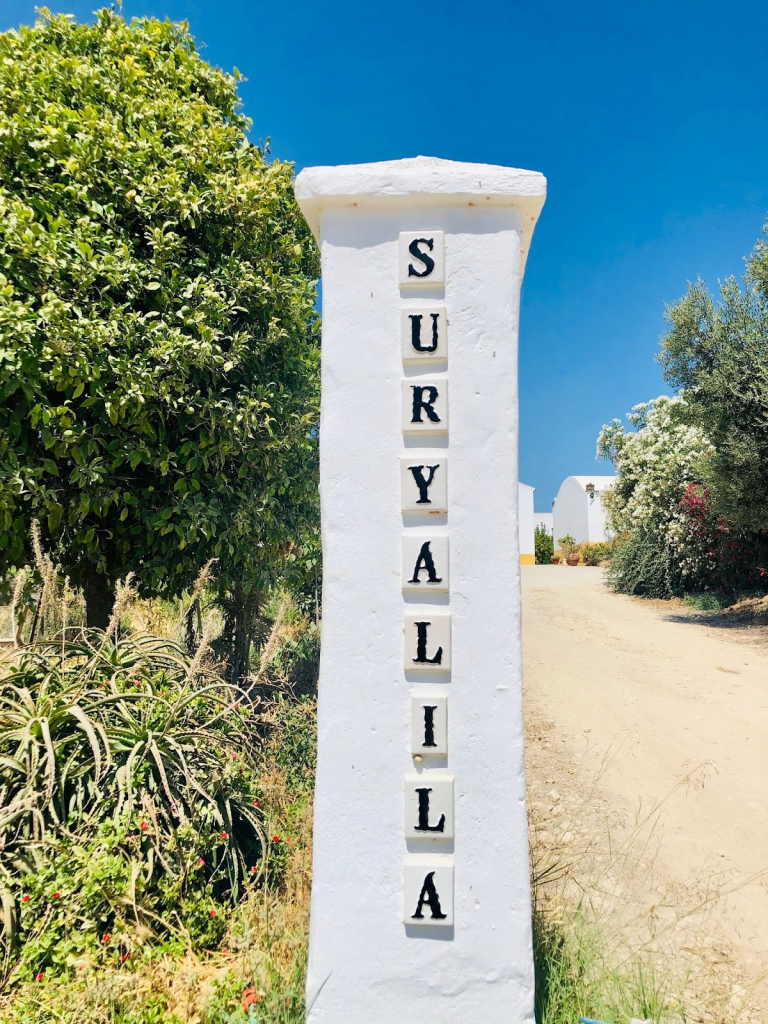
As I approached the road to Suryalila, I sensed I was in for something special.

The short story—I led a Wellness Retreat & English Immersion at Suryalila Retreat Centre in southern Spain. We could end this here, and no doubt you’d get the feeling it was amazing, even if you weren’t in need of English immersion. The mention of southern Spain probably puts visions of rolling hills, white-washed villages, sunflower fields, olive oil, wine… beauty. Right? And then add that we’re at a yoga retreat and discussing wellness topics—I’d bet you’re on board with the possibilities for Zen and relaxation.

Suryalila Retreat Centre… it’s Different. And Special. 

If you visit this centre, be prepared to be inspired and changed. Located on a renovated olive farm, the setting of the Suryalila Retreat Centre makes you feel like you’ve been transported to the beginning scenes of The Alchemist, set in the rolling hills of Andalucia. If you’re unfamiliar with this story, it’s the mystical tale of Santiago, an Andalusian shepherd boy who sets out to travel the world in search of treasure. While searching, he learns to listen to his heart’s calling and the guidance he receives from the “language of the world.” The “alchemy” of the story is Santiago’s evolution,  or “discovering his Personal Legend.”  Here’s the tie-in—the longer you stay at Suryalila, the more you feel the same sense of alchemy.

This alchemy is just one of the reasons Suryalila is so magical. Something about its very energy begs you to connect with yourself on a level that perhaps you hadn’t reached before.

The rolling hills of Suryalila will both “wow” you and make you feel incredibly at peace.

The Energy of Suryalila Retreat Centre

One can sense an unmistakable positive and mystical energy at Suryalila, which I believe stems from its location. Set in a large open valley in the foothills of the Sierra de Grazelema, the retreat offers views of a majestic mountain range peeking out on the horizon, and every direction holds awe-inspiring surprises—rolling hills, fields of sunflowers as you’ve never seen, farmhouses, and even an abandoned monastery. Moreover, its 45 acres of land hold a working olive farm with 350 olive trees and organic vegetables, fruits, chickens, horses, goats, sheep, dogs, and cats.

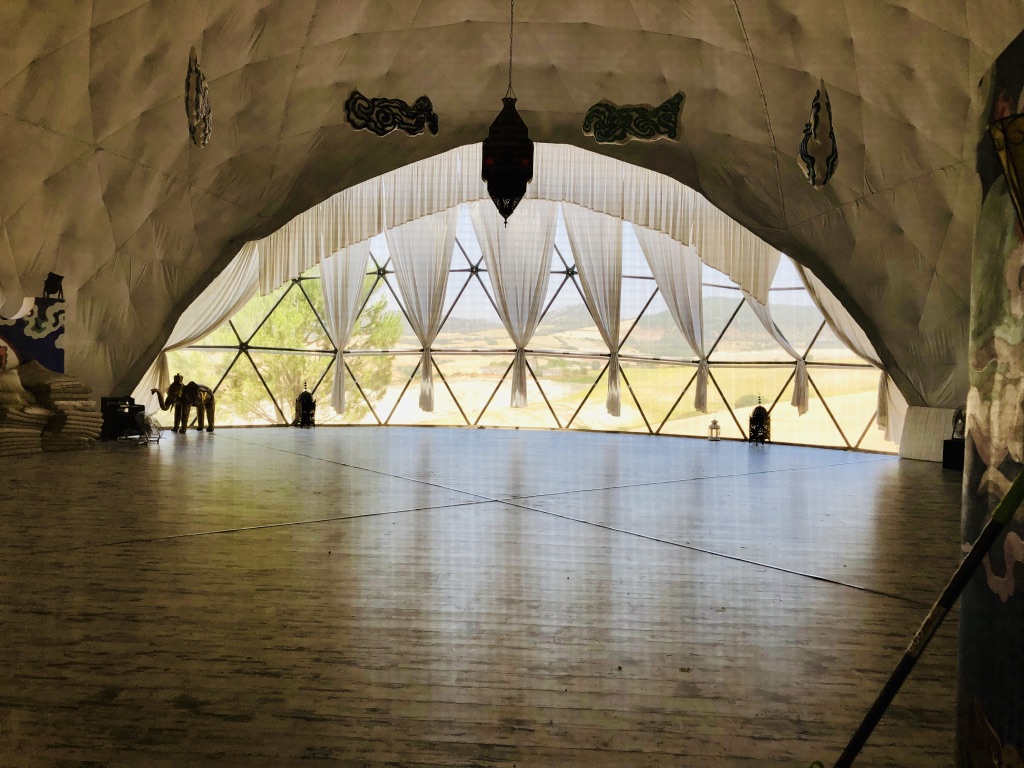
Not sure how to take in all of the views? Start with the property’s yoga halls. There are three, and each provides a unique place to enhance your practice and achieve inner peace. The biggest is the majestic Om Dome, which was the realization of a dream years in the making and is what Yoga Journal called  “the most magnificent yoga hall in Europe.” The dome’s massive bay window offers views of beautiful rolling hills and an abandoned convent while you take in the special energy of the dome. Two other spaces allow for even more options for awe-inspiring yoga. The Moon Shala is a sustainable cobb (straw bale and mud building) organic structure located in the olive grove, offering its own stunning vistas. The Ganesha Yoga Shala is part of the retreat’s main house, with windows on both sides allowing plenty of light and fresh air.
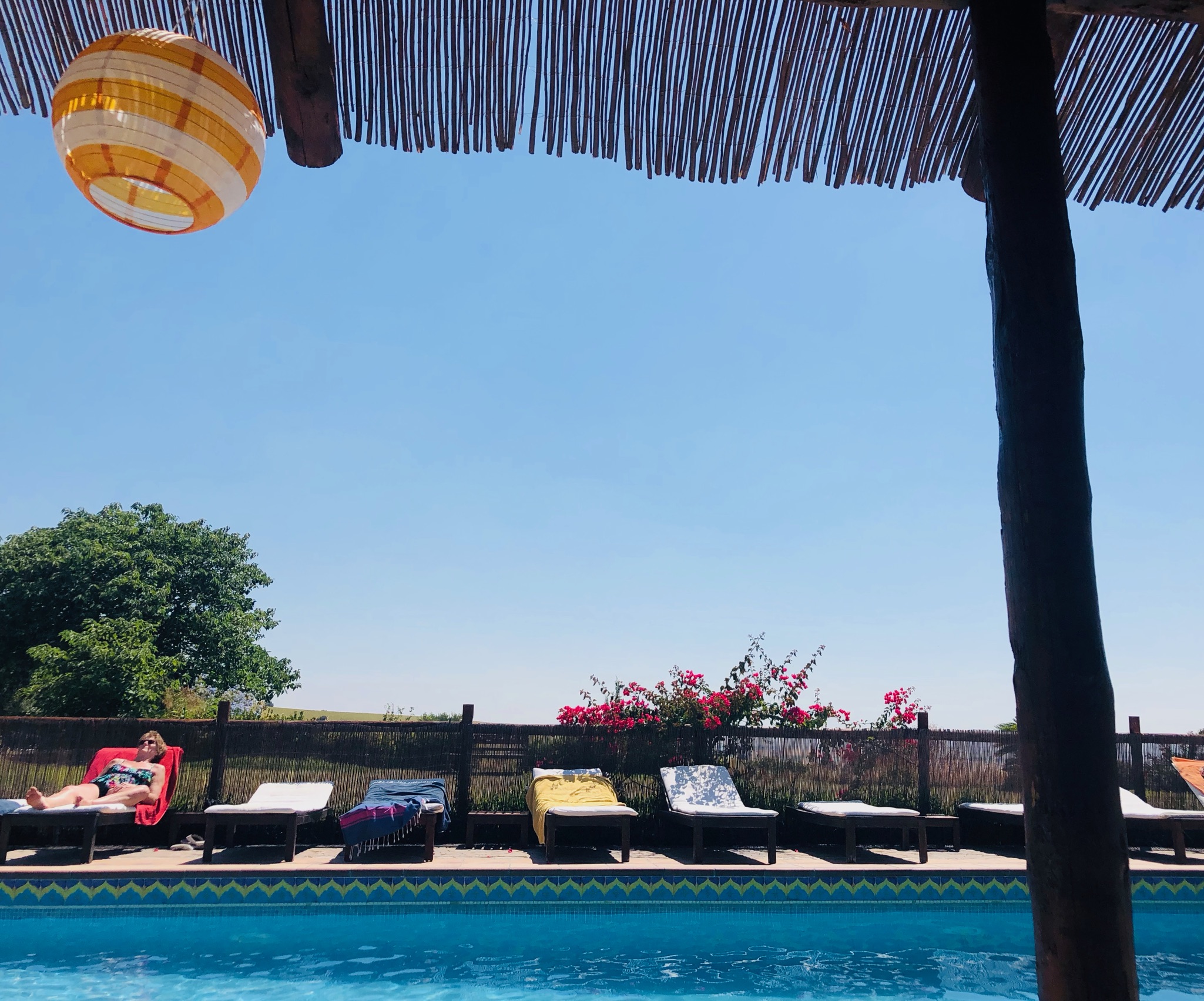
Not achieving a zen state is not a problem, even when you’re not practicing yoga. The property offers a multitude of places to relax and reflect. Whether you cool off in the saltwater eco pool, nap in the Moroccan Pavilion, or sip tea on one of the benches, chairs, or pagodas aesthetically and strategically placed throughout the property, you’re promised unparalleled views and serenity.

Every meal was as gorgeous and delicious as this.

While nourishing your spirit and soul, your body will also be cared for. The menu consists of perhaps the most nourishing and lovingly prepared vegan/vegetarian organic food I’ve ever had. To say it is beautifully presented could be the understatement of the century.  With ingredients sourced from the property, each meal is planned by a (very happy and friendly) group of chefs. There’s even a view of the site’s organic vegetable garden from the kitchen window.  
As you can see, the setting of Suryalila is quite simply perfect. But the story can’t end here because the setting can’t get all the credit for the magic of Suryalila.

The magic can be found and felt in every one of the people behind it. Bringing it back to The Alchemist, it’s clear that Vidya, the woman behind Suryalila, followed her personal legend to bring this beautiful place to life in 2011. (Her story is found here.) Her positive energy and unrelenting spirit created this magical escape that attracts like-minded yoga instructors, chefs, property managers, massage therapists, and support staff.  

Each of them is on course to discover their personal legends as well. They come from all over the world, each searching for something different but with the common spirit of making Suryalila (and the world) a better, brighter place. In doing so, they’ve created a vibe that shines as bright as the sunrises and sunsets gracing Suryalila daily. If you want to know (and feel) what I’m talking about, arrange a trip to Suryalila. You can participate in one of the many yoga retreats offered throughout the year, or simply stay in the centre’s yoga hotel, with accommodations to fit every budget. 

Whatever way you choose to experience Suryalila Retreat Centre, I promise you, it will be magical.

Le Petit Chef Dishes Up Big Fun

Story and photos by Alison Ramsey

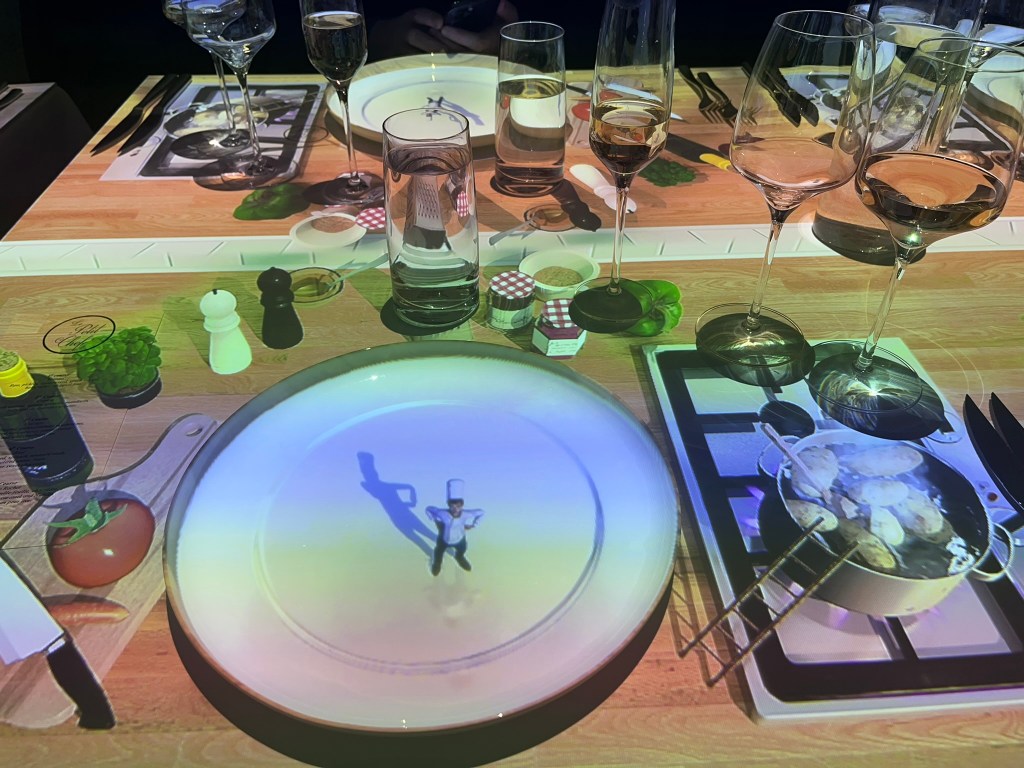
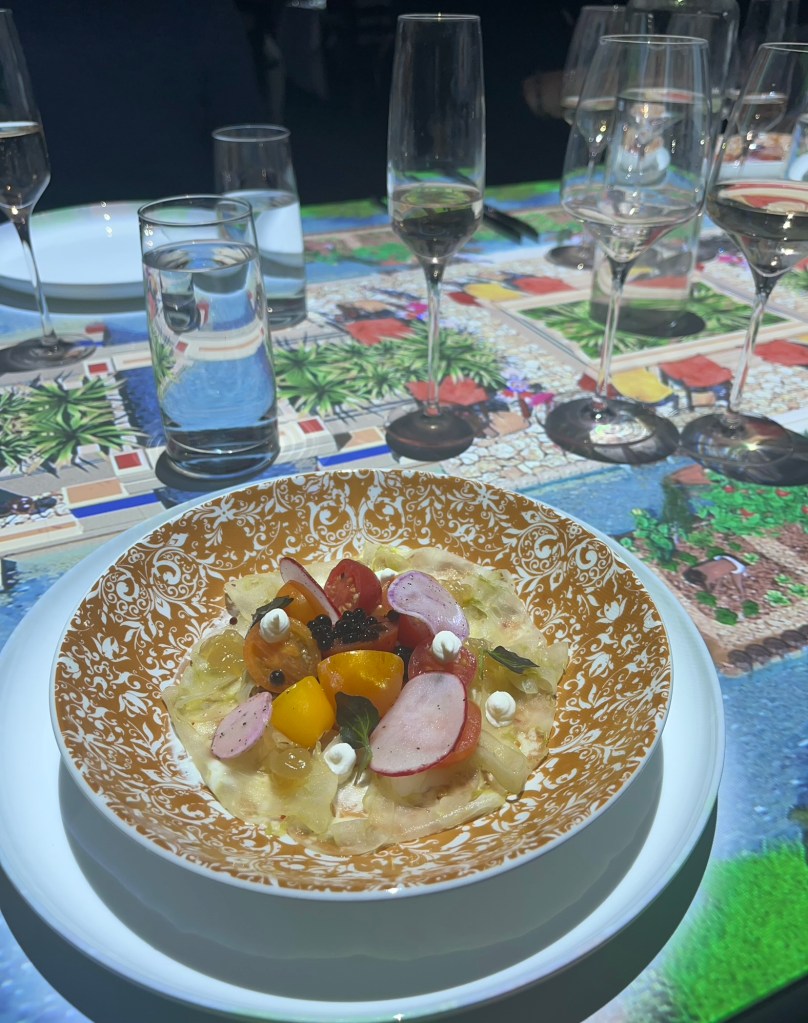
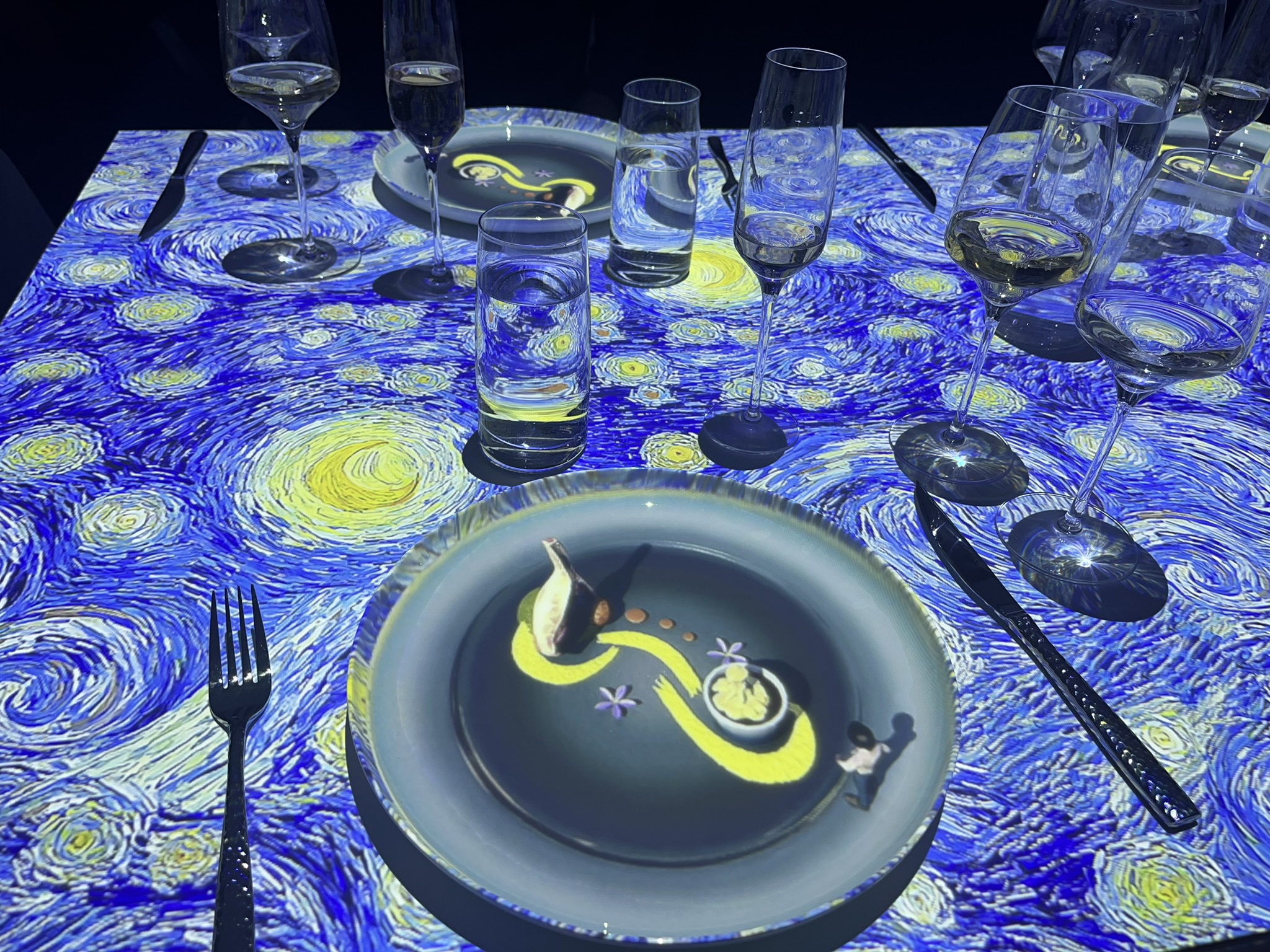
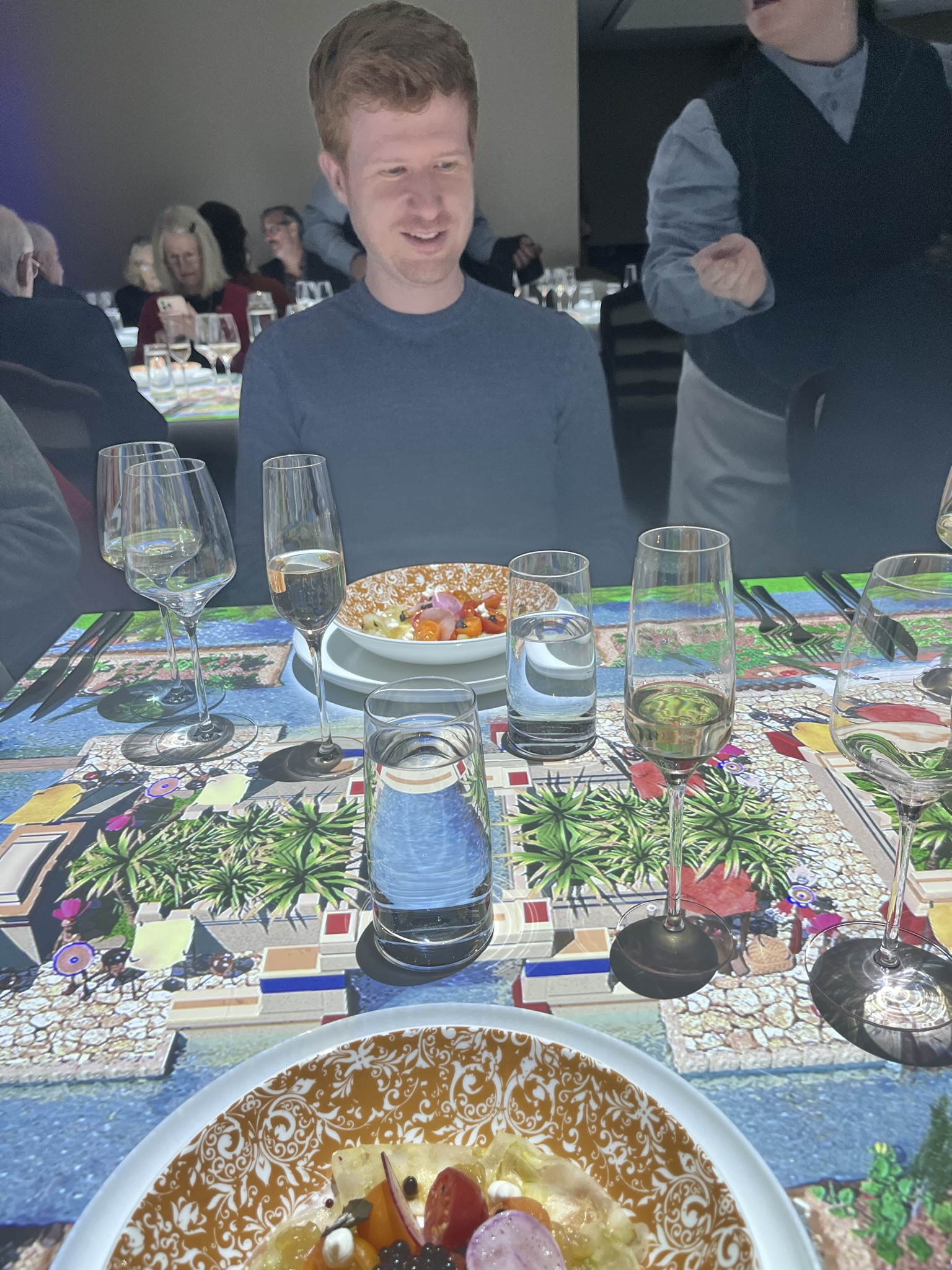
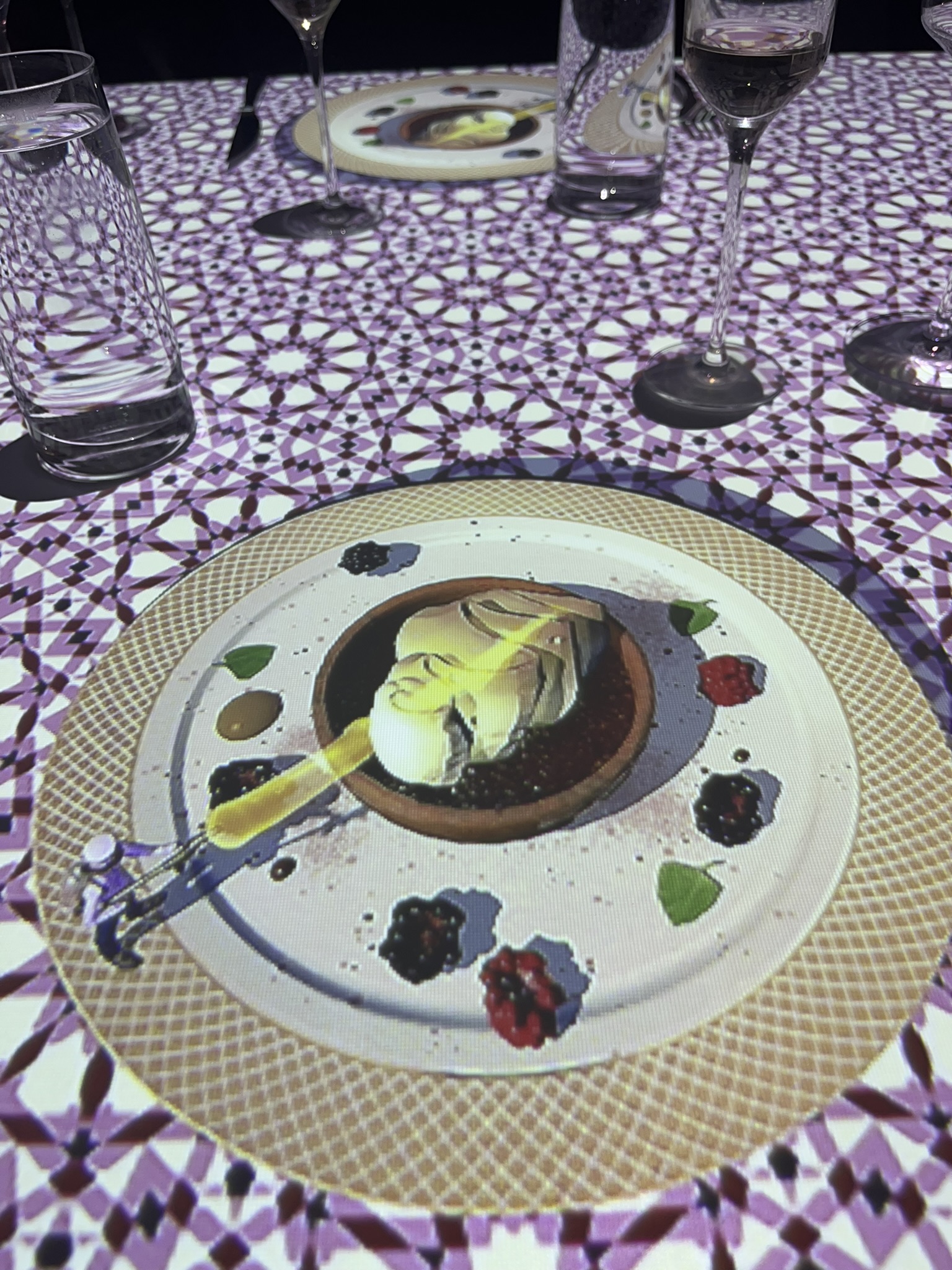
A simple white charger plate and smooth white table turn into a texture-rich artistic musical experience, culinary history lesson, and elaborate feast right before your eyes! Fairmont Chicago’s Le Petit Chef: An Immersive Dining Experience features a 2.5-inch animated French character created by artists at Skullmapping. Rising from the center of your plate via groundbreaking 3D projection mapping that requires no special eyeglasses or visors, Le Petit Chef illustrates through colorful storytelling the history of ingredients used in the meal, the joy of being a chef, and the art of creative plating inspired by famous painters. It’s a dining experience like no other, and Fairmont Chicago, in partnership with TableMation™, opened this exclusive gastronomical adventure to the public on January 19, 2023. The lobby level Cuvée Room at Fairmont Chicago houses this 90-minute themed dinner with curated wine pairings.

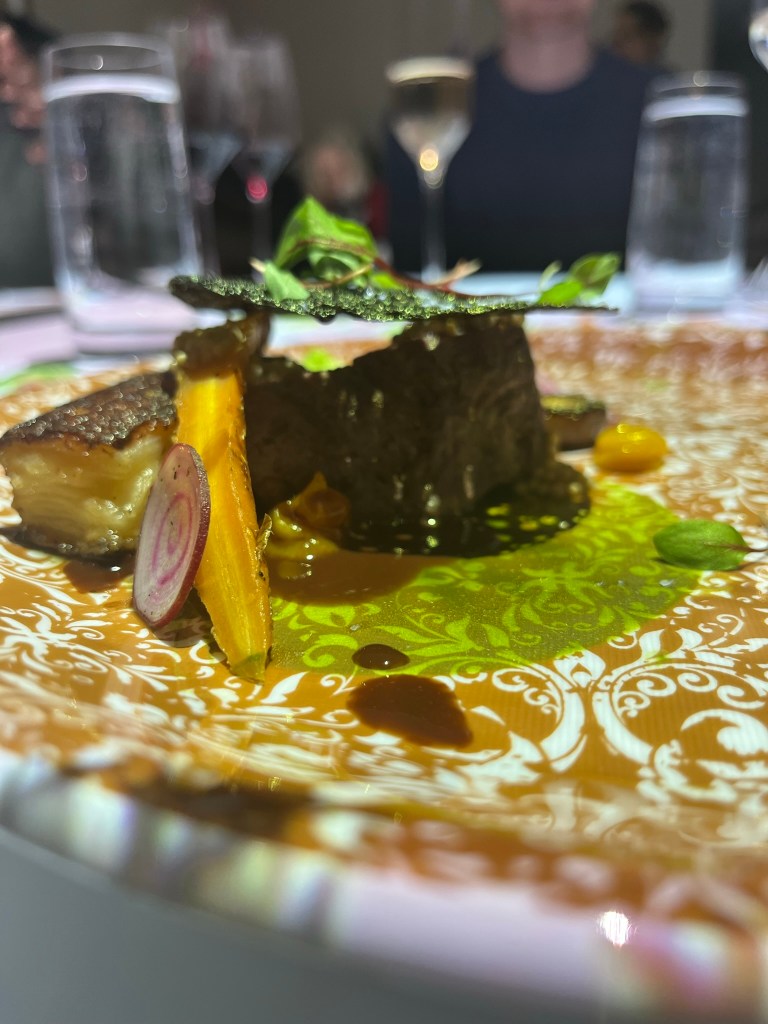
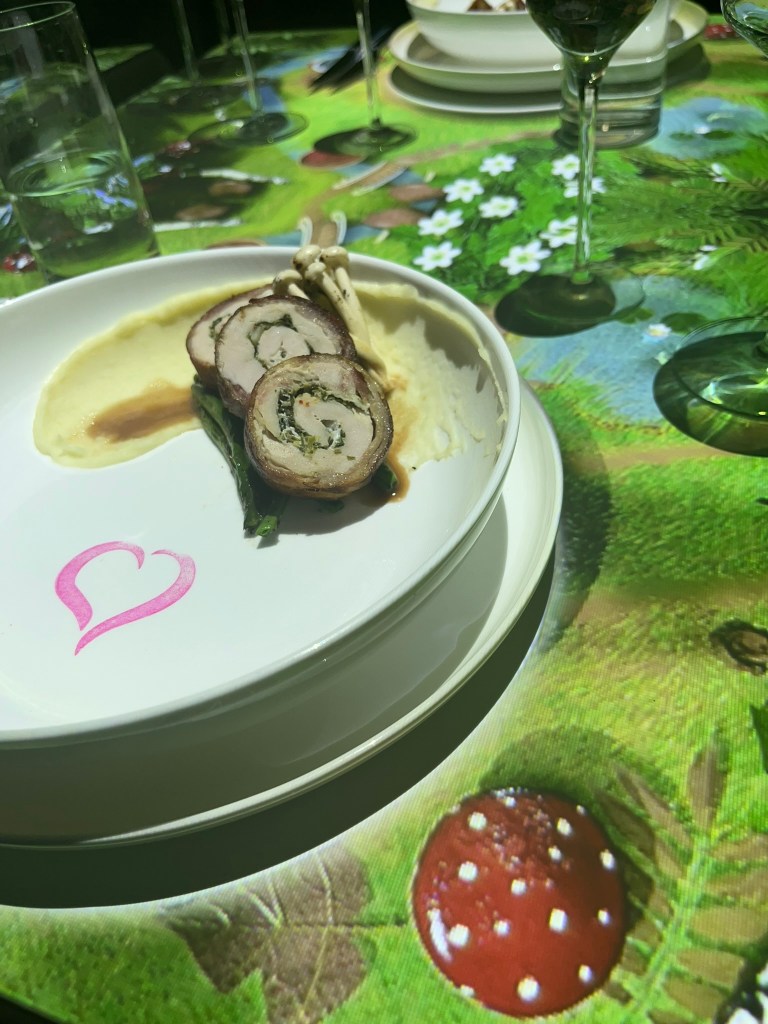
Projected from the ceiling down to the tables and plates, 3D scenes and designs bring the dining area to life, illustrating gardens, sculpted fountains, raging battles, as well as busy cooktops boiling potatoes and searing meat. Between humorous anecdotes, musical numbers featuring dancing vegetables, lessons about ingredient composition, and tips on flavor combinations, guests are served a beautifully prepared, delectable 5-course meal featuring the elements showcased.

Each dish is rich with taste, texture, and color, but not heavy or saturated with creams and dressings. The delicious natural flavors of fresh produce and meat are perfectly seasoned to surprise and satisfy. Those with allergies or special dietary needs and preferences are graciously accommodated, making the menu safe for all who want to partake.  

“I think all kinds of eaters will find something to enjoy in this experience,” said diner Marc Berry after his meal with Le Petit Chef. “Even non-foodies can enjoy each interesting yet accessible course, and the joy of the 3D segments accompanying them.”

Fairmont Chicago General Manager, Clay Spencer, said, “We are thrilled to bring this unique dining experience to our guests, the city of Chicago, and the larger Midwest region. … We’re delighted for diners to experience this culinary adventure through animation. It is a dinner like no other.”

Pricing per person begins at $155 (exclusive of tax and gratuities), with an optional French wine pairing of $42. The first seating starts at 6:00 p.m. and the second at 8:00 p.m. every Thursday through Saturday, through the end of 2023.  For more information about Fairmont Chicago and to book your special dining experience at Le Petit Chef, please visit fairmontchicago.com.

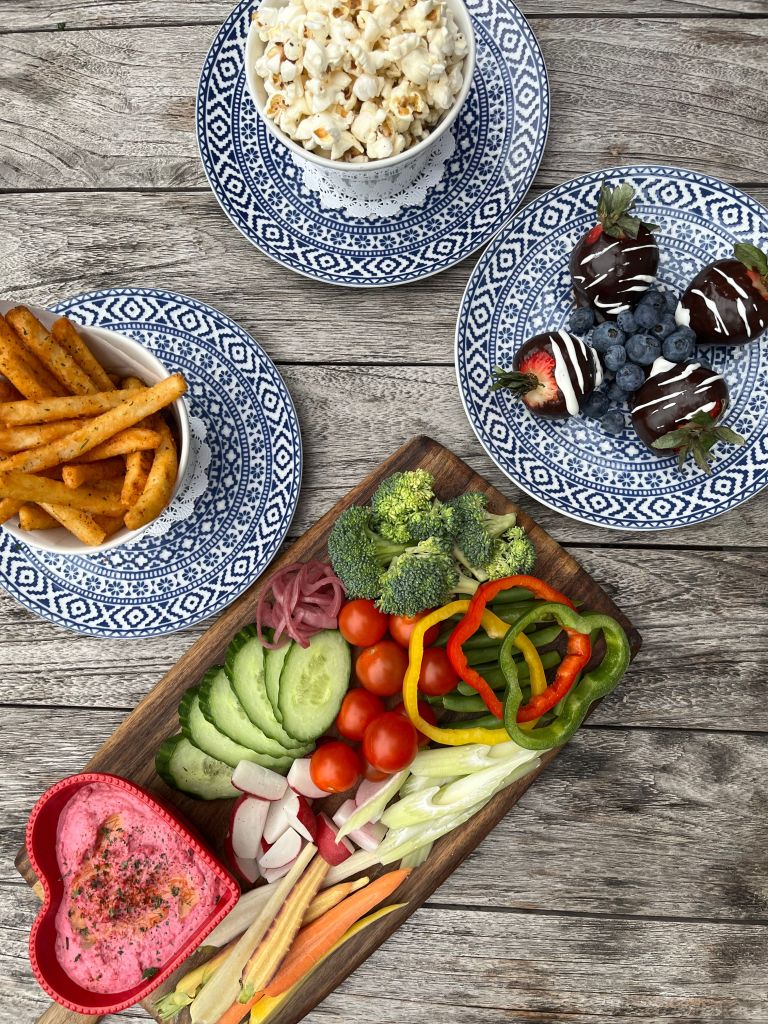
For Valentine’s Day, treat your sweetheart to Le Petit Chef’s fun and fancy French meal, or consider these other Chicago area specials:

Love is in the air! Skydeck Chicago’s “Pie in the Sky” VIP Valentine’s Day Dinner offers a three-course meal that includes a delicious Giordano’s heart-shaped deep-dish pizza, salad, and dessert, served with a stunning view of the city. This 10 p.m. after-hours experience is intimate, with only seven tables per evening, maximum, and it takes place after Skydeck Chicago is closed to the public. Before ascending to the 103rd floor to step out on the glass-bottomed The Ledge, explore the ground-level museum and exhibits featuring Chicago’s diverse neighborhoods and architecture. A small-scale Bean (Cloud Gate), Second City stage setup, giant hot dog and deep-dish pizza, full-scale “L” train car, replica Chicago Picasso – there are photo opportunities galore! Book your Pie in the Sky table here for Valentine’s Day, February 14, 2023, or celebrate early by booking for Thursday, February 10, or Friday, February 11.

Photo courtesy of Skydeck Chicago

The “Love, Alma” package at stylish Hotel Zachary at Gallagher Way is a tribute to architect Zachary Taylor Davis’ true love and muse, Alma Davis. This romantic overnight includes a $50 food and beverage credit at The Bar, upgraded Wrigley Field ballpark view accommodations, and an extended 1 p.m. late checkout. Book your reservation here.

Photo courtesy of Hotel Zachary

Spread the love on Friday, February 10, from 6:00 p.m. to 10:00 p.m. at Hotel Zachary’s The Bar “Galentine’s Day Social Hour,” where you can craft a custom flower bouquet, enjoy live R&B DJ entertainment, snack on light bites and desserts, savor wine or a build-your-own-spritz concoction, and observe the on-site creation of an original painting by an artist. This event is hosted by Chicago influencer @FoodiexFancy in partnership with Bombay. Guests in attendance are encouraged to sign cards to be donated to a local Chicago children’s hospital. Purchase your Galentine’s Day Social Hour passes here.

Photo courtesy of Hotel Zachary

Museum of Illusions (MOI), in the heart of downtown Chicago, is a unique and interactive date spot to explore with your special someone. MOI offers a 2-for-1 Valentine’s Day ticket special for those wanting a mind-bending experience at a fraction of the cost. Reserve your February 14 tickets here, and the discount will automatically apply at checkout on Adult tickets.     

Photo courtesy of Museum of Illusions

Clixo Fidgety Fun Inspires Creativity During Travel and Beyond

By Alison Ramsey

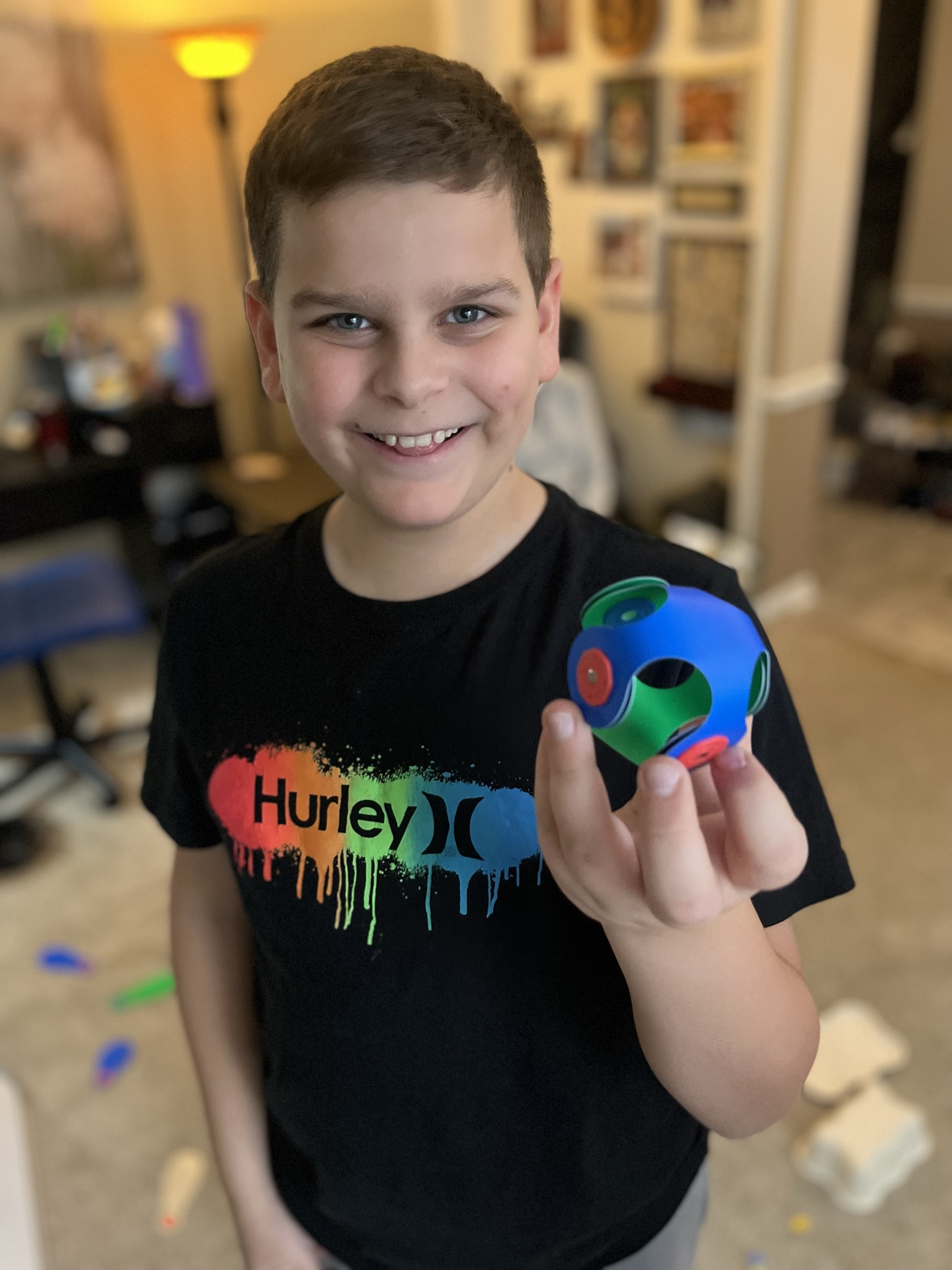
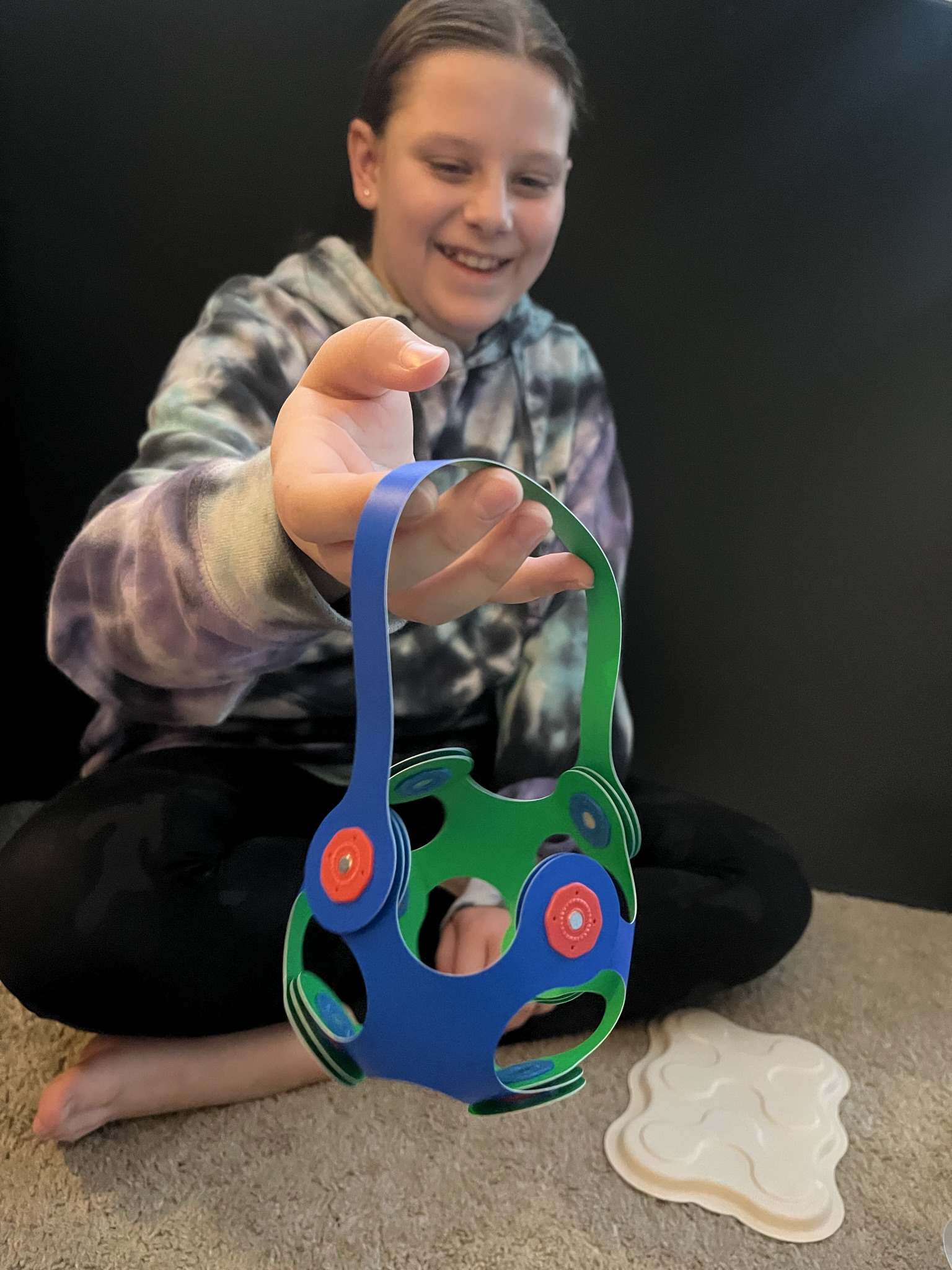
A unique toy for kids and adults alike, the easy-to-pack Clixo magnetic play system encourages freeform building and exploration—no rules or instructions required! Tuck a set of these flat, flexible building pieces into your day bag and pull them out to see your fussy or feisty traveling companions turn into creative geniuses.

Photos courtesy of Clixo.

Visored motorcycle helmet, floppy beagle ears, a colorful handbag—within five minutes of opening a package of Clixo lightweight and flexible magnetic shapes, my kids’ creativity using these colorful pieces resulted in a plethora of fun creations. This award-winning building toy from Toyish Labs is packed with endless possibilities for playtime on the go or at home. The durable and compact flexible pieces can be stored flat and easily cleaned and sanitized. Secure magnets are safely fastened to key edges, allowing toy enthusiasts of all ages to snap together pieces and discover limitless creative possibilities. Creations can be stuck to the fridge, worn as accessories or, as with the Grip and Stick Pack, secured via suction cups to a window or flat surface—great for road trips and sticking to the interior of car windows! Some packages include special units that allow attached pieces to spin or roll on wheels, encouraging construction of propellers, vehicles, and other movement-inspired shapes.

Clixo needs no instructions or preamble. My kids were initially confused about what they were opening, but within several moments were excitedly clicking and snapping together pieces with no assistance or explanation needed. Open-ended, screen-free, hands-on play is Clixo’s strength, offering opportunities to create fun 3D structures from 2D pieces. These unique building sets were a finalist for the 2021 Toy of the Year Award, won the Top Toy of the Year Award from the 2022 Creative Child Awards, and have won the Oppenheim Toy Portfolio Gold Seal Best Toy Award and the Tillywig Toy Awards Best Creative Fun Award.

This summer, Clixo partnered with the Museum of Ice Cream (MOIC) in Chicago, Austin, and New York City to launch an interactive experience that allows guests to build colorful 3D creations on magnetic building walls. A special MOIC Clixo pack is sold on-location at these three venues, and features strawberry- and cherry-colored shapes. If your travels bring you to these cities, stop into the MOIC and add some creative constructions to the wall.

Photos courtesy of Clixo.

Assaf Eshet, CEO and Founder of Toyish Labs and creator of Clixo said, “We’re very excited to be working with Museum of Ice Cream on this collaboration and sharing Clixo with MOIC visitors. Museum of Ice Cream provides a fun and engaging experience for all kids and their parents. At Clixo, we share the same values of bringing play and creativity to kids and kids at heart.”

Photo courtesy of Clixo.

For more information or to purchase Clixo building sets, please visit www.clixo.com. The Black Friday Super Sale is currently offering up to 40% off sitewide, so take advantage of the sale prices for these colorful stocking stuffers or Christmas gifts while you can! May your holidays and holiday travel be peaceful, joy-filled, and inspiring.