Echoes of the Past Enchant Istanbul Hotel Guests

The Pera Palace Hotel, in business since the late 19th century, retains its Old World panache, captivating patrons with elite amenities and Belle Epoque charm

By Randy Mink

Just about every major European city has a historic luxury hotel that begs nostalgia-minded folks like me to come take a peek or maybe bed down for a night or two. I tend to make a beeline to such hostelries—those with a story to tell and grand trappings to go with it—even if it’s just for a brief walk through the lobby or to soak up the ambience over a drink in the bar.

In Istanbul, the Pera Palace Hotel started life in the 1890s when the Turkish city (then called Constantinople) needed a place suitable for hosting wealthy passengers arriving from Paris and other points in Western Europe on the Orient Express, the luxury train made famous by English author Agatha Christie. It’s said that she wrote some of Murder on the Orient Express while staying at the Pera Palace in the 1930s.

The hotel has endured through the reigns of three Ottoman sultans, the fall of the Ottoman Empire and the rise of the new Turkish Republic in the 1920s. Between World Wars I and II, it was at the center of international intrigue in the Pera neighborhood, then a hotbed of espionage and geopolitical machinations involving players from throughout the Continent. Pera, with its numerous military and diplomatic posts, was once called Little Europe.

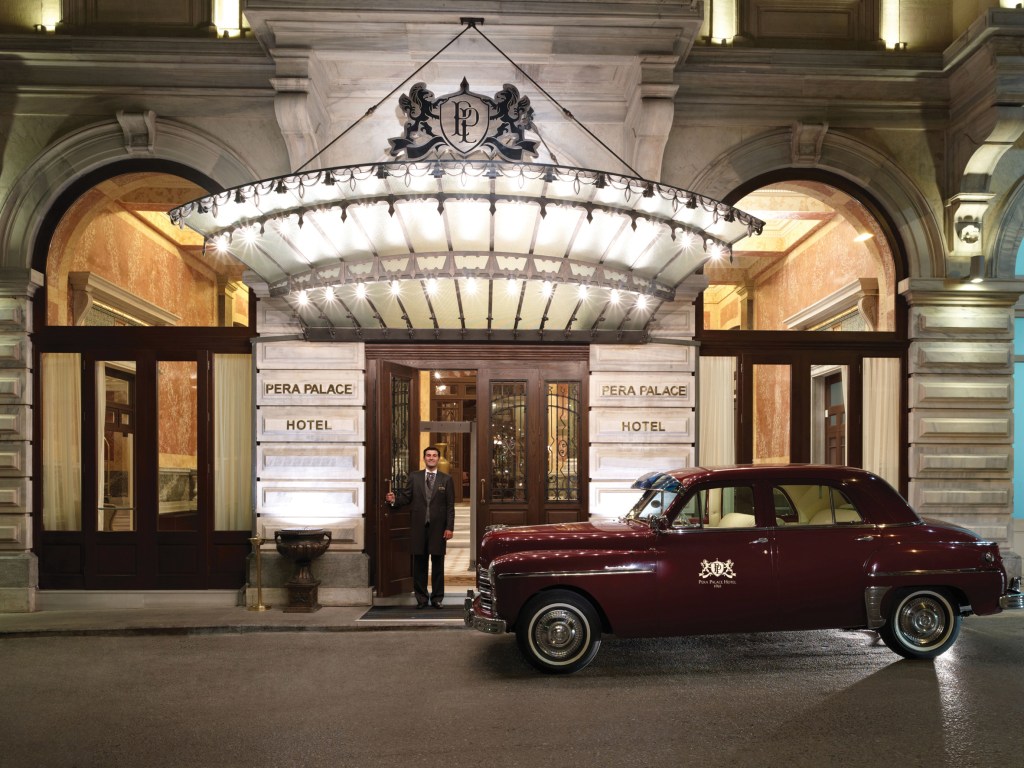
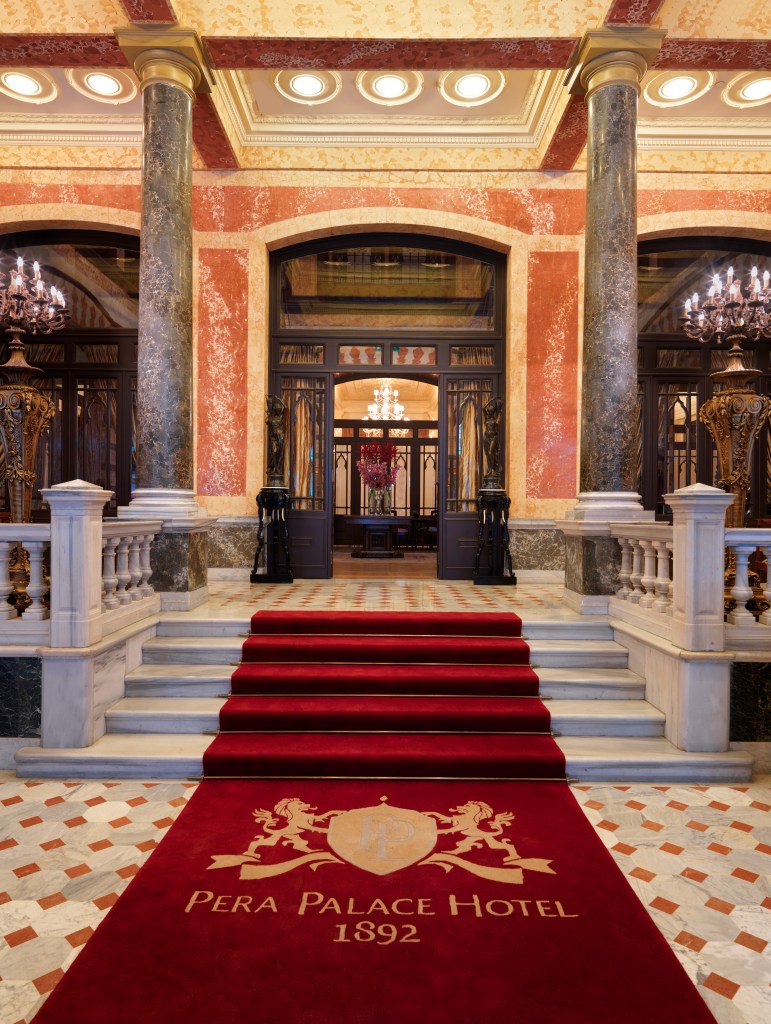
The Pera Palace today retains its lofty position as a place to see and be seen. Trying not to gape, I entered the high-ceilinged lobby on the red carpet inscribed with the hotel’s name in gold letters, glancing up at the crystal chandeliers and plush red draperies on my way to the reception desk.  Gleaming marble walls, floors and balustrades, along with brass urns brimming with palm fronds, set the tone as well.

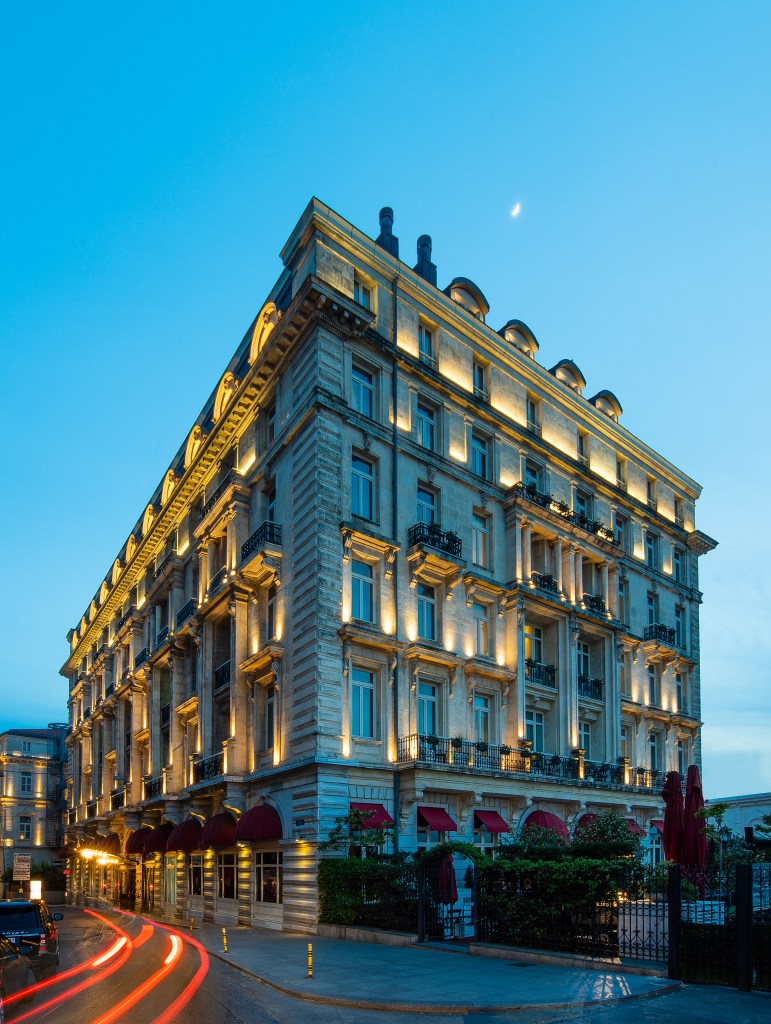
The Pera Palace Hotel is one of Istanbul’s elite addresses. (Photo credit: Pera Palace Hotel)

Famous Guests of the Pera Palace

Over the years, the same grandeur has greeted notables like England’s King Edward VIII and Queen Elizabeth II, Austro-Hungarian Emperor Franz Josef, Shah Reza Pahlavi of Iran, President Tito of Yugoslavia and Jacqueline Kennedy Onassis. Hollywood royalty has included Zsa Zsa Gabor, Greta Garbo and Alfred Hitchcock. As a reporter after World War I, Ernest Hemingway was a hotel resident.

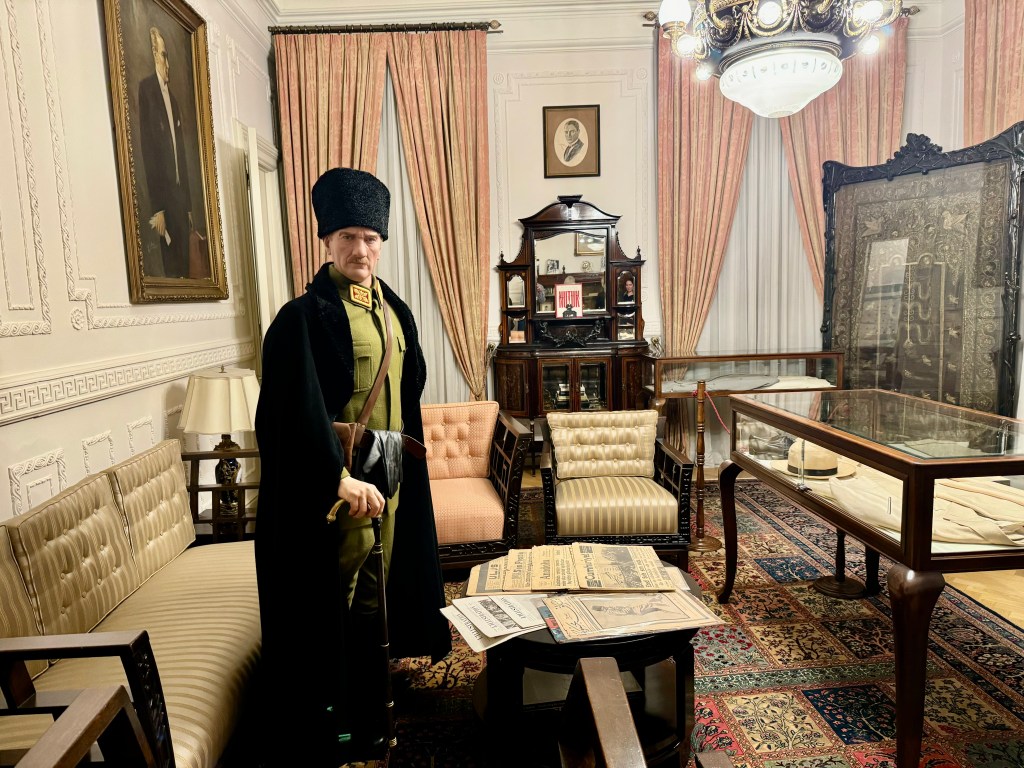
In Turkish eyes, the most important figure to grace the Pera Palace was Mustafa Kemal Ataturk, revered as the father of modern Turkey. When in Istanbul between 1917 and 1926, the country’s first president resided in Suite 101, which is now a museum devoted to him. A stern-looking Ataturk mannequin—holding a cane and dressed in a green army uniform and black cape and hat—stands in the sitting room. Along with vintage photographs, newspaper clippings and a Time magazine cover bearing Ataturk’s image, personal possessions on display include the national hero’s eyeglasses, goggles, pajamas, shoes, white linen suit jacket and black silk prayer rug. The museum, free to hotel guests, is open to the public for a fee.

Suite 101 in Istanbul’s Pera Palace Hotel is a museum dedicated to the memory of Mustafa Kemal Ataturk, founder of the modern republic of Turkey. (Randy Mink Photo)

The guest room where Christie stayed, number 411, now carries her name, and the hotel restaurant is named Agatha. Framed black-and-white photographs of past guests, including Garbo, Hemingway, Zsa Zsa and Jackie O, adorn the restaurant’s back wall.

Dining at Istanbul’s Pera Palace Hotel

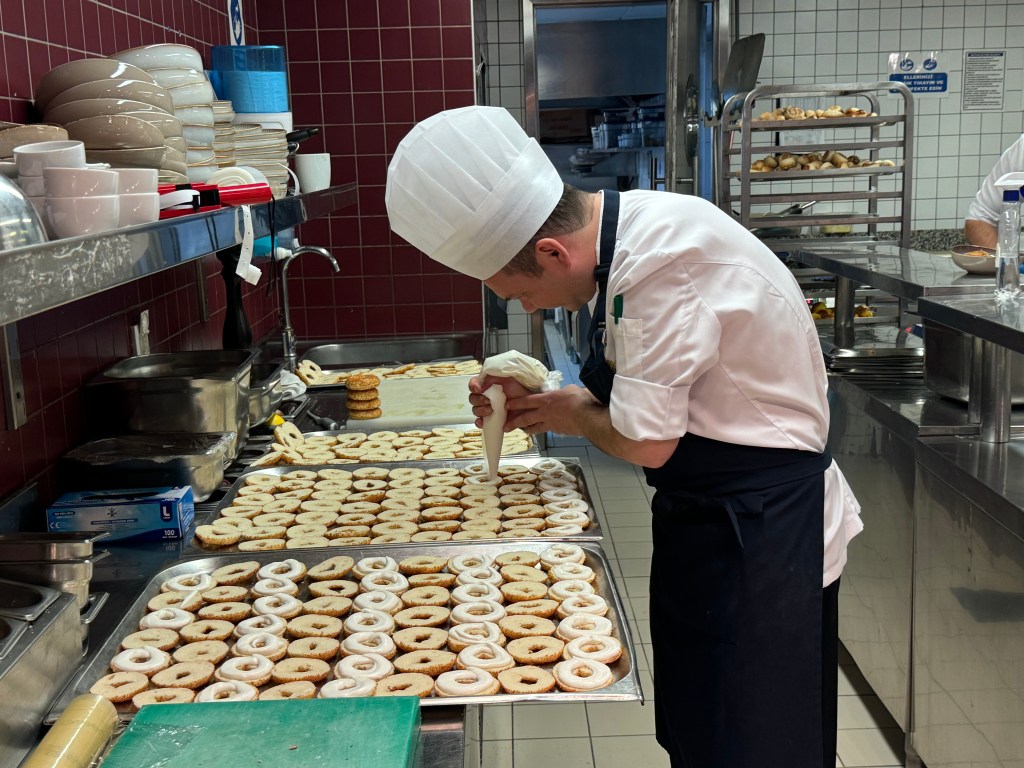
Agatha Restaurant’s bountiful buffet breakfast offers everything from salads and olives to cheeses, cold cuts and quail eggs. Pastries include mini donuts, mini croissants and simits, the sesame-seeded dough rings found throughout Turkey. For spreading on breads and rolls, I made good use of the honeycomb, tahini, grape molasses, jams and clotted cream. I had more than my share of the cheese balls covered in sesame seeds, black cumin, pistachios or poppy seeds. Among the hot dishes: cheese quiche, cheese soufflé, falafel, artichoke soup, pancakes and porridge.

The breakfast buffet at Agatha Restaurant offers many choices, including a wide variety of olives. (Randy Mink Photo)

More treats await at Patisserie de Pera, an intimate cafe reached from the hotel lobby or separate street entrance. Rose-colored walls and furnishings lend a soft touch, and red-accented Venetian glass chandeliers hang from the pink ceiling in each of the two salons. This is the place for a leisurely mid-morning coffee or tea break accompanied by a decadent fruit tart, slice of cheesecake or an assortment of chocolates or macarons.

The gift shop just outside the cafe (actually just a glass cabinet) provides a wide variety of Pera Palace mementoes. Items include socks, umbrellas, bathrobes and other things bearing the hotel logo. There are coasters, coffee mugs and souvenir plates. How about an Ataturk tea set or the paperback Murder on the Orient Express?

Patisserie de Pera is the place to linger over pastries and a cup of coffee or tea. (Randy Mink Photo)

Steps from the merchandise cabinet is an original sedan chair once used to carry Orient Express passengers from the train station to the Pera Palace.

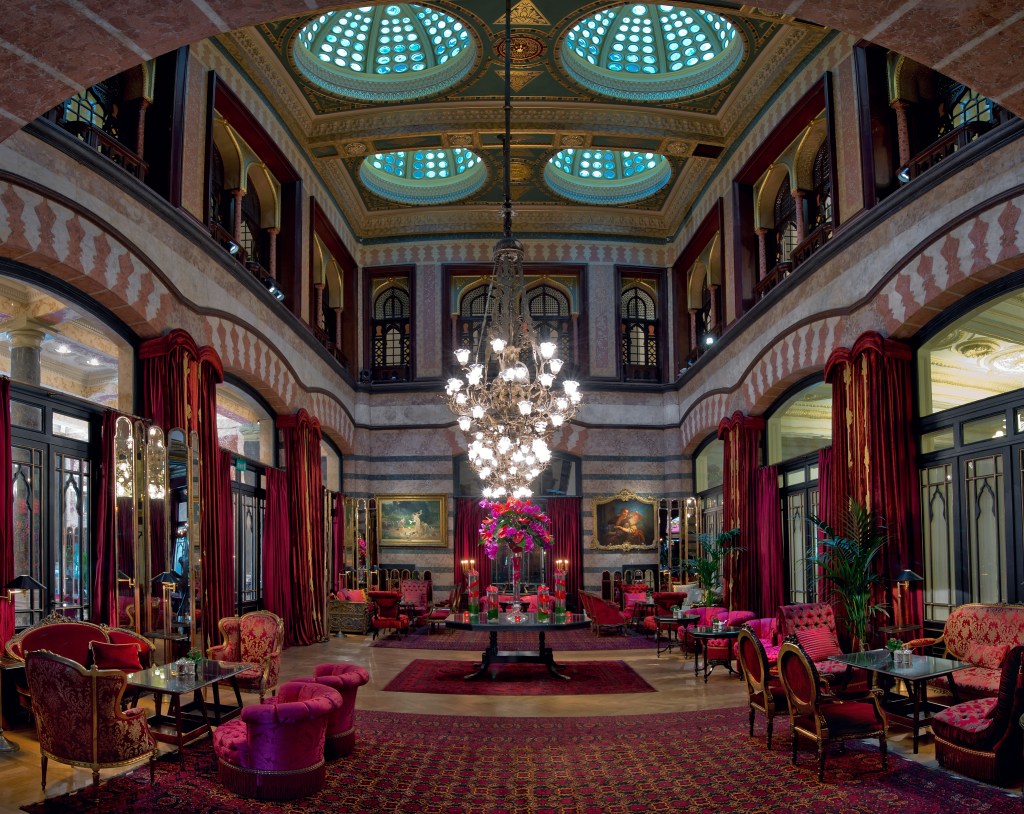
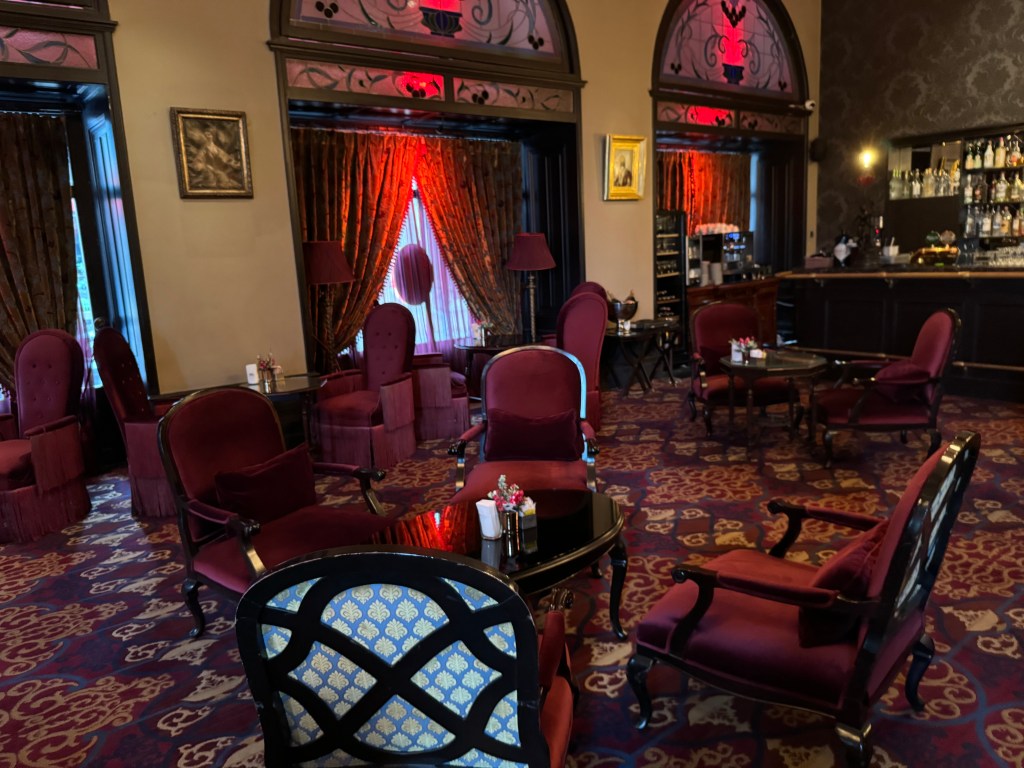
A traditional afternoon tea with piano music is served under the six skylight domes of the Kubbeli Lounge. Featuring elements of Islamic architecture, the two-story-high room is decorated in dark reds and deep plums, as is the nearby Orient Bar, another plush spot to drink in visions of a bygone era. The equally stylish Library Room seating area, complete with bookcases and antique globes, extends from the lounge and bar.

The hotel’s Kubbelli Lounge hosts a traditional afternoon tea. (Photo credit: Pera Palace Hotel)

The Pera Palace’s Orient Bar provides an elegant setting for cocktails. (Randy Mink Photo)

Guest Rooms at the Pera Palace Hotel

More flashbacks to yesteryear are in store on a fun ride in the hotel’s original electric elevator, installed only three years after the Eiffel Tower’s elevator. The wood-and-cast-iron cage, operated by a staff member, is used only for arriving hotel guests. For normal use, a set of modern elevators services the six guest room floors.

The original elevator’s wood-and-cast-iron cage is well over a century old. (Photo credit: Pera Palace Hotel)

From tall windows in my room, number 506 in the Deluxe Golden Horn category, I had views of the Golden Horn, the waterway that separates modern Istanbul from the Old City on the other shore—and the primary inlet of the Bosphorus Strait. Amenities in the marble bath included thick white towels and robes. The pillow cases, hand towels and robes all bore the gold Pera Palace heraldic crest.

Deluxe King and Deluxe Twin rooms at the hotel feature pillowcases and plush robes that bear the Pera Palace’s heraldic crest.

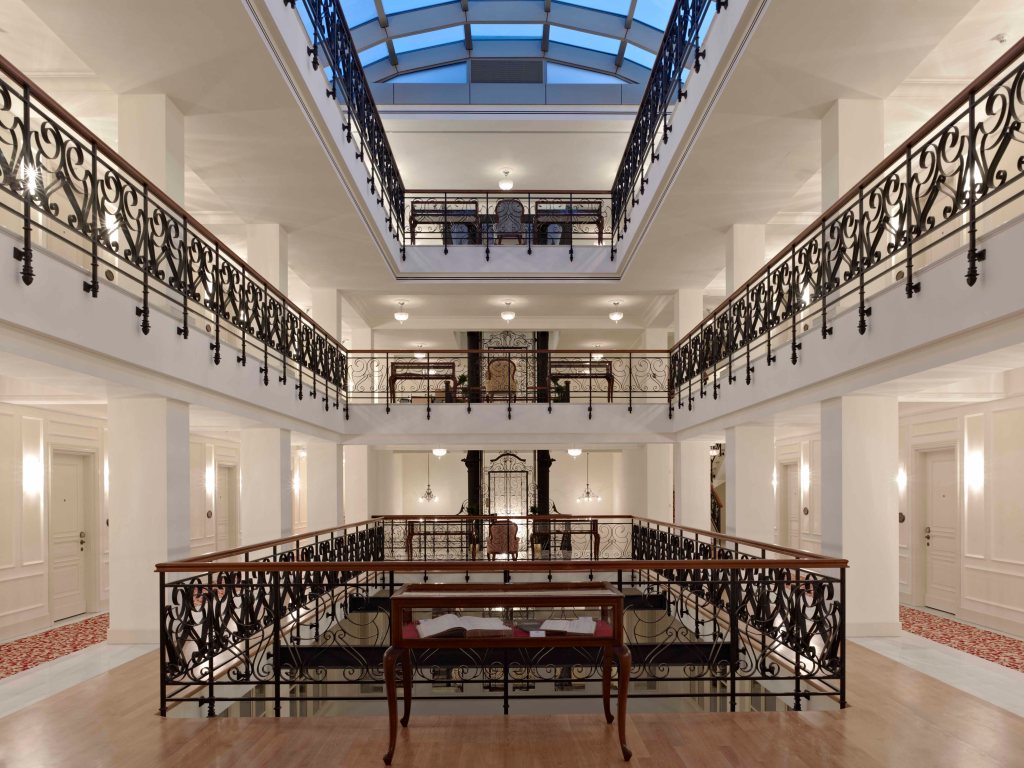
Guest rooms at the Pera Palace are spread across six floors. Each floor has display cases filled with artifacts that illustrate the hotel’s colorful history. (Photo credit: Pera Palace Hotel)

On the morning before checking out, I made a point of visiting all six floors to peruse the display cases exhibiting old photos, menus, ledgers, china and silverware from the hotel and Orient Express. On the fourth floor I found the Agatha Christie Room, wishing the door would be open so I could see inside. For me, it will always be a mystery.

Afloat on the Rhine and Moselle

A dream river voyage on the Scenic Opal spotlights cozy towns in the heart of Europe

By Randy Mink

With its half-timbered houses, tangle of cobbled alleyways and picture-perfect castle perched on a crag high above the market square, the German village of Cochem struck me as something plucked from a medieval fairy tale.

Almost too good to be true, the Moselle River town of 5,500 was one of several stops on “Charming Castles & Vineyards of the Rhine & Moselle,” a seven-night cruise itinerary offered by Scenic, an Australia-based company with 12 luxury river ships in Europe. My brother and I were aboard the 163-passenger Scenic Opal, our floating hotel for the week.

Happily, in Cochem and some other ports of call, the historic town centers lay just steps from the ship’s gangway. I love being in the middle of everything within minutes of disembarking.

Clockwise: The Moselle River town of Cochem, Germany, as seen from hilltop Reichsburg Castle. (Photo credit: German National Tourist Board)
Reichsburg Castle looms high above the Moselle River town of Cochem.  (Larry Mink Photo)
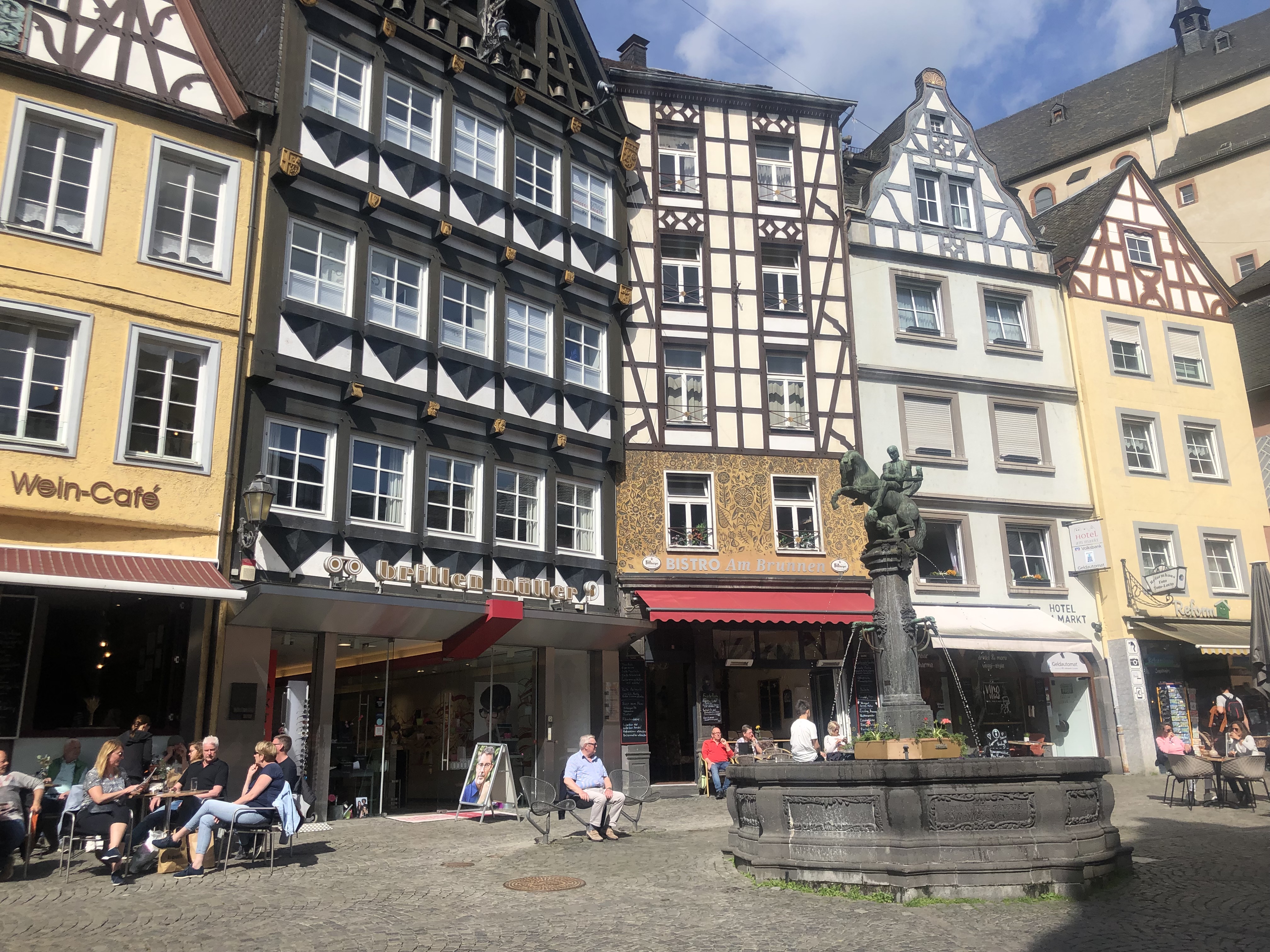
Cochem charms visitors with its ancient, half-timbered buildings. (Randy Mink Photo)

Because of my ancestry and the fact that my first trip to Europe was a summer German language program in Austria, I’ve always had an affinity for German-speaking countries. Until this cruise, however, I had never been to the Rhine or Moselle valleys.

It was the Moselle’s inclusion that steered me to the itinerary, as not all Rhine cruises venture to this narrower, slower-moving, more intimate tributary, which twists and turns more than 100 picturesque miles between the German cities of Trier and Koblenz. Many Rhine journeys spend time in the more industrial stretches to the north.

I also liked this particular circuit because it touched four countries. Besides shore excursions in Germany, Scenic offered tours in France and the Grand Duchy of Luxembourg. The cruise ended in Basel, Switzerland, where we stayed two nights in a hotel before flying home.

The Rhine travels nearly 800 miles from the Swiss Alps to Rotterdam on the North Sea, forming the border of southwestern Germany and eastern France. From the Vosges Mountains, the Moselle flows through northeastern France and Luxembourg to Germany, joining the Rhine at Koblenz, our first port after embarking the day before at Mainz, a city of 200,000 about 40 minutes from the Frankfurt airport.

Both waterways dish up a passing parade of vineyard-covered slopes, hilltop castles and idyllic towns with gabled houses, church steeples and leafy riverside promenades—an eye-popping feast for those of us who thronged the railings or drank it in from deck chairs. Steady streams of barges, sightseeing boats and pleasure craft also kept us engaged. One afternoon on the Moselle, the Scenic Opal went through three locks, the first one upon leaving Koblenz for the pretty Moselle Valley, my favorite part of the trip.

Koblenz: At the Confluence

In Koblenz I opted for a ship-arranged walking tour but easily could have wandered on my own. The colorful squares and alleys of Old Town, a largely pedestrianized shopping zone with plenty of cafes and bakeries, were a short walk from our berth at the beautifully landscaped Rhine Promenade. (My brother chose the e-biking excursion, exploring on one of the ship’s electrically assisted bicycles.)

The park-like river walk led to Deutsches Eck, or German Corner, the point where the mighty Rhine meets little sister Moselle. Lording over the tip of land is a monumental equestrian statue of Kaiser Wilhelm I (1797-1888), first emperor of the New German Empire. Destroyed in World War II and replaced in 1993 after the fall of the Berlin Wall, the statue now represents German unity. Nearby stand three concrete slabs from the infamous wall and text about life under Communism in East Germany. Overlooking the confluence is Ehrenbreitstein Fortress, a massive complex reached by cable car from the promenade.

Clockwise (Randy Mink Photos): An equestrian statue of Kaiser Wilhelm I, the first emperor of the New German Empire, overlooks the confluence of the Rhine and Moselle rivers in Koblenz, Germany. The meeting point is called Deutsches Eck, or German Corner.
Scenic Opal passengers explore Koblenz, Germany, on a guided bike tour.
Tempting bakeries and cafes are just a few blocks from cruise ships’ Rhine River berths.

Little Luxembourg

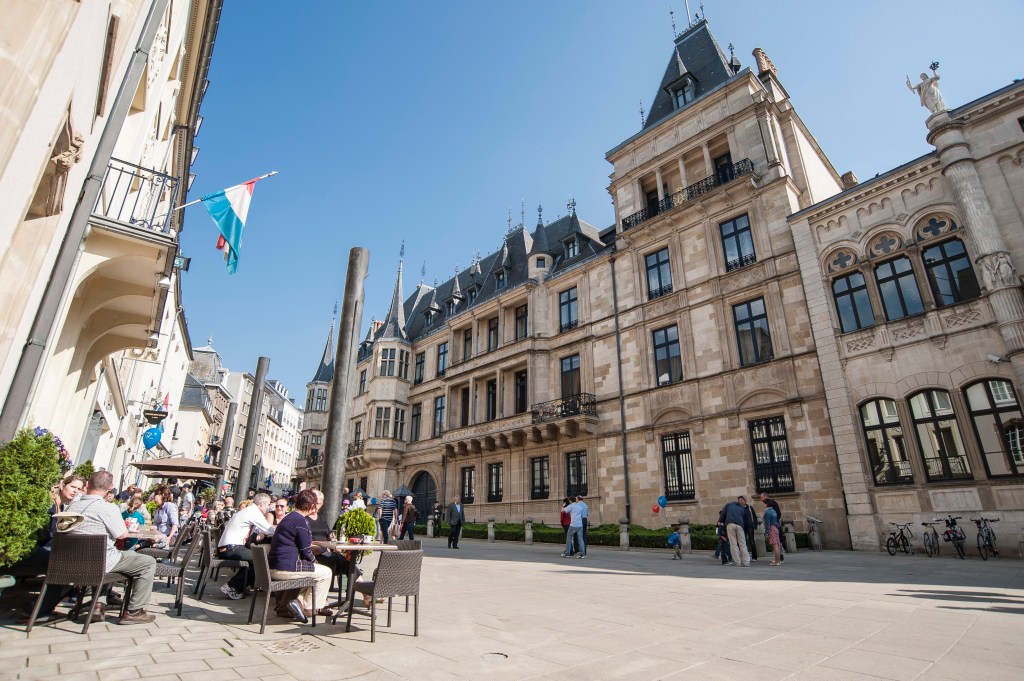
From our next stop, the Moselle Valley town of Bernkastel, we took a morning excursion to Luxembourg City, an hour-and-a-half away. Our guided ramble through the capital city’s oldest quarter, famed for the stone bastions and battlements rising above dramatic ravines, focused on the shop-filled pedestrian zone and included panoramic lookout points. After the tour my brother and I relaxed over hot chocolate at the Chocolate House, snaring an outdoor table across from the Grand Ducal Palace, where we earlier had snapped pictures of the soldiers on guard duty. Passengers who didn’t sign up for Luxembourg could choose to visit a Bernkastel winery and sample the valley’s renowned Rieslings.

1: The imposing Grand Ducal Palace captivates river cruise passengers on the Luxembourg City shore excursion. (Photo credit: LFT/Christian Millen)
2: Soldiers stand guard at the Grand Ducal Palace. (Randy Mink Photo)
3: Ancient fortifications charm visitors to Luxembourg City, a shore excursion option from the Moselle River town of Bernkastel, Germany. (Photo credit: LFT/Alfonso Sagueiro)
4: Stunning panoramas abound in Luxembourg City. (Randy Mink Photo)

Moselle Crowd-Pleasers: Bernkastel & Cochem

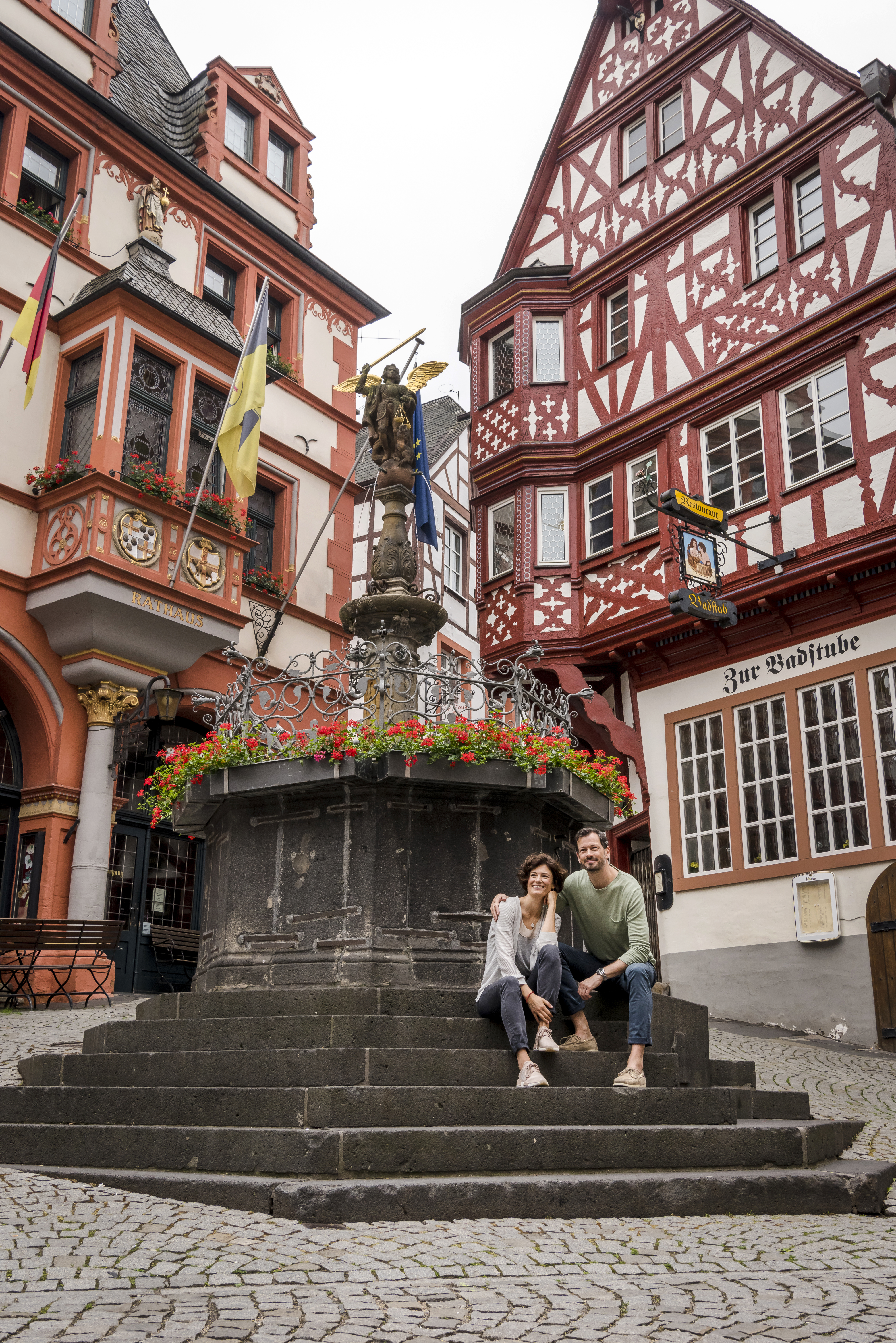
After lunch on the Scenic Opal, moored across the bridge from Bernkastel, we explored the storybook German town. Its riverfront facade didn’t look unusually quaint, but as we probed deeper into the web of little streets, the place just kept getting cuter and cuter. I wanted to photograph every square, crooked lane and antique building in my path, and slip into every wine tavern. Had we more time, I would have hiked up to Landshut Castle, frequented centuries ago by the territorial lords of Trier. Built in 1277 and in partial decay since 1692, it houses a restaurant and cafe.

Left: The fairy-tale town of Bernkastel is a popular stop on Moselle River cruises in Germany. (Photo credit: German National Tourist Board)
Right: Landshut Castle, dating back to 1277, overlooks Bernkastel.  (Randy Mink Photo)

In the evening, we all boarded buses for Trier, where Scenic had arranged a private classical concert staged amid the Gothic grandeur of the 13th century Liebfrauenkirche. Riding through Germany’s oldest city to reach the church, we grabbed glimpses of the famous Porta Nigra, the best-preserved Roman city gate north of the Alps.

Scenic Opal passengers attended a private classical concert at the 13th century Liebfrauenkirche in Trier, Germany. (Randy Mink Photo)

In Cochem, the hub of the Middle Moselle, our excursion featured a visit to Reichsburg Castle. From its lofty vantage point we enjoyed sweeping views of the river, the steep vineyard abutting the castle grounds and a skyline dominated by the onion-dome spire of St. Martin Church. Dating from the 11th century, Reichsburg was restored in the late 1800s by a wealthy Berliner who created an idealized version of a medieval stronghold. Although not architecturally faithful, it certainly gives Cochem a photogenic landmark, and three-fourths of the main tower is original. Mounted animal heads, suits of armor and period furniture set the mood inside. Afterwards, our walking tour of Cochem showcased its compact central square, Baroque town hall and ancient town gates.

Clockwise (Photo credits: German National Tourist Board): Cochem’s Reichsburg Castle has all the trappings of a rustic baronial estate.
The Middle Ages come alive on tours of Reichsburg Castle.
Reichsburg Castle and the onion-dome spire of St. Martin Church frame this view of the Moselle River town of Cochem, Germany.

On the Romantic Rhine

Next we traveled the 32 miles from Cochem back to Koblenz, where our ship overnighted in order to get in position for a morning journey to Rüdesheim that would spotlight the Upper Middle Rhine Valley, or Rhine Gorge, the river’s most castle-studded corridor. This would be our big day, the one we’d been waiting for.

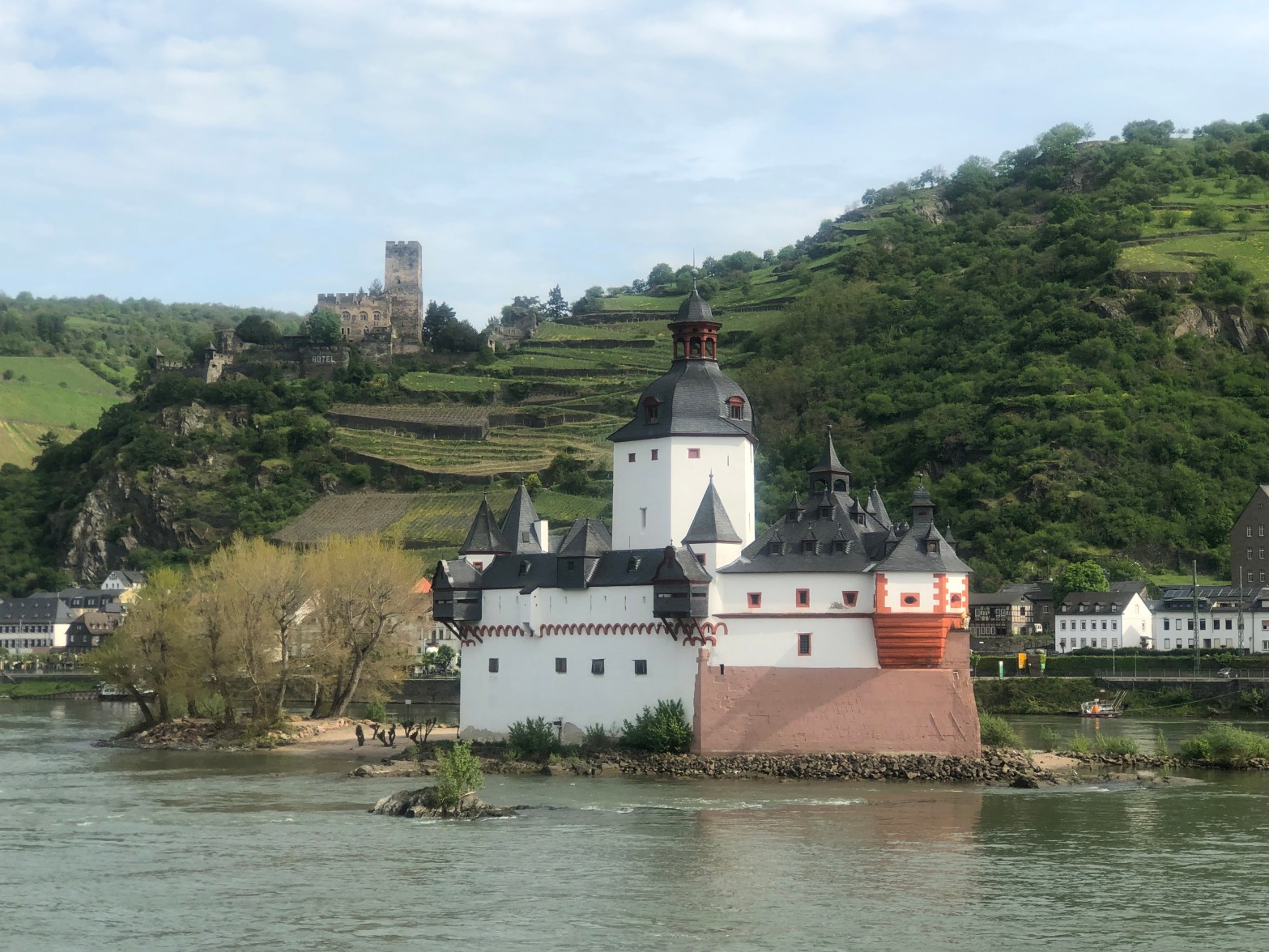
As we looked out from the breezy top deck, it was castle after castle, many of them, romantically, in various states of ruin. Some crowned distant summits, others rose straight from the shore. Vine-ribboned hillsides and timeless villages seemed to be waiting around every bend.

As we learned from the cruise director’s narration and from Tailormade (the Scenic smartphone app), some of the fortresses have been repurposed as museums, restaurants, hotels or private residences. Castle Stahlek in Bacharach, now a youth hostel, once served as a Nazi indoctrination center and military hospital during World War II.  (The app’s commentary also came in handy for exploring ashore and helped us identify the towns and landmarks we passed while cruising.)

In Rüdesheim, a tourist-packed village crammed with wine taverns and souvenir shops, we hiked through vineyards to Niederwald Monument, a grandiose memorial that commemorates the 1871 founding of the German Empire after the end of the Franco-Prussian War. Our uphill trek was challenging, the cable car ride down a lot more fun.

Left: It’s an uphill trek for Scenic Opal passengers who choose to walk to the hilltop Niederwald Monument high above Rüdesheim. (Randy Mink Photo)
Right: Shore excursions in the Rhine River town of Rüdesheim visit the Niederwald Monument, a grandiose memorial that celebrates the 1871 founding of the German Empire after the end of the Franco-Prussian War. (Photo credit: German Tourist Board)

Forays into France

Heading south on the Rhine, the Scenic Opal tied up at two more German towns. From Rastatt we were torn between a tour to the German spa town of Baden-Baden and one to Strasbourg, capital of France’s Alsace, a region that historically has flipped back and forth between German and French control. In Breisach, our last port of call before Basel, we had to weigh Colmar, Alsace’s most beautiful town, against Freiburg, a Black Forest gem renowned for its medieval Old Town.

Since we had seen plenty of Germany, we went all in for Alsace and enjoyed walking tours of Strasbourg and Colmar, both with cozy, traffic-free historic cores chockablock with pastel, flower-laden, Hansel-and-Gretel houses. It’s just that touch of fairy-tale fantasy we needed to put a happily-ever-after ending to our trip through the enchanting heart of Europe—the Europe of our dreams.

Left: The Cathedral of Notre-Dame, a towering landmark cast in red sandstone, dominates this view of Strasbourg’s historic core. (Randy Mink Photo)
Right: Rheinstein Castle, near the German town of Trechtingshausen, is one of many medieval castles that captivates Rhine River cruise passengers. (Photo credit: German National Tourist Board)


To read about the Scenic Opal luxury river ship, including its accommodations and dining experiences, please visit https://europeantraveler.net/2023/10/19/cruising-through-the-heart-of-europe/

Cruising Through the Heart of Europe

In comfort and style aboard the Scenic Opal

By Randy Mink

I can’t think of a more relaxing way of seeing Europe than cruising in luxury along its great rivers. Unlike a multi-country bus tour or train journey, you unpack just once, as your ship is home sweet home for the week. And as these sleek white vessels often dock in the center of town, the tourist highlights lie just steps from the gangway.

My most recent magic-carpet ride to adventure was “Charming Castles & Vineyards of the Rhine and Moselle,” a seven-night trip filled with shore excursions in southwestern Germany, northeastern France and the Grand Duchy of Luxembourg. Delivering us to these enchanting places was the 163-passenger Scenic Opal, one of 12 ships in the Europe fleet of Scenic, an Australian-owned cruise line geared to English-speaking guests.

The 163-passenger Scenic Opal, shown here on the Moselle River in Bernkastel, Germany, is one of Scenic’s 12 luxury river ships in Europe. (Randy Mink Photo)

The Scenic Difference

At first glance, most river ships in Europe seem to offer a similar product, but Scenic stands out in two ways. First, guests have a little more elbow room, as the vessels offer a higher-than-usual passenger-to-space ratio. Whereas many ships of the same size take on 180 or more passengers, Scenic’s four-deck floating hotels carry 163 guests maximum. (Our sailing counted 129 passengers, including 53 Americans, 27 Canadians, 37 British, nine Australians and a smattering of other nationalities.) The Scenic Opal and sister ships Scenic Amber and Scenic Jasper were built in 2015/2016 and refurbished in 2019.

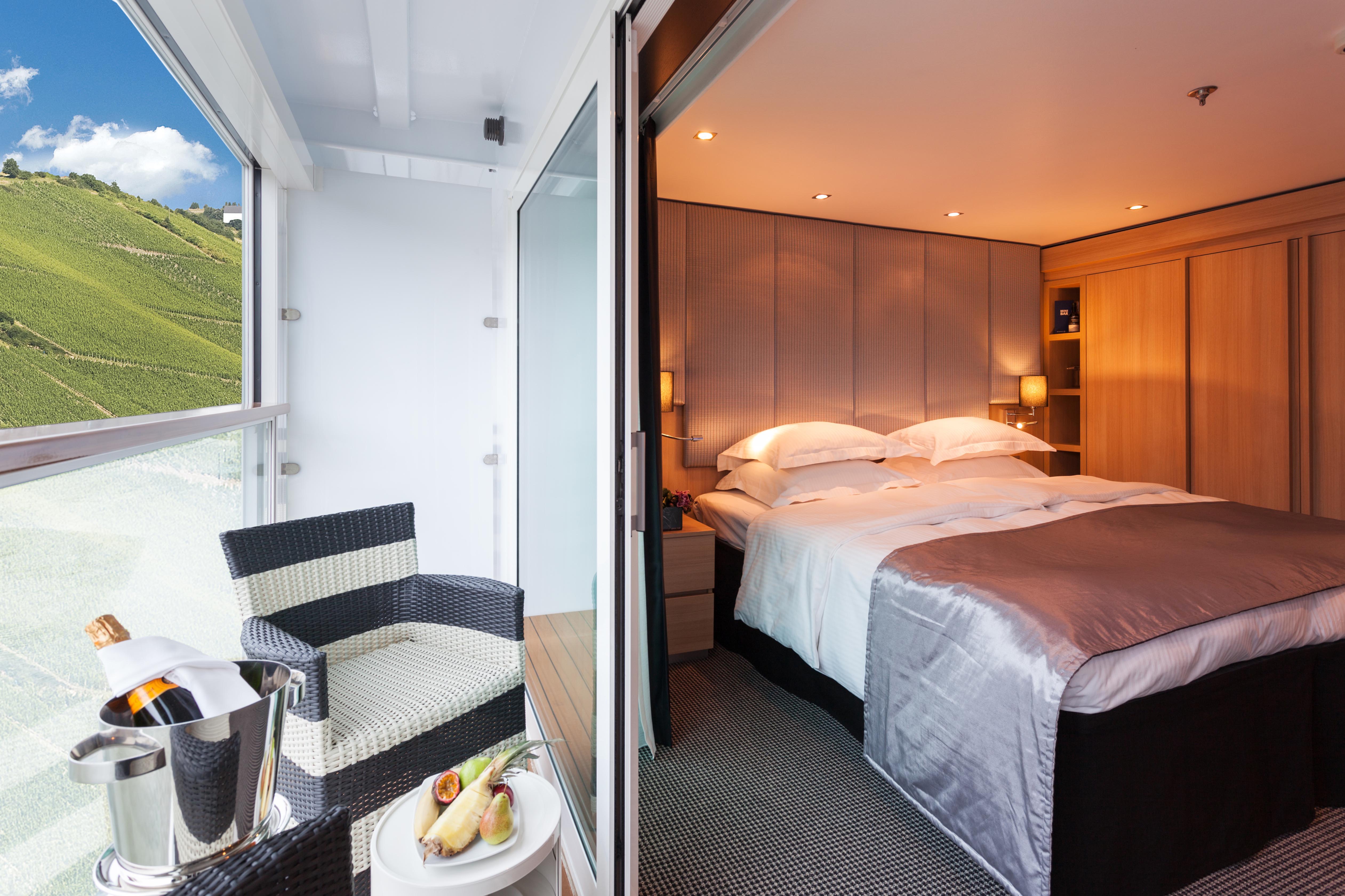
Floor-to-ceiling windows in both public areas and most staterooms, moreover, give the feeling of added space. All cabins on the Sapphire and Diamond (second and third) decks feature a full-length, enclosed balcony with two padded wicker chairs, a table and a wide horizontal window that glides up or down at the push of a button. A curtain and a glass door can be used to close off the bedroom from the peaceful nook, called a Scenic Sun Lounge. For this sense of extra space, Scenic ships are marketed as “Space-Ships” (not because they’re futuristic-looking). Smaller staterooms on the less-populated lower deck, the Jewel Deck, have a large picture window but no balcony.

The other chief takeaway about Scenic is the all-inclusive price. You never have to take out your wallet and won’t even be asked for a credit card at check-in. The cruise fare includes not only gratuities, airport and hotel transfers, laundry service once per cruise, shore excursions and multiple dining options but also unlimited complimentary beverages (soda, beer, wine, cocktails, spirits) all day, not just with meals. You don’t even need to worry about using your room’s mini-bar—just help yourself to free drinks and snacks when the mood strikes. Treats in my cabin included Pringles chips and a favorite of mine—Manner cocoa-flavored hazelnut-creme wafers from Vienna. The refrigerator, replenished daily, was stocked with everything from Coke, beer and juices to German wines and miniature bottles of rum, gin and whiskey.

Left: Most cabins on the Scenic Opal have an enclosed balcony, or Sun Lounge, with a window that glides up and down at the push of a button. (Photo credit: Gillies & Zaiser)
Right: The Junior Balcony Suite offers a little more space than standard staterooms on the Scenic Opal. (Photo credit: Gillies & Zaiser)

Food, Glorious Food

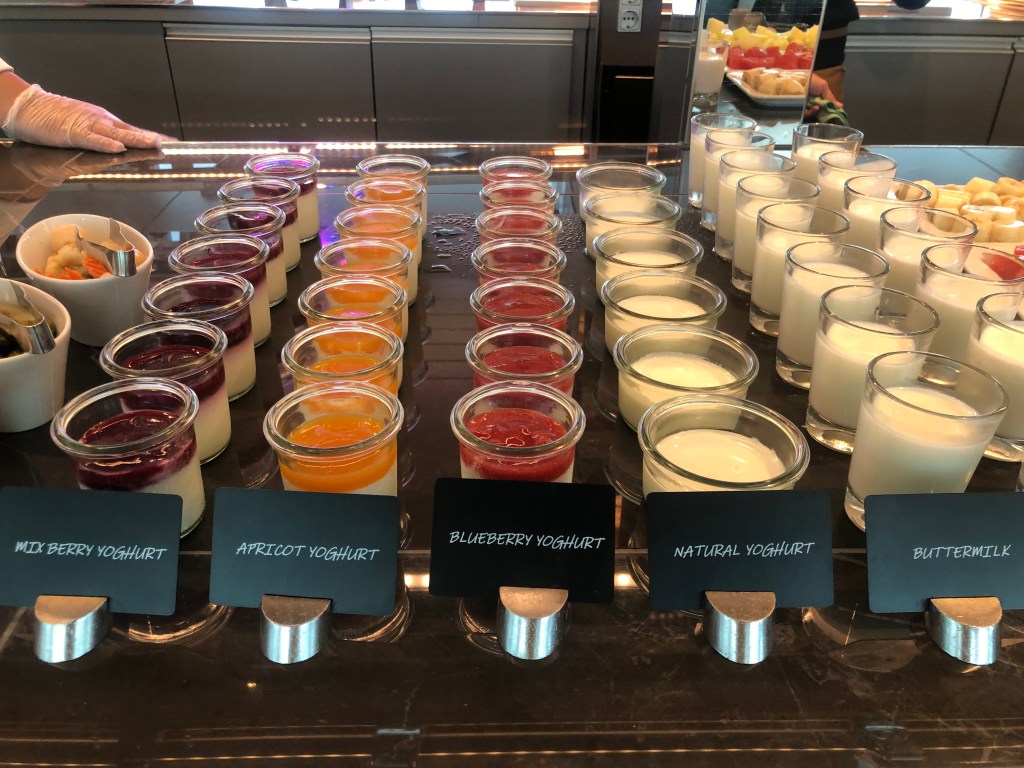
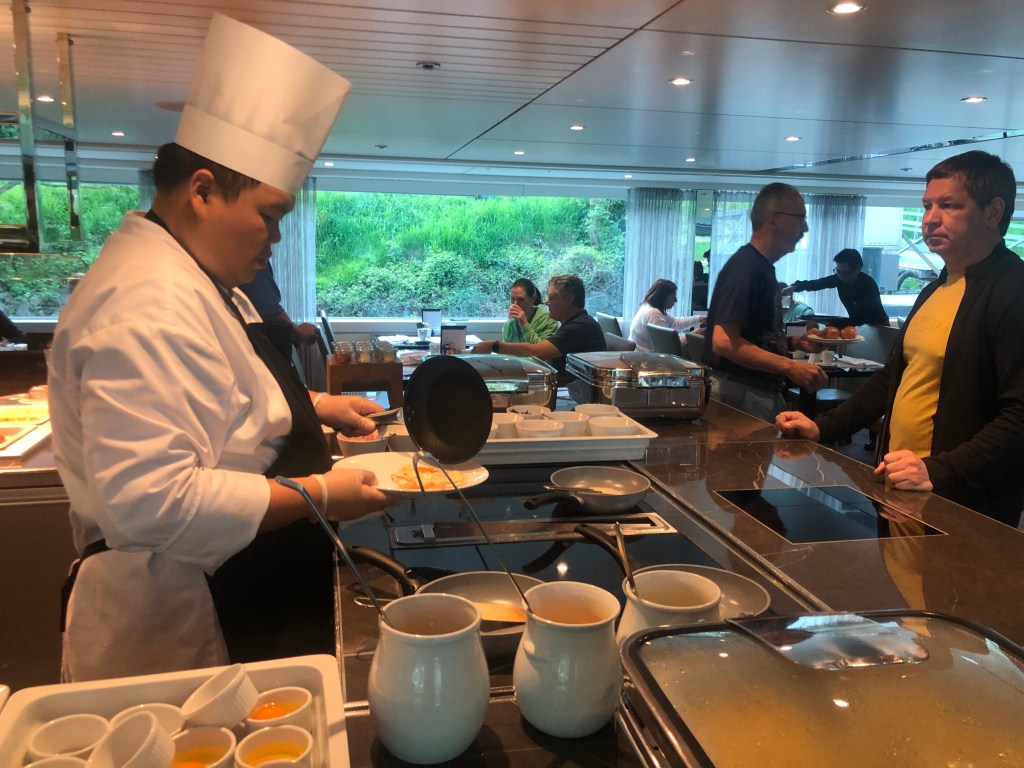
In the Crystal Dining Room, I always tried to get a window table so as to look out on the sloping vineyards and fairy-tale towns flanking the Rhine and Moselle rivers. The daily breakfast buffet featured a million different items—well, at least 100 anyway—and even offered chilled Champagne. There were bagels and artisan breads, yogurts and fruits of all kinds, and hot-off-the-griddle pancakes or waffles, not to mention made-to-order omelets. The Brits and Australians appreciated the baked beans, porridge, English bacon, and grilled tomatoes and mushrooms. One morning we had bread-and-butter pudding.

The breakfast buffet also offered cheeses, cold cuts and smoked fish (herring, rollmops, halibut, salmon). What’s more, we could order from a menu that featured lamb chops, French toast and perfectly done, oh-so-decadent eggs Benedict.

Lunch also was a smorgasbord. I really enjoyed the German buffet, a special meal that put an exclamation point on our morning transit through the castle-studded Rhine Gorge and got us in a jolly mood for the tourist-thronged wine town of Rüdesheim. The spread included three types of sausage—bratwurst, Käsekrainer (cheese-filled) and Weisswurst (white veal sausage)—and three mustards. There were sauerkraut, parsley potatoes and both bread and potato dumplings. Cheesy spaetzle, freshly tossed, was served hot from the pan. I didn’t have room for the fried chicken (Backhendl), pan-seared river trout in almond butter or even a morsel of the pork knuckle.

Recorded oom-pah band music lent a Munich beer hall vibe as I washed down traditional German foods with a tall glass of Erdinger Weissbier, a classic wheat brew. Dessert was Dampfnudel, a pillowy steamed dumpling filled with blueberries. Other lunch buffets usually featured at least one food representative of the region we were traveling through.

On King Charles III’s coronation day, the River Cafe, an area of the Opal Lounge that offers a daily lunch buffet, we had fish ’n’ chips while watching the ceremony on big-screen TVs. The lounge’s coffee and tea stations had scones with jam and clotted cream, another British touch.

The River Cafe, open during the day for sandwiches, salads, ice cream and pastries, is transformed each evening into Portobellos, a five-course Italian dining experience for which each guest receives a printed invitation once during the week. Table La Rive, a sophisticated chef’s table offered once a cruise to Diamond Deck and Junior Suite guests, stars innovative fare with wine matching in a small-group setting in the dining room.

Every night, the restaurant’s a la carte dinner menu gave us appetizer, main course and dessert choices. If we didn’t want one of the three entree selections, we could order a salmon steak, sirloin steak or chicken breast.

Rather eat in privacy on your balcony? An extensive room service menu is available from 6 a.m. to midnight.

On any cruise, I tend to overeat (don’t we all?), so every day I hit the walking track on the expansive Sun Deck, a breezy area with tables, chairs, loungers and a vitality pool. Happily for me, the track was lighted after dark. I recall one night making my rounds as floodlit Reichsburg Castle loomed beyond the storybook Moselle River town of Cochem, Germany, a magical moment indeed.

Left to right: The Scenic Opal’s daily breakfast buffet offers choices galore, including many varieties of yogurt. (Randy Mink Photo)
An omelet station is part of the Crystal Dining Room’s breakfast buffet. (Randy Mink Photo)
Alcoholic drinks in the Opal Lounge and dining room are included in the cruise fare. (Photo credit: Gillies & Zaiser)
The River Cafe is the place for a wide variety of tempting small bites throughout the day. (Photo credit: Gillies & Zaiser)

A Superlative Staff

Every evening we all gathered in the spacious lounge with cruise director Alex Thurein, who briefed us on the next day’s schedule. An affable German who was born in Wiesbaden and currently lives in Salzburg, Austria, he set the upbeat tone of the cruise. From Day 1 we knew we could go to Alex for travel advice or any problem. (On a personal note, I will be forever grateful to him for helping me contact credit card companies after a pickpocket incident during a shore excursion in Colmar, France.)

One morning Alex gave a brilliant presentation on “Germany and the Germans: A Brief Overview of 1,200 Years of Central European History.” Another day his topic was Europe’s rivers, canals and lock systems.

The Scenic Opal’s crew, 53 in all, represented 14 nationalities, from Thai and Indonesian to Serbian and Polish. Our captain was Hungarian. The women staffing the reception desk always had smiles and couldn’t wait to assist or answer a question.

Also smoothing the way was the stateroom’s TV, an encyclopedia of information and entertainment options. We could watch television shows (I mostly caught the live BBC newscasts), choose from a wide selection of movies and music, view the daily schedule and lounge presentations, and bone up on the ports of call. A keyboard even let us use the screen as a computer.

With high-tech gadgetry, an all-inclusive approach and plenty of space to unwind, Scenic has thought of everything to ensure a worry-free journey on the rivers of Europe.

1: Champagne is served at the first-night welcome reception onboard the Scenic Opal. (Photo credit: Gillies & Zaiser)
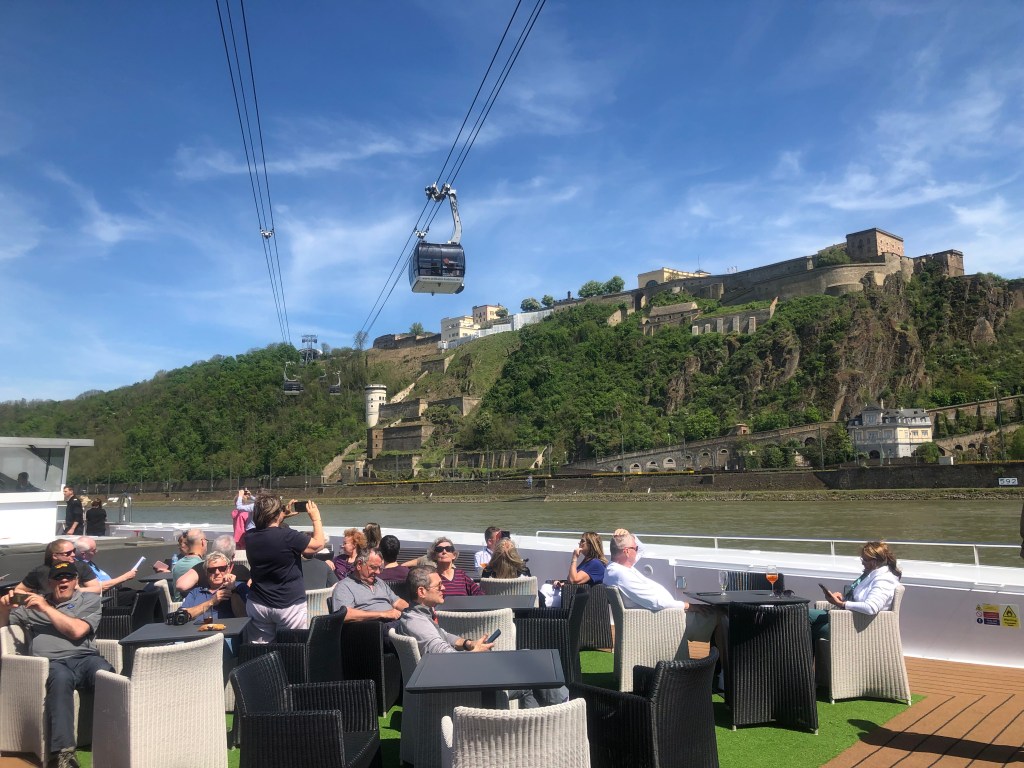
2: In the Rhine River city of Koblenz, passengers relax on the Sun Deck of the Scenic Opal as cable cars to Ehrenbreitstein Fortress pass overhead. (Randy Mink Photo)
3: The Scenic Opal’s reception desk is located just off the Opal Lounge. (Photo credit: Gillies & Zaiser)
4: A passing parade of hilltop castles enchants passengers on the Scenic Opal. (Photo credit: Scenic)

Magic, Yoga, and Positive Energy Await You in Southern Spain

By Abbey Algiers

You know that feeling when you have an amazing vacation, and you want to tell absolutely EVERYONE you know about it… and then you do, and you see that they “get” you had a good time but don’t quite “get” HOW AMAZING the experience was? And no amount of Instagramming can truly relay what you experienced because not even you understand exactly what happened.

My experience at the Suryalila Retreat Centre in southern Spain felt like that. 

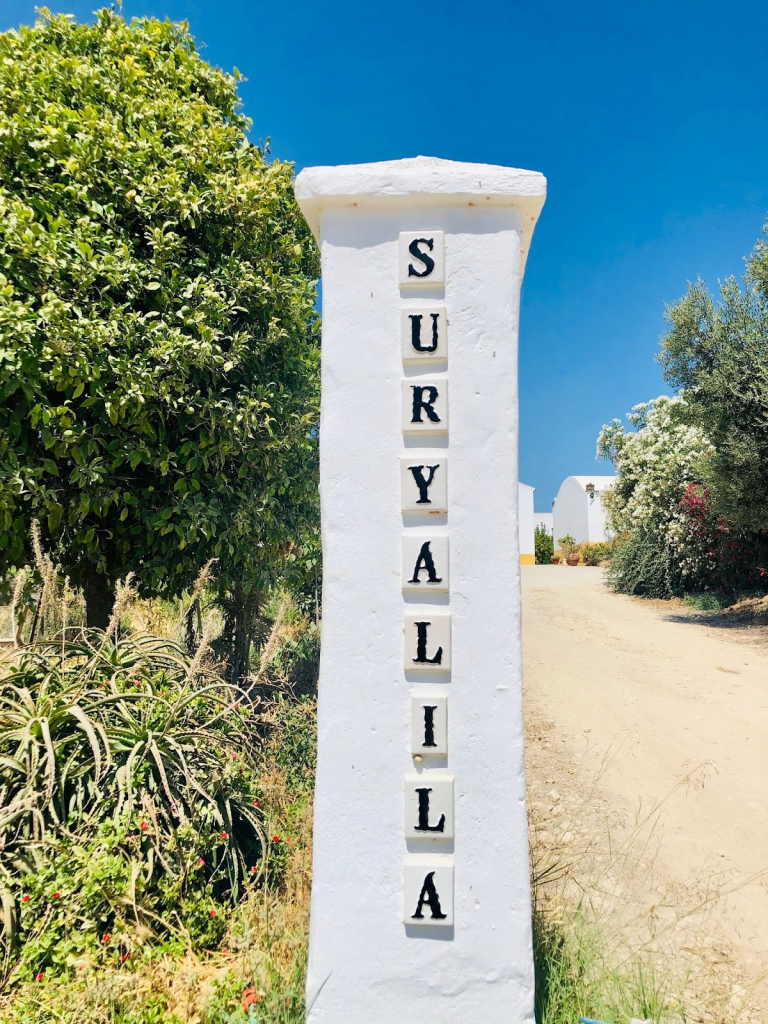
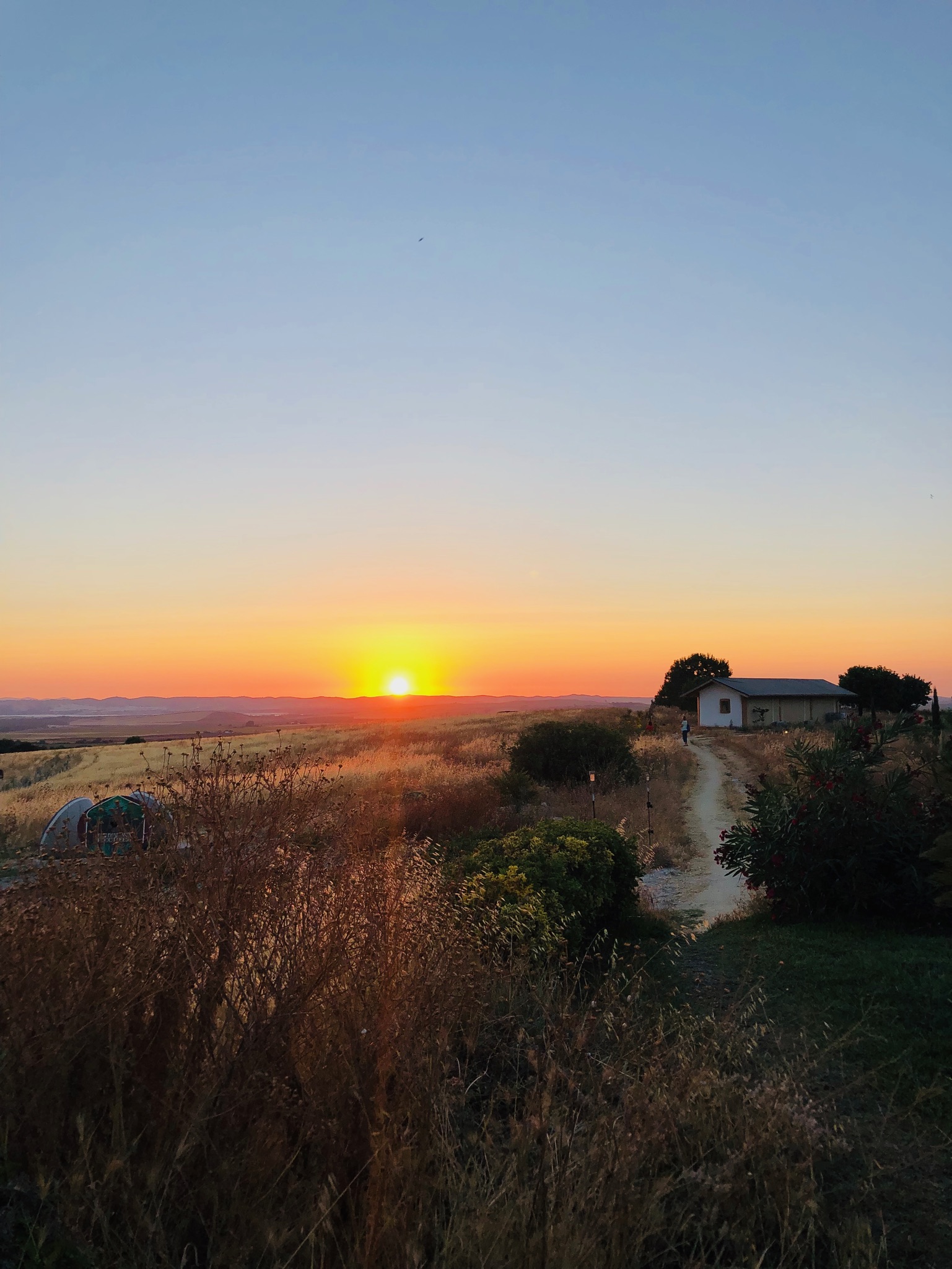
As I approached the road to Suryalila, I sensed I was in for something special.

The short story—I led a Wellness Retreat & English Immersion at Suryalila Retreat Centre in southern Spain. We could end this here, and no doubt you’d get the feeling it was amazing, even if you weren’t in need of English immersion. The mention of southern Spain probably puts visions of rolling hills, white-washed villages, sunflower fields, olive oil, wine… beauty. Right? And then add that we’re at a yoga retreat and discussing wellness topics—I’d bet you’re on board with the possibilities for Zen and relaxation.

Suryalila Retreat Centre… it’s Different. And Special. 

If you visit this centre, be prepared to be inspired and changed. Located on a renovated olive farm, the setting of the Suryalila Retreat Centre makes you feel like you’ve been transported to the beginning scenes of The Alchemist, set in the rolling hills of Andalucia. If you’re unfamiliar with this story, it’s the mystical tale of Santiago, an Andalusian shepherd boy who sets out to travel the world in search of treasure. While searching, he learns to listen to his heart’s calling and the guidance he receives from the “language of the world.” The “alchemy” of the story is Santiago’s evolution,  or “discovering his Personal Legend.”  Here’s the tie-in—the longer you stay at Suryalila, the more you feel the same sense of alchemy.
This alchemy is just one of the reasons Suryalila is so magical. Something about its very energy begs you to connect with yourself on a level that perhaps you hadn’t reached before.

The rolling hills of Suryalila will both “wow” you and make you feel incredibly at peace.

The Energy of Suryalila Retreat Centre

One can sense an unmistakable positive and mystical energy at Suryalila, which I believe stems from its location. Set in a large open valley in the foothills of the Sierra de Grazelema, the retreat offers views of a majestic mountain range peeking out on the horizon, and every direction holds awe-inspiring surprises—rolling hills, fields of sunflowers as you’ve never seen, farmhouses, and even an abandoned monastery. Moreover, its 45 acres of land hold a working olive farm with 350 olive trees and organic vegetables, fruits, chickens, horses, goats, sheep, dogs, and cats.

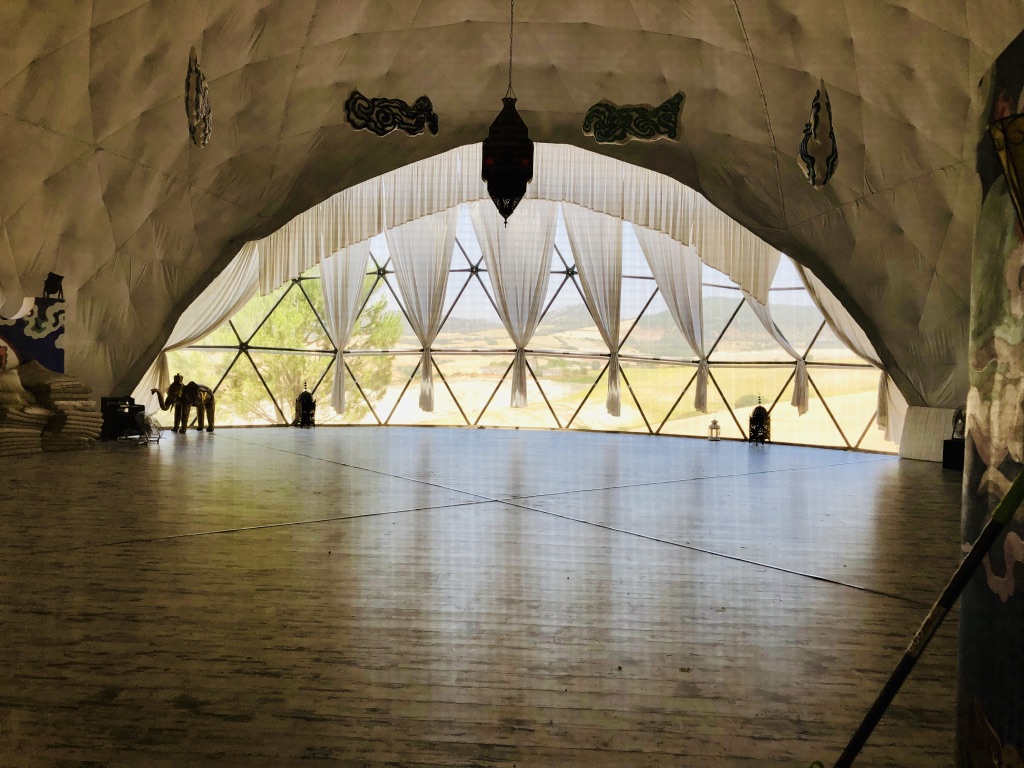
Not sure how to take in all of the views? Start with the property’s yoga halls. There are three, and each provides a unique place to enhance your practice and achieve inner peace. The biggest is the majestic Om Dome, which was the realization of a dream years in the making and is what Yoga Journal called  “the most magnificent yoga hall in Europe.” The dome’s massive bay window offers views of beautiful rolling hills and an abandoned convent while you take in the special energy of the dome. Two other spaces allow for even more options for awe-inspiring yoga. The Moon Shala is a sustainable cobb (straw bale and mud building) organic structure located in the olive grove, offering its own stunning vistas. The Ganesha Yoga Shala is part of the retreat’s main house, with windows on both sides allowing plenty of light and fresh air.

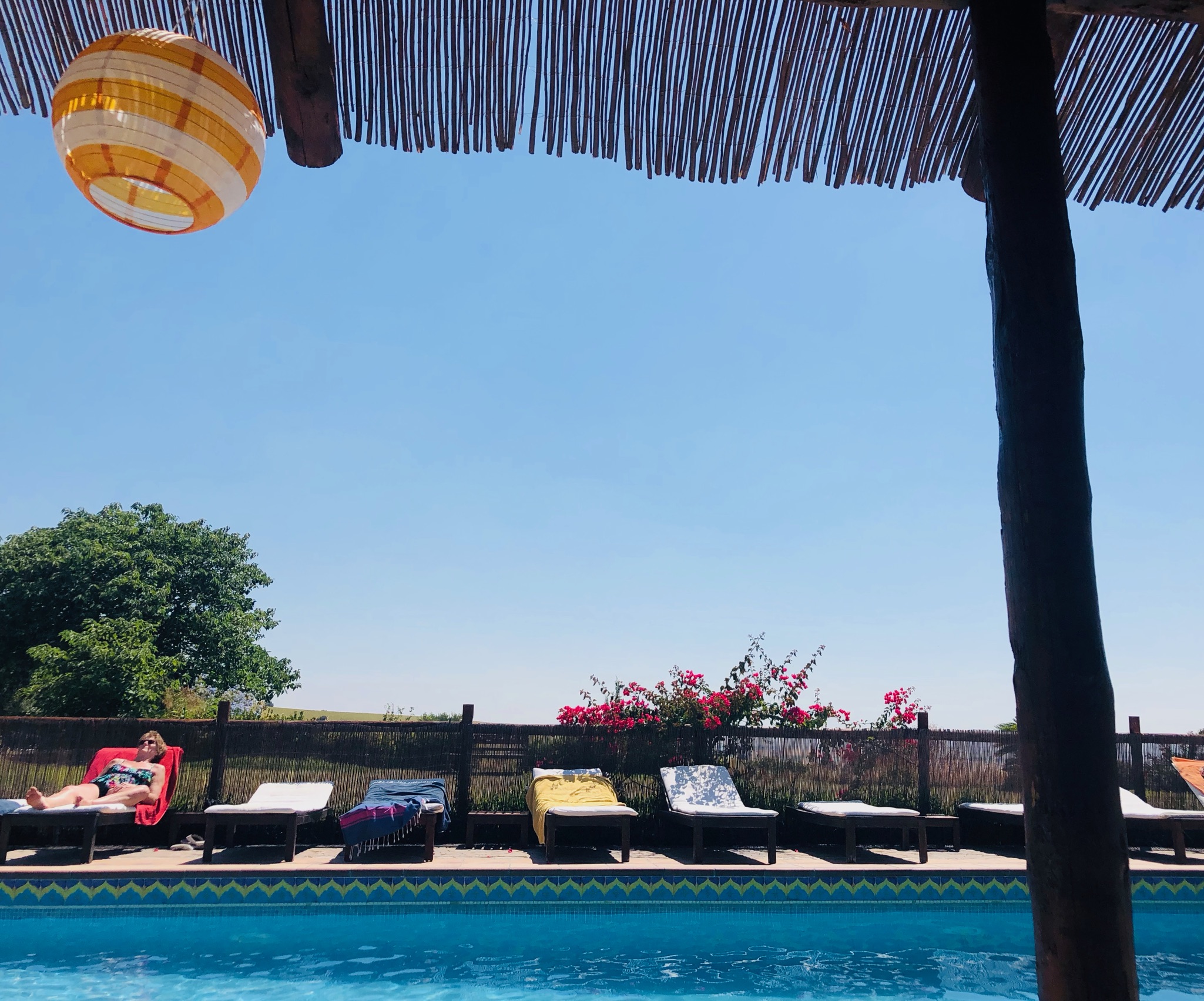
Not achieving a zen state is not a problem, even when you’re not practicing yoga. The property offers a multitude of places to relax and reflect. Whether you cool off in the saltwater eco pool, nap in the Moroccan Pavilion, or sip tea on one of the benches, chairs, or pagodas aesthetically and strategically placed throughout the property, you’re promised unparalleled views and serenity.

Every meal was as gorgeous and delicious as this.

While nourishing your spirit and soul, your body will also be cared for. The menu consists of perhaps the most nourishing and lovingly prepared vegan/vegetarian organic food I’ve ever had. To say it is beautifully presented could be the understatement of the century.  With ingredients sourced from the property, each meal is planned by a (very happy and friendly) group of chefs. There’s even a view of the site’s organic vegetable garden from the kitchen window.  

As you can see, the setting of Suryalila is quite simply perfect. But the story can’t end here because the setting can’t get all the credit for the magic of Suryalila.

The magic can be found and felt in every one of the people behind it. Bringing it back to The Alchemist, it’s clear that Vidya, the woman behind Suryalila, followed her personal legend to bring this beautiful place to life in 2011. (Her story is found here.) Her positive energy and unrelenting spirit created this magical escape that attracts like-minded yoga instructors, chefs, property managers, massage therapists, and support staff.  

Each of them is on course to discover their personal legends as well. They come from all over the world, each searching for something different but with the common spirit of making Suryalila (and the world) a better, brighter place. In doing so, they’ve created a vibe that shines as bright as the sunrises and sunsets gracing Suryalila daily. If you want to know (and feel) what I’m talking about, arrange a trip to Suryalila. You can participate in one of the many yoga retreats offered throughout the year, or simply stay in the centre’s yoga hotel, with accommodations to fit every budget. 

Whatever way you choose to experience Suryalila Retreat Centre, I promise you, it will be magical.

Le Petit Chef Dishes Up Big Fun

Story and photos by Alison Ramsey

A simple white charger plate and smooth white table turn into a texture-rich artistic musical experience, culinary history lesson, and elaborate feast right before your eyes! Fairmont Chicago’s Le Petit Chef: An Immersive Dining Experience features a 2.5-inch animated French character created by artists at Skullmapping. Rising from the center of your plate via groundbreaking 3D projection mapping that requires no special eyeglasses or visors, Le Petit Chef illustrates through colorful storytelling the history of ingredients used in the meal, the joy of being a chef, and the art of creative plating inspired by famous painters. It’s a dining experience like no other, and Fairmont Chicago, in partnership with TableMation™, opened this exclusive gastronomical adventure to the public on January 19, 2023. The lobby level Cuvée Room at Fairmont Chicago houses this 90-minute themed dinner with curated wine pairings.

Projected from the ceiling down to the tables and plates, 3D scenes and designs bring the dining area to life, illustrating gardens, sculpted fountains, raging battles, as well as busy cooktops boiling potatoes and searing meat. Between humorous anecdotes, musical numbers featuring dancing vegetables, lessons about ingredient composition, and tips on flavor combinations, guests are served a beautifully prepared, delectable 5-course meal featuring the elements showcased.

Each dish is rich with taste, texture, and color, but not heavy or saturated with creams and dressings. The delicious natural flavors of fresh produce and meat are perfectly seasoned to surprise and satisfy. Those with allergies or special dietary needs and preferences are graciously accommodated, making the menu safe for all who want to partake.  

“I think all kinds of eaters will find something to enjoy in this experience,” said diner Marc Berry after his meal with Le Petit Chef. “Even non-foodies can enjoy each interesting yet accessible course, and the joy of the 3D segments accompanying them.”

Fairmont Chicago General Manager, Clay Spencer, said, “We are thrilled to bring this unique dining experience to our guests, the city of Chicago, and the larger Midwest region. … We’re delighted for diners to experience this culinary adventure through animation. It is a dinner like no other.”

Pricing per person begins at $155 (exclusive of tax and gratuities), with an optional French wine pairing of $42. The first seating starts at 6:00 p.m. and the second at 8:00 p.m. every Thursday through Saturday, through the end of 2023.  For more information about Fairmont Chicago and to book your special dining experience at Le Petit Chef, please visit fairmontchicago.com.

For Valentine’s Day, treat your sweetheart to Le Petit Chef’s fun and fancy French meal, or consider these other Chicago area specials:

Love is in the air! Skydeck Chicago’s “Pie in the Sky” VIP Valentine’s Day Dinner offers a three-course meal that includes a delicious Giordano’s heart-shaped deep-dish pizza, salad, and dessert, served with a stunning view of the city. This 10 p.m. after-hours experience is intimate, with only seven tables per evening, maximum, and it takes place after Skydeck Chicago is closed to the public. Before ascending to the 103rd floor to step out on the glass-bottomed The Ledge, explore the ground-level museum and exhibits featuring Chicago’s diverse neighborhoods and architecture. A small-scale Bean (Cloud Gate), Second City stage setup, giant hot dog and deep-dish pizza, full-scale “L” train car, replica Chicago Picasso – there are photo opportunities galore! Book your Pie in the Sky table here for Valentine’s Day, February 14, 2023, or celebrate early by booking for Thursday, February 10, or Friday, February 11.

Photo courtesy of Skydeck Chicago

The “Love, Alma” package at stylish Hotel Zachary at Gallagher Way is a tribute to architect Zachary Taylor Davis’ true love and muse, Alma Davis. This romantic overnight includes a $50 food and beverage credit at The Bar, upgraded Wrigley Field ballpark view accommodations, and an extended 1 p.m. late checkout. Book your reservation here.

Photo courtesy of Hotel Zachary

Spread the love on Friday, February 10, from 6:00 p.m. to 10:00 p.m. at Hotel Zachary’s The Bar “Galentine’s Day Social Hour,” where you can craft a custom flower bouquet, enjoy live R&B DJ entertainment, snack on light bites and desserts, savor wine or a build-your-own-spritz concoction, and observe the on-site creation of an original painting by an artist. This event is hosted by Chicago influencer @FoodiexFancy in partnership with Bombay. Guests in attendance are encouraged to sign cards to be donated to a local Chicago children’s hospital. Purchase your Galentine’s Day Social Hour passes here.

Photo courtesy of Hotel Zachary

Museum of Illusions (MOI), in the heart of downtown Chicago, is a unique and interactive date spot to explore with your special someone. MOI offers a 2-for-1 Valentine’s Day ticket special for those wanting a mind-bending experience at a fraction of the cost. Reserve your February 14 tickets here, and the discount will automatically apply at checkout on Adult tickets.     

Photo courtesy of Museum of Illusions