Founded in 1710, Meissen Porcelain is one of the world’s most successful luxury brands. It stands for the timeless connection between past and present, classic design and hand-made quality. This year Germany is celebrating the 300th anniversary of Meissen Porcelain with more than 40 special events and exhibitions.
Some of this year’s highlights included these exhibitions: Triumph of the Blue Swords at the Japanisches Palais in Dresden, focusing on the first 100 years of Meissen, showing masterpieces that are not usually displayed in public; All Nations are Welcome in the nearby town and modern factory of Meissen (January 23 – December 31); Philosopher’s Stone, a collection in the original workshop in Castle Albrechtsburg also in Meissen (May 8 – October 31); and The Fascination of Fragility with 500 pieces from Dresden’s state collection in the Ephraim Palace in Berlin.
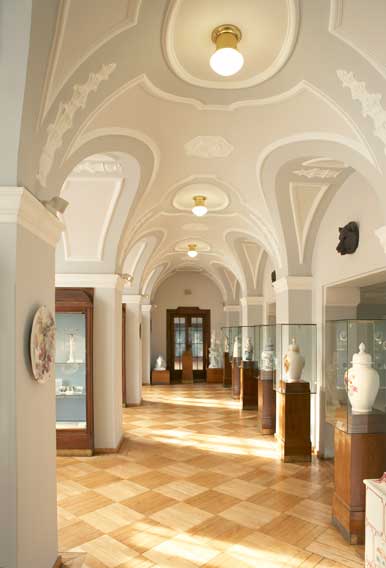
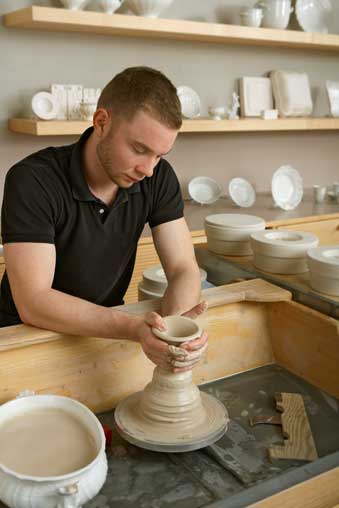
Porcelain in Meissen and Dresden is not only available to the public during this jubilee year. The Saxon nobelman Augustus the Strong’s permanent collection is housed in Dresden’s Zwinger Museum in the rooms beautifully restored by the New York designer Peter Marino. The modern production center, its connected museum in Meissen and the original factory in the Albrechtsburg, are only 45 minutes outside of Dresden and accessible by fast train to visitors throughout the year. You can dine on Meissen porcelain, participate in workshops, watch the production and, of course, buy the products.
Porcelain manufacturing and collection is a major attraction throughout Germany, with special routes, museums and production centers. Two porcelain routes link places of interest with the manufacturing of porcelain: Along the 340-mile-long route in the north-east of Bavaria visitors can discover famous factories, the European Industrial Museum of Porcelain, the Rosenthal Museum and the European Museum of Technical Ceramics. www.porzellanstrasse.de
A second themed route in Thuringia features factories where porcelain is made and decorated and where visitors can visit factory outlets, demonstration workshops and several museums. www.thueringerporzellanstrasse.de
Another highly acclaimed porcelain factory is based in Munich in the beautiful Nymphenburg Palace. For 260 years the Nymphenburg production center produced dinner services and figurines for the Bavarian kings. At the adjacent museum more than 1,000 pieces of Nymphenburg porcelain from different periods are exhibited. www.nymphenburg.com/us/nymphenburg
Following the official announcement that England’s royal newlyweds will move to Kensington Palace in June, the five-star boutique Milestone Hotel in London, which overlooks the royal palace and gardens, will celebrate the arrival of the new couple with the Live Like Royalty package and the specially designed “William and Catherine cocktail.”
Guests can also enjoy a taste of royal life with the hotel’s “Live Like Royalty” package, staying in suitably named rooms such as The English Rose, The Kensington Palace Studio, The Regency Suite, The Princess Suite or The Buckingham Suite—with entrance to Buckingham Palace included. Also, in July, guests visiting Buckingham Palace under the Milestone’s Live Like Royalty package will be able to view the Duke’s and Duchess’s wedding cake and the Duchess of Cambridge’s wedding dress, which will go on display for the summer.
Created by Head Bartender Markus Rottensteiner, renowned for inventive cocktails, the William and Catherine Cocktail combines the flavors of Williams Pear, Williams Pear Schnapps and champagne.
The Milestone’s package includes two nights’ accommodation in a bedroom or suite overlooking the palace, full English breakfast, champagne afternoon tea, and two tickets to either the Queen’s Gallery or the State Rooms at Buckingham Palace.
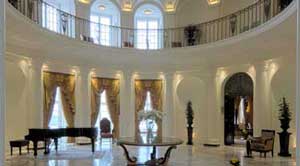
The Milestone Hotel is known for its sumptuous interiors and has just unveiled its recently refurbished master suite, the Tudor Suite. Comprising one bedroom and one sitting room, the regal Tudor Suite offers luxurious stays with features such as a gold four-poster bed, custom made ivory silk curtains and furniture and art sourced from Christies and the finest auction houses around the world.
Wedding “destinations” in the Germanic lands can sometimes be unusual.
Take, for instance, the June 2006 wedding of Swiss-born Hans and Birke Mebold of Rheinfelden, Switzerland.
“Our wedding was something special,” says Birke. “All this talk about the most beautiful day in your life…but it really was the case for us. The whole wedding took on a kind of momentum all its own.”
The Meholds first were officially married in a small church called Johanniterkapelle in Rheinfelden, home of Switzerland’s most popular beer, Feldschlosschen, and the town in which the couple both work.
Following the 11 a.m. ceremony, and a small reception, the couple was whisked away on Rheinfelden’s biggest fire truck with its blue lights flashing wildly. Both Feldwebel Hans and Birke are Rheinfelden fire brigade volunteers of 16 years and five years respectively, with Hans head of the town’s traffic regulations and security section.
HELICOPTER RIDE Where the couple’s fire truck ride ended, their helicopter ride began, to the 2,100-foot-high resort town of Eptingen where they met a bus full of 50 wedding guests of family and friends.
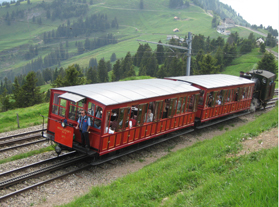
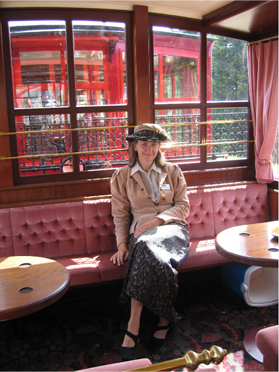
At Vitznau on Lake Lucerne, the group boarded a specially-reserved Mt. Rigi Railway steam locomotive and two-car cogwheel train consisting of No. 16, an 1923 oil-fired engine, and the BelleEpoque, a stately parlor car built in 1873 and coach No.10, built in 1871. The crew assigned to the wedding train consisted of a driver, a fireman, a conductor and one hostess dressed in period costumes for each car.
As the steam train ascended up the side of steep 6,000-foot-high Mt. Rigi on a clear, warm spring day, the guests were served refreshments. The train passed quaint farms, pastures filled with grazing sheep and cows, and hiking trails.
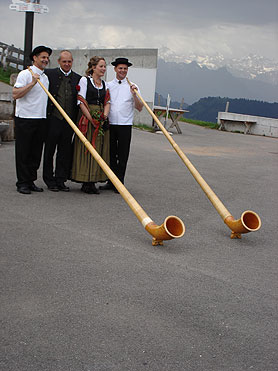
At Rigi Kulm, the group was welcomed by the alpine horns of Ruedi Imlig and his brother. Then a second wedding ceremony took place in the small chapel on the top of Rigi.
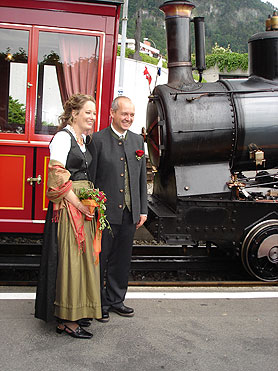
The wedding steam train for Hans and Birke Weber chugs up Mt. RigiBride Birke Weber steps out of her special railway car at the top of Mt. Rigi; her new husband, Hans, follows.Train hostess Lucia Weber on the Belle Epoque, an 1873 salon car
DINNER AND DANCING AT THE TOP The guests then enjoyed dinner and dancing at the Hotel Rigi Kulm. “The scenery at the top was so beautiful and the food was excellent,” says Birke. Afterward, dancing was provided by Gunter Pichler and his GP Music band.
“My great grand aunt had taken us to Mt. Rigi last year, and we were stricken by the incredible view from the top,” says Birke.”When we thought about a location for our wedding, it didn’t take long to decide to go to Mt. Rigi.” She admits the travel arrangements for buses, trains and helicopters were a bit daunting, however.
The happy couple and guests returned from the mountain after midnight on an electric cogwheel train, and later spent their honeymoon in Sweden. If this is what they planned for their wedding day, it sounds like this couple is never going to have a dull moment.
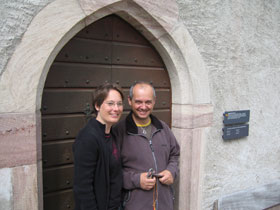
Hans and Birke Mebold, a year after their wedding, stand in front of the Rheinfelden, Switzerland church where they were married before their many relatives and friends.
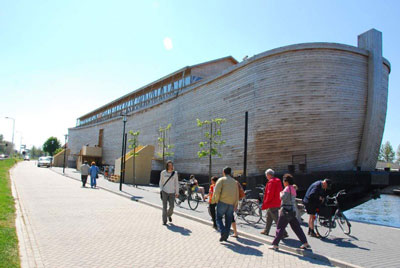
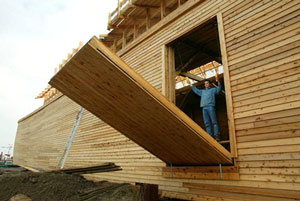
When the massive central door on the side of Noah’s Ark was opened, the first crowd of curious townsfolk was there to behold its wonder.
Of course, it’s only a replica of the biblical Ark, built by Dutch creationist Johan Huibers, as a testament to his faith in the literal truth of the Bible. The ark is 150 cubits long, 30 cubits high and 20 cubits wide. That’s two-thirds the length of a football field and as high as a three-story house.
LIFE-SIZE ANIMAL MODELS Life-size models of giraffes, elephants, lions, crocodiles, zebras, bison and other animals greet visitors as they arrive in the main hold. A contractor by trade, Huibers built the ark of cedar and pine. Biblical scholars debate exactly what wood was used by Noah for construction.
Huibers did the work mostly with his own hands, using modern tools and with help from his son, Roy. Construction began in May of 2005. On the uncovered top deck — which was not quite ready for the opening– will come a petting zoo, with baby lambs and chickens, and goats and one camel.
Visitors on the first day were stunned. “It’s past comprehension,” said Mary Louise Starosciak, who happened to be bicycling by with her husband while on vacation when they saw the ark looming over the local landscape.
There is enough space near the keel for a 50-seat film theater where kids can watch a video that tells the story of Noah and the ark. Huibers says he hopes the project will renew interest in Christianity in the Netherlands, where church going has fallen dramatically in the past 50 years.
With “sightsleeping” hotels, the state of Bavaria offers tourists interesting ways to discover the land of King Ludwig with its many castles. “Sightsleeping” features 19 different hotels all over Bavaria, each unique, and a tourist attraction in and of itself.
Especially interesting are the seven castle hotels at Neuburg, Wernberg, Pommersfelde, Eggersberg, Rothenburg, Burgellern and Hopferau. Each offers a connection between history, culture, art and luxury. (www.bayern.by)
Live like a king, spend as a pauper
Castles, former hunting lodges and manor homes have been turned into bed and breakfast places and even youth hostels. All these castles are pleasant, historic and non expensive getaways, and definitely a good bargain.
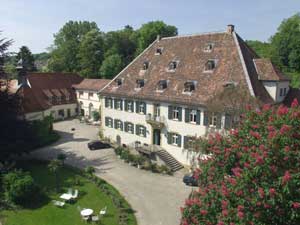
Castles, monasteries and manor houses that have joined the Culture and Castles Association, a group of aristocratic families opening their properties to the public, stand out due to their remarkable authenticity, and they provide timeless accommodations for great value, starting at 60 Euro per night. Services range from bed and breakfasts, holiday apartments and wedding facilities, to dreamlike locations for meetings and special festivities. (www.culture-castles.de)
Along the Castle Road, which stretches more than 600 miles from Mannheim/Heidelberg to Prague, some of the more than 70 castles, palaces and castle ruins have been turned into hotels and offer comfortable and fairy-tale like accommodations. For centuries the buildings have survived the vicissitudes of history and stand as reminders of emperors, kings and princes, of poets and thinkers, robber knights and romantic tales of chivalry.
Youth hostels in castles are the essence of great value with a unique experience. Stahleck Castle (www.jugendherberge.de), in Bacharach near the river Rhine river, is Germany’s prime example of spending like a pauper but living like a king. This 11th century castle houses one of Germany’s top youth hostels with plenty of beds, a warm welcome and a medieval view. Prices for an overnight stay can be as low as 20 Euro. Other popular youth hostels can be found in the castles of Nuremberg above the city center: Altena near the Ruhr region, Ehrenbreitstein near Koblenz and Rothenfels in the Main valley.
Baden Wuerttemberg and its Castles
The state of Baden Wuerttemberg in the southwest of Germany is home to many of the country’s finest palaces and the birthplace of its most powerful dynasty: the Hohenzollern, who ruled Prussia and Germany for many centuries.
Castles in Baden Wuerttemberg cannot only be visited, but they also serve as hotels offering guests royal comfort and an unforgettable stay.
A luxury getaway is the Castle Hotel Buehlerhoehe. The five-star hotel, just outside of Baden-Baden, is at an altitude of 2,788 feet, overlooking the surrounding wineries. With luxury accommodations, gourmet restaurants and unique flair, this castle hotel is one of Baden Wuerttemberg’s shining stars and promises an unforgettable stay. (www.buehlerhoehe.de)
Along the castle road lie other unique hotels: A romantic stay in an authentic fortress can be found at Castle Guttenberg. Situated on a mountaintop overlooking the river Neckar, guests will not only sleep comfortable in this fortress from the 13th century, the castle has a rustic charm and invites guests to medieval feasts. (www.burg-guttenberg.de)
The Castle Hotel Liebenstein is a treat for all golfers with its own 27-hole golf course. The castle was built in the 12th century and is situated in close to the river Neckar. With 24 rooms, the hotel promises an intimate experience with personal service. (www.liebenstein.com)
From the castle hotels you can take trips to the impressive main castles of the Hohenzollern. The crown of the Prussian kings can be visited in Hohenzollern Castle, a majestic fortress overlooking its environment from the top of a mountain. Castle Sigmaringen, the Hohenzollern’s former seat on the Danube, is also a major landmark. The castle of the princes of Hohenzollern stands high above the Danube on a white Jurassic limestone spur. All the castles of the Hohenzollern can be discovered by following the scenic Hohenzollern route. The route of 143 miles takes you through the countryside and to many sights that once made up “Hohenzollern country.” The route starts from the Neckar Valley in the north and runs down almost as far as Lake Constance in the south, traversing the Swabian Alb. (www.germany-tourism.de)
Besides the castles of “Hohenzollern Country,” there are the impressive palaces of Heidelberg and Mannheim. Heidelberg Castle served as the residence of the Palatine Electors for over four centuries and today is a UNESCO World Heritage Site. The castle and its courtyard are famous for celebrations and cultural events, such as the castle festival in the summer (June 21 – August 23). (www.heidelberg-marketing.de)
Reopened last year, the Baroque castle of Mannheim is the pride of the region. Built in 1720 the castle has a long and turbulent history, being destroyed and rebuilt several times.(www.schloss-mannheim.de)









 European Traveler