For the millions of RMS Titanic lovers around the world, April 15 is a very significant date. On that day it will be exactly 100 years since the tragic sinking of the ship that changed so many lives and sparked one of the most captivating stories in human history.
On March 31 the world’s largest Titanic visitor attraction, Titanic Belfast, will officially open its doors, thrusting the ship’s physical and spiritual home firmly into the global spotlight.
The striking $152 million piece of modern architecture stands majestically at the head of the very slipways where the Titanic first glided into the waters of Belfast Lough.
Inside, nine walk-and-ride-through exhibition galleries equipped with the latest 3D, CGI and video technology uncover the true Belfast story of the Titanic, from its conception and construction in the Harland & Wolff Shipyard to its famous maiden voyage and subsequent place in history.
A host of experiences are offered—a thrilling ride through the shipyard with the Titanic under construction, or an exploration of the sumptuous luxury and superb craftsmanship of its interiors.
You can be drawn deep into the stories of the passengers, crew and the heroes of the day or re-live the drama of its tragic end and visit its resting place in the North Atlantic in a unique Ocean Exploration Center with live links to contemporary undersea exploration.
New High-Speed Line makes Direct Train Travel between France, Germany and Switzerland faster and easier
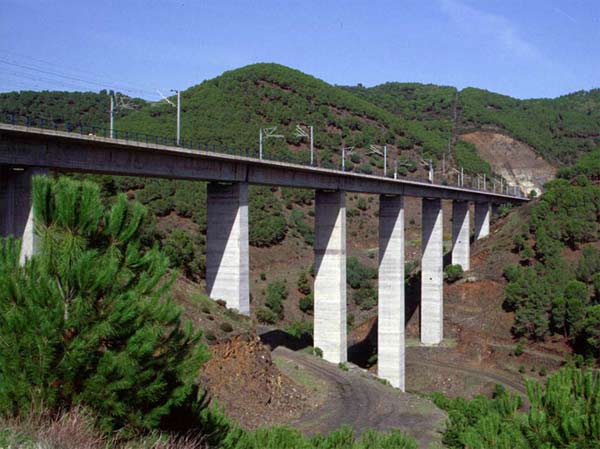
A total of 160 bridges and 12 viaducts have been built on the 264 miles of new track to be used by high-speed TGV trains which can travel at speeds up to 201 miles an hour.
For the first time, direct service is being offered within France on routes including Paris to Besancon, Belfort and Mulhouse.
TGV is French for Train à Grande Vitesse which means “high-speed train.”
International high-speed TGV trains offer direct service between France, Switzerland and Germany on routes such as Paris/Lausanne, Paris/Bern, Paris/Zurich and Frankfurt/Marseille. Tickets for TGV trains, including this newest section of high-speed line, are available through RailEurope.com.
Avignon TGV station
“This newest section of high-speed line will make a big difference to the way travelers can travel within France and also between France, Germany and Switzerland in 2012,” said company President and CEO Frederic Langlois. “The Rhine-Rhone high-speed line will offer faster travel times, more frequent and direct trains, and the speed, ease and convenience of connecting between these countries makes for a better travel experience.”
This new high-speed line runs east-west, reducing travel times from the northeastern city of Strasbourg to Lyon to just 3 hours and 40 minutes. The number of trains on this route will also increase to six roundtrips per day.
Another line will run north-south from France into Germany allowing travelers from Marseille or Avignon in the south of France to go directly to Frankfurt without changing trains. It is estimated that 11 million riders will utilize the new Rhine-Rhone line.
Are you are looking for a vacation that combines relaxation, a bit of history, romantic castles, charming medieval villages, and excellent cuisine? This week-long river cruise on the Moselle, Rhine and Main rivers in Germany, offered by Avalon Waterways, may be the perfect choice for you.
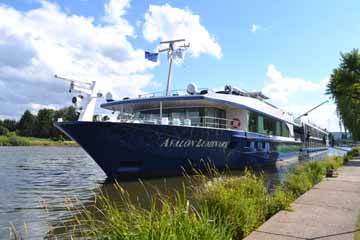
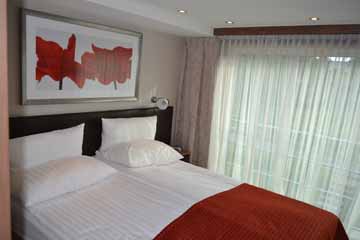
The MS Avalon Luminary, our ship for this cruise, was just recently added to Avalon’s fleet. Its 69 staterooms and suites are designed for efficiency, with plenty of space to stow personal items and luggage. Each room had a small bathroom with shower, comfortable memory foam mattress, a desk, lamp, mirror, fresh flowers, mini bar, and a safe for valuables. A television provided satellite programming and broadcast the view from a camera at the front of the ship. Floor-to-ceiling windows open to a private balcony in most rooms. It’s a luxury of river cruising to just unpack once and let the ship transport you with ease to each destination.
Another luxury on a cruise such as this is the excellent cuisine. The sumptuous breakfast buffet included breads, pastries and cereals, fruits, eggs, potatoes, sausages and bacon, and made-to-order entrees. The full lunch buffet served each day in the main dining room offered soups, salads, choice of main course and desserts. A lighter lunch option was also available in the lounge one deck above. Five-course dinners included an appetizer, choice of soups, salad, choice of meat, fish or vegetarian main course, and several dessert options. The well-trained staff served red, rose, or white wine or beer upon request.
BOARD IN LUXEMBOURG Boarding the Luminary in Remich, Luxembourg, we were welcomed by cruise director Jean Loup Domart. Entertaining, energetic, and extremely organized, Jean excelled at keeping everything running smoothly.
Although we set sail while dinner was being served, we missed none of the excitement, since the dining room was designed for maximum viewing, with panoramic windows on both sides. A sense of intimacy was provided with fresh orchids in lighted open rectangles dividing the large space without interrupting with the view. The lounge on the level directly above the dining room was also designed for watching Germany glide by in the most comfortable of settings.
Our first stop was Trier, Germany, which boasts amazingly intact structures from the Roman Empire, including imperial baths, an amphitheater, and Constantine’s reception hall, which now serves as a protestant church. Did you ever wonder why Roman ruins always seem to be discovered 6 feet underground? We learned from our local guide that after Roman towns were abandoned, local residents built homes by taking usable stones from the old Roman buildings. Over the course of 600 years, this practice left a 6-foot-deep base of rubble, upon which the medieval towns were built. Trier’s Porta Nigra (black gate) is black from wood fire smoke from Roman times, and was left standing because it was a site that attracted pilgrims, who brought money to the church.
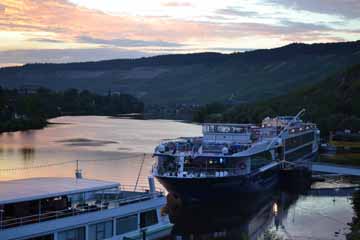
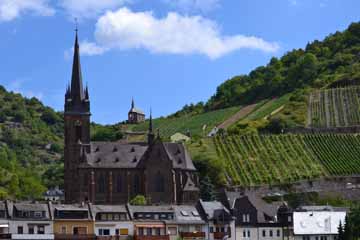
As our trip continued down the Moselle, we passed vineyard after vineyard and peaceful patchwork slopes, dotted with small villages and church steeples. The southern facing slopes provide the perfect environment for catching warm sunlight needed to grow grapes for Germany’s famous Riesling wines. And the ship’s outdoor decks were perfect for relaxing with a cup of coffee or listening to birds along the shore as the ship glided quietly along.
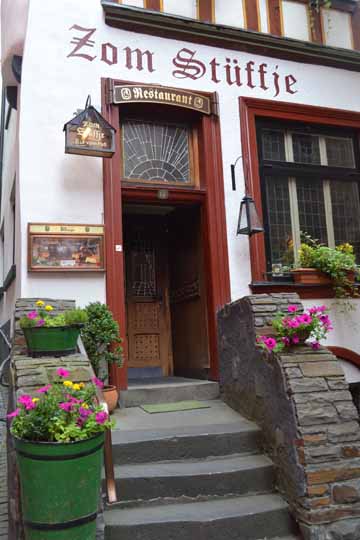
BERNKASTEL-KUES WEINFEST Our late afternoon arrival in Bernkastel-Kues allowed just enough time to explore the Old Town around the quaint market square. This town hosts the biggest Weinfest on the Moselle in September. One vineyard overlooking the town is the source of their “Doktor” wine. Legend has it that drinking some of the wine from this vineyard cured an archbishop of an ailment, so the wine became known as the “Doktor.”
Half-timbered buildings in Bernkastel
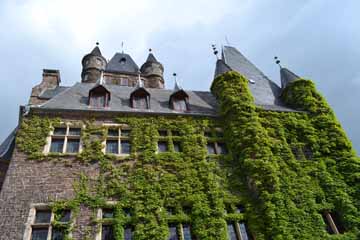
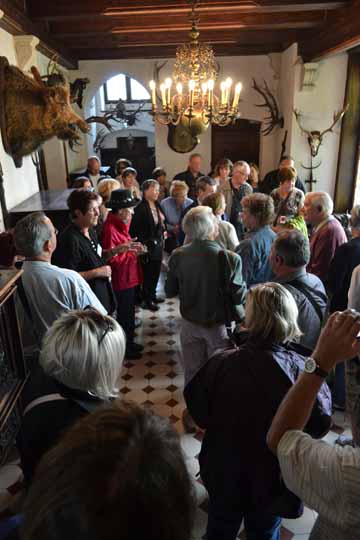
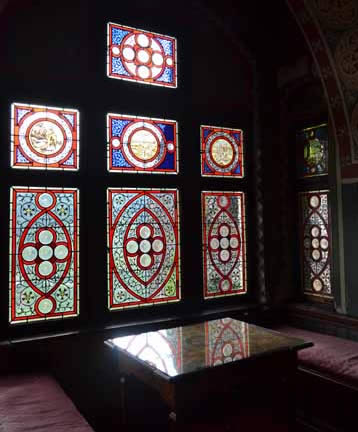
The next day brought us to the wine town of Cochem and a tour of Reichsburg Castle. The interior of the castle highlights not only only medieval artifacts, but Renaissance and Baroque furnishings selected by the 19th century restorers. The tour was informative and the view from the castle — spectacular.
Passengers tour the castle
The Moselle joins the Rhine at Koblenz, an important center of trade during the Middle Ages. An imposing statue of Kaiser Wilhelm I mounted on a horse dominates the Deutches Eck (German Corner) where the two rivers meet. We arrived just before dinner, with enough time for a short walk into the square to see the many shops and restaurants. The fortress Ehrenbreitstein stands on the opposite bank of the river and provides a beautiful panoramic view of the area.
To begin our cruise down the Rhine Gorge (some say the most beautiful part of the Rhine) first thing in the morning, we docked overnight at Koblenz, and were entertained on board after dinner by a small ensemble of classical musicians.
THE MIDDLE RHINE The next morning was filled with the history, legends and romance of the Middle Rhine. Cruise Director Jean Loup provided informative narration as the ship glided along, with passengers enjoying the view while relaxing on the sundeck. We learned that during the Middle Ages the Rhine River Gorge posed many hazards for travelers, and provided many opportunities for powerful kings to levy tolls for safe passage. They built castles and fortresses in the 12th and 13th centuries along the banks to collect tolls, make money, and enlarge territories.
Reichsburg Castle
The castles were usually built high on hills, close to a spring, and often on a curve with a view of the river. Stones for the castles were lifted with wheels and ropes, and the building projects provided work and security for locals, whose lifespan at the time was only about 40 years. Most castles were built with limestone, which was easier to work with than granite. Later palaces were built with marble, as techniques improved. To attack a fortress, enemies could try to break down a wall or door with a battering ram on wheels with a roof as protection from arrows shot from the castle. Or a catapult could throw fire over the castle walls. Castles residents used beehives, hot tar or hot water to fend off attackers. Some fortresses housed armies of 600.
In the town of Boppard we saw Sterrenberg and Liebenstein, known as the castles of the enemy brothers, and heard the legend: Two brothers both fell in love with their adopted sister. She wanted none of this, and entered a monastery in town to live as a nun. The brothers fought and finally built two castles next to each other with a wall in between.
The 430-foot-high Lorelei rock is located where the river narrows, creating treacherous currents dangerous to ships. The famous legend of the beautiful maiden who sat on the rock luring sailors to their destruction with her singing is commemorated with a bronze statue.
The town of Oberwesel, below Schoenburg Castle, still has many fortification walls and towers still standing. When the river water is low, travelers can see the “rocks of the seven virgins.” Legend has it that a lord with seven sons wanted to arrange marriages for them. The seven chosen virgins didn’t want to marry, and threw themselves into the Rhine, where, because they were so hardhearted, they turned to stone.
Pfalz Castle (whose gold lion was to symbolize strength and power) was built in the 16-17th century as a customs tollhouse on a little island in the middle of the river. Gutenfels Fortress was built on the bank opposite Oberwesel to protect the tollhouse.
Sooneck Castle, a toll-enforcing castle from the 11th century, also housed pirates. It is one of the oldest along the Rhine and is restored as a cafe.
In an attempt to preserve the beauty and tranquility of the shoreline, many of the houses along the shore are painted in soft pastels, often pale yellow, a color made popular by Maria Theresa. Train tunnel entrances on this stretch of the river are built to look like castles, in order to blend in with the style of the area.
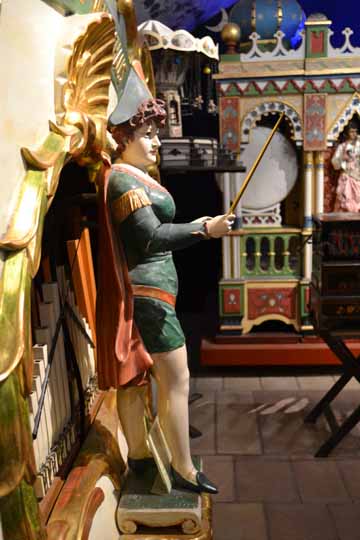
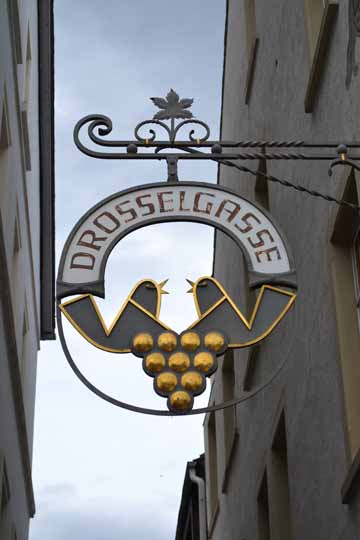
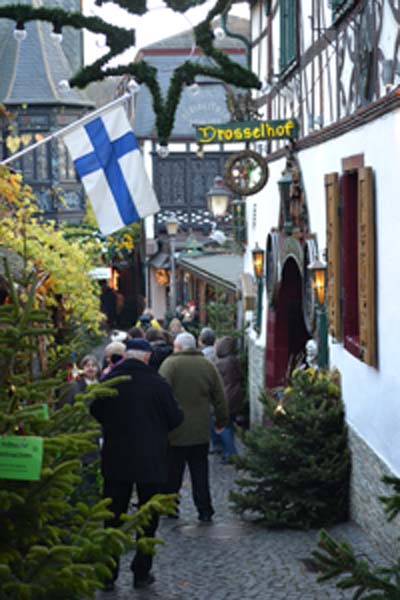
(left to right) Siegfried’s Mechanical Musical Instrument Museum; Drosselgasse, a lively street in Rudesheim.
DROSSELGASSE A FAVORITE Our last stop on the Rhine River was in Rudesheim, where we enjoyed a guided tour of the Museum of Mechanical Musical Instruments (some imitating entire orchestras in one huge contraption!), and a local winery. Be sure to take time to explore the exciting main street, the Drosselgasse, with its many restaurants and shops.
Navigating the Main River is a slow process because of the many locks needed to raise or lower the ship along the route. So our ever resourceful cruise director kept passengers busy on board with an entertaining German lesson, and a cookie-baking demonstration by an “almost nun” from Miltenberg, our next port of call on the Main.
Miltenberg
Miltenberg was built against a hill at a curve in the river, a perfect place to collect tolls for the archbishop of Mainz. Many half-timbered houses are still preserved because the people here were too poor to tear them down and rebuild. If a floor sagged and sank, it was filled with sand and covered with another floor. In some recently renovated buildings, 30 centimeters of sand/wood layers were discovered beneath the floor. The original red “paint” on the houses was a mixture containing, among other things, oxblood and cattle dung, which provided the desired red color and also killed worms that might live in the wood. A unique naturally cool icehouse is located in the hill at the rear of the town.
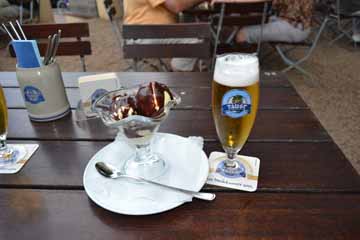
Cold beer and ice cream
While the ship slowly navigated through more locks, passengers rode by bus to Wurzburg, and met the ship when it finally docked after our tour. Wurzburg is the site of the Prince Bishop’s Residenz, which is one of the finest examples of a baroque palace, and also a UNESCO World Heritage Site. It was built to rival Versailles in France and the Schoenbrunn in Vienna. The unique mirrored room features the difficult technique of reverse painting. The famous ceiling fresco by Tiepolo miraculously survived bombing, and the original marble floor is still in the main reception hall. The “marble” pillars are actually a stone core with a ground marble coating so that colors could be controlled, a technique that was more expensive than using solid marble.
Wurzburg
WURZBURG AND X-RAYS Wurzburg was also the home of Professor William Conrad Rundkin, winner of the Nobel Prize for the discovery of X-rays. Residents in Wurzburg are not x-rayed; they are “Rundkined.”
Bamberg
The terrain along the river from Wurzburg to Bamberg changes and becomes flatter, with fewer vineyards, more trees and shrubs, and more locks. This quiet time was perfect for relaxing with a book from the ship’s library, located in the small lounge at the rear of the ship. There passengers found English language books of all genres, games, and the most wonderful coffee machine which dispensed espresso drinks that rivaled any coffee shop. Iced tea, shortbread cookies and other snacks were available 24/7. The ship also had an exercise room with a treadmill, two types of exercycles and flat screen TV, and a small beauty salon.
Cruise ship surprises
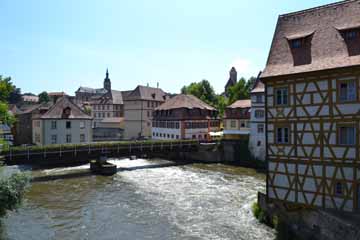
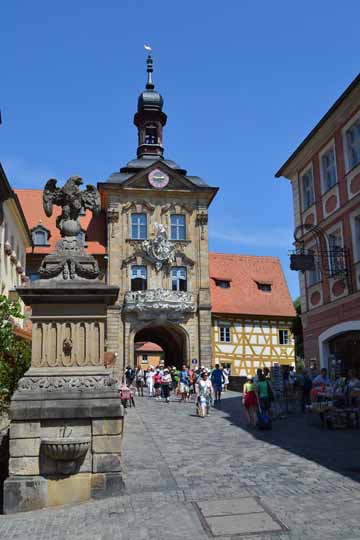
Busses again transported us to meet local tour guides in Bamberg, another UNESCO World Heritage Site. There we learned the local history of the cathedral, the Old Town Hall, which straddles the River Regnitz, had an opportunity to taste the local specialty, “Rauchbier” (smoked beer), and had time for browsing in the main pedestrian shopping area.
Our cruise ended the next morning upon arrival in Nuremberg, from which some passengers continued by bus to Prague, and others to charming Rothenburg ob der Tauber.
IF YOU GO.. Avalon Waterways, which has been in business for 80 years, has a number of different river cruises available in Europe. Their river cruise ships are small compared to ocean liners, which makes the service and trip more personal. They also have Europe’s youngest fleet of ships, with their fleet averaging just two years old, compared to seven years for other cruise companies.
There are full floor to ceiling sliding glass doors in 85% of the deluxe staterooms on Avalon’s fleet. Also, the Luminary had lots of space in the central passenger areas such as the dining room, lounge and library.
The Luminary offered five categories of rooms including Royal Deck suites; Royal Deck Category P; Sapphire Deck Forward, Category A; Sapphire Deck Aft, Category B; and Indigo Deck, Category E.
By Don Heimburger Photos by the author and courtesy York Tourism
While London plays a key role in tourism in the United Kingdom, there are other cities in the U.K. that, while perhaps not as large in size or offering as many attractions, still rank high on the thrill meter.
One of these is York, which is worth a couple of days to explore and get to know. It’s accessible from Manchester Airport, an international hub that sees hundreds of flights each day from around the world. By train from the airport, York is about an hour’s ride.
Let’s take a tour of the walled city of York.
“I was born in York and grew up there,” says actor Judi Dench, “so I have a great fondness for this remarkable city with its winding, cobbled streets and beautiful architecture.”
“The city has evolved over the years, with…a wealth of interesting shops and a vibrant cafe and evening culture,” she continues.
In the 18th century, York was seen by the monied class as an attractive alternative to London, and today many Georgian townhouses and buildings can be seen in the town because of this. At Fairfax House, for example, you can see what’s called the most distinguished 18th century townhouse in Britain.
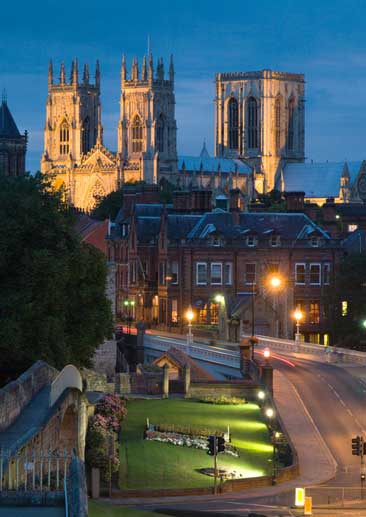
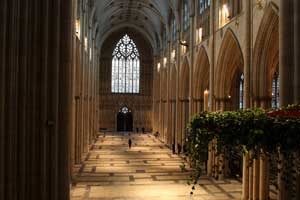
Likely the first thing to grab your attention in York is the Minster, renowned around the world as the largest medieval gothic cathedral in northern Europe. Taking 250 years to build, it dominates the city, with its central tower rising 200 feet skyward. “…That first glimpse of the magnificent Minster towering above the city will never cease to inspire and move me,” states Dench.
The cathedral, 500 feet in length and 100 feet wide, has the largest concentration of medieval stained glass in Britain. While there, you can also visit the undercroft, treasury and crypts. The church’s collections, open to the public, are a rich time capsule of the Minster’s history. The collection consists of silver, textiles, furnishings, monuments, stone and glass objects.
(left) Roman ruins underneath York’s business district
WALK THE WALLS “Walking the walls” is a favorite thing for visitors to do. Since Roman times, these walls have helped defend the city, and now add interest as an attraction. Four main gatehouses, or bars—Monk, Bootham, Micklegate and Walmgate—were once used to extract tolls and act as defensive towers. There are a little more than two miles of walls around the city.
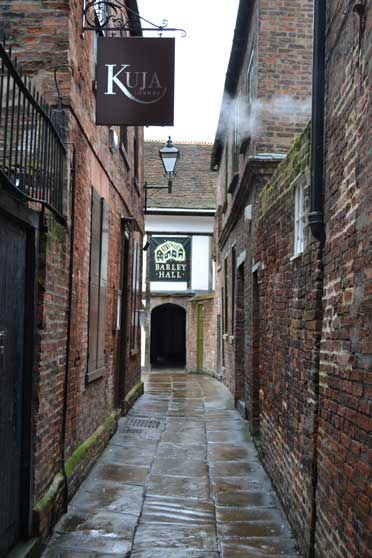
A odd thing about York are the snickelways and ginnels, or passages, some quite narrow and obscure. These short cuts conveniently connect sections of the town, and can save a lot of walking. After a day in York, I started using the snickelways like I was a resident.
The main shopping area is traffic-free, meaning the erratic streets are quiet and pleasant to stroll around, day and night. The medieval streets and buildings are beautifully preserved, especially 2,000-year-old Stonegate and Petergate streets, York’s main shopping arteries. These two streets were used by the Romans, leading to a massive Roman headquarters structure which is now occupied by the Minster.
SHAMBLES STREET Visitors will enjoy reading the names of streets as they wind through the city. Mad Alice Lane, Grape Lane, Swinegate and Coffee Yard all can be found here, as can Shambles, a former street for butchers: you can still see the wide windowsills used by butchers to display their goods, and in some cases the meat hooks remain above the shop windows, as well.
If you like chocolate—and who doesn’t—York might surprise you. It’s been making the delicious treat now for 150 years, and was named Britain’s Home of Chocolate in 2012. It even has a Chocolate Trail that will take you into York’s Chocolate Story shop and museum, where you can mold and decorate your own chocolate bar, York’s Cocoa House where you can enjoy a cup of hot chocolate and Monk Bar Chocolatiers who hand make every blissful piece. Also, the York Kit Kat factory, one of the largest in the world, turns out six million chocolate bars every day.
The Treasurer’s House, which claims the most haunted cellar in York, is worth a visit to hear about royal visits, servant life and see four centuries of interiors and antiques. When the garden is open, you can also enjoy home-cooked meals here as well.
CLIFFORD’S TOWER While most of York was the result of Roman and Viking construction, the original mound of Clifford’s Tower, with a timber structure at the top, was constructed by the Norman William the Conqueror in 1068 as a statement of his power over the region. The tower is 50 feet tall and 200 feet in diameter with four overlapping circles, resembling a four-leafed clover. The design pattern was unique in England and after being decimated by fire, wind and even water (the castle sunk into the moat causing the walls to crack in the 1350s) the castle’s jailer began demolishing the tower and selling the stone himself.
Clifford’s Tower
For those with a technical interest, the National Railway Museum near the railway station is a must, and it’s free. Here is the largest railway museum in the world, boasting a host of record-breakers and history makers, attracting 800,000 visitors annually.
National Railway Museum
It is home to a wide range of railway icons and literally millions of artifacts, from the opulent Royal trains to the record-breaking Mallard. Many of the museum’s collection of more than 300 locomotives and pieces of rolling stock are displayed in the Great Hall. Some of the featured pieces include the Flying Scotsman, famous for being the first steam engine to travel at 100 mph, and the collection of royal trains, including the royal carriages used by Queen Victoria to those used today by Queen Elizabeth II.
Permanent displays in the museum include “Palaces on Wheels.” Based in the Station Hall, this exhibition features royal saloons dating to the Victorian era, giving visitors a glimpse into the sumptuous bedrooms, dining rooms and day saloons that were palaces on wheels.
At York’s Art galley, you can view more than 600 years of British and European art, from 14th century Italian panels to 17th century Dutch masterpieces to Victorian narrative paintings.
Also, the Yorkshire Museum houses some of the finest collections of archaeological and geological treasures in Europe, from prehistoric to medieval times. You can also walk on a Roman mosaic floor or kneel at St. William’s medieval shrine while here. This museum features new, interactive galleries and audio-visual shows.
Yorkshire Museum objects
As the locals like to say, York has many “tucked-away” attractions, including museums, bars and restaurants, interesting shops, peculiar old signs, strange stone figures, gateways and medieval battlements.
York is a fun, history-filled city, with numerous attractions that will interest nearly every age group.
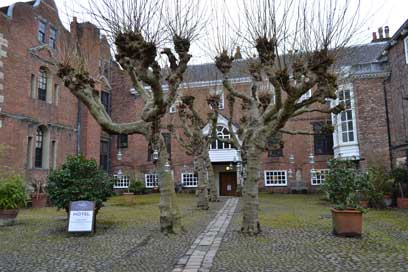
WHERE TO STAY IN YORK Grays Court in York near the Minster, is probably the oldest continuously occupied house in Britain, and as such, is a special place to stay, if you get the chance. It is built on the site of a Roman legionary fortress.
The staff is small and will likely remember your name after you’ve registered for the night. Grays Court is a family-owned and run country house with seven bedrooms, all filled with antique and contemporary furniture, and you’ll find the atmosphere around Grays Court quiet and friendly. A protected lawn and garden face the rear of the house, and the common areas invite you to wander throughout the house and get to know it.
Grays Court was once owned by the Duke of Somerset, Queen Jane Seymour’s brother, and was visited by King James 1st, James 2nd and the Duke of Cumberland. Sir Thomas Fairfax, Archbishop Robert Holgate and Archbishop Thomas Young have also lived here.
At one time the house was the original Treasurer’s House, commissioned by the first Norman Archbishop of York Minster, Thomas of Bayeux (1070-1100).
James I dined once at Grays Court with Edmond, Lord Sheffield, the Lord President of the North, and knighted eight nobleman in the house’s Long Gallery one evening.
Guests will find breakfast is served in a large open room with good views of the garden, and the wait staff is pleasant and accommodating. In the evening you can curl up on one of the large comfy sofas with a book and a glass of wine in the Long Gallery, or try the quiet Library to relax in.
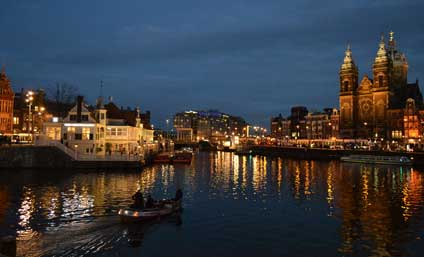
Taking a river cruise is always a good idea. A river cruise that includes both historic castles and colorful Christmas Markets along Germany’s Rhine River is the best idea ever. So on Thanksgiving Day I happily ignored Black Friday and escaped the pre-Christmas shopping frenzy of the USA to spend a week on the AmaKristina, cruising from Amsterdam to Basel, Switzerland. Romantic castles and Christmas Markets along the Rhine River ushered in the Christmas spirit for me this year.
The newest AMA ship, the AmaKristina
The AmaKristina is essentially a floating luxury hotel for 158 guests. Our roomy cabin had a queen-sized bed, private bathroom with shower and double sink, desk, large format Apple screen and keyboard for internet, TV, or movies. Built in 2017, the ship’s hallways and guest suites were filled with Gustav Klimt art prints, and seasonally decorated with lights, Christmas trees, wreaths, garlands, and gingerbread houses. We boarded in Amsterdam, unpacked, and had our first dinner on board. Open seating at each meal encourages mingling of guests.
AMSTERDAM ATTRACTIONS Fortified with a sumptuous on-board breakfast buffet, including an omelet station and daily vitamin “shot,” we departed the ship for an informative canal cruise, a panoramic city bus tour of Amsterdam with an up-close look at a local working windmill, and free time for exploring. Although there were no Christmas markets in Amsterdam, there were plenty of opportunities for shopping near the central train station, and street entertainment in Dam Square: a saxophone player, giant bubble maker, dancing dinosaurs, and impromptu yoga. Just be sure to watch out for the numerous killer bicycles that demand the right-of-way.
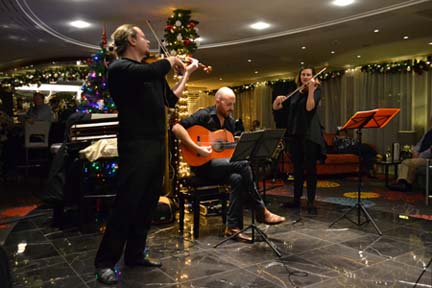
The AmaKristina set sail from Amsterdam in the afternoon, and I had time to explore the ship’s main lounge and bar, massage and hair salon, fitness room, gift shop, and even a heated pool and giant chess set on the sun deck. A cruise overview presented by our cruise director, plus Christmas tree decorating and an evening classical music performance by the three talented string players known as “La Strada” kept passengers entertained. The cruise ships cleverly bring nightly entertainment on and off the ship when stopped at the locks on the river.
Onboard entertainment by La Strada
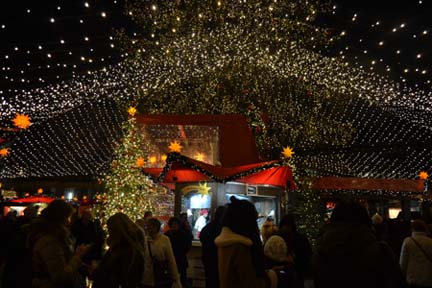
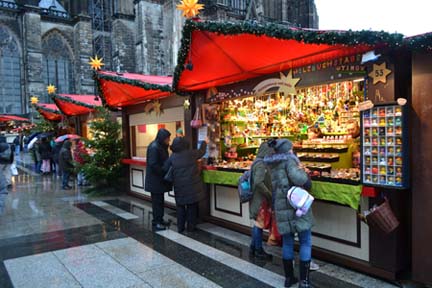
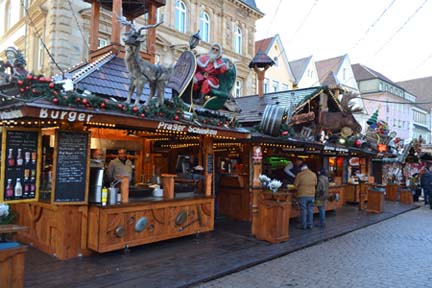
COLORFUL COLOGNE After cruising all morning, we docked in Cologne, Germany, where shuttle buses brought us to our first Christmas Market in Cathedral Square. Although the earliest Christmas Markets in Germany date from the late Middle Ages, the one in the shadow of Cologne’s impressive Cathedral is a relative newcomer, opening in 1995. Under a dazzling canopy of thousands of tiny lights, 150 vendor huts with bright red awnings and brilliant multi-faceted stars displayed handicrafts, comfort foods, gifts of all types, decorations, wooden toys and much more.
Canopy of Christmas lights in Cologne’s Cathedral Square
Cologne Cathedral Square market
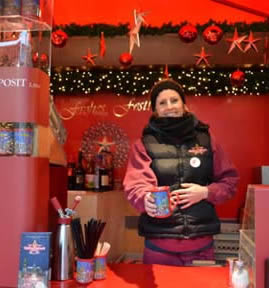
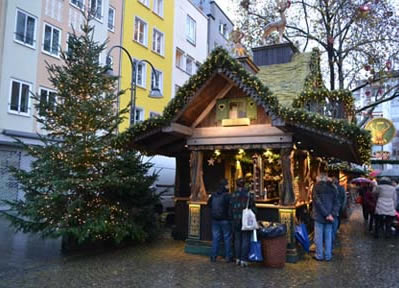
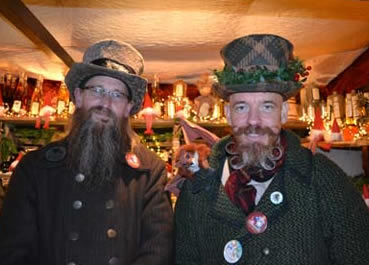
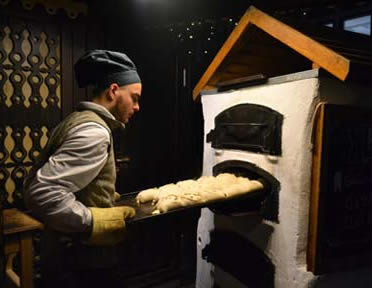
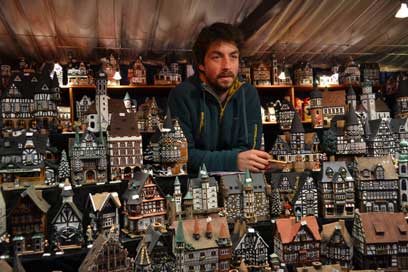
HOME OF THE ELVES A few blocks away in the Altstadt and Heumarkt was an older and much larger Christmas Market called the “Heimat der Heinzel” or Home of the Elves. These were little creatures from a Cologne legend who used to do all the housework until they were annoyed by an inquisitive housewife, and disappeared. I loved this market. Aisles were arranged by theme, and the large wooden huts had Old World, wood-carved details, thick green garlands and costumed vendors. Little “Heinzelmännchen” rode in gondolas above an expansive ice rink. Each souvenir mug of Glühwein (the traditional hot mulled wine so popular at the Christmas Markets) had a different elf pictured on one side, and his particular work specialty described in verse on the other. Cologne boasted three additional smaller markets, but time was too short to visit all of them on this trip.
Home of the Elves’ Market in Cologne
CASTLE DAY ON THE RIVER The morning cruise from Cologne to the next stop in Rüdesheim passed through the UNESCO World Heritage Rhine Gorge. What a treat to sit in the ship’s expansive lounge with panoramic windows, coffee in hand, gazing at vineyard- covered slopes, picturesque villages, historic castles, and the famous Lorelei Rock, with commentary by the cruise director. This romantic part of the trip alone is a highlight of any Rhine River cruise.
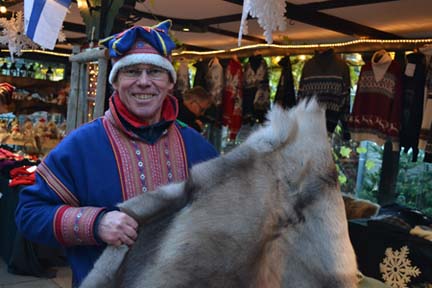
RÜDESHEIM’S CHRISTMAS MARKET OF THE NATIONS After a gourmet lunch of traditional German specialties, we docked in Rüdesheim, where the “Christmas Market of the Nations” wound up and down the narrow streets of this wine town of about 7,000 citizens. Vendors from France sold mushrooms, lavender and cheese, Tunesia vendors brought wares made of olive wood, smoked salmon came from Norway, furs came from Finland and even the United States was represented with a local vendor offering homemade cookies, Dr. Pepper, Fanta, marshmallows, and Hershey’s chocolate. Christmas choir music piped throughout the market added to the festive atmosphere as shoppers strolled past inviting vendor stalls and village shops. A new discovery at this market was hot mulled Glühbier from Belgium.
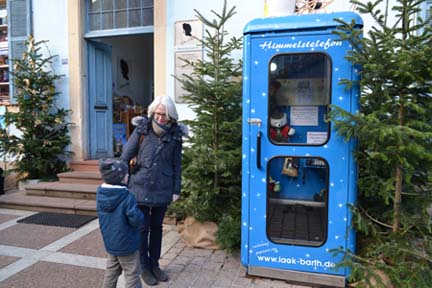
(clockwise) Hot lunch in Rüdesheim; Fur from Finland at Rüdesheim’s Christmas Market of the Nations; “Hallo” from the gnomes in Rüdesheim; Placing a phone call to the Christkind in Speyer
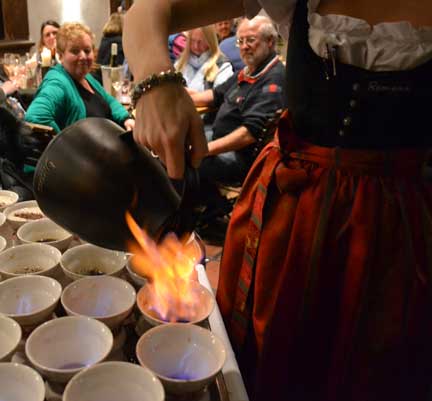
Throughout the ship’s seven-day cruise, each day’s program offered passengers quiet, regular and active excursions. Rüdesheim excursions offered by the AMAKristina included wine tasting, a hike, bike or gondola tour through the vineyards. A late night, fun option was experiencing Rüdesheimer coffee – coffee set on fire with Asbach brandy and sugar, topped with whipped cream and chocolate flakes – at Eiscafe Engel on Rüdesheim’s famous Drosselgasse.
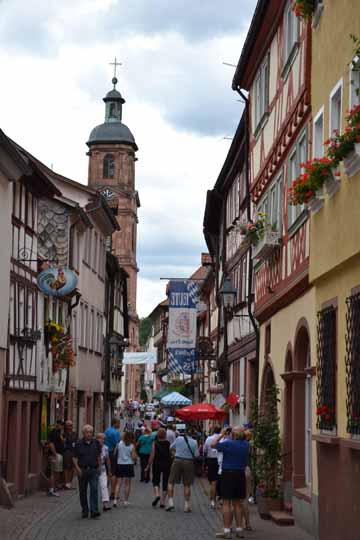
Rüdesheimer coffeeAtmospheric narrow Rüdesheim street
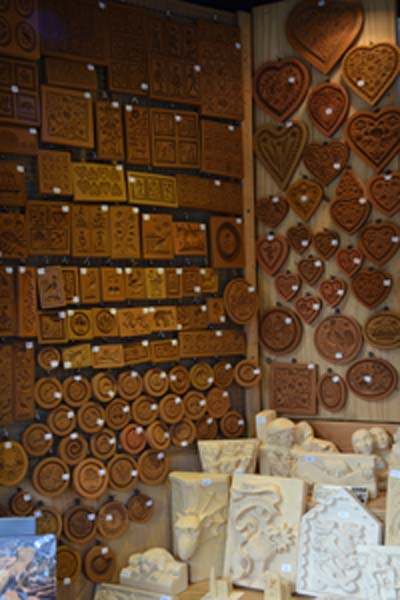
THE IMPERIAL CITY OF SPEYER By noon the next day we docked in Mannheim and could choose a bus excursion to Heidelberg or to Speyer. Having visited Heidelberg several times already, we chose to see the 2,000-year-old Imperial city of Speyer. Here the Christmas Market extended down Maximilianstrasse from the UNESCO World Heritage Speyer Cathedral, the largest Romanesque cathedral in the world. Though smaller than the Cologne Christmas Markets, Speyer’s market had all the requisite comfort foods: Glühwein, grilled sausages, roasted almonds, and even waffles, potato soup and dumplings. Vendors offered wood handicrafts, colorful candles, jewelry, scarves, kitchen gadgets and unique cookie cutters. Especially for children were an ice rink, kiddie car rides and a telephone booth with direct access to the Christkind in Heaven!
Back onboard the AmaKristina we had a tea time treat of traditional Spekulatius cookies and Stollen, while we set sail for our next stop: Strasbourg and Le Petite Alsace in France.
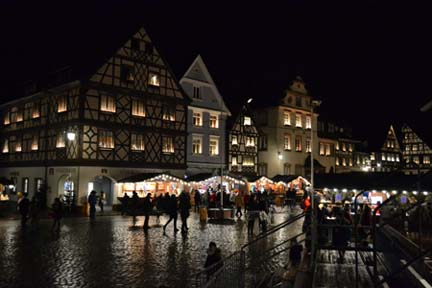
INVITING STRASBOURG AND LE PETITE ALSACE As with each stop on our route, AmaWaterways provided an energetic and knowledgable guide for a walking tour of the area on the way to the Christmas Markets. This morning we learned about the Alsace region, which changed hands between France and Germany four times in 75 years. The name “Alsace” derives from a German phrase meaning “seated on the Ill.” While our guide led us along the Ill River, past the beautiful half-timbered houses lining both sides, she explained that this charming area was historically the least desirable place to live. It had been the site of fortifications and a prison, the home of executioners and the location of the tanning trade, with its smelly byproducts. Today it is a photographic highlight of any trip.
CHRISTMAS MARKETS WITH A FRENCH TWIST Christmas Markets first appeared in Strasbourg in 1570, making this German/French town the location of one of the oldest markets in Europe. Although much was similar to the Christmas Markets we saw in Germany, here the food vendors offered toasted baguettes topped with cheese as the warm comfort food, instead of the ubiquitous wursts in the German markets.
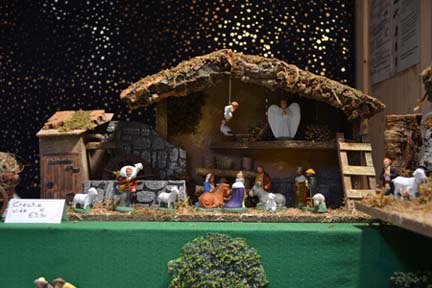
The traditional market was near the cathedral, with some vendor huts topped with storks, that famously nest in Strasbourg’s Parc de l’Orangerie. More than 300 vendor chalets filled the historic city center. Entertaining metal sculptures depicting different professions caught my eye, as did the detailed, intricately carved figures for nativity sets. A market area featuring Strasbourg’s service organizations surrounded a towering decorated Christmas tree and grassy area which was perfect for family photos. A small market in Gutenberg Square annually invites vendors from other countries: this year it welcomed Iceland.
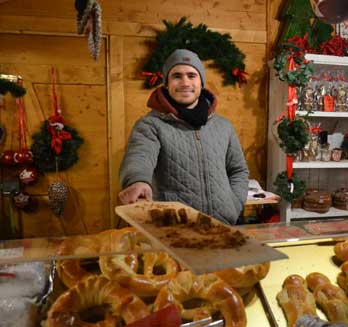
Try some gingerbread in Gengenbach
GENGENBACH’S GIGANTIC ADVENT CALENDAR We were back on the German side of the Rhine River by late afternoon, and on a shuttle bus from the AmaKristina to the beautiful village of Gengenbach. A guided tour down Engelgasse led to the Christmas Market which stretched down the main street from the town hall square.
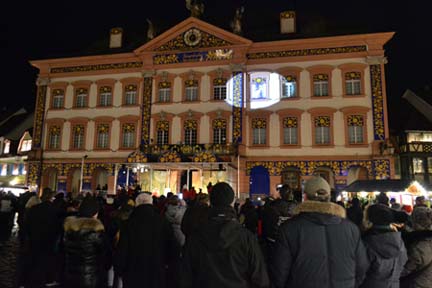
Gengenbach Town Hall Advent Calendar
Gengenbach boasts the world’s largest Advent calendar in its neo-classical town hall, where each night one of its 24 windows is opened to reveal a picture by a famous artist. This year’s calendar featured paintings by Andy Warhol. We arrived just in time for the first night’s opening ceremony: a narrated short skit performed by children from the town. After browsing through the market’s matching vendor huts, with hot Glühwein in a mug depicting the town hall Advent calendar, we returned to the ship to be delightfully entertained by a French cabaret singer and her accordion accompanist.
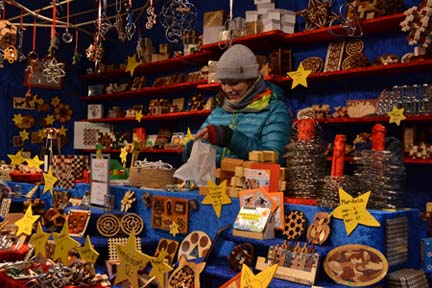
LAST FULL DAY ONBOARD Shuttle busses from the AmaKristina were the order of the day with options to Riquewihr, France, or to Freiburg and Breisach, Germany. Deciding to aim for German-speaking vendors, we took the second option, and explored the market in the heart of Freiburg’s beautiful old quarter. Traditional craft products, including glass blowing and colorful wooden toys were offered beneath the green and white lights that trimmed the roofs of the more than 130 vendor huts.
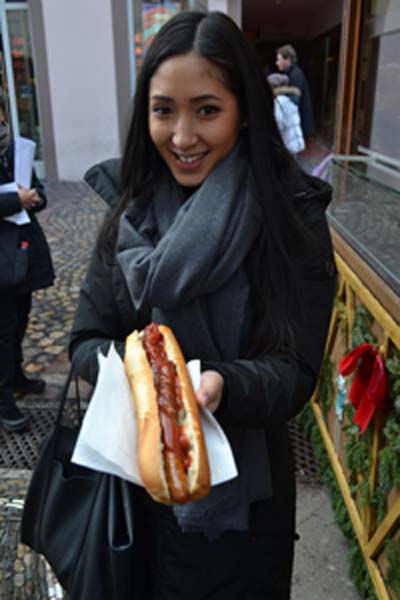
Time was too short to see all of the ceramics, candles, hand puppets, amber jewelry and Christmas decorations, but we enjoyed a quick wurst and Glühwein lunch before leaving for Breisach. Unfortunately this town’s tiny Christmas Market was not yet open for business, so after strolling down the pedestrian-only shopping zone, we walked back to the boat dock, to sail to Basel and enjoy the captain’s farewell dinner and our final evening on board.
Early the next morning, with our luggage packed with Christmas Market treasures, we left for home filled with Christmas spirit and with wonderful memories from this romantic river cruise of Christmas Markets and Castles on the Rhine.
TIPS AND FINAL NOTES An AmaWaterways river cruise makes visiting so many sites along the Rhine extremely easy. You unpack only once in a roomy cabin. Meals are well-planned, complete and delicious, with perfect portions and special dietary options. Wine and beer are included with lunch and dinner. The fabulous coffee bar is open all the time. Special surprises delight passengers as well, such as serving a location’s specialty treats during afternoon tea time, recognizing St. Nicholas Tag by putting treats in passengers’ shoes left outside cabin doors, and providing hot towels and beverages upon re-boarding after cold excursions. The company will cheerfully arrange for your transfers to and from the cruise ship.
The cruise director is the key to having a wonderful time on any cruise, and this AmaWaterways trip had a great one. David Rosell was organized, energetic, accommodating and entertaining.
Most Christmas Markets are open from the beginning of Advent through Christmas, although some larger markets stay open longer, and some smaller ones have limited open hours. Bring euros – most small vendors don’t accept credit cards.
Pack warm layers of clothes, boots and umbrellas. The weather can be chilly and damp during November and December.
AmaWaterways provides a post-cruise option, if you want to extend your trip. This Christmas Market/Rhine River castle cruise offered an excursion to Lucerne and Zurich after disembarkation in Basel. For more AmaWaterways information and schedules, go to: www.amawaterways.com.
If you go: The Mövenpick Hotel Central in Amsterdam is a great place to stay before you board. This new, 4-star hotel is located within walking distance of the train station, the city center and the cruise ship loading docks. A sumptuous breakfast buffet is included with the room, and a knowledgable concierge team can help you plan your free time in Amsterdam before the cruise. For more information go to: www.movenpick.com/en/europe/netherlands/amsterdam.




































 European Traveler