New Designer Hotels in Germany’s ‘Magic Cities’

Photos courtesy German National Tourist Office

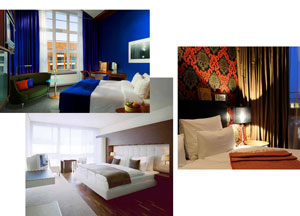
The cities belonging to Germany’s “Magic Cities” association, including Berlin, Cologne, Dresden, Duesseldorf, Frankfurt, Hamburg, Hannover, Leipzig, Munich and Stuttgart are centers of art, architecture, history and culture. Discover some of the newest additions of designer hotels that these cities offer:

In Berlin, the Soho House concept is being implemented for the first time in Germany. Stylish branches of this chain can already be found in London and New York. In the former “House of Unity” at the foot of Prenzlauer Berg, the hotel has 50 bedrooms. The luxurious fitness area, modern conference rooms and hotel with spacious apartments on the third and fourth floor will be open to all visitors. There will also be an exclusive area for club members only. Another highlight is planned on the second floor, where the office of the former State President of the GDR, Wilhelm Pieck, is being restored to its original condition.

Cologne

In Cologne, one hour from Frankfurt on the Rhine River, there is a new four-star hotel, Art’otel Cologne, in a prime location on the banks of the Rhine. Alongside the trapezoidal design and the colorful windows, the chief attraction of the hotel is the art-inspired interior design with a permanent exhibition of the works of the Korean artist SEO, a former master student of Georg Baselitz. The hotel has 218 rooms with a special twist: the glass walls partitioning the bath or shower rooms are colorfully painted with some of the best of SEO’s designs.

Duesseldorf lives up to its artistic reputation (Academy of Arts) with its own new designer hotels. The Stage 47 Hotel features a completely new, unique design. All 27 suites and rooms are named after famous artists. Their portraits adorn the walls of the individual rooms, creating a special atmosphere. British elegance combined with unpretentious comfort describe the Sir & Lady Astor hotels. Lovingly arranged details and charming decorations as well as discreet, attentive service give guests a feeling of a homecoming.

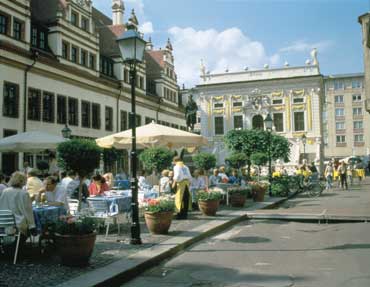
Dresden, the royal metropolis on the River Elbe in the eastern state of Saxony, has been restored to one of the most beautiful Baroque cities in Europe. Dresden offers beautiful architecture, world-class art and a variety of luxury hotels. A perfect example for the modern reinvention in the classic tradition is the QF Hotel, perfectly located near the Church of Our Lady in the heart of Dresden. The hotel, formerly the “Hotel Stadt Berlin,” has been known since 1804 as one of the best hotels in the city. The 96 rooms combine comfort and luxury with a clean and modern design.

Frankfurt, the financial metropolis in the middle of Germany, is not only the major airport hub, but also a fascinating city where great history meets modernity, world class contemporary art museums and galleries are placed alongside cultural giants such as Goethe. A new highlight of the hotel scene is the Roomers design hotel in the city center. This luxury hotel combines classic lines and innovative design in its 117 rooms.

Hamburg: The designer hotels in this port city combine themed interiors with the comforts and conveniences of the highest standard. Hamburg is also where you’ll find Germany’s highest-rated boutique hotel. The Side Hotel combines luxury and design with aplomb. This award-winning five-star establishment is characterized by a minimalist interior of dark wood and beige elements illuminated by unique lighting.

The George Hamburg holds an entirely different appeal as a four-star hotel with British charm. Rooms furnished in warm colors, an elegant library and an English Garden are all part of its homage to British style.

Hannover, in Germany’s north, has a long history as a royal seat of the English kings and queens, but also as a modern city that hosts many world-class conventions. A special place to overnight is the Sheraton Pelikan Hotel. Located in the former Pelikan factory, one of the most famous brands of fountain pens, the architects integrated the architecture of the old production facilities into the hotel design to create a distinctive loft atmosphere.

Leipzig

Leipzig, one of the most exciting cities in eastern Germany, invites visitors to stay in style in the newly-redesigned Pentahotel. The hotel was given a complete makeover in 2009 by Italian star designer Matteo Thun. The 356 new stylish and comfortable rooms have 32″ flat screen TVs, iPod or game consoles like Nintendo Wii, and other features catering to the needs of the modern and tech-savvy traveler.

Munich in southern Bavaria is known for its royal splendor. The new Louis Hotel that opened in September 2009 fits right in. The name Louis is intended as a reference to the appreciation of beauty as professed by King Ludwig II of Bavaria. Located in the heart of Munich, globetrotters will feel at home in the 72 rooms with carefully selected details and handcrafted furnishings. Natural stone and elegant tiling are reminiscent of the Parisian Metro and make the rooms an unforgettable experience.

Stuttgart

Stuttgart, home to the iconic car brands Mercedes and Porsche, now offers a very special experience for motorsports enthusiast. The V8 Hotel opened last fall and offers everything for high-octane car lovers. Individually designed rooms, antique and unique car models make this hotel a great experience. Its Bauhaus style combines function and comfort.

Travel With Kids

Photos courtesy Travel with Kids

ET: How many times have you taken your kids along with you on a foreign trip, and where?
 
The kids have been traveling with us since before they could walk (they are 10 and eight now), so on many, many trips to places like the British Isles, France, Italy, Greece, Peru, Costa Rica, Alaska, Florida, Mexico and the Caribbean.

ET: At what age do you feel it’s worthwhile for children to be taken on an overseas trip to Europe? Please explain your reasoning.
 
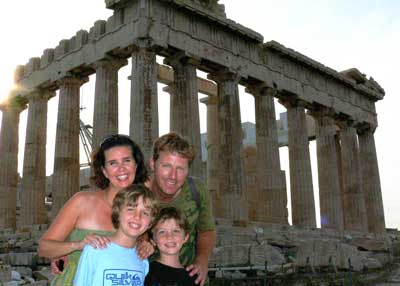
I think each age has its own benefits and drawbacks.  When they are babies they are easy to travel with (before they can walk) and babies seem to open up a whole new door with the locals…you will meet other parents and talk about universal issues and be introduced to a whole different world than a typical traveler…people love babies! The drawback is babies come with a lot of gear and long overseas flights can be tough with a crier.  Toddlers are fun to travel with because you see things entirely differently. They are fascinated by everything and leave nothing unexplored.  What we might see as a famous monument a toddler might see as a cool worm inching its way across a stone surface.  It gives perspective to things and adds a playfulness you might not get with older kids. However, toddlers can be unpredictable, and you still have to deal with added gear and schedules.  My favorite is school-age kids.  They still see things differently: our boys spent a good 20 minutes watching an ant carrying a toothpick across the Parthenon last summer, but they are more able to comprehend the historical and cultural significance of destinations.  They are learning about the places in school and they bring that with them as well. Plus, they don’t have as much stuff, and are able to carry their own bags and they actually want to spend time with their parents still.  The drawback is that they are in school, so homework has to become a part of their trip as well.  Pre-teens and teens, depending on what stage they are in, can still be excited by exotic destinations, especially if you put an adventurous spin on it (i.e., zip lining through the Amazon, hiking the Inca Trail), but they are harder to impress and a mopey teenager can put a damper on the vacation for everyone.  But, don’t let this stop you, as they will appreciate it later, and it gives them a global view on life that many kids their age don’t have.

ET: Language differences may or may not be a big barrier to children on a trip to Europe when accompanied by their parents, especially when the children are younger. At what age do you recommend children study the language before they travel overseas, and how might they best learn a language, say, when they’re going over for only a week or two?  
I always encourage travelers of every age to learn at least a few words in the country they are visiting.  Saying “s’il vous plaît” in Paris will get you a much warmer reception than instantly assuming everyone knows English.  And its fun for kids to practice the language with local kids.  It is by no means necessary. There are very few places on earth that you can’t find at least one person who speaks English. However, if you plan on getting far off the beaten path, I would suggest a phrase book.  There are lots of smart phone applications available as well now.  We usually download one of those and practice a few key phrases in the weeks before the trip and while we are on long plane or train rides.

ET: Are there some things that are vitally important to take with you when you take younger kids along, that you may not find in Europe?
 
For the most part, you can find anything in Europe that you will need supply-wise.  If there is a specialty item that is unique to your child, you may want to bring that…for example, a certain diaper rash cream for kids with sensitive skin, or a formula that your child needs.  Also, any prescription medications.  But don’t be afraid to try local things as well. Europe has lots of independent companies producing natural kids’ items that you can’t find in the States.

ET: What about the added expense by taking kids with you to Europe? Does it cost a lot extra to travel around, lodge and feed them?
 
Airline tickets are the main extra expense.  Big hotels will be able to accommodate most small families in a regular room without additional expense. Booking a condo/apartment helps save on lodging costs and gives extra room for the while family to spread out. Plus, the kitchen can help save money on eating out. We usually do breakfast and sometimes lunch or dinner in the condo, but we like to eat out as well to get a feel for the local cuisine. 

ET: Food. What do you suggest about finding “kid foods”– good, nutritious food at reasonable prices when overseas?
 
Go where the locals go. You don’t need to spend a lot to taste the local cuisine.  The kids love street stalls. too. Just make sure to ask for guidance from locals to avoid getting sick. Crepe stands in Paris, panini cafes in Italy, pasty shops in England…all these foods let you get a taste of real local foods at a fraction of the cost of a sit-down restaurant.

ET: Can you recommend some special “kid-friendly” hotels in Europe, or cities or attractions that seem to especially cater to kids?
 
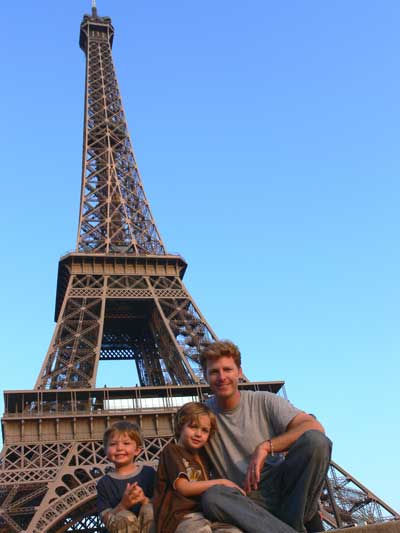
It’s not always the cities you would think that are exciting for kids.  There doesn’t have to be an amusement park to interest kids.  Our kids were fascinated by Venice, a city many people would not think of taking kids to.  They loved taking the boats up and down the canals and wandering the tiny streets.  Big cities are fun for kids, too.  Paris and London are on the top of our kids’ destinations list.  They love riding the tube and double decker buses and visiting big time attractions like the Eiffel Tower.  Really anything can be interesting to kids if you prep them for it.  Learn about a destination before you go.  The kids learned about gladiators and Rome before we went to Italy, and it really came to life in Roman ruins all over Europe.  They had a blast pretending to be gladiators in colosseums from Wales to Rome.  Walks Inside Rome had a great tour with history on a kid’s level and a visit to Gladiator School…the kids learned from “real gladiators” how to fight with swords and defend against wild animals. Very fun! Many attractions have kid versions of audio tours, scavenger hunts, or something to engage kids. Just ask. If they don’t, you can always make your own. When the kids were younger (ages 5 and 7) we visited the Louvre. I was worried about keeping them interested, so I printed out pictures of some of the more famous exhibits and sent them on an art treasure hunt.  They had a blast, and even enlisted the security guards to help them, and we enjoyed extra time at the museum.
 
As far as hotels go, apartment rentals are always great with kids.  The apartments are often in local neighborhoods, so you get a better feel for local life.  We rented apartments from Frenchy Rentals in Paris, a villa in Tuscany from Italy Perfect and apartments in Rome from Parker Villas.  When we are staying in a hotel, we try to stay in family-owned, smaller hotels.  These are usually located in the more culturally rich or historically significant parts of town.  A lot of it is also about location.  We don’t want to have to take a 20 minute taxi everytime we want to go into the old part of town. We like to be where the action is.

ET: Teenage tensions can be a problem. How do you handle this on a long European trip?
 
Lots of luck.  Just kidding. Teenagers are a different breed, and since I don’t have any yet, I can’t give too much advice here.  What I have noticed with my niece and nephews is that when they are out of their element (like you are in a foreign culture), some of that attitude fades away.  I went on a trip to New York with my 15-year-old niece last year, and we had a blast.  I asked for her input on everything we did, and I think that helped a lot. Let the kids (of all ages) help plan what you are doing. That helps them feel invested in the trip ahead of time and keeps them engaged while you are on the road.

ET: What foreign trips/areas might you not want to take your kids on and why?
 
I don’t think there are any areas I would say don’t take kids accept for areas I would not go myself because of dangers or violence.  I guess there are some third world countries for which I would want to edit the itinerary. It would be very hard for the kids to comprehend such abject poverty. I might also stay away from long trips in which passengers are contained and there are no breaks. Kids who are cooped up and bored for long periods of time can get irritating fast.
 
Many people ask if I am scared to travel because of coverage they see on television. Fortunately, I have never felt any hostility from locals stemming from my being an American. In fact, quite the opposite.  I have always been welcomed with open arms.  When we traveled through the Middle East I was not sure what to expect, but everyone was very warm and welcoming.  What you see in the news is not always how it is in real life. I would be cautious, of course, as things can happen when you travel, just as they could at home.  Be aware of what is going on around you, ask the locals for perspective and trust your instincts.

ET: What do you suggest on a European trip if the parents want to occasionally go out alone in the evening and the kids need to go to bed. Who watches the kids? 
 
Many hotels offer babysitting service. I have never used them as I would not feel comfortable leaving my kids with a stranger.  However, I hear stories from other people who did this, and it turned out just fine.  I would say that for me, the point of a family vacation is to spend time with your kids.  At some point, they won’t want to hang around with us anymore, so I try to cash in on all the time I can with them now.  Schedules are a bit more flexible when we travel. So, the kids stay up later which is just fine as the town squares in the evening are packed with families strolling and kids playing. It’s a time where we really get to know the locals, and the kids love it!

ET: What do you think is the most important thing to remember when going to Europe with your kids?
 
Take time to absorb it all.  Often times when we travel (and I am just as guilty of it as anyone else), we pack in as much as we can.  There’s so many wonderful things to see and do in Europe. And we end up moving so fast that we don’t take time to just sit and soak it all in.  Sitting in the town square, watching life go by, is a great tradition in southern European countries, and it’s a great time to reflect and just spend time with your kids…time bonding and re-connecting with one another, which is really what it’s all about anyway.

Find out more about Travel with Kids:
Facebook: www.facebook.com/pages/Travel-With-Kids/107216306811
Twitter: twitter.com/Travel_WithKids
YouTube: www.youtube.com/travelwithkids
Travel With Kids Blog: travelingkids.blogspot.com
Janson Media:ttp: www.janson.com/dvdcatalog/

Travel With Kids takes viewers on an educational journey through each destination visited, presenting history and culture in an innovative way, as well as showing the kid-friendly things to do and see. Whether planning a trip, or just wanting to learn more about a destination, Travel With Kids will entertain the whole family. For more information on Travel With Kids, or to purchase a DVD visit www.TravelWithKids.tv

Travel to Europe Like a Pro

Whether it’s your first time to Europe, a romantic vacation for two to Paris or a family trip to London, international travel can seem a little daunting. With proper planning, you can kick off your vacation on the right foot.

1. Educate yourself on the culture: It is important to be mindful of other cultures when travelling internationally. Be sure to study up on any common cultural mistakes that travelers make when entering the country you are visiting. This will safeguard you from making the same embarrassing and offensive mistakes.

2. Review rules on air travel and luggage: Save time (and stress) at the airport by checking the TSA website’s list of prohibited items. No one wants to start a trip having to repack their luggage at the airport or getting stuck in customs.

3. Make copies of important papers: most people know that proper documentation is needed for international travel, but how many people think to bring copies with them? Take the time before you leave to keep a copy of all your documentation in your email, just in case something happens. Have an unlocked mobile phone? Be sure to keep a copy on there too. (If you don’t, think about purchasing one.)

4. Check out the local forecast: in order to know what to pack, it is important to know the typical weather where you are going in the time frame you are going. You should also check the local weather a few days before you leave.

5. Purchase an unlocked cell phone: Stay connected with those at home by purchasing an unlocked mobile phone. Purchasing an unlocked GSM phone will allow you to access pay-as-you-go plans internationally, saving on roaming fees. This kind of connectivity can give you piece of mind in knowing, wherever you are, you are always connected.

Courtesy of Ahmed Khattak and GSM Nation

Ireland Tops Paris for Best Destination in 2011

An imprint of the global publishing giant Wiley, Frommer’s is one of the travel market’s leading authorities and most trusted online content and guide book producers. Every year its editors, authors and experts from around the world select the best cities, islands, beaches and other vacation destinations and decide on the destinations that are going to be big news for travelers in the coming year.

Its Top Destinations list aims to steer travelers clear of too-hot spots or places so under the radar that travelers could find themselves lost. The list also includes the Frommer’s Readers’ Favorite Destination.

“Last year’s favorite Paris was beat out this year by the very tourist-friendly nation of Ireland,” the company says. “During the nominations process, supporters told us why they were putting the Emerald Isle on their wish lists for the following year.”

Those reasons were comments praising Ireland’s rugged beauty, the people, the history, lush countryside and opportunities to ramble and explore.

Ireland received 29% of the overall vote from the 10 destinations up for nomination and pipped Paris in the readers’ vote for best destination by just 1%.

The other places up for nomination were Alaska, Hawaii, Australia, Egypt, Italy, Germany, New Zealand, Greece and Paris. More than 7,300 ballots were cast for the awards.

www.frommers.com
www.discoverireland.com

Tips on Tipping

ET: Are there certain countries where an average tipping amount differs greatly from other countries? Can you point out the countries where tipping procedures are quite a bit different than other countries?

Tipping customs can be very different in other countries, so it’s important to do your homework and get to know the culture you’re visiting before you take off. In some countries, tipping is not expected for most services. In Italy, you’d tip the same as you would tip for a taxi in the States—about 15% to 20% of the fare. But in restaurants over there and in most of Europe, you’d leave a lot less for the waiter than you would here in the U.S. It’s customary to leave just the change from your bill or up to 5% of your pretax bill.

ET: In which country or countries do you believe that waiters, cab drivers, etc. expect the largest tip?

I’m not familiar with enough countries’ customs to say definitively, but the U.S. is pretty generous when it comes to tipping.

ET: Some countries include the tip in the bill. Can you point out which countries do this?

In the U.S., in certain instance, tips are included in the bill. Many hotels, for example, include a tip in the room service bill. And many cruise lines, including Carnival and Celebrity, automatically add daily tips onto your onboard account. You can opt to change the tips at the guest services desk onboard.

ET: Do you have any personal tipping instances or funny stories about tipping from other people that you would like share?

When I went on my honeymoon a few years ago, my husband and I really hadn’t prepared properly for all the little indulgences we were giving ourselves to celebrate. We ordered room service, poolside service, took surf lessons, did a horseback-riding tour, used valet parking when we rented a car one day, ordered show tickets through the concierge, etc.—and wound up overtipping almost everyone we encountered. We even tipped the maintenance guy who came to our room a few times to fix a clogged drain. I wish we had been more familiar with standard tipping policies then and had budgeted for all of it beforehand.

ET: Is there a difference in the amount that you would tip a cab driver versus a waiter?

In the U.S., it’s standard to tip a cab driver 15% to 20% of the fare and a waiter 15% to 20% of the pre-tax bill. You might also tip the driver extra for assistance with any luggage—$1 or $2 each bag.

ET: If you don’t like the service, should you tip at all?

Tipping is always at your discretion. These suggested amounts are just that—suggestions… that are in line with what people typically leave. But before you opt out of tipping, you should keep in mind that the people you are tipping count on those gratuities to make a livable wage. Also remember that a lot of people may be involved with providing your services. So, for example, if your food takes a long time to get to you in a restaurant, there may be a backup in the kitchen for some reason, which is totally out of the control of your waiter. So by not leaving a tip, you may be punishing someone who was not at fault.

ET: Many tip advice columns suggest tipping housekeeping but only 30% of guests do. This is one of the few instances where a guest tips before a service is given, rather than on the quality of a service. Housekeepers are also not front of the house nor a tip-based profession. Could you elaborate a bit on that advice?

Housekeepers are often overlooked because you don’t always see them performing their service like you do with a bellhop or concierge. But they do provide an important service, and many rely on tips to supplement their lower hourly wages. Of course, tipping is always at your discretion. Stories and advice such as mine are just meant as suggested amounts outlining standard protocol.

I’m not really sure how to respond to your point about tips being given prior to services being rendered. But it’s recommended that you leave a daily tip because housekeepers may change shifts, so you want to ensure that you’re tipping each person who tidies up your room. If you’d rather minimize your housekeeping tip, you should avoid receiving the services by putting out the Do Not Disturb sign and then just tip the morning you check out.

ET: What are some of the biggest tipping mistakes and how does tipping differ between cultures?

The biggest tipping mistake people make, I think, is just not thinking about it beforehand. You should be prepared to tip by budgeting it into your travel costs and getting to know the customs of the place you are visiting. Tipping standards vary greatly between different cultures. In Italy and much of Europe, the 15% to 20% tip you’d leave your waiter at a U.S. restaurant would be considered extravagant; it’s more common to leave just the change from your bill, up to 5%. So you could save some money just by getting to know the culture you are visiting better.

ET: What can travelers do to minimize feeling like a slot machine constantly spitting out dollars when traveling?

If you’d rather skip the tip, you can avoid services for which they are expected, such as the housekeeping example I gave above. Or you can pack lightly and plan to carry your own bags, avoiding assistance from bellhops, skycaps and drivers. Or you can opt to vacation to places where tips are included, such as at some all-inclusive resorts or aboard certain cruise lines.

ET: Is there additional information you’d like to share with our readers about tipping in general?

I’d just like to emphasize how important it is to budget for tipping. It’s part of the cost of services, whether it’s included automatically or not. So you should be prepared for it and make sure you can afford it without busting your budget.
Stacy Rapacon, Kiplinger Channel Editor