New Premicon Queen Brings 5-Star Luxury to the Rivers

By Don Heimburger
Photos by the author or as noted

ON BOARD THE PREMICON QUEEN, MELK, AUSTRIA—What comes to mind when someone talks about the most beautiful waterways in Europe?

There is the Rhine, the Elbe, the Mosel, Main and others, of course, but the Danube seems to conjure up visions of romance, adventure and even intrigue.

The 1,771-mile-long Danube, originating in the Black Forest and flowing through 10 countries to the Black Sea, is Europe’s second longest river (Russia’s Volga is the longest). A third of the river flows through mountains, and the remainder through hills and plains.

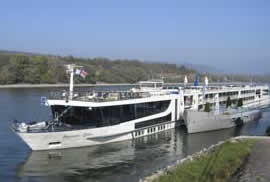
So here I am, a passenger on the Premicon Queen, a floating five-star hotel, which caters to travelers who appreciate the finer comforts of life and who can afford the time to enjoy them. It’s said to have more room per passenger than any other river cruise ship, at 484 square feet per passenger.

BUDAPEST IS ORIGINATING POINT
Operated by the popular Cologne-based KD Cruise Company, the five-day trip starts in Budapest and ends in Regensburg, Germany, a distance of 452 miles. And in those miles, as well as in the total miles of this majestic river, I think of all the cultures, towns, traditions and people this river binds together. This thought continues to hold wonder for me throughout the cruise, as we float from country to country and city to city.

Seeing these things all come together on the river—on a luxury ship—is a satisfying way to relax, with plenty of time to think, dream and melt your stress away.

Billed as the world’s most modern twin-propeller cruiser, the 800 KW Premicon Queen features two mini suites, 30 junior suites, 16 deluxe suites and four queen suites. The rooms face the water so travelers enjoy the river from the comfort of their own suite. The crew speaks both German and English.

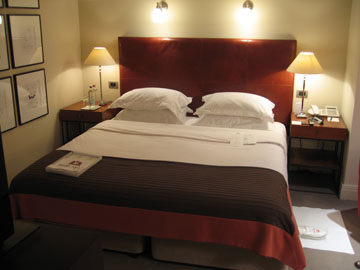
Deluxe suites, with 237 square feet of space, feature an upscale interior, marble bathroom with shower and panorama doors which when opened, turn the suite into a loggia. Queen suites have a separate living and sleeping area, marble bathrooms with shower and tub and French balconies as well as a walk-on balcony with two seats. Even a butler is assigned to your cabin for any extra help you may need.

Rooms feature individual temperature control, television (with a channel showing a view from the front of the ship), telephone and wireless internet access. Bathrooms had both 110 and 220 volt outlets. Room service was also available.
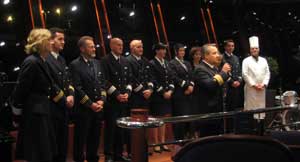
The Premicon crew

OCTOBER TRIP
A couple of days devoted to touring Budapest are in order if you’ve never been to this city of under two million people. A city tour by a Cityrama bus (www.cityrama.hu), with a German/English-speaking guide, is a must if you aren’t familiar with the city. Purchase of a Budapest Card is also a good idea if you want to scout out the city on your own. It offers free services or discounts to more than 100 attractions from museums, baths and restaurants as well as public transportation.

Be sure to see the Westminster-style Parliament building, the Chain Bridge (especially at night), Heroes Square, the Palace of Art, the Transport Museum (Europe’s oldest), maybe the zoo, and take the funicular to Castle Hill. For fun visit the Great Market Hall, Statue Park and perhaps enjoy a nice relaxing stroll through Margaret (Margitsziget) Park, located on an island and reachable by tram. While in Budapest, visit the famous Szechenyi Baths in the City Park and eat at the upscale Gundel Restaurant nearby.

The Premicon Queen has arrangements with Hilton to provide lodging at the point of departure as well as the end point on cruises so passengers can spend extra time visiting these cities before and after their cruise.

My October cruise avoided the large tour groups that typically crowd Europe’s rivers and land excursions, so there was not a crush of visitors to deal with. But some of the nicer, warmer weather was gone as well. It’s a tradeoff sometimes.

After a day and a half of visiting the sights of Budapest, it was time to find my ship. Approaching the dock area near Budapest’s Parliament Building where it was waiting, two eager young men greeted me and carried my luggage to my room—no back strain there. After a tour of the room by one of the crew, I’m off to explore this 442-foot by 37-foot wide boat. I’m surprised it’s just a bit over 5 feet deep, but later on the trip I note some areas of low water on the river and understand why this is necessary.

The captain, Stamen Dimitrov, who has been piloting ships for 19 years, will tell you the 106-passenger Premicon Queen can travel at nearly 14 miles an hour and has space for a crew of 60. Cruise Director Doris Moser, Hotel Manager Thomas Boge and Restaurant Manager Oliver Schulz, are on board to oversee virtually your every whim. When you figure the passenger count to the crew, you can see that it’s a win-win situation for the passengers, especially if you like attention.

SUNDECK GREAT GETAWAY
When the weather is warm, and there’s no precipitation, the 10,764-square feet of space on the top sundeck is the place to be. With comfortable lounge chairs, a tai chi area, shuffleboard, chessboard and putting green—as well as waiters ready to take your drink order—passengers have a number of distractions. In colder weather, you can use one of the large blankets supplied by the ship to stay warm.

When departing Budapest at 10 p.m., I wasn’t really sure we were leaving the dock since the ship’s motors were so quiet. After devouring the chocolates on my pillow placed there earlier in the evening by the maid, and after a comfortable night’s sleep in my room trimmed in rich dark wood paneling, I was ready for breakfast, served at the rear of the ship. With glass on all sides and rear of the restaurant, passengers are able to enjoy a wide-screen view of the river at the stern.

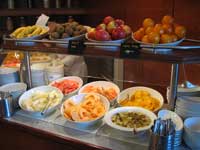
If you enjoy variety in your meals, the Premicon Queen will likely satisfy you. Breakfast consisted of a number of different juices, jams, breads, meats (ham, salami, veal liver pate, bacon, sausage), cereals, egg selections, as well as hot drinks, milk (3.5%, 1.5% or .03%), vita drinks such as green and yellow tea, and cheeses (Emmentaler, Tilsiter, Gouda, Edamer or Buttercheese, Brie and others).

In addition, oatmeal, fish, fresh fruits or dried fruits, danish pastries and more await you, and that’s just at breakfast. Did I mention the champagne? Early birds could start their day in the Steamship Salon with a limited breakfast menu until the ship’s main restaurant opened at 7:30 a.m.
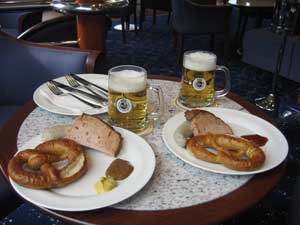
One evening for dinner guests were offered appetizers of beef tartar with dark bread and pickles or queen’s salad, or warm potato quiche. That was followed by a pure carrot ginger bisque soup with sevilla orange segments, and a main course of seared plaice fillet on lemon pesto, pancetta and rice souffle, or oven-roasted tenderloin of veal with truffle essence and a baked potato. Dessert was either tiramisu, green tea sherbert, seasonal fruit salad or a selection of cheeses. Oh yes, there was also a vegetarian dish.

Executive Chef Rainer Buss was always busy in the kitchen with his crew preparing new entrees, and Oliver Schulz the restaurant manager was eager to please, inquiring about the food, making sure passengers were well attended to, and sending the wine steward over to help guests make a wine selection.

Wine selections were sometimes a bit hard to make just because of the wide selection. My notes indicate that at one evening meal, passengers could select from two types of Hungarian bottled wines and four types of open wines, two from Germany and two from Austria. Descriptions of the wines and their origins was printed in the menus.

LOCAL CUISINE FEATURED
As the Queen floated down the Rhine between Hungary, Austria and Germany, the meals were often especially chosen to coincide with foods from that area. As an example, near Passau the evening meal selection included beef roulade with gravy, red cabbage and potatoes. A Bavarian crème with blueberry compote, a most delicious combination, celebrated the end of the meal.

As you can guess, meals were served with elegance and flair, and the portions were plentiful. More than once I was glad the ship was as large as it was so I could take an after-dinner stroll. But then came the “midnight snack,” usually served around 10:30 p.m., in case you were still hungry. This usually featured finger sandwiches, fruits, desserts and other tempting treats too good—and presented too elegantly—to pass up. Coffee and tea time was also a daily ritual between 3:30 p.m. and 4:30 p.m. in the ship’s Theatron, as was a cocktail hour at 6:30 p.m. every evening. Dinner began at 7 p.m.

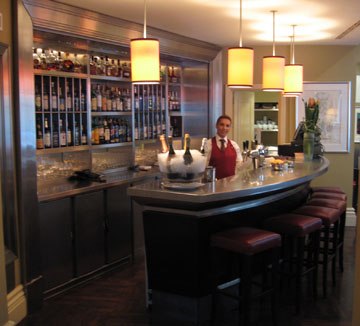
The ship’s library was small but had an interesting selection of books on history, travel and novels, as well as some board games. Guests can walk to the clubroom where fine cigars and premium whiskeys are available, or relax in the contemporary steamship lounge.

ADDITIONAL FEATURES, ENTERTAINMENT
With wellness a big item these days in Europe, you can go below deck to the wellness area which includes a glass-encased saunarium, shower temple, a large whirlpool and a variety of cardio exercise machines. On-board staff can assist passengers with advice, acupressure, massages and even Kneipp treatments. A color and face consultation for women was also offered by the salon attendee.

Of course, complete make-up, hair styling and well-being sessions were available with an appointment during the cruise. This section of the ship on the lower deck was attractively decorated and inviting.

After dinner, passengers were treated to the on-board Bulgarian orchestra Rococo, featuring Bulgarian singer Rumy Key, a popular radio and television star. The orchestra also performed at dinner in the restaurant one evening. Also, slide presentations were given by Cruise Director Moser in the lounge, detailing the history of towns the ship was about to visit. These were informative sessions where guests could glean a lot of valuable information shortly before the ship docked in port—I know I learned a lot of information that helped me plan my historical treks through the towns. City maps were also provided for passengers.

The Queen also offers a number of off-ship land tour packages at the various ports where time allowed. Thus at Vienna, where we docked at 8:30 a.m., passengers had until about 10:45 p.m. The ship offered a shuttle service to the city center (Albertinaplatz) for those who needed a ride only. Individual tours were also available designed especially for passengers, such as private tastings with famous winemakers and helicopter excursions. All tours were arranged in small groups with a personal travel guide and minivans.

In Bratislava, passengers were offered a tour of the traffic museum, and they were taken there by an old-timer red bus. Another tour offered—which looked like a lot of fun—was entitled “Cooking at the Flowers Restaurant,” a unique, high-class Mediterranean-style restaurant with a glass roof, located in the historic Erdody Palace building. At Melk, Austria, a three-hour tour about wine growing and the wine culture of the region was available. All land excursions were extra fare, but you can also go on your own.

HIGHLIGHTS ALONG THE RIVER
Along-the-river highlights of this cruise include the Basilica of Esztergom, largest Catholic cathedral in Hungary, the tallest building in Hungary and the 18th largest church in the world. In Bratislava, where we had about 11 hours to explore, we were directed to the Old Town which is adjacent to the Danube. St. Martin’s Cathedral where Maria Theresa was crowned in 1740, is a must-see, as is St. Michael’s Gate, the last remaining portion of the historic city wall; Main Square, the bustling center of the city, Old Town Hall, and Bratislava Castle, the city’s most prominent landmark.
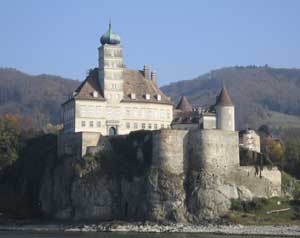
In Vienna, where the ship docked for 16 hours, passengers could spend a whole day and a good part of the evening in town. Highlights of this city are the Opera House, Hofburg Palace area, Schonbrunn Palace, St. Stephen’s Cathedral, Albertina Museum, Belvedere Palace, Lipizzaner Museum, the Secession Museum, the outdoor market called Naschmarkt, Liechtenstein Museum, the Sacher Cafe located in the Sacher Hotel, Vienna’s colorful main square called Stephansplatz, the Kohlmarkt (Vienna’s elegant shopping street), and right outside the city by tram, Grinzing, where “new wine” is offered at numerous little taverns and cafes.
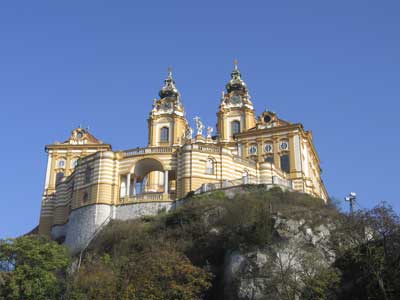
The Melk Abbey overlooks the Danube

Further down the Danube, Durnstein, a small village on top of “bird hill,” contains ruins of the Castle Durnstein. Here in 1192-1193 Richard the Lionheart was held prisoner after the Third Crusade. You can snap some fantastic photos of this intriguing small village from the ship’s sundeck on a clear day. In the Wachau area of Austria, Riesling and green Veltliner grape vineyards line the surrounding hills. The leaves of the vines, turning yellow from the fall season, presented an eye-catching picture.
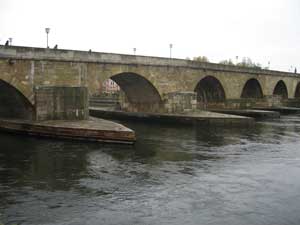
The ancient Stone Bridge crosses the Danube at Regensburg

At Melk, the ship docked for five hours, enough time to make the trek through the small town of Melk and up to the Benedictine abbey which sits majestically on a cliff at the river bend. An important spiritual and cultural center for more than 1,000 years, Melk’s baroque abbey was first the home to the Babenberg family and since 1089 has been a monastery. This enormous structure, built between 1702 and 1736, is now on the UNESCO World Cultural Heritage list. Individual and group tours of the abbey are available.

PASSAU NEXT STOP
Passau was the ship’s next stop, and it’s defined by water. Three rivers—the Danube, Inn and Ilz—converge there, making it very picturesque. The Old Town is squeezed between the river banks in a storybook setting. The huge St. Stephen’s Cathedral houses the largest church organ in the world, with 234 stops and 18,000 pipes. Had our ship arrived a bit earlier, a free organ concert would have been on our agenda. Time didn’t permit a visit, but on the opposite side of the Danube was the Vesta Niederhaus, a medieval fortress which at one time formed the outermost defensive wall of the city.

Our last city and stop on the cruise was Regensburg, Germany, originally founded as a military camp by the Romans. It’s an ideal town to explore by foot; 1,300 buildings are listed as being of historical interest, and a good view of the skyline is from the 12th century Stone Bridge which crosses the Danube by means of 15 arches; at one time it was the only fortified crossing of the Danube over its entire length. The streets curve and meander throughout the city center, and it takes some time to acquaint yourself with the old historic district, but it’s an interesting challenge to visit the merchant quarter, the Domnstadt area next to the ecclesiastical buildings, and the other parts of the Old Town. There’s also no problem finding a good hotel here if you wish to explore the city further: the Bayerwald, Furstenhof, Park-Cafe, Lindner Hotel Kaiserhof and Goldene Sonne are several that can make your stay a pleasant one.

With my Premicon Queen trip at an end, I said goodbye to the crew who had made my stay on board a memorable one. It was a river trip to far-off destinations where I had never before been. “Life is a long, wonderful journey,” says the Premicon’s Managing Director Klaus Hildebrand. “To travel is to live, to come to know the unknown,” he says.

That is what this cruise trip was all about for me, discovering people, places and the unknown. It was a fun adventure, and I’m a better educated traveler because of it.

IF YOU GO…
Cruising on a river ship is a relaxing way to visit cities and towns; virtually everything is done for you including meals and entertainment—and you don’t have to make your bed in the morning. It can get chilly on a ship, however, so always pack warm clothing. The evening meal is the time when passengers dress up, so a sport jacket and tie are in order for men, and more formal attire for women.

While there are usually no medical personnel on board, the ship is always in contact with the local authorities and can be at a dock within a few minutes. If you take medication, make sure you have enough of what you’ll need for the trip.

It’s not hard to find gifts along the way to take back home, so take an extra bag that can be folded into your main suitcase which you can then bring back with you.

Traveling with friends on a cruise makes sense. You’ll always have someone to dine with, and they can accompany you on the extra land tours.

Cruises are available for 2,3,5,6,7 and 10 nights on the Rhine, Danube and Main, as well as Christmas Journey and New Year’s Eve cruises.

For reservations contact www.premiconqueen.com, or in Germany call +49-221-2088-500 or e-mail: pearl@k-d.com.
Discovering the Dordogne: France’s ‘Secret’ Region Intrigues and Delights

By Marilyn Heimburger
Photos by Don Heimburger

Paris appears to top the destination wish list on a first trip to France. But after that, the Dordogne area of southwestern France is an enticing destination known for history, culture, wine, gastronomy and relaxation.

The Dordogne, also known by its former name, the Perigord, is an hour’s drive east of Bordeaux. The Dordogne River runs east to west through its center, carving out a winding river valley scattered with more than 1,000 picturesque castles and chateaus. From vineyards in the west to pre-historic sites along the Vezere River tributary in the east, and fortified villages from the Hundred Years War, there is plenty to see.

ISSIGEAC
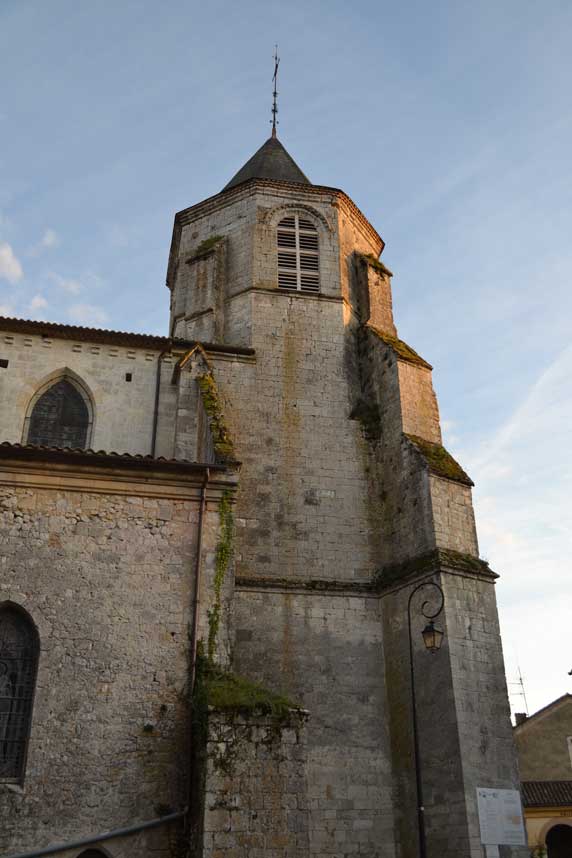
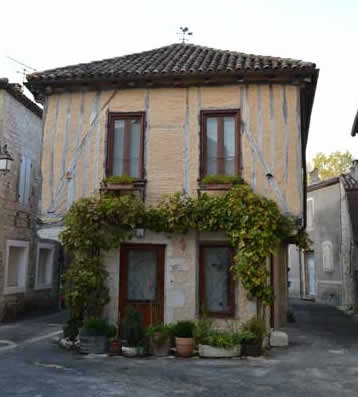
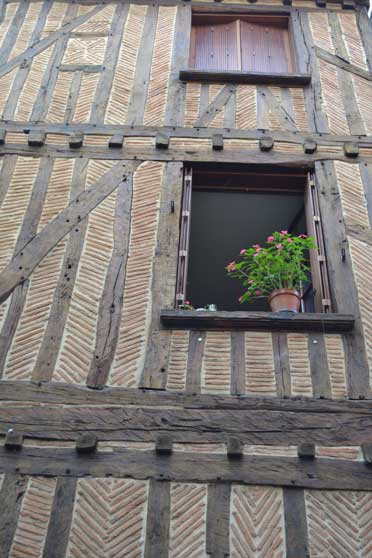
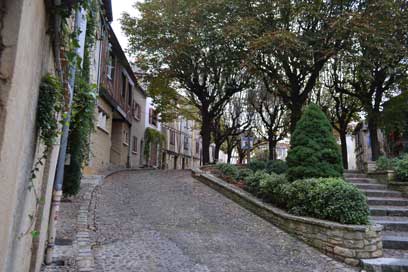
In the tiny medieval village of Issigeac a circular wall surrounds winding streets dominated by the octagonal bell tower of the 15th century Church of Saint Felicien. The 13th century stone buildings with Gothic arches and charming half-timbered houses with beautiful inlaid brick detail are lovingly preserved, not to attract tourists, but to be lived in and used by the less than 1,000 inhabitants. Look for the “Mushroom House,” built with an overhanging second story, to allow carts access to the narrow streets that surround it. An active market is held in the central square on Sunday mornings, but a stroll through the quiet town at dusk calms the spirit and prepares you for a relaxing dinner.

Church of Saint Felicien
“Mushroom House”

La Bruceliere restaurant in Issigeac is family-run and serves gourmet local cuisine with regional wines. A pleasant surprise in rural France, it also offers five rooms for overnight accommodations. www.labruceliere.com

BERGERAC
The historic town of Bergerac was founded with the castle built to manage river traffic on the Dordogne, and the 9th century bridge accommodating pilgrims on the road to Santiago de Compostela. In the old town, see the picturesque stone buildings constructed with local yellow stone, and the half-timbered houses on the Rue St. Clar. The National Tobacco Museum is housed in the 17th century Peyrarede House.

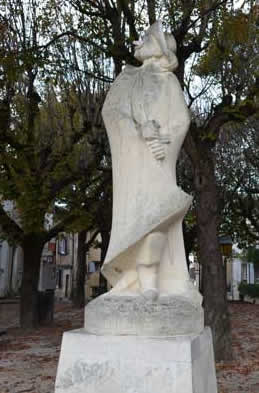
In the medieval town square, restored in the 1970’s, you’ll discover a stone statue of Cyrano de Bergerac – the comic/tragic hero made famous by Edmond Rostand’s 1897 fictional story about the brilliant and poetic swordsman with a very large nose, in love with the beautiful Roxane. The real-life Savinien de Cyrano, upon whom the fictional character was loosely based, was born in the 17th century near Paris. When he joined the Cadets of Gascony, he changed his name to Cyrano de Bergerac, after a family estate of that name. The town of Bergerac is nevertheless happy to adopt him as a symbol of boldness and generosity.

Unfortunately, Cyrano’s famous stone nose is routinely broken off by admiring fans. So a new colorful bronze Cyrano with a more permanent nose was erected in 2005 in the Place Pelissiere, in the shadow of the picturesque church of Saint-Jacques.

Stone Cyrano

In the 18th century flat-bottomed boats called Gabarre carried wine and wood for barrel-making from Bergerac’s riverfront to Bordeaux for export. Replica Gabarre today offer tours on the Dordogne in Bergerac and in the castle-rich area near La Roque-Gageac.

A peaceful courtyard is at the center of the Recollets Cloister, now home to Bergerac’s House of Wines. Here a Wine Journey exhibit explains the history and appellations of Bergerac wines. Visitors can also taste the local wines and visit with a winemaker from the Dordogne Wine Route.( www.vins-bergerac.fr/en/p/maison-des-vins-or-house-wines.) What is there to learn at the House of Wines?

The vineyards in the geographic area of Bergerac are classified into 13 appellations that are grouped into five different types:

Reds: Bergerac, Cotes de Bergerac, Montravel and Pecharmant
Roses: Bergerac rose
Dry Whites: Bergerac and Montravel
Sweet Wines Monbazillac and Saussignac
Dessert Wines: Cotes de Bergerace Blanc, Cotes de Montravel, Haut Montravel and Rosette

France’s system of appellations consists of a set of strict rules covering which grape types may be used in a particular wine, the areas in which the grapes can be grown, the maximum permitted yields, the pruning type and sometimes the harvesting techniques.

Particularly popular in the area is Monbazillac, a sweet white wine made from grapes harvested after they have begun to shrivel and develop “noble rot.” Each individual grape must be hand picked from the bunch at just the right time — a labor intensive, painstaking job.

Edouard de Saint-Exupery
Chateau Tiregan

WINEGROWERS
The vineyards of Bergerac cover almost 30,000 acres in 93 villages on both sides of the Dordogne. Although traditionally overshadowed by the more well-known wines of its neighbor Bordeaux, many of the Bergerac wines compete favorably with them, and at a lower cost.

Chateau Puy-Servain (www.puyservain.com) owners Daniel and Catherine Hecquet have nearly 120 acres of vineyards (the average for wine growers in the area is 50 acres) and export 60% of their wine.

The Chateau VARI estate in the town of Monbazillac is an organic vineyard. Their wine bar, la maison Vari, offers wine along with a simple, but delicious menu for a light lunch. www.chateau-vari.com

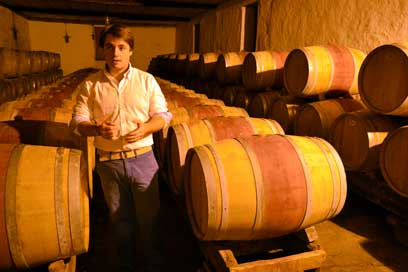
Winegrower Edouard de Saint-Exupery of the Chateau Tiregand in Creysse (whose famous literary relative wrote The Little Prince in 1943) welcomes visitors for free wine tastings or for a guided tour of the 17th century family estate, located just 10 minutes east of Bergerac. www.chateau-de-tiregand.com

PREHISTORIC SITES
The valley of the Vezere River, which flows into the Dordogne, has been called the prehistoric capital of the world: the part of Europe that claims the longest period of continuous human habitation. Cro-Magnon man was discovered here in 1868 during excavation for the construction of the railroad. A national museum of prehistory is located in the cliffs above Les Eyzies-de-Tayac. www.musee-prehistoire-eyzies.fr

The valley boasts 147 prehistoric sites dating from the Paleolithic age, and 25 decorated caves, the most famous of which is the Lascaux Cave in Montignac. The site of 17,000-year-old paintings and engravings, it was discovered in 1940 and opened to the public for viewing. The paintings had survived beautifully for centuries in the stable and somewhat sterile environment. However, visitors unwittingly exposed the cave and drawings to destructive elements such as algae and carbon dioxide, which forced the closure of the cave for viewing in 1963.

Today visitors to the Dordogne can view an exact three-dimensional replica of largest two areas of the cave in Lascaux II, a remarkable achievement that took 10 years to construct. Since 2012, a traveling replica called Lascaux III will be on exhibit in museums around the world, starting with the Field Museum in Chicago, and continuing to Houston and Montreal, not to return to France until 2020. www.lascaux.culture.frwww.semitour.com/site-touristique/lascaux-ii

Walking through the Grand Roc Caves in Les Eyzies de Tayac is like being inside an illuminated geode. Well-placed lighting showcases the incredibly delicate stalagmites, stalactites and crystallizations of this Unesco World Heritage site. www.les-grands-sites-du-perigord.com

A few steps away from the Grand Roc is Laugerie Basse showcasing two prehistoric rock shelters and displays of prehistoric mobile art.

EYRIGNAC MANOR GARDEN
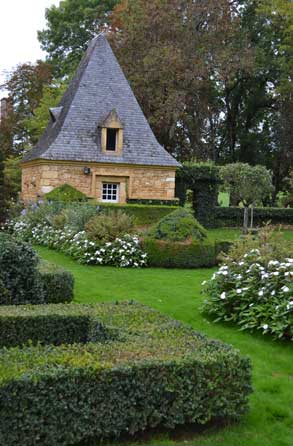
Eyrignac Manor Garden is one of France’s most beautiful private gardens. Known for its topiary art, the gardens and manor have been in the same family for 500 years. Owner Patrick Sermadiras is often on hand to meet guests and share his design and gardening expertise. A well-written visitor’s guide and audio tour is available in English to lead you through the seven distinct gardens. An on-site restaurant offers a varied menu for a tasty lunch. www.eyrignac.com

MEDIEVAL TOWN OF SARLAT
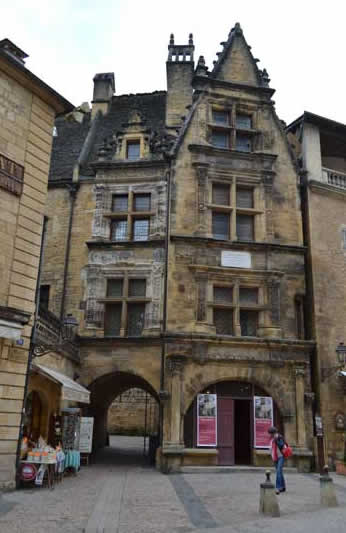
A medieval jewel, Sarlat boasts one of the largest medieval urban areas in the world. Locals are especially proud to showcase the birth-house of political philosopher Etienne La Boetie as a gem of Italian Renaissance architecture. Throughout the town, note the roofs made of overlapping flat stones, the inexpensive, readily available roofing material of the time. These stones made the roofs extremely heavy, necessitating steep roof angles for stability. A little jarring, yet noteworthy nonetheless, are the huge metal doors that open into Sainte-Marie church, which now serves as a covered market. World famous architect Jean Nouvel, who was born near Sarlat, designed the doors to replace the destroyed apse. He also designed the glass elevator that bursts through the open roof of the bell tower, offering a spectacular panoramic view of the surrounding old town.

Boetie House

VILLAGE OF BEYNAC
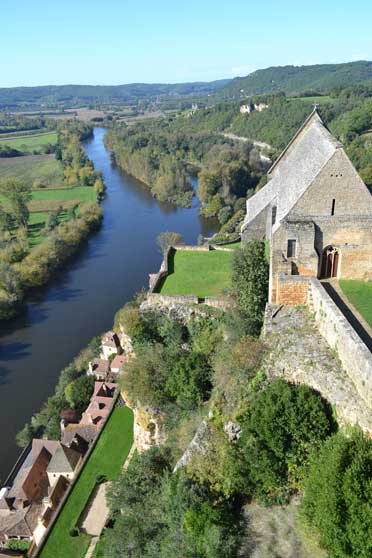
Bring your walking shoes and climb up the winding stone streets of the beautiful medieval village of Beynac. Your goal is the 12th century fortress at the top of the cliffs overlooking the Dordogne. From there, the view of the surrounding countryside, the town below, the winding Dordogne River and the Castelnaud Castle on the opposite riverbank is unforgettable. A walk through the restored castle is a living history lesson.

During the Hundred Years War, the Dordogne River was the border between France and England. Beynac Castle was French and Castelnaud was English. All along the Dordogne River struggles for supremacy meant the bastides (fortified towns built by either the French or the English during the 13th century to contain invasions) were shuffled back and forth between the two countries.

Beynac Castle and village served as the location for more than a dozen films, including Joan of Arc in 1999, Ever After in 1998 and Chocolat in 2000.

After climbing and touring Beynac Castle on the cliff, enjoy a meal at LaPetite Tonnelle, a quaint restaurant tucked against the cliff on the way down. Their menu offers homemade dishes with locally sourced gourmet food and regional wines, served on their patio with a beautiful view of the village or in their dining room, built right into the rock wall. www.restaurant-petite-tonnelle.fr

CHATEAU DES MILANDES
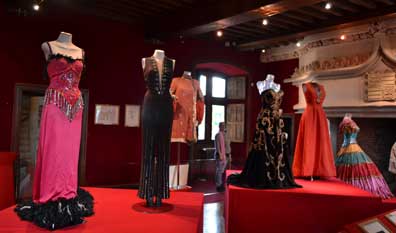
On the other side of the river in the town of Castelnaud le Chapelle is the Chateau des Milandes, a beautiful 15th century castle, and the former home of musical entertainer Josephine Baker. Born in St. Louis, Missouri, Josephine’s popularity sky-rocketed during the 20’s in Paris when she appeared in the Revue Negre at the Theatre des Champs-Elysees. During her time at the Chateau de Milandes she adopted 12 multi-national children (her “Rainbow Tribe”) and became beloved by the locals because of her generosity and kindness, even working for the French Resistance during WWII. Poor financial planning caused the house and its contents to be put up for auction in 1968. Four families have owned the Chateau des Milandes since the auction. Current owner Angelique de Labarre has passionately collected items from Josephine’s past to fill the 14 rooms with original costumes, music, photos and furnishings. Beautiful gardens and a live birds-of-prey show on the grounds outside the castle complete an entertaining visit. www.milandes.com

PERIGUEUX
Périgueux, located along the Isle River, is the largest town in the Perigord region, and its contemporary face makes finding the hidden medieval gems a little more difficult.

Périgueux began as two distinct towns. Easy to see are the historic remnants of the older one: Gallo-Roman town of Vesunna. The ruins of the inner sanctum of the temple for the goddess Vesunna and remnants of the ancient amphitheater stand near Jean Nouvel’s newly-designed Gallo-Roman Museum. The Romanesque gate of Porte Normande leads to what is left of the Barriere Castle and Romanesque-style house built in the Middle Ages on Roman foundations. The Saint-Etienne de la Cité Church was the cathedral of Périgueux until 1669, when that title was transferred to the Saint Front Cathedral in the second nearby settlement that comprises today’s Périgueux.

Streets of Périgueux

Further to the east, the more commercial city of Puy St. Front, the second “building block” in what is now Périgueux, developed in the 12th century. Look carefully down narrow streets of the old town for half-timbered houses, towers, walls with evidence of ancient arched windows and gateways, bricked-in and changed to fit the needs of the century. Beautiful ancient stone staircases still lie hidden in entryways of private houses, accessible to guides with keys.

Dominating the skyline is the Byzantine-style bell tower of the Saint Front Cathedral. The church is in the shape of a Greek cross, with five domes dating from the 12th Century. It was restored by Architect Paul Abdie between 1852 and 1895. His award winning design of the Sacre Coeur Basilica in Montmartre in Paris was inspired by the style of the Saint Front Cathedral.

ACCOMMODATIONS
The Chateau des Vigiers in Monestier on the western edge of the Perigord is one of the few places in the area that can accommodate large groups. This luxury hotel, with a spa and a 27-hole golf course, offers 36 romantic rooms in a 16th century chateau and annex and 40 more in its contemporary, eco-friendly Relais des Vigiers. www.vigiers.com

For peaceful and luxurious accommodations five miles south of Bergerac, LaChartreuse du Bignac offers 12 rooms and a restaurant in a 1630 stone chateau with vaulted ceilings and exposed beams. Extensive grounds with terraces, a swimming pool and a park lead to a small lake. www.abignac.com

The recently renovated Hotel Les Glycines in les Eyzies de Tayac is centrally located near the Cro-Magnon museum and Grand Roc cave, and is a short drive to Lascoux cave. The hotel features beautiful romantic rooms, extensive gardens, a pool and a wonderful restaurant. Order the “Victoria pineapple” for dessert, aim your video camera, and watch the magic begin. The waiter pours warm rum/passion fruit syrup over a hollow chocolate ball until the surprise pineapple tidbits, pina colada and vanilla ice cream appear. Entertaining and delicious! www.les-glycines-dordogne.com

Vieux Logis in Tremolat is a lovely 4-star country inn, formerly a priory and then a farmstead, that is not to be missed. Rustic comfort in 14 rooms and nine apartments, with a one-star Michelin chef, gourmet restaurant, bistro, seminar rooms and lovely garden and terrace. Once there, you won’t want to leave. www.vieux-logis.com

NEED A GUIDE?
For a professional travel guide in the Dordogne, European Traveler recommends Frances and Sandra Ho Tham Kouie.

They have more than 20 years of experience in tailor-made tours for English speaking travelers – either individuals or groups. Their knowledge of history and attention to detail will smooth your way to an enjoyable discovery of the Dordogne. www.voyages-france-impressions.com.

For more information about the Dordogne region, go to www.semitour.com. Also, www.dordogne-perigord-tourisme.fr and www.perigord-reservation.com.

InterCity Hotels: In the Center of the Action

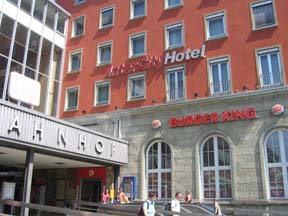
InterCity Hotel in downtown Munich

By Don Heimburger
Photos by the author

My business takes me to European cities several times a year, and I usually end up spending a lot of time in the “old town” or historic part of a city or town. It’s typically my favorite place to spend time, looking at the market squares, visiting hotels and restaurants, asking questions about town festivals and events, or visiting a museum or other local attraction.

When I’m done at the end of a day, I want to stay close to the center of town, because really I’m not done with my work. There’s always more to see and do in the evening, and that means generally after a late afternoon break, I’m back again, interviewing, taking pictures or attending some function. And again it’s usually near the center of town.

CENTER OF TOWN CLOSE TO TRAIN STATION
In Europe, the center of town means it’s in close proximity to the train station, because the railroads are and were instrumental in growing cities.

One company that likes to locate its hotels near the train stations is Steigenberger’s InterCity Hotel group, a chain of 31 facilities in Germany and one in Austria. Their own literature says, “If you are seeking a centrally located, functionally equipped and comfortable domicile, InterCityHotels are your perfect choice.”

In a recent business deal, the Egyptian tourism corporation Travco Group became a majority stockholder in the Steigenberger Hotel Group. “Particular focus will be given to international expansion of the brands Steigenberger Hotels and Resorts and InterCityHotel,” says Hamed El Chiaty, founder and owner of the Travco Group.

On a recent trip to Munich and Freiburg, I booked rooms at the InterCity Hotel in both cities. From the Munich train station, where I arrived from the airport, I only had a few steps before I saw the familiar InterCity sign at one end of the train station.

FEATURES OF HOTEL
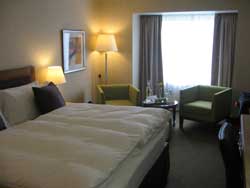
The five-story hotel has 198 rooms and suites, floors for non-smoking, with all rooms sound-proofed and air-conditioned. The soundproofing was a good idea, as next to a train station, it can be fairly noisy at times. Rooms feature a bathroom with shower, toilet, hair dryer, cable television and a writing desk. There was a WiFi connection in the room. The hotel featured two elevators and a restaurant (Fleming’s Brasserie & Wine Bar), where the morning’s complimentary breakfast was served.

I was happy to have room air conditioning when I was there, as it hit 95 degrees in the afternoon in Munich, a rarity for this city so close to the Alps.

A convenient part of any InterCity booking is a complimentary card that allows guests to use local public transportation free of charge. So if you want to go to the Marienplatz, as an example, which I did several times, I just presented my card at the train station when needed, and I enjoyed free transportation. The city center is less than a mile away.

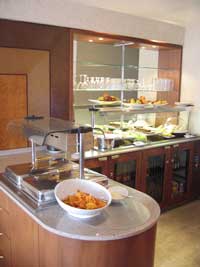
Intercity hotels are mid-range in price, clean and walkable to the inner city. In the morning, a buffet-style breakfast was served with scrambled and hard-boiled eggs, sausage (white Munchener sausages), several types of yogurt, two types of juice, hard rolls, whole grain breads, crossiants and pastries, bacon, large pretzels, a variety of soft and hard cheeses, six types of cereals and a variety of cold cut meats.

There was also dried fruits, fresh fruits such as watermelon, pineapple, and a bowl of mixed apples for guests. I was ready to start my day!

The lobby downstairs was sparse but featured comfortable chairs and couches for guests, as well as a few tables.

THE FREIBURG INTERCITY
Later on, I took the train to Freiburg near the Black Forest, where again a stay at the InterCity there kept me close to the train station and was only a few blocks from downtown. The hotel, in fact, is just a few steps from the entrance to the train station.

This multi-level hotel features 152 guestrooms, had non-smoking rooms, cable television, direct dial telephones, a modem/fax link, a writing desk and a mini-bar. There was no air conditioning, so with the hot weather, keeping the window open was a necessity; I was told the typical summer high temperature doesn’t require air, and it’s not available in most Freiburg hotels.

The room had a shower, toilet, hairdryer, and a restaurant and a bar downstairs. The hotel staff was pleasant and I noticed they was able to answer visitors questions about the train schedules and the city. Again the room was clean and had the basics. The hotel even had rooms for the disabled if needed.

In all, a stay at a InterCityHotel affords travelers a convenient location for a mid-range price, with breakfast included.

MORE HOTELS TO OPEN
More InterCity Hotels are scheduled to open with the merger of the Travco Group. Steigenberger’s Chief Executive Officer André Witschi says that the company will continue to invest in improving the quality of their hotels, and international expansion will help them to increase brand awareness for Steigenberger Hotels and Resorts and InterCityHotels.

In 2010 and 2011 InterCityHotels will open five new locations in Germany: at the Berlin-Brandenburg Airport and in Bonn, Darmstadt, Mannheim and Ingolstadt.

For more information, go to:
www.intercityhotel.com
www.muenchen.intercityhotel.de
www.freiburg.intercityhotel.de

Contact the hotels by e-mail: info@muenchen.intercityhotel.de
info@freiburg.intercityhotel.de

If you are arriving by train:
www.raileurope.com

InterContinental Hotel Prague

Restful haven in a bustling capital

By Don Heimburger
Photos by the author

The InterContinental Hotel in Prague sits on the banks of the Vltava River in the city’s Jewish Quarter.

This is important because it offers a great view of the city and the Prague Castle and the river’s activities, but it also is convenient to the historical center, as well as transportation. The high-end shopping area called Parizska Street is a few steps outside the door.

I didn’t realize all this when I first spotted the hotel, but soon I realized that location sometimes can be everything. But for his hotel, it goes beyond that. It’s a luxury accommodation on the inside, as well as being centrally located.

OFFERS 372 ROOMS
The hotel offers 372 rooms and suites and another important feature, especially for the business traveler—the Club InterContinental (concierge service, a library, free internet access, copy machine, newspapers and refreshments).

The hotel’s rooms feature goose-down duvets, blackout curtains, Italian marble bathrooms, mini-bar, in-room safe, color television with 47 channels, telephone, voice mail, coffee machine, iron and ironing board and individually-controlled air conditioning.

I found plush towels in my room, fluffy pillows, chocolates at turn down time, bright, cheerful rooms with two comfy chairs and 3.4 ounce bottles of shampoo, lotion, conditioner and shower gel. The bathroom had two hand towels, two face towels and two shower towels. There was plenty of closet space, a storage cabinet and nice plush carpeting. The flat screen television was of the newest model, and the swimming pool was nice.

BREAKFAST: GOOD VARIETY
Breakfast, an important meal for business and leisure travelers alike, featured a large variety of meats and sausages, cheeses, cereals, potatoes, hot plates such as waffles or scrambled or fried eggs made to order, breads and rolls, juices, coffee and tea, and fruit, as well as whole fruit. The breakfast was delicious and there was plenty of it. The wait staff was pleasant and efficient.

The hotel’s staff is multilingual–good when you can’t understand the local language.

The Zlata Praha Restaurant in the hotel serves a wide variety of dishes, including Czech and international cuisine. A Sunday brunch is also offered between 11 a.m. and 3 p.m. A second restaurant on the first floor, the Primator, offers excellent views of the river. Duke’s Bar & Cafe offers a pleasant setting for a quiet drink or two, with live entertainment on Friday and Saturday evenings.

A Health club and spa are part of the hotel offerings, with whirlpool, saunas and solariums, as well as five treatment rooms.

To make a reservation, go to www.intercontinental.com/prague or www.icprague.com. The five-star InterContinental hotel is located at Curieovych 43/5, Prague 1, 110 00, Czech Republic. E-mail is prague@ihg.com.

Hotel Amigo Is a Friendly Place

By Don Heimburger
Photos by the author or as noted

“I am delighted to introduce the Hotel Amigo, which we restored to its rightful status as the best luxury hotel in Brussels,” said Rocco Forte when the hotel’s renovation was completed in 2002. Forte, owner of the Rocco Forte chain of 14 hotels (some currently under development), which are located in European capitals and in Marrakech, has assembled a group of upper-scale hotels that are designed to provide all the usual  higher class amenities and then some.  

Located at Rue de l’Amigo 1-3, only a block from the famous Grand Place, considered the center of Brussels and noted as likely the most beautiful square in Europe, the five-star Amigo is ideally situated near the key historical sites, shopping areas, restaurants and entertainment.

The doormen in their black top hats signal a welcome to the hotel; the lobby is small, but neat and classy with a dark-paneled reception counter and polite clerks. 

The air-conditioned room was bright, very clean, with a small suite adjoining the bedroom and bathroom. Comfort was key. There was a modern feel to the room which featured furniture and pictures from the Blaton collection and influences from Brussels’ history. The bright bathroom featured a red mosaic vanity top and excellent toiletries.

The room contained Brussels linens, red silk curtains with embroidered velvet details and Flemish chairs and desks. The bed was firm and comfortable. The room was quiet and provided a cozy getaway from busy shopping or touristy activities. I did not try the restaurant for dinner, or the bar, being there only one evening.

A BIT OF HISTORY

The hotel has a bit of history. The original structure on the lot was built before 1522 by a wealthy merchant family and later purchased by the city council and turned into a prison. In 1957 the Hotel Amigo was built by the Blaton family on the occasion of the Universal Exhibition of 1958. During the Rocco Forte renovation in 2000, it underwent a re-styling by Olga Polizzi, the hotel’s director of design. Canvases from artists such as Courtens, Dansaert and Wagemans, together with Flemish wall tapestries from the 18th century, give the hotel a pleasingly modern but still historic flavor.

The morning breakfast included all the necessary eggs, breads, meats and cheeses, juices, coffee, and fruits to satisfy many diverse tastes. The wait staff was pleasant and helpful.

Then hotel was won many awards, including being rated one of the top 100 hotels in the world by the Institutional Investor in 2007. Forbes Traveler rates it one of the top 400 hotels in the world.

European Traveler rates it extremely high as well. We liked virtually everything about it. 

The lowdown:

• Member of the Leading Hotels of the World
• 174 rooms, including 18 suites and the Blaton Suite (on the top floor with large terrace for excellent views of Brussels)
• In-room telephones, voice messaging, internet connection, cable TV, marble bathroom, minibar, safe, trouser press
• Ristorante Bocconi, with bar in the lobby
• Ballroom for up to 200 guests
• Fitness center
• Transfers from the airport (at a charge)
• 24-hour room service which “arrives on time” (the hotel guarantees this)
• In 2007, room rates for a classic room single were 590e; 720e for an executive room single
• General Manager: Ivan Artolli, since 2002 (fluent in French and English)
• Reservations: amigo@roccofortehotels.com