By Marilyn Heimburger Photos by the author and Don Heimburger
The UNESCO World Heritage city of Regensburg, Germany, 90 minutes north of Munich, is more than 2,000 years old, and many of its buildings serve as a testament to its long history.
There’s plenty of reminders of this town’s heritage: located on the Danube, many tour ships dock here and unload visitors for a peek into this German treasure.
Even Mozart liked the city: Regensburg’s hospitality was commended as early as 1790 by Mozart who enjoyed “a sumptuous meal along with divine music” and praised the good wine.
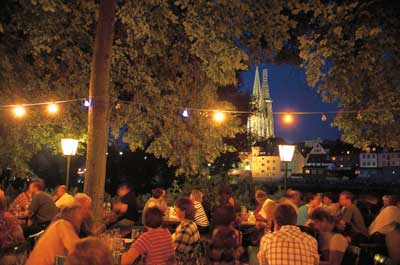
Numerous Roman buildings, such as the Porto Praetorius–an old Roman town gate–can still be seen today. It was preserved because the Bishop’s beer garden was located on the site. An underground museum at Neupfarrplatz displays the history of the Romans and the Jewish community there until 1519.
NEUPFARRPLATZ IN JEWISH QUARTER At the Neupfarrplatz, houses were built in the Jewish quarter over the old Roman fortress in the 8th century. These were destroyed in 1519 when the Jews were blamed for a downturn in the economy and were driven out.
In 1995 an excavation of the area was begun, and the ruins of the Jewish quarter were found, in addition to the Roman ruins.
Found in the excavation and on display in the underground museum were a second or third century statue of the Roman god Mercury; from the 15th century a statue of Aaron (Mose’s brother); and from 1520 an icon of the Virgin Mary. The museum is called Document Neupfarrplatz; if you walk down a flight of stairs, you can view a video showing the excavation finds. www.regensburg.de.
The city began as a Roman fortification (Castra Regina) in 179 AD by Roman Emperor Marcus Aurelius because it was the northernmost point on the Danube. When the Roman Empire fell, the Romans retreated. The fortress built there was not destroyed, and Bavarians then occupied it. It was the first capital of Bavaria; believe it or not, Munich is 1000 years younger!
Not much was damaged in the town during World War II as there wasn’t much industry in Regensburg, so there was nothing to bomb. Thus, the old buildings were preserved.
‘ITALY’S NORTHERNMOST CITY’ Rich merchants gained wealth from importing goods from far away lands. They built large homes with tall towers (a show of strength and wealth) after the style in Italy. Many of these are still standing in Regensburg; nearly 20 are still well preserved. The town is often called “Italy’s northernmost city” because of this.
One of the big Regensburg attractions is The Old Stone Bridge, built on 16 huge arches, which has been in continuous use for more than 800 years. Built between 1135 and 1146, the Stone Bridge enjoys the status of being a unique masterpiece of medieval engineering. It was for many centuries the only stone bridge spanning the Danube between Ulm and Vienna. It was not only a technological masterpiece of engineering, but of strategic importance in terms of transport and, as a result, of great commercial value.
Another town attraction is the Old Town Hall, where Roman Emperors used to summon princes, bishops and ambassadors to discuss the affairs of state. The Imperial Diet Chamber still contains the same furniture, including the benches that gave rise to the German expression “to put something on the long bench” (meaning to postpone it indefinitely).
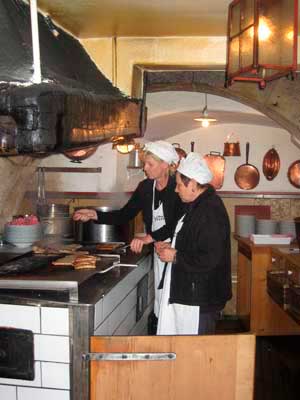
‘HISTORIC LUNCH’ For a quick and tasty lunch, sit down near the Danube and enjoy hot, juicy sausages with kraut and bread in the “Historische Wurstkuchl,” the world’s oldest sausage kitchen. You can actually see them frying the sausages on the grill through a door that leads into the small kitchen. http://www.wurstkuchl.de
Regensburg is a city of churches. Focal points of early Christianity, its ecclesiastical buildings are majestic and typify early Christian architecture. Most famous is St. Peter’s Cathedral, inspired by the French Gothic style and built in the 13th century.
At waterside, Schifffahrt Klinger offers boat trips to many different sights such as the Walhalla, the German Hall of Fame containing busts of famous German personalities.
Regensburg`s remarkable buildings and towers offer an unspoiled look into the past; the wars of the 19th and 20th centuries left this Danubian community virtually unscathed.
The Regensburg Tourism Office is located at the old Rathaus, Rathausplatz 3, D-93047 in Regensburg. Fax is +49 941-507-1919 or e-mail to tourismus@regensburg.de.
Paris appears to top the destination wish list on a first trip to France. But after that, the Dordogne area of southwestern France is an enticing destination known for history, culture, wine, gastronomy and relaxation.
The Dordogne, also known by its former name, the Perigord, is an hour’s drive east of Bordeaux. The Dordogne River runs east to west through its center, carving out a winding river valley scattered with more than 1,000 picturesque castles and chateaus. From vineyards in the west to pre-historic sites along the Vezere River tributary in the east, and fortified villages from the Hundred Years War, there is plenty to see.
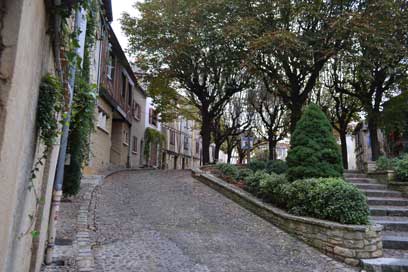
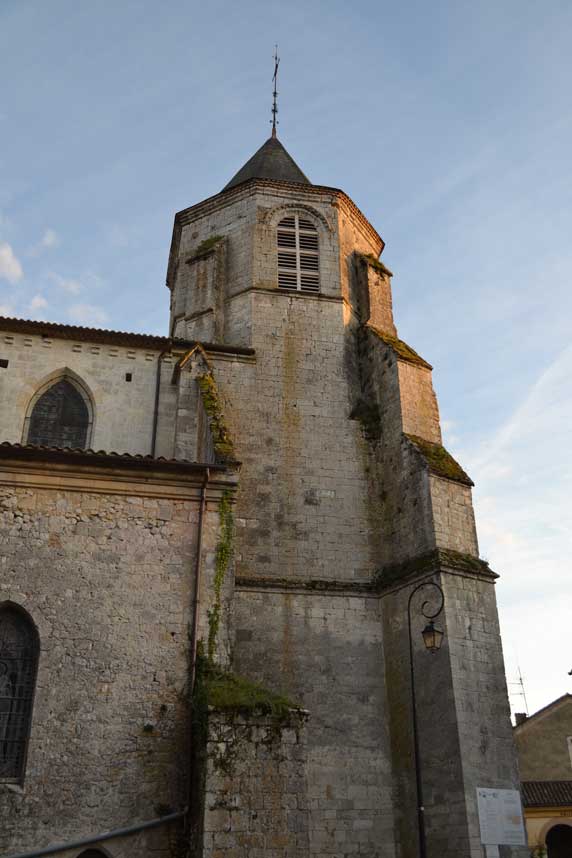
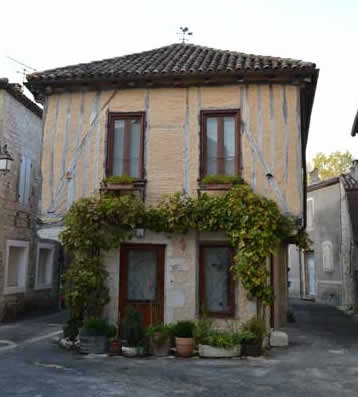
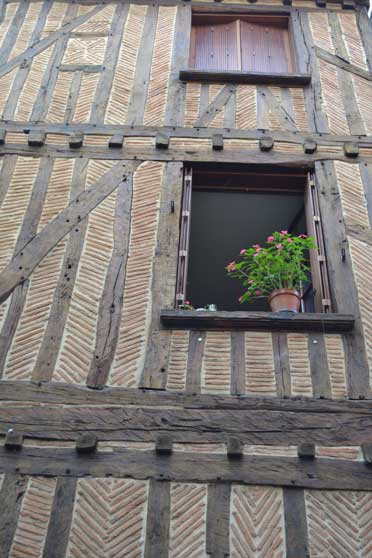
ISSIGEAC In the tiny medieval village of Issigeac a circular wall surrounds winding streets dominated by the octagonal bell tower of the 15th century Church of Saint Felicien. The 13th century stone buildings with Gothic arches and charming half-timbered houses with beautiful inlaid brick detail are lovingly preserved, not to attract tourists, but to be lived in and used by the less than 1,000 inhabitants. Look for the “Mushroom House,” built with an overhanging second story, to allow carts access to the narrow streets that surround it. An active market is held in the central square on Sunday mornings, but a stroll through the quiet town at dusk calms the spirit and prepares you for a relaxing dinner.
Church of Saint Felicien“Mushroom House”
La Bruceliere restaurant in Issigeac is family-run and serves gourmet local cuisine with regional wines. A pleasant surprise in rural France, it also offers five rooms for overnight accommodations. www.labruceliere.com
BERGERAC The historic town of Bergerac was founded with the castle built to manage river traffic on the Dordogne, and the 9th century bridge accommodating pilgrims on the road to Santiago de Compostela. In the old town, see the picturesque stone buildings constructed with local yellow stone, and the half-timbered houses on the Rue St. Clar. The National Tobacco Museum is housed in the 17th century Peyrarede House.
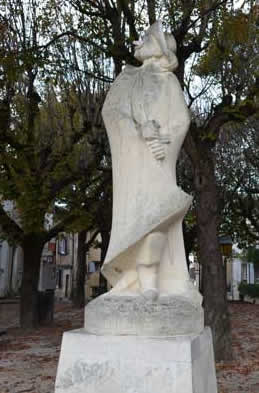
In the medieval town square, restored in the 1970’s, you’ll discover a stone statue of Cyrano de Bergerac – the comic/tragic hero made famous by Edmond Rostand’s 1897 fictional story about the brilliant and poetic swordsman with a very large nose, in love with the beautiful Roxane. The real-life Savinien de Cyrano, upon whom the fictional character was loosely based, was born in the 17th century near Paris. When he joined the Cadets of Gascony, he changed his name to Cyrano de Bergerac, after a family estate of that name. The town of Bergerac is nevertheless happy to adopt him as a symbol of boldness and generosity.
Unfortunately, Cyrano’s famous stone nose is routinely broken off by admiring fans. So a new colorful bronze Cyrano with a more permanent nose was erected in 2005 in the Place Pelissiere, in the shadow of the picturesque church of Saint-Jacques.
Stone Cyrano
In the 18th century flat-bottomed boats called Gabarre carried wine and wood for barrel-making from Bergerac’s riverfront to Bordeaux for export. Replica Gabarre today offer tours on the Dordogne in Bergerac and in the castle-rich area near La Roque-Gageac.
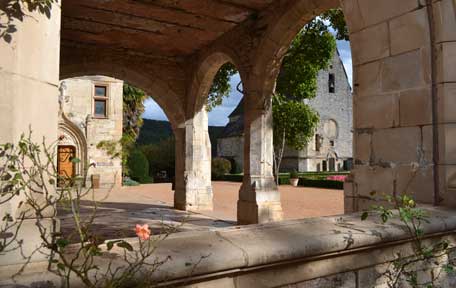
A peaceful courtyard is at the center of the Recollets Cloister, now home to Bergerac’s House of Wines. Here a Wine Journey exhibit explains the history and appellations of Bergerac wines. Visitors can also taste the local wines and visit with a winemaker from the Dordogne Wine Route.( www.vins-bergerac.fr/en/p/maison-des-vins-or-house-wines.) What is there to learn at the House of Wines?
The vineyards in the geographic area of Bergerac are classified into 13 appellations that are grouped into five different types:
Reds: Bergerac, Cotes de Bergerac, Montravel and Pecharmant Roses: Bergerac rose Dry Whites: Bergerac and Montravel Sweet Wines Monbazillac and Saussignac Dessert Wines: Cotes de Bergerace Blanc, Cotes de Montravel, Haut Montravel and Rosette
France’s system of appellations consists of a set of strict rules covering which grape types may be used in a particular wine, the areas in which the grapes can be grown, the maximum permitted yields, the pruning type and sometimes the harvesting techniques.
Particularly popular in the area is Monbazillac, a sweet white wine made from grapes harvested after they have begun to shrivel and develop “noble rot.” Each individual grape must be hand picked from the bunch at just the right time — a labor intensive, painstaking job.
Edouard de Saint-ExuperyChateau Tiregan
WINEGROWERS The vineyards of Bergerac cover almost 30,000 acres in 93 villages on both sides of the Dordogne. Although traditionally overshadowed by the more well-known wines of its neighbor Bordeaux, many of the Bergerac wines compete favorably with them, and at a lower cost.
Chateau Puy-Servain (www.puyservain.com) owners Daniel and Catherine Hecquet have nearly 120 acres of vineyards (the average for wine growers in the area is 50 acres) and export 60% of their wine.
The Chateau VARI estate in the town of Monbazillac is an organic vineyard. Their wine bar, la maison Vari, offers wine along with a simple, but delicious menu for a light lunch. www.chateau-vari.com
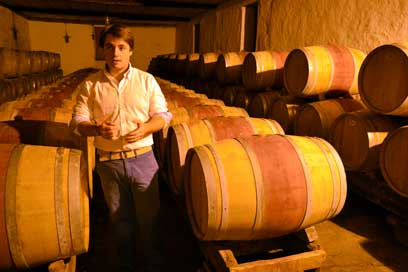
Winegrower Edouard de Saint-Exupery of the Chateau Tiregand in Creysse (whose famous literary relative wrote The Little Prince in 1943) welcomes visitors for free wine tastings or for a guided tour of the 17th century family estate, located just 10 minutes east of Bergerac. www.chateau-de-tiregand.com
PREHISTORIC SITES The valley of the Vezere River, which flows into the Dordogne, has been called the prehistoric capital of the world: the part of Europe that claims the longest period of continuous human habitation. Cro-Magnon man was discovered here in 1868 during excavation for the construction of the railroad. A national museum of prehistory is located in the cliffs above Les Eyzies-de-Tayac. www.musee-prehistoire-eyzies.fr
The valley boasts 147 prehistoric sites dating from the Paleolithic age, and 25 decorated caves, the most famous of which is the Lascaux Cave in Montignac. The site of 17,000-year-old paintings and engravings, it was discovered in 1940 and opened to the public for viewing. The paintings had survived beautifully for centuries in the stable and somewhat sterile environment. However, visitors unwittingly exposed the cave and drawings to destructive elements such as algae and carbon dioxide, which forced the closure of the cave for viewing in 1963.
Today visitors to the Dordogne can view an exact three-dimensional replica of largest two areas of the cave in Lascaux II, a remarkable achievement that took 10 years to construct. Since 2012, a traveling replica called Lascaux III will be on exhibit in museums around the world, starting with the Field Museum in Chicago, and continuing to Houston and Montreal, not to return to France until 2020. www.lascaux.culture.fr; www.semitour.com/site-touristique/lascaux-ii
Walking through the Grand Roc Caves in Les Eyzies de Tayac is like being inside an illuminated geode. Well-placed lighting showcases the incredibly delicate stalagmites, stalactites and crystallizations of this Unesco World Heritage site. www.les-grands-sites-du-perigord.com
A few steps away from the Grand Roc is Laugerie Basse showcasing two prehistoric rock shelters and displays of prehistoric mobile art.
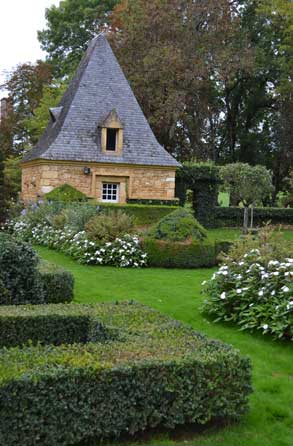
EYRIGNAC MANOR GARDEN Eyrignac Manor Garden is one of France’s most beautiful private gardens. Known for its topiary art, the gardens and manor have been in the same family for 500 years. Owner Patrick Sermadiras is often on hand to meet guests and share his design and gardening expertise. A well-written visitor’s guide and audio tour is available in English to lead you through the seven distinct gardens. An on-site restaurant offers a varied menu for a tasty lunch. www.eyrignac.com
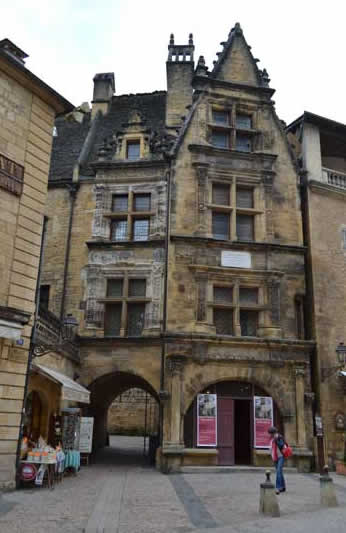
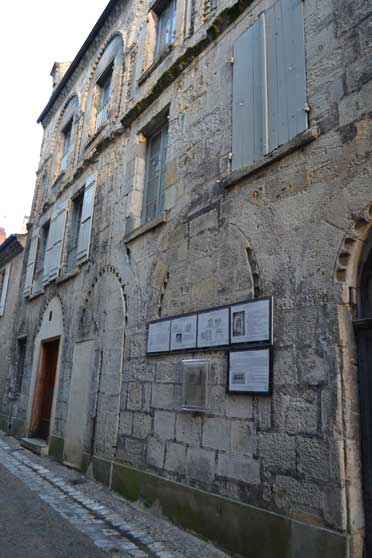
MEDIEVAL TOWN OF SARLAT A medieval jewel, Sarlat boasts one of the largest medieval urban areas in the world. Locals are especially proud to showcase the birth-house of political philosopher Etienne La Boetie as a gem of Italian Renaissance architecture. Throughout the town, note the roofs made of overlapping flat stones, the inexpensive, readily available roofing material of the time. These stones made the roofs extremely heavy, necessitating steep roof angles for stability. A little jarring, yet noteworthy nonetheless, are the huge metal doors that open into Sainte-Marie church, which now serves as a covered market. World famous architect Jean Nouvel, who was born near Sarlat, designed the doors to replace the destroyed apse. He also designed the glass elevator that bursts through the open roof of the bell tower, offering a spectacular panoramic view of the surrounding old town.
Boetie House
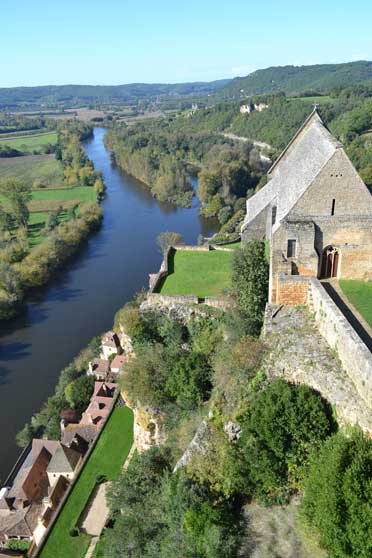
VILLAGE OF BEYNAC Bring your walking shoes and climb up the winding stone streets of the beautiful medieval village of Beynac. Your goal is the 12th century fortress at the top of the cliffs overlooking the Dordogne. From there, the view of the surrounding countryside, the town below, the winding Dordogne River and the Castelnaud Castle on the opposite riverbank is unforgettable. A walk through the restored castle is a living history lesson.
During the Hundred Years War, the Dordogne River was the border between France and England. Beynac Castle was French and Castelnaud was English. All along the Dordogne River struggles for supremacy meant the bastides (fortified towns built by either the French or the English during the 13th century to contain invasions) were shuffled back and forth between the two countries.
Beynac Castle and village served as the location for more than a dozen films, including Joan of Arc in 1999, Ever After in 1998 and Chocolat in 2000.
After climbing and touring Beynac Castle on the cliff, enjoy a meal at LaPetite Tonnelle, a quaint restaurant tucked against the cliff on the way down. Their menu offers homemade dishes with locally sourced gourmet food and regional wines, served on their patio with a beautiful view of the village or in their dining room, built right into the rock wall. www.restaurant-petite-tonnelle.fr
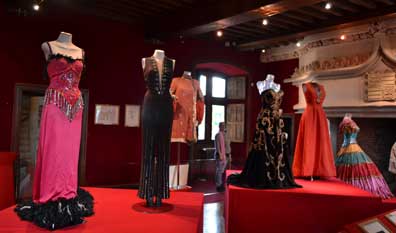
CHATEAU DES MILANDES On the other side of the river in the town of Castelnaud le Chapelle is the Chateau des Milandes, a beautiful 15th century castle, and the former home of musical entertainer Josephine Baker. Born in St. Louis, Missouri, Josephine’s popularity sky-rocketed during the 20’s in Paris when she appeared in the Revue Negre at the Theatre des Champs-Elysees. During her time at the Chateau de Milandes she adopted 12 multi-national children (her “Rainbow Tribe”) and became beloved by the locals because of her generosity and kindness, even working for the French Resistance during WWII. Poor financial planning caused the house and its contents to be put up for auction in 1968. Four families have owned the Chateau des Milandes since the auction. Current owner Angelique de Labarre has passionately collected items from Josephine’s past to fill the 14 rooms with original costumes, music, photos and furnishings. Beautiful gardens and a live birds-of-prey show on the grounds outside the castle complete an entertaining visit. www.milandes.com
PERIGUEUX Périgueux, located along the Isle River, is the largest town in the Perigord region, and its contemporary face makes finding the hidden medieval gems a little more difficult.
Périgueux began as two distinct towns. Easy to see are the historic remnants of the older one: Gallo-Roman town of Vesunna. The ruins of the inner sanctum of the temple for the goddess Vesunna and remnants of the ancient amphitheater stand near Jean Nouvel’s newly-designed Gallo-Roman Museum. The Romanesque gate of Porte Normande leads to what is left of the Barriere Castle and Romanesque-style house built in the Middle Ages on Roman foundations. The Saint-Etienne de la Cité Church was the cathedral of Périgueux until 1669, when that title was transferred to the Saint Front Cathedral in the second nearby settlement that comprises today’s Périgueux.
Streets of Périgueux
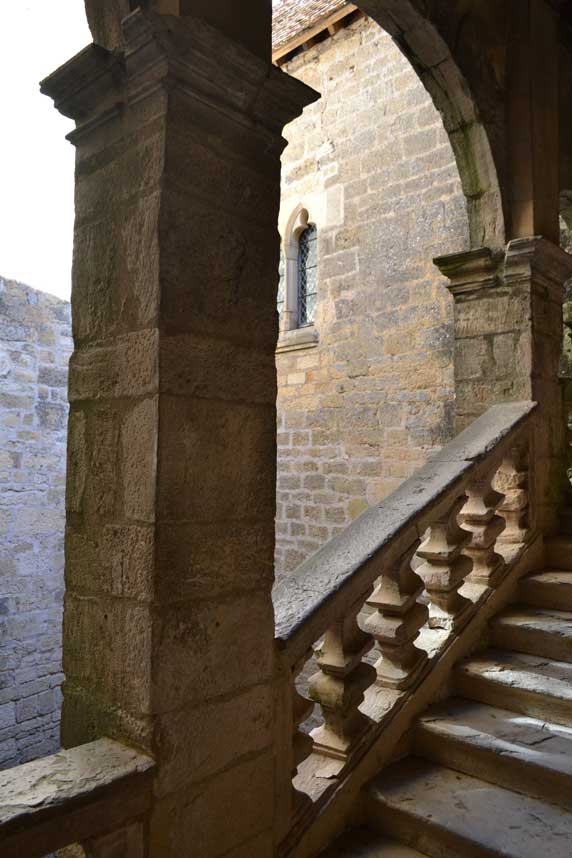
Further to the east, the more commercial city of Puy St. Front, the second “building block” in what is now Périgueux, developed in the 12th century. Look carefully down narrow streets of the old town for half-timbered houses, towers, walls with evidence of ancient arched windows and gateways, bricked-in and changed to fit the needs of the century. Beautiful ancient stone staircases still lie hidden in entryways of private houses, accessible to guides with keys.
Dominating the skyline is the Byzantine-style bell tower of the Saint Front Cathedral. The church is in the shape of a Greek cross, with five domes dating from the 12th Century. It was restored by Architect Paul Abdie between 1852 and 1895. His award winning design of the Sacre Coeur Basilica in Montmartre in Paris was inspired by the style of the Saint Front Cathedral.
ACCOMMODATIONS The Chateau des Vigiers in Monestier on the western edge of the Perigord is one of the few places in the area that can accommodate large groups. This luxury hotel, with a spa and a 27-hole golf course, offers 36 romantic rooms in a 16th century chateau and annex and 40 more in its contemporary, eco-friendly Relais des Vigiers. www.vigiers.com
For peaceful and luxurious accommodations five miles south of Bergerac, LaChartreuse du Bignac offers 12 rooms and a restaurant in a 1630 stone chateau with vaulted ceilings and exposed beams. Extensive grounds with terraces, a swimming pool and a park lead to a small lake. www.abignac.com
The recently renovated Hotel Les Glycines in les Eyzies de Tayac is centrally located near the Cro-Magnon museum and Grand Roc cave, and is a short drive to Lascoux cave. The hotel features beautiful romantic rooms, extensive gardens, a pool and a wonderful restaurant. Order the “Victoria pineapple” for dessert, aim your video camera, and watch the magic begin. The waiter pours warm rum/passion fruit syrup over a hollow chocolate ball until the surprise pineapple tidbits, pina colada and vanilla ice cream appear. Entertaining and delicious! www.les-glycines-dordogne.com
Vieux Logis in Tremolat is a lovely 4-star country inn, formerly a priory and then a farmstead, that is not to be missed. Rustic comfort in 14 rooms and nine apartments, with a one-star Michelin chef, gourmet restaurant, bistro, seminar rooms and lovely garden and terrace. Once there, you won’t want to leave. www.vieux-logis.com
NEED A GUIDE? For a professional travel guide in the Dordogne, European Traveler recommends Frances and Sandra Ho Tham Kouie.
They have more than 20 years of experience in tailor-made tours for English speaking travelers – either individuals or groups. Their knowledge of history and attention to detail will smooth your way to an enjoyable discovery of the Dordogne. www.voyages-france-impressions.com.
View of new wing at the German Emigration Center (on right).
The Emigration Center at Bremerhaven, Germany, just added a new wing to the museum. Until now visitors ended their journey back in time through the staged and reconstructed rooms at the Ellis Island Receiving Station in New York; the journey now continues.
The new room “Office of the New World” is dedicated to the question: what did immigrants and the countries of immigration know about one another? Against the backdrop of a train station as a place of transit, the new staged and reconstructed room “Grand Central Terminal” shows the history of German immigrants in the U.S.A.
The original plan.
The new bridge connects the history of emigration with the history of immigration.
HISTORY OF IMMIGRATION IN THE NEW EXTENSION On the first floor of the new building a mall with several commercial stores in the Federal Republic of Germany from 1973 has been reconstructed. Visitors trace the roots of immigrants: the shop windows display common, everyday objects together with the memorabilia of immigrant families, illustrating the stories of 15 immigration groups that came to Germany in the last 300 years. On the ground floor general information on immigration to Germany between 1685 and today can be found, as well as the family research area and the new “Roxy Cinema.” For more information, visit www.dah-bremerhaven.de/english.php
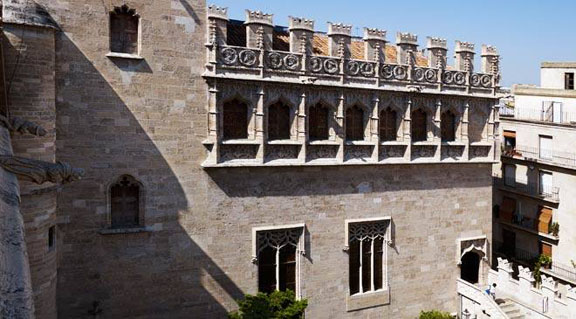
The Silk Exchange in Valencia, Spain is an exceptional example of a secular building in late Gothic style, which dramatically illustrates the power and wealth of one of the great Mediterranean mercantile cities. It is aesthetically unique because of its fine Gothic architecture combined with Renaissance decoration from the 15th century.
The majority of the Silk Exchange was built between 1482 and 1492 under master mason Pere Compte. The work was completed by a pupil of his after his death, which explains the presence of Renaissance elements.
Its similarity with old medieval castles is based on the fierce, fortress-like appearance of its stone walls. It comprises four parts: the Tower, the Sea Consulate Room, the Orange-tree Patio and the Room of Columns. The site covers more than 6,562 square feet indoors and out.
It is a typical representation of the commercial and financial past of the city of Valencia, and has been used for the same purpose for five centuries. Its original function was as a trading exchange for oil. It developed into the main maritime trading center and the silk exchange. At the present time it is still a major trading exchange, now dealing primarily in agricultural products.
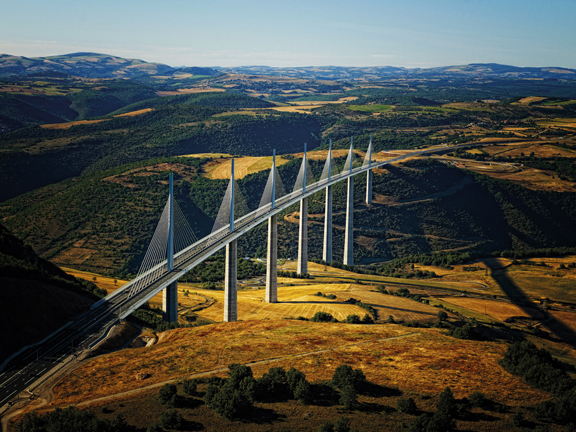
Photographs compliments of Midi-Pyrénées Tourism Office
Visitors to the Midi-Pyrénées in France, also known as the Southwest, have the unique opportunity to savor some of the most unique food and wine in all of France while also soaking up the rich arts and culture scene of the region.
WINE The Midi-Pyrénées is a verdant, hilly wine region—home to more than two dozen winemakers featuring some of the world’s greatest grape varieties and some that are grown nowhere else in the world.
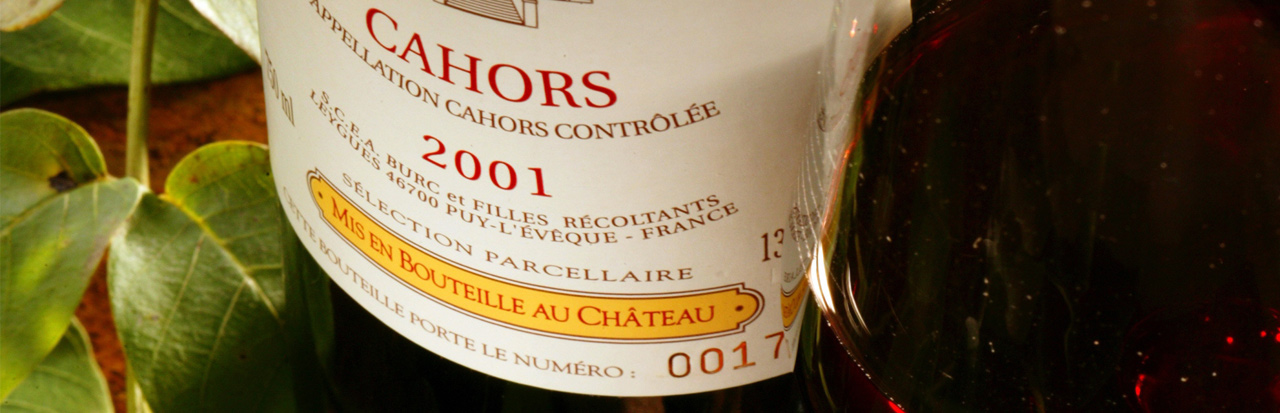
From the Malbec wines grown in the sun-drenched Cahors region to the Gaillac district, one of the oldest wine-growing areas in France, to the Madiran wines known for their inky color and tannic density, the wines of southwest France offer a wide array of flavors and are a true treasure trove for the dedicated wine connoisseur.
The region is also rich in spirits, most notably the distinctive brandy Armagnac, produced in Gascony. Tourists can explore the “Route de l’Armagnac” which winds through the vineyards and experience the different tastes and sensations of this brandy, known for its unique finesse and roundness.
FOOD The Midi-Pyrénées is also renowned for its fine cuisine. It is home of the black truffle, which is found exclusively in the region around the village of Lalbenque.
The Midi-Pyrénées is also the capital of the iconic French specialty, foie gras. With subtle flavors of hazelnut and a creamy texture, this delicacy can be bought directly from the producer or at the special winter foie gras markets that are peppered throughout many small towns in the Gers district.
CULTURE The Soulages Museum, in the town of Rodez, is dedicated to the work of acclaimed painter and Rodez native Pierre Soulages. Widely considered one of the great abstract artists, Soulages was inspired by the prehistoric and Romanesque art of the region. The museum houses 500 works donated by Pierre and Colette Soulages to Rodez, which is the world’s biggest collection, estimated to be worth close to $55 million.
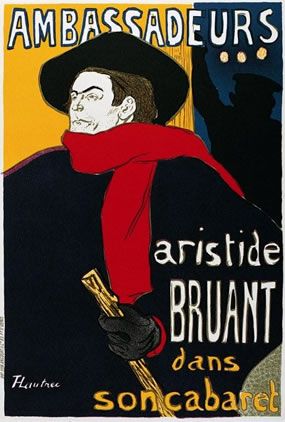
The Toulouse Lautrec Museum will celebrate the life of painter and lithographer Toulouse Lautrec, born in the city of Albi in 1864. The exhibit will run from October 25, 2014 to January 25, 2015.
FESTIVITIES The Midi-Pyrénées also abounds with celebrations and performances, with more than 180 festivals and events taking place throughout the year.
The Medieval Festival of the Grand Falconer takes place in the village of Cordes-sur-Ciel on July 14—coinciding with Bastille Day, France’s national holiday. The annual festival offers a faithful recreation of medieval life in the Midi-Pyrénées, with fire-eaters, jugglers, falconers, troubadours, musicians, knights and villagers all garbed in medieval attire.
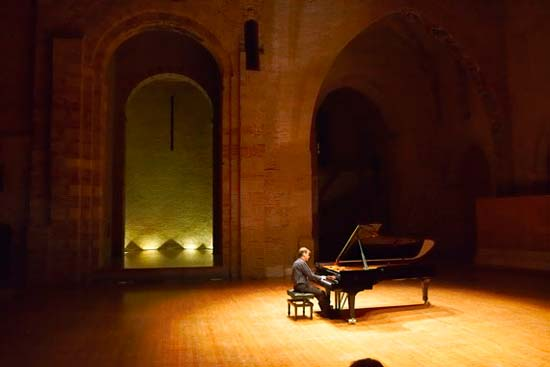
The Piano aux Jacobins, held in the region’s capital city Toulouse during the month of September, is the first festival in France entirely dedicated to piano performances. This year’s edition takes place September 2 to 29.
The small and quaint Gascon town of Marciac will transform into a jazz capital this summer from July 24 to August 13 with its legendary festival, Jazz in Marciac, which has welcomed international jazz icons.
ADVENTUROUS The natural world comes alive in the Midi-Pyrénées with vast areas of untouched countryside and rugged mountains in its national parks. Cyclists come from all corners of the earth to follow the route of the Tour de France in the Pyrenees and climb the famed Col du Tourmalet.
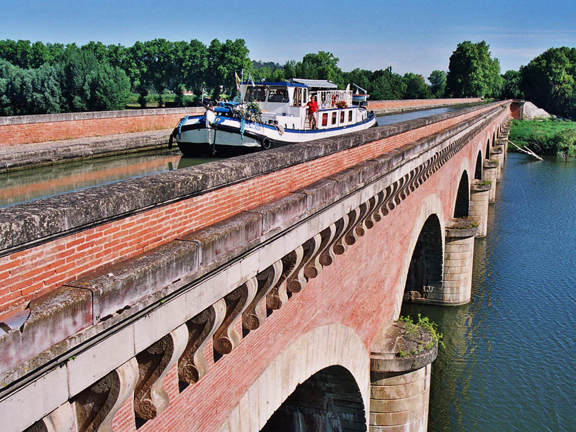
The Canal du Midi, a UNESCO World Heritage Site that runs from Bordeaux and the Atlantic coast to the Mediterranean sea, is ideal for bicycling enthusiasts looking for a relaxing ride and discovering this 150-mile engineering masterpiece.
SPIRITUAL Travelers can embark on a spiritual retreat in the region at the sacred French Grotto of Lourdes, a world famous pilgrimage site. Every year, the cosmopolitan and convivial town receives 6 million travelers from 140 countries from every continent.
Walking the Way of St. James has changed little over the centuries, where pilgrims trek from all over Europe to the city of Santiago de Compostela in northwestern Spain. The route winds through many scenic villages born of the ancient pilgrimage, including Rocamadour, Conques and Moissac.














 European Traveler