World Renowned Venetian Glass

Discovering the colorful island of Murano, Italy

By Kristi Nelson Cohen
Photos by the author

The renaissance European aristocracy favored it, explorers Lewis and Clark used the beads for trading with the Native Americans and Victorians proudly displayed it. Venetian glass has captured our eye for centuries, and today artisans continue a time-honored tradition to produce some of the world’s most beautiful glass.

The marshy lagoon offers artisans the components necessary for glass making: silica, sand and soda ash. Glass making started in Venice over a thousand years ago, but with the fear of fire from the glowing hot furnaces, and air polluting smoke from these same furnaces, Venetians decreed that all glass making take place on a nearby island. Glass makers moved their furnaces and factories in 1291 to the island of Murano, just two miles north of Venice across the lagoon.

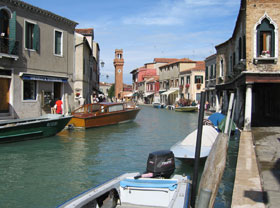
Once these glass artisans moved to Murano, this tiny town prospered and grew to nearly 30,000 residents in the 13th century. This community is similar to Venice, as it is comprised of several small islands, connected by canals and bridges, but on a much smaller scale. Today, Murano is home to only a few thousand permanent residents.
GET AWAY FROM CROWDS

Frankly, it is sometimes a relief to get away from the crowds and busy sidewalks in Venice and take the time to enjoy a slower pace in Murano. There are many glass factories still operating in Murano and most have complimentary demonstrations and tours available. Of course, they also have elegant showrooms with one-of-a-kind glass sculptures, chandeliers, goblets and even glass beads. Prices at the glass factories can seem steep, but each piece is authenticated, insured and shipping is available.

During a demonstration, most factories will show you how an artisan takes a molten glob of glass, orange with heat, and blows through a tube and spins the tube, creating a one-of-a-kind creation. Minerals and precious metals are added to the glass to create colors, just as they would have been 500 years ago. The color blends, and mineral recipes are a highly regarded secrets.

VISIT IS A ‘MUST’

A visit to a glass factory is a must, but when it comes to buying glass, there are also many smaller shops lining Murano’s main canal near the Vaparetto (water bus) stop. Compare prices, as you may find even better bargains in one of the many shops in Venice. The smaller shops don’t usually offer shipping, but they are happy to pack purchases in bubble wrap and tissue to pack in your luggage.

To learn about the history of glass making, visit the Museo Vetrario in the restored Palazzo Giustinian. This museum has exhibits of rare 500-year-old glass and glass/enamel pieces, as well as contemporary sculptures and examples of the entire glass making process. They are open 10 a.m. – 4 p.m. daily (closed Wednesday).

Following a morning glass factory tour, enjoy a leisurely lunch at one of the many eateries located along Murano’s main canal. Al Vetrai Da Adino, located at address number 29, is a personal favorite. Owner Adino and his wife Christina cook up some local favorites including the freshest fish, pastas and vegetables.

Start your meal with a typical Venetian “spritz” which is a refreshing aperitif made with Campari and sparking Prosecco. (If you enter the island via the Vaparetto, simply walk across the first bridge, then continue north about 200 feet and you’ll see the restaurant on your right. A large rooster logo adorns the front window.) Adino doesn’t speak much English, but his hospitality and great food will win you over. Be sure to tell them “Kristi sent me!” and you might be treated to an after-meal glass of Fragolino, a homemade wine that’s simply delicious! For advance lunch reservations,
call 041-739-293.

TAKE THE VAPARETTO

How to reach Murano: Take the public water bus or Vaparetto – #41/42– which takes about 30 minutes (from the train station, or Piazzale Roma ) or take boat # 52 from San Zaccaria which is near Saint Mark’s Square.

In 2007, Vaparetto tickets were available for one trip at 3 Euro, or 12 Euro for a 24 hour multi-trip ticket. The glass factories also have representatives in San Marco Square who sometimes provide a free or discounted fare water taxi in exchange for taking a specific factory tour. Some hotels can also arrange for a boat to pick you up at the hotel and take you directly to one of the factories.

Once in Murano, you may want to continue on to the island of Torcello (whose cathedral was founded in 639) or Burano (distinct for its multi-colored homes and famous for the lace-making crafts). Take Vaparetto #13 from the dock located adjacent Murano’s lighthouse. (This requires walking across the canal and around Murano in order to get to the other Vaparetto stop).

Frankly, after a busy morning and a big lunch in Murano, one might prefer a lazy boat ride back to Venice, a good cup of coffee and or perhaps an afternoon nap. It’s all a part of the Venetian experience.

Kristi’s favorite glass factory offering a one-of-a-kind demonstration and truly unique, contemporary glass art is called Schiavon. Their factory also produces stemware, chandeliers and traditional Murano glass, although the unique pieces by Mr. Massimiliano Schiavon are worth a visit. This glass factory has been in the Schiavon family for three generations.

Vetreria Artistica Di Schiavon
No. 7 – just a few shops north of the Vaparetto stop on the first canal.
Phone: 011-39-041 739 396
http://www.massimilianoschiavon.com
E-mail: info@massimilianoschiavon.com

Kristi Nelson Cohen is the owner of Bella Italia Trips, a small U.S. company offering guided trips to Italy. To reach Kristi or for more information, log onto www.bellaitaliatrips.com.

Learning the ‘Art of Travel’ on the Orient Express

A luxurious learning experience complete with a guide from London’s National Gallery

The Orient Express is launching a series of special vacation packages called “The Art of Travel,” including tours to Venice, Paris and within England. Travelers will learn about the lives of artists such as Canaletto, Bellini, Titian, Veronese, Monet, Rubens, Turner and Constable while seeing the places that inspired their work and visiting the places that house their work today, accompanied by an expert from London’s National Gallery.

All tours include at least one night at London’s Goring Hotel and begin at The National Gallery, where a specialist will give a guided introduction to selected masterpieces before the journey begins. Trips include:

THE VENICE OF CANALETTO: This seven-day tour will give travelers the opportunity to view Venice through Canaletto’s eyes. Travel from London aboard the Venice Simplon-Orient-Express through France, the snow-capped Alps and northern Italy. While in Venice, guests stay at the Hotel Cipriani and trace the footsteps of Canaletto, who is forever associated with magnificent Venetian views. Trips are limited to 20 people and depart on April 9, October 8 and October 22, 2011. 

VENETIAN PAINTERS: This is a six-day tour that introduces the traveler to the great Venetian masters, from Giovanni Bellini and Titian to Veronese. Starting in London with a tour and dinner at the National Gallery, travelers will fly to Venice, where they will step back into the Italian Renaissance and explore great sights such as the Doge’s Palace, the Accademia and Ca’ Rezzonica with an expert from the National Gallery. The journey ends with a return to London on the Venice Simplon-Orient-Express. The trip is limited to 20 people and departs on April 30, 2011.

IMPRESSIONS OF PARIS: Also offered will be a series of five-day tours focusing on French Impressionism, where travelers will trace Claude Monet’s long, dynamic life and will learn about the birth of a new artistic movement, when painters first began painting in the open air to capture the effects of light. From London, guests board the Venice Simplon-Orient-Express and can marvel that two of the restored carriages aboard the Art Deco train were already carrying passengers when Monet was producing his last masterpieces. Departures are April 9, May 7, June 25, July 27, August 24, September 24 and October 22, 2011. 

BRITISH PULLMAN: These tours combine the thrill of a steam-hauled luxury train, complemented by gourmet dining — brunch on the outbound journey and a three-course supper on the return — with delightful scenery and include visits to Bath’s finest art collections.

  • Collectors and Collecting: This trip is timed to coincide with the reopening of the Holburne Museum in May 2011 following a major restoration.  After a guided tour of the museum, there will be a tour of “Beckford’s Bath,” including the eccentric William Beckford’s house and the grounds leading up to Beckford’s Tower. The trip will depart on June 28, 2011.
  • Thomas Gainsborough: This journey focuses on landscape paintings by notable British and European artists including Rubens, Turner and Constable. Highlights include the new exhibition “Gainsborough’s Landscapes: Themes and Variation,” at the Holburne Museum and a walking tour of artists’ Bath.  This tour will depart on October 11, 2011.

For more information on “The Art of Travel,” visit www.orient-express.com/nationalgallery.

Interlaken: A Winter Wonderland to Suit Every Taste

Interlaken, Switzerland

Photos courtesy Interlaken Tourism

Winter and spring in Interlaken has fun to offer at the foot of the Eiger, Mönch and Jungfrau mountains. While superb sledge runs attract snow enthusiasts to the mountains, the region between the lakes has a wealth of cultural highlights in store.

INTERLAKEN CLASSICS
The tradition-steeped concert series in the Interlaken Kursaal features the stars of tomorrow playing works by old masters. At Kleine Scheidegg, rock music greats share the stage with local music legends, and the many folklore clubs practice yodeling and alphorn sounds.

European Union Youth Orchestra

SLEDGING BY MOONLIGHT
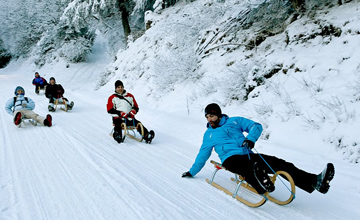
In Saxeten, after an uphill walk to Alp Nessleren near Wilderswil, guests are rewarded for the effort with a 2 1/2-mile-long sledging session. Culinary well-being is guaranteed with a stop for mulled wine, followed by a tasty fondue in traditional rustic surroundings at the end of the sledge run.

Sledging for snow enthusiasts

YODELING
Swiss folklore clubs promote traditions yodeling and alphorn playing first hand. Yodeling choirs offer a unique blend of beautiful harmony and players create a powerful sound from a long wooden pipe, which echos through the valleys.

53RD INTERLAKEN CLASSICS
You can meet tomorrow’s classic stars at the 53rd Interlaken Classics Festival from March 24 – April 8. The festival has grown into a summit meeting for younger and already internationally-acclaimed musicians. The consistent staging of this podium for young artists is based on close cooperation with Europe’s best youth orchestras, namely the Gustav Mahler Youth Orchestra and the European Union Youth Orchestra.

SnowpenAir Concert on April 6 is the highest-altitude open-air concert. This breathtaking setting on snow at 1 1/4 miles above sea level attracts thousands of concert visitors who will enjoy top acts such as Roxette and OneRepublic, the founding father of Swiss dialect rock Hanery Amman and promising young talent MC Juli.

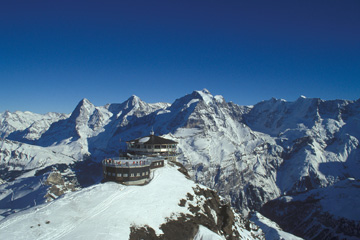
Schilthorn Summit near Interlaken, Switzerland offers panoramic views.

For more info, go to Interlaken Tourism

The Silk Exchange: A Jewel of European Gothic Architecture

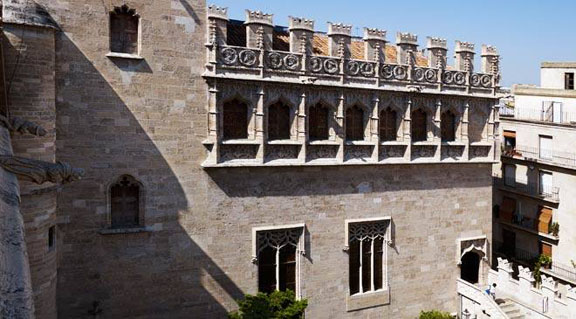
Silk Exchange’s fortress appearance

Photos courtesy Valencia Tourist Office

The Silk Exchange in Valencia, Spain is an exceptional example of a secular building in late Gothic style, which dramatically illustrates the power and wealth of one of the great Mediterranean mercantile cities. It is aesthetically unique because of its fine Gothic architecture combined with Renaissance decoration from the 15th century.

The majority of the Silk Exchange was built between 1482 and 1492 under master mason Pere Compte. The work was completed by a pupil of his after his death, which explains the presence of Renaissance elements.

Its similarity with old medieval castles is based on the fierce, fortress-like appearance of its stone walls. It comprises four parts: the Tower, the Sea Consulate Room, the Orange-tree Patio and the Room of Columns. The site covers more than 6,562 square feet indoors and out.

It is a typical representation of the commercial and financial past of the city of Valencia, and has been used for the same purpose for five centuries. Its original function was as a trading exchange for oil. It developed into the main maritime trading center and the silk exchange. At the present time it is still a major trading exchange, now dealing primarily in agricultural products.

For more info, go to www.turisvalencia.es/

England’s Lake District Inspires Painters and Poets

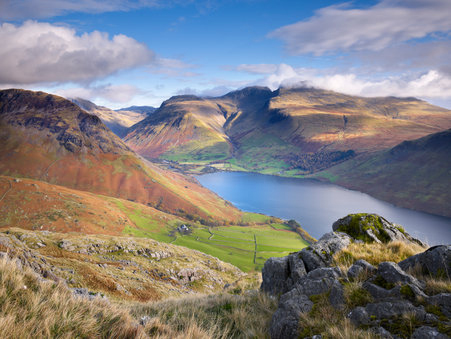
Wastwater Lake in Lake District National Park.

Photos courtesy Visit Great Britain and Lake District National Parks

Sprawling 885 square miles across Cumbria in North West England, the Lake District National Park is England’s largest National Park. With 16 sparkling lakes, England’s five tallest mountains, six national nature reserves and over 400 towns and villages, it’s no wonder the Lake District is a popular attraction.

Natural beauty isn’t the only thing going on in the Lake District. Activities range from child-friendly adventure parks to high-adrenaline assault courses. Don’t miss Lake Windermere—the largest of the lakes—where you can try everything from open water swimming to sailing, canoeing, kayaking and windsurfing.

The arts and culture scene started by the likes of William Wordsworth and Beatrix Potter is still thriving today, with a year-round calendar of literary, arts and heritage events and countless museums, galleries and performance venues to visit. With so much to see and do, your only problem will be deciding what to do first.

All that exploring is bound to work up an appetite. And you’re in luck, because the Lake District is one of Britain’s food and drink hotspots. Whether you fancy a refreshing brew at a traditional tearoom, a pint of real ale at a pub with a roaring fire or a elaborate meal at a Michelin-starred restaurant, you’ll find something to suit every taste in the Lake District.

Top five things to see and do:
1. Take the kids to meet Peter Rabbit and friends at the World of Beatrix Potter.
2. Watch one of the productions at the Theater by the Lake in Keswick.
3. Explore the nearby cosmopolitan city of Carlisle and the historic town of Kendal.
4. Visit one of Cumbria’s 24 microbreweries—you’ll find many of these at the back of local pubs.
5. Tour the poet William Wordsworth’s house, Dove Cottage, surrounded by the countryside that inspired him.

Theater by the Lake in Keswick

For more info, go to Lake District National Park or Visit Britain