Austria is a magnificent country that offers plenty of tourist attractions. One popular attraction is located in Werfen, Austria which is home to “Eisriesenwelt,” German for “world of the ice giants.”
Eisriesenwelt was discovered in 1879 by a scientist named Anton Posselt and is located inside of the Tennengebirge section of the Alps. Prior to Posselt’s discovery in 1879, hunters and poachers knew of its existence, but had never entered the cave. Although Posselt only explored 1/8 of a mile inside the cave, he published a report of his discovery a year later. It wasn’t until 1921 that Eisriesenwelt saw a large increase in the number of visitors to the cave.
Lamps are distributed to visitors who explore these breathtaking caves for a 75 minute tour. Visitors experience Posselt Hall, which holds the Posselt Tower stalagmite; the Great Ice Embankment, a formation towering over 75 feet; and the Ice Organ, created by the stalactites in Hymir’s Castle. The ice formations are sometimes highlighted with magnesium lighting for an added effect.
The Eisriesenwelt caves are open from May 1 to October 26, and during peak season tours are held every six minutes.
By Don Heimburger Photos by Don and Marilyn Heimburger
Situated on a hill overlooking the small village of Melk, Austria, is the Melk Abbey, a Benedictine monastery with twin church towers that reach for the heavens.
The imposing Baroque abbey, high above the Danube, has two wings that project around the chapel, curving towards one another and connected by a balcony, framing the inset of the church. The builders succeeded in combining the natural surroundings with the structure.
Designed by Jacob Prandtauer and built between 1702 and 1736, the abbey monks provide pastoral care (the monastery oversees 23 parishes), and schooling (with 900 students). The theme of the abbey is “Ut In Omnibus Glorificetur Deus” (so that God is glorified in everything).
Visitors to the abbey can walk up steep steps to the entrance (walking through the small village of Melk) or drive up or take a taxi to the entrance. An abbey museum is located in the former Imperial Rooms and contains the exhibition “The Path from Yesterday to Today” which tells the story of the 900-year history. Beyond the museum, the must-see Marble Hall and library are two highlights of the structure.
In Marble Hall, Paul Troger’s beautiful frescoes (1731) adorn the ceiling; it is this room that was used as a guest room and dining hall for festive occasions, mostly for the imperial court. From the balcony, a grand view of the surrounding rivers, and town and fields is available.
Hundreds of inlaid bookshelves line the library room, which features similarly-bound books. A Paul Troger ceiling fresco is a counterpoint to the painting in the Marble Hall. On the upper floor of the library are two reading rooms, reached by a spiral staircase. The library contains 1,800 works, the oldest of which is a transcription of works by Venerable Bede from the early 9th century. Two-thirds of the manuscripts are from the reform period of the 15th century.
Gold, orange, ocher, gray and green combine to form a warm color accord in the church. In 1701 the church was completely rebuilt, and is now recognized as one of the most significant structures of the Baroque era. In its full light, its grandeur can take one’s breath away. The interior of the church has been shaped by the hand of Italian architect Antonio Beduzzi, with other artists actually doing the work.
Besides the abbey itself, there is also Abbey Park and the Baroque Garden Pavilion, and the abbey restaurant.
The whole Melk Abbey package is at least a two-hour visit, but to soak in everything, three hours seems more appropriate. Once there, you will undoubtedly want to stay longer.
The Melk Abbey is open all year. Admission is charged, with a reduction when other area attractions are combined. Guided tours are also available at the ticket office. The abbey is wheelchair accessible. For more information, go to www.stiftmelk.at or email kultur.tourismus@stiftmek.at
The Bernese love laid-back, hour-long shopping trips – and will do so in any weather. Thanks to the longest weather-protected stretch of shopping promenade in Europe, this is in fact quite feasible. The “Lauben,” as the Bernese call their arcades, are admirably suited for a stroll in the historic city center.
It is in the Bernese Old Town in particular where the unique historical ambiance combines shopping with a journey through time into the past. The Kramgasse forms the centerpiece of the Bern Old Town. This alley was once Bern’s busiest trade route for marketers and shopkeepers who loudly advertised and sold their goods here, and swapped the latest news. Almost 4 miles of arcades form a distinctive feature of the Old Town. The history of this arcade passage reaches back to the earliest city development (1191), and even then served to accommodate market stalls and businesses. Traders could thus trade and earn their living in any weather.
The Bernese also demonstrated their practical sense in putting their basements to good use. They built vaulted cellars under every house in order to be able to store their goods. Nowadays, entirely different treasures are hidden in these cellars. Descend the steep stone steps, and find yourself in a different world. The underground reveals trendy and traditional bars, clubs, theatres, cellar cinemas and special fashion shops.
In 2012, Munich and Upper Bavaria are celebrating an old Bavarian tradition. The 200th anniversary of the edict which permitted beer brewers to sell retail quantities of their own beer in their beer cellars from June until September and to serve beer and bread to their guests will be celebrated this year. The city and the breweries of Munich will offer numerous events in local beer gardens.
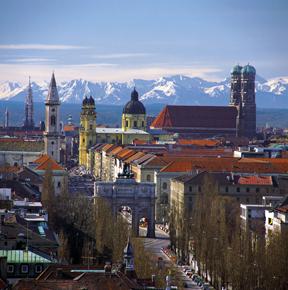
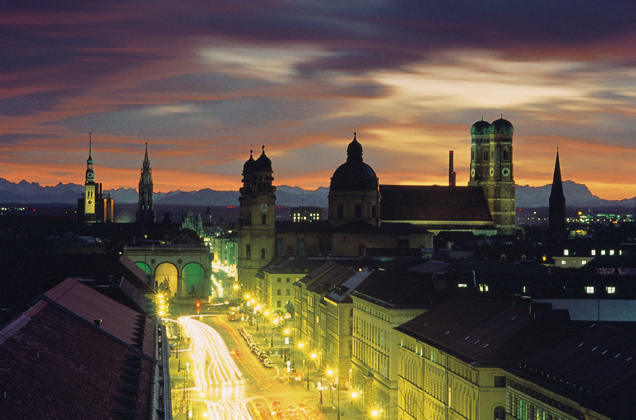
MUNICH – THE WORLD CITY OF BEER Big city, high-tech atmosphere mixed with rural charm, art treasures and traditional customs create a very special “Munich mix” which has helped the capital of Bavaria to achieve world renown. But what adds the final touch to the city’s popularity is the drink associated with Munich throughout the world: beer.
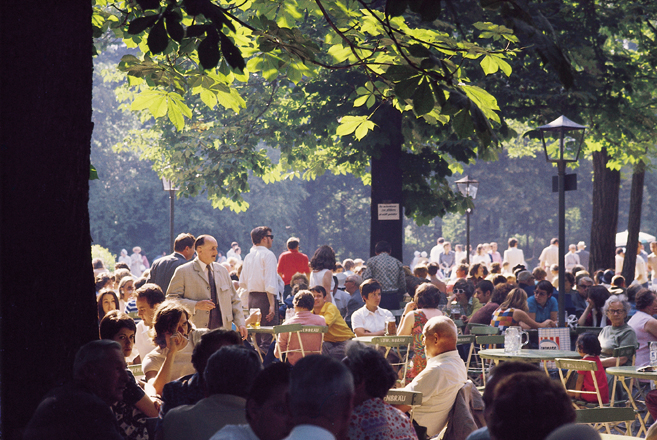
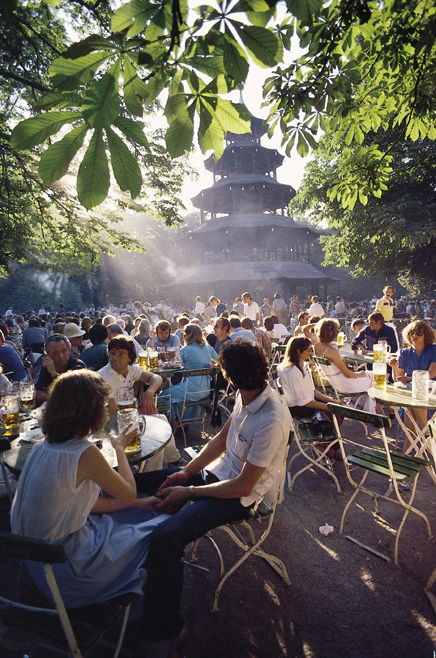
BEER GARDEN ETIQUETTE Bavarian beer gardens fulfill an important social function, as they have always been considered to be a popular meeting point for a wide spectrum of the populace. Visitors should not hesitate to take a seat and start up a conversation with their neighbors at the table. Munich’s beer gardens and the beer gardens in Upper Bavaria are the epitome of Bavarian Gemütlichkeit – the uniquely Bavarian atmosphere of good living, warmth and comfort. And it’s been that way for 200 years.
BRING YOUR OWN FOOD Bring your own food! A special element of visiting a traditional beer garden in Munich is the fact that guests can bring their own food with them. A perfect Brotzeit, as a beer garden picnic is known, might contain the following: Obazda (a delicious and very Bavarian soft cheese dip), Emmental cheese, radishes, freshly-baked pretzels, butter and salt and pepper. A table cloth is also important (preferably a cotton red and white check), as are wooden boards to eat from, a sharp knife, cutlery and napkins.
But those who come unprepared don’t have to miss out on a Bavarian Brotzeit. Most beer gardens offer a range of typical treats, such as Wurstsalat (finely sliced sausage, dressed with vinaigrette and onions), Leberkäse (Bavarian meat loaf) or Steckerlfisch (barbecued whole fish, normally mackerel).
In a Bavarian beer garden, self-service is the rule, unless it is clear that tables have been readied for service. Typical beer garden drinks, such as beer or Radler (a mix of beer and lemonade or lemon soda), are generally only served in one liter steins. Alcohol-free drinks, such as Spezi (a mixture of cola and orange soda) or Apfelschorle (a mixture of apple juice and mineral water), are normally served in half-liters.
The most important rule when toasting with others at your table is to do it as often as possible, so creating a sense of community and giving you the chance to make contact with your new friends. But don’t forget to look your drinking partners in the eye as you touch steins.
The reason horse chestnut trees can be found in every “real” Bavarian beer garden is a matter of history. According to a decree from the 16th century, brewing beer was banned in the summer months, due to the increased danger of fire. Therefore, beer that was brewed in spring for summer was made with a higher alcohol content to help preserve it. In order to keep the beer cool, beer cellars were constructed close to the breweries, but because Munich has a high groundwater level, deep cellars were out of the question, meaning that those that could be built had to be protected from the sun. And that is why trees which provide a lot of shade, such as horse chestnut trees, were planted above them.
BIER UND OKTOBERFEST MUSEUM, BEER TOURS & MORE Munich is the capital of beer – with six breweries, the Hofbräuhaus and the Oktoberfest. Interested in the story of beer? How German beer effected the monasteries and the purity law? Why is the quality of Munich’s beer so unique? Did you know that Oktoberfest was established as the national festival for the wedding of King Ludwig I with Princess Therese of Saxe-Hildburghausen? Visit the Bier und Oktoberfest Museum for the answer to these questions and a lot more.
For the millions of RMS Titanic lovers around the world, April 15 is a very significant date. On that day it will be exactly 100 years since the tragic sinking of the ship that changed so many lives and sparked one of the most captivating stories in human history.
On March 31 the world’s largest Titanic visitor attraction, Titanic Belfast, will officially open its doors, thrusting the ship’s physical and spiritual home firmly into the global spotlight.
The striking $152 million piece of modern architecture stands majestically at the head of the very slipways where the Titanic first glided into the waters of Belfast Lough.
Inside, nine walk-and-ride-through exhibition galleries equipped with the latest 3D, CGI and video technology uncover the true Belfast story of the Titanic, from its conception and construction in the Harland & Wolff Shipyard to its famous maiden voyage and subsequent place in history.
A host of experiences are offered—a thrilling ride through the shipyard with the Titanic under construction, or an exploration of the sumptuous luxury and superb craftsmanship of its interiors.
You can be drawn deep into the stories of the passengers, crew and the heroes of the day or re-live the drama of its tragic end and visit its resting place in the North Atlantic in a unique Ocean Exploration Center with live links to contemporary undersea exploration.




 European Traveler