3 Countries, 2 Ski Resorts, 1 Week in Europe

Wishing you had planned a getaway this past spring break? It’s not too early to start planning for next year, and to think big with a European adventure!

By Alison Ramsey

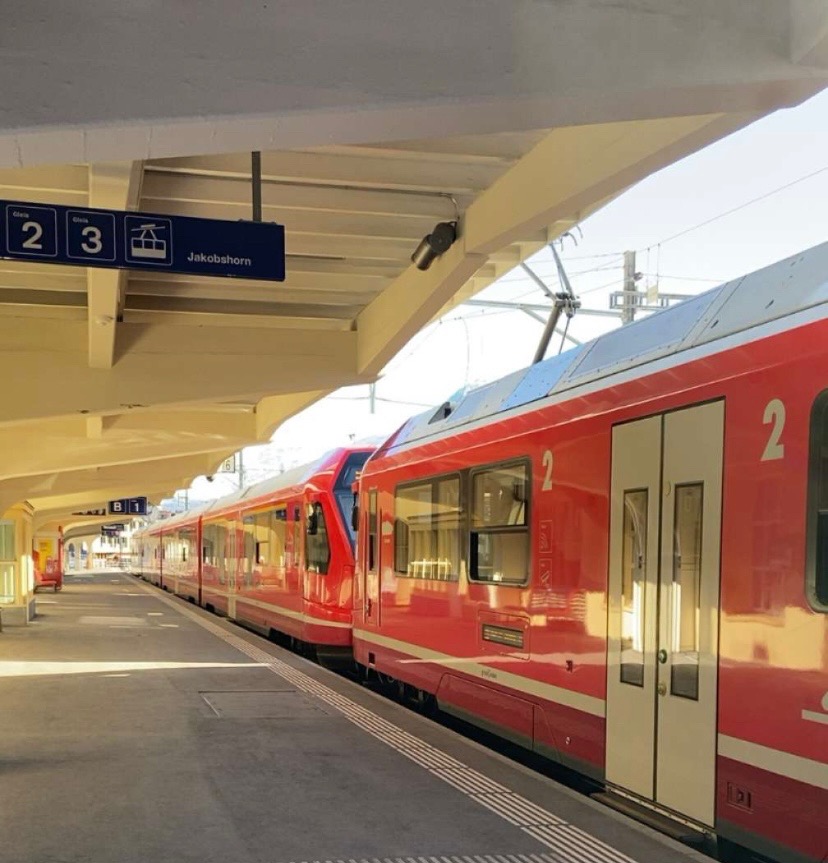
Stateside spring break destinations abound, but consider using that week of vacation time to explore three German-language European countries—Switzerland, Austria, and Germany—all easily reachable from each other by train. The Eurail Global Pass allows travelers to seamlessly cross country borders by rail using a single scannable QR code pass in the app. It’s a fantastic opportunity to maximize your time abroad and visit multiple countries all in one overseas trip.   

Eurail train travel is scenic and comfortable, and the well-designed Eurail app makes it easy to view train schedules and plan your trip.

Time in the mountains is essential if you’re headed to the Alpine countries of Switzerland and Austria. Downhill skiing in the Alps can be exhilarating, great exercise, and a fun social activity—as proven by the millions of visitors to throng ski resorts like Davos Klosters in Switzerland and St. Anton am Arlberg in Austria each year. Both destinations are part of the Best of the Alps organization’s carefully curated collection of classic mountain resorts and offer excellent ski schools.

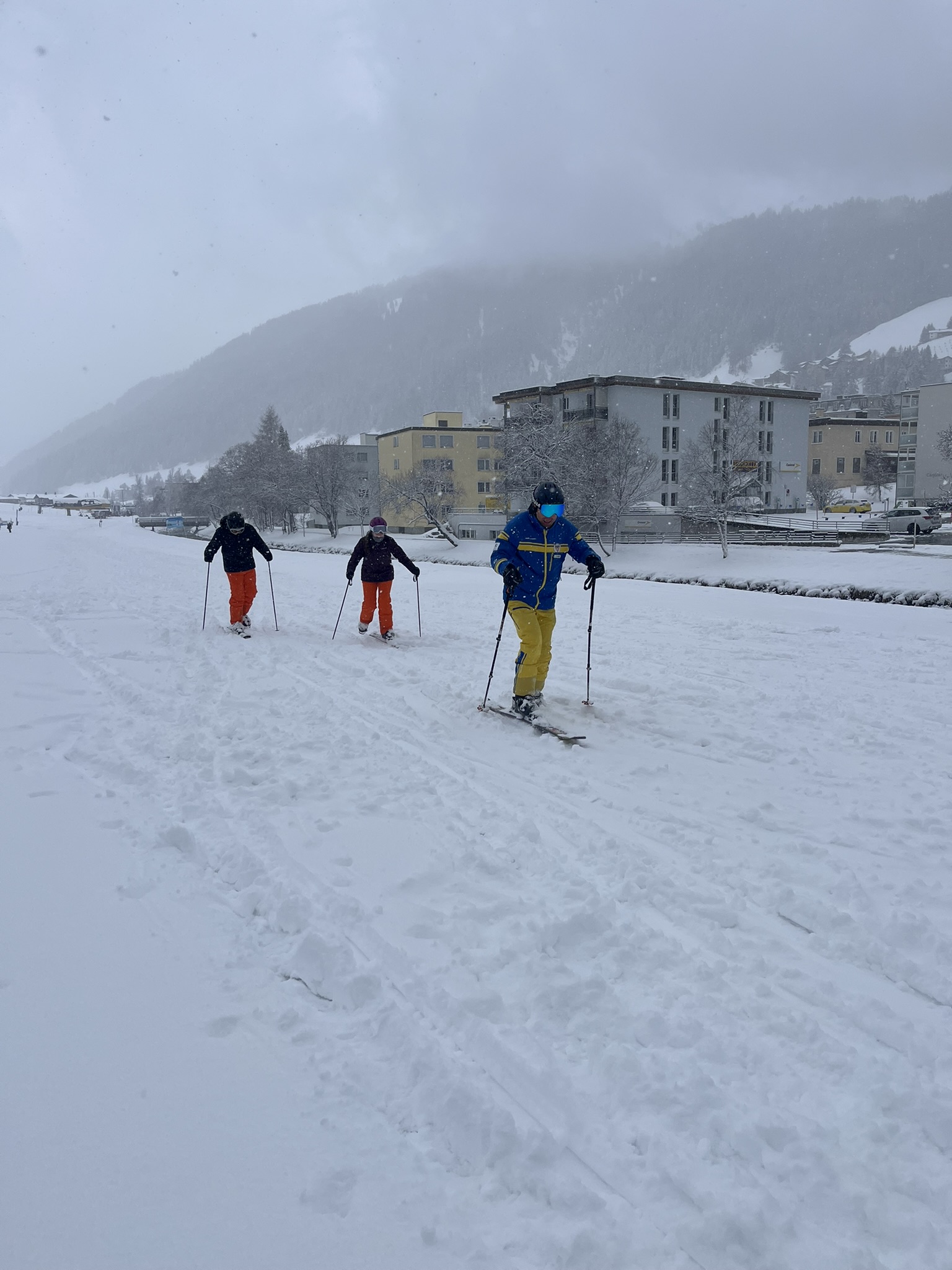
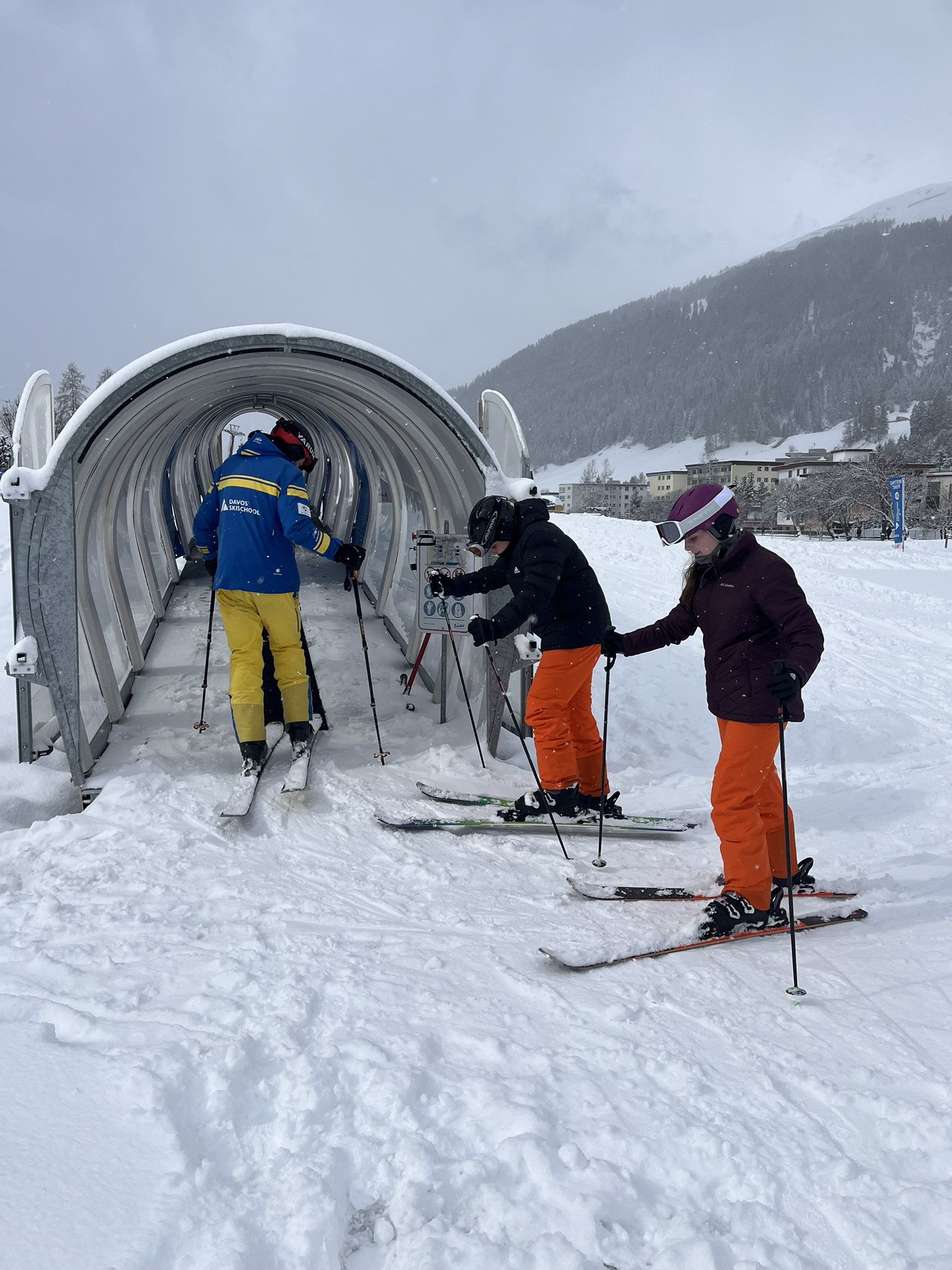
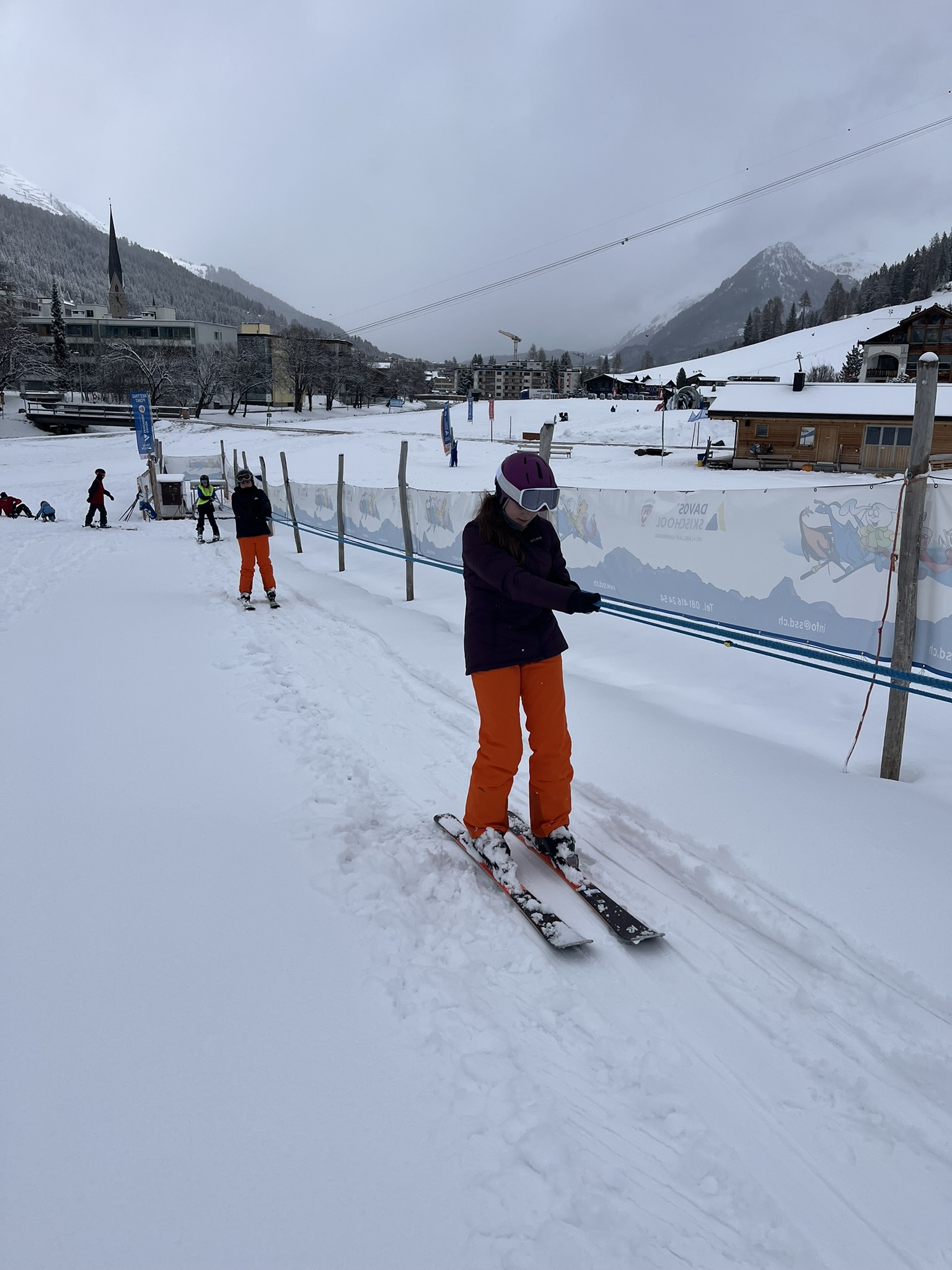
A 2.5-hour train ride from the Zürich Airport, the 13,000-inhabitant Alpine village of Davos is the highest city in Switzerland, at 5,147 feet above sea level. Its Ski School Davos, part of the Swiss Ski and Snowboard School, is the biggest and oldest ski school in the country. Students here can learn from patient, professional instructors, who focus on safety and ensure basic skills are mastered before introducing more difficult maneuvers or terrain. Experienced skiers have 157 miles of ski trails on 81 different slopes to explore over five separate ski areas, including the iconic Parsenn skiing and hiking area, famous for its wide pistes and long runs.
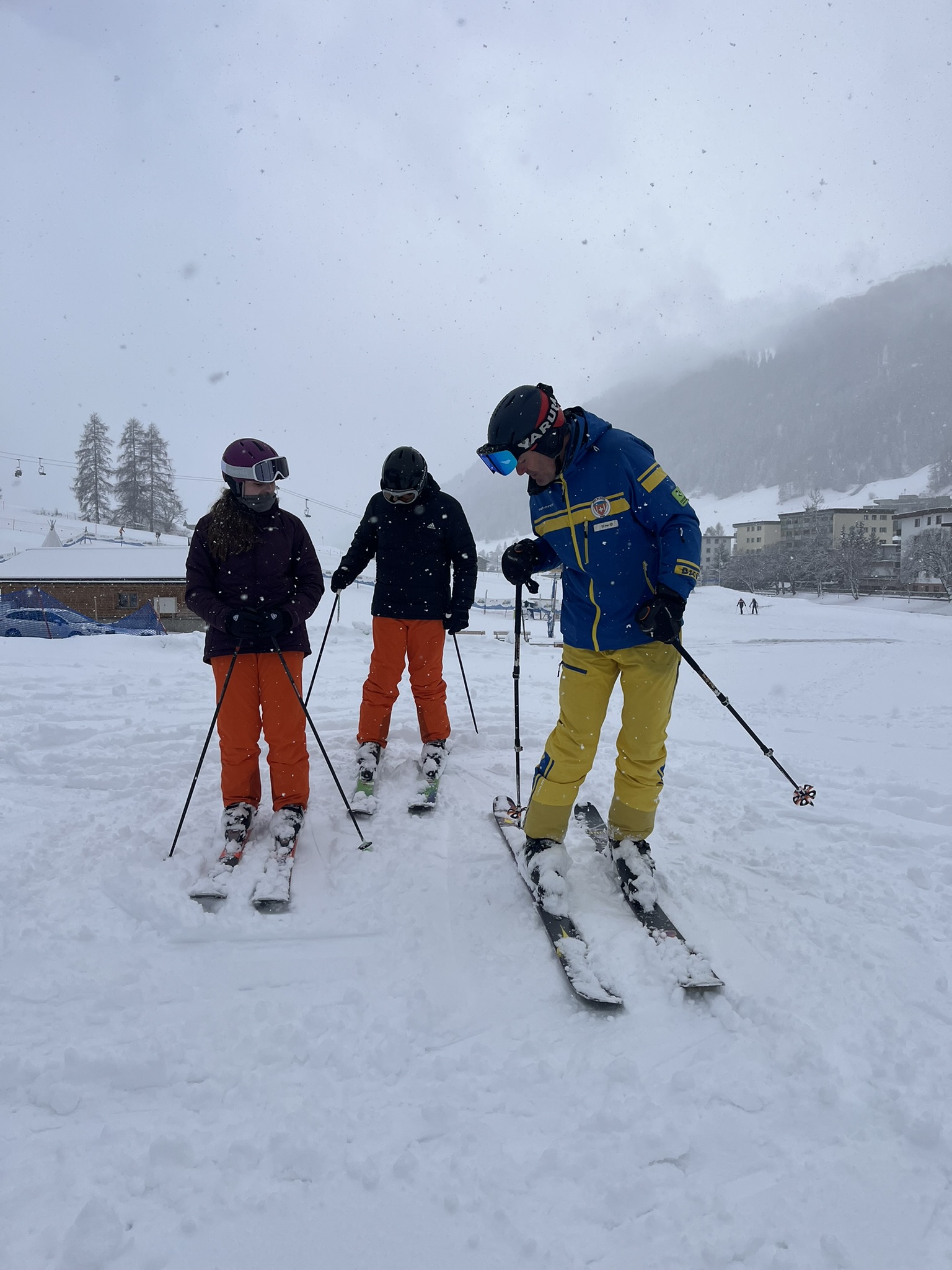
Private and group lessons are offered at Ski School Davos, with ski equipment rental available at Top Secret Ski & Snowboard Shop, directly across the street from Bolgen Plaza.

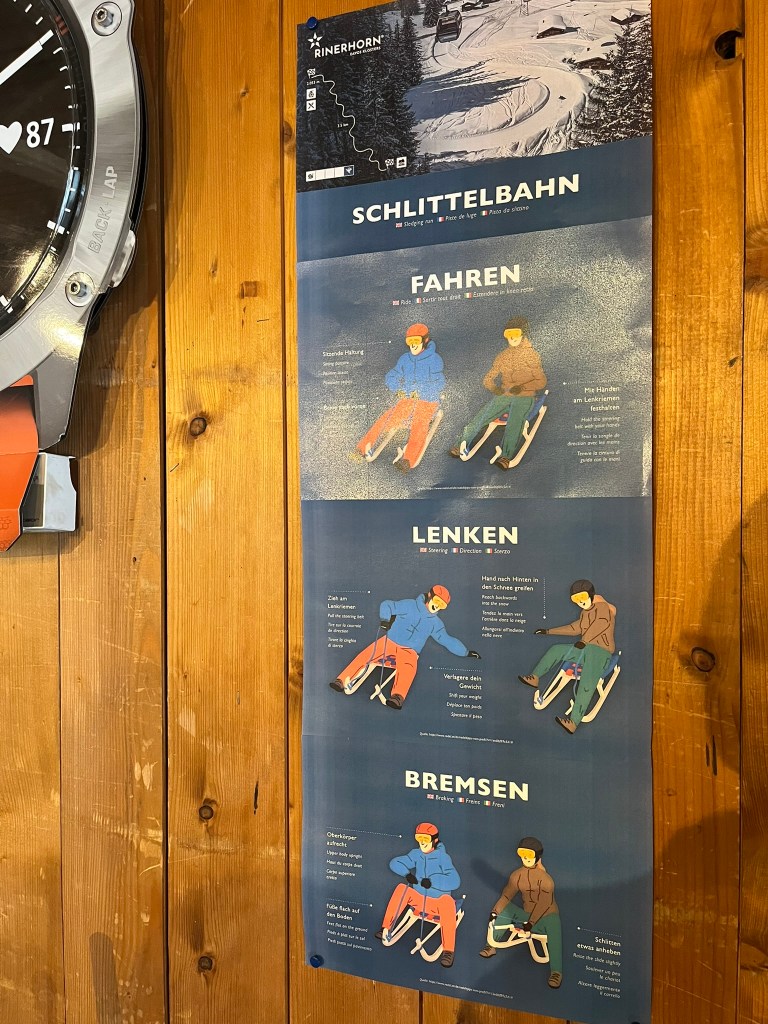
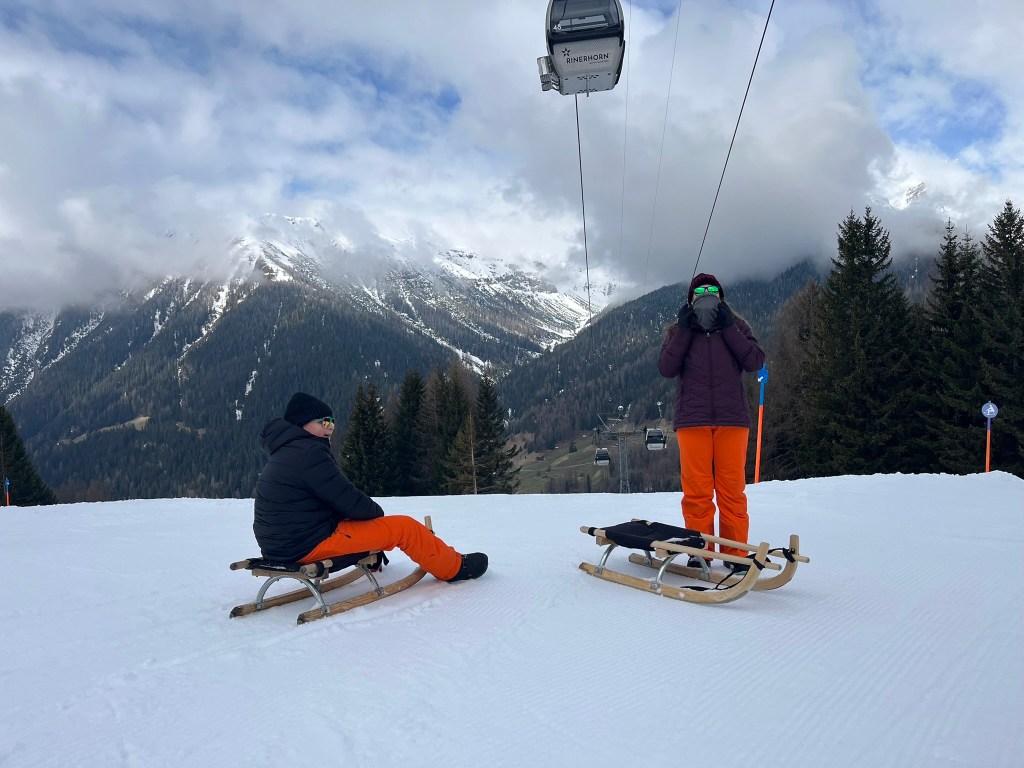
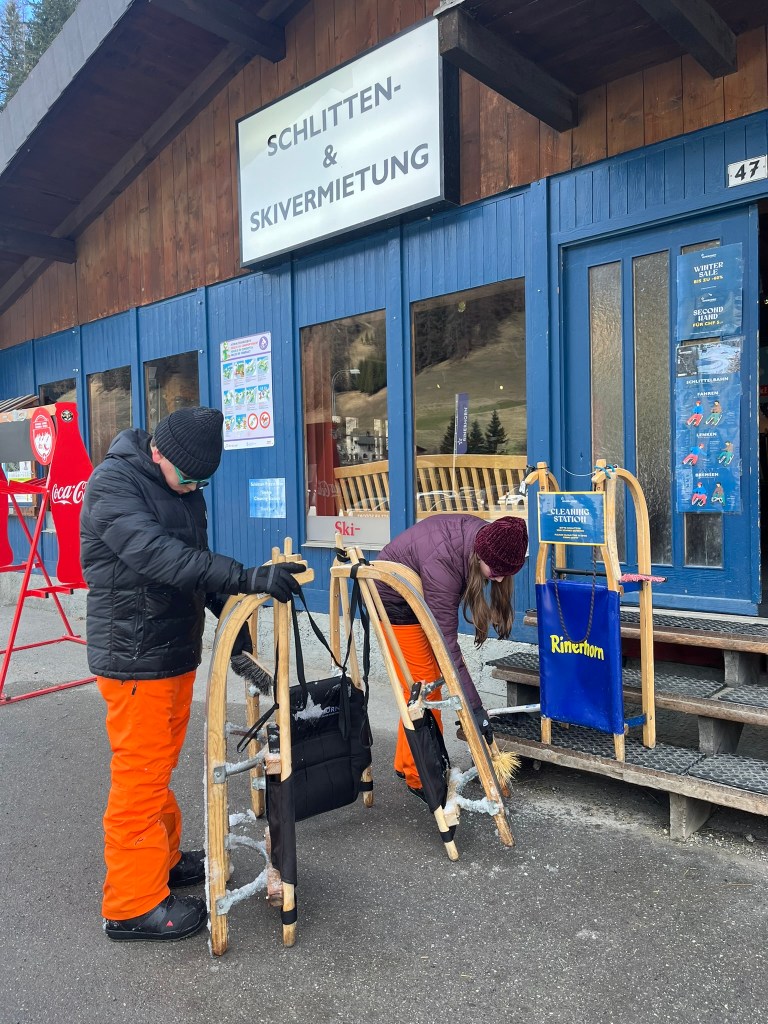
The Alps are inviting even to those not wearing skis. For a fun take on tobogganing, try sledging down the 2.2-mile Rinerhorn run in Davos. Take the ski lift to the top and pilot your wooden sledge down the steep and curving 33-bend slope—one of the most challenging sledging runs around—braking with knees bent and feet flat on the snow and changing direction by shifting weight and pulling the steering rope. It’s like high-speed Mario Kart in the mountains!
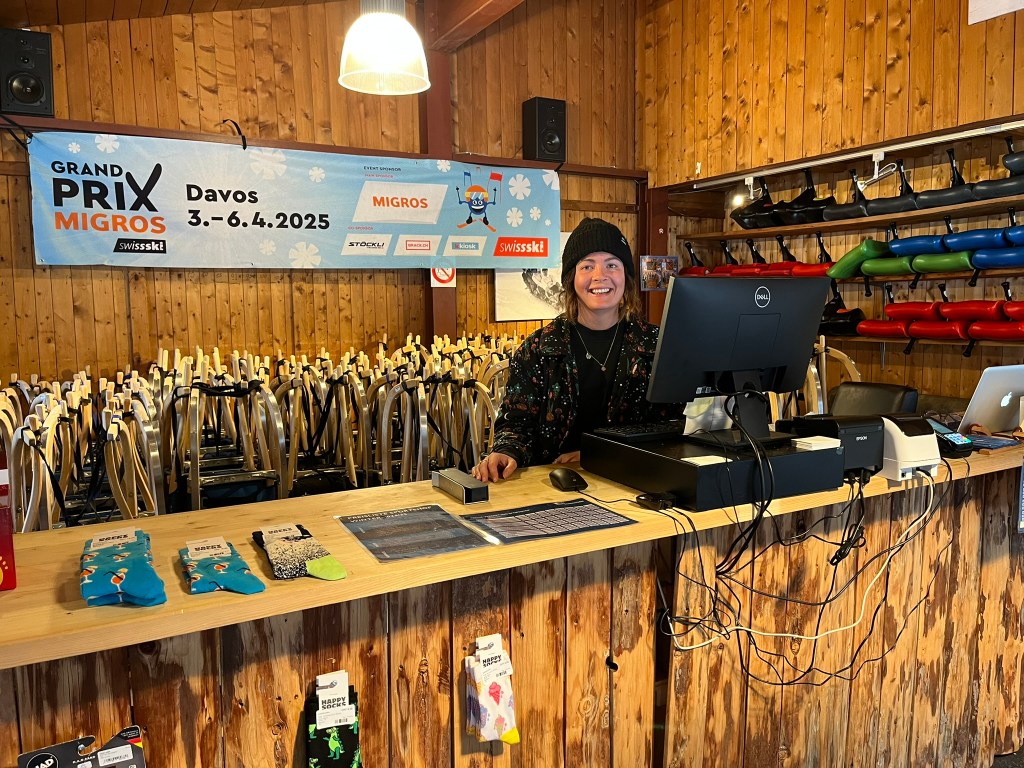
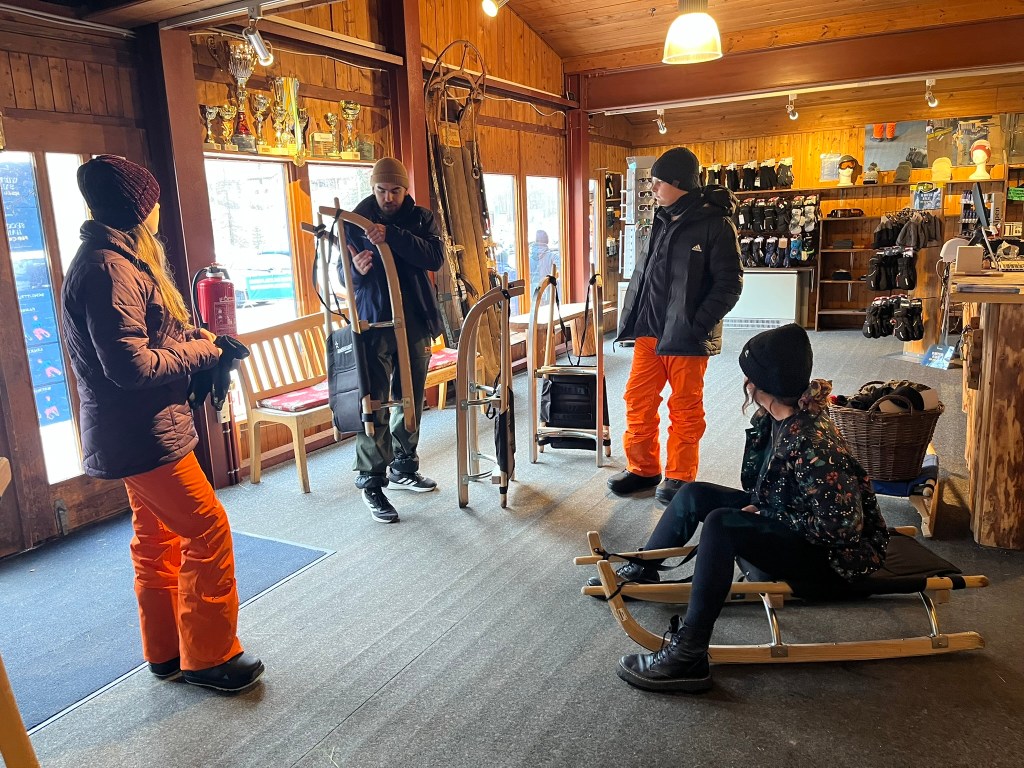
Rinerhorn has slopes for skiers and sledgers.

If you’re staying at the comfy mountain chalet Hotel Waldhuus in Davos, be sure to spend time in the large indoor pool and experience the Switzerland sauna lifestyle in their bio sauna, herbal sauna, or new Finnish sauna. Usually co-ed and textile-free, sauna visitors in Switzerland use towels simply for hygiene purposes—not as a cover-up, but to sit on so sweat doesn’t touch the wood. Sauna usage is linked to many health benefits and can lower blood pressure, improve cardiovascular health and circulation, reduce soreness after exercise, promote muscle recovery, stimulate immune system support, reduce stress, and eliminate toxins. A swim and sauna session after a full day of activity feels physically and mentally healing, especially in a clean and well-maintained facility.   

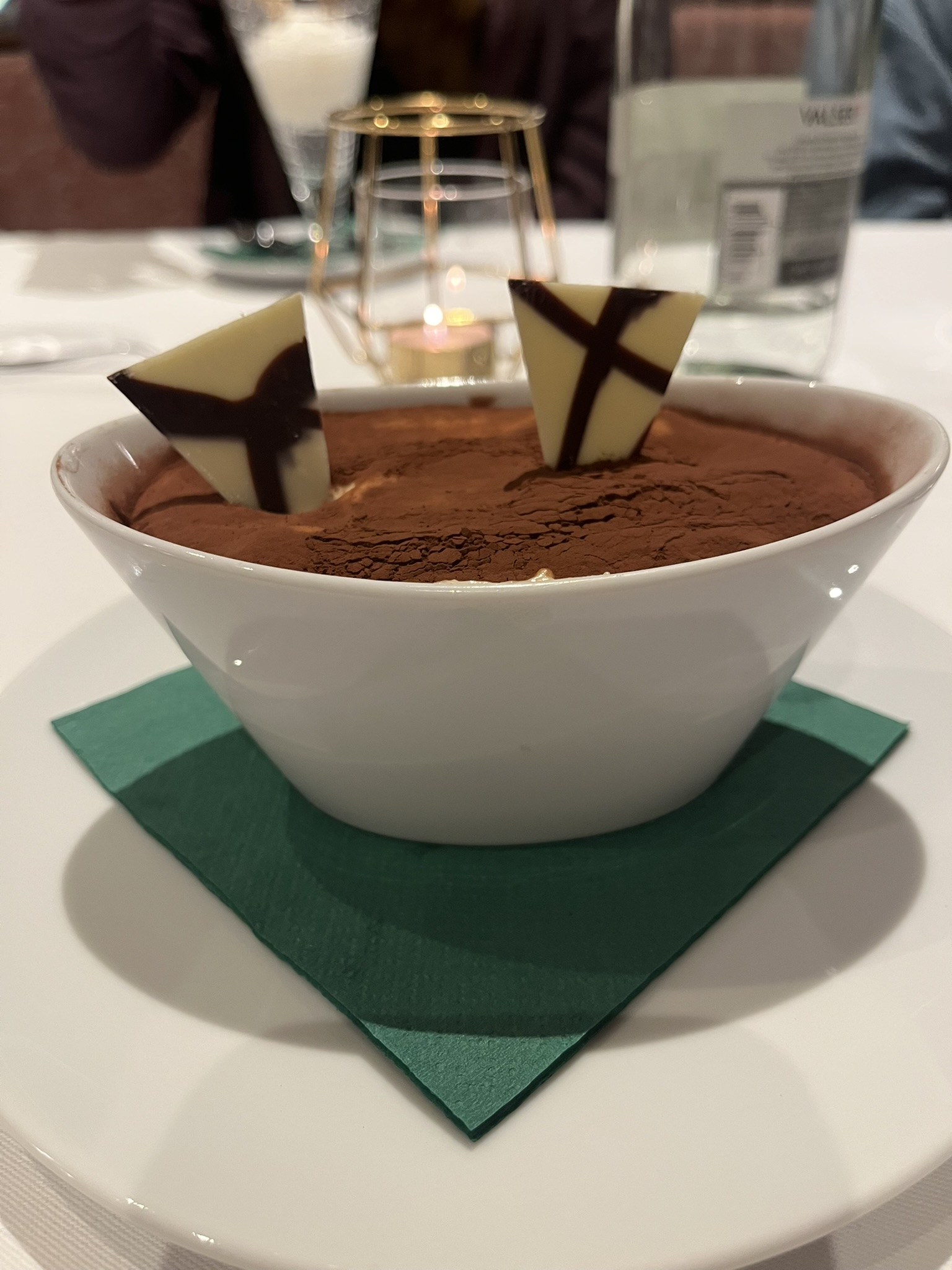
Unwind in Hotel Waldhuus’ comfortable accommodations with terrific spa facilities, and try the delicious tiramisu and enormous fresh breakfast spread in the Waldhuus Restaurant.

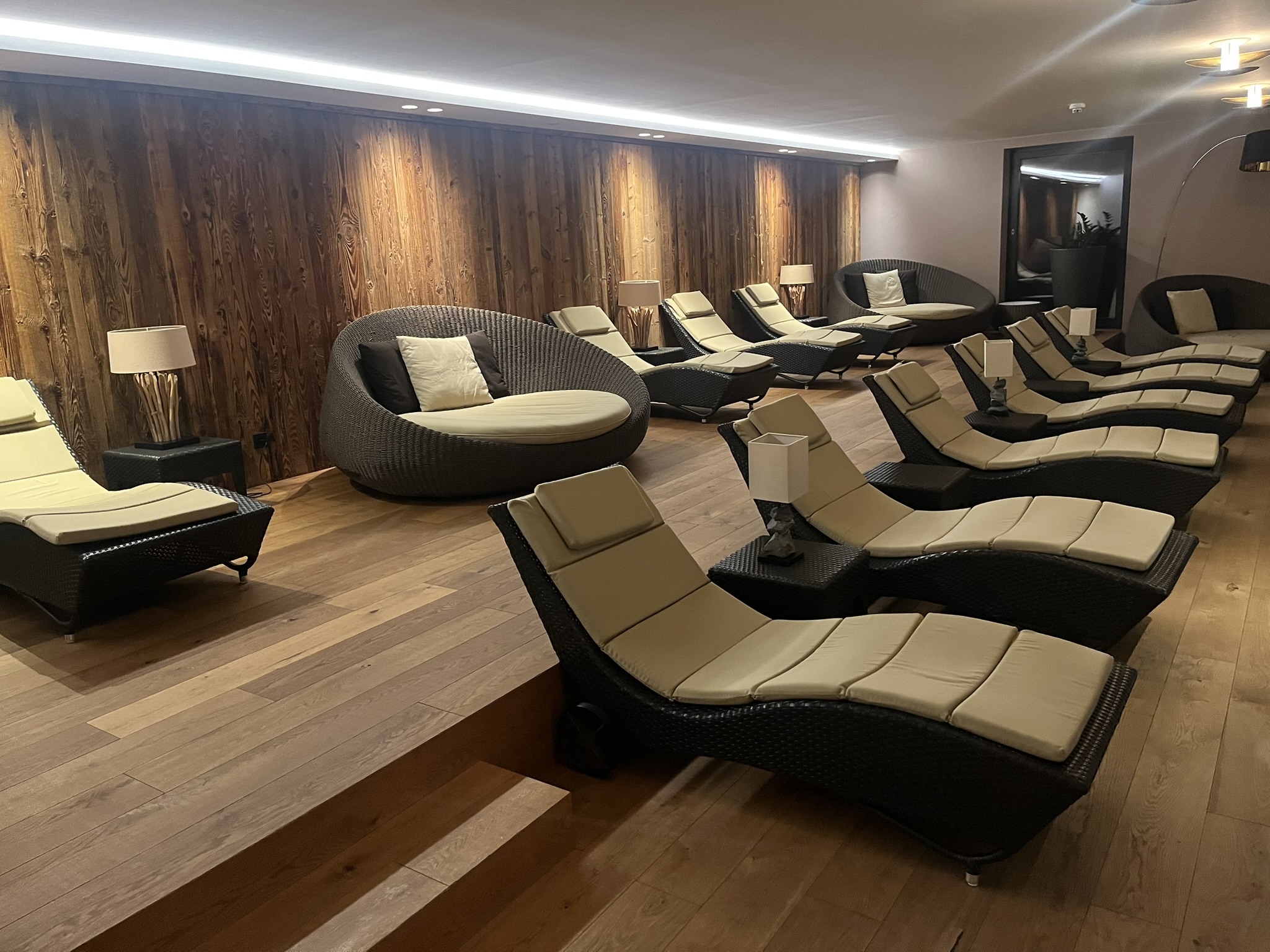
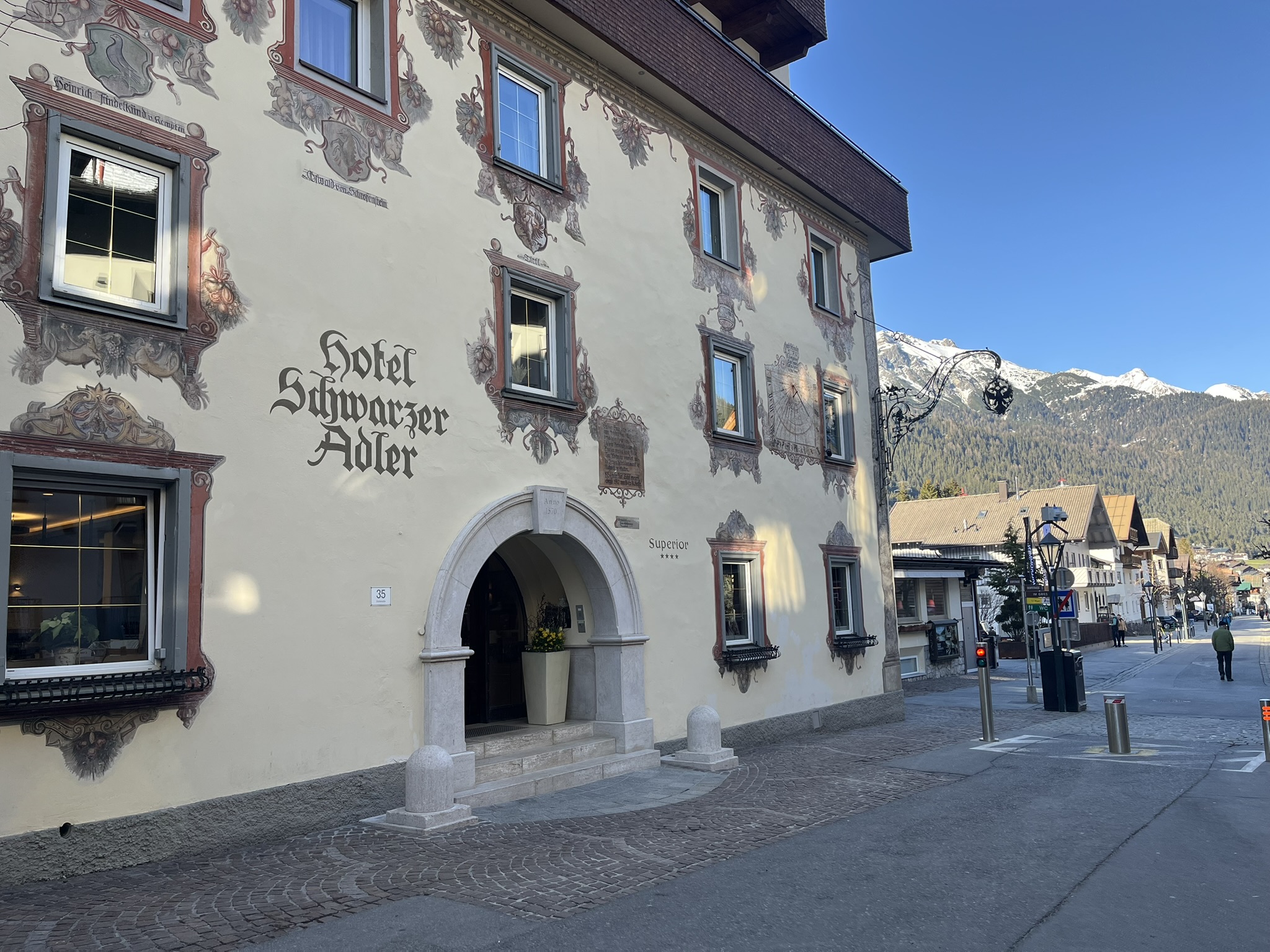
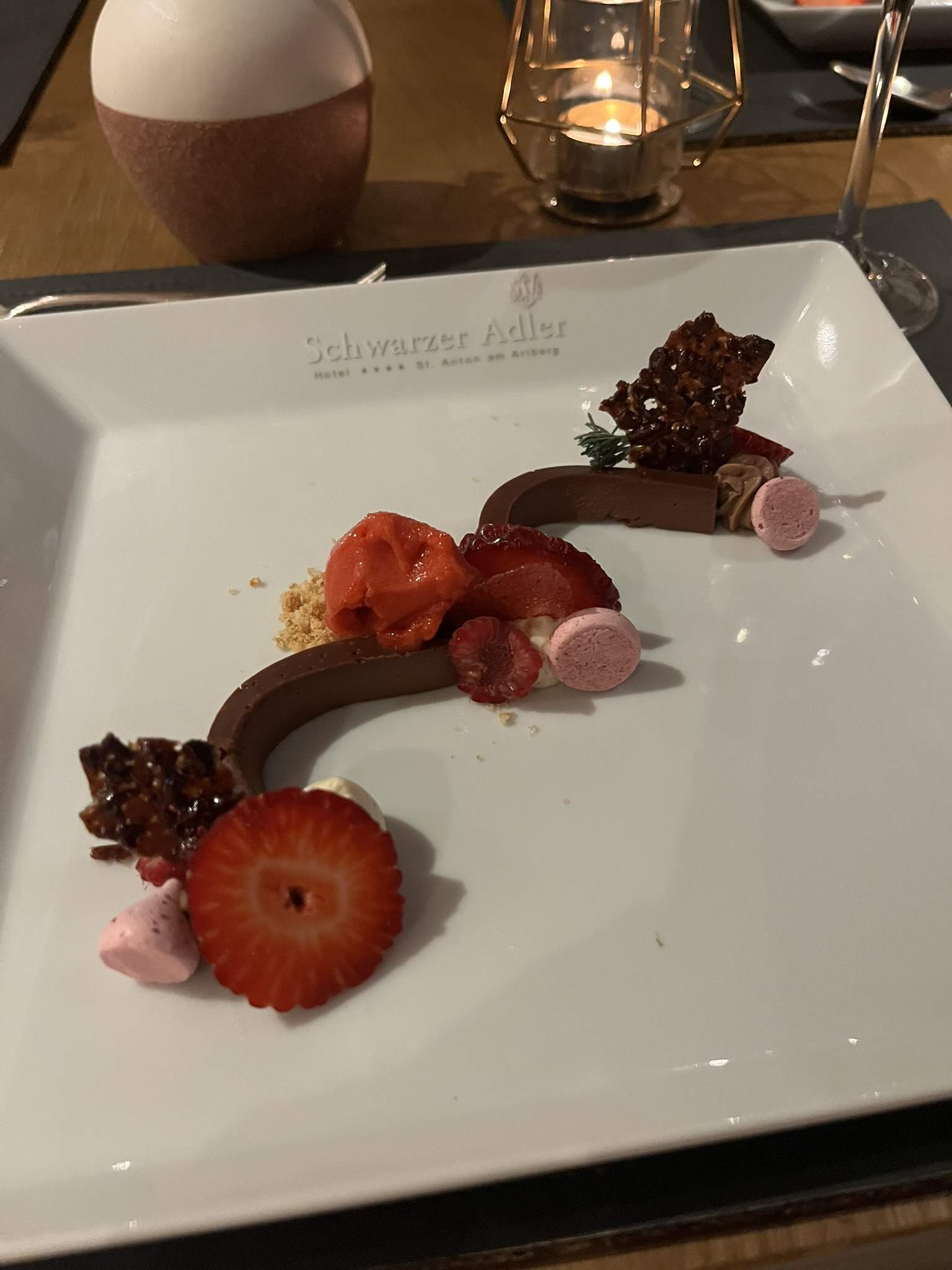
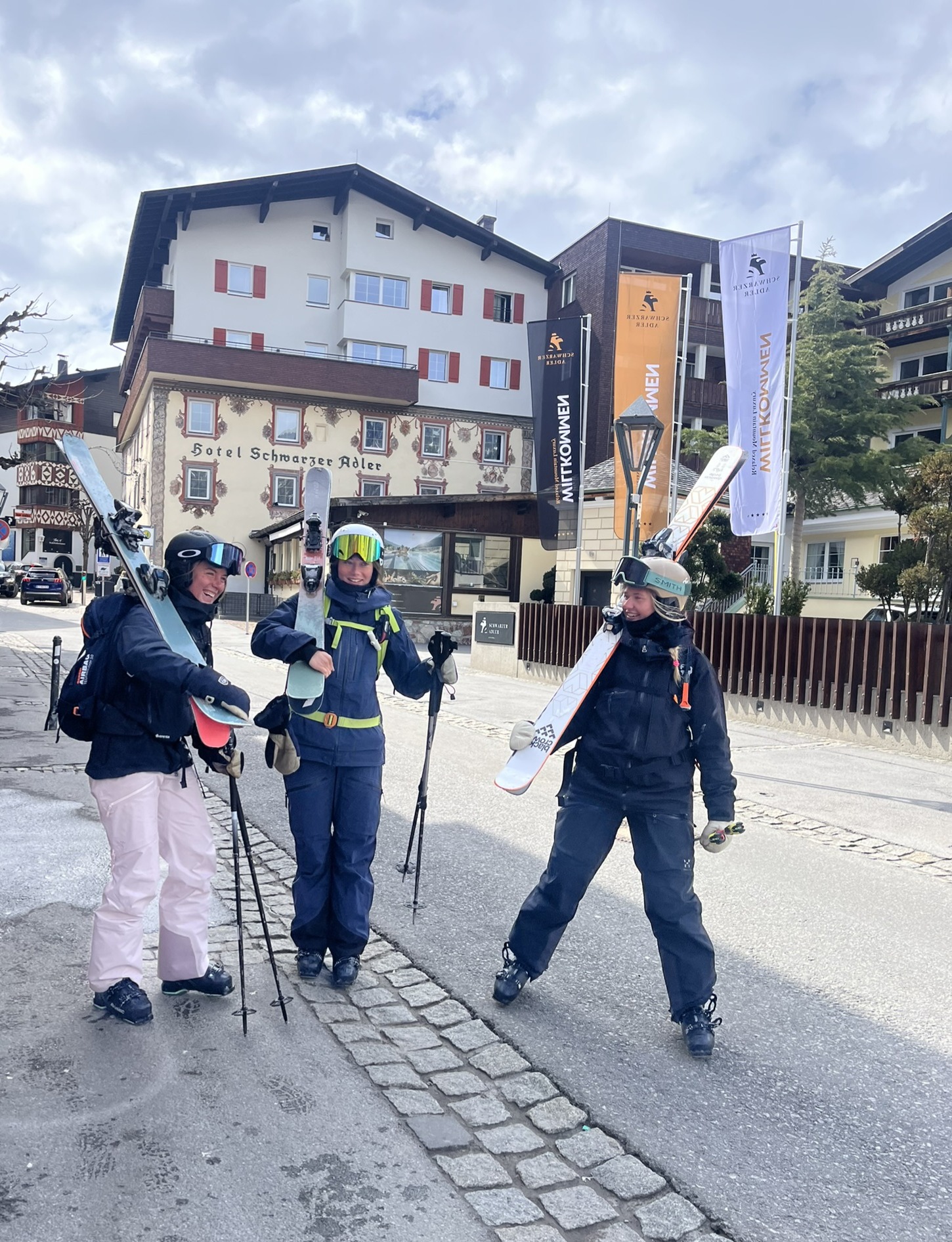
For a taste of the Austrian Alps, a 3.5-hour train ride brings you to St. Anton am Arlberg, Austria, where you can make your home base the classy Hotel Schwarzer Adler. Here, white-glove dinner service offers perfectly flavored and artfully plated meat and vegan dishes, homemade comfort foods including butter Spätzle (egg noodle pasta), and delectable desserts like “chocolate 5 ways,” with Austrian wines for pairing. You can swim in the outdoor sky pool under the pure mountain air or unwind indoors in the relaxation room, saunas, or sparkling indoor pool. Treat yourself to a spa package from the massage menu or simply sip an espresso on your hotel room balcony with a view of snowy peaks and a soundtrack of church bells and birdsong.
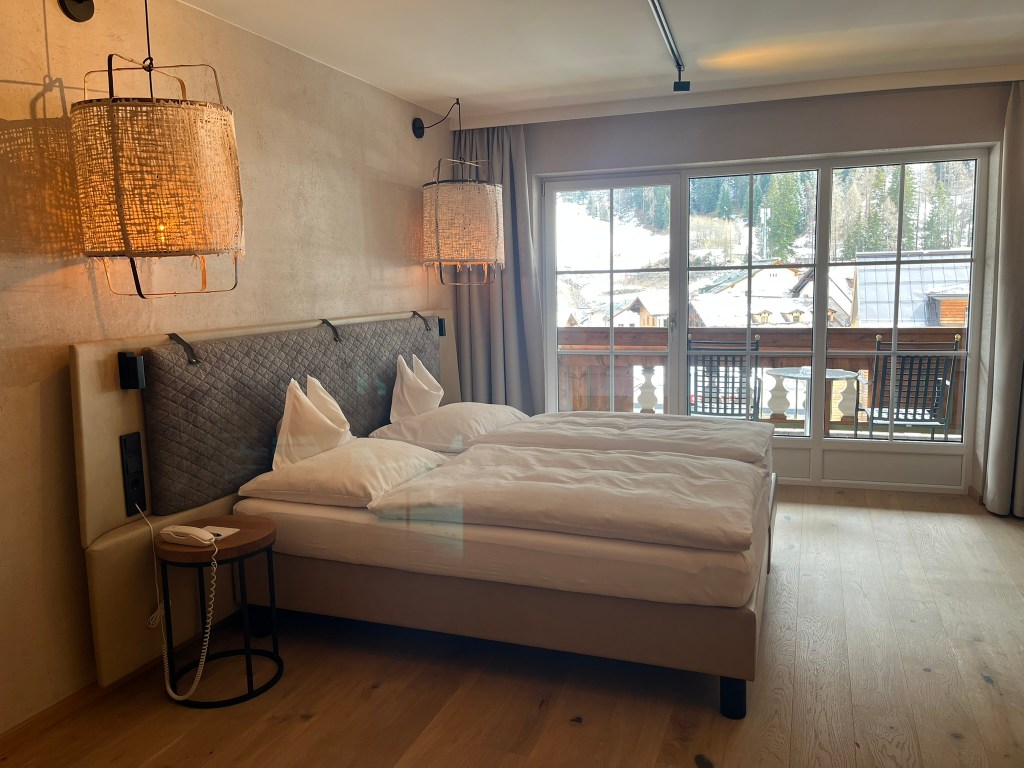
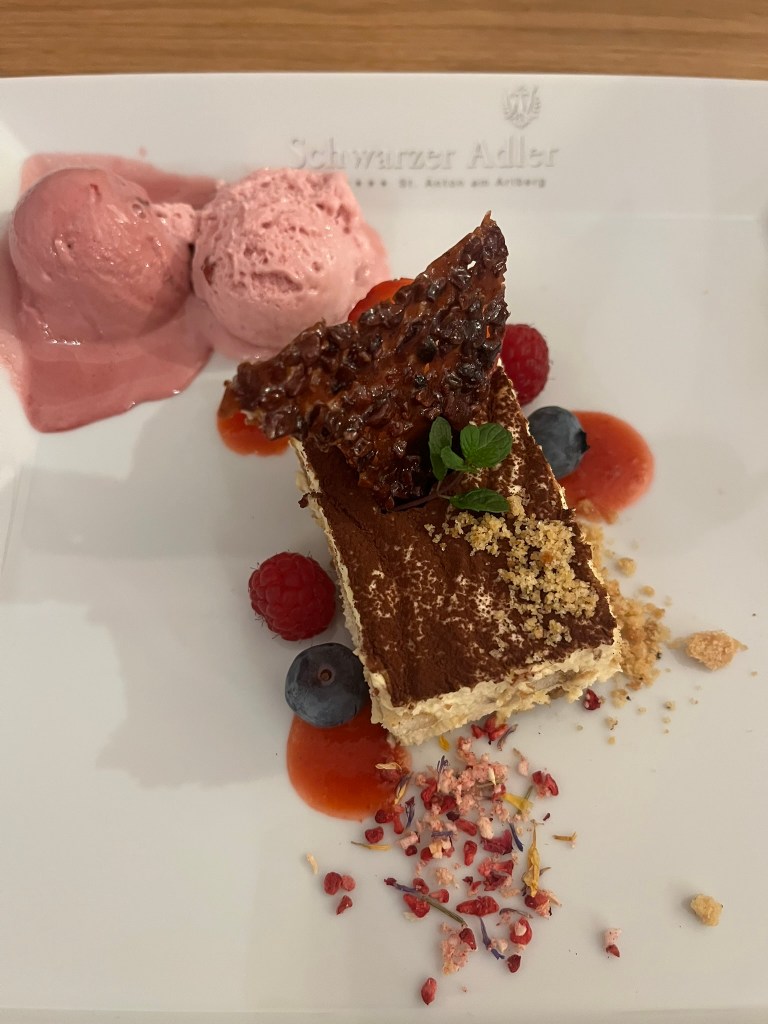
The Schwarzer Adler Hotel provides luxurious dining experiences and relaxation outlets.

Skischule Arlberg is the award-winning largest ski school in Austria, founded by Hannes Schneider, the father of the modern “Arlberg technique” skiing style. Before Schneider’s development of this forward semi-squatting posture, the trend was to stand erect with rigid knees, a position derived from Nordic or cross-country skiing, which wasn’t a practical stance for the steep Tyrolian terrain. Ski instructors at Skischule Arlberg keep lessons fun and stress-free, moving at the students’ pace and providing encouragement without pushing too far beyond current comfort levels. For those unaccustomed to ski life, it’s an excellent introduction to what many Alpine locals grow up learning from a young age.  

Ski School Arlberg prepares skiers to achieve their athletic goals.

An incredible highlight of St. Anton—no skis needed—is up on the very peak of Valluga, at 9,222 miles above sea level. Ride the “Galzigbahn” ski lift to the first mountain station, where you can snack at the Galzig Restaurant, shop in the ski store, and watch athletes descend the slopes. Then ascend with the “Vallugabahn I” lift through fog and clouds to the Vallugagrat station and the Valluga View Restaurant. One more ride in the small “Vallugabahn II” cable car brings you to the pinnacle lookout point—a circular railed platform open to the intense sun and whipping wind, with breathtaking views of snow-covered Alps in every direction. You have a clear panorama from Lake Constance to Switzerland and the Zugspitze, the highest mountain in Germany. From here, you can see the extraordinary beauty of the glacier-carved gorges as well as the splendid organization of the ski resort, with numerous lifts in motion, skiers gracefully carving patterns into the snow, and sky-high facilities with everything you might need for your day in the heights.

Unbeatable Valluga views are a highlight of St. Anton am Arlberg.

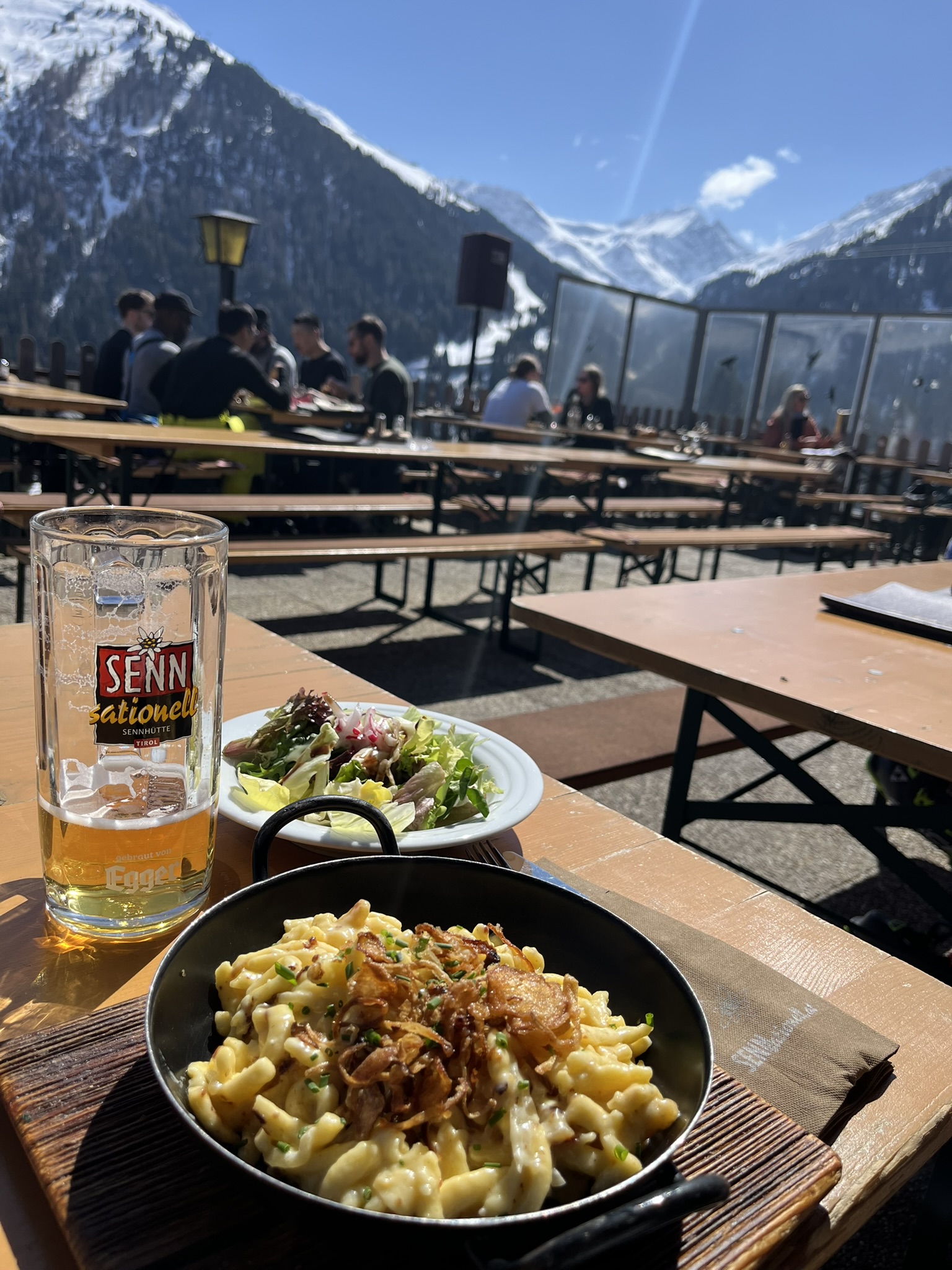
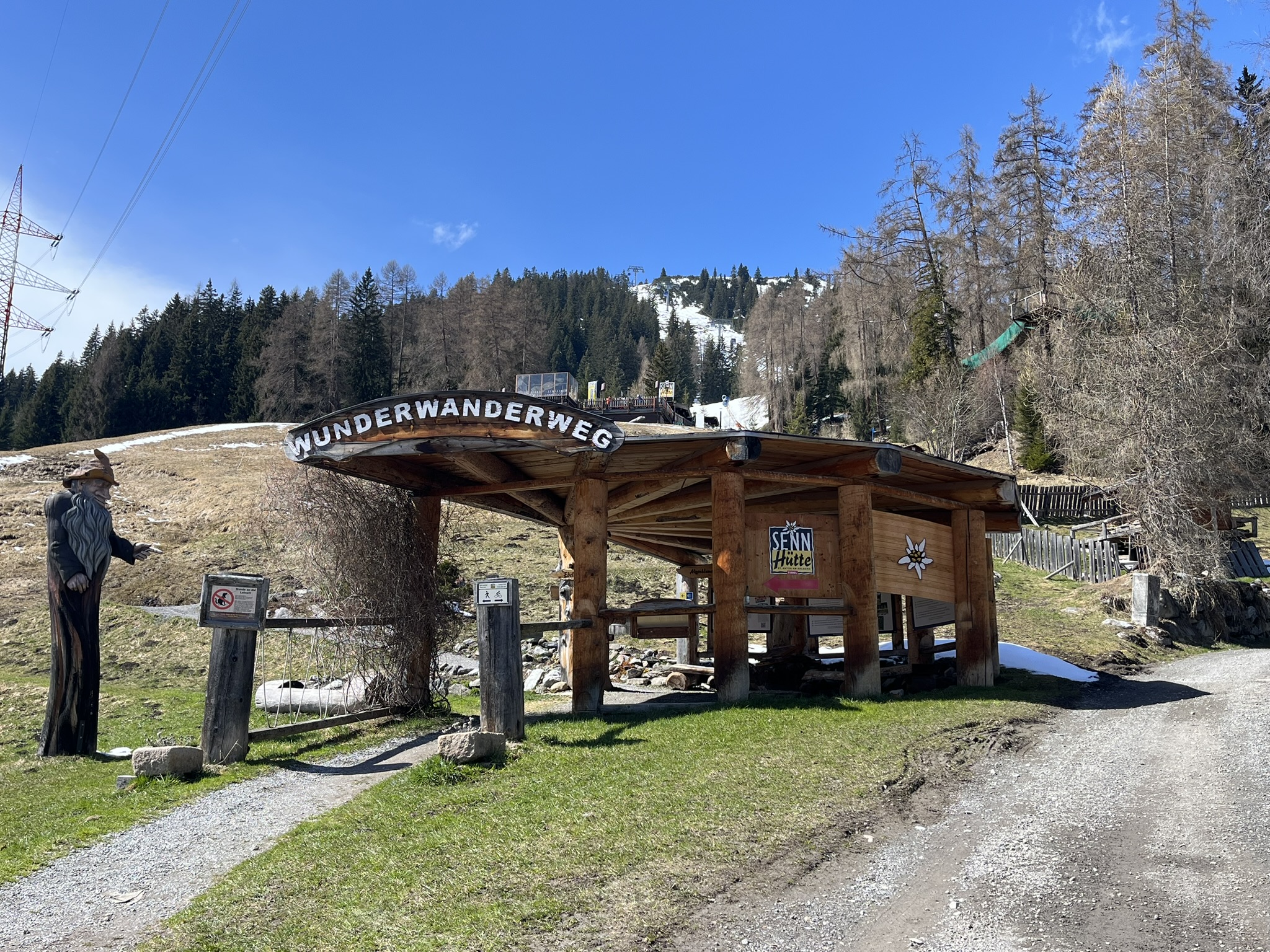
Don’t leave the Alps without an après-ski experience! St. Anton am Arlberg holds many opportunities to unwind and let loose after a day of athletics. You can party hard with club music and tasty drinks at any number of après-ski huts, or partake in a casual post-ski meal at the rustic Sennhütte restaurant right on the slopes—its entrance marked by an enormous pair of Lederhosen. Either ski down the hill right to the restaurant or take a free bus trip there from the town center and hike up the WunderWanderWeg (wonder walking way) pathway from the bus stop. The back patio balcony affords an outstanding view into the mountains—a brilliant backdrop for sampling Käsespätzle (thick cheesy noodles topped with crispy fried onions), Schnitzel and Pommes (fried meat cutlets and French fries), and gulping a refreshing beer or Skiwasser (“ski water”—an alcohol-free blend of raspberry syrup, lemon juice, and water or seltzer).
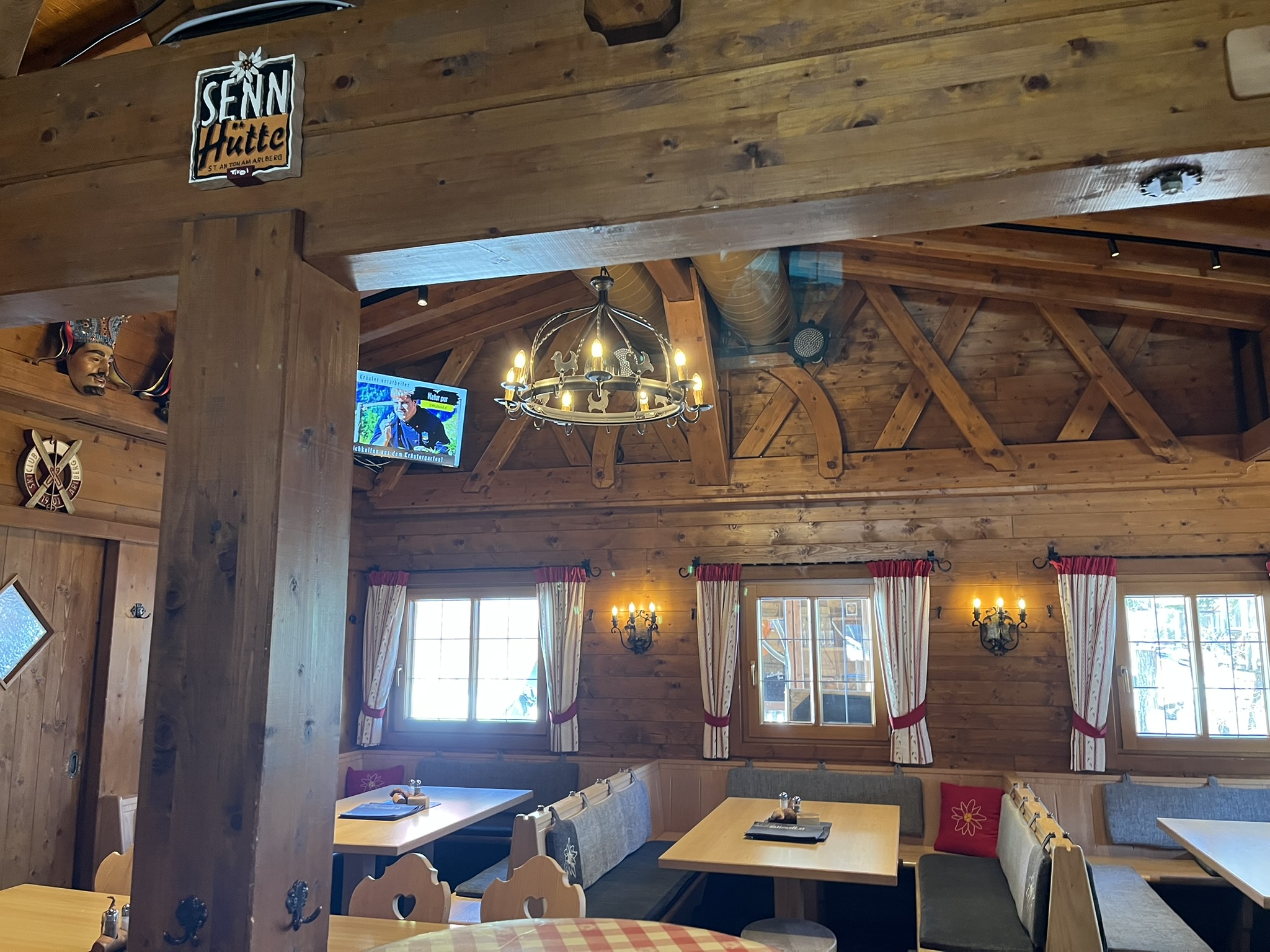
Giant lederhosen and the WunderWanderWeg lead the way to Sennhütte.

Any beer fans or German-language–lovers know that Bavaria is a nearby European destination worth visiting, so travel by Eurail from St. Anton 3.5 hours northeast and you’ll end up in Munich, Germany. A short walk from the Munich main train station through a Mediterranean district brings you to the fresh and inviting greenery-filled lobby of the KOOS Hotel. A prime location near Karlsplatz bus and streetcar stops, the KOOS Hotel is also within easy walking distance of the Altstadt, Munich’s medieval old town. KOOS Hotel’s vegan-friendly personal care products in the rooms and numerous vegetarian and vegan breakfast selections are a welcome perk for those with specific preferences and dietary needs. The hotel is also a role model for sustainability and is entirely paperless, with a digital check-in process and novel phone-activated room entry in lieu of a room key. This family- and dog-friendly haven near the city center has all you need for your stay, including an in-room washing machine and clothesline for freshening up travel clothes.

Environmental consideration and convenience are key at KOOS Hotel.

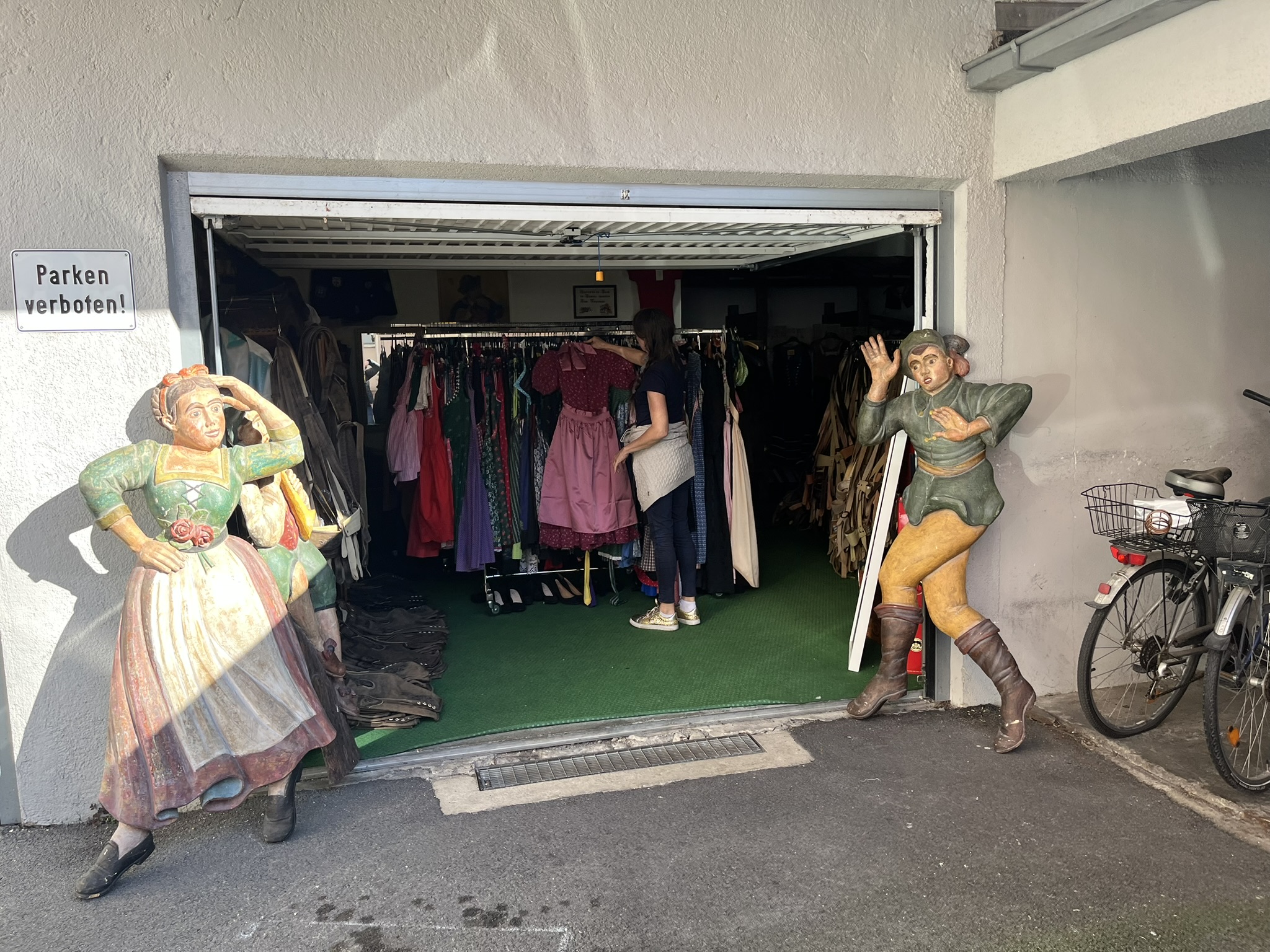
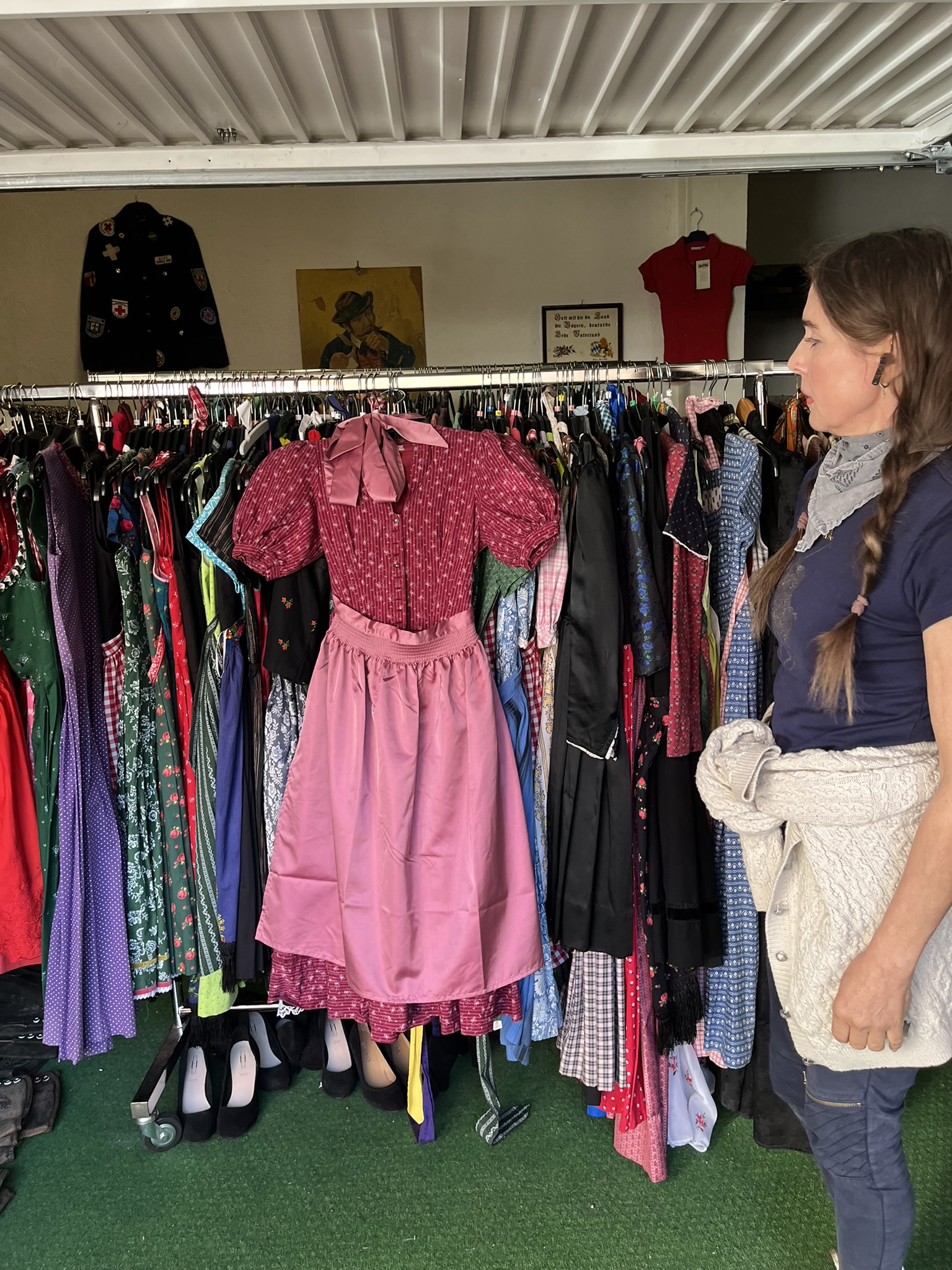
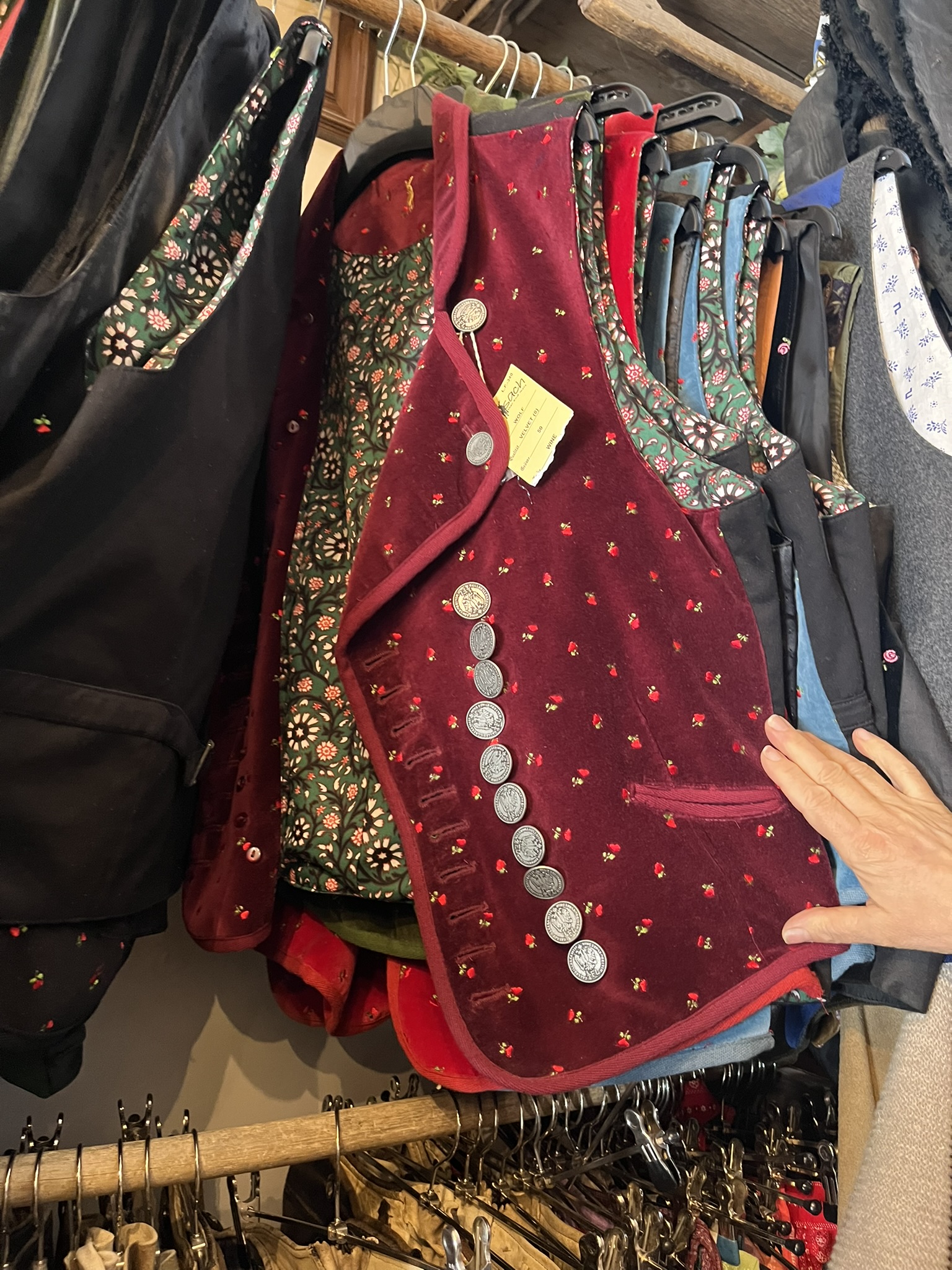
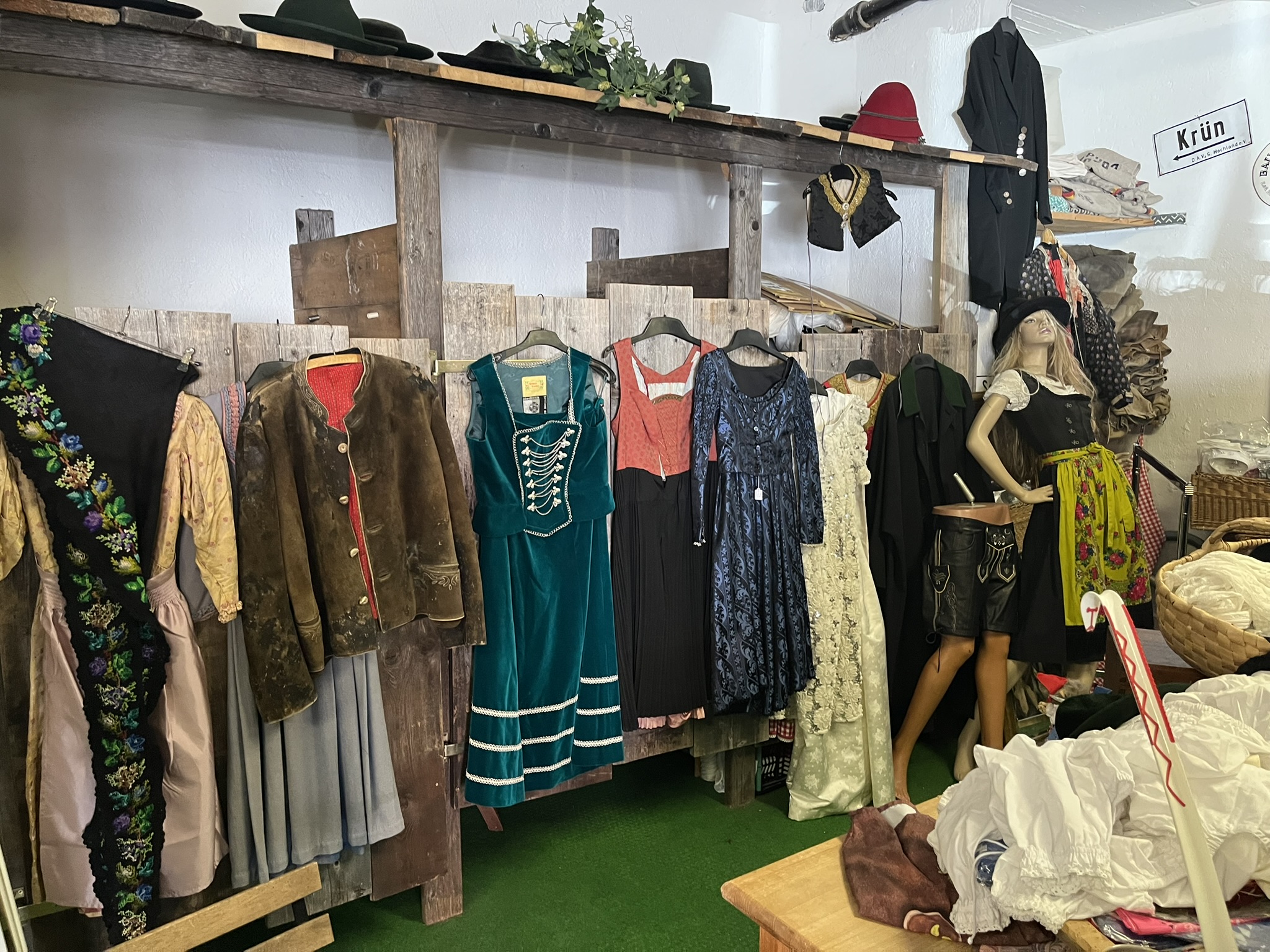
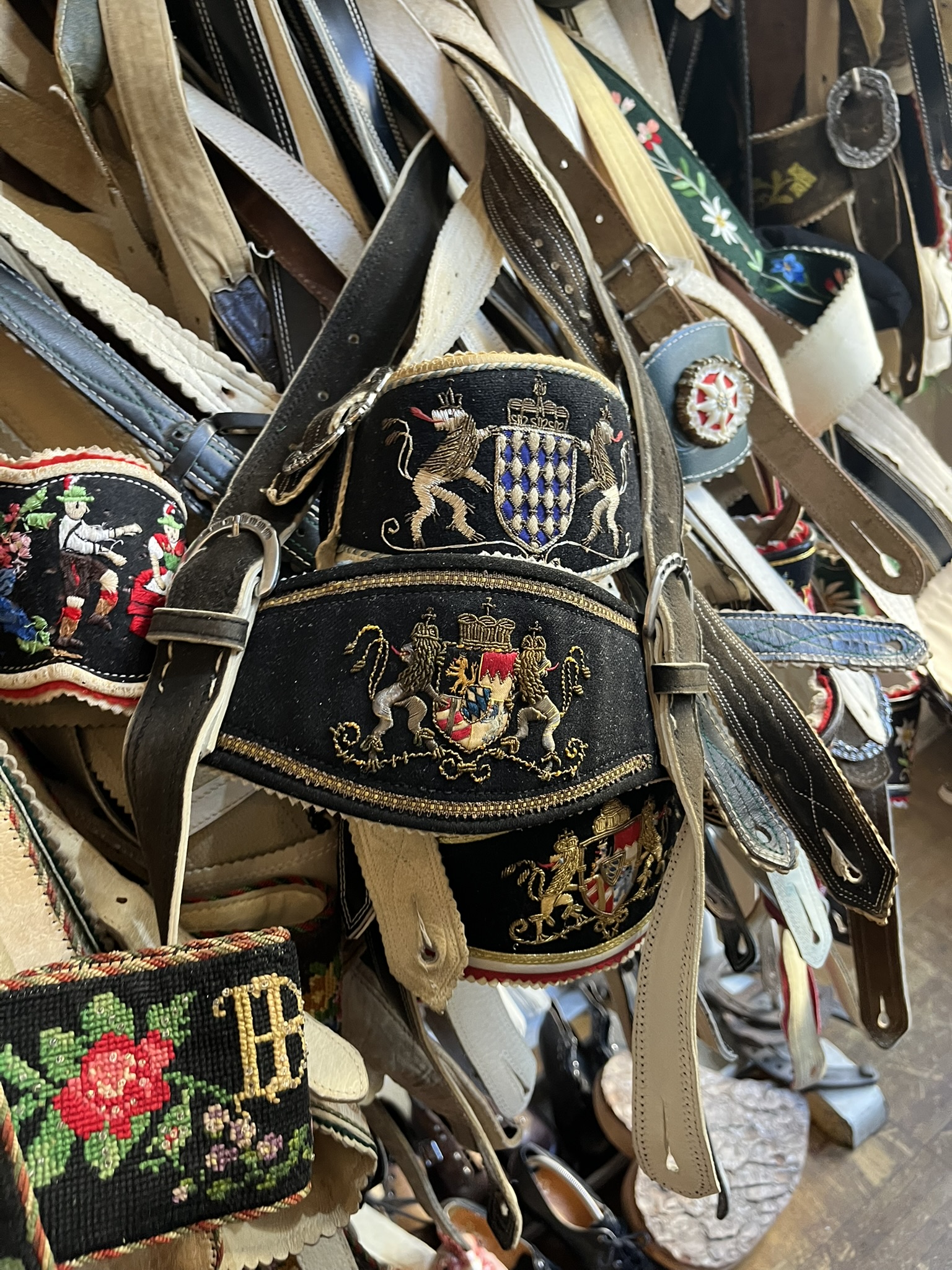
If you’re looking to buy some “new-to-you” threads, consider a walk to Holareidulijö traditional Bavarian clothing store. Affable and knowledgeable shop owner, Michaela Klein, lovingly restores and resells used Dirndl, Lederhosen, hats, vests, and myriad Bavarian accessories and jewelry, while offering an assortment of new shirts and socks to match her wares. During Oktoberfest season, Klein’s store and the extra garage unit in back are packed with shoppers searching rows of racks for colorful festival outfits and drinking the free beer she offers during her busiest weeks.

Holareidulijö is a treasure trove of authentic, high-quality refurbished Trachten.

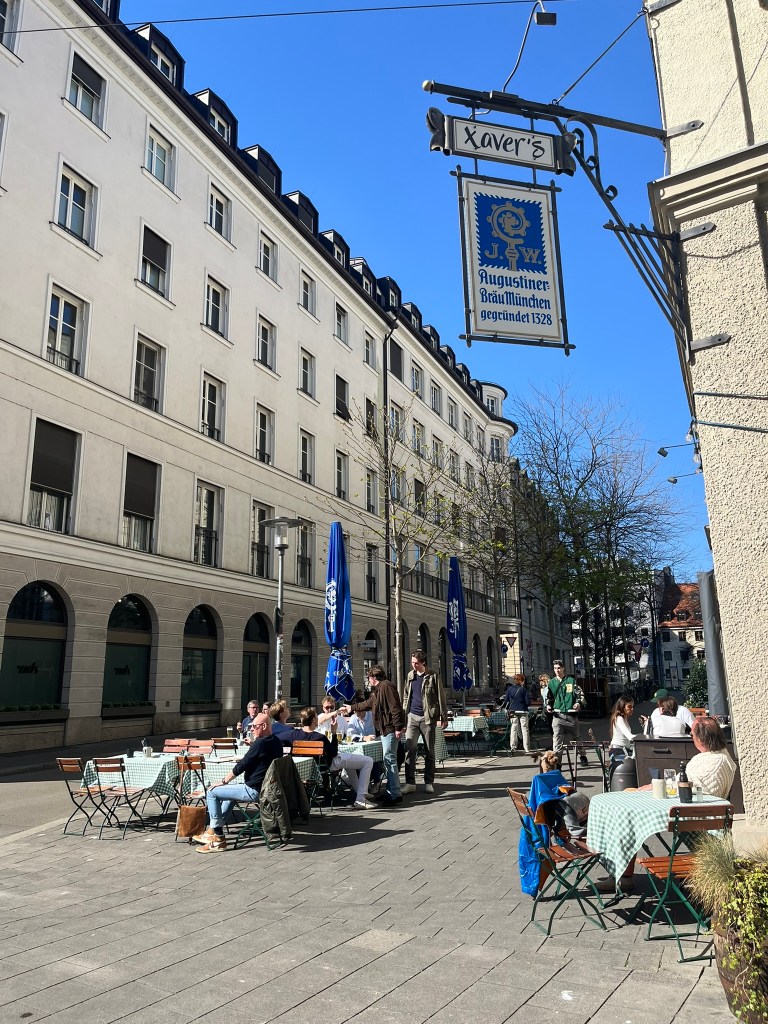
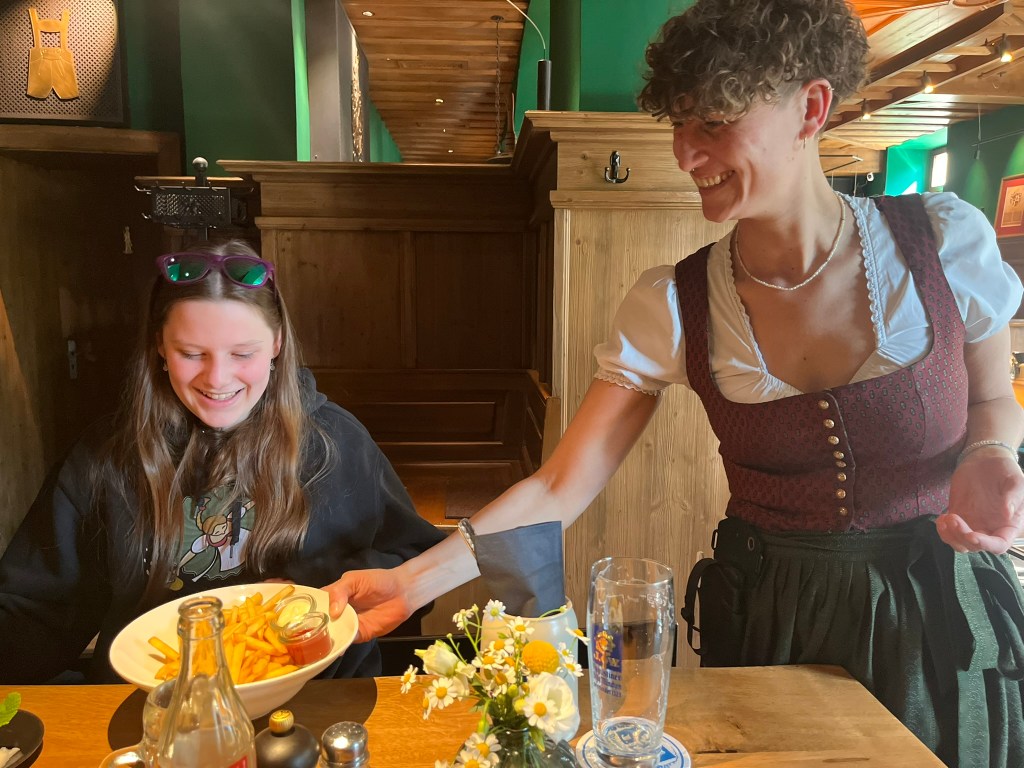
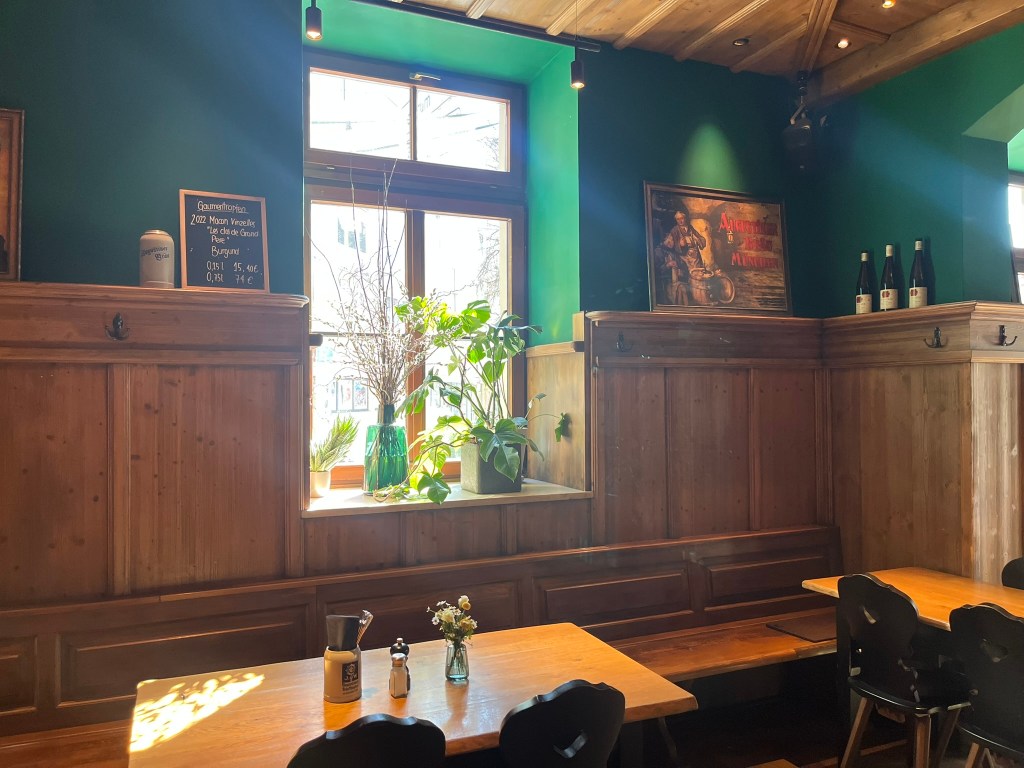
For a fantastic meal and some Augustiner beer or a selection from about 160 different wines, head to Xaver’s—a stylish restaurant and brew pub with a warm wood interior and a mix of small and large tables for date night or Stammtisch (“regulars’ table,” where friends recurrently gather to eat, drink, and socialize). Here, young and old alike are drawn to the restaurant motto’s “refreshingly traditional” vibe that features fun and friendly staff clad in traditional Bavarian costume (including genial owner Xaver himself, a sommelier and one of several restaurant-owning brothers). The menu features classic Bavarian dishes reimagined with a fresh take using locally farmed ingredients, as well as innovative entrees that change every six weeks. The lively music and cheerful atmosphere make you want to come back and be part of the scene— same time next week.

With a fresh take on Old World style, Xaver’s serves locally grown foods, Augustiner beer, and wines galore.

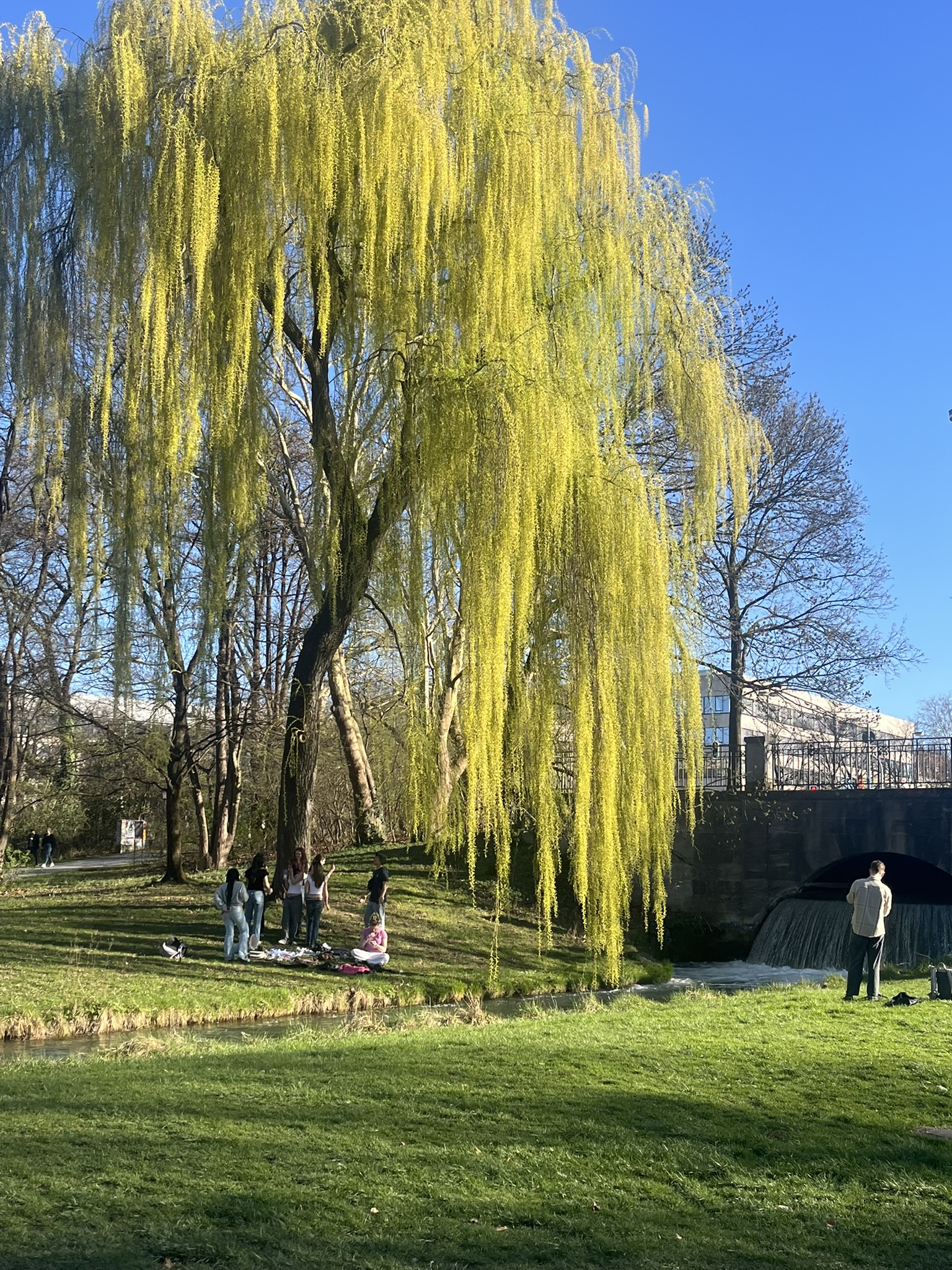
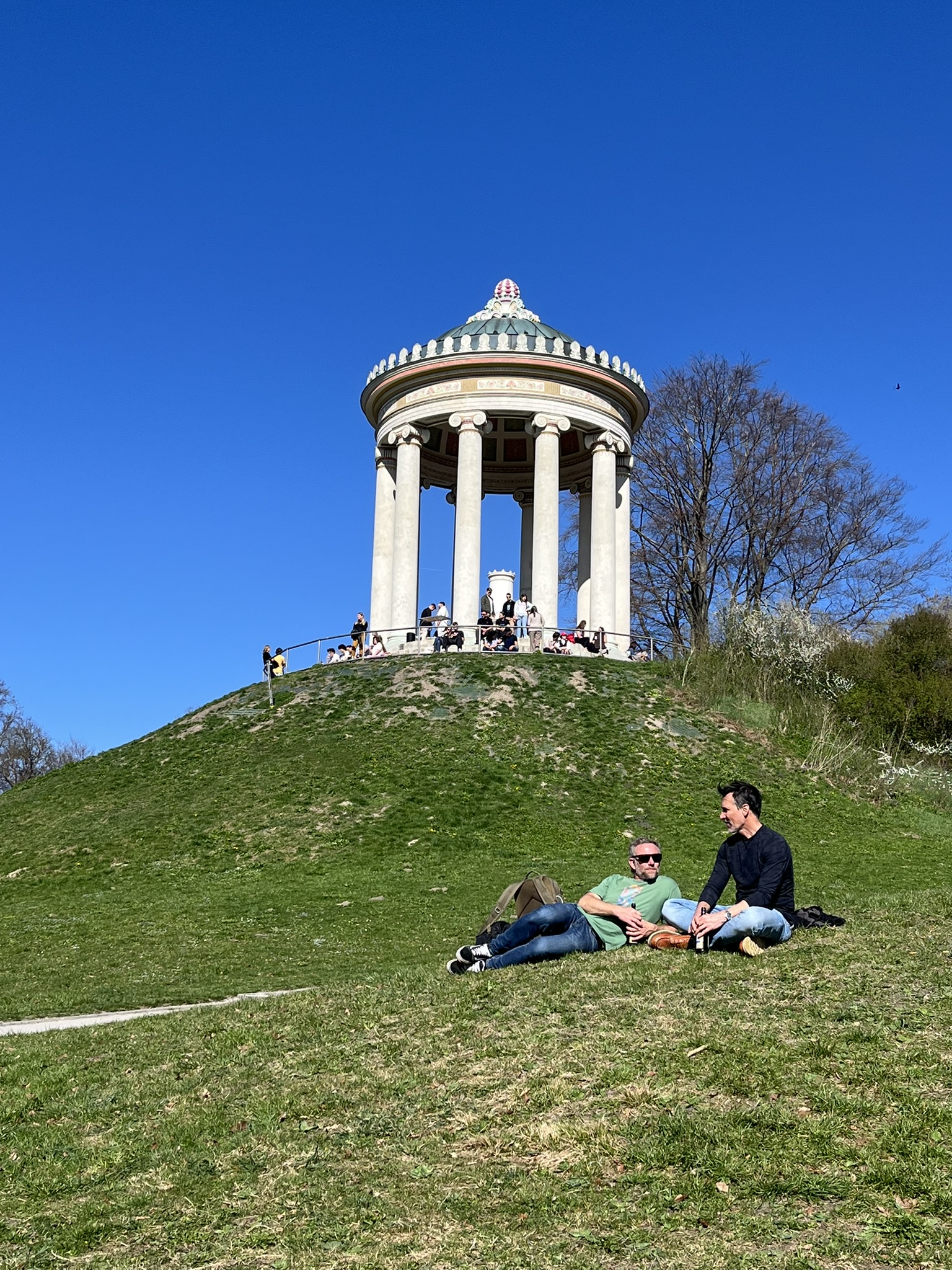
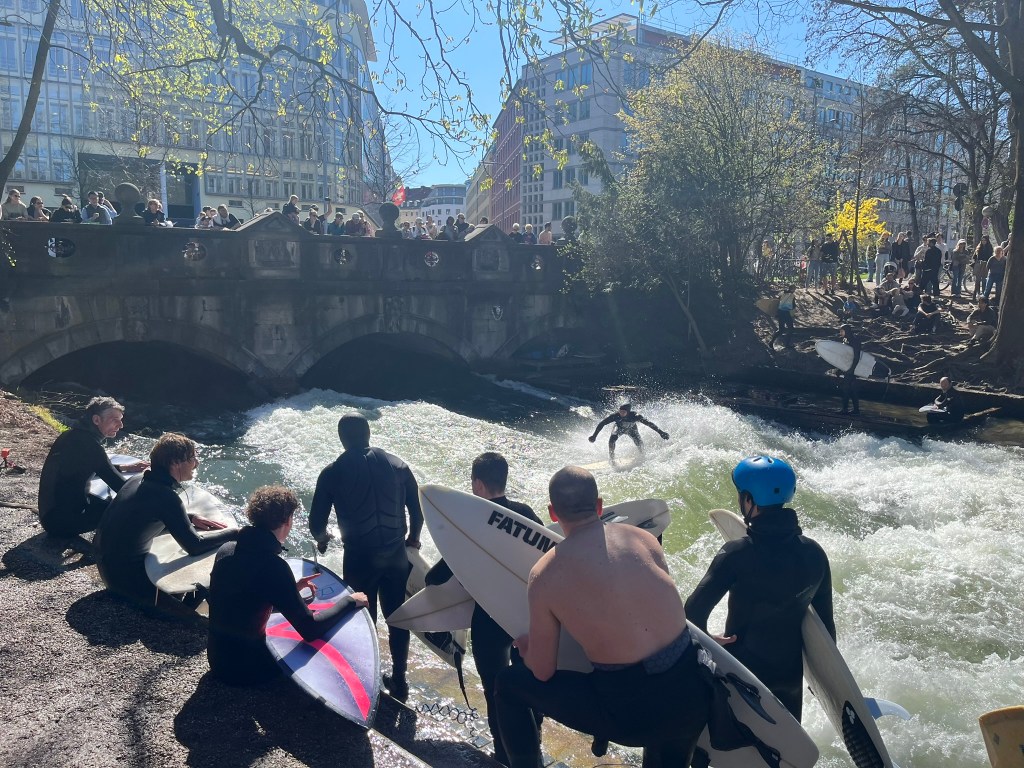
Spend a sunny day walking through the English Gardens to see brave wet-suited surfers on the man-made river waves and stop at the Biergarten am Chinesischen Turm (beer garden at the Chinese tower) for a fresh-baked pretzel and a mug of beer, Maracuja (passion fruit) juice with water, or Johannisbeere (black currant) juice with water. Kids can play on the jungle gym while adults chat and people-watch, all while listening to the lively oompah band playing from the second level of the tower.
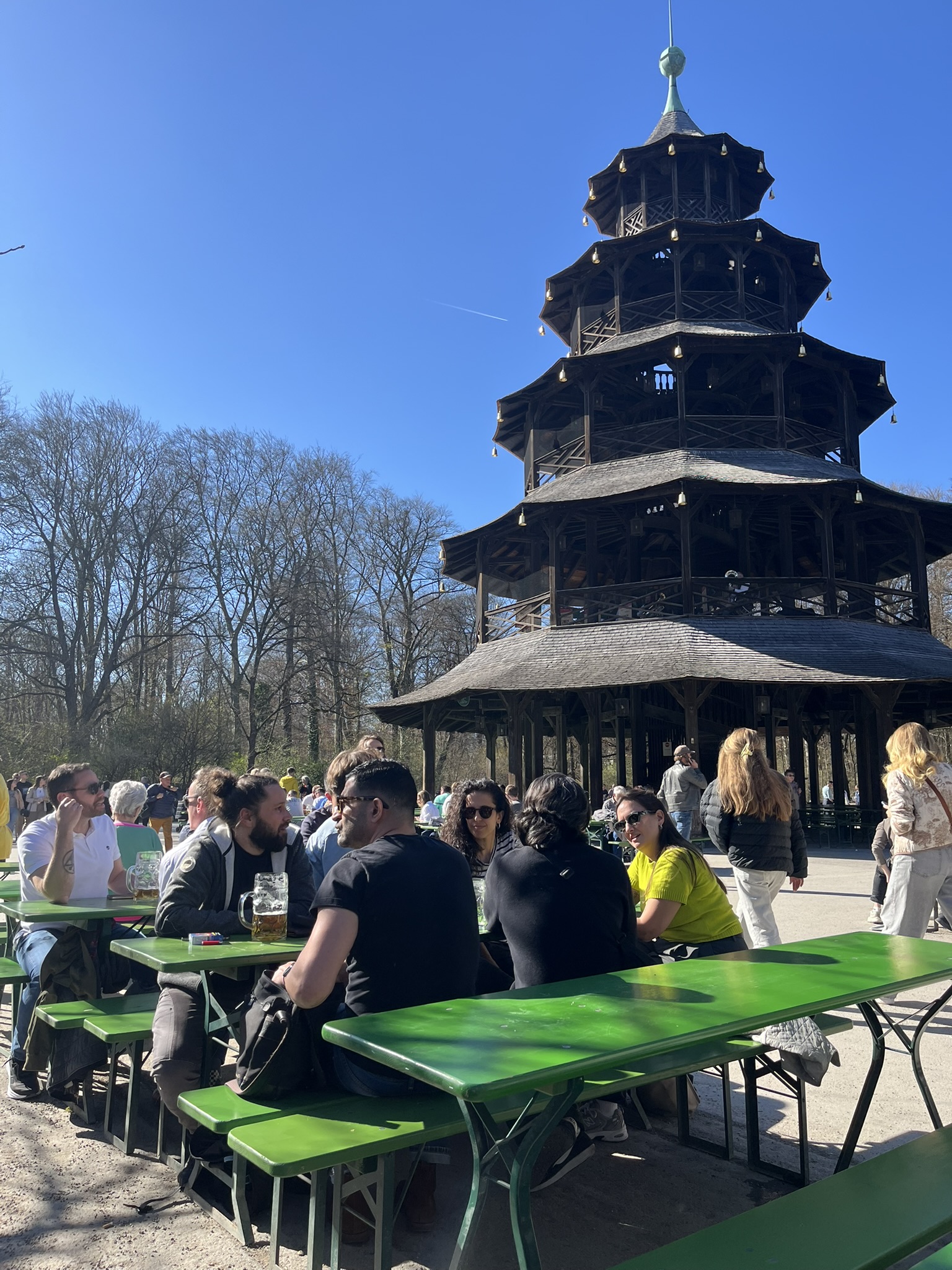
On a nice day, the English Gardens fills with picnickers, volleyball players, surfers, and groups of friends.

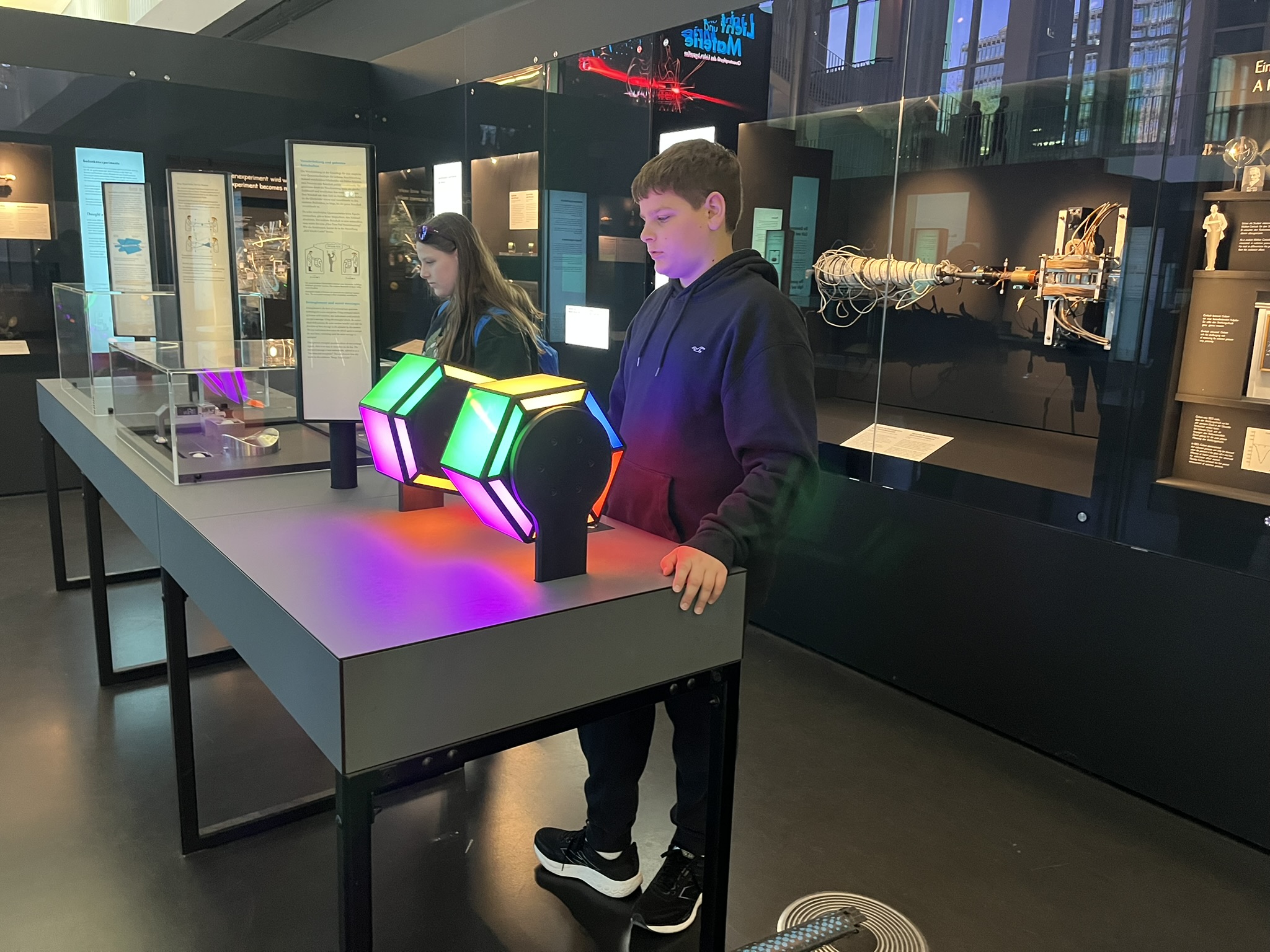
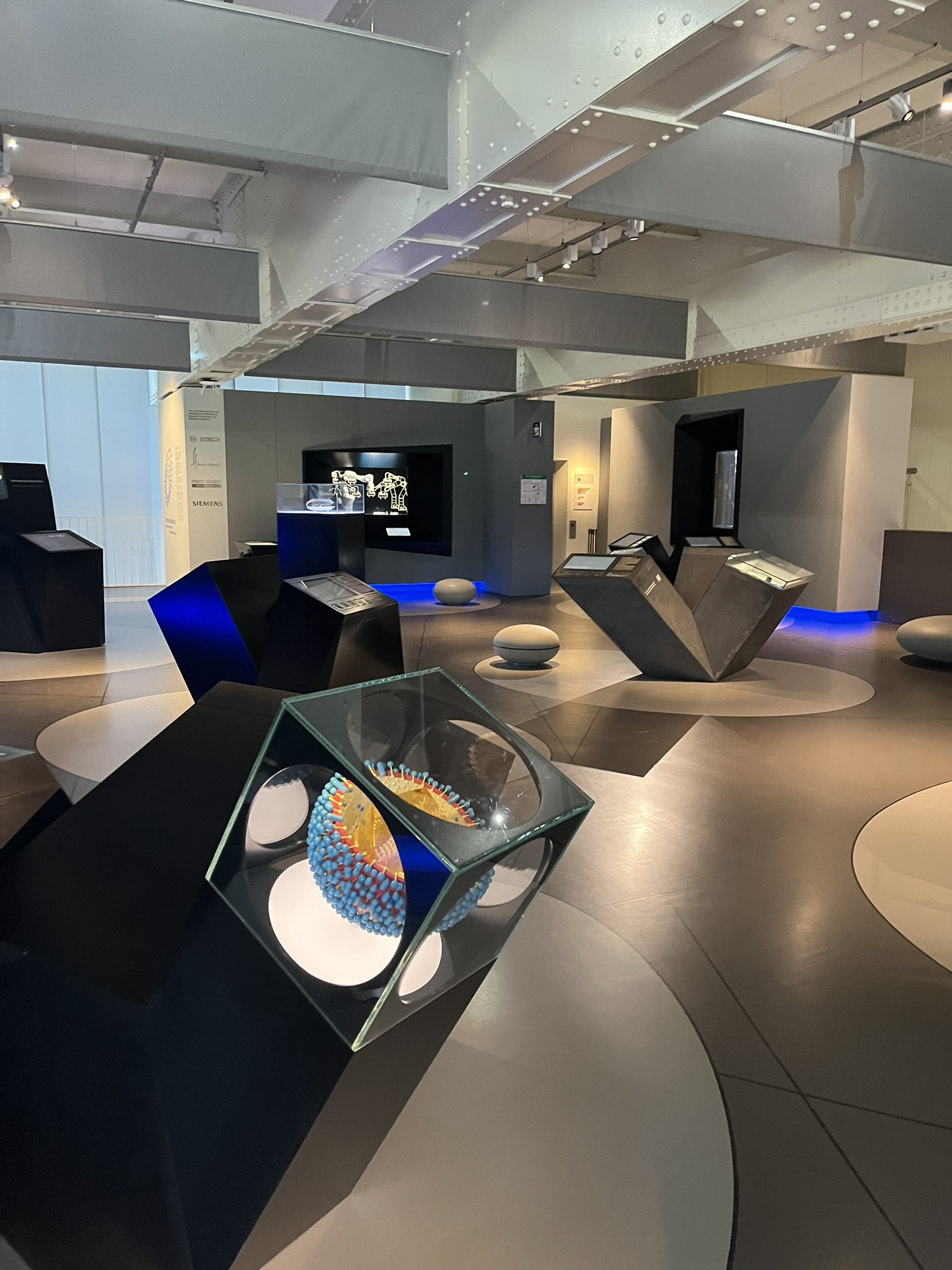
For a dose of education, head to the Deutsches Museum, one of the world’s largest natural science and technology museums. Through hands-on experiments and interactive exhibits, explore the physics of light and sound, observe chemical reactions, and learn about human body physiology. An enormous aviation center and historic airplane hangar allow visitors to climb into cockpits and pilot model airplanes. In the Musical Instruments exhibition, try your hand at playing the theremin—an electronic musical instrument played by placing hands in the air between two antennas that sense the hands’ positions and control frequency and volume.

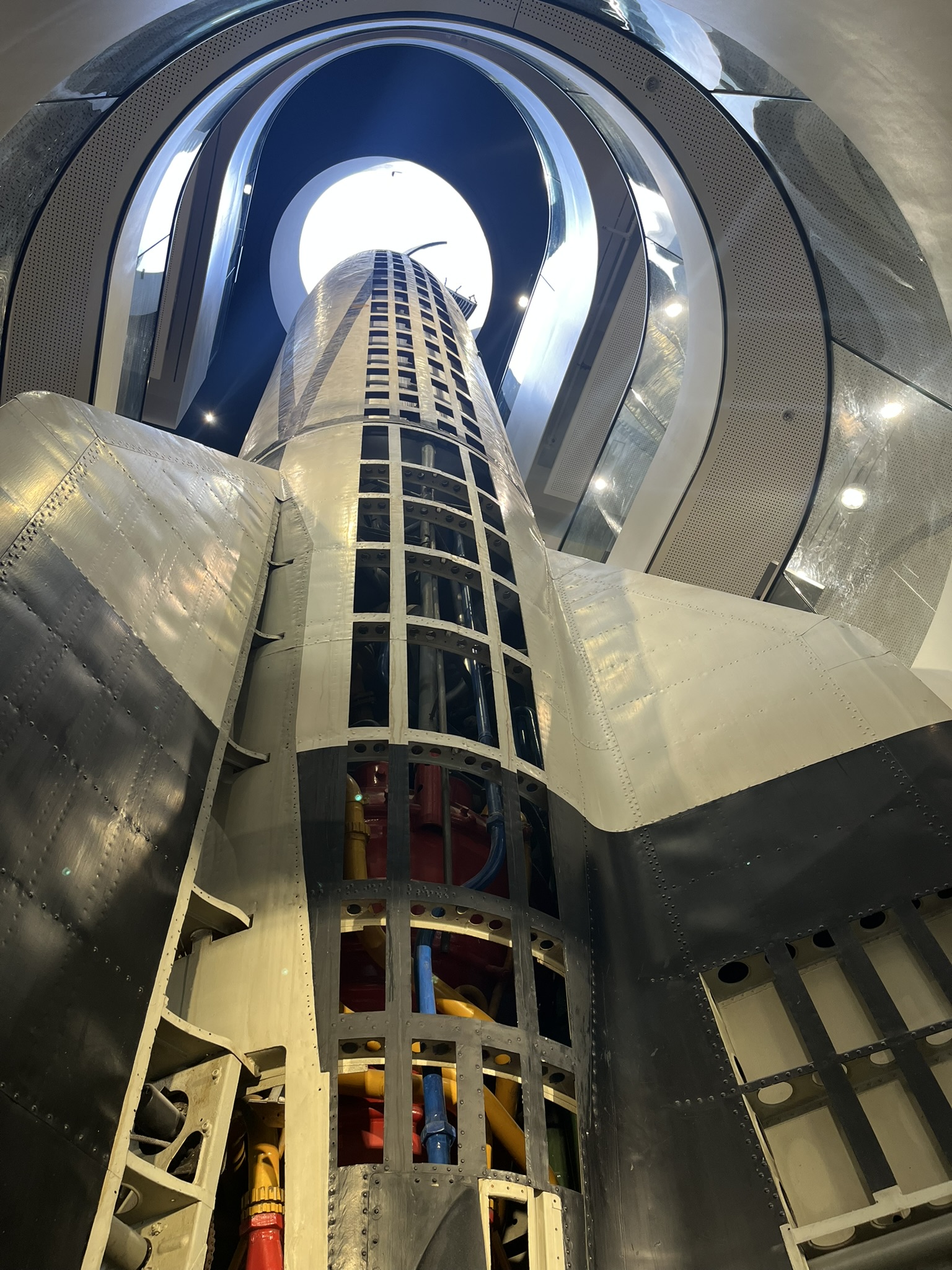
Deutsches Museum interactive exhibits make learning fun.

After two nights in each city—Davos, Switzerland; St. Anton am Arlberg, Austria; and Munich, Germany—a flight out of Munich Airport concludes an adventure exploring towns in three different countries all within one week. Thanks to Eurail’s flexible Global Pass, it is a fantastic way to get a taste of multiple countries with just one set of airline flights!

Eurail offers speedy and smooth transportation, and window seats to beautiful scenery.

Looking for more ski opportunities? Visit bestofthealps.com to learn more about top ski resorts that help define and cultivate Alpine culture. Best of the Alps is a collection of 9 Alpine resorts that showcase mountain village magic and charm in Switzerland, Austria, France, and Italy. For more than 30 years, the Best of the Alps organization has encouraged exploration of the cultures, communities, traditions, natural wonders, and distinctions of these remarkable Alpine destinations: Chamonix-Mont-Blanc and Megève in France; Cortina d’Ampezzo and Courmayeur in Italy; Crans-Montana and Davos Klosters in Switzerland; and Kitzbühel, Lech Zürs am Arlberg, and St. Anton am Arlberg in Austria.
Biting Into Basel

Wedged between Germany and France, this northern Swiss city abounds with traditional restaurants offering classic fare and Old World flair

By Randy Mink

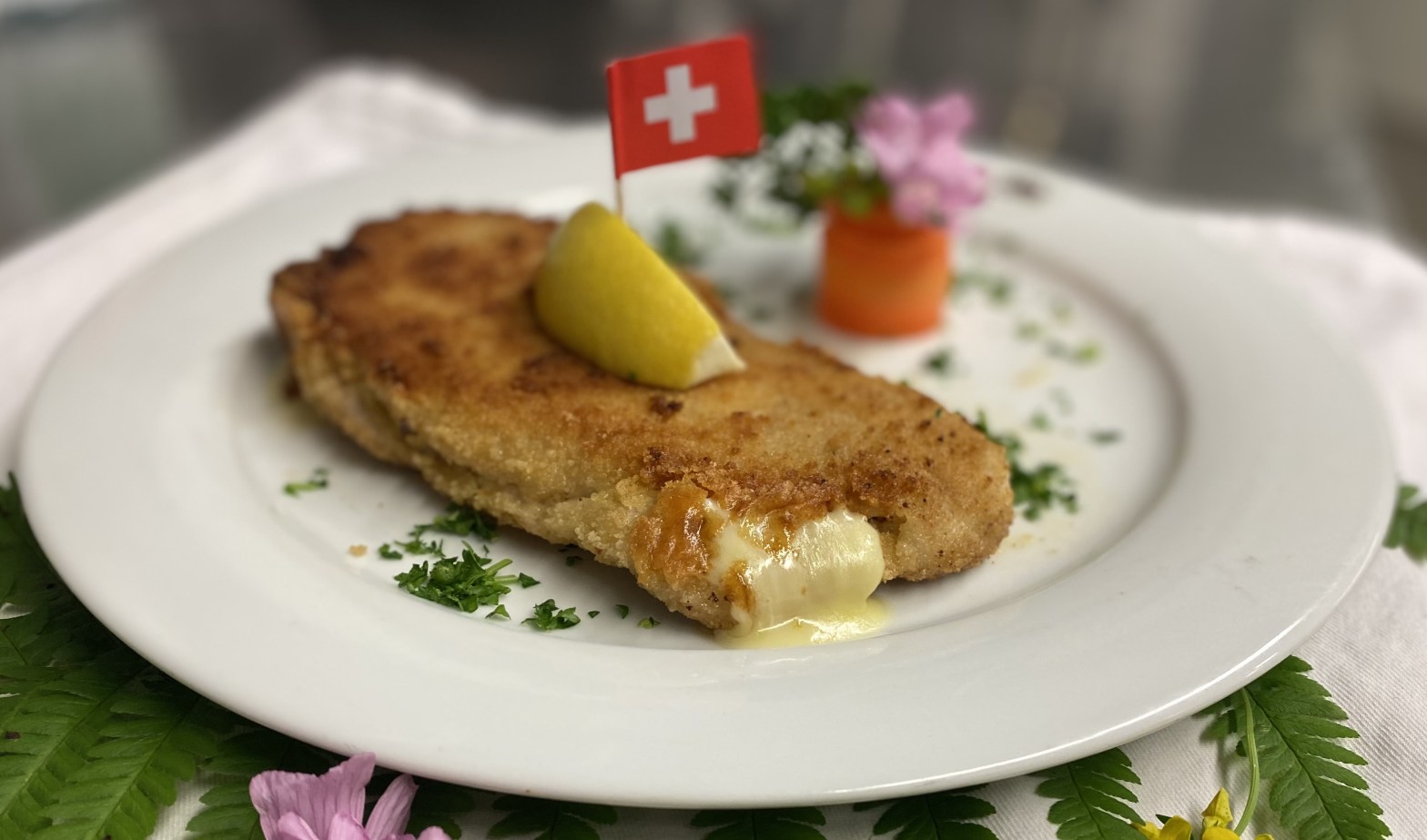
Served piping-hot and oozing with cheesy goodness, the veal cordon bleu at Zum Gifthüttli restaurant is something to savor, even drool over. Lunch in the wood-paneled dining room remains the warmest memory of my visit to Basel, the third-largest city in Switzerland.

After disembarking there from my week-long Rhine River cruise, I was most looking forward to exploring the medieval Old Town with its museums, churches, riverside promenades and specialty shops lining atmospheric alleyways paved with cobblestones. What turned out to be just as inviting, though, were the traditional, pub-style restaurants scattered about the historic core.

Cordon bleu is the house specialty at Zum Gifthüttli. We ordered the Classique, a juicy, golden-breaded schnitzel filled with ham and melted cheese, taking advantage of the Tagesteller (“daily plate”), a deal for 36.50 Swiss francs (about $43) that included french fries, pumpkin soup and dessert.

Gifthüttli, a traditional restaurant in Basel’s atmospheric Old Town, offers dining in the main-floor Bierstube, the upstairs Weinstube and at outdoor tables ideal for people-watching. (Randy Mink Photo)

Zum Gifthüttli’s menu lists cordon bleu variations, like the one with ham, cheese, asparagus, cherry tomatoes and Hollandaise sauce. Another consists of chorizo, mozzarella and herbs. The Florentiner has ham, cheese, spinach and a fried egg on top, while the Schweizer features two Swiss delicacies—Bündner air-dried ham and scrapings of raclette cheese. Opting for pork cordon bleu, instead of veal, can shave a bit off your bill, but any meal in Switzerland will cost much more than at home.

Guests at Gifthüttli can dine in the main-floor Bierstube, upstairs in the white-tablecloth Weinstube or, in warm weather, at outdoor tables offering the bonus of people-watching in Old Town’s pedestrian zone.

The white-tablecloth Weinstube at Gifthüttli offers a refined atmosphere. (Photo credit: Basel Tourism)


Fans of cordon bleu and antique charm also gravitate to Old Town eateries like Zum Braunen Mutz and Restaurant Löwenzorn. The latter offers tables in its historic rooms and in the idyllic courtyard garden, where blankets, furs and electric heaters keep patrons toasty in cooler weather. Löwenzorn favorites include the wienerschnitzel and traditional Swiss fondue.

Löwenzorn, a traditional restaurant in Basel’s Old Town, offers seating in historic rooms and in the courtyard garden. (Photo credit: Basel Tourism)


Restaurant Kunsthalle, a sophisticated but friendly Old World restaurant in the same building as the Kunsthalle Basel contemporary art museum, every winter opens its Fondue Stübli, a cozy fondue chalet next to the landmark Tinguely Fountain. Additional city-center spots for fondue (and other Swiss classics) are Walliserkanne and Safran Zunft.

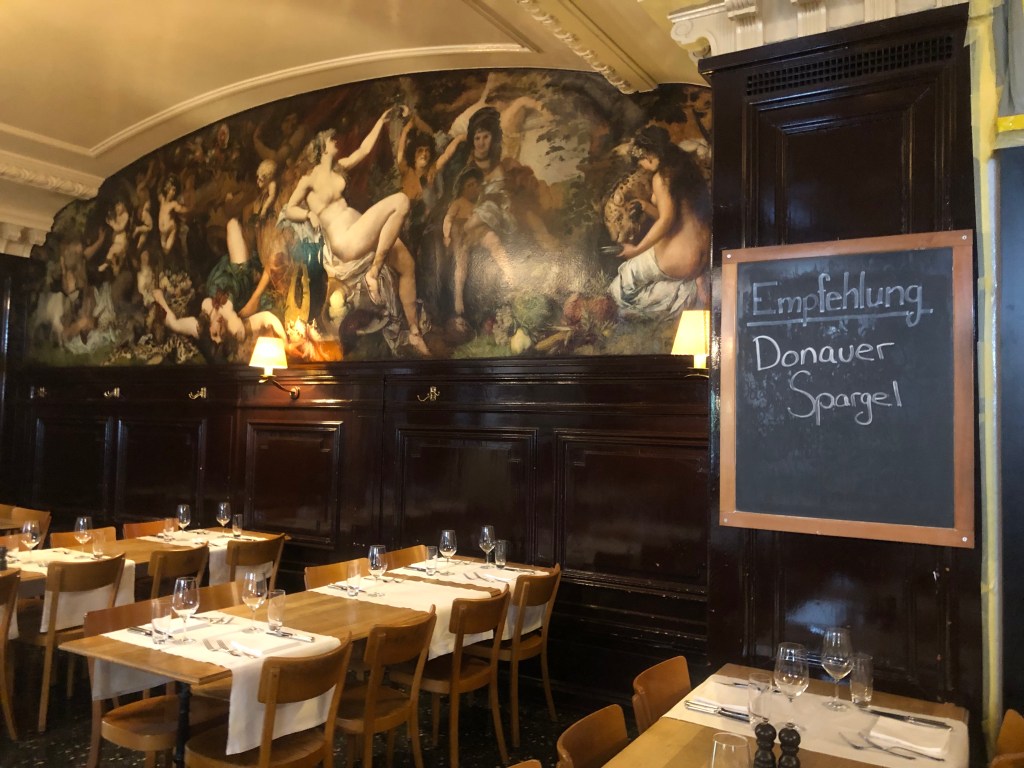
Patrons at Basel’s Restaurant Kunsthalle enjoy an Old World atmosphere in the vaulted Schluuch room. (Randy Mink Photo)


On our springtime visit to Restaurant Kunsthalle, we had a lunch of pasta amidst dark wood and classical cherub murals in the cozy, vaulted Schluuch room. The more formal “white” room overlooks the chestnut tree-shaded patio, one of Basel’s prime spots for alfresco dining. The Kunsthalle’s menu reveals typical Swiss fare, including Zürcher Geschnetzeltes (veal strips in a sauce of white wine, cream and mushrooms) with rösti, the ubiquitous Swiss version of hash browns offered at most restaurants that serve french fries.

No discussion of traditional dining spots is complete without a mention of Gasthof zum Goldenen Sternen, Basel’s oldest restaurant. Though it’s been at its current riverside location for only 50-some years, it date backs to 1412. In the 1970s the ancient building was dismantled and rebuilt stone by stone along with the original ceiling paintings and all the wood paneling. Highlighting the menu are highly regarded fish dishes—I had the lightly fried salmon filet with linguine. It also offers lamb shank, steaks and wienerschnitzel, among other entrees. The restaurant looks out on the Rhine River, and there’s outdoor seating under trees on the riverfront promenade.

Gasthof zum Goldenen Sternen, Basel’s oldest restaurant, enjoys a setting on the Rhine River. There is seating under trees on the riverfront promenade. (Photo credit: Basel Tourism)


The Goldenen Sternen (“Golden Star”) is located in the picturesque St. Alban quarter, a quiet neighborhood noted for its patrician townhouses, half-timbered buildings, narrow streets and a stream that powers the waterwheel at the Basel Paper Mill. Now a fascinating museum about the history of paper making and printing, the medieval mill, just steps from the Rhine and not far from Old Town, was one of many in St. Alban that made Basel a book publishing center for centuries.

Though skeptical about how interesting a paper museum could be, we found it eye-opening. Especially fun was watching demonstrations of how a pulpy goop is transformed into paper. We had a chance to make our own sheet as a souvenir. And we were surprised to learn that until the 19th century paper was made almost entirely from old rags and ropes that were sorted, cleaned, cut into strips and left to decay in a rag cellar’s rotting vats. There are even exhibits on the evolution of toilet paper, which was considered a luxury product when first introduced in the late 1800s.

Visitors learn about the history of paper and witness the paper-making process at the Basel Paper Mill, a museum housed in a medieval paper mill. (Randy Mink Photo)


Claiming nearly 40 museums, Basel has a museum for every interest, showcasing subjects ranging from cartoons and musical instruments to city history and Jewish culture. Most visited are its two leading art museums.

Kunstmuseum Basel, whose three-building complex holds the world’s oldest municipally owned public art collection, presents seven centuries of European art and boasts the world’s largest collection of paintings by the Holbein family. On the outskirts of Basel, Fondation Beyeler, comprising a main building designed by noted architect Renzo Piano, houses some 400 masterpieces of modern and contemporary art, including pieces by Picasso, Monet, Matisse and Cezanne.

Kunstmuseum Basel holds an impressive collection of paintings by Hans Holbein. (Photo credit: Basel Tourism)


The Basel Historical Museum, with exhibition halls under the vaulted ceilings of a former 13th century church, focuses on the intersection of the cultures of Switzerland, France and Germany. (From Basel, Germany and France are just a hike or bike ride away. Visible on the horizon are the Vosges Mountains of France and Germany’s Black Forest.)

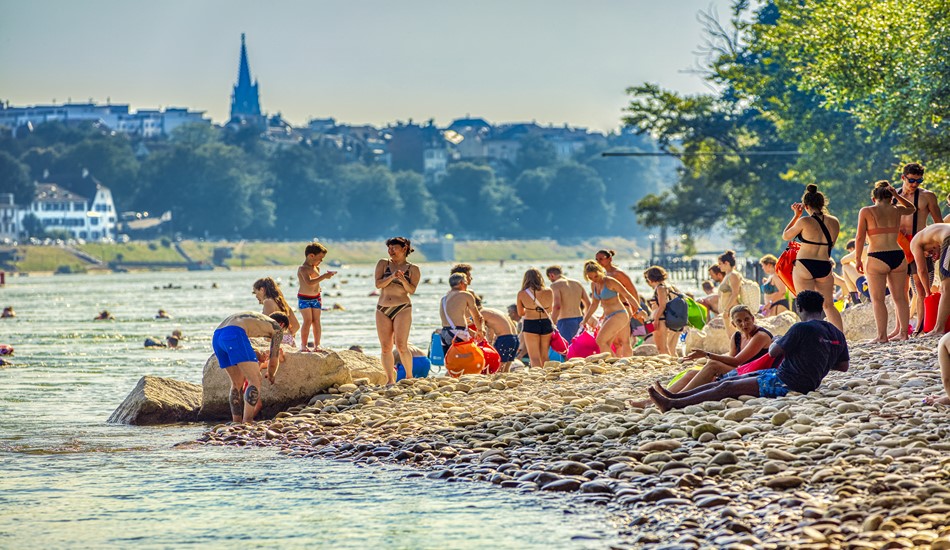
In the summer you’ll see people sunning on the riverbanks and swimming or floating in the river. Basel Tourism offices and retail stores sell something called a Wickelfisch, a brightly colored, fish-shaped waterproof bag for keeping your clothes dry as you whoosh down the river past city landmarks. It’s not to be used as a flotation device.

Frolicking in the Rhine River is a popular pastime with tourists and locals alike. (Photo credit: Basel Tourism)


Sightseeing cruises provide another way of experiencing the Rhine. Or you can take one of the small passenger ferries that shuttle back and forth between the larger southern part of the city (Grossbasel, or Greater Basel) to the northern side (Kleinbasel, or Little Basel) at four crossing points. Attached to a cable that spans the river, the non-motorized boats are guided deftly by expert ferry operators.

We took the five-minute ride from St. Alban to the opposite bank, then walked along the riverside path for 11 minutes before reaching the Museum Tinguely, a showplace for monumental mechanical sculptures created by world-renowned artist Jean Tinguely (1925-1991), who grew up and studied in Basel. Buttons allow visitors to activate some of the playful, mischievous and wacky creations, causing them to rattle, shake and whirl.

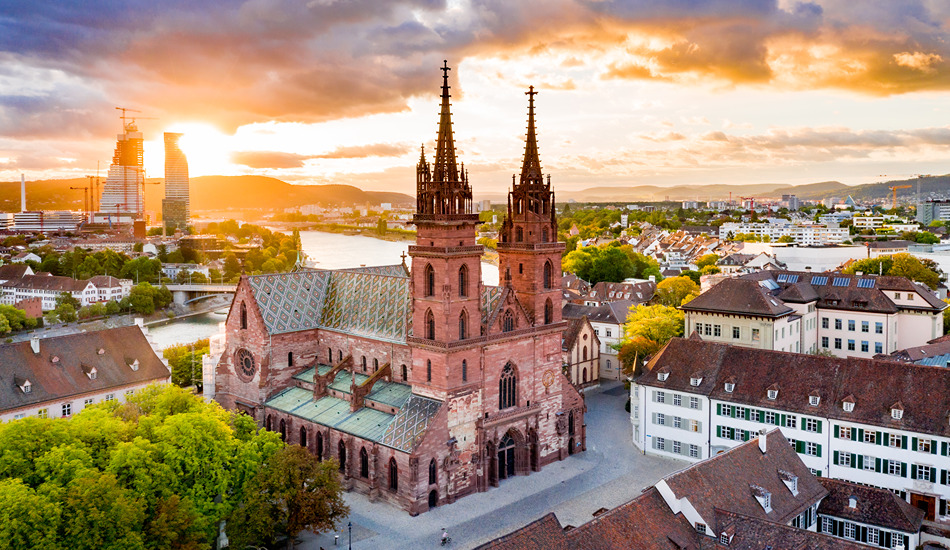
Sweeping views of the Rhine can be enjoyed from the tree-shaded terrace of Basel Cathedral. Sporting impressive twin towers, it is the city’s most prominent landmark. Built mainly in the 12th and 13th centuries, the Romanesque-Gothic church contains the tomb of the Dutch humanist Erasmus (1466-1536), who lived in Basel. Ambitious types can climb the towers’ narrow staircases (about 250 steps).

The twin spires of Basel Cathedral dominate the skyline of Basel, which lies on the Rhine River in northern Switzerland. (Photo credit: Basel Tourism)

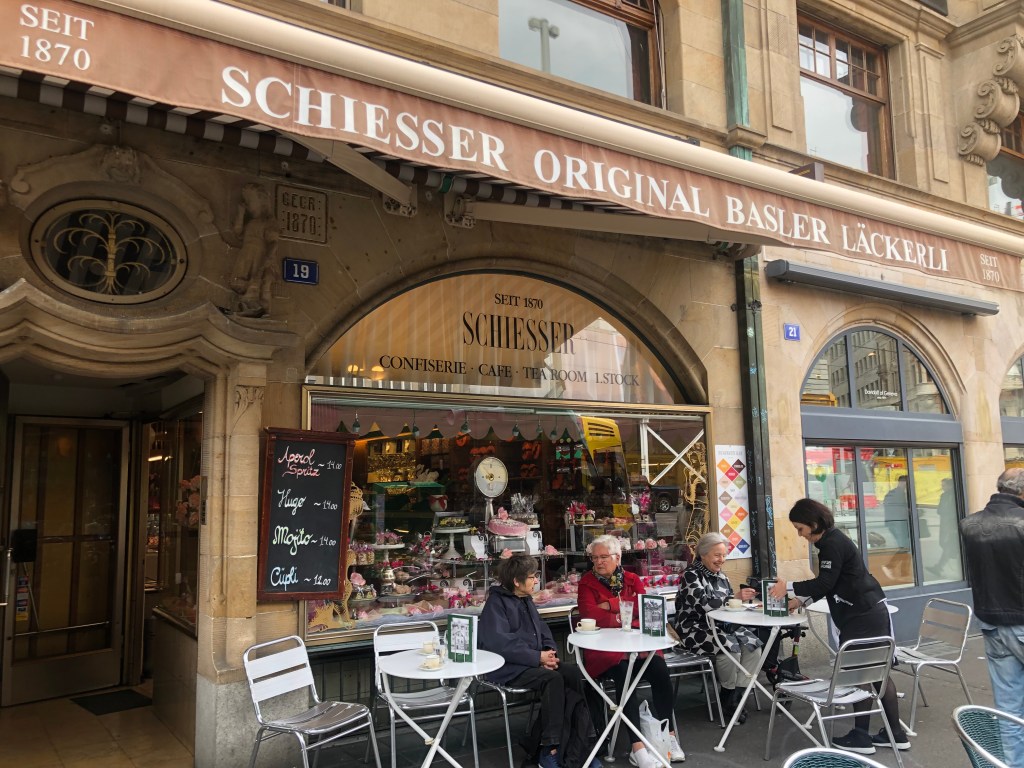
One of the best places to take a break from sightseeing is Confiserie Schiesser, a cafe/tea room/confectionery with an on-site chocolate factory and bakery. Founded in 1870 and now in its fifth generation of family ownership, Schiesser faces Old Town’s vivid red Rathaus (Town Hall) and market square. A tantalizing array of chocolates, cookies and pastries tempts the sweet tooth. Distinctive to Basel are the Basler Läckerli, a ginger cookie made with honey, spices, almonds, and candied orange and lemon peel.

Confiserie Schiesser, a cafe/tea room/confectionery founded in 1870, is famous for its chocolates, cookies and pastries. (Randy Mink Photo)


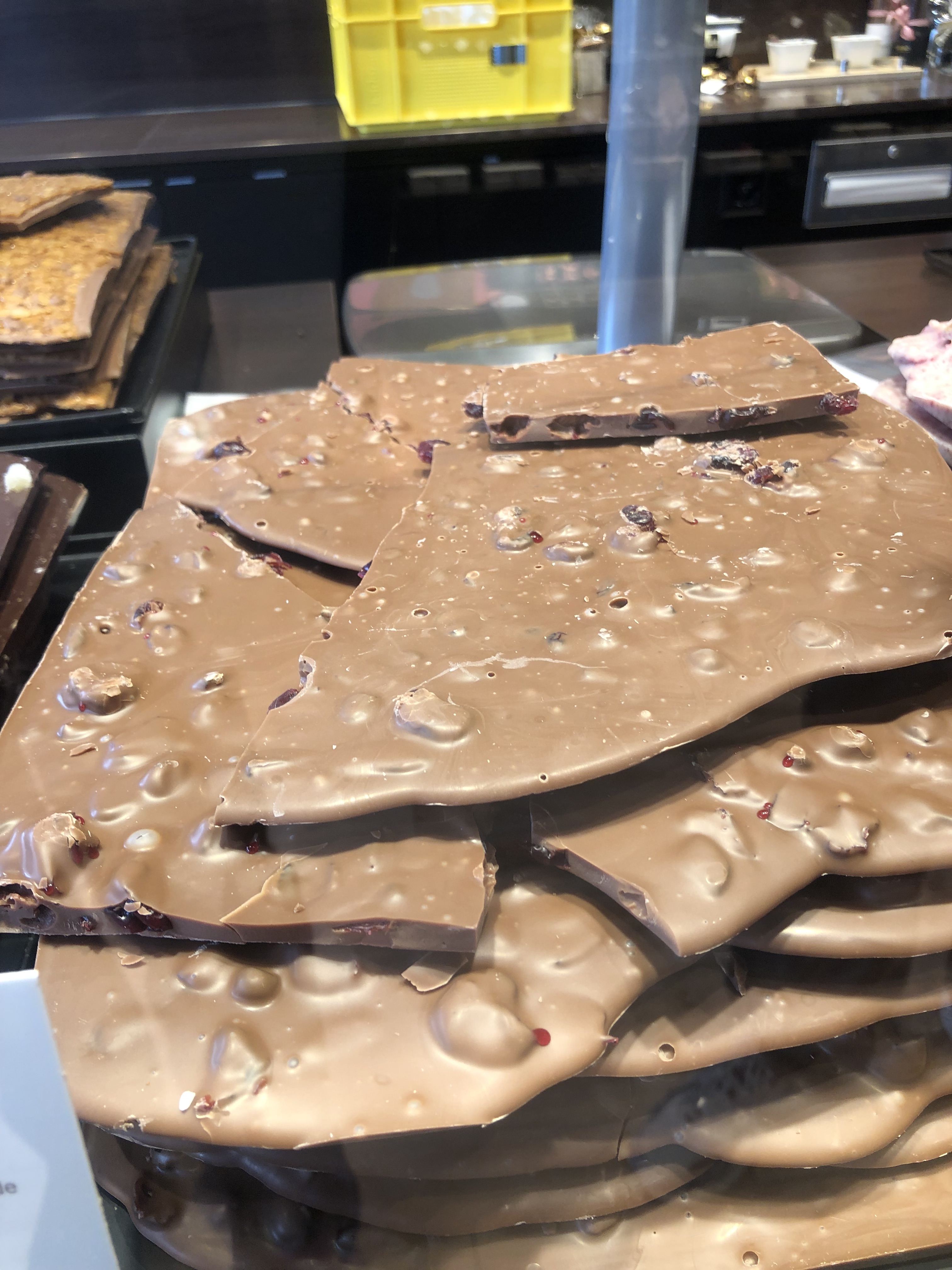
A few doors down from Confiserie Schiesser, high-end Läderach chocolatier sells slabs of melt-in-your-mouth chocolate called Frisch Schoggi. Sold by the gram, the uneven pieces are studded with everything from hazelnuts and almonds to cranberries and cornflakes.

Visitors in Basel’s Old Town can indulge their sweet tooth at Läderach, a high-end Swiss chocolatier. (Randy Mink Photo)


Indulging in Basel’s tasty treats is the epitome of Swiss bliss.

For more information, visit the Basel Tourism website, www.basel.com.

Chocolate Museum Is Sweet

By Marilyn Heimburger
Photos by Don and Marilyn Heimburger

As spring approaches, thoughts of chocolate come to mind, just because we’re always looking for an excuse to eat chocolate! As the saying goes, “Chocolate–it’s not just for breakfast anymore!”

After a recent trip to Cologne, Germany, and after visiting the Cathedral and Roman ruins, I added a trip to the Chocolate Museum to my itinerary. You’ll learn all there is to know about this treat and have the opportunity to taste and see why the ancients called chocolate the “food of the gods.”

Opened on Halloween Day in 1993, the museum was the idea of Dr. Hans Imhoff, an entrepreneur who was the head of the Stollwerck Chocolate Company of Cologne. The three-story museum is located on the banks of the Rhine, within sight of the Cologne Cathedral.

Designed to look like a ship in the harbor, its modern glass and metal architecture surrounds the historic central customs office, which was built in the 1890’s. The museum welcomes an average of 1,700 visitors a day and about 650,000 per year.

3,000-YEAR-OLD HISTORY

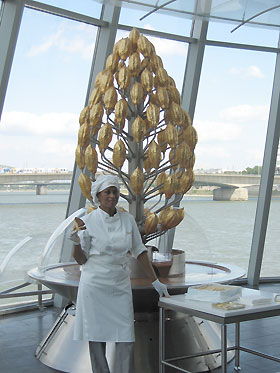
Visitors can see chocolate being made at the museum.

As you walk through the three-story museum, you’ll see exhibits covering the 3,000-year history of chocolate. Growing and harvesting raw cocoa is shown with photographs, harvesting tools and a full size log boat from Ghana. Next is a 100-square-meter tropical greenhouse containing real cocoa plants and more than 60 other rainforest species. You’ll learn that the flowers of the cocoa plant grow directly on the trunk of the tree, so that pollinating insects can find them more easily in the thick jungle!

Chocolate’s popularity began as a luxury drink. An extensive exhibit brings you through the pre-Columbian Olmec, Aztec and Mayan culture, where cocoa was the drink of the gods, and was sometimes used as currency, or “brown gold.”

Next you’ll see the beautiful porcelain and silver cups and pitchers that were crafted to serve this luxury item in 17th and 18th century Europe. The chocolate culture of the 19th and 20th centuries is depicted in a full-sized shop, with chocolate tins and boxes on display, as if you had stepped back in time.

Front and back of a Santa mold

Beautifully preserved chocolate vending machines and advertising posters give insight into the popularity of chocolate. A film room continuously shows old television ads for chocolate. Chocolate packaging from apparently any brand of chocolate that ever existed is on display. Even American brands of chocolate are represented, although Astrid Hage, press representative of the museum, admitted that it was difficult to find someone willing to eat the American-made chocolate in order to empty the packaging. She explained that the Europeans follow a different standard in their chocolate production, and that their formula produces a superior taste.

DECIDE FOR YOURSELF

You’ll have the chance to decide that for yourself in another part of the museum, where, thanks to the Lindt and Spruengli Company, a two-floor exhibit demonstrates the production of chocolate today. From the processing, roasting, grinding of the bean to the pouring of hollow molded chocolate figures and a truffle production line, this small-scale system makes about 400 kg of chocolate every day for visitors to see, smell and finally, to taste.

A nearly 10-foot tall chocolate fountain stands on the production floor, and a museum staff member stands ready to offer a waffle cookie dipped in the warm melted chocolate that pours from the spouts.

THERE’S MORE, TOO

Do you want more of the “food of the gods?” A gift shop offering chocolate, souvenirs and gifts is ready to serve you. The museum also has a restaurant with a view of the Rhine.

Admission fees are 6.50 EUR for adults. Children under six or visiting on their birthdays are free. All exhibit texts are in both German and English.

The museum is closed on Mondays. Check their web page for information on hours, tours and special events: www.schokoladenmuseum.de

The People and Places of Bruges

By Don Heimburger
Photos by the author

From the look of the crowds on the streets, it appears everyone has fallen in love with Bruges. And I visited in early April when there were fewer people visiting.

But that’s about the only negative thing you might be able to say about such a beautifully-preserved medieval city. It’s truly a must-see on any tour of Flanders, and you could easily spend several days visiting its wonders.

If Disney could have laid claim to Bruges, he would have: it’s that charming.

Bruges is easily walkable, but beware the cobblestone walks—make sure you have good walking shoes. Also, plenty of horse and buggies are for hire, or you can take a boat tour of the city or ride in a mini-bus.

UNESCO SITE
The whole of the city center is a historical landmark, designated by UNESCO as a World Heritage Site, and so it should be. It’s hard not to become enamored with Bruges, its twisting streets and alleyways, its network of canals, and its charm. It’s a complicated network of narrow passageways, brick buildings and waterways, but that’s what makes this city so fascinating. You’ll love it.

VISIT THE BEGUINAGE
In most cases, you’ll cross Minnewater Bridge to enter the Beguinage, founded in 1245. Now populated by nuns from the Order of Saint Benedict, you’ll see the beautiful courtyard garden, where yellow daffodils pop up in spring, the whitewashed house fronts that line the Beguinage, and the peaceful beauty of the area. A posted sign even asks visitors to be quiet and be beware of their surroundings.

THE BELFRY
In case of war—or fire, or anything—the belfry was where it was first noticed. The marketplace is still dominated by this high tower, and it looks out onto the bustling plaza where life comes together in Bruges. You can climb to the top of the belfry (it will cost you 366 steps), and get a good view of the town as well as the two statues in the square, one of Jan Breydel and one of Pieter de Conick, both heroes who resisted the French in 1302.

The Stadsschouwburg is the royal theater building dating from 1869 and is said to be Europe’s best preserved city theater. Behind the Gothic revival architecture is a palatial auditorium and an elegant foyer.

The Little Bear of Bruges, located in a niche in the Burghers Lodge at Poortersloge, a 15th century private club building, is an important city symbol. I tried finding it, to no avail, but perhaps you’ll have better luck. It’s worth a photograph.

Kempinski Dukes’ Palace, at Prinsenhof 8, now an excellent five-star luxury hotel, was a former 15th century Dukes of Burgundy castle, and features 93 rooms, including 22 palatial suites, of which six are historically listed. Each room contains original features from 1429, but they have been completely modernized with elegant furnishings and marble bathrooms, and the hotel offers the latest technology such as flat screen television and high speed internet. Even just a look from the outside at this hotel is impressive; it’s located at the end of a short street, and is easy to miss.

LAST REMAINING BREWERY
Bruges’ last remaining city brewery is De Halve Maan (The Half Moon), established in 1546; their specialty beer is called Brugse Zot, which refers to the nickname of the townspeople, conferred upon them by Maximilian of Austria. You can take a 45-minute tour of the brewery and museum; cost is 5.50 euros.
Churches are abundant and worthy of a look. There’s the Beguinage Church, the Episcopal Palace, the English Convent, Basilica of the Holy Blood, Church of the Holy Magdalena, the Military Chapel, Church of our Lady of the Pottery, and the Welcome Church of Our Lady (see the art collection inside including Michelangelo’s famous Madonna and Child, and the 15th and 16 century mausoleums of Mary of Burgundy and Charles the Bold). Saint James’ Church benefited from the Dukes of Burgundy and the many foreign merchants, and their gifts have left their glittering marks on the interior of this church. A guidebook, which you can pick up at the local tourism office in town or at the Bruges railway station, will sort out these churches and other points of interest for you. www.brugge.be/tourism

The Frietmuseum is all about the Belgian potato fry, located in the Saaihalle. Here you’ll learn all about the history of potatoes, and fries, and the condiments which are served with them. Kids will especially enjoy the fun things this museum offers, and you can even taste fries in the cellar of this medieval 14th century building.

WHAT ABOUT CHOCOLATE?
Belgian chocolates, and their history, are served up in good measure at the Chocolate Museum, a four-story compilation of everything chocolate. The museum explains chocolate started with the Mayans and Aztec civilizations in pre-Colombian Central America, and after adding sugar, was imported to Europe around 1500 AD. Chocolate as we know it became popular around 1800, and as they say, the rest is history. The museum is a must-see in Bruges at Wijnzakstraat 2.

To taste more fine Belgian chocolate, you’ll want to check out The Chocolate Line at Simon Stevinplein 19. Master chocolatier Dominique Persoone, one of the owners, is a dynamic chef with advanced ideas on the making and blending of chocolates and other flavors. Chef Persoone blends chocolate with such tastes as cigars, fried onions and passion fruit. His shop is one of only three chocolate shops listed in the Michelin Guide, and the shop’s customers include such top-notch restaurants as Comme Chez Soi, Oud Sluis and Hof van Cleve. He even has a new book out where he travels through Mexico in search of the origins of cocoa, visiting Maya settlements and discovering the secret of the first chocolate drink and today’s Pozol. If you happen to get to meet Dominique, you will enjoy his demeanor and his chocolates.
www.thechocolateline.be

Bruges is also known for its many guild halls, which are scattered throughout the town. Bruges Town Hall, built between 1376 and 1420, is one of the oldest in the Low Countries. A ceremonial staircase leads from the entrance hall to the first floor, where visitors can view the Gothic Chamber. This former council chamber continues to play an important part in the life of the city. The wooden, polychrome ceiling is decorated with a profusion of late-medieval carvings. The murals illustrating Bruges’ past were added during the chamber’s restoration in the late 19th century.

Where to stay? There are dozens of hotels, youth hostels, apartments and bed and breakfasts to choose from. The Bruges Tourist Office can supply a booklet listing these.

Bruges is colorful, inviting and lively, and the food and beer there is some of the best in Europe. You couldn’t find a better combination of history, fun and food. For more information, go to www.visitflanders.us or www.brugge.be

B is for ‘Brusselicious’

By Don Heimburger
Photos by the author and courtesy Visitbelgium.com

What’s a 13-letter word that starts with a “B” and combines the capital city of Belgium with the concept of excellent food?

“Brusselicious” is the 2012 theme for Brussels’ Gourmet Year, and a fitting description of this city of 1.1 million that boasts no less than 19 Michelin stars among its dozens of top restaurants.

In 2006 Brussels was the capital of Fashion and Design, followed soon after in 2009 as the capital of the Comic Strip. Now it becomes the city of Culinary Delights, but locals and in-the-know visitors to this cosmopolitan city, with German, French and Flemish influences, enjoy their Brusselicious lunches and dinners every day of the year.

FRENCH FINESSE, GERMAN PORTIONS
The old saying is that the Belgians cook their food with the finesse of the French, but serve it in generous German-sized portions. Some specialties of Belgian cuisine include moules frites (mussels and fries), Waterzoo (fish or chicken stew), Stoemp potato (potatoes and vegetables mixed together), and Salade Liégeoise.

So what’s cooking in Brussels in 2012?

There’s a fairly long list, but it all begins with Brussels’ traditional menus, which start with fresh meats and produce, and are then honed with a top chef’s creativity and skill. In Brussels this is just the way they do it. After all, they have a reputation developed over the years, that they refined plate after plate.

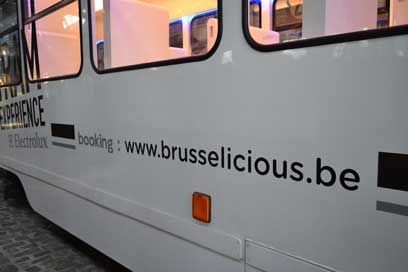
  • Brussels’ gastronomy will be on the move this year when a new designer tram will be introduced that will provide meals on board as guests roll around the city. Menus will be arranged by two-star chefs, and food will be served to 34 people on board the train during two-hour-long dinner parties. Departures start on Tuesdays and go through Sundays. This novel “meals on wheels” idea will appeal to the combination railfan and foodie.
  • As many as 35 giant artist’s reproductions will be introduced to the streets of Brussels during 2012 as well. Early in the year, artists were finalizing their creations in an old factory building called Carthago Delenda Est. Giant brussel sprouts, chocolate bars, mussels, pints of beer and giant cones of fries were masterfully being sawed, glued and screwed together to remind the city of its food heritage.
  • As many as eight themed dinners are being sponsored, from a Banquet des Miserables to mark 150 years of the finishing of Victor Hugo’s novel Les Miserables, to a Belgian Wine Growers Dinner, a Five Senses Dinner (sight, hearing, smell, taste, touch) and a Medieval Ommegang Banquet (Ommegang recreates a famous celebration of 1549 on the Grand Place in honor of Charles V and his son Philippe II).
  • The Bocuse D’Or Europe is the highly prestigious gastronomic competition held for 20 of the world’s top chefs this year in Brussels, who compete over a two-day period to claim top honors. The dozen best chefs then are entered into next year’s world finals in Lyon, France.
  • How about a Chocolate Week? With evening events, visits to chocolate workshops and a Chocolate’s Fair in town, what’s not to like?
  • A restaurant festival, publicized as the biggest gourmet event in Belgium, is coming to Brussels September 6-9. Imagine 100 restaurants and bars serving up their best dishes—with cooking on the spot—in a Brussels park.

TOP OF FOOD CHAIN
The 2012 culinary program doesn’t stop there, not for a city that loves to be at the top of the food chain. There’s a “Chipstands Festival” (you heard it correctly). So the city with some of the best frites (French fries) in the world will sponsor a competition and special events based on the fry. Would you like ketchup or mayo with that?

On a cooking platform 15 feet above the ground, Brussels’ star-studded top chefs will surprise and delight audiences with their “Dinner in the Sky” skills in the middle of the city. Also in August and September, the famed 650 tasty Belgian beers get their due during a weekend at the Grand’Place with tastings and more.

The city is also offering its own bottle of Brusselicious Beer, made by adding brown sugar to a bitter lambic. Lambic beer is produced by spontaneous fermentation: it is exposed to wild yeasts and bacteria that are said to be native to the Senne Valley, in which Brussels lies. It is this unusual process which gives the beer its distinctive flavor.

Other events are also planned, such as a Thai Food Festival, a Savoring Brussels Festival (dedicated to the flavors of fresh produce), and a Brussels Wine Weekend with open houses at some of the wine cellars and wine bars throughout the city.

Brussels’ ornate Town Hall

BUSINESS, BUT RELAXED
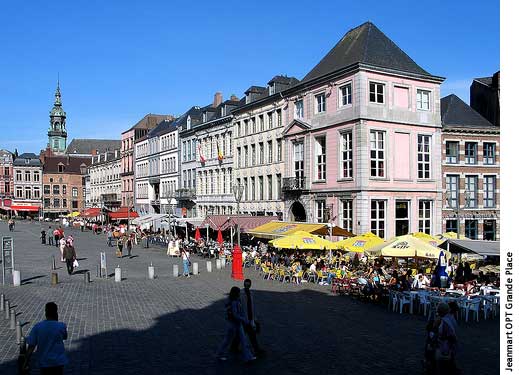
Brussels is, despite its European Parliament designation, a business center that appears to be relaxed at the same time. A tour of this multilingual city revolves around the Grand Place and its many gilded houses and the ornate town hall building (see it at night for a spectacular view).

Check out the Mont des Arts and its museums: the René Magritte Museum occupies the house in which the Belgian surrealist painter worked.  On the ground floor of the museum is the apartment where the painter lived and worked from 1930 to 1954;  exhibits of the artist are on two upper floors.

At the Belgian Comic Strip Center you can meet the comic strip character Tintin and his sidekicks, created by Belgian artist Georges Remi, who wrote under the pen name of Herge.

Walk to another part of the city and see the huge stone columns and a good view of the lower part of the city from the immense Palais de Justice, and visit the Atomium, with its gleaming spheres. It’s said to be “neither tower, nor pyramid, a little bit cubic, a little bit spherical, half-way between sculpture and architecture, a relic of the past with a determinedly futuristic look, museum and exhibition center; the Atomium is, at once, an object, a place, a space, a Utopia and the only symbol of its kind in the world which eludes any kind of classification.” The Atomium was the main pavilion and icon of the World’s Fair of Brussels in 1958.

If you’re in the market for shopping—or just window shopping—Brussels has it. Walk over to Avenue Louise and see its shopping arcade, or Boulevard de Waterloo, Rue de Namur or Avenue de la Toison d’Or for some upscale finds from classic to trendy.

Now back to Brusselicious food. One other very famous food delight is the Belgian waffle. I learned there are actually two types. One is the Belgian waffle, a light, fluffy waffle eaten with or without syrup and served at the more prestigious restaurants and hotels. Then there’s the thicker Liege waffle that is smaller, sweeter, heavier and more filling. You can find the heavier waffles served at stands everywhere in Brussels, usually with toppings such as whipped cream, strawberries, cherries, confectioner’s sugar, or chocolate spread.

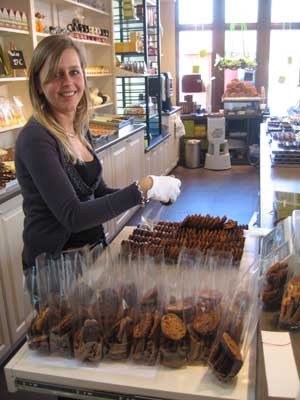
If Belgium has a national cookie it is the Speculoos. Originally created for children to celebrate Saint Nicholas day on December 6, the treat is now widely popular and often found along with a cup of coffee in restaurants and bars as a side treat.

So add waffles and Speculoos to the large selection of foods that keep visitors going back to this vivacious gourmet city.

And to think, all this high cuisine started with the lowly Brussel sprout, from which the city gets its name. It just goes to show how inventive the Belgians are in the kitchen. They’ve taken the art of preparing and cooking food to new heights over the last few decades. Some would call that a Brusselicious endeavor. I’d say it was a call for dinner…in Brussels, of course.

For more information, go to www.visitbrussels.be or www.visitbelgium.com.

IF YOU GO…
Brussels has a number of interesting districts to visit.  The Brussels Card is valid for 72, 48 or 24 hours and allows you to visit 30 Brussels museums. It includes a public transport ticket and a full-color guidebook, as well as discounts at some tourist attractions and stores. Go to www.brusselscard.be.

The 2012 Michelin Guide shows the following Brussels restaurants have earned Michelin stars:

 2 STARS 
Sea Grill
Comme Chez Soi
Le Chalet de la Forêt (New addition)

1 STAR 
Alexandre
Jaloa (New addition)
La Truffe Noire
La Paix
Bruneau
San Daniele
Kamo
Senza Nome
Le Passage
Bon-Bon
Michel
Terborght
‘t Stoveke