Discover Nürnberg’s Many Medieval Layers

Story and Photos by Alison Ramsey

Nürnberg, Germany, is full of rich medieval history, with plenty of myths and mystery. The largest city in the northern region of Bavaria, often referred to as the unofficial capital of Franconia, Nürnberg displays a unique Franconian identity in terms of its culture, architecture, cuisine, and historical political structures. Explore all angles and layers of the city to learn more about what makes Nürnberg unique.

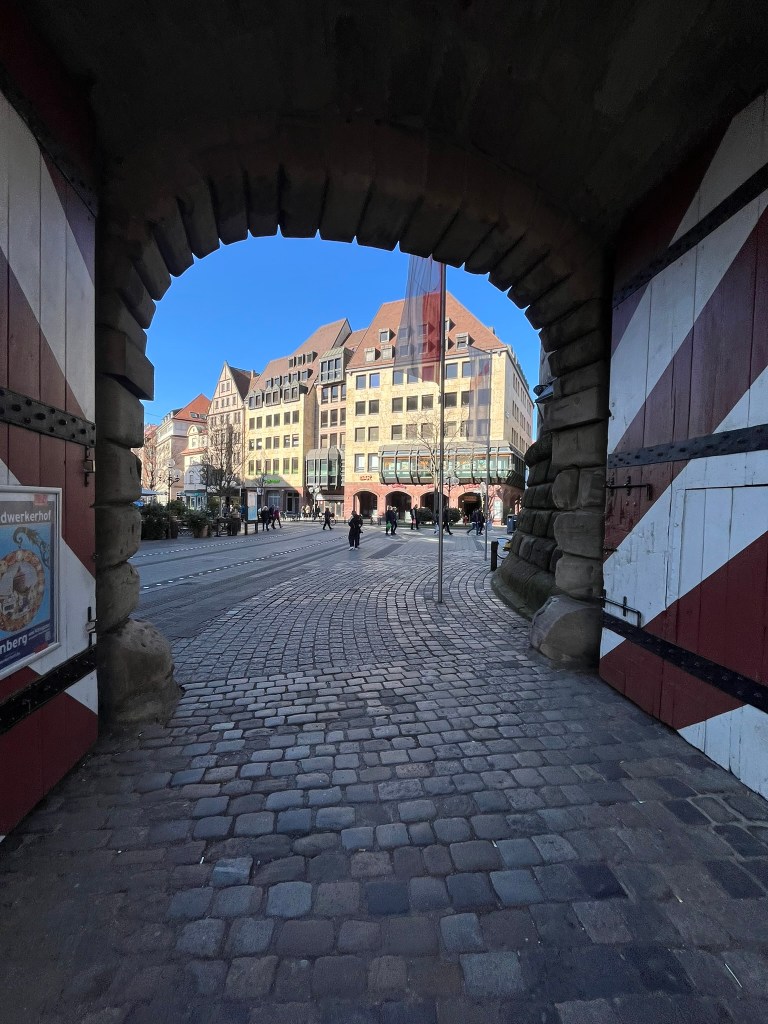
Nürnberg is easily entered through the Frauentorturm, directly across from the city’s main train station.

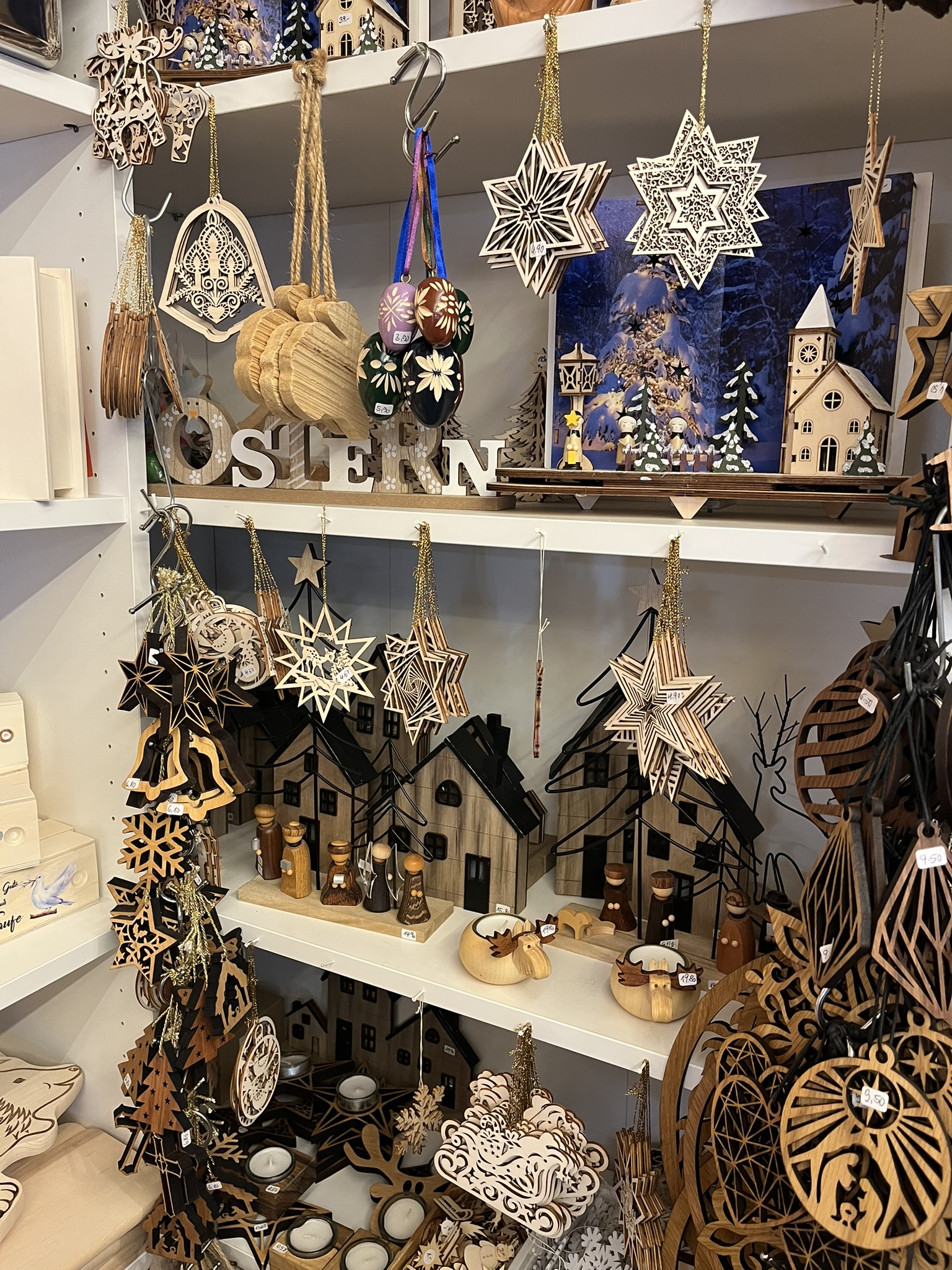
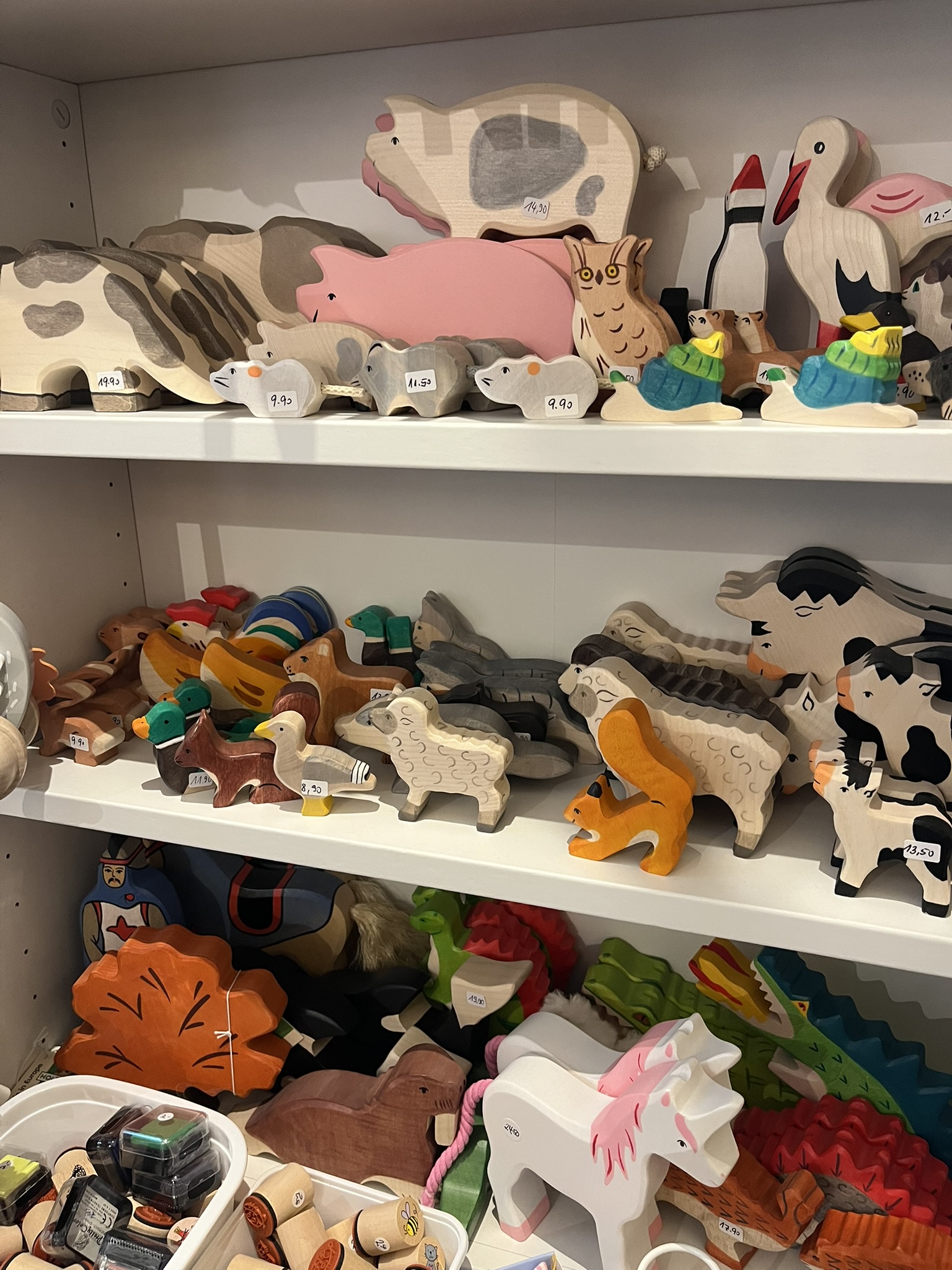
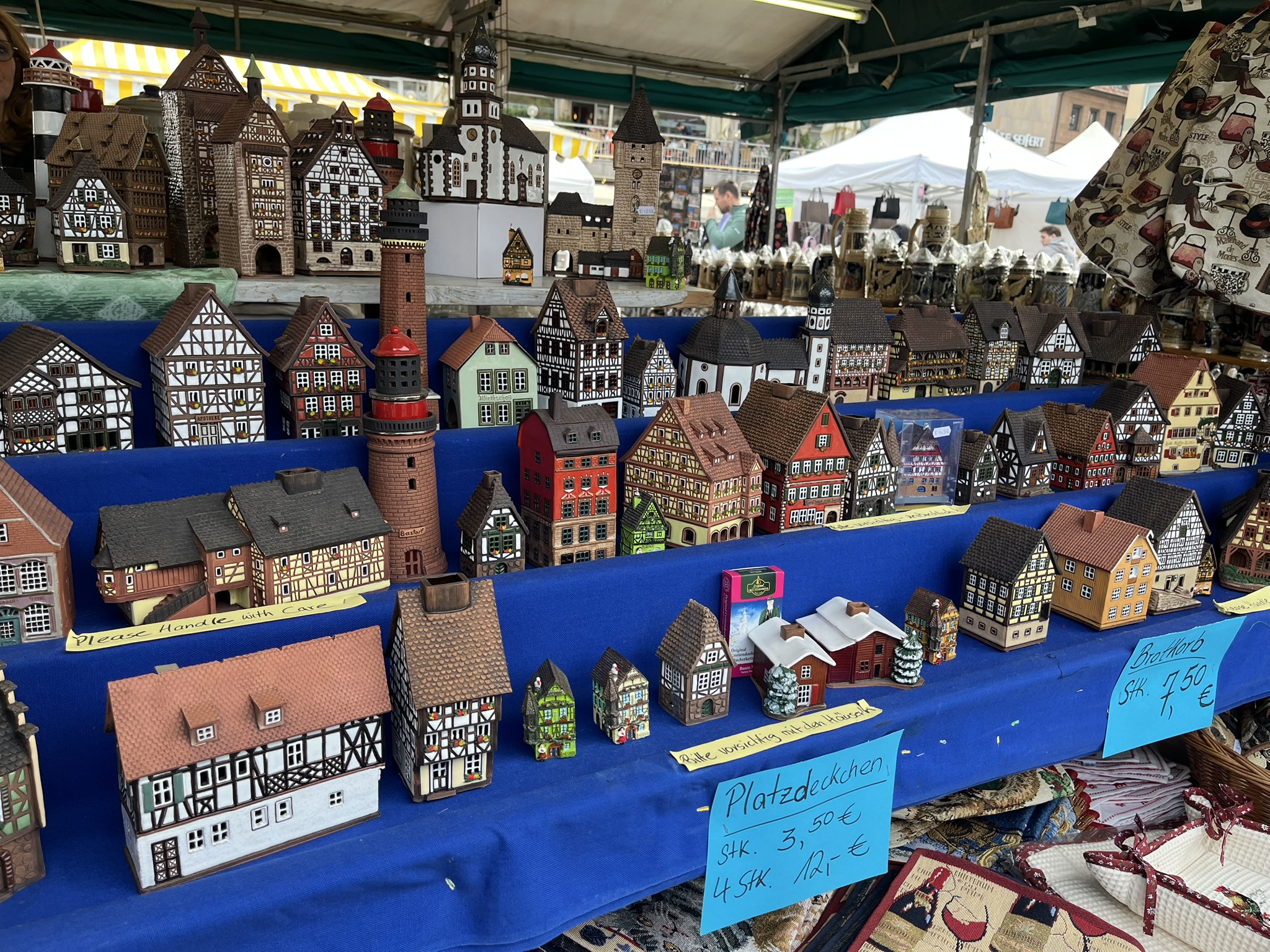
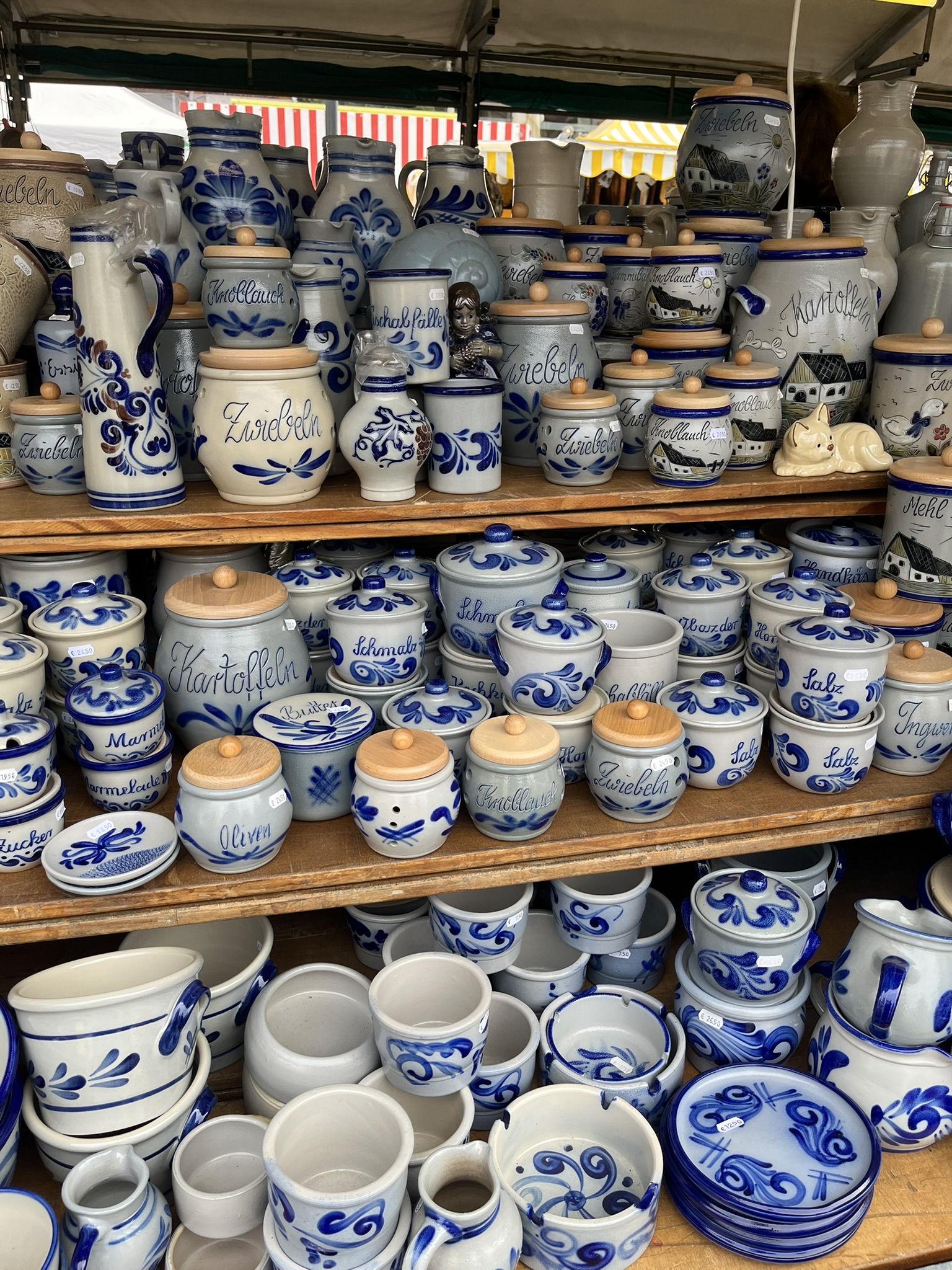
Enter the city through the base of the Frauentorturm (Women’s Gate Tower), and you’ll immediately find the first attraction in the initial interior lining. Craftsmen’s Courtyard is a collection of cottage industries behind the thick city wall, where small half-timbered workshops are labeled with antique signs and ornate metal fittings. Craftworkers here create pottery, glassware, candles, jewelry, leatherwork, and wooden wares. These traditional and unique gifts handmade by local artisans include leather bracelets, wallets, belts; carved wooden animals, toys, keychains, hand-carved pens, cutting boards, and kitchen utensils. Set amongst colorful flowering plants and bright-potted greenery, cafes and restaurants in this idyllic city segment serve tasty snacks, cakes, and invigorating coffee drinks.
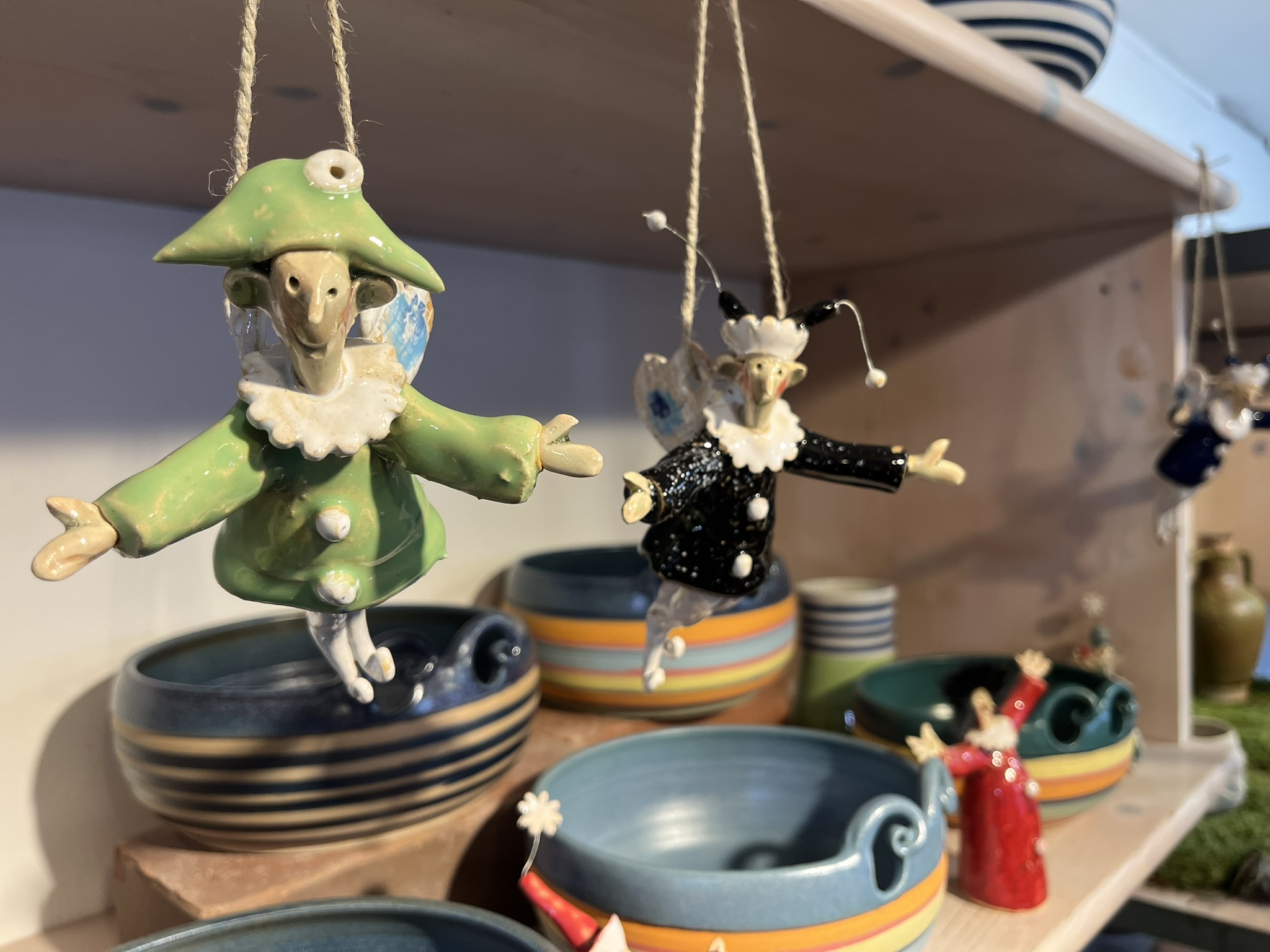
Handcrafted gifts and homemade treats await in the Craftsmen’s Courtyard.

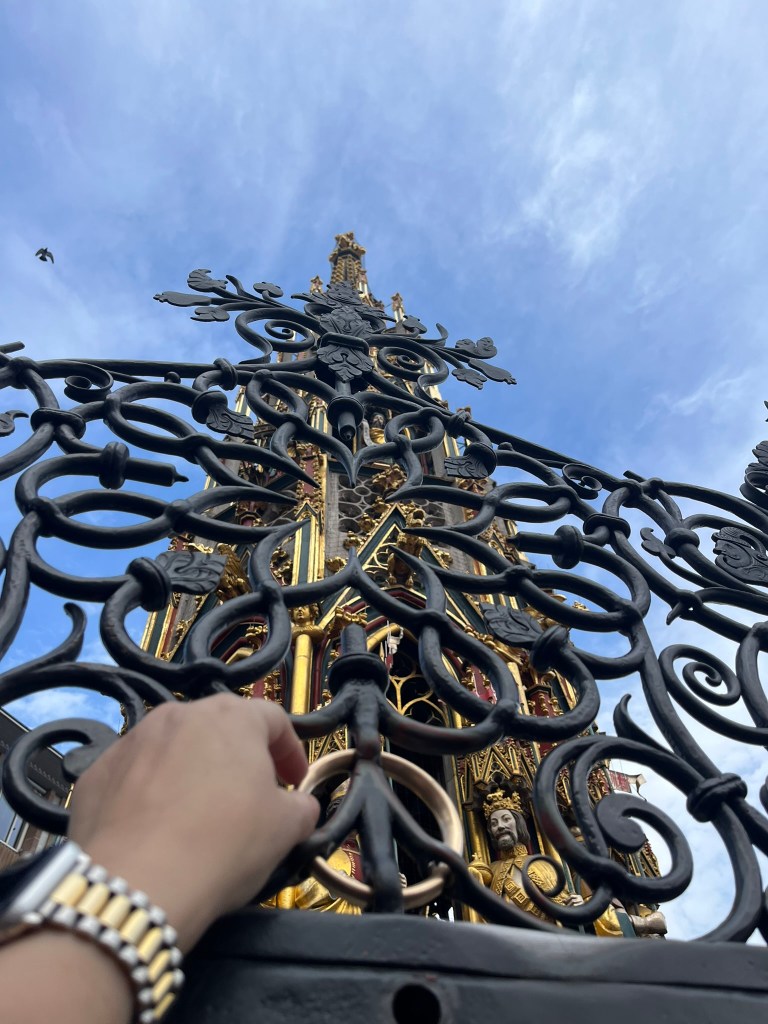
The Old Town’s Hauptmarkt (main market square) holds the famous Schöner Brunnen (Beautiful Fountain), an intricate 14th century 62-foot-high Gothic structure encircled by a metal railing. Forty stone figures on four of the piece’s many tiers represent the world’s varied beliefs and philosophical ideas about the Holy Roman Empire during the medieval period—in the form of church and secular leaders, evangelists, prophets, philosophers, and biblical characters. Set within the intricate railing design is a small golden ring, and legend dictates that turning this shiny brass ring three times fulfills wishes and brings good luck.  

Turn the Beautiful Fountain’s brass ring three times to make your wish come true!

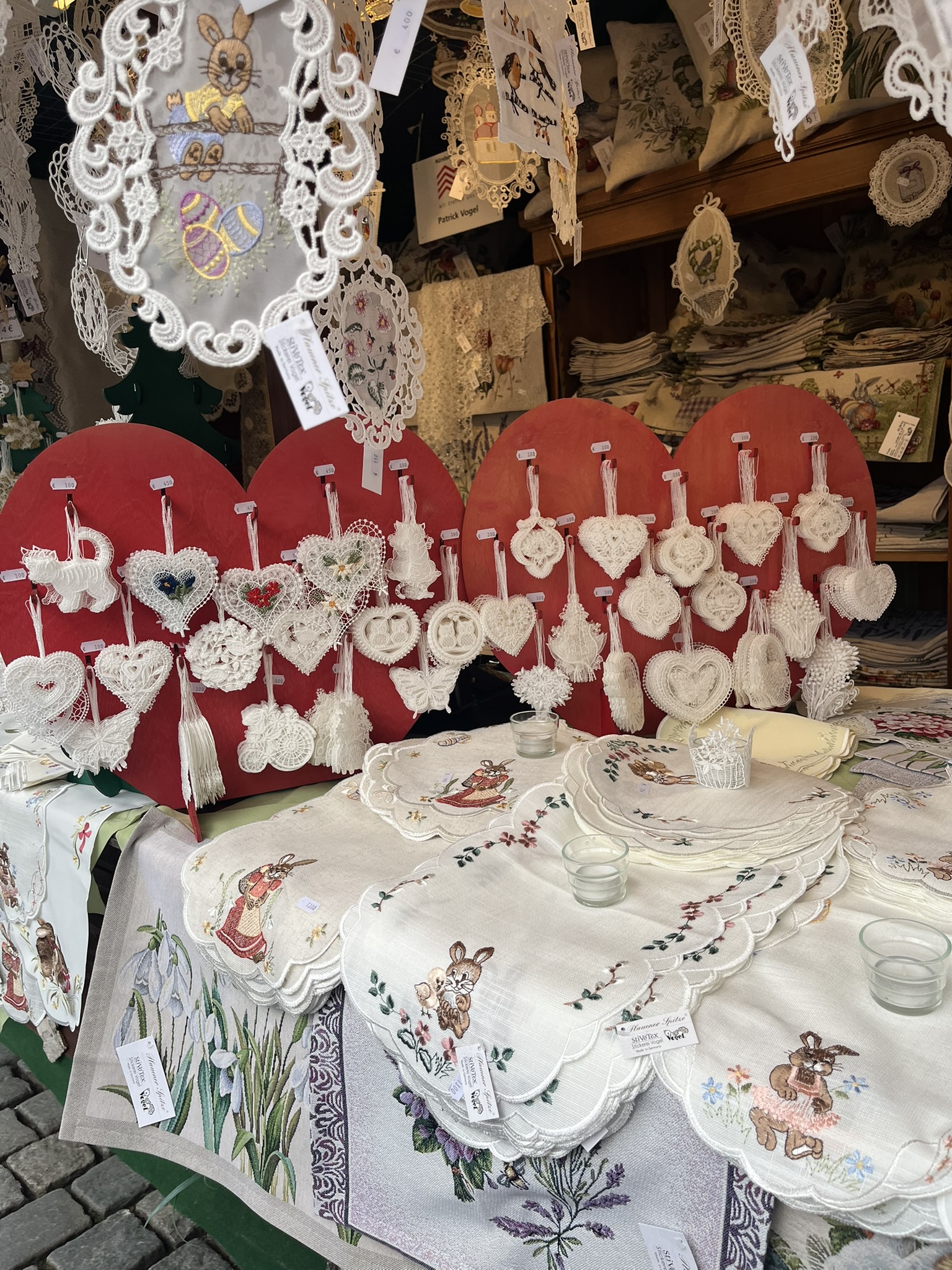
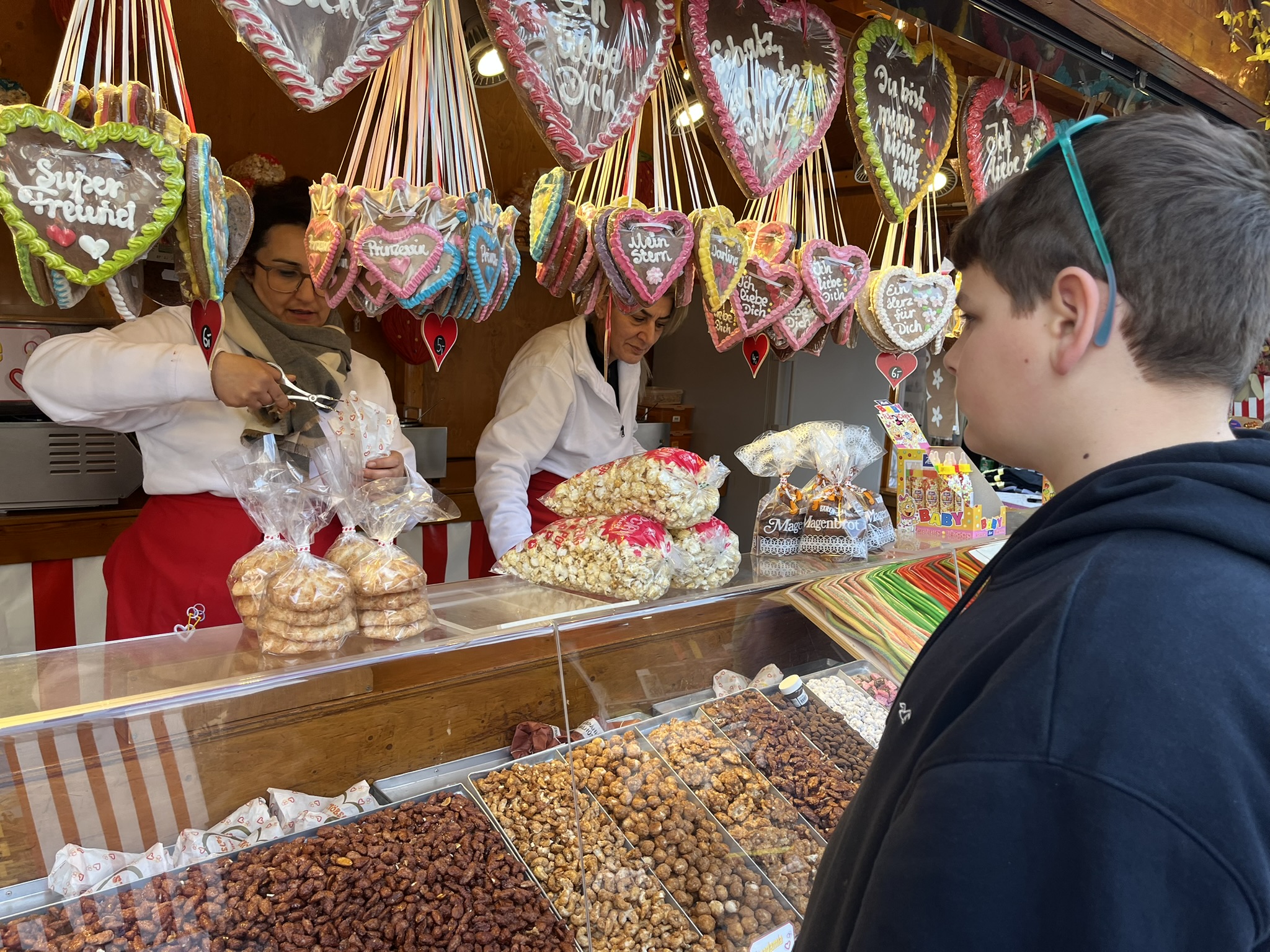
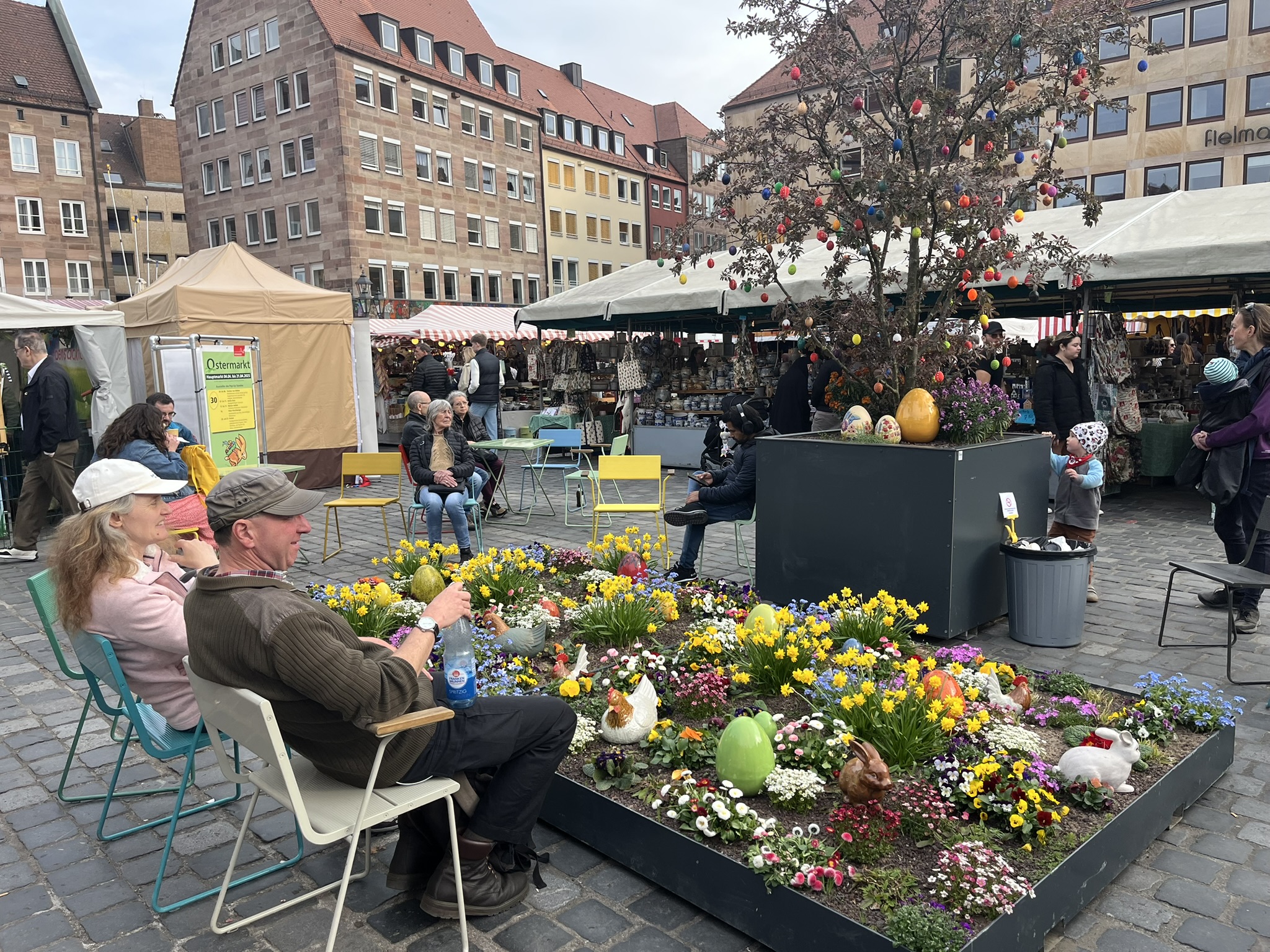
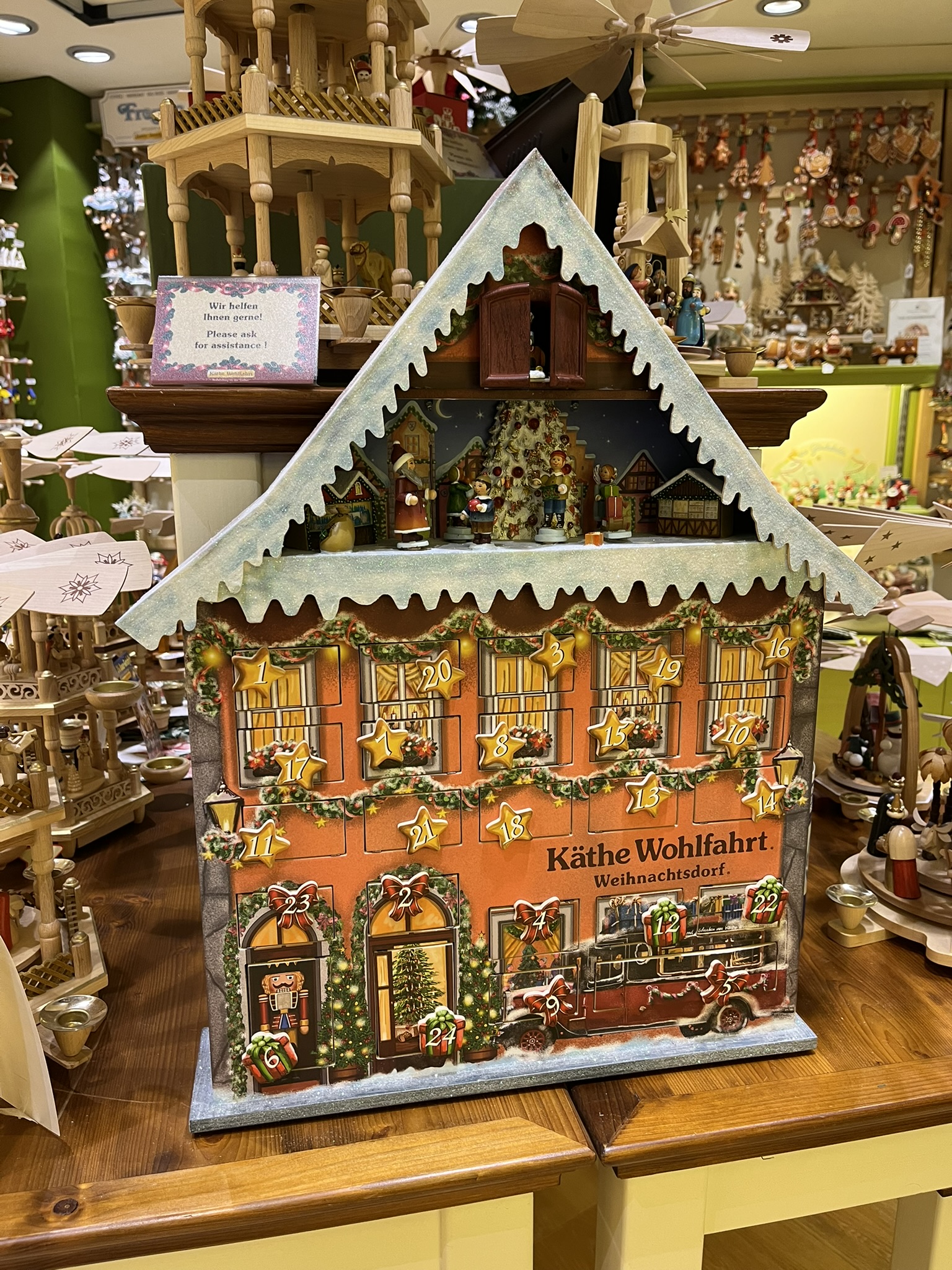
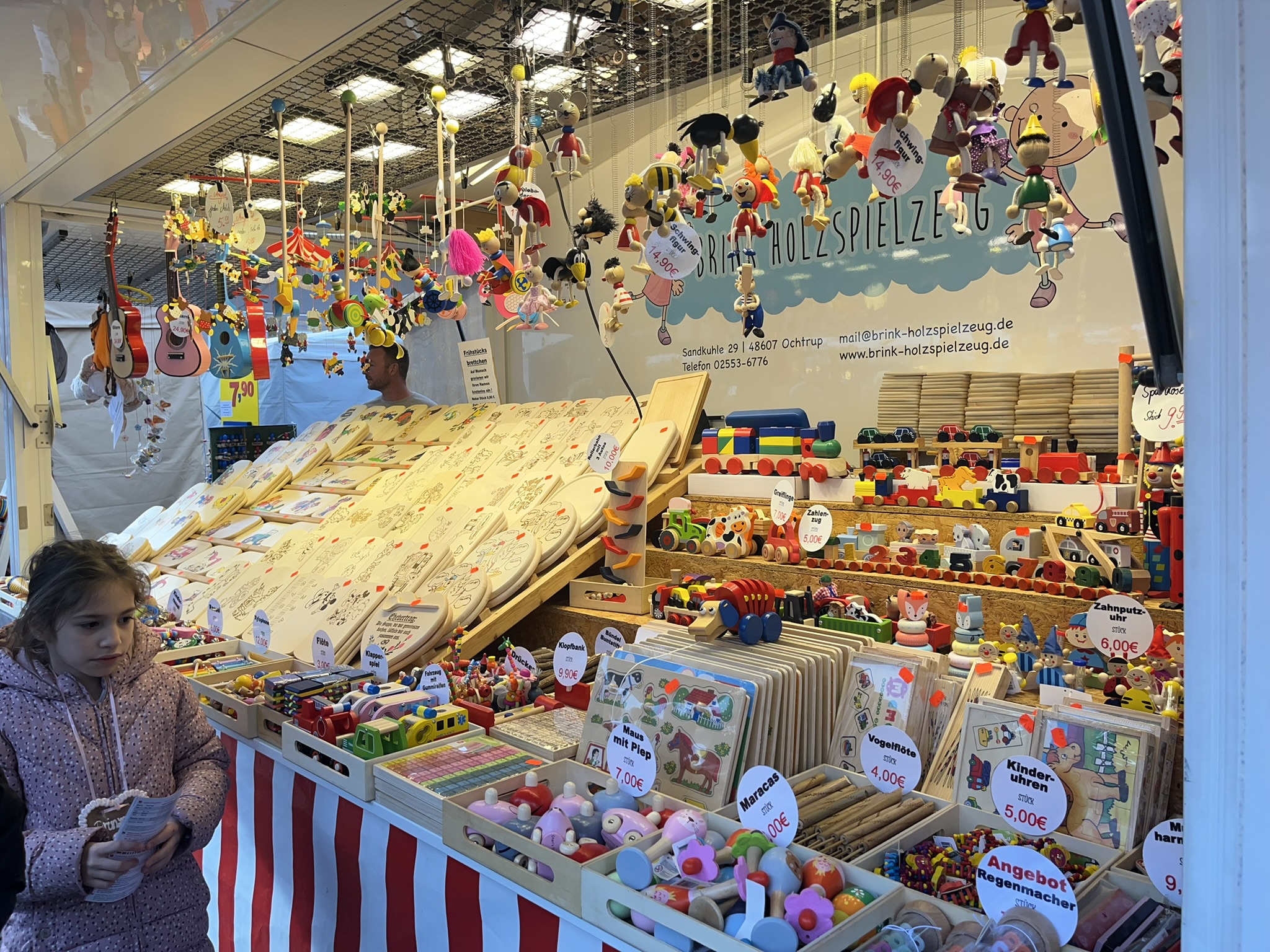
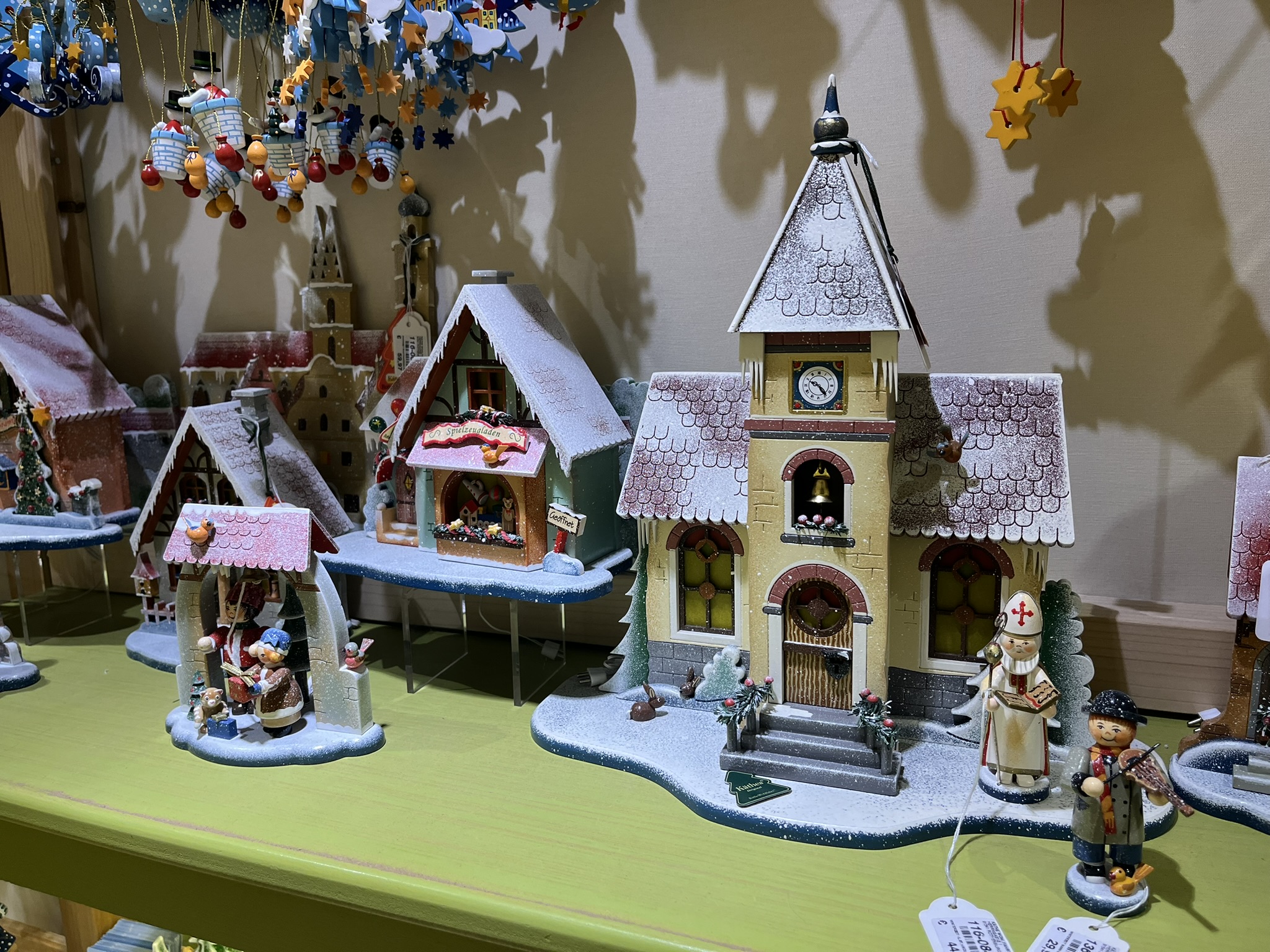
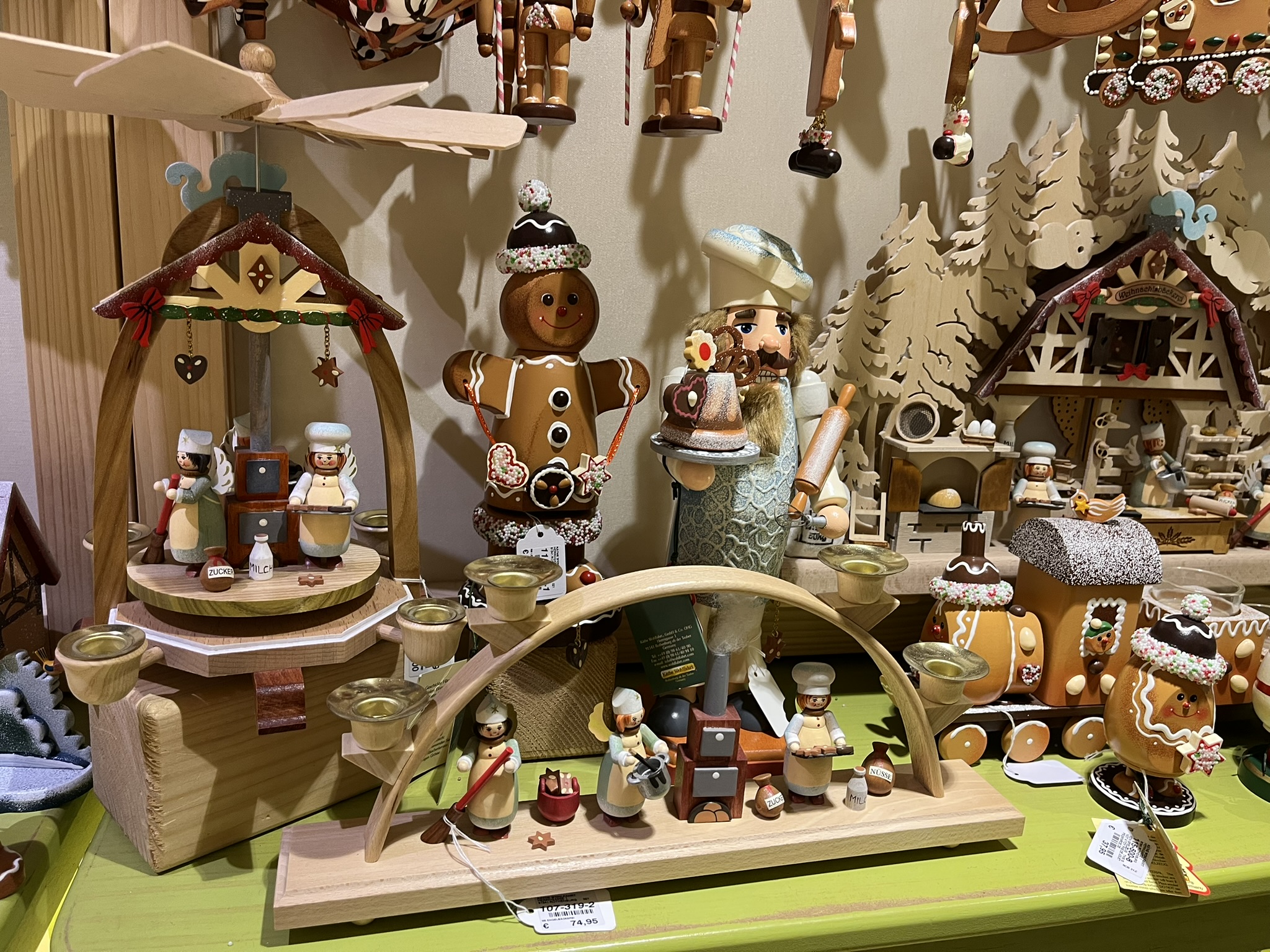
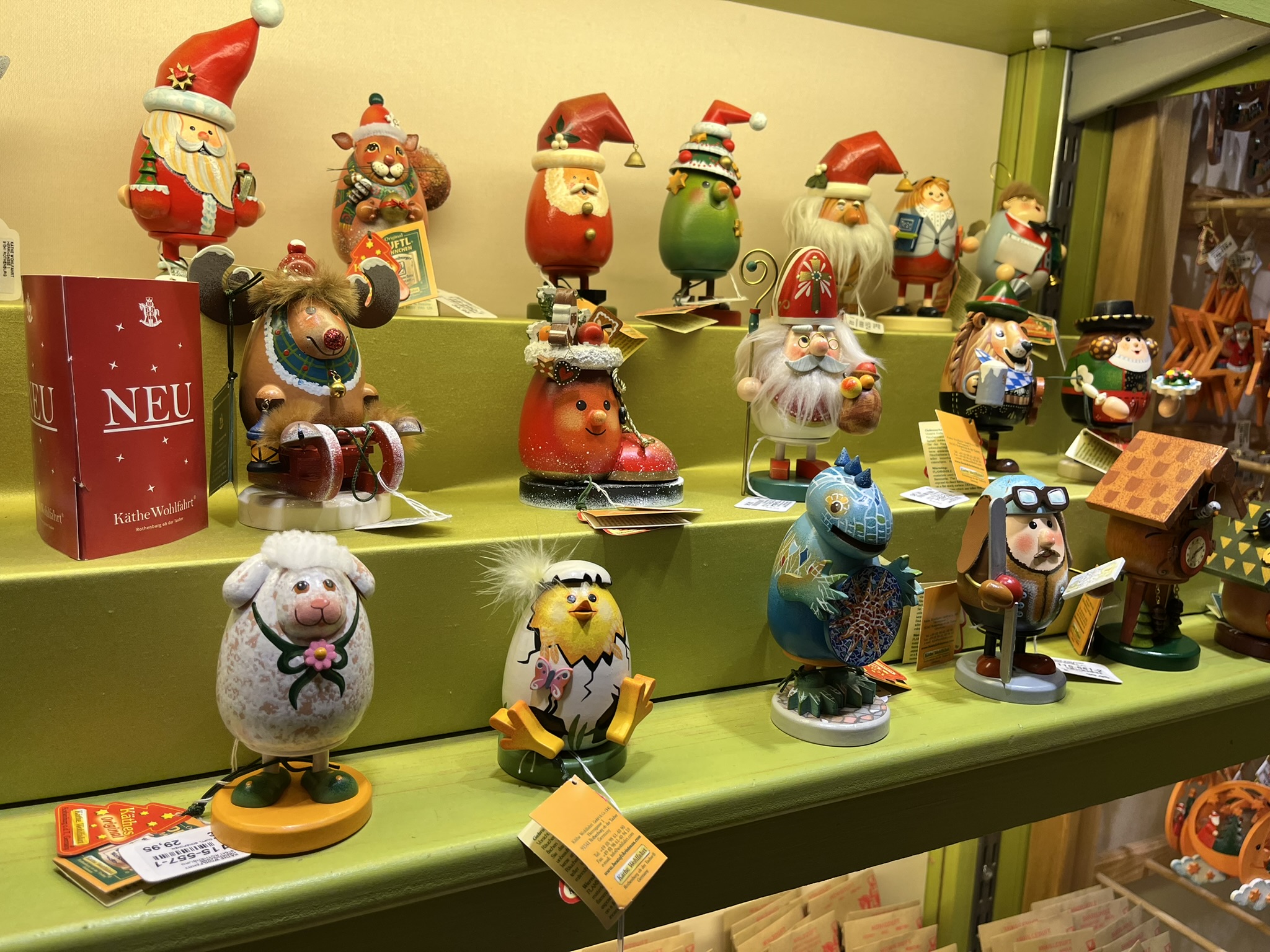
Right here in the main market square is where the wintertime Christkindlesmarkt Christmas market is held, but during springtime, you can find a festive Easter market in its place. Shop for leather goods, wooden crafts, embroidered linens, woven socks, wine, spring home décor, pottery, and plush toys. Try the made-on-site fried dough with powdered sugar Küchle (little cake), sugared roasted nuts, and gingerbread cookies. Of course, if you’re missing the Christkindlesmarkt, stop into the Käthe Wohlfahrt specialty shop in town to stock up on Erzgebirge handmade Christmas pyramids, incense smokers, ornaments, and toys.

The main square houses winter and spring markets filled with handcrafted wares and tasty snacks.

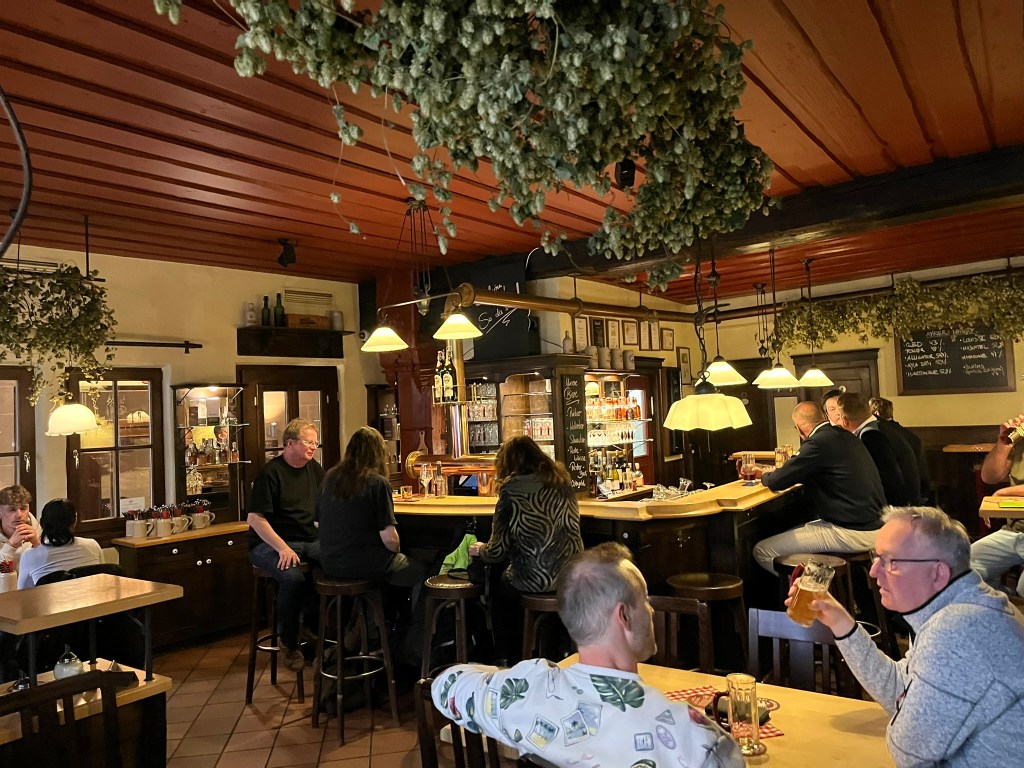
Nürnberg provides many restaurant options for a delicious, full sit-down meal. Zum Gulden Stern is the city’s oldest existing historical bratwurst kitchen—and the oldest in the world—dating back to 1419. Here, the famous, original Nürnberg sausages (branded as the Original Nürnberger Röstla®) are grilled over a beechwood fire in a building built around 1380. The sausages are prepared with traditional spices like mace (a sister spice to nutmeg), marjoram, salt, and pepper, by the family-run Pfettner butcher shop in Nürnberg. The characteristic smoke and aroma of beechwood infuse this delicacy with unique flavor. The sausages served at Zum Gulden Stern are never boiled or pre-fried; instead, they are placed on the grill white and raw, cooked for about 7 minutes, and then removed once the tops and bottoms are evenly browned and crispy. (Consider also visiting the Nürnberg Bratwurst Museum, which presents the myths and legends surrounding these small 7-9cm sausages the town is known for.)

Zum Gulden Stern is a historic restaurant that serves the city’s famous mini sausages.

Barrel-fermented sauerkraut grown by the Wehr family in the Aischgrund region is cooked and seasoned at Zum Gulden Stern with fresh pork lard. The vegetables, horseradish, and wines served at the restaurant are all sourced from family-owned businesses in the region, and the dishes are substantial and savory. This tavern survived all the wars, likely hosted famous Middle Ages painter Albrecht Dürer, and still serves up delicious daily-prepared meat-and-vegetable soups and famous sausages. In addition to the interesting antique wall art, the colorful wooden ceiling is patched with old brightly painted cupboard panels, to cover holes made where weighty drunken guests from older days had fallen through from the upper level.

Step into history while dining at Zum Gulden Stern, where famous Middle Ages painter Albrecht Dürer is said to have frequented.

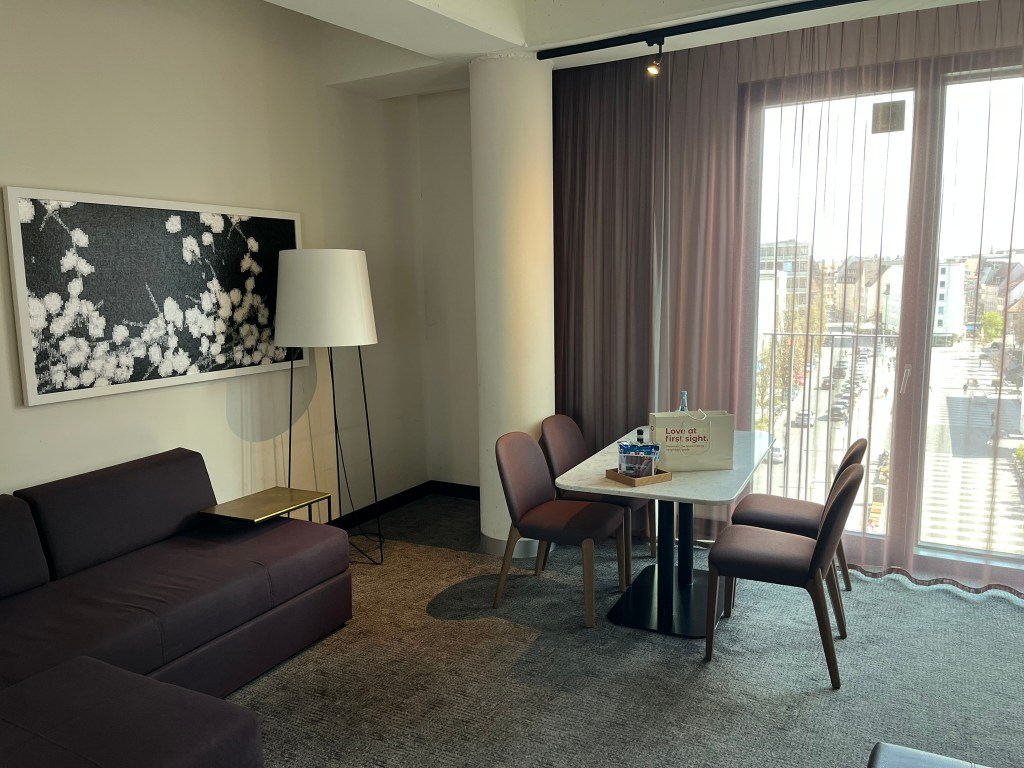
Adina Apartment Hotel, about a 12-minute walk from the main train station, in the heart of the city, is a comfortable, clean, and convenient place to overnight in Nürnberg. The spacious studios and one- and two-bedroom apartments have fully equipped kitchens, cozy linens, and vegan personal care products, and the hotel is upscale but relaxed and inviting. Friendly, efficient, and attentive staff, and fast and accommodating room service make this an exceptional lodging choice. Breakfast in the downstairs dining area is varied and colorful, with many tasty options to help kick-start your day—fresh juices, lattes, meat and cheese platters, vegetables, cereals, dried and fresh fruits, fish filet cakes, pancakes and rolls, sweet breads, jams, eggs, and hot breakfast meat dishes (including the city’s famous sausages). After a day exploring the town, the lap pool and sauna area provide just enough space for a refreshing evening swim and relaxation in the dry heat.
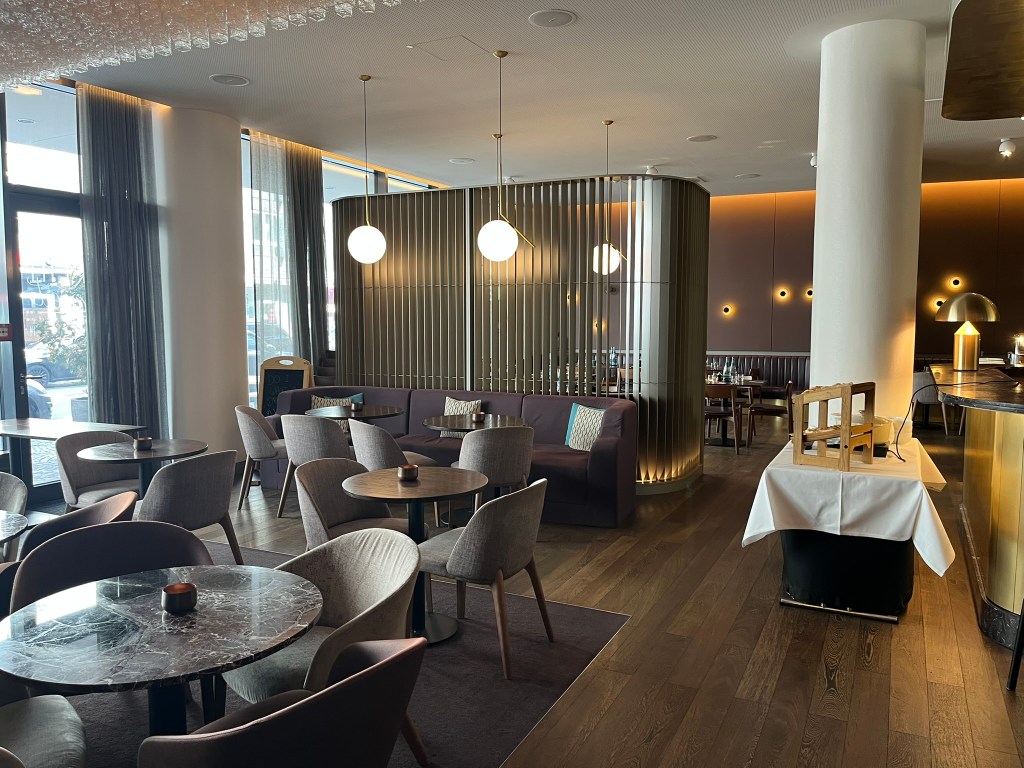
Adina Apartment Hotel is a cozy place to lodge, with activities for guests of all ages.

Be sure to buy a Nürnberg Card online or at one of several Tourist Information stands, to receive a variety of free admissions and discounts. The Nürnberg Card allows you 48 hours of free access to almost all the city museums and attractions as well as free public transportation.

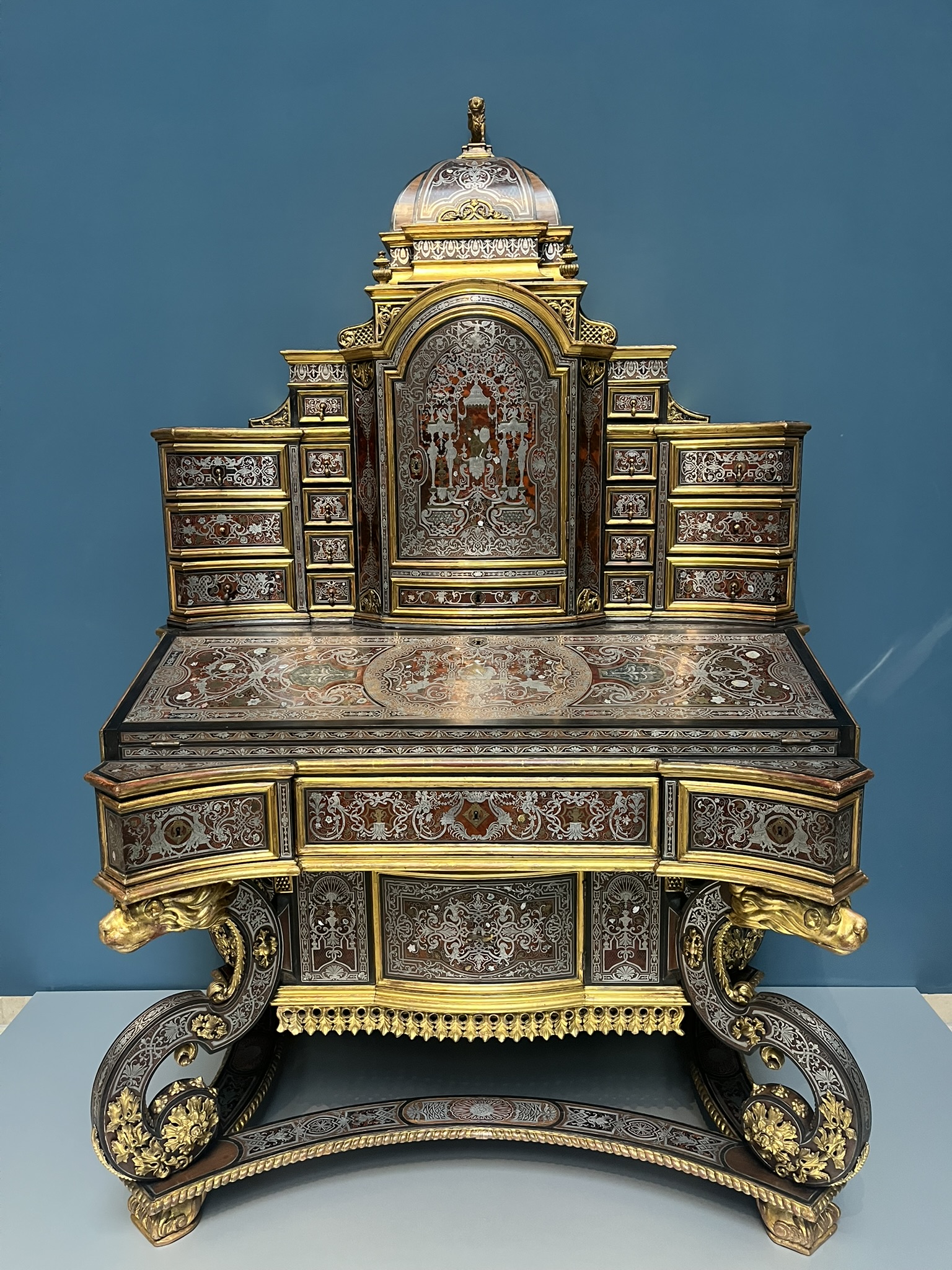
A three-minute walk down the street from the Adina Apartment Hotel takes you to the Germanisches Nationalmuseum (German National Museum), the largest cultural history museum in the German-speaking countries. Here, you can explore five exhibition areas on three levels of the museum—artifacts from the Old Stone Age to the Middle Ages, collections from Renaissance to Enlightenment, and 20th Century masterpieces—there are multitudes of treasures to examine. The armor and hunting exhibition is especially expansive, with case after case of intricate weaponry. You’ll also find an impressive array of musical instruments, jewelry, sleighs, sculptures, and paintings.

The German National Museum exhibits magnificent artifacts from all eras.

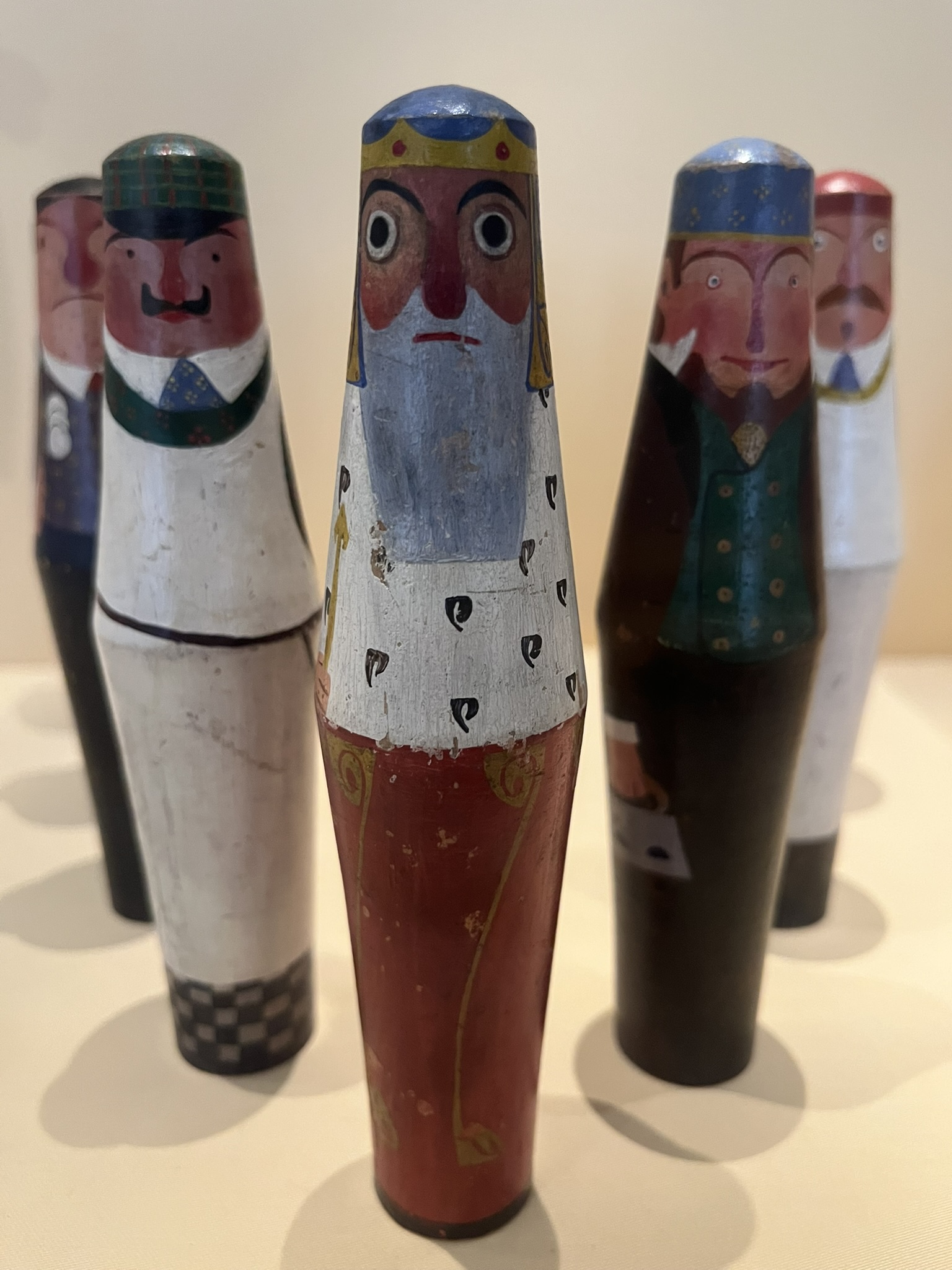
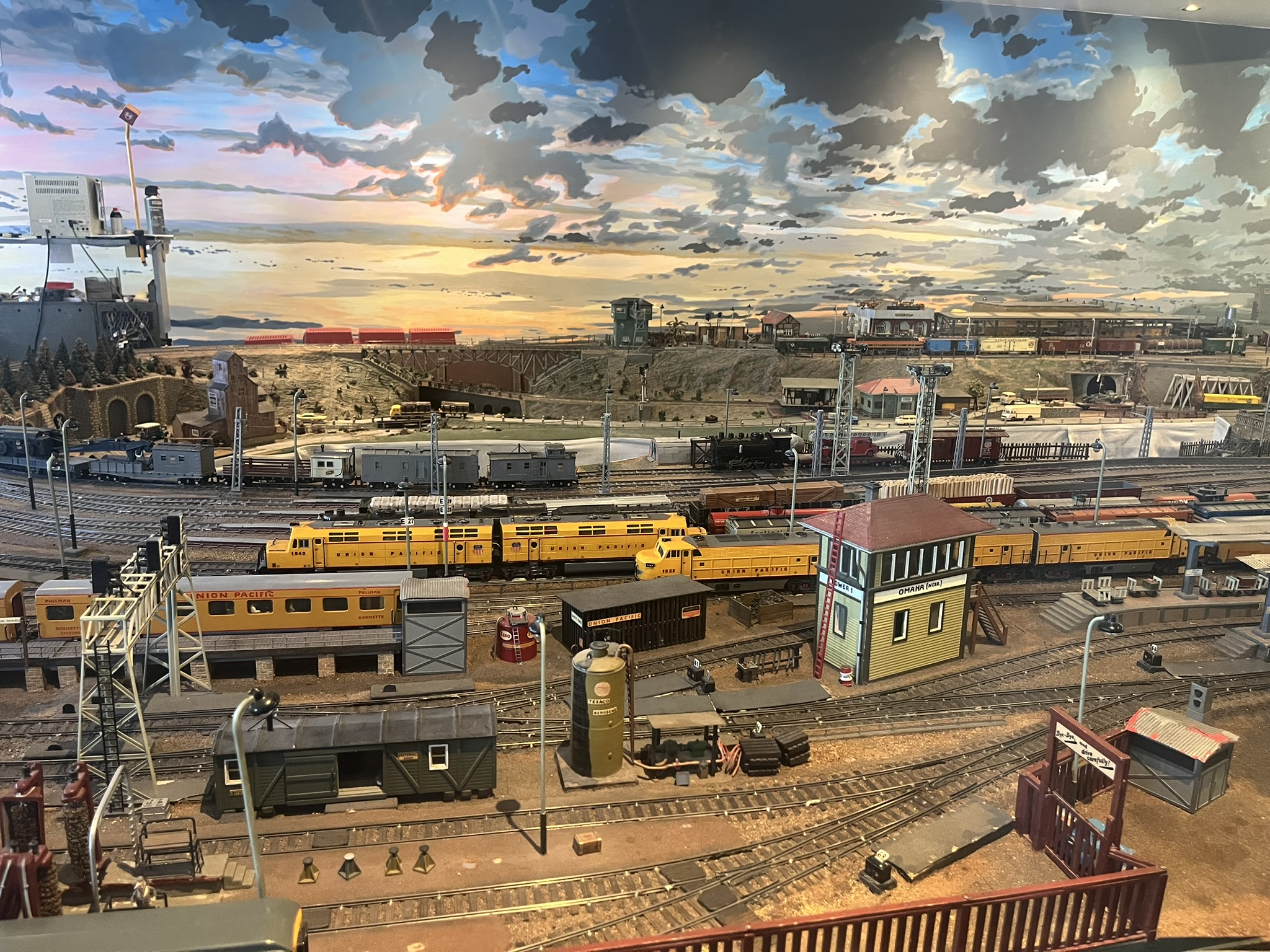
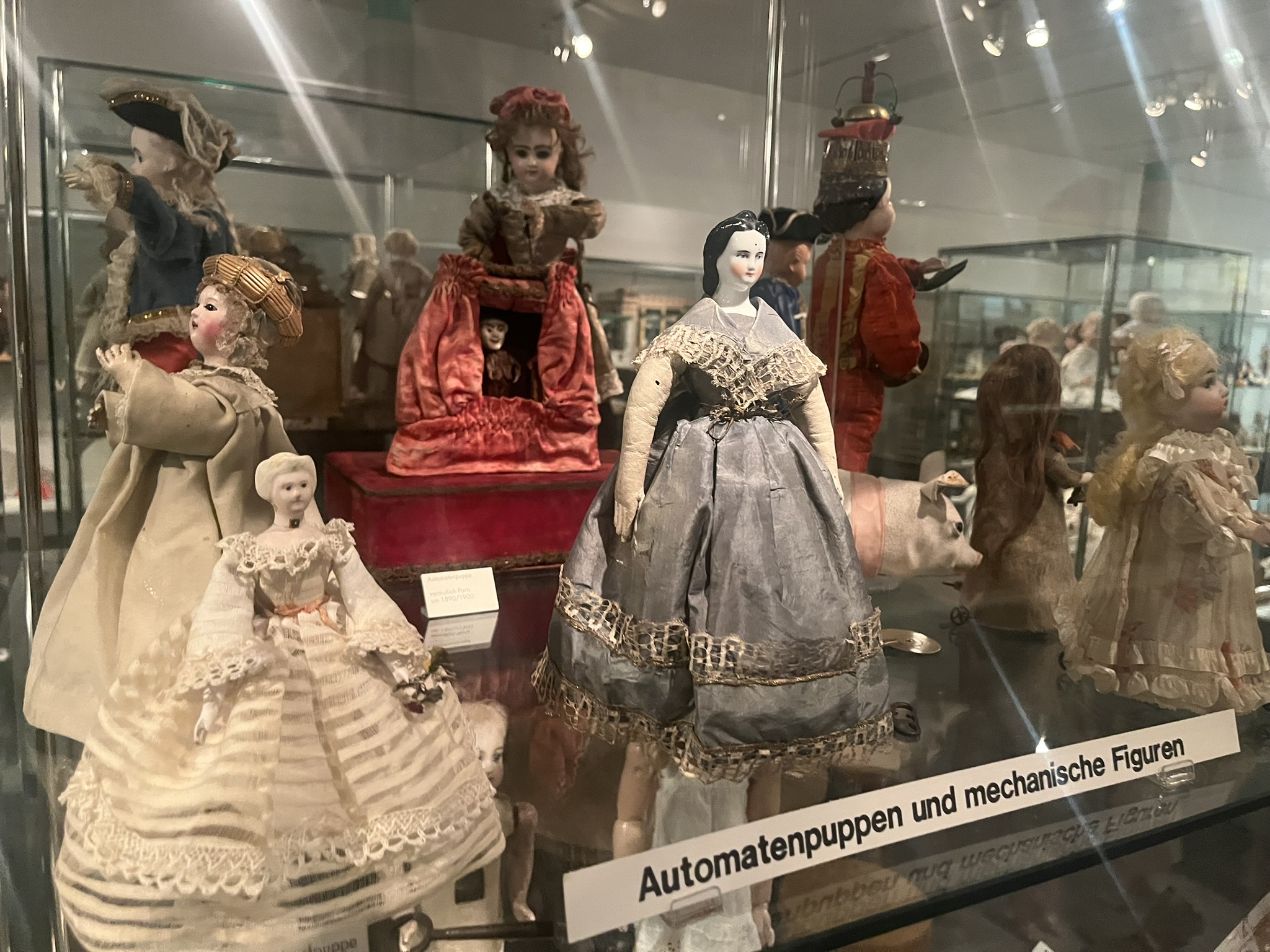
A separate building houses the toys portion of the museum—a showcase of detailed dollhouses, dolls, tin cars and armies, optical toys, and miniature railroads. Many of the elaborate 17th century dollhouses exhibited here were thought to be commissioned by Nürnberg’s wealthy merchants and patricians. For young people, the houses functioned as a visual representation of ideal households and a clear display of tasks and activities to be performed in each of the rooms. For example, dollhouse sitting rooms were often decorated with tea service, chess boards, and decks of cards, while kitchen layouts included hearth-cleaning tools, cake molds, soup ladles, and copper pots. Similarly, 18th– to 20th-century toys conveyed educational objectives relating to children’s future familial and career lives. Playing with dolls helped girls prepare for their roles as patient, gentle mothers. Boys’ toys were often linked to their potential future working lives—tin soldiers encouraged strategic thought and tactical warfare, wooden building blocks taught spatial reasoning and construction design, and other technical toys fostered special interests and skills.

Antique toys at the German National Museum give a glimpse into historic playtime and its echoes of everyday life.

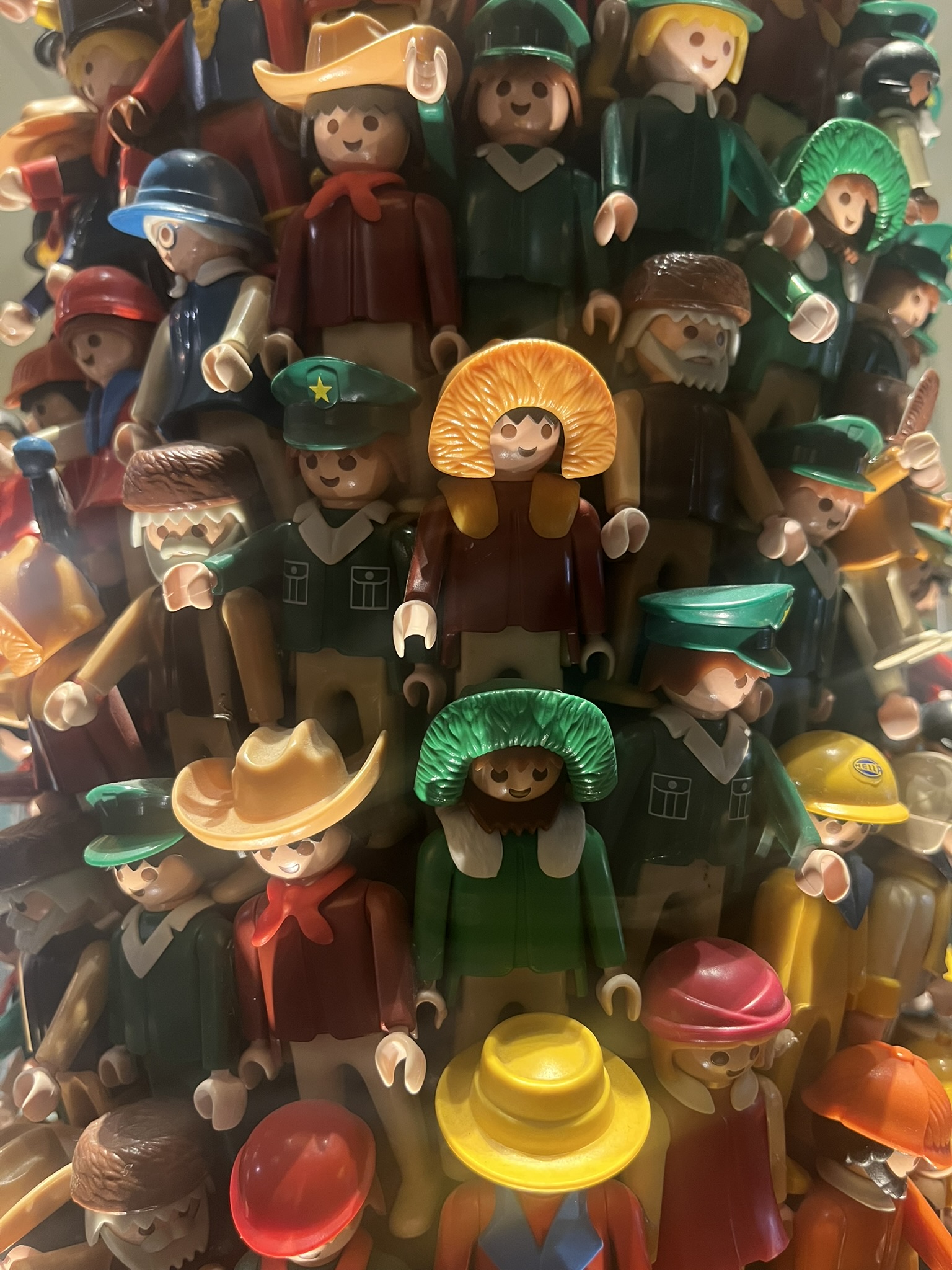
Spielzeugmuseum (toy museum) Nürnberg is another toy museum that displays games and playthings of all sorts—dolls, metal soldiers, puppets, teddy bears, model railroads, tin vehicles, and Playmobil figures, as well as vintage and newer iconic characters like Paddington Bear, ALF, and Garfield. Visit this museum for a bit of history and some interactive play time with toys and family games in the upstairs playroom.
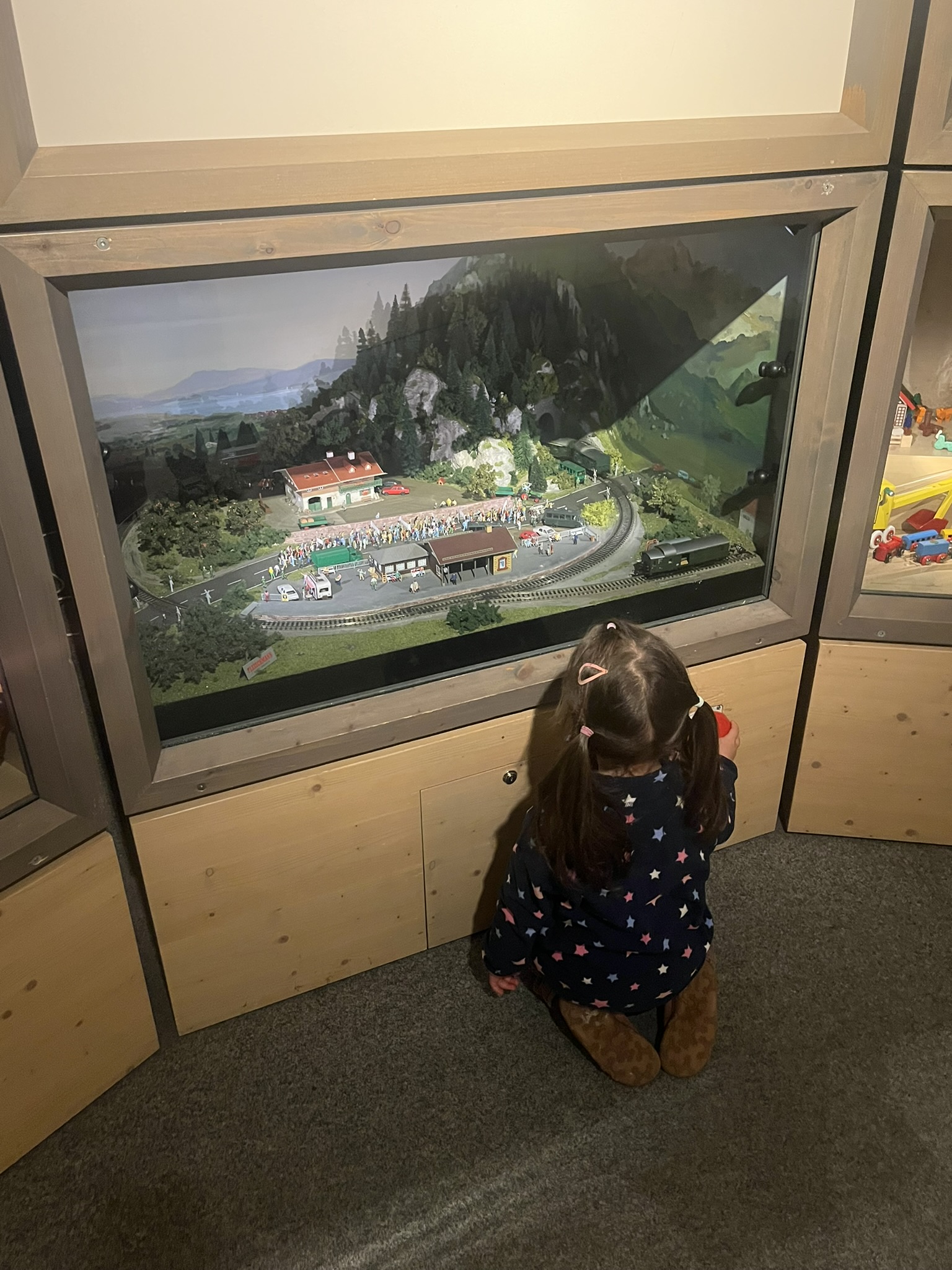
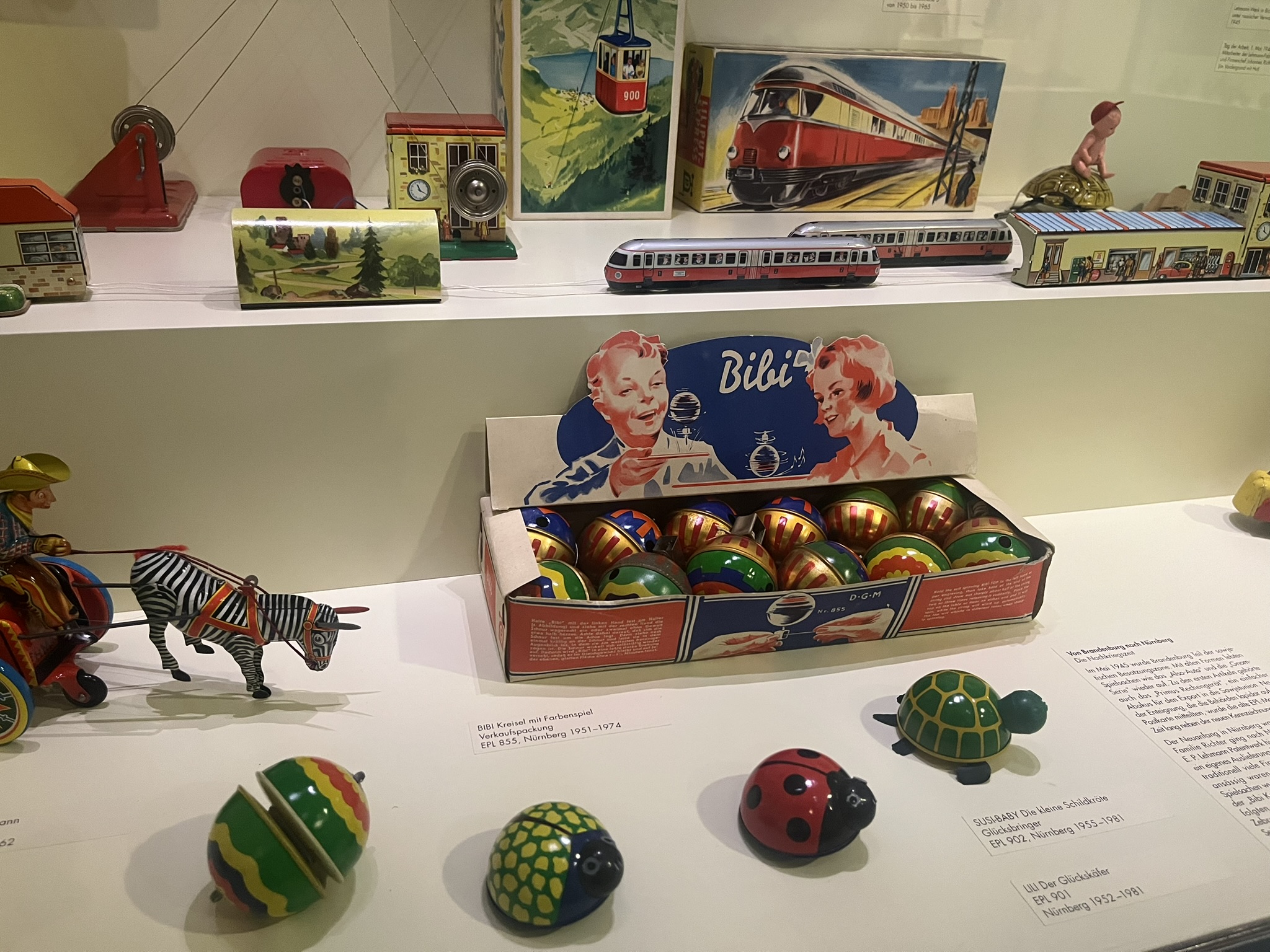
Spielzeugmuseum Nürnberg displays old and new toys alike, with areas for interactive play and a building and board game zone.

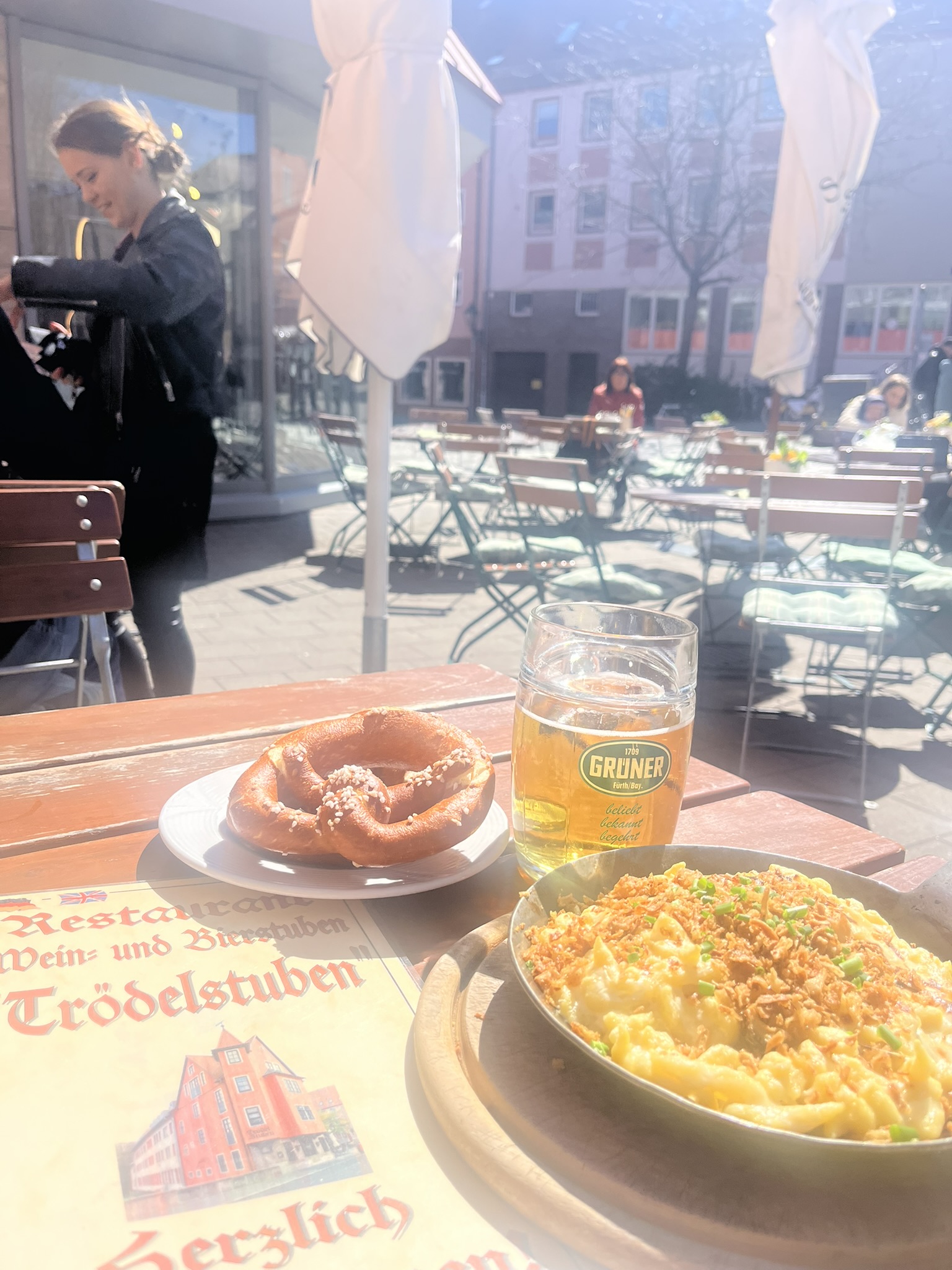
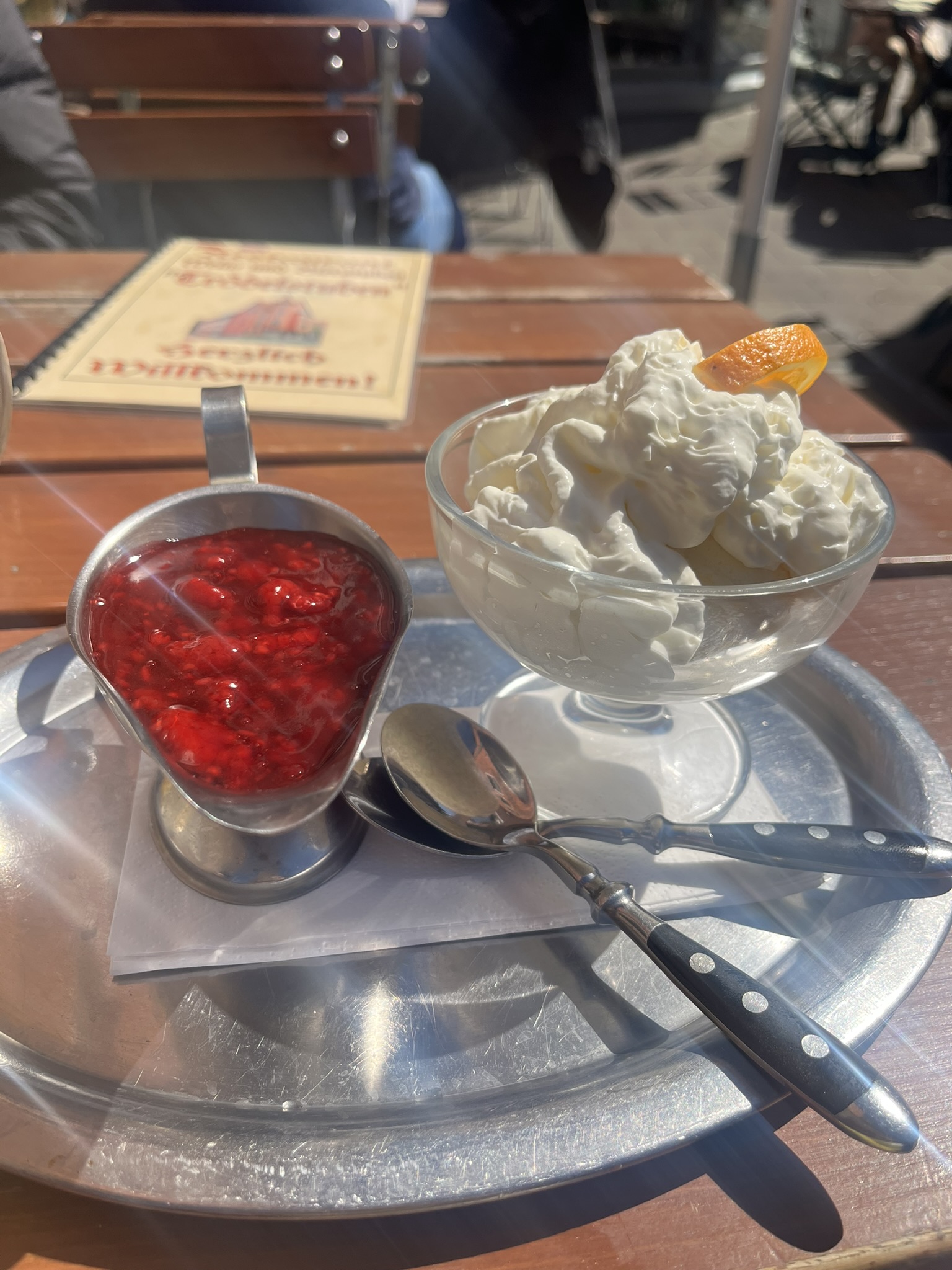
Stop by Die Wirtschaft restaurant for Brotzeit (bread time), Veschber (midday snack), or Gudzerla (Franconian tapas) to nosh on a savory selection of sourdough or oven-crusted bread, marinated cheeses and sausages, pickled vegetables, and herbs. The warm and crispy Apfelküchle (specifically, fried apple rings in beer batter with homemade ice cream and plum compote) will revive you for the rest of your city exploration. For another delicious snack or dessert option, Restaurant Trödelstuben serves up hot raspberries and raspberry sauce over vanilla ice cream. If you’d like a break from traditional German food, try the KOKONO Pan-Asian Cuisine & Sushi Bar on Luitpoldstraße. Expect fresh food, seasonal flowers on all tables, and a fun presentation of dry ice mist at your table while you eat your edamame and sushi rolls.
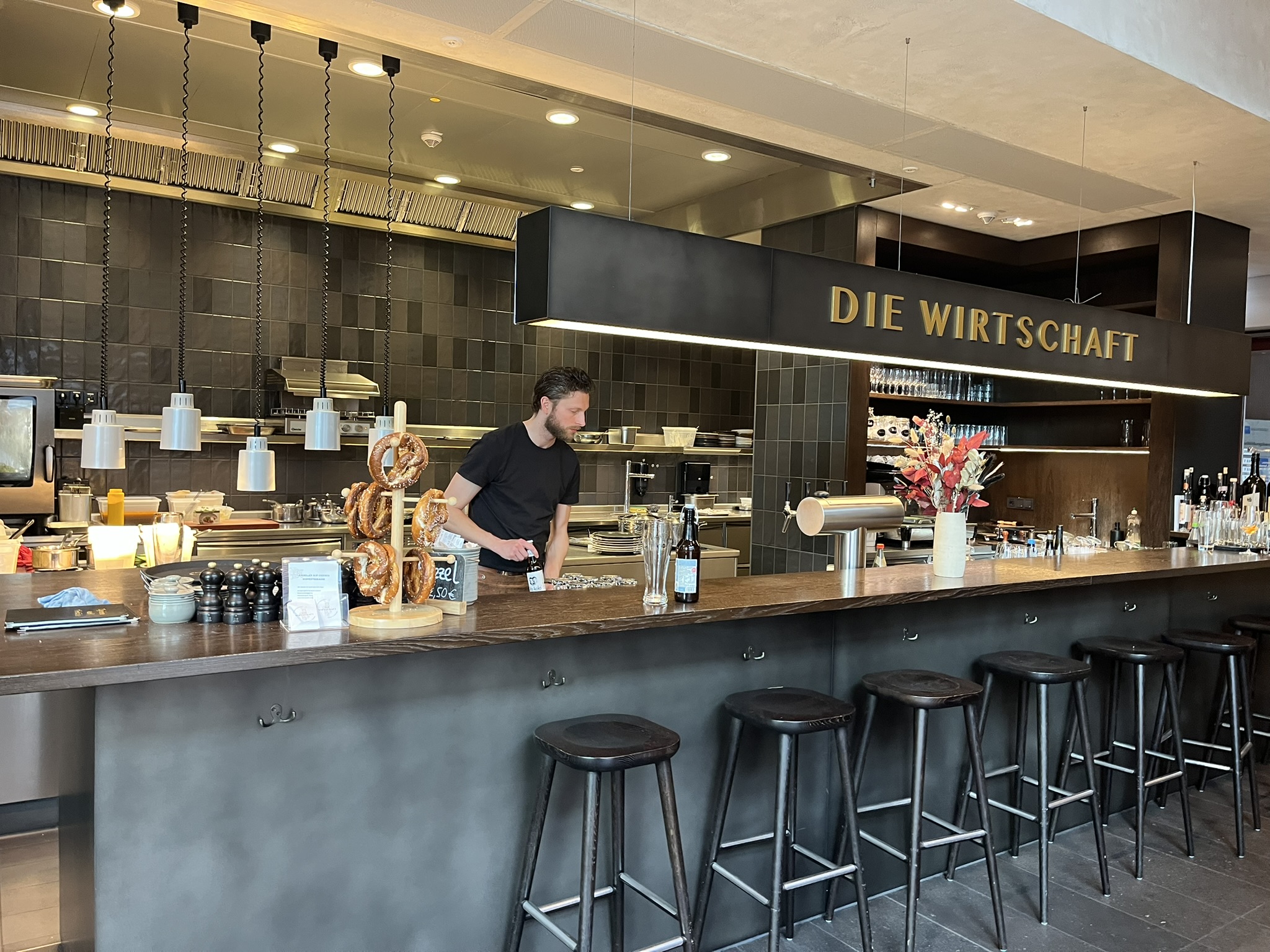
Nürnberg culinary variety abounds, with traditional German cuisine and desserts as well as delicious Asian delicacies.

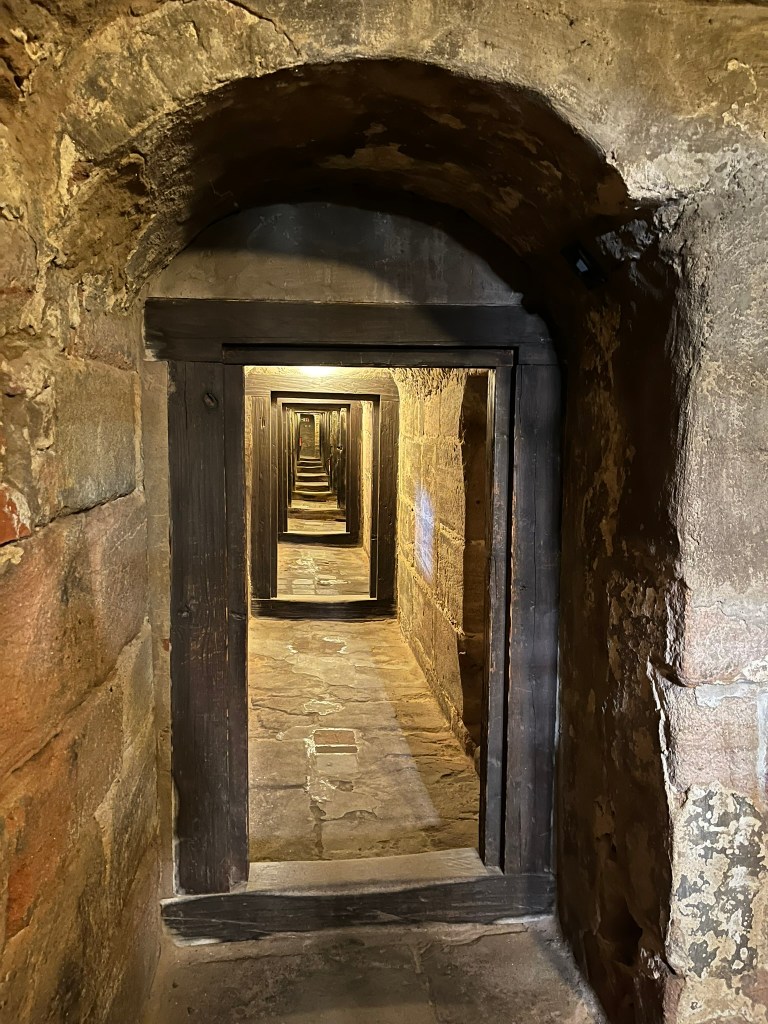
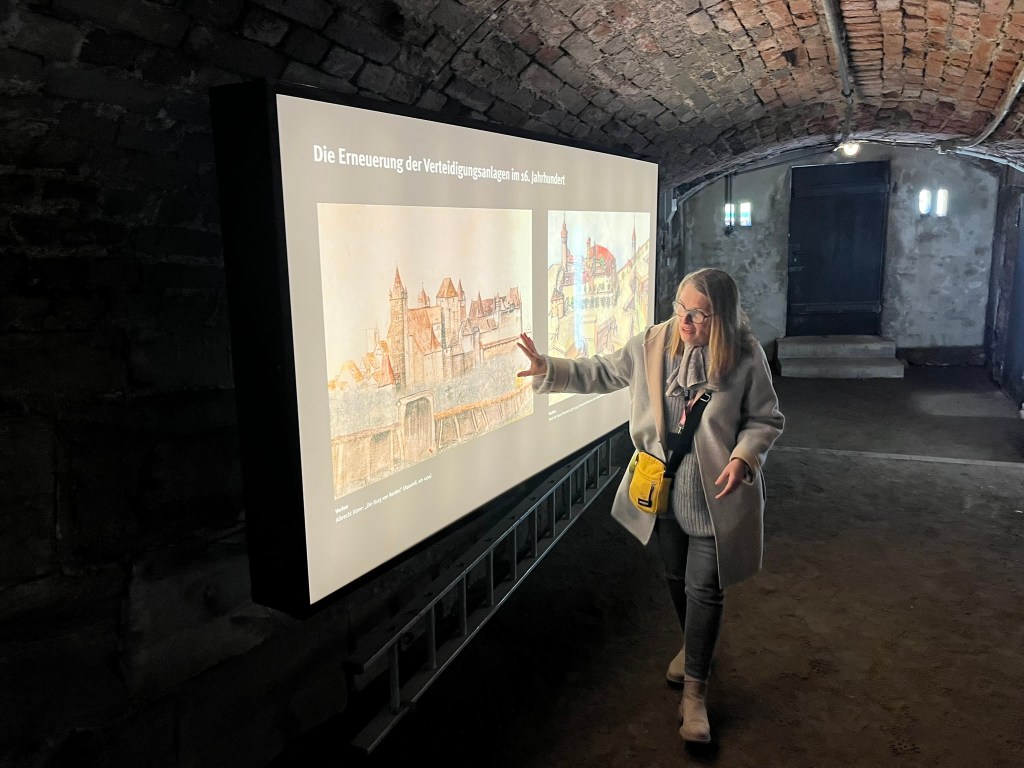
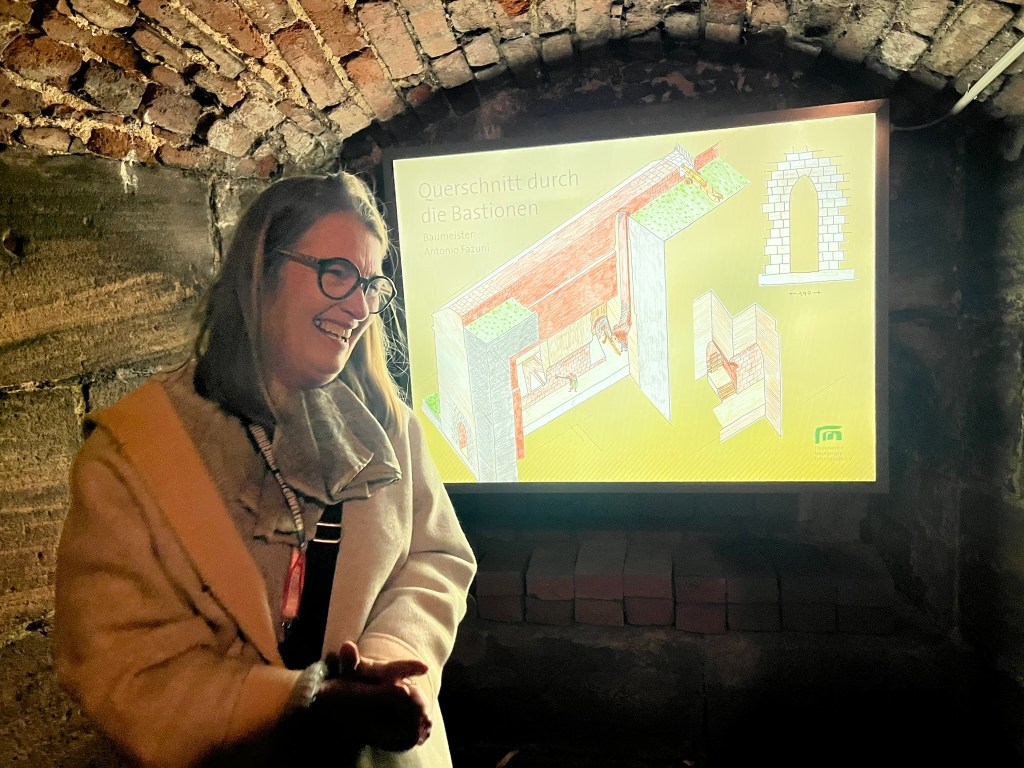
Not all the city’s most interesting sights can be found at ground level. Claudia Radtke, certified Nürnberg city guide, provides guided tours of Nürnberg’s fascinating underground worlds. Those interested in history, fortification, and ancient legal systems (and those aged 10 years and older) will enjoy the intriguing and informative tours entitled “Tunnels and Secret Passages in the City Wall” and “Medieval Dungeons.” The 14th century dungeons in vaulted rock-cut cellars beneath the city hall contain prison cells, torture chambers, the jailer’s house, a prison kitchen, and a blacksmith’s workshop. Walk through underground corridors with damp limestone walls (use the railings and watch your step), learn about those who walked there before you, and explore the city’s ancient approaches to maintaining peace, organization, and stability.

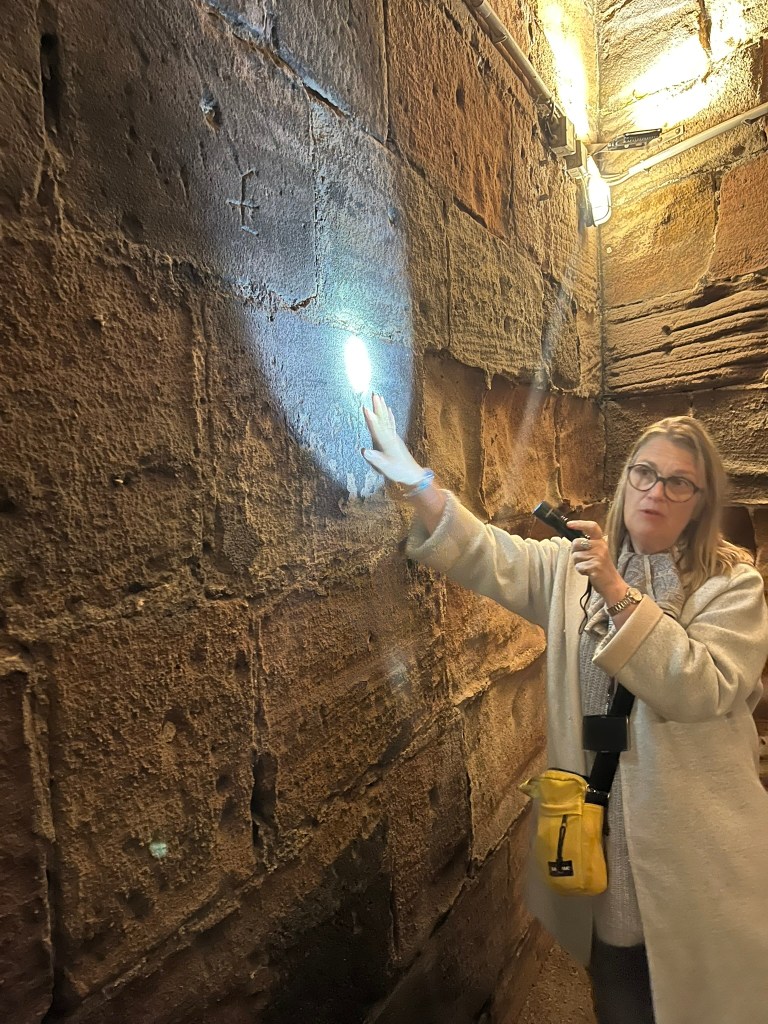
Explore beneath the city, with exciting tours of dungeons and underground passageways.

Underneath the Imperial Castle, a network of defensive passageways wind about, with casemates and embrasures from which weapons could be fired into all angles of the moat. Interestingly, the humid tunnels were not conducive to weapon storage, so weapons were stored aboveground and brought down via a ramp during combat periods. The quarry-stone underground walls are eroded and colorful, shaped and stained from sour rain dripping through.

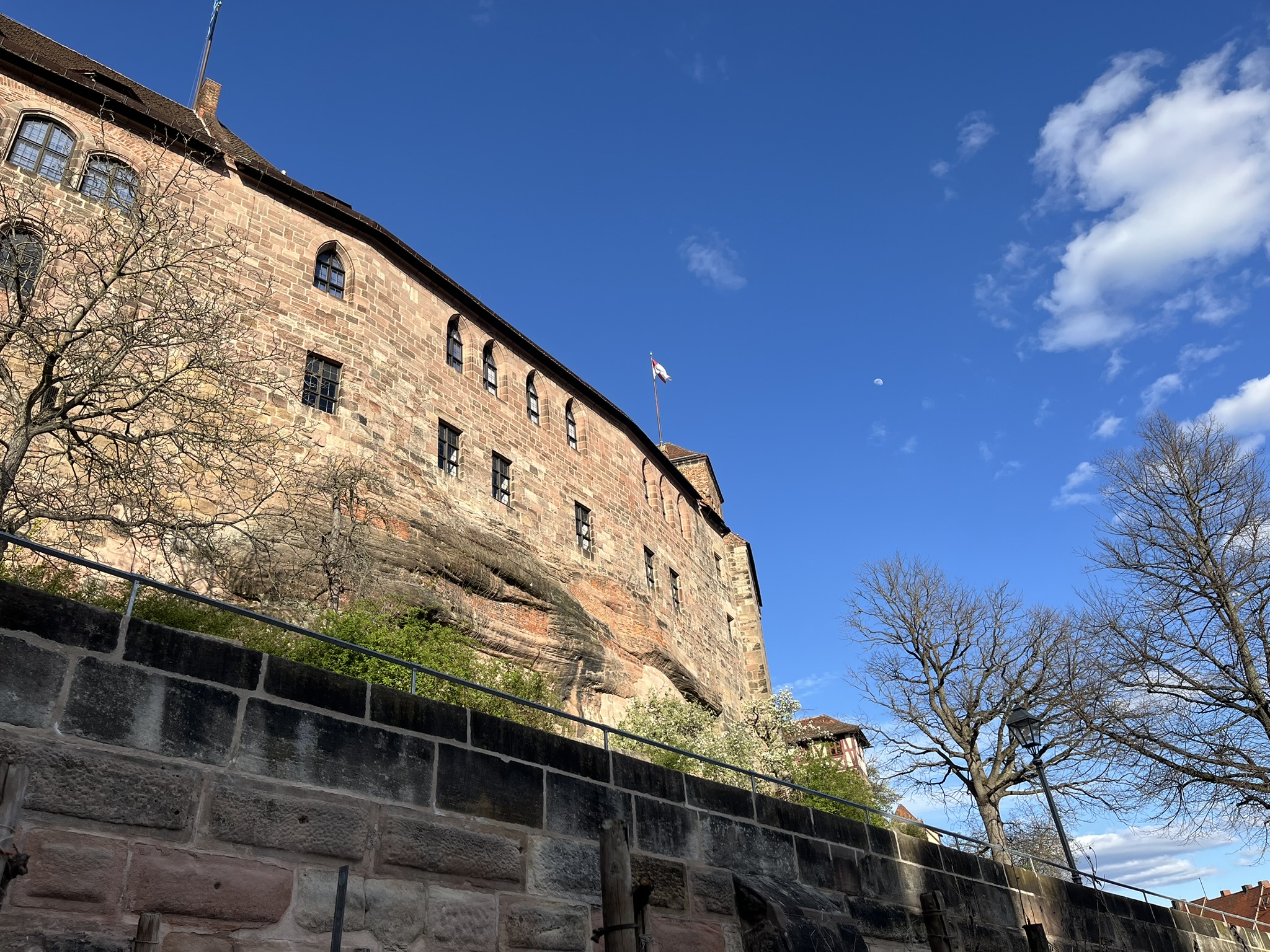
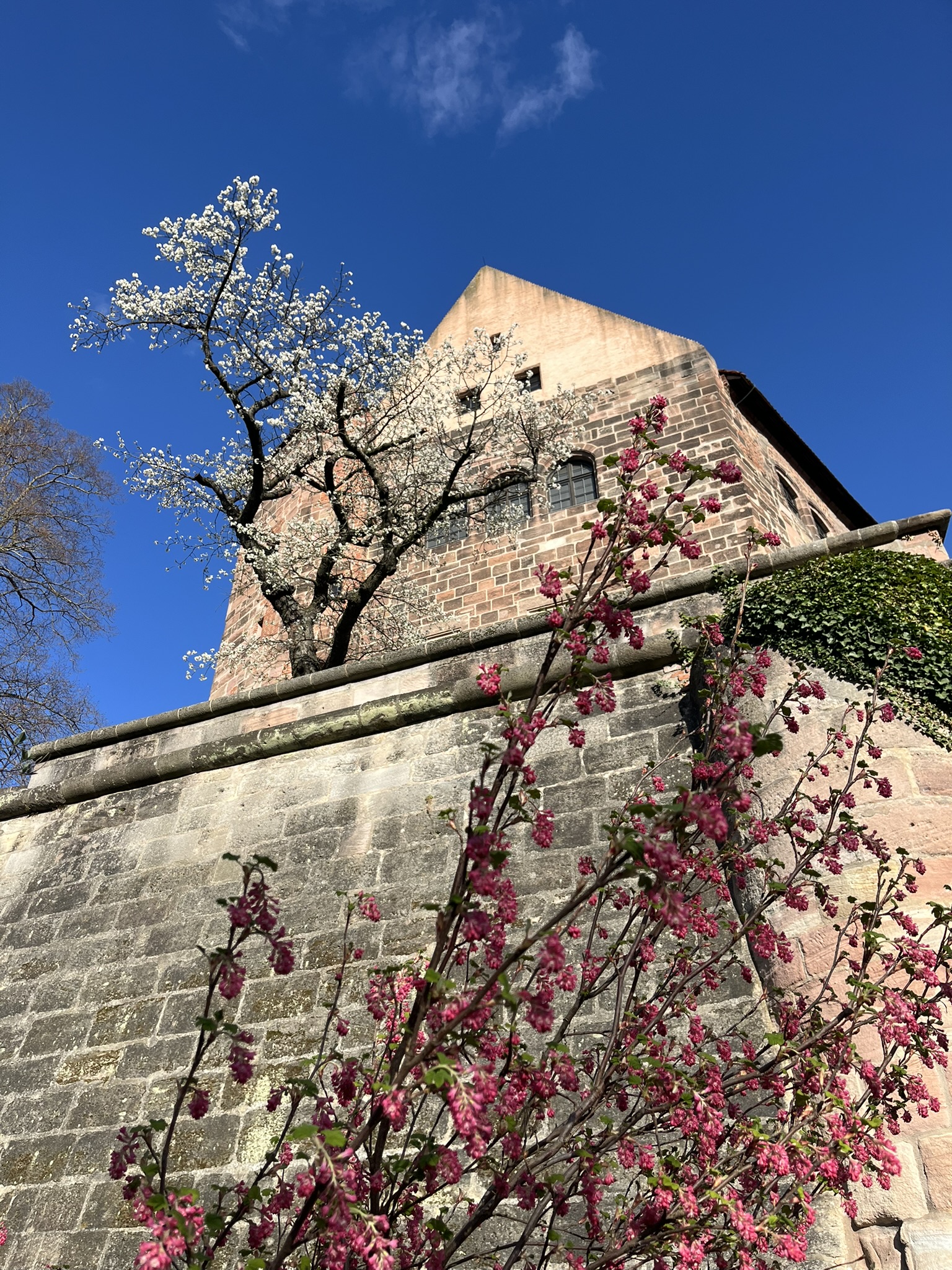
Don’t forget to climb up and appreciate sights from the very top of the Imperial Castle—views down into the moat and stone walkways meandering through flowering trees beneath cloud-speckled blue skies. Wealthy, strategically built, well-invested in defense, and never captured (or attacked, for that matter), Nürnberg was one of the Holy Roman Empire’s best-protected cities in Europe. The city’s history of wealth and peace is attributed to its involvement in trade, due to solving issues diplomatically and with payment rather than through warfare.
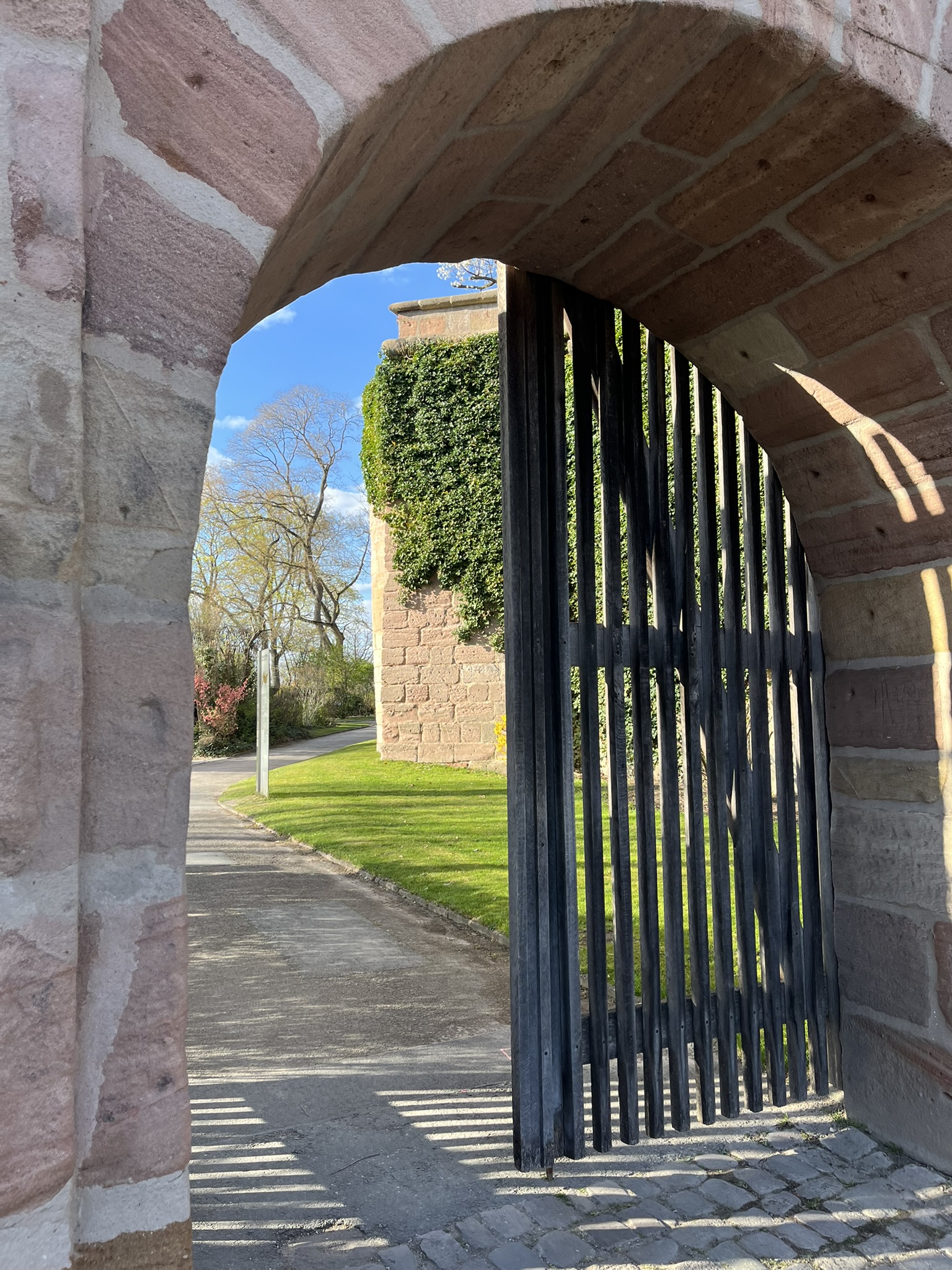
The uphill climb to the Imperial Castle rewards you with beautiful views.

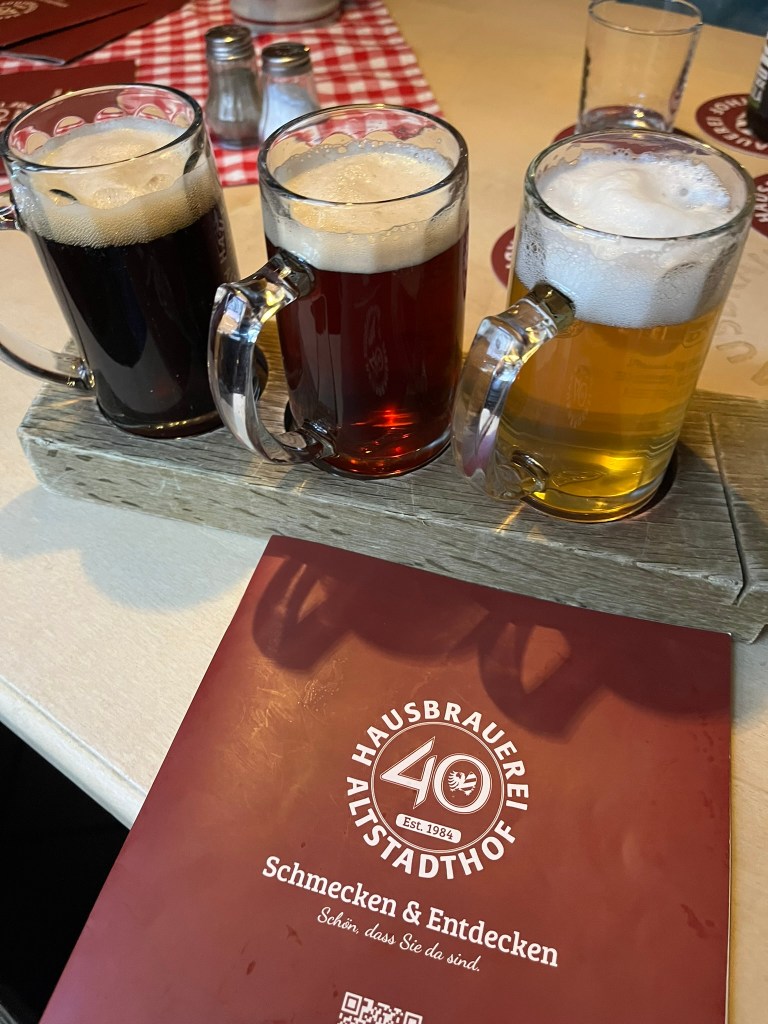
After peering down from the Imperial Castle, stop at the nearby Hausbrauerei Altstadthof, known for its brewed Rotbier (red beer) and oven-fresh Schäufele (roasted pork shoulder in red beer sauce with dumplings and sauerkraut). The snug tavern area with a “hidden gem” feel is a great hangout spot for groups and couples to have a homestyle Franconian meal and a few freshly tapped craft beers. Fill up on savory Nürnberger sausages, potato soup with crusty bread, Obazda specialty Bavarian cheese, spätzle (dumpling-like irregular-shaped egg noodles), red cabbage, goulash, and a wheat- and black-beer sponge cake “Beeramisu” dessert or Apfelküchle (this menu’s variation is drizzled with custard sauce and served with vanilla bean ice cream, whipped cream, and almond slices).
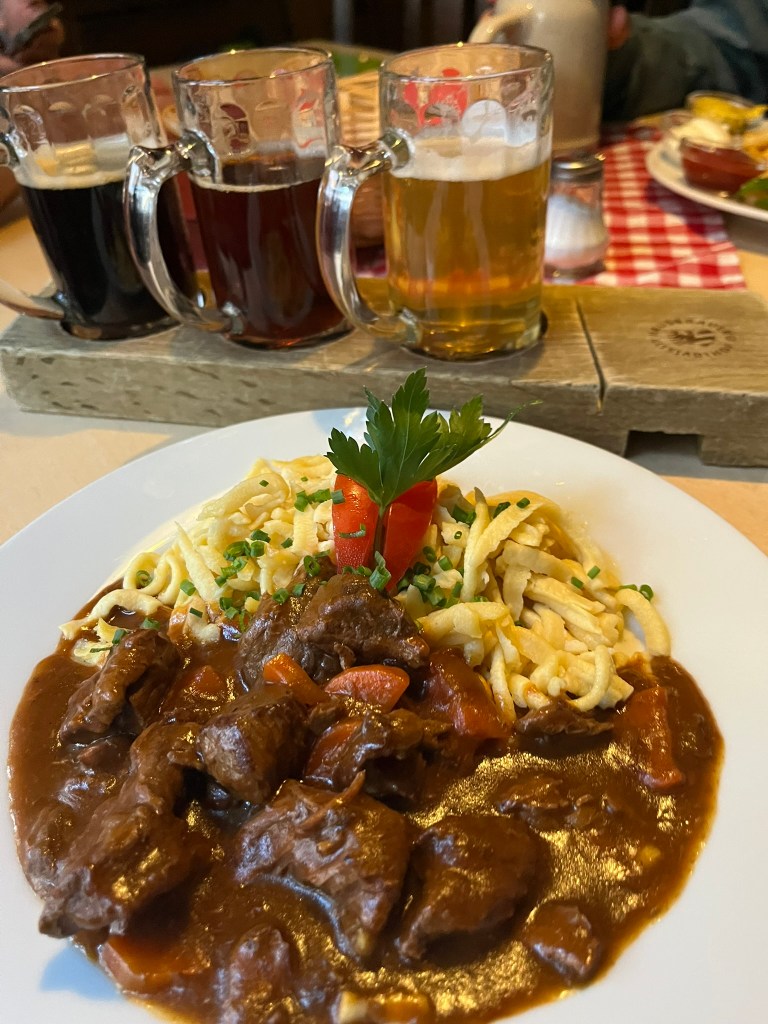
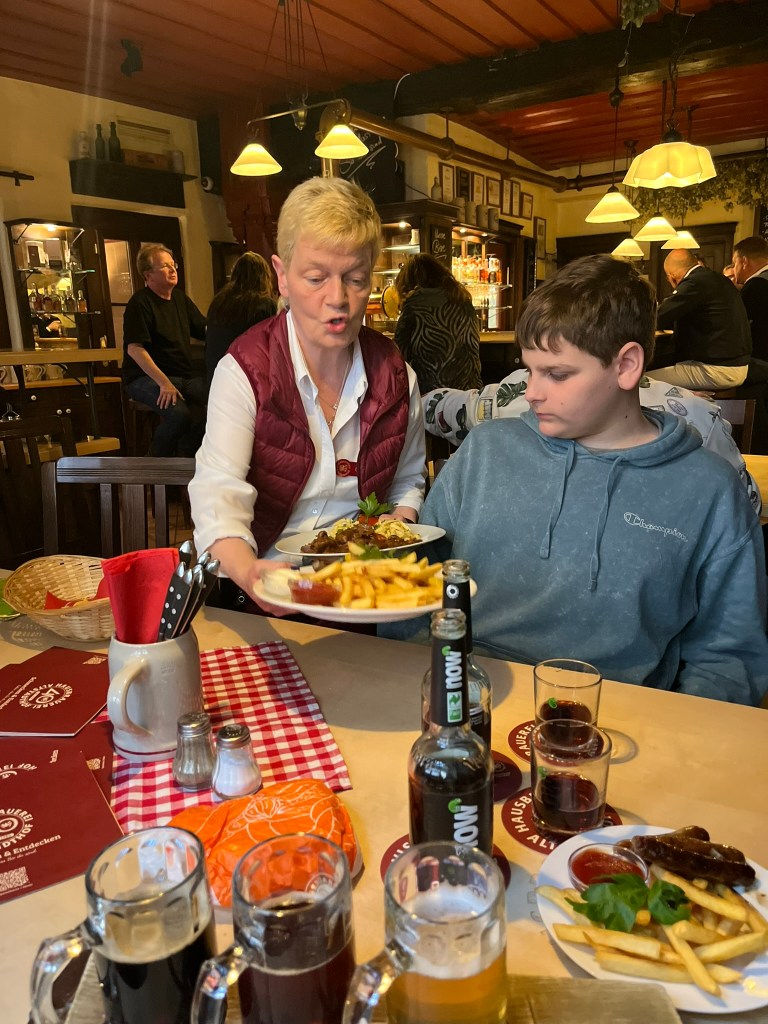
Hausbrauerei Altstadthof serves hearty meals and tasty beer in an inviting social environment.

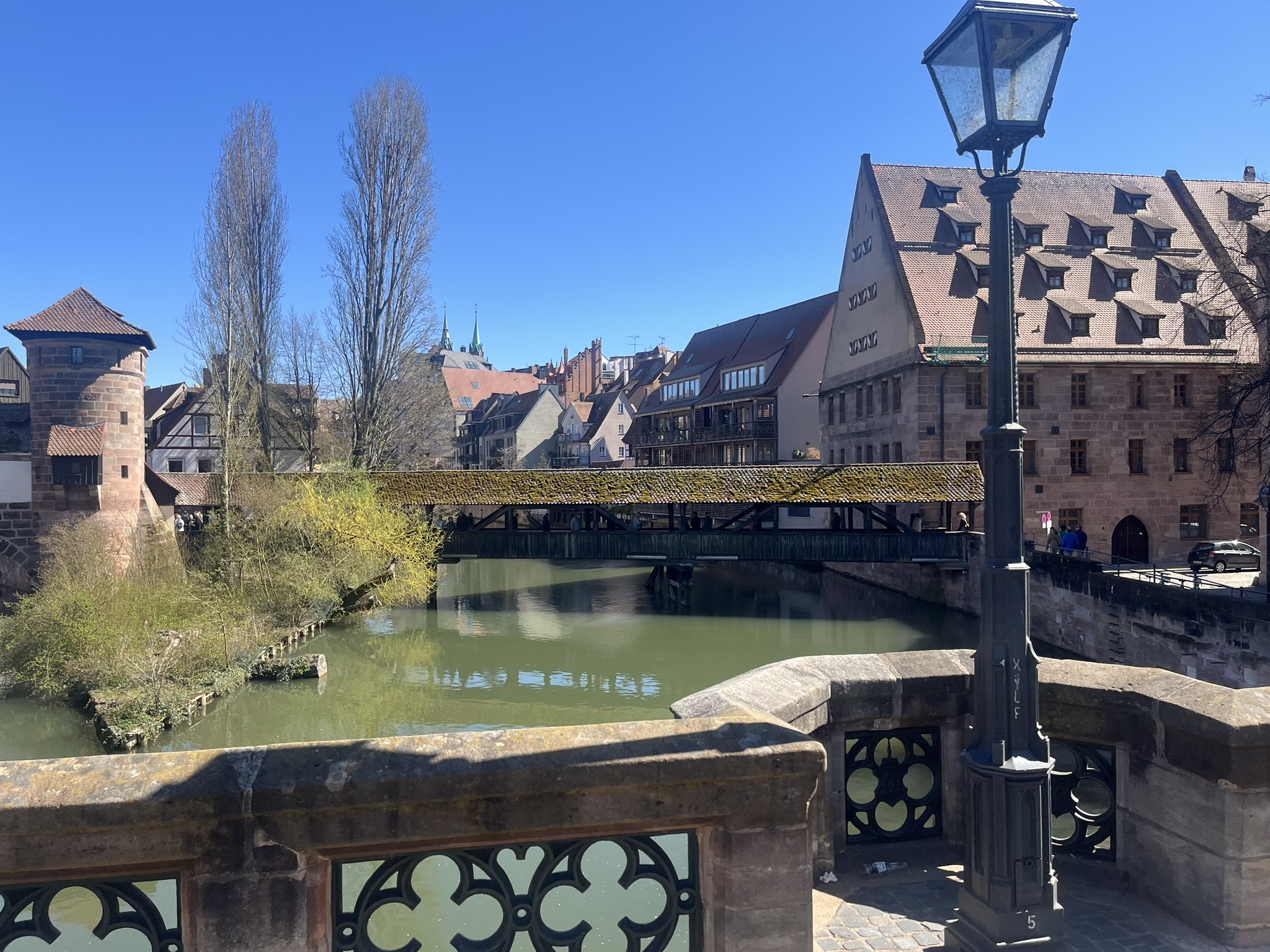
Tour the Old Town and learn about the city’s history while riding the Mini Train, which departs from the Beautiful Fountain at the Main Market Square and takes you on an almost hour-long loop in and around thHausbrauerei Altstadthofe city while multi-language audio headsets announce historical landmarks and relay town stories. One legend tells of German robber Eppelein von Gailingen, who allegedly escaped execution by leaping off the castle and over the moat and city wall on his horse, leaving behind hoofprints on the roof. You’ll see the half-timbered historical building built in 1446 that once housed lepers for three days during Holy Week (to provide them medical attention, clothing, and food), then became a wine storage depot, and now functions as student housing. You’ll also spot the Hangman’s Bridge, a wooden footbridge over the Pegnitz River used solely by the Nürnberg hangman between the 16th and 19th century to travel between his secluded home on a small island in the Pegnitz into the city, as a Middle Ages rule forbade him from contact with “honorable citizens.”
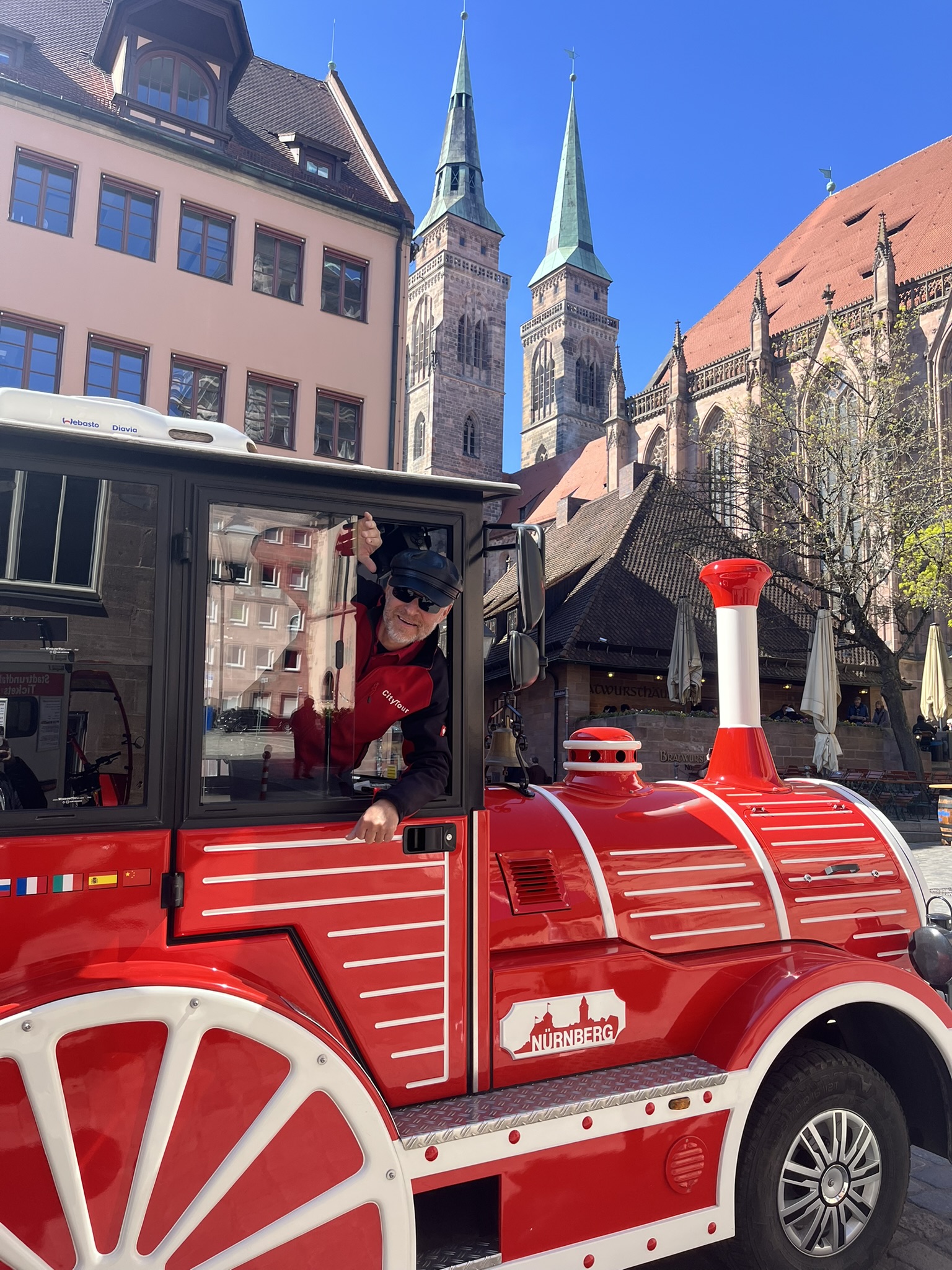
The Mini Train ride provides a comprehensive city tour while revealing town lore.

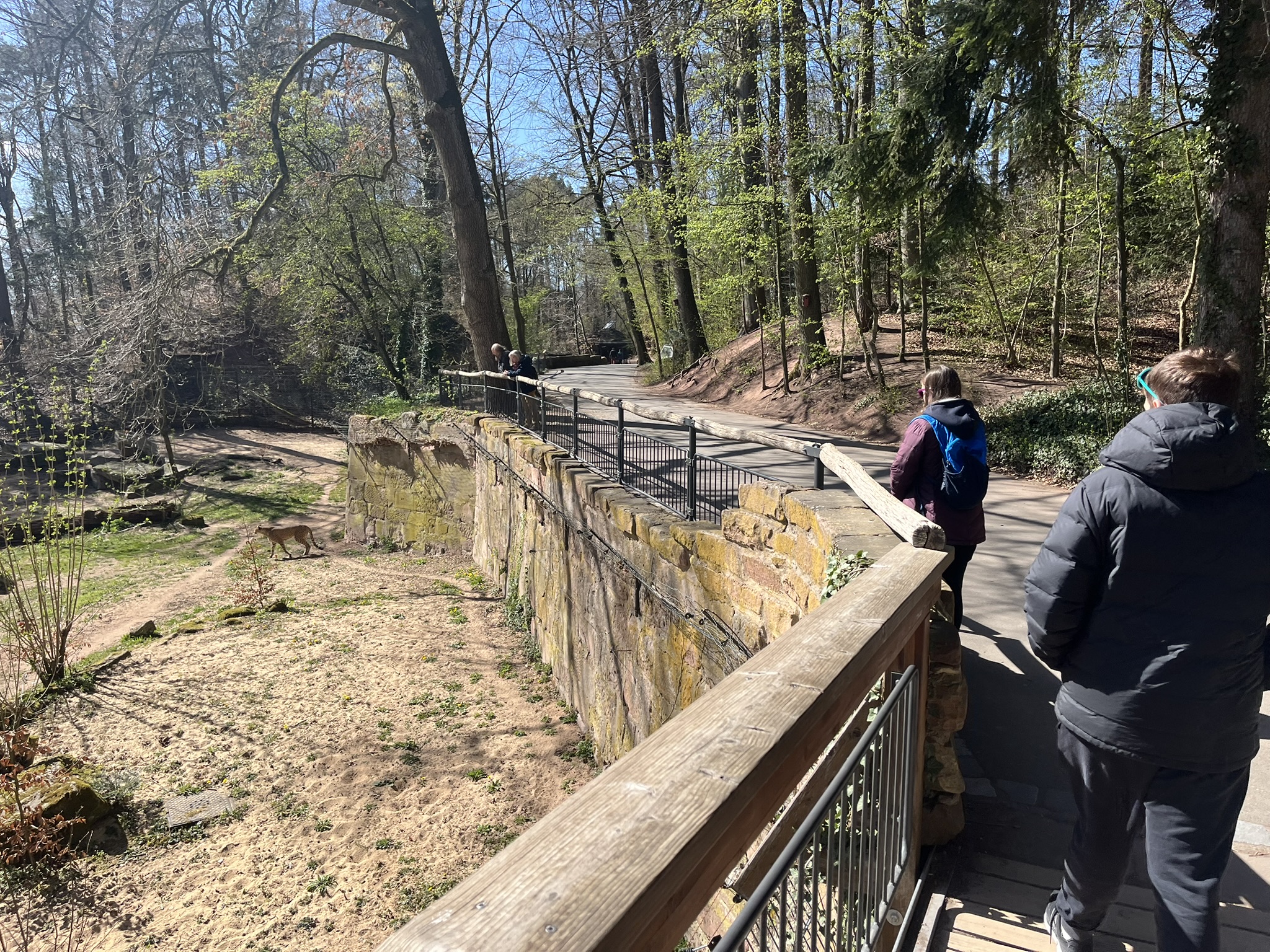
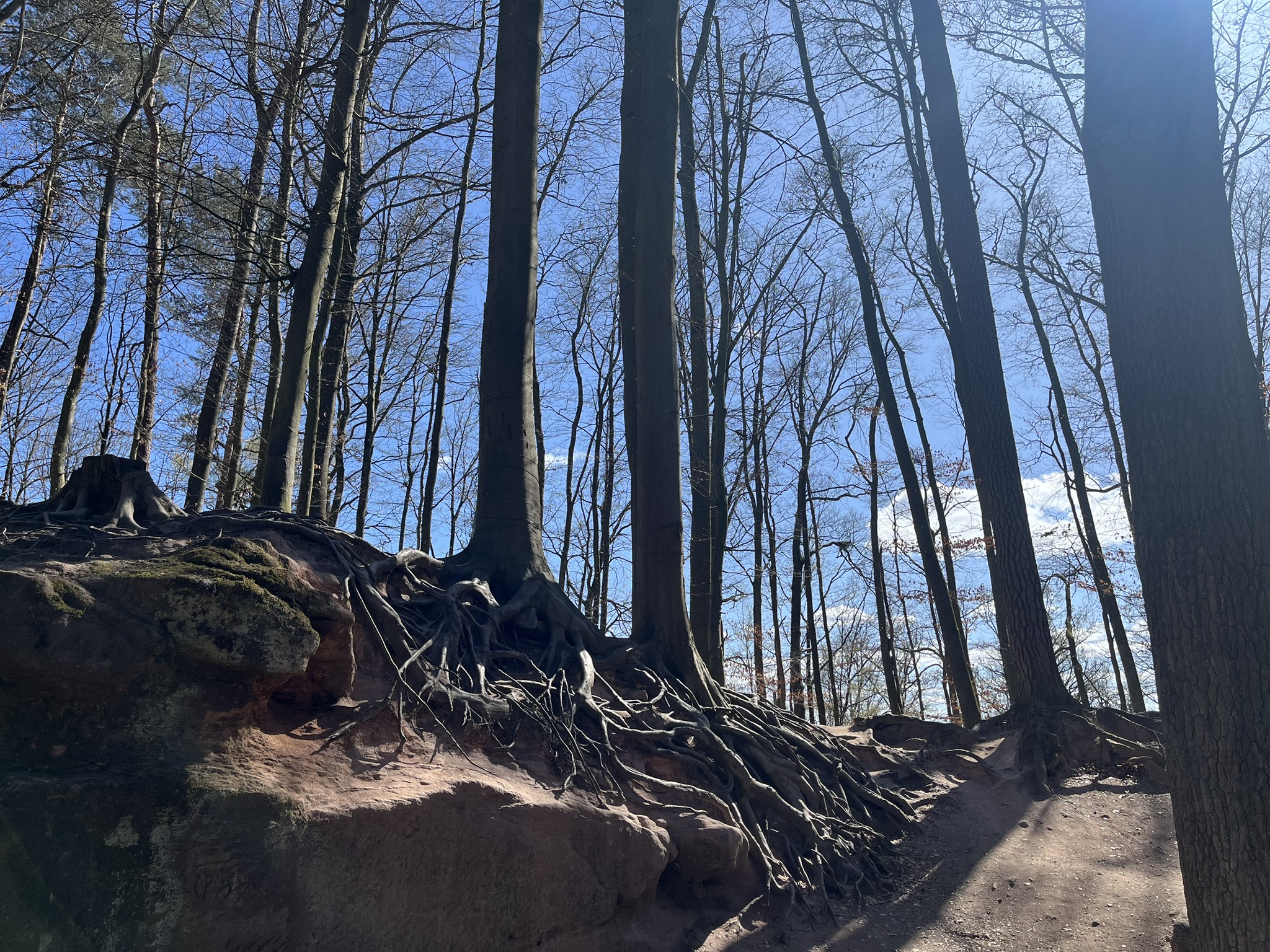
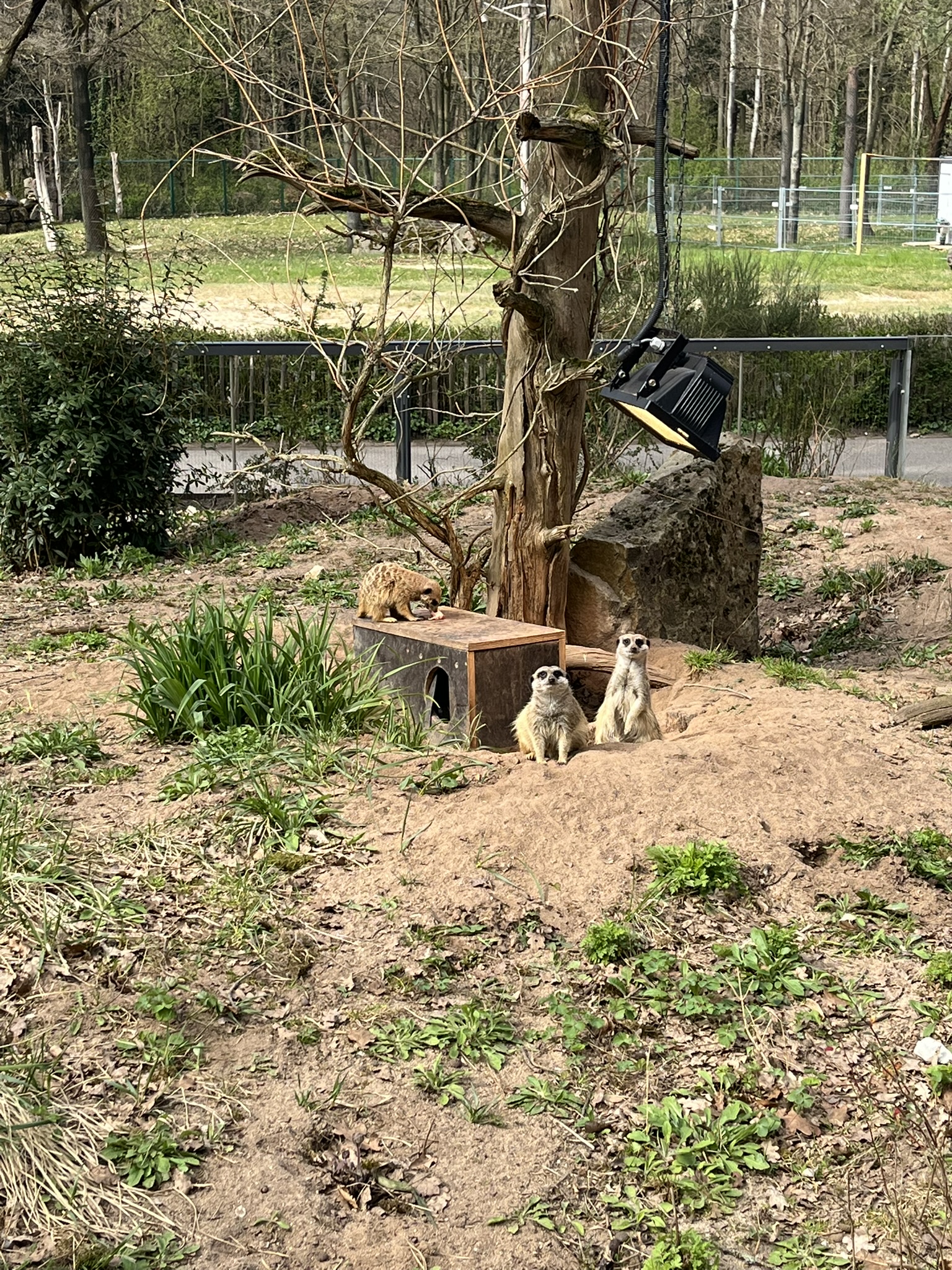
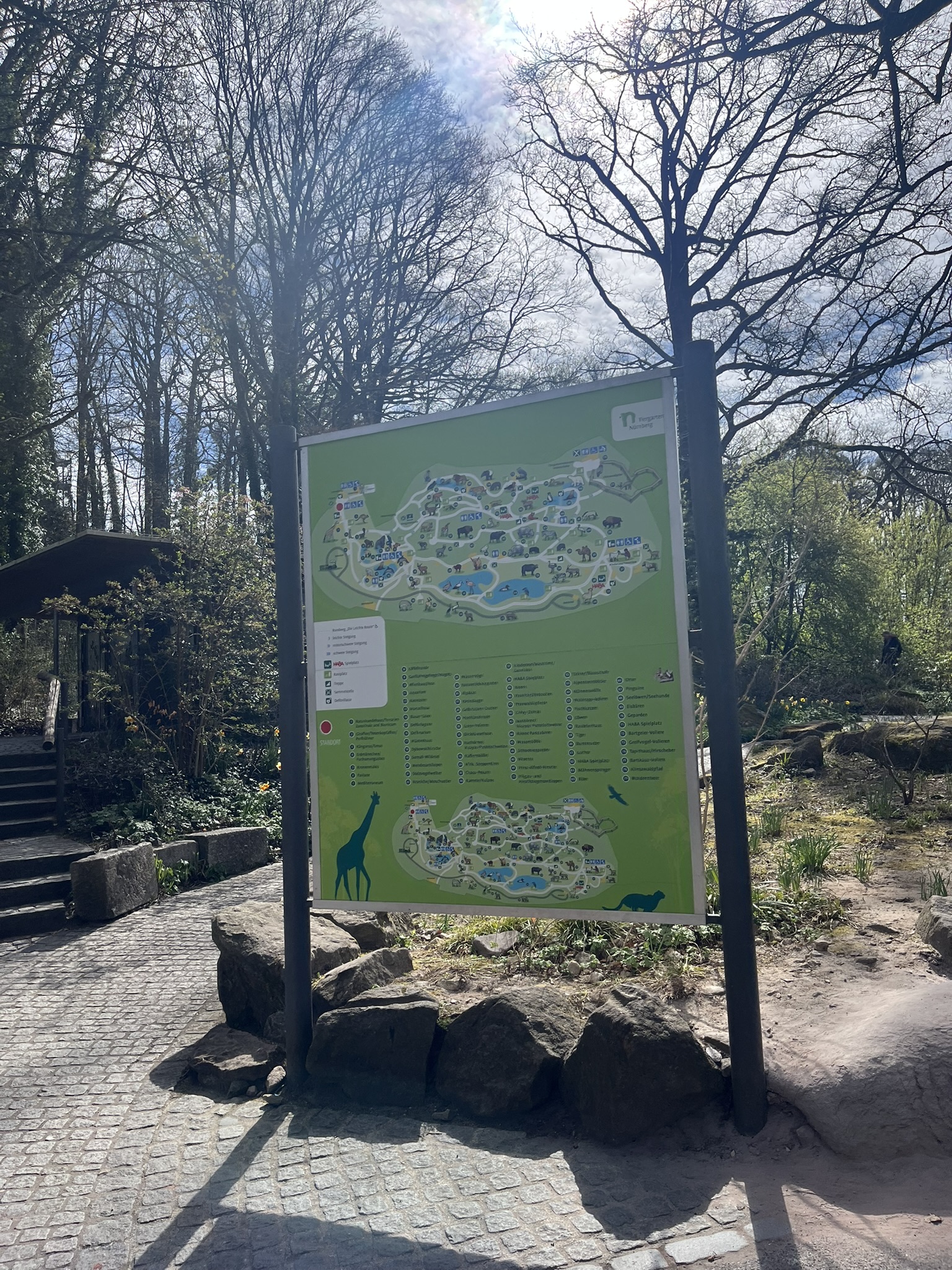
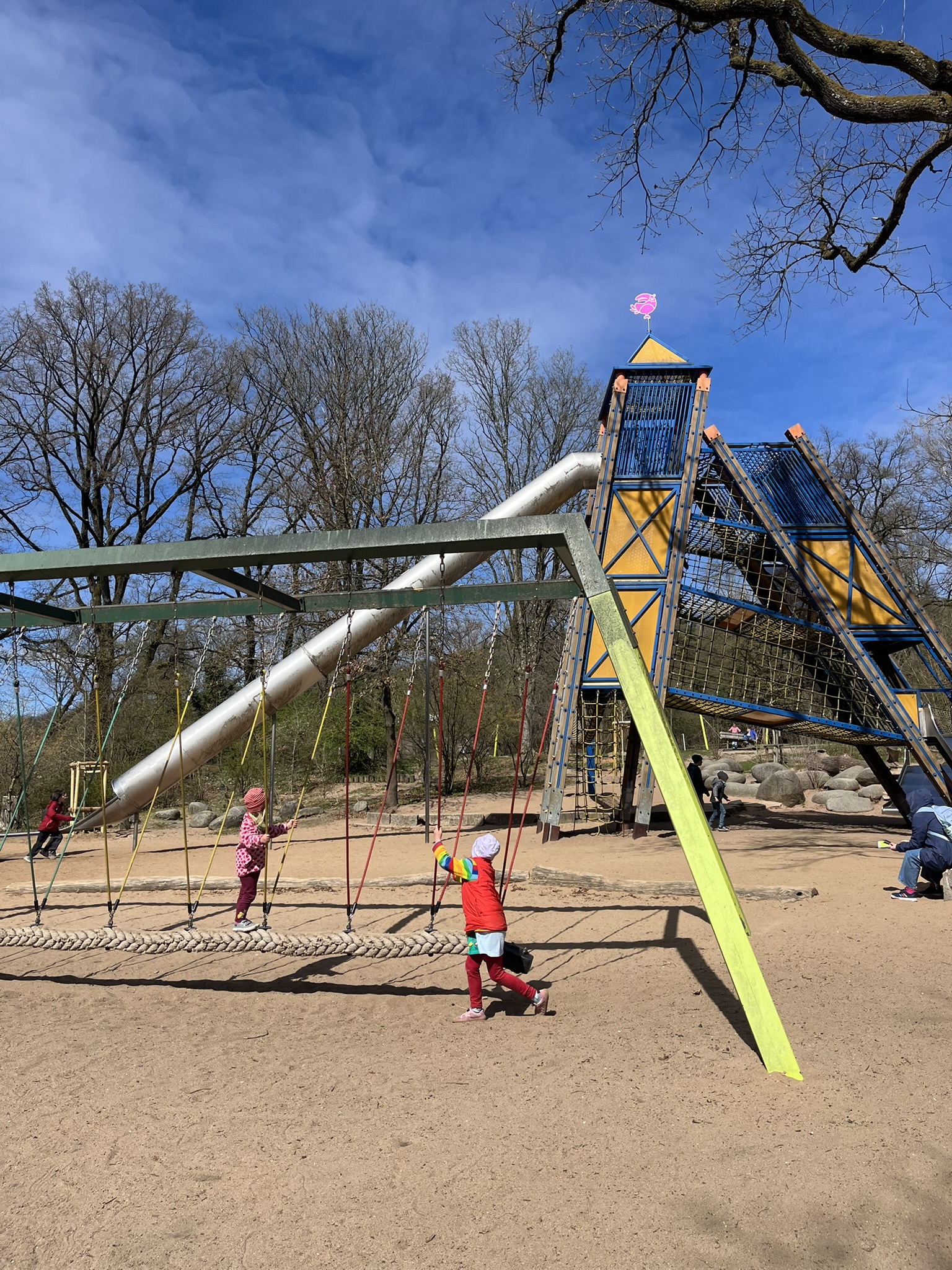
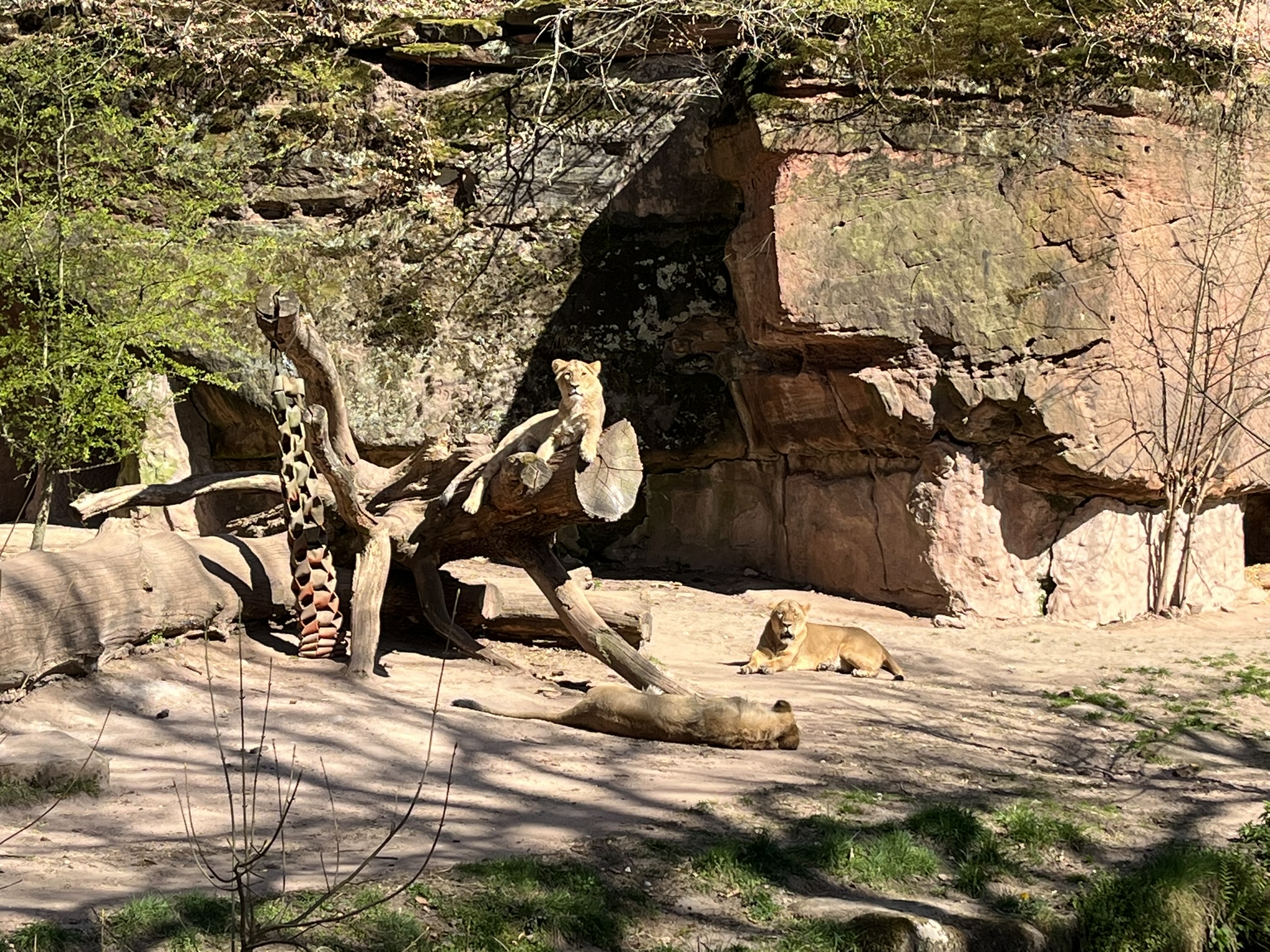
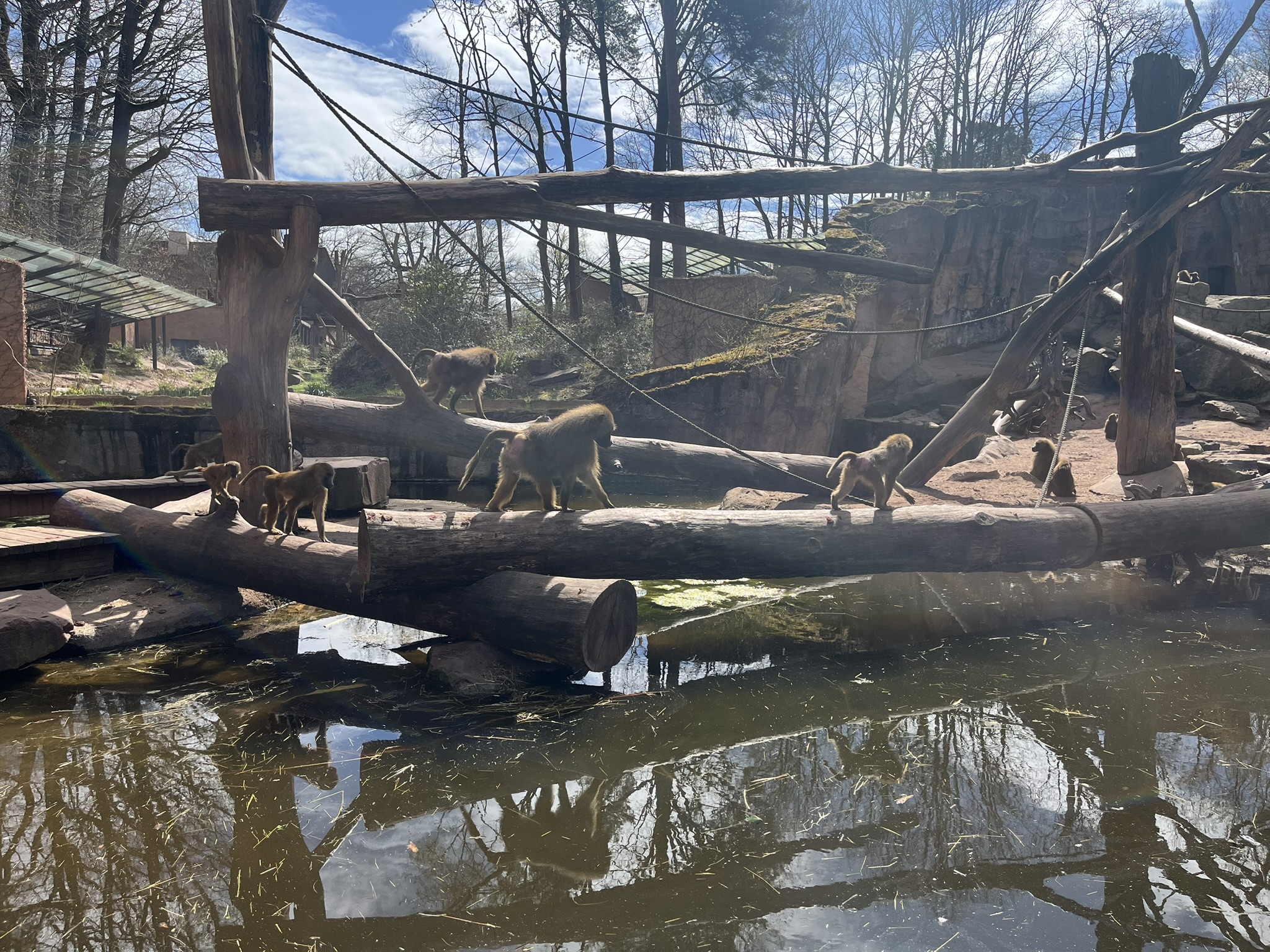
Don’t forget to visit Nürnberg’s surrounding area outside the city walls. Nürnberg Zoo is about a 25-minute ride out of the city center via public transportation. Backed by sandstone cliffs, the exhibits of pacing lions, squeaking lemurs, playful polar bears, and around 300 different animal species (about 40 considered endangered) provide guests with plenty of animal entertainment. One of the largest zoos in Europe, the Nürnberg Zoo is built on approximately 160 acres that include woodlands of ancient trees, peaceful ponds, rocky formations, and sloping walkways. Its special “climate high forest trail” is built at the treetops and allows visitors to stroll and view the zoo from above. The zoo is designed in a natural, park-like arrangement that feels very relaxed and rural. Not only open-air–enclosured animals make this place their home, but water birds and forest animals are found in the wild in this “forest preserve”-like walking zoo. There are numerous play areas for children, including a fantastic large playground with zip lines, ropes courses, giant slides, and inset trampolines—appropriate even for older kids or spirited adults.   

Restaurant Waldschänke within the zoo grounds is reached via a slightly uphill walk along beautiful pathways. Indoors or out in the beer garden you can order hearty meat entrees, kid-friendly food, salads, fish dishes, Mediterranean meals, revitalizing drinks, and an extensive selection of vegetarian and vegan options. Complete with audience-interactive Culinary Theater performances, colorful murals, amusing children’s books to borrow and peruse during your meal, and an opportunity to purchase plush animals, Restaurant Waldschänke is a welcoming eatery for families.

Restaurant Waldschänke in the Nürnberg Zoo is a convenient place to power up between wildlife exhibits.

By exploring inside and outside of Nürnberg’s city walls, high above the castle moat, and even below the streets, you can go beyond surface level to uncover fascinating history and experience this medieval town’s inimitable Franconian charm.

Clixo Fidgety Fun Inspires Creativity During Travel and Beyond

By Alison Ramsey

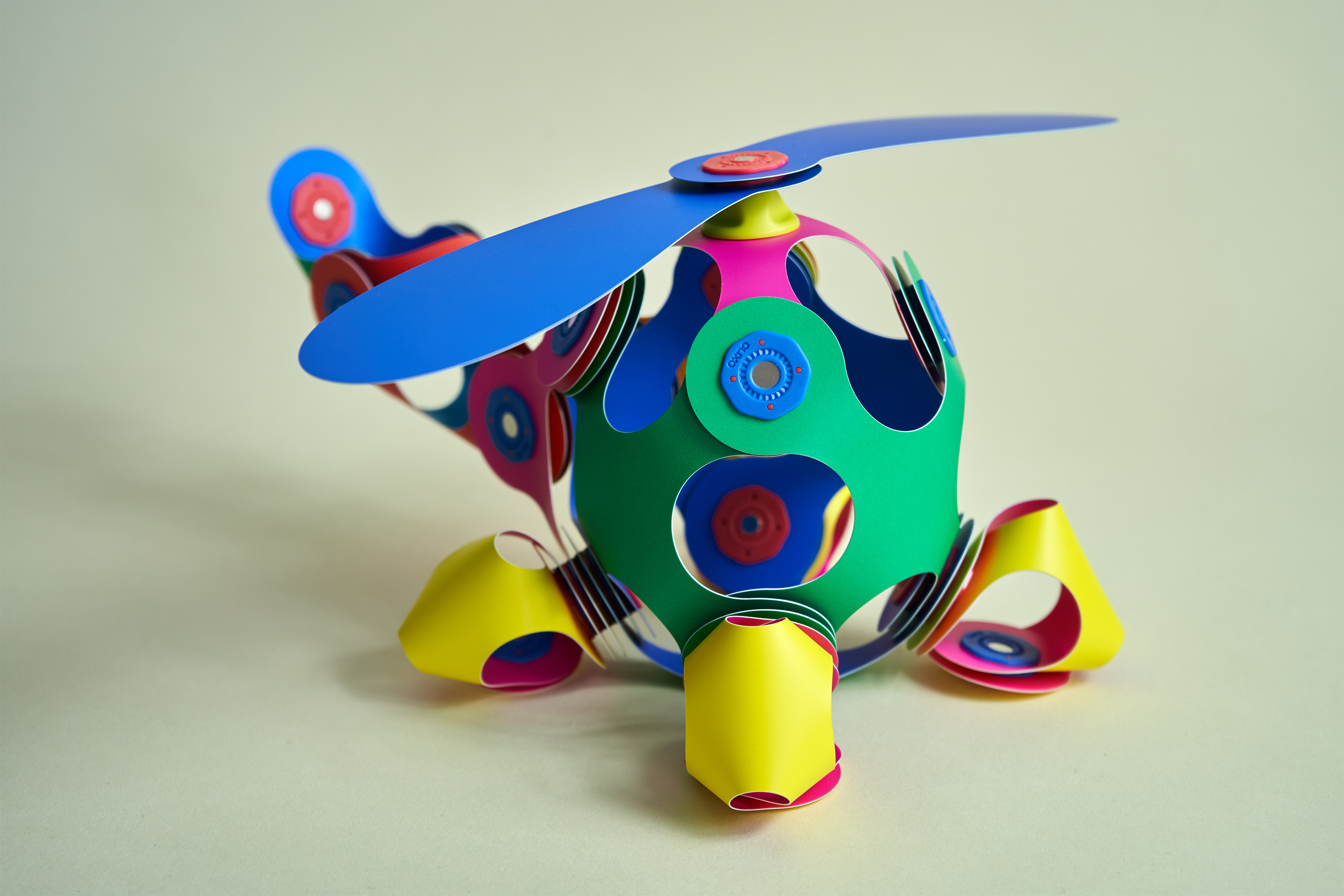
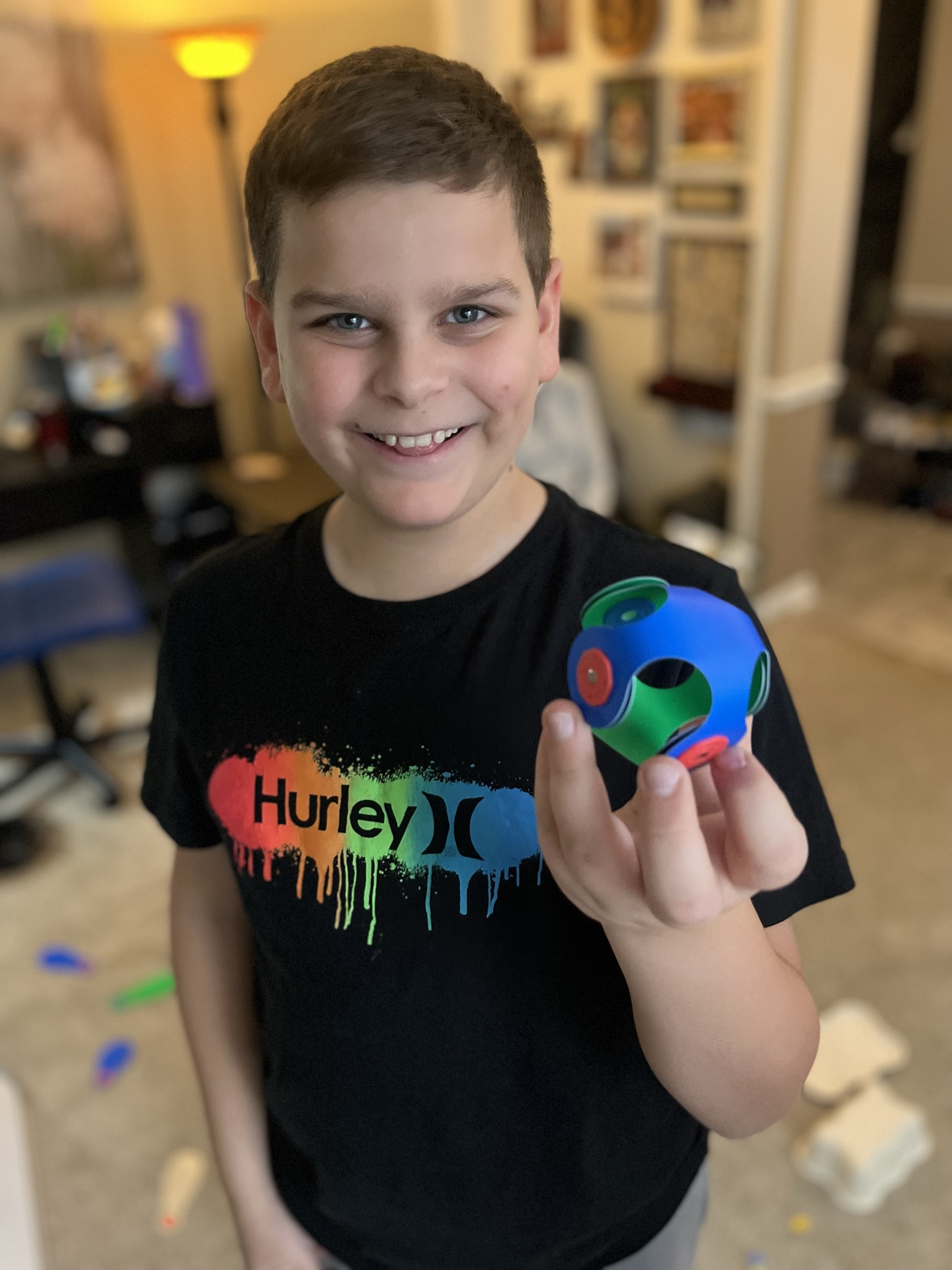
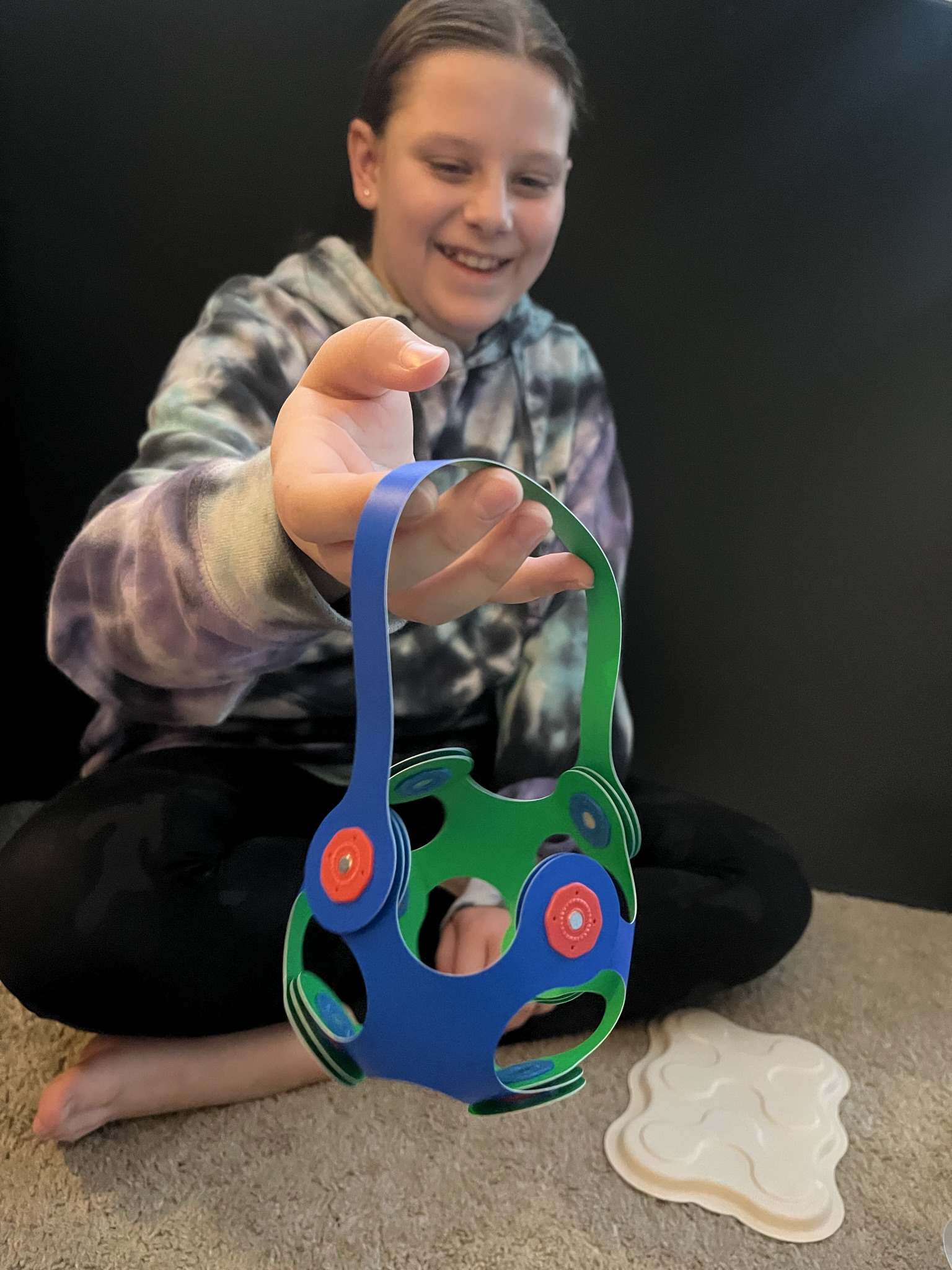
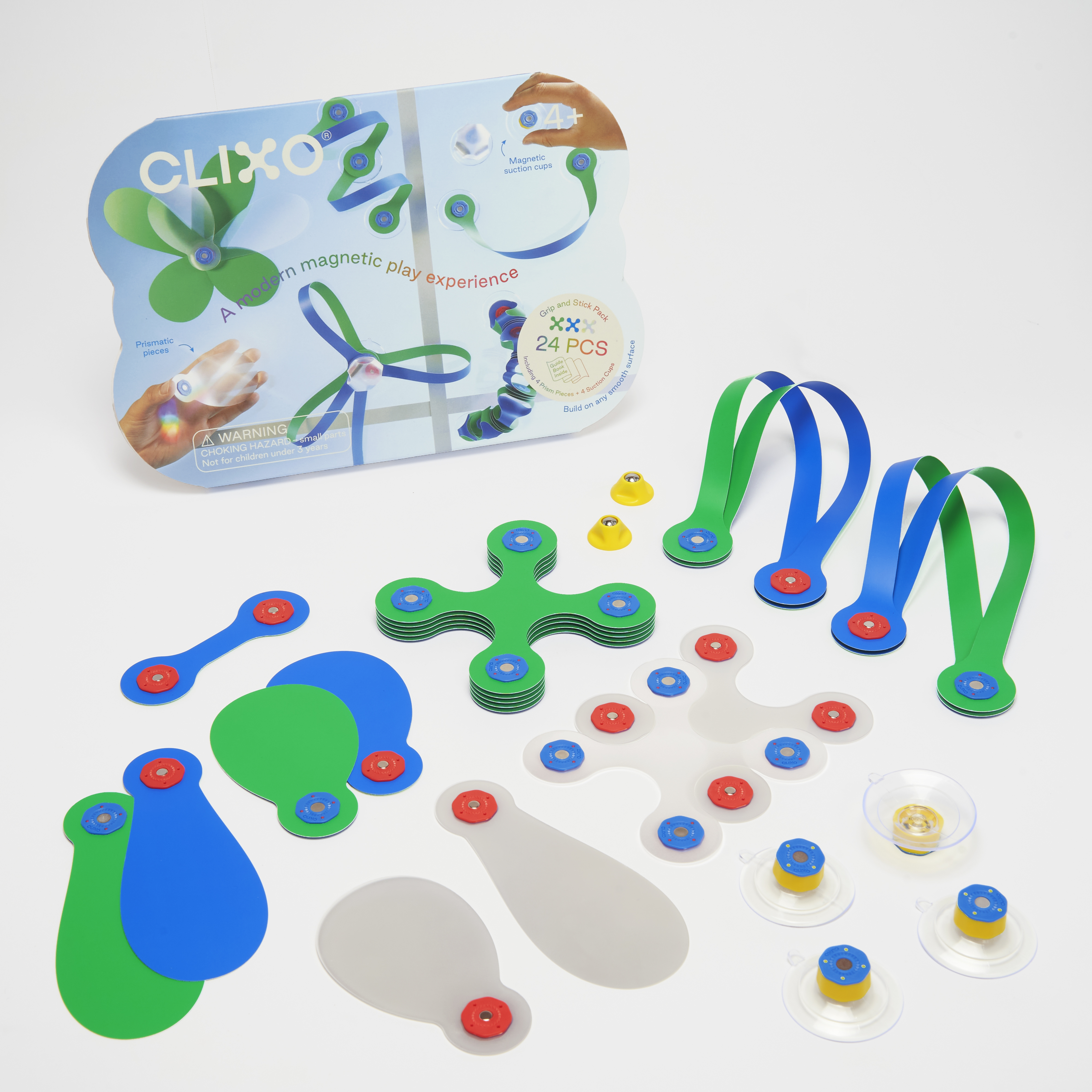
A unique toy for kids and adults alike, the easy-to-pack Clixo magnetic play system encourages freeform building and exploration—no rules or instructions required! Tuck a set of these flat, flexible building pieces into your day bag and pull them out to see your fussy or feisty traveling companions turn into creative geniuses.

Photos courtesy of Clixo.

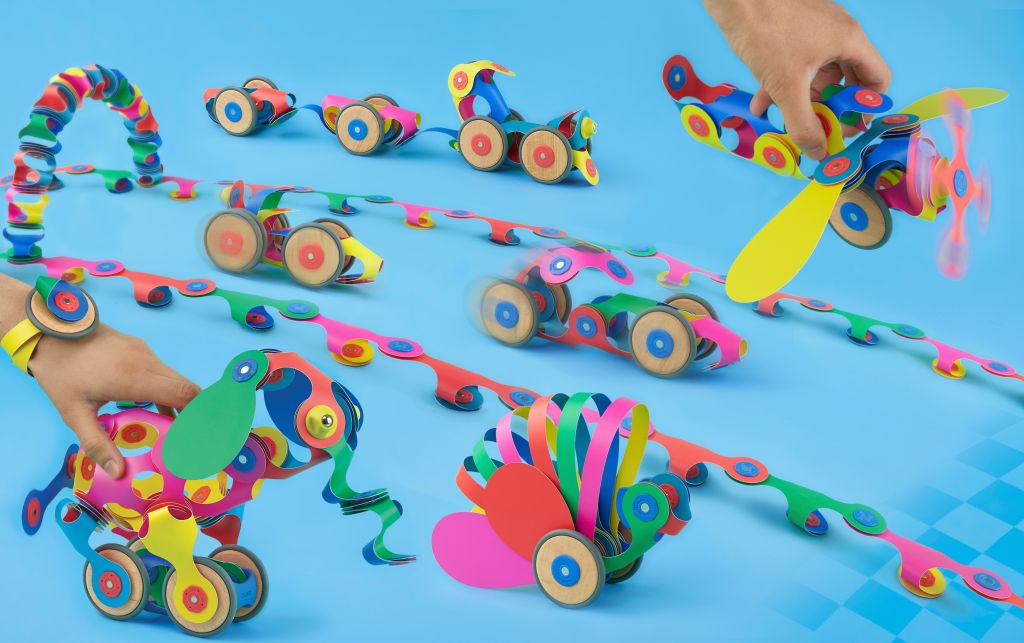
Visored motorcycle helmet, floppy beagle ears, a colorful handbag—within five minutes of opening a package of Clixo lightweight and flexible magnetic shapes, my kids’ creativity using these colorful pieces resulted in a plethora of fun creations. This award-winning building toy from Toyish Labs is packed with endless possibilities for playtime on the go or at home. The durable and compact flexible pieces can be stored flat and easily cleaned and sanitized. Secure magnets are safely fastened to key edges, allowing toy enthusiasts of all ages to snap together pieces and discover limitless creative possibilities. Creations can be stuck to the fridge, worn as accessories or, as with the Grip and Stick Pack, secured via suction cups to a window or flat surface—great for road trips and sticking to the interior of car windows! Some packages include special units that allow attached pieces to spin or roll on wheels, encouraging construction of propellers, vehicles, and other movement-inspired shapes.

Clixo needs no instructions or preamble. My kids were initially confused about what they were opening, but within several moments were excitedly clicking and snapping together pieces with no assistance or explanation needed. Open-ended, screen-free, hands-on play is Clixo’s strength, offering opportunities to create fun 3D structures from 2D pieces. These unique building sets were a finalist for the 2021 Toy of the Year Award, won the Top Toy of the Year Award from the 2022 Creative Child Awards, and have won the Oppenheim Toy Portfolio Gold Seal Best Toy Award and the Tillywig Toy Awards Best Creative Fun Award.

This summer, Clixo partnered with the Museum of Ice Cream (MOIC) in Chicago, Austin, and New York City to launch an interactive experience that allows guests to build colorful 3D creations on magnetic building walls. A special MOIC Clixo pack is sold on-location at these three venues, and features strawberry- and cherry-colored shapes. If your travels bring you to these cities, stop into the MOIC and add some creative constructions to the wall.

Photos courtesy of Clixo.

Assaf Eshet, CEO and Founder of Toyish Labs and creator of Clixo said, “We’re very excited to be working with Museum of Ice Cream on this collaboration and sharing Clixo with MOIC visitors. Museum of Ice Cream provides a fun and engaging experience for all kids and their parents. At Clixo, we share the same values of bringing play and creativity to kids and kids at heart.”

Photo courtesy of Clixo.

For more information or to purchase Clixo building sets, please visit www.clixo.com. The Black Friday Super Sale is currently offering up to 40% off sitewide, so take advantage of the sale prices for these colorful stocking stuffers or Christmas gifts while you can! May your holidays and holiday travel be peaceful, joy-filled, and inspiring.

Flavors of Christmas in Spain

Photos courtesy Spain Tourist Office

Christmas delights the palate in Spain. You will have no shortage of opportunities to give way to temptation as you experience Spanish gastronomy during the festive Christmas season.

Dinner on Christmas Eve and New Year’s Eve, lunch on Christmas Day and New Year’s Day, along with January 6, Feast of the Epiphany, are the most essential dates. However, throughout the month of December, bars, restaurants and hotels are decked out for the season. Their tables are decorated with candles, bows and Christmas motifs, and they offer special menus and delicious dishes.

HEAVENLY TABLES
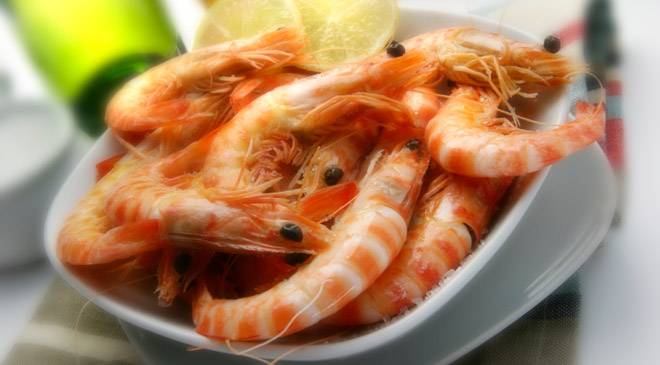
Christmas meals are usually copious. They tend to start with a selection of starters and appetizers, either hot or cold. Then comes several courses and dessert. You can try a bit of everything: shellfish, fish, meat, roasted meat, soups, Iberian cured meats—all prepared in an especially delicious way. Some of the most popular foods include turkey, lamb, red cabbage, sea bream, oysters, elvers and ham. As the dishes are served, you will see how hard it is to resist. And to accompany them are good Spanish wines, both white and red. At the end of the meal, good wishes are toasted with a glass of cava sparkling wine or cider.

SWEETS
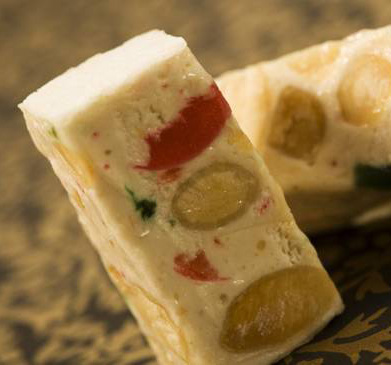
Sweets deserve a mention of their own, filling the table with color when it is time for dessert. Made with almonds, honey, sugar, chocolate and fruit, among other ingredients, they are a real treat for those with a sweet tooth. There is a wide array, and each region of Spain has its own typical recipes. However, the real star at Christmas is “turrón,” with a flavor admired around the world.

There are many different types of turrón, but you should try the Jijona variety—soft and sweet—and the Alicante type, which is hard and crunchy. Other traditional desserts are marzipan, polvorones (a crumbly shortbread) and mantecados (made with almonds and lard). Finally, on January 6, Day of the Three Kings (Epiphany), children are excited to receive their presents, while grownups get to savour a Roscón de Reyes (seasonal cake) with a cup of hot chocolate.

For more info, go to Spain Tourism

The Christmas Markets of Hamburg

Perhaps surprisingly, Hamburg’s Weihnachtsmarkt at the Rathaus in the center of Hamburg is a relative newcomer to the world of Christmas Markets in Germany.

Several years ago the city fathers decided to look for a new concept for its holiday market, and found a creative partner in Bernhard Paul, director of Roncalli’s Circus. With its colorful circus-themed market stalls and entertainment, including a nostalgic carousel and historic fairground organ, the Christmas market at the Rathausmarkt opened for only its eighth year in 2007. In that short time, however, it has become one of the most popular markets in northern Germany, with nearly three million visitors each year.

LEBKUCHEN AND GLUHWEIN ABOUND

About 80 dealers from all over Germany gather to sell their handicrafts and food specialties. Shoppers enjoy the smell of roasted almonds, Lebkuchen and Gluhwein as they stroll through the rows of vendors, who are grouped according to their wares.

One row is filled with toys, including model trains. Handcrafters such as glassblowers, makers of hats or lanterns and amber jewelry are in another aisle. There is a food specialties area that includes cheese from Tirol, Christstollen from Dresden, Lebkuchen from Nurnberg and candy makers in action. Tired shoppers can enjoy genuine German refreshments indoors at the colorful Art Nouveau Viennese café at the market.

Three times each day Santa Claus, in his sleigh pulled by reindeer, flies high over the market to the sound of American Christmas carols –is that Bing Crosby I hear? Standing in a basket suspended under the moving sleigh is the Christkind (Christmas angel who delivers gifts to the children), waving at the crowd in the market below.

A city as large as Hamburg will, of course, have more than one Christmas market to attract visitors.

Of the 12—that’s correct, 12—Hamburg Christmas markets, one of the trendiest is Weihnachtsmarkt Jungfernstieg, which overlooks the beautiful Inner Alster Lake. White is the theme color of this market:
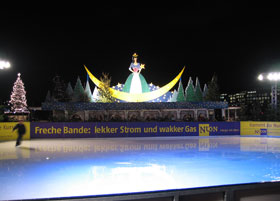
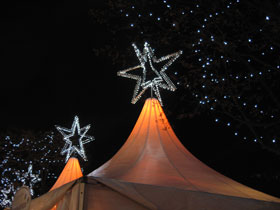
white lights highlight the vendor booths, which are covered by soaring white roofs, and are topped with white star-lit peaks. Open for only its second season in 2007, this unique market boasts an ice-skating rink and an open-air lounge, which supplies warm blankets to customers. Shoppers can find clothes and jewelry along with traditional nutcrackers and food specialties.

MINIATUR WUNDERLAND

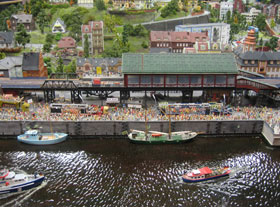
If rainy weather limits your time at the outdoor Christmas Markets, take advantage of some of the many attractions that Hamburg has to offer. Miniatur Wunderland is the world’s largest model railway and is housed next to the Elbe River in Hamburg’s warehouse district. The trains run on several different levels of the building, and a full-time paid staff monitors the miniature world.

Allow several hours to enjoy the more than 700 model trains, which run through scenery modeled after Germany, Austria, Switzerland, Scandinavia, and even the Western United States. See a circus in action, cars driving on highways and ships sailing the ocean. See fires break out and emergency trucks speed to the rescue. And then there are the trains—they are everywhere—and they are of every kind, all running as if they were on prototype railroads. And every half hour, daylight becomes nighttime inside this miniature HO scale world. There is an admission, and a nice gift shop.

It will be hard to pull kids away; perhaps dads won’t want to leave, either! Check out this fascinating world at www.miniatur-wunderland.de

BALLINSTADT EMIGRATION MUSEUM

Hamburg’s BallinStadt Museum offers an amazing and detailed look at the history of emigration to America via the port of Hamburg.

The museum is named after Albert Ballin, director of the HAPAG shipping company, who had a 30-building departure city built between 1901 and 1907 for emigrants. The museum is located on this site and housed in three reconstructed Housing Pavilions.

A model constructed beneath the floor and viewed from above through glass, shows the layout of the original departure city. Interactive exhibits tell the emigrants’ stories, and show what daily life was like as they awaited their journey to America. A family research center at the museum offers the opportunity to access Hamburg passenger lists from 1850 to 1934.

Easily reached by public transportation, the BallinStadt Museum shows how the Port of Hamburg became known as the emigrant’s gateway to the world. www.ballinstadt.de

If you’re ready for more shopping, and weather is still dampening the outdoor markets, try indoor shopping at the Europa Passage. Architect Hadi Teherani designed this structure with a glass ceiling and 21 arches, which connects five floors filled with 130 shops and restaurants. Located with a view of the Inner Alster, (one of Hamburg’s lakes), the mall offers modern, upscale shopping in light-filled arcades. www.europa-passage.de

For accommodations within walking distance from the Europa Passage, the Rathausmarkt, and the Christmas market Jungfernstieg, try the Hotel Atlantic Kempinski. First opened in 1909, this luxury hotel next to the Outer Alster served passengers awaiting their departure on ocean liners. Now it is a local landmark, recognized from afar by its white-lit rooftop globe and ladies emblem, which was used in the James Bond film “Tomorrow Never Dies.”

A sumptuous breakfast buffet and beautifully appointed lobby with tea service, offer the traveler warmth and welcome after a full day of rewarding Hamburg experiences.
www.kempinski.atlantic.de

For more information about Hamburg, visit their website at www.hamburg-tourism.de

Christkindlmarkt Nuremberg-Style

By Marilyn Heimburger
Photos by Marilyn and Don Heimburger

When you think of Christmas markets in Germany, Nuremberg usually comes to mind first. It has a very long history and is considered the “queen” of the Christmas Markets.

The Christkindlmarkt of Nuremberg was first called “Kindelsmarkt” in an inscription on a wooden oval box dated 1628.

The main market square between the Schoener Brunnen (beautiful fountain) and the Frauenkirche (Church of Our Lady) is the site of this famous Christmas market. The 180 market stalls with their red and white-striped canvas roofs are arranged in rows and fill the area with the aromas and lights of the holiday season. The popular Christkindlmarkt has been called a “Little Town of Wood and Cloth.”

PRUNE MEN ARE SPECIALITY

Vendors offer the beautiful craft wares and decorations found in many markets. But one special item you can find here are prune men: figures 6-8 inches tall with arms and legs made of dried prunes and heads made of walnuts.

An edible specialty of Nuremberg is its tiny sausages, which weigh exactly 23 grams and are about the size of a little finger. According to legend, they were made small enough to fit through the keyhole of a door, just in case someone was locked out of the city gate after curfew and needed something to eat!

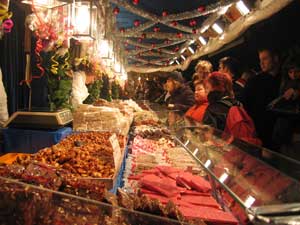
Another treat is Nuremberg’s famous Lebkuchen (gingerbread). Lebkuchen Schmidt ships its goods all over the world, and is available in beautifully decorated tins, even music boxes (www.lebkuchen-schmidt.com.)

Unique to the Nuremberg Christmas market is Christkind, who officially opens the market at 5:30 p.m. on the Friday before the first Sunday in Advent. The Christkind, or Christmas Angel, represents the Christ Child as the one who gives gifts on Christmas, as opposed to St. Nicholas, who delivers gifts into the waiting shoes of good children on December 6.

Every two years since 1969 a young girl is elected by a combination of popular vote and jury selection to represent the Christkind. Strict rules govern the age and height of a Christkind candidate. She must also be a good student, since her many appearances force her to miss school, and she must not be afraid of heights, because she must stand on a balcony near the top of the Church of Our Lady to deliver her market-opening pronouncement!

SPECIAL REQUIREMENTS

Nuremberg is understandably proud of its Christkindlmarkt. In order to protect the market’s reputation, war toys are banned, as are decorations of plastic firs, products displayed in cardboard boxes, and canned Christmas music.

A short walk away from the main market square is the Rathausplatz (Town Hall Square) where you can find 14 vendor stalls from Nuremberg’s partner cities offering their unique wares.

In addition to the Christkindlmarkt in Nuremberg’s main market square, a special Kinderweihnacht (Children’s Christmas Market) on the Hans-Sachs-Platz has entertained families since 1999. A 100-year-old steam Ferris wheel, a steam railway and a merry-go-round offer rides. Vendor stalls have lower counters to invite children to see and touch, decorate cookies and candles, and have pictures taken with Santa. Across from the children’s market is the Sternenhaus (Star House), which serves as headquarters for the Christkind and offers cultural programs for children.

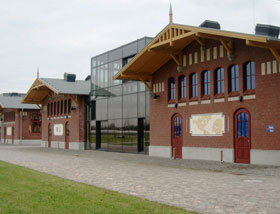
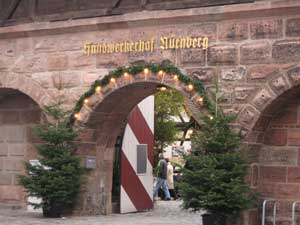
One very special market open all year round, but is especially magical during the Christmas season is the Handwerkerhof. Located across from the main train station, the stone and half-timbered structures look as old as the King’s tower and fortification walls that surround them. But the entire little town was built in 1971 as an additional attraction during the Albreacht Durer 500 anniversary celebration. It has remained a year-round attraction highlighting craftsmen who work with pewter, leather, glass, candles, precious metals, gingerbread and dolls.

You can watch bakers make Lebkuchen, shop for tin toys, wood and glass ornaments, have a mug of hot spiced wine, and then eat at the Bratwurstglocklein, a wonderful wood-paneled, low-ceilinged pub with waitresses dressed in traditional dirndls, and food served on pewter plates. Try the tiny sausages each of three ways: cooked with vinegar and onions, smoked and grilled. Served with potato salad, saurkraut and beer, it’s a tradional Nuremberger treat. The Handwerkerhof is open six days a week (seven days a week during Christkindlmarkt) from the middle of March through December 31 (www.handwerkerhof.de.)  

Wonderful accommodations for your Christkindlmarkt visit can be found at the Maritim Nuernberg (www.maritim.de.) It is conveniently located just a short walk from the main train station, and across the street from the Handwerkerhof. Another short walk takes you to the main market square and the Christkindlmarkt in the shadow of the Schoener Brunnen.

One more suggestion: before leaving the main market square, look carefully at the Schoener Brunnen until you find the gold ring. Make a wish and turn the ring three times to make your wish come true. Perhaps you will wish to return to this beautiful market again next year!