The People and Places of Bruges

By Don Heimburger
Photos by the author

From the look of the crowds on the streets, it appears everyone has fallen in love with Bruges. And I visited in early April when there were fewer people visiting.

But that’s about the only negative thing you might be able to say about such a beautifully-preserved medieval city. It’s truly a must-see on any tour of Flanders, and you could easily spend several days visiting its wonders.

If Disney could have laid claim to Bruges, he would have: it’s that charming.

Bruges is easily walkable, but beware the cobblestone walks—make sure you have good walking shoes. Also, plenty of horse and buggies are for hire, or you can take a boat tour of the city or ride in a mini-bus.

UNESCO SITE
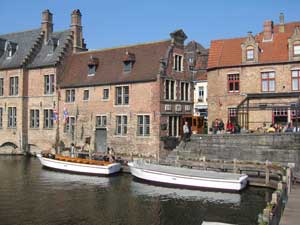
The whole of the city center is a historical landmark, designated by UNESCO as a World Heritage Site, and so it should be. It’s hard not to become enamored with Bruges, its twisting streets and alleyways, its network of canals, and its charm. It’s a complicated network of narrow passageways, brick buildings and waterways, but that’s what makes this city so fascinating. You’ll love it.

VISIT THE BEGUINAGE
In most cases, you’ll cross Minnewater Bridge to enter the Beguinage, founded in 1245. Now populated by nuns from the Order of Saint Benedict, you’ll see the beautiful courtyard garden, where yellow daffodils pop up in spring, the whitewashed house fronts that line the Beguinage, and the peaceful beauty of the area. A posted sign even asks visitors to be quiet and be beware of their surroundings.

THE BELFRY
In case of war—or fire, or anything—the belfry was where it was first noticed. The marketplace is still dominated by this high tower, and it looks out onto the bustling plaza where life comes together in Bruges. You can climb to the top of the belfry (it will cost you 366 steps), and get a good view of the town as well as the two statues in the square, one of Jan Breydel and one of Pieter de Conick, both heroes who resisted the French in 1302.

The Stadsschouwburg is the royal theater building dating from 1869 and is said to be Europe’s best preserved city theater. Behind the Gothic revival architecture is a palatial auditorium and an elegant foyer.

The Little Bear of Bruges, located in a niche in the Burghers Lodge at Poortersloge, a 15th century private club building, is an important city symbol. I tried finding it, to no avail, but perhaps you’ll have better luck. It’s worth a photograph.

Kempinski Dukes’ Palace, at Prinsenhof 8, now an excellent five-star luxury hotel, was a former 15th century Dukes of Burgundy castle, and features 93 rooms, including 22 palatial suites, of which six are historically listed. Each room contains original features from 1429, but they have been completely modernized with elegant furnishings and marble bathrooms, and the hotel offers the latest technology such as flat screen television and high speed internet. Even just a look from the outside at this hotel is impressive; it’s located at the end of a short street, and is easy to miss.

LAST REMAINING BREWERY
Bruges’ last remaining city brewery is De Halve Maan (The Half Moon), established in 1546; their specialty beer is called Brugse Zot, which refers to the nickname of the townspeople, conferred upon them by Maximilian of Austria. You can take a 45-minute tour of the brewery and museum; cost is 5.50 euros.

Churches are abundant and worthy of a look. There’s the Beguinage Church, the Episcopal Palace, the English Convent, Basilica of the Holy Blood, Church of the Holy Magdalena, the Military Chapel, Church of our Lady of the Pottery, and the Welcome Church of Our Lady (see the art collection inside including Michelangelo’s famous Madonna and Child, and the 15th and 16 century mausoleums of Mary of Burgundy and Charles the Bold). Saint James’ Church benefited from the Dukes of Burgundy and the many foreign merchants, and their gifts have left their glittering marks on the interior of this church. A guidebook, which you can pick up at the local tourism office in town or at the Bruges railway station, will sort out these churches and other points of interest for you. www.brugge.be/tourism

The Frietmuseum is all about the Belgian potato fry, located in the Saaihalle. Here you’ll learn all about the history of potatoes, and fries, and the condiments which are served with them. Kids will especially enjoy the fun things this museum offers, and you can even taste fries in the cellar of this medieval 14th century building.

WHAT ABOUT CHOCOLATE?
Belgian chocolates, and their history, are served up in good measure at the Chocolate Museum, a four-story compilation of everything chocolate. The museum explains chocolate started with the Mayans and Aztec civilizations in pre-Colombian Central America, and after adding sugar, was imported to Europe around 1500 AD. Chocolate as we know it became popular around 1800, and as they say, the rest is history. The museum is a must-see in Bruges at Wijnzakstraat 2.

To taste more fine Belgian chocolate, you’ll want to check out The Chocolate Line at Simon Stevinplein 19. Master chocolatier Dominique Persoone, one of the owners, is a dynamic chef with advanced ideas on the making and blending of chocolates and other flavors. Chef Persoone blends chocolate with such tastes as cigars, fried onions and passion fruit. His shop is one of only three chocolate shops listed in the Michelin Guide, and the shop’s customers include such top-notch restaurants as Comme Chez Soi, Oud Sluis and Hof van Cleve. He even has a new book out where he travels through Mexico in search of the origins of cocoa, visiting Maya settlements and discovering the secret of the first chocolate drink and today’s Pozol. If you happen to get to meet Dominique, you will enjoy his demeanor and his chocolates.
www.thechocolateline.be

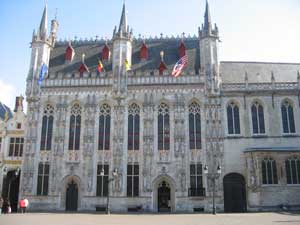
Bruges is also known for its many guild halls, which are scattered throughout the town. Bruges Town Hall, built between 1376 and 1420, is one of the oldest in the Low Countries. A ceremonial staircase leads from the entrance hall to the first floor, where visitors can view the Gothic Chamber. This former council chamber continues to play an important part in the life of the city. The wooden, polychrome ceiling is decorated with a profusion of late-medieval carvings. The murals illustrating Bruges’ past were added during the chamber’s restoration in the late 19th century.

Where to stay? There are dozens of hotels, youth hostels, apartments and bed and breakfasts to choose from. The Bruges Tourist Office can supply a booklet listing these.

Bruges is colorful, inviting and lively, and the food and beer there is some of the best in Europe. You couldn’t find a better combination of history, fun and food. For more information, go to www.visitflanders.us or www.brugge.be

Spain Is Hot

Let’s go, amigos!

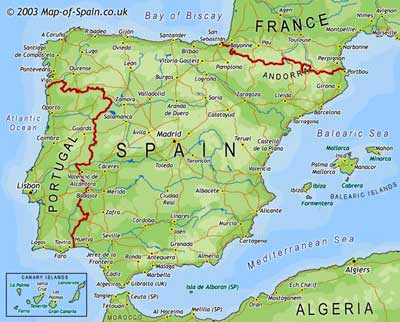
Map of Spain by Tourizm Maps © 2006

By Barbara Gibbs Ostmann
Photos by the author

Costa Blanca … Costa Daurada … the mere words conjure up images of warmth, sand and sunshine, just the antidote to chilly North American winter weather. Now is the time to head to the Mediterranean coast of Spain, where the weather is already warm. Going in the spring or fall offers great weather along with fewer tourists and lower, shoulder-season prices.

Spain is hot, hot, hot right now — from cuisine to fashion. Let’s go, amigos!

MAGICAL MADRID

Most flights from the United States fly into Madrid, and then connect to coastal cities such as Valencia or Barcelona. (Fly Iberian Airlines to get yourself into the Spanish state of mind.) Allow a few days for a Madrid sojourn before heading to the coast. The capital city is beautiful, packed with museums, great restaurants and many things to see and do.

The Gran Hotel Canarias Madrid makes a great home base. It is right in the center of town, across from the recently expanded Prado Museum and next to the Thyssen Museum.

Dining is a great pastime in Madrid, and Plaza Mayor is a good place to start. The area around the plaza is loaded with restaurants, such as Casa Botin, famous for its Castilian specialties and its listing in the Guinness Book of Records as the oldest restaurant in the world (circa 1725). Plaza Santa Ana, a short walk from the hotel and many museums, is home to lively tapas bars and wine bars. Near the Royal Palace, try the Café de Oriente. At the Thyssen Museum, dine in the terrace garden of the museum restaurant. For a simple and fun meal, check out the Museo del Jamon (Ham Museum), a chain of deli-cafes where you can see hanging hams, have a glass of sherry and a plate of sliced ham.

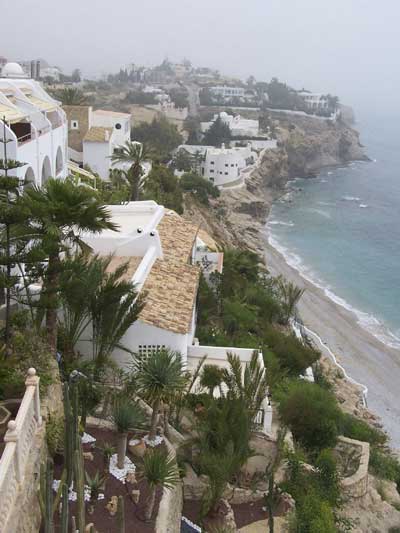
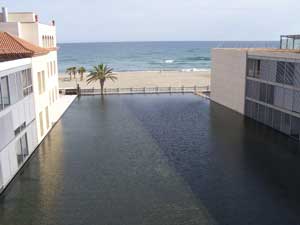
Hotel El Montiboli is perched on the Costa Blanca on the Mediterranean coast.
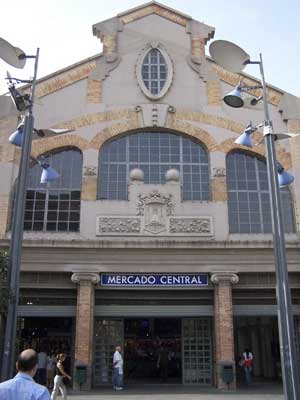
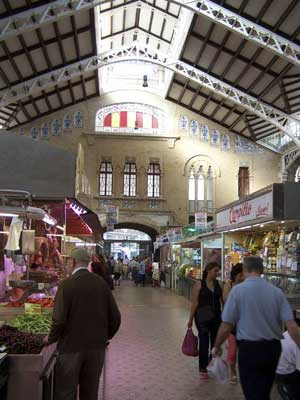
The central market of Alicante is in the heart of the city.
THE COSTA BLANCA

Tearing yourself away from Madrid, hop a plane or train and head to Alicante to begin your coastal voyage, then work your way northward along the coast to Barcelona, with as many stops along the way as your schedule will allow (or start in Barcelona and head south). Travel by rental car, plane or train, according to your preference and budget.

Alicante is on the Costa Blanca, or White Coast, and its beaches are spectacular. But there’s much more to do than lie on the sand and soak up the rays. Whether you take a guided city tour or wander on your own, don’t miss the imposing Santa Barbara Castle, which towers 500 feet above the city center, with panoramic views of the city below and the Mediterranean Sea. Early risers will enjoy the traditional covered market, the Mercado Centrale, bustling with vendors. Enjoy dinner at La Taberna del Gourmet or Nou Manolin.

A good base for exploring this area is the Hotel Hospes Amerigo, a beautifully renovated convent in the heart of Alicante. While the exterior is historic, the interior is ultra modern and comfortable.

Nearby towns include Elche and Villajoyosa, each worth a visit. In Elche, a majestic date palm grove with 600,000 trees, planted by the Phoenicians and later cultivated by the Moors, will take your breath away. Palm fronds from these trees are used for Palm Sunday celebrations throughout Spain. The grove itself is a UNESCO World Heritage Site. Take time to visit the Basilica of Santa Maria, the Huerto del Cura Botanic Gardens and the Archaeological Museum. Enjoy lunch (paella, anyone?) at Els Capellans Restaurant in the peaceful and beautiful surroundings of Hotel Huerto del Cura.

The picturesque fishing port of Villajoyosa is a major center of Spain’s chocolate production. A must stop is the Valor Chocolate Factory and the Chocolate Museum. You’ll want to stock up on Valor chocolate for gifts for the folks back home. For a scenic lunch stop, try the luxurious Hotel El Montiboli, perched on a cliff overlooking the Mediterranean. The dining room is wrapped in windows, with a view as divine as the food.

Elaborate chocolate sculpture at the Valor Chocolate Museum.
The likeness of the Lady of Elche is found all over town, from floral representations to fountains to sculptures.

VIVACIOUS VALENCIA

Next stop: Valencia, one of the most exciting cities in Europe, with its cosmopolitan mixture of old and new, tradition and trendiness, sophistication and casualness. The Hotel Astoria Palace, in the heart of the Old Quarter, is a great place to call home in Valencia.

Begin your visit with a walking tour of the historic Old Quarter, with the Central Market, fascinating La Lonja Silk Exchange, unique Lace Market, Plaza Redonda and the beautiful St. Mary’s cathedral with its legendary Holy Chalice, believed to be the chalice used by Jesus Christ at the Last Supper.

For a complete change of pace, head to the ultra-modern City of Arts and Sciences, a museum where the building and grounds are as spectacular as what is inside. Other good choices include the Fine Arts Museum, Valencian Institute of Modern Art or the National Ceramics Museum.

Be sure to visit the bustling, revitalized port area, home of the 32nd America’s Cup competition in 2007, and future home of the 33rd America’s Cup in 2009. There will be a pre-regatta in July 2008.

If you like being next to the water, you might opt to stay at the new and beautiful Hotel Las Arenas, with its lush gardens and stunning pavilions overlooking the sea. Indulge in its luxurious spa, or dine in the elegant Restaurante Sorolla.

(left to right) The central market at Valencia is always bustling.; The National Ceramics Museum in Valencia has a remarkable exterior.; The ultra-modern City of Arts and Sciences is a must-see in Valencia.


For food to fuel your sightseeing, consider a stop for fideua, a paella made with noodles instead of rice, at Restaurante Submarino in the Oceanografico, or sample tapas at one of the many restaurants in the Old Quarter.

Be sure to try horchata, the artisanal beverage for which Valencia is known. A great place to get the real thing is in the suburb of Alboraya, where the chufa (tiger nut), the key ingredient in horchata, grows. The Horchateria Daniel serves a delicious horchata with the traditional accompaniment of freshly baked pastries.

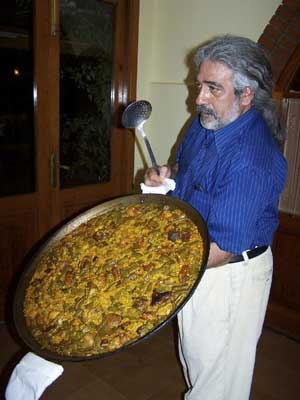
For a charming outing and an authentic heartland paella, head out of town to the Albufhera, where you can take a boat ride through the shallow freshwater lagoon, a natural park known for many species of birds and fish, and visit a barraca, a traditional fisherman’s hut near the rice paddies and orange groves. La Matandeta is a rural farmhouse restaurant where the paella is cooked over firewood in a huge pan.

Paella is cooked in a huge pan over a wood fire at La Matandeta restaurant in the Albufhera area.
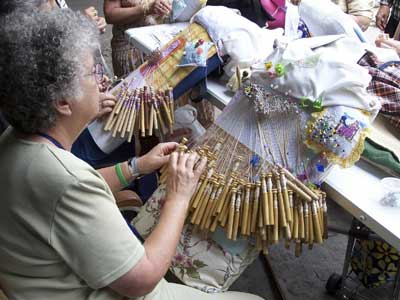
Local women make lace in the time-honored fashion in the center of the round plaza that houses Valencia’s Lace Market.

FROM HISTORIC CASTLE TO MODERN SPA

For a historic stop on your route north, make a slight detour to the medieval town of Tortosa and spend the night in the charming Castillo de la Zuda Parador, a 10th-century castle. Be sure to get there in time to wander the streets of this picturesque village and explore the castle itself. For dinner, sample regional specialties in the parador’s restaurant.

(clockwise) The convent garden is an oasis of peace within the bustling city of Tarragona.; Exquisite Roman mosaics are preserved in museums in Tarragona.; The Le Meridien Ra Beach Hotel and Spa in El Vendrell must be seen and experienced to be believed.

After a long day at sea, fishermen still have work to do, mending their nets. These are at the port of Tarragona.


Heading on to the Costa Daurada (Golden Coast), stop in the town of El Vendrell and spend a night –- or two or three -– at the ultra-modern and ultra-luxe Le Meridien Ra Beach Hotel and Spa. Splurge for spa treatments, such as the chocolate massage. Enjoy the beach, or play in one of the pools. Be sure to dine at least once in the hotel’s La Vinya del Penedes restaurant.

ROMAN ECHOES IN TARRAGONA

The next stop on your northward route is Tarragona, an ancient Roman city with layer upon layer of ruins, designated a World Heritage Site by UNESCO. Be sure to take a guided tour of the old town so you can understand the many layers of history upon which Tarragona is built. Each spring the town celebrates its heritage with Tarraco Viva, a Roman festival and games.

Visit Tarragona’s port and see the fishing boats arrive in the late afternoon. Watch the fisherman as they auction their fish and mend their nets. For a traditional mariner’s menu, dine in the seaside Restaurante La Puda and sample Tarragona’s famous Romesco sauce. Or, savor authentic tapas at Restaurante La Nau, tucked away on Calle La Nau in the old town.

BEAUTIFUL BARCELONA

The final stop (or the first, if you travel in the opposite direction), is Barcelona, the jewel of Catalonia. It would take another entire article to do justice to the wonders of Barcelona and its environs. Check with the local tourist office for maps and current events, then head out to see the sites. The celebrated architectural marvels of Antoni Gaudi are a must, and you’ll see them in many places throughout the city. Be sure to climb the steep towers of the iconic Sagrada Familia, or temple of the Sacred Family, for an up close and personal look at this architectural wonder.
While wandering along La Rambla through the heart of the city, duck into La Boqueria market, the largest in all of Spain. After whetting your appetite in the market, you might want to sign up for a cooking class at the Hofmann Escuela de Hosteleria (Hofmann Hospitality School) to learn how to cook Catalan specialties.

The Hotel Catalonia Berna is a great location for the hub of your explorations, within walking distance of many sites and close to the subway for longer trips.

A side trip to the Black Madonna Shrine of Montserrat, perched impossibly upon the steep mountains outside of Barcelona, is a must.

For more information about Spain, contact the Tourist Office of Spain in New York (212-265-8822); Miami (305-358-1992); Chicago (312-642-1992) or Los Angeles (323-658-7188) or go to www.spain.info.

Falling for Casares

Ancient baths in a dramatic location

By Susan MacCallum-Whitcomb
Photos courtesy Costa Del Sol Tourism

Sometimes it helps to follow your nose.

For days we’d heard rumors about ancient baths located just below Casares, in southeastern Spain. But reliable information was hard to come by. The tourist brochures made only passing reference to them, and even the directions that we finally did get were vague to say the least: head down the mountain and through the quarry, turn onto the foot path, then walk toward the water. Precisely how far we should go and which of the half-hidden paths we should take remained a mystery, though.

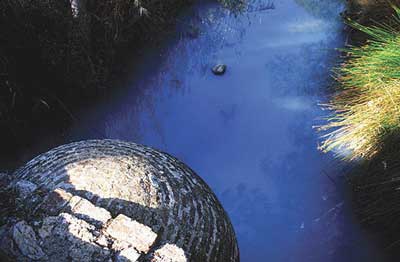
So on we plodded in Andalusia’s autumnal sunshine dodging killer cacti and recalcitrant donkeys, until we smelt it — the sulfurous pool that first brought the area a measure of fame more than 2,000 years before.

According to legend, Julius Caesar stumbled upon this same spot in 61 BC, when he was merely a provincial administrator with a nasty skin condition, and was so impressed by the pool’s medicinal properties that he became a frequent visitor. The Roman-built structure that encloses it (known as Baños de la Hedionda) is a simple dome with a sheltering wall around the perimeter. Rising about eight feet above ground level, it is broken only by two low arches through which you enter directly into the water by way of either a rough wooden ladder or a stone ramp. Taking the plunge can be unnerving. Darkness makes the depth of the pool difficult to determine, and two subterranean vaults add to the sense of foreboding.

WATER IS DIVINE

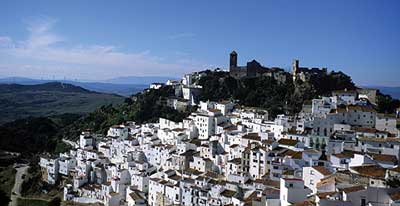
Caesar, however, was absolutely right: the water is divine and warm enough for swimming well into the fall. For him, its healing power seemed miraculous. For us, on the other hand, the real miracle was that the baños—despite their proximity to the Costa del Sol, one of Europe’s most congested tourist strips—have no signs, lines or admission fees. In short, they’ve yet to be invaded by the hordes of vacationers who have overrun the Mediterranean coast from Malaga to Algeciras. The same can also be said of Casares, the pueblo blanco or “white village” reputedly named for Caesar that overlooks the baths. And it, too, can seem rather daunting at first.

In part that’s because of its dramatic location: set 1,425 feet up in the Sierra Bermeja Mountains, Casares’ sugar-cube buildings perch precariously on twin plateaus and tumble into the deep crevice between. But it is also because of the quiet. You see, the village is a study in serenity, which is unsettling for those who’ve come to equate holidays with site-filled itineraries and Amazing Race-style activities.

The truth is that, save for the late afternoon (when children take to the soccer field) or dusk (when adults tread the cobbled pedestrian-only streets on their nightly paseo) sounds here are as muted as the almond blossoms that enliven the landscape, which is precisely why Casares is a perfect place to rediscover the lost art of lounging.
The first step, literally, is to stroll over to Plaza España where you can browse shops bordering the square and watch locals play pétanque beside a centuries-old fountain. Afterwards, you might putter about in Casares’ small ethno-history museum or pay homage to Blas Infante, the “Father of Andalusian Nationalism,” at his restored birthplace.

SATISFY YOUR HUNGER
Next, having satisfied your curiosity, you can concentrate on satisfying your hunger. It’s a pleasant prospect considering Casareño eateries dish up simple fare prepared with Andalusian flare. Specialties include morcilla de chivo sausages and artisanal goat cheese accompanied by dense brown bread. Hearty soups are harvest-time favorites, and game (most notably rabbit rolled in wild herbs) is popular in season.

If you’d like to enjoy these with a side order of scenery, the best bet for dining is Bodeguita de en Medio, which has a rooftop terrace offering views of the ruins that stand guard over the village. The very presence of these, of course, proves life in Casares hasn’t always been quite so peaceful. Its strategic position made it a popular hideout for bandoleros in the 19th century. Before that it was favored stop for armed forces, from the earliest Iberians through to the French who attempted a takeover during the Napoleonic Wars. Those who succeeded left an indelible mark that earned Casares recognition as a National Historic-Artistic Site in 1978, and their legacy is nowhere more apparent than at this isolated spot.

Fortified by the Romans, it was further developed by Moors who gained control of the region in 711. By the 13th century, they’d erected a castle on the seemingly impregnable promontory. Within a few hundred years, Queen Isabella’s Christian soldiers had put an end to Arab domination, and the Encarnación church was built atop it. Now that, too, is an empty shell, and the evocatively decaying structure reaches heavenward with a different purpose: aerials have been attached to it to improve television reception! Contemporary life has brought other changes as well. The climb to the ruins admittedly remains steep. The sweeping views – up to the mountains, down to the sea and across to the northernmost reaches of Africa – are as magnificent as ever.

ROCK OF GIBRALTAR
But while the ancients could only gaze out and imagine these distant locales, today’s visitors can easily reach them. Estepona, the closest of the Mediterranean resort towns, is just 25 minutes east by car, and a morning’s drive west through the clouds will take you to Ronda, the stunning gorge-straddling city that has been dubbed the “Birthplace of Bullfighting.” The iconic Rock of Gibraltar, situated an hour south, promises Barbary Apes plus a quick taste of the British Empire. Even Tangier — Morocco’s infamous, undeniably exotic port city — is accessible to early risers, thanks to the packaged daytrips sold all along the seaboard.

Closer to home, Paraje Natural de Sierra Crestellina now beckons ramblers, and diehard duffers are welcome to hit a few balls at a new area golf course. Remember, though, the true beauty of this place is that you don’t have to break a sweat to enjoy it. When you allow yourself to fully surrender to Casares’ laconic spell, simply sitting on a deck chair can provide ample entertainment. It’s easy enough, after all, to idle away hours watching farmers tend the olive and cork groves below, or marveling at the belled goats that graze at impossible heights on the rocky outcroppings above. Once you’ve had your fill of that, you can always soak up the atmosphere in Baños de la Hedionda. Trust me, the water’s fine…

The Fine Print: If relaxing is your primary goal, choosing where to stay is as important as deciding where to go. So while you can bed down in a basic room Hotel Casares for about €60 a night, renting a vacation home is a more restful, and budget-friendly, alternative. We booked ours through Just Casares, a local company which lists traditional white-washed townhouses starting at €300 per week in autumn. Those off-season rates kick in September 1, even though the village hosts two favorite ferias (or fairs) during that month: one honoring La Virgen del Rosario, the other El Cristo. These run respectively the first Saturday in September and over a long weekend in mid-September to coincide with the end of the summer harvest.

Mechelen: An Undiscovered Belgium Gem

By Don Heimburger
Photos by the author

Mechelen, Belgium, about 15 miles north of Brussels, is a city of about 79,000 that features more than 300 monuments, eight historic Catholic churches and four UNESCO world heritage sights. You can reach the city by a short train ride from the main railway station in Brussels.

Mechelen is worth visiting not only because of its sights, but its people flourish because of a built-in determination and a friendliness that transcends nationalities. Maybe its because the Mecheleners have been perfecting humanity since 500 BC, when the first traces of human habitation of the area were discovered.

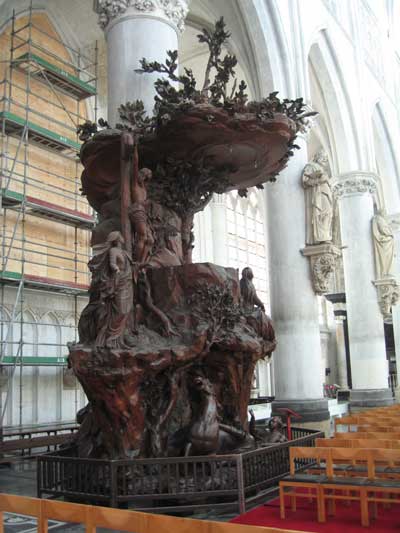
At one time, more than 100 firms in the city made furniture and word carvings, as evidenced by the many large and ornate church carvings seen here. Be sure to look for them as you discover this cobblestoned town, whose city center is only about a half mile across.

Some of the city’s sights include the early Gothic Brussels Gate, the last remnant of the medieval fortification constructed around the inner part of the city, built about 1300. At one time, all traffic entering and leaving had to pass through its limestone gates.

ST. RUMBOLD TOWER
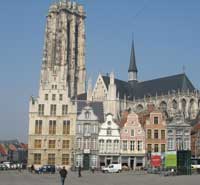
You can’t miss St. Rumbold Tower—it dominates the city skyline. If you have the time, conquer the 514 steps to the top of the tower to the skywalk for a great view of the area. Original plans for the tower were made when Mechelen was a rich and powerful commercial and political center, and thus the tower of St. Rumbold’s Cathedral was to become the highest tower in the Low Countries. Completed, it would have reached the dizzying height of 547 feet. Financial problems in the 16th century halted construction. The tower now reaches a height of 318 feet, still plenty tall.

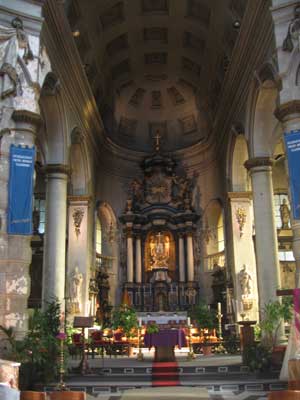
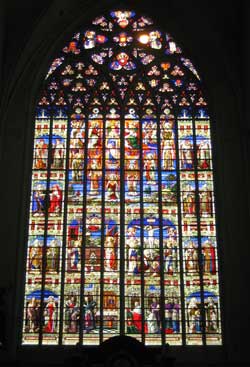
Inside the cathedral is a scale model of what the tower should have looked like had it been completed. Also inside the church are two of the largest stained glass windows in Europe. Jo Haazen and other guest carillonneurs present a carillon concert at the church every Monday evening from 8.30 p.m. to 9.30 p.m. These recitals are free.

A third highlight of the city is the Large Beguinage, where widows and unmarried women of class were invited to live together, submitting themselves to pledges of obedience and chastity. Parts of this community are still visible and are inter-woven into the city’s many old structures that line narrow streets in the center. Still in tact are the Beguines’ church, the infirmary, the house of the grand mistress and other structures.

(middle) One of the largest stained glass windows in Europe in Mechelen’s cathedral.

PALACE OF MARGARET OF AUSTRIA
Another important site is the Palace of Margaret of Austria of the Court of Savoy. This was the first renaissance building in the Low Countries and perhaps outside of Italy. The facade features Margaret’s coat of arms, and between 1616 to 1795 it was the seat of the Great Council. Its interior garden area is a fine place to rest your feet for a while.

Another spot worth visiting is St. John’s Church, which is open to the public. A very fine wood carving on the interior is one of Ruben’s masterpieces, The Adoration of the Magi. The church furniture, paintings and statues date largely from the 17th and 18th centuries.

For a respite from walking or touring the city, find Windels at Iron Leen 48 (not far from the main railway station), the oldest cigar store in Belgium (from 1875) that continues to make fine cigars, and offers them in beautiful hand-made wooden boxes. The store, now being run by the fifth generation of Windels, also carries a good selection of whiskeys.

The Jef Denyn Royal Carillon School, at Frederik de Merodestraat 63, is a state-subsidized educational institute that offers a six-year program to obtain a laureate’s diploma. Even the Vienna Boys Choir visited the school during the last few years. When you realize Belgium is one of the carillon capitals of the world, this school makes sense, and attracts students from as many as a dozen different countries. The heaviest carillon in Belgium—there are five different carillons in town–is in one of the local church towers.

The Jef Denyn Royal Carillon School in Mechelen

The De Wit Royal Manufacturers of Tapestry, operating since 1889, is the only workshop in Flanders to retain this age-old tradition. Offering a complete range of tapestry services, the firm offers individual tours on Saturdays at 10:30 a.m. and group tours on other days. The De Wit is housed in a beautiful old Abbey at Schoutetraat 7, and plays a key role in many old and expensive tapestry restorations throughout Europe.

TIME FOR SOME CUCKOO
Perhaps at lunch time you’ll want something unique and that is a local delicacy. Find a restaurant that serves the town’s famous Mechelse koekoek, or Mechelen cuckoo (chicken). This chicken, with black-gray feathers, is a feature on many local menus, and is often served with fresh vegetables or with a Mechelen beer sauce. You’ ll likely get a large side dish of round roasted potatoes to go with the chicken.

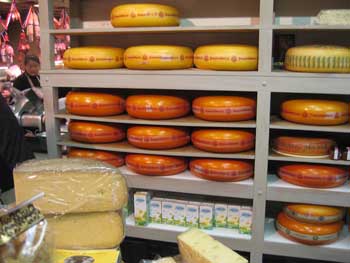
Delicious cheese lines the shelves in a Mechelen shop.

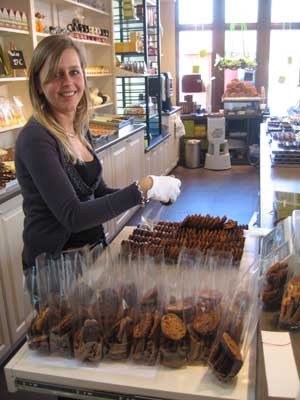
After lunch, stop in at one of the two local Gauthier chocolate shops (one is at Guldenstraat 2), and soak in the atmosphere. Store candies are hand-made, made from traditional Belgium customs, and follow a unique recipe, so you’ll likely leave with a bag full of something good to eat. The Gauthier family, with master chocolate maker Edouard Gauthier, has been making candy in town since 1964.

Round out your afternoon with a boat trip on the Inner Dyle River. A multilingual audio-guide tells you about the sights along the river banks. The departure is at the Jetty at Lamot/Haverwerf and costs €6 for adults.

MUCH MORE TO SEE
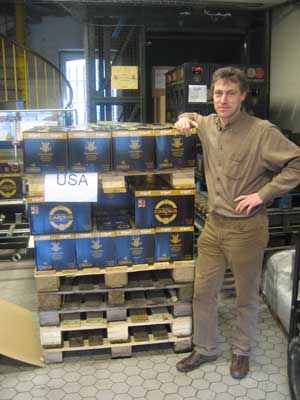
Many more Mechelen sights are available if you have the time, such as the Watchmaker’s Museum, the Jewish Museum of Deportation and Resistance, the Museum in City Hall (the old Rathaus), and the Het Anker Brewery Museum. At this small family brewery, best known for its local beers such as Gouden Carolus, you’ll get a feel for quality. The brewery also has its own restaurant and 22-room hotel.

Around the year 1500 more than 100 breweries operated in Mechelen, but like most things, the businesses and other important history of the city has faded over time. But this quaint Belgium town continues to re-count its traditions and rich past, and brings it forth today for all to enjoy.

For more information, go to www.tourismmechelen.be or www.visitflanders.us.

Traditional British Christmas Pudding

Courtesy David Ross/ www.britainexpress.com

INGREDIENTS
l lb. of each: raisins, currants, golden raisins, breadcrumbs, brown sugar
8 oz. suet
4 oz. each: mixed peel, glace cherries chopped, almonds chopped
1 each: lemon – grate rind, orange – grate rind, carrot – grated, apple – grated
1 tbs. flour
1 tsp. mixed spice
Pinch salt
6-8 eggs
10 oz. stout (bottle) or dark beer (Guiness is good)
OR 5 ozs. each: brandy and milk
 
PREPARATION
Mix dry ingredients first then mix with lightly beaten eggs & liquid. Grease the bottom of a bowl large enough to hold pudding and press mixture into it. Place wax paper over the top and then foil over that, crimping it around the edges to keep firm. Either cook for 2 hours in pressure cooker with about 2 inches water or put in pan with water on stove for 4 hours. Keep checking water in pan to prevent burning. Store well wrapped for as long as possible for better flavor. Some people make them one year to eat the next. Serve with hot custard, cream, or brandy sauce.

Why steam for so long? Christmas puddings are quite dense because of all the fruit, nuts, etc. they contain. Steaming is the best method of cooking because it allows a slow cooking which ensures a moist and palatable result (cakes being less dense can cook for less time and still remain moist, so baking is the best method). If you used a faster cooking method for a Christmas pudding you would get a crusty pudding. A pudding steamed for 2 hours, rather than 4, would probably still have some uncooked mixture in the center. So, while the cooking time obviously depends on the size of the pudding. (This is when it is cooked on the stove – not the pressure cooker)
Related: Quick Christmas Pudding
Recipe used by kind permission of Hazel Whyte

For more recipes from Britain, go to: http://www.britainexpress.com/articles/Food/index.htm