Christmas Markets in Luther Country

Erfurt Christmas Market

In Germany’s Luther Country, Advent means Christmas markets. The crisp winter air is filled with the smell of ginger and nutmeg, signaling the arrival of Stollen, a special Christmas cake, and Glühwein, mulled wine. Cobbled streets and squares, lined with half-timbered medieval houses, provide the backdrop for dozens of wooden stalls, selling wooden toys and Christmas decorations, handcrafted gifts and seasonal foods, such as Zimtsterne (cinnamon stars) and Lebkuchen (soft, spiced cookies).

Brass bands play and choirs sing carols, often written by Martin Luther himself. In fact, many Christmas traditions were supposedly instigated by the Protestant reformer 500 years ago. Legend insists one dark and starry night, Luther was touched by the beauty of the pine trees. On returning home, he cut down a tree, took it into his house and decorated it with candles. As well as the Christmas tree, Luther is credited with the idea of Christkind, the Christ child bringing presents. (Kris Kringle is still familiar in many U.S. homes). Concerned that Saint Nicholas, who delvered his gifts on December 6, was too popular, Luther came up with an alternative to “Santa Claus”: a golden angel, with wings and a crown.

Here are just some of Luther Country’s most authentic Christmas markets.

(clockwise) Christmas Stollen; Lebkuchen; Zimtsterne

ERFURT
November 27 – December 22
Although Erfurt’s 162nd Christmas Market spreads throughout the old town, the focus is on the Domplatz, the vast Cathedral Square. The 200 market booths sell everything from Thuringian bratwurst (Germany’s favorite grilled sausage) and Christmas cookies to handmade toys or traditional, handmade Christmas decorations. Children love the giant Ferris wheel,

the 90-foot-tall Christmas tree covered in candles, and the 40-foot-high wooden pyramid. Most of all, they love the nativity scene, set in a fairytale forest, complete with near life-sized, hand-carved figures. Gardeners should not miss the floral Christmas exhibition in the underground vaults of the cathedral.
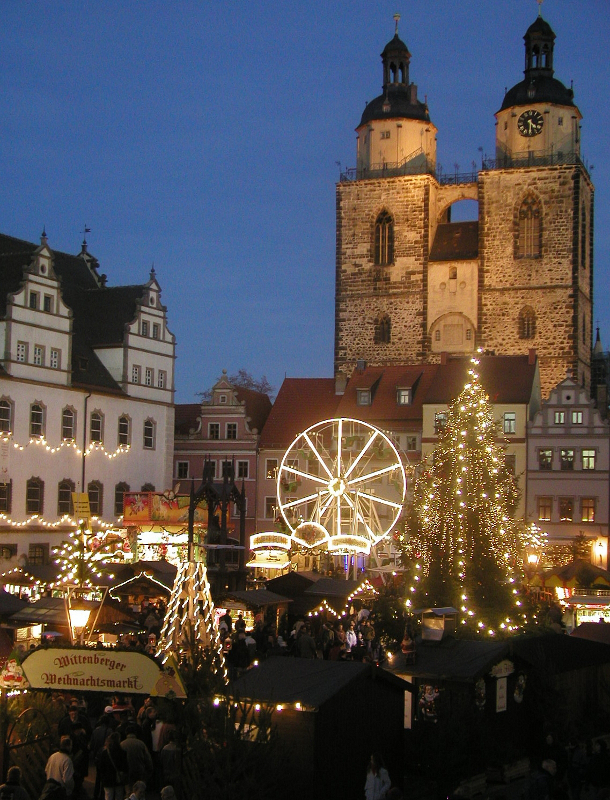
Lutherstadt Wittenburg Christmas Market

LUTHERSTADT WITTENBERG
November 28 – December 23
In the market square, a statue of Luther looks out across the Christmas market, with its stalls decorated with pine boughs, lights and Christmas ornaments. In the air is the scent of mulled wine and roasted almonds. Across the square is the Marienskirche (St. Mary’s Church), where Luther preached. Special are the town’s Adventshöfe, medieval courtyards, where local artists and craftsmen sell their wares. In the Cranach Courtyard, named for Luther’s great friend and painter Lucas Cranach, the weekend of December 8 and 9 features weavers and knitters, wood carvers and basket makers.

QUEDLINBURG
November 30 – December 23
With more than 1,300 half-timbered houses, Quedlinburg is one of Europe’s most romantic cities. And during the Christmas Market, strolling along the cobbled streets is like walking through history. One unique event is the “Advent in den Höfen” (December 1-2, 8-9, 15-16), when some 20 private courtyards open to sell special Christmas gifts, often handmade. Another highlight is the world’s largest Advent calendar! At 4:30 p.m. every afternoon for 24 days, children look out for the star that marks the house where the next scene in the Advent calendar will appear. When the door opens, fairytale characters appear and dance, sing or play for spectators.

WERNIGERODE
November 30 – December 22
Dominated by its 12th-century castle, Wernigerode’s annual Christmas market has a fairy story backdrop: a 15th-century town hall, half-timbered houses and a 35-foot-tall Christmas tree. The stalls serve traditional food and drink, hand-made toys and ornaments for the home; evenings are filled with concerts of seasonal music. From December 15 to January 8, 2013, the Castle hosts its own special Winter Market. Children meet a fairy at 3 p.m. and receive presents from St. Nikolaus (Santa Claus) at 4 p.m. They also love to ride the Christmas train in a historic carriage, pulled by a steam engine through the snow-covered countryside.
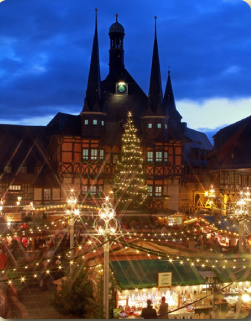
Wernigerode Christmas Market

LAUSCHA
December 1-2 and 8-9
Each Christmas, this small town in a steep, wooded valley in the Thuringian Forest, plays a vital role in every American home. This is where the first glass Christmas tree ornaments were created in 1847. In 1880, F. W. Woolworth, the five-and-dime store pioneer, brought a batch of these glass balls to his store in Pennsylvania, and the rest is history. The tradition continues in Germany’s glassblowing capital, where you can watch artisans creating works of art at Lauscha’s Museum of Glass Art. At Lauscha’s annual Christmas “Kugelmarkt,” or glass bauble market, you can buy these handmade decorations in all shapes and colors.
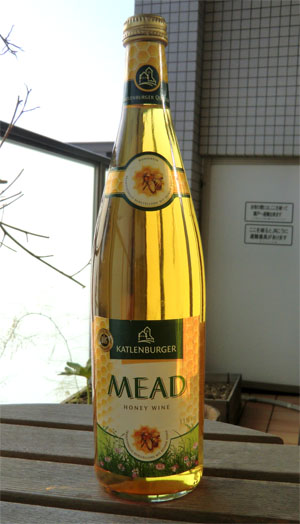
Mead honey wine

WARTBURG CASTLE, EISENACH
December 1-2, 8-9, 15-16
Wartburg Castle is where Martin Luther, the Protestant reformer, changed history when he translated the New Testament into German. And this UNESCO World Heritage Site just outside Eisenach is still a massively impressive fortress. At Christmas, however, a historic Christmas Market transforms the castle, with artists and street performers, craftsmen and knights. Meet candle makers and barrel makers, rope makers and lantern makers, minstrels and puppeteers. With cheerful booths and medieval decorations, this is a like a trip back in time. And the medieval food is delicious, from roast apples and honey to mead.
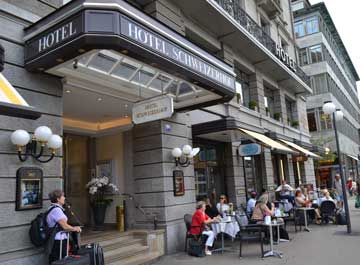
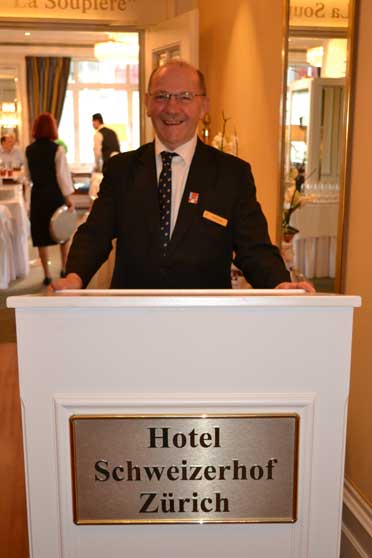
Zurich’s Hotel Schweizerhof

Convenient, high-class luxury

By Don Heimburger
Photos by Don Heimburger and courtesy Schweizerfhof Hotel

Especially if you’re traveling by train to Zurich, finding the famous five-star Schweizerhof Hotel isn’t hard. It’s right across the street from the ornate Neo-renaissance Hauptbahnhof, and a 12-minute ride from Zurich’s airport. A few steps out of the station, the hotel’s beckoning facade looms before you.

Not only is the Schweizerhof convenient, it’s highly rated. Trip Adviser, for example, shows it to be the third-rated hotel in Zurich, out of 124 hotels.

One Trip Advisor reviewer said, “I was very impressed with the outstanding service from all the staff, in particular the reception girls Carmen and Dominique, Michael (a porter) and Hans, who provided us with a private butler service and free champagne and chocolates! Okay, I did say we were on honeymoon, but it did not cut much ice anywhere else!”

He added, “This hotel is out to impress (you) and wants you to go back.”

CLOSE TO THE BAHNHOFSTRASSE
The six-story stone-front hotel is also only a few steps away from the famous Bahnhofstrasse, that mile-long elegant street dating from 1864 that’s a combination of Chicago’s Michigan Avenue, New York’s 5th Avenue and Los Angeles’s Rodeo Drive.

In good weather, locals gather early in the morning at the sidewalk cafe in front of the hotel to read their newspapers, talk about politics or the day’s happenings and order coffee and pastries.

With 114 rooms and suites, the Schweizerhof can provide an economy single room with a bath, a moderate single room with a shower or bath, or a standard-plus room, which affords a bit more space.

At a higher price, double rooms with a queen-size bed are offered, as are twin-bed rooms, corner rooms, a junior suite, and a premium deluxe suite. The rooms are decorated with Italian designer furniture, and bathrooms feature Italian granite.

The rooms are comfortable, with firm mattresses, plenty of lighting around the room, and the entire hotel is air conditioned. One great feature also is the triple-glazed windows: noise from the street below never was a problem when I was there.

The hotel offers high-speed internet service, flat screen televisions, beds are electrically adjustable and all rooms have a handy make-up and razor mirror. A mini-bar, hairdryers, trouser press, umbrella, safe, complimentary fruit plate, and pickup service from the railway station is also included.

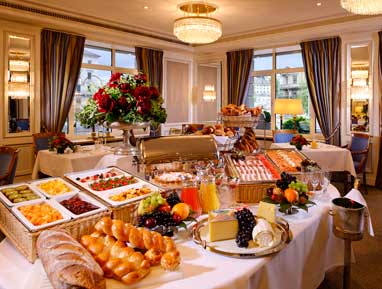
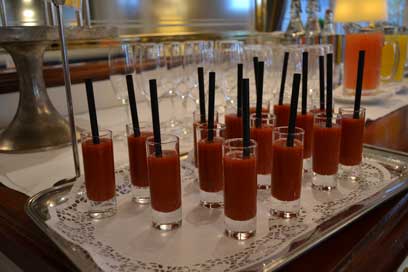
In the morning, guests can enjoy a complimentary champagne breakfast buffet which includes a personal pitcher of fresh squeezed orange juice, assorted juices,various breads, croissants, assorted jams and jellies, cold meats, fruits, yogurt, coffee to order, including expresso, and there is a menu card just for tea.

In addition, assorted cereals, crepes, Nutella, made-to-order eggs, including eggs benedict if desired, bacon and sausage are available. A special Japanese breakfast of miso soup, salmon, vegetables and fried potatoes is offered.

As an added touch of ambiance, little stools are available just to hold ladies’ handbags next to the table.

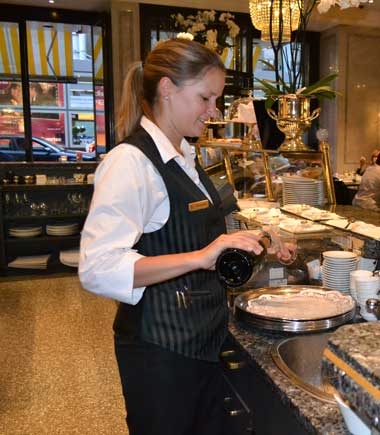
The staff is attentive to special requests and diets, and they make notes of special needs for the guest’s next stay. I was told that if I came back next year for breakfast, the staff would remember what my breakfast preferences were. Breakfast is served in a room on the mezzanine, with pleasant surroundings and a cheerful waitstaff.

While restaurants abound in Zurich, the hotel offers Restaurant La Soupiere, a traditional French-style restaurant serving seasonal, market-fresh cuisine and Swiss specialities. The Cafe Gourmet et sa Boutique du Caviar is a cozy, small cafe serving snacks, salads and caviar.

For meetings and business travelers, the hotel offers a number of meeting rooms and banquet facilities.

With style, this Zurich hotel serves a clientele that expects a little bit more, and they get it.

Jörg Rudolf von Rohr is the managing director of the hotel.

More more information, go to www.hotelschweizerhof.com.

Hotel Schweizerhof Zürich
Bahnhofplatz 7
8021 Zürich / Schweiz

Tel. +41 44 218 88 88
Fax +41 44 218 81 81

To learn more about Zurich, go to www.zuerich.com, or www.myswitzerland.com/en/zurich.html

Raise a Glass to Ireland’s New Whiskey Trail

Photos courtesy Ireland Tourist Office

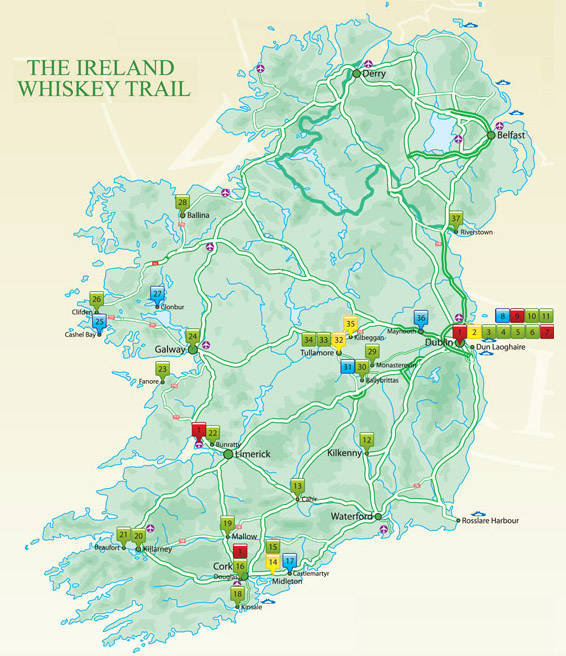
History, heritage and “a drop in your hand” of the finest whiskey in the world combine in one of the Emerald Isle’s newest visitor attractions, the Ireland Whiskey Trail.

IRISH WHISKEY TOURING GUIDE
Heidi Donelon has created a touring guide for whiskey lovers to Irish pubs, hotels, whiskey shops and distilleries throughout Ireland. The trail features nearly 40 different places, ranging from the famous old Jameson Distillery in Dublin, to less well known whiskey emporiums such as Fairhill House Hotel in Connemara, which boasts a stock of more than 170 different whiskies.

Donelon says: “The trail is a great way for people to experience the story and magic of Irish whiskey, while discovering the heart of Ireland through the Irish characters they will inevitably meet in the pubs and bars across the island. It is a great touring guide for whiskey lovers, but also for anyone who wants to find that perfect Irish pub during their trip, whether they are whiskey drinkers or not. Some of these pubs are the last links to old and forgotten distilleries. These are not just great whiskey pubs, but also some of the very best traditional Irish pubs in the country.”

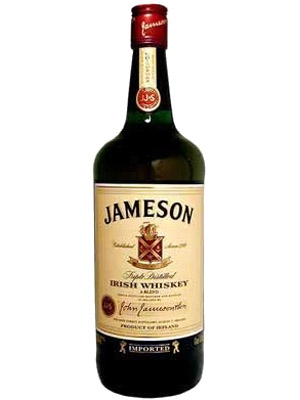
IN addition to the in-depth tour guide, the Ireland Whiskey Trail gives information about the history of Irish whiskey, insight into the difference between brands, Irish Coffee and whiskey recipes and details of whiskey tasting events. The Irish are credited with inventing whiskey, called uisce beatha in Gaelic, which translates as “water of life.” For 1,500 years whiskey has warmed the hearts of the Irish and their guests, and today it is a worldwide success with sales of brands such as Jameson, Bushmills, Tullamore Dew and Kilbeggan increasing at an unparalleled rate.

For more info, go to www.discoverireland.com or www.irelandwhiskeytrail.com

Rendez-vous in the Midi-Pyrénées for Wine, Food and Culture

Photographs compliments of Midi-Pyrénées Tourism Office

Visitors to the Midi-Pyrénées in France, also known as the Southwest, have the unique opportunity to savor some of the most unique food and wine in all of France while also soaking up the rich arts and culture scene of the region.

WINE
The Midi-Pyrénées is a verdant, hilly wine region—home to more than two dozen winemakers featuring some of the world’s greatest grape varieties and some that are grown nowhere else in the world.

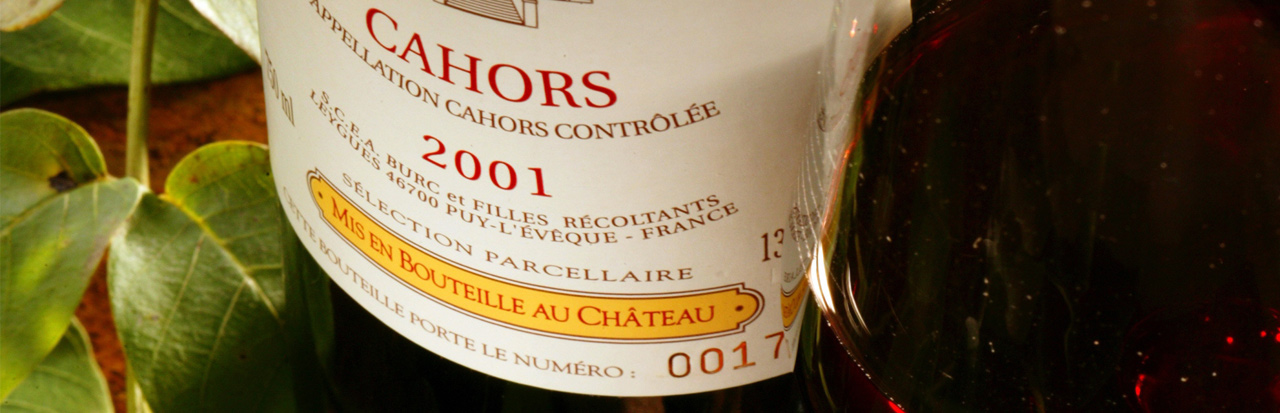
From the Malbec wines grown in the sun-drenched Cahors region to the Gaillac district, one of the oldest wine-growing areas in France, to the Madiran wines known for their inky color and tannic density, the wines of southwest France offer a wide array of flavors and are a true treasure trove for the dedicated wine connoisseur.

The region is also rich in spirits, most notably the distinctive brandy Armagnac, produced in Gascony. Tourists can explore the “Route de l’Armagnac” which winds through the vineyards and experience the different tastes and sensations of this brandy, known for its unique finesse and roundness.

FOOD
The Midi-Pyrénées is also renowned for its fine cuisine. It is home of the black truffle, which is found exclusively in the region around the village of Lalbenque.

The Midi-Pyrénées is also the capital of the iconic French specialty, foie gras. With subtle flavors of hazelnut and a creamy texture, this delicacy can be bought directly from the producer or at the special winter foie gras markets that are peppered throughout many small towns in the Gers district.

CULTURE
The Soulages Museum, in the town of Rodez, is dedicated to the work of acclaimed painter and Rodez native Pierre Soulages. Widely considered one of the great abstract artists, Soulages was inspired by the prehistoric and Romanesque art of the region. The museum houses 500 works donated by Pierre and Colette Soulages to Rodez, which is the world’s biggest collection, estimated to be worth close to $55 million.

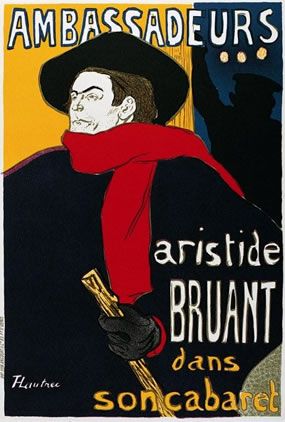
The Toulouse Lautrec Museum will celebrate the life of painter and lithographer Toulouse Lautrec, born in the city of Albi in 1864. The exhibit will run from October 25, 2014 to January 25, 2015.

FESTIVITIES
The Midi-Pyrénées also abounds with celebrations and performances, with more than 180 festivals and events taking place throughout the year.

The Medieval Festival of the Grand Falconer takes place in the village of Cordes-sur-Ciel on July 14—coinciding with Bastille Day, France’s national holiday. The annual festival offers a faithful recreation of medieval life in the Midi-Pyrénées, with fire-eaters, jugglers, falconers, troubadours, musicians, knights and villagers all garbed in medieval attire.

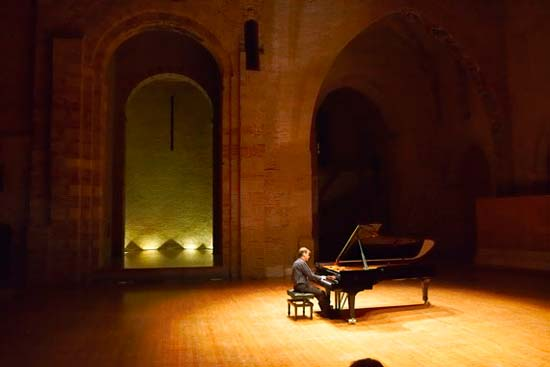
The Piano aux Jacobins, held in the region’s capital city Toulouse during the month of September, is the first festival in France entirely dedicated to piano performances. This year’s edition takes place September 2 to 29.

The small and quaint Gascon town of Marciac will transform into a jazz capital this summer from July 24 to August 13 with its legendary festival, Jazz in Marciac, which has welcomed international jazz icons.

ADVENTUROUS
The natural world comes alive in the Midi-Pyrénées with vast areas of untouched countryside and rugged mountains in its national parks. Cyclists come from all corners of the earth to follow the route of the Tour de France in the Pyrenees and climb the famed Col du Tourmalet.

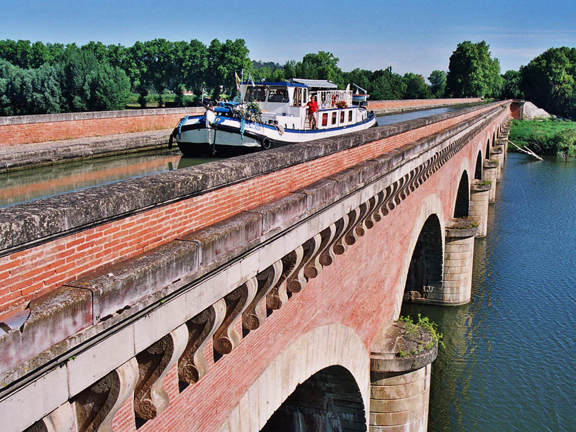
The Canal du Midi, a UNESCO World Heritage Site that runs from Bordeaux and the Atlantic coast to the Mediterranean sea, is ideal for bicycling enthusiasts looking for a relaxing ride and discovering this 150-mile engineering masterpiece.

SPIRITUAL
Travelers can embark on a spiritual retreat in the region at the sacred French Grotto of Lourdes, a world famous pilgrimage site. Every year, the cosmopolitan and convivial town receives 6 million travelers from 140 countries from every continent.

Walking the Way of St. James has changed little over the centuries, where pilgrims trek from all over Europe to the city of Santiago de Compostela in northwestern Spain. The route winds through many scenic villages born of the ancient pilgrimage, including Rocamadour, Conques and Moissac.

For more information on Midi-Pyrénées, go to: Midi-Pyrénées Tourism Office.

The Bellerive Au Lac in Zurich

By Don Heimburger

Bellerive-Au-Lac_lake

Ah….walking along the wide pedestrian walkways on Lake Zurich’s east side in Zurich on a bright, sunny day, is worth at least one trip to your stress doctor. It’s a pleasant walk, and the view is great. Down the street called Utoqaui, right on the banks of the lake, is a first-class hotel called the Bellerive Au Lac, part of the Steigenberger Hotel Group.

Situated about a mile from the center of Zurich, you can take a local tram to get there if you come in from the main train station or the airport (about 7 miles from the airport). The Bellerive Au Lac is not well seen from the backside or the street the tram takes you down, so you may have to ask for directions. With 47 rooms and four suites, it’s not an exceptionally large hotel, but it does include two very fine restaurants and a bar, as well as a winter garden area. The food, and wine, is delectable in the restaurant, and the winter garden atmosphere is tops.

For meetings, the facility offers six conference rooms for up to 60 people and limo service on request. Fitness area, sauna, solarium and massage are part of the wellness offerings of the hotel.

TripAdvisor posted two reviews from people who stayed at the Bellerive:

“We had a nice stay in this hotel. Our room was updated, clean, and our room had a fantastic view of the lake and downtown Zurich. The hotel’s location is a 10- minute walk along the lake to central downtown Zurich. The hotel staff was very friendly and as helpful as you needed them to be. The breakfast buffet was more than acceptable as was the service. Zurich is a beautiful clean city and the views of the lake are spectacular. We will definitely stay in this hotel during our next trip to Zurich.”

Bellerive-Au-Lac_restaurant

And another review states: “Just back from my tenth or so stay at the Steigenberger. Once again, from the moment of check-in to the time of departure, the reception staff was magnificent. The room was spotless, as always, and stylishly comfortable. Views over the lake were amazing, especially with a summer thunderstorm rolling in. Breakfast hearty and comprehensive, interent access via wi-fi fast, though pricy. Looking forward to my next visit to Zurich, a trip always enhanced by staying at this great little hotel.”

Rates for one double bed, 1920s-style textiles and design furnishings, balcony, internet connection, air conditioning, satellite television, direct-dial phone, safe, minibar, complimentary fruit bowl, bathroom with hair dryer, bathrobes and toiletries, non-smoking room, was quoted as $415 U.S. dollars.

For further information, go to www.zuerich.steigenberger.ch or e-mail to bellerive@steigenberger.ch.