World Renowned Venetian Glass

Discovering the colorful island of Murano, Italy

By Kristi Nelson Cohen
Photos by the author

The renaissance European aristocracy favored it, explorers Lewis and Clark used the beads for trading with the Native Americans and Victorians proudly displayed it. Venetian glass has captured our eye for centuries, and today artisans continue a time-honored tradition to produce some of the world’s most beautiful glass.

The marshy lagoon offers artisans the components necessary for glass making: silica, sand and soda ash. Glass making started in Venice over a thousand years ago, but with the fear of fire from the glowing hot furnaces, and air polluting smoke from these same furnaces, Venetians decreed that all glass making take place on a nearby island. Glass makers moved their furnaces and factories in 1291 to the island of Murano, just two miles north of Venice across the lagoon.

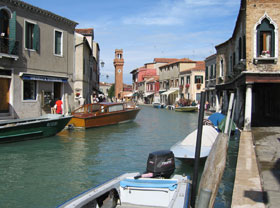
Once these glass artisans moved to Murano, this tiny town prospered and grew to nearly 30,000 residents in the 13th century. This community is similar to Venice, as it is comprised of several small islands, connected by canals and bridges, but on a much smaller scale. Today, Murano is home to only a few thousand permanent residents.
GET AWAY FROM CROWDS

Frankly, it is sometimes a relief to get away from the crowds and busy sidewalks in Venice and take the time to enjoy a slower pace in Murano. There are many glass factories still operating in Murano and most have complimentary demonstrations and tours available. Of course, they also have elegant showrooms with one-of-a-kind glass sculptures, chandeliers, goblets and even glass beads. Prices at the glass factories can seem steep, but each piece is authenticated, insured and shipping is available.

During a demonstration, most factories will show you how an artisan takes a molten glob of glass, orange with heat, and blows through a tube and spins the tube, creating a one-of-a-kind creation. Minerals and precious metals are added to the glass to create colors, just as they would have been 500 years ago. The color blends, and mineral recipes are a highly regarded secrets.

VISIT IS A ‘MUST’

A visit to a glass factory is a must, but when it comes to buying glass, there are also many smaller shops lining Murano’s main canal near the Vaparetto (water bus) stop. Compare prices, as you may find even better bargains in one of the many shops in Venice. The smaller shops don’t usually offer shipping, but they are happy to pack purchases in bubble wrap and tissue to pack in your luggage.

To learn about the history of glass making, visit the Museo Vetrario in the restored Palazzo Giustinian. This museum has exhibits of rare 500-year-old glass and glass/enamel pieces, as well as contemporary sculptures and examples of the entire glass making process. They are open 10 a.m. – 4 p.m. daily (closed Wednesday).

Following a morning glass factory tour, enjoy a leisurely lunch at one of the many eateries located along Murano’s main canal. Al Vetrai Da Adino, located at address number 29, is a personal favorite. Owner Adino and his wife Christina cook up some local favorites including the freshest fish, pastas and vegetables.

Start your meal with a typical Venetian “spritz” which is a refreshing aperitif made with Campari and sparking Prosecco. (If you enter the island via the Vaparetto, simply walk across the first bridge, then continue north about 200 feet and you’ll see the restaurant on your right. A large rooster logo adorns the front window.) Adino doesn’t speak much English, but his hospitality and great food will win you over. Be sure to tell them “Kristi sent me!” and you might be treated to an after-meal glass of Fragolino, a homemade wine that’s simply delicious! For advance lunch reservations,
call 041-739-293.

TAKE THE VAPARETTO

How to reach Murano: Take the public water bus or Vaparetto – #41/42– which takes about 30 minutes (from the train station, or Piazzale Roma ) or take boat # 52 from San Zaccaria which is near Saint Mark’s Square.

In 2007, Vaparetto tickets were available for one trip at 3 Euro, or 12 Euro for a 24 hour multi-trip ticket. The glass factories also have representatives in San Marco Square who sometimes provide a free or discounted fare water taxi in exchange for taking a specific factory tour. Some hotels can also arrange for a boat to pick you up at the hotel and take you directly to one of the factories.

Once in Murano, you may want to continue on to the island of Torcello (whose cathedral was founded in 639) or Burano (distinct for its multi-colored homes and famous for the lace-making crafts). Take Vaparetto #13 from the dock located adjacent Murano’s lighthouse. (This requires walking across the canal and around Murano in order to get to the other Vaparetto stop).

Frankly, after a busy morning and a big lunch in Murano, one might prefer a lazy boat ride back to Venice, a good cup of coffee and or perhaps an afternoon nap. It’s all a part of the Venetian experience.

Kristi’s favorite glass factory offering a one-of-a-kind demonstration and truly unique, contemporary glass art is called Schiavon. Their factory also produces stemware, chandeliers and traditional Murano glass, although the unique pieces by Mr. Massimiliano Schiavon are worth a visit. This glass factory has been in the Schiavon family for three generations.

Vetreria Artistica Di Schiavon
No. 7 – just a few shops north of the Vaparetto stop on the first canal.
Phone: 011-39-041 739 396
http://www.massimilianoschiavon.com
E-mail: info@massimilianoschiavon.com

Kristi Nelson Cohen is the owner of Bella Italia Trips, a small U.S. company offering guided trips to Italy. To reach Kristi or for more information, log onto www.bellaitaliatrips.com.
Spotlight on Dubrovnik

By Susan O’Brien
Photos courtesy Croatian National Tourist Board

Have you always wished you had been on the Riviera with Hemingway, Stein and Picasso in the 1920s? Although time travel is not (yet) possible, there’s a place on the Adriatic coast that claims to capture that golden era.

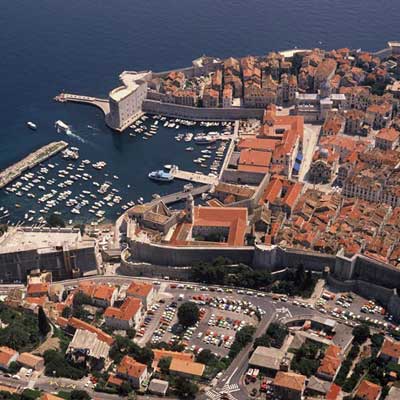
Dubrovnik has a proud history that goes back to Roman times, and its ancient center is so remarkably well-preserved it is on UNESCO’s list of World Heritage sites. It is Croatia’s southernmost city, enjoying a sunny Mediterranean climate and a spectacular mountain coastline dotted with more than 1,000 islands. It combines the charm of an ancient walled city with the amenities of a first-class Adriatic resort. It’s easy to see why the city has been known as “The Pearl of the Adriatic.”

The city was built on maritime trade, becoming a rival to Venice In the Middle Ages. Supported by its wealth and skilled diplomacy during the 15th and 16th centuries, Dubrovnik was one of the centers of development of the Croatian language and literature, home to many notable poets, playwrights, painters, mathematicians, physicists and other scholars.

GETTING THERE
The easiest way to get to Dubrovnik is by air, although bus and ferry transportation are also possibilities. Croatia Airlines operates daily flights to and from Zagreb and select European cities. Planes land at Dubrovnik International Airport (Zracna Luka), located at Cilipi, 18km (11 miles) from the city center.

Buses are available from other Croatian cities, as are ferries from Bari, Italy and other coastal spots in Croatia.

SIGHTS
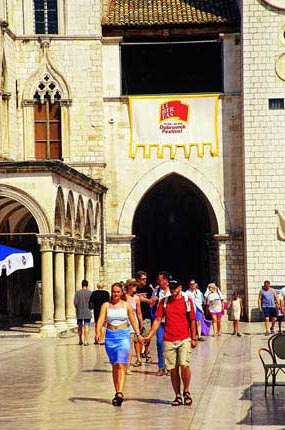
The walled Old Town is pedestrian-friendly, and most major sites are inside. The Stradun is the main street through the Old Town. The Romanesque cathedral, which dates from the 6th or 7th century, was badly damaged in the earthquake of 1667 and rebuilt in the Baroque style by Roman architects Andrea Buffalini and Paolo Andreotti. There are also Jesuit, Dominican and Franciscan monasteries, among many other architectural treasures.

DINING
The basic style of Dubrovnik cuisine is Mediterranean. The emphasis is on olive oil, not butter. Polenta is a popular side dish and most dishes are liberally seasoned with parsley and garlic.

With strong historic links to Italy, it’s unsurprising that pasta and risotto is served in nearly every restaurant. Pizza is another favorite, usually toasted in wood-fired ovens.

The staple of traditional Dubrovnik cuisine is fish and seafood, expertly prepared but not necessarily local. The demand for best quality fish and shellfish far outstrips the supply, particularly in high season, and restaurants are often forced to buy frozen fish from afar.

ACCOMMODATIONS
Although the Yugoslavian wars of the ’90s severely damaged Dubrovnik, it has completely recovered and its tourist scene is as lively as ever. The city is home to dozens of accommodations from inexpensive hostels to luxurious, Riviera-style hotels. Apartment rentals are an economical option and are available in all price ranges as well. Some helpful web sites for finding accommodations are:
http://www.dubrovnik-guide.net/accommodation.htm
http://www.dubrovnik-online.com/english/hotel_list.php
http://www.visit-croatia.co.uk/accommodation/dubrovnik.htm

NIGHTLIFE
Dubrovnik hosts a lively nightlife scene and dozens of restaurants, all vying with each other for the attention of tourists. If you are used to the prices of Western Europe, this Eastern European city will seem like a comparative bargain.

MORE INFORMATION
There are plenty of good web sites about Croatia in general and Dubrovnik in particular, for help in travel planning. Here are a few:
www.visit-croatia.co.uk
www.dubrovnik-guide.net/
www.dubrovnik-online.com/

Falling for Casares

Ancient baths in a dramatic location

By Susan MacCallum-Whitcomb
Photos courtesy Costa Del Sol Tourism

Sometimes it helps to follow your nose.

For days we’d heard rumors about ancient baths located just below Casares, in southeastern Spain. But reliable information was hard to come by. The tourist brochures made only passing reference to them, and even the directions that we finally did get were vague to say the least: head down the mountain and through the quarry, turn onto the foot path, then walk toward the water. Precisely how far we should go and which of the half-hidden paths we should take remained a mystery, though.

So on we plodded in Andalusia’s autumnal sunshine dodging killer cacti and recalcitrant donkeys, until we smelt it — the sulfurous pool that first brought the area a measure of fame more than 2,000 years before.

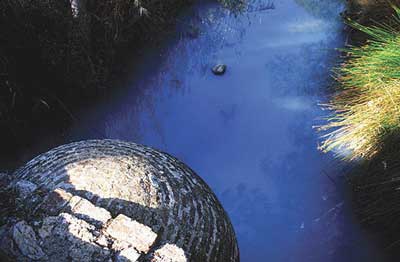
According to legend, Julius Caesar stumbled upon this same spot in 61 BC, when he was merely a provincial administrator with a nasty skin condition, and was so impressed by the pool’s medicinal properties that he became a frequent visitor. The Roman-built structure that encloses it (known as Baños de la Hedionda) is a simple dome with a sheltering wall around the perimeter. Rising about eight feet above ground level, it is broken only by two low arches through which you enter directly into the water by way of either a rough wooden ladder or a stone ramp. Taking the plunge can be unnerving. Darkness makes the depth of the pool difficult to determine, and two subterranean vaults add to the sense of foreboding.

WATER IS DIVINE

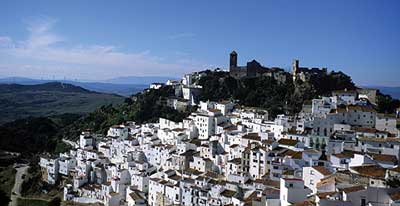
Caesar, however, was absolutely right: the water is divine and warm enough for swimming well into the fall. For him, its healing power seemed miraculous. For us, on the other hand, the real miracle was that the baños—despite their proximity to the Costa del Sol, one of Europe’s most congested tourist strips—have no signs, lines or admission fees. In short, they’ve yet to be invaded by the hordes of vacationers who have overrun the Mediterranean coast from Malaga to Algeciras. The same can also be said of Casares, the pueblo blanco or “white village” reputedly named for Caesar that overlooks the baths. And it, too, can seem rather daunting at first.

In part that’s because of its dramatic location: set 1,425 feet up in the Sierra Bermeja Mountains, Casares’ sugar-cube buildings perch precariously on twin plateaus and tumble into the deep crevice between. But it is also because of the quiet. You see, the village is a study in serenity, which is unsettling for those who’ve come to equate holidays with site-filled itineraries and Amazing Race-style activities.

The truth is that, save for the late afternoon (when children take to the soccer field) or dusk (when adults tread the cobbled pedestrian-only streets on their nightly paseo) sounds here are as muted as the almond blossoms that enliven the landscape, which is precisely why Casares is a perfect place to rediscover the lost art of lounging.
The first step, literally, is to stroll over to Plaza España where you can browse shops bordering the square and watch locals play pétanque beside a centuries-old fountain. Afterwards, you might putter about in Casares’ small ethno-history museum or pay homage to Blas Infante, the “Father of Andalusian Nationalism,” at his restored birthplace.

SATISFY YOUR HUNGER
Next, having satisfied your curiosity, you can concentrate on satisfying your hunger. It’s a pleasant prospect considering Casareño eateries dish up simple fare prepared with Andalusian flare. Specialties include morcilla de chivo sausages and artisanal goat cheese accompanied by dense brown bread. Hearty soups are harvest-time favorites, and game (most notably rabbit rolled in wild herbs) is popular in season.

If you’d like to enjoy these with a side order of scenery, the best bet for dining is Bodeguita de en Medio, which has a rooftop terrace offering views of the ruins that stand guard over the village. The very presence of these, of course, proves life in Casares hasn’t always been quite so peaceful. Its strategic position made it a popular hideout for bandoleros in the 19th century. Before that it was favored stop for armed forces, from the earliest Iberians through to the French who attempted a takeover during the Napoleonic Wars. Those who succeeded left an indelible mark that earned Casares recognition as a National Historic-Artistic Site in 1978, and their legacy is nowhere more apparent than at this isolated spot.

Fortified by the Romans, it was further developed by Moors who gained control of the region in 711. By the 13th century, they’d erected a castle on the seemingly impregnable promontory. Within a few hundred years, Queen Isabella’s Christian soldiers had put an end to Arab domination, and the Encarnación church was built atop it. Now that, too, is an empty shell, and the evocatively decaying structure reaches heavenward with a different purpose: aerials have been attached to it to improve television reception! Contemporary life has brought other changes as well. The climb to the ruins admittedly remains steep. The sweeping views – up to the mountains, down to the sea and across to the northernmost reaches of Africa – are as magnificent as ever.

ROCK OF GIBRALTAR
But while the ancients could only gaze out and imagine these distant locales, today’s visitors can easily reach them. Estepona, the closest of the Mediterranean resort towns, is just 25 minutes east by car, and a morning’s drive west through the clouds will take you to Ronda, the stunning gorge-straddling city that has been dubbed the “Birthplace of Bullfighting.” The iconic Rock of Gibraltar, situated an hour south, promises Barbary Apes plus a quick taste of the British Empire. Even Tangier — Morocco’s infamous, undeniably exotic port city — is accessible to early risers, thanks to the packaged daytrips sold all along the seaboard.

Closer to home, Paraje Natural de Sierra Crestellina now beckons ramblers, and diehard duffers are welcome to hit a few balls at a new area golf course. Remember, though, the true beauty of this place is that you don’t have to break a sweat to enjoy it. When you allow yourself to fully surrender to Casares’ laconic spell, simply sitting on a deck chair can provide ample entertainment. It’s easy enough, after all, to idle away hours watching farmers tend the olive and cork groves below, or marveling at the belled goats that graze at impossible heights on the rocky outcroppings above. Once you’ve had your fill of that, you can always soak up the atmosphere in Baños de la Hedionda. Trust me, the water’s fine…

The Fine Print: If relaxing is your primary goal, choosing where to stay is as important as deciding where to go. So while you can bed down in a basic room Hotel Casares for about €60 a night, renting a vacation home is a more restful, and budget-friendly, alternative. We booked ours through Just Casares, a local company which lists traditional white-washed townhouses starting at €300 per week in autumn. Those off-season rates kick in September 1, even though the village hosts two favorite ferias (or fairs) during that month: one honoring La Virgen del Rosario, the other El Cristo. These run respectively the first Saturday in September and over a long weekend in mid-September to coincide with the end of the summer harvest.

Mechelen: An Undiscovered Belgium Gem

By Don Heimburger
Photos by the author

Mechelen, Belgium, about 15 miles north of Brussels, is a city of about 79,000 that features more than 300 monuments, eight historic Catholic churches and four UNESCO world heritage sights. You can reach the city by a short train ride from the main railway station in Brussels.

Mechelen is worth visiting not only because of its sights, but its people flourish because of a built-in determination and a friendliness that transcends nationalities. Maybe its because the Mecheleners have been perfecting humanity since 500 BC, when the first traces of human habitation of the area were discovered.

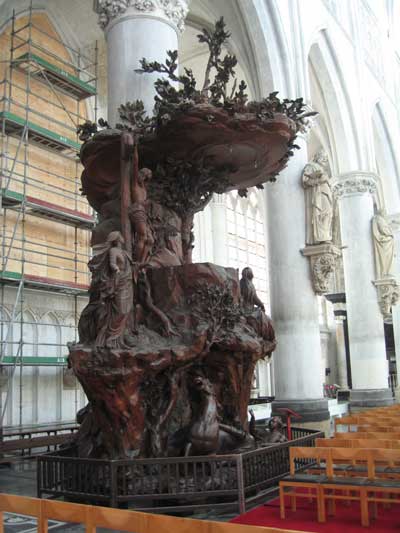
At one time, more than 100 firms in the city made furniture and word carvings, as evidenced by the many large and ornate church carvings seen here. Be sure to look for them as you discover this cobblestoned town, whose city center is only about a half mile across.

Some of the city’s sights include the early Gothic Brussels Gate, the last remnant of the medieval fortification constructed around the inner part of the city, built about 1300. At one time, all traffic entering and leaving had to pass through its limestone gates.

ST. RUMBOLD TOWER
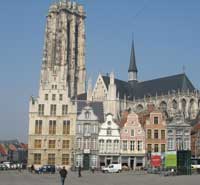
You can’t miss St. Rumbold Tower—it dominates the city skyline. If you have the time, conquer the 514 steps to the top of the tower to the skywalk for a great view of the area. Original plans for the tower were made when Mechelen was a rich and powerful commercial and political center, and thus the tower of St. Rumbold’s Cathedral was to become the highest tower in the Low Countries. Completed, it would have reached the dizzying height of 547 feet. Financial problems in the 16th century halted construction. The tower now reaches a height of 318 feet, still plenty tall.

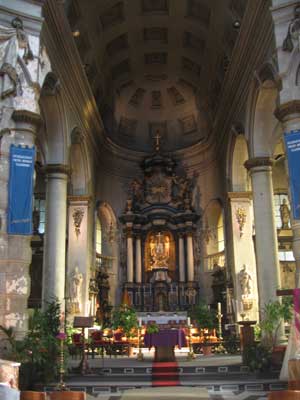
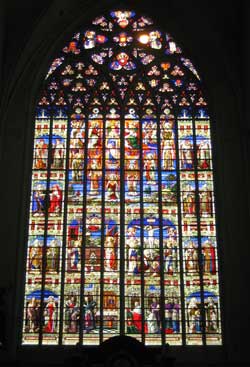
Inside the cathedral is a scale model of what the tower should have looked like had it been completed. Also inside the church are two of the largest stained glass windows in Europe. Jo Haazen and other guest carillonneurs present a carillon concert at the church every Monday evening from 8.30 p.m. to 9.30 p.m. These recitals are free.

A third highlight of the city is the Large Beguinage, where widows and unmarried women of class were invited to live together, submitting themselves to pledges of obedience and chastity. Parts of this community are still visible and are inter-woven into the city’s many old structures that line narrow streets in the center. Still in tact are the Beguines’ church, the infirmary, the house of the grand mistress and other structures.

(middle) One of the largest stained glass windows in Europe in Mechelen’s cathedral.

PALACE OF MARGARET OF AUSTRIA
Another important site is the Palace of Margaret of Austria of the Court of Savoy. This was the first renaissance building in the Low Countries and perhaps outside of Italy. The facade features Margaret’s coat of arms, and between 1616 to 1795 it was the seat of the Great Council. Its interior garden area is a fine place to rest your feet for a while.

Another spot worth visiting is St. John’s Church, which is open to the public. A very fine wood carving on the interior is one of Ruben’s masterpieces, The Adoration of the Magi. The church furniture, paintings and statues date largely from the 17th and 18th centuries.

For a respite from walking or touring the city, find Windels at Iron Leen 48 (not far from the main railway station), the oldest cigar store in Belgium (from 1875) that continues to make fine cigars, and offers them in beautiful hand-made wooden boxes. The store, now being run by the fifth generation of Windels, also carries a good selection of whiskeys.

The Jef Denyn Royal Carillon School, at Frederik de Merodestraat 63, is a state-subsidized educational institute that offers a six-year program to obtain a laureate’s diploma. Even the Vienna Boys Choir visited the school during the last few years. When you realize Belgium is one of the carillon capitals of the world, this school makes sense, and attracts students from as many as a dozen different countries. The heaviest carillon in Belgium—there are five different carillons in town–is in one of the local church towers.

The Jef Denyn Royal Carillon School in Mechelen

The De Wit Royal Manufacturers of Tapestry, operating since 1889, is the only workshop in Flanders to retain this age-old tradition. Offering a complete range of tapestry services, the firm offers individual tours on Saturdays at 10:30 a.m. and group tours on other days. The De Wit is housed in a beautiful old Abbey at Schoutetraat 7, and plays a key role in many old and expensive tapestry restorations throughout Europe.

TIME FOR SOME CUCKOO
Perhaps at lunch time you’ll want something unique and that is a local delicacy. Find a restaurant that serves the town’s famous Mechelse koekoek, or Mechelen cuckoo (chicken). This chicken, with black-gray feathers, is a feature on many local menus, and is often served with fresh vegetables or with a Mechelen beer sauce. You’ ll likely get a large side dish of round roasted potatoes to go with the chicken.

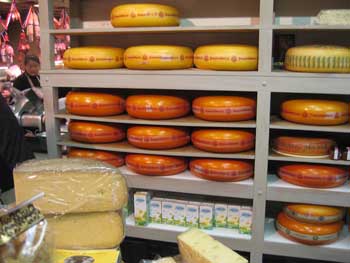
Delicious cheese lines the shelves in a Mechelen shop.

After lunch, stop in at one of the two local Gauthier chocolate shops (one is at Guldenstraat 2), and soak in the atmosphere. Store candies are hand-made, made from traditional Belgium customs, and follow a unique recipe, so you’ll likely leave with a bag full of something good to eat. The Gauthier family, with master chocolate maker Edouard Gauthier, has been making candy in town since 1964.

Round out your afternoon with a boat trip on the Inner Dyle River. A multilingual audio-guide tells you about the sights along the river banks. The departure is at the Jetty at Lamot/Haverwerf and costs €6 for adults.

MUCH MORE TO SEE
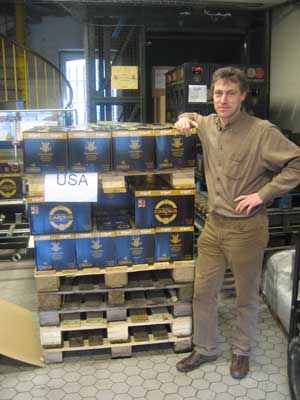
Many more Mechelen sights are available if you have the time, such as the Watchmaker’s Museum, the Jewish Museum of Deportation and Resistance, the Museum in City Hall (the old Rathaus), and the Het Anker Brewery Museum. At this small family brewery, best known for its local beers such as Gouden Carolus, you’ll get a feel for quality. The brewery also has its own restaurant and 22-room hotel.

Around the year 1500 more than 100 breweries operated in Mechelen, but like most things, the businesses and other important history of the city has faded over time. But this quaint Belgium town continues to re-count its traditions and rich past, and brings it forth today for all to enjoy.

For more information, go to www.tourismmechelen.be or www.visitflanders.us.

New Designer Hotels in Germany’s ‘Magic Cities’

Photos courtesy German National Tourist Office

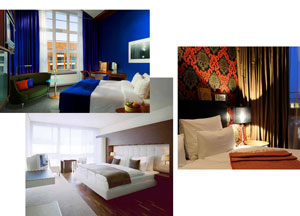
The cities belonging to Germany’s “Magic Cities” association, including Berlin, Cologne, Dresden, Duesseldorf, Frankfurt, Hamburg, Hannover, Leipzig, Munich and Stuttgart are centers of art, architecture, history and culture. Discover some of the newest additions of designer hotels that these cities offer:

In Berlin, the Soho House concept is being implemented for the first time in Germany. Stylish branches of this chain can already be found in London and New York. In the former “House of Unity” at the foot of Prenzlauer Berg, the hotel has 50 bedrooms. The luxurious fitness area, modern conference rooms and hotel with spacious apartments on the third and fourth floor will be open to all visitors. There will also be an exclusive area for club members only. Another highlight is planned on the second floor, where the office of the former State President of the GDR, Wilhelm Pieck, is being restored to its original condition.

Cologne

In Cologne, one hour from Frankfurt on the Rhine River, there is a new four-star hotel, Art’otel Cologne, in a prime location on the banks of the Rhine. Alongside the trapezoidal design and the colorful windows, the chief attraction of the hotel is the art-inspired interior design with a permanent exhibition of the works of the Korean artist SEO, a former master student of Georg Baselitz. The hotel has 218 rooms with a special twist: the glass walls partitioning the bath or shower rooms are colorfully painted with some of the best of SEO’s designs.

Duesseldorf lives up to its artistic reputation (Academy of Arts) with its own new designer hotels. The Stage 47 Hotel features a completely new, unique design. All 27 suites and rooms are named after famous artists. Their portraits adorn the walls of the individual rooms, creating a special atmosphere. British elegance combined with unpretentious comfort describe the Sir & Lady Astor hotels. Lovingly arranged details and charming decorations as well as discreet, attentive service give guests a feeling of a homecoming.

Dresden, the royal metropolis on the River Elbe in the eastern state of Saxony, has been restored to one of the most beautiful Baroque cities in Europe. Dresden offers beautiful architecture, world-class art and a variety of luxury hotels. A perfect example for the modern reinvention in the classic tradition is the QF Hotel, perfectly located near the Church of Our Lady in the heart of Dresden. The hotel, formerly the “Hotel Stadt Berlin,” has been known since 1804 as one of the best hotels in the city. The 96 rooms combine comfort and luxury with a clean and modern design.

Frankfurt, the financial metropolis in the middle of Germany, is not only the major airport hub, but also a fascinating city where great history meets modernity, world class contemporary art museums and galleries are placed alongside cultural giants such as Goethe. A new highlight of the hotel scene is the Roomers design hotel in the city center. This luxury hotel combines classic lines and innovative design in its 117 rooms.

Hamburg: The designer hotels in this port city combine themed interiors with the comforts and conveniences of the highest standard. Hamburg is also where you’ll find Germany’s highest-rated boutique hotel. The Side Hotel combines luxury and design with aplomb. This award-winning five-star establishment is characterized by a minimalist interior of dark wood and beige elements illuminated by unique lighting.

The George Hamburg holds an entirely different appeal as a four-star hotel with British charm. Rooms furnished in warm colors, an elegant library and an English Garden are all part of its homage to British style.

Hannover, in Germany’s north, has a long history as a royal seat of the English kings and queens, but also as a modern city that hosts many world-class conventions. A special place to overnight is the Sheraton Pelikan Hotel. Located in the former Pelikan factory, one of the most famous brands of fountain pens, the architects integrated the architecture of the old production facilities into the hotel design to create a distinctive loft atmosphere.

Leipzig

Leipzig, one of the most exciting cities in eastern Germany, invites visitors to stay in style in the newly-redesigned Pentahotel. The hotel was given a complete makeover in 2009 by Italian star designer Matteo Thun. The 356 new stylish and comfortable rooms have 32″ flat screen TVs, iPod or game consoles like Nintendo Wii, and other features catering to the needs of the modern and tech-savvy traveler.

Munich in southern Bavaria is known for its royal splendor. The new Louis Hotel that opened in September 2009 fits right in. The name Louis is intended as a reference to the appreciation of beauty as professed by King Ludwig II of Bavaria. Located in the heart of Munich, globetrotters will feel at home in the 72 rooms with carefully selected details and handcrafted furnishings. Natural stone and elegant tiling are reminiscent of the Parisian Metro and make the rooms an unforgettable experience.

Stuttgart

Stuttgart, home to the iconic car brands Mercedes and Porsche, now offers a very special experience for motorsports enthusiast. The V8 Hotel opened last fall and offers everything for high-octane car lovers. Individually designed rooms, antique and unique car models make this hotel a great experience. Its Bauhaus style combines function and comfort.