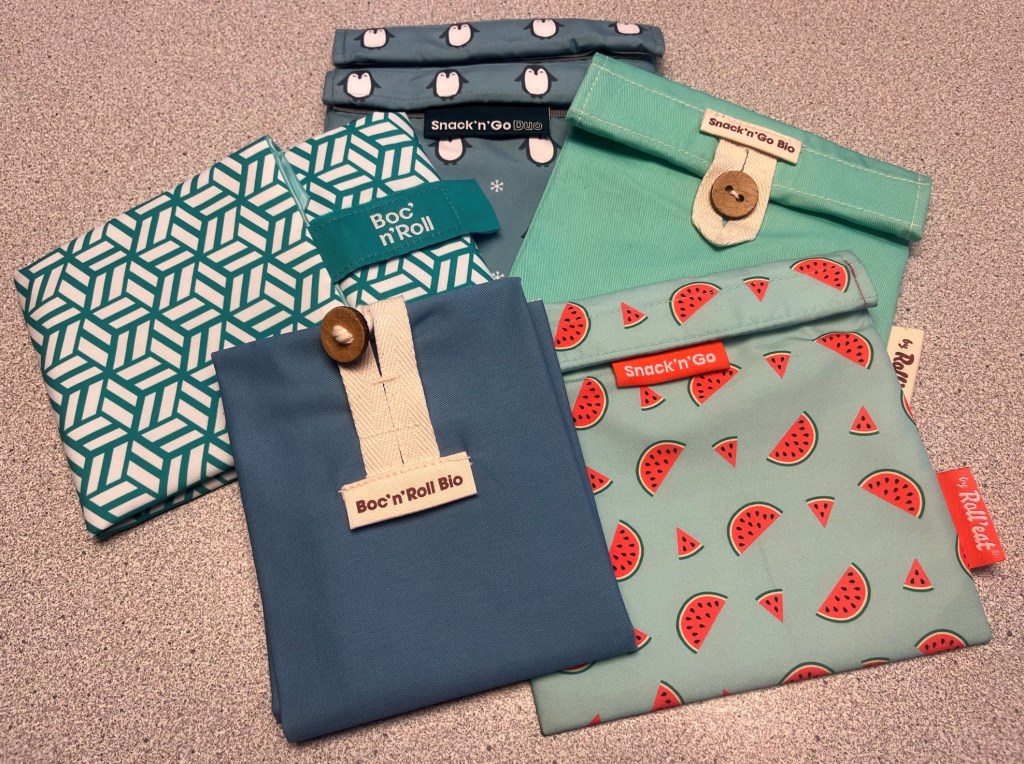
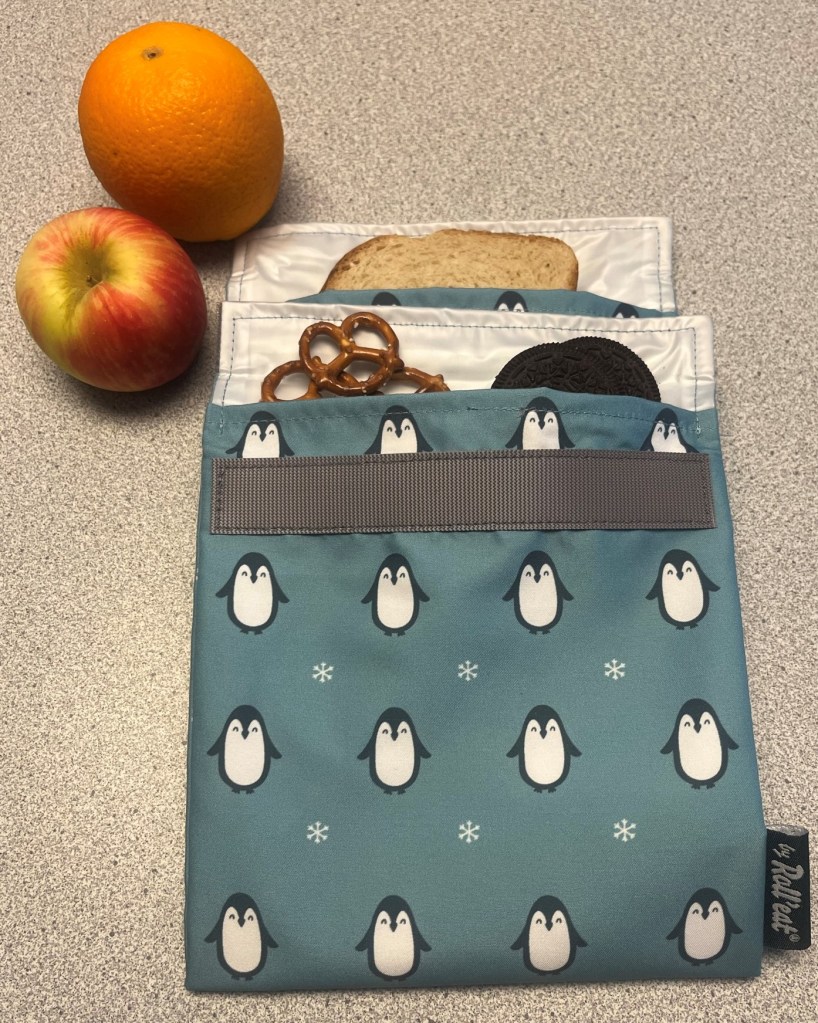
How many plastic sandwich and snack bags do you use in a week? If you pack a lunch and snacks for work or school, probably too many to count! You can help reduce pollution and protect our planet by switching to reusable food wrappers by Roll’eat. These sandwich and snack bags come in a wide variety of fun colors and prints – from animals to fruits to bold solids and flashy patterns, you can pack some personality into your purse or lunch bag!
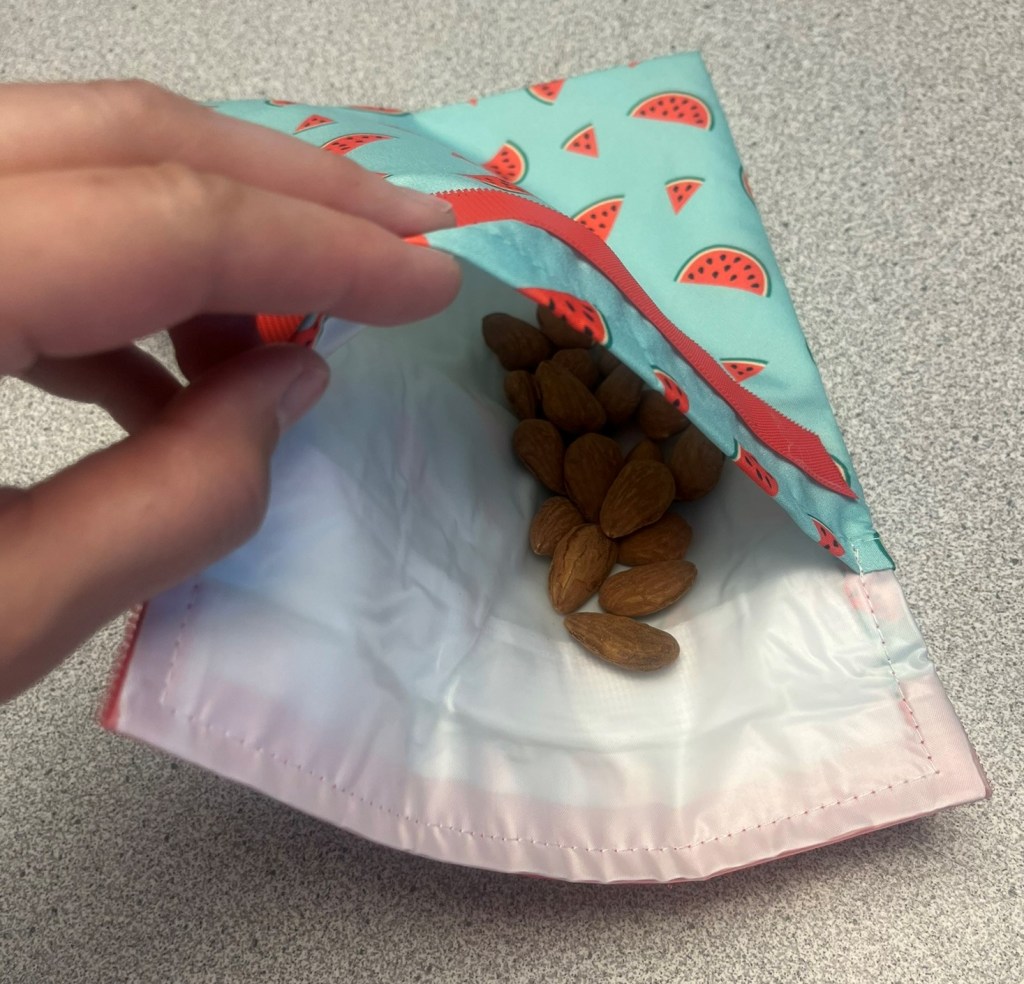
On a recent work trip full of long tours, the hotel’s abundant continental breakfasts were too tempting to ignore. Many colleagues sustained themselves throughout the long days by wrapping mixed nuts or an extra pastry into a tissue-thin napkin in the morning and stuffing it into a pocket or bag. As you know, this rudimentary wrapping often results in a crushed croissant or a pocket of loose, linty legumes. Roll’eat Snack’n’Go and Boc’n’Roll reusable bags are the perfect solution to this problem, protecting your snacks from spilling or squashing, and they provide zero waste!
The eco-friendly Snack’n’Go is a 7”x7” soft pouch with a durable upper closure and a leak- and stain-resistant inner layer that ensures your snacks remain fresh. The double-layered fabric can be wiped on the outside and inside with a damp cloth or washed in the washing machine, and the bags can fold down to a small size for easy packability. They are lead-free, BPA-free, and hassle-free for life on the go. There is even a Snack’n’Go Duo that features 2 pockets, so you can slip a saucy sub sandwich into one and some crunchy munchies into another, keeping your food items separated.
Roll’eat bags also give you the option to pack healthy food from home instead of relying on junk food from vending machines or supporting the production of pre-packaged, high-calorie snacks. You can snack on fresh, natural foods that support better health, while using a snack holder made of materials that don’t cause harm to your health or to nature.
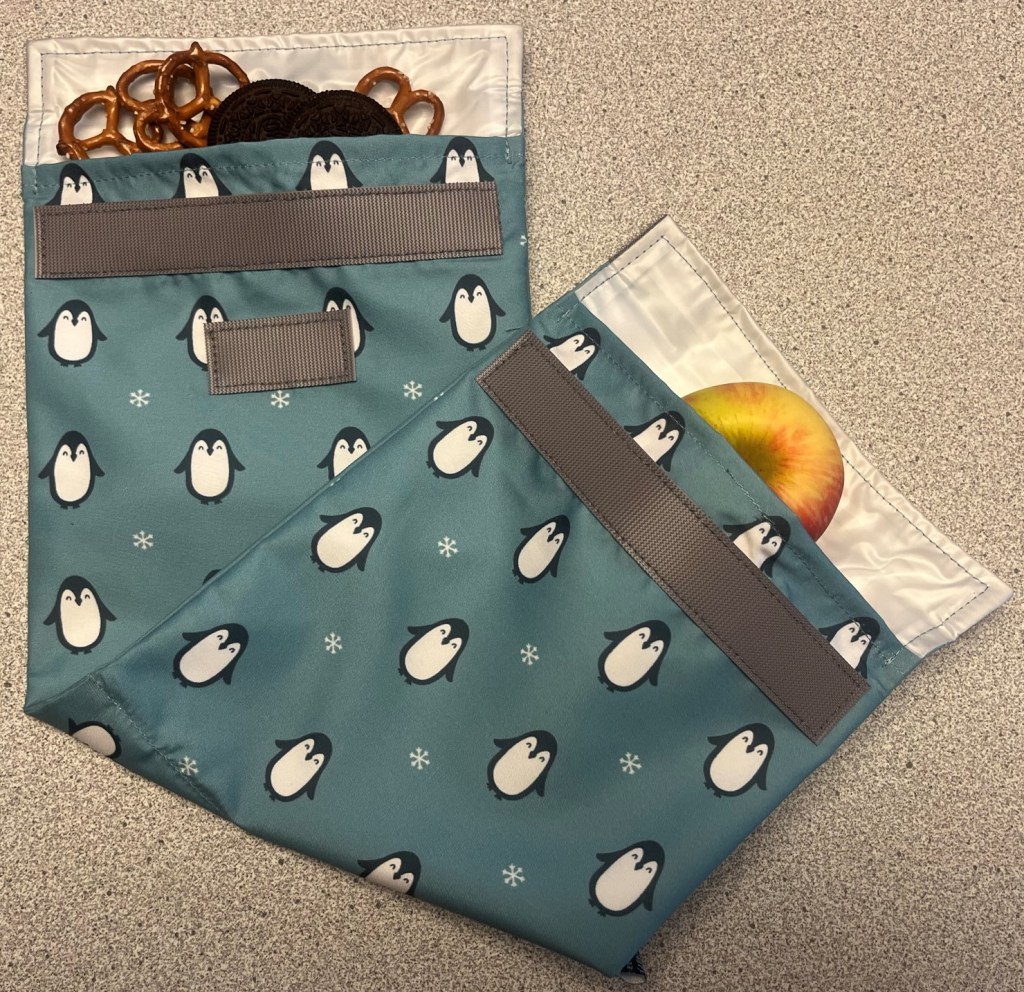
The Boc’n’Roll sandwich holder opens flat to turn into an ~18”x13” placemat, protecting your food from dirty surfaces, and it can fold compactly, depending on the food you’re enclosing. I am one who loves wrapping gifts, and each use of the Boc’n’Roll is like preparing a colorful present to open later! You place your sandwich in the center and fold up each side over it until easily securing it with a button or strip of fabric fastener, depending on the model. The fabric is beautiful and tough, but please don’t use sharp utensils around it or try to cut a sandwich in half on top, to avoid puncturing it.
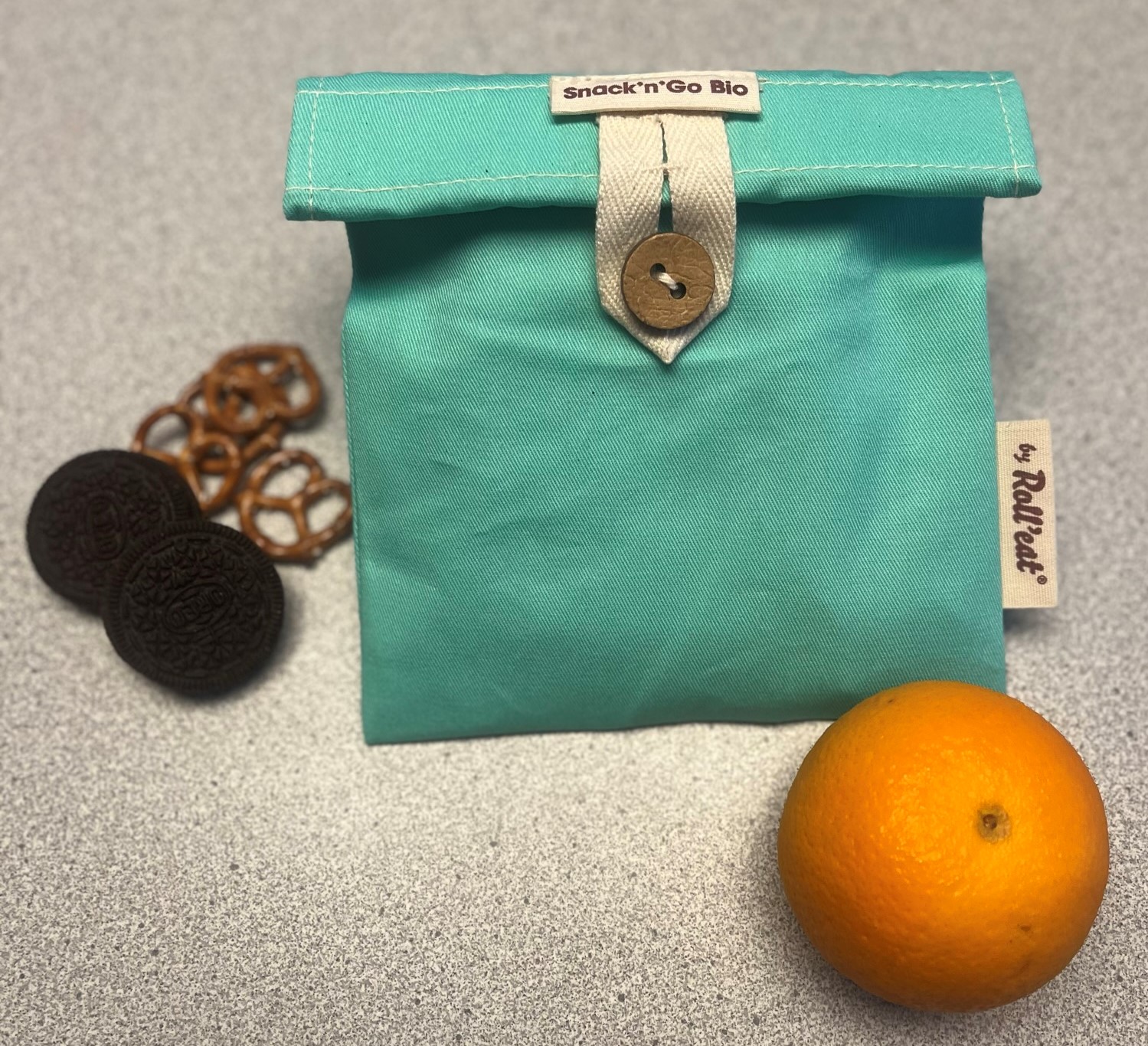
The Bio line by Roll’eat is 100% biodegradable and sustainable. The fabric of these is an organic cotton canvas in solid colors, with a natural wooden button enclosure. These compostable materials are manufactured using fewer fossil sources and will eventually decompose faster while using less energy than other materials – another chance to be kind to Mother Earth and reduce negative effects.
Reduce harmful waste, promote environmental awareness, choose a responsible lifestyle, pack healthy foods – Roll’eat bags help you do all of that while adding style to your snack life! Please visit RolleatUSA.com to shop the collection and learn more about the Roll’eat mission and impact.
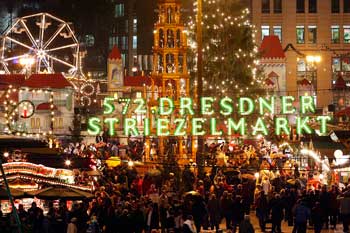
This holiday season, Rail Europe presents the “German Christmas Markets,” a seven day itinerary to five enchanting Christmas markets throughout Germany.
These unique and unforgettable markets invite travelers to experience the sights, smells and traditions of European Christmas festivities. Visitors can dive into a winter wonderland of regional traditions, handcrafts and culinary specialties such as Christmas Stollen (German Christmas cake), Lebkuchen (gingerbread) and Gluehwein (hot spiced wine). They can stroll through festively-decorated streets lit by thousands of twinkling lights and explore historic town centers as Christmas carols echo through the streets.
Travelers can begin their journey in Dresden, home to one of the most well-known Christmas Markets in the world. Best known for its long royal and political history, Dresden has emerged as the cultural and educational center of Germany.
Then, travel by train to Weimar, a city known for its rich history and architecture and home to scholars such as Goethe, Schiller and Herder. During the month of December, the city’s Gothic town hall on the market square is transformed into a life-sized Advent Calendar, where three children open a new window each day as Father Christmas greets them with a small gift. From Weimar, travelers will be whisked away to the medieval streets of Erfurt, where Christmas carols ring out and the air is filled with the aroma of gingerbread.
Next stop–Eisenach–where travelers fall head over heels for the romantic market nestled within Wartburg Castle’s walls. One of the best kept medieval castles in Germany, the Wartburg boasts a medieval marketplace with Christmas concerts and artists, craftsmen and knights, and colorful booths decked with boughs of holly.
The trip concludes in Frankfurt, a buzzing financial metropolis housing one of the oldest and most elaborate markets in Germany, attracting more than three million international visitors each year. Over 200 stalls offer arts and crafts, festive cuisine and a varied program of Advent concerts and trumpets playing from the balcony of St. Nicholas’ Church.
It’s an unforgettable experience–Christmas, Germany and trains!
Rail Europe offers hotels and train travel in their German Christmas Market package. For more information, go to www.raileurope.com.
By Marilyn Heimburger Photos by Don and Marilyn Heimburger
As spring approaches, thoughts of chocolate come to mind, just because we’re always looking for an excuse to eat chocolate! As the saying goes, “Chocolate–it’s not just for breakfast anymore!”
After a recent trip to Cologne, Germany, and after visiting the Cathedral and Roman ruins, I added a trip to the Chocolate Museum to my itinerary. You’ll learn all there is to know about this treat and have the opportunity to taste and see why the ancients called chocolate the “food of the gods.”
Opened on Halloween Day in 1993, the museum was the idea of Dr. Hans Imhoff, an entrepreneur who was the head of the Stollwerck Chocolate Company of Cologne. The three-story museum is located on the banks of the Rhine, within sight of the Cologne Cathedral.
Designed to look like a ship in the harbor, its modern glass and metal architecture surrounds the historic central customs office, which was built in the 1890’s. The museum welcomes an average of 1,700 visitors a day and about 650,000 per year.
3,000-YEAR-OLD HISTORY
Visitors can see chocolate being made at the museum.
As you walk through the three-story museum, you’ll see exhibits covering the 3,000-year history of chocolate. Growing and harvesting raw cocoa is shown with photographs, harvesting tools and a full size log boat from Ghana. Next is a 100-square-meter tropical greenhouse containing real cocoa plants and more than 60 other rainforest species. You’ll learn that the flowers of the cocoa plant grow directly on the trunk of the tree, so that pollinating insects can find them more easily in the thick jungle!
Chocolate’s popularity began as a luxury drink. An extensive exhibit brings you through the pre-Columbian Olmec, Aztec and Mayan culture, where cocoa was the drink of the gods, and was sometimes used as currency, or “brown gold.”
Next you’ll see the beautiful porcelain and silver cups and pitchers that were crafted to serve this luxury item in 17th and 18th century Europe. The chocolate culture of the 19th and 20th centuries is depicted in a full-sized shop, with chocolate tins and boxes on display, as if you had stepped back in time.
Front and back of a Santa mold
Beautifully preserved chocolate vending machines and advertising posters give insight into the popularity of chocolate. A film room continuously shows old television ads for chocolate. Chocolate packaging from apparently any brand of chocolate that ever existed is on display. Even American brands of chocolate are represented, although Astrid Hage, press representative of the museum, admitted that it was difficult to find someone willing to eat the American-made chocolate in order to empty the packaging. She explained that the Europeans follow a different standard in their chocolate production, and that their formula produces a superior taste.
DECIDE FOR YOURSELF
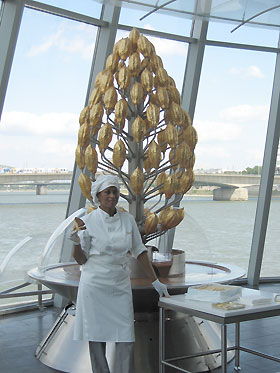
You’ll have the chance to decide that for yourself in another part of the museum, where, thanks to the Lindt and Spruengli Company, a two-floor exhibit demonstrates the production of chocolate today. From the processing, roasting, grinding of the bean to the pouring of hollow molded chocolate figures and a truffle production line, this small-scale system makes about 400 kg of chocolate every day for visitors to see, smell and finally, to taste.
A nearly 10-foot tall chocolate fountain stands on the production floor, and a museum staff member stands ready to offer a waffle cookie dipped in the warm melted chocolate that pours from the spouts.
THERE’S MORE, TOO
Do you want more of the “food of the gods?” A gift shop offering chocolate, souvenirs and gifts is ready to serve you. The museum also has a restaurant with a view of the Rhine.
Admission fees are 6.50 EUR for adults. Children under six or visiting on their birthdays are free. All exhibit texts are in both German and English.
The museum is closed on Mondays. Check their web page for information on hours, tours and special events: www.schokoladenmuseum.de
From the look of the crowds on the streets, it appears everyone has fallen in love with Bruges. And I visited in early April when there were fewer people visiting.
But that’s about the only negative thing you might be able to say about such a beautifully-preserved medieval city. It’s truly a must-see on any tour of Flanders, and you could easily spend several days visiting its wonders.
If Disney could have laid claim to Bruges, he would have: it’s that charming.
Bruges is easily walkable, but beware the cobblestone walks—make sure you have good walking shoes. Also, plenty of horse and buggies are for hire, or you can take a boat tour of the city or ride in a mini-bus.
UNESCO SITE The whole of the city center is a historical landmark, designated by UNESCO as a World Heritage Site, and so it should be. It’s hard not to become enamored with Bruges, its twisting streets and alleyways, its network of canals, and its charm. It’s a complicated network of narrow passageways, brick buildings and waterways, but that’s what makes this city so fascinating. You’ll love it.
VISIT THE BEGUINAGE In most cases, you’ll cross Minnewater Bridge to enter the Beguinage, founded in 1245. Now populated by nuns from the Order of Saint Benedict, you’ll see the beautiful courtyard garden, where yellow daffodils pop up in spring, the whitewashed house fronts that line the Beguinage, and the peaceful beauty of the area. A posted sign even asks visitors to be quiet and be beware of their surroundings.
THE BELFRY In case of war—or fire, or anything—the belfry was where it was first noticed. The marketplace is still dominated by this high tower, and it looks out onto the bustling plaza where life comes together in Bruges. You can climb to the top of the belfry (it will cost you 366 steps), and get a good view of the town as well as the two statues in the square, one of Jan Breydel and one of Pieter de Conick, both heroes who resisted the French in 1302.
The Stadsschouwburg is the royal theater building dating from 1869 and is said to be Europe’s best preserved city theater. Behind the Gothic revival architecture is a palatial auditorium and an elegant foyer.
The Little Bear of Bruges, located in a niche in the Burghers Lodge at Poortersloge, a 15th century private club building, is an important city symbol. I tried finding it, to no avail, but perhaps you’ll have better luck. It’s worth a photograph.
Kempinski Dukes’ Palace, at Prinsenhof 8, now an excellent five-star luxury hotel, was a former 15th century Dukes of Burgundy castle, and features 93 rooms, including 22 palatial suites, of which six are historically listed. Each room contains original features from 1429, but they have been completely modernized with elegant furnishings and marble bathrooms, and the hotel offers the latest technology such as flat screen television and high speed internet. Even just a look from the outside at this hotel is impressive; it’s located at the end of a short street, and is easy to miss.
LAST REMAINING BREWERY Bruges’ last remaining city brewery is De Halve Maan (The Half Moon), established in 1546; their specialty beer is called Brugse Zot, which refers to the nickname of the townspeople, conferred upon them by Maximilian of Austria. You can take a 45-minute tour of the brewery and museum; cost is 5.50 euros.
Churches are abundant and worthy of a look. There’s the Beguinage Church, the Episcopal Palace, the English Convent, Basilica of the Holy Blood, Church of the Holy Magdalena, the Military Chapel, Church of our Lady of the Pottery, and the Welcome Church of Our Lady (see the art collection inside including Michelangelo’s famous Madonna and Child, and the 15th and 16 century mausoleums of Mary of Burgundy and Charles the Bold). Saint James’ Church benefited from the Dukes of Burgundy and the many foreign merchants, and their gifts have left their glittering marks on the interior of this church. A guidebook, which you can pick up at the local tourism office in town or at the Bruges railway station, will sort out these churches and other points of interest for you. www.brugge.be/tourism
The Frietmuseum is all about the Belgian potato fry, located in the Saaihalle. Here you’ll learn all about the history of potatoes, and fries, and the condiments which are served with them. Kids will especially enjoy the fun things this museum offers, and you can even taste fries in the cellar of this medieval 14th century building.
WHAT ABOUT CHOCOLATE? Belgian chocolates, and their history, are served up in good measure at the Chocolate Museum, a four-story compilation of everything chocolate. The museum explains chocolate started with the Mayans and Aztec civilizations in pre-Colombian Central America, and after adding sugar, was imported to Europe around 1500 AD. Chocolate as we know it became popular around 1800, and as they say, the rest is history. The museum is a must-see in Bruges at Wijnzakstraat 2.
To taste more fine Belgian chocolate, you’ll want to check out The Chocolate Line at Simon Stevinplein 19. Master chocolatier Dominique Persoone, one of the owners, is a dynamic chef with advanced ideas on the making and blending of chocolates and other flavors. Chef Persoone blends chocolate with such tastes as cigars, fried onions and passion fruit. His shop is one of only three chocolate shops listed in the Michelin Guide, and the shop’s customers include such top-notch restaurants as Comme Chez Soi, Oud Sluis and Hof van Cleve. He even has a new book out where he travels through Mexico in search of the origins of cocoa, visiting Maya settlements and discovering the secret of the first chocolate drink and today’s Pozol. If you happen to get to meet Dominique, you will enjoy his demeanor and his chocolates. www.thechocolateline.be
Bruges is also known for its many guild halls, which are scattered throughout the town. Bruges Town Hall, built between 1376 and 1420, is one of the oldest in the Low Countries. A ceremonial staircase leads from the entrance hall to the first floor, where visitors can view the Gothic Chamber. This former council chamber continues to play an important part in the life of the city. The wooden, polychrome ceiling is decorated with a profusion of late-medieval carvings. The murals illustrating Bruges’ past were added during the chamber’s restoration in the late 19th century.
Where to stay? There are dozens of hotels, youth hostels, apartments and bed and breakfasts to choose from. The Bruges Tourist Office can supply a booklet listing these.
Bruges is colorful, inviting and lively, and the food and beer there is some of the best in Europe. You couldn’t find a better combination of history, fun and food. For more information, go to www.visitflanders.us or www.brugge.be
One thousand five hundred years of recorded history, and the magic of Venice, Italy continues to captivate our hearts and please our artistic eye.
Venice was built on the water, and this love-hate relationship has challenged the city from her beginnings. She reaps the rewards of the sea (salt, fish, trade and now tourism) but suffer from this same sea lapping at her front steps, eroding the foundations of this architectural marvel. Venice is a beauty, simply fascinating and mysterious, she is the “Queen of the Adriatic!”
Venice was founded in 421, a result of residents of the Veneto (now, northern Italy) who were fleeing the wrath of the Goths. These Goths systematically looted and destroyed cities en route to Rome. The refuges set up villages in a marshy lagoon, on tiny uninhabited islands, where they were safe from invasion. This settlement became known as Venice. BYZANTIUM LINKS Due to its location on the sea, trade links with Byzantium were created, exporting salt, and importing exotic spices and fabrics from the Orient. Ships were able to dock right at the city’s front steps, and Venice began to grow in importance and wealth.
Although known as a trade center, Venetian merchants wanted to capitalize on the tourist traffic of Christian pilgrims traveling from Europe to Jerusalem. In 828 two brave merchants traveled to Alexandria, Egypt where they stole the body of Saint Mark, the evangelist. A massive cathedral dedicated to Saint Mark would be built, placing Venice on the map for Christians.
The first cathedral completed in 832, was built of wood, and, sadly, burned in 976. A second cathedral was built, and then torn down to make room for a third, massive, brick, marble and stone structure.
Construction on Saint Mark’s Basilica began in 1063 and was consecrated in 1094. This is the very cathedral whose intricate glass and gold mosaics, hand-carved stone pillars and impressive domes welcome visitors today.
Saint Mark’s Cathedral frames the western end of the Piazza San Marco. The Correr Museum (partially housed in the newest wing of the square called The Ala Napoleonica -built by Napoleon in the 18th century) stands on the eastern end of the square. Once completed, this building framed in the piazza.
DRAWING ROOM After building his new wing, Napoleon Bonaparte said “Now, this is the most beautiful drawing room in all of Europe!” The Piazza is open to the sea on one portion of the Southside, adjacent to the Doge Palace, where two massive marble columns stand at the original entrance to the city.
These two columns were erected in 1172 but originally stood at Constantinople. Atop one column is a carved statue of a winged lion (the symbol for Saint Mark) and atop the other, is Saint Theodore with an alligator (Venice’s earlier Patron Saint.)
Today visitors to this magical city built on the water, arrive via the Ponte della Liberta, a two and a half mile long bridge from the mainland. The original bridge, built in 1846, accommodated train travelers only, but an auto bridge adjacent was completed in 1933.
When arriving in Venice by train, passengers disembark at the Santa Lucia Train Station, built in the mid 19th century and remodeled in the 1950’s. Don’t make the mistake of getting off the train at the Venice mainland station, as it is an expensive cab ride to Venezia.
BREATHTAKING VIEW The train station’s front steps open up to a breathtaking view of the Grand Canal. The San Simeon Piccolo church (1718-1738) with its green copper dome, sits directly across the canal from the station. It is here, a visitor realizes, just how unique this city is, as you watch all the boats busily traversing the waterways.
There are Vaparettos (water buses) carrying visitors, locals and commuters around the city. There are trash boats, UPS boats, grocery delivery boats, personal boats and, yes, the famous graceful and elegant black gondolas with gondoliers sporting their time-honored black-and white-striped shirt and wide-brimmed straw hat.
All commerce and travel around Venice depends on these waterways. Venice is built of 117 tiny islands, connected by more than 400 walking bridges and more than 150 canals. There’s only one small area of Venice that is even connected by the Ponte della Liberta for auto traffic, parking and drop-off.
A visitor to Venice can explore the tiny streets boarder the small canals, without the distraction of noisy scooters and fast driving Italian automobiles. The city consists of a labyrinth of tiny streets and canals, and exploring these areas away from the primary tourist stops is calmingly quiet, romantic and simply enchanting.
THREE MILES WIDE It’s safe to walk in Venice, and getting around is easier than you might think. Yes, you can get lost, but watch the street signs pointing to landmarks like the train station (Ferrovia), Saint Mark’s Cathedral or the Rialto Bridge, or even the Grand Canal, which will help you find your bearings. The entire city is less than three miles wide, and getting away from the most popular tourist sights will lead a visitor to explore this city’s numerous historic cathedrals, museums, parks and palaces.
The Vaparetto (water bus) is an excellent way to see the city. An all-day ticket (12 Euros) allows you on and off passage for a 24-hour period. Multiple day (3 and 7) or single excursion tickets are also available. There are Vaparetto stops all around the island and down the Grand Canal.
The Vaparetto routes also take passengers to the lagoon islands of Murano (known for Venetian glass) and Burano (known for its colorful houses and lace making). From the train station, take Line #1 or #82 for a leisurely two mile ride down the Grand Canal, as it snakes its way through the middle of Venice.
Lining the Grand Canal are impressive palaces, that offer a glimpse into life as it was from the Renaissance time to Casanova’s day. Remember, access to these palaces was primarily by water, so the highly-decorated front entrance was always along a canal, rather than the sidewalk in the rear.
PINEWOOD PILES How could these early residents build such impressive structures on a swampy lagoon island? Pinewood piles were driven 25 feet into the solid clay ground before building work began. These pilings were closely packed, free from oxygen which inhibits decay.
Above the pilings came brick and then stone creating damp-proof foundations. Mortar on the exterior of buildings is a special Venetian style, which is porous enough for moisture to evaporate. (Keep in mind, the canal tides rise each day and canal boat traffic causes waves to lap onto these foundations.) Of course, there is decay, but it all adds to the beauty, history, the weathered Bettina.
Everything in Venice is worth a picture! A camera is a must to record your memories, but most importantly take, the time to stop at one of the many outdoor cafes, where you can sit in the sun, sip an espresso, listen to the water and immerse yourself in this historic time capsule. It’s a memory you will never forget! ET
Kristi Nelson Cohen is the owner and operator of Bella Italia Trips, leading guided tours to Italy. She has visited Venice numerous times.
WHERE TO STAY IN VENICE Hotel Gardena 3 STARS www.hotelgardenavenice.it Phone: 39-041-220 5000 This hotel is conveniently located near Piazzale Roma (auto taxi and bus service for the airport). The hotel is only a 5 minute walk from the train station on a small and relatively quiet canal. This is a small hotel (14 rooms) with an exemplary staff.
Hotel Principe: 4 star www.hotelprincipevenice.it Phone: 39-0410220 4000 This hotel is conveniently located adjacent to the train station (to the left northeast) and this former palace hotel borders the Grand Canal. This is a larger hotel with numerous amenities and a full-service restaurant and piano bar.
Both of these hotels have easy access to Vaparetto or private water taxi service. To purchase multiple day Vaparetto tickets or the Venice Card, (combination Vaparetto and Museum admission) log onto www.venicecard.com.
To see a complete time table of rail schedules in and out of Venice: Venzia Santa Lucia, log onto www.raileurope.com.