If “learn another language” is on your bucket list, but you’re not into classrooms, group travel, or homestays… keep reading.
By Abbey Algiers
This fall I took my 19th trip to Spain. 19 trips, yes. That number is due to a love affair with Spain that began at age nine, on a family trip to Madrid. Next came Spanish summer school (at the ripe age of 10), then high school and college trips to Spain, followed by years of traveling there as a Spanish teacher. Now, as a travel writer and Spain specialist, Spain remains at the top of my list.
Yet, even with all of my years of travel and Spanish practice, I still look for opportunities to improve my Spanish. This past fall, I experienced a language and immersion tour that ranks as one of my most fulfilling cultural, learning, and personal growth experiences in Spain—and might be of interest if you’ve ever said, “I really want to learn another language and live like a local.”
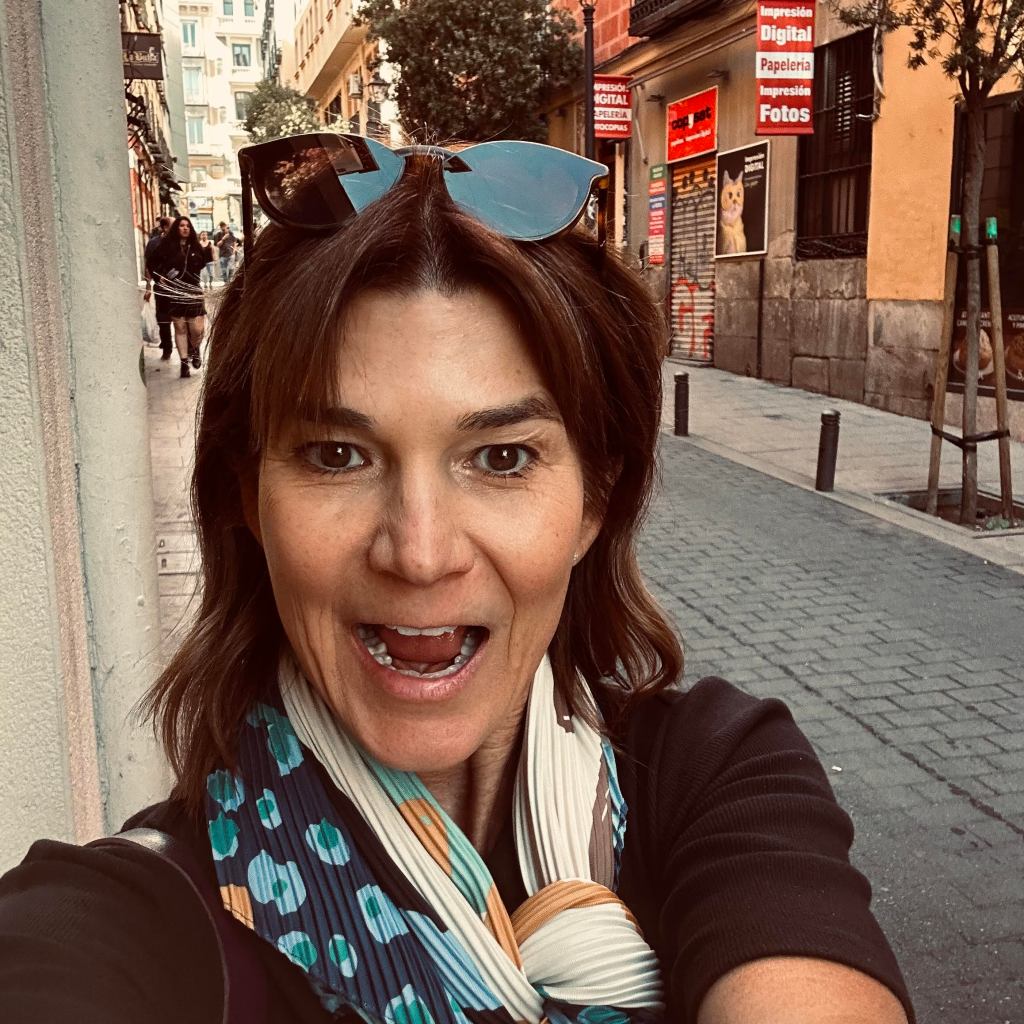
Language Immersion in Sevilla and Madrid
I set out in October 2025 to spend two weeks in Spain—starting with a week in Sevilla, followed by one in Madrid. My goal was simple—to refresh my Spanish and enrich my knowledge of Spanish culture. And, if I’m being honest, I also wanted to stay in a beautiful hotel, unplug, and recharge.
Maybe at this point you’re wondering, “Why would a former Spanish teacher need to do an immersion?” Great question. While I am fairly fluent, I have two golden rules when it comes to language learning. First, to maintain fluency or get more fluent in a language, you’ve got to use it or you’ll lose it. Second, the best way to learn a language or improve fluency is to immerse yourself in the culture.
Working within my schedule, I started searching for a Spanish immersion program that met my non-negotiables: no classrooms or groups (I’d had my fill as a teacher), flexible scheduling to fit my freelance life, and a stylish hotel in a lively area. I wasn’t interested in a homestay or just any hotel. I wanted this time to be restorative as well. With that criteria—no classrooms, no groups, and luxurious accommodations—I discovered a program called Language & Luxury, or L&L. As I read the company website, it was as if they were talking directly to me—no classrooms and no groups, just private one-to-one instruction. Best of all, the experience is coupled with personalized, private cultural tours and daily cultural activities, with the option to include luxury accommodations and additional curated experiences.
Language & Luxury met my exact criteria. I could do a week in Sevilla and a week in Madrid, and even add on weeks in other Spanish cities. I got to decide when and where instruction took place, with the lessons catered to my language level and goals. I was so impressed with what L&L offered that I decided to try it. I’m here to take you through my trip and show you how fun and rewarding a language immersion tour can be—regardless of your language level, age, or travel experience.
How Language & Luxury Works
After expressing interest, I was contacted by L&L to schedule a call with the company’s founder, Richard Phelps. Richard told me more about the company and stressed that the entire tour is customized for the client. I could choose the exact dates and duration for my tour, the city (or cities), and the time of day for my private lessons. The flexibility and personalized attention really appealed to me. The addition of cultural activities and luxury accommodations sealed the deal. Next, I talked with one of the company’s Language & Luxury Destination Specialists to discuss the details of my two-week tour in Sevilla and Madrid.
My Week in Sevilla
I arrived in Sevilla on a Saturday and was greeted at the airport by a driver provided by Language & Luxury. A short ride later, I arrived at Eme Catedral Hotel, a luxurious hotel directly across from the Catedral de Sevilla, the third-largest cathedral in the world. Not a bad spot to be, and I was blown away by everything the hotel had to offer—an attentive staff, several restaurants, a rooftop bar and pool, a workout facility, and a world-class spa. My suite was incredible, with cathedral views from two patios. All week, church bells lulled me to sleep at night and woke me up in the morning.
Daily Routines
L&L clients can start their tour on any day of the week, which is great if you want to get away “when you’re able to get away.” Since my lessons started on a Monday, I spent Sunday acclimating to the area. I did this by taking a food tour with Eating Europe, a company that uses local guides to take groups to non-touristy restaurants for an authentic taste of local cuisine.
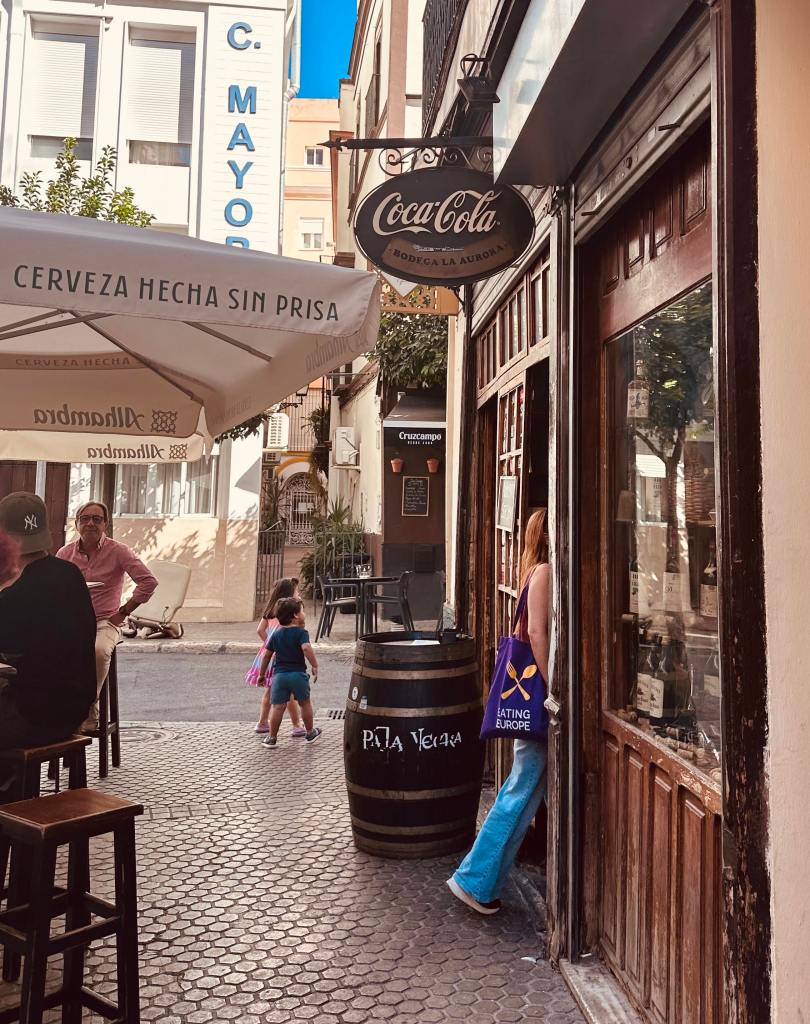
After the tour, I took advantage of the fact that Seville is highly walkable and took in some of the city’s highlights, like the majestic Seville Cathedral and Giralda tower, the lush Real Alcázar gardens, the grand Plaza de España with its canal and bridges, artisanal shops selling ceramics and fans, and Triana’s flamenco scene along the Guadalquivir River.
Language Immersion
The great thing about this immersion was that my instructor, Carmen, came to me at my hotel on the first and all subsequent days of my program. At our first meeting, Carmen and I met in a quiet part of the hotel for an introductory conversation (in Spanish & English), and then immediately got to work. She assessed my language and goals and asked where I wanted my lessons—right there at the hotel? In a cafe? On a quiet park bench? Or on the go, while strolling through the city? Being an active learner, I opted for walking lessons. Carmen was excellent—the perfect blend of instructor/new Spanish amiga, which made me feel comfortable working on my language with her.

In addition, Carmen followed up on the things we discussed. After our first lesson, she emailed me a list of verbs we’d talked about and gave me a comprehensive list of restaurants and points of interest based on things she’d learned about me. This was just one of many ways the week became personalized to me. As the days passed, Carmen and I realized we shared an interest in local legends, ghost stories, and health and wellness topics.
Private Cultural Tours, Excursions, & Personalized Activities in Sevilla
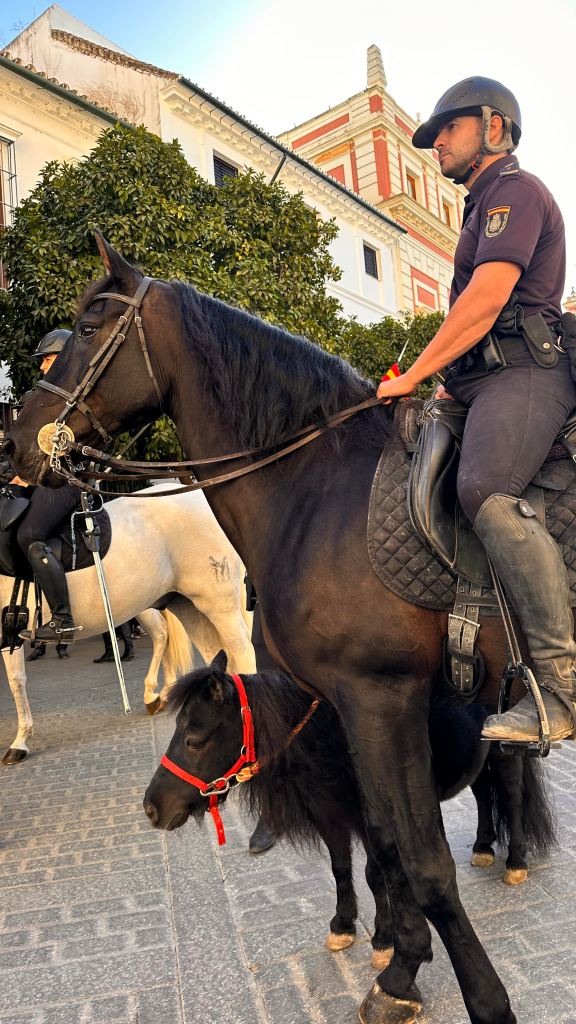
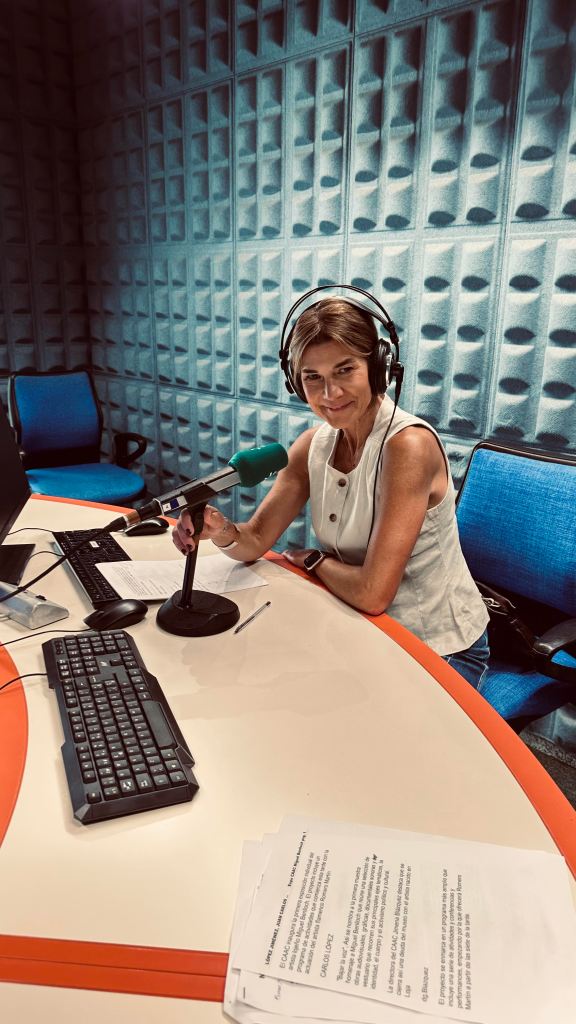
In addition to my daily private lessons, I had private cultural tours each day. Participants can choose three to five per week; I chose three. One day, Daniel, my guide, took me on a tour of the Cathedral of Sevilla and the Royal Alcázar. Another day, we toured markets and had tapas in one of Sevilla’s popular neighborhoods. I ended my week of tours with a visit to the Flamenco Museum and an authentic flamenco show. On the days I wasn’t on excursions, I pursued personal interests. One day, I played a round of golf at the Real Club de Golf Sevilla. Another day, I toured a radio station and talked with local journalists—an experience a local L&L partner set up for me.
The week in Sevilla flew by, and I was so glad to have another week to keep the momentum going in Madrid.
Week Two: Madrid
Per my Destination Specialist’s recommendation, I left Sevilla via high-speed AVE train to Madrid. Train travel in Europe is affordable, luxurious, and often much easier than air travel, as you don’t have to arrive hours in advance to travel. Again, I appreciated L&L’s transfer service from my hotel, and the business-class seat I reserved on the train was spacious and quiet.
Once in Madrid, I stayed at my friends’ house for the first part of my week and transferred to the hotel L&L had arranged for me mid-week. Language & Luxury participants can choose their own accommodations or have L&L set them up; I chose a mix of both. Again, I had a free day before my language lessons began on Monday, so I attended the Madrid Open Golf Tournament—because when you’re a golfer and there’s a tournament while you’re in town, why not, right? This is just one example of how one can “live like a local” and enrich the week’s experiences.
The Experience Continues in Madrid
My schedule in Madrid had a similar cadence to that in Sevilla. On Monday, I met Jennifer, my instructor, at the NH Palacio de Tepa, where I would stay later that week. We had an introductory chat, where I told her about what I’d covered in Sevilla, and talked to her about how I best learn/work. Jennifer told me she’d plan activities and lessons based on daily “walking immersions.”
Private Cultural Tours, Excursions, & Personalized Activities in Madrid
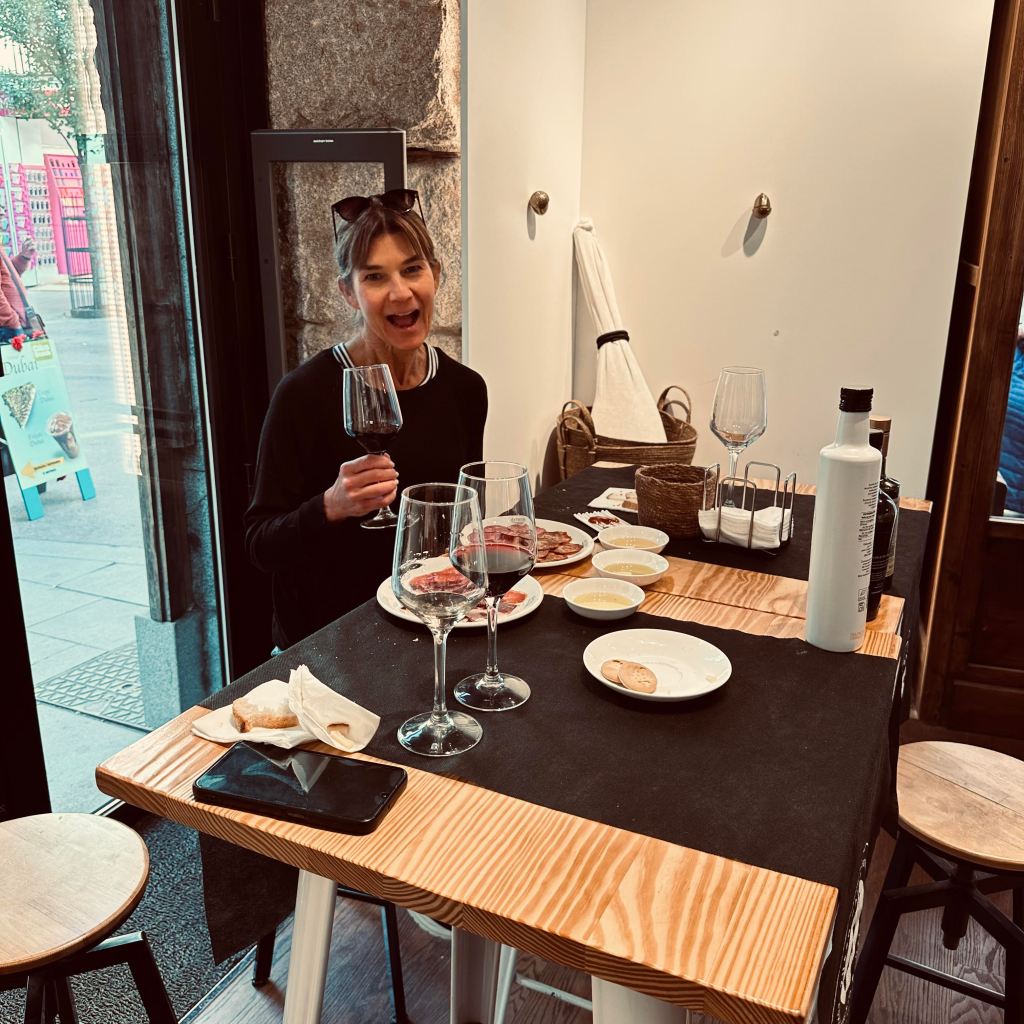
I paired my private lessons with cultural experiences and enjoyed working with my cultural activities guide, Alessandro. Our tours took place after my daily lessons, and included: a wine and Spanish jamón tasting, a tour of nearby restaurants not known to tourists, a walk through Madrid’s literary quarter (something I enjoyed immensely as a writer), and a visit to one of Madrid’s many art galleries, Fundación Mapfre. Working with the same local guide all week made the experience more meaningful, as I got used to Alessandro’s Spanish and approach.
In addition, one afternoon I played a round of golf in one of Madrid’s finest private courses, the RACE Golf Club. Here I learned about the growing popularity of Madrid as a golf destination, and the numerous opportunities to play in the area’s surrounding courses. And of course, I learned this in a conversation with the club’s director of golf, José Ignacio Vidosa Flores, while we spoke entirely in Spanish.

A Recap & Tips if You’d Like to Do a Language Immersion (in Spain or Around the World)
Toward the end of my two-week immersion, I had a revelation while sipping coffee with my instructor. I realized—Wow, I don’t think we’ve really spoken a lick of English since the first day of our instruction.
Now, while this would definitely vary for someone who came to the program with little or no Spanish, as someone who really wanted to become “one with the language and culture of Spain,” the program 100% delivered. I wasn’t just speaking the language; I was immersed in the culture, using the language without really thinking about it. I felt like a Spaniard!
If you’re looking for a way to immerse yourself in the language and culture of Spain (or another destination around the world)—like I did in Sevilla and Madrid—consider Language & Luxury. You’ll get one-to-one instruction, cultural tours, and luxury hotels, plus personalized attention from the start.
The bottom line? If you’re looking to learn or fine-tune a language (choose from Spanish, Portuguese, German, Italian, French, or English) based on your level, travel schedule, learning style, and cultural interests, and prefer to stay in beautiful hotels, have transfers handled, plus enjoy a curated itinerary with suggestions for high-end experiences, I’d definitely suggest checking out Language & Luxury!
In full disclosure, I was so impressed by the company that I wanted to be a part of it. I’m happy to say I’m now one of Language & Luxury’s Destination Specialists. However, please know I’d be spreading the word about this amazing opportunity to learn a language and grow as a person even if I didn’t work there!










 European Traveler