Biting Into Basel

Wedged between Germany and France, this northern Swiss city abounds with traditional restaurants offering classic fare and Old World flair

By Randy Mink

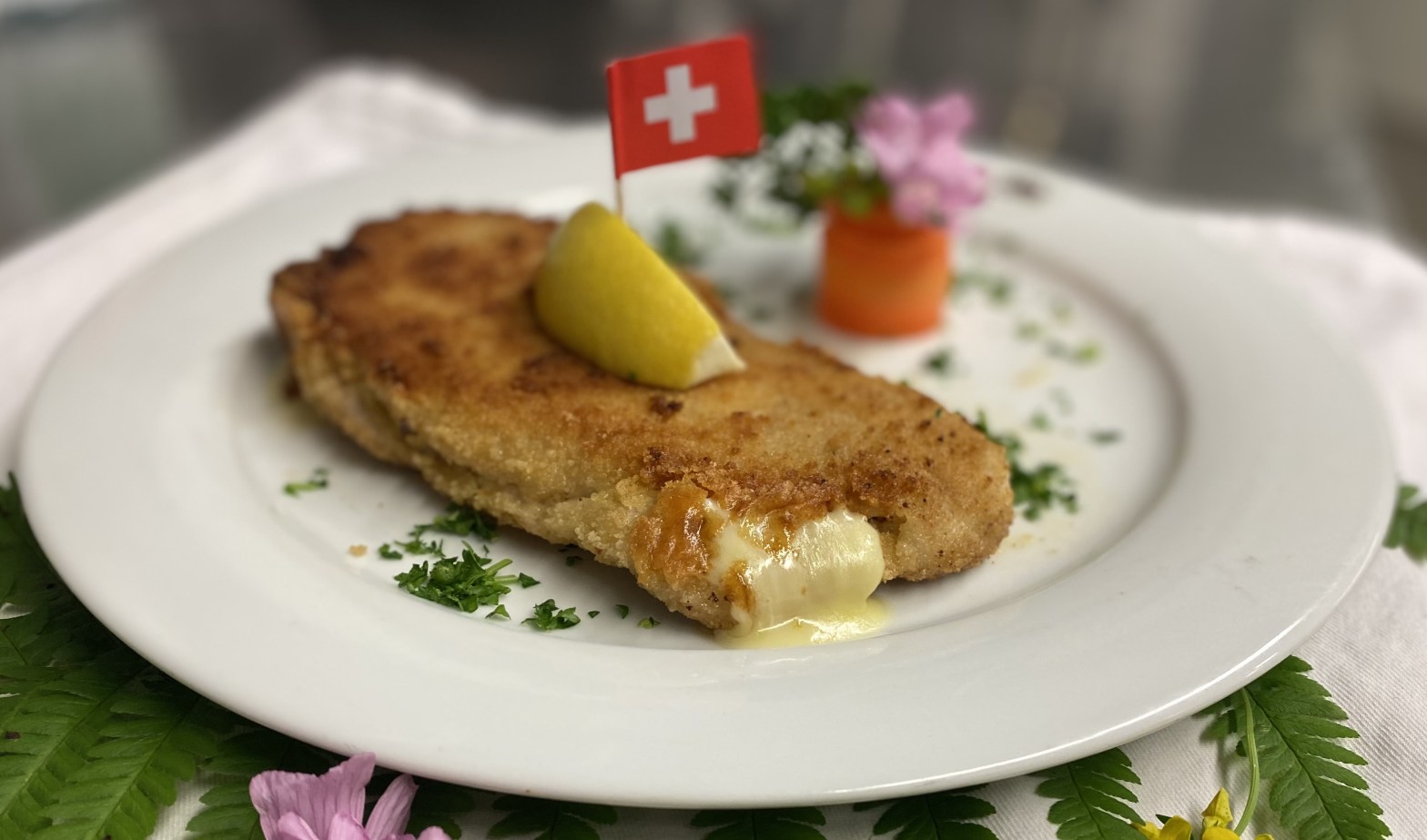
Served piping-hot and oozing with cheesy goodness, the veal cordon bleu at Zum Gifthüttli restaurant is something to savor, even drool over. Lunch in the wood-paneled dining room remains the warmest memory of my visit to Basel, the third-largest city in Switzerland.

After disembarking there from my week-long Rhine River cruise, I was most looking forward to exploring the medieval Old Town with its museums, churches, riverside promenades and specialty shops lining atmospheric alleyways paved with cobblestones. What turned out to be just as inviting, though, were the traditional, pub-style restaurants scattered about the historic core.

Cordon bleu is the house specialty at Zum Gifthüttli. We ordered the Classique, a juicy, golden-breaded schnitzel filled with ham and melted cheese, taking advantage of the Tagesteller (“daily plate”), a deal for 36.50 Swiss francs (about $43) that included french fries, pumpkin soup and dessert.

Gifthüttli, a traditional restaurant in Basel’s atmospheric Old Town, offers dining in the main-floor Bierstube, the upstairs Weinstube and at outdoor tables ideal for people-watching. (Randy Mink Photo)

Zum Gifthüttli’s menu lists cordon bleu variations, like the one with ham, cheese, asparagus, cherry tomatoes and Hollandaise sauce. Another consists of chorizo, mozzarella and herbs. The Florentiner has ham, cheese, spinach and a fried egg on top, while the Schweizer features two Swiss delicacies—Bündner air-dried ham and scrapings of raclette cheese. Opting for pork cordon bleu, instead of veal, can shave a bit off your bill, but any meal in Switzerland will cost much more than at home.

Guests at Gifthüttli can dine in the main-floor Bierstube, upstairs in the white-tablecloth Weinstube or, in warm weather, at outdoor tables offering the bonus of people-watching in Old Town’s pedestrian zone.

The white-tablecloth Weinstube at Gifthüttli offers a refined atmosphere. (Photo credit: Basel Tourism)


Fans of cordon bleu and antique charm also gravitate to Old Town eateries like Zum Braunen Mutz and Restaurant Löwenzorn. The latter offers tables in its historic rooms and in the idyllic courtyard garden, where blankets, furs and electric heaters keep patrons toasty in cooler weather. Löwenzorn favorites include the wienerschnitzel and traditional Swiss fondue.

Löwenzorn, a traditional restaurant in Basel’s Old Town, offers seating in historic rooms and in the courtyard garden. (Photo credit: Basel Tourism)


Restaurant Kunsthalle, a sophisticated but friendly Old World restaurant in the same building as the Kunsthalle Basel contemporary art museum, every winter opens its Fondue Stübli, a cozy fondue chalet next to the landmark Tinguely Fountain. Additional city-center spots for fondue (and other Swiss classics) are Walliserkanne and Safran Zunft.
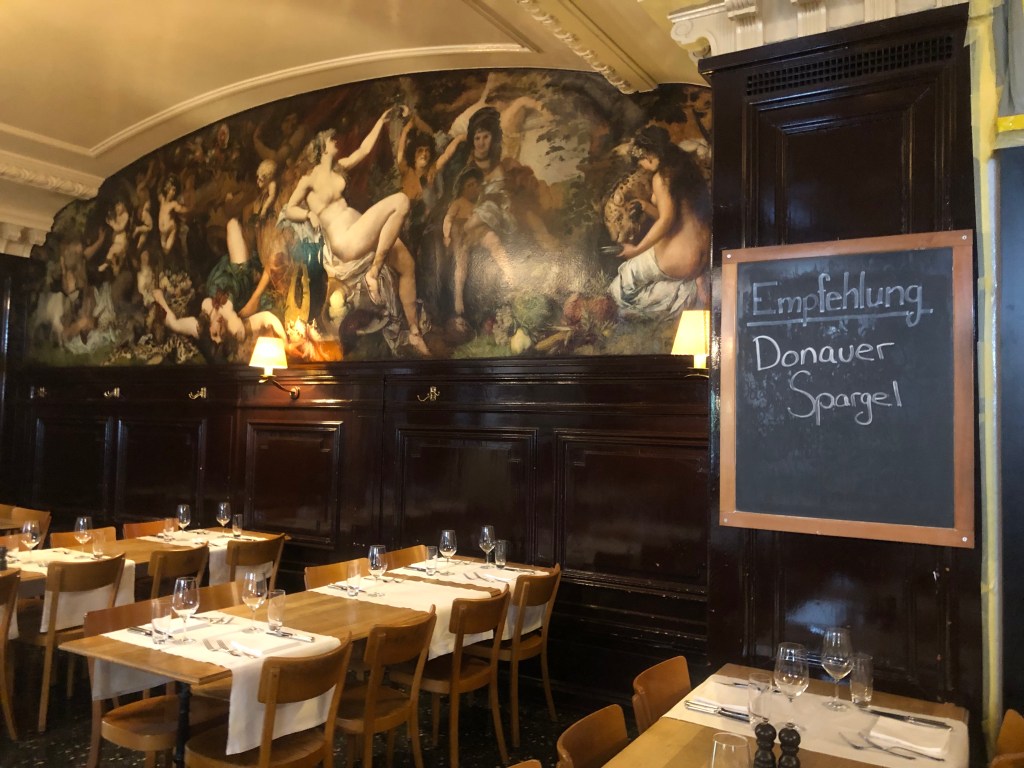
Patrons at Basel’s Restaurant Kunsthalle enjoy an Old World atmosphere in the vaulted Schluuch room. (Randy Mink Photo)


On our springtime visit to Restaurant Kunsthalle, we had a lunch of pasta amidst dark wood and classical cherub murals in the cozy, vaulted Schluuch room. The more formal “white” room overlooks the chestnut tree-shaded patio, one of Basel’s prime spots for alfresco dining. The Kunsthalle’s menu reveals typical Swiss fare, including Zürcher Geschnetzeltes (veal strips in a sauce of white wine, cream and mushrooms) with rösti, the ubiquitous Swiss version of hash browns offered at most restaurants that serve french fries.

No discussion of traditional dining spots is complete without a mention of Gasthof zum Goldenen Sternen, Basel’s oldest restaurant. Though it’s been at its current riverside location for only 50-some years, it date backs to 1412. In the 1970s the ancient building was dismantled and rebuilt stone by stone along with the original ceiling paintings and all the wood paneling. Highlighting the menu are highly regarded fish dishes—I had the lightly fried salmon filet with linguine. It also offers lamb shank, steaks and wienerschnitzel, among other entrees. The restaurant looks out on the Rhine River, and there’s outdoor seating under trees on the riverfront promenade.

Gasthof zum Goldenen Sternen, Basel’s oldest restaurant, enjoys a setting on the Rhine River. There is seating under trees on the riverfront promenade. (Photo credit: Basel Tourism)


The Goldenen Sternen (“Golden Star”) is located in the picturesque St. Alban quarter, a quiet neighborhood noted for its patrician townhouses, half-timbered buildings, narrow streets and a stream that powers the waterwheel at the Basel Paper Mill. Now a fascinating museum about the history of paper making and printing, the medieval mill, just steps from the Rhine and not far from Old Town, was one of many in St. Alban that made Basel a book publishing center for centuries.

Though skeptical about how interesting a paper museum could be, we found it eye-opening. Especially fun was watching demonstrations of how a pulpy goop is transformed into paper. We had a chance to make our own sheet as a souvenir. And we were surprised to learn that until the 19th century paper was made almost entirely from old rags and ropes that were sorted, cleaned, cut into strips and left to decay in a rag cellar’s rotting vats. There are even exhibits on the evolution of toilet paper, which was considered a luxury product when first introduced in the late 1800s.

Visitors learn about the history of paper and witness the paper-making process at the Basel Paper Mill, a museum housed in a medieval paper mill. (Randy Mink Photo)


Claiming nearly 40 museums, Basel has a museum for every interest, showcasing subjects ranging from cartoons and musical instruments to city history and Jewish culture. Most visited are its two leading art museums.

Kunstmuseum Basel, whose three-building complex holds the world’s oldest municipally owned public art collection, presents seven centuries of European art and boasts the world’s largest collection of paintings by the Holbein family. On the outskirts of Basel, Fondation Beyeler, comprising a main building designed by noted architect Renzo Piano, houses some 400 masterpieces of modern and contemporary art, including pieces by Picasso, Monet, Matisse and Cezanne.

Kunstmuseum Basel holds an impressive collection of paintings by Hans Holbein. (Photo credit: Basel Tourism)


The Basel Historical Museum, with exhibition halls under the vaulted ceilings of a former 13th century church, focuses on the intersection of the cultures of Switzerland, France and Germany. (From Basel, Germany and France are just a hike or bike ride away. Visible on the horizon are the Vosges Mountains of France and Germany’s Black Forest.)

In the summer you’ll see people sunning on the riverbanks and swimming or floating in the river. Basel Tourism offices and retail stores sell something called a Wickelfisch, a brightly colored, fish-shaped waterproof bag for keeping your clothes dry as you whoosh down the river past city landmarks. It’s not to be used as a flotation device.
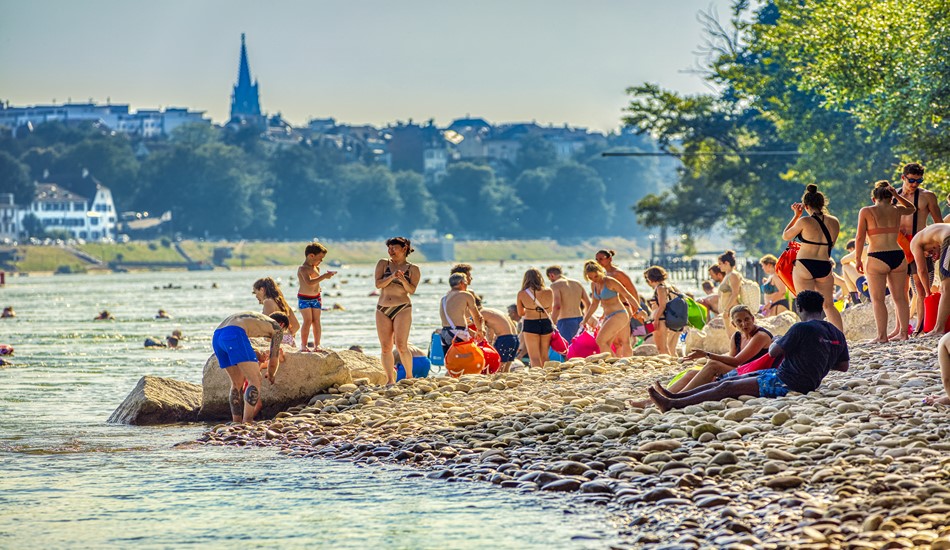
Frolicking in the Rhine River is a popular pastime with tourists and locals alike. (Photo credit: Basel Tourism)


Sightseeing cruises provide another way of experiencing the Rhine. Or you can take one of the small passenger ferries that shuttle back and forth between the larger southern part of the city (Grossbasel, or Greater Basel) to the northern side (Kleinbasel, or Little Basel) at four crossing points. Attached to a cable that spans the river, the non-motorized boats are guided deftly by expert ferry operators.

We took the five-minute ride from St. Alban to the opposite bank, then walked along the riverside path for 11 minutes before reaching the Museum Tinguely, a showplace for monumental mechanical sculptures created by world-renowned artist Jean Tinguely (1925-1991), who grew up and studied in Basel. Buttons allow visitors to activate some of the playful, mischievous and wacky creations, causing them to rattle, shake and whirl.

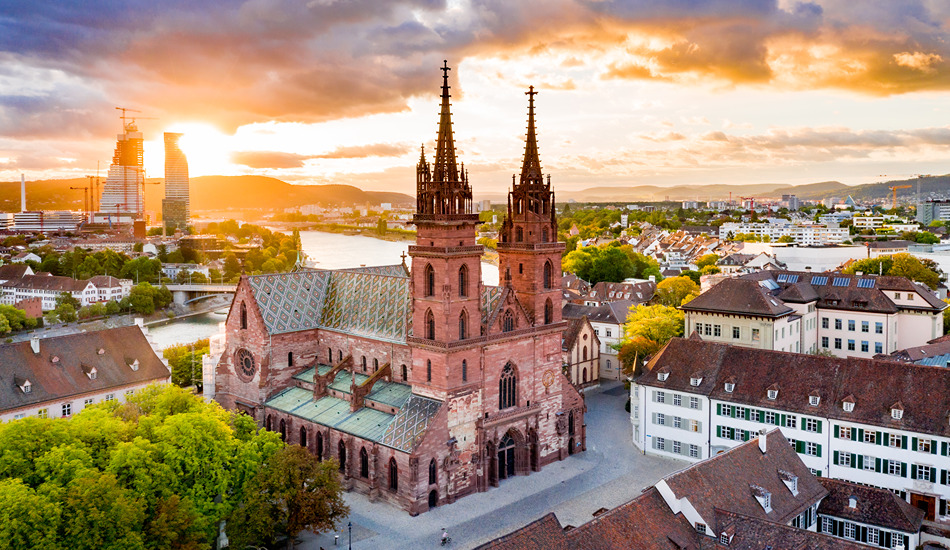
Sweeping views of the Rhine can be enjoyed from the tree-shaded terrace of Basel Cathedral. Sporting impressive twin towers, it is the city’s most prominent landmark. Built mainly in the 12th and 13th centuries, the Romanesque-Gothic church contains the tomb of the Dutch humanist Erasmus (1466-1536), who lived in Basel. Ambitious types can climb the towers’ narrow staircases (about 250 steps).
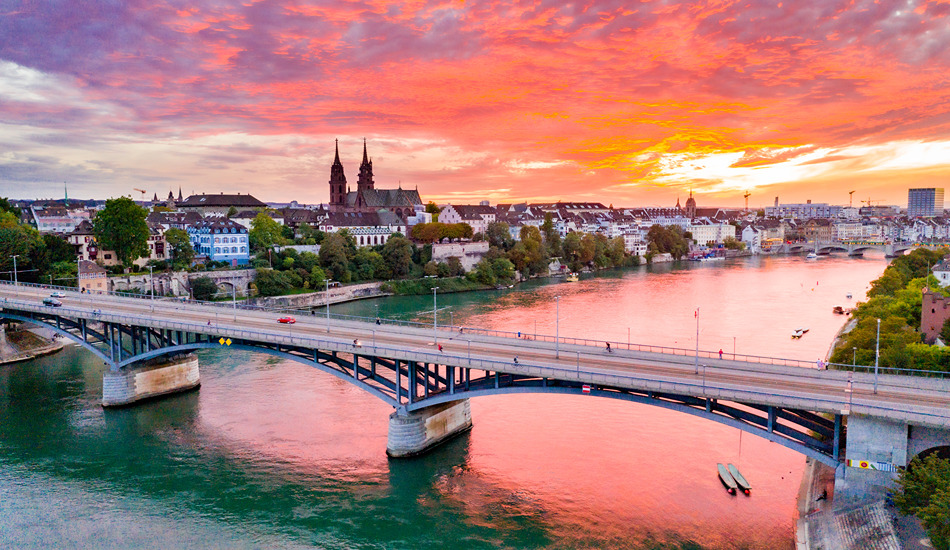
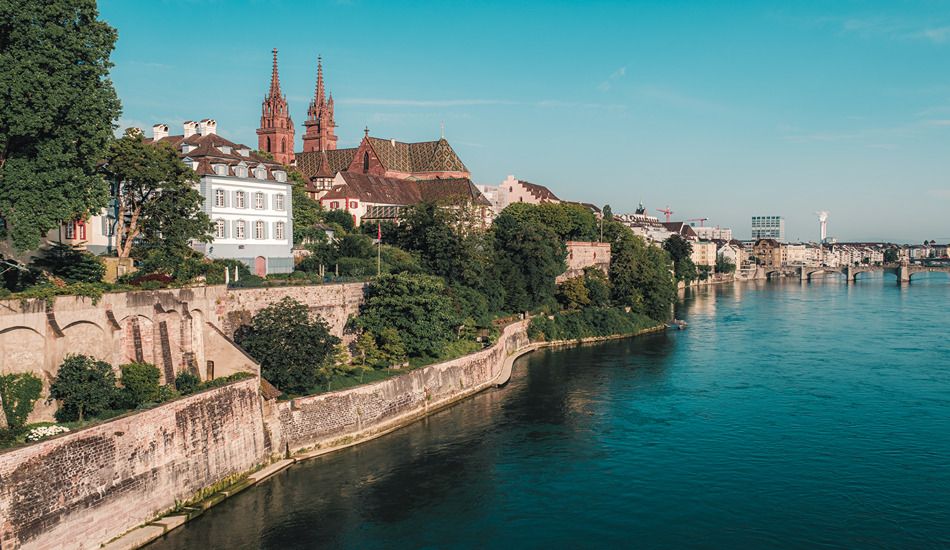
The twin spires of Basel Cathedral dominate the skyline of Basel, which lies on the Rhine River in northern Switzerland. (Photo credit: Basel Tourism)

One of the best places to take a break from sightseeing is Confiserie Schiesser, a cafe/tea room/confectionery with an on-site chocolate factory and bakery. Founded in 1870 and now in its fifth generation of family ownership, Schiesser faces Old Town’s vivid red Rathaus (Town Hall) and market square. A tantalizing array of chocolates, cookies and pastries tempts the sweet tooth. Distinctive to Basel are the Basler Läckerli, a ginger cookie made with honey, spices, almonds, and candied orange and lemon peel.
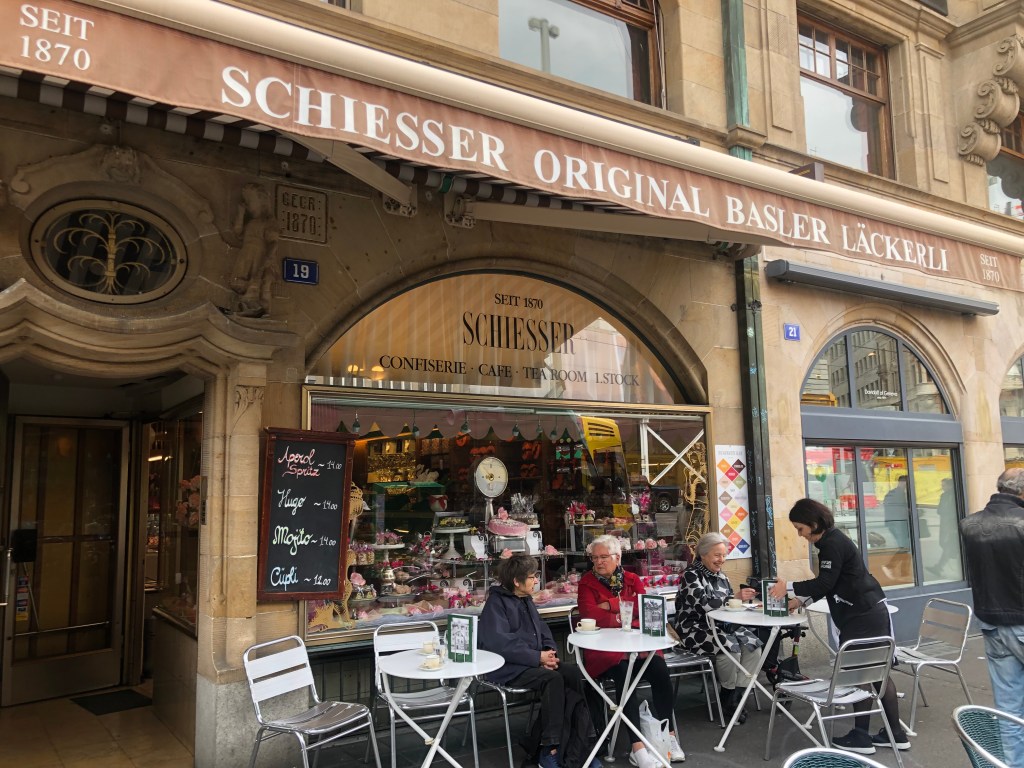
Confiserie Schiesser, a cafe/tea room/confectionery founded in 1870, is famous for its chocolates, cookies and pastries. (Randy Mink Photo)


A few doors down from Confiserie Schiesser, high-end Läderach chocolatier sells slabs of melt-in-your-mouth chocolate called Frisch Schoggi. Sold by the gram, the uneven pieces are studded with everything from hazelnuts and almonds to cranberries and cornflakes.
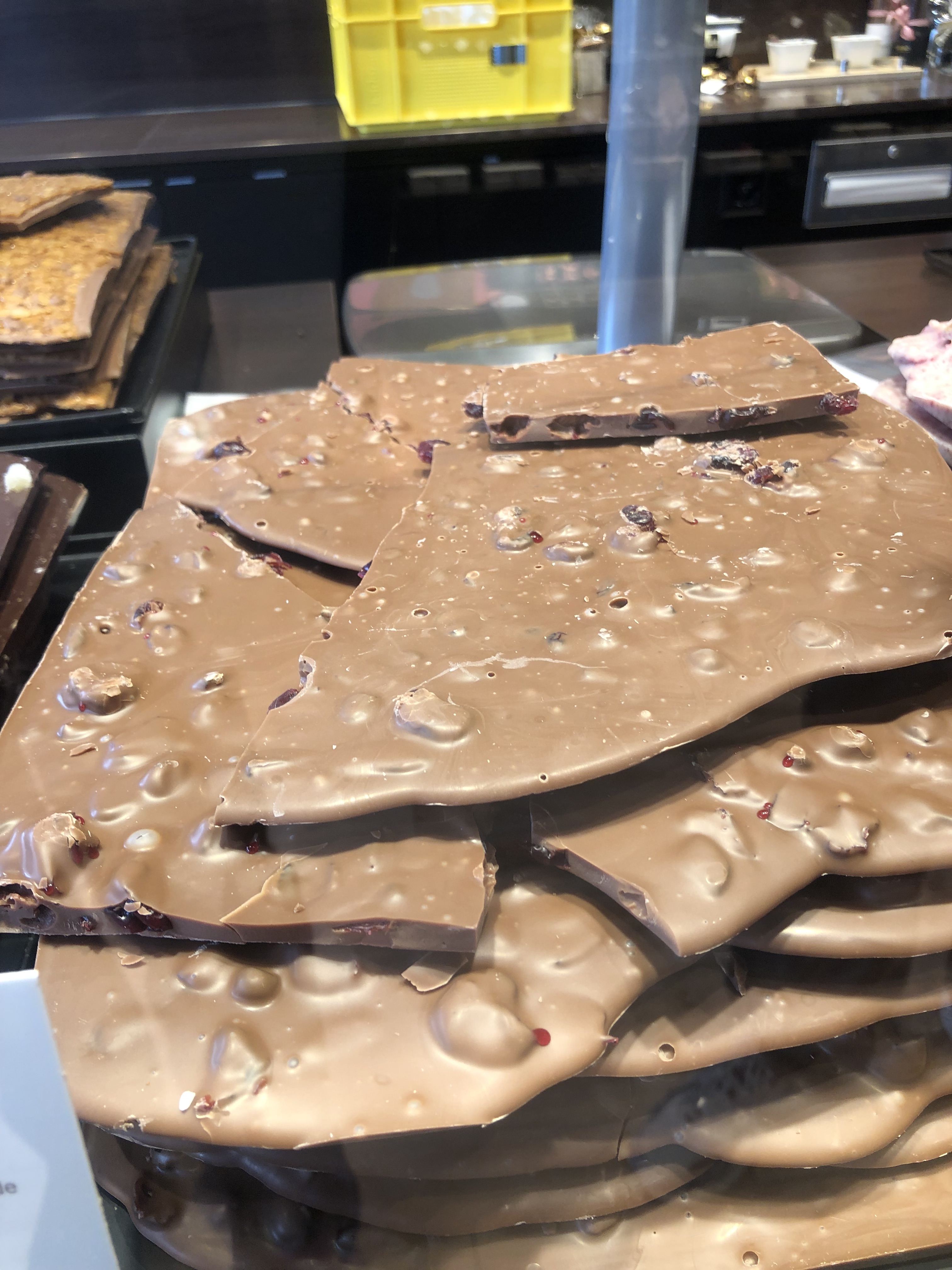
Visitors in Basel’s Old Town can indulge their sweet tooth at Läderach, a high-end Swiss chocolatier. (Randy Mink Photo)


Indulging in Basel’s tasty treats is the epitome of Swiss bliss.

For more information, visit the Basel Tourism website, www.basel.com.

Le Petit Chef Dishes Up Big Fun

Story and photos by Alison Ramsey

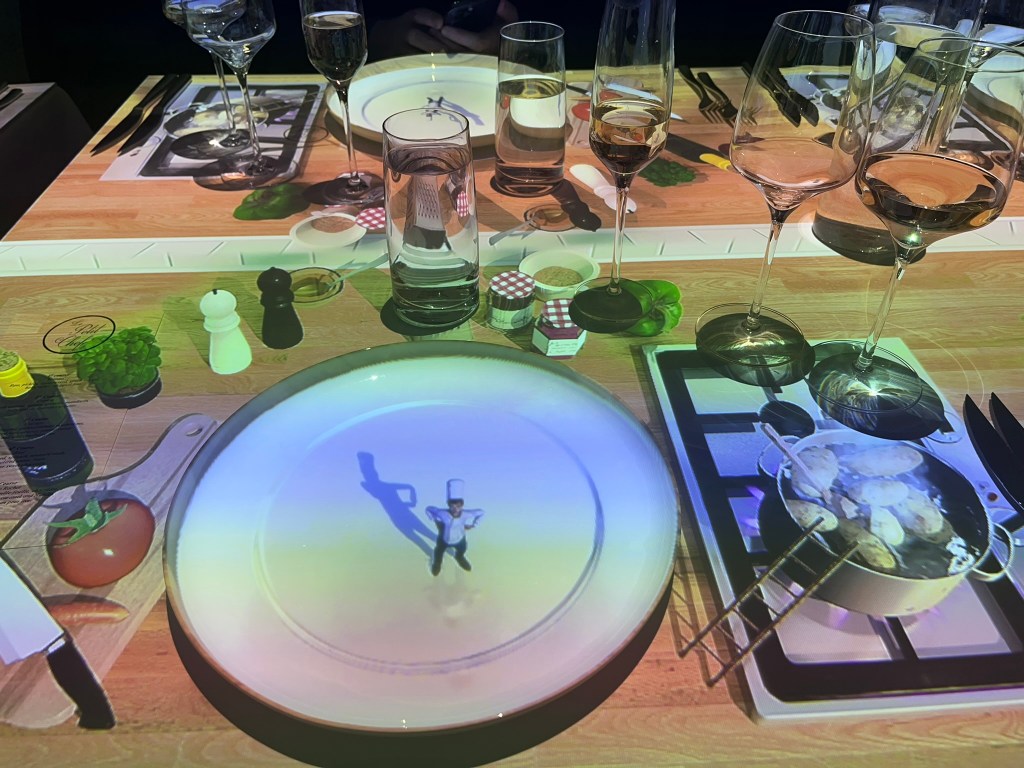
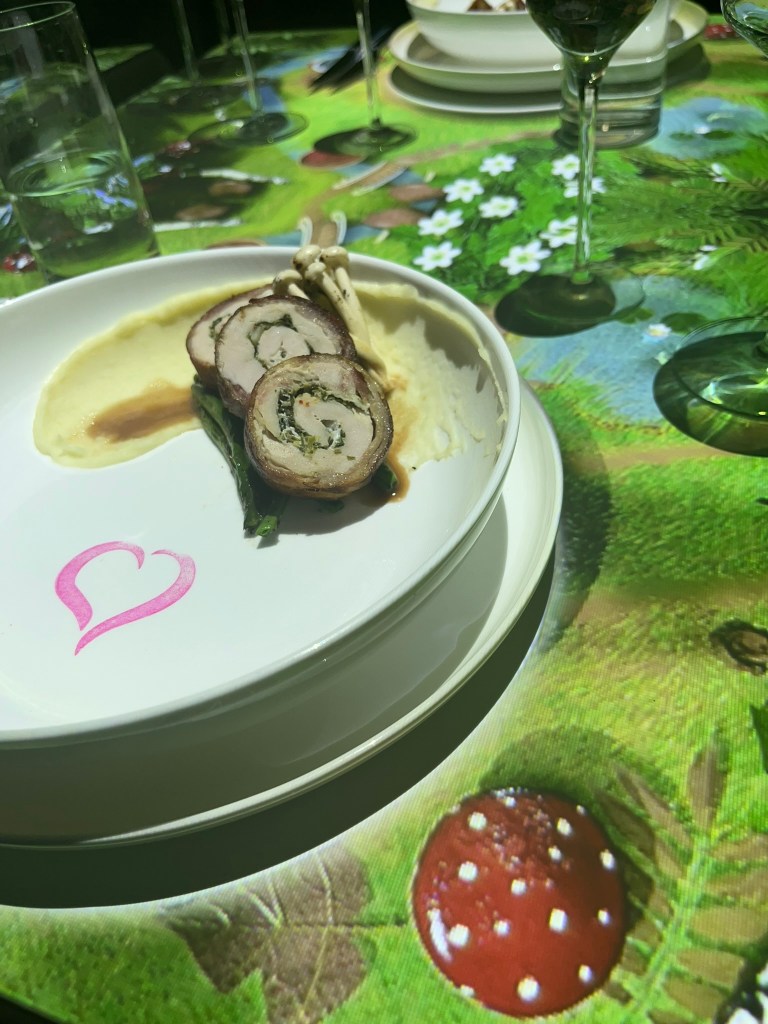
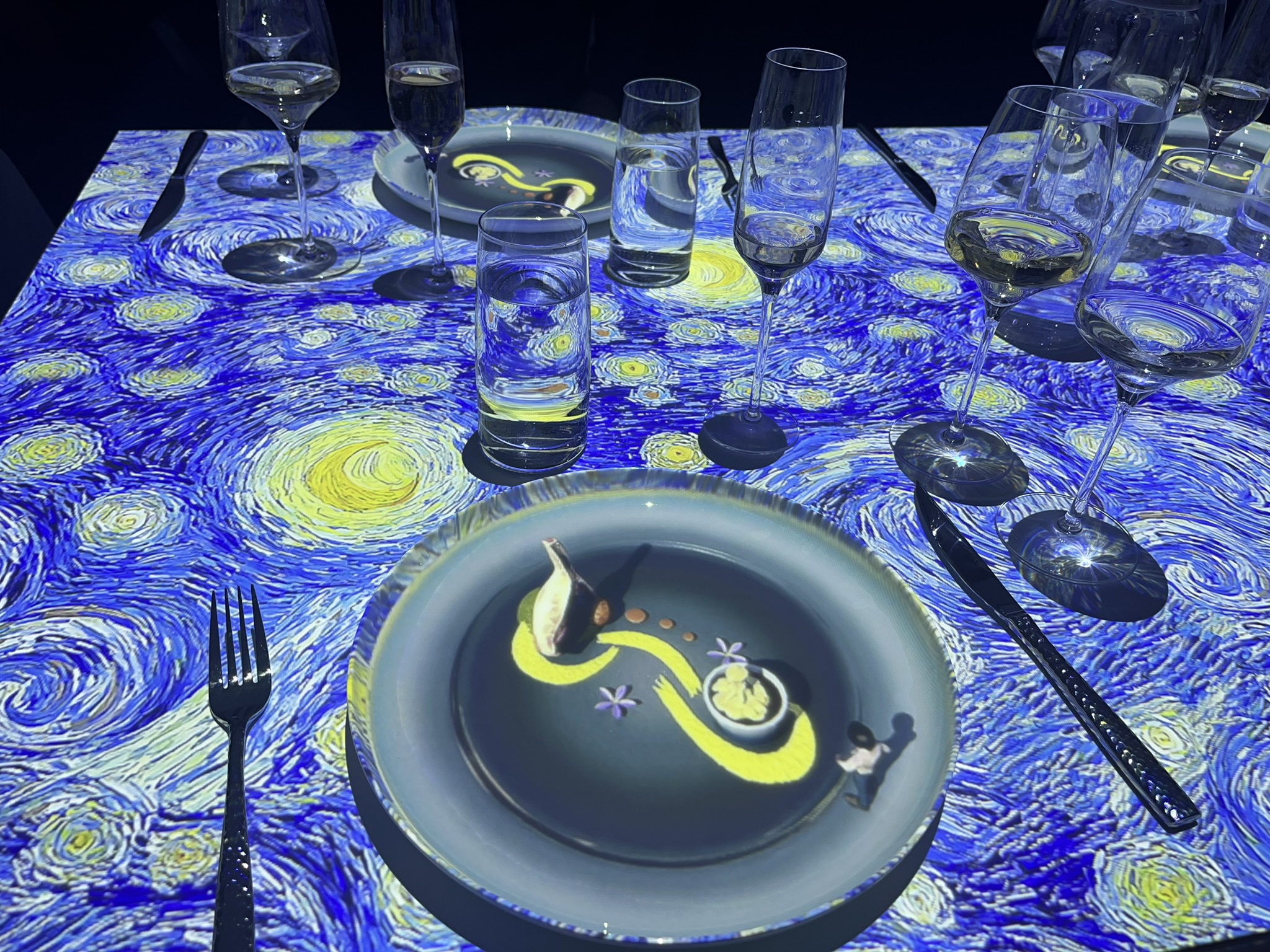
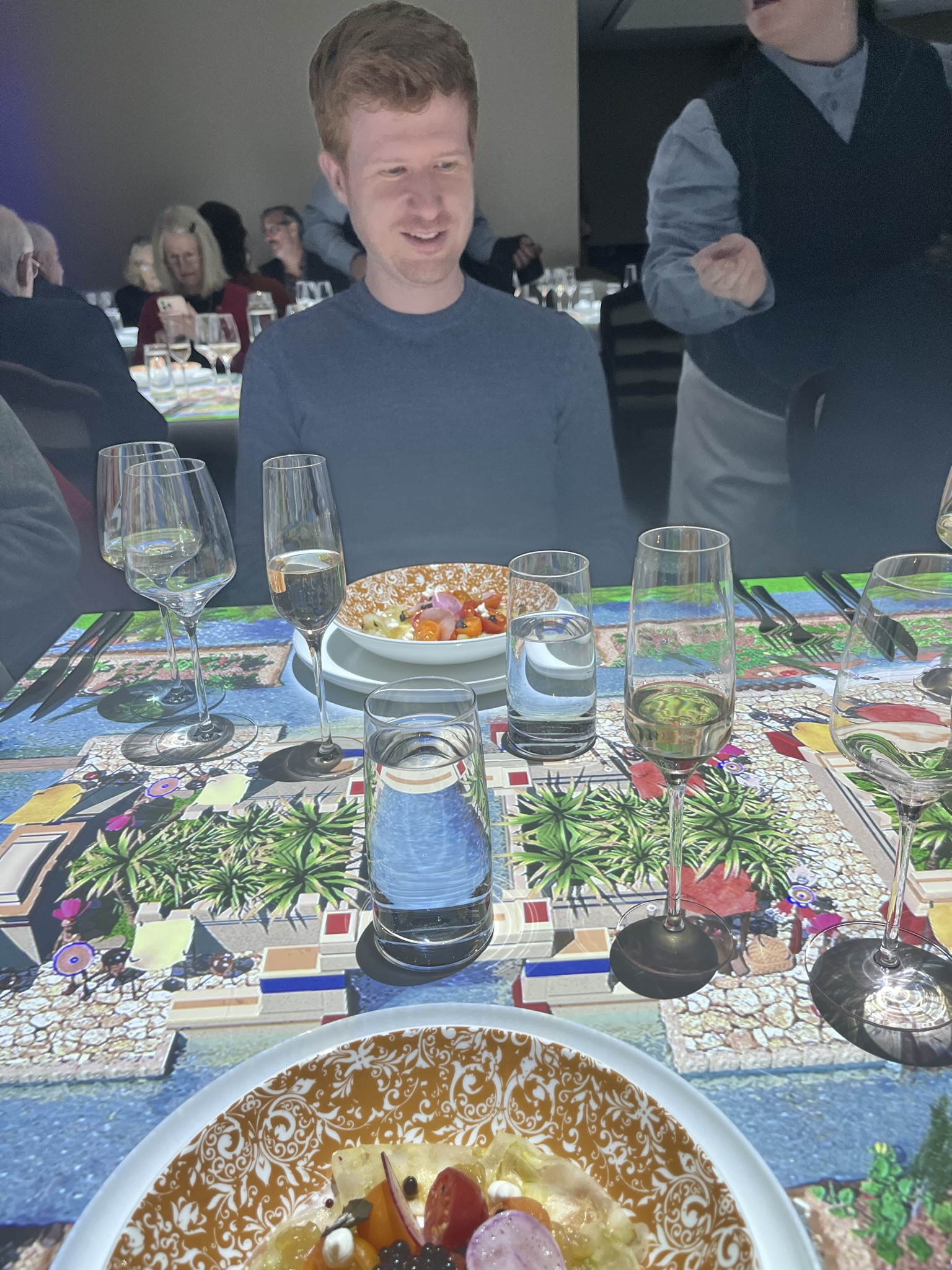
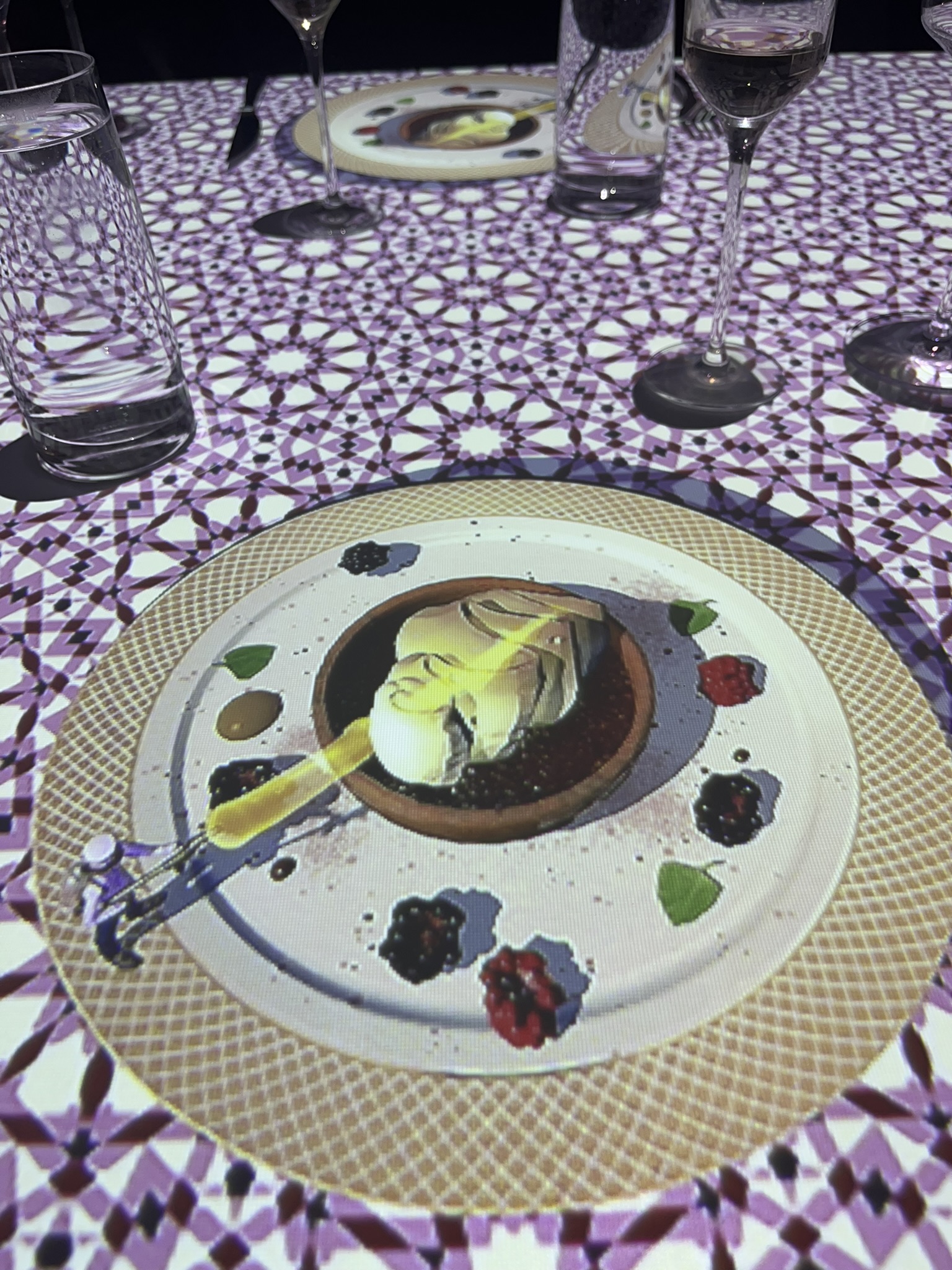
A simple white charger plate and smooth white table turn into a texture-rich artistic musical experience, culinary history lesson, and elaborate feast right before your eyes! Fairmont Chicago’s Le Petit Chef: An Immersive Dining Experience features a 2.5-inch animated French character created by artists at Skullmapping. Rising from the center of your plate via groundbreaking 3D projection mapping that requires no special eyeglasses or visors, Le Petit Chef illustrates through colorful storytelling the history of ingredients used in the meal, the joy of being a chef, and the art of creative plating inspired by famous painters. It’s a dining experience like no other, and Fairmont Chicago, in partnership with TableMation™, opened this exclusive gastronomical adventure to the public on January 19, 2023. The lobby level Cuvée Room at Fairmont Chicago houses this 90-minute themed dinner with curated wine pairings.

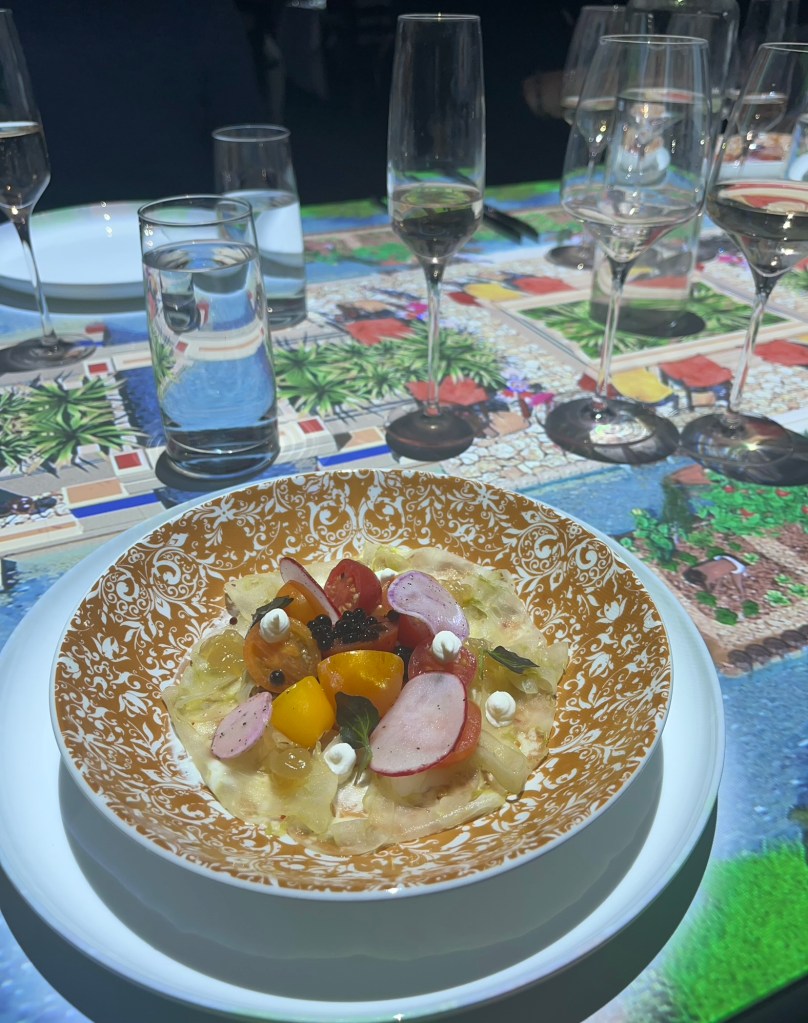
Projected from the ceiling down to the tables and plates, 3D scenes and designs bring the dining area to life, illustrating gardens, sculpted fountains, raging battles, as well as busy cooktops boiling potatoes and searing meat. Between humorous anecdotes, musical numbers featuring dancing vegetables, lessons about ingredient composition, and tips on flavor combinations, guests are served a beautifully prepared, delectable 5-course meal featuring the elements showcased.

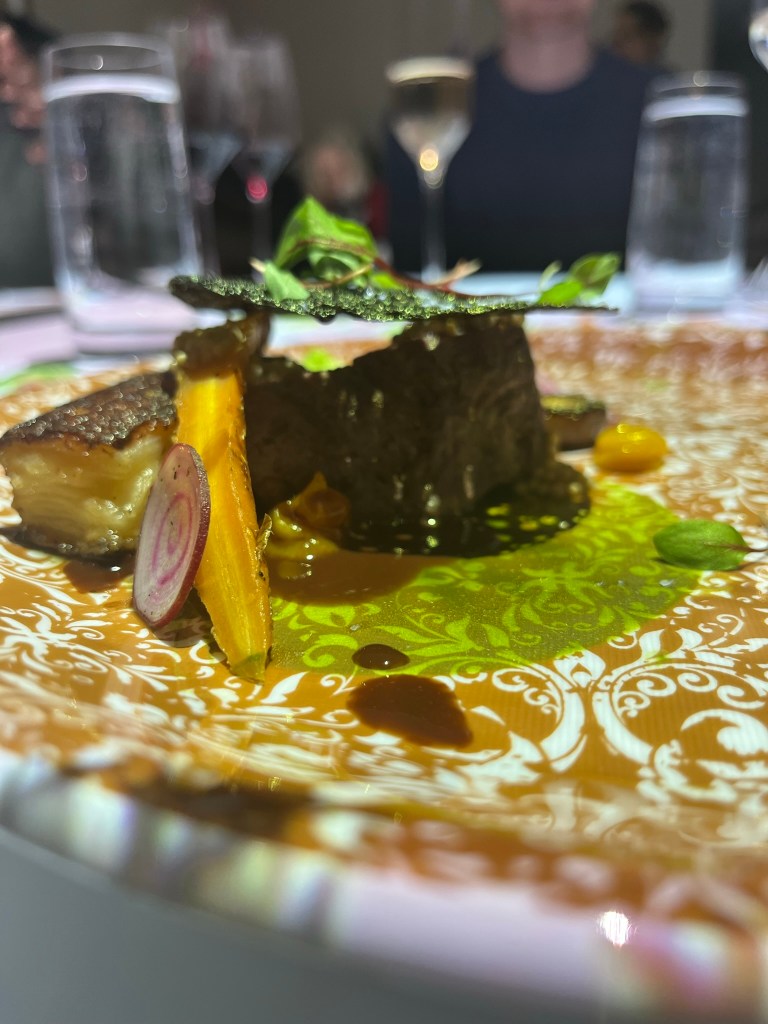
Each dish is rich with taste, texture, and color, but not heavy or saturated with creams and dressings. The delicious natural flavors of fresh produce and meat are perfectly seasoned to surprise and satisfy. Those with allergies or special dietary needs and preferences are graciously accommodated, making the menu safe for all who want to partake.  

“I think all kinds of eaters will find something to enjoy in this experience,” said diner Marc Berry after his meal with Le Petit Chef. “Even non-foodies can enjoy each interesting yet accessible course, and the joy of the 3D segments accompanying them.”

Fairmont Chicago General Manager, Clay Spencer, said, “We are thrilled to bring this unique dining experience to our guests, the city of Chicago, and the larger Midwest region. … We’re delighted for diners to experience this culinary adventure through animation. It is a dinner like no other.”

Pricing per person begins at $155 (exclusive of tax and gratuities), with an optional French wine pairing of $42. The first seating starts at 6:00 p.m. and the second at 8:00 p.m. every Thursday through Saturday, through the end of 2023.  For more information about Fairmont Chicago and to book your special dining experience at Le Petit Chef, please visit fairmontchicago.com.

For Valentine’s Day, treat your sweetheart to Le Petit Chef’s fun and fancy French meal, or consider these other Chicago area specials:

Love is in the air! Skydeck Chicago’s “Pie in the Sky” VIP Valentine’s Day Dinner offers a three-course meal that includes a delicious Giordano’s heart-shaped deep-dish pizza, salad, and dessert, served with a stunning view of the city. This 10 p.m. after-hours experience is intimate, with only seven tables per evening, maximum, and it takes place after Skydeck Chicago is closed to the public. Before ascending to the 103rd floor to step out on the glass-bottomed The Ledge, explore the ground-level museum and exhibits featuring Chicago’s diverse neighborhoods and architecture. A small-scale Bean (Cloud Gate), Second City stage setup, giant hot dog and deep-dish pizza, full-scale “L” train car, replica Chicago Picasso – there are photo opportunities galore! Book your Pie in the Sky table here for Valentine’s Day, February 14, 2023, or celebrate early by booking for Thursday, February 10, or Friday, February 11.

Photo courtesy of Skydeck Chicago

The “Love, Alma” package at stylish Hotel Zachary at Gallagher Way is a tribute to architect Zachary Taylor Davis’ true love and muse, Alma Davis. This romantic overnight includes a $50 food and beverage credit at The Bar, upgraded Wrigley Field ballpark view accommodations, and an extended 1 p.m. late checkout. Book your reservation here.

Photo courtesy of Hotel Zachary

Spread the love on Friday, February 10, from 6:00 p.m. to 10:00 p.m. at Hotel Zachary’s The Bar “Galentine’s Day Social Hour,” where you can craft a custom flower bouquet, enjoy live R&B DJ entertainment, snack on light bites and desserts, savor wine or a build-your-own-spritz concoction, and observe the on-site creation of an original painting by an artist. This event is hosted by Chicago influencer @FoodiexFancy in partnership with Bombay. Guests in attendance are encouraged to sign cards to be donated to a local Chicago children’s hospital. Purchase your Galentine’s Day Social Hour passes here.

Photo courtesy of Hotel Zachary

Museum of Illusions (MOI), in the heart of downtown Chicago, is a unique and interactive date spot to explore with your special someone. MOI offers a 2-for-1 Valentine’s Day ticket special for those wanting a mind-bending experience at a fraction of the cost. Reserve your February 14 tickets here, and the discount will automatically apply at checkout on Adult tickets.     

Photo courtesy of Museum of Illusions

Clixo Fidgety Fun Inspires Creativity During Travel and Beyond

By Alison Ramsey

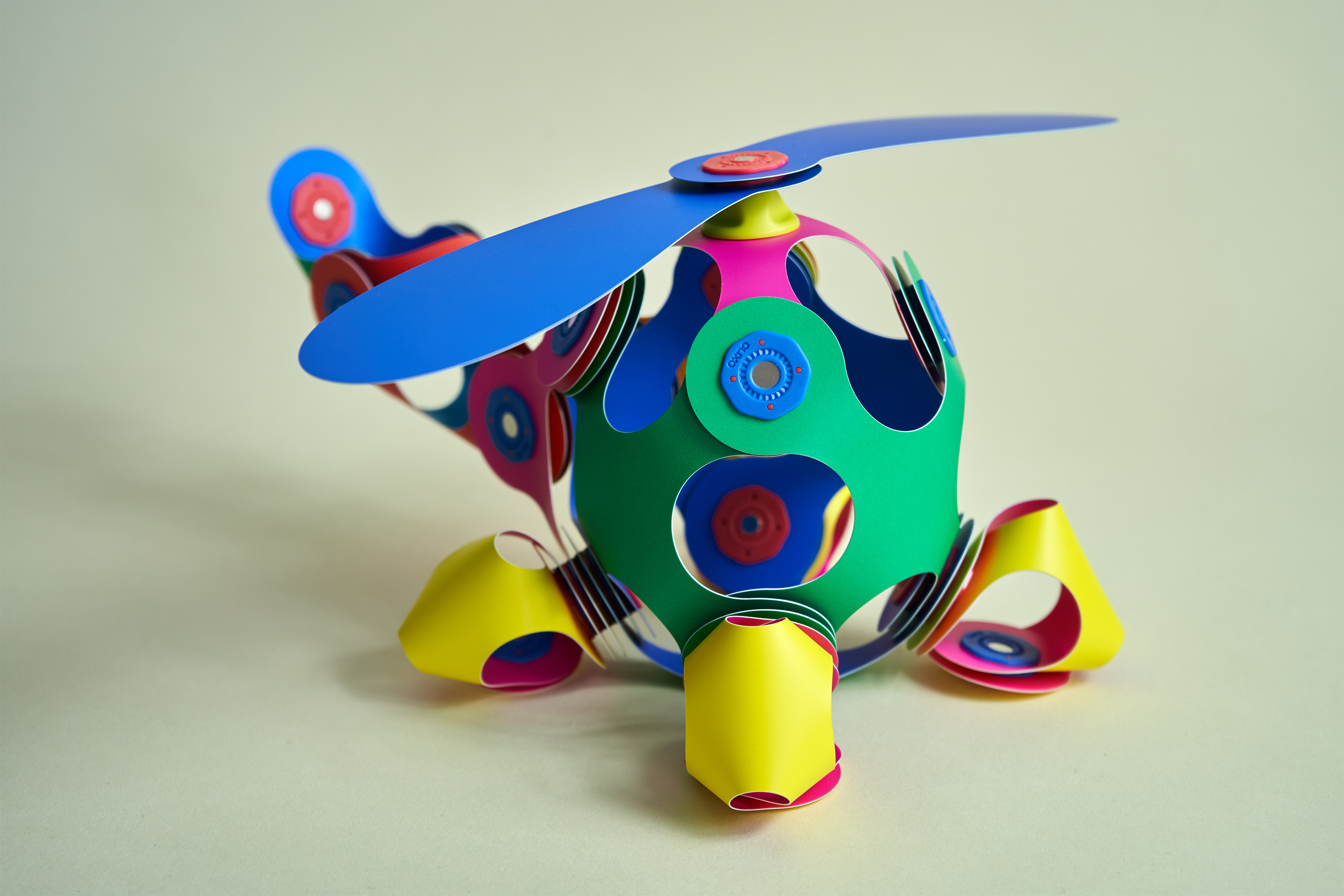
A unique toy for kids and adults alike, the easy-to-pack Clixo magnetic play system encourages freeform building and exploration—no rules or instructions required! Tuck a set of these flat, flexible building pieces into your day bag and pull them out to see your fussy or feisty traveling companions turn into creative geniuses.

Photos courtesy of Clixo.

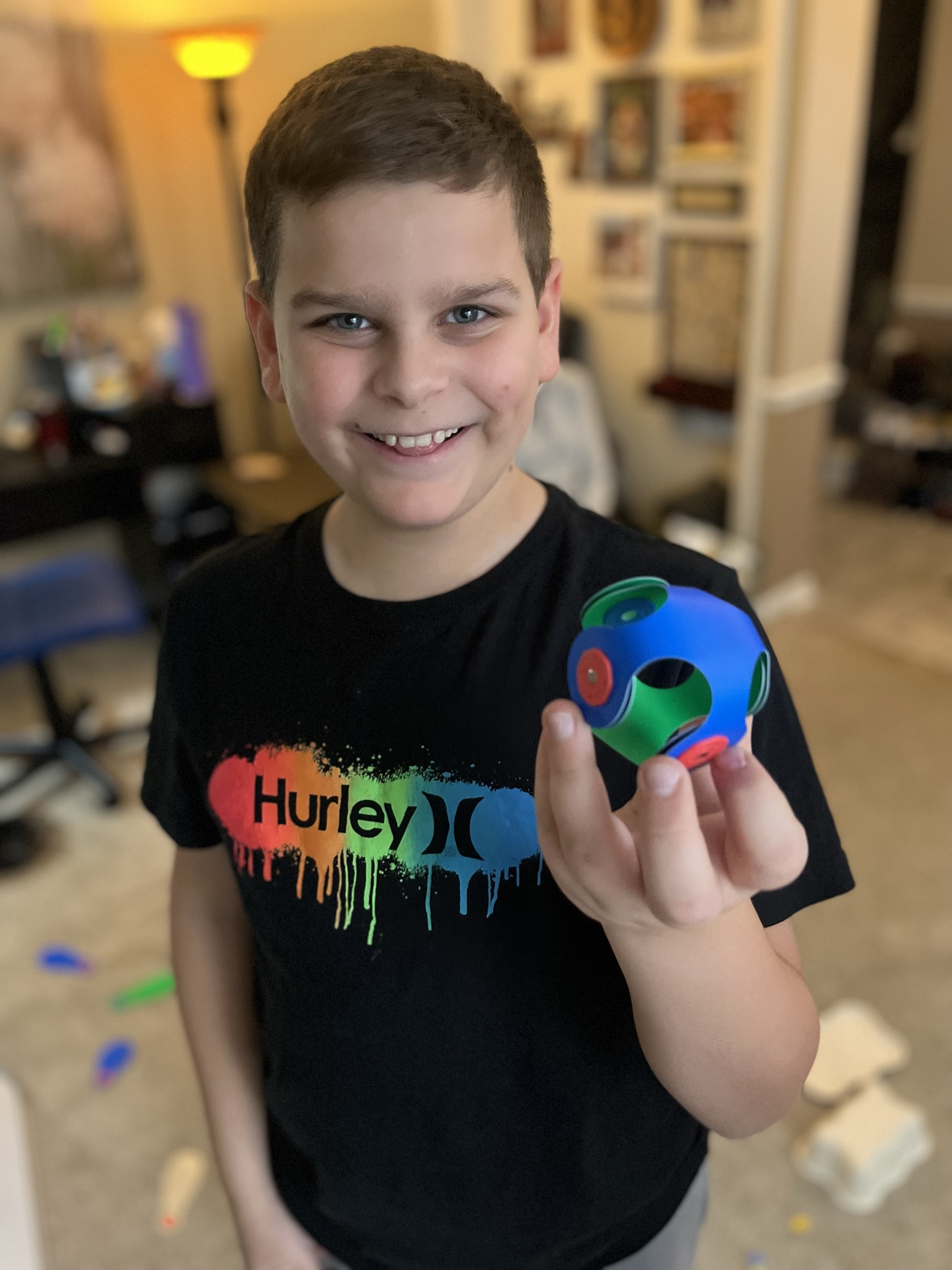
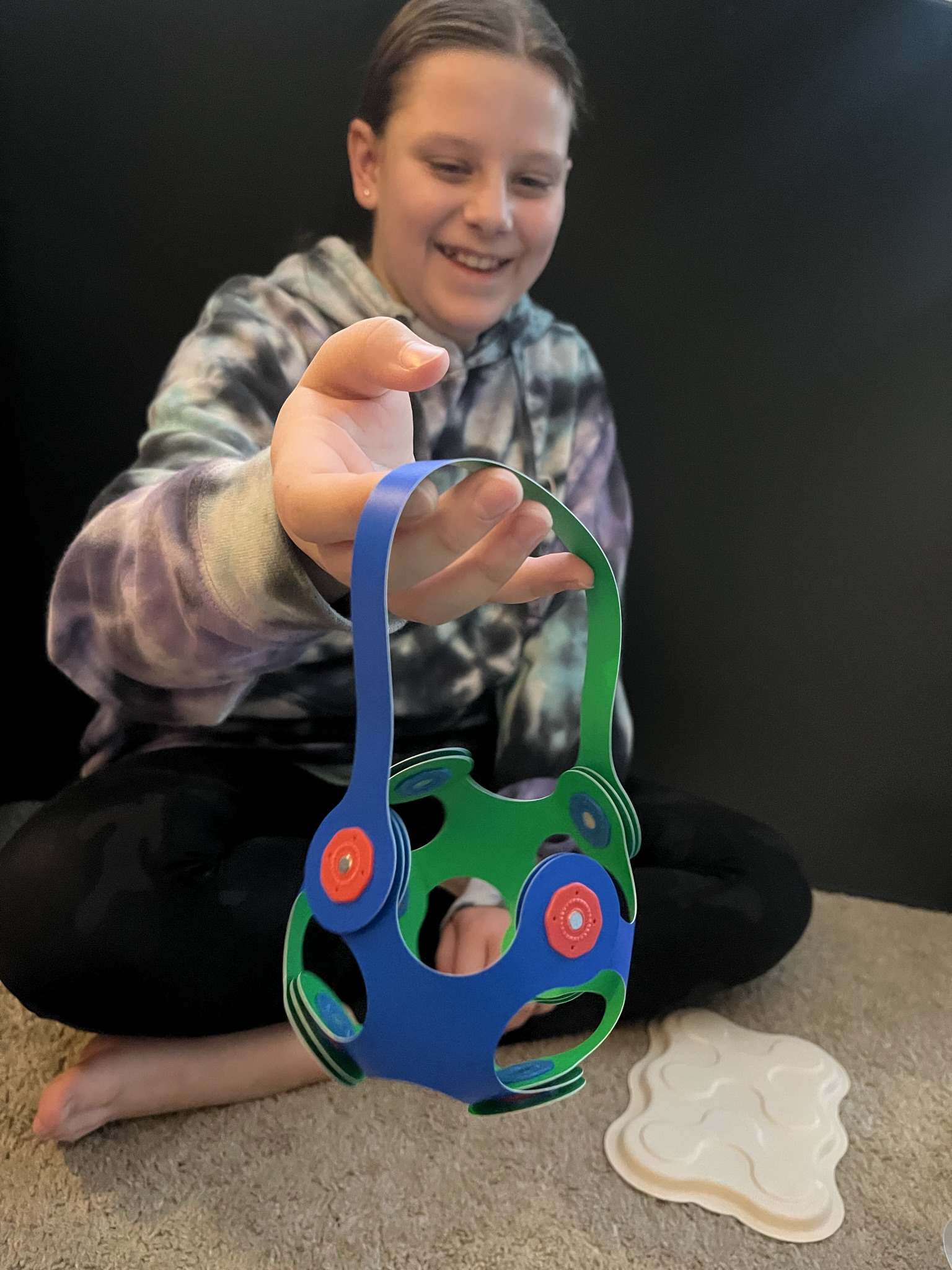
Visored motorcycle helmet, floppy beagle ears, a colorful handbag—within five minutes of opening a package of Clixo lightweight and flexible magnetic shapes, my kids’ creativity using these colorful pieces resulted in a plethora of fun creations. This award-winning building toy from Toyish Labs is packed with endless possibilities for playtime on the go or at home. The durable and compact flexible pieces can be stored flat and easily cleaned and sanitized. Secure magnets are safely fastened to key edges, allowing toy enthusiasts of all ages to snap together pieces and discover limitless creative possibilities. Creations can be stuck to the fridge, worn as accessories or, as with the Grip and Stick Pack, secured via suction cups to a window or flat surface—great for road trips and sticking to the interior of car windows! Some packages include special units that allow attached pieces to spin or roll on wheels, encouraging construction of propellers, vehicles, and other movement-inspired shapes.

Clixo needs no instructions or preamble. My kids were initially confused about what they were opening, but within several moments were excitedly clicking and snapping together pieces with no assistance or explanation needed. Open-ended, screen-free, hands-on play is Clixo’s strength, offering opportunities to create fun 3D structures from 2D pieces. These unique building sets were a finalist for the 2021 Toy of the Year Award, won the Top Toy of the Year Award from the 2022 Creative Child Awards, and have won the Oppenheim Toy Portfolio Gold Seal Best Toy Award and the Tillywig Toy Awards Best Creative Fun Award.

This summer, Clixo partnered with the Museum of Ice Cream (MOIC) in Chicago, Austin, and New York City to launch an interactive experience that allows guests to build colorful 3D creations on magnetic building walls. A special MOIC Clixo pack is sold on-location at these three venues, and features strawberry- and cherry-colored shapes. If your travels bring you to these cities, stop into the MOIC and add some creative constructions to the wall.

Photos courtesy of Clixo.

Assaf Eshet, CEO and Founder of Toyish Labs and creator of Clixo said, “We’re very excited to be working with Museum of Ice Cream on this collaboration and sharing Clixo with MOIC visitors. Museum of Ice Cream provides a fun and engaging experience for all kids and their parents. At Clixo, we share the same values of bringing play and creativity to kids and kids at heart.”

Photo courtesy of Clixo.

For more information or to purchase Clixo building sets, please visit www.clixo.com. The Black Friday Super Sale is currently offering up to 40% off sitewide, so take advantage of the sale prices for these colorful stocking stuffers or Christmas gifts while you can! May your holidays and holiday travel be peaceful, joy-filled, and inspiring.

Berlin: An Exciting 21st Century City Steeped in History

GNT/Christopher Nehls

By Don Heimburger
Photos by the author

Usually before arriving in a large European city, I obtain a map of the main “ring” area and study it for hours.

A city map tells me where the Bahnhof (train station) is, the major tourist attractions such as museums, monuments, parks and buildings, as well as major streets and rivers or lakes. What I’m trying to obtain is a general impression of the size of the city and its environs, and the general layout of the city center.

When I first looked at the map of Berlin–the capital of Germany–after a few minutes I realized we were talking about a very large city, the square mileage of which is 552.

It wasn’t until I got to Berlin and starting walking around that I was able to piece together the whole Berlin attractions scene, and after two days there, started to get the picture. Berlin is big (it’s eight times the area of Paris), with 3.4 million people; nearly 140 million visit this northern Deutsche city each year.

Berlin is German’s greenest city, with more space devoted to woods, parks and cultivated areas than any other: there’s the very large English-style Tiergarten (originally a royal hunting reserve), the Botanical Gardens and the Zoological Gardens (the largest zoo in Europe with 13,000 animals representing 1,400 species). In walking the Tiergarten area, I was glad I had on comfortable shoes. In fact, in any larger city, be sure to take along comfortable shoes!

BERLIN ATTRACTS MILLIONS

With the fall of the infamous 13-foot, 99.4-mile-long Berlin Wall (erected August 3, 1961 by the Socialist Unity Party of Germany) in November of 1989, Berlin has come together to preserve its history, and celebrate the future with new, modern buildings of note. Europe by Rail, a Thomas Cook publication, says Berlin “now oozes cosmopolitan chic.”

Founded by traveling merchants as the twin settlements of Berlin and Coelin in the last quarter of the 12th century, the first mention in documents was in 1237 for Coelin and 1244 for Berlin.

Around 1650, and after nearly complete destruction of the city during the Thirty Years’ War, Berlin experienced an unprecedented cultural and economic boom, thanks to Elector Friedrich Wilhelm. He invited immigrants to settle the city, notably Jews and Hugenots, and by 1700 one of every five Berliners was a Hugenot.

In recent history, Berlin proper was divided up between the U.S., Britain, France and the USSR after World War II, with the Soviets instituting the People’s Democratic Republic. In June of 1991, the Bundestag decided by vote that Berlin should become the capital of the unified Germany.

If you go to Berlin for the first time, I suggest you take at least three full days to tour the city. Less than that, you won’t be able to spend much time at any one attraction. You will have gotten a quick overview only. Lines for some of the attractions such as the museums and the Reichstag Parliament Building can be very long, even in the “non-tourist” months.

GNT/Jochen Keute

TOP SIGHTS IN BERLIN

Some of the top sights in Berlin on your travel agenda should be:

–The impressive neo-Renaissance style Reichstag, which features a glass dome by Sir Norman Foster and offers a good overall view of the city. The building was opened in 1999 after restoration. It houses the Bundestag, the Lower House of the German Parliament. It’s open daily from 8 a.m. to midnight, with the last entry at 10 p.m.

–Brandenburg Gate (Tor)—This is Berlin’s most famous landmark and a symbol of the city’s reunification. It’s almost always crowded with people, but it encompasses a large area, and the area which it’s located can accommodate a large number of people. The gate was incorporated into the Wall at one time. Six Doric columns which are incorporated into the stonework support an antique entablature. It was built in 1789.

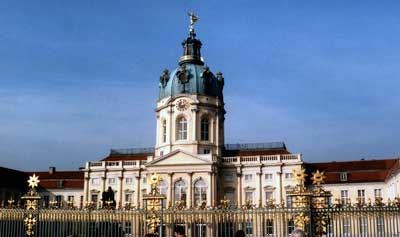
–Charlottenburg Palace is one of the oldest palaces in Berlin, built for Prussian Empress Sophie Charlotte. It’s said to be Berlin’s answer to Versailles, housing a great collection of German Romantic art. The castle offers guided tours only. Be sure to note the Porcelain Room, which contains beautiful vases, figurines and plates, mostly from China. Also note the White Room, which served as a banquet hall and throne room. Next to the castle is the Berggruen Museum which displays a 20th century collection of art, especially Picasso and Matisse. Both the castle and museum are closed on Mondays.
–Berlin Cathedral (Berliner Dom) is the largest 19th century Protestant church with a beautiful Sauer church organ and the Hohenzollern family crypt, part of which is open to the public. The church seats 1,500.

–The Kaiser Wilhelm Memorial Church, built at the end of the 19th century, was destroyed in 1943 during WWII and another new church built next to the ruins. It’s an interesting study in old and new.

–Topography of Terror is an outdoor exhibition on Nazi terror and crimes in the Third Reich, visited by thousands of people every day on Niederkirchnerstrasse. This exhibit is always well attended.

–Memorial to the Murdered Jews of Europe near the Brandenberg Gate is comprised of 2,700 concrete blocks which represent an “uneasy and confusing” atmosphere in an otherwise orderly society. Each concrete slab is between 8” and 15′ 9” tall.

–Checkpoint Charlie at Friedrichstrasse 43-45 in a busy shopping district is a museum that gives the history of the Berlin Wall, tells incidents that happened there, and displays original objects from successful escapes. The several-story museum is open daily from 9 a.m. to 10 p.m.

–New National Gallery at Potsdamer Strasse 50 features 20th century art, the ground floor of the Altes Museum (the first museum in Berlin in 1830) displays a collection of Classical Roman and Greek art and sculpture while the upper floor is devoted to an Egyptian Museum. The Bode-Museum features a sculpture collection and a museum of Byzantine Arts and a coin collection. The German Historical Museum on Unter den Linden is a permanent German history exhibition while the Gemaldegalerie Art Collection is ranked among the most important collections of 13th-to-18th-century European paintings in the world.

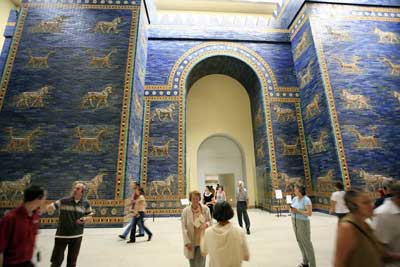
Three more museums of special note are the Museum of Contemporary Art, the Jewish Museum Berlin with an exhibition of on every aspect of German-Jewish history from the end of the Roman area to today, and the Pergamon Museum with its collection of classical antiquities, Museum of Islamic art, and Museum of ancient near-Eastern antiquities.

GNT/Eric Eichberger

170 MUSEUMS TO SEE

Berlin has more than 170 museums, more than enough to keep you interested; you can see why you’ll need extra time in Berlin.

Even the city squares in Berlin evoke interest, such as Alexanderplatz (named after Tsar Alexander’s visit to Berlin in 1805). This important public transportation junction is a focal point of city life in the eastern part of Berlin. The Gendarmenmarkt Square, named after Kind-Sergeant Frederick Wilhelm I’s “Gens d’Armes” regiment, is another location to see.

All sorts of other diversions are available in Berlin as well. There are eight major symphony orchestras including the Berlin Philharmonic, three opera houses, cabaret, variety and revue theaters, musicals and comedy. The Konzerthaus Berlin at Gendarmenmarkt- Mitte was built in 1818-1821 by the renowned Berlin architect Karl Friedrich Schinkel.

Numerous exclusive designer boutiques, international brand name outlet shops and more await shoppers in the Mitte district on Friedrichstrasse. Then there are the flagship stores, malls and the giant KaDeWe, a nearly 200,000-square-foot department store packed with attractive foods, clothing and all kinds of products and goods. It’s like a giant Harrods or the old Chicago Marshall Field’s store, with glitzy displays, helpful sales people and a do-it-right attitude.

Berlin hotels provide upwards of 11,000 beds in the luxury hotel category alone and a total of 88,000 beds overall. A click on http://www.visitBerlin.de will offer you more information and also offer 350 choices of where to stay. A list of youth hostels are also available at www.bock-auf-berlin.de.

GNT/Hans Peter Merten

TAKE A TOUR, SEE THE CITY

To see the city without all the walking necessary to cover the main attractions, try one of the several tour bus companies. You have a choice of BBS Berliner Baren Stadrundfahrt (www.sightseeing.de and www.bbsberlin.de) that offers tours in eight languages; Berlin City Tour, a 1 3/4-hour English and German tour on double-decker buses (www.berlin-city-tour.de), and Berliner City Tour-Eick’s Rundfahrten Berlin with open-topped buses (www.eick-berlin.de). Each tour line allows patrons to hop on and off the bus along the route.

Or, if you take city bus No. 100, which runs between the Zoo station, past the Tiergarten, Brandenberg Gate and along Unter den Linden (the main east-west thoroughfare), you’ll get to see a number of sites. Buses also run in the evening.

You can rent a bike for a city tour from 5 euros a day, with guided bike tours from 10 Euros a day (www.fahrradstation.de). There are also walking tours and boat tours provided by other companies.

Berlin has a new Hauptbahnhof that opened in 2006; it’s a clean railway station and easy to navigate, but the older European railway stations have more character. It’s also said the station lacks enough public toilets and seating for passengers. Shops and cafes are abundant in the station, and they are open seven days a week.

Berlin offers a good system of buses, trams, underground and surface trains (there are 24 different lines), and free maps showing these routes are available at tourist offices and hotel lobbies. A Berlin Welcome Card (valid 48 or 72 hours for 16 euros or 12 euros) allows unlimited travel on all public transportation and also a 50% reduction on city tours, museums, theaters and other attractions in Berlin and Potsdam (www.berlin-welcomecard.de).

There are numerous hotels to choose from in Berlin, with the more up-scale ones located in the center of the city; less expensive hotels and hostels are grouped around the Mitte district in the eastern part of central Berlin.

The #1 rated hotel out of a total of 552 Berlin hotels is the Ritz-Carlton, priced on average at $319 a night, with the Mercure Hotel rated #2 at $304 (average) a night. The Swissotel Berlin rated #3 is $144 a night and the Movenpick at #4 is $277 a night.

Berlin is certainly one of the more interesting cities in Germany, and I’m glad I went. From my visit, I only see Berlin as growing and becoming more popular in the future: it has a lot going for it!

For more information about Berlin, go to:
www.berlin-tourist-information.de

Happy to See You in Belfast

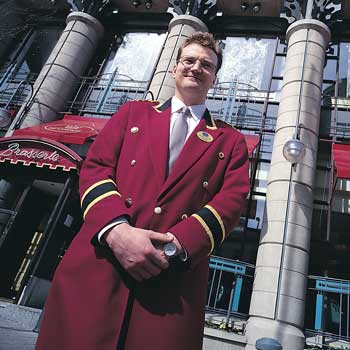
Bellhop at the Europa Hotel

By Carol Price Spurling
Photos by the author and courtesy Belfast Welcome Center

The first time I visited the Emerald Isle more than 20 years ago I steered clear of troubled Belfast. But I’m older and wiser now, and Belfast, too, has grown up, transformed from a self-absorbed, divided town into an extroverted and welcoming world-class city.

Belfast offers Victorian charm in every quarter and has retained the best of what Ireland is famous for: warm hospitality, atmospheric historic and cultural sites, and easy access to the lush unspoiled countryside. In Belfast, they’re glad to see you, not just your wallet, and what a difference that makes.

BELFAST HIGHLIGHTS
West Belfast’s Shankill and Falls neighborhoods saw most of the “Troubles” that erupted in the early 1970s. The Peace Walls that separate them are still standing, but visitors are welcomed on both sides and the practice of customers being searched before entering a store or office was retired years ago. For those interested in an insider’s view of Belfast’s political divide, Coiste Political Tours (www.coiste.ie/p_tours.htm) offers guided tours by Republican ex-political prisoners. Or, take a taxi tour to see wall murals and other relics from the bad old days (West Belfast Taxi Association, www.wbta.net).

The center of Belfast, Donegall Square, features Belfast City Hall (www.belfastcity.gov.uk), an embellished stone edifice built in 1888 as a monument to Belfast’s bright future.

All metro buses lead to the bustling square, also home to literary gem Linen Hall Library (www.linenhall.com). In this old linen warehouse, transformed into a library in 1788, visitors can access the cozy library’s unique archives such as the Northern Ireland Political Collection and the C.S. Lewis Collection. Enjoy the library’s tranquil wood-paneled ambiance and a view of City Hall by taking a tea break in the upstairs café.

A horse-drawn carriage strolls past the Ulster Transport Museum

On Fridays and Saturdays the oldest Victorian-era covered market in Ireland, St. George’s, fills up with local shoppers intent on finding a bargain or tracking down the best fresh food in the region (www.belfastcity.gov.uk/markets). The Saturday market is devoted to food. You won’t go away hungry, with 250 stands offering everything from oysters to Irish cheeses to seaweed tapenade to tapas to sausages in curry sauce. Look for locally made “Belfast in a box” chocolates that celebrate Belfast landmarks, accompanied by an illustrated booklet (www.citycentres.com).

Everyone knows where the Titanic met her end but did you know she was born in Belfast? The city’s proud shipbuilding heritage is still obvious with the huge yellow cranes in the Harland and Wolff shipyard –- nicknamed Samson and Goliath — towering over Queen’s Island and the Titanic Quarter on the city’s eastern edge.

(left) Sampling seaweed at St. George’s Market


Belfast celebrates its past with the Titanic Made in Belfast Festival every March (www.belfastcity.gov.uk/titanicfestival), when free bus tours of Queen’s Island are offered by the city on Saturdays and Sundays.

My personal favorite from the tour: the inside of the design room at Harland and Wolff’s offices, where draftsmen labored under a cathedral-like arched ceiling to draw the ship’s plans.

Shores of the River Lagan

DO YOU NEED A CAR?
Although Ireland and Northern Ireland aren’t famous for their extensive rail networks, between trains, buses, and taxis you can get anywhere you need to go in the greater Belfast area and environs without having to rent a car –- or drive on the left. Coach tours and trains also run directly north to Portrush, with convenient connections to Giant’s Causeway, Dunluce Castle, and Bushmills Distillery. Along the northern and southern shores of Belfast Lough, rail service is frequent and affordable, so getting to top attractions just outside Belfast, like Carrickfergus Castle (www.ehsni.gov.uk/carrick.shtml) or the must-see Ulster Folk and Transport Museum (www.uftm.org.uk/) is easy peasy. Day return tickets are offered at 1/3 off the standard rate if you leave after the morning rush hour, and families can get special ticket deals too (www.translink.co.uk).

But to see some of Northern Ireland’s diverse natural beauty and historic architecture (Environment and Heritage Service, www.ehsni.gov.uk/other-index/places.htm), a car will be very helpful. Most recommended is to make a day of driving north along County Antrim’s Causeway Coastal Route, where the craggy cliffs and wild sea spray on one side is balanced by charming villages and green pastures dotted with tranquil sheep on the other. Giant’s Causeway — a stunning outcropping of columnar basalt — can be busy during the tourist season but has been kept remarkably uncommercialized. Visit in the early morning or late afternoon for the best light at this geological wonderland (www.causewaycoastandglens.com).

Another lovely drive is west through the Fermanagh Lakelands, home of Belleek pottery, and National Trust gem Castle Coole (www.fermanaghlakelands.com).

WHERE TO EAT AND DRINK
Celebrity chefs Paul and Jeanne Rankin have put Belfast on the culinary map with Cayenne Restaurant (www.rankingroup.co.uk) and Roscoff Brasserie. Up and down the Golden Mile on Dublin Road, foodies will be spoiled for choices of great pubs, cafés, bistros and restaurants.

Chef Michael Deane runs Northern Ireland’s only Michelin-starred eatery at Deane’s Restaurant (www.michaeldeane.co.uk); his newest venture is the contemporary bar and grill Deanes at Queens, located in the Queen’s University Common Rooms.

Coffee addicts never fear, Belfast baristas know what they’re doing. You can’t go wrong visiting any one of the seven Clement’s coffee shops, where coffee drinking is practically a spiritual pursuit, and the creamy hot chocolates are served in a large bowl.

(left to right) Dining at one of Chef Michael Deane’s Belfast restaurants; Steak and Guinness pie is an Irish specialty

WHERE TO STAY
In downtown Belfast itself, a famous landmark is the 4-star Europa Hotel (www.hastingshotels.com) conveniently located just in front of Great Victoria Street rail station and the Europa Buscentre. Head concierge Martin Mulholland will make sure you get everything you need, even if you’re not as famous as some guests who’ve stayed there, like Bill Clinton, Julia Roberts and Elton John.

For a more secluded getaway try the 5-star Culloden Hotel in Holywood, overlooking Belfast Lough (www.hastingshotels.com), or The Old Inn in picture-perfect Crawfordsburn (www.theoldinn.com), both within easy reach of the city.

For less expansive budgets there are dozens of guestshouses, B&Bs, self-catering holiday apartments, hostels, and budget hotels both in Belfast and in neighboring communities. Some are chic, some charming; choose according to your mood.

The Premier Inn hotel (www.premierinn.com) boasts a great central location and is spanking new to boot. The Ash-Rowan Town House (tel. 9066 1758) offers a choice of nine gourmet breakfasts, with a side of historic significance: the Ash-Rowan was once the home of Titanic designer Thomas Andrews.

If you get out into the Fermanagh Lakelands and wish you could stay, check out Belle Isle Castle (www.belleisle-estate.com), outside Enniskillen near Lisbellaw. The old stables and coach house have been transformed into comfortable holiday rentals, with a variety of outdoor activities available, as well as day-long cooking classes taught by Irish chef Liz Moore. You can even rent the castle for a group stay, or a small wedding.

WHEN YOU GO
If you’re planning a trip to Belfast and Northern Ireland, be sure to visit the Belfast Welcome Centre website, www.gotobelfast.com. Like the office itself located at 47 Donegall Place in the city center, it is user-friendly, multi-lingual, and comprehensive. Be sure to pick up copies of their excellent themed city guides.

The Northern Ireland Tourist Board website is www.discovernorthernireland.com. Another free publication to pick up: Belfast In Your Pocket (www.inyourpocket.com). Published every couple of months, it always has the most up-to-date happenings, complete with maps of the city.