
By Alison Ramsey
Northern Italy island cuisine and fishing boats follow tradition
Literally translated to “Mount Island,” the beautiful village of Monte Isola, Italy, rises from the middle of Lake Iseo in the Brescia province in Lombardy. Monte Isola comprises three islands, the principal being Montisola—the largest inhabited lake island in Europe—reachable only by boat (ferries run approximately every 20 minutes during the day). Beneath the glittering cobalt water swims the sea life that, for years, inhabitants relied on for sustenance and livelihood. Montisola’s main industry is now tourism, but in the past, it was fishing.

Montisola island in Lake Iseo is lined with docks and fishing boats.

Fishing boats and islands dot Lake Iseo in the Brescia region of Italy.
Unique Wooden Fishing Boats
Shipbuilding yards focused heavily on making a typical style of fishing boat called the Naèt—long and narrow wooden boats, similar in style to the famous Venetian gondolas. Islanders depended on these light and agile boats for fast transportation to the mainland as well as for successful fishing. Naèts are difficult to construct and require great skill to make, with builders using an ax, hammer, chisel, and plane to cut and shape chestnut wood for the frame and durable larch wood for the remainder of the body.
The original flat 4.5-foot-wide boats were almost 23 feet long, with sails attached to two intercrossed chestnut wood poles—about 11.5 feet and 13 feet each. Around 1958, builders began removing the sails and adding engines to these boats, which shortened the boat length by about two feet. At the very center depth of the hull, the width remains only 80 cm. Every village uses its own color for their Naèts, so a quick glance at the docks identifies where each boat originated.
The only remaining shipbuilding yard on the island is Cantiere Nautico Ercole Archetti, and this craftsmanship-focused family company has trained five generations of carpenters to reach shipbuilding expertise. Building unique wooden boats since 1600, the team now uses cutting-edge technology but still makes their products entirely by hand, using carefully selected marine wood and employing highly qualified Master Shipwrights. Maintenance, storage, and rental are other offerings from Ercole Archetti Shipyards.
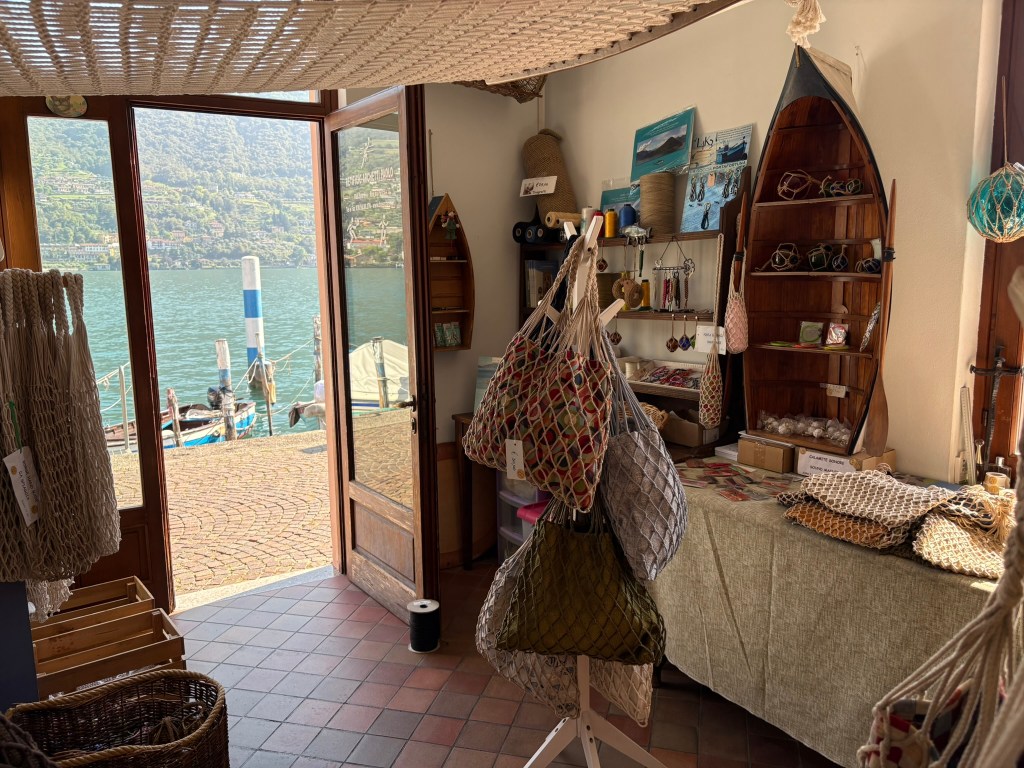
Paolo Archetti, owner of local net manufacturing company Bresciareti, said that nuns used to own property on the island and wanted to be paid for the land they lent out. Renters with limited cash began to pay the nuns in fish instead of funds—children loaded the special two-ended wooden needle with thread and women handwove the nets men used for fishing. Because fishing was most productive during the warm months of April, May, and June, islanders learned how to preserve their catches, drying the fish and conserving them in oil for later payment.
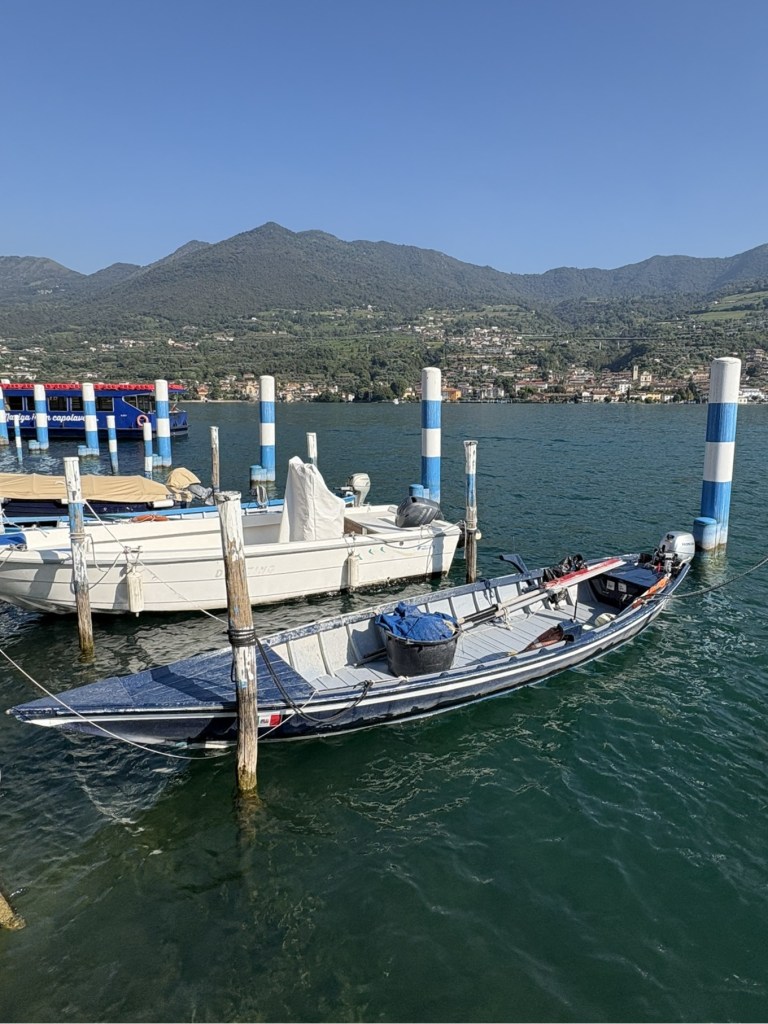
Top left: The color of a Naèt indicates from which village the boat originated.
Top right: The Bresciareti storefront sells handwoven net accessories and the company fulfills large orders of machine-created nets for sports, construction, and aviary control.
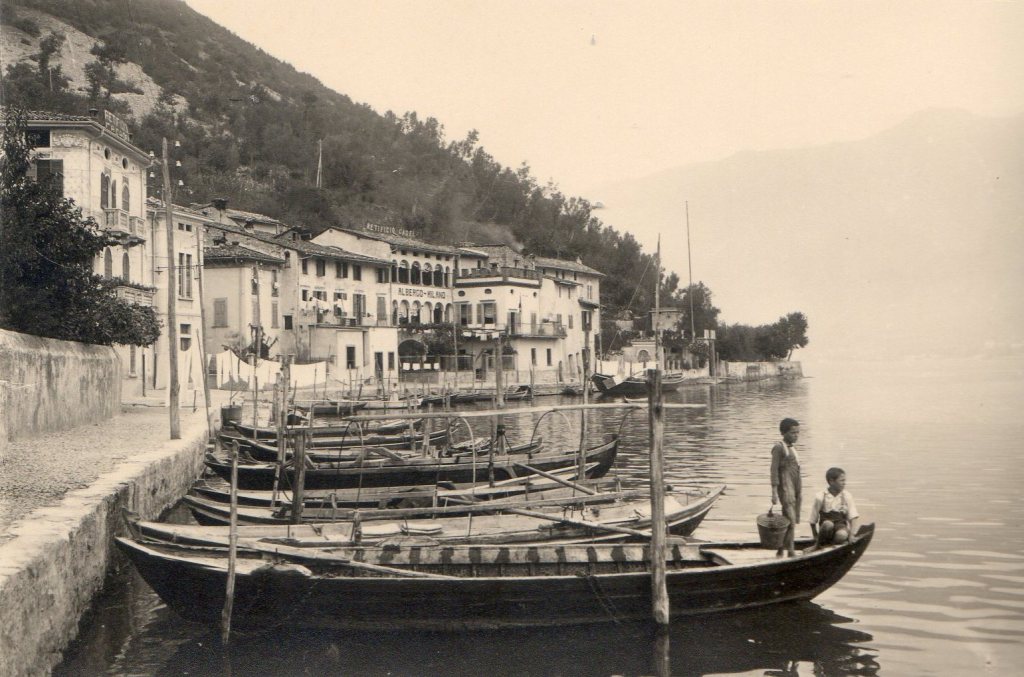
Bottom (photo courtesy of Michele Turla): Peschiera Maraglio port has always been a hotspot for boat parking.
Island Cuisine Includes Preserved Sardines
The pretty, pink-embellished Church of St. John the Baptist in Carzano, a small lakeside settlement on Montisola, is also known to locals as “St. John of the Sardines.” Independent tour guide Elena Confortini explained that on June 24 residents historically celebrated St. John’s feast day. On this day, which fell during the final seasonal period when sardines came closest to the shore and there was an abundance of fish, the church used to cook sardines in its front square and serve them freely. Although locally referred to as “sardines,” these fish are actually a species of freshwater twaite shad (Alosa fallax locustris) but are called sardèna in Italian because their appearance is similar to true sardines.


Left (photo courtesy of Michele Turla): Fishing was the primary industry in historical Monte Isola.
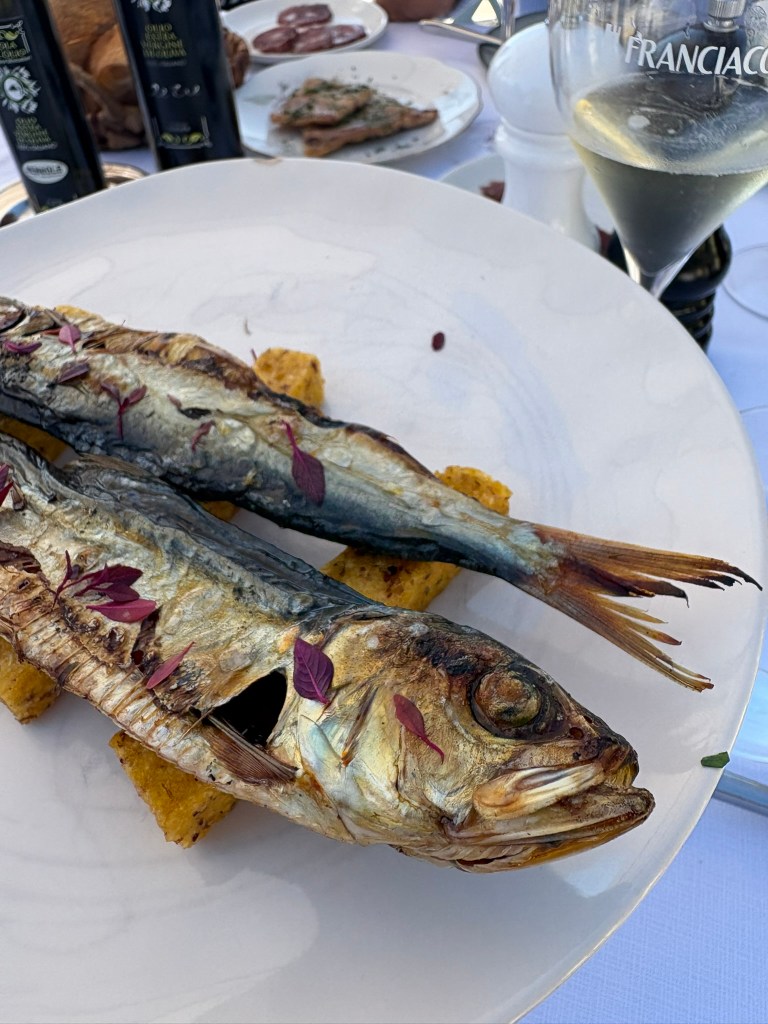
Right: Dried, salted, and preserved sardines on polenta are a traditional treat served by Sensole Locanda Contemporanea restaurant.
For centuries now, island cuisine has included dried, salted, and preserved fish—characteristically sardines, perch, and the common European whitefish (known in Italian as coregone). These fish, cured with salt and dried in the sun for 24 hours, are then washed and strung up in parallel lines dangling from hooks or tacked upon arches of ash branches secured with thread on both ends. After sunning outdoors in the heat for 5-10 days, the fish are removed into iron containers and pressed in olive oil. Several months in this state turns sardines a golden color, and they can then be seasoned simply with garlic, parsley, and oil, and grilled quickly over a hot fire. The surname “Archetti” is one of the more common names on Montisola. Translating to “little bows,” this name is derived from the bowed wooden frames erected all over the island for fish-drying.
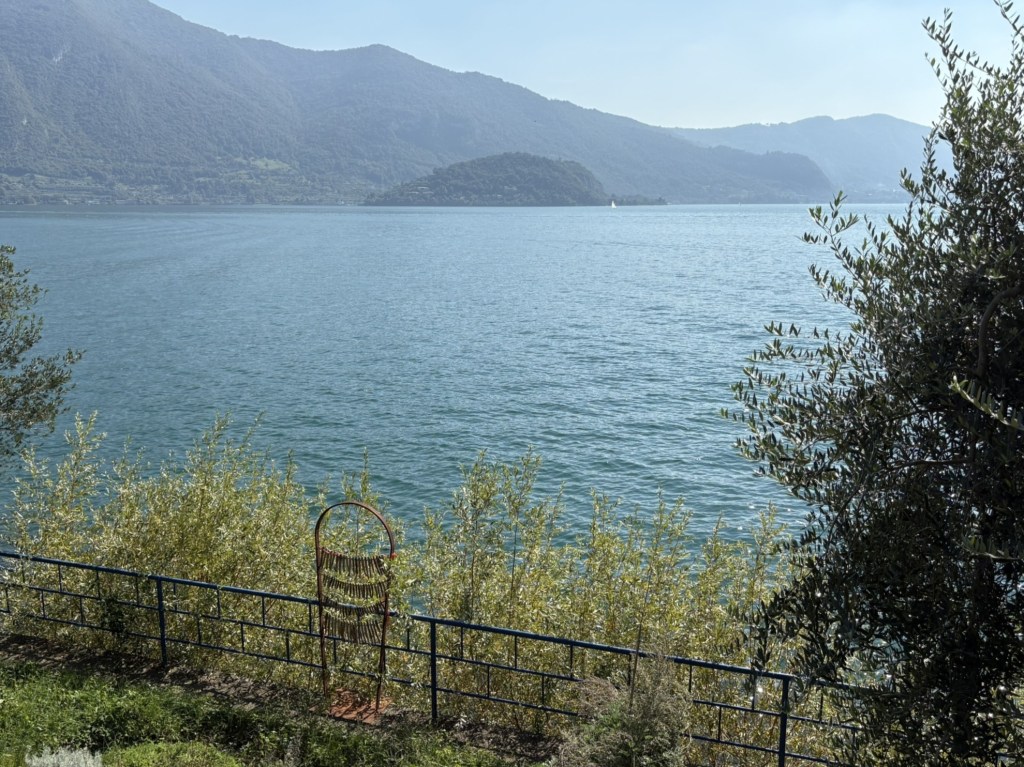


Monte Isola fish-preservation techniques from the past are still used today across the island, and garden art pieces imitating fish-drying frames decorate the lakeside. (Black-and-white photo courtesy of Michele Turla)
Only two eateries on the island currently serve sardines, one of which is Sensole Locanda Contemporanea. This charming, yellow-walled lakeside restaurant sits directly down the rocky hillside below Martinengo Fortress, a privately owned castle with a recognizable circular lookout tower. Young restaurant owner, Giovanni Lo Bresti, expertly serves traditional dishes using locally grown products, with each course gorgeously plated. Try the intensely flavorful dried sardines (use fingers, not utensils, to eat it the authentic way!) alongside tasty bars of fried polenta. Enjoy Monte Isola smoked salami, grilled dry coregone fish, fried pike balls, homemade bread, butter sprinkled with perch bottarga (salted, cured fish roe), and spiced salami ragout with bread gnocchi.



The upper outdoor deck of Sensole Locanda Contemporanea restaurant overlooks beautiful Lake Iseo, while the lower outdoor patio invites guests from the pedestrian walk.
Montisola Olive Oil and Franciacorta Wine
At Sensole restaurant, diners can also try the deliciously light local extra virgin olive oil labeled “l’isola dell’olio” (translation: “island of the oil”). One olive grove of just nine trees produced 50 bottles of this particular oil in 2025, the last bottle of which was down to the last drops in late September.
The whole of Monte Isola contains approximately 15,000 olive trees of several varieties, with groves planted on steep terraces to match the upward sloping terrain. Although difficult to harvest mountainside, the olives produced are of high quality and thrive in the unique lake island microclimate. Montisola’s restaurants prepare homegrown products with local oil and pair dishes with DOC “controlled designation of origin” wines from the region, such as Caruna 100% Chardonnay Brut from the Franciacorta region’s vineyards (served only in the Franciacorta-specific tulip-shaped glasses that stimulate bubble longevity).
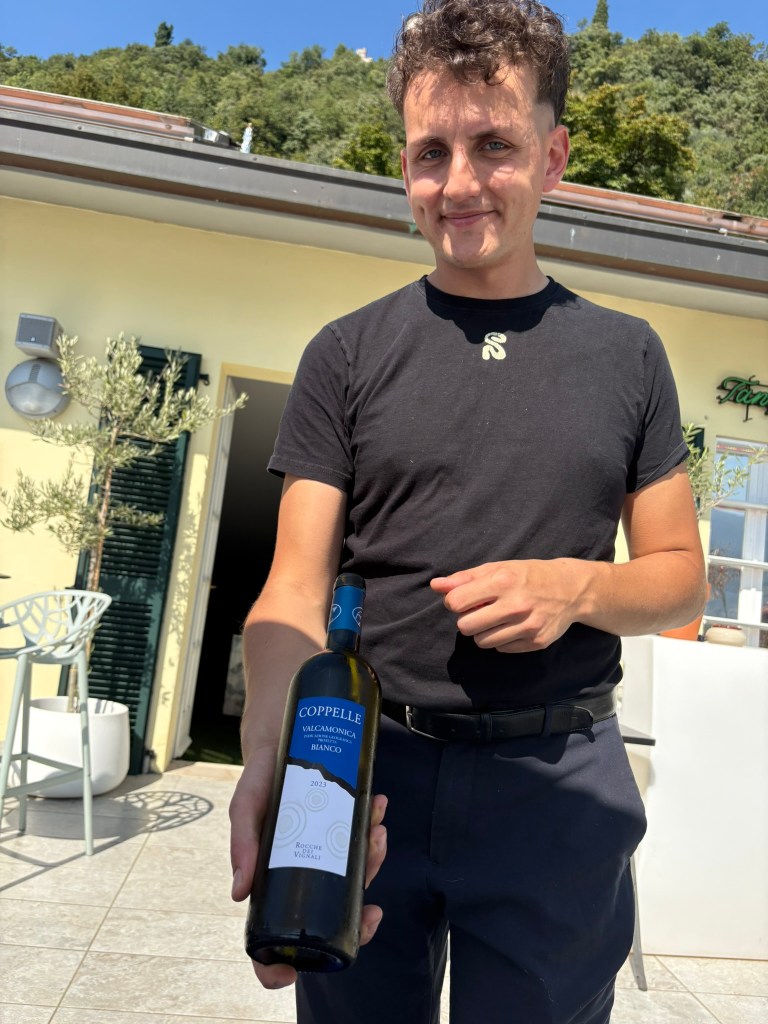
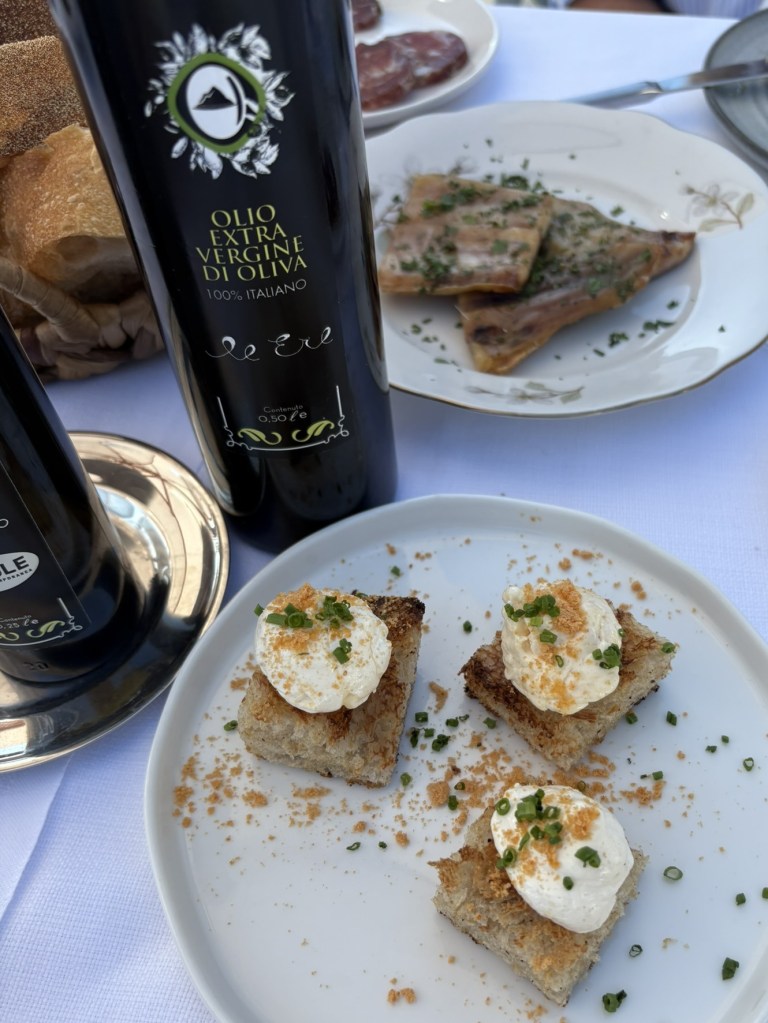


Tasty local olive oil and flavorful, high-quality wines from the Franciacorta wine-growing region round out a relaxing and delicious meal provided by owner, Giovanni Lo Bresti, at Sensole Locanda Contemporanea.
All along the lakeside, pedestrians and bikers move down the winding path that separates glimmering water from flowering bushes and trees heavy with ripe fruit. Beside this promenade, sunbathers bask in golden rays and swimmers leap into the cool water to paddle amongst ducks and swans.
Here you can feel like you’ve stepped back into bygone times, commune with untouched nature, and enjoy an unhurried and uncrowded getaway. Wander the path to see garden art structures made of metal and wooden fish—imitating the ancient practice of drying the catch-of-the-day on arched racks—and peruse shops and cafes that use sardine and net décor to echo the fishing culture that sustained Monte Isola for so long.
HOW TO GET THERE… ✈️
Fly NEOS Air from JFK airport in New York to Milan, Italy, and then travel by train or car to Sulzano, on the eastern shore of Lake Iseo. Then, take the 5-minute ferry ride from mainland Sulzano to Peschiera Maraglio on Monte Isola. Visit neosair.com/it for flights and schedules.
Tip: If you follow NEOS Air on social media, you can often score flight discounts and coupons to use toward airfare.
WHERE TO STAY… 🛏️
For a day trip to Monte Isola, stay at the romantic and rich-with-history Cappuccini Resort (Via Cappuccini, 54, 25033 Cologne BS, Italy), a 30-minute drive from the Sulzano ferry dock. This charming monastery-turned-resort is beautiful, clean, peaceful, and tastefully furnished with a blend of vintage relics and modern décor. A separate building with yoga, sauna, steam cave, and bubbling grotto spa with fountains and sun-heated waters provides numerous relaxation opportunities. Wander the sprawling hillside grounds to visit the outdoor pool and explore blooming rose gardens and fruit orchards. For more information, please visit cappuccini.it/en.
BEFORE YOU GO… 💻
Navigate to italia.it and visitbrescia.it/en/ to discover events and experiences offered within the fascinating Brescia province. Bicycle tours, food and wine festivals, thermal springs, art museums, castles, Roman archeological ruins—round out your trip with a little of each.








 European Traveler