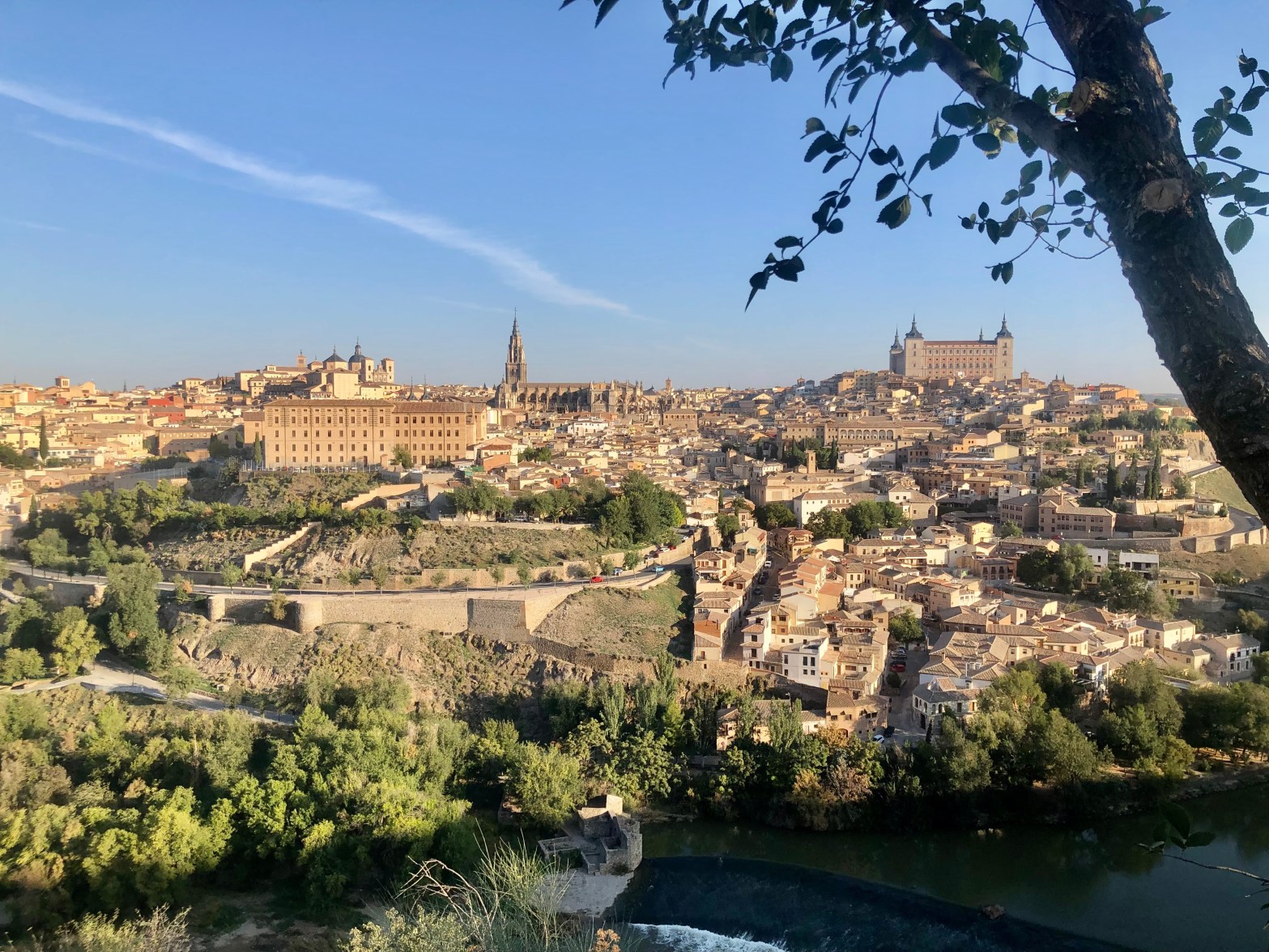
Communing With the Past in Tantalizing Toledo

The city of swords, marzipan and El Greco is a perennial favorite with tourists in Spain

By Randy Mink

I could spend hours roaming through the tangle of cobbled pathways that thread the historic core of Toledo, one of the best places in all of Europe for getting lost in a medieval dreamscape. Loaded with Old World magic, Toledo projects the very essence of Spain and was once its capital.

On a recent visit to this intriguing city rich in Christian, Jewish and Muslim heritage, I never tired of probing the labyrinth’s nooks and crannies while popping into souvenir stores, touring museums, and traipsing through an ancient synagogue, the world’s fourth-largest cathedral and a former mosque built during the Moorish occupation.

The Mosque of Cristo de la Luz, later a Catholic chapel, was one of 10 mosques in Toledo during the Moorish period. (Randy Mink Photo)

Like the Old City district of Cuenca, another tourist favorite in Spain’s Castilla-La Mancha region, Toledo’s extensive medieval quarter sprawls across a rocky mount bounded by the original city walls and surrounded by a river below.

Located 55 miles southwest of Madrid, Toledo (pronounced “to-LAY-do” in Spanish) overflows with tourists—attracting a million of them every year—and its pedestrian alleyways abound with gift shops. I’m not ashamed to say I loved shopping for refrigerator magnets and other tchotchkes in Toledo, but I also liked stepping away from the commercialism to explore shady back lanes and sunlit plazas accented with wrought-iron balconies, grillwork windows and massive, centuries-old wooden doors. Some of Toledo’s narrow winding streets do allow cars, however, so be prepared to stand flat against the buildings to spare your feet from being run over by drivers barreling up and down the steep inclines.

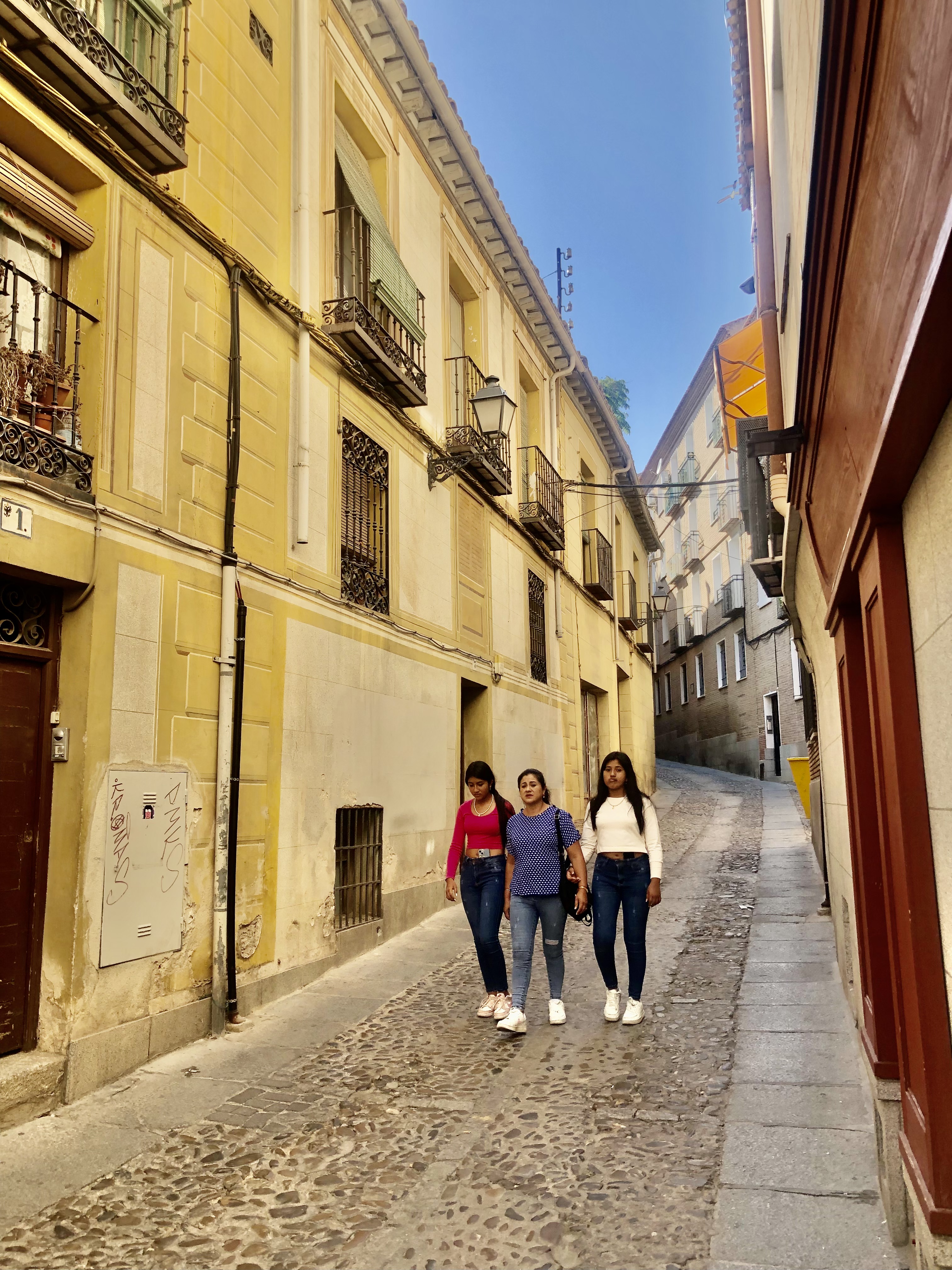
The narrow streets of Toledo’s Old City beckon tourists who relish getting lost in the past. (Randy Mink Photo)

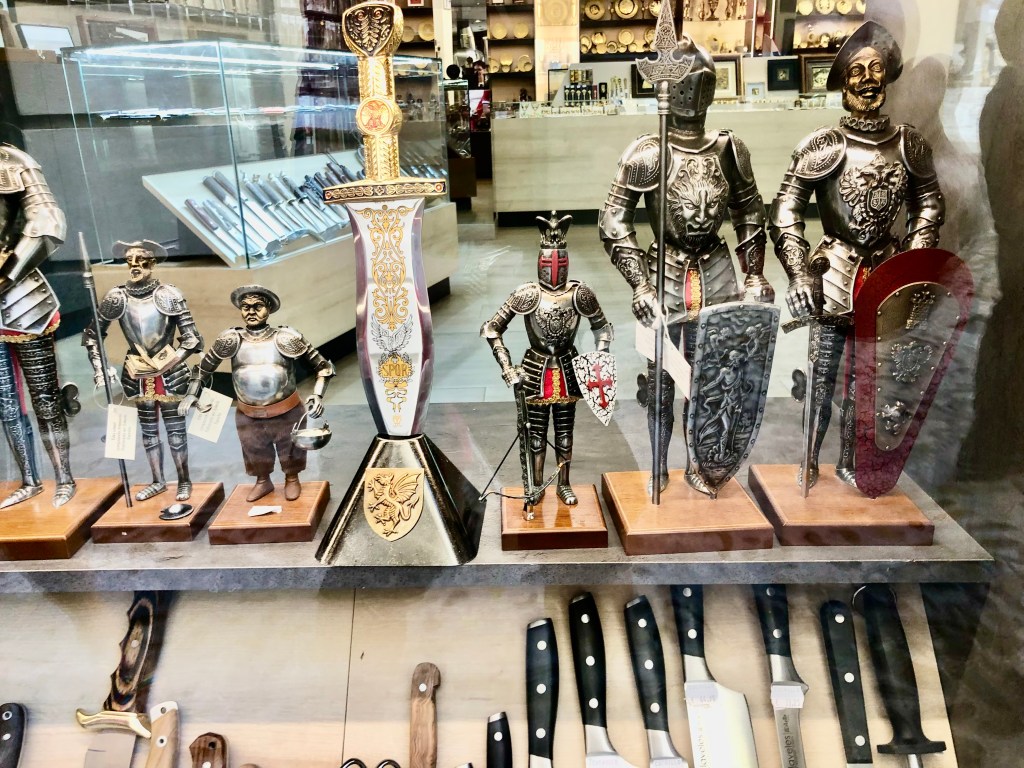
Long known for its quality cutlery, Toledo has many sword stores and calls itself the Sword Capital of the World. At the Zamorano sword factory, where we watched craftsmen at work, one fellow traveler shipped home two swords, fitting reminders of this fortified city that harks back to the days of knights in shining armor. Since the Middle Ages, Toledo has excelled in steel craftsmanship. Stores offer fine selections of knives, letter openers and scissors as well as swords, plus knight figurines in all sizes.

Also catching shoppers’ eyes is the art of damascene—the inlay of intricate gold and silver threads into a steel base. Top sellers include damascene jewelry, scissors and tableware.

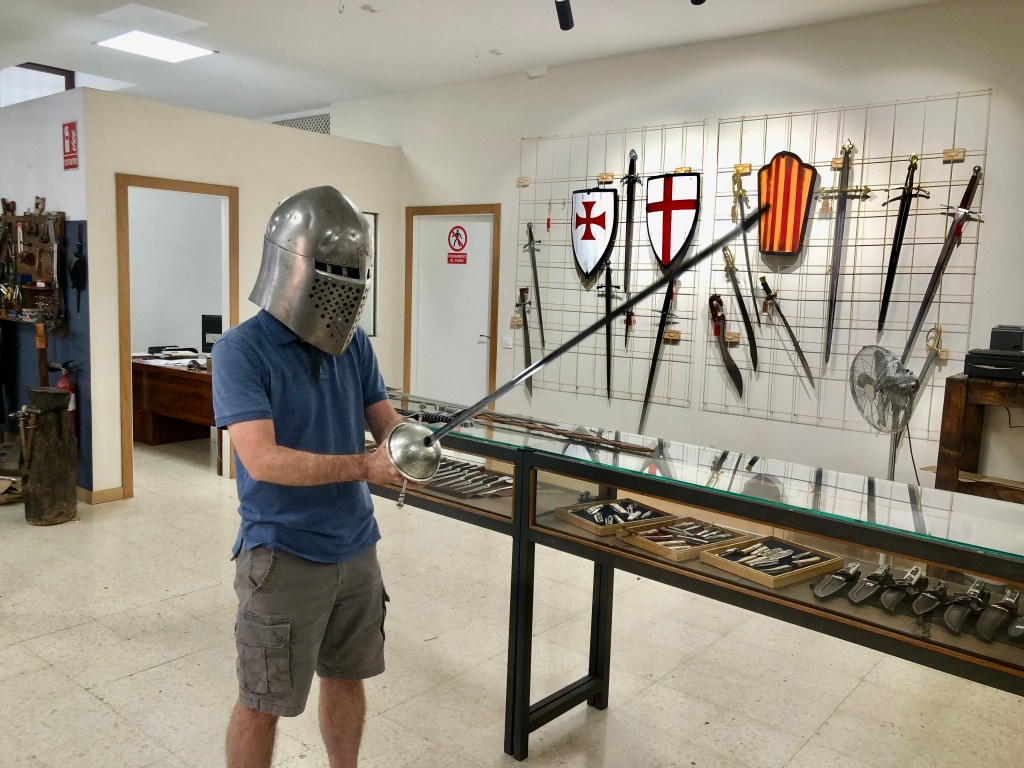
Toledo’s historic core counts numerous shops that specialize in swords, daggers, knives, scissors and knights in shining armor. (Randy Mink Photo)

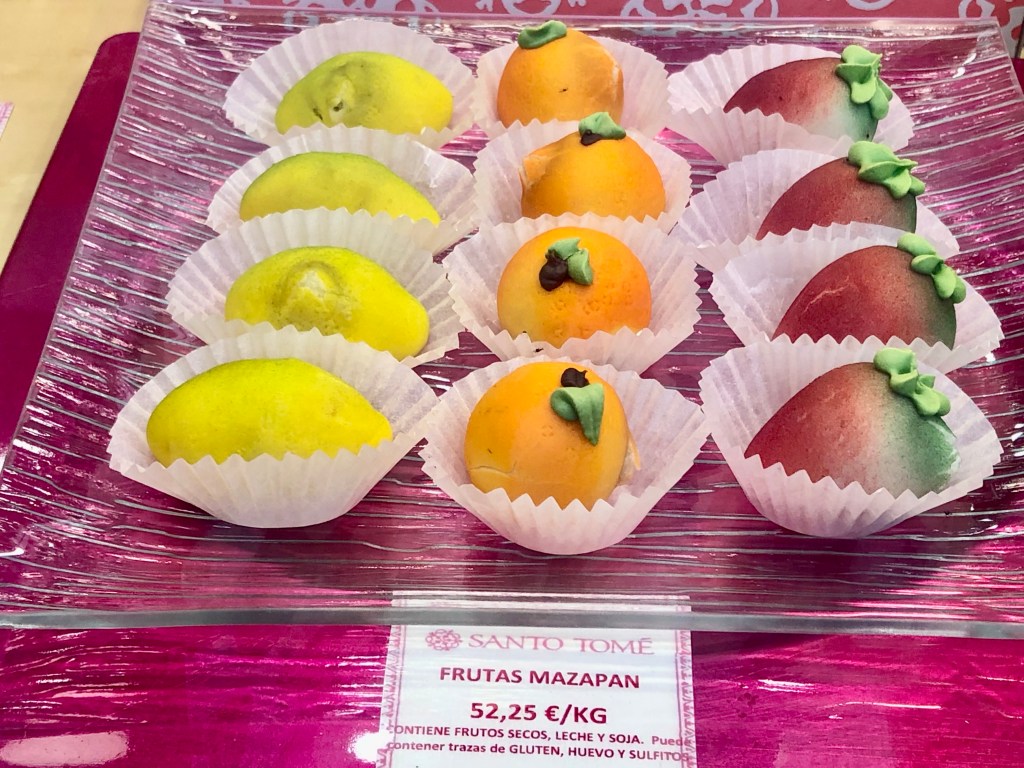
Candy is always a good thing to bring home, and I stocked up on marzipan at Santo Tomé’s flagship store. The seventh-generation family company has been making its famous almond paste confection since 1856. For gift-giving, I bought wrapped boxes of six-inch marzipan bars inscribed “T-O-L-E-D-O,” but my own bag of marzipan pieces was gobbled up before I got to the Madrid airport. (I even started on the bag originally intended for the neighbor watching my cats—it was so irresistibly fresh.)

Santo Tomé marzipan consists of 57 percent crushed almonds, 40 percent sugar and 3 percent honey, with no preservatives or extra ingredients. The most colorful items are in the shape of fruits—oranges, lemons, strawberries, etc. Some pieces are studded with pine nuts or whole almonds or come with a dab of jam. The flagship store/bakery on Calle Santo Tomé occupies a former convent. (Nuns were once the main provider of marzipan, and a few convents in Toledo still sell it.) Santo Tomé has three other locations in town, including one on Plaza de Zocodover, the main square.

Tours of Santo Tomé marzipan bakery include a peek into the kitchen where bakers are making the almond-based confection. (Photo credit: Santo Tomé)
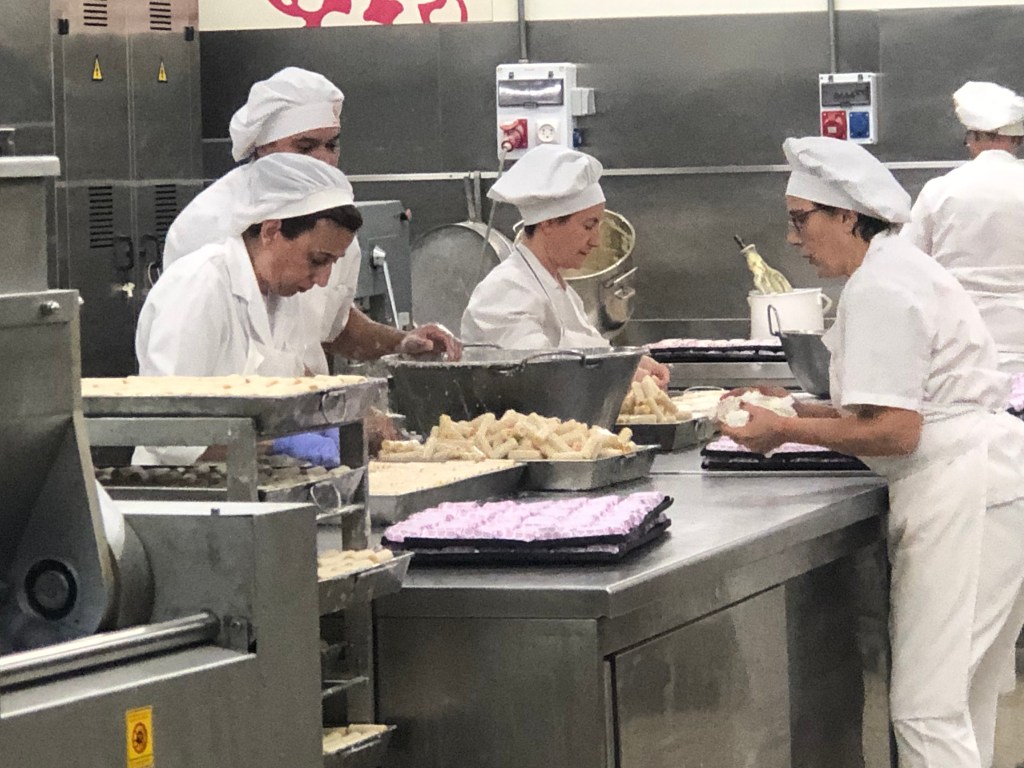
Santo Tomé marzipan is the perfect souvenir of Toledo and makes the perfect gift for those back home. (Randy Mink Photo)

In between shopping and wandering footloose in the dense medieval mazes, I checked off a few places from my must-see list.

The Alcazar, a former fortress and royal residence, crowns the highest point in the city and is now a vast military museum with excellent exhibits on the history of Spain. Rebuilt under dictator Francisco Franco after the Spanish Civil War, the Alcazar had been heavily damaged during the siege by loyalists in 1936. 

At the other extreme, Underground Toledo is worth a look. Archaeologist and tourism guide Diego Esteban Sánchez takes small groups into the bowels of the medieval district, unlocking doors that lead to well-lit restored sites like a Roman bath, a Jewish house and an ancient well.

The same sense of discovery is offered by cozy, atmospheric eateries like Restaurante La Cave, a historic building with brick-lined rooms in cave-like spaces below street level.

To art lovers, Toledo is virtually synonymous with the Greek-born painter Domenikos Theotokopoulos, better known as El Greco, or “The Greek.” He moved to Spain in 1571 from the island of Crete and, after centuries of neglect, is today venerated as one of the country’s old masters, along with Goya and Velazquez.
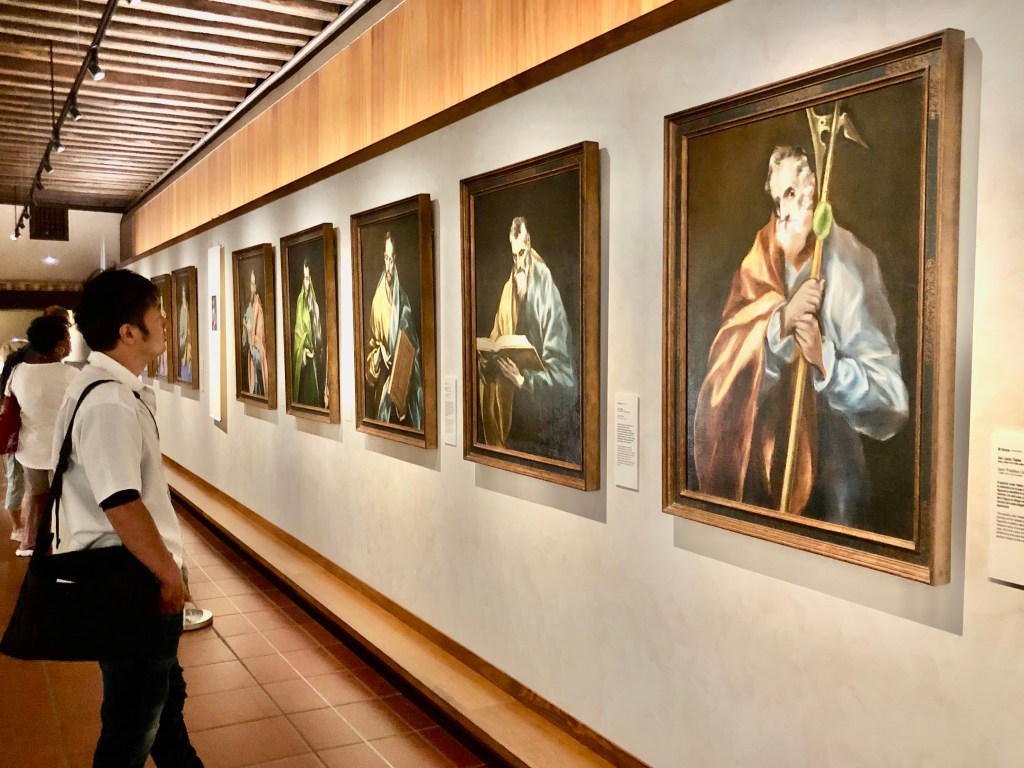
The El Greco Museum is one of Toledo’s top visitor attractions. (Randy Mink Photo)

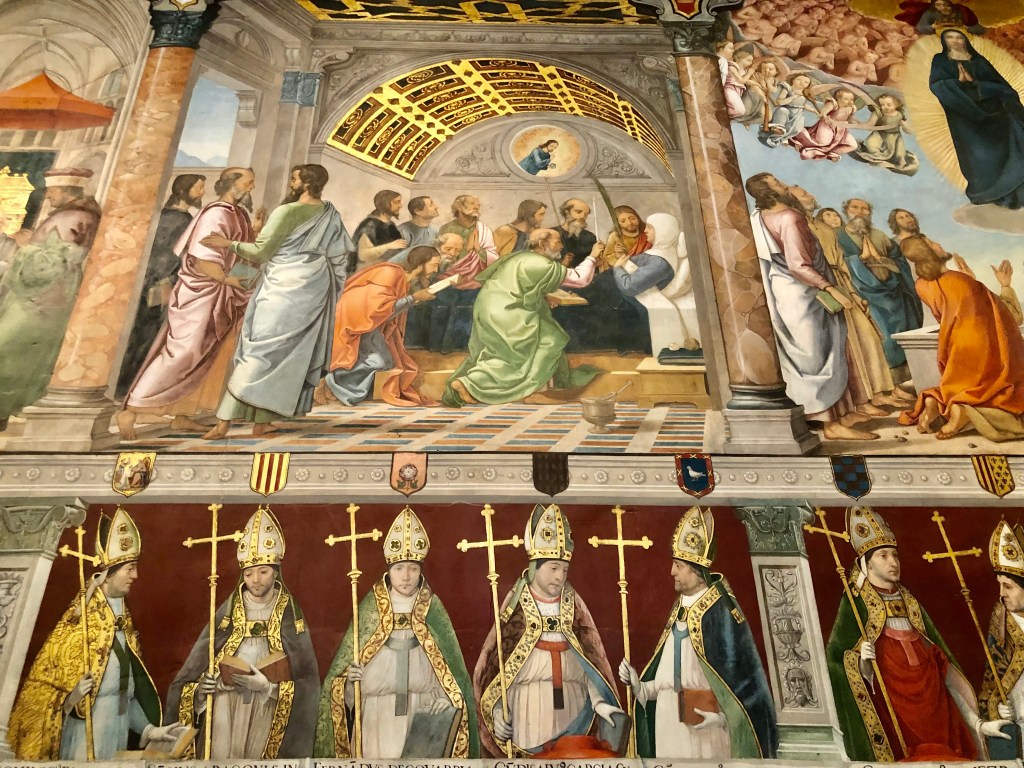
El Greco’s religious canvases, distinguished by bold colors and elongated figures in voluminous robes, can be admired at several locations, including the El Greco Museum. Other El Grecos are found in the Santa Cruz Museum, the Gothic-style Cathedral of Toledo (along with works by Raphael, Titian, Goya and Caravaggio) and the Convent of Santo Domingo el Antiguo, which houses the crypt where the artist is believed to be buried. 

In Toledo’s old Jewish Quarter, El Transito Synagogue is a prime tourist draw. (Randy Mink Photo)

One could a whole morning or afternoon admiring the statuary, artwork and architectural flourishes of the Gothic-style Cathedral of Toledo, one of Spain’s most impressive churches. (Randy Mink Photo)

The El Greco Museum resides next door to the 14th century El Transito Synagogue with its Arabic-influenced interior decoration, magnificent coffered ceiling and museum of Sephardic Jewish culture. Here in the old Jewish Quarter, the park across the street has a memorial to El Greco and a terrace affording panoramic views of the Tagus River (Rio Tajo) and city of Toledo, truly one of the most captivating places in all of Spain.

For more information on Toledo, Cuenca and other cities in Castilla-La Mancha, visit www.turismocastillalamancha.com.
Monastic and Modern: Central Spain’s Parador de Cuenca

Visitors to the Castilla-La Mancha region can absorb Spanish traditions at this strategically located monastery-turned-hotel

By Randy Mink

For soaking up the heritage and romance of Spain almost by osmosis, nothing beats staying overnight in one of the country’s government-owned paradors. Many of the parador network’s 90-plus hostelries occupy former castles, palaces, fortresses and other types of historic buildings. They’re a big hit with North Americans seeking out Old World flavor.

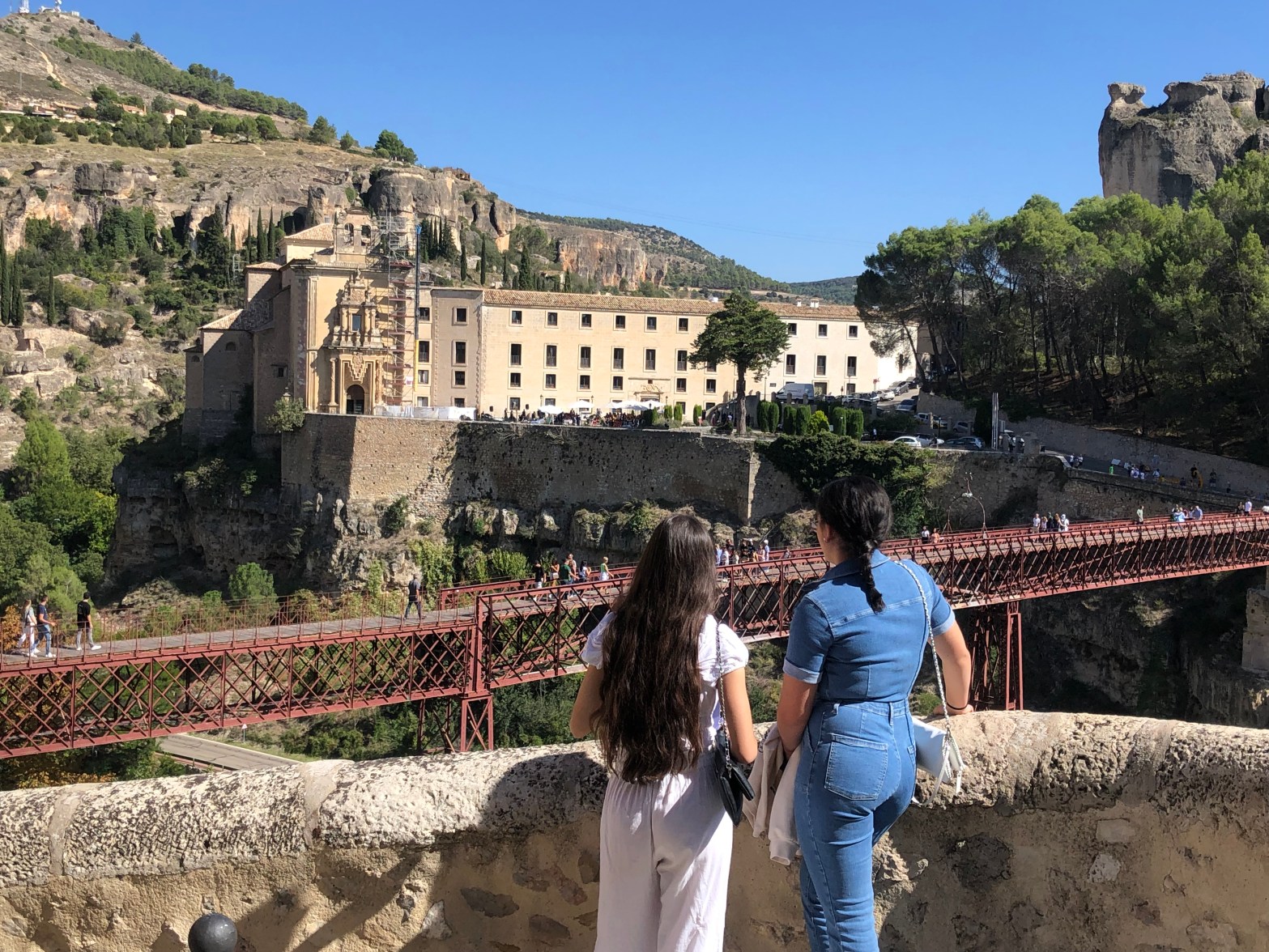
Both for its prime location and historical ambience, the 63-room Parador de Cuenca, once the monastery of San Pablo, makes an ideal home base in the enchanting city of Cuenca. Set on a rocky outcrop high above the Huécar River, the hotel affords postcard-perfect views of ancient buildings clinging to the cliffs across the gorge. And just steps from the entrance lies the city’s photogenic San Pablo Bridge, a gorge-spanning walkway that leads to the Ciudad Alta (Old City).

Parador de Cuenca overlooks the gorge-spanning San Pablo footbridge. (Randy Mink Photo)

A destination in itself, Parador de Cuenca was built in the 16th century by the Dominican order. The monastery, with a Gothic-style church, Renaissance cloister and Baroque facade, was converted into a university in the 1800s and later served as a hospital, secondary school and military headquarters.

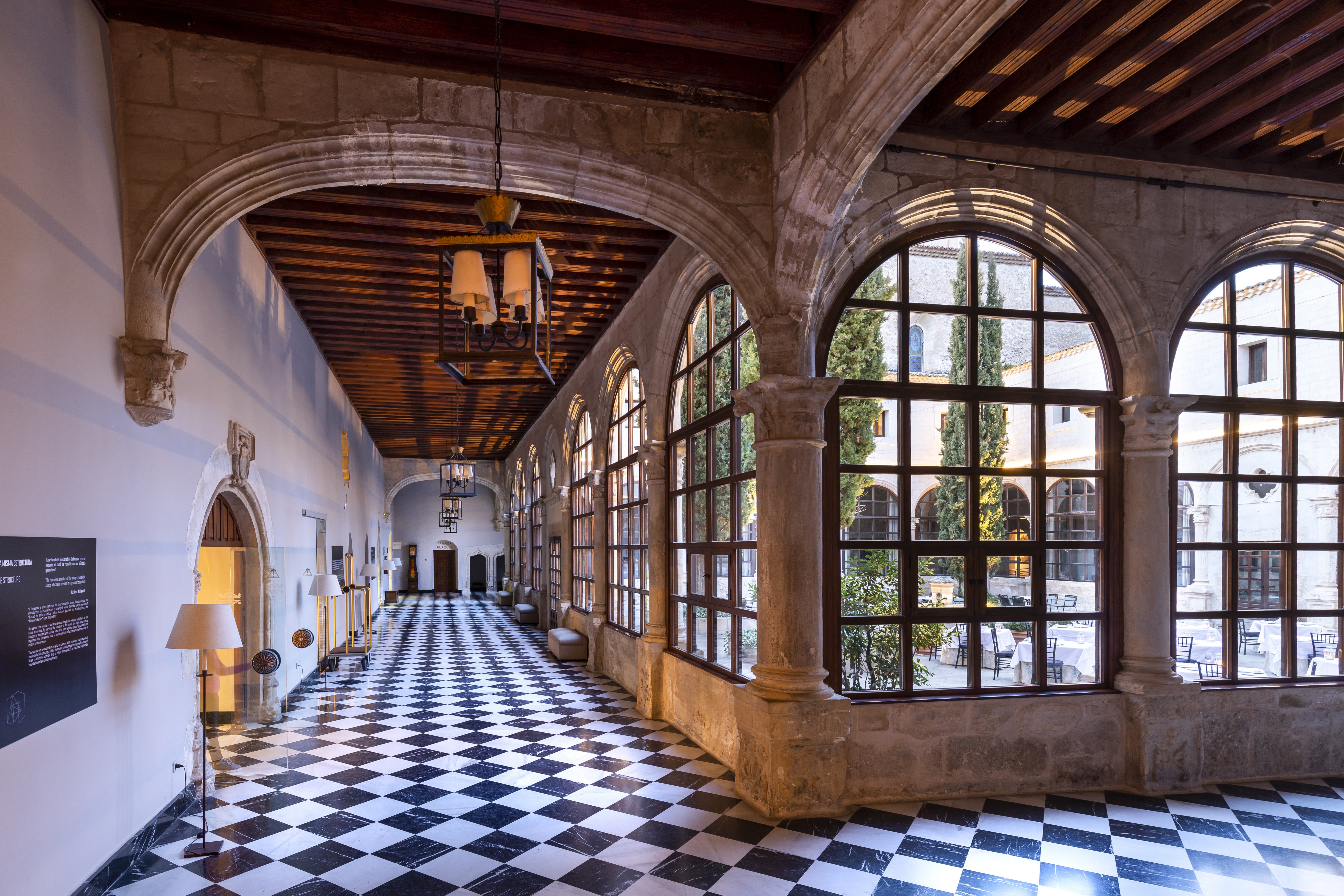
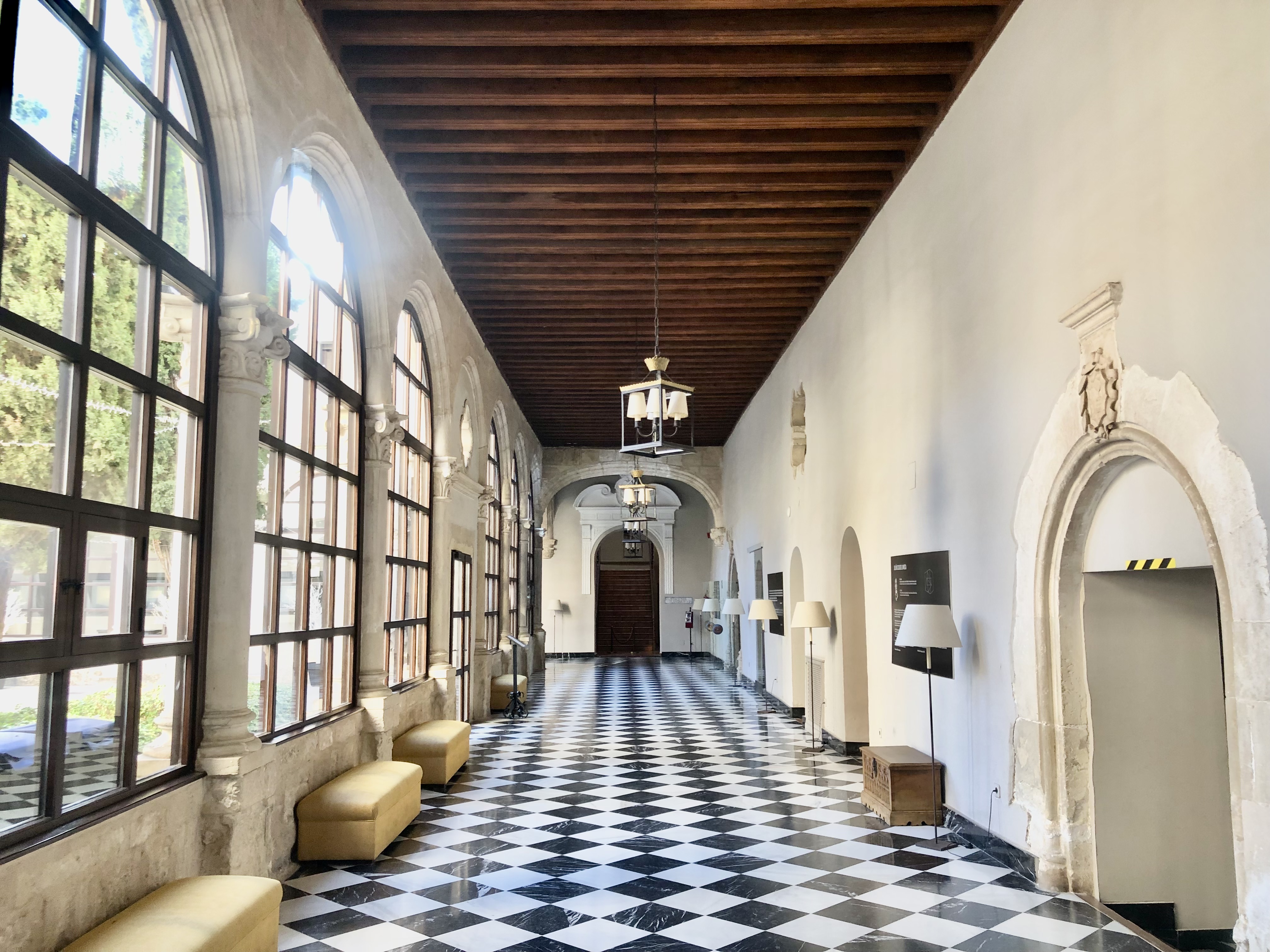
One of the hotel’s most striking features is the beautiful cloister that wraps around an open-air courtyard where you can enjoy a drink on a summer evening. The arcades, graced with semi-circular arches, beamed ceilings and black-and-white-tile floors, are accented here and there with antiques, including wooden chests and a grandfather clock. (On the Saturday of our visit, a wedding party had taken over the courtyard after a ceremony held under a tent in the plaza out front.)

The former monastery’s gracious cloister has been well preserved. (left, Paradores de Turismo de España; right, Randy Mink Photo)

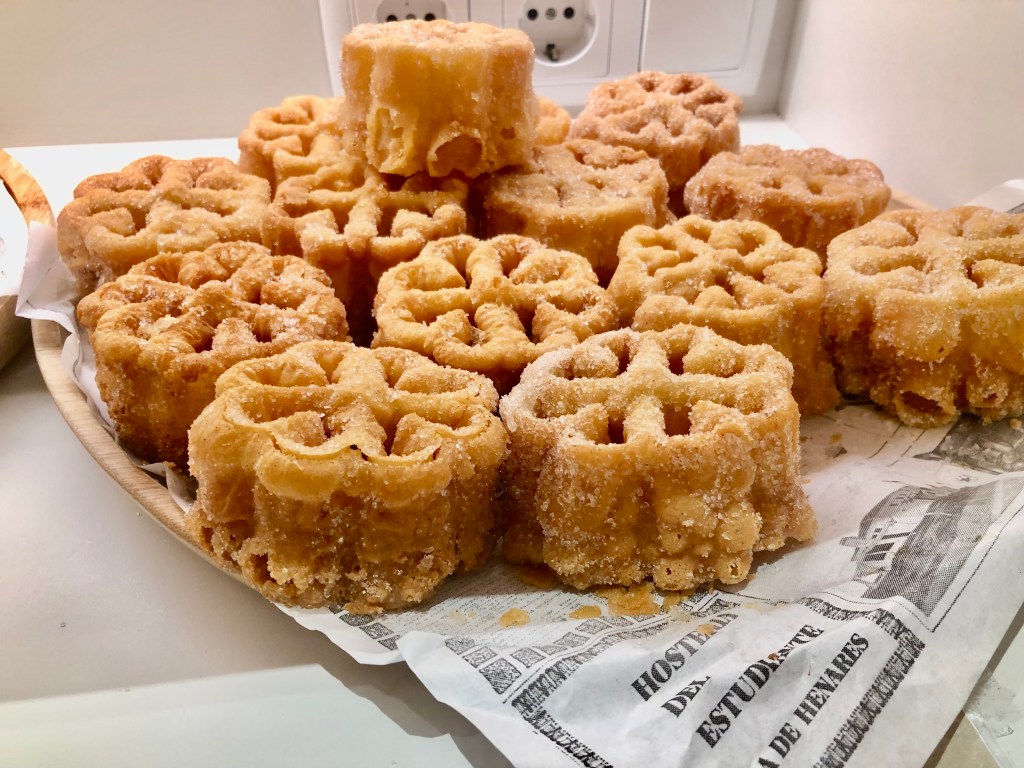
Also impressive is the coffered wooden ceiling of the parador’s restaurant. Once a chapel where monks prayed, the vaulted room is a heavenly place for breakfast. At the buffet we helped ourselves to fresh fruits, meats, cheeses, yogurt, artisan breads and all kinds of homemade pastries. A fan of baked goods, I filled up on mini brioches with chocolate chips, pretty pink-frosted strawberry chocolate donuts, shortbread cookies made by nuns from a local convent and Manchego flowers (or flores manchegas), a flaky, flower-shaped pastry of fried dough dusted with sugar and cinnamon.

Among the many pastries offered at the parador’s bountiful breakfast buffet are Manchego flowers, or flores manchegas. (Randy Mink Photo)


From the a la carte menu we could order piping-hot churros or eggs any style, but both days I went for migas, a humble dish that became a favorite of mine while traveling in Spain. A satisfying comfort food, migas combines fried crumbs from stale bread (soaked in water to get moist), olive oil, garlic, paprika (coloring it orange) and bits of chorizo. The crispy concoction is usually topped with a fried egg.

Paradors are known for purveying the best in Spanish gastronomy, and the restaurant’s dinner menu features many dishes with traditional recipes from central Spain’s Castilla-La Mancha region. Entrees include shoulder of suckling lamb, Manchego-style roasted lamb with rosemary sauce, and baked cod with Manchego ratatouille and saffron sauce.

The word “Manchego”—known to North Americans as the name of a prized, semi-hard sheep’s milk cheese—and its various forms refer broadly to the La Mancha region. A man from La Mancha would be a Manchegan (with a capital “M”) in English, or a manchego in Spanish.

To explain it further, Americans have only heard the adjective manchego in reference to the cheese, so often when they see the popular Spanish vegetable dish, pisto manchego, they assume it has to do with cheese, but it actually has no cheese at all; it just means it’s a Manchegan dish. The parador’s menu offers a selection of Manchego cheeses, or quesos manchegos.

Like the dining hall, the bar evokes the spirit of the old monastery. Just look up at the lovely religious ceiling frescoes framed by ornate plasterwork.

Summer guests can enjoy the parador’s swimming pool. Long ago, the parador’s dining room was the monastery’s chapel.(Randy Mink Photos)


Across the road are the tennis courts, outdoor swimming pool and party room. The main building has a fitness room.

The high-ceilinged guest rooms at Parador de Cuenca are tastefully appointed. My third-floor nest had a desk, TV, refrigerator and individual temperature controls. There were two floor lamps, two upholstered chairs and a coffee table. The red-tile floors and carved wooden doors lent a rustic look. Bathroom amenities included vanity and dental kits, make-up mirror and hairdryer. In both the bedroom and bathroom, windows let in fresh air and allowed me to hear crowing roosters at the farmstead across the river.

For information on the paradors of Spain, visit www.paradores.es.

Clixo Fidgety Fun Inspires Creativity During Travel and Beyond

By Alison Ramsey

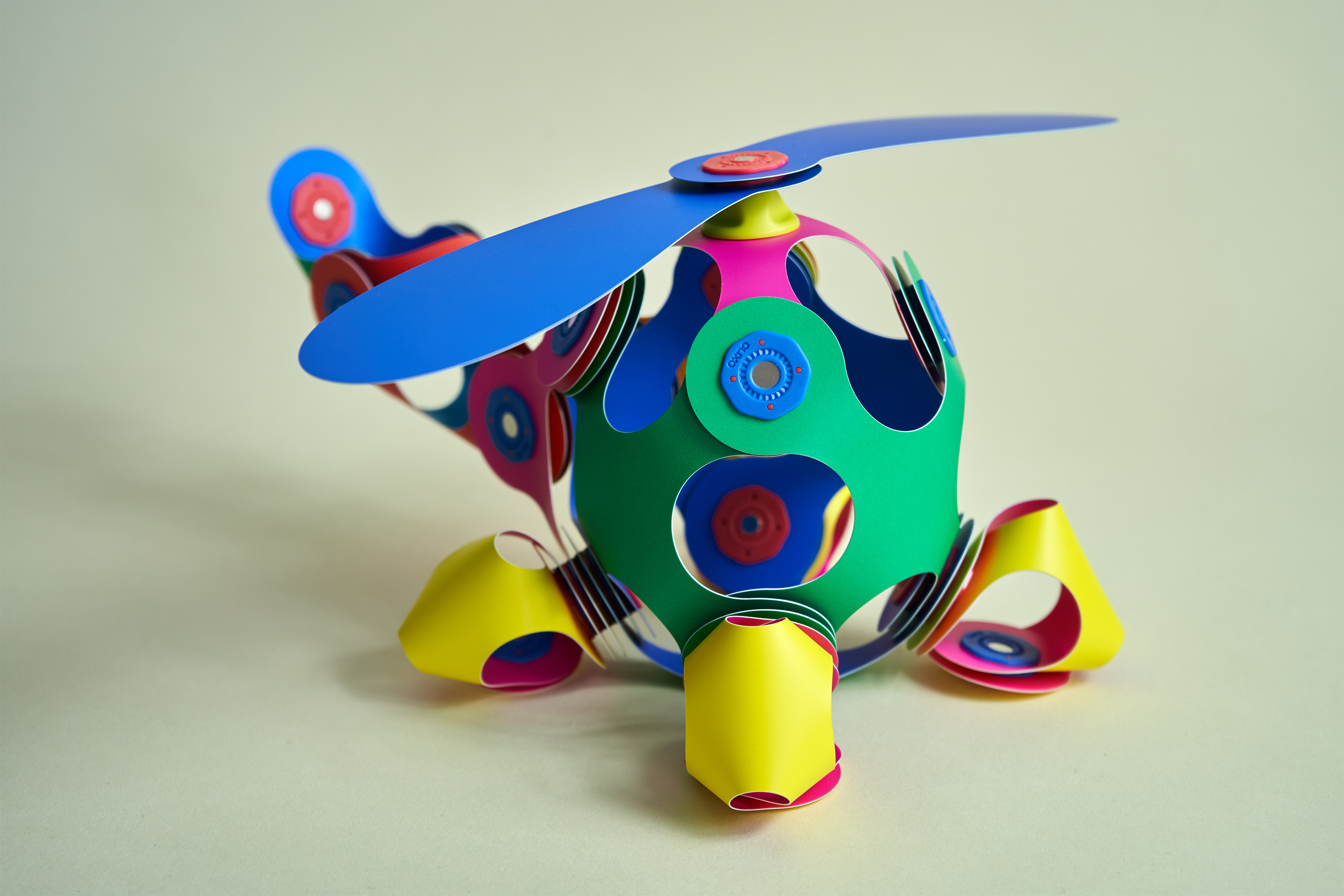
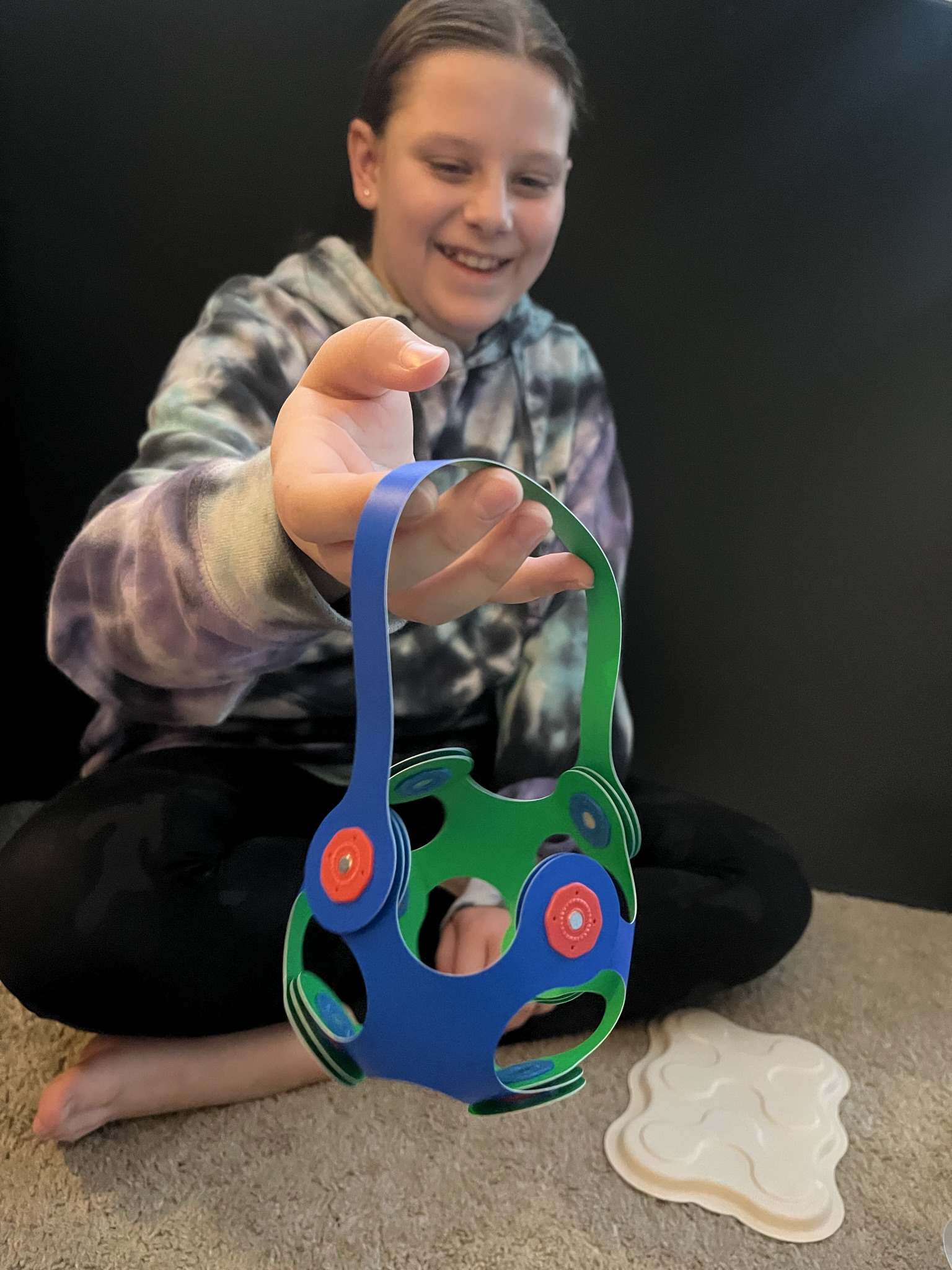
A unique toy for kids and adults alike, the easy-to-pack Clixo magnetic play system encourages freeform building and exploration—no rules or instructions required! Tuck a set of these flat, flexible building pieces into your day bag and pull them out to see your fussy or feisty traveling companions turn into creative geniuses.

Photos courtesy of Clixo.

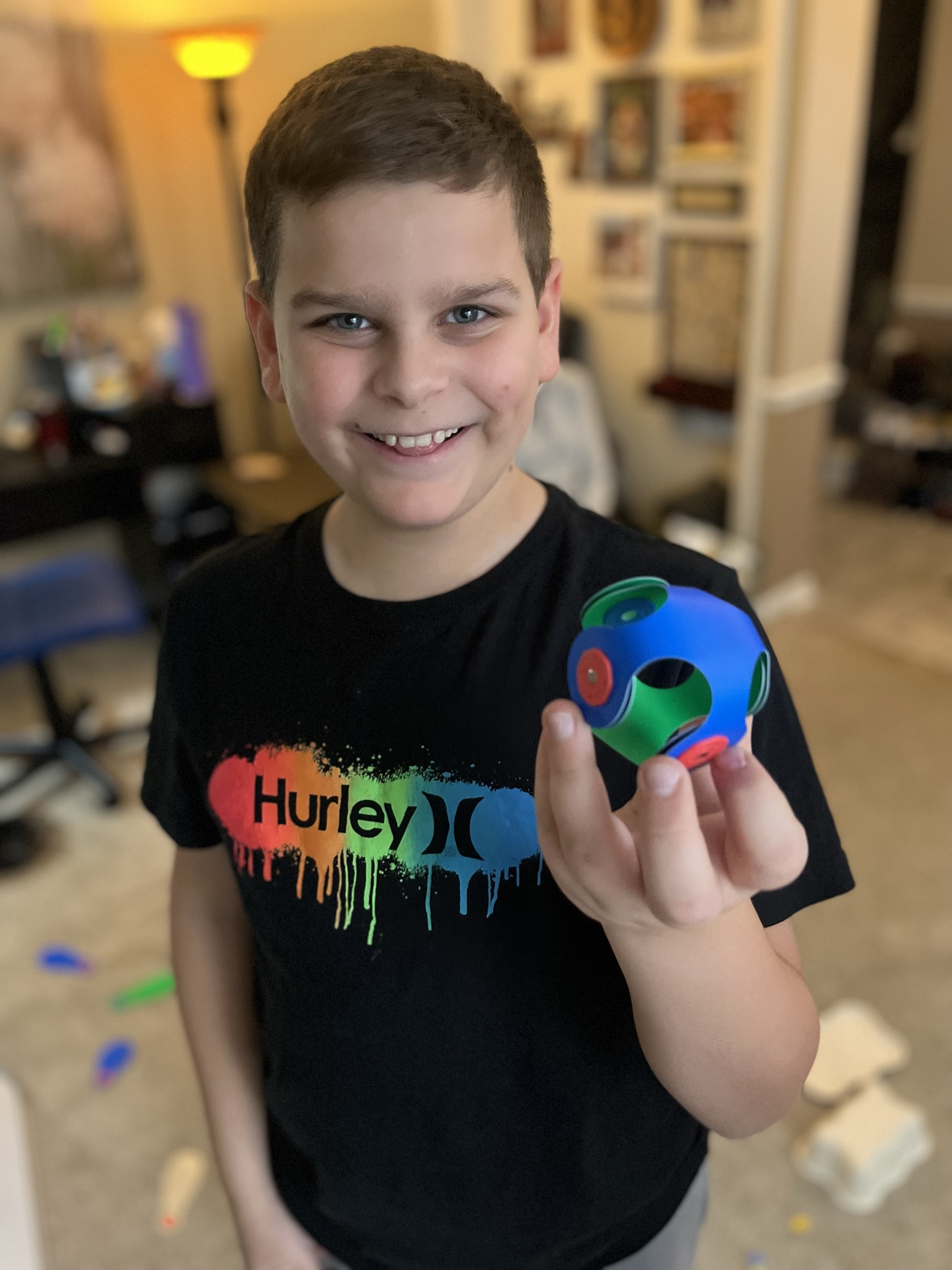
Visored motorcycle helmet, floppy beagle ears, a colorful handbag—within five minutes of opening a package of Clixo lightweight and flexible magnetic shapes, my kids’ creativity using these colorful pieces resulted in a plethora of fun creations. This award-winning building toy from Toyish Labs is packed with endless possibilities for playtime on the go or at home. The durable and compact flexible pieces can be stored flat and easily cleaned and sanitized. Secure magnets are safely fastened to key edges, allowing toy enthusiasts of all ages to snap together pieces and discover limitless creative possibilities. Creations can be stuck to the fridge, worn as accessories or, as with the Grip and Stick Pack, secured via suction cups to a window or flat surface—great for road trips and sticking to the interior of car windows! Some packages include special units that allow attached pieces to spin or roll on wheels, encouraging construction of propellers, vehicles, and other movement-inspired shapes.

Clixo needs no instructions or preamble. My kids were initially confused about what they were opening, but within several moments were excitedly clicking and snapping together pieces with no assistance or explanation needed. Open-ended, screen-free, hands-on play is Clixo’s strength, offering opportunities to create fun 3D structures from 2D pieces. These unique building sets were a finalist for the 2021 Toy of the Year Award, won the Top Toy of the Year Award from the 2022 Creative Child Awards, and have won the Oppenheim Toy Portfolio Gold Seal Best Toy Award and the Tillywig Toy Awards Best Creative Fun Award.

This summer, Clixo partnered with the Museum of Ice Cream (MOIC) in Chicago, Austin, and New York City to launch an interactive experience that allows guests to build colorful 3D creations on magnetic building walls. A special MOIC Clixo pack is sold on-location at these three venues, and features strawberry- and cherry-colored shapes. If your travels bring you to these cities, stop into the MOIC and add some creative constructions to the wall.

Photos courtesy of Clixo.

Assaf Eshet, CEO and Founder of Toyish Labs and creator of Clixo said, “We’re very excited to be working with Museum of Ice Cream on this collaboration and sharing Clixo with MOIC visitors. Museum of Ice Cream provides a fun and engaging experience for all kids and their parents. At Clixo, we share the same values of bringing play and creativity to kids and kids at heart.”

Photo courtesy of Clixo.

For more information or to purchase Clixo building sets, please visit www.clixo.com. The Black Friday Super Sale is currently offering up to 40% off sitewide, so take advantage of the sale prices for these colorful stocking stuffers or Christmas gifts while you can! May your holidays and holiday travel be peaceful, joy-filled, and inspiring.

Travel With Kids

Photos courtesy Travel with Kids

ET: How many times have you taken your kids along with you on a foreign trip, and where?
 
The kids have been traveling with us since before they could walk (they are 10 and eight now), so on many, many trips to places like the British Isles, France, Italy, Greece, Peru, Costa Rica, Alaska, Florida, Mexico and the Caribbean.

ET: At what age do you feel it’s worthwhile for children to be taken on an overseas trip to Europe? Please explain your reasoning.
 
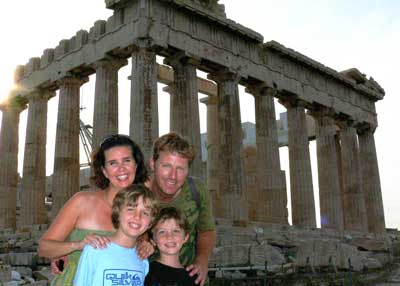
I think each age has its own benefits and drawbacks.  When they are babies they are easy to travel with (before they can walk) and babies seem to open up a whole new door with the locals…you will meet other parents and talk about universal issues and be introduced to a whole different world than a typical traveler…people love babies! The drawback is babies come with a lot of gear and long overseas flights can be tough with a crier.  Toddlers are fun to travel with because you see things entirely differently. They are fascinated by everything and leave nothing unexplored.  What we might see as a famous monument a toddler might see as a cool worm inching its way across a stone surface.  It gives perspective to things and adds a playfulness you might not get with older kids. However, toddlers can be unpredictable, and you still have to deal with added gear and schedules.  My favorite is school-age kids.  They still see things differently: our boys spent a good 20 minutes watching an ant carrying a toothpick across the Parthenon last summer, but they are more able to comprehend the historical and cultural significance of destinations.  They are learning about the places in school and they bring that with them as well. Plus, they don’t have as much stuff, and are able to carry their own bags and they actually want to spend time with their parents still.  The drawback is that they are in school, so homework has to become a part of their trip as well.  Pre-teens and teens, depending on what stage they are in, can still be excited by exotic destinations, especially if you put an adventurous spin on it (i.e., zip lining through the Amazon, hiking the Inca Trail), but they are harder to impress and a mopey teenager can put a damper on the vacation for everyone.  But, don’t let this stop you, as they will appreciate it later, and it gives them a global view on life that many kids their age don’t have.

ET: Language differences may or may not be a big barrier to children on a trip to Europe when accompanied by their parents, especially when the children are younger. At what age do you recommend children study the language before they travel overseas, and how might they best learn a language, say, when they’re going over for only a week or two?  
I always encourage travelers of every age to learn at least a few words in the country they are visiting.  Saying “s’il vous plaît” in Paris will get you a much warmer reception than instantly assuming everyone knows English.  And its fun for kids to practice the language with local kids.  It is by no means necessary. There are very few places on earth that you can’t find at least one person who speaks English. However, if you plan on getting far off the beaten path, I would suggest a phrase book.  There are lots of smart phone applications available as well now.  We usually download one of those and practice a few key phrases in the weeks before the trip and while we are on long plane or train rides.

ET: Are there some things that are vitally important to take with you when you take younger kids along, that you may not find in Europe?
 
For the most part, you can find anything in Europe that you will need supply-wise.  If there is a specialty item that is unique to your child, you may want to bring that…for example, a certain diaper rash cream for kids with sensitive skin, or a formula that your child needs.  Also, any prescription medications.  But don’t be afraid to try local things as well. Europe has lots of independent companies producing natural kids’ items that you can’t find in the States.

ET: What about the added expense by taking kids with you to Europe? Does it cost a lot extra to travel around, lodge and feed them?
 
Airline tickets are the main extra expense.  Big hotels will be able to accommodate most small families in a regular room without additional expense. Booking a condo/apartment helps save on lodging costs and gives extra room for the while family to spread out. Plus, the kitchen can help save money on eating out. We usually do breakfast and sometimes lunch or dinner in the condo, but we like to eat out as well to get a feel for the local cuisine. 

ET: Food. What do you suggest about finding “kid foods”– good, nutritious food at reasonable prices when overseas?
 
Go where the locals go. You don’t need to spend a lot to taste the local cuisine.  The kids love street stalls. too. Just make sure to ask for guidance from locals to avoid getting sick. Crepe stands in Paris, panini cafes in Italy, pasty shops in England…all these foods let you get a taste of real local foods at a fraction of the cost of a sit-down restaurant.

ET: Can you recommend some special “kid-friendly” hotels in Europe, or cities or attractions that seem to especially cater to kids?
 
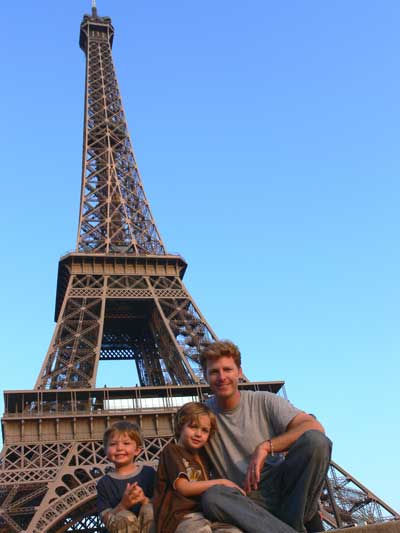
It’s not always the cities you would think that are exciting for kids.  There doesn’t have to be an amusement park to interest kids.  Our kids were fascinated by Venice, a city many people would not think of taking kids to.  They loved taking the boats up and down the canals and wandering the tiny streets.  Big cities are fun for kids, too.  Paris and London are on the top of our kids’ destinations list.  They love riding the tube and double decker buses and visiting big time attractions like the Eiffel Tower.  Really anything can be interesting to kids if you prep them for it.  Learn about a destination before you go.  The kids learned about gladiators and Rome before we went to Italy, and it really came to life in Roman ruins all over Europe.  They had a blast pretending to be gladiators in colosseums from Wales to Rome.  Walks Inside Rome had a great tour with history on a kid’s level and a visit to Gladiator School…the kids learned from “real gladiators” how to fight with swords and defend against wild animals. Very fun! Many attractions have kid versions of audio tours, scavenger hunts, or something to engage kids. Just ask. If they don’t, you can always make your own. When the kids were younger (ages 5 and 7) we visited the Louvre. I was worried about keeping them interested, so I printed out pictures of some of the more famous exhibits and sent them on an art treasure hunt.  They had a blast, and even enlisted the security guards to help them, and we enjoyed extra time at the museum.
 
As far as hotels go, apartment rentals are always great with kids.  The apartments are often in local neighborhoods, so you get a better feel for local life.  We rented apartments from Frenchy Rentals in Paris, a villa in Tuscany from Italy Perfect and apartments in Rome from Parker Villas.  When we are staying in a hotel, we try to stay in family-owned, smaller hotels.  These are usually located in the more culturally rich or historically significant parts of town.  A lot of it is also about location.  We don’t want to have to take a 20 minute taxi everytime we want to go into the old part of town. We like to be where the action is.

ET: Teenage tensions can be a problem. How do you handle this on a long European trip?
 
Lots of luck.  Just kidding. Teenagers are a different breed, and since I don’t have any yet, I can’t give too much advice here.  What I have noticed with my niece and nephews is that when they are out of their element (like you are in a foreign culture), some of that attitude fades away.  I went on a trip to New York with my 15-year-old niece last year, and we had a blast.  I asked for her input on everything we did, and I think that helped a lot. Let the kids (of all ages) help plan what you are doing. That helps them feel invested in the trip ahead of time and keeps them engaged while you are on the road.

ET: What foreign trips/areas might you not want to take your kids on and why?
 
I don’t think there are any areas I would say don’t take kids accept for areas I would not go myself because of dangers or violence.  I guess there are some third world countries for which I would want to edit the itinerary. It would be very hard for the kids to comprehend such abject poverty. I might also stay away from long trips in which passengers are contained and there are no breaks. Kids who are cooped up and bored for long periods of time can get irritating fast.
 
Many people ask if I am scared to travel because of coverage they see on television. Fortunately, I have never felt any hostility from locals stemming from my being an American. In fact, quite the opposite.  I have always been welcomed with open arms.  When we traveled through the Middle East I was not sure what to expect, but everyone was very warm and welcoming.  What you see in the news is not always how it is in real life. I would be cautious, of course, as things can happen when you travel, just as they could at home.  Be aware of what is going on around you, ask the locals for perspective and trust your instincts.

ET: What do you suggest on a European trip if the parents want to occasionally go out alone in the evening and the kids need to go to bed. Who watches the kids? 
 
Many hotels offer babysitting service. I have never used them as I would not feel comfortable leaving my kids with a stranger.  However, I hear stories from other people who did this, and it turned out just fine.  I would say that for me, the point of a family vacation is to spend time with your kids.  At some point, they won’t want to hang around with us anymore, so I try to cash in on all the time I can with them now.  Schedules are a bit more flexible when we travel. So, the kids stay up later which is just fine as the town squares in the evening are packed with families strolling and kids playing. It’s a time where we really get to know the locals, and the kids love it!

ET: What do you think is the most important thing to remember when going to Europe with your kids?
 
Take time to absorb it all.  Often times when we travel (and I am just as guilty of it as anyone else), we pack in as much as we can.  There’s so many wonderful things to see and do in Europe. And we end up moving so fast that we don’t take time to just sit and soak it all in.  Sitting in the town square, watching life go by, is a great tradition in southern European countries, and it’s a great time to reflect and just spend time with your kids…time bonding and re-connecting with one another, which is really what it’s all about anyway.

Find out more about Travel with Kids:
Facebook: www.facebook.com/pages/Travel-With-Kids/107216306811
Twitter: twitter.com/Travel_WithKids
YouTube: www.youtube.com/travelwithkids
Travel With Kids Blog: travelingkids.blogspot.com
Janson Media:ttp: www.janson.com/dvdcatalog/

Travel With Kids takes viewers on an educational journey through each destination visited, presenting history and culture in an innovative way, as well as showing the kid-friendly things to do and see. Whether planning a trip, or just wanting to learn more about a destination, Travel With Kids will entertain the whole family. For more information on Travel With Kids, or to purchase a DVD visit www.TravelWithKids.tv

Taking to the Air with Germany’s Second-Largest Airline

By Don Heimburger
Photos courtesy Air Berlin

Since 2013 when Air Berlin began flying from Chicago to Berlin, I’ve wanted to see what the service was like, because in Chicago at least, Air Berlin is a new airline. Those traveling to Germany from Chicago have a choice of several good airlines to choose from.

My flight from Chicago started with spending some time in the American Airlines lounge at O’Hare International Airport, admission to which is offered to Air Berlin business class passengers because the two airlines have a code share/partnership agreement.

Needless to say if you’ve flown in first or business class before, spending time before the flight in the lounge is a whole lot better than sitting in the noisy gate area. Plus, you have the convenience of close washrooms, complimentary coffee, snacks and soft drinks, a bar, and magazines and newspapers to read.

SERVICE BEGINS ASAP
Once on board, Air Berlin’s service begins immediately after you find your seat in Business Class (Air Berlin calls their first class section Business Class).

To begin my journey, I was offered a glass of champagne and a small dish of mixed nuts, and spent the time before take-off learning how my seat operated. I could leave it in the upright position, place it in a “relaxed” position or bring it all the way down for a completely flat bed if I wanted. I just had to make sure my legs were then propped up above the chair/bed as it automatically moved to a flat position.

A small folding table was positioned in front of me to the right for meals, and I received large headphones to plug in for television and music listening, a black bag filled with earplugs, moisturizer, toothpaste and toothbrush, eye covers, slippers, and a pair of knit socks.

I later noticed that the economy passengers had found their seats in the rear of the plane, but the usual commotion of this completely passed me by, as only 20 Business Class seats were available, and the 18 passengers in this section on this trip were very quiet. The pilot announced it would be a smooth flight as large, comfy blankets were passed out if needed by the flight attendant, as were magazines (in both English and German), and we were on our way.

I was gratified that the three attendants in my section were very attentive in the beginning, because riding in a business class section can prompt questions if you’re not used to the gadgetry and the luxurious routine. Later, they understood how much attention I needed/wanted, and were helpful to not disturb me when I was reading, intent on watching a movie, or sleeping. They must teach this style of service in flight attendant school.

LIGHTS ARE DIMMED FOR SLEEPING
When dinner time came, I had to do a bit of studying, as there was a broad selection of appetizers, hot dishes, desserts, a cold meal available and snacks, as well as beverages. A printed menu with all the choices was given to me upon boarding.

I chose fresh seasonal salad with Italian dressing, and Rillette of Shrimp with Mango and Chili. For the main menu, I had the grilled chicken breast in a Tuscan tomato sauce and roasted vegetables and potatoes. Dessert? I chose the blueberry tart with vanilla sauce (this was very tasty).

The wine selection consisted of three whites and four reds, champagne, a long list of spirits, beer, soft drinks and hot beverages. I chose the white wine from Italy, 2012 Anselmi Canole Veneta Bianco, made from Garganega grapes.

For about four to five hours of the 7-hour flight the overhead lights were dimmed in the Business Class section so passengers could sleep, but a flight attendant was always “on duty” if needed.

After a restful sleep (I can never sleep on planes, but I actually did on this flight), I could smell coffee brewing, and along with several cups of that and orange juice, enjoyed a breakfast of fruit yogurt, fresh fruit plate, a croissant, butter, cream cheese and jam.

The selection of in-flight entertainment was enough to keep me from sleeping, had I not wanted to. There were numerous movies—first-run plus classic ones—plus a music channel, news, a channel on Air Berlin information, and games such as solitaire, sudoku, backgammon, brain teasers for kids, and others.

SMOOTH FLIGHT
How about the flight itself? It was a very smooth flight, we arrived at the gate on time, and the experience was refreshing.

The airline recently refurbished its Business Class section on its long haul fleet and they now feature FullFlat seats with a massage function, USB port, personal entertainment system featuring a 15-inch monitor and gourmet culinary selections. And as a member of Oneworld, Air Berlin passengers can accrue and redeem miles on any Oneworld partner airline in addition to Air Berlin.

Air Berlin flies to three continents. The Air Berlin mileage award program is called topbonus. Air Berlin flies direct to Germany (Dusseldorf and Berlin) from Chicago, Los Angeles, New York, Fort Myers and Miami.

For more information, go to AirBerlin.com.