Photos Courtesy Frankfurt Tourist & Congress Board
Locals and tourists alike enjoy this beverage in rustic apple wine pubs all over the city. The “core” apple wine scene is in Old Sachsenhausen; numerous apple wine pubs line its streets where they serve customers their infamous “liquid gold.”
In the Middle Ages, beer and wine were the beverages of choice. As with many products today, apple wine came into being because of an unavoidable circumstance rather than an idea for a new product. In the middle of the 16th century, the Rhine-Main area went through a climatic change that negatively influenced wine production. Because of this, many vineyards transformed into fruit orchards, thus beginning apple wine production. During the Goethe era, taverns made the switch and became apple wine pubs. Today, apple wine remains a staple in Frankfurt and is growing in popularity.
It’s easy to spot a local apple wine pub: just look for the wreath hanging above the door. There’s even an old saying, “A wreath on the door means apple wine and more.” Traditionally, apple wine is served in a blue-gray stoneware jug called a Bembel. Other necessary glassware for apple wine drinking includes a ribbed glass called a Gerippte.
For an unforgettable Frankfurt experience, take a tour of old town in the “Apple Wine Express.” The Apple Wine Express is the city’s most popular streetcar and takes guests on a sightseeing tour around the city. For one hour, visitors can munch on pretzels, listen to music and sip apple wine while experiencing the city in a new way.
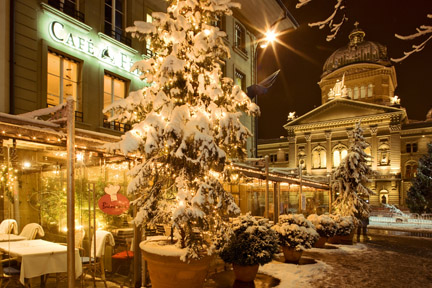
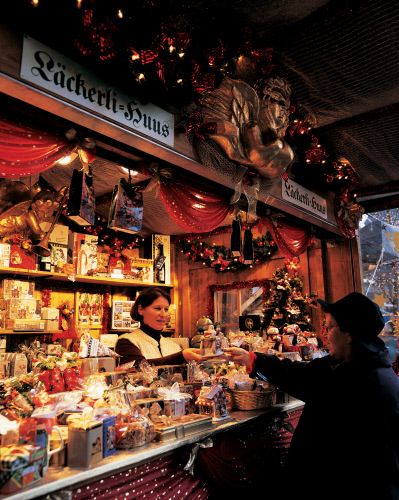
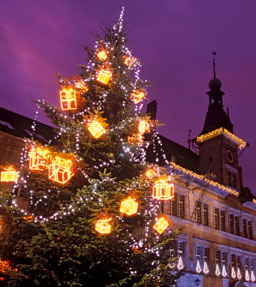
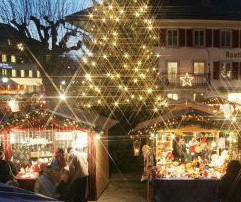
Christmas is around the corner. In Switzerland, Christmas markets and events are as much a part of the holiday tradition as chocolates, cookie baking and family gatherings. Here is a sampling of festivities that vary in scope from the month-long markets in St. Gallen to weekend events in villages like Bad Ragaz, yet all share the basics: Christmas ornaments, gifts, local specialties, plenty of traditional Swiss atmosphere and snow.
Handmade products of Switzerland and local treats bring visitors from around the globe.Swiss Christmas Markets combine holiday festivities and historic locations.Switzerland sparkles at Christmas.
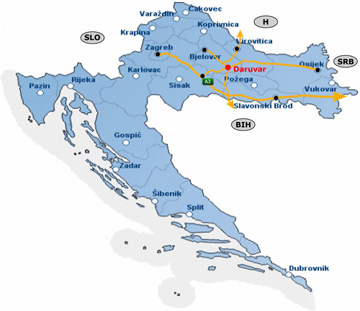
Daruvar in Hungarian means Crane town (daru=crane, var=town).
HISTORY On February 28, 1765 Maria Theresa, Queen of Habsburg dominions, granted Count Jankovich the title “de Daruvar” because of the crane in his family’s coat of arms. When Antun Jankovich built the Daruvar Castle between 1771 and 1777 the town was forever known as Daruvar (in Hungarian “Daruvar” means Crane town or Crane’s castle).
The crane’s pose on the coat of arms, turned to the right side with its leg raised, represents constant alert on the watch. Since Antun Jankovich was the founder of the town, the symbol on the town’s coat of arms is also a crane.
MOST DECORATED SMALL TOWN OF CONTINENTAL CROATIA The combination of greenery and urban architecture, cultural diversity and fertile vineyards, entices travelers to visit Daruvar.
Famous as a spa town with the tradition of health tourism for more than 2,000 years, the town boasts an enriched combination of greenery, new and historic buildings and a rich selection of touristic and recreational facilities.
WINE ROAD The Daruvar Wine Road and recreational areas which are located within the newly-opened thermal water park “Aquae Balissae” make the town an interesting place to visit for many local and foreign visitors. Two large decorated parks and the Roman forest in the town center discreetly blend with the town’s architecture, making the town one of the greenest urban areas in Croatia.
Wine festivals in August and September are spread throughout Germany’s 13 wine-producing regions. There is no better way to get to know Germany and its people than whiling away a few hours (or days) at local wine festivals. There is little doubt you will end up in discussion with the people at the next table or with the owner about the harvest or quality of the grapes, this year’s weather and local goings-on. And, before you know it, you have made some nice acquaintances, learned some German, soaked up the atmosphere and tried some wines that you might never find outside Germany.
More than 2,000 years ago, the Romans identified the mineral-rich terrain in Germany and laid the foundations of the vineyards that today cover more than 245,000 acres. Winding rivers, steep hillsides and medieval castle ruins characterize the various regions and their wine towns.
At the tip of the southern Black Forest in Germany’s southernmost wine region of Baden, Freiburg offers a taste of the academic pace of life in one of Germany’s oldest university towns. A direct high-speed rail connection from Frankfurt to Basel is available, as well as the local Black Forest Bahn, which offers views of the Black Forest hills and villages. A typical day is characterized by spending time at the open air market with all of the products from the local farmers and craftspeople, and then enjoying a glass of wine in the Weinhaus Alte Wache with a view of the marketplace activities. The Landmann Winery is particularly notable for its organic wines and the local wine festival from September 2 to September 9 is a particularly festive time. In November Freiburg hosts the Plaza Culinaria, a culinary trade fair with many local products from Freiburg’s partner cities.
Nestled between two of Germany’s most famous wine regions, where the Moselle and the Rhine come together, Koblenz stars as the host to the National Garden Show. In honor of the show, Koblenz opened a new winery at the Fortress Ehrenbreitstein, which boasts not only wines from the region, but also offers a history of the 2,000 years of wine-making in the Rhineland Pfalz. Koblenz has long been a stop for wine lovers. The well-known brand of Deinhard offers tastings of sparkling wine in the middle of the old city and the Weinbar Gerhards wine cellar and bar can be found nearby.
Deep in the Rhineland but still only a half hour from Frankfurt, Mainz is known as the Great Wine Capital, as it is the only German city belonging to this worldwide network. It’s easy to while away a few afternoon hours in Mainz’s wine market at the cathedral square. On Saturdays, local farmers bring in an endless stream of regional and seasonal foods and wines that you can try as well as buy in a friendly and relaxed atmosphere.
One particularly sweet time is August 25-28 and September 1-4, when the Mainz Wine Festival takes place. You can wend your way from stand to stand trying different wines, enjoy music and peruse the crafts for sale. Two tips: The new Hofgut Laubenheimer Hoehe winery, along with the Wine Institute created the Riesling Lounge, where rieslings from each of Germany’s 13 wine-producing regions are offered. An especially enjoyable stop is the Zum Beichtstuhl wine bar.
In the middle of Germany’s oldest wine territory, close to the steeps banks of the Moselle River and famous for its Roman gate and walls, Trier is where the Romans first planted their vines in Germany. The oldest winery is the Vereinigte Hospitien, where you can still see the wall of the original Roman storehouse. The wine producer Bischoefliche Weingueter can be found underground in the center of Trier; most tourists don’t realize as they walk through the pedestrian zone in the central city that a famous wine cellar lies beneath them. The Bar Weinsinnig is where you can get a sense of the region’s great variety, as the list of wines offered changes daily.
In the spa town of Wiesbaden, the Rheingau Wine Week in August kicks off a celebration smack in the middle of town on the Castle Square. Known for its ornate and elaborate casino, beautiful spa buildings and hotels, elegant streets and antique galleries, Wiesbaden is a prime starting point to explore the Rheingau. The State Winery of Hessen in Eberbach, a former Cistercian monastery, is one such example, and it is also worthwhile to take the tour and a tasting at Henkel, the famous producer of sparkling wine.
On the other side of Frankfurt is the baroque city of Wuerzburg in the heart of the Franconian wine region, where wine is bottled only in the famous bulbous bottles, called Bocksbeutel. The wines of Franconia are outstanding and one place to enjoy them is in Wuerzburg’s Residenz (castle). The wine cellar recently won an architectural prize for its renovation.
WINE FESTIVALS August 31 – September 9, 2011 Rheingau Wine Festival, Frankfurt More than 600 wines and sparkling wines from the Rheingau region will be tasted at 30 vintner stands. These range from the finest wines to light and zesty summer wines, with wines from alternative grape varieties being offered alongside the dominant Rheingau riesling. www.frankfurt-tourismus.de
September 1 – 5, 2011 Middle Moselle Wine Festival, Bernkastel Kues The “Middle Mosel Wine Festival” enjoys legendary fame. The fireworks, the winemakers’ procession, the artisan market and all of the happenings on the wine road and at the locales in Old Town as well as the large amusement park are the attractions featured at the Moselle region’s largest wine festival. More than 30 wine booths present famous riesling wines. www.bernkastel.de
September 2 -12, 2011 Vintners’ Festival, Bingen in Rhinehessen near Frankfurt There is something special about the wine in Bingen. Here the so-called ice wine was invented in the suburb of Dromersheim. It is no coincidence that the festival lasts 11 days, because so much time is needed to taste all the wines offered. www.bingen.de
September 24 – October 3, 2011 Red Wine Festival, Ingelheim, close to Mainz and Frankfurt There is virtually no other wine festival in the Rhine Hessen region which takes place in such an attractive setting, surrounded by vineyards, as the Ingelheim Red Wine Festival. Every year on the last weekend in September this popular wine festival is opened with the ceremonial crowning of the Red Wine Queen. www.ingelheim.de
Germans love to party: more than 1,250 wine festivals are held throughout the country every year.
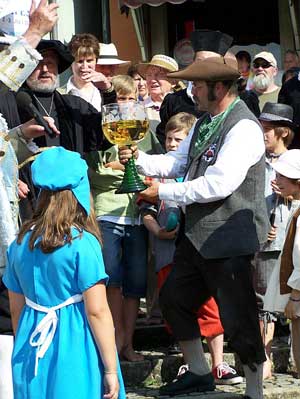
Sharing a huge glass of wine at a festival in the Franconia region of Germany.
By Sharon Hudgins Photos by the author
Germans love to party, especially when food and drink are involved. And public partying is a tradition in Germany, from Munich’s annual Oktoberfest beer bash to more than 1,250 wine festivals held throughout the country every year.
The eighth largest wine-producing country in the world, Germany is known for its excellent white wines and an increasing number of fine reds, too. Wines from Germany’s 13 designated wine regions each have their own character, depending on the kind of grapes they’re made from, the climate and terrain where the grapes are grown, and the skill of the winemakers themselves. Even wines from a small microclimate within one of the specified wine regions will differ from wines made on the other side of the hill or a kilometer down the road. Connoisseurs can distinguish not only among wines from the Ahr, Rheingau, Franconia, Pfalz and Baden regions, but can also taste the difference between wines from one vineyard and another.
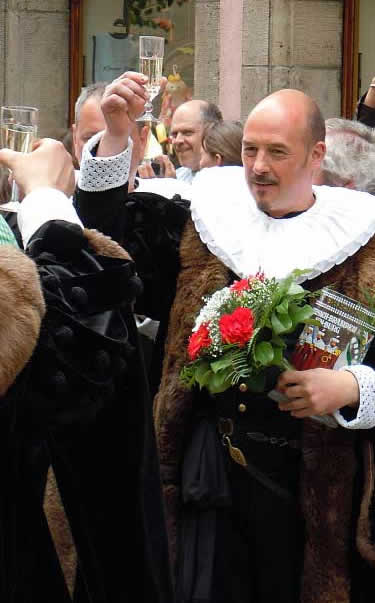
Raising a toast at at the Meistertrunk (Master Draught) festival in Rothenburg ob der Tauber
Although Germany exports wines to other countries, much of its production is consumed in Germany itself, usually not far from where the wine was made. A fun way to sample these local wines is to attend one of the many wine festivals held annually in each region. Most occur between March and the end of harvest, in late October. Some are quiet little fests in small villages, held on only one day. Others are boisterous celebrations lasting for a weekend or a week or even longer, attracting people from all over the country. Some of these festivals are combined with other events, like open-air markets, outdoor concerts, art exhibits and craft fairs, food festivals and fireworks displays. Whatever the venue, a German wine festival is a good place to taste the local wines, eat regional specialties, meet friendly Germans and have a rousing good time.
Drawing Sturm (fermenting grape juice on its way to becoming wine) at a wine festival
From mid-March until mid-November, more than 200 festivals are scheduled along the Deutsche Weinstrasse, the German Wine Route that extends for 50 miles through Germany’s Pfalz region between the foothills of the forested Haardt Mountains and the flat Rhine River plain. The giant of all wine festivals is held in this region: the nearly-600-year-old Bad Dürckheimer Wurstmarkt (Sausage Market), the Pfalz’s equivalent of Munich’s beery Oktoberfest. Despite its meaty name, the Wurstmarkt claims to be the largest wine festival in the world, offering more than 150 local wines and attracting half a million visitors to Bad Dürckheim every year. During nine days in mid-September, they down more than 400,000 liters of the local brew!
Get away from the crush of Bad Dürckheim’s crowds at the many smaller, more intimate wine festivals along the German Wine Route, usually held for one to three days over a single weekend. The best time to go is in the early autumn, during the grape harvest season. Local vintners open their cellars to the public and their courtyards to customers who sit on benches at long tables, eating regional specialties and sipping wines in the shade of a grape arbor. This is a great way to meet Germans and enjoy the regional wines in a quiet, relaxed atmosphere.
Wiesbaden is known as “The Gateway to the Rheingau,” the romantic vineyard region on the north side of the Rhine River, home to some of Germany’s most famous wineries, including those around the villages of Rüdesheim, Eltville and Assmannshausen. During August, you can sample excellent Rhine wines from the local vintners at more than 120 booths set up in the Wiesbaden city center for the annual 10-day Rheingau Wine Festival.
Wineries like this one on the German Wine Route in the Pfalz open their cellars to the public during local wine festivals.
In late August and early September, you can also indulge at the 10-day Rheingau Wine Festival in nearby Frankfurt, tasting more than 600 wines from the Rheingau region at 30 vintners’ stands set up in the “Fressgass” food street along Bockenheimer Strasse and the Opernplatz, and in the nearby shopping district along the Goethestrasse. Food stalls operated by local businesses provide the sustenance you’ll need to keep from getting totally tipsy on all that good Rhine wine.
Farther north along the Rhine, the Mittelrhein (Middle Rhine) region is also the site of several wine festivals in the picturesque villages that line the river valley, a UNESCO World Heritage Site that includes the city of Koblenz. Among other wine festivals in this region, the Middle Rhine celebrates “Golden Wine Autumn” on two Saturdays in October, with wine tastings, live music, dancing and spectacular fireworks displays. The best way to enjoy this special festival is to book a day-long cruise on a river boat that includes stops at the festival towns along the Rhine and concludes with fireworks that night.
Zwiebelkuchen (onion tart) is the traditional accompaniment to Federweisse (fermenting grape juice on its way to becoming wine) in the autumn.
Another popular region for wine festivals is along the Mosel River, where dozens of local celebrations are held from April to October. The largest and best known is the Wine Festival of the Middle Mosel in Bernkastel-Kues in early September, which includes fireworks at the Landshut Castle, crowning of the Middle Mosel Wine Queen, wine tastings at 30 booths and a colorful parade of vintners through the narrow streets of this beautiful half-timbered town. Another good option is to visit the Mosel for a week or so during harvest time, from August through October, when you can watch the grapes being picked and experience the smaller, more intimate wine festivals in the little villages lining the river between Koblenz and Trier.
There’s a long tradition of wine festivals in the Baden wine region, in southwestern Germany, which produces some of Germany’s finest wines. Baden is well known for its excellent cuisine, too, which attracts gourmets from all over Europe. Among the many wine festivals in this region, one is held in July in the pretty city of Freiburg, where you can taste wines from 40 Baden vintners.
One of the largest wine festivals in Germany is the Stuttgarter Weindorf (Stuttgart Wine Village), held in early September in the heart of the city, the capital of Baden-Württemberg, where 120 vendors sell 250 kinds of Württemberg wines, as well as classic regional Schwabian foods. Stuttgart claims this festival attracts more than a million visitors annually, which would make it even larger than the Bad Durckheimer Wurstmarkt.
And finally, the Franconia wine region, along the Main River, hosts a number of wine festivals, too, featuring Franconia’s excellent wines in their characteristic green Bocksbeutel bottles. Small festivals in the villages of the Main River valley, such as Sommerhausen and neighboring Winterhausen, are especially fun to attend, for their fine wines and local character.
Würzburg, the regional capital of Lower Franconia, is the site of the Würzburger Weindorf (Würzburg Wine Festival), where you can sample more than 100 kinds of Franconian wines at the booths and stands set up in the city center in late May and early June. Würzburgers like to party. In late August Würzburg hosts an 11-day Weinparade am Marktplatz (Wine Festival on the Market Square), offering a chance to taste more than 100 different wines from Würzburg’s local wineries, along with plenty of regional food specialties.
At many of the autumn wine festivals in Germany, the traditional food and drink are Zwiebelkuchen (onion tart) and Federweisser (one of the many German names for “new wine”), which is fermenting grape juice that’s still on its way to becoming real wine. Don’t be fooled by the pleasantly sweet taste of this bubbly, cloudy brew—usually served in .25-liter glasses—which you’ll want to quaff like thirst-quenching fruit juice. Be forewarned: Federweisser does contain alcohol, more or less depending on how long the fermentation has been going on, and it can easily seduce you into drinking so much that when you stand up you’ll wish you’d been more prudent.
For information about a variety of German wine festivals see:
Weinfeste in Deutschland: website links, in German, to hundreds of wine festivals, with a paragraph describing each, the dates of the current year’s festivals, and a link to more information from each region’s or festival’s website.