Photos Courtesy Austrian Tourist Office and Tourism Salzburg
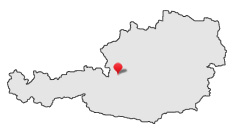
High above Salzach Valley near Salzburg and built with an unyielding stone facade, the 900-year-old Hohenwerfen Fortress has undergone centuries of development to become one of the oldest and best-preserved castles in Europe.
Tour the interior of this historic structure, visit the impressive falconry displays at Austria’s first Falconry Museum or enjoy concerts, theater performances and heritage evenings throughout the year.
Hohenwerfen Fortress
Isolated high above the Salzachtal Valley near Salzburg, Hohenwerfen fortress has a history of protecting archbishops and archdukes from enemies, as well as keeping prisoners locked up behind the impenetrable castle’s walls. These days, the stronghold’s doors are wide open to visitors to explore the history of this “Castle of Adventure.”
GREETINGS FROM THE MIDDLE AGES A guided tour takes you through the venerable fortress’ chapel, kitchens, battlements and bell tower. Check out weapons from throughout the ages on display in the armory and arsenal, and inspect the residential rooms of former castle governors.
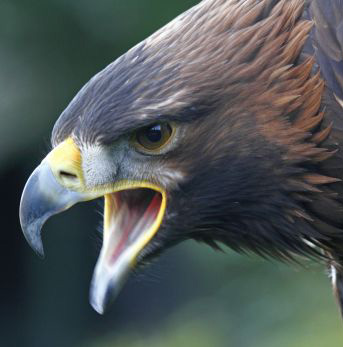
THE HIGH ART OF FALCONRY Every year, a wide variety of special events including concerts, theater performances, and folk heritage evenings take place at Hohenwerfen. Many consider the highlight of this lineup to be the daily demonstrations of falconry put on by the Provincial Falconer. To learn more about the history and skill of falconry, visit Austria’s first falconry museum along the Bird-of-Prey Path.
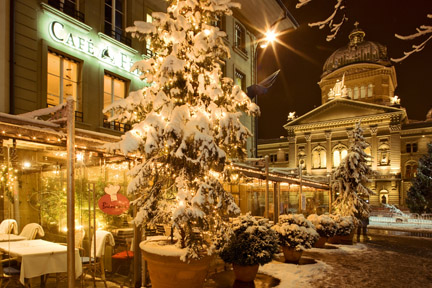
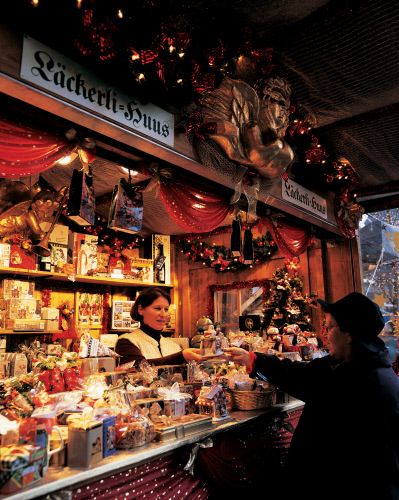
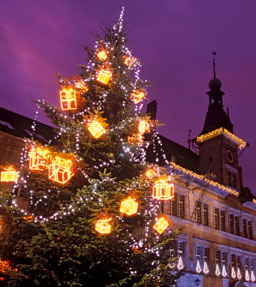
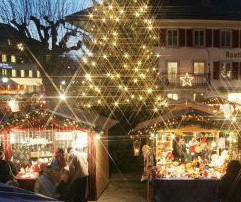
Christmas is around the corner. In Switzerland, Christmas markets and events are as much a part of the holiday tradition as chocolates, cookie baking and family gatherings. Here is a sampling of festivities that vary in scope from the month-long markets in St. Gallen to weekend events in villages like Bad Ragaz, yet all share the basics: Christmas ornaments, gifts, local specialties, plenty of traditional Swiss atmosphere and snow.
Handmade products of Switzerland and local treats bring visitors from around the globe.Swiss Christmas Markets combine holiday festivities and historic locations.Switzerland sparkles at Christmas.
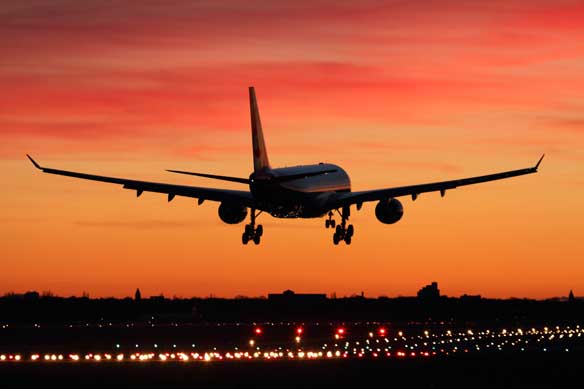
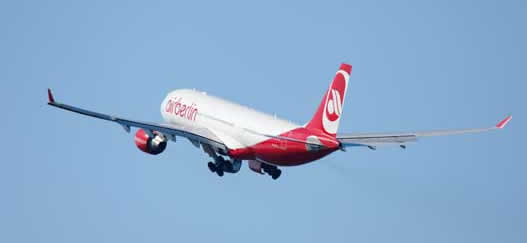
Since 2013 when Air Berlin began flying from Chicago to Berlin, I’ve wanted to see what the service was like, because in Chicago at least, Air Berlin is a new airline. Those traveling to Germany from Chicago have a choice of several good airlines to choose from.
My flight from Chicago started with spending some time in the American Airlines lounge at O’Hare International Airport, admission to which is offered to Air Berlin business class passengers because the two airlines have a code share/partnership agreement.
Needless to say if you’ve flown in first or business class before, spending time before the flight in the lounge is a whole lot better than sitting in the noisy gate area. Plus, you have the convenience of close washrooms, complimentary coffee, snacks and soft drinks, a bar, and magazines and newspapers to read.
SERVICE BEGINS ASAP Once on board, Air Berlin’s service begins immediately after you find your seat in Business Class (Air Berlin calls their first class section Business Class).
To begin my journey, I was offered a glass of champagne and a small dish of mixed nuts, and spent the time before take-off learning how my seat operated. I could leave it in the upright position, place it in a “relaxed” position or bring it all the way down for a completely flat bed if I wanted. I just had to make sure my legs were then propped up above the chair/bed as it automatically moved to a flat position.
A small folding table was positioned in front of me to the right for meals, and I received large headphones to plug in for television and music listening, a black bag filled with earplugs, moisturizer, toothpaste and toothbrush, eye covers, slippers, and a pair of knit socks.
I later noticed that the economy passengers had found their seats in the rear of the plane, but the usual commotion of this completely passed me by, as only 20 Business Class seats were available, and the 18 passengers in this section on this trip were very quiet. The pilot announced it would be a smooth flight as large, comfy blankets were passed out if needed by the flight attendant, as were magazines (in both English and German), and we were on our way.
I was gratified that the three attendants in my section were very attentive in the beginning, because riding in a business class section can prompt questions if you’re not used to the gadgetry and the luxurious routine. Later, they understood how much attention I needed/wanted, and were helpful to not disturb me when I was reading, intent on watching a movie, or sleeping. They must teach this style of service in flight attendant school.
LIGHTS ARE DIMMED FOR SLEEPING When dinner time came, I had to do a bit of studying, as there was a broad selection of appetizers, hot dishes, desserts, a cold meal available and snacks, as well as beverages. A printed menu with all the choices was given to me upon boarding.
I chose fresh seasonal salad with Italian dressing, and Rillette of Shrimp with Mango and Chili. For the main menu, I had the grilled chicken breast in a Tuscan tomato sauce and roasted vegetables and potatoes. Dessert? I chose the blueberry tart with vanilla sauce (this was very tasty).
The wine selection consisted of three whites and four reds, champagne, a long list of spirits, beer, soft drinks and hot beverages. I chose the white wine from Italy, 2012 Anselmi Canole Veneta Bianco, made from Garganega grapes.
For about four to five hours of the 7-hour flight the overhead lights were dimmed in the Business Class section so passengers could sleep, but a flight attendant was always “on duty” if needed.
After a restful sleep (I can never sleep on planes, but I actually did on this flight), I could smell coffee brewing, and along with several cups of that and orange juice, enjoyed a breakfast of fruit yogurt, fresh fruit plate, a croissant, butter, cream cheese and jam.
The selection of in-flight entertainment was enough to keep me from sleeping, had I not wanted to. There were numerous movies—first-run plus classic ones—plus a music channel, news, a channel on Air Berlin information, and games such as solitaire, sudoku, backgammon, brain teasers for kids, and others.
SMOOTH FLIGHT How about the flight itself? It was a very smooth flight, we arrived at the gate on time, and the experience was refreshing.
The airline recently refurbished its Business Class section on its long haul fleet and they now feature FullFlat seats with a massage function, USB port, personal entertainment system featuring a 15-inch monitor and gourmet culinary selections. And as a member of Oneworld, Air Berlin passengers can accrue and redeem miles on any Oneworld partner airline in addition to Air Berlin.
Air Berlin flies to three continents. The Air Berlin mileage award program is called topbonus. Air Berlin flies direct to Germany (Dusseldorf and Berlin) from Chicago, Los Angeles, New York, Fort Myers and Miami.
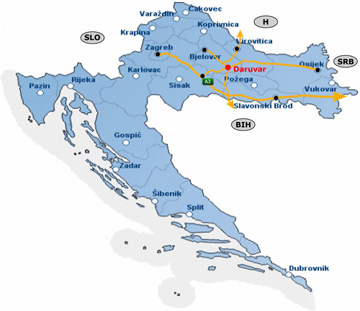
Daruvar in Hungarian means Crane town (daru=crane, var=town).
HISTORY On February 28, 1765 Maria Theresa, Queen of Habsburg dominions, granted Count Jankovich the title “de Daruvar” because of the crane in his family’s coat of arms. When Antun Jankovich built the Daruvar Castle between 1771 and 1777 the town was forever known as Daruvar (in Hungarian “Daruvar” means Crane town or Crane’s castle).
The crane’s pose on the coat of arms, turned to the right side with its leg raised, represents constant alert on the watch. Since Antun Jankovich was the founder of the town, the symbol on the town’s coat of arms is also a crane.
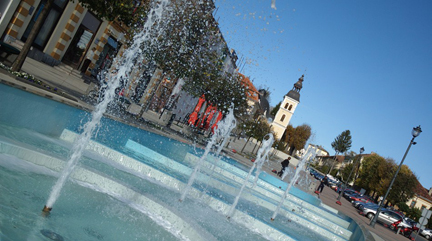
MOST DECORATED SMALL TOWN OF CONTINENTAL CROATIA The combination of greenery and urban architecture, cultural diversity and fertile vineyards, entices travelers to visit Daruvar.
Famous as a spa town with the tradition of health tourism for more than 2,000 years, the town boasts an enriched combination of greenery, new and historic buildings and a rich selection of touristic and recreational facilities.
WINE ROAD The Daruvar Wine Road and recreational areas which are located within the newly-opened thermal water park “Aquae Balissae” make the town an interesting place to visit for many local and foreign visitors. Two large decorated parks and the Roman forest in the town center discreetly blend with the town’s architecture, making the town one of the greenest urban areas in Croatia.
By Danielle Pruger Photos courtesy of Castilla-León Regional Tourist Board
Castile-Léon Spain is highlighted in red.
Castile-Léon, an interior region of Spain, is known for its castles (Castile means “land of castles” in Spanish) and provides a look at ancient and medieval forms of architecture. Throughout the Middle Ages, Castile-Léon served as a frontier between Christians and Muslims from the 9th century to the 11th century, which created the initial motivation for building fortresses and castles. Later, the struggle between the various noble families and the royal family from the 12th century to the 15th century made it necessary to build new fortifications. The following six castles, open to the public, can be found in Castile-Léon.
AMPUDIA CASTLE The municipality of Ampudia is home to a 15th century castle which stands in the center of the village. This castle is well preserved and has been restored. Its sturdy enclosure is protected by four towers, and it has all of the traditional elements of medieval castles: battlements, ramparts, barbicans and a moat. Although it is privately owned, it is open to visitors, and its interior is home to a museum of art and antiquity.
PEÑAFIEL CASTLE The medieval castle in Peñafiel was built in the 11th century and stands on a rocky spur. The castle was rebuilt around the 14th and 15th centuries and has a peculiar shape because the outline of the walled enclosure conforms to the elongated silhouette of the ridge. This unusual shape has made it one of Spain’s most famous images; from a distance the castle resembles a boat run aground in the midst of a sea of pastures and wheat fields. This castle is also home to the Provincial Wine Museum.
ALCÁZAR FORTRESS The city of Segovia contains the Alcázar fortress, another one of Spain’s most emblematic images. This imposing Gothic building was built between the 14th and 15th centuries and was later transformed by Philip II in the 16th century into the Herrerrian style seen today. It was the residence of the Castilian and Spanish monarchs for two centuries; its location is on a gorge above the Eresma and Clamores rivers. The location, along with the appearance of the castle, is similar to the castles in fairytales, which evoke the images of princesses, knights, witches and dragons.
COCA CASTLE The Coca Castle, located in the municipality of Coca, is completely different from other castles; it was built in the Mudejar style of the 15th century using typical red brick. It has three walled enclosures, a moat with a drawbridge, a bailey (courtyard) and a splendid keep. The village of Coca is the descendant of the Celtic-Iberian city of Cauca, which was conquered by the Romans in 151 B.C.
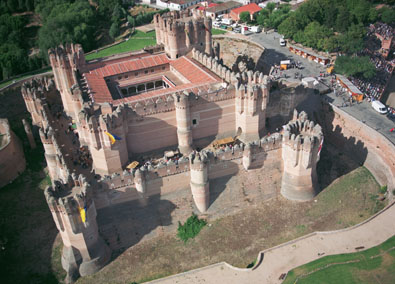
LA MOTA CASTLE La Mota Castle, also designed in the Mudejar style, is located in the town of Medina del Campo. It was built in the 15th century using concrete and red brick and has four enclosures protected by enormous walls, as well as a monumental keep. It was in the 15th century that Medina del Campo reached its maximum splendor: its fairs were the most important in all of Europe, and it is where bills, instead of coins, were first used as currency. This is also the place where Queen Isabella I of Castile, known as Isabella “la Católica,” died.
Zamora Castle
ZAMORA CASTLE The city of Zamora, located beside the Duero River, has a medieval castle that was built in the 12th century. This castle was restored in 2009, and the castle is surrounded by three walled enclosures dating from the same period, which encircle the historic center of town.








 European Traveler