200 Years of German Beer Gardens

Munich, Germany

Photos courtesy Munich Tourist Office

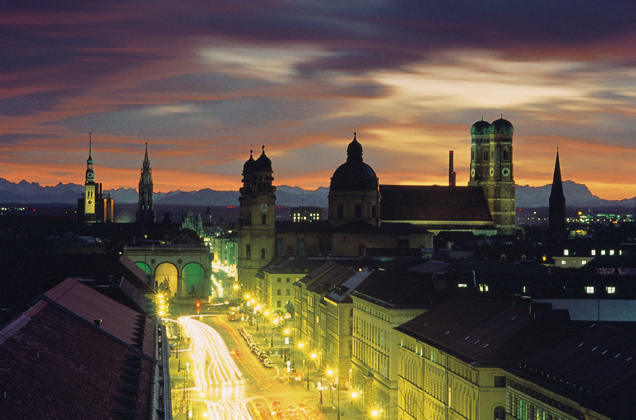
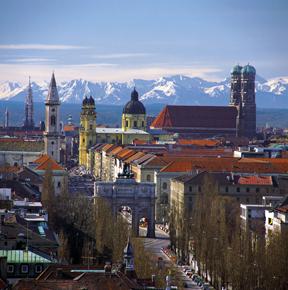
In 2012, Munich and Upper Bavaria are celebrating an old Bavarian tradition. The 200th anniversary of the edict which permitted beer brewers to sell retail quantities of their own beer in their beer cellars from June until September and to serve beer and bread to their guests will be celebrated this year. The city and the breweries of Munich will offer numerous events in local beer gardens.

MUNICH – THE WORLD CITY OF BEER
Big city, high-tech atmosphere mixed with rural charm, art treasures and traditional customs create a very special “Munich mix” which has helped the capital of Bavaria to achieve world renown. But what adds the final touch to the city’s popularity is the drink associated with Munich throughout the world: beer.

BEER GARDEN ETIQUETTE
Bavarian beer gardens fulfill an important social function, as they have always been considered to be a popular meeting point for a wide spectrum of the populace. Visitors should not hesitate to take a seat and start up a conversation with their neighbors at the table. Munich’s beer gardens and the beer gardens in Upper Bavaria are the epitome of Bavarian Gemütlichkeit – the uniquely Bavarian atmosphere of good living, warmth and comfort. And it’s been that way for 200 years.

BRING YOUR OWN FOOD
Bring your own food! A special element of visiting a traditional beer garden in Munich is the fact that guests can bring their own food with them. A perfect Brotzeit, as a beer garden picnic is known, might contain the following: Obazda (a delicious and very Bavarian soft cheese dip), Emmental cheese, radishes, freshly-baked pretzels, butter and salt and pepper. A table cloth is also important (preferably a cotton red and white check), as are wooden boards to eat from, a sharp knife, cutlery and napkins.

But those who come unprepared don’t have to miss out on a Bavarian Brotzeit. Most beer gardens offer a range of typical treats, such as Wurstsalat (finely sliced sausage, dressed with vinaigrette and onions), Leberkäse (Bavarian meat loaf) or Steckerlfisch (barbecued whole fish, normally mackerel).

In a Bavarian beer garden, self-service is the rule, unless it is clear that tables have been readied for service. Typical beer garden drinks, such as beer or Radler (a mix of beer and lemonade or lemon soda), are generally only served in one liter steins. Alcohol-free drinks, such as Spezi (a mixture of cola and orange soda) or Apfelschorle (a mixture of apple juice and mineral water), are normally served in half-liters.

The most important rule when toasting with others at your table is to do it as often as possible, so creating a sense of community and giving you the chance to make contact with your new friends. But don’t forget to look your drinking partners in the eye as you touch steins.
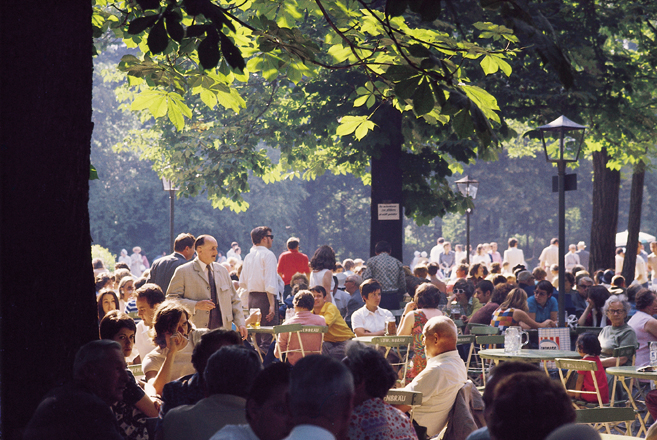
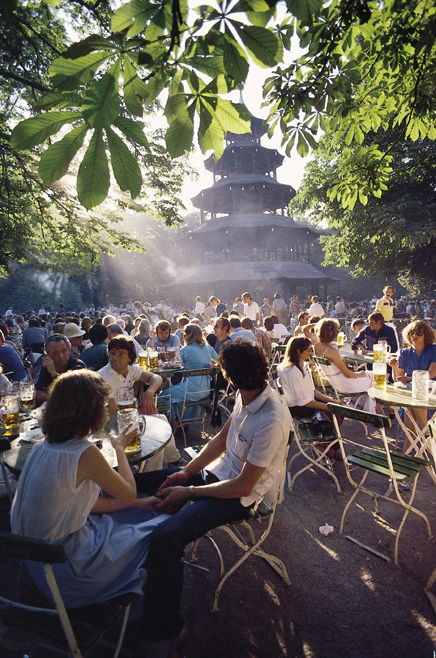
The reason horse chestnut trees can be found in every “real” Bavarian beer garden is a matter of history. According to a decree from the 16th century, brewing beer was banned in the summer months, due to the increased danger of fire. Therefore, beer that was brewed in spring for summer was made with a higher alcohol content to help preserve it. In order to keep the beer cool, beer cellars were constructed close to the breweries, but because Munich has a high groundwater level, deep cellars were out of the question, meaning that those that could be built had to be protected from the sun. And that is why trees which provide a lot of shade, such as horse chestnut trees, were planted above them.

BIER UND OKTOBERFEST MUSEUM, BEER TOURS & MORE
Munich is the capital of beer – with six breweries, the Hofbräuhaus and the Oktoberfest. Interested in the story of beer? How German beer effected the monasteries and the purity law? Why is the quality of Munich’s beer so unique? Did you know that Oktoberfest was established as the national festival for the wedding of King Ludwig I with Princess Therese of Saxe-Hildburghausen? Visit the Bier und Oktoberfest Museum for the answer to these questions and a lot more.

For more info, go to www.muenchen.de

Swabia’s Very Own Theme Park

Set deep in the countryside, surrounded by forests and vineyards, Tripsdrill opened in 1929—Germany’s first theme park.

About an hour’s drive southeast of Heidelberg, the park revels in nostalgia, reflecting the Swabian region’s tradition and history. Tripsdrill is set on 190 acres, with 100 one-of-a-kind attractions, including the 100-foot-high “Mammoth” wooden roller coaster. Activities include water sports for the whole family, action rides for thrill seekers and interactive play for children.

In 2012, the Village Street will be enlarged. The new timbered house is typical of Southwest Germany, and its three floors will be devoted to a variety of games for older and also younger children. The year 2012 also marks the 60th birthday of the federal state of Southwest Germany (Baden-Württemberg), and Tripsdrill is joining in the fun with a series of special events to celebrate all aspects of Swabian culture.

The neighboring Wildparadies Tripsdrill (wildlife park) is devoted to wild animals native to Europe. Celebrating its 40th birthday in 2012 with plenty of wildlife action and excursions, this park also has a new feature: overnight stays. Visitors can stay in a shepherds’ wagon or a comfortable treehouse deep in the forest.

For more info, go to www.tripsdrill.de/en

Le Meridien Parkhotel

Prime location in the center of Frankfurt’s bustling downtown

By Don Heimburger
Photos by the author

This German 297-room hotel is more than 100 years old, having been built in 1905 as a palace with 77 rooms and suites, designed in the Art Nouveau style.

There are also 220 guest rooms in the newer wing which are highlighted by clean lines and modern design. At night, the hotel’s welcoming exterior sign, in lights and in a script style of writing, gives the hotel’s entrance a unique flair.

Located within easy walking distance of the main Frankfurt train station, the hotel is convenient for leisure as well as business travelers, as the main Frankfurt Trade Fair Center is only five minutes away. The museum district is also close by.

NEAR IDYLLIC PARK AREA
The hotel is located on the quiet and idyllic Wiesenhuttenplatz, and in the summer months you can sit underneath the towering chestnut trees in the beer garden La Jardin and sip your favorite beverage.

Concierge

Marble lobby floors, dark wood paneling accents and plenty of room to maneuver luggage give the hotel’s entrance floor a graciousness and style. A cozy bar, the Morocco-style Casablanca with high-backed leather chairs, at one end of the lobby, beckons thirsty guests to come in for some relaxation. The sign over the bar’s door from the lobby side is a light-projected image. Just down the street is a lively bar/restaurant area should you want to mingle with the street crowd. The reception desk or concierge can direct you.

The Casablanca

As at many of the other hotels in the vicinity, there is a choice of room types, with varying degrees of comfort, space and amenities. There are 25 Classic rooms located in the historical palace portion of the hotel, with high ceilings and real Italian marble in the bathrooms. The average room size here is about 130 square feet.

Superior rooms, and there are 177 of them, are in the modern business wing of the hotel and offer 270 square feet of space. Modern in design, the rooms feature a television with a LCD and plasma screens (and a handy mirror on the other side of the screen), a safe and a complimentary bottle of mineral water.

Room1

Executive rooms— with about 322 square feet of space—are in the historical palace portion of the building and provide decor in the Art Nouveau style but with modern amenities. The Deluxe rooms, with 355 square feet of space, offer more room for a comfortable stay. There are also Junior Suites, with about 485 square feet of space— available with separate living and sleeping areas. These are in the Art Nouveau style, and offer classical elegance with very high ceilings, inviting color tones and bathrooms featuring Italian marble. The hotel also says you receive the “VIP” treatment when you book a room of this category.

Room2

INVITING BREAKFAST
Buffet-style breakfasts consist of smoked salmon, cold cuts and cheese, eggs to order, soft boiled eggs, dried cereals, yogurt, juices and coffee, fresh cut fruits, apples, oranges, bananas, jams and jellies, a variety of breads and pastries, plus more.

Le Parc

The spacious, modern Restaurant La Parc off the lobby, with Sven Frambach as chef, offers a mix of both traditional classics and newer dishes. Using fresh ingredients, seasonal accents and Frambach’s expertise, each dish is “a little piece of art.” The menu is a la carte, with monthly specials, and culinary events are planned throughout the year. As an example, pumpkin was recently featured through the first week of November, then goose was the specialty of the house.

Restaurant

The restaurant is open between 6:30 a.m. and 11 p.m. There is also a business lunch buffet that alternates specialties from time to time. Every Friday starting at 6:30 p.m. there’s a special Laurent’s dinner buffet, inspired by French cuisine and accompanied by piano music. The price also includes a glass of Laurent-Perrier champagne, a carafe of the red or white house wine and mineral water.

The White Stone Lounge wellness center in the hotel offers saunas, herbal steam rooms, massages, cosmetic treatments, manicures and pedicures and exotic applications such as lotus petal facials and body peelings. A gym is also open daily between 5 a.m. and midnight.

Having come to the hotel from the main train station, and it was raining heavily, I was glad to see the Le Meridien such a short walk from the station. The reception clerk offered a friendly greeting, and quickly I was off to my room.

Convenient location, personable employees and some historic atmosphere make for a good mix at the Le Meridien.

For more information, go to www.lemeridienparkhotelfrankfurt.com or www.lemeridien.com.

German Traditions Spring Up at Easter

Fountain decorated for Easter

Photos courtesy German National Tourist Board

Easter celebrations are among the oldest, most traditional and unique celebrations in Germany. A myriad of differing regional traditions, Easter markets and special celebrations start weeks before the four-day Easter weekend from April 5 to April 9. Many of the American Easter traditions, including egg decorating, Easter trees, Easter egg games and, of course, the chocolate Easter bunny, were brought to America by German immigrants.

In preparation for Easter, towns decorate their fountains and trees with eggs and wind crepe paper around the branches. On the Easter Eve, bonfires are lit celebrating the new and getting rid of the old. Easter markets throughout the country exhibit Easter eggs and spring-themed local arts and crafts in surroundings from historic cities and castles to landscape parks. The markets last either a few weeks or a weekend and are a favorite leisure time activity for locals and tourists alike.

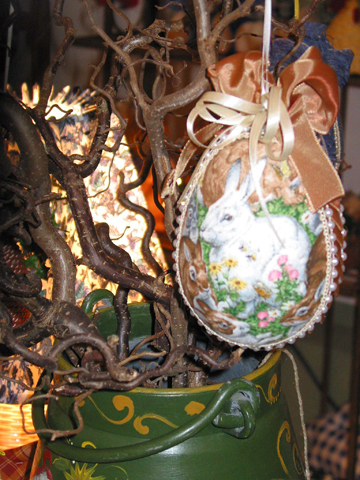
Easter decorations

EASTER MARKETS
Being one of the oldest Easter markets in Germany, the Haeferles Market in Nuremberg in Franconia is the first major event of the spring season. With over 80 stalls in the middle of the historic city center, this market offers everything around the Easter holidays, from hand-painted eggs to wooden decorations (March 23 – April 9). Further to the north in the charming town of medieval Wolfenbuettel, about two hours from Frankfurt, the Easter market takes place in a royal surrounding. In the courtyard of the 18th century residence castle of the Guelphs in the city center, over 60 artists and craftsman from the region display their works on the weekend before Easter (March 31 – April 1). Then, on Easter Saturday a huge rabbit emerges from an enormous nest and distributes candy to the children.

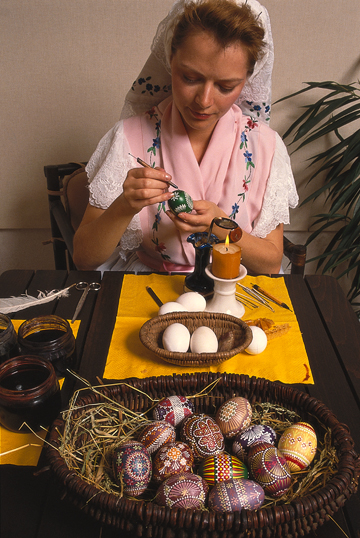
Lady in Sorbian costume handcrafts traditional Easter egg painting using wax-resist techniques.

EASTER DUCK RACE
The festivities are closely followed by a duck race where the ducks are thrown into the river and race to the other side. One of the largest Easter Egg Fairs in Germany takes place in the beautiful landscape park Luisenpark in Mannheim from March 31 to April 4. The International Easter Egg Market at Mannheim’s Baumhainhalle hosts over 40 artists from Germany, Russia, France, Switzerland and Hungary.

St. Wendel fountain decorated for Easter

KREUZTRITT WALK PARADE
A very special Easter culture exists in eastern Germany near the border with Poland. The Sorbs, a Slavic minority that has lived for generations in this area called Lusatia, celebrate Easter with a parade called the “Kreuztritt” (Cross Walk) on Easter Sunday. The men of the village dressed in traditional costumes of black jackets and top hats, ride horses in a circle from town to town announcing the resurrection of Christ. The Sorbs also are masters in the art of Easter egg painting. Sorbian artists from all over the region exhibit their skills during the Lenten season. The Egg Rolling and colorful Easter Market on Easter Sunday are wonderful highlights during the Easter weekend, April 7 and 8.

For more info, go to www.germany.travel

International High-Speed TGV Train Now Ready to Roll

New High-Speed Line makes Direct Train Travel between France, Germany and Switzerland faster and easier

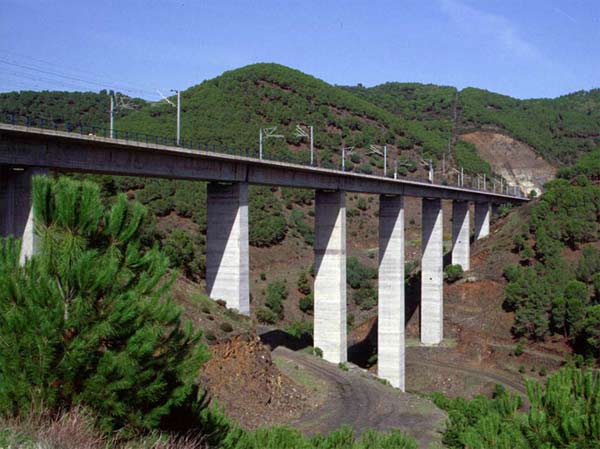
A total of 160 bridges and 12 viaducts have been built on the 264 miles of new track to be used by high-speed TGV trains which can travel at speeds up to 201 miles an hour.

For the first time, direct service is being offered within France on routes including Paris to Besancon, Belfort and Mulhouse.

TGV is French for Train à Grande Vitesse which means “high-speed train.”

International high-speed TGV trains offer direct service between France, Switzerland and Germany on routes such as Paris/Lausanne, Paris/Bern, Paris/Zurich and Frankfurt/Marseille. Tickets for TGV trains, including this newest section of high-speed line, are available through RailEurope.com.

Avignon TGV station

“This newest section of high-speed line will make a big difference to the way travelers can travel within France and also between France, Germany and Switzerland in 2012,” said company President and CEO Frederic Langlois. “The Rhine-Rhone high-speed line will offer faster travel times, more frequent and direct trains, and the speed, ease and convenience of connecting between these countries makes for a better travel experience.”

This new high-speed line runs east-west, reducing travel times from the northeastern city of Strasbourg to Lyon to just 3 hours and 40 minutes. The number of trains on this route will also increase to six roundtrips per day.

Another line will run north-south from France into Germany allowing travelers from Marseille or Avignon in the south of France to go directly to Frankfurt without changing trains. It is estimated that 11 million riders will utilize the new Rhine-Rhone line.

For more info, go to RailEurope.com
Photos courtesy of Net Resources International