Humble Onion Stars at Weimar Onion Market

A colorful autumn fair; a local market since 1653

Photos courtesy of German National Tourist Office

The humble onion is the star of the show at the Onion Market held in Weimar, Germany every October. These are no ordinary onions lumped together in crates or sacks; these are onions arranged together in the traditional way and decorated with dried flowers of yellow, white or lilac. They come in all sizes, too—from tiny ones to whopping big ones.

MARKET FOR BEASTS AND ONIONS
The market was first recorded in 1653 as a “market for beasts and onions” on what is today the Frauenplan, at a time when Weimar barely had a population of 5,000. There are many instances of the links between the German writer Goethe and the Market; he is said to have secured onion hearts to his desk, to have decorated his house with them, and to have praised the role of the onion in promoting good health.

In the 19th century, the market moved to today’s Schillerstrasse and developed into the major onion purchasing center for the whole of central Germany. Dealers came mainly from Heldrungen, 29 miles away, and that is still the case today.

In 1861 the market was extended to three days. In 1872 the city of Weimar passed an Onion Market Ordinance. Onions are offered as well as celery, radishes, garlic, leeks and marjoram, as well as other types of spices and vegetables. During the 20th century, world wars and inflation led to the decline of the market, and it was reduced to one day due to the limited produce available and high prices. It was not until the 1950s that the market began to pick up again, and by 1971 a record was set when 200,000 visitors attended.

ONION GARLAND
The sale of the famous market souvenir, the onion garland, has grown to 70,000 pieces, and onions and other vegetables, fruits, spices and handicrafts began to make their mark. In 1990 the Onion Market again became a three-day event. The market has also grown in size in the interim and now occupies the whole of the historic inner city. The number of visitors is now 350,000 annually.

For more info, contact the German National Tourist Office.
Starbucks Serves Swiss Rails

Photos Courtesy Swiss Travel Systems

The Swiss Federal Railways (SBB) and Starbucks have collaborated on a pilot project to launch the first ever Starbucks store on wheels.

SBB and Starbucks will open traveling Starbucks stores on two intercity (IC) 2000 bi-level trains between St. Gallen and Geneva, Switzerland; the project converts the current onboard restaurants into mini Starbucks stores small enough to fit inside double-decker trains.

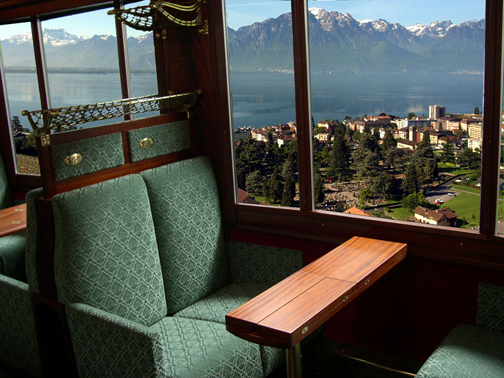
Travelers can buy and sip their favorite beverages onboard and having the comfort of a familiar drink, while reading a favorite book, or gazing out the window at the Swiss scenery are sure to enhance travels even more. With this project, SBB plans to target young guests and business travelers looking for a quick afternoon pick-me-up.

SBB’s subsidiary, Elvetino, remains in charge of onboard restaurant operations. Elvetino operates 90 railway dining cars, 198 minibars and is in charge of onboard restaurant services of SBB trains throughout Switzerland, Germany, France and Italy.

Switzerland and Starbucks have a long history together: Starbucks opened the first store in continental Europe in Switzerland more than 10 years ago, and the coffee machines used by Starbucks were developed exclusively for Starbucks by Thermoplan, a manufacturing company located in Central Switzerland.

With the new Starbuck’s on-board train service, passengers will be able to stay alert to the inspiring Swiss landscape outside the window.

Compiled by Brittany Petrillo

For more info, go to: www.sbb.ch/en, or www.myswitzerland.com

Take a Ride on the Cheese Train

Photos courtesy Lake Geneva Office of Tourism, Switzerland

The GoldenPass Cheese Train in Switzerland will take you from Montreux to Château-d’Oex every Friday, Saturday and Sunday at 10:30 a.m. through April 27, where you can discover the specialities of the Pays-d’Enhaut region.

CHEESEMAKING DEMONSTRATION

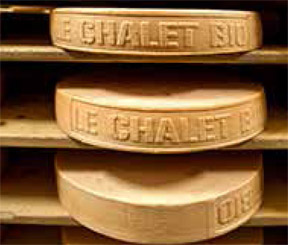
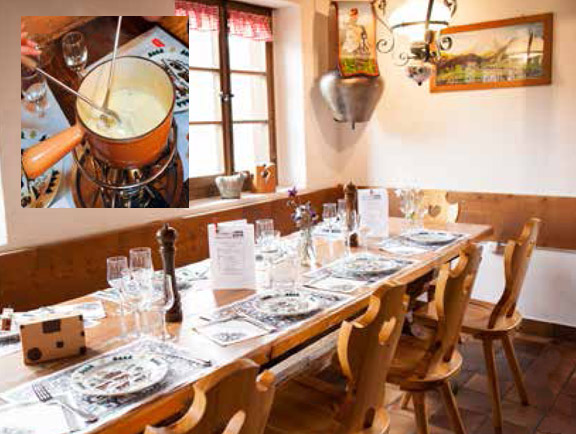
Le Chalet is a typical mountain chalet, serving fondue and dessert.

MUSÉE DU VIEUX PAYS-D’ENHAUT (SILHOUETTE MUSUEM)
This museum of folk art was established in 1922 and gives an insight into the lives of the Swiss forefathers. The museum is well-known in particular for its collection of over 60 well-preserved scissor-cut silhouettes.

The art of paper cutting produces images that look like lace. They are carefully cut with scissors or cutters and are traditionally produced in one piece, in black and white. A paper cutting may also have different shades of color or formats, and sometimes it looks like a collage of colored papers.

Also in the Folk Art Museum there is painted wooden furniture, sculptures, statues, military paraphernalia, cow bells and skis, all from the XIV century. These objects are displayed throughout 15 individual rooms. The museum has also recreated rooms which depict the life of blacksmiths, alpine cheese-makers, country kitchens and a bread oven which dates back to 1665.

For more info, go to GoldenPass Cheese Train

Flanders is a Festival

Flanders is a bucket-list destination for music lovers—big bands, unique scenes and tons of genres. With more than 280 festivals each year, there’s plenty to choose from.

Every summer millions of people gather in Flanders—a region full of history. You can enjoy live music in cities such as Antwerp, Ghent, Brugg and Boom as well as historical sites, exquisite food and shopping possibilities.

JAZZ MIDDELHEIM

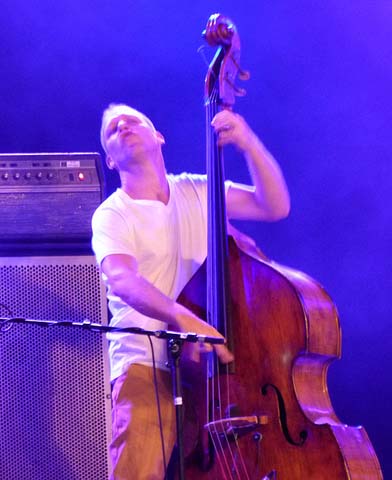
Jazz Middelheim, founded in the late 1960s, has become an iconic jazz festival. The festival grounds in Antwerp are within walking distance of the famous sculpture park. The green surroundings of the Park den Brandt with a high quality infrastructure, including a playground for children and gourmet catering, attract not only a vast jazz crowd but also families with children who love to linger in the park and enjoy the live music.

Jazz Middelheim

GHENT FESTIVALS
After more than 160 years of existence, the Ghent Festivities have become one of the best festivals in Europe. Four international festivals take place there over a period of 10 days, with free music on 10 squares, children’s entertainment at various different locations in the city and hundreds of indoor and outdoor activities.

Ghent Festivals

MAFESTIVAL
One of the oldest classical music festivals with an international reputation takes place in Brugge. Daily concerts, competitions, workshops and lectures focus on the historical performance.

MAFestival

TOMORROWLAND
Yesterday is History, Today is a Gift, Tomorrow is Mystery. What started out in 2005 as a one-day festival has grown into a three-day festival. Two weekends are being organized for the 10th anniversary of Tomorrowland in Boom. Tomorrowland is one of the largest festivals with 360,000 attendees. Tickets sell out in one day for this popular festival.

For more info, go to www.visitflanders.us

Frankfurt’s Liquid Gold

Photos Courtesy Frankfurt Tourist & Congress Board

Locals and tourists alike enjoy this beverage in rustic apple wine pubs all over the city. The “core” apple wine scene is in Old Sachsenhausen; numerous apple wine pubs line its streets where they serve customers their infamous “liquid gold.”

In the Middle Ages, beer and wine were the beverages of choice. As with many products today, apple wine came into being because of an unavoidable circumstance rather than an idea for a new product. In the middle of the 16th century, the Rhine-Main area went through a climatic change that negatively influenced wine production. Because of this, many vineyards transformed into fruit orchards, thus beginning apple wine production. During the Goethe era, taverns made the switch and became apple wine pubs. Today, apple wine remains a staple in Frankfurt and is growing in popularity.

It’s easy to spot a local apple wine pub: just look for the wreath hanging above the door. There’s even an old saying, “A wreath on the door means apple wine and more.” Traditionally, apple wine is served in a blue-gray stoneware jug called a Bembel. Other necessary glassware for apple wine drinking includes a ribbed glass called a Gerippte.

For an unforgettable Frankfurt experience, take a tour of old town in the “Apple Wine Express.” The Apple Wine Express is the city’s most popular streetcar and takes guests on a sightseeing tour around the city. For one hour, visitors can munch on pretzels, listen to music and sip apple wine while experiencing the city in a new way.

For more info, go to: www.frankfurt-tourismus.de