3 Countries, 2 Ski Resorts, 1 Week in Europe

Wishing you had planned a getaway this past spring break? It’s not too early to start planning for next year, and to think big with a European adventure!

By Alison Ramsey

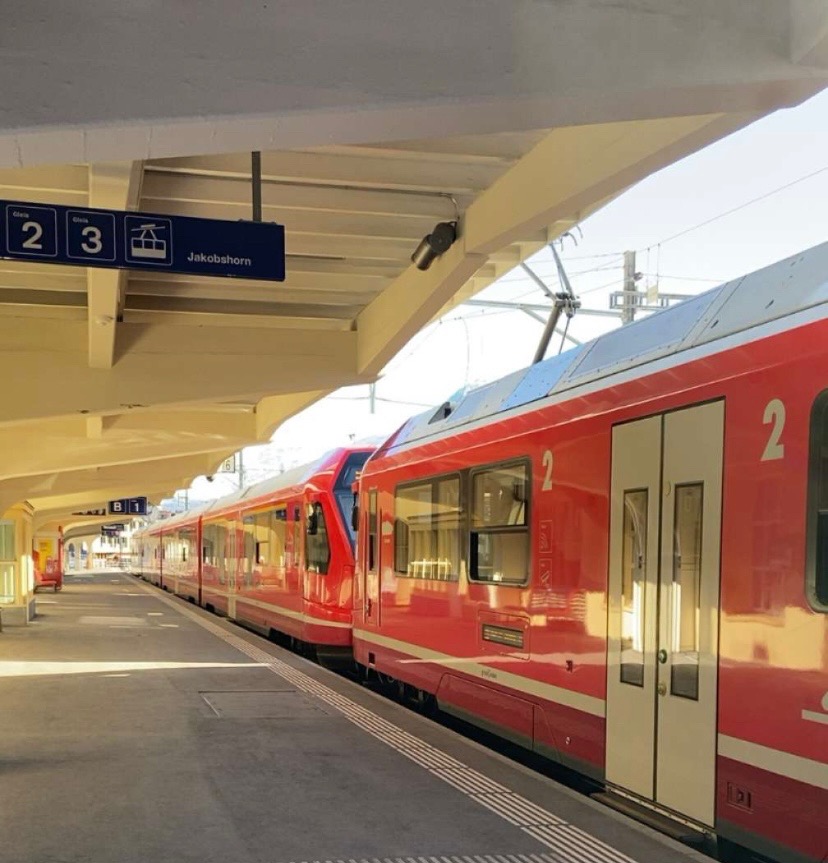
Stateside spring break destinations abound, but consider using that week of vacation time to explore three German-language European countries—Switzerland, Austria, and Germany—all easily reachable from each other by train. The Eurail Global Pass allows travelers to seamlessly cross country borders by rail using a single scannable QR code pass in the app. It’s a fantastic opportunity to maximize your time abroad and visit multiple countries all in one overseas trip.   

Eurail train travel is scenic and comfortable, and the well-designed Eurail app makes it easy to view train schedules and plan your trip.

Time in the mountains is essential if you’re headed to the Alpine countries of Switzerland and Austria. Downhill skiing in the Alps can be exhilarating, great exercise, and a fun social activity—as proven by the millions of visitors to throng ski resorts like Davos Klosters in Switzerland and St. Anton am Arlberg in Austria each year. Both destinations are part of the Best of the Alps organization’s carefully curated collection of classic mountain resorts and offer excellent ski schools.

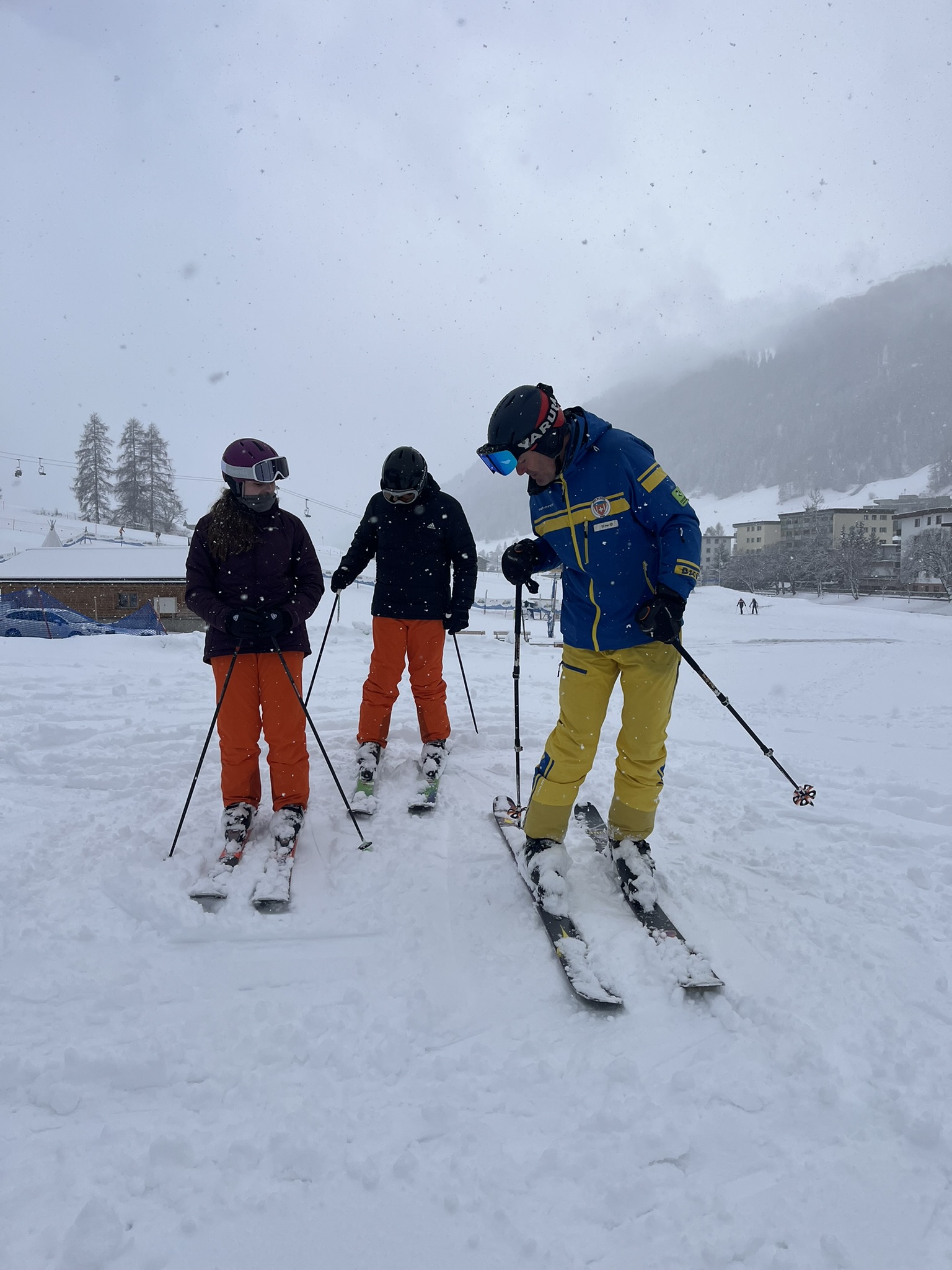
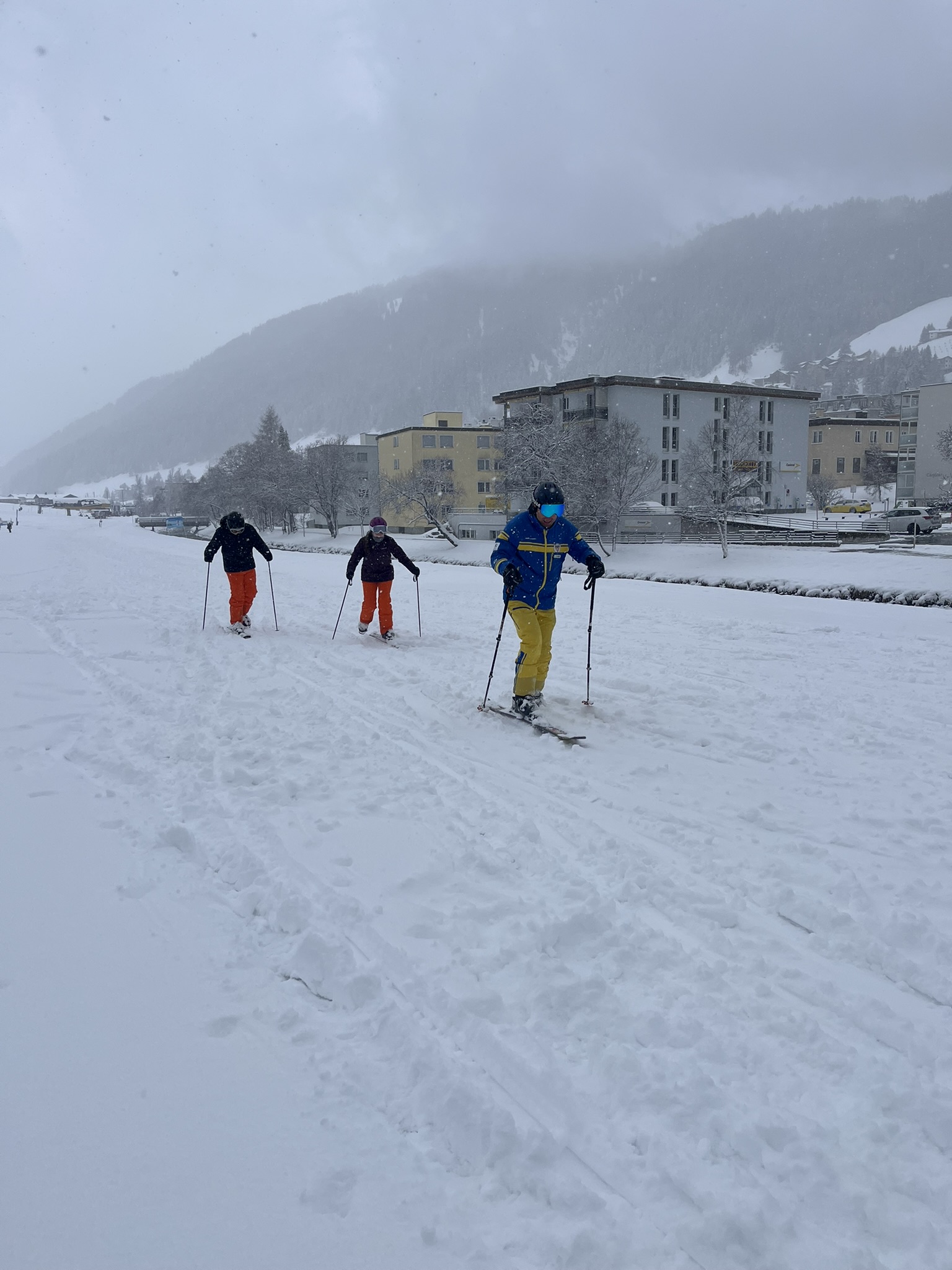
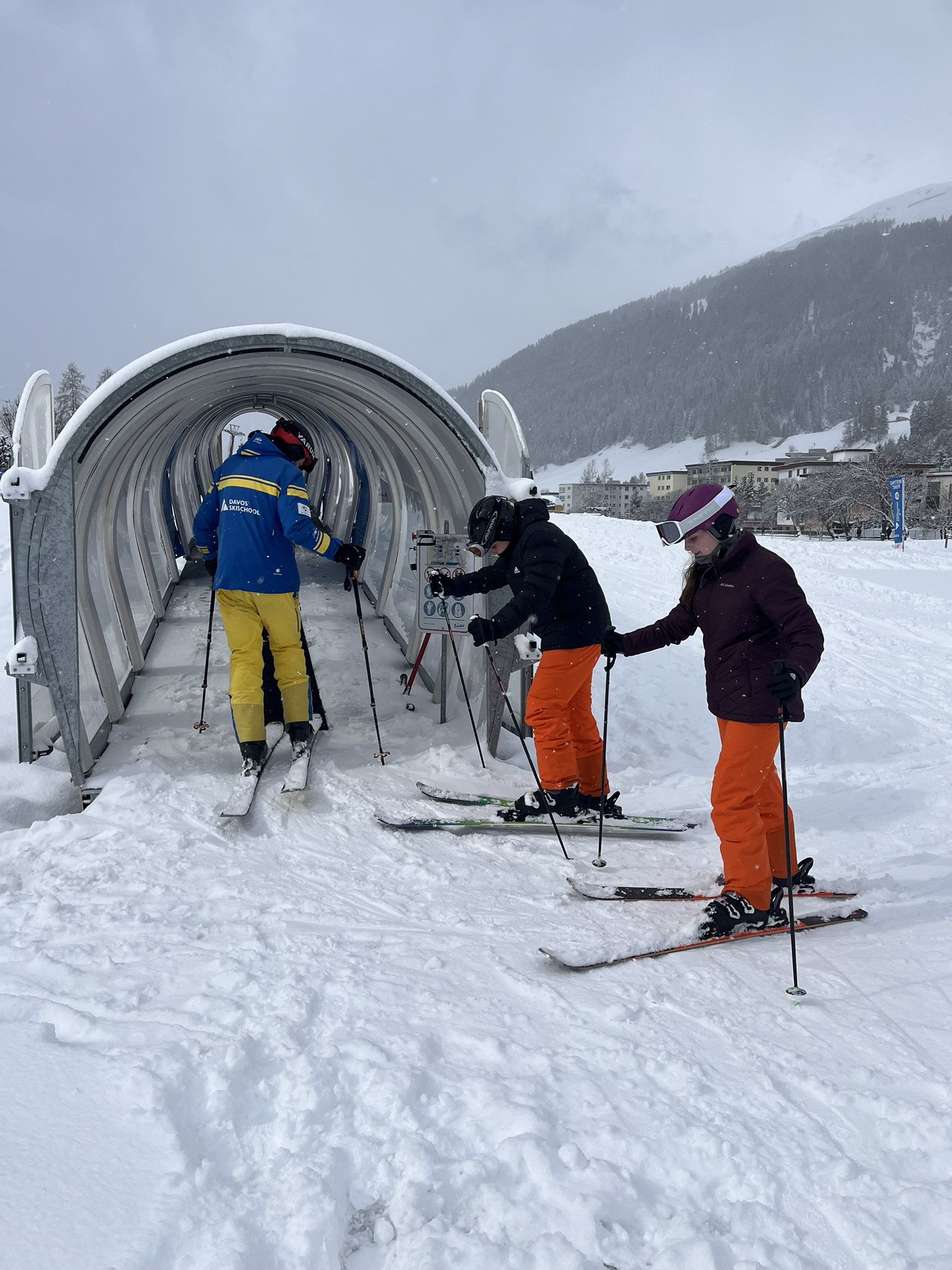
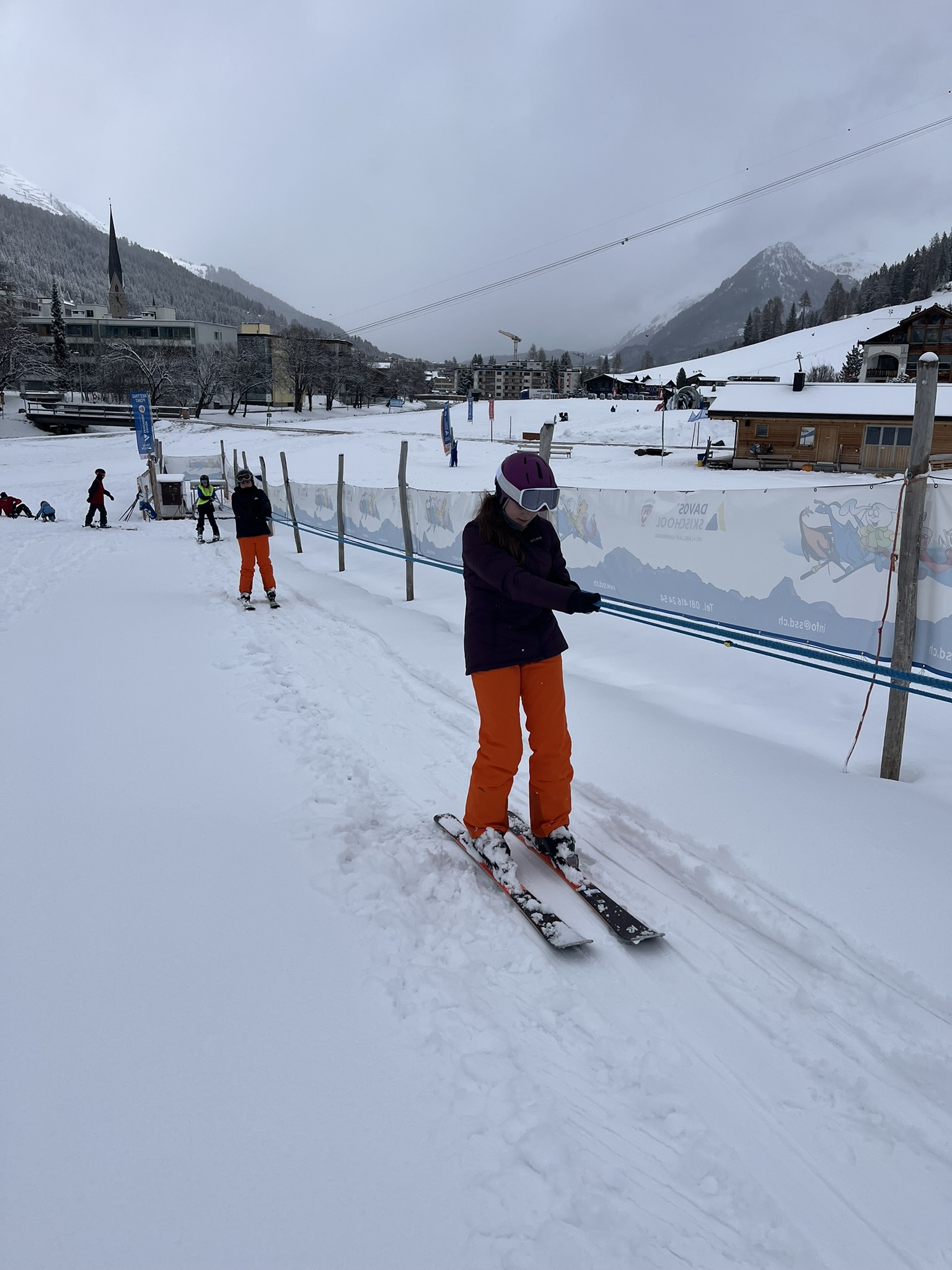
A 2.5-hour train ride from the Zürich Airport, the 13,000-inhabitant Alpine village of Davos is the highest city in Switzerland, at 5,147 feet above sea level. Its Ski School Davos, part of the Swiss Ski and Snowboard School, is the biggest and oldest ski school in the country. Students here can learn from patient, professional instructors, who focus on safety and ensure basic skills are mastered before introducing more difficult maneuvers or terrain. Experienced skiers have 157 miles of ski trails on 81 different slopes to explore over five separate ski areas, including the iconic Parsenn skiing and hiking area, famous for its wide pistes and long runs.

Private and group lessons are offered at Ski School Davos, with ski equipment rental available at Top Secret Ski & Snowboard Shop, directly across the street from Bolgen Plaza.

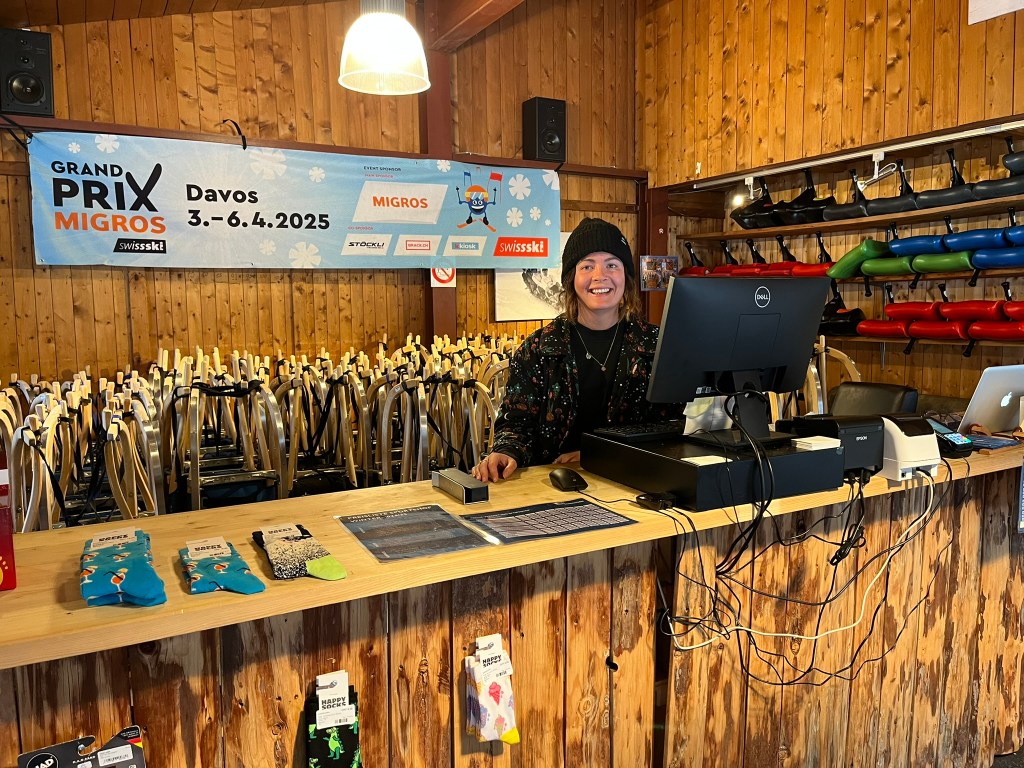
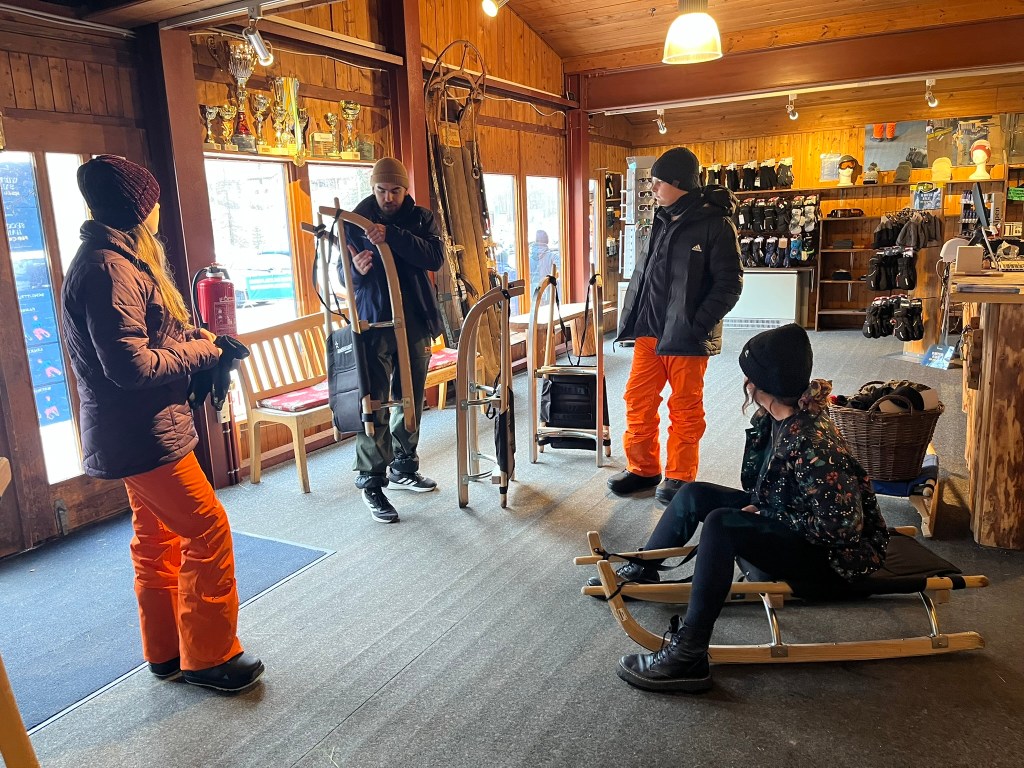
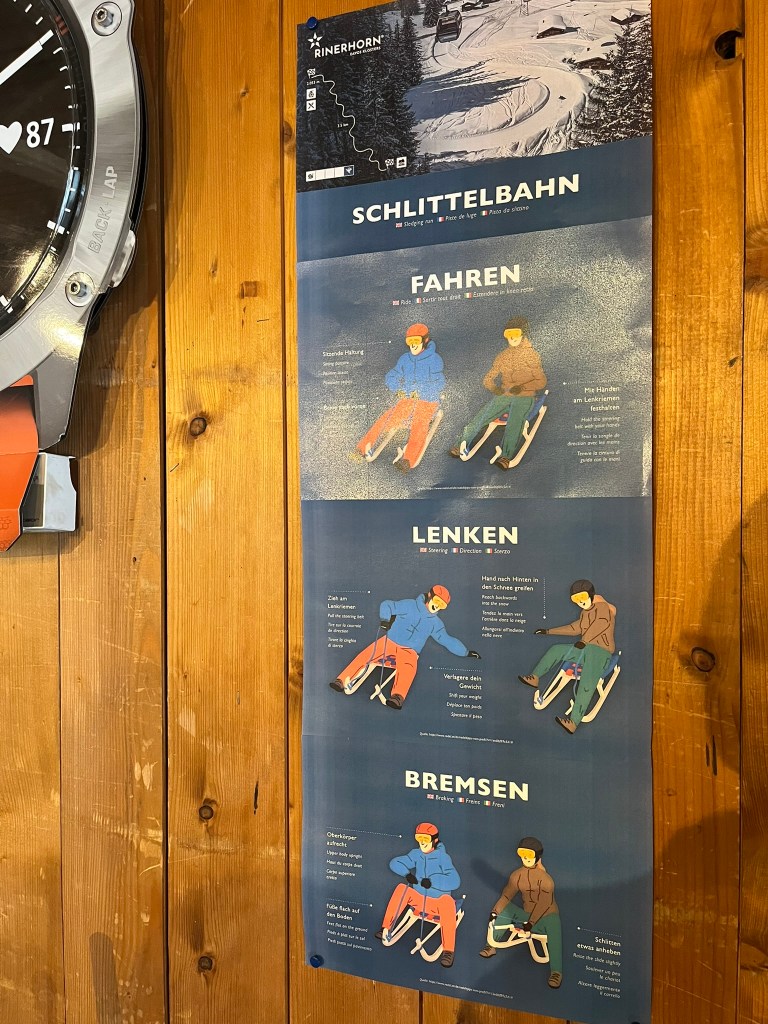
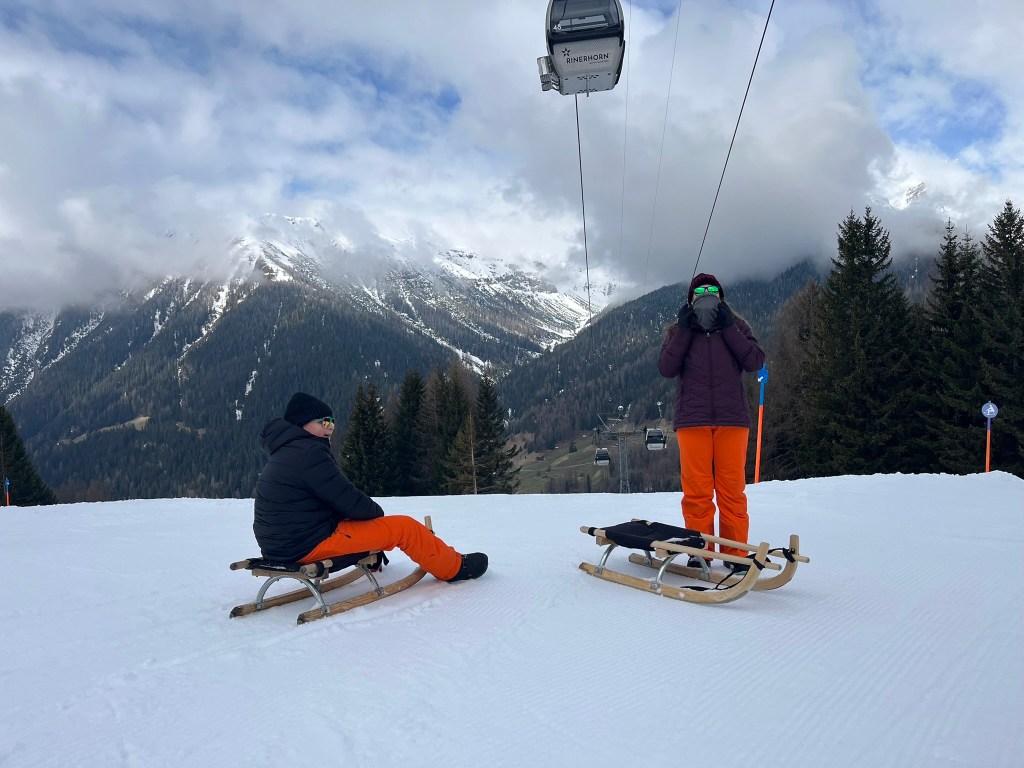
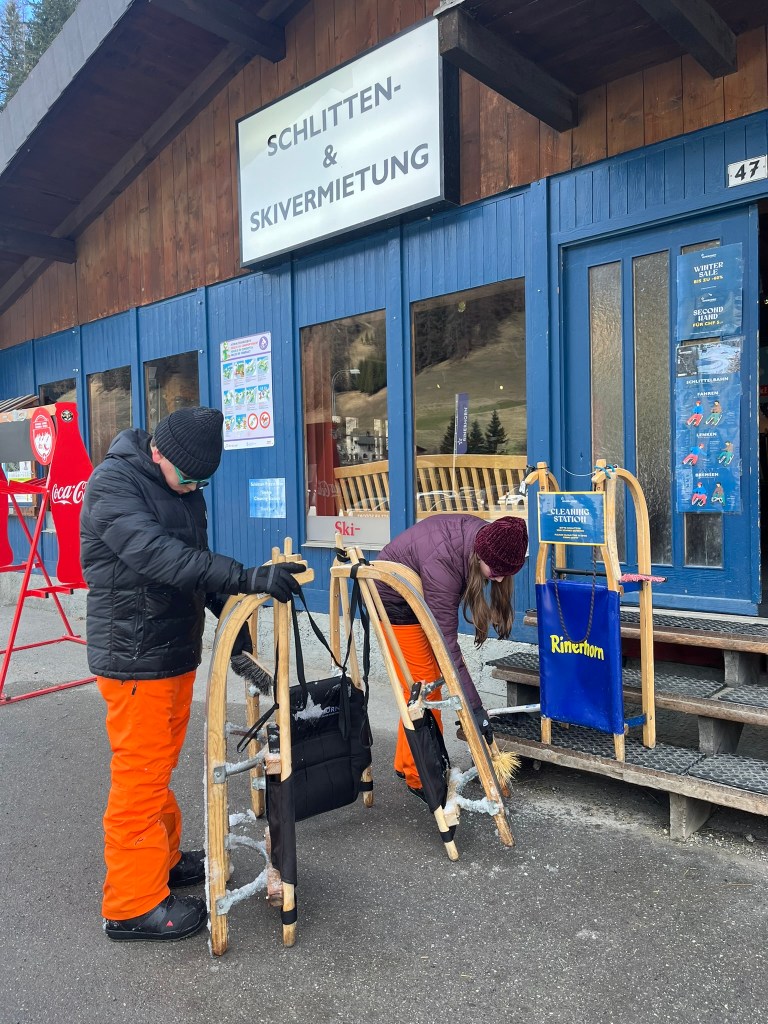
The Alps are inviting even to those not wearing skis. For a fun take on tobogganing, try sledging down the 2.2-mile Rinerhorn run in Davos. Take the ski lift to the top and pilot your wooden sledge down the steep and curving 33-bend slope—one of the most challenging sledging runs around—braking with knees bent and feet flat on the snow and changing direction by shifting weight and pulling the steering rope. It’s like high-speed Mario Kart in the mountains!

Rinerhorn has slopes for skiers and sledgers.

If you’re staying at the comfy mountain chalet Hotel Waldhuus in Davos, be sure to spend time in the large indoor pool and experience the Switzerland sauna lifestyle in their bio sauna, herbal sauna, or new Finnish sauna. Usually co-ed and textile-free, sauna visitors in Switzerland use towels simply for hygiene purposes—not as a cover-up, but to sit on so sweat doesn’t touch the wood. Sauna usage is linked to many health benefits and can lower blood pressure, improve cardiovascular health and circulation, reduce soreness after exercise, promote muscle recovery, stimulate immune system support, reduce stress, and eliminate toxins. A swim and sauna session after a full day of activity feels physically and mentally healing, especially in a clean and well-maintained facility.   

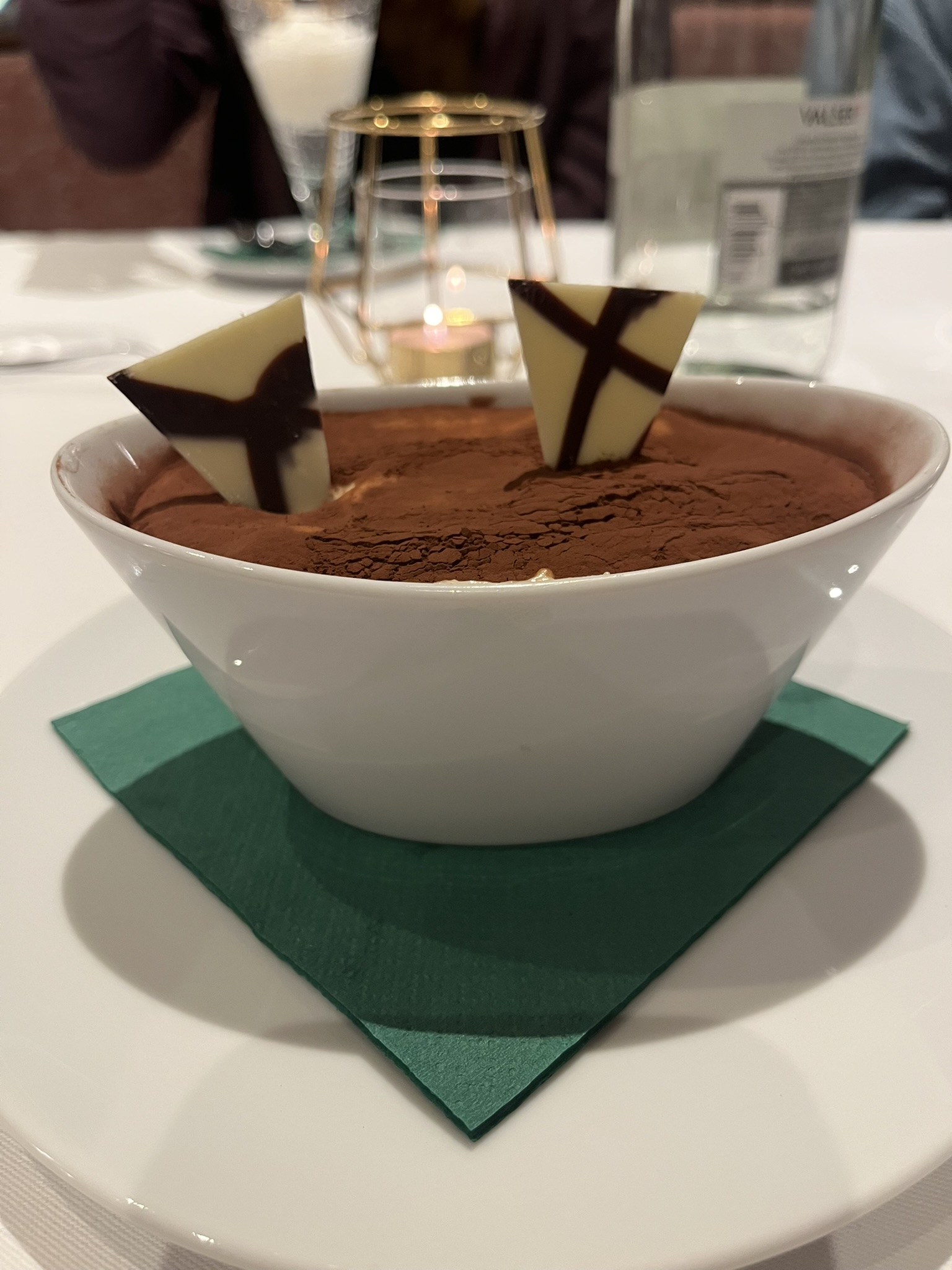
Unwind in Hotel Waldhuus’ comfortable accommodations with terrific spa facilities, and try the delicious tiramisu and enormous fresh breakfast spread in the Waldhuus Restaurant.

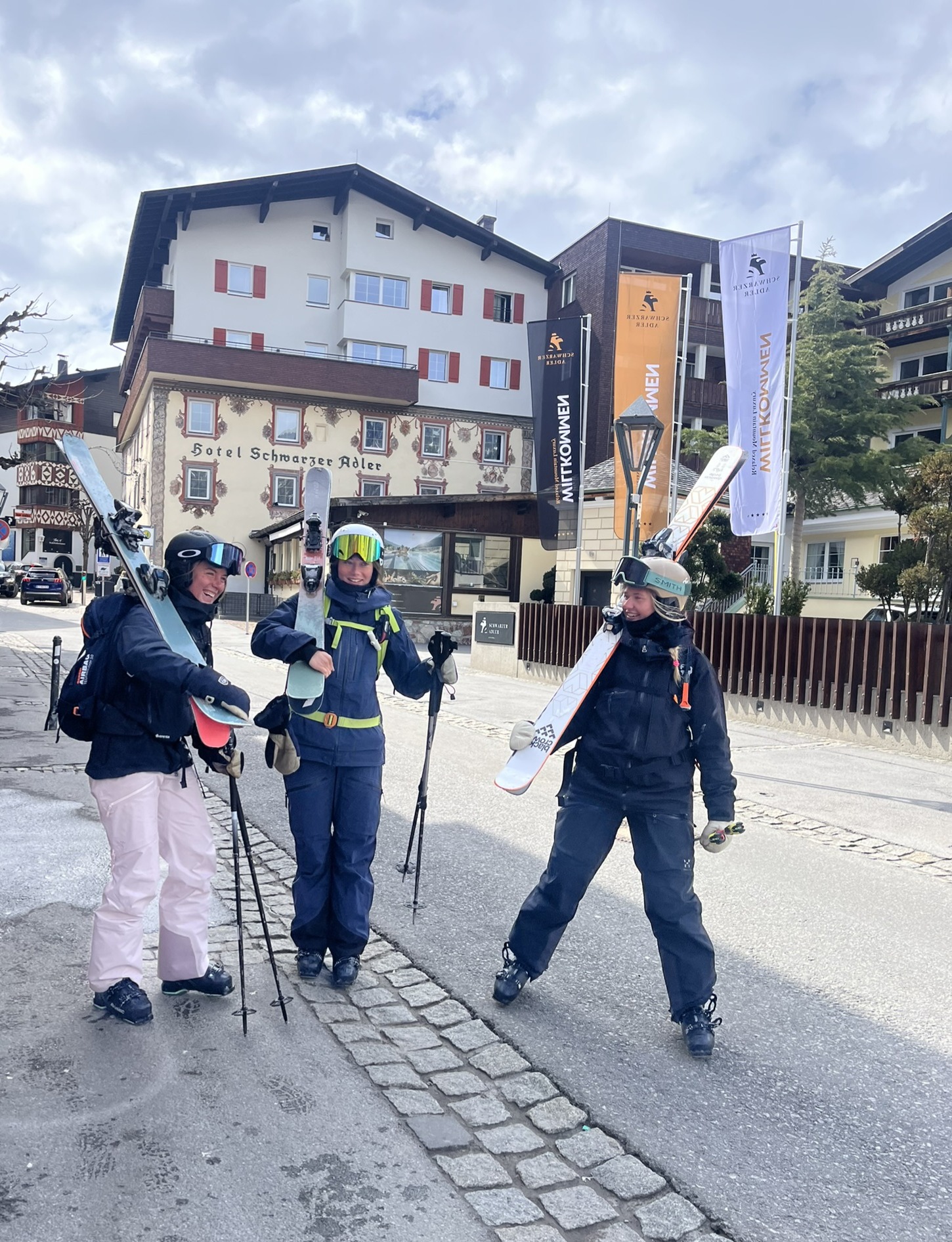
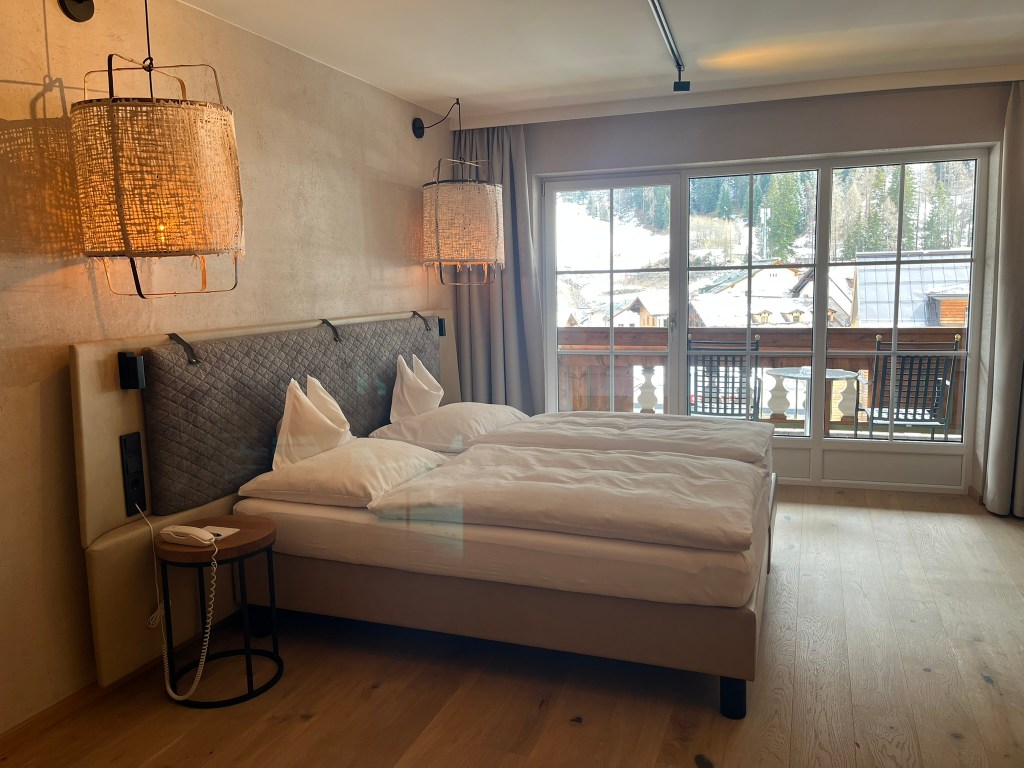
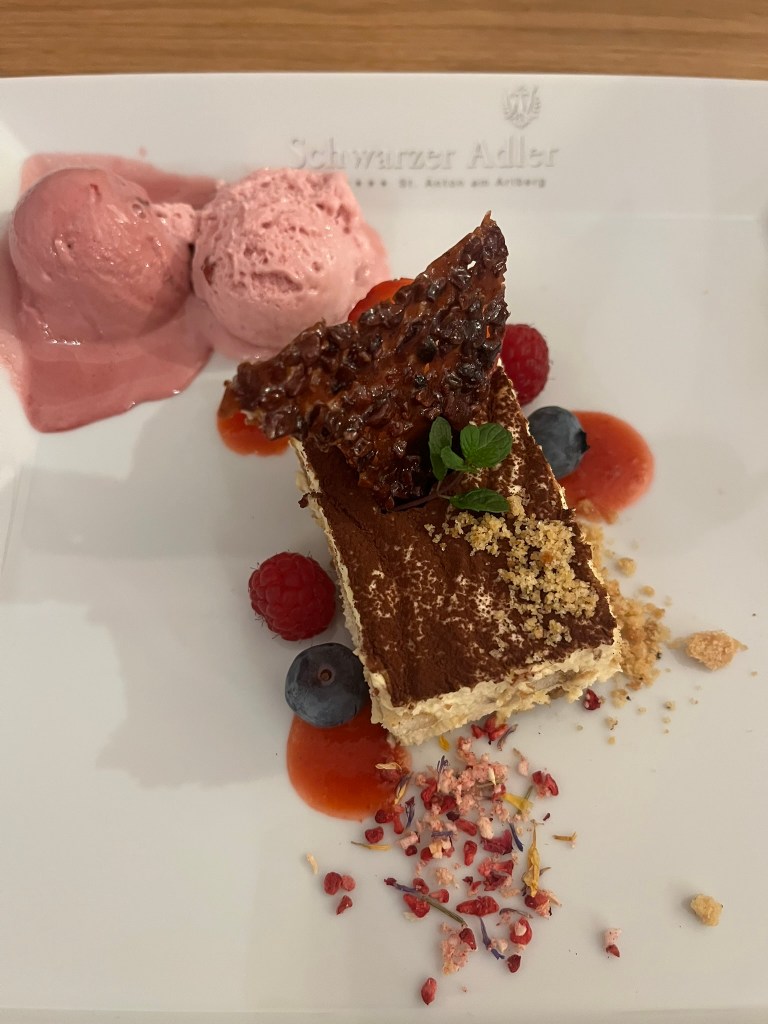
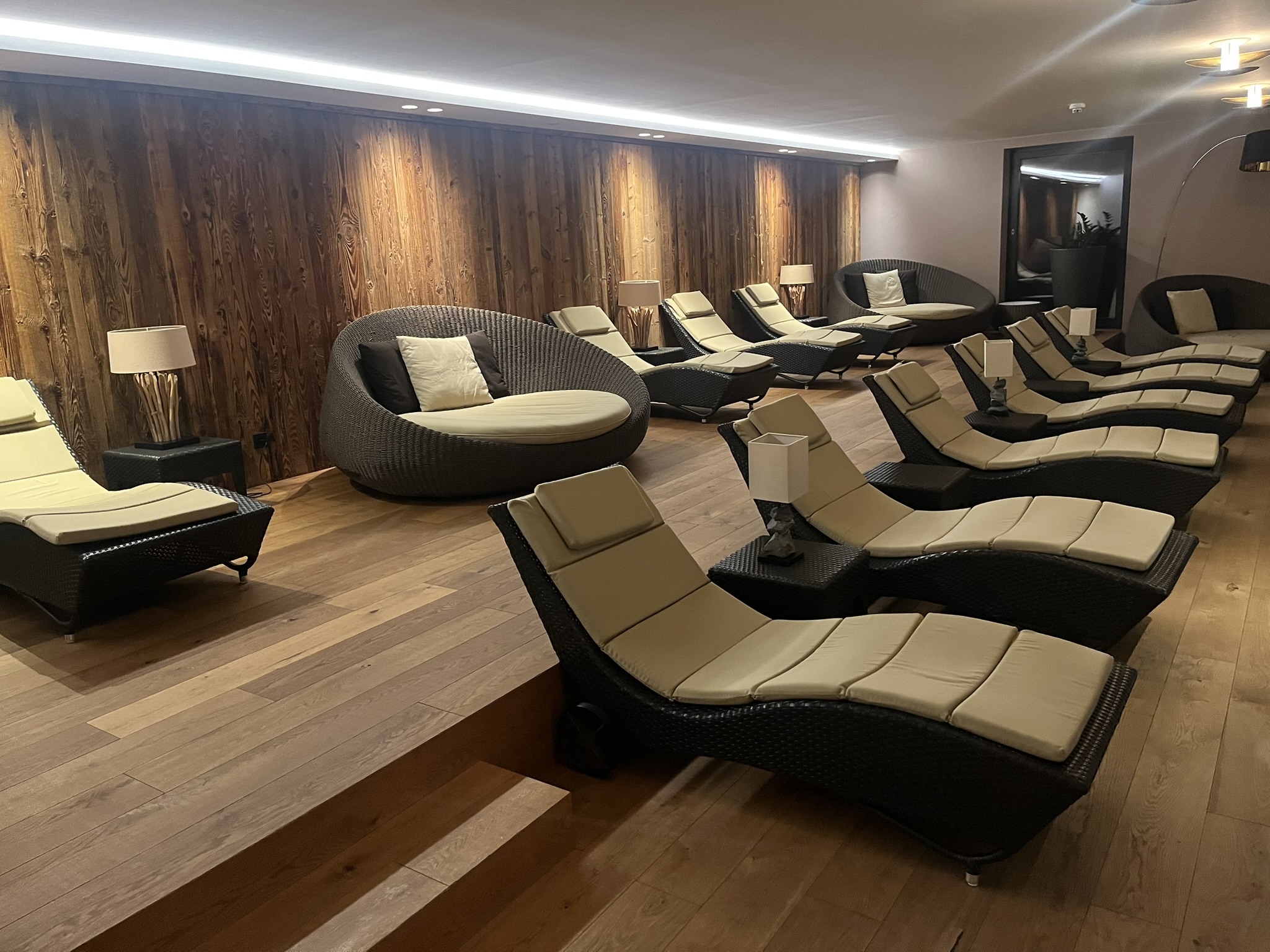
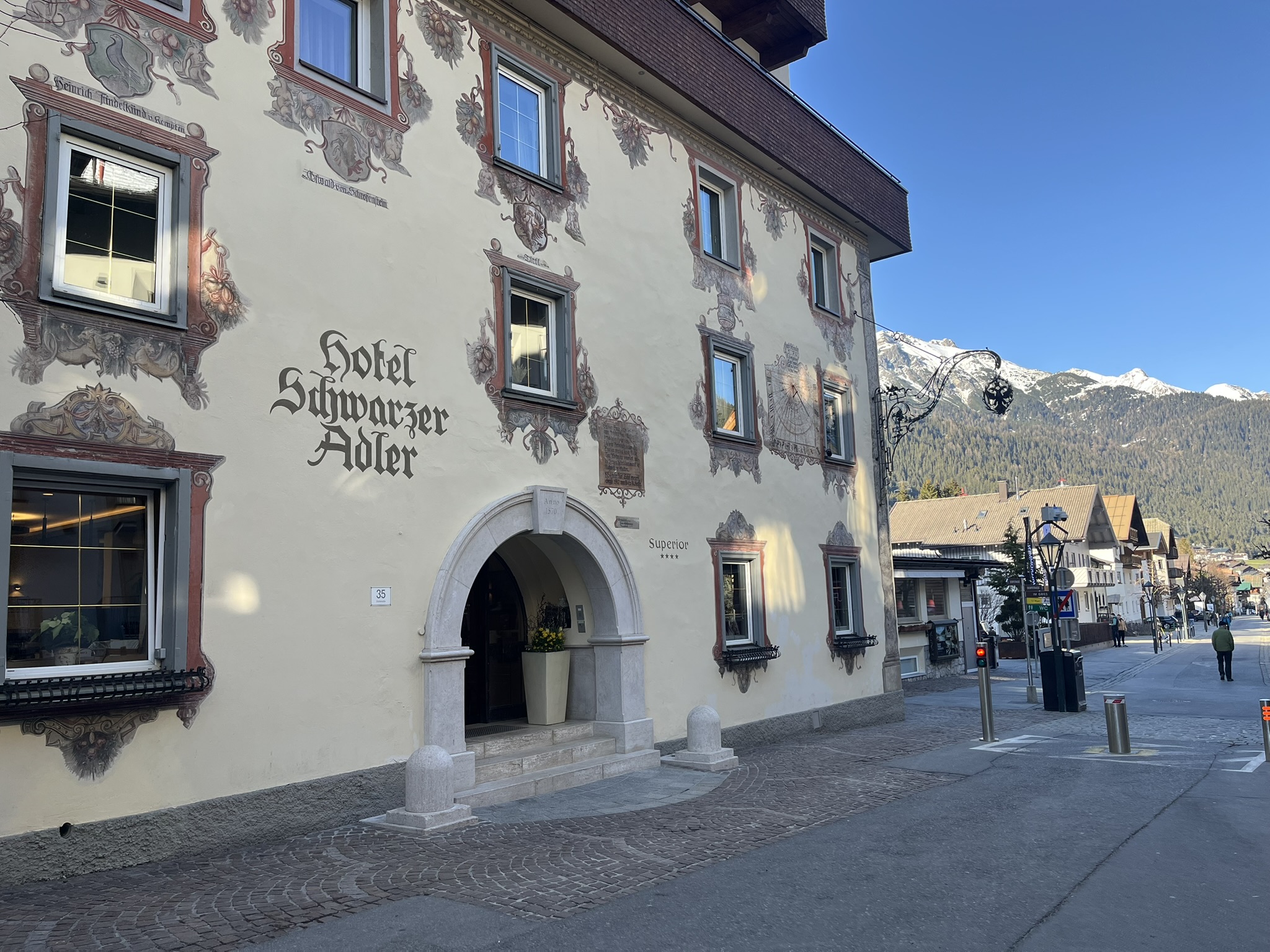
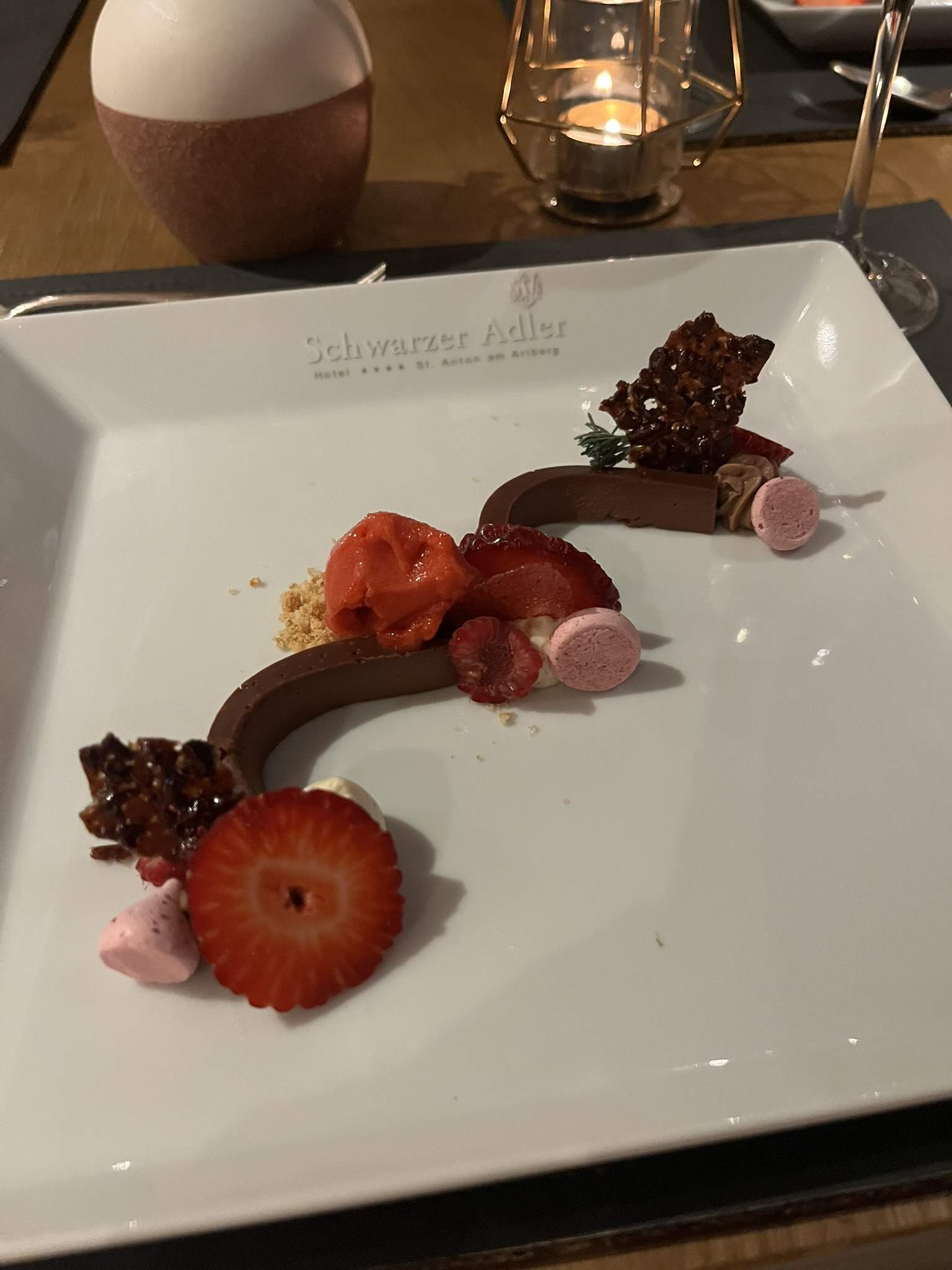
For a taste of the Austrian Alps, a 3.5-hour train ride brings you to St. Anton am Arlberg, Austria, where you can make your home base the classy Hotel Schwarzer Adler. Here, white-glove dinner service offers perfectly flavored and artfully plated meat and vegan dishes, homemade comfort foods including butter Spätzle (egg noodle pasta), and delectable desserts like “chocolate 5 ways,” with Austrian wines for pairing. You can swim in the outdoor sky pool under the pure mountain air or unwind indoors in the relaxation room, saunas, or sparkling indoor pool. Treat yourself to a spa package from the massage menu or simply sip an espresso on your hotel room balcony with a view of snowy peaks and a soundtrack of church bells and birdsong.

The Schwarzer Adler Hotel provides luxurious dining experiences and relaxation outlets.

Skischule Arlberg is the award-winning largest ski school in Austria, founded by Hannes Schneider, the father of the modern “Arlberg technique” skiing style. Before Schneider’s development of this forward semi-squatting posture, the trend was to stand erect with rigid knees, a position derived from Nordic or cross-country skiing, which wasn’t a practical stance for the steep Tyrolian terrain. Ski instructors at Skischule Arlberg keep lessons fun and stress-free, moving at the students’ pace and providing encouragement without pushing too far beyond current comfort levels. For those unaccustomed to ski life, it’s an excellent introduction to what many Alpine locals grow up learning from a young age.  

Ski School Arlberg prepares skiers to achieve their athletic goals.

An incredible highlight of St. Anton—no skis needed—is up on the very peak of Valluga, at 9,222 miles above sea level. Ride the “Galzigbahn” ski lift to the first mountain station, where you can snack at the Galzig Restaurant, shop in the ski store, and watch athletes descend the slopes. Then ascend with the “Vallugabahn I” lift through fog and clouds to the Vallugagrat station and the Valluga View Restaurant. One more ride in the small “Vallugabahn II” cable car brings you to the pinnacle lookout point—a circular railed platform open to the intense sun and whipping wind, with breathtaking views of snow-covered Alps in every direction. You have a clear panorama from Lake Constance to Switzerland and the Zugspitze, the highest mountain in Germany. From here, you can see the extraordinary beauty of the glacier-carved gorges as well as the splendid organization of the ski resort, with numerous lifts in motion, skiers gracefully carving patterns into the snow, and sky-high facilities with everything you might need for your day in the heights.

Unbeatable Valluga views are a highlight of St. Anton am Arlberg.

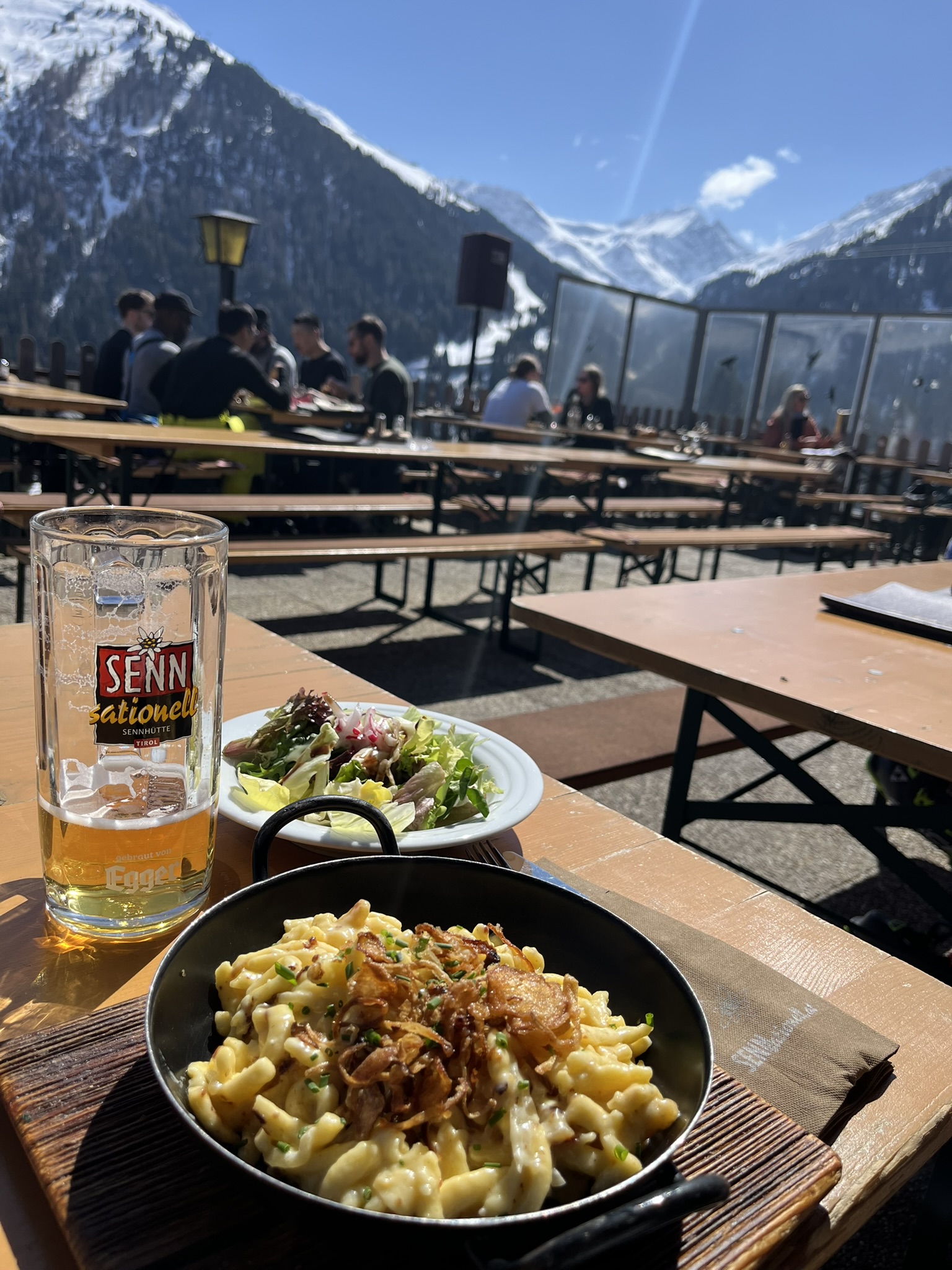
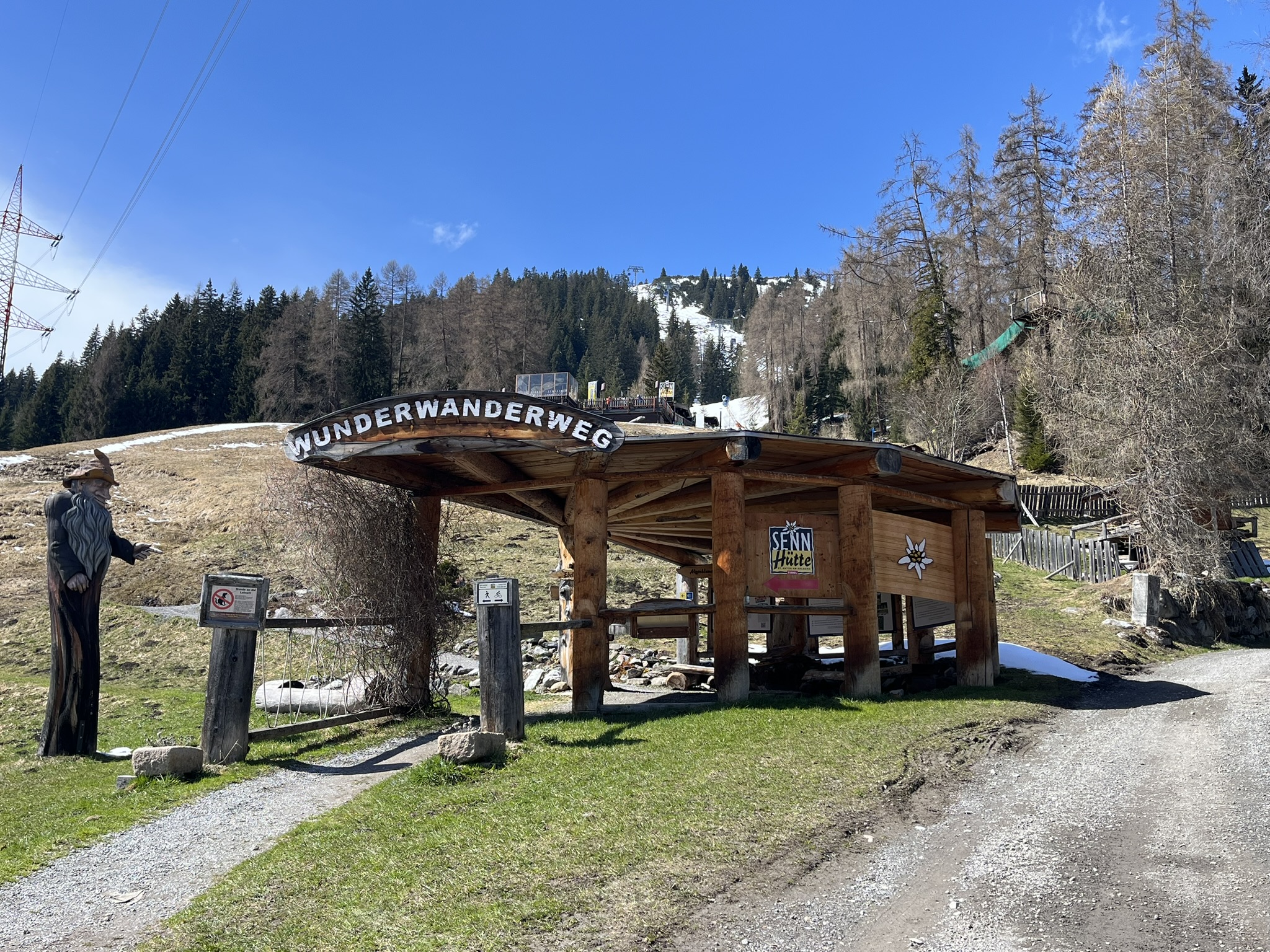
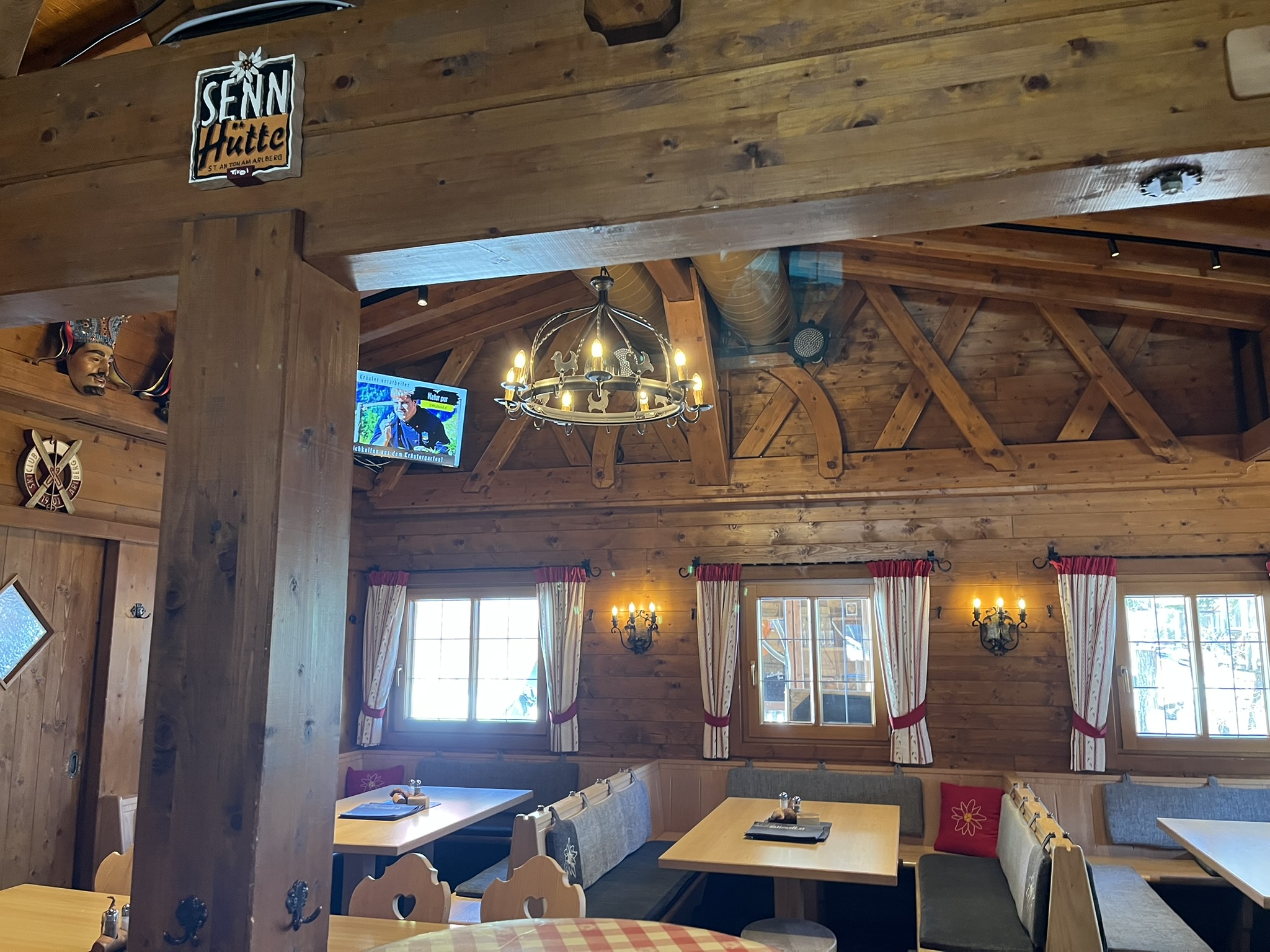
Don’t leave the Alps without an après-ski experience! St. Anton am Arlberg holds many opportunities to unwind and let loose after a day of athletics. You can party hard with club music and tasty drinks at any number of après-ski huts, or partake in a casual post-ski meal at the rustic Sennhütte restaurant right on the slopes—its entrance marked by an enormous pair of Lederhosen. Either ski down the hill right to the restaurant or take a free bus trip there from the town center and hike up the WunderWanderWeg (wonder walking way) pathway from the bus stop. The back patio balcony affords an outstanding view into the mountains—a brilliant backdrop for sampling Käsespätzle (thick cheesy noodles topped with crispy fried onions), Schnitzel and Pommes (fried meat cutlets and French fries), and gulping a refreshing beer or Skiwasser (“ski water”—an alcohol-free blend of raspberry syrup, lemon juice, and water or seltzer).

Giant lederhosen and the WunderWanderWeg lead the way to Sennhütte.

Any beer fans or German-language–lovers know that Bavaria is a nearby European destination worth visiting, so travel by Eurail from St. Anton 3.5 hours northeast and you’ll end up in Munich, Germany. A short walk from the Munich main train station through a Mediterranean district brings you to the fresh and inviting greenery-filled lobby of the KOOS Hotel. A prime location near Karlsplatz bus and streetcar stops, the KOOS Hotel is also within easy walking distance of the Altstadt, Munich’s medieval old town. KOOS Hotel’s vegan-friendly personal care products in the rooms and numerous vegetarian and vegan breakfast selections are a welcome perk for those with specific preferences and dietary needs. The hotel is also a role model for sustainability and is entirely paperless, with a digital check-in process and novel phone-activated room entry in lieu of a room key. This family- and dog-friendly haven near the city center has all you need for your stay, including an in-room washing machine and clothesline for freshening up travel clothes.

Environmental consideration and convenience are key at KOOS Hotel.

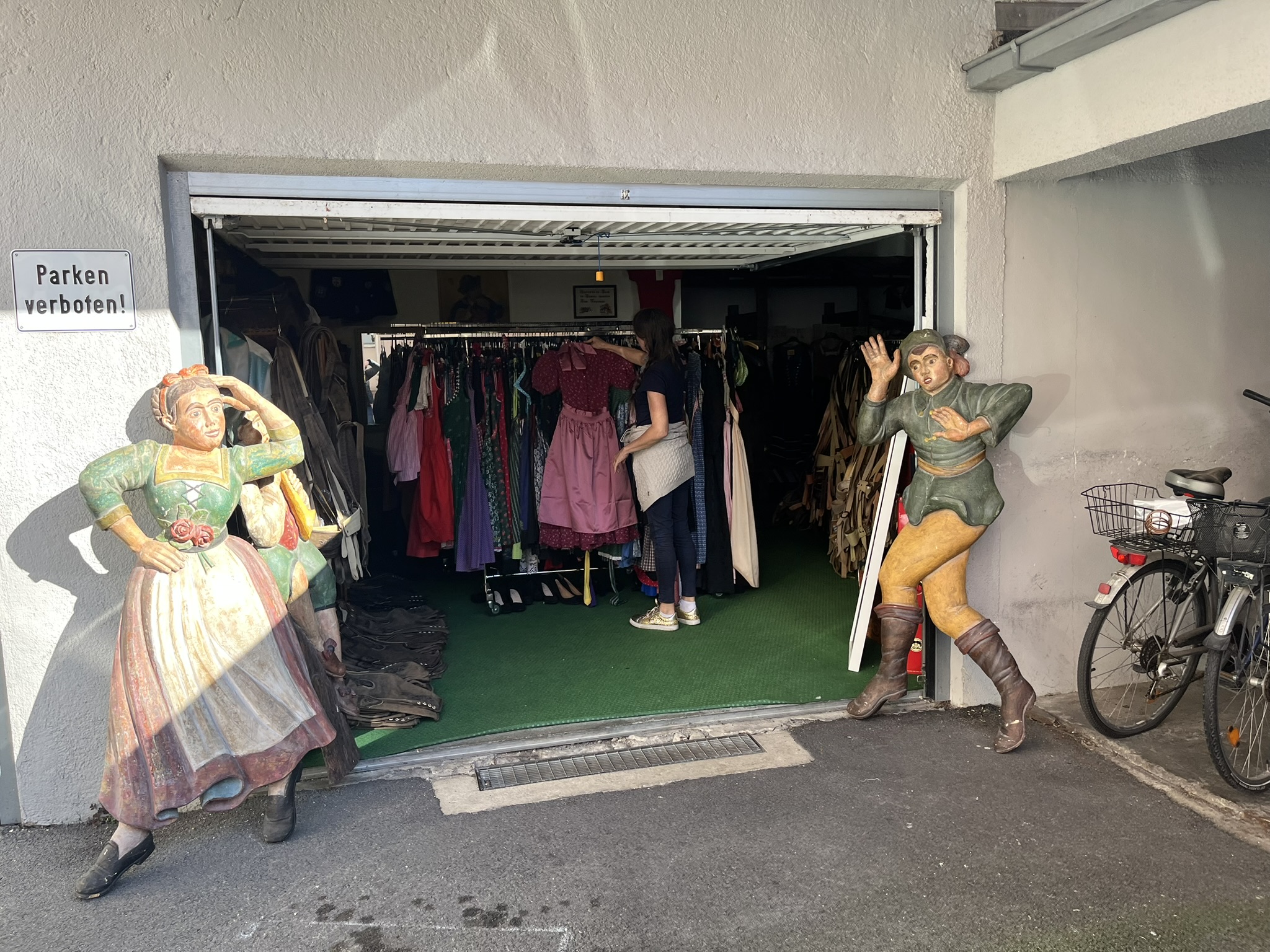
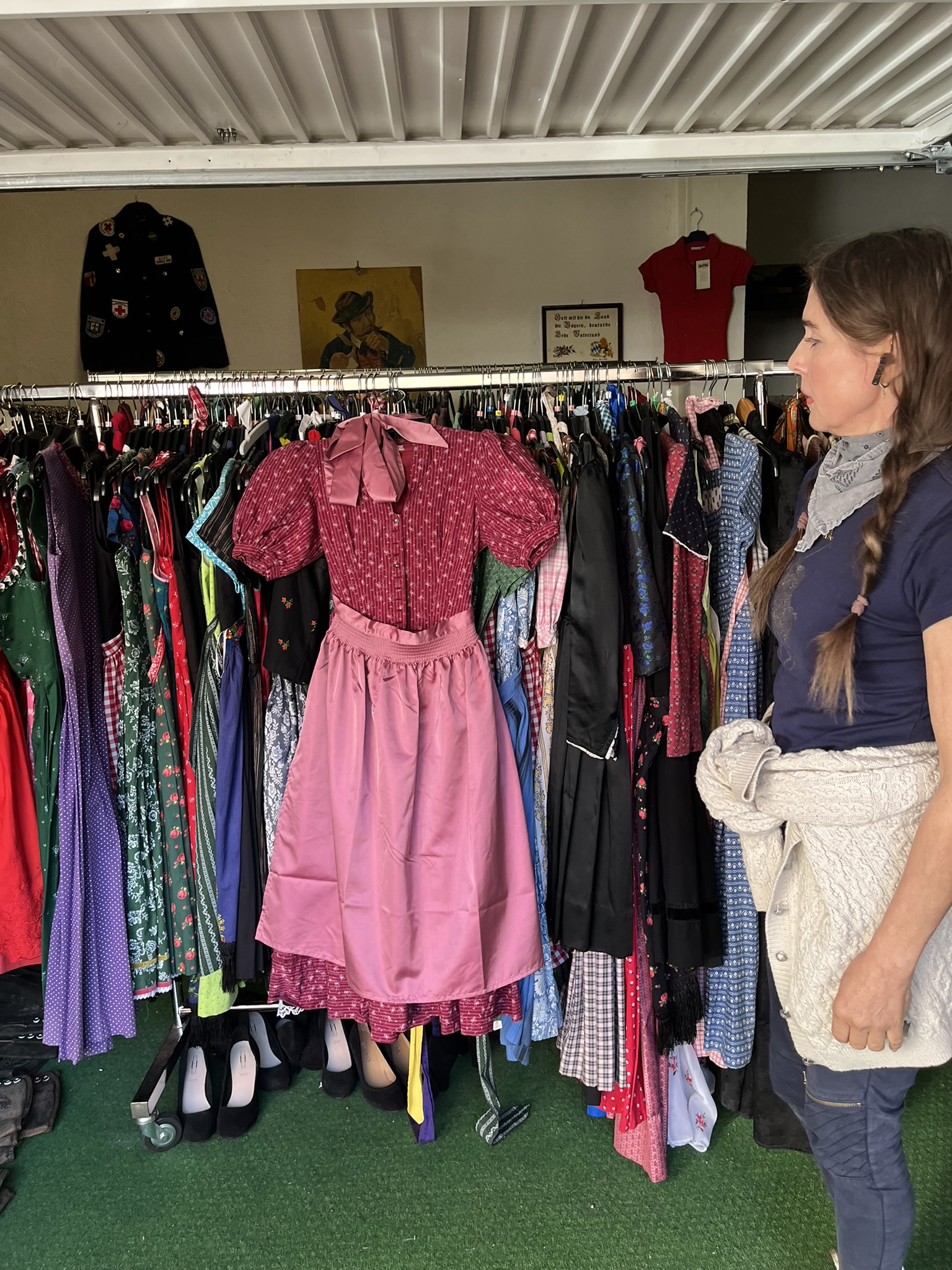
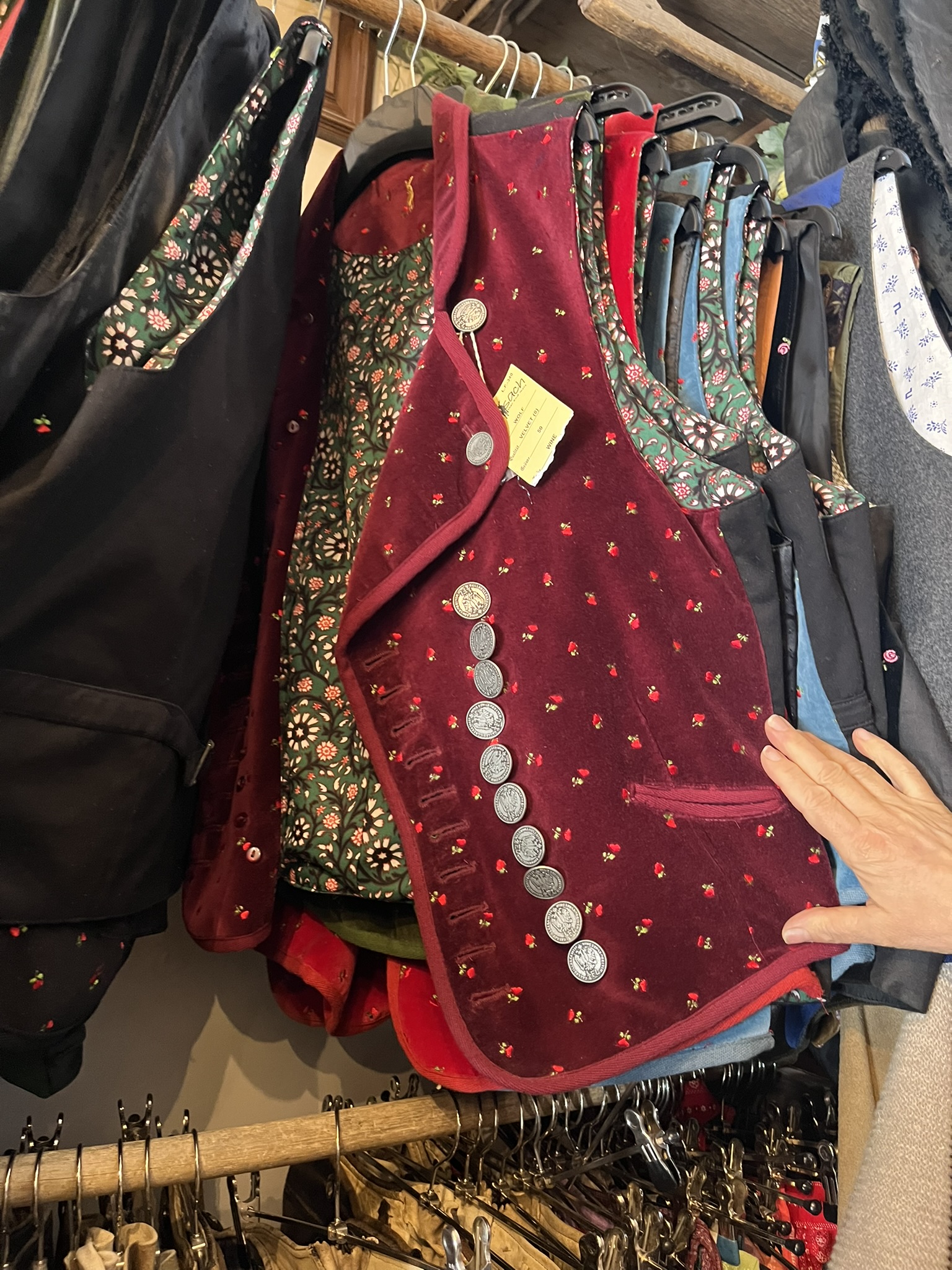
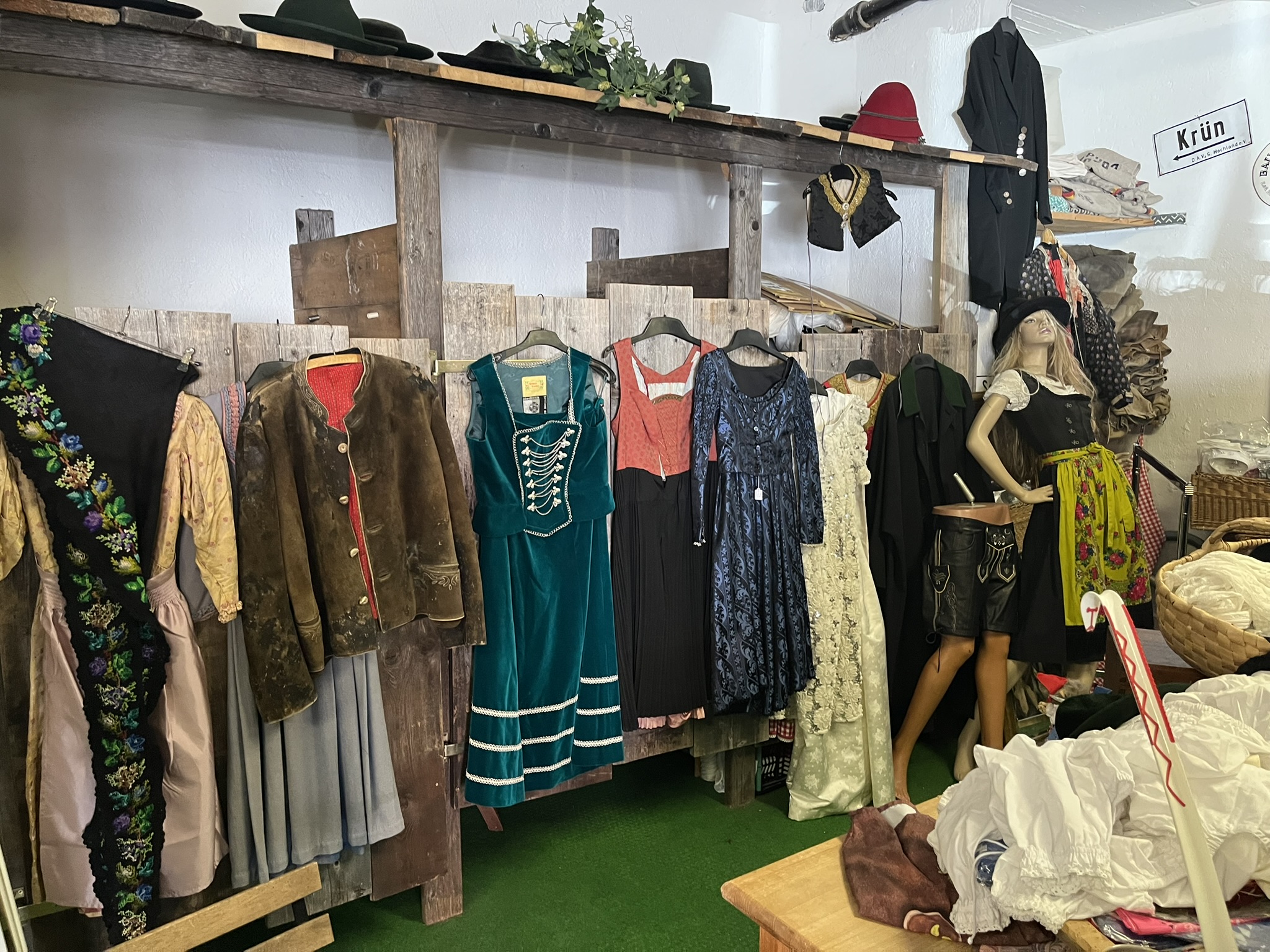
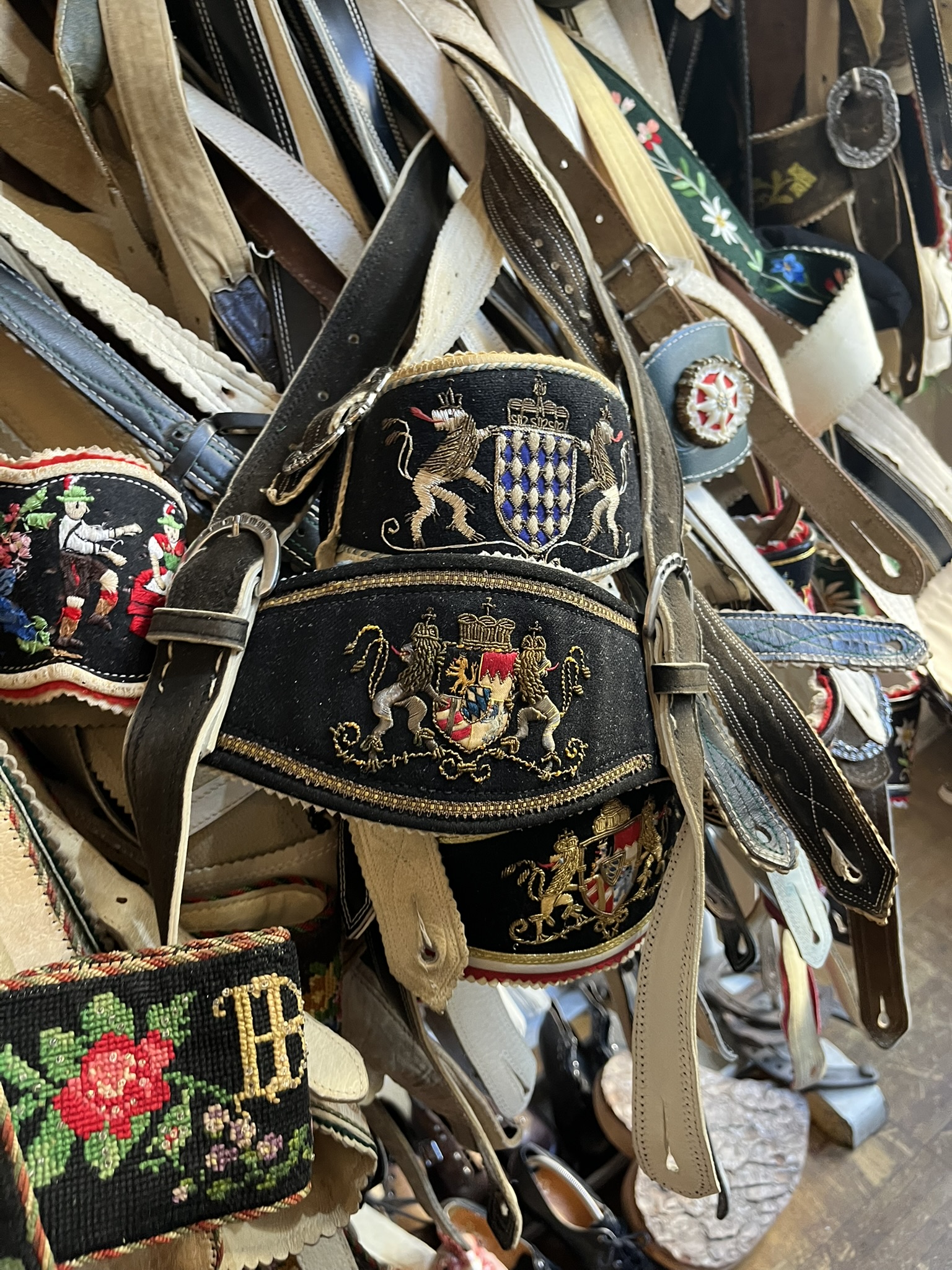
If you’re looking to buy some “new-to-you” threads, consider a walk to Holareidulijö traditional Bavarian clothing store. Affable and knowledgeable shop owner, Michaela Klein, lovingly restores and resells used Dirndl, Lederhosen, hats, vests, and myriad Bavarian accessories and jewelry, while offering an assortment of new shirts and socks to match her wares. During Oktoberfest season, Klein’s store and the extra garage unit in back are packed with shoppers searching rows of racks for colorful festival outfits and drinking the free beer she offers during her busiest weeks.

Holareidulijö is a treasure trove of authentic, high-quality refurbished Trachten.

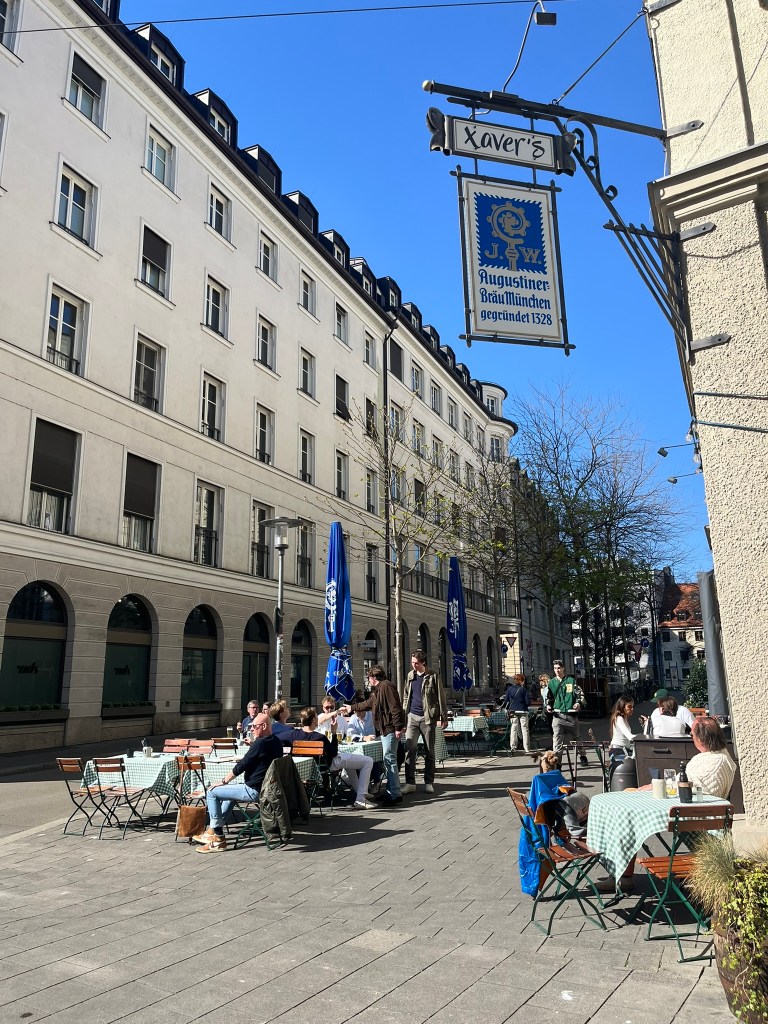
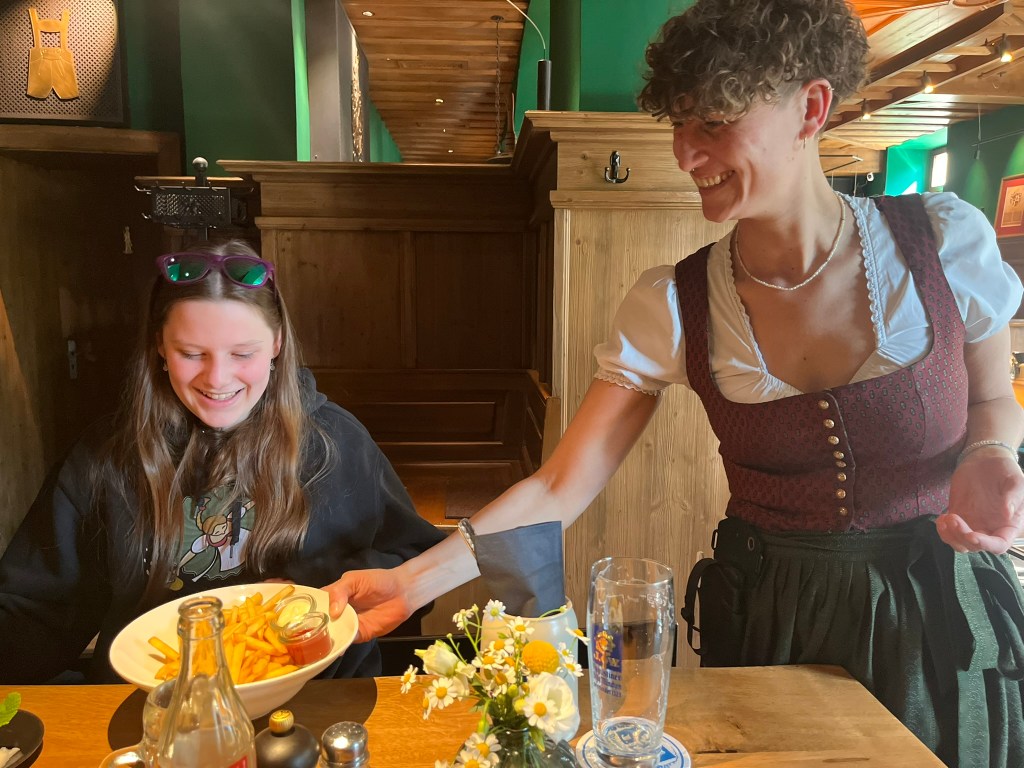
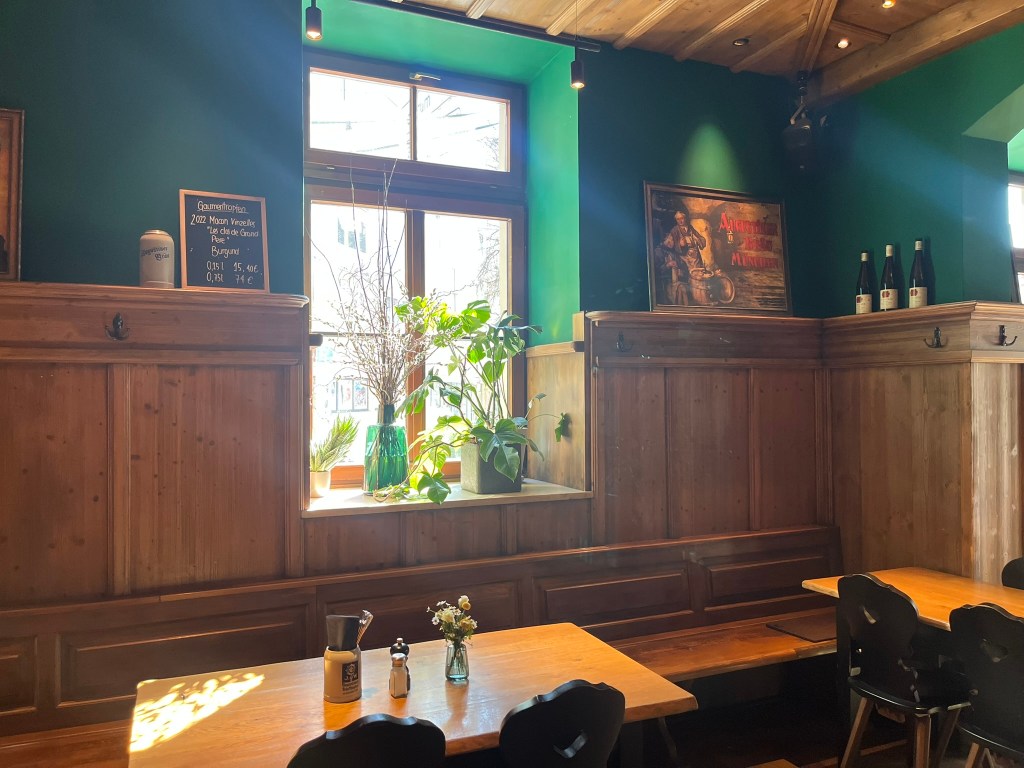
For a fantastic meal and some Augustiner beer or a selection from about 160 different wines, head to Xaver’s—a stylish restaurant and brew pub with a warm wood interior and a mix of small and large tables for date night or Stammtisch (“regulars’ table,” where friends recurrently gather to eat, drink, and socialize). Here, young and old alike are drawn to the restaurant motto’s “refreshingly traditional” vibe that features fun and friendly staff clad in traditional Bavarian costume (including genial owner Xaver himself, a sommelier and one of several restaurant-owning brothers). The menu features classic Bavarian dishes reimagined with a fresh take using locally farmed ingredients, as well as innovative entrees that change every six weeks. The lively music and cheerful atmosphere make you want to come back and be part of the scene— same time next week.

With a fresh take on Old World style, Xaver’s serves locally grown foods, Augustiner beer, and wines galore.

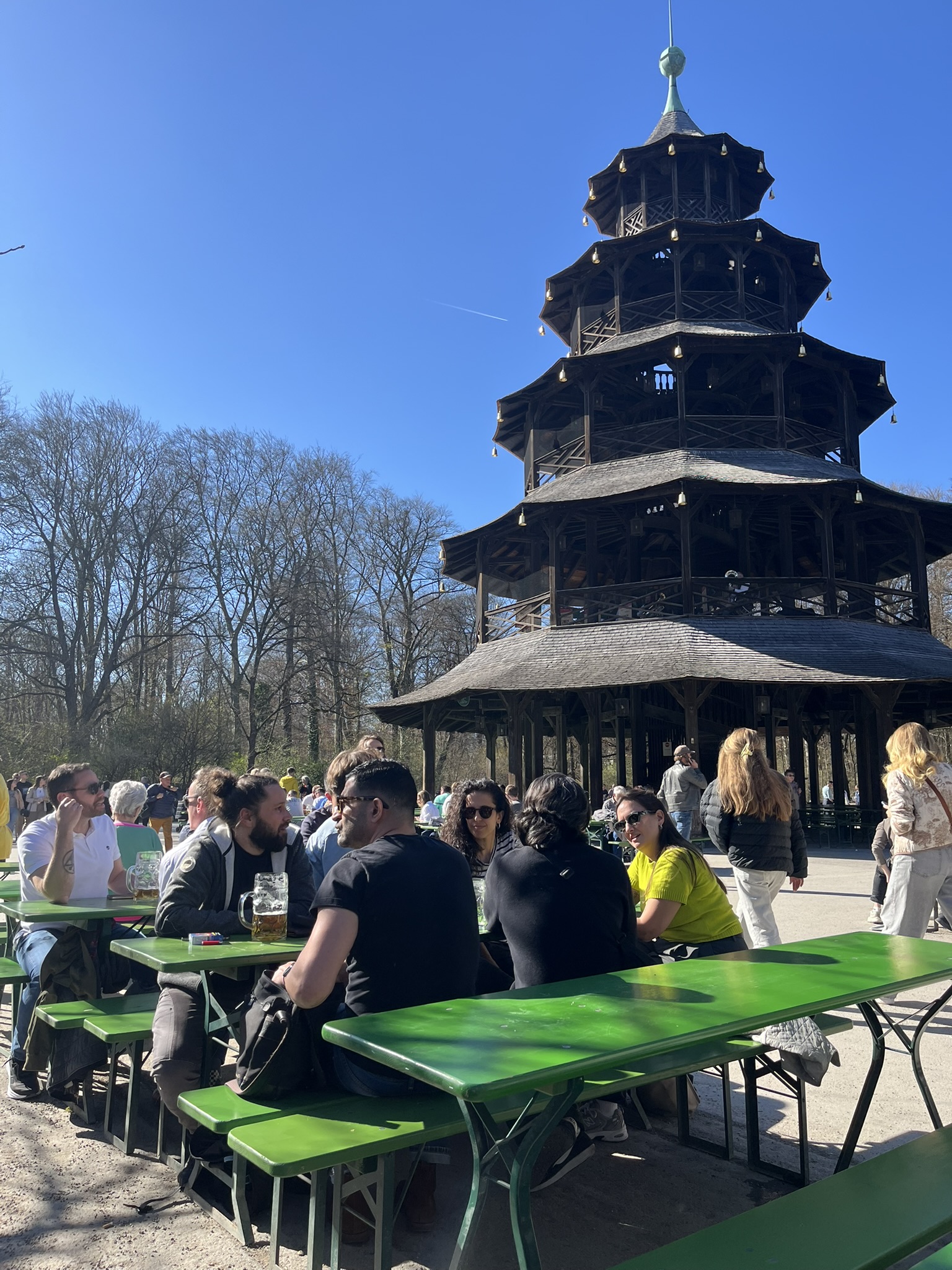
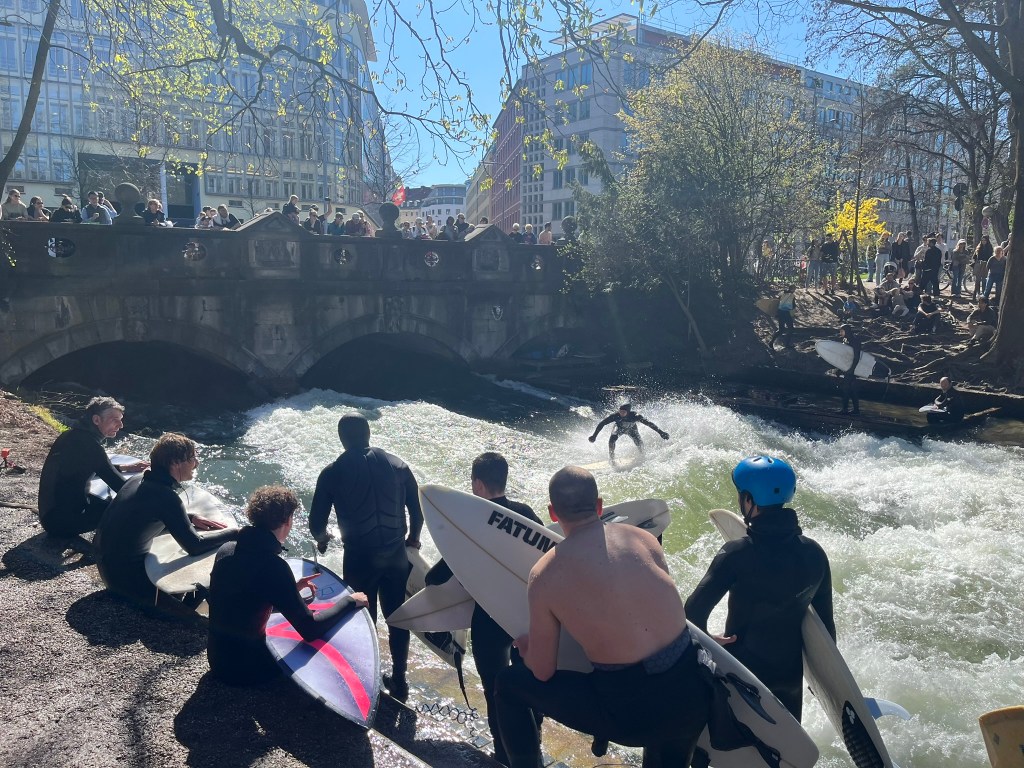
Spend a sunny day walking through the English Gardens to see brave wet-suited surfers on the man-made river waves and stop at the Biergarten am Chinesischen Turm (beer garden at the Chinese tower) for a fresh-baked pretzel and a mug of beer, Maracuja (passion fruit) juice with water, or Johannisbeere (black currant) juice with water. Kids can play on the jungle gym while adults chat and people-watch, all while listening to the lively oompah band playing from the second level of the tower.

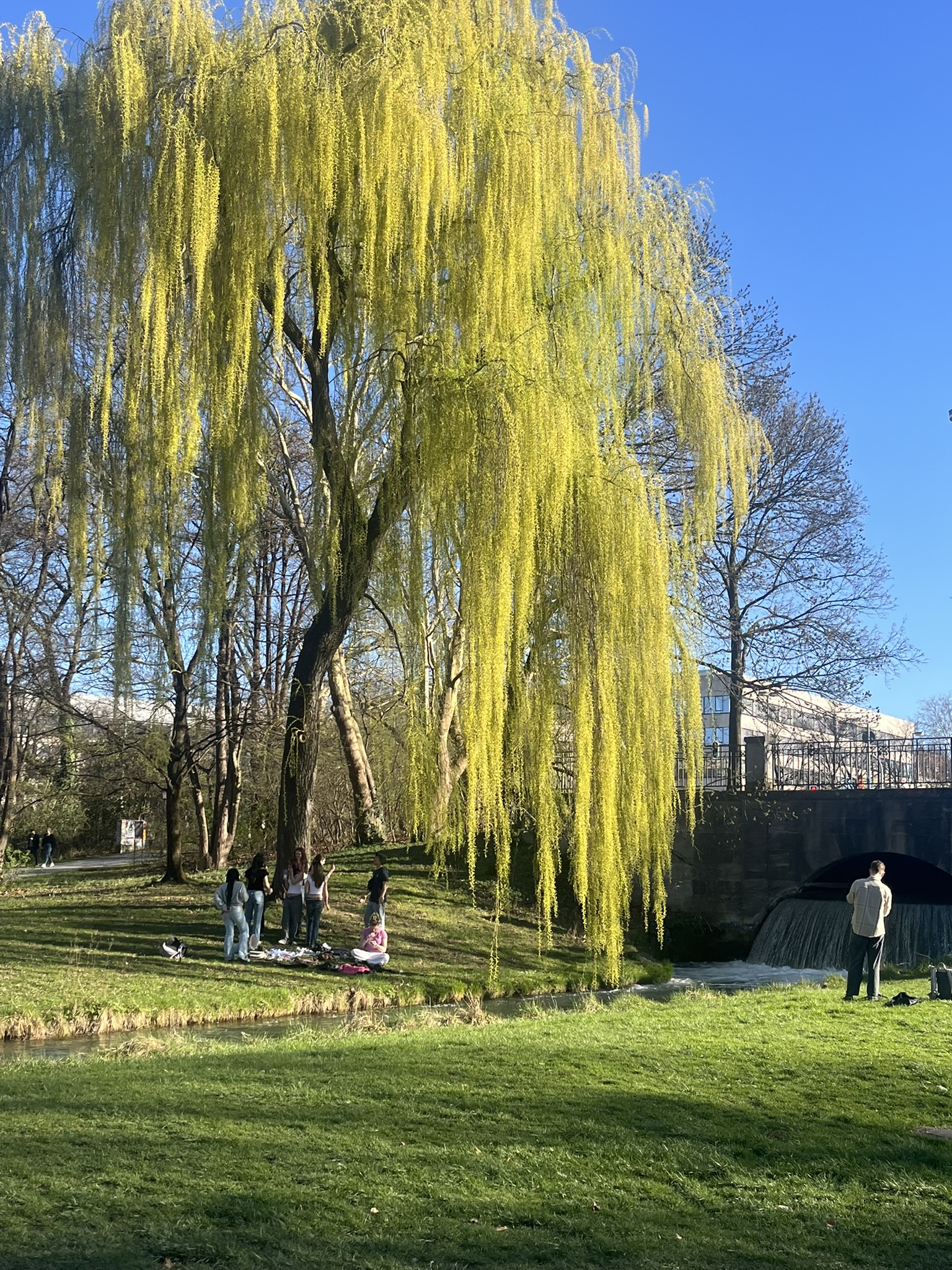
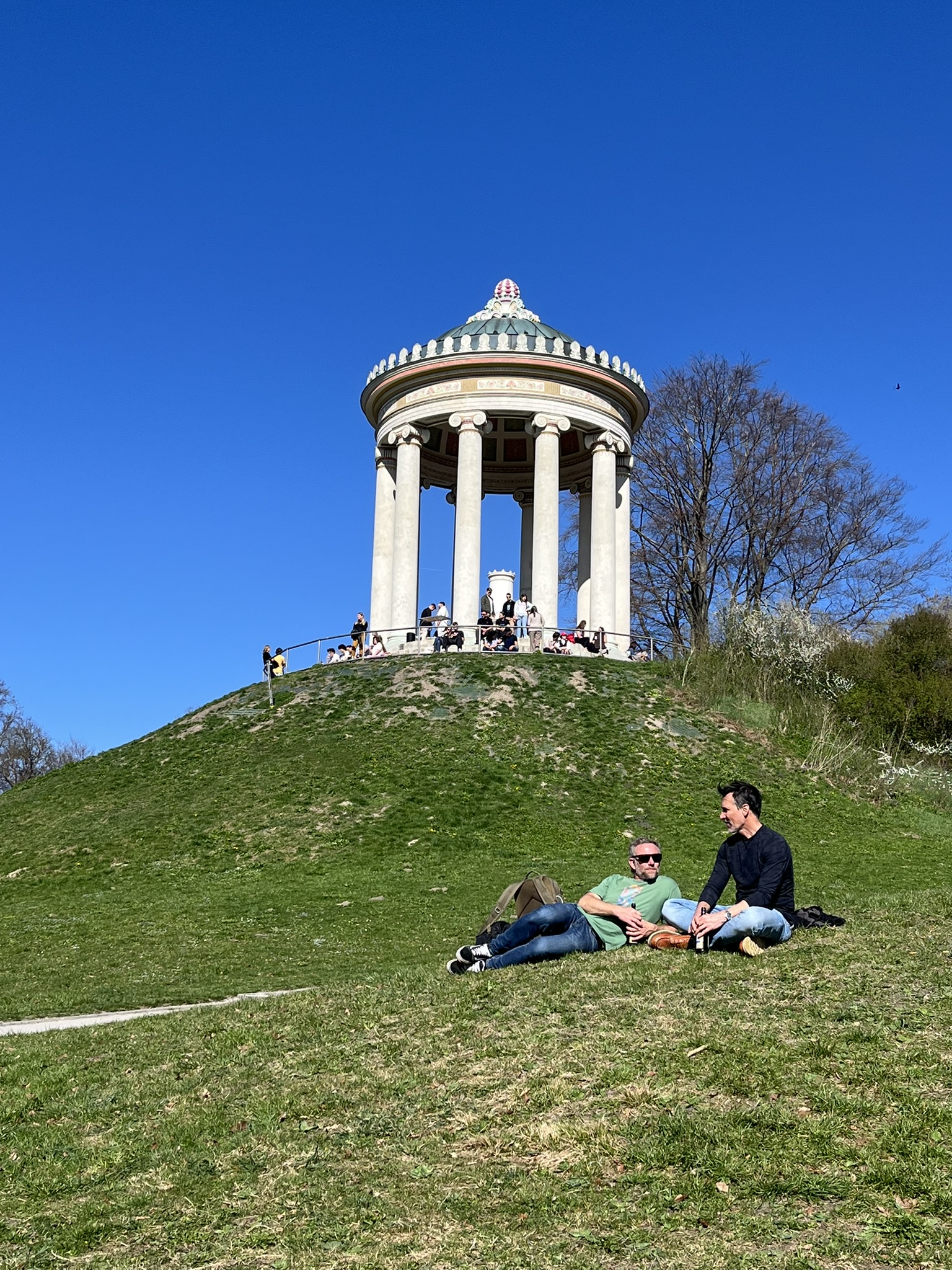
On a nice day, the English Gardens fills with picnickers, volleyball players, surfers, and groups of friends.

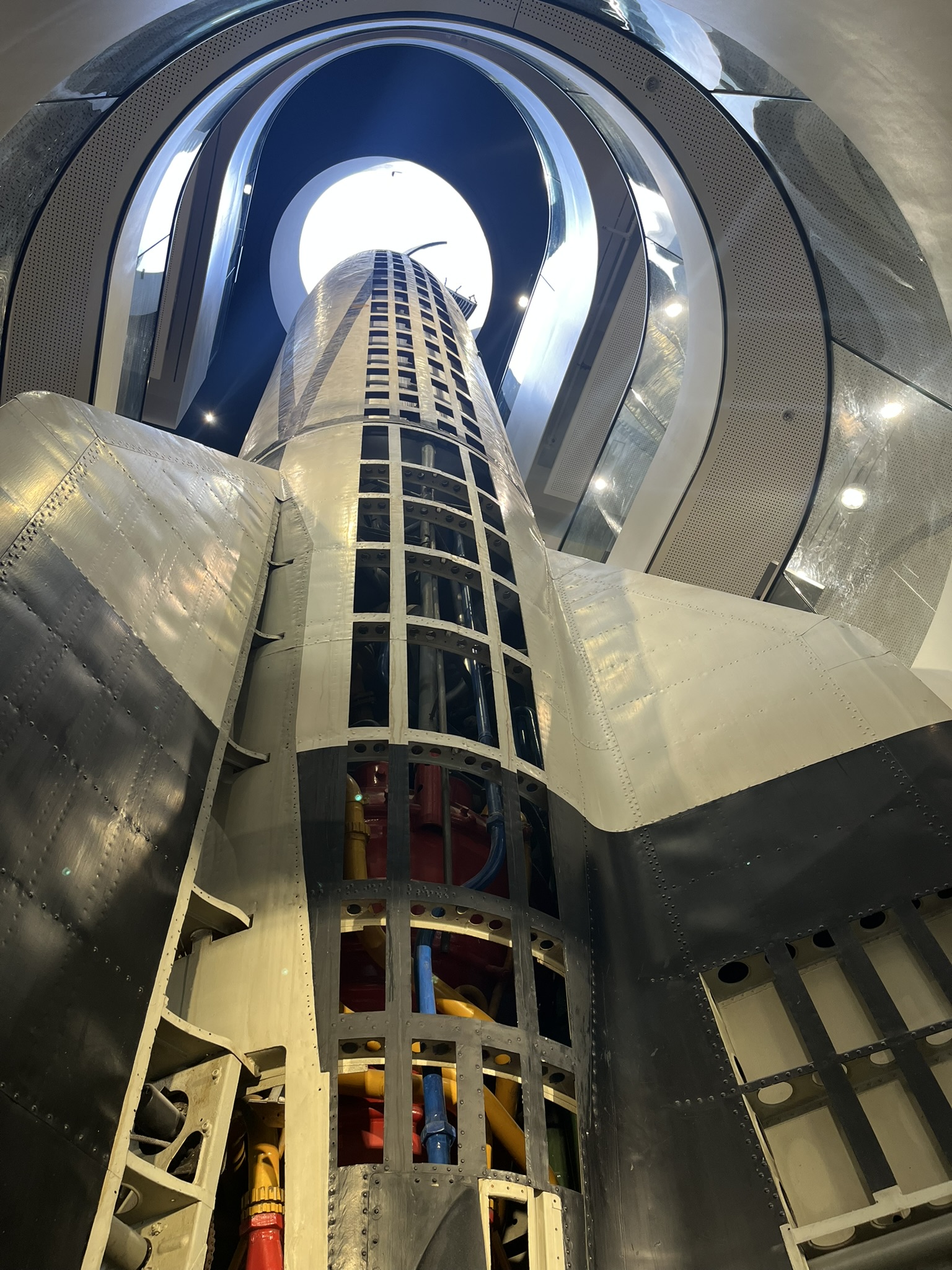
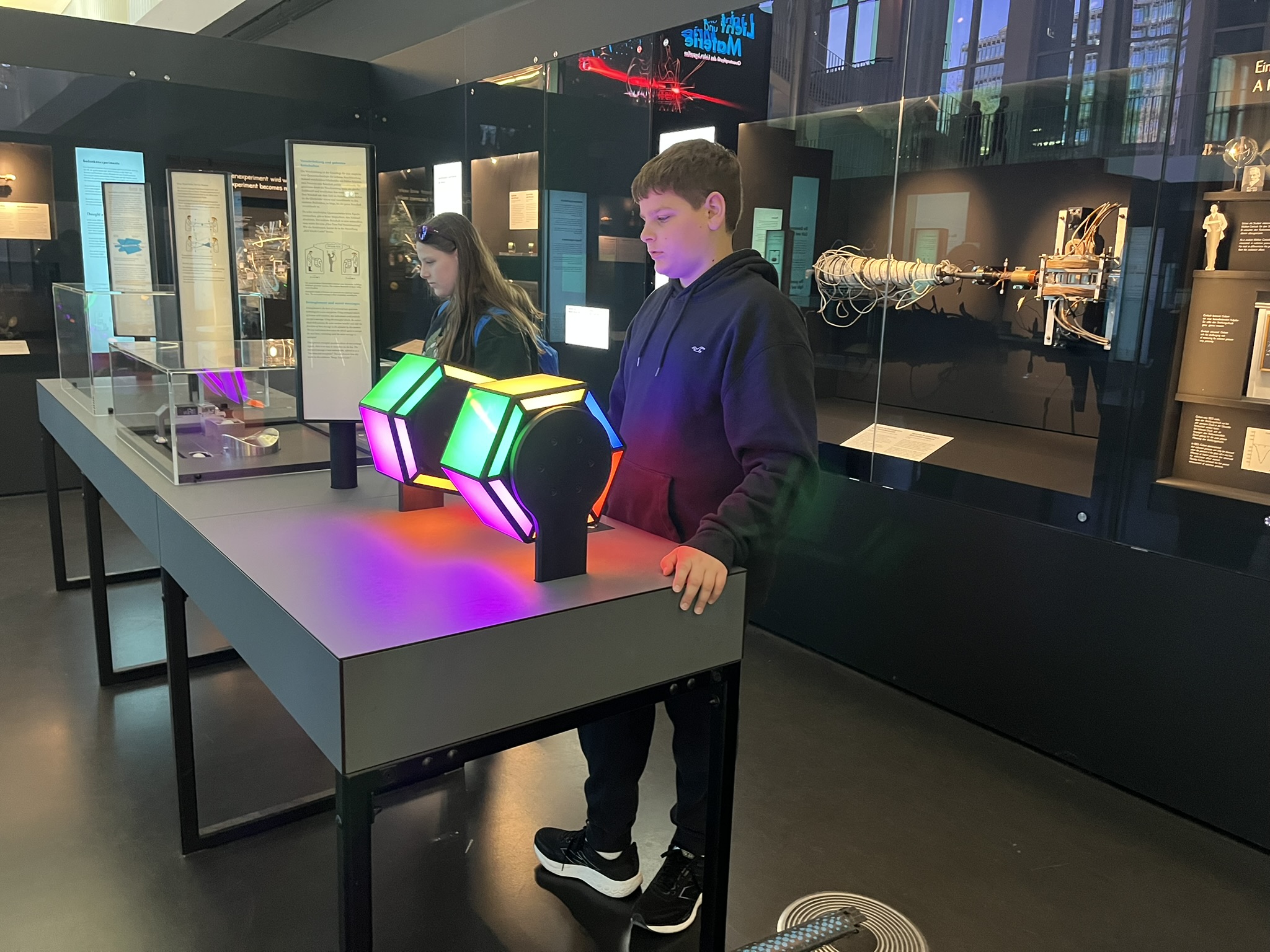
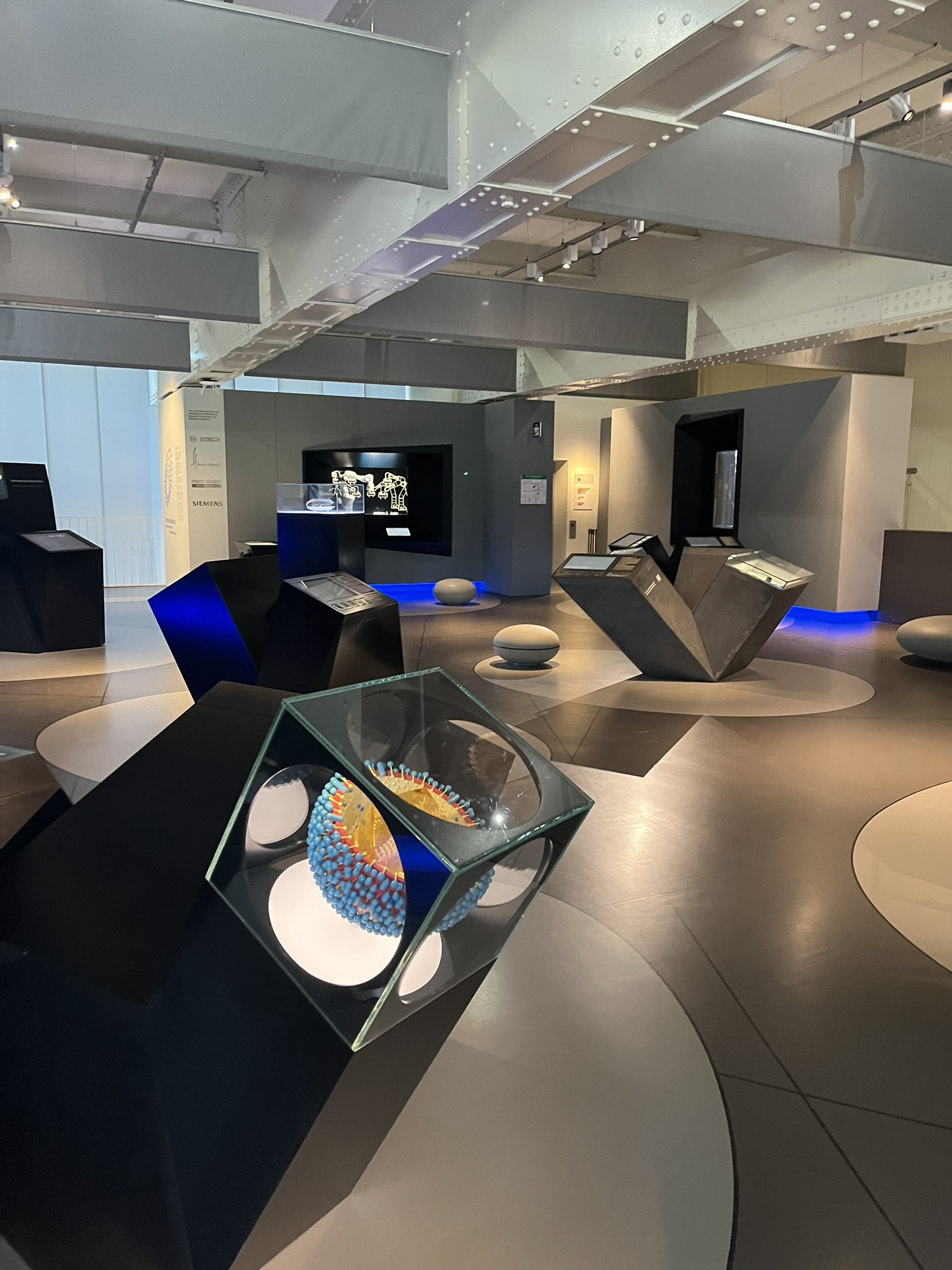
For a dose of education, head to the Deutsches Museum, one of the world’s largest natural science and technology museums. Through hands-on experiments and interactive exhibits, explore the physics of light and sound, observe chemical reactions, and learn about human body physiology. An enormous aviation center and historic airplane hangar allow visitors to climb into cockpits and pilot model airplanes. In the Musical Instruments exhibition, try your hand at playing the theremin—an electronic musical instrument played by placing hands in the air between two antennas that sense the hands’ positions and control frequency and volume.

Deutsches Museum interactive exhibits make learning fun.

After two nights in each city—Davos, Switzerland; St. Anton am Arlberg, Austria; and Munich, Germany—a flight out of Munich Airport concludes an adventure exploring towns in three different countries all within one week. Thanks to Eurail’s flexible Global Pass, it is a fantastic way to get a taste of multiple countries with just one set of airline flights!

Eurail offers speedy and smooth transportation, and window seats to beautiful scenery.

Looking for more ski opportunities? Visit bestofthealps.com to learn more about top ski resorts that help define and cultivate Alpine culture. Best of the Alps is a collection of 9 Alpine resorts that showcase mountain village magic and charm in Switzerland, Austria, France, and Italy. For more than 30 years, the Best of the Alps organization has encouraged exploration of the cultures, communities, traditions, natural wonders, and distinctions of these remarkable Alpine destinations: Chamonix-Mont-Blanc and Megève in France; Cortina d’Ampezzo and Courmayeur in Italy; Crans-Montana and Davos Klosters in Switzerland; and Kitzbühel, Lech Zürs am Arlberg, and St. Anton am Arlberg in Austria.

Best Art Museums & Architecture for a Weekend in Barcelona

By Megan Kudla

Barcelona is a haven for art, especially being home to some of Antoni Gaudí’s most famous architectural wonders. The city also has world-class museums, with works that date back from the medieval times to more contemporary eras. If you’ve only got one weekend in Barcelona, but want to see as much art as possible, here’s a guide to the some of the best art museums and architecture tours.

Tip: If you’re extending your trip, you can purchase the ArticketBCN pass, which gets you entry into 6 of the top art museums across the city for a flat fee of 38€. (Plus, it comes in the form of a little red passport that gets stamped along the way. How cute is that?)

Sagrada Familia
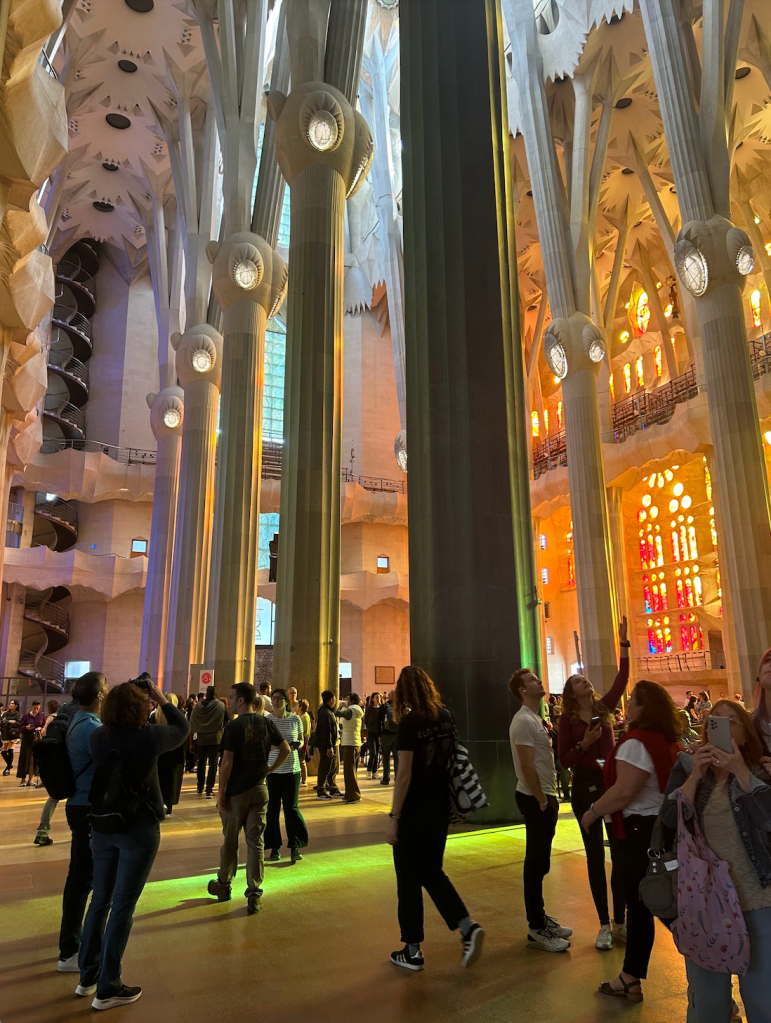
The pinnacle piece of architecture in Barcelona, the Sagrada Familia, should be first on your list. It’s also the most popular attraction in the area—when you are booking your flight and your hotel, go ahead and book this, too. Tickets range from 26€ to 40€. Marvel at the intricate sculptures adorning the outside and the mesmerizing colors that dance below the stained glass on the inside of this architectural monster, which is still under construction to this day.

Tip: The beginning and end of the self-guided tour are located on the outside of the Sagrada Familia, where you can admire the intricacies of Gaudí’s designs that display the Nativity Façade and the Passion Façade. This means that you should bring a jacket if you’re visiting during the fall or winter months.

Gaudí’s designs at the Sagrada Familia feature intricate sculptures.

Park Güell
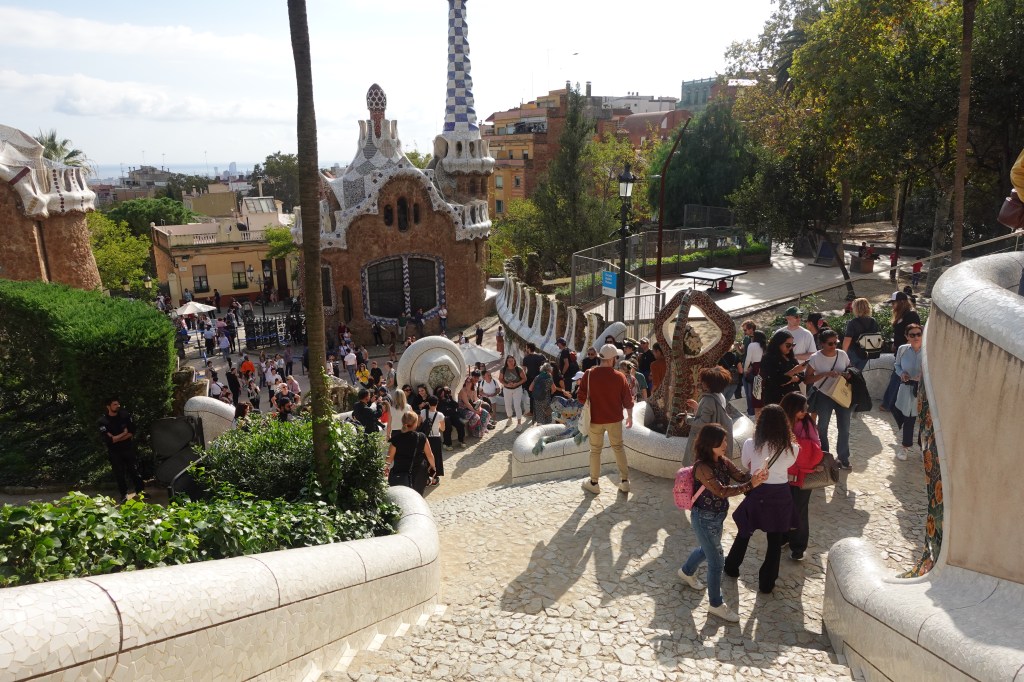
The second most popular Gaudí architectural site is probably Park Güell, a maze of green
spaces, viaducts, terraces, colorful mosaics, and more. Tickets are 18€ starting in 2025, and
you’ll also want to buy these ahead of your trip. As soon as you enter the park, you can
download an app with a helpful map that will direct you to the different parts of the park to
enjoy at your own leisure.

Tip: The Gaudí House Museum, where he lived from 1906 to 1925, is a separate ticket you can add on to your park entrance fee.

The beautiful Park Güell offers much to explore.

Casa Batlló
The final Gaudí tour to book in Barcelona would be Casa Batlló. Gaudí was commissioned by D. Josep Batlló in the early 1900s to redesign this building that would have been otherwise demolished. His inspiration pulled heavily from water, paying heed to organic shapes in the structure, as well as how natural light played with color upon ascending the multiple levels. Budget around 30€ for a general ticket.

Tip: Book an early time slot; the rooms are small, with lots of visitors clamoring to see this one-of-a-kind house. Then, if you find yourself particularly interested in the Gaudí style, put Casa Milá and Casa Vicens on your list.

Gaudí’s redesign of the Casa Batlló building is water-inspired.

Palau de la Música
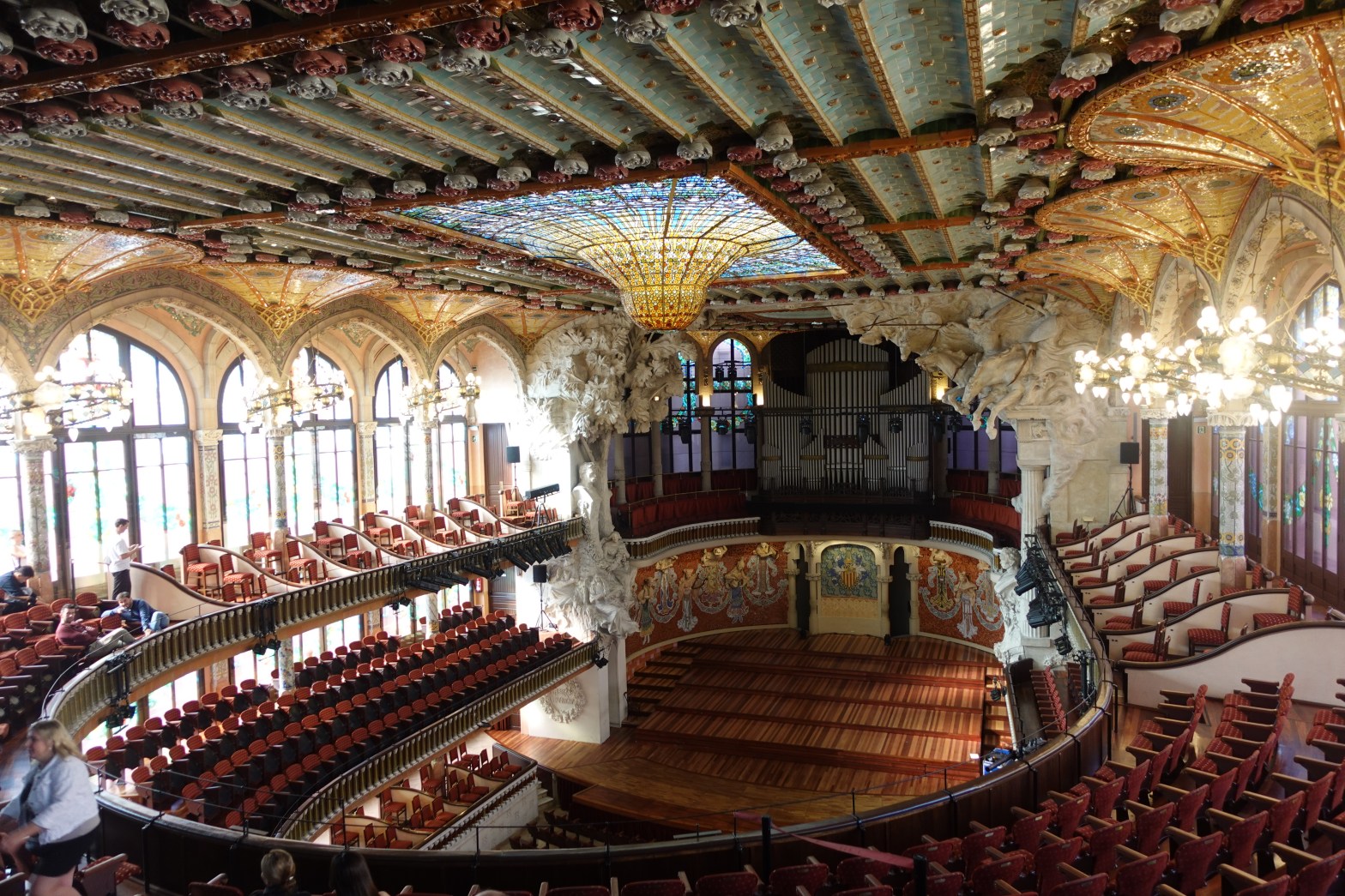
The shorter, slightly cheaper tour of the Palau de la Música was worth the time and money. Tickets are 22€, or only 16€ if you are over 65 or under 35 years old. The guided tour pairs you with an expert who will take you through the beautiful Lluís Millet Room and balcony, the busy foyer (which doubles as a restaurant-cafeteria), and, of course, the colorful and breathtaking Concert Hall.

Tip: The concert schedule is filled with opera, flamenco, coral, symphonic acts, and more. Plan a tour in the afternoon, then buy tickets to see the venue live and in action in the evening.

Palau de la Música’s Concert Hall is an exquisite venue for musical events.

Museu Picasso
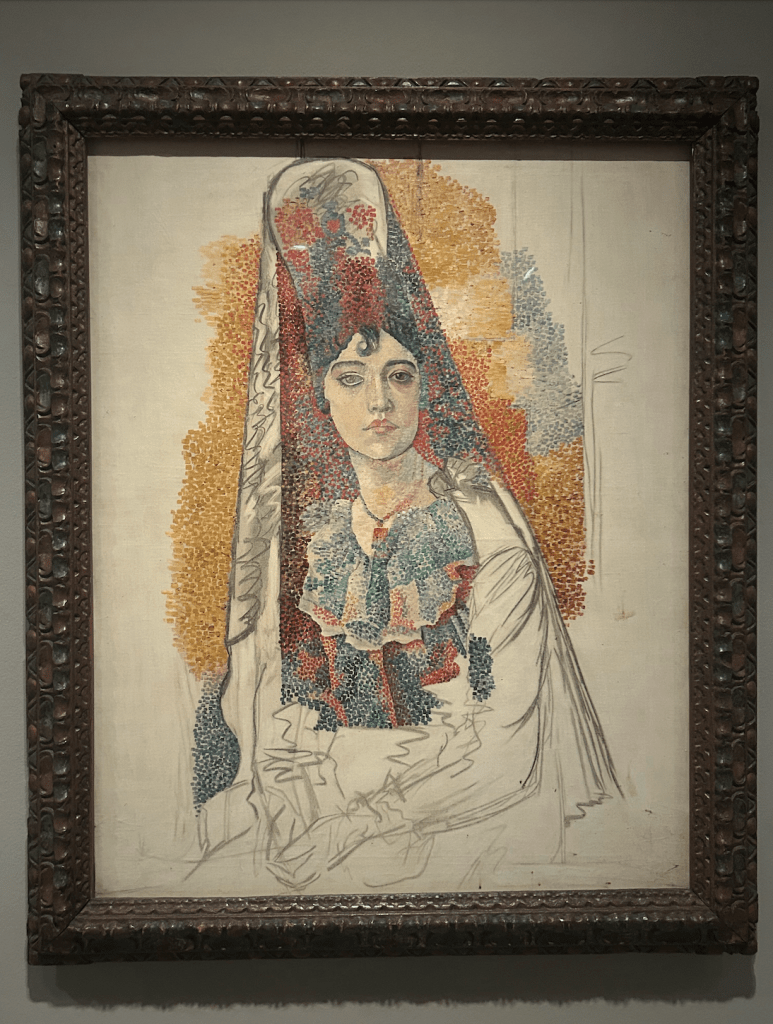
Part of the ArticketBCN, Museu Picasso was one of my favorite art museums. Not only does it house around 5,000 of Picasso’s works, but it’s a great showcase of the wide range of his
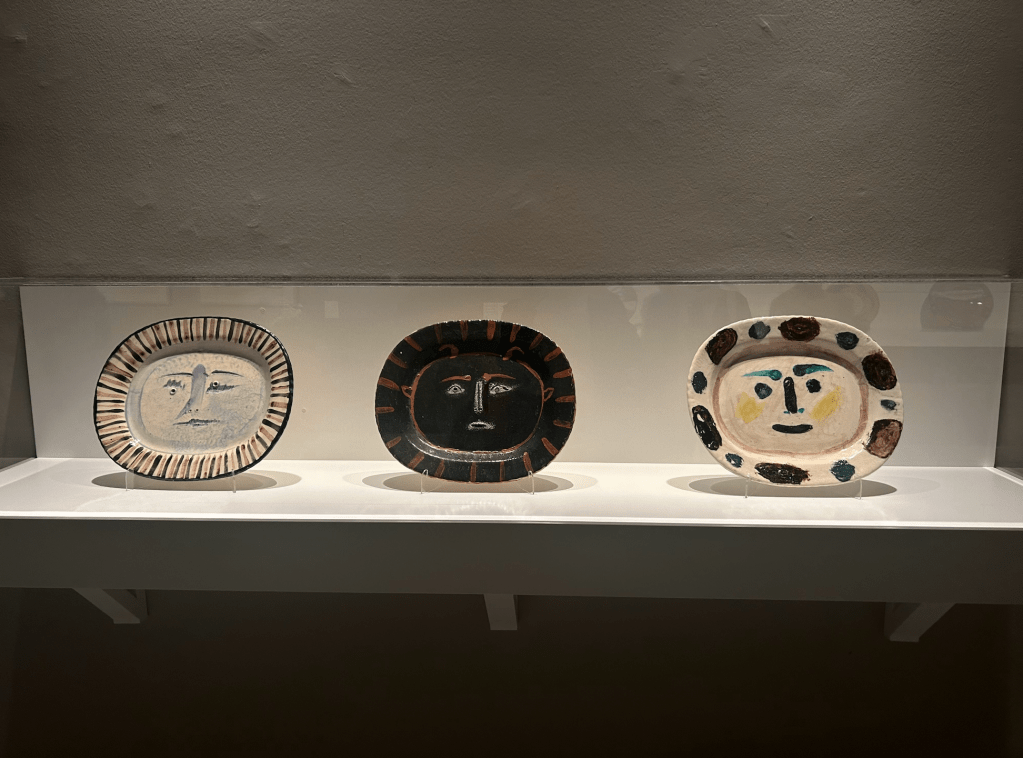
artistic talents. The cubism that Picasso is known for is not the only style he’s mastered. When visiting, you’ll get to see work from all periods of his life, from the classical work when he began studying art, to his Blue Period, and even ceramics.

Tip: It’s right next door to the Modern Contemporary (Moco) Museum and across the small
street from the Museu Etnològic i de Cultures del Món. Why not make it a full day, with a stop at the corner Brunells pastry shop in between?

Museu Picasso features more than 5,000 of Picasso’s works.

Museu Nacional d’Art de Catalunya
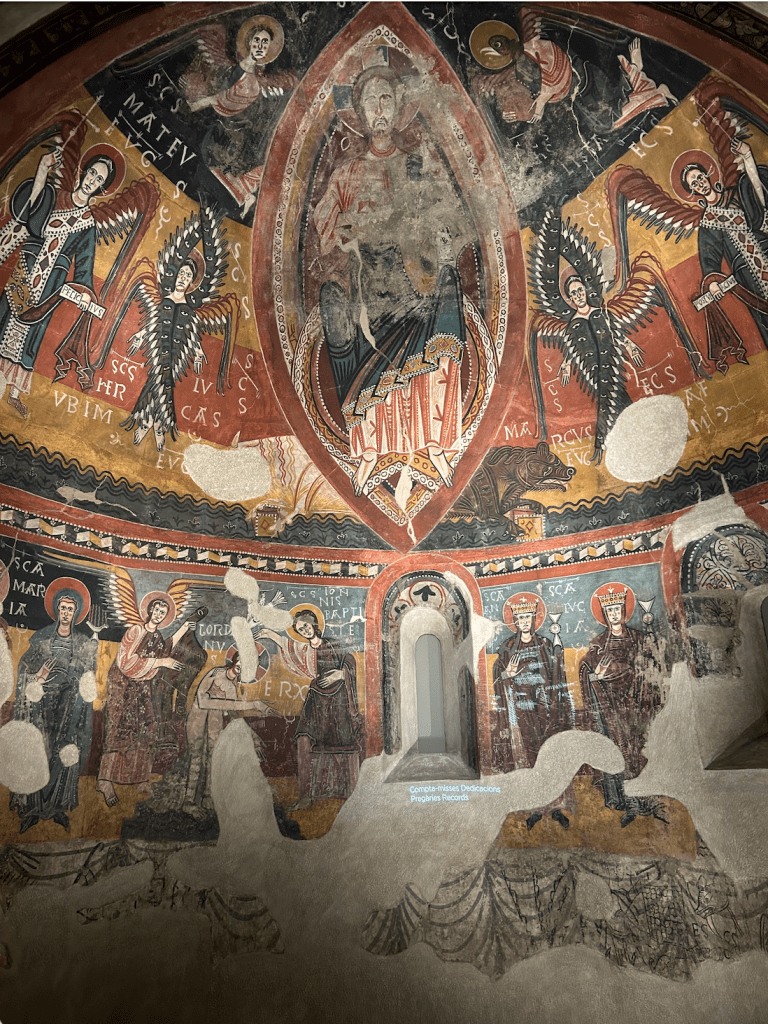
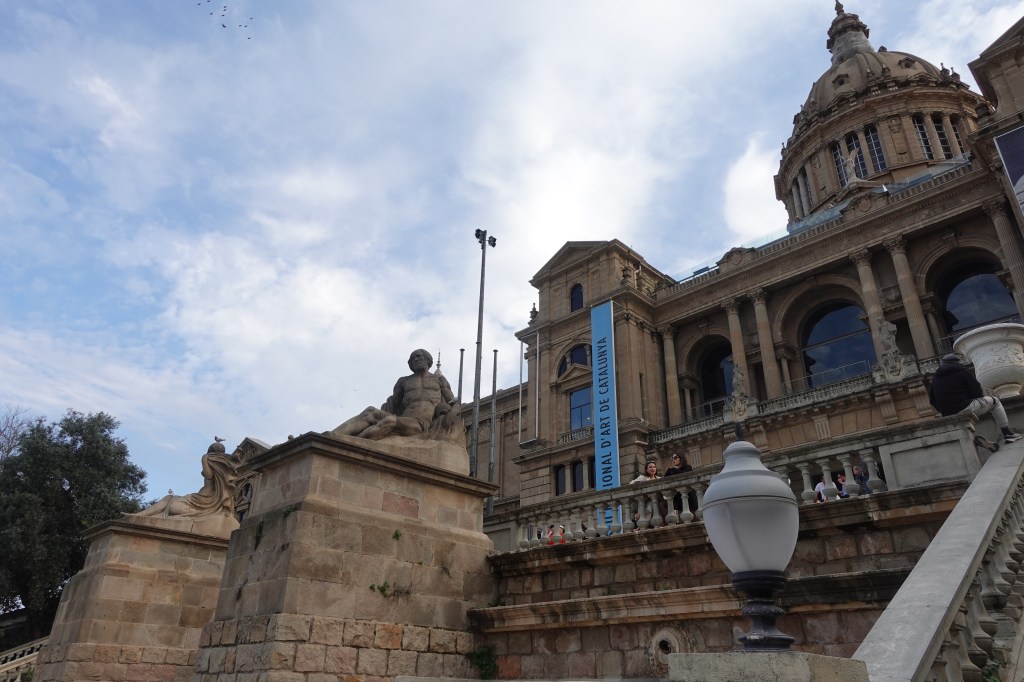
The Museu Nacional d’Art de Catalunya is as much an architectural site as it is an art museum. Located in the Parc de Montjuïc, you won’t miss the towering Palau Nacional on top of a huge hill. Take the many steps (or public escalators!) to the top, and hours of browsing artwork is at your fingertips. A top highlight is the collection of Romanesque art with murals that date back to the 11th to 13th centuries.

Tip: This is also a great stop for an aerial view of the city and mountains. If you’ve been looking for a photo opp, here it is!

Artwork and photo opps abound at Museu Nacional d’Art de Catalunya.

You can make a whole weekend surrounding just the art and architecture of Barcelona.
Between galleries, house tours, and live performances, you’ve got a city that’s filled with
centuries of artistic feats that now make this European city one of the most sought-after tourist destinations. Plan ahead, but don’t overbook each day—you’ll want time to savor each special site.

Communing With the Past in Tantalizing Toledo

The city of swords, marzipan and El Greco is a perennial favorite with tourists in Spain

By Randy Mink

I could spend hours roaming through the tangle of cobbled pathways that thread the historic core of Toledo, one of the best places in all of Europe for getting lost in a medieval dreamscape. Loaded with Old World magic, Toledo projects the very essence of Spain and was once its capital.

On a recent visit to this intriguing city rich in Christian, Jewish and Muslim heritage, I never tired of probing the labyrinth’s nooks and crannies while popping into souvenir stores, touring museums, and traipsing through an ancient synagogue, the world’s fourth-largest cathedral and a former mosque built during the Moorish occupation.

The Mosque of Cristo de la Luz, later a Catholic chapel, was one of 10 mosques in Toledo during the Moorish period. (Randy Mink Photo)

Like the Old City district of Cuenca, another tourist favorite in Spain’s Castilla-La Mancha region, Toledo’s extensive medieval quarter sprawls across a rocky mount bounded by the original city walls and surrounded by a river below.

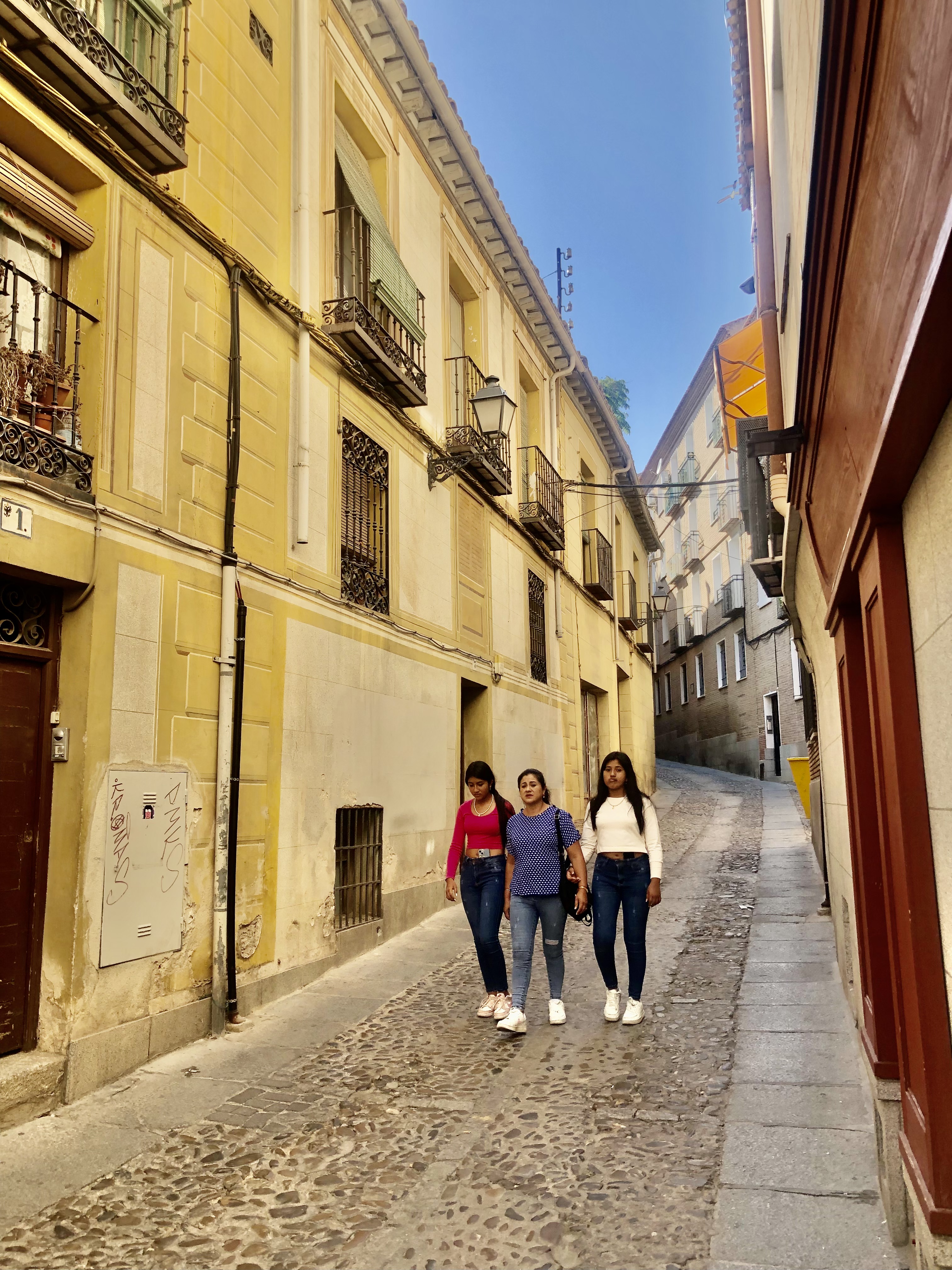
Located 55 miles southwest of Madrid, Toledo (pronounced “to-LAY-do” in Spanish) overflows with tourists—attracting a million of them every year—and its pedestrian alleyways abound with gift shops. I’m not ashamed to say I loved shopping for refrigerator magnets and other tchotchkes in Toledo, but I also liked stepping away from the commercialism to explore shady back lanes and sunlit plazas accented with wrought-iron balconies, grillwork windows and massive, centuries-old wooden doors. Some of Toledo’s narrow winding streets do allow cars, however, so be prepared to stand flat against the buildings to spare your feet from being run over by drivers barreling up and down the steep inclines.

The narrow streets of Toledo’s Old City beckon tourists who relish getting lost in the past. (Randy Mink Photo)

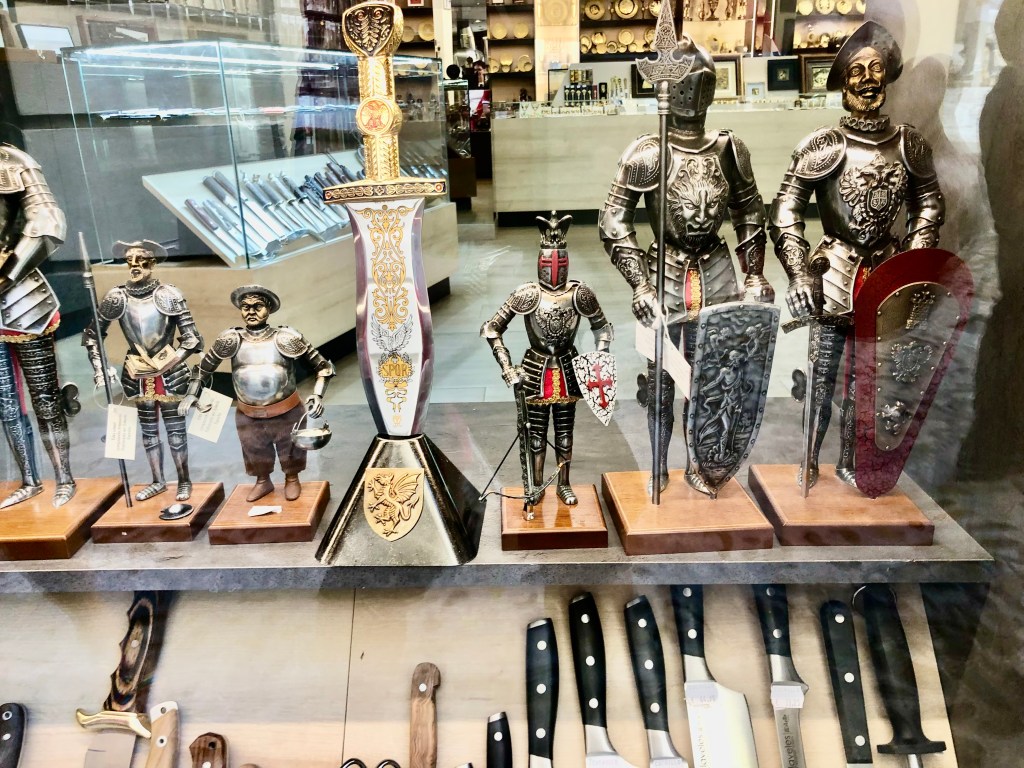
Long known for its quality cutlery, Toledo has many sword stores and calls itself the Sword Capital of the World. At the Zamorano sword factory, where we watched craftsmen at work, one fellow traveler shipped home two swords, fitting reminders of this fortified city that harks back to the days of knights in shining armor. Since the Middle Ages, Toledo has excelled in steel craftsmanship. Stores offer fine selections of knives, letter openers and scissors as well as swords, plus knight figurines in all sizes.

Also catching shoppers’ eyes is the art of damascene—the inlay of intricate gold and silver threads into a steel base. Top sellers include damascene jewelry, scissors and tableware.

Toledo’s historic core counts numerous shops that specialize in swords, daggers, knives, scissors and knights in shining armor. (Randy Mink Photo)

Candy is always a good thing to bring home, and I stocked up on marzipan at Santo Tomé’s flagship store. The seventh-generation family company has been making its famous almond paste confection since 1856. For gift-giving, I bought wrapped boxes of six-inch marzipan bars inscribed “T-O-L-E-D-O,” but my own bag of marzipan pieces was gobbled up before I got to the Madrid airport. (I even started on the bag originally intended for the neighbor watching my cats—it was so irresistibly fresh.)

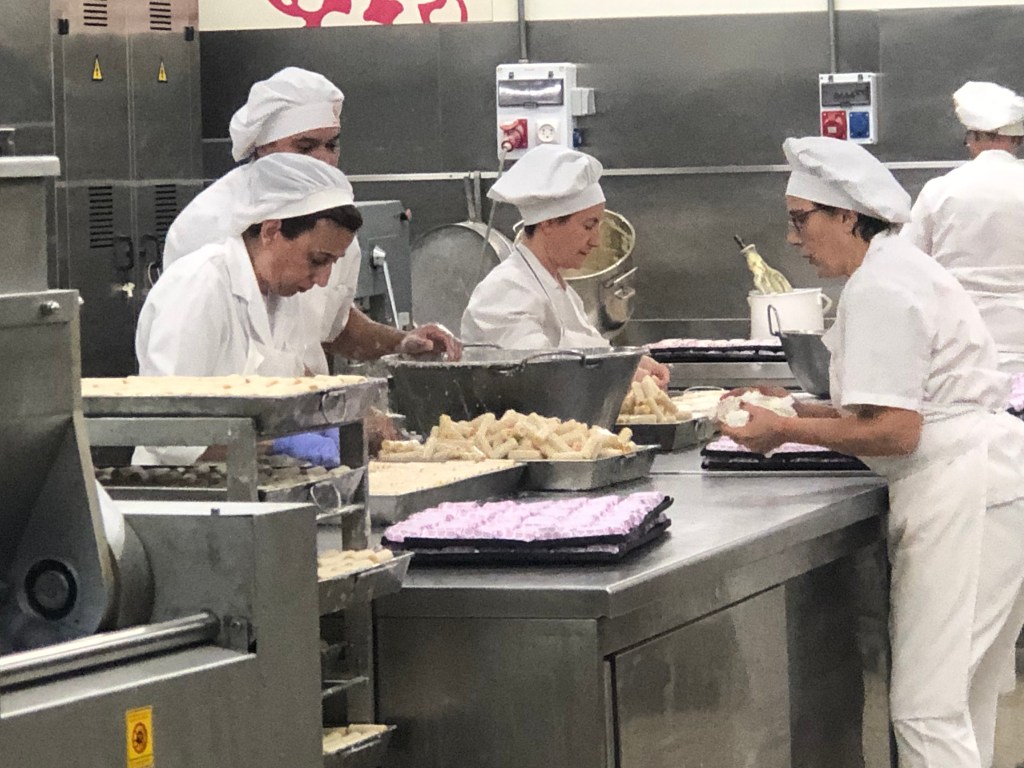
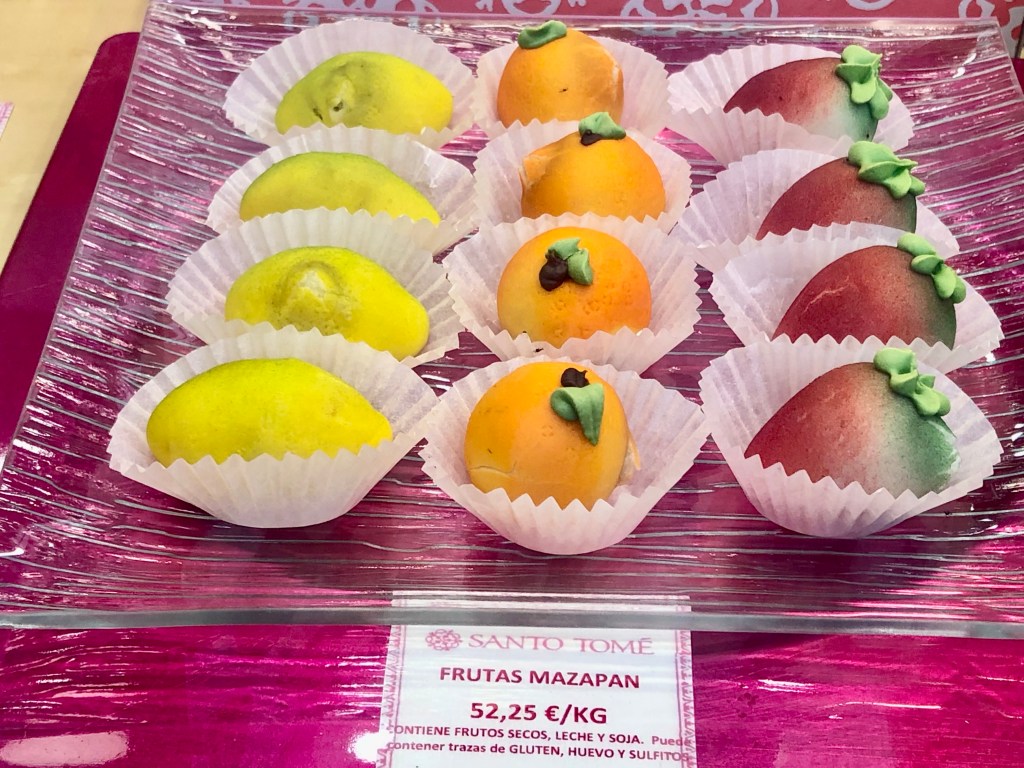
Santo Tomé marzipan consists of 57 percent crushed almonds, 40 percent sugar and 3 percent honey, with no preservatives or extra ingredients. The most colorful items are in the shape of fruits—oranges, lemons, strawberries, etc. Some pieces are studded with pine nuts or whole almonds or come with a dab of jam. The flagship store/bakery on Calle Santo Tomé occupies a former convent. (Nuns were once the main provider of marzipan, and a few convents in Toledo still sell it.) Santo Tomé has three other locations in town, including one on Plaza de Zocodover, the main square.

Tours of Santo Tomé marzipan bakery include a peek into the kitchen where bakers are making the almond-based confection. (Photo credit: Santo Tomé)

Santo Tomé marzipan is the perfect souvenir of Toledo and makes the perfect gift for those back home. (Randy Mink Photo)

In between shopping and wandering footloose in the dense medieval mazes, I checked off a few places from my must-see list.

The Alcazar, a former fortress and royal residence, crowns the highest point in the city and is now a vast military museum with excellent exhibits on the history of Spain. Rebuilt under dictator Francisco Franco after the Spanish Civil War, the Alcazar had been heavily damaged during the siege by loyalists in 1936. 

At the other extreme, Underground Toledo is worth a look. Archaeologist and tourism guide Diego Esteban Sánchez takes small groups into the bowels of the medieval district, unlocking doors that lead to well-lit restored sites like a Roman bath, a Jewish house and an ancient well.

The same sense of discovery is offered by cozy, atmospheric eateries like Restaurante La Cave, a historic building with brick-lined rooms in cave-like spaces below street level.

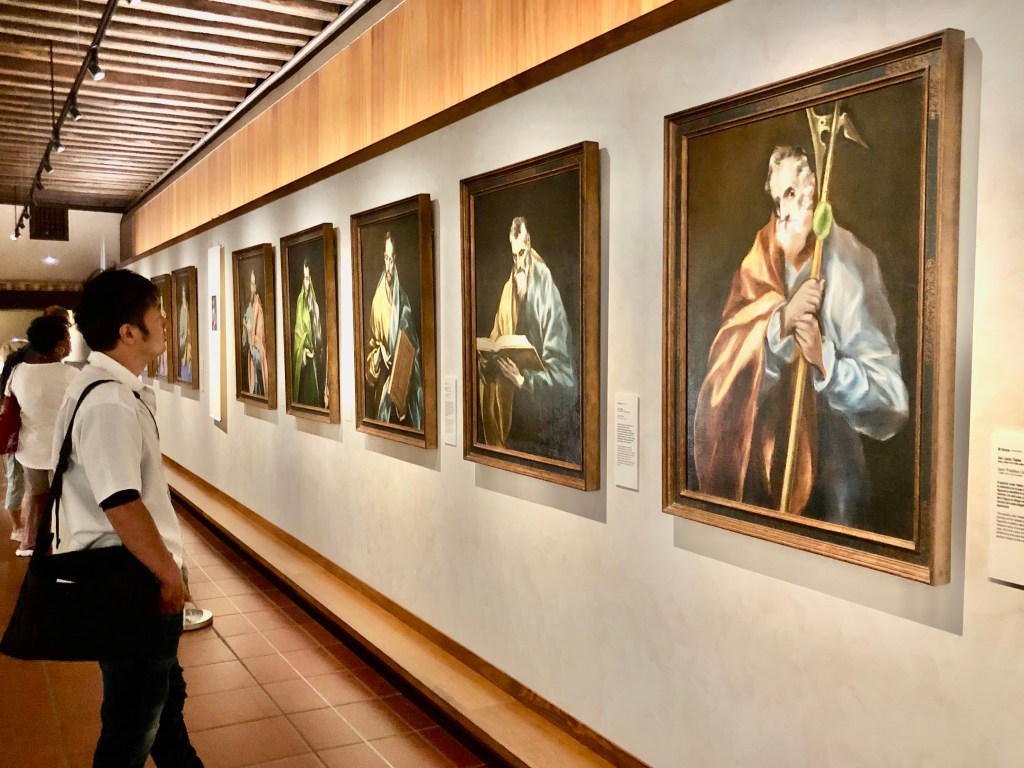
To art lovers, Toledo is virtually synonymous with the Greek-born painter Domenikos Theotokopoulos, better known as El Greco, or “The Greek.” He moved to Spain in 1571 from the island of Crete and, after centuries of neglect, is today venerated as one of the country’s old masters, along with Goya and Velazquez.

The El Greco Museum is one of Toledo’s top visitor attractions. (Randy Mink Photo)

El Greco’s religious canvases, distinguished by bold colors and elongated figures in voluminous robes, can be admired at several locations, including the El Greco Museum. Other El Grecos are found in the Santa Cruz Museum, the Gothic-style Cathedral of Toledo (along with works by Raphael, Titian, Goya and Caravaggio) and the Convent of Santo Domingo el Antiguo, which houses the crypt where the artist is believed to be buried. 

In Toledo’s old Jewish Quarter, El Transito Synagogue is a prime tourist draw. (Randy Mink Photo)

One could a whole morning or afternoon admiring the statuary, artwork and architectural flourishes of the Gothic-style Cathedral of Toledo, one of Spain’s most impressive churches. (Randy Mink Photo)

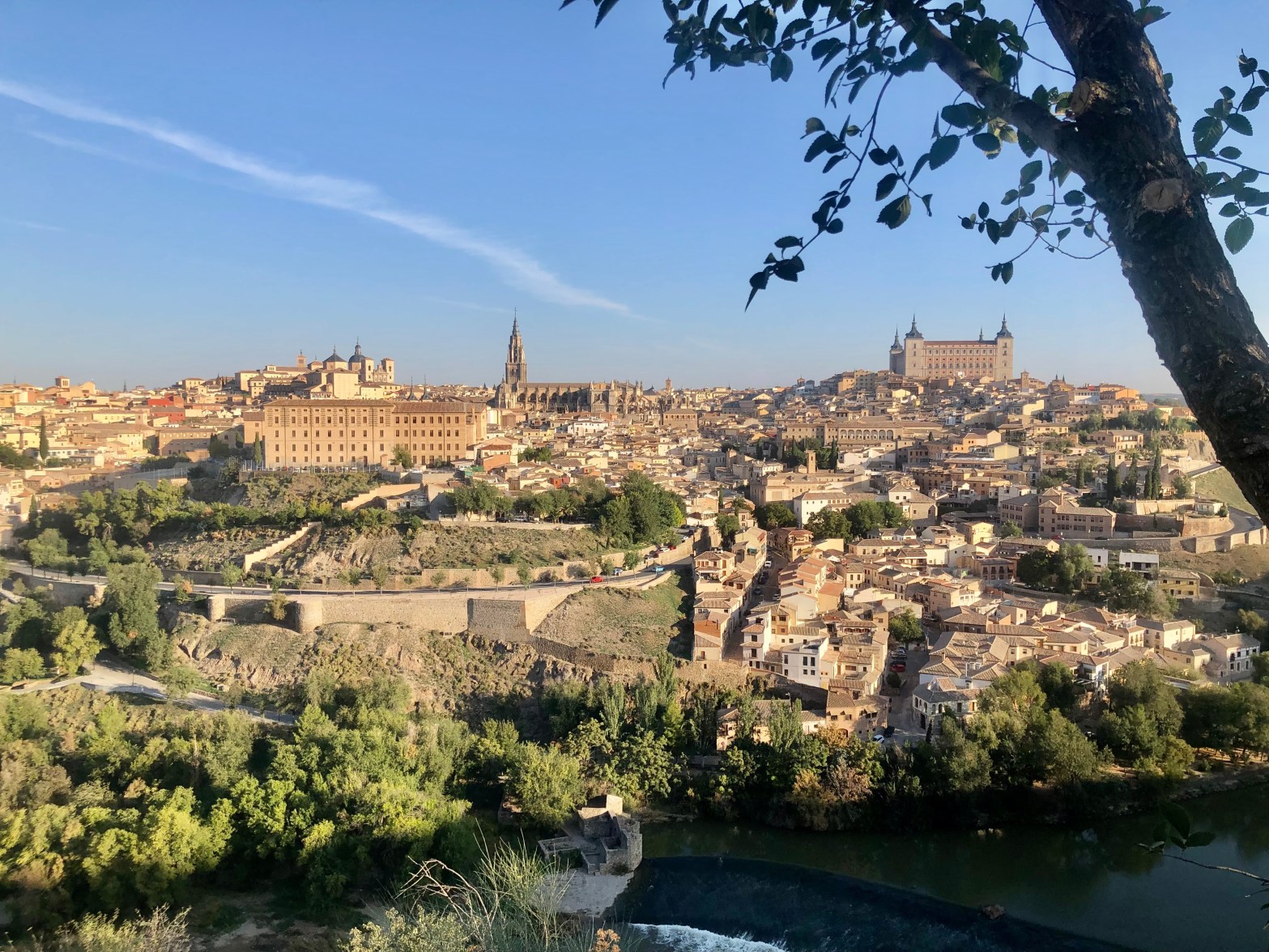
The El Greco Museum resides next door to the 14th century El Transito Synagogue with its Arabic-influenced interior decoration, magnificent coffered ceiling and museum of Sephardic Jewish culture. Here in the old Jewish Quarter, the park across the street has a memorial to El Greco and a terrace affording panoramic views of the Tagus River (Rio Tajo) and city of Toledo, truly one of the most captivating places in all of Spain.

For more information on Toledo, Cuenca and other cities in Castilla-La Mancha, visit www.turismocastillalamancha.com.

Monastic and Modern: Central Spain’s Parador de Cuenca

Visitors to the Castilla-La Mancha region can absorb Spanish traditions at this strategically located monastery-turned-hotel

By Randy Mink

For soaking up the heritage and romance of Spain almost by osmosis, nothing beats staying overnight in one of the country’s government-owned paradors. Many of the parador network’s 90-plus hostelries occupy former castles, palaces, fortresses and other types of historic buildings. They’re a big hit with North Americans seeking out Old World flavor.

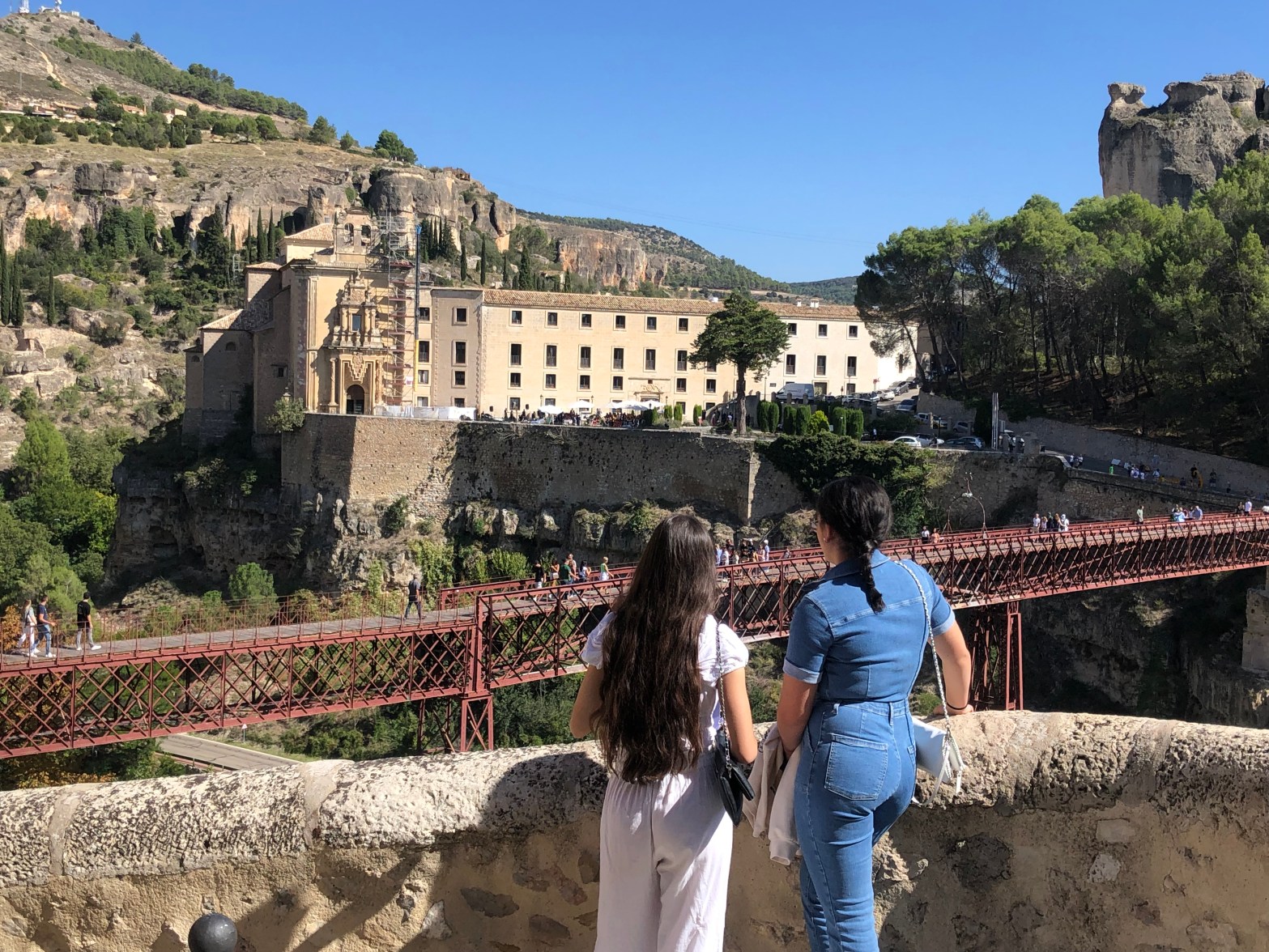
Both for its prime location and historical ambience, the 63-room Parador de Cuenca, once the monastery of San Pablo, makes an ideal home base in the enchanting city of Cuenca. Set on a rocky outcrop high above the Huécar River, the hotel affords postcard-perfect views of ancient buildings clinging to the cliffs across the gorge. And just steps from the entrance lies the city’s photogenic San Pablo Bridge, a gorge-spanning walkway that leads to the Ciudad Alta (Old City).

Parador de Cuenca overlooks the gorge-spanning San Pablo footbridge. (Randy Mink Photo)

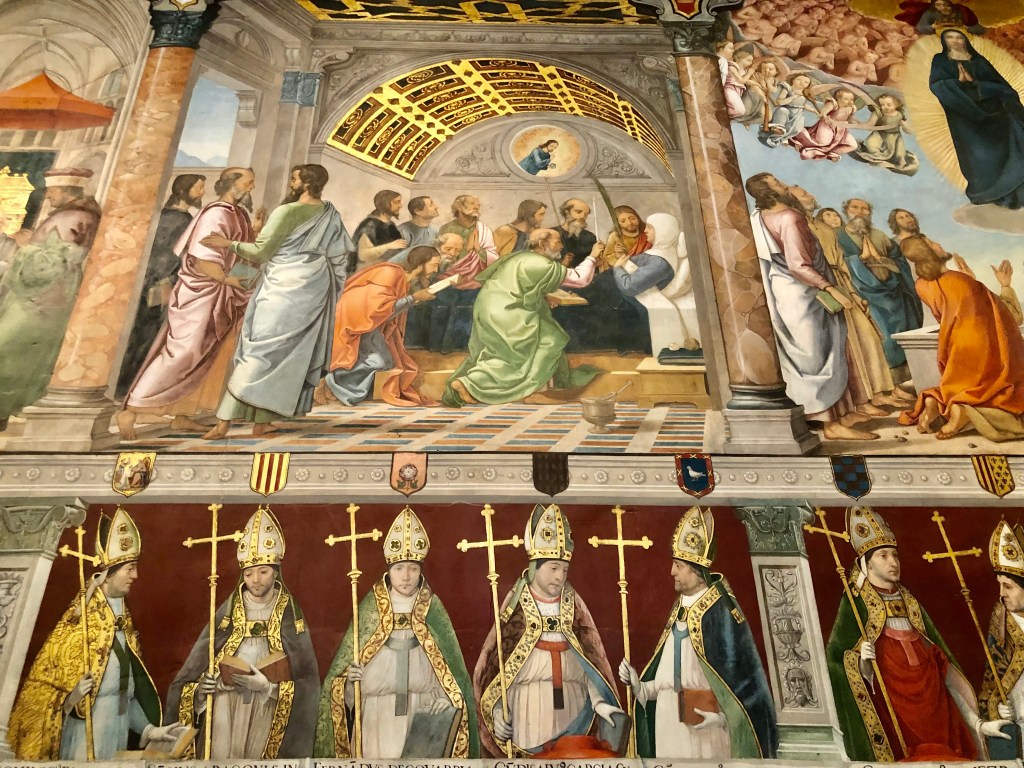
A destination in itself, Parador de Cuenca was built in the 16th century by the Dominican order. The monastery, with a Gothic-style church, Renaissance cloister and Baroque facade, was converted into a university in the 1800s and later served as a hospital, secondary school and military headquarters.

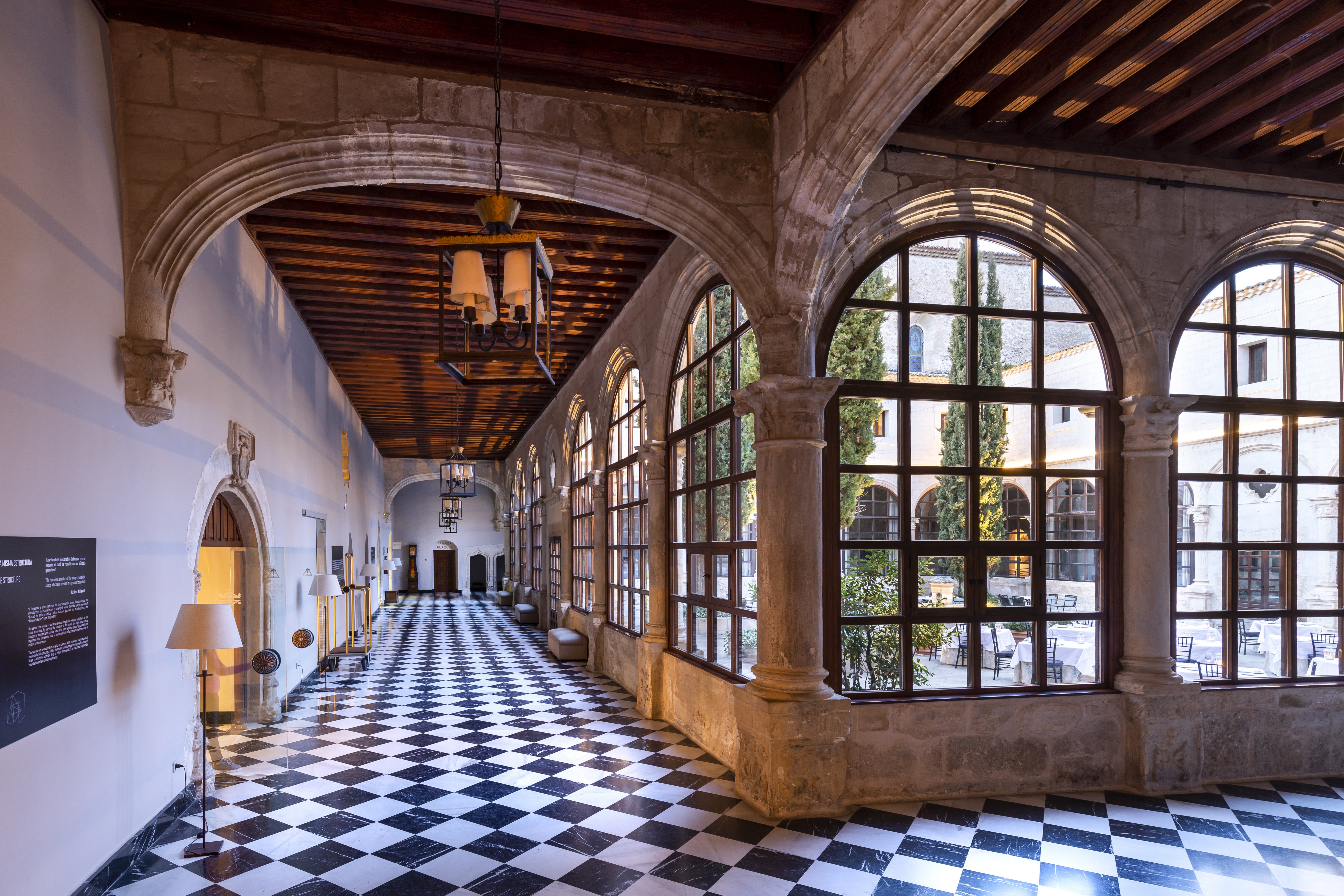
One of the hotel’s most striking features is the beautiful cloister that wraps around an open-air courtyard where you can enjoy a drink on a summer evening. The arcades, graced with semi-circular arches, beamed ceilings and black-and-white-tile floors, are accented here and there with antiques, including wooden chests and a grandfather clock. (On the Saturday of our visit, a wedding party had taken over the courtyard after a ceremony held under a tent in the plaza out front.)

The former monastery’s gracious cloister has been well preserved. (left, Paradores de Turismo de España; right, Randy Mink Photo)

Also impressive is the coffered wooden ceiling of the parador’s restaurant. Once a chapel where monks prayed, the vaulted room is a heavenly place for breakfast. At the buffet we helped ourselves to fresh fruits, meats, cheeses, yogurt, artisan breads and all kinds of homemade pastries. A fan of baked goods, I filled up on mini brioches with chocolate chips, pretty pink-frosted strawberry chocolate donuts, shortbread cookies made by nuns from a local convent and Manchego flowers (or flores manchegas), a flaky, flower-shaped pastry of fried dough dusted with sugar and cinnamon.

Among the many pastries offered at the parador’s bountiful breakfast buffet are Manchego flowers, or flores manchegas. (Randy Mink Photo)


From the a la carte menu we could order piping-hot churros or eggs any style, but both days I went for migas, a humble dish that became a favorite of mine while traveling in Spain. A satisfying comfort food, migas combines fried crumbs from stale bread (soaked in water to get moist), olive oil, garlic, paprika (coloring it orange) and bits of chorizo. The crispy concoction is usually topped with a fried egg.

Paradors are known for purveying the best in Spanish gastronomy, and the restaurant’s dinner menu features many dishes with traditional recipes from central Spain’s Castilla-La Mancha region. Entrees include shoulder of suckling lamb, Manchego-style roasted lamb with rosemary sauce, and baked cod with Manchego ratatouille and saffron sauce.

The word “Manchego”—known to North Americans as the name of a prized, semi-hard sheep’s milk cheese—and its various forms refer broadly to the La Mancha region. A man from La Mancha would be a Manchegan (with a capital “M”) in English, or a manchego in Spanish.
To explain it further, Americans have only heard the adjective manchego in reference to the cheese, so often when they see the popular Spanish vegetable dish, pisto manchego, they assume it has to do with cheese, but it actually has no cheese at all; it just means it’s a Manchegan dish. The parador’s menu offers a selection of Manchego cheeses, or quesos manchegos.

Like the dining hall, the bar evokes the spirit of the old monastery. Just look up at the lovely religious ceiling frescoes framed by ornate plasterwork.

Summer guests can enjoy the parador’s swimming pool. Long ago, the parador’s dining room was the monastery’s chapel.(Randy Mink Photos)


Across the road are the tennis courts, outdoor swimming pool and party room. The main building has a fitness room.

The high-ceilinged guest rooms at Parador de Cuenca are tastefully appointed. My third-floor nest had a desk, TV, refrigerator and individual temperature controls. There were two floor lamps, two upholstered chairs and a coffee table. The red-tile floors and carved wooden doors lent a rustic look. Bathroom amenities included vanity and dental kits, make-up mirror and hairdryer. In both the bedroom and bathroom, windows let in fresh air and allowed me to hear crowing roosters at the farmstead across the river.

For information on the paradors of Spain, visit www.paradores.es.

Live the French Way—Celebrate the Pleasure of Life

Story and photos by Alison Ramsey

Dozens of blooming white flowers and shimmering candles in glass holders grace the center of a long dining table. Greeted with a glass of sparkling wine upon entry to the Cigale Room, Sofitel Chicago Wine Dinner guests seat themselves around the table and sip their bubbling beverages while reviewing the printed menu of culinary delights and drinks to come. The varied-height centerpieces create intimacy between clusters of conversing guests, allowing privacy within a group setting. Per French ideals, one simple joy of life is savoring food and wine that bring out the best in each other, and Sofitel Chicago is an expert in this pairing of dishes and drinks, offering fine dining experiences through its creatively curated Sofitel Wine Dinners. This series of seasonal dinners introduces guests to exquisitely prepared courses matched with wines and cocktails whose notes enhance flavors in the meal.

The September 2022 Sofitel Wine Days Dinner at Sofitel Chicago was prepared by Executive Chef Cliff Crawford, who crafts meals that embody Sofitel’s “Live the French Way” motto. He said, “I always strive to have a noticeable French influence in the menus. It can be ingredients used, such as cheeses or pâtes, or could be a modern take on French classics.” Per this ideal, the September dinner’s first course was a beautifully plated French-style tuna tartare alongside cucumber mousse and delicate cucumber curls, ponzu onion, and topped with a marquise-shaped scoop of paddlefish caviar. This flavorful delicacy was accompanied by a generous pour of golden Domaine Gilles Noblet Mâcon-Fuissé from vineyards in Mâconnais, Burgundy, France.

Sofitel Chicago began hosting these wine dinners in late 2021, and a gourmet dinner is scheduled for each of the remaining three months of 2022. The dining room’s exquisite décor changes based on the time of year, as does Chef Crawford’s menu planning. “It is really just about the season and the ingredients that are best at that time of year. It mostly revolves around produce. Wild mushrooms, for example, are one of my favorites. I love to have morels in the spring and black trumpets in the winter,” Crawford said.

The Fall Harvest Wine Dinner on October 7 will feature wines from France, Italy, and the USA, alongside seasonal spreads. The November 11 Winter Whiskey Dinner will serve an exclusive Maker’s Mark bourbon mixed into cocktails, in lieu of wine. The December 9 Art de Noel Dinner will feature holiday décor and include festive cocktails to compliment the meal.

Regarding guests at these luxurious dinner experiences, Chef Crawford said, “I would like to see them leave with plans to return. I feel we are a bit of a ‘hidden gem’ here in downtown Chicago; we are a great location, but not everyone has heard of us. I want them to feel like they have found something special.” To purchase tickets for upcoming dinners at Sofitel Chicago, please visit https://www.sofitel-chicago.com/dining/wine-dinner-series/. To round out the evening, a convenient and comfortable overnight stay in the posh rooms above can be booked at https://www.sofitel-chicago.com/.

The 5-star Sofitel Chicago is part of a French luxury hotel chain that embodies “living the French way” by celebrating life through a sophisticated and unique approach to luxury accommodations and hospitality. Its stylish avant-garde exterior is a preview of the interior’s chic design and atmosphere. Le Bar, the glass-walled bar and lounge on the lobby level of the hotel, is a trendy place to unwind and socialize while indulging in savory appetizers, flatbreads, main dishes, and desserts, and sipping unique libations like the Banana Old Fashioned. A combination of Bacardi 8-year, Giffard Banane Liqueur, Angostura bitters, Angostura cocoa bitters, and Demerara syrup, with a dark cherry and an orange peel garnish, one patron described this drink as “a really interesting take on an old fashioned. Not too sweet, and very banana, which was fun!”

The higher floors of Sofitel Chicago offer a wide-windowed, stunning view of the bustling city below, while an easy flick of a switch lowers the blinds for privacy and comfort. In the European way, the fluffy bedding provides a warm nest in which to rest beneath a soft duvet with no need for a top sheet. Room bathrooms are supplied with bath and skin products by LANVIN Paris, a soft white robe, soaker tub, and rainfall shower. Luxurious and cozy, Sofitel Chicago provides home-away-from-home accommodations that pamper and allow for chic indulgence.

Further celebrate the art of living—l’art de vivre—and say oui to a nearby adventure that will bring the soirée to new heights. A mere five-minute walk from Sofitel Chicago, you can experience elevation to an even higher viewpoint of the city, at 360 CHICAGO, the top of the former John Hancock Center. The observation deck sits 94 floors high (1,030 feet above the Magnificent Mile) and is the home of Chicago’s highest thrill ride, TILT. To get to this height, you first stroll through an exhibition celebrating the history of Chicago and nine of its culture-rich neighborhoods. A quick 20-miles-per-hour elevator ride then lifts you to the glass-walled, 17,000-square-foot level that allows breathtaking 360-degree vistas of the city and lakefront. On a clear day, you can even see four states from this lookout deck!

An add-on to the observation deck entry is a ticket to experience TILT, where guests 42 inches and taller can spend 2-3 minutes safely angling forward over the cityscape and peering downward through the glass window. While excited participants tightly grasp handles to their right and left sides, the glass wall is set into action in a series of motion profiles, allowing people to feel the sensation of leaning out into the sky and over the skyscrapers. Energizing music builds as the windows tilt farther and farther out at each interval, causing some people to close their eyes, some to giggle nervously, and others to shriek in terror. At night, colorful lights outline each panel separating participants. In “Extreme” mode (an experience that requires a prerequisite signing of a safety waiver), a window can even slide open for guests to enjoy further thrills and feel the city breeze. Trying out the basic mode, with its increasing angles and exhilarating music, Megan Pletzer from Madison, Wis., said, “You think it’s done, and then it just keeps going!”

A general admission ticket to the observation deck includes entry to the brand new CloudBar, which officially opened on September 14, 2022. Owned and operated by Magnicity, a Paris-based company, 360 CHICAGO’s CloudBar is a novel, sky-high bar and lounge that magnifies the best of Chicago by featuring local food and beverage partnerships and décor by area artisans. Magnicity CEO, Alexia Vettier, said, “We want each Magnicity location to act as a true city ambassador for our guests—encouraging exploration of the vibrant neighborhoods within our cities and forging new adventures and experiences. We are thrilled to introduce our brand-new bar concept with CloudBar.”

Photos above courtesy of 360 CHICAGO.

The Gettys Group Chicago design team fashioned the area to give people the feeling of “floating in the air.” Numerous reflective surfaces (including the ceiling, drink rails, and back wall) echo the spectacular sights visible through the floor-to-ceiling windows. Modern European lounge furniture and stylish lighting coupled with customized, original graphics by Chicago-based muralist Lauren Asta emphasize the blended cultures found in the city.

At this great height and surrounded by inspiring art and lights, you can also stimulate your sense of taste with snacks and sips from CloudBar’s offerings. The “Feeling Tilt-sy” cocktail carries on the “TILT” theme, served in a unique glass that leans to one side. Another colorful drink emits a haze of white mist from its lime-accessorized martini glass. Exclusively available at CloudBar is the Magnicity Pilsner, created by Moody Tongue brewery in partnership with 360 CHICAGO. Other true Chicago brands and products can be found at this exciting altitude, including wares from Garrett Popcorn, Vosges Haut-Chocolate, Carol’s Cookies, Kit Kat Lounge & Supper Club, and Kikwetu Coffee Company.

Photos above courtesy of 360 CHICAGO. Pictured at center above is artist Lauren Asta.

This space in the clouds is also available to be rented for private events, weddings, and parties. For information on event reservations, please visit 360chicagoevents.com. Relax at cloud level with besties and beverages, elevate your mood, and let the spectacular city views fill you with joie de vivre, the joy of living.